
Animals and Nature

Spike Milligan
Jumbo Jet
I saw a little elephant standing in my garden,
I said 'You don't belong in here', he said 'I beg you pardon?',
I said 'This place is England, what are you doing here?',
He said 'Ah, then I must be lost' and then 'Oh dear, oh dear'.
'I should be back in Africa, on Saranghetti's Plain',
'Pray, where is the nearest station where I can catch a train?'.
He caught the bus to Finchley and then to Mincing lane,
And over the Embankment, where he got lost, again.
The police they put him in a cell, but it was far too small,
So they tied him to a lampost and he slept against the wall.
But as the policemen lay sleeping by the twinkling light of dawn,
The lampost and the wall were there, but the elephant was gone!
So if you see an elephant, in a Jumbo Jet,
You can be sure that Africa's the place he's trying to get!
505

Kazi Nazrul Islam
My Dearest Nightingale
Please come back, come back to my empty bosom
The morning flowers wither away untimely
Mourning your loss
Won't you return to my empty bosom!
O, my dearest silly one,
Without your presence the moon turned pale
The river cries out in pain
Pleading you to return
O, the beautiful one
The trees search for you spreading out their branches
Up in the sky
The storm churns through the woods
Looking for you
Branches lay on the dirt in deep pain
O my restless one
When you return
Lotus will re-bloom
Your glance will make the gray sky
Turn azure again
O, my dear one, please return to my empty bosom!
Please return!
[Translation: Gulshan Ara]
502

John Keats
Teignmouth
I.
Here all the summer could I stay,
For there's Bishop's teign
And King's teign
And Coomb at the clear Teign head--
Where close by the stream
You may have your cream
All spread upon barley bread.
II.
There's Arch Brook
And there's Larch Brook
Both turning many a mill,
And cooling the drouth
Of the salmon's mouth
And fattening his silver gill.
III.
There is Wild wood,
A Mild hood
To the sheep on the lea o' the down,
Where the golden furze,
With its green, thin spurs,
Doth catch at the maiden's gown.
IV.
There is Newton Marsh
With its spear grass harsh--
A pleasant summer level
Where the maidens sweet
Of the Market Street
Do meet in the dusk to revel.
V.
There's the Barton rich
With dyke and ditch
And hedge for the thrush to live in,
And the hollow tree
For the buzzing bee
And a bank for the wasp to hive in.
VI.
And O, and O
The daisies blow
And the primroses are waken'd,
And violets white
Sit in silver plight,
And the green bud's as long as the spike end.
VII.
Then who would go
Into dark Soho,
And chatter with dack'd-hair'd critics,
When he can stay
For the new-mown hay,
And startle the dappled Prickets?
504

William Blake
Night
The sun descending in the west,
The evening star does shine;
The birds are silent in their nest,
And I must seek for mine.
The moon, like a flower,
In heaven's high bower,
With silent delight
Sits and smiles on the night.
Farewell, green fields and happy groves,
Where flocks have took delight.
Where lambs have nibbled, silent moves
The feet of angels bright;
Unseen they pour blessing,
And joy without ceasing,
On each bud and blossom,
And each sleeping bosom.
They look in every thoughtless nest,
Where birds are covered warm;
They visit caves of every beast,
To keep them all from harm.
If they see any weeping
That should have been sleeping,
They pour sleep on their head,
And sit down by their bed.
When wolves and tigers howl for prey,
They pitying stand and weep;
Seeking to drive their thirst away,
And keep them from the sheep.
But if they rush dreadful,
The angels, most heedful,
Receive each mild spirit,
New worlds to inherit.
And there the lion's ruddy eyes
Shall flow with tears of gold,
And pitying the tender cries,
And walking round the fold,
Saying, 'Wrath, by His meekness,
And, by His health, sickness
Is driven away
From our immortal day.
'And now beside thee, bleating lamb,
I can lie down and sleep;
Or think on Him who bore thy name,
Graze after thee and weep.
For, washed in life's river,
My bright mane for ever
Shall shine like the gold
As I guard o'er the fold.'
503

Rudyard Kipling
Darzee's Chaunt
Singer and tailor am I--
Doubled the joys that I know--
Proud of my lilt to the sky,
Proud of the house that I sew--
Over and under, so weave I my music--so weave I the house that
I sew.
Sing to your fledglings again,
Mother, O lift up your head!
Evil that plagued us is slain,
Death in the garden lies dead.
Terror that hid in the roses is impotent--flung on the dung-hill
and dead!
Who hath delivered us, who?
Tell me his nest and his name.
Rikki, the valiant, the true,
Tikki, with eyeballs of flame,
Rik-tikki-tikki, the ivory-fanged, the Hunter with eyeballs of
flame.
Give him the Thanks of the Birds,
Bowing with tail-feathers spread!
Praise him in nightingale-words--
Nay, I will praise him instead.
I will sing you the praise of the bottle-tailed Rikki with
eyeballs of red!
503
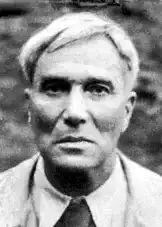
Boris Pasternak
Nostalgia
To give this book a dedication
The desert sickened,
And lions roared, and dawns of tigers
Took hold of Kipling.
A dried-up well of dreadful longing
Was gaping, yawning.
They swayed and shivered, rubbing shoulders,
Sleek-skinned and tawny.
Since then continuing forever
Their sway in scansion,
They stroll in mist through dewy meadows
Dreamt up by Ganges.
Creeping at dawn in pits and hollows
Cold sunrays fumble.
Funereal, incense-laden dampness
Pervades the jungle.
497
Boris Pasternak
Swifts (2)
At twilight the swifts have no power,
to hold back that pale blue coolness.
It bursts from throats, a clamour
an outpour that can’t grow less.
The swifts have no way, high
up there, overhead, of restraining
their clarion cries: ‘O, triumph,
see, see, how the earth’s receding!’
Like steam from a boiling kettle,
the furious flow rushes by –
‘See, see – no space for the earth
between the ravine and the sky.’
497

Ezra Pound
Homage To Sextus Propertius - IV
DIFFERENCE OF OPINION WITH
LYGDAMUS
Tell me the truths which you hear of our constant young lady,
Lygdamus,
And may the bought yoke of a mistress lie with
equitable weight on your shoulders;
For I am swelled up with inane pleasurabilities
and deceived by your reference
To things which you think I would like to believe.
No messenger should come wholly empty,
and a slave should fear plausibilities;
Much conversation is as good as having a home.
Out with it, tell it to me, all of it, from the beginning,
I guzzle with outstretched ears.
Thus? She wept into uncombed hair,
And you saw it.
Vast waters flowed from her eyes ?
You, you Lygdamus
Saw her stretched on her bed,
was no glimpse in a mirror;
No gawds on her snowy hands, no orfevrerie,
Sad garment draped on her slender arms.
Her escritoires lay shut by the bed-feet.
Sadness hung over the house, and the desolated female attendants
Were desolated because she had told them her dreams.
She was veiled in the midst of that place,
Damp woolly handkerchiefs were stuffed into her undryable eyes,
And a querulous noise responded to our solicitous reprobations.
For which things you will get a reward from me, Lygdamus?
To say many things is equal to having a home.
And the other woman 'has not enticed me
by her pretty manners,
'She has caught me with herbaceous poison,
she twiddles the spiked wheel of a rhombus,
'She stews puffed frogs, snake's bones, the moulted
'She stews puffed frogs, snake's bones, the moulted
feathers of screech owls,
'She binds me with ravvles of shrouds.
Black spiders spin in her bedl
'Let her lovers snore at her in the morning!
May the gout cramp up her feet!
'Does he like me to sleep here alone,
Lygdamus?
'Will he say nasty things at my funeral?'
And you expect me to believe this
after twelve months of discomfort ?
499
Rudyard Kipling
The Four Angels
As Adam lay a-dreaming beneath the Apple Tree
The Angel of the Earth came down, and offered Earth in fee;
But Adam did not need it,
Nor the plough he would not speed it,
Singing: --"Earth and Water, Air and Fire,
What more can mortal man desire?"
(The Apple Tree's in bud)
As Adam lay a-dreaming beneath the Apple Tree
The Angel of the Waters offered all the Seas in fee;
But Adam would not take 'em,
Nor the ships he wouldn't make 'em,
Singing:--"Water, Earth and Air and Fire,
What more can mortal man desire? "
(The Apple Tree's in leaf.)
As Adam lay a-dreaming beneath the Apple Tree
The Angel of the Air he offered all the Air in fee;
But Adam did not crave it,
Nor the flight he wouldn't brave it,
Singing: --"Air and Water, Earth and Fire,
What more can mortal man desire:"
(The Apple Tree's in bloom.)
As Adam lay a-dreaming beneath the Apple Tree
The Angel of the Fire rose up and not a word said he;
But he wished a flame and made it,
And in Adam's heart he laid it,
Singing: --"Fire, Fire, burning Fire!
Stand up, and reach your heart's desire!"
(The Apple Blossom's set.)
As Adam was a-working outside of Eden-Wall,
He used the Earth, he used the Seas, he used the Air and all;
Till out of black disaster
He arose to be a master
Of Earth and Water, Air and Fire,
But never reached his heart's desire!
(The Apple Tree's cut down!)
497

William Butler Yeats
Towards Break Of Day
WAS it the double of my dream
The woman that by me lay
Dreamed, or did we halve a dream
Under the first cold gleam of day?
I thought: 'There is a waterfall
Upon Ben Bulben side
That all my childhood counted dear;
Were I to travel far and wide
I could not find a thing so dear.'
My memories had magnified
So many times childish delight.
I would have touched it like a child
But knew my finger could but have touched
Cold stone and water. I grew wild.
Even accusing Heaven because
It had set down among its laws:
Nothing that we love over-much
Is ponderable to our touch.
I dreamed towards break of day,
The cold blown spray in my nostril.
But she that beside me lay
Had watched in bitterer sleep
The marvellous stag of Arthur,
That lofty white stag, leap
From mountain steep to steep.
499
Rudyard Kipling
The Cat That Walked by Himself
Pussy can sit by the fire and sing,
Pussy can climb a tree,
Or play with a silly old cork and string
To 'muse herself, not me.
But I like Binkie my dog, because
He knows how to behave;
So, Binkie's the same as the First Friend was,
And I am the Man in Cave!
Pussy will play Man Friday till
It's time to wet her paw
And make her walk on the window-sill
(For the footprint Crusoe saw)
Then she fluffles her tail and mews,
And scratches and won't attend.
But Binkie will play whatever I choose,
And he is my true First Friend!
Pussy will rub my knees with her head
Pretending she loves me hard;
But the very minute I go to my bed
Pussy runs out in the yard,
And there she stays till the morning-light;
So I know it is only pretend;
But Binkie, he snores at my feet all night,
And he is my Firstest Friend!
493
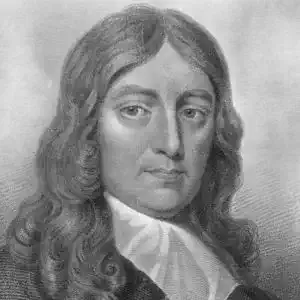
John Milton
Psalm 08
Aug. 14. 1653.
O Jehovah our Lord how wondrous great
And glorious is thy name through all the earth?
So as above the Heavens thy praise to set
Out of the tender mouths of latest bearth,
Out of the mouths of babes and sucklings thou
Hast founded strength because of all thy foes
To stint th'enemy, and slack th'avengers brow
That bends his rage thy providence to oppose.
When I behold thy Heavens, thy Fingers art,
The Moon and Starrs which thou so bright hast set,
In the pure firmament, then saith my heart,
O What is man that thou remembrest yet,
And think'st upon him; or of man begot
That him thou visit'st and of him art found;
Scarce to be less then Gods, thou mad'st his lot,
With honour and with state thou hast him crown'd.
O're the works of thy hand thou mad'st him Lord,
Thou hast put all under his lordly feet,
All Flocks, and Herds, by thy commanding word,
All beasts that in the field or forrest meet.
Fowl of the Heavens, and Fish that through the wet
Sea-paths in shoals do slide. And know no dearth.
O Jehovah our Lord how wondrous great
And glorious is thy name through all the earth.
O Jehovah our Lord how wondrous great
And glorious is thy name through all the earth?
So as above the Heavens thy praise to set
Out of the tender mouths of latest bearth,
Out of the mouths of babes and sucklings thou
Hast founded strength because of all thy foes
To stint th'enemy, and slack th'avengers brow
That bends his rage thy providence to oppose.
When I behold thy Heavens, thy Fingers art,
The Moon and Starrs which thou so bright hast set,
In the pure firmament, then saith my heart,
O What is man that thou remembrest yet,
And think'st upon him; or of man begot
That him thou visit'st and of him art found;
Scarce to be less then Gods, thou mad'st his lot,
With honour and with state thou hast him crown'd.
O're the works of thy hand thou mad'st him Lord,
Thou hast put all under his lordly feet,
All Flocks, and Herds, by thy commanding word,
All beasts that in the field or forrest meet.
Fowl of the Heavens, and Fish that through the wet
Sea-paths in shoals do slide. And know no dearth.
O Jehovah our Lord how wondrous great
And glorious is thy name through all the earth.
491
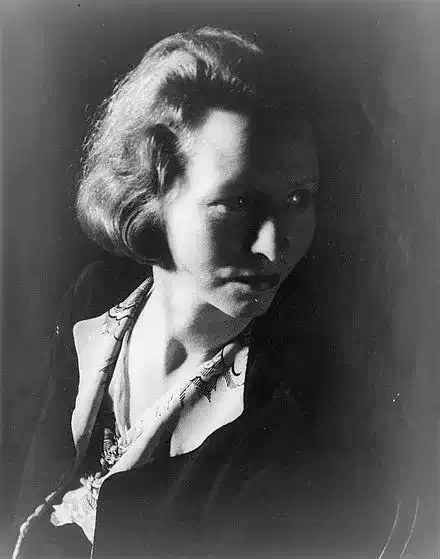
Edna St. Vincent Millay
Eel-Grass
No matter what I say,
All that I really love
Is the rain that flattens on the bay,
And the eel-grass in the cove;
The jingle-shells that lie and bleach
At the tide-line, and the trace
Of higher tides along the beach:
Nothing in this place.
All that I really love
Is the rain that flattens on the bay,
And the eel-grass in the cove;
The jingle-shells that lie and bleach
At the tide-line, and the trace
Of higher tides along the beach:
Nothing in this place.
495
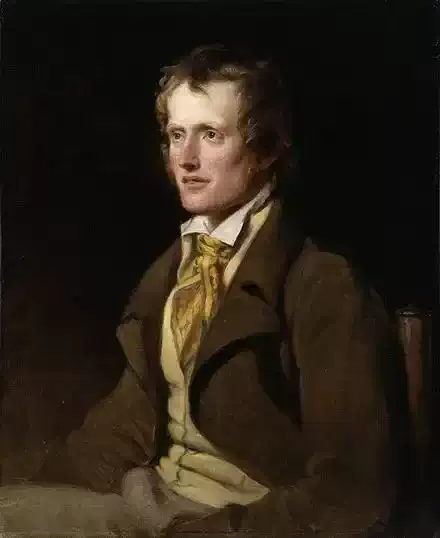
John Clare
The Cuckoo
The cuckoo, like a hawk in flight,
With narrow pointed wings
Whews o'er our heads - soon out of sight
And as she flies she sings:
And darting down the hedgerow side
She scares the little bird
Who leaves the nest it cannot hide
While plaintive notes are heard.
I've watched it on an old oak tree
Sing half an hour away
Until its quick eye noticed me
And then it whewed away.
Its mouth when open shone as red
As hips upon the brier,
Like stock doves seemed its winged head
But striving to get higher
It heard me rustle and above leaves
Soon did its flight pursue,
Still waking summer's melodies
And singing as it flew.
So quick it flies from wood to wood
'Tis miles off 'ere you think it gone;
I've thought when I have listening stood
Full twenty sang - when only one.
When summer from the forest starts
Its melody with silence lies,
And, like a bird from foreign parts,
It cannot sing for all it tries.
'Cuck cuck' it cries and mocking boys
Crie 'Cuck' and then it stutters more
Till quick forgot its own sweet voice
It seems to know itself no more.
488
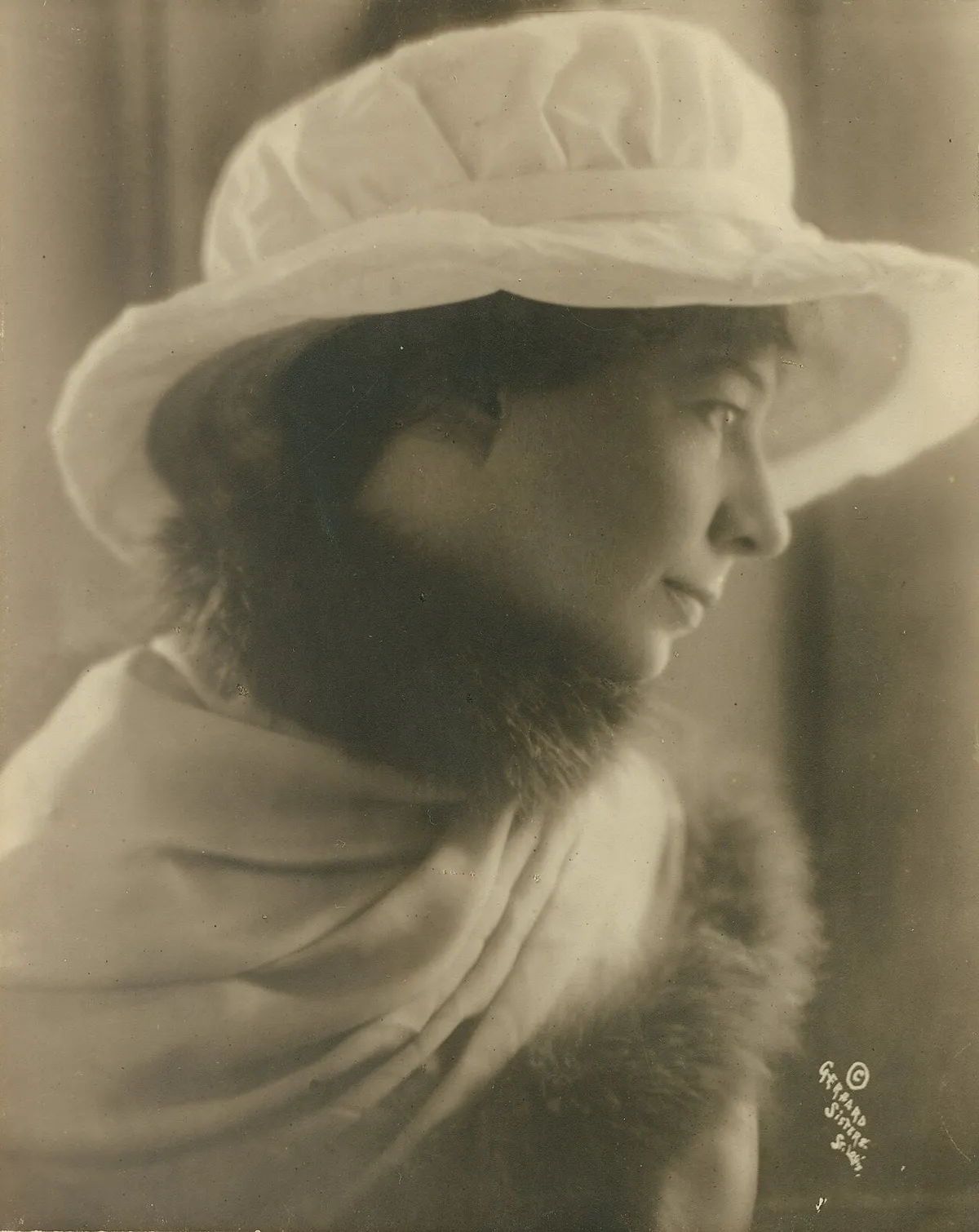
Sara Teasdale
June Night
Oh Earth, you are too dear to-night,
How can I sleep while all around
Floats rainy fragrance and the far
Deep voice of the ocean that talks to the ground?
Oh Earth, you gave me all I have,
I love you, I love you, -- oh what have I
That I can give you in return --
Except my body after I die?
How can I sleep while all around
Floats rainy fragrance and the far
Deep voice of the ocean that talks to the ground?
Oh Earth, you gave me all I have,
I love you, I love you, -- oh what have I
That I can give you in return --
Except my body after I die?
490

Robert Frost
The Exposed Nest
You were forever finding some new play.
So when I saw you down on hands and knees
I the meadow, busy with the new-cut hay,
Trying, I thought, to set it up on end,
I went to show you how to make it stay,
If that was your idea, against the breeze,
And, if you asked me, even help pretend
To make it root again and grow afresh.
But 'twas no make-believe with you today,
Nor was the grass itself your real concern,
Though I found your hand full of wilted fern,
Steel-bright June-grass, and blackening heads of clovers.
'Twas a nest full of young birds on the ground
The cutter-bar had just gone champing over
(Miraculously without tasking flesh)
And left defenseless to the heat and light.
You wanted to restore them to their right
Of something interposed between their sight
And too much world at once--could means be found.
The way the nest-full every time we stirred
Stood up to us as to a mother-bird
Whose coming home has been too long deferred,
Made me ask would the mother-bird return
And care for them in such a change of scene
And might out meddling make her more afraid.
That was a thing we could not wait to learn.
We saw the risk we took in doing good,
But dared not spare to do the best we could
Though harm should come of it; so built the screen
You had begun, and gave them back their shade.
All this to prove we cared. Why is there then
No more to tell? We turned to other things.
I haven't any memory--have you?--
Of ever coming to the place again
To see if the birds lived the first night through,
And so at last to learn to use their wings.
487
Robert Frost
The Oven Bird
There is a singer eveyone has heard,
Loud, a mid-summer and a mid-wood bird,
Who makes the solid tree trunks sound again.
He says that leaves are old and that for flowers
Mid-summer is to spring as one to ten.
He says the early petal-fall is past,
When pear and cherry bloom went down in showers
On sunny days a moment overcast;
And comes that other fall we name the fall.
He says the highway dust is over all.
The bird would cease and be as other birds
But that he knows in singing not to sing.
The question that he frames in all but words
Is what to make of a diminished thing.
491
John Clare
The Thrush's Nest
Within a thick and spreading hawthorn bush
That overhung a molehill large and round,
I heard from morn to morn a merry thrush
Sing hymns to sunrise, and I drank the sound
With joy; and often, an intruding guest,
I watched her secret toil from day to day -
How true she warped the moss to form a nest,
And modelled it within with wood and clay;
And by and by, like heath-bells gilt with dew,
There lay her shining eggs, as bright as flowers,
Ink-spotted over shells of greeny blue;
And there I witnessed, in the sunny hours,
A brood of nature's minstrels chirp and fly,
Glad as the sunshine and the laughing sky.
488

Rabindranath Tagore
Lover's Gifts XXII: I Shall Gladly Suffer
I shall gladly suffer the pride of culture to die out in my house,
if only in some happy future I am born a herd-boy in the Brinda
forest.
The herd-boy who grazes his cattle sitting under the banyan
tree, and idly weaves gunja flowers into garlands, who loves to
splash and plunge in the Jamuna's cool deep stream.
He calls his companions to wake up when morning dawns, and all
the houses in the lane hum with the sound of the churn, clouds of
dust are raised by the cattle, the maidens come out in the
courtyard to milk the king.
As the shadows deepen under the tomal trees, and the dusk
gathers on the river-banks; when the milkmaids, while crossing the
turbulent water, tremble with fear; and loud peacocks, with tails
outspread, dance in the forest, he watchers the summer clouds.
When the April night is sweet as a fresh-blown flower, he
disappears in the forest with a peacock's plume in his hair; the
swing ropes are twined with flowers on the branches; the south wind
throbs with music, and the merry shepherd boys crowd on the banks
of the blue river.
No, I will never be the leader, brothers, of this new age of
new Bengal; I shall not trouble to light the lamp of culture for
the benighted. If only I could be born, under the shady asoka
groves, in some village of Brinda, where milk is churned by the
maidens!
487
Rudyard Kipling
Four-Feet
I have done mostly what most men do,
And pushed it out of my mind;
But I can't forget, if I wanted to,
Four-Feet trotting behind.
Day after day, the whole day through --
Wherever my road inclined --
Four-feet said, "I am coming with you!"
And trotted along behind.
Now I must go by some other round, --
Which I shall never find --
Somewhere that does not carry the sound
Of Four-Feet trotting behind.
491

Alfred Lord Tennyson
Spring
Birds' love and birds' song
Flying here and there,
Birds' songand birds' love
And you with gold for hair!
Birds' songand birds' love
Passing with the weather,
Men's song and men's love,
To love once and forever.
Men's love and birds' love,
And women's love and men's!
And you my wren with a crown of gold,
You my queen of the wrens!
You the queen of the wrens -We'll
be birds of a feather,
I'll be King of the Queen of the wrens,
And all in a nest together.
489
Rudyard Kipling
Eddi's Service
(A.D. )
Eddi, priest of St. Wilfrid
In his chapel at Manhood End,
Ordered a midnight service
For such as cared to attend.
But the Saxons were keeping Christmas,
And the night was stormy as well.
Nobody came to service,
Though Eddi rang the bell.
"'Wicked weather for walking,"
Said Eddi of Manhood End.
"But I must go on with the service
For such as care to attend."
The altar-lamps were lighted, --
An old marsh-donkey came,
Bold as a guest invited,
And stared at the guttering flame.
The storm beat on at the windows,
The water splashed on the floor,
And a wet, yoke-weary bullock
Pushed in through the open door.
"How do I know what is greatest,
How do I know what is least?
That is My Father's business,"
Said Eddi, Wilfrid's priest.
"But -- three are gathered together --
Listen to me and attend.
I bring good news, my brethren!"
Said Eddi of Manhood End.
And he told the Ox of a Manger
And a Stall in Bethlehem,
And he spoke to the Ass of a Rider,
That rode to Jerusalem.
They steamed and dripped in the chancel,
They listened and never stirred,
While, just as though they were Bishops,
Eddi preached them The World,
Till the gale blew off on the marshes
And the windows showed the day,
And the Ox and the Ass together
Wheeled and clattered away.
And when the Saxons mocked him,
Said Eddi of Manhood End,
"I dare not shut His chapel
On such as care to attend."
485

Walt Whitman
Song At Sunset
SPLENDOR of ended day, floating and filling me!
Hour prophetic--hour resuming the past!
Inflating my throat--you, divine average!
You, Earth and Life, till the last ray gleams, I sing.
Open mouth of my Soul, uttering gladness,
Eyes of my Soul, seeing perfection,
Natural life of me, faithfully praising things;
Corroborating forever the triumph of things.
Illustrious every one!
Illustrious what we name space--sphere of unnumber'd spirits;
Illustrious the mystery of motion, in all beings, even the tiniest
insect;
Illustrious the attribute of speech--the senses--the body;
Illustrious the passing light! Illustrious the pale reflection on the
new moon in the western sky!
Illustrious whatever I see, or hear, or touch, to the last.
Good in all,
In the satisfaction and aplomb of animals,
In the annual return of the seasons,
In the hilarity of youth,
In the strength and flush of manhood,
In the grandeur and exquisiteness of old age,
In the superb vistas of Death.
Wonderful to depart;
Wonderful to be here!
The heart, to jet the all-alike and innocent blood!
To breathe the air, how delicious!
To speak! to walk! to seize something by the hand!
To prepare for sleep, for bed--to look on my rose-color'd flesh;
To be conscious of my body, so satisfied, so large;
To be this incredible God I am;
To have gone forth among other Gods--these men and women I love.
Wonderful how I celebrate you and myself!
How my thoughts play subtly at the spectacles around!
How the clouds pass silently overhead!
How the earth darts on and on! and how the sun, moon, stars, dart on
and on!
How the water sports and sings! (Surely it is alive!)
How the trees rise and stand up--with strong trunks--with branches
and leaves!
(Surely there is something more in each of the tree--some living
Soul.)
O amazement of things! even the least particle!
O spirituality of things!
O strain musical, flowing through ages and continents--now reaching
me and America!
I take your strong chords--I intersperse them, and cheerfully pass
them forward.
I too carol the sun, usher'd, or at noon, or, as now, setting,
I too throb to the brain and beauty of the earth, and of all the
growths of the earth,
I too have felt the resistless call of myself.
As I sail'd down the Mississippi,
As I wander'd over the prairies,
As I have lived--As I have look'd through my windows, my eyes,
As I went forth in the morning--As I beheld the light breaking in the
east;
As I bathed on the beach of the Eastern Sea, and again on the beach
of the Western Sea;
As I roam'd the streets of inland Chicago--whatever streets I have
roam'd;
Or cities, or silent woods, or peace, or even amid the sights of war;
Wherever I have been, I have charged myself with contentment and
triumph.
I sing the Equalities, modern or old,
I sing the endless finales of things;
I say Nature continues--Glory continues;
I praise with electric voice;
For I do not see one imperfection in the universe;
And I do not see one cause or result lamentable at last in the
universe.
O setting sun! though the time has come,
I still warble under you, if none else does, unmitigated
adoration.
484

William Shakespeare
Orpheus
ORPHEUS with his lute made trees
And the mountain tops that freeze
Bow themselves when he did sing:
To his music plants and flowers
Ever sprung; as sun and showers
There had made a lasting spring.
Every thing that heard him play,
Even the billows of the sea,
Hung their heads and then lay by.
In sweet music is such art,
Killing care and grief of heart
Fall asleep, or hearing, die.
487