
Wisdom
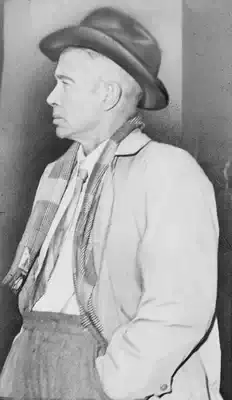

Lord Byron
Don Juan: Canto the Eleventh
I
When Bishop Berkeley said "there was no matter,"
And proved it'
twas no matter what he sald:
They say his system 'tis in vain to batter,
Too subtle for the airiest human head;
And yet who can believe it! I would shatter
Gladly all matters down to stone or lead,
Or adamant, to find the World a spirit,
And wear my head, denying that I wear it.II
What a sublime discovery 'twas to make the
Universe universal egotism,
That all's idealall
ourselves: I'll stake the
World (be it what you will) that that's no schism.
Oh Doubt!if
thou be'st Doubt, for which some take thee,
But which I doubt extremelythou
sole prism
Of the Truth's rays, spoil not my draught of spirit!
Heaven's brandy, though our brain can hardly bear it.III
For ever and anon comes Indigestion
(Not the most "dainty Ariel") and perplexes
Our soarings with another sort of question:
And that which after all my spirit vexes,
Is, that I find no spot where Man can rest eye on,
Without confusion of the sorts and sexes,
Of beings, stars, and this unriddled wonder,
The World, which at the worst's a glorious blunderIV
If it be chanceor,
if it be according
To the Old Text, still better: lest it should
Turn out so, we'll say nothing 'gainst the wording,
As several people think such hazards rude.
They're right; our days are too brief for affording
Space to dispute what no one ever could
Decide, and everybody one day will
Know very clearlyor
at least lie still.V
And therefore will I leave off metaphysical
Discussion, which is neither here nor there:
If I agree that what is, is; then this I call
Being quite perspicuous and extremely fair.
The truth is, I've grown lately rather phthisical:
I don't know what the reason isthe
air
Perhaps; but as I suffer from the shocks
Of illness, I grow much more orthodox.VI
The first attack at once prov'd the Divinity
(But that I never doubted, nor the Devil);
The next, the Virgin's mystical virginity;
The third, the usual Origin of Evil;
The fourth at once establish'd the whole Trinity
On so uncontrovertible a level,
That I devoutly wish'd the three were four
On purpose to believe so much the more.VII
To our theme.
The
man who has stood on the Acropolis,
And look'd down over Attica; or he
Who has sail'd where picturesque Constantinople is,
Or seen Timbuctoo, or hath taken tea
In smalley'd
China's crockeryware
metropolis,
Or sat amidst the bricks of Nineveh,
May not think much of London's first appearance
But
ask him what he thinks of it a year hence!VIII
Don Juan had got out on Shooter's Hill;
Sunset the time, the place the same declivity
Which looks along that vale of good and ill
Where London streets ferment in full activity,
While everything around was calm and still,
Except the creak of wheels, which on their pivot he
Heard, and that beelike,
bubbling, busy hum
Of cities, that boil over with their scumIX
I say, Don Juan, wrapp'd in contemplation,
Walk'd on behind his carriage, o'er the summit,
And lost in wonder of so great a nation,
Gave way to't, since he could not overcome it.
"And here," he cried, "is Freedom's chosen station;
Here peals the People's voice nor can entomb it
Racks, prisons, inquisitions; resurrection
Awaits it, each new meeting or election.X
"Here are chaste wives, pure lives; her people pay
But what they please; and if that things be dear,
'Tis only that they love to throw away
Their cash, to show how much they have ayear.
Here laws are all inviolate; none lay
Traps for the traveller; every highway's clear;
Here"he
was interrupted by a knife,
With"
Damn your eyes! your money or your life!"XI
These freeborn
sounds proceeded from four pads
In ambush laid, who had perceiv'd him loiter
Behind his carriage; and, like handy lads,
Had seiz'd the lucky hour to reconnoitre,
In which the heedless gentleman who gads
Upon the road, unless he prove a fighter
May find himself within that isle of riches
Expos'd to lose his life as well as breeches.XII
Juan, who did not understand a word
Of English, save their shibboleth, "God damn!"
And even that he had so rarely heard,
He sometimes thought 'twas only their Salam,"
Or "God be with you!"and
'tis not absurd
To think so, for half English as I am
(To my misfortune) never can I say
I heard them wish "God with you," save that wayXIII
Juan yet quickly understood their gesture,
And being somewhat choleric and sudden,
Drew forth a pocket pistol from his vesture,
And fired it into one assailant's pudding,
Who fell, as rolls an ox o'er in his pasture,
And roar'd out, as he writh'd his native mud in,
Unto his nearest follower or henchman,
"Oh Jack! I'm floor'd by that ere bloody Frenchman!"XIV
On which Jack and his train set off at speed,
And Juan's suite, late scatter'd at a distance,
Came up, all marvelling at such a deed,
And offering, as usual, late assistance.
Juan, who saw the moon's late minion bleed
As if his veins would pour out his existence,
Stood calling out for bandages and lint,
And wish'd he had been less hasty with his flint.XV
"Perhaps,"thought he,"it is the country's wont
To welcome foreigners in this way: now
I recollect some innkeepers who don't
Differ, except in robbing with a bow,
In lieu of a bare blade and brazen front.
But what is to be done? I can't allow
The fellow to lie groaning on the road:
So take him up, I'll help you with the load."XVI
But ere they could perform this pious duty,
The dying man cried, "Hold! I've got my gruel!
Oh! for a glass of max ! We've miss'd our booty
Let
me die where I am!" And as the fuel
Of life shrunk in his heart, and thick and sooty
The drops fell from his deathwound,
and he drew ill
His breath, he from his swelling throat untied
A kerchief, crying "Give Sal that!"and
died.XVII
The cravat stain'd with bloody drops fell down
Before Don Juan's feet: he could not tell
Exactly why it was before him thrown,
Nor what the meaning of the man's farewell.
Poor Tom was once a kiddy upon town,
A thorough varmint, and a real swell,
Full flash, all fancy, until fairly diddled,
His pockets first and then his body riddled.XVIII
Don Juan, having done the best he could
In all the circumstances of the case,
As soon as "Crowner's 'quest" allow'd, pursu'd
His travels to the capital apace;
Esteeming it a little hard he should
In twelve hours' time, and very little space,
Have been oblig'd to slay a freeborn
native
In selfdefence:
this made him meditative.XIX
He from the world had cut off a great man,
Who in his time had made heroic bustle.
Who in a row like Tom could lead the van,
Booze in the ken, or at the spellken hustle?
Who queer a flat? Who (spite of Bowstreet's ban)
On the high tobyspice
so flash the muzzle?
Who on a lark, with blackeyed
Sal (his blowing),
So prime, so swell, so nutty, and so knowing?XX
But Tom's no moreand
so no more of Tom.
Heroes must die; and by God's blessing 'tis
Not long before the most of them go home.
Hail! Thamis, hail! Upon thy verge it is
That Juan's chariot, rolling like a drum
In thunder, holds the way it can't well miss,
Through Kennington and all the other "tons,"
Which make us wish ourselves in town at once;XXI
Through Groves, so called as being void of trees,
(Like lucus from no light); through prospects nam'd
Mount Pleasant, as containing nought to please,
Nor much to climb; through little boxes fram'd
Of bricks, to let the dust in at your ease,
With "To be let," upon their doors proclaim'd;
Through "Rows" most modestly call'd "Paradise,"
Which Eve might quit without much sacrifice;XXII
Through coaches, drays, chok'd turnpikes, and a whirl
Of wheels, and roar of voices, and confusion;
Here taverns wooing to a pint of "purl,"
There mails fast flying off like a delusion;
There barbers' blocks with periwigs in curl
In windows; here the lamplighter's infusion
Slowly distill'd into the glimmering glass
(For in those days we had not got to gas);XXIII
Through this, and much, and more, is the approach
Of travellers to mighty Babylon:
Whether they come by horse, or chaise, or coach,
With slight exceptions, all the ways seem one.
I could say more, but do not choose to encroach
Upon the guidebook's
privilege. The sun
Had set some time, and night was on the ridge
Of twilight, as the party cross'd the bridge.XXIV
That's rather fine, the gentle sound of ThamisWho
vindicates a moment, too, his stream
Though
hardly heard through multifarious "damme's":
The lamps of Westminster's more regular gleam,
The breadth of pavement, and yon shrine where Fame is
A spectral residentwhose
pallid beam
In shape of moonshine hovers o'er the pile
Make
this a sacred part of Albion's Isle.XXV
The Druid's groves are goneso
much the better:
Stonehenge is notbut
what the devil is it?
But
Bedlam still exists with its sage fetter,
That madmen may not bite you on a visit;
The Bench too seats or suits full many a debtor;
The Mansion House too (though some people quiz it)
To me appears a stiff yet grand erection;
But then the Abbey's worth the whole collection.XXVI
The line of lights too, up to Charing Cross,
Pall Mall, and so forth, have a coruscation
Like gold as in comparison to dross,
Match'd with the Continent's illumination,
Whose cities Night by no means deigns to gloss.
The French were not yet a lamplighting
nation,
And when they grew soon
their newfound
lantern,
Instead of wicks, they made a wicked man turn.XXVII
A row of Gentlemen along the streets
Suspended may illuminate mankind,
As also bonfires made of country seats;
But the old way is best for the purblind:
The other looks like phosphorus on sheets,
A sort of [lang l]ignis fatuus[lang e] to the mind,
Which, though 'tis certain to perplex and frighten,
Must burn more mildly ere it can enlighten.XXVIII
But London's so well lit, that if Diogenes
Could recommence to hunt his honest man
And found him not amidst the various progenies
Of this enormous city's spreading spawn,
'Twere not for want of lamps to aid his dodging his
Yet undiscover'd treasure. What I can,
I've done to find the same throughout life's journey,
But see the World is only one attorney.XXIX
Over the stones still rattling, up Pall Mall,
Through crowds and carriages, but waxing thinner
As thunder'd knockers broke the long seal'd spell
Of doors 'gainst duns, and to an early dinner
Admitted a small party as night fell,
Don Juan, our young diplomatic sinner,
Pursu'd his path, and drove past some hotels,
St. James's Palace, and St. James's "Hells."XXX
They reach'd the hotel: forth stream'd from the front door
A tide of wellclad
waiters, and around
The mob stood, and as usual several score
Of those pedestrian Paphians who abound
In decent London when the daylight's o'er;
Commodious but immoral, they are found
Useful, like Malthus, in promoting marriage:
But Juan now is stepping from his carriageXXXI
Into one of the sweetest of hotels,
Especially for foreignersand
mostly
For those whom favour or whom fortune swells,
And cannot find a bill's small items costly.
There many an envoy either dwelt or dwells
(The den of many a diplomatic lost lie),
Until to some conspicuous square they pass,
And blazon o'er the door their names in brass.XXXII
Juan, whose was a delicate commission,
Private, though publicly important, bore
No title to point out with due precision
The exact affair on which he was sent o'er.
'Twas merely known, that on a secret mission
A foreigner of rank had grac'd our shore,
Young, handsome and accomplish'd, who was said
(In whispers) to have turn'd his Sovereign's head.XXXIII
Some rumour also of some strange adventures
Had gone before him, and his wars and loves;
And as romantic heads are pretty painters,
And, above all, an Englishwoman's roves
Into the excursive, breaking the indentures
Of sober reason, wheresoe'er it moves,
He found himself extremely in the fashion,
Which serves our thinking people for a passion.XXXIV
I don't mean that they are passionless, but quite
The contrary; but then 'tis in the head;
Yet as the consequences are as bright
As if they acted with the heart instead,
What after all can signify the site
Of ladies' lucubrations? So they lead
In safety to the place for which you start,
What matters if the road be head or heart?XXXV
Juan presented in the proper place,
To proper placement, every Russ credential;
And was receiv'd with all the due grimace
By those who govern in the mood potential,
Who, seeing a handsome stripling with smooth face,
Thought (what in state affairs is most essential)
That they as easily might do the youngster,
As hawks may pounce upon a woodland songster.XXXVI
They err'd, as aged men will do; but by
And by we'll talk of that; and if we don't,
'T will be because our notion is not high
Of politicians and their double front,
Who live by lies, yet dare not boldly lie:
Now, what I love in women is, they won't
Or can't do otherwise than lie, but do it
So well, the very truth seems falsehood to it.XXXVII
And, after all, what is a lie? 'Tis but
The truth in masquerade; and I defy
Historians, heroes, lawyers, priests, to put
A fact without some leaven of a lie.
The very shadow of true Truth would shut
Up annals, revelations, poesy,
And prophecyexcept
it should be dated
Some years before the incidents related.XXXVIII
Prais'd be all liars and all lies! Who now
Can tax my mild Muse with misanthropy?
She rings the World's "Te Deum," and her brow
Blushes for those who will not: but to sigh
Is idle; let us like most others bow,
Kiss hands, feet, any part of Majesty,
After the good example of "Green Erin,"
Whose shamrock now seems rather worse for wearing.XXXIX
Don Juan was presented, and his dress
And mien excited general admiration;
I don't know which was more admir'd or less:
One monstrous diamond drew much observation,
Which Catherine in a moment of "ivresse"
(In love or brandy's fervent fermentation)
Bestow'd upon him, as the public learn'd;
And, to say truth, it had been fairly earn'd.XL
Besides the ministers and underlings,
Who must be courteous to the accredited
Diplomatists of rather wavering kings,
Until their royal riddle's fully read,
The very clerksthose
somewhat dirty springs
Of Office, or the House of Office, fed
By foul corruption into streamseven
they
Were hardly rude enough to earn their pay.XLI
And insolence no doubt is what they are
Employ'd for, since it is their daily labour,
In the dear offices of peace or war;
And should you doubt, pray ask of your next neighbour,
When for a passport, or some other bar
To freedom, he applied (a grief and a bore),
If he found not this spawn of taxborn
riches,
Like lapdogs,
the least civil sons of b{}{
}{
}{
}{
}
s.XLII
But Juan was receiv'd with much "empressement" These
phrases of refinement I must borrow
From our next neighbours' land, where, like a chessman,
There is a move set down for joy or sorrow,
Not only in mere talking, but the press. Man
In islands is, it seems, downright and thorough,
More than on continentsas
if the sea
(See Billingsgate) made even the tongue more free.XLIII
And yet the British "Damme" 's rather Attic,
Your continental oaths are but incontinent,
And turn on things which no aristocratic
Spirit would name, and therefore even I won't anent
This subject quote; as it would be schismatic
In politesse, and have a sound affronting in 't;
But "Damme" 's quite ethereal, though too daring
Platonic
blasphemy, the soul of swearing.XLIV
For downright rudeness, ye may stay at home;
For true or false politeness (and scarce that
Now) you may cross the blue deep and white foam:
The first the emblem (rarely though) of what
You leave behind, the next of much you come
To meet. However, 'tis no time to chat
On general topics: poems must confine
Themselves to Unity, like this of mine.XLV
In the great worldwhich,
being interpreted,
Meaneth the West or worst end of a city,
And about twice two thousand people bred
By no means to be very wise or witty,
But to sit up while others lie in bed,
And look down on the Universe with pity
Juan,
as an inveterate patrician,
Was well receiv'd by persons of condition.XLVI
He was a bachelor, which is a matter
Of import both to virgin and to bride,
The former's hymeneal hopes to flatter;
And (should she not hold fast by love or pride)
'Tis also of some momemt to the latter:
A rib's a thorn in a wed gallant's side,
Requires decorum, and is apt to double
The horrid sinand
what's still worse the trouble.XLVII
But Juan was a bachelorof
arts,
And parts, and hearts: he danc'd and sung, and had
An air as sentimental as Mozart's
Softest of melodies; and could be sad
Or cheerful, without any "flaws or starts,"
Just at the proper time; and though a lad,
Had seen the worldwhich
is a curious sight,
And very much unlike what people write.XLVIII
Fair virgins blush'd upon him; wedded dames
Bloom'd also in less transitory hues;
For both commodities dwell by the Thames
The painting and the painted; Youth, Ceruse,
Against his heart preferr'd their usual claims,
Such as no gentleman can quite refuse;
Daughters admir'd his dress, and pious mothers
Inquir'd his income, and if he had brothers.XLIX
The milliners who furnish "drapery Misses"
Throughout the season, upon speculation
Of payment ere the Honeymoon's last kisses
Have wan'd into a crescent's coruscation,
Thought such an opportunity as this is,
Of a rich foreigner's initiation,
Not to be overlook'dand
gave such credit,
That future bridegrooms swore, and sigh'd, and paid it.L
The Blues, that tender tribe, who sigh o'er sonnets,
And with the pages of the last Review
Line the interior of their heads or bonnets,
Advanc'd in all their azure's highest hue:
They talk'd bad French or Spanish, and upon its
Late authors ask'd him for a hint or two;
And which was softest, Russian or Castilian?
And whether in his travels he saw Ilion?LI
Juan, who was a little superficial,
And not in literature a great Drawcansir,
Examin'd by this learned and especial
Jury of matrons, scarce knew what to answer:
His duties warlike, loving or official,
His steady application as a dancer,
Had kept him from the brink of Hippocrene,
Which now he found was blue instead of green.LII
However, he replied at hazard, with
A modest confidence and calm assurance,
Which lent his learned lucubrations pith,
And pass'd for arguments of good endurance.
That prodigy, Miss Araminta Smith
(Who at sixteen translated "Hercules Furens"
Into as furious English), with her best look,
Set down his sayings in her commonplace
book.LIII
Juan knew several languagesas
well
He mightand
brought them up with skill, in time
To save his fame with each accomplish'd belle,
Who still regretted that he did not rhyme.
There wanted but this requisite to swell
His qualities (with them) into sublime:
Lady FitzFrisky,
and Miss M{ae}via Mannish,
Both long'd extremely to be sung in Spanish.LIV
However, he did pretty well, and was
Admitted as an aspirant to all
The coteries, and, as in Banquo's glass,
At great assemblies or in parties small,
He saw ten thousand living authors pass,
That being about their average numeral;
Also the eighty "greatest living poets,"
As every paltry magazine can show it's .LV
In twice five years the "greatest living poet,"
Like to the champion in the fisty ring,
Is call'd on to support his claim, or show it,
Although 'tis an imaginary thing,
Even Ialbeit
I'm sure I did not know it,
Nor sought of foolscap subjects to be king
Was
reckon'd, a considerable time,
The grand Napoleon of the realms of rhyme.LVI
But Juan was my Moscow, and Faliero
My Leipsic, and my Mont Saint Jean seem Cain:
"La Belle Alliance" of dunces down at zero,
Now that the Lion's fall'n, may rise again,
But I will fall at least as fell my hero;
Nor reign at all, or as a monarch reign;
Or to some lonely isle of jailors go,
With turncoat Southey for my turnkey Lowe.LVII
Sir Walter reign'd before me; Moore and Campbell
Before and after; but now grown more holy,
The Muses upon Sion's hill must ramble
With poets almost clergymen, or wholly;
And Pegasus has a psalmodic amble
Beneath the very Reverend Rowley Powley,
Who shoes the glorious animal with stilts,
A modern Ancient Pistol"
by the hilts!"LVIII
Still he excels that artificial hard
Labourer in the same vineyard, though the vine
Yields him but vinegar for his reward
That
neutralis'd dull Dorus of the Nine;
That swarthy Sporus, neither man nor bard;
That ox of verse, who ploughs for every line:
Cambyses' roaring Romans beat at least
The howling Hebrews of Cybele's priest.LIX
Then there's my gentle Euphues, who, they say,
Sets up for being a sort of moral me ;
He'll find it rather difficult some day
To turn out both, or either, it may be.
Some persons think that Coleridge hath the sway;
And Wordsworth has supporters, two or three;
And that deepmouth'd
Boeotian "Savage Landor"
Has taken for a swan rogue Southey's gander.LX
John Keats, who was kill'd off by one critique,
Just as he really promis'd something great,
If not intelligible, without Greek
Contriv'd to talk about the gods of late,
Much as they might have been suppos'd to speak.
Poor fellow! His was an untoward fate;
'Tis strange the mind, that very fiery particle,
Should let itself be snuff'd out by an article.LXI
The list grows long of live and dead pretenders
To that which none will gainor
none will know
The conqueror at least; who, ere Time renders
His last award, will have the long grass grow
Above his burntout
brain, and sapless cinders.
If I might augur, I should rate but low
Their chances; they're too numerous, like the thirty
Mock tyrants, when Rome's annals wax'd but dirty.LXII
This is the literary lower empire,
Where the pr{ae}torian bands take up the matter;
A "dreadful trade," like his who "gathers samphire,"
The insolent soldiery to soothe and flatter,
With the same feelings as you'd coax a vampire,
Now, were I once at home, and in good satire,
I'd try conclusions with those Janizaries,
And show them what an intellectual war is.LXIII
I think I know a trick or two, would turn
Their flanks; but it is hardly worth my while,
With such small gear to give myself concern:
Indeed I've not the necessary bile;
My natural temper's really aught but stern,
And even my Muse's worst reproof's a smile;
And then she drops a brief and modern curtsy,
And glides away, assur'd she never hurts ye.LXIV
My Juan, whom I left in deadly peril
Amongst live poets and blue ladies, pass'd
With some small profit through that field so sterile,
Being tir'd in time, and, neither least nor last,
Left it before he had been treated very ill;
And henceforth found himself more gaily class'd
Amongst the higher spirits of the day,
The sun's true son, no vapour, but a ray.LXV
His morns he pass'd in businesswhich
dissected,
Was, like all business, a laborious nothing
That leads to lassitude, the most infected
And CentaurNessus
garb of mortal clothing,
And on our sofas makes us lie dejected,
And talk in tender horrors of our loathing
All kinds of toil, save for our country's good
Which
grows no better, though 'tis time it should.LXVI
His afternoons he pass'd in visits, luncheons,
Lounging and boxing; and the twilight hour
In riding round those vegetable puncheons
Call'd "Parks," where there is neither fruit nor flower
Enough to gratify a bee's slight munchings;
But after all it is the only "bower"
(In Moore's phrase) where the fashionable fair
Can form a slight acquaintance with fresh air.LXVII
Then dress, then dinner, then awakes the world!
Then glare the lamps, then whirl the wheels, then roar
Through street and square fast flashing chariots hurl'd
Like harness'd meteors; then along the floor
Chalk mimics painting; then festoons are twirl'd;
Then roll the brazen thunders of the door,
Which opens to the thousand happy few
An earthly Paradise of "Or Molu."LXVIII
There stands the noble hostess, nor shall sink
With the threethousandth
curtsy; there the waltz,
The only dance which teaches girls to think,
Makes one in love even with its very faults.
Saloon, room, hall, o'erflow beyond their brink,
And long the latest of arrivals halts,
'Midst royal dukes and dames condemn'd to climb,
And gain an inch of staircase at a time.LXIX
Thrice happy he who, after a survey
Of the good company, can win a corner,
A door that's in or boudoir out of the way,
Where he may fix himself like small "Jack Horner,"
And let the Babel round run as it may,
And look on as a mourner, or a scorner,
Or an approver, or a mere spectator,
Yawning a little as the night grows later.LXX
But this won't do, save by and by; and he
Who, like Don Juan, takes an active share
Must steer with care through all that glittering sea
Of gems and plumes and pearls and silks, to where
He deems it is his proper place to be;
Dissolving in the waltz to some soft air,
Or proudlier prancing with mercurial skill,
Where Science marshals forth her own quadrille.LXXI
Or, if he dance not, but hath higher views
Upon an heiress or his neighbour's bride,
Let him take care that that which he pursues
Is not at once too palpably descried.
Full many an eager gentleman oft rues
His haste; impatience is a blundering guide
Amongst a people famous for reflection,
Who like to play the fool with circumspection.LXXII
But, if you can contrive, get next at supper;
Or, if forestalled, get opposite and ogle:
Oh, ye ambrosial moments! always upper
In mind, a sort of sentimental bogle,
Which sits for ever upon Memory's crupper,
The ghost of vanish'd pleasures once in vogue! Ill
Can tender souls relate the rise and fall
Of hopes and fears which shake a single ball.LXXIII
But these precautionary hints can touch
Only the common run, who must pursue,
And watch and ward; whose plans a word too much
Or little overturns; and not the few
Or many (for the number's sometimes such)
Whom a good mien, especially if new,
Or fame, or name, for wit, war, sense or nonsense,
Permits whate'er they please, or did not long since.LXXIV
Our hero, as a hero young and handsome,
Noble, rich, celebrated, and a stranger,
Like other slaves of course must pay his ransom
Before he can escape from so much danger
As will environ a conspicuous man. Some
Talk about poetry, and "rack and manger,"
And ugliness, disease, as toil and trouble
I
wish they knew the life of a young noble.LXXV
They are young, but know not youthit
is anticipated;
Handsome but wasted, rich without a sou;
Their vigour in a thousand arms is dissipated;
Their cash comes from , their wealth goes to a Jew;
Both senates see their nightly votes participated
Between the tyrant's and the tribunes' crew;
And having voted, din'd, drunk, gam'd and whor'd,
The family vault receives another lord.LXXVI
"Where is the World," cries Young, "at eighty ? Where
The World in which a man was born?" Alas!
Where is the world of eight years past? 'Twas there I
look for it'
tis gone, a Globe of Glass!
Crack'd, shiver'd, vanish'd, scarcely gaz'd on, ere
A silent change dissolves the glittering mass.
Statesmen, chiefs, orators, queens, patriots, kings,
And dandiesall
are gone on the wind's wings.LXXVII
Where is Napoleon the Grand? God knows:
Where little Castlereagh? The devil can tell:
Where Grattan, Curran, Sheridan, all those
Who bound the Bar or Senate in their spell?
Where is the unhappy Queen, with all her woes?
And where the Daughter, whom the Isles lov'd well?
Where are those martyr'd saints the Five per Cents?
And whereoh,
where the devil are the Rents?LXXVIII
Where's Brummell? Dish'd. Where's Long Pole Wellesley? Diddled.
Where's Whitbread? Romilly? Where's George the Third?
Where is his will? (That's not so soon unriddled.)
And where is "Fum" the Fourth, our "royal bird"?
Gone down, it seems, to Scotland to be fiddled
Unto by Sawney's violin, we have heard:
"Caw me, caw thee"for
six months hath been hatching
This scene of royal itch and loyal scratching.LXXIX
Where is Lord This? And where my Lady That?
The Honourable Mistresses and Misses?
Some laid aside like an old Opera hat,
Married, unmarried, and remarried (this is
An evolution oft perform'd of late).
Where are the Dublin shoutsand
London hisses?
Where are the Grenvilles? Turn'd as usual. Where
My friends the Whigs? Exactly where they were.LXXX
Where are the Lady Carolines and Franceses?
Divorc'd or doing thereanent. Ye annals
So brilliant, where the list of routs and dances is,
Thou Morning Post, sole record of the panels
Broken in carriages, and all the phantasies
Of fashion, say what streams now fill those channels?
Some die, some fly, some languish on the Continent,
Because the times have hardly left them one tenant.LXXXI
Some who once set their caps at cautious dukes,
Have taken up at length with younger brothers:
Some heiresses have bit at sharpers' hooks:
Some maids have been made wives, some merely mothers:
Others have lost their fresh and fairy looks:
In short, the list of alterations bothers.
There's little strange in this, but something strange is
The unusual quickness of these common changes.LXXXII
Talk not of seventy years as age! in seven
I have seen more changes, down from monarchs to
The humblest individuals under heaven,
Than might suffice a moderate century through.
I knew that nought was lasting, but now even
Change grows too changeable, without being new:
Nought's permanent among the human race,
Except the Whigs not getting into place.LXXXIII
I have seen Napoleon, who seem'd quite a Jupiter,
Shrink to a Saturn. I have seen a Duke
(No matter which) turn politician stupider,
If that can well be, than his wooden look.
But it is time that I should hoist my "blue Peter,"
And sail for a new theme: I have seenand
shook
To see itthe
King hiss'd, and then caress'd;
But don't pretend to settle which was best.LXXXIV
I have seen the Landholders without a rap
I
have seen Joanna SouthcoteI
have seen
The House of Commons turn'd to a taxtrap
I
have seen that sad affair of the late QueenI
have seen crowns worn instead of a fool's cap
I have seen a Congress doing all that's mean
I
have seen some nations, like o'erloaded asses,
Kick off their burthensmeaning
the high classes.LXXXV
I have seen small poets, and great prosers, and
Interminablenot
eternal speakers
I
have seen the funds at war with house and land
I
have seen the country gentlemen turn squeakers
I have seen the people ridden o'er like sand
By slaves on horseback
I
have seen malt liquors
Exchang'd for "thin potations" by John BullI
have seen John half detect himself a fool.LXXXVI
But "carpe diem," Juan, "carpe, carpe!"
Tomorrow
sees another race as gay
And transient, and devour'd by the same harpy.
"Life's a poor player"then
"play out the play,
Ye villains!" and above all keep a sharp eye
Much less on what you do than what you say:
Be hypocritical, be cautious, be
Not what you seem , but always what you see .LXXXVII
But how shall I relate in other cantos
Of what befell our hero in the land,
Which 'tis the common cry and lie to vaunt as
A moral country? But I hold my hand
For
I disdain to write an Atalantis;
But 'tis as well at once to understand,
You are not a moral people, and you know it,
Without the aid of too sincere a poet.LXXXVIII
What Juan saw and underwent shall be
My topic, with of course the due restriction
Which is requir'd by proper courtesy;
And recollect the work is only fiction,
And that I sing of neither mine nor me,
Though every scribe, in some slight turn of diction,
Will hint allusions never meant . Ne'er doubt
This when
I speak, I don't hint , but speak out .LXXXIX
Whether he married with the third or fourth
Offspring of some sage husbandhunting
countess,
Or whether with some virgin of more worth
(I mean in Fortune's matrimonial bounties),
He took to regularly peopling Earth,
Of which your lawful, awful wedlock fount is
Or
whether he was taken in for damages,
For being too excursive in his homagesXC
Is yet within the unread events of time.
Thus far, go forth, thou Lay, which I will back
Against the same given quantity of rhyme,
For being as much the subject of attack
As ever yet was any work sublime,
By those who love to say that white is black.
So much the better!
I
may stand alone,
But would not change my free thoughts for a throne.
602

Rudyard Kipling
The Palace
When I was a King and a Mason -- a Master proven and skilled --
I cleared me ground for a Palace such as a King should build.
I decreed and dug down to my levels. Presently, under the silt,
I came on the wreck of a Palace such as a King had built.
There was no worth in the fashion -- there was no wit in the plan --
Hither and thither, aimless, the ruined footings ran --
Masonry, brute, mishandled, but carven on every stone:
"After me cometh a Builder. Tell him, I too have known."
Swift to my use in my trenches, where my well-planned ground-works grew,
I tumbled his quoins and his ashlars, and cut and reset them anew.
Lime I milled of his marbles; burned it, slacked it, and spread;
Taking and leaving at pleasure the gifts of the humble dead.
Yet I despised not nor gloried; yet, as we wrenched them apart,
I read in the razed foundations the heart of that builder's heart.
As he had risen and pleaded, so did I understand
The form of the dream he had followed in the face of the thing he had planned.
* * * * *
When I was a King and a Mason -- in the open noon of my pride,
They sent me a Word from the Darkness. They whispered and called me aside.
They said -- "The end is forbidden." They said -- "Thy use is fulfilled.
"Thy Palace shall stand as that other's -- the spoil of a King who shall build."
I called my men from my trenches, my quarries, my wharves, and my sheers.
All I had wrought I abandoned to the faith of the faithless years.
Only I cut on the timber -- only I carved on the stone:
"After me cometh a Builder. Tell him, I too have known!"
611
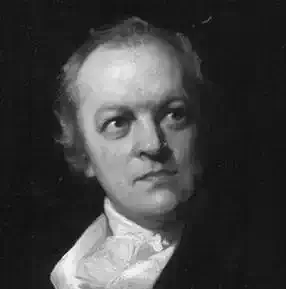
William Blake
Four Zoas, The (excerpt)
. "What is the price of Experience? do men buy it for a song?
. Or wisdom for a dance in the street? No, it is bought with the price
. Of all that a man hath, his house, his wife, his children.
. Wisdom is sold in the desolate market where none come to buy,
. And in the wither'd field where the farmer plows for bread in vain.
. It is an easy thing to triumph in the summer's sun
. And in the vintage and to sing on the waggon loaded with corn.
. It is an easy thing to talk of patience to the afflicted,
. To speak the laws of prudence to the houseless wanderer,
. To listen to the hungry raven's cry in wintry season
. When the red blood is fill'd with wine and with the marrow of lambs.
. It is an easy thing to laugh at wrathful elements,
. To hear the dog howl at the wintry door, the ox in the slaughter house moan;
. To see a god on every wind and a blessing on every blast;
. To hear sounds of love in the thunder storm that destroys our enemies' house;
. To rejoice in the blight that covers his field, and the sickness that cuts off his
children,
. While our olive and vine sing and laugh round our door, and our children bring
fruits and flowers.
. Then the groan and the dolor are quite forgotten, and the slave grinding at the
mill,
. And the captive in chains, and the poor in the prison, and the soldier in the field
. When the shatter'd bone hath laid him groaning among the happier dead.
. It is an easy thing to rejoice in the tents of prosperity:
. Thus could I sing and thus rejoice: but it is not so with me."
. "Compel the poor to live upon a crust of bread, by soft mild arts.
. Smile when they frown, frown when they smile; and when a man looks pale
. With labour and abstinence, say he looks healthy and happy;
. And when his children sicken, let them die; there are enough
. Born, even too many, and our earth will be overrun
. Without these arts. If you would make the poor live with temper,
. With pomp give every crust of bread you give; with gracious cunning
. Magnify small gifts; reduce the man to want a gift, and then give with pomp.
. Say he smiles if you hear him sigh. If pale, say he is ruddy.
. Preach temperance: say he is overgorg'd and drowns his wit
. In strong drink, though you know that bread and water are all
. He can afford. Flatter his wife, pity his children, till we can
. Reduce all to our will, as spaniels are taught with art."
. The sun has left his blackness and has found a fresher morning,
. And the mild moon rejoices in the clear and cloudless night,
. And Man walks forth from midst of the fires: the evil is all consum'd.
. His eyes behold the Angelic spheres arising night and day;
. The stars consum'd like a lamp blown out, and in their stead, behold
. The expanding eyes of Man behold the depths of wondrous worlds!
. One Earth, one sea beneath; nor erring globes wander, but stars
. Of fire rise up nightly from the ocean; and one sun
. Each morning, like a new born man, issues with songs and joy
. Calling the Plowman to his labour and the Shepherd to his rest.
. He walks upon the Eternal Mountains, raising his heavenly voice,
. Conversing with the animal forms of wisdom night and day,
. That, risen from the sea of fire, renew'd walk o'er the Earth;
. For Tharmas brought his flocks upon the hills, and in the vales
. Around the Eternal Man's bright tent, the little children play
. Among the woolly flocks. The hammer of Urthona sounds
. In the deep caves beneath; his limbs renew'd, his Lions roar
. Around the Furnaces and in evening sport upon the plains.
. They raise their faces from the earth, conversing with the Man:
. "How is it we have walk'd through fires and yet are not consum'd?
. How is it that all things are chang'd, even as in ancient times?"
604
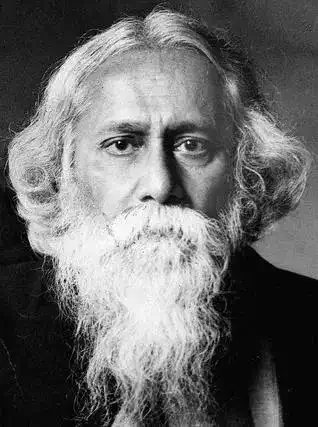
Rabindranath Tagore
The Gardener XLII: O Mad, Superbly Drunk
O mad, superbly drunk;
If you kick open your doors and
play the fool in public;
If you empty your bag in a night,
and snap your fingers at prudence;
If you walk in curious paths and
play with useless things;
Reck not rhyme or reason;
If unfurling your sails before the
storm you snap the rudder in two,
Then I will follow you, comrade,
and be drunken and go to the dogs.
I have wasted my days and nights
in the company of steady wise neighbours.
Much knowing has turned my hair
grey, and much watching has made
my sight dim.
For years I have gathered and
heaped up scraps and fragments of
things:
Crush them and dance upon them,
and scatter them all to the winds.
For I know 'tis the height of wisdom
to be drunken and go the dogs.
Let all crooked scruples vanish,
let me hopelessly lose my way.
Let a gust of wild giddiness come
and sweep me away from my anchors.
The world is peopled with worthies,
and workers, useful and clever.
There are men who are easily first,
and men who come decently after.
Let them be happy and prosper,
and let me be foolishly futile.
For I know 'tis the end of all works
to be drunken and go to the dogs.
I swear to surrender this moment
all claims to the ranks of the decent.
I let go my pride of learning and
judgment of right and of wrong.
I'll shatter memory's vessel, scattering
the last drop of tears.
With the foam of the berry-red
wine I will bathe and brighten my
laughter.
The badge of the civil and staid
I'll tear into shreds for the nonce.
I'll take the holy vow to be worthless,
to be drunken and go to the dogs.
589

William Shakespeare
Sonnet 11: As fast as thou shalt wane, so fast thou grow'st
As fast as thou shalt wane, so fast thou grow'st
In one of thine, from that which thou departest,
And that fresh blood which youngly thou bestow'st,
Thou mayst call thine when thou from youth convertest.
Herein lives wisdom, beauty, and increase;
Without this folly, age, and cold decay,
If all were minded so, the times should cease,
And threescore year would make the world away.
Let those whom Nature hath not made for store,
Harsh, featureless, and rude, barrenly perish;
Look whom she best endowed, she gave the more,
Which bounteous gift thou shouldst in bounty cherish.
She carved thee for her seal, and meant thereby,
Thou shouldst print more, not let that copy die.
595
Rudyard Kipling
Tomlinson
Now Tomlinson gave up the ghost in his house in Berkeley Square,
And a Spirit came to his bedside and gripped him by the hair --
A Spirit gripped him by the hair and carried him far away,
Till he heard as the roar of a rain-fed ford the roar of the Milky Way:
Till he heard the roar of the Milky Way die down and drone and cease,
And they came to the Gate within the Wall where Peter holds the keys.
"Stand up, stand up now, Tomlinson, and answer loud and high
The good that ye did for the sake of men or ever ye came to die --
The good that ye did for the sake of men in little earth so lone!"
And the naked soul of Tomlinson grew white as a rain-washed bone.
"O I have a friend on earth," he said, "that was my priest and guide,
And well would he answer all for me if he were by my side."
-- "For that ye strove in neighbour-love it shall be written fair,
But now ye wait at Heaven's Gate and not in Berkeley Square:
Though we called your friend from his bed this night,
he could not speak for you,
For the race is run by one and one and never by two and two."
Then Tomlinson looked up and down, and little gain was there,
For the naked stars grinned overhead, and he saw that his soul was bare:
The Wind that blows between the worlds, it cut him like a knife,
And Tomlinson took up his tale and spoke of his good in life.
"This I have read in a book," he said, "and that was told to me,
And this I have thought that another man thought of a Prince in Muscovy."
The good souls flocked like homing doves and bade him clear the path,
And Peter twirled the jangling keys in weariness and wrath.
"Ye have read, ye have heard, ye have thought," he said,
"and the tale is yet to run:
By the worth of the body that once ye had, give answer -- what ha' ye done?"
Then Tomlinson looked back and forth, and little good it bore,
For the Darkness stayed at his shoulder-blade and Heaven's Gate before: --
"O this I have felt, and this I have guessed, and this I have heard men say,
And this they wrote that another man wrote of a carl in Norroway."
-- "Ye have read, ye have felt, ye have guessed, good lack!
Ye have hampered Heaven's Gate;
There's little room between the stars in idleness to prate!
O none may reach by hired speech of neighbour, priest, and kin
Through borrowed deed to God's good meed that lies so fair within;
Get hence, get hence to the Lord of Wrong, for doom has yet to run,
And. . .the faith that ye share with Berkeley Square uphold you, Tomlinson!"
. . . . .
The Spirit gripped him by the hair, and sun by sun they fell
Till they came to the belt of Naughty Stars that rim the mouth of Hell:
The first are red with pride and wrath, the next are white with pain,
But the third are black with clinkered sin that cannot burn again:
They may hold their path, they may leave their path,
with never a soul to mark,
They may burn or freeze, but they must not cease
in the Scorn of the Outer Dark.
The Wind that blows between the worlds, it nipped him to the bone,
And he yearned to the flare of Hell-Gate
there as the light of his own hearth-stone.
The Devil he sat behind the bars, where the desperate legions drew,
But he caught the hasting Tomlinson and would not let him through.
"Wot ye the price of good pit-coal that I must pay?" said he,
"That ye rank yoursel' so fit for Hell and ask no leave of me?
I am all o'er-sib to Adam's breed that ye should give me scorn,
For I strove with God for your First Father the day that he was born.
Sit down, sit down upon the slag, and answer loud and high
The harm that ye did to the Sons of Men or ever you came to die."
And Tomlinson looked up and up, and saw against the night
The belly of a tortured star blood-red in Hell-Mouth light;
And Tomlinson looked down and down, and saw beneath his feet
The frontlet of a tortured star milk-white in Hell-Mouth heat.
"O I had a love on earth," said he, "that kissed me to my fall,
And if ye would call my love to me I know she would answer all."
-- "All that ye did in love forbid it shall be written fair,
But now ye wait at Hell-Mouth Gate and not in Berkeley Square:
Though we whistled your love from her bed to-night, I trow she would not run,
For the sin ye do by two and two ye must pay for one by one!"
The Wind that blows between the worlds, it cut him like a knife,
And Tomlinson took up the tale and spoke of his sin in life: --
"Once I ha' laughed at the power of Love and twice at the grip of the Grave,
And thrice I ha' patted my God on the head that men might call me brave."
The Devil he blew on a brandered soul and set it aside to cool: --
"Do ye think I would waste my good pit-coal on the hide of a brain-sick fool?
I see no worth in the hobnailed mirth or the jolthead jest ye did
That I should waken my gentlemen that are sleeping three on a grid."
Then Tomlinson looked back and forth, and there was little grace,
For Hell-Gate filled the houseless Soul with the Fear of Naked Space.
"Nay, this I ha' heard," quo' Tomlinson, "and this was noised abroad,
And this I ha' got from a Belgian book on the word of a dead French lord."
-- "Ye ha' heard, ye ha' read, ye ha' got, good lack!
and the tale begins afresh --
Have ye sinned one sin for the pride o' the eye
or the sinful lust of the flesh?"
Then Tomlinson he gripped the bars and yammered, "Let me in --
For I mind that I borrowed my neighbour's wife to sin the deadly sin."
The Devil he grinned behind the bars, and banked the fires high:
"Did ye read of that sin in a book?" said he; and Tomlinson said, "Ay!"
The Devil he blew upon his nails, and the little devils ran,
And he said: "Go husk this whimpering thief that comes in the guise of a man:
Winnow him out 'twixt star and star, and sieve his proper worth:
There's sore decline in Adam's line if this be spawn of earth."
Empusa's crew, so naked-new they may not face the fire,
But weep that they bin too small to sin to the height of their desire,
Over the coal they chased the Soul, and racked it all abroad,
As children rifle a caddis-case or the raven's foolish hoard.
And back they came with the tattered Thing, as children after play,
And they said: "The soul that he got from God he has bartered clean away.
We have threshed a stook of print and book, and winnowed a chattering wind
And many a soul wherefrom he stole, but his we cannot find:
We have handled him, we have dandled him, we have seared him to the bone,
And sure if tooth and nail show truth he has no soul of his own."
The Devil he bowed his head on his breast and rumbled deep and low: --
"I'm all o'er-sib to Adam's breed that I should bid him go.
Yet close we lie, and deep we lie, and if I gave him place,
My gentlemen that are so proud would flout me to my face;
They'd call my house a common stews and me a careless host,
And -- I would not anger my gentlemen for the sake of a shiftless ghost."
The Devil he looked at the mangled Soul that prayed to feel the flame,
And he thought of Holy Charity, but he thought of his own good name: --
"Now ye could haste my coal to waste, and sit ye down to fry:
Did ye think of that theft for yourself?" said he; and Tomlinson said, "Ay!"
The Devil he blew an outward breath, for his heart was free from care: --
"Ye have scarce the soul of a louse," he said,
"but the roots of sin are there,
And for that sin should ye come in were I the lord alone.
But sinful pride has rule inside -- and mightier than my own.
Honour and Wit, fore-damned they sit, to each his priest and whore:
Nay, scarce I dare myself go there, and you they'd torture sore.
Ye are neither spirit nor spirk," he said; "ye are neither book nor brute --
Go, get ye back to the flesh again for the sake of Man's repute.
I'm all o'er-sib to Adam's breed that I should mock your pain,
But look that ye win to worthier sin ere ye come back again.
Get hence, the hearse is at your door -- the grim black stallions wait --
They bear your clay to place to-day. Speed, lest ye come too late!
Go back to Earth with a lip unsealed -- go back with an open eye,
And carry my word to the Sons of Men or ever ye come to die:
That the sin they do by two and two they must pay for one by one --
And. . .the God that you took from a printed book be with you, Tomlinson!"
594
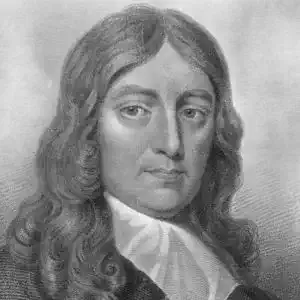
John Milton
To Cyriack Skinner
Cyriack, whose grandsire on the royal bench
Of British Themis, with no mean applause,
Pronounced, and in his volumes taught, our laws,
Which others at their bar so often wrench,
To-day deep thoughts resolve with me to drench
In mirth that after no repenting draws;
Let Euclid rest, and Archimedes pause,
And what the Swede intend, and what the French.
To measure life learn thou betimes, and know
Toward solid good what leads the nearest way;
For other things mild Heaven a time ordains,
And disapproves that care, though wise in show,
That with superfluous burden loads the day,
And, when God sends a cheerful hour, refrains.
578

Ezra Pound
Canto III
Another's a half-cracked fellow—John Heydon,
Worker of miracles, dealer in levitation,
In thoughts upon pure form, in alchemy,
Seer of pretty visions ('servant of God and secretary of nature');
Full of plaintive charm, like Botticelli's,
With half-transparent forms, lacking the vigor of gods.
Thus Heydon, in a trance, at Bulverton,
Had such a sight:
Decked all in green, with sleeves of yellow silk
Slit to the elbow, slashed with various purples.
Her eyes were green as glass, her foot was leaf-like.
She was adorned with choicest emeralds,
And promised him the way of holy wisdom.
'Pretty green bank,' began the half-lost poem.
Take the old way, say I met John Heydon,
Sought out the place,
Lay on the bank, was 'plungèd deep in swevyn;'
And saw the company—Layamon, Chaucer—
Pass each in his appropriate robes;
Conversed with each, observed the varying fashion.
And then comes Heydon.
'I have seen John Heydon.'
Let us hear John Heydon!
'Omniformis
Omnis intellectus est'—thus he begins, by spouting half of Psellus.
(Then comes a note, my assiduous commentator:
Not Psellus De Daemonibus, but Porphyry's Chances,
In the thirteenth chapter, that 'every intellect is omni-form.')
Magnifico Lorenzo used the dodge,
Says that he met Ficino
In some Wordsworthian, false-pastoral manner,
And that they walked along, stopped at a well-head,
And heard deep platitudes about contentment
From some old codger with an endless beard.
'A daemon is not a particular intellect,
But is a substance differed from intellect,'
Breaks in Ficino,
'Placed in the latitude or locus of souls'—
That's out of Proclus, take your pick of them.
Valla, more earth and sounder rhetoric—
Prefacing praise to his Pope Nicholas:
'A man of parts, skilled in the subtlest sciences;
A patron of the arts, of poetry; and of a fine discernment.'
Then comes a catalogue, his jewels of conversation.
No, you've not read your Elegantiae—
A dull book?—shook the church.
The prefaces, cut clear and hard:
'Know then the Roman speech, a sacrament,'
Spread for the nations, eucharist of wisdom,
Bread of the liberal arts.
Ha! Sir Blancatz,
Sordello would have your heart to give to all the princes;
Valla, the heart of Rome,
Sustaining speech, set out before the people.
'Nec bonus Christianus ac bonus
Tullianus.'
Marius, Du Bellay, wept for the buildings,
Baldassar Castiglione saw Raphael
'Lead back the soul into its dead, waste dwelling,'
Corpore laniato; and Lorenzo Valla,
'Broken in middle life? bent to submission?—
Took a fat living from the Papacy'
(That's in Villari, but Burckhardt's statement is different)—
'More than the Roman city, the Roman speech'
(Holds fast its part among the ever-living).
'Not by the eagles only was Rome measured.'
'Wherever the Roman speech was, there was Rome,'
Wherever the speech crept, there was mastery
Spoke with the law's voice while your Greek, logicians...
More Greeks than one! Doughty's 'divine Homeros'
Came before sophistry. Justinopolitan
Uncatalogued Andreas Divus,
Gave him in Latin, 1538 in my edition, the rest uncertain,
Caught up his cadence, word and syllable:
'Down to the ships we went, set mast and sail,
Black keel and beasts for bloody sacrifice,
Weeping we went.'
I've strained my ear for -ensa, -ombra, and -ensa
And cracked my wit on delicate canzoni—
Here's but rough meaning:
'And then went down to the ship, set keel to breakers,
Forth on the godly sea;
We set up mast and sail on the swarthy ship,
Sheep bore we aboard her, and our bodies also
Heavy with weeping. And winds from sternward
Bore us out onward with bellying canvas—
Circe's this craft, the trim-coifed goddess.
Then sat we amidships, wind jamming the tiller.
Thus with stretched sail
We went over sea till day's end:
Sun to his slumber, shadows o'er all the ocean.
Came we then to the bounds of deepest water,
To the Kimmerian lands and peopled cities
Covered with close-webbed mist, unpiercèd ever
With glitter of sun-rays,
Nor with stars stretched, nor looking back from heaven,
Swartest night stretched over wretched men there.
Thither we in that ship, unladed sheep there,
The ocean flowing backward, came we through to the place
Aforesaid by Circe.
Here did they rites, Perimedes and Eurylochus,
And drawing sword from my hip
I dug the ell-square pitkin, poured we libations unto each the dead,
First mead and then sweet wine,
Water mixed with white flour.
Then prayed I many a prayer to the sickly death's-heads
As set in Ithaca, sterile bulls of the best,
For sacrifice, heaping the pyre with goods.
Sheep, to Tiresias only,
Black, and a bell sheep;
Dark blood flowed in the fosse.
Souls out of Erebus, cadaverous dead
Of brides, of youths, and of many passing old,
Virgins tender, souls stained with recent tears,
Many men mauled with bronze lance-heads,
Battle spoil, bearing yet dreary arms:
These many crowded about me,
With shouting, pallor upon me, cried to my men for more beasts;
Slaughtered the herds—sheep slain of bronze,
Poured ointment, cried to the gods,
To Pluto the strong, and praised Proserpine.
Unsheathed the narrow steel,
I sat to keep off the impetuous, impotent dead
Till I should hear Tiresias.
But first Elpenor came, our friend Elpenor,
Unburied, cast on the wide earth—
Limbs that we left in the house of Circe,
Unwept, unwrapped in sepulchre, since toils urged other,
Pitiful spirit—and I cried in hurried speech:
'Elpenor, how art thou come to this dark coast?
Cam'st thou afoot, outstripping seamen?' And he in heavy speech:
'Ill fate and abundant wine! I slept in Circe's ingle,
Going down the long ladder unguarded, I fell against the buttress,
Shattered the nape-nerve, the soul sought Avernus.
But thou, O King, I bid remember me, unwept, unburied!
Heap up mine arms, be tomb by the sea-board, and inscribed,
A man of no fortune and with a name to come;
And set my oar up, that I swung 'mid fellows.'
Came then another ghost, whom I beat off, Anticlea,
And then Tiresias, Theban,
Holding his golden wand, knew me and spoke first:
'Man of ill hour, why come a second time,
Leaving the sunlight, facing the sunless dead and this joyless region?
Stand from the fosse, move back, leave me my bloody bever,
And I will speak you true speeches.'
'And I stepped back,
Sheathing the yellow sword. Dark blood he drank then
And spoke: 'Lustrous Odysseus, shalt
Return through spiteful Neptune, over dark seas,
Lose all companions.' Foretold me the ways and the signs.
Came then Anticlea, to whom I answered:
'Fate drives me on through these deeps; I sought Tiresias.'
I told her news of Troy, and thrice her shadow
Faded in my embrace.
Then had I news of many faded women—
Tyro, Alcmena, Chloris—
Heard out their tales by that dark fosse, and sailed
By sirens and thence outward and away,
And unto Circe buried Elpenor's corpse.'
Lie quiet, Divus.
In Officina Wechli, Paris,
M. D. three X's, Eight, with Aldus on the Frogs,
And a certain Cretan's
Hymni Deorum:
(The thin clear Tuscan stuff
Gives way before the florid mellow phrase.)
Take we the Goddess, Venus:
Venerandam,
Aurean coronam habentem, pulchram,
Cypri munimenta sortita est, maritime,
Light on the foam, breathed on by zephyrs,
And air-tending hours. Mirthful, orichalci
, with golden
Girdles and breast bands.
Thou with dark eye-lids,
Bearing the golden bough of Argicida.
562

Anonymous
Cleanness
Clannesse who so kyndly cowþe comende
& rekken vp alle þe resounz þat ho by rit askez,
Fayre formez myt he fynde in for[þ]ering his speche
& in þe contrare kark & combraunce huge.
For wonder wroth is þe Wyþat wrot alle þinges
Wyth þe freke þat in fylþe foles Hym after,
As renkez of relygioun þat reden & syngen
& aprochen to hys presens & prestez arn called;
Thay teen vnto his temmple & temen to hym seluen,
Reken with reuerence þay rychen His auter;
Þay hondel þer his aune body & vsen hit boþe.
If þay in clannes be clos þay cleche gret mede;
Bot if þay conterfete crafte & cortaysye wont,
As be honest vtwyth & inwith alle fylþez,
Þen ar þay synful hemself & sulped altogeder
Boþe God & His gere, & hym to greme cachen.
He is so clene in His courte, þe Kyng þat al weldez,
& honeste in His housholde & hagherlych serued
With angelez enourled in alle þat is clene,
Boþ withine & withouten in wedez ful bryt;
Nif he nere scoymus & skyg & non scaþe louied,
Hit were a meruayl to much, hit mot not falle.
Kryst kydde hit Hymself in a carp onez,
Þeras He heuened at happez & hyt hem her medez.
Me mynez on one amonge oþer, as Maþew recordez,
Þat þus clanness vnclosez a ful cler speche:
Þe haþel clene of his hert hapenez ful fayre,
For he schal loke on oure Lorde with a bone chere';
As so saytz, to þat syt seche schal he neuer
Þat any vnclannesse hatz on, auwhere abowte;
For He þat flemus vch fylþe fer fro His hert
May not byde þat burre þat hit His body neen.
Forþy hynot to heuen in haterez totorne,
Ne in þe harlatez hod, & handez vnwaschen.
For what vrþly haþel þat hyhonour haldez
Wolde lyke if a ladde com lyþerly attyred,
When he were sette solempnely in a sete ryche,
Abof dukez on dece, with dayntys serued?
Þen þe harlot with haste helded to þe table,
With rent cokrez at þe kne & his clutte traschez,
& his tabarde totorne, & his totez oute,
Oþer ani on of alle þyse, he schulde be halden vtter,
With mony blame ful bygge, a boffet peraunter,
Hurled to þe halle dore & harde þeroute schowued,
& be forboden þat bore to bowe þider neuer,
On payne of enprysonment & puttyng in stokkez;
& þus schal he be schent for his schrowde feble,
Þaneuer in talle ne in tuch he trespas more.
& if vnwelcum he were to a worþlych prynce,
et hym is þe hye Kyng harder in her euen;
As Maþew melez in his masse of þat man ryche,
Þat made þe mukel mangerye to marie his here dere,
& sende his sonde þen to say þat þay samne schulde,
& in comly quoyntis to com to his feste:
'For my boles & my borez arn bayted & slayne,
& my fedde foulez fatted with sclat,
My polyle þat is penne-fed & partrykez boþe,
Wyth scheldez of wylde swyn, swanez & cronez,
Al is roþeled & rosted ryt to þe sete;
Comez cof to my corte, er hit colde worþe.'
When þay knewen his cal þat þider com schulde,
Alle excused hem by þe skyly he scape by mot.
On hade bot hym a bor, he sayde, by hys trawþe:
'Now turne I þeder als tyd þe toun to byholde.'
Anoþer nayed also & nurned þis cawse:
'I haf erned & at okkez of oxen,
& for my hyez hem bot; to bowe haf I mester,
To see hem pulle in þe plow aproche me byhouez.'
'& I haf wedded a wyf,' so wer hym þe þryd;
'Excuse me at þe court, I may not com þere.'
Þus þay drohem adrewith daunger vchone,
Þat non passed to þe plate þahe prayed were.
Thenne þe ludych lorde lyked ful ille,
& hade dedayn of þat dede; ful dryly he carpez.
He saytz: 'Now for her owne sore þay forsaken habbez;
More to wyte is her wrange þen any wylle gentyl.
Þenne gotz forth, my gomez, þe grete streetez,
& forsettz on vche a syde þe cete aboute;
Þe wayferande frekez, on fote & on hors,
Boþe burnez & burdez, þe better & þe wers,
Laþez hem alle luflyly to lenge at my fest,
& bryngez hem blyþly to bore as barounez þay were,
So þat my palays plat ful be pyt al aboute;
Þise oþer wrechez iwysse worþy not wern.'
Þen þay cayred & com þat þe cost waked,
Broten bachlerez hem wyth þat þay by bonkez metten,
Swyerez þat swyftly swyed on blonkez,
& als fele vpon fote, of fre & of bonde.
When þay com to þe courte keppte weren þay fayre,
Stytled with þe stewarde, stad in þe halle,
Ful manerly with marchal mad for to sitte,
As he watz dere of degre dressed his seete.
Þenne seggez to þe souerayn sayden þerafter:
'Lo! Lorde, with your leue, at your lege heste
& at þi banne we haf brot, as þou beden habbez,
Mony renischsche renkez, & et is roum more.'
Sayde þe lorde to þo ledez, 'Laytez et ferre,
Ferre out in þe felde, & fechez mo gestez;
Waytez gorstez & greuez, if ani gomez lyggez;
Whatkyn folk so þer fare, fechez hem hider;
Be þay fers, be þay feble, forlotez none,
Be þay hol, be þay halt, be þay onyed,
& þaþay ben boþe blynde & balterande cruppelez,
Þat my hous may holly by halkez by fylled.
For, certez, þyse ilk renkez þat me renayed habbe,
& denounced me not now at þis tyme,
Schul neuer sitte in my sale my soper to fele,
Ne suppe on sope of my seve, þaþaþay swelt schulde.'
Thenne þe sergauntez, at þat sawe, swengen þeroute,
& diden þe dede þat [watz] demed, as he deuised hade,
& with peple of alle plytez þe palays þay fyllen;
Hit weren not alle on wyuez sunez, wonen with on fader.
Wheþer þay wern worþy oþer wers, wel wern þay
stowed,
Ay þe best byfore & brytest atyred,
Þe derrest at þe hye dese, þat dubbed wer fayrest,
& syþen on lenþe bilooghe ledez inogh.
& ay a[s] segge[s] [serly] semed by her wedez,
So with marschal at her mete mensked þay were.
Clene men in compaynye forknowen wern lyte,
& et þe symplest in þat sale watz serued to þe fulle,
Boþe with menske & with mete & mynstrasy noble,
& alle þe laykez þat a lorde at in londe schewe.
& þay bigonne to be glad þat god drink haden.
& vch mon with his mach made hym at ese.
Now inmyddez þe mete þe mayster hym biþot
Þat he wolde se þe semble þat samned was þere,
& rehayte rekenly þe riche & þe pou[eren],
& cherisch hem alle with his cher, & chaufen her joye.
Þen he bowez fro his bour into þe brode halle
& to þe best on þe bench, & bede hym be myry,
Solased hem with semblaunt & syled fyrre,
Tron fro table to table & talkede ay myrþe.
Bot as he ferked ouer þe flor, he fande with his ye,
Hit watz not for a halyday honestly arayed,
A þral þryt in þe þrong vnþryuandely cloþed,
Ne no festiual frok, bot fyled with werkkez;
Þe gome watz vngarnyst with god men to dele.
& gremed þerwith þe grete lorde, & greue hym he þot.
'Say me, frende,' quoþ þe freke with a felle chere,
'Hov wan þou into þis won in wedez so fowle?
Þe abyt þat þou hatz vpon, no halyday hit menskez;
Þou, burne, for no brydale art busked in wedez.
How watz þou hardy þis hous for þyn vnhap [to] nee
In on so ratted a robe & rent at þe sydez?
Þow art a gome vngoderly in þat goun febele;
Þou praysed me & my place ful pouer & ful [g]nede,
Þat watz so prest to aproche my presens hereinne.
Hopez þou I be a harlot þi erigaut to prayse?'
Þat oper burne watz abayst of his broþe wordez,
& hurkelez doun with his hede, þe vrþe he biholdez;
He watz so scoumfit of his scylle, lest he skaþe hent,
Þat he ne wyst on worde what he warp schulde.
Þen þe lorde wonder loude laled & cryed,
& talkez to his tormenttourez: 'Takez hym,' he biddez,
'Byndez byhynde, at his bak, boþe two his handez,
& felle fetterez to his fete festenez bylyue;
Stik hym stifly in stokez, & stekez hym þerafter
Depe in my doungoun þer doel euer dwellez,
Greuing & gretyng & gryspyng harde
Of teþe tenfully togeder, to teche hym be quoynt.'
Thus comparisunez Kryst þe kyndom of heuen
To þis frelych feste þat fele arn to called;
For alle arn laþed luflyly, þe luþer & þe better,
Þat euer wern fuled in font, þat fest to haue.
Bot war þe wel, if þou wylt, þy wedez ben clene
& honest for þe halyday, lest þou harme lache,
For aproch þou to þat Prynce of parage noble,
He hates helle no more þen hem þat ar sowle.
Wich arn þenne þy wedez þou wrappez þe inne,
Þat schal schewe hem so schene schrowde of þe best?
Hit arn þy werkez, wyterly, þat þou wrot hauez,
& lyued with þe lykyng þat lye in þyn hert;
Þat þo be frely & fresch fonde in þy lyue,
& fetyse of a fayr forme to fote & to honde,
& syþen alle þyn oþer lymez lapped ful clene;
Þenne may þou se þy Sauior & His sete ryche.
For fele[r] fautez may a freke forfete his blysse,
Þat he þe Souerayn ne se, þen for slauþe one;
As for bobaunce & bost & bolnande priyde
Þroly into þe deuelez þrote man þryngez bylyue.
For couetyse & colwarde & croked dedez,
For monsworne & mensclat & to much drynk,
For þefte & for þrepyng, vnþonk may mon haue;
For roborrye & riboudrye & resounez vntrwe,
& dsyheriete & depryue dowrie of wydoez,
For marryng of maryagez & mayntnaunce of schrewez,
For traysoun & trichcherye & tyrauntyre boþe,
& for fals famacions & fayned lawez;
Man may mysse þe myrþe þat much is to prayse
For such vnþewez as þise, & þole much payne,
& in þe Creatores cort com neuermore,
Ne neuer see Hym with syt for such sour tournez.
Bot I haue herkned & herde of mony hye clerkez,
& als in resounez of ryt red hit myseluen,
Þat þat ilk proper Prynce þat paradys weldez
Is displesed at vch a poynt þat plyes to scaþe;
Bot neuer et in no boke breued I herde
Þat euer He wrek so wyþerly on werk þat He made,
Ne venged for no vilte of vice ne synne,
Ne so hastyfly watz hot for hatel of His wylle,
Ne neuer so sodenly sot vnsoundely to weng,
As for fylþe of þe flesch þat foles han vsed;
For, as I fynde, þer He foret alle His fre þewez,
& wex wod to þe wrache for wrath at His hert.
For þe fyrste felonye þe falce fende wrot
Whyl he watz hye in þe heuen houen vpon lofte,
Of alle þyse aþel aungelez attled þe fayrest:
& he vnkyndely, as a karle, kydde a reward.
He senot bot hymself how semly he were,
Bot his Souerayn he forsoke & sade þyse wordez:
`I schal telde vp my trone in þe tramountayne,
& by lyke to þat Lorde þat þe lyft made.'
With þis worde þat he warp, þe wrake on hym lyt:
Drytyn with His dere dom hym drof to þe abyme,
In þe mesure of His mode, His metz neuer þe lasse.
Bot þer He tynt þe tyþe dool of His tour ryche:
Þaþe feloun were so fers for his fayre wedez
& his glorious glem þat glent so bryt,
As sone as Drytynez dome drof to hymseluen,
Þikke þowsandez þro þrwen þeroute,
Fellen fro þe frymament fendez ful blake,
Sweued at þe fryst swap as þe snaw þikke,
Hurled into helle-hole as þe hyue swarmez.
Fylter fenden folk forty dayez lencþe,
Er þat styngande storme stynt ne myt;
Bot as smylt mele vnder smal siue smokez forþikke.
So fro heuen to helle þat hatel schor laste,
On vche syde of þe worlde aywhere ilyche.
is, hit watz a brem brest & a byge wrache,
& et wrathed not þe Wy; ne þe wrech satled,
Ne neuer wolde, for wyl[fulnes], his worþy God knawe,
Ne pray Hym for no pite, so proud watz his wylle.
Forþy þaþe rape were rank, þe rawþe watz lytt[el];
Þahe be kest into kare, he kepes no better.
Bot þat oper wrake þat wex, on wyez hit lyt
Þurþe faut of a freke þat fayled in trawþe,
Adam inobedyent, ordaynt to blysse.
Þer pryuely in paradys his place watz devised,
To lyue þer in lykyng þe lenþe of a terme,
& þenne enherite þat home þat aungelez forgart;
Bot þurþe eggyng of Eue he ete of an apple
Þat enpoysened alle peplez þat parted fro hem boþe,
For a defence þat watz dyt of Drytyn Seluen,
& a payne þeron put & pertly halden.
Þe defence watz þe fryt þat þe freke towched,
& þe dom is þe deþe þat drepez vus alle;
Al in mesure & meþe watz mad þe vengiaunce,
& efte amended with a mayden þat make had neuer.
Bot in þe þryd watz forþrast al þat þryue schuld:
Þer watz malys mercyles & mawgre much scheued,
Þat watz for fylþe vpon folde þat þe folk vsed,
Þat þen wonyed in þe worlde withouten any maysterz.
Hit wern þe fayrest of forme & of face als,
Þe most & þe myriest þat maked wern euer,
Þe styfest, þe stalworþest þat stod euer on fete,
& lengest lyf in hem lent of ledez alle oþer.
For hit was þe forme foster þat þe folde bred,
Þe aþel aunceterez sunez pat Adam watz called,
To wham God hade geuen alle þat gayn were,
Alle þe blysse boute blame þat bodi myt haue;
& þose lykkest to þe lede, þat lyued next after;
Forþy so semly to see syþen wern none.
Þer watz no law to hem layd bot loke to kynde,
& kepe to hit, & alle hit cors clanly fulfylle.
& þenne founden þay fylþe in fleschlych dedez,
& controeued agayn kynde contrare werkez,
& vsed hem vnþryftyly vchon on oþer,
& als with oþer, wylsfully, upon a wrange wyse:
So ferly fowled her flesch þat þe fende loked
How þe deter of þe douþe wern derelych fayre,
& fallen in felaschyp with hem on folken wyse,
& engendered on hem jeauntez with her japez ille.
Þose wern men meþelez & maty on vrþe,
Þat for her lodlych laykez alosed þay were;
He watz famed for fre þat fet loued best,
& ay þe bigest in bale þe best watz halden.
& þenne euelez on erþe ernestly grewen
& multyplyed monyfolde inmongez mankynde,
For þat þe maty on molde so marre þise oþer
Þat þe Wye þat al wrot ful wroþly bygynnez.
When He knew vche contre coruppte in hitseluen,
& vch freke forloyned fro þe ryt wayez,
Felle temptande tene towched His hert.
As wye wo hym withinne, werp to Hymseluen:
'Me forþynkez ful much þat euer I mon made,
Bot I schal delyuer & do away þat doten on þis molde,
& fleme out of þe folde al þat flesch werez,
Fro þe burne to þe best, fro bryddez to fyschez;
Al schal doun & be ded & dryuen out of erþe
Þat euer I sette saule inne; & sore hit Me rwez
Þat euer I made hem Myself; bot if I may herafter,
I schal wayte to be war her wrenchez to kepe.'
Þenne in worlde watz a wye wonyande on lyue,
Ful redy & ful rytwys, & rewled hym fayre,
In þe drede of Drytyn his dayez he vsez,
& ay glydande wyth his God, his grace watz þe more.
Hym watz þe nome Noe, as is innoghe knawen.
He had þre þryuen sunez, & þay þre wyuez:
Sem soþly þat on, þat oþer hyt Cam,
& þe jolef Japheth watz gendered þe þryd.
Now God in nwy to Noe con speke
Wylde wrakful wordez, in His wylle greued:
'Þe ende of alle kynez flesch þat on vrþe meuez
Is fallen forþwyth My face, & forþer hit I þenk.
With her vnworþelych werk Me wlatez withinne;
Þe gore þerof Me hatz greued & þe glette nwyed.
I schal strenkle My distresse, & strye al togeder,
Boþe ledez & londe & alle þat lyf habbez.
Bot make to þe a mancioun, & þat is My wylle,
A cofer closed of tres, clanlych planed.
Wyrk wonez þerinne for wylde & for tame,
& þenne cleme hit with clay comly within[n]e,
& alle þe endentur dryuen daube withouten.
& þus of lenþe & of large þat lome þou make:
Þre hundred of cupydez þou holde to þe lenþe,
Of fyfty fayre ouerþwert forme þe brede;
& loke euen þat þyn ark haue of heþe þrette,
& a wyndow wyd vpon[ande] wrot vpon lo[f]te,
In þe compas of a cubit kyndely sware;
A wel dutande dor, don on þe syde;
Haf hallez þerinne & halkez ful mony,
Boþe boske[n]z & bourez & wel bounden penez.
For I schal waken vp a water to wasch alle þe worlde,
& quelle alle þat is quik with quauende flodez,
Alle þat glydez & gotz & gost of lyf habbez;
I schal wast with My wrath þat wons vpon vrþe.
Bot My forwarde with þe I festen on þis wyse,
For þou in reysoun hatz rengned & rytwys ben euer:
Þou schal enter þis ark with þyn aþel barnez
& þy wedded wyf; with þe þou take
Þe makez of þy myry sunez; þis meyny of ate
I schal saue of monnez saulez, & swelt þose oþer.
Of vche best þat berez lyf busk þe a cupple,
Of vche clene comly kynde enclose seuen makez,
Of vche horwed in ark halde bot a payre,
For to saue Me þe sede of alle ser kyndez.
& ay þou meng with þe malez þe mete ho-bestez,
Vche payre by payre to plese ayþer oþer;
With alle þe fode þat may be founde frette þy cofer,
For sustnaunce to yowself & also þose oþer.'
Ful grayþely gotz þis god man & dos Godez hestes,
In drydred & daunger þat durst do non oþer.
Wen hit watz fettled & forged & to þe fulle grayþed,
Þenn con Dryttyn hym dele dryly þyse wordez.
'Now Noe,' quoþ oure Lorde, 'art þou al redy?
Hatz þou closed þy kyst with clay alle aboute?'
'e, Lorde, with þy leue,' sayde þe lede þenne,
Al is wrot at Þi worde, as Þou me wyt lantez.'
'Enter in, þenn,' quoþ He, & haf þi wyf with þe,
Þy þre sunez, withouten þrep, & her þre wyuez;
Bestez, as I bedene haue, bosk þerinne als,
& when e arn staued, styfly stekez yow þerinne.
Fro seuen dayez ben seyed I sende out bylyue
Such a rowtande ryge þat rayne schal swyþe
Þat schal wasch alle þe worlde of werkez of fylþe;
Schal no flesch vpon folde by fonden onlyue,
Outtaken yow at in þis ark staued
& sed þat I wyl saue of þyse ser bestez.'
Now Noe neuer sty[n]tez, þat niy[t] he bygynnez,
Er al wer stawed & stoken as þe steuen wolde.
Thenne sone com þe seuenþe day, when samned wern alle,
& alle woned in þe whichche, þe wylde & þe tame.
Þen bolned þe abyme, & bonkez con ryse,
Waltes out vch walle-heued in ful wode stremez;
Watz no brymme þat abod vnbrosten bylyue;
Þe mukel lauande loghe to þe lyfte rered.
Mony clustered clowde clef alle in clowtez;
Torent vch a rayn-ryfte & rusched to þe vrþe,
Fon neuer in forty dayez. & þen þe flod ryses,
Ouerwaltez vche a wod & þe wyde feldez.
For when þe water of þe welkyn with þe worlde mette,
Alle þat deth mot drye drowned þerinne.
Þer watz moon for to make when meschef was cnowen,
Þat not dowed bot þe deth in þe depe stremez;
Water wylger ay wax, wonez þat stryede,
Hurled into vch hous, hent þat þer dowelled.
Fryst feng to þe flyt alle þat fle myt;
Vuche burde with her barne þe byggyng þay leuez
& bowed to þe hybonk þer brentest hit wern,
& heterly to þe hye hyllez þay [h]aled on faste.
Bot al watz nedlez her note, for neuer cowþe stynt
Þe roe raynande ryg, þe raykande wawez,
Er vch boþom watz brurdful to þe bonkez eggez,
& vche a dale so depe þat demmed at þe brynkez.
Þe moste mountaynez on mor þenne watz no more drye,
& þeron flokked þe folke, for ferde of þe wrake.
Syþen þe wylde of þe wode on þe water flette;
Summe swymmed þeron þat saue hemself trawed,
Summe stye to a stud & stared to þe heuen,
Rwly wyth a loud rurd rored for drede.
Harez, herttez also, to þe hye runnen;
Bukkez, bausenez, & bulez to þe bonkkez hyed;
& alle cryed for care to þe Kyng of heuen,
Recouerer of þe Creator þay cryed vchone,
Þat amounted þe masse, þe mase His mercy watz passed,
& alle His pyte departed fro peple þat He hated.
Bi þat þe flod to her fete floed & waxed,
Þen vche a segge sewel þat synk hym byhoued.
Frendez fellen in fere & faþmed togeder,
To dryher delful deystyne & dyen alle samen;
Luf lokez to luf & his leue takez,
For to ende alle at onez & for euer twynne.
By forty dayez wern faren, on folde no flesch styryed
Þat þe flod nade al freten with fetande waez;
For hit clam vche a clyffe, cubites fyftene
Ouer þe hyest hylle þat hurkled on erþe.
Þenne mourkne in þe mudde most ful nede
Alle þat spyrakle inspranc, no sprawlyng awayled,
Saue þe haþel vnder hach & his here straunge,
Noe þat ofte neuened þe name of oure Lorde,
Hym atsum in þat ark, as aþel God lyked,
Þer alle ledez in lome lenged druye.
Þe arc houen watz on hye with hurlande gotez,
Kest to kythez vncouþe þe clowdez ful nere.
Hit waltered on þe wylde flod, went as hit lyste,
Drof vpon þe depe dam, in daunger hit semed,
Withouten mast, oþer myke, oþer myry bawelyne,
Kable, oþer capstan to clyppe to her ankrez,
Hurrok, oþer hande-helme hasped on roþer,
Oþer any sweande sayl to seche after hauen,
Bot flote forthe with þe flyt of þe felle wyndez.
Whederwarde so þe water wafte, hit rebounde;
Ofte hit roled on rounde & rered on ende;
Nyf oure Lorde hade ben her lodezmon hem had lumpen harde.
Of þe lenþe of Noe lyf to lay a lel date,
Þe sex hundreth of his age & none odde erez,
Of secounde monyth þe seuen[ten]þe day rytez,
Towalten alle þyse welle-hedez & þe water flowed;
& þryez fyfty þe flod of folwande dayez;
Vche hille watz þer hidde with y[þ]ez ful graye.
Al watz wasted þat þer wonyed þe worlde withinne,
Þ[at] euer flote, oþer flwe, oþer on fote ede,
That roly watz þe remnaunt þat þe rac dryuez
Þat alle gendrez so joyst wern joyned wythinne
Bot quen þe Lorde of þe lyfte lyked Hymseluen
For to mynne on His mon His meth þat abydez,
Þen He wakened a wynde on watterez to blowe;
Þenne lasned þe llak þat large watz are.
Þen He stac vp þe stangez, stoped þe wellez,
Bed blynne of þe rayn: hit batede as faste;
Þenne lasned þe lolowkande togeder.
After harde dayez wern out an hundreth & fyfte,
As þat lyftande lome luged aboute.
Where þe wynde & þe weder warpen hit wolde,
Hit satled on a softe day, synkande to grounde;
On a rasse of a rok hit rest at þe laste,
On þe mounte of Mararach of Armene hilles.
Þat oþerwayez on Ebrv hit hat þe Thanes.
Bot þaþe kyste in þe cragez wern closed to byde,
et fyned not þe flod ne fel to þe boþemez,
Bot þe hyest of þe eggez vnhuled weren a lyttel,
Þat þe burne bynne borde byhelde þe bare erþe.
Þenne wafte he vpon his wyndowe, & wysed þeroute
A message fro þat meyny hem moldez to seche:
Þat watz þe rauen so ronk, þat rebel watz euer;
He watz colored as þe cole, corbyal vntrwe.
& he fongez to þe flyt & fannez on þe wyndez,
Halez hye vpon hyt to herken tyþyngez.
He croukez for comfort when carayne he fyndez
Kast vp on a clyffe þer costese lay drye;
He hade þe smelle of þe smach & smoltes þeder sone,
Fallez on þe foule flesch & fyllez his wombe,
& sone ederly forete isterday steuen,
How þe cheuetayn hym charged þat þe kyst emed.
Þe rauen raykez hym forth, þat reches ful lyttel
How alle fodez þer fare, ellez he fynde mete;
Bot þe burne bynne borde þat bod to hys come
Banned hym ful bytterly with bestes alle samen.
He sechez anoþer sondezmon, & settez on þe dou[u]e,
Bryngez þat bryt vpon borde, blessed, & sayde:
'Wende, worþelych wyt, vus wonez to seche;
Dryf ouer þis dymme water; if þou druye fyndez
Bryng bodworde to bot blysse to vus alle.
Þaþat fowle be false, fre be þou euer.'
Ho wyrle out on þe weder on wyngez ful scharpe,
Drely alle alonge day þat dorst neuer lyt;
& when ho fyndez no folde her fote on to pyche,
Ho vmbekestez þe coste & þe kyst sechez.
Ho hittez on þe euentyde & on þe ark sittez;
Noe nymmes hir anon & naytly hir stauez.
Noe on anoþer day nymmez efte þe doveue,
& byddez hir bowe ouer þe borne efte bonkez to seche;
& ho skyrmez vnder skwe & skowtez aboute,
Tyl hit watz nye at þe nat, & Noe þen sechez.
On ark on an euentyde houez þe dowue;
On stamyn ho stod & stylle hym abydez.
What! ho brot in hir beke a bronch of olyue,
Gracyously vmbegrouen al with grene leuez;
Þat watz þe syngne of sauyte þat sende hem oure Lorde,
& þe satlyng of Hymself with þo sely bestez.
Þen watz þer joy on þat gyn where jumpred er dryed,
& much comfort in þat cofer þat watz clay-daubed.
Myryly on a fayr morn, monyth þe fyrst,
Þat fallez formast in þe er, & þe fyrst day,
Ledez loen in þat lome & loked þeroute,
How þat watterez wern woned & þe worlde dryed.
Vchon loued oure Lorde, bot lenged ay stylle
Tyl þay had tyþyng fro þe Tolke þat tyned hem
þerinne.
Þen Godez glam to hem glod þat gladed hem alle,
Bede hem drawe to þe dor: delyuer hem He wolde.
Þen went þay to þe wykket, hit walt vpon sone;
Boþe þe burne & his barnez bowed þeroute,
Her wyuez walkez hem wyth & þe wylde after,
Þroly þrublande in þronge, þrowen ful þykke.
Bot Noe of vche honest kynde nem out an odde,
& heuened vp an auter & haled hit fayre,
& sette a sakerfyse þeron of vch a ser kynde
Þat watz comly & clene: God kepez non oþer.
When bremly brened þose bestez, & þe breþe rysed,
Þe sauour of his sacrafyse sot to Hym euen
Þat al spedez & spyllez; He spekes with þat ilke
In comly comfort ful clos & cortays wordez:
'Now, Noe, no more nel I neuer wary
Alle þe mukel mayny [on] molde for no mannez synnez,
For I se wel þat hit is sothe þat alle mannez wyttez
To vnþryfte arn alle þrawen with þot of her herttez,
& ay hatz ben, & wyl be et; fro her barnage
Al is þe mynde of þe man to malyce enclyned.
Forþy schal I neuer schende so schortly at ones
As dysstrye al for manez synne, dayez of þis erþe.
Bot waxez now & wendez forth & worþez to monye,
Multyplyez on þis molde, & menske yow bytyde.
Sesounez schal yow neuer sese of sede ne of heruest,
Ne hete, ne no harde forst, vmbre ne droþe,
Ne þe swetnesse of somer, ne þe sadde wynter,
Ne þe nyt, ne þe day, ne þe newe erez,
Bot euer renne restlez: rengnez e þerinne.'
Þerwyth He blessez vch a best, & bytat hem þis erþe.
Þen watz a skylly skyualde, quen scaped alle þe wylde,
Vche fowle to þe flyt þat fyþerez myt serue,
Vche fysch to þe flod þat fynne couþe nayte.
Vche beste to þe bent þat þat bytes on erbez;
Wylde wormez to her won wryþez in þe erþe,
Þe fox & þe folmarde to þe fryth wyndez,
Herttes to hye heþe, harez to gorstez,
& lyounez & lebardez to þe lake-ryftes:
Hernez & hauekez to þe hye rochez,
Þe hole-foted fowle to þe flod hyez,
& vche best at a brayde þer hym best lykez;
Þe fowre frekez of þe folde fongez þe empyre.
Lo! suche a wrakful wo for wlatsum dedez
Parformed þe hye Fader on folke þat He made;
Þat He chysly hade cherisched He chastysed ful hardee,
In devoydynge þe vylanye þat venkquyst His þewez.
Forþy war þe now, wye þat worschyp desyres
In His comlych courte þat Kyng is of blysse,
In þe fylþe of þe flesch þat þou be founden neuer,
Tyl any water in þe worlde to wasche þe fayly.
For is no segge vnder sunne so seme of his craftez,
If he be sulped in synne, þat syttez vnclene;
On spec of spote may spede to mysse
Of þe syte of þe Souerayn þat syttez so hye;
For þat schewe me schale in þo schyre howsez,
As þe beryl bornyst byhouez be clene.
Þat is sounde on vche a syde & no sem habes,
Withouten maskle oþer mote, as margerye-perle.
Syþen þe Souerayn in sete so sore forþot
Þat euer He man vpon molde merked to lyuy,
For he in fylþe watz fallen, felly He uenged,
Quen fourferde alle þe flesch þat He formed hade.
Hym rwed þat He hem vprerde & rat hem lyflode;
& efte þat He hem vndyd, hard hit Hym þot.
For quen þe swemande sore sot to His hert,
He knyt a couenaunde cortaysly with monkynde þere,
In þe mesure of His mode & meþe of His wylle,
Þat He schulde neuer for no syt smyte al at onez,
As to quelle alle quykez for qued þat myt falle,
Whyl of þe lenþe of þe londe lastez þe terme.
Þat ilke skyl for no scaþe ascaped Hym neuer.
Wheder wonderly He wrak on wykked men after,
Ful felly for þat ilk faute forferde a kyth ryche,
In þe anger of His ire, þat ared mony;
& al watz for þis ilk euel, þat vnhappen glette,
Þe venym & þe vylanye & þe vycios fylþe
Þat bysulpez mannez saule in vnsounde hert,
Þat he his Saueour ne see with syt of his yen.
Alle illez He hates as helle þat alle stynkkez;
Bot non nuyez Hym on nat ne neuer vpon dayez
As harlottrye vnhonest, heþyng of seluen:
Þat schamez for no schrewedschyp, schent mot he worþe.
Bot sauyour, mon, in þyself, þaþou a sotte lyuie,
Þaþou bere þyself babel, byþenk þe sumtyme
Wheþer He þat stykked vche a stare in vche steppe ye,
if Hymsel[f] be bore blynde hit is a brod wonder;
& He þat fetly in face fettled alle eres,
If he hatz losed þe lysten hit lyftez meruayle:
Trave þou neuer þat tale, vntrwe þou hit fyndez.
Þer is no dede so derne þat dittez His yen;
Þer is no wye in his werk so war ne so stylle
Þat hit ne þrawez to Hym þr[o] er he hit þot haue.
For He is þe gropande God, þe grounde of alle dedez,
Rypande of vche a ring þe reynyez & hert.
& þere He fyndez al fayre a freke wythinne,
Þat hert honest & hol, þat haþel He honourez,
Sendez hym a sad syt: to se His auen face,
& harde honysez þise oþer, & of His erde flemez.
Bot of þe dome of þe douþe for dedez of schame,
He is so skoymos of þat skaþe, He scarrez bylyue;
He may not drye to draw allyt, bot drepez in hast:
& þat watz schewed schortly by a scaþe onez.
Olde Abraham in erde onez he syttez
Euen byfore his hous-dore, vnder an oke grene;
Bryt blykked þe bem of þe brode heuen;
In þe hye hete þerof Abraham bidez:
He watz schunt to þe schadow vnder schyre leuez.
Þenne watz he war on þe waye of wlonk Wyez þrynne;
If þay wer farande & fre & fayre to beholde
Hit is eþe to leue by þe last ende.
For þe lede þat þer laye þe leuez anvnder,
When he hade of Hem syt he hyez bylyue,
& as to God þe goodmon gos Hem agaynez
& haylsed Hem in onhede, & sayde: 'Hende Lorde,
if euer Þy mon vpon molde merit disserued,
Lenge a lyttel with Þy lede, I loly biseche;
Passe neuer fro Þi pouere, if I hit pray durst,
Er Þou haf biden with Þi burne & vnder boe restted,
& I schal wynne Yow wyt of water a lyttel,
& fast aboute schal I fare Your fette wer waschene.
Resttez here on þis rote & I schal rachche after
& brynge a morsel of bred to banne Your hertte.'
'Fare forthe,' quoþ þe Frekez, '& fech as þou seggez;
By bole of þis brode tre We byde þe here.'
Þenne orppedly into his hous he hyed to Sare,
Commaunded hir to be cof & quyk at þis onez:
'Þre mettez of mele menge & ma kakez;
Vnder askez ful hote happe hem byliue;
Quyl I fete sumquat fat, þou þe fyr bete,
Prestly at þis ilke poynte sum polment to make.'
He cached to his covhous & a calf bryngez,
Þat watz tender & not toe, bed tyrue of þe hyde,
& sayde to his seruaunt þat hit seþe faste;
& he deruely at his dome dyt hit bylyue.
Þe burne to be bare-heued buskez hym þenne,
Clechez to a clene cloþe & kestez on þe grene,
Þrwe þryftyly þeron þo þre þerue kakez,
& bryngez butter wythal & by þe bred settez;
Mete messez of mylke he merkkez bytwene,
Syþen potage & polment in plater honest.
As sewer in a god assyse he serued Hem fayre,
Wyth sadde semblaunt & swete of such as he hade;
& God as a glad gest mad god chere
Þat watz fayn of his frende, & his fest praysed.
Abraham, al hodlez, with armez vp-folden,
Mynystred mete byfore þo Men þat mytes al weldez.
Þenne Þay sayden as Þay sete samen alle þrynne,
When þe mete watz remued & Þay of mensk speken,
'I schal efte hereaway, Abram,' Þay sayden,
'et er þy lyuez lyt leþe vpon erþe,
& þenne schal Sare consayue & a sun bere,
Þat schal be Abrahamez ayre & after hym wynne
With wele & wyth worschyp þe worþely peple
Þat schal halde in heritage þat I haf men ark[ed].'
Þenne þe burde byhynde þe dor for busmar laed;
& sayde sothly to hirself Sare þe madde:
'May þou traw for tykle þat þou tonne motez,
& I so hye out of age, & also my lorde?'
For soþely, as says þe wryt, he wern of sadde elde,
Boþe þe wye & his wyf, such werk watz hem fayled
Fro mony a brod day byfore; ho barayn ay byene,
Þat selue Sare, withouten sede into þat same tyme.
Þenne sayde oure Syre þer He sete: 'Se! so Sare laes,
Not trawande þe tale þat I þe to schewed.
Hopez ho ot may be harde My hondez to work?
& et I avow verayly þe avaunt þat I made;
I schal eply aayn & elde þat I hyt,
& sothely send to Sare a soun & an hayre.'
Þenne swenged forth Sare & swer by hir trawþe
Þat for lot þat Þay laused ho laed neuer.
'Now innoghe: hit is not so,' þenne nurned þe Drytyn,
'For þou laed alo, bot let we hit one.'
With þat Þay ros vp radly, as Þay rayke schulde,
& setten toward Sodamas Her syt alle at onez;
For þat cite þerbysyde watz sette in a vale,
No mylez fro Mambre mo þen tweyne,
Whereso wonyed þis ilke wy, þat wendez with oure Lorde
For to tent Hym with tale & teche Hym þe gate.
Þen glydez forth God; þe godmon Hym folez;
Abraham heldez Hem wyth, Hem to conueye
In towarde þe cety of Sodamas þat synned had þenne
In þe faute of þis fylþe. Þe Fader hem þretes,
& sayde þus to þe segg þat sued Hym after:
'How myt I hyde Myn hert fro Habraham þe trwe,
Þat I ne dyscouered to his corse My counsayl so dere,
Syþen he is chosen to be chef chyldryn fader,
Þat so folk schal falle fro to flete alle þe worlde,
& vche blod in þat burne blessed schal worþe?
Me bos telle to þat tolk þe tene of My wylle,
& alle Myn atlyng to Abraham vnhaspe bilyue.
The grete soun of Sodamas synkkez in Myn erez,
& þe gult of Gomorre garez Me to wrath.
I schal lyt into þat led & loke Myseluen
[If] þay haf don as þe dyne dryuez on lofte.
Þay han lerned a lyst þat lykez me ille,
Þat þay han founden in her flesch of fautez þe werst:
Vch male matz his mach a man as hymseluen,
& fylter folyly in fere on femmalez wyse.
I compast hem a kynde crafte & kende hit hem derne,
& amed hit in Myn ordenaunce oddely dere,
& dyt drwry þerinne, doole alþer-swettest,
& þe play of paramorez I portrayed Myseluen,
& made þerto a maner myriest of oþer:
When two true togeder had tyed hemseluen,
Bytwene a male & his make such merþe schulde conne,
Welnye pure paradys mot preue no better;
Ellez þay mot honestly ayþer oþer welde,
At a stylle stollen steuen, vnstered wyth syt,
Luf-lowe hem bytwene lasched so hote
Þat alle þe meschefez on mold mot hit not sleke.
Now haf þay skyfted My skyl & scorned natwre,
& henttez hem in heþyng an vsage vnclene.
Hem to smyte for þat smod smartly I þenk,
Þat wyez schal be by hem war, worlde withouten ende.'
Þenne ared Abraham & alle his mod chaunge[d],
For hope of þe harde hate þat hyt hatz oure Lorde.
Al sykande he sayde: 'Sir, with Yor leue,
Schal synful & saklez suffer al on payne?
Weþer euer hit lyke my Lorde to lyfte such domez
Þat þe wykked & þe worþy schal on wrake suffer,
& weye vpon þe worre half þat wrathed Þe neuer?
Þat watz neuer Þy won þat wrotez vus alle.
Now fyfty fyn frendez wer founde in onde toune,
In þe cety of Sodamas & also Gomorre,
Þat neuer lakked Þy laue, bot loued ay trauþe,
& retful wern & resounable & redy Þe to serue,
Schal þay falle in þe faute þat oþer frekez wrot,
& joyne to her juggement, her juise to haue?
Þat nas neuer Þyn note, vnneuened hit worþe,
Þat art so gaynly a God & of goste mylde.'
'Nay, for fyfty,' quoþ þe Fader, '& þy fayre speche,
& þay be founden in þat folk of her fylþe clene,
I schal forgyue alle þe gylt þurMy grace one,
& let hem smolt al unsmyten smoþely at onez.'
'Aa! blessed be Þow,' quoþ þe burne, 'so boner & þewed,
& al haldez in Þy honde, þe heuen & þe erþe;
Bot, for I haf þis talke tatz to non ille
if I mele a lyttel more þat mul am & askez.
What if fyue faylen of fyfty þe noumbre,
& þe remnaunt be reken, how restes Þy wylle?'
'And fyue wont of fyfty,' quoþ God, 'I schal forete alle
& wythhalde My honde for hortyng on lede.'
'& quat if faurty be fre & fauty þyse oþer:
Schalt Þow schortly al schende & schape non oþer?'
'Nay, þafaurty forfete, et fryst I a whyle,
& voyde away My vengaunce, þaMe vyl þynk.'
Þen Abraham obeched Hym & loly Him þonkkez:
'Now sayned be Þou, Sauiour, so symple in Þy wrath!
I am bot erþe ful euel & vsle so blake,
For to mele wyth such a Mayster as mytez hatz alle.
Bot I haue bygonnen wyth my God, & He hit gayn þynkez;
if I forloyne as a fol Þy fraunchyse may serue.
What if þretty þryuande be þrad in on tounez,
What schal I leue of my Lorde, [i]f He hem leþe wolde?'
Þenne þe godlych God gef hym onsware:
'et for þretty in þrong I schal My þro steke,
& spare spakly of spyt in space of My þewez,
& My rankor refrayne four þy reken wordez.'
'What for twenty,' quoþ þe tolke, 'vntwynez Þou hem
þenne?'
'Nay, if þou ernez hit et, ark I hem grace;
If þat twenty be trwe, I tene hem no more,
Bot relece alle þat regioun of her ronk werkkez.'
'Now, aþel Lorde,' quoþ Abraham, 'onez a speche,
& I schal schape no more þo schalkkez to helpe.
If ten trysty in toune be tan in Þi werkkez,
Wylt Þou mese Þy mode & menddyng abyde?'
'I graunt,' quoþ þe grete God, 'Graunt mercy,' þat oþer;
& þenne arest þe renk & rat no fyrre.
& Godde glydez His gate by þose grene wayez,
& he conueyen Hym con with cast of his ye;
& als he loked along þereas oure Lorde passed,
et he cryed Hym after with careful steuen:
'Meke Mayster, on Þy mon to mynne if Þe lyked,
Loth lengez in on leede þat is my lef broþer;
He syttez þer in Sodomis, þy seruaunt so pouere,
Among þo mansed men þat han Þe much greued.
if Þou tynez þat toun, tempre Þyn yre,
As Þy mersy may malte, Þy meke to spare.'
Þen he wendez, wendez his way, wepande for care,
Towarde þe mere of Mambre, wepande for sorewe;
& þere in longyng al nyt he lengez in wones,
Whyl þe Souerayn to Sodamas sende to spye.
His sondes into Sodamas watz sende in þat tyme,
In þat ilk euentyde, by aungels tweyne,
Meuand meuande mekely togeder as myry men onge,
As Loot in a loge dor lened hym alone,
In a porche of þat place pyt to þe ates,
Þat watz ryal & ryche so watz þe renkes seluen.
As he stared into þe strete þer stout men played,
He sye þer swey in asent swete men tweyne;
Bolde burnez wer þay boþe with berdles chynnez,
Ryol rollande fax to raw sylk lyke,
Of ble as þe brere-flour whereso þe bare scheweed.
Ful clene watz þe countenaunce of her cler yen;
Wlonk whit watz her wede & wel hit hem semed.
Of alle feturez ful fyn & fautlez boþe;
Watz non autly in ouþer, for aungels hit wern,
& þat þe ep vnderede þat in þe ate syttez;
He ros vp ful radly & ran hem to mete,
& loe he loutez hem to, Loth, to þe grounde,
& syþen soberly: 'Syrez, I yow byseche
Þat e wolde lyt at my loge & lenge þerinne.
Comez to your knaues kote, I craue at þis onez;
I schal fette yow a fatte your fette for to wasche;
I norne yow bot for on nyt nee me to lenge,
& in þe myry mornyng e may your waye take.'
& þay nay þat þay nolde neno howsez,
Bot stylly þer in þe strete as þay stadde wern
Þay wolde lenge þe long nat & logge þeroute:
Hit watz hous innoe to hem þe heuen vpon lofte.
Loth laþed so longe wyth luflych wordez
Þat þay hym graunted to go & grut no lenger.
Þe bolde to his byggyng bryngez hem bylyue,
Þat [watz] ryally arayed, for he watz ryche euer.
Þe wyez wern welcom as þe wyf couþe;
His two dere doterez deuoutly hem haylsed,
Þat wer maydenez ful meke, maryed not et,
& þay wer semly & swete, & swyþe wel arayed.
Loth þenne ful lytly lokez hym aboute,
& his men amonestes mete for to dyt:
'Bot þenkkez on hit be þrefte what þynk so e make,
For wyth no sour no no salt seruez hym neuer.'
Bot et I wene þat þe wyf hit wroth to dyspyt,
& sayde softely to hirself: 'Þis vn[s]auere hyne
Louez no salt in her sauce; et hit no skyl were
Þat oþer burne be boute, þaboþe be nyse.'
Þenne ho sauerez with salt her seuez vchone,
Agayne þe bone of þe burne þat hit forboden hade,
& als ho scelt hem in scorne þat wel her skyl knewen.
Why watz ho, wrech, so wod? Ho wrathed oure Lorde.
Þenne seten þay at þe soper, wern serued bylyue,
Þe gestes gay & ful glad, of glam debonere,
Welawynnely wlonk, tyl þay waschen hade,
Þe trestes tylt to þe woe & þe table boþe.
Fro þe seggez haden souped & seten bot a whyle,
Er euer þay bosked to bedde, þe borwatz al vp,
Alle þat weppen myt welde, þe wakker & þe stronger,
To vmbelye Lothez hous þe ledez to take.
In grete flokkez of folk þay fallen to his atez;
As a scowte-wach scarred so þe asscry rysed;
With kene clobbez of þat clos þay clatz on þe wowez,
& wyth a schrylle scarp schout þay schewe þyse worde[z]:
'If þou louyez þy lyf, Loth, in þyse wones,
ete vus out þose ong men þat ore-whyle here entred,
Þat we may lere hym of lof, as oure lyst biddez,
As is þe asyse of Sodomas to seggez þat passen.'
Whatt! þay sputen & speken of so spitous fylþe,
What! þay eed & olped of estande sore,
Þat et þe wynd & þe weder & þe worlde stynkes
Of þe brych þat vpbraydez þose broþelych wordez.
Þe godman glyfte with þat glam & gloped for noyse;
So scharpe schame to hym schot, he schrank at þe hert.
For he knew þe costoum þat kyþed þose wrechez,
He doted neuer for no doel so depe in his mynde.
'Allas!' sayd hym þenne Loth, & lytly he rysez,
& bowez forth fro þe bench into þe brode ates.
What! he wonded no woþe of wekked knauez,
Þat he ne passed þe port þe p[er]il to abide.
He went forthe at þe wyket & waft hit hym after,
Þat a clyket hit clet clos hym byhynde.
Þenne he meled to þo men mesurable wordez,
For harlotez with his hendelayk he hoped to chast:
'Oo, my frendez so fre, your fare is to strange;
Dotz away your derf dyn & derez neuer my gestes.
Avoy! hit is your vylaynye, e vylen yourseluen;
& e are jolyf gentylmen, your japez ar ille
Bot I schal kenne yow by kynde a crafte þat is better:
I haf a tresor in my telde of tow my fayre deter,
Þat ar maydenez vnmard for alle men ette;
In Sodamas, þaI hit say, non semloker burdes;
Hit arn ronk, hit arn rype, & redy to manne;
To samen wyth þo semly þe solace is better.
I schal biteche yow þo two þat tayt arn & quoynt,
& laykez wyth hem as yow lyst, & letez my gestes one.'
Þenne þe rebaudez so ronk rerd such a noyse
Þat aly hurled in his erez her harlotez speche:
'Wost þou not wel þat þou wonez here a wye strange,
An outcomlyng, a carle? We kylle of þyn heued!
Who joyned þe be jostyse oure japez to blame,
Þat com a boy to þis bor, þaþou be burne ryche?'
Þus þay þrobled & þrong & þrwe vmbe his erez,
& distresed hym wonder strayt with strenkþe in þe prece,
Bot þat þe onge men, so epe, ornen þeroute,
Wapped vpon þe wyket & wonnen hem tylle,
& by þe hondez hym hent & horyed hym withinne,
& steken þe ates ston-harde wyth stalworth barrez.
Þay blwe a boffet inblande þat banned peple,
Þat þay blustered, as blynde as Bayard watz euer;
Þay lest of Lotez logging any lysoun to fynde,
Bot nyteled þer alle þe nyt for not at þe last.
Þenne vch tolke tyt hem, þat hade of tayt fayled,
& vchon roþeled to þe rest þat he reche mot;
Bot þay wern wakned al wrank þat þer in won lenged,
Of on þe vglokest vnhap þat euer on erd suffred.
Ruddon of þe day-rawe ros vpon vten,
When merk of þe mydnyt mot no more last.
Ful erly þose aungelez þis haþel þay ruþen,
& glopnedly on Godez halue gart hym vpryse;
Fast þe freke ferkez vp ful ferd at his hert;
Þay comaunded hym cof to cach þat he hade,
'Wyth þy wyf & þy wyez & þy wlonc detters,
For we laþe þe, sir Loth, þat þou þy lyf haue.
Cayre tid of þis kythe er combred þou worþe,
With alle þi here vpon haste, tyl þou a hil fynde;
Foundez faste on your fete; bifore your face lokes,
Bot bes neuer so bolde to blusch yow bihynde,
& loke e stemme no stepe, bot strechez on faste;
Til e reche to a reset, rest e neuer.
For we schal tyne þis toun & trayþely disstrye,
Wyth alle þise wyez so wykke wytly devoyde,
& alle þe londe with þise ledez we losen at onez;
Sodomas schal ful sodenly synk into grounde,
& þe grounde of Gomorre gorde into helle,
& vche a koste of þis kythe clater vpon hepes.'
Þen laled Loth: 'Lorde, what is best?
If I me fele vpon fote þat I fle mot,
Hov schulde I huyde me fro H[y]m þat hatz His hate kynned
In þe brath of His breth þat brennez alle þinkez?
To crepe fro my Creatour & know not wheder,
Ne wheþer His fooschip me folez bifore oþer bihynde.'
Þe freke sayde: 'No foschip oure Fader hatz þe schewed,
Bot hily heuened þi hele fro hem þat arn combred.
Nov wale þe a wonnyng þat þe warisch myt,
& He schal saue hit for þy sake þat hatz vus sende hider,
For þou art oddely þyn one out of þis fylþe,
& als Abraham þyn eme hit at Himself asked.'
'Lorde, loued He worþe,' quoþ Loth, 'vpon erþe!
Þen is a cite herbisyde þat Segor hit hatte,
Here vtter on a rounde hil hit houez hit one.
I wolde, if His wylle wore, to þat won scape.'
'Þenn fare forth,' quoþ þat fre, '& fyne þou neuer,
With þose ilk þat þow wylt þat þrenge þe after,
& ay goande on your gate, wythouten agayn-tote,
For alle þis londe schal be lorne longe er þe sonne rise.'
Þe wye wakened his wyf & his wlonk deteres,
& oþer two myri men þo maydenez schulde wedde;
& þay token hit as tyt & tented hit lyttel;
Þafast laþed hem Loth, þay leen ful stylle.
Þe aungelez hasted þise oþer & aly hem þratten,
& enforsed alle fawre forth at þe atez:
Þo wern Loth & his lef, his luflyche deter;
Þer sot no mo to sauement of cities aþel fyue.
Þise aungelez hade hem by hande out at þe atez,
Prechande hem þe perile, & beden hem passe fast:
'Lest e be taken in þe teche of tyrauntez here,
Loke e bowe now bi bot; bowez fast hence!'
& þay kayre ne con, & kenely flowen.
Erly, er any heuen-glem, þay to a hil comen.
Þe grete God in His greme bygynnez on lofte
To wakan wederez so wylde; þe wyndez He callez,
& þay wroþely vpwafte & wrastled togeder,
Fro fawre half of þe folde flytande loude.
Clowdez clustered bytwene kesten vp torres,
Þat þe þik þunder-þrast þirled hem ofte.
Þe rayn rueled adoun, ridlande þikke
Of felle flaunkes of fyr & flakes of soufre,
Al in smolderande smoke smachande ful ille,
Swe aboute Sodamas & hit sydez alle,
Gorde to Gomorra, þat þe grounde laused,
Abdama & Syboym, þise ceteis alle faure
Al birolled wyth þe rayn, rostted & brenned,
& ferly flayed þat folk þat in þose fees lenged.
For when þat þe Helle herde þe houndez of heuen,
He watz ferlyly fayn, vnfolded bylyue;
Þe grete barrez of þe abyme he barst vp at onez,
Þat alle þe regioun torof in riftes ful grete,
& clouen alle in lyttel cloutes þe clyffez aywhere,
As lauce leuez of þe boke þat lepes in twynne.
Þe brethe of þe brynston bi þat hit blende were,
Al þo citees & her sydes sunkken to helle.
Rydelles wern þo grete rowtes of renkkes withinne,
When þay wern war of þe wrake þat no wye achaped;
Such a omerly arm of ellyng þer rysed,
Þerof clatered þe cloudes, þat Kryst myt haf rawþe.
Þe segge herde þat soun to Segor þat ede,
& þe wenches hym wyth þat by þe way foled;
Ferly ferde watz her flesch þat flowen ay ilyche,
Trynande ay a hye trot, þat torne neuer dorsten.
Loth & þo luly-whit, his lefly two deter,
Ay foled here face, bifore her boþe yen;
Bot þe balleful burde, þat neuer bode keped,
Blusched byhynden her bak þat bale for to herkken.
Hit watz lusty Lothes wyf þat ouer he[r] lyfte schulder
Ones ho bluschet to þe bure, bot bod ho no lenger
Þat ho nas stadde a stiffe ston, a stalworth image,
Al so salt as ani se, & so ho et standez.
Þay slypped bi & sye hir not þat wern hir samen-feres,
Tyl þay in Segor wern sette, & sayned our Lorde;
Wyth lyt louez vplyfte þay loued Hym swyþe,
Þat so His seruauntes wolde see & saue of such woþe.
Al watz dampped & don & drowned by þenne;
Þe ledez of þat lyttel toun wern lopen out for drede
Into þat malscrande mere, marred bylyue,
Þat not saued watz bot Segor, þat sat on a lawe.
Þe þre ledez þerin, Loth & his deter;
For his make watz myst, þat on þe mount lenged
In a stonen statue þat salt sauor habbes,
For two fautes þat þe fol watz founde in mistrauþe:
On, ho serued at þe soper salt bifore Drytyn,
& syþen, ho blusched hir bihynde, þahir forboden were;
For on ho standes a ston, & salt for þat oþer,
& alle lyst on hir lik þat arn on launde bestes.
Abraham ful erly watz vp on þe morne,
Þat alle nat much niye hade no mon in his hert,
Al in longing for Loth leyen in a wache;
Þer he lafte hade oure Lorde he is on lofte wonnen;
He sende toward Sodomas þe syt of his yen,
Þat euer hade ben an erde of erþe þe swettest,
As aparaunt to paradis, þat plantted þe Drytyn;
Nov is hit plunged in a pit like of pich fylled.
Suche a roþun of a reche ros fro þe blake,
Askez vpe in þe arye & vsellez þer flowen,
As a fornes ful of flot þat vpon fyr boyles
When bryt brennande brondez ar bet þeranvnder.
Þis watz a uengaunce violent þat voyded þise places,
Þat foundered hatz so fayr a folk & þe folde sonkken.
Þer þe fyue citees wern set nov is a see called,
Þat ay is drouy & dym, & ded in hit kynde,
Blo, blubrande, & blak, vnblyþe to nee;
As a stynkande stanc þat stryed synne,
Þat euer of synne & of smach smart is to fele.
Forþy þe derk Dede See hit is demed euermore,
For hit dedez of deþe duren þere et;
For hit is brod & boþemlez, & bitter as þe galle,
& not may lenge in þat lake þat any lyf berez,
& alle þe costez of kynde hit combrez vchone.
For lay þeron a lump of led, & hit on loft fletez,
& folde þeron a lyt fyþer, & hit to founs synkkez;
& þer water may walter to wete any erþe
Schal neuer grene þeron growe, gresse ne wod nawþer.
If any schalke to be schent wer schowued þerinne,
Þahe bode in þat boþem broþely a monyth,
He most ay lyue in þat loe in losyng euermore,
& neuer drye no dethe to dayes of ende.
& as hit is corsed of kynde & hit coostez als,
Þe clay þat clenges þerby arn corsyes strong,
As alum & alkaran, þat angre arn boþe,
Soufre sour & saundyuer, & oþer such mony;
& þer waltez of þat water in waxlokes grete
Þe spuniande aspaltoun þat spyserez sellen;
& suche is alle þe soyle by þat se halues,
Þat fel fretes þe flesch & festred bones.
& þer ar tres by þat terne of traytoures,
& þay borgounez & beres blomez ful fayre,
& þe fayrest fryt þat may on folde growe,
As orenge & oþer fryt & apple-garnade,
Also red & so ripe & rychely hwed
As any dom myt deuice of dayntyez oute;
Bot quen hit is brused oþer broken, oþer byten in twynne,
No worldez goud hit wythinne, bot wyndowande askes.
Alle þyse ar teches & tokenes to trow vpon et,
& wittnesse of þat wykked werk, & þe wrake after
Þat oure Fader forferde for fylþe of þose ledes.
Þenne vch wye may wel wyt þat He þe wlonk louies;
& if He louyes clene layk þat is oure Lorde ryche,
& to be couþe in His courte þou coueytes þenne,
To se þat Semly in sete & His swete face,
Clerrer counseyl, counseyl con I non, bot þat þou clene
worþe.
For Clopyngnel in þe compas of his clene Rose,
Þer he expounez a speche to hym þat spede wolde
Of a lady to be loued: 'Loke to hir sone
Of wich beryng þat ho be, & wych ho best louyes,
& be ryt such in vch a bore of body & of dedes,
& folþe fet of þat fere þat þou fre haldes;
& if þou wyrkkes on þis wyse, þaho wyk were,
Hir schal lyke þat layk þat lyknes hir tylle.'
If þou wyl dele drwrye wyth Drytyn þenne,
& lelly louy þy Lorde & His leef worþe,
Þenne confourme þe to Kryst, & þe clene make,
Þat euer is polyced als playn as þe perle seluen.
For, loke, fro fyrst þat He lyt withinne þe lel mayden,
By how comly a kest He watz clos þere,
When venkkyst watz no vergynyte, ne vyolence maked,
Bot much clener watz hir corse, God kynned þerinne.
& efte when He borne watz in Beþelen þe ryche,
In wych puryte þay departed; þaþay pouer were,
Watz neuer so blysful a bour as watz a bos þenne,
Ne no schroude hous so schene as a schepon þare,
Ne non so glad vnder God as ho þat grone schulde.
For þer watz seknesse al sounde þat sarrest is halden,
& þer watz rose reflayr where rote hatz ben euer,
& þer watz solace & songe wher sorhatz ay cryed;
For aungelles with instrumentes of organes & pypes,
& rial ryngande rotes & þe reken fyþel,
& alle hende þat honestly mot an hert glade,
Aboutte my lady watz lent quen ho delyuer were.
Þenne watz her blyþe Barne burnyst so clene
Þat boþe þe ox & þe asse Hym hered at ones;
Þay knewe Hym by His clannes for Kyng of nature,
For non so clene of such a clos com neuer er þenne.
& if clanly He þenne com, ful cortays þerafter,
Þat alle þat longed to luþer ful lodly He hated,
By nobleye of His norture He nolde neuer towche
Ot þat watz vngoderly oþer ordure watz inne.
et comen lodly to þat Lede, as lazares monye,
Summe lepre, summe lome, & lomerande blynde,
Poysened, & parlatyk, & pyned in fyres,
Drye folk & ydropike, & dede at þe laste,
Alle called on þat Cortayse & claymed His grace.
He heled hem wyth hynde speche of þat þay ask after,
For whatso He towched also tyd tourned to hele,
Wel clanner þen any crafte cowþe devyse.
So clene watz His hondelyng vche ordure hit schonied,
& þe gropyng so goud of God & Man boþe,
Þat for fetys of His fyngeres fonded He neuer
Nauþer to cout ne to kerue with knyf ne wyth egge;
Forþy brek He þe bred blades wythouten,
For hit ferde freloker in fete in His fayre honde,
Displayed more pryuyly when He hit part schulde,
Þenne alle þe toles of Tolowse mot tyt hit to kerue.
Þus is He kyryous & clene þat þou His cort askes:
Hov schulde þou com to His kyth bot if þou clene were?
Nov ar we sore & synful & sovly vchone;
How schulde we se, þen may we say, þat Syre vpon throne?
is, þat Mayster is mercyable, þaþou be man fenny,
& al tomarred in myre whyle þou on molde lyuyes;
Þou may schyne þurschryfte, þaþou haf
schome serued,
& pure þe with penaunce tyl þou a perle worþe.
Perle praysed is prys þer perre is schewed,
Þahym not derrest be demed to dele for penies.
Quat may þe cause be called bot for hir clene hwes,
Þat wynnes worschyp abof alle whyte stones?
For ho schynes so schyr þat is of schap rounde,
Wythouten faut oþer fylþe if ho fyn were,
& wax euer in þe worlde in weryng so olde,
et þe perle payres not whyle ho in pyese lasttes;
& if hit cheue þe chaunce vncheryst ho worþe,
Þat ho blyndes of ble in bour þer ho lygges,
Nobot wasch hir wyth wourchyp in wyn as ho askes,
Ho by kynde schal becom clerer þen are.
So if folk be defowled by vnfre chaunce,
Þat he be sulped in sawle, seche to schryfte,
& he may polyce hym at þe prest, by penaunce taken,
Wel bryter þen þe beryl oþer browden perles.
Bot war þe wel, if þou be waschen wyth water of schryfte,
& polysed als playn as parchmen schauen,
Sulp no more þenne in synne þy saule þerafter,
For þenne þou Drytyn dyspleses with dedes ful sore,
& entyses Hym to tene more trayþly þen euer,
& wel hatter to hate þen hade þou no waschen.
For when a sawele is satled & sakred to Drytyn,
He holly haldes hit His & haue hit He wolde;
Þenne efte lastes hit likkes, He loses hit ille,
As hit were rafte wyth vnryt & robbed wyth þewes.
War þe þenne for þe wrake: His wrath is achaufed
For þat þat ones watz His schulde efte be vnclene,
Þahit be bot a bassyn, a bolle oþer a scole,
A dysche oþer a dobler, þat Drytyn onez serued.
To defowle hit euer vpon folde fast He forbedes,
So is He scoymus of scaþe þat scylful is euer.
& þat watz bared in Babyloyn in Baltazar tyme,
Hov harde vnhap þer hym hent & hastyly sone,
For he þe vesselles avyled þat vayled in þe temple
In seruyse of þe Souerayn sumtyme byfore.
if e wolde tyt me a tom telle hit I wolde,
Hov charged more watz his chaunce þat hem cherych nolde
Þen his fader forloyne þat feched hem wyth strenþe,
& robbed þe relygioun of relykes alle.
Danyel in his dialokez devysed sumtyme,
As et is proued expresse in his profecies,
Hov þe gentryse of Juise & Jherusalem þe ryche
Watz disstryed wyth distres, & drawen to þe erþe.
For þat folke in her fayth watz founden vntrwe,
Þat haden hyt þe hye God to halde of Hym euer;
& He hem haled for His & help at her nede
In mukel meschefes mony, þat meruayl [is] to here.
& þay forloyne her fayth & foled oþer goddes,
& þat wakned His wrath & wrast hit so hye
Þat He fylsened þe faythful in þe falce lawe
To forfare þe falce in þe faythe trwe.
Hit watz sen in þat syþe þat Zedethyas rengned
In Juda, þat justised þe Juyne kynges.
He sete on Salamones solie on solemne wyse,
Bot of leaute he watz lat to his Lorde hende:
He vsed abominaciones of idolatrye,
& lette lyt bi þe lawe þat he watz lege tylle.
Forþi oure Fader vpon folde a foman hym wakned:
Nabigodenozar nuyed hym swyþe.
He pursued into Palastyn with proude men mony,
& þer he wast wyth with werre þe wones of þorpes;
He hered vp alle Israel & hent of þe beste,
& þe gentylest of Judee in Jerusalem biseged,
Vmbewalt alle þe walles wyth wyes ful stronge,
At vche a dor a doty duk, & dutte hem wythinne;
For þe borwatz so bygge baytayled alofte,
& stoffed wythinne with stout men to stalle hem þeroute.
Þenne watz þe sege sette þe cete aboute,
Skete skarmoch skelt, much skaþe lached;
At vch brugge a berfray on basteles wyse
Þat seuen syþe vch a day asayled þe ates;
Trwe tulkkes in toures teueled wythinne,
In bigge brutage of borde bulde on þe walles;
Þay fet & þay fende of, & fylter togeder
Til two er ouertorned, et tok þay hit neuer.
At þe laste, vpon longe, þo ledes wythinne,
Faste fayled hem þe fode, enfannined monie;
Þe hote hunger wythinne hert hem wel sarre
Þen any dunt of þat douthe þat dowelled þeroute.
Þenne wern þo rowtes redles in þo ryche wones;
Fro þat mete watz myst, megre þay wexen,
& þay stoken so strayt þat þay ne stray myt
A fote fro þat forselet to forray no goudes.
Þenne þe kyng of þe kyth a counsayl hym takes
Wyth þe best of his burnes, a blench for to make;
Þay stel out on a stylle nyt er any steuen rysed,
& harde hurles þurþe oste er enmies hit wyste.
Bot er þay atwappe ne mot þe wach wythoute
Hie skelt watz þe askry þe skewes anvnder.
Loude alarom vpon launde lulted watz þenne;
Ryche, ruþed of her rest, ran to here wedes,
Hard hattes þay hent & on hors lepes;
Cler claryoun crak cryed on lofte.
By þat watz alle on a hepe hurlande swyþee,
Folande þat oþer flote, & fonde hem bilyue,
Ouertok hem as tyd, tult hem of sadeles,
Tyl vche prynce hade his per put to þe grounde.
& þer watz þe kyng kat wyth Calde prynces,
& alle hise gentyle forjusted on Jerico playnes,
& presented wern as presoneres to þe prynce rychest,
Nabigodenozar, noble in his chayer;
& he þe faynest freke þat he his fo hade,
& speke spitously hem to, & spylt þerafter.
Þe kynges sunnes in his syt he slow euervch one,
& holkked out his auen yen heterly boþe,
& bede þe burne to be brot to Babyloyn þe ryche,
& þere in dongoun be don to dree þer his wyrdes.
Now se, so þe Soueray[n] set hatz His wrake:
Nas hit not for Nabugo ne his noble nauþer
Þat oþer depryued watz of pryde with paynes stronge,
Bot for his beryng so badde agayn his blyþe Lorde;
For hade þe Fader ben his frende, þat hym bifore keped,
Ne neuer trespast to Him in teche of mysseleue,
To colde wer alle Calde & kythes of Ynde,
et take Torkye hem wyth, her tene hade ben little.
et nolde neuer Nabugo þis ilke note leue
Er he hade tuyred þis toun & torne hit to grounde.
He joyned vnto Jerusalem a gentyle duc þenne,
His name watz Nabuzardan, to noye þe Jues;
He watz mayster of his men & myty himseluen,
Þe chef of his cheualrye his chekkes to make;
He brek þe bareres as bylyue, & þe burafter,
& enteres in ful ernestly, in yre of his hert.
What! þe maysterry watz mene: þe men wern away,
Þe best boed wyth þe burne þat þe boremed,
& þo þat byden wer [s]o biten with þe bale hunger
Þat on wyf hade ben worþe þe welgest fourre.
Nabizardan not forþy nolde not spare,
Bot bede al to þe bronde vnder bare egge;
Þay slowen of swettest semlych burdes,
Baþed barnes in blod & her brayn spylled;
Prestes & prelates þay presed to deþe,
Wyues & wenches her wombes tocoruen,
Þat her boweles outborst aboute þe diches,
& al watz carfully kylde þat þay cach myt.
And alle swypped, vnswoled of þe sworde kene,
Þay wer cagged & kat on capeles al bare,
Festned fettres to her fete vnder fole wombes,
& broþely brot to Babyloyn þer bale to suffer,
To sytte in seruage & syte, þat sumtyme wer gentyle.
Now ar chaunged to chorles & charged wyth werkkes,
Boþe to cayre at þe kart & þe kuy mylke,
Þat sumtyme sete in her sale syres & burdes.
& et Nabuzardan nyl neuer stynt
Er he to þe tempple tee wyth his tulkkes alle;
Betes on þe barers, brestes vp þe ates,
Slouen alle at a slyp þat serued þerinne,
Pulden prestes bi þe polle & plat of her hedes,
Diten dekenes to deþe, dungen doun clerkkes,
& alle þe maydenes of þe munster matyly hokyllen
Wyth þe swayf of þe sworde þat swoled hem alle.
Þenne ran þay to þe relykes as robbors wylde,
& pyled alle þe apparement þat pented to þe kyrke,
Þe pure pyleres of bras pourtrayd in golde,
& þe chef chaundeler charged with þe lyt,
Þat ber þe lamp vpon lofte þat lemed euermore
Bifore þ[e] sancta sanctorumþer
selcouth watz ofte.
Þay cat away þat condelstik, & þe crowne als
Þat þe auter hade vpon, of aþel golde ryche,
Þe gredirne & þe goblotes garnyst of syluer,
Þe bases of þe bryt postes & bassynes so schyre,
Dere disches of golde & dubleres fayre,
Þe vyoles & þe vesselment of vertuous stones.
Now hatz Nabuzardan nomen alle þyse noble þynges,
& pyled þat precious place & pakked þose godes;
Þe golde of þe gazafylace to swyþe gret noumbre,
Wyth alle þe vrnmentes of þat hous, he hamppred togeder;
Alle he spoyled spitously in a sped whyle
Þat Salomon so mony a sadde er sot to make.
Wyth alle þe coyntyse þat he cowþe clene to wyrke,
Deuised he þe vesselment, þe vestures clene;
Wyth slyt of his ciences, his Souerayn to loue,
Þe hous & þe anournementes he hytled togedere.
Now hatz Nabuzardan numnend hit al samen,
& syþen bet doun þe bur& brend hit in askes.
Þenne wyth legiounes of ledes ouer londes he rydes,
Herez of Israel þe hyrne aboute;
Wyth charged chariotes þe cheftayn he fynde,
Bikennes þe catel to þe kyng, þat he cat hade;
Presented him þe prisoneres in pray þat þay token,
Moni a worþly wye whil her worlde laste,
Moni semly syre soun, & swyþe rych maydenes,
Þe pruddest of þe prouince, & prophetes childer,
As Ananie & Azarie & als Mizael,
& dere Daniel also, þat watz deuine noble,
With moni a modey moder-chylde mo þen innoghe.
& Nabugo_de_nozar makes much joye,
Nov he þe kyng hatz conquest & þe kyth wunnen,
& dreped alle þe dotyest & derrest in armes,
& þe lederes of her lawe layd to þe grounde,
& þe pryce of þe profetie prisoners maked.
Bot þe joy of þe juelrye so gentyle & ryche,
When hit watz schewed hym so schene, scharp watz his wonder;
Of such vessel auayed, þat vayled so huge,
Neuer et nas Nabugo_de_nozar er þenne.
He sesed hem with solemnete, þe Souerayn he praysed
Þat watz aþel ouer alle, Israel Drytyn:
Such god, such gomes, such gay vesselles,
Comen neuer out of kyth to Caldee reames.
He trussed hem in his tresorye in a tryed place,
Rekenly, wyth reuerens, as he ryt hade;
& þer he wrot as þe wyse, as e may wyt hereafter,
For hade he let of hem lyt, hym mot haf lumpen worse.
Þat ryche in gret rialte rengned his lyue,
As conquerour of vche a cost he cayser watz hatte,
Emperour of alle þe erþe & also þe saudan,
& als þe god of þe grounde watz grauen his name.
& al þurdome of Daniel, fro he deuised hade
Þat alle goudes com of God, & gef hit hym bi samples,
Þat he ful clanly bicnv his carp bi þe laste,
& ofte hit mekned his mynde, his maysterful werkkes.
Bot al drawes to dye with doel vp[o]n ende:
Bi a haþel neuer so hye, he heldes to grounde.
& so Nabugo_de_nozar, as he nedes moste,
For alle his empire so hie in erþe is he grauen.
Bot þenn þe bolde Baltazar, þat watz his barn aldest,
He watz stalled in his stud, & stabled þe rengne
In þe burof Babiloyne, þe biggest he trawed,
Þat nauþer in heuen ne [on] erþe hade no pere;
For he bigan in alle þe glori þat hym þe gome lafte,
Nabugo_de_nozar, þat watz his noble fader.
So kene a kyng in Caldee com neu[er] er þenne;
Bot honoured he not Hym þat in heuen wonies.
Bot fals fantummes of fendes, formed with handes,
Wyth tool out of harde tre, & telded on lofte,
& of stokkes & stones, he stoute goddes callz,
When þay ar gilde al with golde & gered wyth syluer;
& þere he kneles & callez & clepes after help.
& þay reden him ryt rewarde he hem hetes,
& if þay gruchen him his grace, to gremen his hert,
He cleches to a gret klubbe & knokkes hem to peces.
Þus in pryde & olipraunce his empyre he haldes,
In lust & in lecherye & loþelych werkkes,
& hade a wyf for to welde, a worþelych quene,
& mony a lemman, neuer þe later, þat ladis wer called.
In þe clernes of his concubines & curious wedez,
In notyng of nwe metes & of nice gettes,
Al watz þe mynde of þat man on misschapen þinges,
Til þe Lorde of þe lyfte liste hit abate.
Thenne þis bolde Baltazar biþenkkes hym ones
To vouche on avayment of his vayne g[l]orie;
Hit is not innoghe to þe nice al noty þink vse
Bot if alle þe worlde wyt his wykked dedes.
Baltazar þurBabiloyn his banne gart crye,
& þurþe cuntre of Caldee his callyng con spryng,
Þat alle þe grete vpon grounde schulde geder hem samen
& assemble at a set day at þe saudans fest.
Such a mangerie to make þe man watz auised,
Þat vche a kythyn kyng schuld com þider,
Vche duk wyth his duthe, & oþer dere lordes,
Schulde com to his court to kyþe hym for lege,
& to reche hym reuerens, & his reuel herkken,
To loke on his lemanes & ladis hem calle.
To rose hym in his rialty rych men sotten,
& mony a baroun ful bolde, to Babyloyn þe noble.
Þer bowed toward Babiloyn burnes so mony,
Kynges, cayseres ful kene, to þe court wonnen,
Mony ludisch lordes þat ladies broten,
Þat to neuen þe noumbre to much nye were.
For þe bourwatz so brod & so bigge alce,
Stalled in þe fayrest stud þe sterrez anvnder,
Prudly on a plat playn, plek alþer-fayrest,
Vmbesweyed on vch a syde with seuen grete wateres,
With a wonder wrot walle wruxeled ful hie,
With koynt carneles aboue, coruen ful clene,
Troched toures bitwene, twenty spere lenþe,
& þiker þrowen vmbeþour with ouerþwert palle.
Þe place þat plyed þe pursaunt wythinne
Watz longe & ful large & euer ilych sware,
& vch a syde vpon soyle helde seuen myle,
& þe saudans sete sette in þe myddes.
Þat watz a palayce of pryde passande alle oþer,
Boþe of werk & of wunder, & walle[d] al aboute;
Hee houses withinne, þe halle to hit med,
So brod bilde in a bay þat blonkkes myt renne.
When þe terme of þe tyde watz towched of þe feste,
Dere droen þerto & vpon des metten,
& Baltazar vpon bench was busked to sete,
Stepe stayred stones of his stoute throne.
Þenne watz alle þe halle flor hiled with knytes,
& barounes at þe sidebordes bounet aywhere,
For non watz dressed vpon dece bot þe dere seluen,
& his clere concubynes in cloþes ful bryt.
When alle segges were þet set þen seruyse bygynnes,
Sturnen trumpen strake steuen in halle,
Aywhere by þe wowes wrasten krakkes,
& brode baneres þerbi blusnande of gold,
Burnes berande þe bredes vpon brode skeles
Þat were of sylueren syt, & served þerwyth,
Lyfte logges þerouer & on lofte coruen,
Pared out of paper & poynted of golde,
Broþe baboynes abof, besttes anvnder,
Foles in foler flakerande bitwene,
& al in asure & ynde enaumayld ryche;
& al on blonkken bak bere hit on honde.
& ay þe nakeryn noyse, notes of pipes,
Tymbres & tabornes, tulket among,
Symbales & sonetez sware þe noyse,
& bougounz busch batered so þikke.
So watz serued fele syþe þe sale alle aboute,
With solace at þe sere course, bifore þe self lorde,
Þer þe lede & alle his loue lenged at þe table:
So faste þay weed to him wyne hit warmed his hert
& breyþed vppe into his brayn & blemyst his mynde,
& al waykned his wyt, & welnee he foles;
For he waytez on wyde, his wenches he byholdes,
& his bolde baronage aboute bi þe woes.
Þenne a dotage ful depe drof to his hert,
& a caytif counsayl he cat bi hymseluen;
Maynly his marschal þe mayster vpon calles,
& comaundes hym cofly coferes to lauce,
& fech forþ þe vessel þat his fader brot,
Nabugo_de_nozar, noble in his strenþe,
Conquered with his knytes & of kyrk rafte
In Jude, in Jerusalem, in gentyle wyse:
'Bryng hem now to my borde, of beuerage hem fylles,
Let þise ladyes of hem lape, I luf hem in hert;
Þat schal I cortaysly kyþe, & þay schin knawe sone,
Þer is no bounte in burne lyk Baltazar þewes.'
Þenne towched to þe tresour þis tale watz sone,
& he with keyes vncloses kystes ful mony;
Mony burþen ful bryt watz brot into halle,
& couered mony a cupborde with cloþes ful quite.
Þe jueles out of Jerusalem with gemmes ful bryt
Bi þe syde of þe sale were semely arayed;
Þe aþel auter of brasse watz hade into place,
Þe gay coroun of golde gered on lofte.
Þat hade ben blessed bifore wyth bischopes hondes
& wyth besten blod busily anoynted,
In þe solempne sacrefyce þat goud sauor hade
Bifore þe Lorde of þe lyfte in louyng Hymseluen,
Now is sette, for to serue Satanas þe blake,
Bifore þe bolde Baltazar wyth bost & wyth pryde;
Houen vpon þis auter watz aþel vessel
Þat wyth [s]o curious a crafte coruen watz wyly.
Salamon sete him s[eue]n ere & a syþe more,
With alle þe syence þat hym sende þe souerayn Lorde,
For to compas & kest to haf hem clene wrot.
For þer wer bassynes ful bryt of brende golde clere,
Enaumaylde with azer, & eweres of sute,
Couered cowpes foul clene, as casteles arayed,
Enbaned vnder batelment with bantelles quoynt,
& fyled out of fygures of ferlyle schappes.
Þe coperounes of þe canacles þat on þe cuppe reres
Wer fetysely formed out in fylyoles longe;
Pinacles pyt þer apert þat profert bitwene,
& al bolled abof with braunches & leues,
Pyes & papejayes purtrayed withinne,
As þay prudly hade piked of pomgarnades;
For alle þe blomes of þe boes wer blyknande perles,
& alle þe fruyt in þo formes of flaumbeande gemmes,
Ande safyres, & sardiners, & semely topace,
Alabaundarynes, & amaraunz, & amaffised stones,
Casydoynes, & crysolytes, & clere rubies,
Penitotes, & pynkardines, ay perles bitwene;
So trayled & tryfled atrauerce wer alle,
Bi vche bekyrande þe bolde, þe brurdes al vmbe;
Þe gobelotes of golde grauen aboute,
& fyoles fretted with flores & fleez of golde;
Vpon þat avter watz al aliche dresset.
Þe candelstik bi a cost watz cayred þider sone,
Vpon þe pyleres apyked, þat praysed hit mony,
Vpon hit basez of brasse þat ber vp þe werkes,
Þe boes bryt þerabof, brayden of golde,
Braunches bredande þeron, & bryddes þer seten
Of mony kyndes, of fele kyn hues,
As þay with wynge vpon wynde hade waged her fyþeres.
Inmong þe leues of þe lampes wer grayþed,
& oþer louflych lyt þat lemed ful fayre,
As mony morteres of wax merkked withoute
With mony a borlych best al of brende golde.
Hit watz not wonte in þat wone to wast no serges,
Bot in temple of þe trauþe trwly to stonde
Bifore þe sancta sanctorum, soþefast Drytyn
Expouned His speche spiritually to special prophetes.
Leue þou wel þat þe Lorde þat þe lyfte emes
Displesed much at þat play in þat plyt stronge,
Þat His jueles so gent wyth jaueles wer fouled,
Þat presyous in His presens wer proued sumwhyle.
Soberly in His sacrafyce summe wer anoynted,
Þurþe somones of Himselfe þat syttes so hye;
Now a boster on benche bibbes þerof
Tyl he be dronkken as þe deuel, & dotes þer he syttes.
So þe Worcher of þis worlde wlates þerwyth
Þat in þe poynt of her play He poruayes a mynde;
Bot er harme hem He wolde in haste of His yre,
He wayned hem a warnyng þat wonder hem þot.
Nov is alle þis guere geten glotounes to serue,
Stad in a ryche stal, & stared ful bryt[e];
Baltazar in a brayd: 'Bede vus þerof!
Wee wyn in þis won! Wassayl!' he cryes.
Swyfte swaynes ful swyþe swepen þertylle,
Kyppe kowpes in honde kyngez to serue;
In bryt bollez ful bayn birlen þise oþer,
& vche mon for his mayster machches alone.
Þer watz rynging, on ryt, of ryche metalles,
Quen renkkes in þat ryche rok rennen hit to cache;
Clatering of couaclez þat kesten þo burdes
As sonet out of sau[t]eray songe als myry.
Þen þe dotel on dece drank þat he myt;
& þenne arn dressed dukez & prynces,
Concubines & knytes, bi cause of þat merthe;
As vchon hade hym inhelde he haled of þe cuppe.
So long likked þise lordes þise lykores swete,
& gloryed on her falce goddes, & her grace calles,
Þat were of stokkes & stones, stille euermore,
Neuer steuen hem astel, so stoken [is] hor tonge.
Alle þe goude golden goddes þe gaulez et neuenen,
Belfagor & Belyal, & Belssabub als,
Heyred hem as hyly as heuen wer þayres,
Bot Hym þat alle goudes giues, þat God þay foreten.
For þer a ferly bifel þat fele folk seen;
Fryst knew hit þe kyng & alle þe cort after:
In þe palays pryncipale, vpon þe playn wowe,
In contrary of þe candelstik, þat clerest hit schyned,
Þer apered a paume, with poyntel in fyngres,
Þat watz grysly & gret, & grymly he wrytes;
Non oþer forme bot a fust faylande þe wryste
Pared on þe parget, purtrayed lettres.
When þat bolde Baltazar blusched to þat neue,
Such a dasande drede dusched to his hert
Þat al falewed his face & fayled þe chere;
Þe stronge strok of þe stonde strayned his joyntes,
His cnes cachches toclose, & cluchches his hommes,
& he with plattyng his paumes displayes his ler[e]s,
& romyes as a rad ryth þat rorez for drede,
Ay biholdand þe honde til hit hade al grauen
& rasped on þe rowoe runisch sauez.
When hit þe scrypture hade scraped wyth a strof penne,
As a coltour in clay cerues þo fores,
Þenne hit vanist verayly & voyded of syt,
Bt þe lettres bileued ful large vpon plaster.
Sone so þe kynge for his care carping myt wynne,
He bede his burnes boto þat were bok-lered,
To wayte þe wryt þat hit wolde, & wyter hym to say,
'For al hit frayes my flesche, þe fyngres so grymme.'
Scoleres skelten þeratte þe skyl for to fynde,
Bot þer watz neuer on so wyse couþe on worde rede,
Ne what ledisch lore ne langage nauþer,
What tyþyng ne tale tokened þo drates.
Þenne þe bolde Baltazar bred ner wode,
& ede þe cete to seche segges þurout
Þat wer wyse of wychecrafte, & warlaes oþer
Þat con dele wyth demerlayk & deuine lettres.
'Calle hem alle to my cort, þo Calde clerkkes,
Vnfolde hem alle þis ferly þat is bifallen here,
& calle wyth a hie cry: "He þat þe kyng wysses,
In expounyng of speche þat spredes in þise lettres,
& make þe mater to malt my mynde wythinne,
Þat I may wyterly wyt what þat wryt menes,
He schal be gered ful gaye in gounes of porpre,
& a coler of cler golde clos vmbe his þrote;
He schal be prymate & prynce of pure clergye,
& of my þreuenest lordez þe þrydde he schal,
& of my reme þe rychest to ryde wyth myseluen,
Outtaken bare two, & þenne he þe þrydde."'
Þis cry watz vpcaste, & þer comen mony
Clerkes out of Caldye þat kennest wer knauen,
As þe sage sathrapas þat sorsory couþe,
Wychez & walkyries wonnen to þat sale,
Deuinores of demorlaykes þat dremes cowþe rede,
Sorsers & exorsismus & fele such clerkes;
& alle þat loked on þat letter as lewed þay were
As þay had loked in þe leþer of my lyft bote.
Þenne cryes þe kyng & kerues his wedes.
What! he corsed his clerkes & calde hem chorles;
To henge þe harlotes he heed ful ofte:
So watz þe wye wytles he wed wel ner.
Ho herde hym chyde to þe chambre þat watz þe chef quene.
When ho watz wytered bi wyes what watz þe cause,
Suche a chaungande chaunce in þe chef halle,
Þe lady, to lauce þat los þat þe lorde hade,
Glydes doun by þe grece & gos to þe kyng.
Ho kneles on þe colde erþe & carpes to hymseluen
Wordes of worchyp wyth a wys speche.
'Kene kyng,' quoþ þe quene, 'kayser of vrþe,
Euer laste þy lyf in lenþe of dayes!
Why hatz þou rended þy robe for redles hereinne,
Þaþose ledes ben lewed lettres to rede,
& hatz a haþel in þy holde, as I haf herde ofte,
Þat hatz þe gostes of God þat gyes alle soþes?
His sawle is ful of syence, saes to schawe,
To open vch a hide þyng of aunteres vncowþe.
Þat is he þat ful ofte hatz heuened þy fader
Of mony anger ful hote with his holy speche.
When Nabugo_de_nozar watz nyed in stoundes,
He devysed his dremes to þe dere trawþe;
He keuered hym with his counsayl of caytyf wyrdes;
Alle þat he spured hym, in space he expowned clene,
Þurþe sped of þe spyryt, þat sprad hym withinne,
Of þe godelest goddez þat gaynes aywhere.
For his depe diuinite & his dere sawes,
Þy bolde fader Baltazar bede by his name,
Þat now is demed Danyel, of derne coninges,
Þat cat watz in þe captyuide in cuntre of Jues;
Nabuzardan hym nome, & now is he here,
A prophete of þat prouince & pryce of þe worlde.
Sende into þe cete to seche hym bylyue,
& wynne hym with þe worchyp to wayne þe bote;
& þaþe mater be merk þat merked is ender,
He schal declar hit also as hit on clay stande.'
Þat gode counseyl at þe quene watz cached as swyþe;
Þe burne byfore Baltazar watz brot in a whyle.
When he com bifore þe kyng & clanly had halsed,
Baltazar vmbebrayde hym, & 'Leue sir,' he sayde,
'Hit is tolde me bi tulkes þat þou trwe were
Profete of þat prouynce þat prayed my fader,
Ande þat þou hatz in þy hert holy connyng,
Of sapyence þi sawle ful, soþes to schawe;
Goddes gost is þe geuen þat gyes alle þynges,
& þou vnhyles vch hidde þat Heuen-Kyng myntes.
& here is a ferly byfallen, & I fayn wolde
Wyt þe wytte of þe wryt þat on þe wowe clyues,
For alle Calde clerkes han cowwardely fayled.
If þou with quayntyse con quere hit, I quyte þe þy mede:
For if þou redes hit by ryt & hit to resoun brynges,
Fyrst telle me þe tyxte of þe tede lettres,
& syþen þe mater of þe mode mene me þerafter,
& I schal halde þe þe hest þat I þe hyt haue,
Apyke þe in porpre cloþe, palle alþer-fynest,
& þe bye of bryt golde abowte þyn nekke,
& þe þryd þryuenest þat þrynges me after,
Þou schal be baroun vpon benche, bede I þe no lasse.'
Derfly þenne Danyel deles þyse wordes:
'Ryche kyng of þis rengne, rede þe oure Lorde!
Hit is surely soth þe Souerayn of heuen
Fylsened euer þy fader & vpon folde cheryched,
Gart hym grattest to be of gouernores alle,
& alle þe worlde in his wylle welde as hym lykes.
Whoso wolde wel do, wel hym bityde,
& quos deth so he dezyre, he dreped als fast;
Whoso hym lyked to lyft, on lofte watz he sone,
& quoso hym lyked to lay watz loed bylyue.
So watz noted þe note of Nabugo_de_nozar,
Styfly stabled þe rengne bi þe stronge Drytyn,
For of þe Hyest he hade a hope in his hert,
Þat vche pouer past out of þat Prynce euen.
& whyle þat watz clet clos in his hert
Þere watz no mon vpon molde of myt as hymseluen;
Til hit bitide on a tyme towched hym pryde
For his lordeschyp so large & his lyf ryche;
He hade so huge an insyt to his aune dedes
Þat þe power of þe hye Prynce he purely foretes.
Þenne blynnes he not of blasfemy on to blame þe Drytyn;
His myt mete to Goddes he made with his wordes:
"I am god of þe grounde, to gye as me lykes.
As He þat hye is in heuen, His aungeles þat weldes.
If He hatz formed þe folde & folk þervpone,
I haf bigged Babiloyne, buralþer-rychest,
Stabled þerinne vche a ston in strenkþe of myn armes;
Mot neuer myt bot myn make such anoþer."
Watz not þis ilke worde wonnen of his mowþe one
Er þenne þe Souerayn sae souned in his eres:
"Now Nabugo_de_nozar innoe hatz spoken,
Now is alle þy pryncipalte past at ones,
& þou, remued fro monnes sunes, on mor most abide
& in wasturne walk & wyth þe wylde dowelle,
As best, byte on þe bent of braken & erbes,
With wroþe wolfes to won & wyth wylde asses."
Inmydde þe poynt of his pryde departed he þere
Fro þe soly of his solempnete; his solace he leues,
& carfully is outkast to contre vnknawen,
Fer into a fyr fryth þere frekes neuer comen.
His hert heldet vnhole; he hoped non oþer
Bot a best þat he be, a bol oþer an oxe.
He fares forth on alle faure, fogge watz his mete,
& ete ay as a horce when erbes were fallen;
Þus he countes hym a kow þat watz a kyng ryche,
Quyle seuen syþez were ouerseyed, someres I trawe.
By þat mony þik thye þryt vmbe his lyre,
Þat alle watz dubbed & dyt in þe dew of heuen;
Faxe, fyltered & felt, flosed hym vmbe,
Þat schad fro his schulderes to his schyre wykes,
& twenty-folde twynande hit to his tos rat,
Þer mony clyuy as clyde hit clyt togeder.
His berde ibrad alle his brest to þe bare vrþe,
His browes bresed as breres aboute his brode chekes;
Hole were his yen & vnder campe hores,
& al watz gray as þe glede, with ful grymme clawres
Þat were croked & kene as þe kyte paune;
Erne-hwed he watz & al ouerbrawden,
Til he wyst ful wel who wrot alle mytes,
& cowþe vche kyndam tokerue & keuer when Hym lyked.
Þenne He wayned hym his wyt, þat hade wo soffered,
Þat he com to knawlach & kenned hymseluen;
Þenne he loued þat Lorde & leued in trawþe
Hit watz non oþer þen He þat hade al in honde.
Þenne sone watz he sende agayn, his sete restored;
His barounes boed hym to, blyþe of his come,
Haerly in his aune hwe his heued watz couered,
& so eply watz arked & olden his state.
Bot þou, Baltazar, his barne & his bolde ayre,
Seþese syngnes with syt & set hem at lyttel,
Bot ay hatz hofen þy hert agaynes þe hye Dryt[y]n,
With bobaunce & with blasfamye bost at Hym kest,
& now His vessayles avyled in vanyte vnclene,
Þat in His hows Hym to honour were heuened of fyrst;
Bifore þe barounz hatz hom brot, & byrled þerinne
Wale wyne to þy wenches in waryed stoundes;
Bifore þy borde hatz þou brot beuerage in þede,
Þat blyþely were fyrst blest with bischopes hondes,
Louande þeron lese goddez þat lyf haden neuer,
Made of stokkes & stonez þat neuer styry mot.
& for þat froþande fylþe, þe Fader of heuen
Hatz sende into þis sale þise sytes vncowþe,
Þe fyste with þe fyngeres þat flayed þi hert,
Þat rasped renyschly þe woe with þe ropenne.
Þise ar þe wordes here wryten, withoute werk more,
By vch fygure, as I fynde, as oure Fader lykes:
Mane, Techal, Phares: merked in þrynne,
Þat þretes þe of þyn vnþryfte vpon þre wyse.
Now expowne þe þis speche spedly I þenk:
Manemenes als much as "Maynful Gode
Hatz counted þy kyndam bi a clene noumbre,
& fulfylled hit in fayth to þe fyrre ende".
To teche þe of Techal, þat terme þus menes:
"þy wale rengne is walt in wetes to heng,
& is funde ful fewe of hit fayth-dedes."
& Pharesfoles for þose fawtes, to frayst þe trawþe;
In Phares fynde
I forsoþe þise felle saes:
"Departed is þy pryncipalte, depryued þou worpes,
Þy rengne rafte is þe fro, & rat is þe Perses;
Þe Medes schal be maysteres here, & þou of menske schowued."'
Þe kyng comaunded anon to cleþe þat wyse
In frokkes of fyn cloþ, as forward hit asked;
Þenne sone watz Danyel dubbed in ful dere porpor,
& a coler of cler golde kest vmbe his swyre.
Þen watz demed a decre bi þe duk seluen:
Bolde Baltazar bed þat hym bowe schulde
Þe comynes al of Calde þat to þe kyng longed,
As to þe prynce pryuyest preued þe þrydde,
Heest of alle oþer saf onelych tweyne,
To boafter Baltazar in bore & in felde.
Þys watz cryed & knawen in cort als fast,
& alle þe folk þerof fayn þat foled hym tylle.
Bot howso Danyel watz dyt, þat day ouerede;
Nyt need ryt now with nyes fol mony,
For daed neuer anoþer day, þat ilk derk after,
Er dalt were þat ilk dome þat Danyel deuysed.
Þe solace of þe solempnete in þat sale dured
Of þat farand fest, tyl fayled þe sunne;
Þenne blykned þe ble of þe bryt skwes,
Mourkenes þe mery weder, & þe myst dryues
Þorþe lyst of þe lyfte, bi þe lomedoes.
Vche haþel to his home hyes ful fast,
Seten at her soper & songen þerafter;
Þen foundez vch a felaschyp fyrre at forþ nates.
Baltazar to his bedd with blysse watz caryed;
Reche þe rest as hym lyst: he ros neuer þerafter.
For his foes in þe felde in flokkes ful grete,
Þat longe hade layted þat lede his londes to strye,
Now ar þay sodenly assembled at þe self tyme.
Of hem wyst no wye þat in þat won dowelled.
Hit watz þe dere Daryus, þe duk of þise Medes,
Þe prowde prynce of Perce, & Porros of Ynde,
With mony a legioun ful large, with ledes of armes,
Þat now hatz spyed a space to spoyle Caldeez.
Þay þrongen þeder in þe þester on þrawen
hepes,
Asscaped ouer þe skyre watteres & scaþed þe walles,
Lyfte laddres ful longe & vpon lofte wonen,
Stelen stylly þe toun er any steuen rysed.
Withinne an oure of þe niyt an entre þay hade,
et afrayed þay no freke. Fyrre þay passen,
& to þe palays pryncipal þay aproched ful stylle,
Þenne ran þay in on a res on rowtes ful grete;
Blastes out of bryt brasse brestes so hye,
Ascry scarred on þe scue, þat scomfyted mony.
Segges slepande were slayne er þay slyppe myt;
Vche hous heyred watz withinne a hondewhyle.
Baltazar in his bed watz beten to deþe,
Þat boþe his blod & his brayn blende on þe cloþes;
The kyng in his cortyn watz kat bi þe heles,
Feryed out bi þe fete & fowle dispysed.
Þat watz so doty þat day & drank of þe vessayl
Now is a dogge also dere þat in a dych lygges.
For þe mayster of þyse Medes on þe morne ryses,
Dere Daryous þat day dyt vpon trone,
Þat cete seses ful sounde, & satlyng makes
Wyth alle þe barounz þeraboute, þat bowed hym after.
& þus watz þat londe lost for þe lordes synne,
& þe fylþe of þe freke þat defowled hade
Þe ornementes of Goddez hous þat holy were maked.
He watz corsed for his vnclannes, & cached þerinne,
Done doun of his dyngnete for dedez vnfayre,
& of þyse worldes worchyp wrast out for euer,
& et of lykynges on lofte letted, I trowe:
To loke on oure lofly Lorde late bitydes.
Þus vpon þrynne wyses I haf yow þro schewed
Þat vnclannes tocleues in corage dere
Of þat wynnelych Lorde þat wonyes in heuen,
Entyses Hym to be tene, telled vp His wrake;
Ande clannes is His comfort, & coyntyse He louyes,
& þose þat seme arn & swete schyn se His face.
Þat we gon gay in oure gere þat grace He vus sende,
Þat we may serue in His syt, þer solace neuer blynnez.
Amen.
568
Ezra Pound
Ballad for Gloom
For God, our God is a gallant foe
That playeth behind the veil.
I have loved my God as a child at heart
That seeketh deep bosoms for rest,
I have loved my God as a maid to man—
But lo, this thing is best:
To love your God as a gallant foe that plays behind the veil;
To meet your God as the night winds meet beyond Arcturus' pale.
I have played with God for a woman,
I have staked with my God for truth,
I have lost to my God as a man, clear-eyed—
His dice be not of ruth.
For I am made as a naked blade,
But hear ye this thing in sooth:
Who loseth to God as man to man
Shall win at the turn of the game.
I have drawn my blade where the lightnings meet
But the ending is the same:
Who loseth to God as the sword blades lose
Shall win at the end of the game.
For God, our God is a gallant foe that playeth behind the veil.
Whom God deigns not to overthrow hath need of triple mail.
566

William Butler Yeats
A Prayer On Going Into My House
GOD grant a blessing on this tower and cottage
And on my heirs, if all remain unspoiled,
No table or chair or stool not simple enough
For shepherd lads in Galilee; and grant
That I myself for portions of the year
May handle nothing and set eyes on nothing
But what the great and passionate have used
Throughout so many varying centuries
We take it for the norm; yet should I dream
Sinbad the sailor's brought a painted chest,
Or image, from beyond the Loadstone Mountain,
That dream is a norm; and should some limb of the Devil
Destroy the view by cutting down an ash
That shades the road, or setting up a cottage
Planned in a government office, shorten his life,
Manacle his soul upon the Red Sea bottom.
570
Arthur Rimbaud
Lives
I.
O the enormous avenues of the Holy Land,
the temple terraces!
What has become of the Brahman
who explained the proverbs to me?
Of that time, of that place,
I can still see even the old women!
I remember silver hours and sunlight by the rivers,
the hand of the country on my shoulder
and our carresses standing on the spicy plains.--
A flight of scarlet pigeons thunders round my thoughts.
An exile here, I once had a stage on which
to play all the masterpieces of literature.
I would show you unheard-of riches.
I note the story of the treasures you discovered.
I see the outcome.
My wisdom is as scorned as chaos.
What is my nothingness
to the stupor that awaits you?
II.
I am the inventor more deserving far
than all those who have preceeded me;
a musician, moreover, who has discovered
something like the key of love.
At present, a country gentleman
of a bleak land with a sober sky,
I try to rouse myself with the memory
of my beggar childhood,
my apprenticeship or my arrival in wooden shoes,
of polemics, of five or six widowings, and of certain convivalities
when my level head kept me from rising
to the diapason of my comrades.
I do not regret my old portion of divine gaiety:
the sober air of this bleak countryside
feeds vigorously my dreadful skepticism.
But since this skepticism cannot,
henceforth be put to use, and since,
moreover, I am dedicated to a new torment,--
I expect to become a very vicious madman.
III.
In a loft, where I was shut in when I was twelve,
I got to know the world,
I illustrated the human comedy.
I learned history in a wine cellar.
In a northern city, at some nocturnal revel,
I met all the women of the old masters.
In an old arcade in Paris,
I was taught the classical sciences.
In a magnificent dwelling encircled by the entire Orient,
I accomplished my prodigious work
and spent my illustrious retreat.
I churned up my blood.
My duty has been remitted.
I must not even think of that anymore.
I am really from beyond
the tomb, and no commissions.
559
Rudyard Kipling
The King's Job
The Tudor Monarchy
Once on a time was a King anxious to understand
What was the wisest thing a man could do for his land.
Most of his population hurried to answer the question,
Each with a long oration, each with a new suggestion.
They interrupted his meals--he wasn't safe in his bed from 'em--
They hung round his neck and heels, and at last His Majesty fled
from 'em.
He put on a leper's cloak (people leave lepers alone),
Out of the window he broke, and abdicated his throne.
All that rapturous day, while his Court and his ministers mourn
him,
He danced on his own highway till his own Policeman warned
him.
Gay and cheerful he ran (lepers don't cheer as a rule)
Till he found a philosopher-man teaching an infant-school.
The windows were open wide, the King sat down on the grass,
And heard the children inside reciting "Our King is an ass."
The King popped in his head: "Some people would call this
treason,
But I think you are right," he said; "Will you kindly give me your
reason?"
Lepers in school are as rare as kings with a leper's dress on,
But the class didn't stop or stare; it calmly went on with the
lesson:
"The wisest thing, we suppose, that a man can do for his land.
Is the work that lies under his nose, with the tools that lie under
his hand."
The King whipped off his cloak, and stood in his crown before
'em.
He said: "My dear little folk, Ex ore parvulorum--."
(Which is Latin for "Children know more than grown-ups would
credit")
You have shown me the road to go, and I propose to tread it."
Back to his Kingdom he ran, and issued a Proclamation,
"Let every living man return to his occupation!"
Then he explained to the mob who cheered in his palace and round it,
"I've been to look for a job, and Heaven be praised I've found it!"
554
John Milton
Paradise Regained: The Third Book
So spake the Son of God; and Satan stood
A while as mute, confounded what to say,
What to reply, confuted and convinced
Of his weak arguing and fallacious drift;
At length, collecting all his serpent wiles,
With soothing words renewed, him thus accosts:
"I see thou know'st what is of use to know,
What best to say canst say, to do canst do;
Thy actions to thy words accord; thy words
To thy large heart give utterance due; thy heart
Contains of good, wise, just, the perfet shape.
Should kings and nations from thy mouth consult,
Thy counsel would be as the oracle
Urim and Thummim, those oraculous gems
On Aaron's breast, or tongue of Seers old
Infallible; or, wert thou sought to deeds
That might require the array of war, thy skill
Of conduct would be such that all the world
Could not sustain thy prowess, or subsist
In battle, though against thy few in arms.
These godlike virtues wherefore dost thou hide?
Affecting private life, or more obscure
In savage wilderness, wherefore deprive
All Earth her wonder at thy acts, thyself
The fame and glory-glory, the reward
That sole excites to high attempts the flame
Of most erected spirits, most tempered pure
AEthereal, who all pleasures else despise,
All treasures and all gain esteem as dross,
And dignities and powers, all but the highest?
Thy years are ripe, and over-ripe. The son
Of Macedonian Philip had ere these
Won Asia, and the throne of Cyrus held
At his dispose; young Scipio had brought down
The Carthaginian pride; young Pompey quelled
The Pontic king, and in triumph had rode.
Yet years, and to ripe years judgment mature,
Quench not the thirst of glory, but augment.
Great Julius, whom now all the world admires,
The more he grew in years, the more inflamed
With glory, wept that he had lived so long
Ingloroious. But thou yet art not too late."
To whom our Saviour calmly thus replied:"
Thou neither dost persuade me to seek wealth
For empire's sake, nor empire to affect
For glory's sake, by all thy argument.
For what is glory but the blaze of fame,
The people's praise, if always praise unmixed?
And what the people but a herd confused,
A miscellaneous rabble, who extol
Things vulgar, and, well weighed, scarce worth the praise?
They praise and they admire they know not what,
And know not whom, but as one leads the other;
And what delight to be by such extolled,
To live upon their tongues, and be their talk?
Of whom to be dispraised were no small praise-
His lot who dares be singularly good.
The intelligent among them and the wise
Are few, and glory scarce of few is raised.
This is true glory and renown-when God,
Looking on the Earth, with approbation marks
The just man, and divulges him through Heaven
To all his Angels, who with true applause
Recount his praises. Thus he did to Job,
When, to extend his fame through Heaven and Earth,
As thou to thy reproach may'st well remember,
He asked thee, 'Hast thou seen my servant Job?'
Famous he was in Heaven; on Earth less known,
Where glory is false glory, attributed
To things not glorious, men not worthy of fame.
They err who count it glorious to subdue
By conquest far and wide, to overrun
Large countries, and in field great battles win,
Great cities by assault. What do these worthies
But rob and spoil, burn, slaughter, and enslave
Peaceable nations, neighbouring or remote,
Made captive, yet deserving freedom more
Than those their conquerors, who leave behind
Nothing but ruin wheresoe'er they rove,
And all the flourishing works of peace destroy;
Then swell with pride, and must be titled Gods,
Great benefactors of mankind, Deliverers,
Worshipped with temple, priest, and sacrifice?
One is the son of Jove, of Mars the other;
Till conqueror Death discover them scarce men,
Rowling in brutish vices, and deformed,
Violent or shameful death their due reward.
But, if there be in glory aught of good;
It may be means far different be attained,
Without ambition, war, or violence-
By deeds of peace, by wisdom eminent,
By patience, temperance. I mention still
Him whom thy wrongs, with saintly patience borne,
Made famous in a land and times obscure;
Who names not now with honour patient Job?
Poor Socrates, (who next more memorable?)
By what he taught and suffered for so doing,
For truth's sake suffering death unjust, lives now
Equal in fame to proudest conquerors.
Yet, if for fame and glory aught be done,
Aught suffered-if young African for fame
His wasted country freed from Punic rage-
The deed becomes unpraised, the man at least,
And loses, though but verbal, his reward.
Shall I seek glory, then, as vain men seek,
Oft not deserved? I seek not mine, but His
Who sent me, and thereby witness whence I am."
To whom the Tempter, murmuring, thus replied:"
Think not so slight of glory, therein least
Resembling thy great Father. He seeks glory,
And for his glory all things made, all things
Orders and governs; nor content in Heaven,
By all his Angels glorified, requires
Glory from men, from all men, good or bad,
Wise or unwise, no difference, no exemption.
Above all sacrifice, or hallowed gift,
Glory he requires, and glory he receives,
Promiscuous from all nations, Jew, or Greek,
Or Barbarous, nor exception hath declared;
From us, his foes pronounced, glory he exacts."
To whom our Saviour fervently replied:
"And reason; since his Word all things produced,
Though chiefly not for glory as prime end,
But to shew forth his goodness, and impart
His good communicable to every soul
Freely; of whom what could He less expect
Than glory and benediction-that is, thanks-
The slightest, easiest, readiest recompense
From them who could return him nothing else,
And, not returning that, would likeliest render
Contempt instead, dishonour, obloquy?
Hard recompense, unsuitable return
For so much good, so much beneficience!
But why should man seek glory, who of his own
Hath nothing, and to whom nothing belongs
But condemnation, ignominy, and shame-
Who, for so many benefits received,
Turned recreant to God, ingrate and false,
And so of all true good himself despoiled;
Yet, sacrilegious, to himself would take
That which to God alone of right belongs?
Yet so much bounty is in God, such grace,
That who advances his glory, not their own,
Them he himself to glory will advance."
So spake the Son of God; and here again
Satan had not to answer, but stood struck
With guilt of his own sin-for he himself,
Insatiable of glory, had lost all;
Yet of another plea bethought him soon:
"Of glory, as thou wilt," said he, "so deem;
Worth or not worth the seeking, let it pass.
But to a Kingdom thou art born-ordained
To sit upon thy father David's throne,
By mother's side thy father, though thy right
Be now in powerful hands, that will not part
Easily from possession won with arms.
Judaea now and all the Promised Land,
Reduced a province under Roman yoke,
Obeys Tiberius, nor is always ruled
With temperate sway: oft have they violated
The Temple, oft the Law, with foul affronts,
Abominations rather, as did once
Antiochus. And think'st thou to regain
Thy right by sitting still, or thus retiring?
So did not Machabeus. He indeed
Retired unto the Desert, but with arms;
And o'er a mighty king so oft prevailed
That by strong hand his family obtained,
Though priests, the crown, and David's throne usurped,
With Modin and her suburbs once content.
If kingdom move thee not, let move thee zeal
And duty-zeal and duty are not slow,
But on Occasion's forelock watchful wait:
They themselves rather are occasion best-
Zeal of thy Father's house, duty to free
Thy country from her heathen servitude.
So shalt thou best fulfil, best verify,
The Prophets old, who sung thy endless reign-
The happier reign the sooner it begins.
Rein then; what canst thou better do the while?"
To whom our Saviour answer thus returned:"
All things are best fulfilled in their due time;
And time there is for all things, Truth hath said.
If of my reign Prophetic Writ hath told
That it shall never end, so, when begin
The Father in his purpose hath decreed-
He in whose hand all times and seasons rowl.
What if he hath decreed that I shall first
Be tried in humble state, and things adverse,
By tribulations, injuries, insults,
Contempts, and scorns, and snares, and violence,
Suffering, abstaining, quietly expecting
Without distrust or doubt, that He may know
What I can suffer, how obey? Who best
Can suffer best can do, best reign who first
Well hath obeyed-just trial ere I merit
My exaltation without change or end.
But what concerns it thee when I begin
My everlasting Kingdom? Why art thou
Solicitous? What moves thy inquisition?
Know'st thou not that my rising is thy fall,
And my promotion will be thy destruction?"
To whom the Tempter, inly racked, replied:"
Let that come when it comes. All hope is lost
Of my reception into grace; what worse?
For where no hope is left is left no fear.
If there be worse, the expectation more
Of worse torments me than the feeling can.
I would be at the worst; worst is my port,
My harbour, and my ultimate repose,
The end I would attain, my final good.
My error was my error, and my crime
My crime; whatever, for itself condemned,
And will alike be punished, whether thou
Reign or reign not-though to that gentle brow
Willingly I could fly, and hope thy reign,
From that placid aspect and meek regard,
Rather than aggravate my evil state,
Would stand between me and thy Father's ire
(Whose ire I dread more than the fire of Hell)
A shelter and a kind of shading cool
Interposition, as a summer's cloud.
If I, then, to the worst that can be haste,
Why move thy feet so slow to what is best?
Happiest, both to thyself and all the world,
That thou, who worthiest art, shouldst be their King!
Perhaps thou linger'st in deep thoughts detained
Of the enterprise so hazardous and high!
No wonder; for, though in thee be united
What of perfection can in Man be found,
Or human nature can receive, consider
Thy life hath yet been private, most part spent
At home, scarce viewed the Galilean towns,
And once a year Jerusalem, few days'
Short sojourn; and what thence couldst thou observe?
The world thou hast not seen, much less her glory,
Empires, and monarchs, and their radiant courts-
Best school of best experience, quickest in sight
In all things that to greatest actions lead.
The wisest, unexperienced, will be ever
Timorous, and loth, with novice modesty
(As he who, seeking asses, found a kingdom)
Irresolute, unhardy, unadventrous.
But I will bring thee where thou soon shalt quit
Those rudiments, and see before thine eyes
The monarchies of the Earth, their pomp and state-
Sufficient introduction to inform
Thee, of thyself so apt, in regal arts,
And regal mysteries; that thou may'st know
How best their opposition to withstand."
With that (such power was given him then), he took
The Son of God up to a mountain high.
It was a mountain at whose verdant feet
A spacious plain outstretched in circuit wide
Lay pleasant; from his side two rivers flowed,
The one winding, the other straight, and left between
Fair champaign, with less rivers interveined,
Then meeting joined their tribute to the sea.
Fertil of corn the glebe, of oil, and wine;
With herds the pasture thronged, with flocks the hills;
Huge cities and high-towered, that well might seem
The seats of mightiest monarchs; and so large
The prospect was that here and there was room
For barren desert, fountainless and dry.
To this high mountain-top the Tempter brought
Our Saviour, and new train of words began:"
Well have we speeded, and o'er hill and dale,
Forest, and field, and flood, temples and towers,
Cut shorter many a league. Here thou behold'st
Assyria, and her empire's ancient bounds,
Araxes and the Caspian lake; thence on
As far as Indus east, Euphrates west,
And oft beyond; to south the Persian bay,
And, inaccessible, the Arabian drouth:
Here, Nineveh, of length within her wall
Several days' journey, built by Ninus old,
Of that first golden monarchy the seat,
And seat of Salmanassar, whose success
Israel in long captivity still mourns;
There Babylon, the wonder of all tongues,
As ancient, but rebuilt by him who twice
Judah and all thy father David's house
Led captive, and Jerusalem laid waste,
Till Cyrus set them free; Persepolis,
His city, there thou seest, and Bactra there;
Ecbatana her structure vast there shews,
And Hecatompylos her hunderd gates;
There Susa by Choaspes, amber stream,
The drink of none but kings; of later fame,
Built by Emathian or by Parthian hands,
The great Seleucia, Nisibis, and there
Artaxata, Teredon, Ctesiphon,
Turning with easy eye, thou may'st behold.
All these the Parthian (now some ages past
By great Arsaces led, who founded first
That empire) under his dominion holds,
From the luxurious kings of Antioch won.
And just in time thou com'st to have a view
Of his great power; for now the Parthian king
In Ctesiphon hath gathered all his host
Against the Scythian, whose incursions wild
Have wasted Sogdiana; to her aid
He marches now in haste. See, though from far,
His thousands, in what martial equipage
They issue forth, steel bows and shafts their arms,
Of equal dread in flight or in pursuit-
All horsemen, in which fight they most excel;
See how in warlike muster they appear,
In rhombs, and wedges, and half-moons, and wings."
He looked, and saw what numbers numberless
The city gates outpoured, light-armed troops
In coats of mail and military pride.
In mail their horses clad, yet fleet and strong,
Prauncing their riders bore, the flower and choice
Of many provinces from bound to bound-
From Arachosia, from Candaor east,
And Margiana, to the Hyrcanian cliffs
Of Caucasus, and dark Iberian dales;
From Atropatia, and the neighbouring plains
Of Adiabene, Media, and the south
Of Susiana, to Balsara's haven.
He saw them in their forms of battle ranged,
How quick they wheeled, and flying behind them shot
Sharp sleet of arrowy showers against the face
Of their pursuers, and overcame by flight;
The field all iron cast a gleaming brown.
Nor wanted clouds of foot, nor, on each horn,
Cuirassiers all in steel for standing fight,
Chariots, or elephants indorsed with towers
Of archers; nor of labouring pioners
A multitude, with spades and axes armed,
To lay hills plain, fell woods, or valleys fill,
Or where plain was raise hill, or overlay
With bridges rivers proud, as with a yoke:
Mules after these, camels and dromedaries,
And waggons fraught with utensils of war.
Such forces met not, nor so wide a camp,
When Agrican, with all his northern powers,
Besieged Albracea, as romances tell,
The city of Gallaphrone, from thence to win
The fairest of her sex, Angelica,
His daughter, sought by many prowest knights,
Both Paynim and the peers of Charlemane.
Such and so numerous was their chivalry;
At sight whereof the Fiend yet more presumed,
And to our Saviour thus his words renewed:"
That thou may'st know I seek not to engage
Thy virtue, and not every way secure
On no slight grounds thy safety, hear and mark
To what end I have brought thee hither, and shew
All this fair sight. Thy kingdom, though foretold
By Prophet or by Angel, unless thou
Endeavour, as thy father David did,
Thou never shalt obtain: prediction still
In all things, and all men, supposes means;
Without means used, what it predicts revokes.
But say thou wert possessed of David's throne
By free consent of all, none opposite,
Samaritan or Jew; how couldst thou hope
Long to enjoy it quiet and secure
Between two such enclosing enemies,
Roman and Parthian? Therefore one of these
Thou must make sure thy own: the Parthian first,
By my advice, as nearer, and of late
Found able by invasion to annoy
Thy country, and captive lead away her kings,
Antigonus and old Hyrcanus, bound,
Maugre the Roman. It shall be my task
To render thee the Parthian at dispose,
Choose which thou wilt, by conquest or by league.
By him thou shalt regain, without him not,
That which alone can truly reinstall thee
In David's royal seat, his true successor-
Deliverance of thy brethren, those Ten Tribes
Whose offspring in his territory yet serve
In Habor, and among the Medes dispersed:
The sons of Jacob, two of Joseph, lost
Thus long from Israel, serving, as of old
Their fathers in the land of Egypt served,
This offer sets before thee to deliver.
These if from servitude thou shalt restore
To their inheritance, then, nor till then,
Thou on the throne of David in full glory,
From Egypt to Euphrates and beyond,
Shalt reign, and Rome or Caesar not need fear."
To whom our Saviour answered thus, unmoved:
"Much ostentation vain of fleshly arm
And fragile arms, much instrument of war,
Long in preparing, soon to nothing brought,
Before mine eyes thou hast set, and in my ear
Vented much policy, and projects deep
Of enemies, of aids, battles, and leagues,
Plausible to the world, to me worth naught.
Means I must use, thou say'st; prediction else
Will unpredict, and fail me of the throne!
My time, I told thee (and that time for thee
Were better farthest off), is not yet come.
When that comes, think not thou to find me slack
On my part aught endeavouring, or to need
Thy politic maxims, or that cumbersome
Luggage of war there shewn me-argument
Of human weakness rather than of strength.
My brethren, as thou call'st them, those Ten Tribes,
I must deliver, if I mean to reign
David's true heir, and his full sceptre sway
To just extent over all Israel's sons!
But whence to thee this zeal? Where was it then
For Israel, or for David, or his throne,
When thou stood'st up his tempter to the pride
Of numbering Israel-which cost the lives
of threescore and ten thousand Israelites
By three days' pestilence? Such was thy zeal
To Israel then, the same that now to me.
As for those captive tribes, themselves were they
Who wrought their own captivity, fell off
From God to worship calves, the deities
Of Egypt, Baal next and Ashtaroth,
And all the idolatries of heathen round,
Besides their other worse than heathenish crimes;
Nor in the land of their captivity
Humbled themselves, or penitent besought
The God of their forefathers, but so died
Impenitent, and left a race behind
Like to themselves, distinguishable scarce
From Gentiles, but by circumcision vain,
And God with idols in their worship joined.
Should I of these the liberty regard,
Who, freed, as to their ancient patrimony,
Unhumbled, unrepentant, unreformed,
Headlong would follow, and to their gods perhaps
Of Bethel and of Dan? No; let them serve
Their enemies who serve idols with God.
Yet He at length, time to himself best known,
Remembering Abraham, by some wondrous call
May bring them back, repentant and sincere,
And at their passing cleave the Assyrian flood,
While to their native land with joy they haste,
As the Red Sea and Jordan once he cleft,
When to the Promised Land their fathers passed.
To his due time and providence I leave them."
So spake Israel's true King, and to the Fiend
Made answer meet, that made void all his wiles.
So fares it when with truth falsehood contends.
551
Rabindranath Tagore
Stray Birds 51 - 60
YOUR idol is shattered in the dust
to prove that God's dust is greater than
your idol.
52
MAN does not reveal himself in his history,
he struggles up through it.
53
WHILE the glass lamp rebukes the earthen for calling it cousin,
the moon rises, and the glass lamp,
with a bland smile, calls her,
'My dear, dear sister.'
54
LIKE the meeting of the seagulls
and the waves we meet and come near.
The seagulls fly off,
the waves roll away and we depart.
55
MY day is done,
and I am like a boat drawn on the beach,
listening to the dance-music of t
he tide in the evening.
56
LIFE is given to us,
we earn it by giving it.
57
WE come nearest to the great
when we are great in humility.
58
THE sparrow is sorry for the peacock
at the burden of its tail.
59
NEVER be afraid of the moments-
thus sings the voice of the everlasting.
60
THE hurricane seeks the shortest road
by the no-road,
and suddenly ends its search in the Nowhere.
553
Rudyard Kipling
One Viceroy Resigns
(Lord Dufferin to Lord Lansdowne)
So here's your Empire. No more wine, then?
Good.
We'll clear the Aides and khitmatgars away.
(You'll know that fat old fellow with the knife --
He keeps the Name Book, talks in English too,
And almost thinks himself the Government.)
O Youth, Youth, Youth! Forgive me, you're so young.
Forty from sixty -- twenty years of work
And power to back the working. Ay def mi!
You want to know, you want to see, to touch,
And, by your lights, to act. It's natural.
I wonder can I help you. Let me try.
You saw -- what did you see from Bombay east?
Enough to frighten any one but me?
Neat that! It frightened Me in Eighty-Four!
You shouldn't take a man from Canada
And bid him smoke in powder-magazines;
Nor with a Reputation such as -- Bah!
That ghost has haunted me for twenty years,
My Reputation now full blown -- Your fault --
Yours, with your stories of the strife at Home,
Who's up, who's down, who leads and who is led --
One reads so much, one hears so little here.
Well, now's your turn of exile. I go back
To Rome and leisure. All roads lead to Rome,
Or books -- the refuge of the destitute.
When you ... that brings me back to India. See!
Start clear. I couldn't. Egypt served my turn.
You'll never plumb the Oriental mind,
And if you did it isn't worth the toil.
Think of a sleek French priest in Canada;
Divide by twenty half-breeds. Multiply
By twice the Sphinx's silence. There's your East,
And you're as wise as ever. So am I.
Accept on trust and work in darkness, strike
At venture, stumble forward, make your mark,
(It's chalk on granite), then thank God no flame
Leaps from the rock to shrivel mark and man.
I'm clear -- my mark is made. Three months of drought
Had ruined much. It rained and washed away
The specks that might have gathered on my Name.
I took a country twice the size of France,
And shuttered up one doorway in the North.
I stand by those. You'll find that both will pay,
I pledged my Name on both -- they're yours to-night.
Hold to them -- they hold fame enough for two.
I'm old, but I shall live till Burma pays.
Men there -- not German traders -- Crsthw-te knows --
You'll find it in my papers. For the North
Guns always -- quietly -- but always guns.
You've seen your Council? Yes, they'll try to rule,
And prize their Reputations. Have you met
A grim lay-reader with a taste for coins,
And faith in Sin most men withhold from God?
He's gone to England. R-p-n knew his grip
And kicked. A Council always has its H-pes.
They look for nothing from the West but Death
Or Bath or Bournemouth. Here's their ground.
They fight
Until the middle classes take them back,
One of ten millions plus a C.S.I.
Or drop in harness. Legion of the Lost?
Not altogether -- earnest, narrow men,
But chiefly earnest, and they'll do your work,
And end by writing letters to the Times,
(Shall I write letters, answering H-nt-r -- fawn
With R-p-n on the Yorkshire grocers? Ugh!)
They have their Reputations. Look to one --
I work with him -- the smallest of them all,
White-haired, red-faced, who sat the plunging horse
Out in the garden. He's your right-hand man,
And dreams of tilting W-ls-y from the throne,
But while he dreams gives work we cannot buy;
He has his Reputation -- wants the Lords
By way of Frontier Roads. Meantime, I think,
He values very much the hand that falls
Upon his shoulder at the Council table --
Hates cats and knows his business; which is yours.
Your business! twice a hundered million souls.
Your business! I could tell you what I did
Some nights of Eighty-Five, at Simla, worth
A Kingdom's ransom. When a big ship drives,
God knows to what new reef the man at the whee!
Prays with the passengers. They lose their lives,
Or rescued go their way; but he's no man
To take his trick at the wheel again -- that's worse
Than drowning. Well, a galled Mashobra mule
(You'll see Mashobra) passed me on the Mall,
And I was -- some fool's wife and ducked and bowed
To show the others I would stop and speak.
Then the mule fell -- three galls, a hund-breadth each,
Behind the withers. Mrs. Whatsisname
Leers at the mule and me by turns, thweet thoul!
"How could they make him carry such a load!"
I saw -- it isn't often I dream dreams --
More than the mule that minute -- smoke and flame
From Simla to the haze below. That's weak.
You're younger. You'll dream dreams before you've done.
You've youth, that's one -- good workmen -- that means two
Fair chances in your favor. Fate's the third.
I know what I did. Do you ask me, "Preach"?
I answer by my past or else go back
To platitudes of rule -- or take you thus
In confidence and say: "You know the trick:
You've governed Canada. You know. You know!"
And all the while commend you to Fate's hand
(Here at the top on loses sight o' God),
Commend you, then, to something more than you --
The Other People's blunders and
. . . that's all.
I'd agonize to serve you if I could.
It's incommunicable, like the cast
That drops the tackle with the gut adry.
Too much -- too little -- there's your salmon lost!
And so I tell you nothing --with you luck,
And wonder -- how I wonder! -- for your sake
And triumph for my own. You're young, you're young,
You hold to half a hundred Shibboleths.
I'm old. I followed Power to the last,
Gave her my best, and Power followed Me.
It's worth it -- on my sould I'm speaking plain,
Here by the claret glasses! -- worth it all.
I gave -- no matter what I gave -- I win.
I know I win. Mine's work, good work that lives!
A country twice the size of France -- the North
Safeguarded. That's my record: sink the rest
And better if you can. The Rains may serve,
Rupees may rise -- three pence will give you Fame --
It's rash to hope for sixpence -- If they rise
Get guns, more guns, and lift the salt-tax.
Oh!
I told you what the Congress meant or thought?
I'll answer nothing. Half a year will prove
The full extent of time and thought you'll spare
To Congress. Ask a Lady Doctor once
How little Begums see the light -- deduce
Thence how the True Reformer's child is born.
It's interesting, curious . . . and vile.
I told the Turk he was a gentlman.
I told the Russian that his Tartar veins
Bled pure Parisian ichor; and he purred.
The Congress doesn't purr. I think it swears.
You're young -- you'll swear to ere you've reached the end.
The End! God help you, if there be a God.
(There must be one to startle Gl-dst-ne's soul
In that new land where all the wires are cut.
And Cr-ss snores anthems on the asphodel.)
God help you! And I'd help you if I could,
But that's beyond me. Yes, your speech was crude.
Sound claret after olives -- yours and mine;
But Medoc slips into vin ordinaire.
(I'll drink my first at Genoa to your health.)
Raise it to Hock. You'll never catch my style.
And, after all, the middle-classes grip
The middle-class -- for Brompton talk Earl's Court.
Perhaps you're right. I'll see you in the Times --
A quarter-column of eye-searing print,
A leader once a quarter -- then a war;
The Strand abellow through the fog: "Defeat!"
"'Orrible slaughter!" While you lie awake
And wonder. Oh, you'll wonder ere you're free!
I wonder now. The four years slide away
So fast, so fast, and leave me here alone.
R-y, C-lv-n, L-l, R-b-rts, B-ck, the rest,
Princes and Powers of Darkness troops and trains,
(I cannot sleep in trains), land piled on land,
Whitewash and weariness, red rockets, dust,
White snows that mocked me, palaces -- with draughts,
And W-stl-nd with the drafts he couldn't pay,
Poor W-ls-n reading his obituary.
Before he died, and H-pe, the man with bones,
And A-tch-s-n a dripping mackintosh
At Council in the Rains, his grating "Sirrr"
Half drowned by H-nt-r's silky: "Bat my lahnd."
Hunterian always: M-rsh-l spinning plates
Or standing on his head; the Rent Bill's roar,
A hundred thousand speeches, must red cloth,
And Smiths thrice happy if I call them Jones,
(I can't remember half their names) or reined
My pony on the Mall to greet their wives.
More trains, more troops, more dust, and then all's done.
Four years, and I forget. If I forget
How will they bear me in their minds? The North
Safeguarded -- nearly (R-b-rts knows the rest),
A country twice the size of France annexed.
That stays at least. The rest may pass -- may pass --
Your heritage -- and I can teach you nought.
"High trust," "vast honor," "interests twice as vast,"
"Due reverence to your Council" -- keep to those.
I envy you the twenty years you've gained,
But not the five to follow. What's that? One?
Two! -- Surely not so late. Good-night. Don't dream.
551
Ezra Pound
Canto 13
Kung walked
by the dynastic temple
and into the cedar grove,
and then out by the lower river,
And with him Khieu Tchi
and Tian the low speaking
And "we are unknown," said Kung,
"You will take up charioteering?
"Then you will become known,
"Or perhaps I should take up charioterring, or archery?
"Or the practice of public speaking?"
And Tseu-lou said, "I would put the defences in order,"
And Khieu said, "If I were lord of a province
"I would put it in better order than this is."
And Tchi said, "I would prefer a small mountain temple,
"With order in the observances,
with a suitable performance of the ritual,"
And Tian said, with his hand on the strings of his lute
The low sounds continuing
after his hand left the strings,
And the sound went up like smoke, under the leaves,
And he looked after the sound:
"The old swimming hole,
"And the boys flopping off the planks,
"Or sitting in the underbrush playing mandolins."
And Kung smiled upon all of them equally.
And Thseng-sie desired to know:
"Which had answered correctly?"
And Kung said, "They have all answered correctly,
"That is to say, each in his nature."
And Kung raised his cane against Yuan Jang,
Yuan Jang being his elder,
For Yuan Jang sat by the roadside pretending to
be receiving wisdom.
And Kung said
"You old fool, come out of it,
"Get up and do something useful."
And Kung said
"Respect a child's faculties
"From the moment it inhales the clear air,
"But a man of fifty who knows nothng
Is worthy of no respect."
And "When the prince has gathered about him
"All the savants and artists, his riches will be fully employed."
And Kung said, and wrote on the bo leaves:
If a man have not order within him
He can not spread order about him;
And if a man have not order within him
His family will not act with due order;
And if the prince have not order within him
He can not put order in his dominions.
And Kung gave the words "order"
and "brotherly deference"
And said nothing of the "life after death."
And he said
"Anyone can run to excesses,
"It is easy to shoot past the mark,
"It is hard to stand firm in the middle."
And they said: If a man commit murder
Should his father protect him, and hide him?
And Kung said:
He should hide him.
And Kung gave his daughter to Kong-Tchang
Although Kong-Tchang was in prison.
And he gave his niece to Nan-Young
although Nan-Young was out of office.
And Kung said "Wan ruled with moderation,
"In his day the State was well kept,
"And even I can remember
"A day when the historians left blanks in their writings,
"I mean, for things they didn't know,
"But that time seems to be passing.
A day when the historians left blanks in their writings,
But that time seems to be passing."
And Kung said, "Without character you will
"be unable to play on that instrument
"Or to execute the music fit for the Odes.
"The blossoms of the apricot
"blow from the east to the west,
"And I have tried to keep them from falling."
542
John Milton
Sonnet 18
XVIII
Cyriack, whose Grandsire on the Royal Bench
Of Brittish Themis, with no mean applause
Pronounc't and in his volumes taught our Lawes,
Which others at their Barr so often wrench:
To day deep thoughts resolve with me to drench
In mirth, that after no repenting drawes;
Let Euclid rest and Archimedes pause,
And what the Swede intend, and what the French.
To measure life, learn thou betimes, and know
Toward solid good what leads the nearest way;
For other things mild Heav'n a time ordains,
And disapproves that care, though wise in show,
That with superfluous burden loads the day,
And when God sends a cheerful hour, refrains.
542
Ezra Pound
The Tree
I stood still and was a tree amid the wood,
Knowing the truth of things unseen before;
Of Daphne and the laurel bow
And that god-feasting couple old
that grew elm-oak amid the wold.
'Twas not until the gods had been
Kindly entreated, and been brought within
Unto the hearth of their heart's home
That they might do this wonder thing;
Nathless I have been a tree amid the wood
And many a new thing understood
That was rank folly to my head before.
544

William Wordsworth
Character of the Happy Warrior
. Who is the happy Warrior? Who is he
That every man in arms should wish to be?
--It is the generous Spirit, who, when brought
Among the tasks of real life, hath wrought
Upon the plan that pleased his boyish thought:
Whose high endeavours are an inward light
That makes the path before him always bright;
Who, with a natural instinct to discern
What knowledge can perform, is diligent to learn;
Abides by this resolve, and stops not there,
But makes his moral being his prime care;
Who, doomed to go in company with Pain,
And Fear, and Bloodshed, miserable train!
Turns his necessity to glorious gain;
In face of these doth exercise a power
Which is our human nature's highest dower:
Controls them and subdues, transmutes, bereaves
Of their bad influence, and their good receives:
By objects, which might force the soul to abate
Her feeling, rendered more compassionate;
Is placable--because occasions rise
So often that demand such sacrifice;
More skilful in self-knowledge, even more pure,
As tempted more; more able to endure,
As more exposed to suffering and distress;
Thence, also, more alive to tenderness.
--'Tis he whose law is reason; who depends
Upon that law as on the best of friends;
Whence, in a state where men are tempted still
To evil for a guard against worse ill,
And what in quality or act is best
Doth seldom on a right foundation rest,
He labours good on good to fix, and owes
To virtue every triumph that he knows:
--Who, if he rise to station of command,
Rises by open means; and there will stand
On honourable terms, or else retire,
And in himself possess his own desire;
Who comprehends his trust, and to the same
Keeps faithful with a singleness of aim;
And therefore does not stoop, nor lie in wait
For wealth, or honours, or for worldly state;
Whom they must follow; on whose head must fall,
Like showers of manna, if they come at all:
Whose powers shed round him in the common strife,
Or mild concerns of ordinary life,
A constant influence, a peculiar grace;
But who, if he be called upon to face
Some awful moment to which Heaven has joined
Great issues, good or bad for human kind,
Is happy as a Lover; and attired
With sudden brightness, like a Man inspired;
And, through the heat of conflict, keeps the law
In calmness made, and sees what he foresaw;
Or if an unexpected call succeed,
Come when it will, is equal to the need:
--He who, though thus endued as with a sense
And faculty for storm and turbulence,
Is yet a Soul whose master-bias leans
To homefelt pleasures and to gentle scenes;
Sweet images! which, wheresoe'er he be,
Are at his heart; and such fidelity
It is his darling passion to approve;
More brave for this, that he hath much to love:--
'Tis, finally, the Man, who, lifted high,
Conspicuous object in a Nation's eye,
Or left unthought-of in obscurity,--
Who, with a toward or untoward lot,
Prosperous or adverse, to his wish or not--
Plays, in the many games of life, that one
Where what he most doth value must be won:
Whom neither shape or danger can dismay,
Nor thought of tender happiness betray;
Who, not content that former worth stand fast,
Looks forward, persevering to the last,
From well to better, daily self-surpast:
Who, whether praise of him must walk the earth
For ever, and to noble deeds give birth,
Or he must fall, to sleep without his fame,
And leave a dead unprofitable name--
Finds comfort in himself and in his cause;
And, while the mortal mist is gathering, draws
His breath in confidence of Heaven's applause:
This is the happy Warrior; this is he
That every man in arms should wish to be.
534
Langston Hughes
Acceptance
God in His infinite wisdom
Did not make me very wise-
So when my actions are stupid
They hardly take God by surprise
Did not make me very wise-
So when my actions are stupid
They hardly take God by surprise
532

Ella Wheeler Wilcox
The Traveller
Reply to Rudyard Kipling’s ‘He travels the fastest who travels alone.’
Who travels alone with his eye on the heights,
Though he laughs in the day time oft weeps on the nights;
For courage goes down at the set of the sun,
When the toil of the journey is all borne by one.
He speeds but to grief though full gaily he ride
Who travels alone without love at his side.
Who travels alone without lover of friend
But hurries from nothing, to naught at the end.
Though great be his winnings and high be his goal,
He is bankrupt in wisdom and beggared in soul.
Life’s one gift of value to him is denied
Who travels alone without love at his side.
It is easy enough in this world to make haste
If one live for that purpose – but think of the waste;
For life is a poem to leisurely read,
And the joy of the journey lies not in its speed.
Oh! vain his achievement and petty his pride
Who travels alone without love at his side.
530
William Butler Yeats
A Dialogue Of Self And Soul
My Soul. I summon to the winding ancient stair;
Set all your mind upon the steep ascent,
Upon the broken, crumbling battlement,
Upon the breathless starlit air,
'Upon the star that marks the hidden pole;
Fix every wandering thought upon
That quarter where all thought is done:
Who can distinguish darkness from the soul
My Self. The consecretes blade upon my knees
Is Sato's ancient blade, still as it was,
Still razor-keen, still like a looking-glass
Unspotted by the centuries;
That flowering, silken, old embroidery, torn
From some court-lady's dress and round
The wodden scabbard bound and wound
Can, tattered, still protect, faded adorn
My Soul. Why should the imagination of a man
Long past his prime remember things that are
Emblematical of love and war?
Think of ancestral night that can,
If but imagination scorn the earth
And interllect is wandering
To this and that and t'other thing,
Deliver from the crime of death and birth.
My self. Montashigi, third of his family, fashioned it
Five hundred years ago, about it lie
Flowers from I know not what embroidery -Heart's
purple -- and all these I set
For emblems of the day against the tower
Emblematical of the night,
And claim as by a soldier's right
A charter to commit the crime once more.
My Soul. Such fullness in that quarter overflows
And falls into the basin of the mind
That man is stricken deaf and dumb and blind,
For intellect no longer knows
Is from the Ought, or knower from the Known --
That is to say, ascends to Heaven;
Only the dead can be forgiven;
But when I think of that my tongue's a stone.
My Self. A living man is blind and drinks his drop.
What matter if the ditches are impure?
What matter if I live it all once more?
Endure that toil of growing up;
The ignominy of boyhood; the distress
Of boyhood changing into man;
The unfinished man and his pain
Brought face to face with his own clumsiness;
The finished man among his enemies? --
How in the name of Heaven can he escape
That defiling and disfigured shape
The mirror of malicious eyes
Casts upon his eyes until at last
He thinks that shape must be his shape?
And what's the good of an escape
If honour find him in the wintry blast?
I am content to live it all again
And yet again, if it be life to pitch
Into the frog-spawn of a blind man's ditch,
A blind man battering blind men;
Or into that most fecund ditch of all,
The folly that man does
Or must suffer, if he woos
A proud woman not kindred of his soul.
I am content to follow to its source
Every event in action or in thought;
Measure the lot; forgive myself the lot!
When such as I cast out remorse
So great a sweetness flows into the breast
We must laugh and we must sing,
We are blest by everything,
Everything we look upon is blest.
531