
Wisdom

Carl Sandburg
A Father To His Son
A father sees his son nearing manhood.
What shall he tell that son?
'Life is hard; be steel; be a rock.'
And this might stand him for the storms
and serve him for humdrum monotony
and guide him among sudden betrayals
and tighten him for slack moments.
'Life is a soft loam; be gentle; go easy.'
And this too might serve him.
Brutes have been gentled where lashes failed.
The growth of a frail flower in a path up
has sometimes shattered and split a rock.
A tough will counts. So does desire.
So does a rich soft wanting.
Without rich wanting nothing arrives.
Tell him too much money has killed men
and left them dead years before burial:
the quest of lucre beyond a few easy needs
has twisted good enough men
sometimes into dry thwarted worms.
Tell him time as a stuff can be wasted.
Tell him to be a fool every so often
and to have no shame over having been a fool
yet learning something out of every folly
hoping to repeat none of the cheap follies
thus arriving at intimate understanding
of a world numbering many fools.
Tell him to be alone often and get at himself
and above all tell himself no lies about himself
whatever the white lies and protective fronts
he may use against other people.
Tell him solitude is creative if he is strong
and the final decisions are made in silent rooms.
Tell him to be different from other people
if it comes natural and easy being different.
Let him have lazy days seeking his deeper motives.
Let him seek deep for where he is born natural.
Then he may understand Shakespeare
and the Wright brothers, Pasteur, Pavlov,
Michael Faraday and free imaginations
Bringing changes into a world resenting change.
He will be lonely enough
to have time for the work
he knows as his own.
401
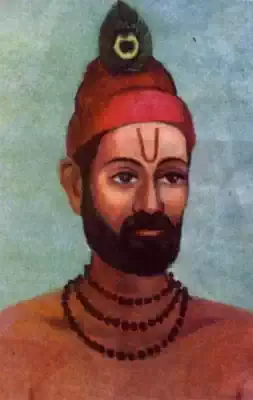
Kabir
The Moon Shines In My Body
The moon shines in my body,
but my blind eyes cannot see it:
The moon is within me,
and so is the sun.
The unstruck drum of Eternity is sounded within me;
but my deaf ears cannot hear it.
So long as man clamours for the 'I' and the 'Mine',
his works are as naught:
When all love of the 'I' and the 'Mine' is dead,
then the work of the Lord is done.
For work has no other aim than the getting of knowledge:
When that comes, then work is put away.
The flower blooms for the fruit:
when the fruit comes, the flower withers.
The musk is in the deer,
but it seeks it not within itself:
it wanders in quest of grass.
398

William Blake
The Voice of the Ancient Bard
Youth of delight, come hither,
And see the opening morn,
Image of truth new born.
Doubt is fled, & clouds of reason,
Dark disputes & artful teazing.
Folly is an endless maze,
Tangled roots perplex her ways.
How many have fallen there!
They stumble all night over bones of the dead,
And feel they know not what but care,
And wish to lead others, when they should be led.
399
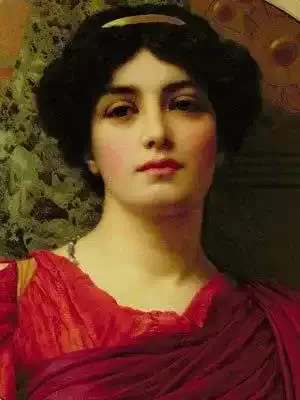
Safo
The Muses
It is the Muses
who have caused me
to be honred: they
taught me their craft
Sappho
tr. Barnard
who have caused me
to be honred: they
taught me their craft
Sappho
tr. Barnard
396
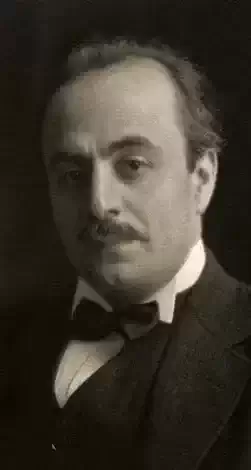
Khalil Gibran
Song of the Flower XXIII
I am a kind word uttered and repeated
By the voice of Nature;
I am a star fallen from the
Blue tent upon the green carpet.
I am the daughter of the elements
With whom Winter conceived;
To whom Spring gave birth; I was
Reared in the lap of Summer and I
Slept in the bed of Autumn.
At dawn I unite with the breeze
To announce the coming of light;
At eventide I join the birds
In bidding the light farewell.
The plains are decorated with
My beautiful colors, and the air
Is scented with my fragrance.
As I embrace Slumber the eyes of
Night watch over me, and as I
Awaken I stare at the sun, which is
The only eye of the day.
I drink dew for wine, and hearken to
The voices of the birds, and dance
To the rhythmic swaying of the grass.
I am the lover's gift; I am the wedding wreath;
I am the memory of a moment of happiness;
I am the last gift of the living to the dead;
I am a part of joy and a part of sorrow.
But I look up high to see only the light,
And never look down to see my shadow.
This is wisdom which man must learn.
392
Carl Sandburg
Two Neighbors
Faces of two eternities keep looking at me.
One is Omar Khayam and the red stuff
wherein men forget yesterday and to-morrow
and remember only the voices and songs,
the stories, newspapers and fights of today.
One is Louis Cornaro and a slim trick
of slow, short meals across slow, short years,
letting Death open the door only in slow, short inches.
I have a neighbor who swears by Omar.
I have a neighbor who swears by Cornaro.
Both are happy.
Faces of two eternities keep looking at me.
Let them look.
389

Johann Wolfgang von Goethe
Explanation Of An Ancient Woodcut
EARLY within his workshop here,
On Sundays stands our master dear;
His dirty apron he puts away,
And wears a cleanly doublet to-day;
Lets wax'd thread, hammer, and pincers rest,
And lays his awl within his chest;
The seventh day he takes repose
From many pulls and many blows.
Soon as the spring-sun meets his view,
Repose begets him labour anew;
He feels that he holds within his brain
A little world, that broods there amain,
And that begins to act and to live,
Which he to others would gladly give.
He had a skillful eye and true,
And was full kind and loving too.
For contemplation, clear and pure,--
For making all his own again, sure;
He had a tongue that charm'd when 'twas heard,
And graceful and light flow'd ev'ry word;
Which made the Muses in him rejoice,
The Master-singer of their choice.
And now a maiden enter'd there,
With swelling breast, and body fair;
With footing firm she took her place,
And moved with stately, noble grace;
She did not walk in wanton mood,
Nor look around with glances lewd.
She held a measure in her hand,
Her girdle was a golden band,
A wreath of corn was on her head,
Her eye the day's bright lustre shed;
Her name is honest Industry,
Else, Justice, Magnanimity.
She enter'd with a kindly greeting;
He felt no wonder at the meeting,
For, kind and fair as she might be,
He long had known her, fancied he.
"I have selected thee," she said,
"From all who earth's wild mazes tread,
That thou shouldst have clear-sighted sense,
And nought that's wrong shouldst e'er commence.
When others run in strange confusion,
Thy gaze shall see through each illusion
When others dolefully complain,
Thy cause with jesting thou shalt gain,
Honour and right shalt value duly,
In everything act simply, truly,--
Virtue and godliness proclaim,
And call all evil by its name,
Nought soften down, attempt no quibble,
Nought polish up, nought vainly scribble.
The world shall stand before thee, then,
As seen by Albert Durer's ken,
In manliness and changeless life,
In inward strength, with firmness rife.
Fair Nature's Genius by the hand
Shall lead thee on through every land,
Teach thee each different life to scan,
Show thee the wondrous ways of man,
His shifts, confusions, thrustings, and drubbings,
Pushings, tearings, pressings, and rubbings;
The varying madness of the crew,
The anthill's ravings bring to view;
But thou shalt see all this express'd,
As though 'twere in a magic chest.
Write these things down for folks on earth,
In hopes they may to wit give birth."--
Then she a window open'd wide,
And show'd a motley crowd outside,
All kinds of beings 'neath the sky,
As in his writings one may spy.
Our master dear was, after this,
On Nature thinking, full of bliss,
When tow'rd him, from the other side
He saw an aged woman glide;
The name she bears, Historia,
Mythologia, Fabula;
With footstep tottering and unstable
She dragg'd a large and wooden carved-table,
Where, with wide sleeves and human mien,
The Lord was catechizing seen;
Adam, Eve, Eden, the Serpent's seduction,
Gomorrah and Sodom's awful destruction,
The twelve illustrious women, too,
That mirror of honour brought to view;
All kinds of bloodthirstiness, murder, and sin,
The twelve wicked tyrants also were in,
And all kinds of goodly doctrine and law;
Saint Peter with his scourge you saw,
With the world's ways dissatisfied,
And by our Lord with power supplied.
Her train and dress, behind and before,
And e'en the seams, were painted o'er
With tales of worldly virtue and crime.--
Our master view'd all this for a time;
The sight right gladly he survey'd,
So useful for him in his trade,
Whence he was able to procure
Example good and precept sure,
Recounting all with truthful care,
As though he had been present there.
His spirit seem'd from earth to fly,
He ne'er had turned away his eye,
Did he not just behind him hear
A rattle of bells approaching near.
And now a fool doth catch his eye,
With goat and ape's leap drawing nigh
A merry interlude preparing
With fooleries and jests unsparing.
Behind him, in a line drawn out,
He dragg'd all fools, the lean and stout,
The great and little, the empty and full,
All too witty, and all too dull,
A lash he flourish'd overhead,
As though a dance of apes he led,
Abusing them with bitterness,
As though his wrath would ne'er grow less.
While on this sight our master gazed,
His head was growing well-nigh crazed:
What words for all could he e'er find,
Could such a medley be combined?
Could he continue with delight
For evermore to sing and write?
When lo, from out a cloud's dark bed
In at the upper window sped
The Muse, in all her majesty,
As fair as our loved maids we see.
With clearness she around him threw
Her truth, that ever stronger grew.
"I, to ordain thee come," she spake:
"So prosper, and my blessing take!
The holy fire that slumb'ring lies
Within thee, in bright flames shall rise;
Yet that thine ever-restless life
May still with kindly strength be rife,
I, for thine inward spirit's calm.
Have granted nourishment and balm,
That rapture may thy soul imbue,
Like some fair blossom bathed in dew."--
Behind his house then secretly
Outside the doorway pointed she,
Where, in a shady garden-nook,
A beauteous maid with downcast look
Was sitting where a stream was flowing,
With elder bushes near it growing,
She sat beneath an apple tree,
And nought around her seem'd to see.
Her lap was full of roses fair,
Which in a wreath she twined with care.
And, with them, leaves and blossoms blended:
For whom was that sweet wreath intended?
Thus sat she, modest and retired,
Her bosom throbb'd, with hope inspired;
Such deep forebodings fill'd her mind,
No room for wishing could she find,
And with the thoughts that o'er it flew,
Perchance a sigh was mingled too.
"But why should sorrow cloud thy brow?
That, dearest love, which fills thee now
Is fraught with joy and ecstasy.
Prepared in one alone for thee,
That he within thine eye may find
Solace when fortune proves unkind,
And be newborn through many a kiss,
That he receives with inward bliss;
When'er he clasps thee to his breast.
May he from all his toils find rest
When he in thy dear arms shall sink,
May he new life and vigour drink:
Fresh joys of youth shalt thou obtain,
In merry jest rejoice again.
With raillery and roguish spite,
Thou now shalt tease him, now delight.
Thus Love will nevermore grow old,
Thus will the minstrel ne'er be cold!"
While he thus lives, in secret bless'd,
Above him in the clouds doth rest
An oak-wreath, verdant and sublime,
Placed on his brow in after-time;
While they are banish'd to the slough,
Who their great master disavow.
387

William Butler Yeats
Michael Robartes and the Dancer
He. Opinion is not worth a rush;
In this altar-piece the knight,
Who grips his long spear so to push
That dragon through the fading light,
Loved the lady; and it's plain
The half-dead dragon was her thought,
That every morning rose again
And dug its claws and shrieked and fought.
Could the impossible come to pass
She would have time to turn her eyes,
Her lover thought, upon the glass
And on the instant would grow wise.
She. You mean they argued.
He. Put it so;
But bear in mind your lover's wage
Is what your looking-glass can show,
And that he will turn green with rage
At all that is not pictured there.
She. May I not put myself to college?
He. Go pluck Athena by the hair;
For what mere book can grant a knowledge
With an impassioned gravity
Appropriate to that beating breast,
That vigorous thigh, that dreaming eye?
And may the devil take the rest.
She. And must no beautiful woman be
Learned like a man?
He. Paul Veronese
And all his sacred company
Imagined bodies all their days
By the lagoon you love so much,
For proud, soft, ceremonious proof
That all must come to sight and touch;
While Michael Angelo's Sistine roof
His 'Morning' and his 'Night' disclose
How sinew that has been pulled tight,
Or it may be loosened in repose,
Can rule by supernatural right
Yet be but sinew.
She. I have heard said
There is great danger in the body.
He. Did God in portioning wine and bread
Give man His thought or His mere body?
She. My wretched dragon is perplexed.
He. I have principles to prove me right.
It follows from this Latin text
That blest souls are not composite,
And that all beautiful women may
Live in uncomposite blessedness,
And lead us to the like -- if they
Will banish every thought, unless
The lineaments that please their view
When the long looking-glass is full,
Even from the foot-sole think it too.
She. They say such different things at school.
390
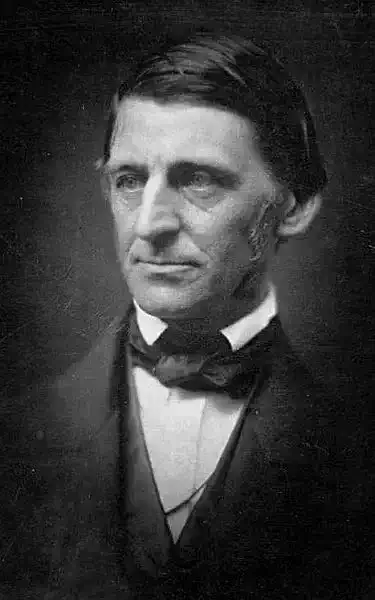
Ralph Waldo Emerson
Berrying
"May be true what I had heard,
Earth's a howling wilderness
Truculent with fraud and force,"
Said I, strolling through the pastures,
And along the riverside.
Caught among the blackberry vines,
Feeding on the Ethiops sweet,
Pleasant fancies overtook me:
I said, "What influence me preferred
Elect to dreams thus beautiful?"
The vines replied, "And didst thou deem
No wisdom to our berries went?"
387

Rudyard Kipling
Divided Destinies
It was an artless Bandar, and he danced upon a pine,
And much I wondered how he lived, and where the beast might dine,
And many, many other things, till, o'er my morning smoke,
I slept the sleep of idleness and dreamt that Bandar spoke.
He said: "O man of many clothes! Sad crawler on the Hills!
Observe, I know not Ranken's shop, nor Ranken's monthly bills;
I take no heed to trousers or the coats that you call dress;
Nor am I plagued with little cards for little drinks at Mess.
"I steal the bunnia's grain at morn, at noon and eventide,
(For he is fat and I am spare), I roam the mountain side,
I follow no man's carriage, and no, never in my life
Have I flirted at Peliti's with another Bandar's wife.
"O man of futile fopperies -- unnecessary wraps;
I own no ponies in the hills, I drive no tall-wheeled traps;
I buy me not twelve-button gloves, 'short-sixes' eke, or rings,
Nor do I waste at Hamilton's my wealth on 'pretty things.'
"I quarrel with my wife at home, we never fight abroad;
But Mrs. B. has grasped the fact I am her only lord.
I never heard of fever -- dumps nor debts depress my soul;
And I pity and despise you!" Here he pouched my breakfast-roll.
His hide was very mangy, and his face was very red,
And ever and anon he scratched with energy his head.
His manners were not always nice, but how my spirit cried
To be an artless Bandar loose upon the mountain side!
So I answered: "Gentle Bandar, and inscrutable Decree
Makes thee a gleesome fleasome Thou, and me a wretched Me.
Go! Depart in peace, my brother, to thy home amid the pine;
Yet forget not once a mortal wished to change his lot for thine."
387

Henry Wadsworth Longfellow
Dante
Tuscan, that wanderest through the realms of gloom,
With thoughtful pace, and sad, majestic eyes,
Stern thoughts and awful from thy soul arise,
Like Farinata from his fiery tomb.
Thy sacred song is like the trump of doom;
Yet in thy heart what human sympathies,
What soft compassion glows, as in the skies
The tender stars their clouded lamps relume!
Methinks I see thee stand, with pallid cheeks,
By Fra Hilario in his diocese,
As up the convent-walls, in golden streaks,
The ascending sunbeams mark the day's decrease;
And, as he asks what there the stranger seeks,
Thy voice along the cloister whispers, "Peace!"
383
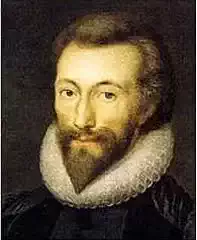
John Donne
Satire IV
Well; I may now receive, and die. My sin
Indeed is great, but yet I have been in
A purgatory, such as fear'd hell is
A recreation and scant map of this.
My mind, neither with pride's itch, nor yet hath been
Poison'd with love to see, or to be seen.
I had no suit there, nor new suit to show,
Yet went to court; but as Glaze which did go
To'a mass in jest, catch'd, was fain to disburse
The hundred marks, which is the statute's curse,
Before he 'scap'd; so'it pleas'd my destiny
(Guilty of my sin of going) to think me
As prone to all ill, and of good as forget{-}
Full, as proud, as lustful, and as much in debt,
As vain, as witless, and as false as they
Which dwell in court, for once going that way.
Therefore I suffered this; towards me did run
A thing more strange, than on Nile's slime the sun
E'er bred, or all which into Noah's ark came;
A thing which would have pos'd Adam to name;
Stranger than seven antiquaries' studies,
Than Afric's monsters, Guiana's rarities;
Stranger than strangers; one, who for a Dane,
In the Danes' massacre had sure been slain,
If he had liv'd then; and without help dies,
When next the 'prentices 'gainst strangers rise;
One, whom the watch, at noon, lets scarce go by;
One, to whom the examining justice sure would cry,
"Sir, by your priesthood, tell me what you are."
His clothes were strange, though coarse; and black, though bare;
Sleeveless his jerkin was, and it had been
Velvet, but 'twas now (so much ground was seen)
Become tufftaffaty; and our children shall
See it plain rash awhile, then nought at all.
This thing hath travell'd, and, saith, speaks all tongues,
And only knoweth what to all states belongs.
Made of th' accents and best phrase of all these,
He speaks one language. If strange meats displease,
Art can deceive, or hunger force my taste,
But pedants' motley tongue, soldiers' bombast,
Mountebanks' drug-tongue, nor the terms of law
Are strong enough preparatives, to draw
Me to bear this; yet I must be content
With his tongue, in his tongue, call'd compliment;
In which he can win widows, and pay scores,
Make men speak treason, cozen subtlest whores,
Out-flatter favourites, or outlie either
Jovius, or Surius, or both together.
He names me, and comes to me; I whisper, "God!
How have I sinn'd, that Thy wrath's furious rod,
This fellow, chooseth me?" He saith, "Sir,
I love your judgment; whom do you prefer,
For the best linguist?" And I seelily
Said, that I thought Calepine's dictionary.
"Nay, but of men, most sweet Sir?" Beza then,
Some Jesuits, and two reverend men
Of our two Academies, I named. There
He stopp'd me, and said; "Nay, your apostles were
Good pretty linguists, and so Panurge was;
Yet a poor gentleman all these may pass
By travel." Then, as if he would have sold
His tongue, he prais'd it, and such wonders told,
That I was fain to say, "If you'had liv'd, sir,
Time enough to have been interpreter
To Babel's bricklayers, sure the tower had stood."
He adds, "If of court life you knew the good,
You would leave loneness." I said, "Not alone
My loneness is; but Spartan's fashion,
To teach by painting drunkards, doth not last
Now; Aretine's pictures have made few chaste;
No more can princes' courts, though there be few
Better pictures of vice, teach me virtue."
He, like to a high-stretch'd lute-string, squeak'd, "O sir,
'Tis sweet to talk of kings." "At Westminster,"
Said I, "the man that keeps the abbey tombs,
And for his price doth with whoever comes
Of all our Harrys and our Edwards talk,
From king to king, and all their kin can walk.
Your ears shall hear nought, but kings; your eyes meet
Kings only; the way to it is King street."
He smack'd and cried, "He's base, mechanic, coarse,
So are all your Englishmen in their discourse.
Are not your Frenchmen neat?" "Mine? As you see,
I have but one Frenchman, look--he follows me."
"Certes they are neatly cloth'd. I of this mind am,
Your only wearing is your grogaram."
"Not so, sir, I have more." Under this pitch
He would not fly; I chaff'd him; but as itch
Scratch'd into smart, and as blunt iron ground
Into an edge, hurts worse; so I (fool) found
Crossing hurt me. To fit my sullenness,
He to another key his style doth dress,
And asks, "What news?" I tell him of new plays.
He takes my hand, and as a still which stays
A sembrief, 'twixt each drop, he niggardly,
As loth to enrich me, so tells many a lie,
More than ten Holinsheds, or Halls, or Stows,
Of trivial household trash, he knows. He knows
When the Queen frown'd, or smil'd, and he knows what
A subtle statesman may gather of that;
He knows who loves; whom; and who by poison
Hastes to an office's reversion;
He knows who'hath sold his land, and now doth beg
A licence, old iron, boots, shoes, and egg{-}
Shells to transport; shortly boys shall not play
At span-counter, or blow-point, but shall pay
Toll to some courtier; and wiser than all us,
He knows what lady is not painted. Thus
He with home meats tries me. I belch, spew, spit,
Look pale and sickly, like a patient, yet
He thrusts on more; and as if he'd undertook
To say Gallo-Belgicus without book,
Speaks of all states, and deeds, that have been since
The Spaniards came, to the loss of Amiens.
Like a big wife, at sight of loathed meat,
Ready to travail, so I sigh and sweat
To hear this Macaron talk. In vain; for yet,
Either my humour, or his own to fit,
He, like a privileg'd spy, whom nothing can
Discredit, libels now 'gainst each great man.
He names a price for every office paid;
He saith, our wars thrive ill, because delay'd;
That offices are entail'd, and that there are
Perpetuities of them, lasting as far
As the last day; and that great officers
Do with the pirates share, and Dunkirkers.
...
Toughly and stubbornly I bear this cross; but the' hour
Of mercy now was come; he tries to bring
Me to pay a fine to 'scape his torturing,
And says, "Sir, can you spare me"--I said, "Willingly";
"Nay, sir, can you spare me a crown"? Thankfully I
Gave it, as ransom; but as fiddlers, still,
Though they be paid to be gone, yet needs will
Thrust one more jig upon you; so did he
With his long complimental thanks vex me.
But he is gone, thanks to his needy want,
And the prerogative of my crown; scant
His thanks were ended, when I (which did see
All the court fill'd with more strange things than he)
Ran from thence with such, or more haste than one
Who fears more actions doth make from prison.
383

Claude Mckay
Heritage
Now the dead past seems vividly alive,
And in this shining moment I can trace,
Down through the vista of the vanished years,
Your faun-like form, your fond elusive face.
And suddenly some secret spring's released,
And unawares a riddle is revealed,
And I can read like large, black-lettered print,
What seemed before a thing forever sealed.
I know the magic word, the graceful thought,
The song that fills me in my lucid hours,
The spirit's wine that thrills my body through,
And makes me music-drunk, are yours, all yours.
I cannot praise, for you have passed from praise,
I have no tinted thoughts to paint you true;
But I can feel and I can write the word;
The best of me is but the least of you.
383
Kabir
Hey brother, why do you want me to talk?
Hey brother, why do you want me to talk?
Talk and talk and the real things get lost.
Talk and talk and things get out of hand.
Why not stop talking and think?
If you meet someone good, listen a little, speak;
If you meet someone bad, clench up like a fist.
Talking with a wise man is a great reward.
Talking with a fool? A waste.
Kabir says: A pot makes noise if it's half full,
But fill it to the brim - no sound.
384

George Herbert
Virtue
Sweet day, so cool, so calm, so bright
The bridal of the earth and sky:
The dew shall weep thy fall tonight,
For thou must die.
Sweet rose, whose hue, angry and brave,
Bids the rash gazer wipe his eyes:
Thy root is ever in its grave,
And thou must die.
Sweet spring, full of sweet days and roses,
A box where sweets compacted lie:
My music shows ye have your closes,
And all must die.
Only a sweet and virtuous soul,
LIke seasoned timber, never gives;
But though the whole world turn to coal.
Then chiefly lives.
382

Robert W. Service
Obesity
With belly like a poisoned pup
Said I: 'I must give bacon up:
And also, I profanely fear,
I must abandon bread and beer
That make for portliness they say;
Yet of them copiously today
I ate with an increasingly sense
Of grievous corpulence.
I like a lot of thinks I like.
Too bad that I must go on strike
Against pork sausages and mash,
Spaghetti and fried corn-beef hash.
I deem he is a lucky soul
Who has no need of girth control;
For in the old of age: 'Il faut
Souffrir pour etre bean.'
Yet let me not be unconsoled:
So many greybeards I behold,
Distinguished in affairs of state,
In culture counted with the Great,
Have tummies with a shameless bulge,
And so I think I'll still indulge
In eats I like without a qualm,
And damn my diaphragm!'
380

Robert Louis Stevenson
Sonnet VII
The strong man's hand, the snow-cool head of age,
The certain-footed sympathies of youth -
These, and that lofty passion after truth,
Hunger unsatisfied in priest or sage
Or the great men of former years, he needs
That not unworthily would dare to sing
(Hard task!) black care's inevitable ring
Settling with years upon the heart that feeds
Incessantly on glory. Year by year
The narrowing toil grows closer round his feet;
With disenchanting touch rude-handed time
The unlovely web discloses, and strange fear
Leads him at last to eld's inclement seat,
The bitter north of life - a frozen clime.
381
Khalil Gibran
Laws XIII
Then a lawyer said, "But what of our Laws, master?"
And he answered:
You delight in laying down laws,
Yet you delight more in breaking them.
Like children playing by the ocean who build sand-towers with constancy and then
destroy them with laughter.
But while you build your sand-towers the ocean brings more sand to the shore,
And when you destroy them, the ocean laughs with you.
Verily the ocean laughs always with the innocent.
But what of those to whom life is not an ocean, and man-made laws are not
sand-towers,
But to whom life is a rock, and the law a chisel with which they would carve it in their
own likeness?
What of the cripple who hates dancers?
What of the ox who loves his yoke and deems the elk and deer of the forest stray and
vagrant things?
What of the old serpent who cannot shed his skin, and calls all others naked and
shameless?
And of him who comes early to the wedding-feast, and when over-fed and tired goes
his way saying that all feasts are violation and all feasters law-breakers?
What shall I say of these save that they too stand in the sunlight, but with their backs
to the sun?
They see only their shadows, and their shadows are their laws.
And what is the sun to them but a caster of shadows?
And what is it to acknowledge the laws but to stoop down and trace their shadows
upon the earth?
But you who walk facing the sun, what images drawn on the earth can hold you?
You who travel with the wind, what weathervane shall direct your course?
What man's law shall bind you if you break your yoke but upon no man's prison door?
What laws shall you fear if you dance but stumble against no man's iron chains?
And who is he that shall bring you to judgment if you tear off your garment yet leave it
in no man's path?
People of Orphalese, you can muffle the drum, and you can loosen the strings of the
lyre, but who shall command the skylark not to sing?
380
Johann Wolfgang von Goethe
Dedication - The Poems Of Goeth
The morn arrived; his footstep quickly scared
The gentle sleep that round my senses clung,
And I, awak'ning, from my cottage fared,
And up the mountain side with light heart sprung;
At every step I felt my gaze ensnared
By new-born flow'rs that full of dew-drops hung;
The youthful day awoke with ecstacy,
And all things quicken'd were, to quicken me.
And as I mounted, from the valley rose
A streaky mist, that upward slowly spread,
Then bent, as though my form it would enclose,
Then, as on pinions, soar'd above my head:
My gaze could now on no fair view repose,
in mournful veil conceal'd, the world seem'd dead;
The clouds soon closed around me, as a tomb,
And I was left alone in twilight gloom.
At once the sun his lustre seem'd to pour,
And through the mist was seen a radiant light;
Here sank it gently to the ground once more,
There parted it, and climb'd o'er wood and height.
How did I yearn to greet him as of yore,
After the darkness waxing doubly bright!
The airy conflict ofttimes was renew'd,
Then blinded by a dazzling glow I stood.
Ere long an inward impulse prompted me
A hasty glance with boldness round to throw;
At first mine eyes had scarcely strength to see,
For all around appear'd to burn and glow.
Then saw I, on the clouds borne gracefully,
A godlike woman hov'ring to and fro.
In life I ne'er had seen a form so fair--
She gazed at me, and still she hover'd there.
"Dost thou not know me?" were the words she said
In tones where love and faith were sweetly bound;
"Knowest thou not Her who oftentimes hath shed
The purest balsam in each earthly wound?
Thou knows't me well; thy panting heart I led
To join me in a bond with rapture crown'd.
Did I not see thee, when a stripling, yearning
To welcome me with tears, heartfelt and burning?"
"Yes!" I exclaim'd, whilst, overcome with joy,
I sank to earth; "I long have worshipp'd thee;
Thou gav'st me rest, when passions rack'd the boy,
Pervading ev'ry limb unceasingly;
Thy heav'nly pinions thou didst then employ
The scorching sunbeams to ward off from me.
From thee alone Earth's fairest gifts I gain'd,
Through thee alone, true bliss can be obtain'd.
"Thy name I know not; yet I hear thee nam'd
By many a one who boasts thee as his own;
Each eye believes that tow'rd thy form 'tis aim'd,
Yet to most eyes thy rays are anguish-sown.
Ah! whilst I err'd, full many a friend I claim'd,
Now that I know thee, I am left alone;
With but myself can I my rapture share,
I needs must veil and hide thy radiance fair.
She smiled, and answering said: "Thou see'st how wise,
How prudent 'twas but little to unveil!
Scarce from the clumsiest cheat are clear'd thine eyes,
Scarce hast thou strength thy childish bars to scale,
When thou dost rank thee 'mongst the deities,
And so man's duties to perform would'st fail!
How dost thou differ from all other men?
Live with the world in peace, and know thee then!"
"Oh, pardon me," I cried, "I meant it well:
Not vainly did'st thou bless mine eyes with light;
For in my blood glad aspirations swell,
The value of thy gifts I know aright!
Those treasures in my breast for others dwell,
The buried pound no more I'll hide from sight.
Why did I seek the road so anxiously,
If hidden from my brethren 'twere to be?"
And as I answer'd, tow'rd me turn'd her face,
With kindly sympathy, that god-like one;
Within her eye full plainly could I trace
What I had fail'd in, and what rightly done.
She smiled, and cured me with that smile's sweet grace,
To new-born joys my spirit soar'd anon;
With inward confidence I now could dare
To draw yet closer, and observe her there.
Through the light cloud she then stretch'd forth her hand,
As if to bid the streaky vapour fly:
At once it seemed to yield to her command,
Contracted, and no mist then met mine eye.
My glance once more survey'd the smiling land,
Unclouded and serene appear'd the sky.
Nought but a veil of purest white she held,
And round her in a thousand folds it swell'd.
"I know thee, and I know thy wav'ring will.
I know the good that lives and glows in thee!"--
Thus spake she, and methinks I hear her still-
"The prize long destined, now receive from me;
That blest one will be safe from ev'ry ill,
Who takes this gift with soul of purity,--"
The veil of Minstrelsy from Truth's own hand,
Of sunlight and of morn's sweet fragrance plann'd.
"And when thou and thy friends at fierce noon-day
Are parched with heat, straight cast it in the air!
Then Zephyr's cooling breath will round you play,
Distilling balm and flowers' sweet incense there;
The tones of earthly woe will die away,
The grave become a bed of clouds so fair,
To sing to rest life's billows will be seen,
The day be lovely, and the night serene."-
Come, then, my friends! and whensoe'er ye find
Upon your way increase life's heavy load;
If by fresh-waken'd blessings flowers are twin'd
Around your path, and golden fruits bestow'd,
We'll seek the coming day with joyous mind!
Thus blest, we'll live, thus wander on our road
And when our grandsons sorrow o'er our tomb,
Our love, to glad their bosoms, still shall bloom.
377
John Donne
An Anatomy Of The World...
When that rich soul which to her heaven is gone,
Whom all do celebrate, who know they have one
(For who is sure he hath a soul, unless
It see, and judge, and follow worthiness,
And by deeds praise it? He who doth not this,
May lodge an inmate soul, but 'tis not his)
When that queen ended here her progress time,
And, as t'her standing house, to heaven did climb,
Where loath to make the saints attend her long,
She's now a part both of the choir, and song;
This world, in that great earthquake languished;
For in a common bath of tears it bled,
Which drew the strongest vital spirits out;
But succour'd then with a perplexed doubt,
Whether the world did lose, or gain in this,
(Because since now no other way there is,
But goodness, to see her, whom all would see,
All must endeavour to be good as she)
This great consumption to a fever turn'd,
And so the world had fits; it joy'd, it mourn'd;
And, as men think, that agues physic are,
And th' ague being spent, give over care,
So thou, sick world, mistak'st thy self to be
Well, when alas, thou'rt in a lethargy.
Her death did wound and tame thee then, and then
Thou might'st have better spar'd the sun, or man.
That wound was deep, but 'tis more misery
That thou hast lost thy sense and memory.
'Twas heavy then to hear thy voice of moan,
But this is worse, that thou art speechless grown.
Thou hast forgot thy name thou hadst; thou wast
Nothing but she, and her thou hast o'erpast.
For, as a child kept from the font until
A prince, expected long, come to fulfill
The ceremonies, thou unnam'd had'st laid,
Had not her coming, thee her palace made;
Her name defin'd thee, gave thee form, and frame,
And thou forget'st to celebrate thy name.
Some months she hath been dead (but being dead,
Measures of times are all determined)
But long she'ath been away, long, long, yet none
Offers to tell us who it is that's gone.
But as in states doubtful of future heirs,
When sickness without remedy impairs
The present prince, they're loath it should be said,
'The prince doth languish,' or 'The prince is dead;'
So mankind feeling now a general thaw,
A strong example gone, equal to law,
The cement which did faithfully compact
And glue all virtues, now resolv'd, and slack'd,
Thought it some blasphemy to say sh'was dead,
Or that our weakness was discovered
In that confession; therefore spoke no more
Than tongues, the soul being gone, the loss deplore.
But though it be too late to succour thee,
Sick world, yea dead, yea putrified, since she
Thy' intrinsic balm, and thy preservative,
Can never be renew'd, thou never live,
I (since no man can make thee live) will try,
What we may gain by thy anatomy.
Her death hath taught us dearly that thou art
Corrupt and mortal in thy purest part.
Let no man say, the world itself being dead,
'Tis labour lost to have discovered
The world's infirmities, since there is none
Alive to study this dissection;
For there's a kind of world remaining still,
Though she which did inanimate and fill
The world, be gone, yet in this last long night,
Her ghost doth walk; that is a glimmering light,
A faint weak love of virtue, and of good,
Reflects from her on them which understood
Her worth; and though she have shut in all day,
The twilight of her memory doth stay,
Which, from the carcass of the old world free,
Creates a new world, and new creatures be
Produc'd. The matter and the stuff of this,
Her virtue, and the form our practice is.
And though to be thus elemented, arm
These creatures from home-born intrinsic harm,
(For all assum'd unto this dignity
So many weedless paradises be,
Which of themselves produce no venomous sin,
Except some foreign serpent bring it in)
Yet, because outward storms the strongest break,
And strength itself by confidence grows weak,
This new world may be safer, being told
The dangers and diseases of the old;
For with due temper men do then forgo,
Or covet things, when they their true worth know.
There is no health; physicians say that we
At best enjoy but a neutrality.
And can there be worse sickness than to know
That we are never well, nor can be so?
We are born ruinous: poor mothers cry
That children come not right, nor orderly;
Except they headlong come and fall upon
An ominous precipitation.
How witty's ruin! how importunate
Upon mankind! It labour'd to frustrate
Even God's purpose; and made woman, sent
For man's relief, cause of his languishment.
They were to good ends, and they are so still,
But accessory, and principal in ill,
For that first marriage was our funeral;
One woman at one blow, then kill'd us all,
And singly, one by one, they kill us now.
We do delightfully our selves allow
To that consumption; and profusely blind,
We kill our selves to propagate our kind.
And yet we do not that; we are not men;
There is not now that mankind, which was then,
When as the sun and man did seem to strive,
(Joint tenants of the world) who should survive;
When stag, and raven, and the long-liv'd tree,
Compar'd with man, died in minority;
When, if a slow-pac'd star had stol'n away
From the observer's marking, he might stay
Two or three hundred years to see't again,
And then make up his observation plain;
When, as the age was long, the size was great
(Man's growth confess'd, and recompens'd the meat),
So spacious and large, that every soul
Did a fair kingdom, and large realm control;
And when the very stature, thus erect,
Did that soul a good way towards heaven direct.
Where is this mankind now? Who lives to age,
Fit to be made Methusalem his page?
Alas, we scarce live long enough to try
Whether a true-made clock run right, or lie.
Old grandsires talk of yesterday with sorrow,
And for our children we reserve tomorrow.
So short is life, that every peasant strives,
In a torn house, or field, to have three lives.
And as in lasting, so in length is man
Contracted to an inch, who was a span;
For had a man at first in forests stray'd,
Or shipwrack'd in the sea, one would have laid
A wager, that an elephant, or whale,
That met him, would not hastily assail
A thing so equall to him; now alas,
The fairies, and the pigmies well may pass
As credible; mankind decays so soon,
We'are scarce our fathers' shadows cast at noon,
Only death adds t'our length: nor are we grown
In stature to be men, till we are none.
But this were light, did our less volume hold
All the old text; or had we chang'd to gold
Their silver; or dispos'd into less glass
Spirits of virtue, which then scatter'd was.
But 'tis not so; w'are not retir'd, but damp'd;
And as our bodies, so our minds are cramp'd;
'Tis shrinking, not close weaving, that hath thus
In mind and body both bedwarfed us.
We seem ambitious, God's whole work t'undo;
Of nothing he made us, and we strive too,
To bring our selves to nothing back; and we
Do what we can, to do't so soon as he.
With new diseases on our selves we war,
And with new physic, a worse engine far.
Thus man, this world's vice-emperor, in whom
All faculties, all graces are at home
(And if in other creatures they appear,
They're but man's ministers and legates there
To work on their rebellions, and reduce
Them to civility, and to man's use);
This man, whom God did woo, and loath t'attend
Till man came up, did down to man descend,
This man, so great, that all that is, is his,
O what a trifle, and poor thing he is!
If man were anything, he's nothing now;
Help, or at least some time to waste, allow
T'his other wants, yet when he did depart
With her whom we lament, he lost his heart.
She, of whom th'ancients seem'd to prophesy,
When they call'd virtues by the name of she;
She in whom virtue was so much refin'd,
That for alloy unto so pure a mind
She took the weaker sex; she that could drive
The poisonous tincture, and the stain of Eve,
Out of her thoughts, and deeds, and purify
All, by a true religious alchemy,
She, she is dead; she's dead: when thou knowest this,
Thou knowest how poor a trifling thing man is,
And learn'st thus much by our anatomy,
The heart being perish'd, no part can be free,
And that except thou feed (not banquet) on
The supernatural food, religion,
Thy better growth grows withered, and scant;
Be more than man, or thou'rt less than an ant.
Then, as mankind, so is the world's whole frame
Quite out of joint, almost created lame,
For, before God had made up all the rest,
Corruption ent'red, and deprav'd the best;
It seiz'd the angels, and then first of all
The world did in her cradle take a fall,
And turn'd her brains, and took a general maim,
Wronging each joint of th'universal frame.
The noblest part, man, felt it first; and then
Both beasts and plants, curs'd in the curse of man.
So did the world from the first hour decay,
That evening was beginning of the day,
And now the springs and summers which we see,
Like sons of women after fifty be.
And new philosophy calls all in doubt,
The element of fire is quite put out,
The sun is lost, and th'earth, and no man's wit
Can well direct him where to look for it.
And freely men confess that this world's spent,
When in the planets and the firmament
They seek so many new; they see that this
Is crumbled out again to his atomies.
'Tis all in pieces, all coherence gone,
All just supply, and all relation;
Prince, subject, father, son, are things forgot,
For every man alone thinks he hath got
To be a phoenix, and that then can be
None of that kind, of which he is, but he.
This is the world's condition now, and now
She that should all parts to reunion bow,
She that had all magnetic force alone,
To draw, and fasten sund'red parts in one;
She whom wise nature had invented then
When she observ'd that every sort of men
Did in their voyage in this world's sea stray,
And needed a new compass for their way;
She that was best and first original
Of all fair copies, and the general
Steward to fate; she whose rich eyes and breast
Gilt the West Indies, and perfum'd the East;
Whose having breath'd in this world, did bestow
Spice on those Isles, and bade them still smell so,
And that rich India which doth gold inter,
Is but as single money, coin'd from her;
She to whom this world must it self refer,
As suburbs or the microcosm of her,
She, she is dead; she's dead: when thou know'st this,
Thou know'st how lame a cripple this world is
....
377

Robert Browning
Bishop Blougram's Apology
NO more wine? then we'll push back chairs and talk.
A final glass for me, though: cool, i' faith!
We ought to have our Abbey back, you see.
It's different, preaching in basilicas,
And doing duty in some masterpiece
Like this of brother Pugin's, bless his heart!
I doubt if they're half baked, those chalk rosettes,
Ciphers and stucco-twiddlings everywhere;
It's just like breathing in a lime-kiln: eh?
These hot long ceremonies of our church
Cost us a little--oh, they pay the price,
You take me--amply pay it! Now, we'll talk.
So, you despise me, Mr. Gigadibs.
No deprecation,--nay, I beg you, sir!
Beside 't is our engagement: don't you know,
I promised, if you'd watch a dinner out,
We'd see truth dawn together?--truth that peeps
Over the glasses' edge when dinner's done,
And body gets its sop and holds its noise
And leaves soul free a little. Now's the time:
'T is break of day! You do despise me then.
And if I say, "despise me,"--never fear!
I know you do not in a certain sense--
Not in my arm-chair, for example: here,
I well imagine you respect my place
( Status, entourage , worldly circumstance)
Quite to its value--very much indeed:
--Are up to the protesting eyes of you
In pride at being seated here for once--
You'll turn it to such capital account!
When somebody, through years and years to come,
Hints of the bishop,--names me--that's enough:
"Blougram? I knew him"--(into it you slide)
"Dined with him once, a Corpus Christi Day,
"All alone, we two; he's a clever man:
"And after dinner,--why, the wine you know,--
"Oh, there was wine, and good!--what with the wine . .
"'Faith, we began upon all sorts of talk!
"He's no bad fellow, Blougram; he had seen
"Something of mine he relished, some review:
"He's quite above their humbug in his heart,
"Half-said as much, indeed--the thing's his trade.
"I warrant, Blougram's sceptical at times:
"How otherwise? I liked him, I confess!"
Che che , my dear sir, as we say at Rome,
Don't you protest now! It's fair give and take;
You have had your turn and spoken your home-truths:
The hand's mine now, and here you follow suit.
Thus much conceded, still the first fact stays--
You do despise me; your ideal of life
Is not the bishop's: you would not be I.
You would like better to be Goethe, now,
Or Buonaparte, or, bless me, lower still,
Count D'Orsay,--so you did what you preferred,
Spoke as you thought, and, as you cannot help,
Believed or disbelieved, no matter what,
So long as on that point, whate'er it was,
You loosed your mind, were whole and sole yourself.
--That, my ideal never can include,
Upon that element of truth and worth
Never be based! for say they make me Pope--
(They can't--suppose it for our argument!)
Why, there I'm at my tether's end, I've reached
My height, and not a height which pleases you:
An unbelieving Pope won't do, you say.
It's like those eerie stories nurses tell,
Of how some actor on a stage played Death,
With pasteboard crown, sham orb and tinselled dart,
And called himself the monarch of the world;
Then, going in the tire-room afterward,
Because the play was done, to shift himself,
Got touched upon the sleeve familiarly,
The moment he had shut the closet door,
By Death himself. Thus God might touch a Pope
At unawares, ask what his baubles mean,
And whose part he presumed to play just now?
Best be yourself, imperial, plain and true!
So, drawing comfortable breath again,
You weigh and find, whatever more or less
I boast of my ideal realized,
Is nothing in the balance when opposed
To your ideal, your grand simple life,
Of which you will not realize one jot.
I am much, you are nothing; you would be all,
I would be merely much: you beat me there.
No, friend, you do not beat me: hearken why!
The common problem, yours, mine, every one's,
Is--not to fancy what were fair in life
Provided it could be,--but, finding first
What may be, then find how to make it fair
Up to our means: a very different thing!
No abstract intellectual plan of life
Quite irrespective of life's plainest laws,
But one, a man, who is man and nothing more,
May lead within a world which (by your leave)
Is Rome or London, not Fool's-paradise.
Embellish Rome, idealize away,
Make paradise of London if you can,
You're welcome, nay, you're wise.
A simile!
We mortals cross the ocean of this world
Each in his average cabin of a life;
The best's not big, the worst yields elbow-room.
Now for our six months' voyage--how prepare?
You come on shipboard with a landsman's list
Of things he calls convenient: so they are!
An India screen is pretty furniture,
A piano-forte is a fine resource,
All Balzac's novels occupy one shelf,
The new edition fifty volumes long;
And little Greek books, with the funny type
They get up well at Leipsic, fill the next:
Go on! slabbed marble, what a bath it makes!
And Parma's pride, the Jerome, let us add!
'T were pleasant could Correggio's fleeting glow
Hang full in face of one where'er one roams,
Since he more than the others brings with him
Italy's self,--the marvellous Modenese!--
Yet was not on your list before, perhaps.
--Alas, friend, here's the agent . . . is't the name?
The captain, or whoever's master here--
You see him screw his face up; what's his cry
Ere you set foot on shipboard? "Six feet square!"
If you won't understand what six feet mean,
Compute and purchase stores accordingly--
And if, in pique because he overhauls
Your Jerome, piano, bath, you come on board
Bare--why, you cut a figure at the first
While sympathetic landsmen see you off;
Not afterward, when long ere half seas over,
You peep up from your utterly naked boards
Into some snug and well-appointed berth,
Like mine for instance (try the cooler jug--
Put back the other, but don't jog the ice!)
And mortified you mutter "Well and good;
"He sits enjoying his sea-furniture;
"'T is stout and proper, and there's store of it:
"Though I've the better notion, all agree,
"Of fitting rooms up. Hang the carpenter,
"Neat ship-shape fixings and contrivances--
"I would have brought my Jerome, frame and all!"
And meantime you bring nothing: never mind--
You've proved your artist-nature: what you don't
You might bring, so despise me, as I say.
Now come, let's backward to the starting-place.
See my way: we're two college friends, suppose.
Prepare together for our voyage, then;
Each note and check the other in his work,--
Here's mine, a bishop's outfit; criticize!
What's wrong? why won't you be a bishop too?
Why first, you don't believe, you don't and can't,
(Not statedly, that is, and fixedly
And absolutely and exclusively)
In any revelation called divine.
No dogmas nail your faith; and what remains
But say so, like the honest man you are?
First, therefore, overhaul theology!
Nay, I too, not a fool, you please to think,
Must find believing every whit as hard:
And if I do not frankly say as much,
The ugly consequence is clear enough.
Now wait, my friend: well, I do not believe--
If you'll accept no faith that is not fixed,
Absolute and exclusive, as you say.
You're wrong--I mean to prove it in due time.
Meanwhile, I know where difficulties lie
I could not, cannot solve, nor ever shall,
So give up hope accordingly to solve--
(To you, and over the wine). Our dogmas then
With both of us, though in unlike degree,
Missing full credence--overboard with them!
I mean to meet you on your own premise:
Good, there go mine in company with yours!
And now what are we? unbelievers both,
Calm and complete, determinately fixed
To-day, to-morrow and for ever, pray?
You'll guarantee me that? Not so, I think!
In no wise! all we've gained is, that belief,
As unbelief before, shakes us by fits,
Confounds us like its predecessor. Where's
The gain? how can we guard our unbelief,
Make it bear fruit to us?--the problem here.
Just when we are safest, there's a sunset-touch,
A fancy from a flower-bell, some one's death,
A chorus-ending from Euripides,--
And that's enough for fifty hopes and fears
As old and new at once as nature's self,
To rap and knock and enter in our soul,
Take hands and dance there, a fantastic ring,
Round the ancient idol, on his base again,--
The grand Perhaps! We look on helplessly.
There the old misgivings, crooked questions are--
This good God,--what he could do, if he would,
Would, if he could--then must have done long since:
If so, when, where and how? some way must be,--
Once feel about, and soon or late you hit
Some sense, in which it might be, after all.
Why not, "The Way, the Truth, the Life?"
--That way
Over the mountain, which who stands upon
Is apt to doubt if it be meant for a road;
While, if he views it from the waste itself,
Up goes the line there, plain from base to brow,
Not vague, mistakeable! what's a break or two
Seen from the unbroken desert either side?
And then (to bring in fresh philosophy)
What if the breaks themselves should prove at last
The most consummate of contrivances
To train a man's eye, teach him what is faith?
And so we stumble at truth's very test!
All we have gained then by our unbelief
Is a life of doubt diversified by faith,
For one of faith diversified by doubt:
We called the chess-board white,--we call it black.
"Well," you rejoin, "the end's no worse, at least;
"We've reason for both colours on the board:
"Why not confess then, where I drop the faith
"And you the doubt, that I'm as right as you?"
Because, friend, in the next place, this being so,
And both things even,--faith and unbelief
Left to a man's choice,--we'll proceed a step,
Returning to our image, which I like.
A man's choice, yes--but a cabin-passenger's--
The man made for the special life o' the world--
Do you forget him? I remember though!
Consult our ship's conditions and you find
One and but one choice suitable to all;
The choice, that you unluckily prefer,
Turning things topsy-turvy--they or it
Going to the ground. Belief or unbelief
Bears upon life, determines its whole course,
Begins at its beginning. See the world
Such as it is,--you made it not, nor I;
I mean to take it as it is,--and you,
Not so you'll take it,--though you get nought else.
I know the special kind of life I like,
What suits the most my idiosyncrasy,
Brings out the best of me and bears me fruit
In power, peace, pleasantness and length of days.
I find that positive belief does this
For me, and unbelief, no whit of this.
--For you, it does, however?--that, we'll try!
'T is clear, I cannot lead my life, at least,
Induce the world to let me peaceably,
Without declaring at the outset, "Friends,
"I absolutely and peremptorily
"Believe!"--I say, faith is my waking life:
One sleeps, indeed, and dreams at intervals,
We know, but waking's the main point with us
And my provision's for life's waking part.
Accordingly, I use heart, head and hand
All day, I build, scheme, study, and make friends;
And when night overtakes me, down I lie,
Sleep, dream a little, and get done with it,
The sooner the better, to begin afresh.
What's midnight doubt before the dayspring's faith?
You, the philosopher, that disbelieve,
That recognize the night, give dreams their weight--
To be consistent you should keep your bed,
Abstain from healthy acts that prove you man,
For fear you drowse perhaps at unawares!
And certainly at night you'll sleep and dream,
Live through the day and bustle as you please.
And so you live to sleep as I to wake,
To unbelieve as I to still believe?
Well, and the common sense o' the world calls you
Bed-ridden,--and its good things come to me.
Its estimation, which is half the fight,
That's the first-cabin comfort I secure:
The next . . . but you perceive with half an eye!
Come, come, it's best believing, if we may;
You can't but own that!
Next, concede again,
If once we choose belief, on all accounts
We can't be too decisive in our faith,
Conclusive and exclusive in its terms,
To suit the world which gives us the good things.
In every man's career are certain points
Whereon he dares not be indifferent;
The world detects him clearly, if he dare,
As baffled at the game, and losing life.
He may care little or he may care much
For riches, honour, pleasure, work, repose,
Since various theories of life and life's
Success are extant which might easily
Comport with either estimate of these;
And whoso chooses wealth or poverty,
Labour or quiet, is not judged a fool
Because his fellow would choose otherwise:
We let him choose upon his own account
So long as he's consistent with his choice.
But certain points, left wholly to himself,
When once a man has arbitrated on,
We say he must succeed there or go hang.
Thus, he should wed the woman he loves most
Or needs most, whatsoe'er the love or need--
For he can't wed twice. Then, he must avouch,
Or follow, at the least, sufficiently,
The form of faith his conscience holds the best,
Whate'er the process of conviction was:
For nothing can compensate his mistake
On such a point, the man himself being judge:
He cannot wed twice, nor twice lose his soul.
Well now, there's one great form of Christian faith
I happened to be born in--which to teach
Was given me as I grew up, on all hands,
As best and readiest means of living by;
The same on examination being proved
The most pronounced moreover, fixed, precise
And absolute form of faith in the whole world--
Accordingly, most potent of all forms
For working on the world. Observe, my friend!
Such as you know me, I am free to say,
In these hard latter days which hamper one,
Myself--by no immoderate exercise
Of intellect and learning, but the tact
To let external forces work for me,
--Bid the street's stones be bread and they are bread;
Bid Peter's creed, or rather, Hildebrand's,
Exalt me o'er my fellows in the world
And make my life an ease and joy and pride;
It does so,--which for me's a great point gained,
Who have a soul and body that exact
A comfortable care in many ways.
There's power in me and will to dominate
Which I must exercise, they hurt me else:
In many ways I need mankind's respect,
Obedience, and the love that's born of fear:
While at the same time, there's a taste I have,
A toy of soul, a titillating thing,
Refuses to digest these dainties crude.
The naked life is gross till clothed upon:
I must take what men offer, with a grace
As though I would not, could I help it, take!
An uniform I wear though over-rich--
Something imposed on me, no choice of mine;
No fancy-dress worn for pure fancy's sake
And despicable therefore! now folk kneel
And kiss my hand--of course the Church's hand.
Thus I am made, thus life is best for me,
And thus that it should be I have procured;
And thus it could not be another way,
I venture to imagine.
You'll reply,
So far my choice, no doubt, is a success;
But were I made of better elements,
With nobler instincts, purer tastes, like you,
I hardly would account the thing success
Though it did all for me I say.
But, friend,
We speak of what is; not of what might be,
And how't were better if't were otherwise.
I am the man you see here plain enough:
Grant I'm a beast, why, beasts must lead beasts' lives!
Suppose I own at once to tail and claws;
The tailless man exceeds me: but being tailed
I'll lash out lion fashion, and leave apes
To dock their stump and dress their haunches up.
My business is not to remake myself,
But make the absolute best of what God made.
Or--our first simile--though you prove me doomed
To a viler berth still, to the steerage-hole,
The sheep-pen or the pig-stye, I should strive
To make what use of each were possible;
And as this cabin gets upholstery,
That hutch should rustle with sufficient straw.
But, friend, I don't acknowledge quite so fast
I fail of all your manhood's lofty tastes
Enumerated so complacently,
On the mere ground that you forsooth can find
In this particular life I choose to lead
No fit provision for them. Can you not?
Say you, my fault is I address myself
To grosser estimators than should judge?
And that's no way of holding up the soul,
Which, nobler, needs men's praise perhaps, yet knows
One wise man's verdict outweighs all the fools'--
Would like the two, but, forced to choose, takes that.
I pine among my million imbeciles
(You think) aware some dozen men of sense
Eye me and know me, whether I believe
In the last winking Virgin, as I vow,
And am a fool, or disbelieve in her
And am a knave,--approve in neither case,
Withhold their voices though I look their way:
Like Verdi when, at his worst opera's end
(The thing they gave at Florence,--what's its name?)
While the mad houseful's plaudits near out-bang
His orchestra of salt-box, tongs and bones,
He looks through all the roaring and the wreaths
Where sits Rossini patient in his stall.
Nay, friend, I meet you with an answer here--
That even your prime men who appraise their kind
Are men still, catch a wheel within a wheel,
See more in a truth than the truth's simple self,
Confuse themselves. You see lads walk the street
Sixty the minute; what's to note in that?
You see one lad o'erstride a chimney-stack;
Him you must watch--he's sure to fall, yet stands!
Our interest's on the dangerous edge of things.
The honest thief, the tender murderer,
The superstitious atheist, demirep
That loves and saves her soul in new French books--
We watch while these in equilibrium keep
The giddy line midway: one step aside,
They're classed and done with. I, then, keep the line
Before your sages,--just the men to shrink
From the gross weights, coarse scales and labels broad
You offer their refinement. Fool or knave?
Why needs a bishop be a fool or knave
When there's a thousand diamond weights between?
So, I enlist them. Your picked twelve, you'll find,
Profess themselves indignant, scandalized
At thus being held unable to explain
How a superior man who disbelieves
May not believe as well: that's Schelling's way!
It's through my coming in the tail of time,
Nicking the minute with a happy tact.
Had I been born three hundred years ago
They'd say, "What's strange? Blougram of course believes;"
And, seventy years since, "disbelieves of course."
But now, "He may believe; and yet, and yet
"How can he?" All eyes turn with interest.
Whereas, step off the line on either side--
You, for example, clever to a fault,
The rough and ready man who write apace,
Read somewhat seldomer, think perhaps even less--
You disbelieve! Who wonders and who cares?
Lord So-and-so--his coat bedropped with wax,
All Peter's chains about his waist, his back
Brave with the needlework of Noodledom--
Believes! Again, who wonders and who cares?
But I, the man of sense and learning too,
The able to think yet act, the this, the that,
I, to believe at this late time of day!
Enough; you see, I need not fear contempt.
--Except it's yours! Admire me as these may,
You don't. But whom at least do you admire?
Present your own perfection, your ideal,
Your pattern man for a minute--oh, make haste
Is it Napoleon you would have us grow?
Concede the means; allow his head and hand,
(A large concession, clever as you are)
Good! In our common primal element
Of unbelief (we can't believe, you know--
We're still at that admission, recollect!)
Where do you find--apart from, towering o'er
The secondary temporary aims
Which satisfy the gross taste you despise--
Where do you find his star?--his crazy trust
God knows through what or in what? it's alive
And shines and leads him, and that's all we want.
Have we aught in our sober night shall point
Such ends as his were, and direct the means
Of working out our purpose straight as his,
Nor bring a moment's trouble on success
With after-care to justify the same?
--Be a Napoleon, and yet disbelieve--
Why, the man's mad, friend, take his light away!
What's the vague good o' the world, for which you dare
With comfort to yourself blow millions up?
We neither of us see it! we do see
The blown-up millions--spatter of their brains
And writhing of their bowels and so forth,
In that bewildering entanglement
Of horrible eventualities
Past calculation to the end of time!
Can I mistake for some clear word of God
(Which were my ample warrant for it all)
His puff of hazy instinct, idle talk,
"The State, that's I," quack-nonsense about crowns,
And (when one beats the man to his last hold)
A vague idea of setting things to rights,
Policing people efficaciously,
More to their profit, most of all to his own;
The whole to end that dismallest of ends
By an Austrian marriage, cant to us the Church,
And resurrection of the old régime ?
Would I, who hope to live a dozen years,
Fight Austerlitz for reasons such and such?
No: for, concede me but the merest chance
Doubt may be wrong--there's judgment, life to come!
With just that chance, I dare not. Doubt proves right?
This present life is all?--you offer me
Its dozen noisy years, without a chance
That wedding an archduchess, wearing lace,
And getting called by divers new-coined names,
Will drive off ugly thoughts and let me dine,
Sleep, read and chat in quiet as I like!
Therefore I will not.
Take another case;
Fit up the cabin yet another way.
What say you to the poets? shall we write
Hamlet, Othello--make the world our own,
Without a risk to run of either sort?
I can't--to put the strongest reason first.
"But try," you urge, "the trying shall suffice;
"The aim, if reached or not, makes great the life:
"Try to be Shakespeare, leave the rest to fate!"
Spare my self-knowledge--there's no fooling me!
If I prefer remaining my poor self,
I say so not in self-dispraise but praise.
If I'm a Shakespeare, let the well alone;
Why should I try to be what now I am?
If I'm no Shakespeare, as too probable,--
His power and consciousness and self-delight
And all we want in common, shall I find--
Trying for ever? while on points of taste
Wherewith, to speak it humbly, he and I
Are dowered alike--I'll ask you, I or he,
Which in our two lives realizes most?
Much, he imagined--somewhat, I possess.
He had the imagination; stick to that!
Let him say, "In the face of my soul's works
"Your world is worthless and I touch it not
"Lest I should wrong them"--I'll withdraw my plea.
But does he say so? look upon his life!
Himself, who only can, gives judgment there.
He leaves his towers and gorgeous palaces
To build the trimmest house in Stratford town;
Saves money, spends it, owns the worth of things,
Giulio Romano's pictures, Dowland's lute;
Enjoys a show, respects the puppets, too,
And none more, had he seen its entry once,
Than "Pandulph, of fair Milan cardinal."
Why then should I who play that personage,
The very Pandulph Shakespeare's fancy made,
Be told that had the poet chanced to start
From where I stand now (some degree like mine
Being just the goal he ran his race to reach)
He would have run the whole race back, forsooth,
And left being Pandulph, to begin write plays?
Ah, the earth's best can be but the earth's best!
Did Shakespeare live, he could but sit at home
And get himself in dreams the Vatican,
Greek busts, Venetian paintings, Roman walls,
And English books, none equal to his own,
Which I read, bound in gold (he never did).
--Terni's fall, Naples' bay and Gothard's top--
Eh, friend? I could not fancy one of these;
But, as I pour this claret, there they are:
I've gained them--crossed St. Gothard last July
With ten mules to the carriage and a bed
Slung inside; is my hap the worse for that?
We want the same things, Shakespeare and myself,
And what I want, I have: he, gifted more,
Could fancy he too had them when he liked,
But not so thoroughly that, if fate allowed,
He would not have them also in my sense.
We play one game; I send the ball aloft
No less adroitly that of fifty strokes
Scarce five go o'er the wall so wide and high
Which sends them back to me: I wish and get
He struck balls higher and with better skill,
But at a poor fence level with his head,
And hit--his Stratford house, a coat of arms,
Successful dealings in his grain and wool,--
While I receive heaven's incense in my nose
And style myself the cousin of Queen Bess.
Ask him, if this life's all, who wins the game?
Believe--and our whole argument breaks up.
Enthusiasm's the best thing, I repeat;
Only, we can't command it; fire and life
Are all, dead matter's nothing, we agree:
And be it a mad dream or God's very breath,
The fact's the same,--belief's fire, once in us,
Makes of all else mere stuff to show itself:
We penetrate our life with such a glow
As fire lends wood and iron--this turns steel,
That burns to ash--all's one, fire proves its power
For good or ill, since men call flare success.
But paint a fire, it will not therefore burn.
Light one in me, I'll find it food enough!
Why, to be Luther--that's a life to lead,
Incomparably better than my own.
He comes, reclaims God's earth for God, he says,
Sets up God's rule again by simple means,
Re-opens a shut book, and all is done.
He flared out in the flaring of mankind;
Such Luther's luck was: how shall such be mine?
If he succeeded, nothing's left to do:
And if he did not altogether--well,
Strauss is the next advance. All Strauss should be
I might be also. But to what result?
He looks upon no future: Luther did.
What can I gain on the denying side?
Ice makes no conflagration. State the facts,
Read the text right, emancipate the world--
The emancipated world enjoys itself
With scarce a thank-you: Blougram told it first
It could not owe a farthing,--not to him
More than Saint Paul! 't would press its pay, you think?
Then add there's still that plaguy hundredth chance
Strauss may be wrong. And so a risk is run--
For what gain? not for Luther's, who secured
A real heaven in his heart throughout his life,
Supposing death a little altered things.
"Ay, but since really you lack faith," you cry,
"You run the same risk really on all sides,
"In cool indifference as bold unbelief.
"As well be Strauss as swing 'twixt Paul and him.
"It's not worth having, such imperfect faith,
"No more available to do faith's work
"Than unbelief like mine. Whole faith, or none!"
Softly, my friend! I must dispute that point
Once own the use of faith, I'll find you faith.
We're back on Christian ground. You call for faith:
I show you doubt, to prove that faith exists.
The more of doubt, the stronger faith, I say,
If faith o'ercomes doubt. How I know it does?
By life and man's free will, God gave for that!
To mould life as we choose it, shows our choice:
That's our one act, the previous work's his own.
You criticize the soul? it reared this tree--
This broad life and whatever fruit it bears!
What matter though I doubt at every pore,
Head-doubts, heart-doubts, doubts at my fingers' ends,
Doubts in the trivial work of every day,
Doubts at the very bases of my soul
In the grand moments when she probes herself--
If finally I have a life to show,
The thing I did, brought out in evidence
Against the thing done to me underground
By hell and all its brood, for aught I know?
I say, whence sprang this? shows it faith or doubt?
All's doubt in me; where's break of faith in this?
It is the idea, the feeling and the love,
God means mankind should strive for and show forth
Whatever be the process to that end,--
And not historic knowledge, logic sound,
And metaphysical acumen, sure!
"What think ye of Christ," friend? when all's done and said,
Like you this Christianity or not?
It may be false, but will you wish it true?
Has it your vote to be so if it can?
Trust you an instinct silenced long ago
That will break silence and enjoin you love
What mortified philosophy is hoarse,
And all in vain, with bidding you despise?
If you desire faith--then you've faith enough:
What else seeks God--nay, what else seek ourselves?
You form a notion of me, we'll suppose,
On hearsay; it's a favourable one:
"But still" (you add), "there was no such good man,
"Because of contradiction in the facts.
"One proves, for instance, he was born in Rome,
"This Blougram; yet throughout the tales of him
"I see he figures as an Englishman."
Well, the two things are reconcileable.
But would I rather you discovered that,
Subjoining--"Still, what matter though they be?
"Blougram concerns me nought, born here or there."
Pure faith indeed--you know not what you ask!
Naked belief in God the Omnipotent,
Omniscient, Omnipresent, sears too much
The sense of conscious creatures to be borne.
It were the seeing him, no flesh shall dare
Some think, Creation's meant to show him forth:
I say it's meant to hide him all it can,
And that's what all the blessed evil's for.
Its use in Time is to environ us,
Our breath, our drop of dew, with shield enough
Against that sight till we can bear its stress.
Under a vertical sun, the exposed brain
And lidless eye and disemprisoned heart
Less certainly would wither up at once
Than mind, confronted with the truth of him.
But time and earth case-harden us to live;
The feeblest sense is trusted most; the child
Feels God a moment, ichors o'er the place,
Plays on and grows to be a man like us.
With me, faith means perpetual unbelief
Kept quiet like the snake 'neath Michael's foot
Who stands calm just because he feels it writhe.
Or, if that's too ambitious,--here's my box--
I need the excitation of a pinch
Threatening the torpor of the inside-nose
Nigh on the imminent sneeze that never comes.
"Leave it in peace" advise the simple folk:
Make it aware of peace by itching-fits,
Say I--let doubt occasion still more faith!
You'll say, once all believed, man, woman, child,
In that dear middle-age these noodles praise.
How you'd exult if I could put you back
Six hundred years, blot out cosmogony,
Geology, ethnology, what not
(Greek endings, each the little passing-bell
That signifies some faith's about to die),
And set you square with Genesis again,--
When such a traveller told you his last news,
He saw the ark a-top of Ararat
But did not climb there since 't was getting dusk
And robber-bands infest the mountain's foot!
How should you feel, I ask, in such an age,
How act? As other people felt and did;
With soul more blank than this decanter's knob,
Believe--and yet lie, kill, rob, fornicate
Full in belief's face, like the beast you'd be!
No, when the fight begins within himself,
A man's worth something. God stoops o'er his head,
Satan looks up between his feet--both tug--
He's left, himself, i' the middle: the soul wakes
And grows. Prolong that battle through his life!
Never leave growing till the life to come!
Here, we've got callous to the Virgin's winks
That used to puzzle people wholesomely:
Men have outgrown the shame of being fools.
What are the laws of nature, not to bend
If the Church bid them?--brother Newman asks.
Up with the Immaculate Conception, then--
On to the rack with faith!--is my advice.
Will not that hurry us upon our knees,
Knocking our breasts, "It can't be--yet it shall!
"Who am I, the worm, to argue with my Pope?
"Low things confound the high things!" and so forth.
That's better than acquitting God with grace
As some folk do. He's tried--no case is proved,
Philosophy is lenient--he may go!
You'll say, the old system's not so obsolete
But men believe still: ay, but who and where?
King Bomba's lazzaroni foster yet
The sacred flame, so Antonelli writes;
But even of these, what ragamuffin-saint
Believes God watches him continually,
As he believes in fire that it will burn,
Or rain that it will drench him? Break fire's law,
Sin against rain, although the penalty
Be just a singe or soaking? "No," he smiles;
"Those laws are laws that can enforce themselves."
The sum of all is--yes, my doubt is great,
My faith's still greater, then my faith's enough.
I have read much, thought much, experienced much,
Yet would die rather than avow my fear
The Naples' liquefaction may be false,
When set to happen by the palace-clock
According to the clouds or dinner-time.
I hear you recommend, I might at least
Eliminate, decrassify my faith
Since I adopt it; keeping what I must
And leaving what I can--such points as this.
I won't--that is, I can't throw one away.
Supposing there's no truth in what I hold
About the need of trial to man's faith,
Still, when you bid me purify the same,
To such a process I discern no end.
Clearing off one excrescence to see two,
There's ever a next in size, now grown as big,
That meets the knife: I cut and cut again!
First cut the Liquefaction, what comes last
But Fichte's clever cut at God himself?
Experimentalize on sacred things!
I trust nor hand nor eye nor heart nor brain
To stop betimes: they all get drunk alike.
The first step, I am master not to take.
You'd find the cutting-process to your taste
As much as leaving growths of lies unpruned,
Nor see more danger in it,--you retort.
Your taste's worth mine; but my taste proves more wise
When we consider that the steadfast hold
On the extreme end of the chain of faith
Gives all the advantage, makes the difference
With the rough purblind mass we seek to rule:
We are their lords, or they are free of us,
Just as we tighten or relax our hold.
So, others matters equal, we'll revert
To the first problem--which, if solved my way
And thrown into the balance, turns the scale--
How we may lead a comfortable life,
How suit our luggage to the cabin's size.
Of course you are remarking all this time
How narrowly and grossly I view life,
Respect the creature-comforts, care to rule
The masses, and regard complacently
"The cabin," in our old phrase. Well, I do.
I act for, talk for, live for this world now,
As this world prizes action, life and talk:
No prejudice to what next world may prove,
Whose new laws and requirements, my best pledge
To observe then, is that I observe these now,
Shall do hereafter what I do meanwhile.
Let us concede (gratuitously though)
Next life relieves the soul of body, yields
Pure spiritual enjoyment: well, my friend,
Why lose this life i' the meantime, since its use
May be to make the next life more intense?
Do you know, I have often had a dream
(Work it up in your next month's article)
Of man's poor spirit in its progress, still
Losing true life for ever and a day
Through ever trying to be and ever being--
In the evolution of successive spheres--
Before its actual sphere and place of life,
Halfway into the next, which having reached,
It shoots with corresponding foolery
Halfway into the next still, on and off!
As when a traveller, bound from North to South,
Scouts fur in Russia: what's its use in France?
In France spurns flannel: where's its need in Spain?
In Spain drops cloth, too cumbrous for Algiers!
Linen goes next, and last the skin itself,
A superfluity at Timbuctoo.
When, through his journey, was the fool at ease?
I'm at ease now, friend; worldly in this world,
I take and like its way of life; I think
My brothers, who administer the means,
Live better for my comfort--that's good too;
And God, if he pronounce upon such life,
Approves my service, which is better still.
If he keep silence,--why, for you or me
Or that brute beast pulled-up in to-day's "Times,"
What odds is't, save to ourselves, what life we lead?
You meet me at this issue: you declare,--
All special-pleading done with--truth is truth,
And justifies itself by undreamed ways.
You don't fear but it's better, if we doubt,
To say so, act up to our truth perceived
However feebly. Do then,--act away!
'T is there I'm on the watch for you. How one acts
Is, both of us agree, our chief concern:
And how you'll act is what I fain would see
If, like the candid person you appear,
You dare to make the most of your life's scheme
As I of mine, live up to its full law
Since there's no higher law that counterchecks.
Put natural religion to the test
You've just demolished the revealed with--quick,
Down to the root of all that checks your will,
All prohibition to lie, kill and thieve,
Or even to be an atheistic priest!
Suppose a pricking to incontinence--
Philosophers deduce you chastity
Or shame, from just the fact that at the first
Whoso embraced a woman in the field,
Threw club down and forewent his brains beside,
So, stood a ready victim in the reach
Of any brother savage, club in hand;
Hence saw the use of going out of sight
In wood or cave to prosecute his loves:
I read this in a French book t' other day.
Does law so analysed coerce you much?
Oh, men spin clouds of fuzz where matters end,
But you who reach where the first thread begins,
You'll soon cut that!--which means you can, but won't,
Through certain instincts, blind, unreasoned-out,
You dare not set aside, you can't tell why,
But there they are, and so you let them rule.
Then, friend, you seem as much a slave as I,
A liar, conscious coward and hypocrite,
Without the good the slave expects to get,
In case he has a master after all!
You own your instincts? why, what else do I,
Who want, am made for, and must have a God
Ere I can be aught, do aught?--no mere name
Want, but the true thing with what proves its truth,
To wit, a relation from that thing to me,
Touching from head to foot--which touch I feel,
And with it take the rest, this life of ours!
I live my life here; yours you dare not live.
--Not as I state it, who (you please subjoin)
Disfigure such a life and call it names,
While, to your mind, remains another way
For simple men: knowledge and power have rights,
But ignorance and weakness have rights too.
There needs no crucial effort to find truth
If here or there or anywhere about:
We ought to turn each side, try hard and see,
And if we can't, be glad we've earned at least
The right, by one laborious proof the more,
To graze in peace earth's pleasant pasturage.
Men are not angels, neither are they brutes:
Something we may see, all we cannot see.
What need of lying? I say, I see all,
And swear to each detail the most minute
In what I think a Pan's face--you, mere cloud:
I swear I hear him speak and see him wink,
For fear, if once I drop the emphasis,
Mankind may doubt there's any cloud at all.
You take the simple life--ready to see,
Willing to see (for no cloud's worth a face)--
And leaving quiet what no strength can move,
And which, who bids you move? who has the right?
I bid you; but you are God's sheep, not mine:
" Pastor est tui Dominus ." You find
In this the pleasant pasture of our life
Much you may eat without the least offence,
Much you don't eat because your maw objects,
Much you would eat but that your fellow-flock
Open great eyes at you and even butt,
And thereupon you like your mates so well
You cannot please yourself, offending them;
Though when they seem exorbitantly sheep,
You weigh your pleasure with their butts and bleats
And strike the balance. Sometimes certain fears
Restrain you, real checks since you find them so;
Sometimes you please yourself and nothing checks:
And thus you graze through life with not one lie,
And like it best.
But do you, in truth's name?
If so, you beat--which means you are not I--
Who needs must make earth mine and feed my fill
Not simply unbutted at, unbickered with,
But motioned to the velvet of the sward
By those obsequious wethers' very selves.
Look at me, sir; my age is double yours:
At yours, I knew beforehand, so enjoyed,
What now I should be--as, permit the word,
I pretty well imagine your whole range
And stretch of tether twenty years to come.
We both have minds and bodies much alike:
In truth's name, don't you want my bishopric,
My daily bread, my influence and my state?
You're young. I'm old; you must be old one day;
Will you find then, as I do hour by hour,
Women their lovers kneel to, who cut curls
From your fat lap-dog's ear to grace a brooch--
Dukes, who petition just to kiss your ring--
With much beside you know or may conceive?
Suppose we die to-night: well, here am I,
Such were my gains, life bore this fruit to me,
While writing all the same my articles
On music, poetry, the fictile vase
Found at Albano, chess, Anacreon's Greek.
But you--the highest honour in your life,
The thing you'll crown yourself with, all your days,
Is--dining here and drinking this last glass
I pour you out in sign of amity
Before we part for ever. Of your power
And social influence, worldly worth in short,
Judge what's my estimation by the fact,
I do not condescend to enjoin, beseech,
Hint secrecy on one of all these words!
You're shrewd and know that should you publish one
The world would brand the lie--my enemies first,
Who'd sneer--"the bishop's an arch-hypocrite
"And knave perhaps, but not so frank a fool."
Whereas I should not dare for both my ears
Breathe one such syllable, smile one such smile,
Before the chaplain who reflects myself--
My shade's so much more potent than your flesh.
What's your reward, self-abnegating friend?
Stood you confessed of those exceptional
And privileged great natures that dwarf mine--
A zealot with a mad ideal in reach,
A poet just about to print his ode,
A statesman with a scheme to stop this war,
An artist whose religion is his art--
I should have nothing to object: such men
Carry the fire, all things grow warm to them,
Their drugget's worth my purple, they beat me.
But you,--you're just as little those as I--
You, Gigadibs, who, thirty years of age,
Write statedly for Blackwood's Magazine,
Believe you see two points in Hamlet's soul
Unseized by the Germans yet--which view you'll print--
Meantime the best you have to show being still
That lively lightsome article we took
Almost for the true Dickens,--what's its name?
"The Slum and Cellar, or Whitechapel life
"Limned after dark!" it made me laugh, I know,
And pleased a month, and brought you in ten pounds.
--Success I recognize and compliment,
And therefore give you, if you choose, three words
(The card and pencil-scratch is quite enough)
Which whether here, in Dublin or New York,
Will get you, prompt as at my eyebrow's wink,
Such terms as never you aspired to get
In all our own reviews and some not ours.
Go write your lively sketches! be the first
"Blougram, or The Eccentric Confidence"--
Or better simply say, "The Outward-bound."
Why, men as soon would throw it in my teeth
As copy and quote the infamy chalked broad
About me on the church-door opposite.
You will not wait for that experience though,
I fancy, howsoever you decide,
To discontinue--not detesting, not
Defaming, but at least--despising me!
Over his wine so smiled and talked his hour
Sylvester Blougram, styled in partibus
Episcopus, nec non --(the deuce knows what
It's changed to by our novel hierarchy)
With Gigadibs the literary man,
Who played with spoons, explored his plate's design,
And ranged the olive-stones about its edge,
While the great bishop rolled him out a mind
Long crumpled, till creased consciousness lay smooth.
For Blougram, he believed, say, half he spoke.
The other portion, as he shaped it thus
For argumentatory purposes,
He felt his foe was foolish to dispute.
Some arbitrary accidental thoughts
That crossed his mind, amusing because new,
He chose to represent as fixtures there,
Invariable convictions (such they seemed
Beside his interlocutor's loose cards
Flung daily down, and not the same way twice)
While certain hell deep instincts, man's weak tongue
Is never bold to utter in their truth
Because styled hell-deep ('t is an old mistake
To place hell at the bottom of the earth)
He ignored these,--not having in readiness
Their nomenclature and philosophy:
He said true things, but called them by wrong names.
"On the whole," he thought, "I justify myself
"On every point where cavillers like this
"Oppugn my life: he tries one kind of fence,
"I close, he's worsted, that's enough for him.
"He's on the ground: if ground should break away
"I take my stand on, there's a firmer yet
"Beneath it, both of us may sink and reach.
"His ground was over mine and broke the first:
"So, let him sit with me this many a year!"
He did not sit five minutes. Just a week
Sufficed his sudden healthy vehemence.
Something had struck him in the "Outward-bound"
Another way than Blougram's purpose was:
And having bought, not cabin-furniture
But settler's-implements (enough for three)
And started for Australia--there, I hope,
By this time he has tested his first plough,
And studied his last chapter of St. John.
377
William Butler Yeats
To A Young Beauty
DEAR fellow-artist, why so free
With every sort of company,
With every Jack and Jill?
Choose your companions from the best;
Who draws a bucket with the rest
Soon topples down the hill.
You may, that mirror for a school,
Be passionate, not bountiful
As common beauties may,
Who were not born to keep in trim
With old Ezekiel's cherubim
But those of Beauvarlet.
I know what wages beauty gives,
How hard a life her setvant lives,
Yet praise the winters gone:
There is not a fool can call me friend,
And I may dine at journey's end
With Landor and with Donne.
377
Dorothy Parker
Inventory
Four be the things I am wiser to know:
Idleness, sorrow, a friend, and a foe.
Four be the things I’d been better without:
Love, curiosity, freckles, and doubt.
Three be the things I shall never attain:
Envy, content, and sufficient champagne.
Three be the things I shall have till I die:
Laughter and hope and a sock in the eye.
Idleness, sorrow, a friend, and a foe.
Four be the things I’d been better without:
Love, curiosity, freckles, and doubt.
Three be the things I shall never attain:
Envy, content, and sufficient champagne.
Three be the things I shall have till I die:
Laughter and hope and a sock in the eye.
376
Khalil Gibran
Self-Knowledge XVII
And a man said, "Speak to us of Self-Knowledge."
And he answered, saying:
Your hearts know in silence the secrets of the days and the nights.
But your ears thirst for the sound of your heart's knowledge.
You would know in words that which you have always know in thought.
You would touch with your fingers the naked body of your dreams.
And it is well you should.
The hidden well-spring of your soul must needs rise and run murmuring to the sea;
And the treasure of your infinite depths would be revealed to your eyes.
But let there be no scales to weigh your unknown treasure;
And seek not the depths of your knowledge with staff or sounding line.
For self is a sea boundless and measureless.
Say not, "I have found the truth," but rather, "I have found a truth."
Say not, "I have found the path of the soul." Say rather, "I have met the soul walking
upon my path."
For the soul walks upon all paths.
The soul walks not upon a line, neither does it grow like a reed.
The soul unfolds itself, like a lotus of countless petals.
373