
Wisdom

Emily Dickinson
We learned the Whole of Love
We learned the Whole of Love-
The Alphabet-the Words-
A Chapter-then the mighty BookThen-
Revelation closed-
But in Each Other's eyes
An Ignorance beheld-
Diviner than the Childhood's-
And each to each, a Child-
Attempted to expound
What Neither-understood-
Alas, that Wisdom is so large-
And Truth-so manifold!
The Alphabet-the Words-
A Chapter-then the mighty BookThen-
Revelation closed-
But in Each Other's eyes
An Ignorance beheld-
Diviner than the Childhood's-
And each to each, a Child-
Attempted to expound
What Neither-understood-
Alas, that Wisdom is so large-
And Truth-so manifold!
373

Johann Wolfgang von Goethe
Hermann And Dorothea - IX. Urania
CONCLUSION.
O YE Muses, who gladly favour a love that is heartfelt,
Who on his way the excellent youth have hitherto guided,
Who have press'd the maid to his bosom before their betrothal,
Help still further to perfect the bonds of a couple so loving,
Drive away the clouds which over their happiness hover!
But begin by saying what now in the house has been passing.
For the third time the mother impatiently enter'd the chamber
Where the men were sitting, which she had anxiously quitted,
Speaking of the approaching storm, and the loss of the moon's light,
Then of her son's long absence, and all the perils that night brings.
Strongly she censured their friends for having so soon left the youngster,
For not even addressing the maiden, or seeking to woo her.
'Make not the worst of the mischief,' the father peevishly answer'd;
'For you see we are waiting ourselves, expecting the issue.'
But the neighbour sat still, and calmly address'd them as follows:-'
In uneasy moments like these, I always feel grateful
To my late father, who when I was young all seeds of impatience
In my mind uprooted, and left no fragment remaining,
And I learnt how to wait, as well as the best of the wise men.
'Tell us what legerdemain he employ'd,' the pastor made answer.
'I will gladly inform you, and each one may gain by the lesson,'
Answer'd the neighbour. 'When I was a boy, I was standing one Sunday
In a state of impatience, eagerly waiting the carriage
Which was to carry us out to the fountain under the lime-trees;
But it came not; I ran like a weasel now hither, now thither,
Up and down the stairs, and from the door to the window;
Both my hands were prickling, I scratch'd away at the tables,
Stamping and trotting about, and scarcely refrain'd I from crying.
All this the calm man composedly saw; but finally when I
Carried my folly too far, by the arm he quietly took me,
Led me up to the window, and used this significant language
'See you up yonder the joiner's workshop, now closed for the Sunday?
'Twill be re-open'd to-morrow, and plane and saw will be working.
Thus will the busy hours be pass'd from morning till evening.
But remember this: the rimming will soon be arriving,
When the master, together with all his men, will be busy
In preparing and finishing quickly and deftly your coffin,
And they will carefully bring over here that house made of boards, which
Will at length receive the patient as well as impatient,
And which is destined to carry a roof that's unpleasantly heavy.
All that he mention'd I forthwith saw taking place in my mind's eye,
Saw the boards join'd together, and saw the black cover made ready,
Patiently then I sat, and meekly awaited the carriage.
And I always think of the coffin whenever I see men
Running about in a state of doubtful and wild expectation.'
Smilingly answered the pastor:--'Death's stirring image is neither
Unto the wise a cause of alarm,--or an end to the pious.
Back into life it urges the former, and teaches him action,
And, for the weal of the latter, it strengthens his hope in affliction.
Death is a giver of life unto both. Your father did wrongly
When to the sensitive boy he pointed out death in its own form.
Unto the youth should be shown the worth of a noble and ripen'd
Age, and unto the old man, youth, that both may rejoice in
The eternal circle, and life may in life be made perfect!'
Here the door was open'd. The handsome couple appear'd there,
And the friends were amazed, the loving parents astonish'd
At the form of the bride, the form of the bridegroom resembling.
Yes! the door appear'd too small to admit the tall figures
Which now cross'd the threshold, in company walking together.
To his parents Hermann presented her, hastily saying:-'
Here is a maiden just of the sort you are wishing to have here,
Welcome her kindly, dear father! she fully deserves it, and you too,
Mother dear, ask her questions as to her housekeeping knowledge,
That you may see how well she deserves to form one of our party.'
Then he hastily took on one side the excellent pastor,
Saying:--' Kind sir, I entreat you to help me out of this trouble
Quickly, and loosen the knot, whose unravelling I am so dreading;
For I have not ventured to woo as my bride the fair maiden,
But she believes she's to be a maid in the house, and I fear me
She will in anger depart, as soon as we talk about marriage.
But it must be decided at once! no longer in error
Shall she remain, and I no longer this doubt can put up with.
Hasten and once more exhibit that wisdom we all hold in honour.'
So the pastor forthwith turn'd round to the rest of the party,
But the maiden's soul was, unhappily, troubled already
By the talk of the father, who just had address'd her as follows,
Speaking good humour'dly, and in accents pleasant and lively
'Yes, I'm well satisfied, child! I joyfully see that my son has
Just as good taste as his father, who in his younger days show'd it,
Always leading the fairest one out in the dance, and then lastly
Taking the fairest one home as his wife--'twas your dear little mother!
For by the bride whom a man selects, we may easily gather
What kind of spirit his is, and whether he knows his own value.
But you will surely need but a short time to form your decision,
For I verily think he will find it full easy to follow.'
Hermann but partially heard the words; the whole of his members
Inwardly quivered, and all the circle were suddenly silent.
But the excellent maiden, by words of such irony wounded,
(As she esteem'd them to be) and deeply distress'd in her spirit,
Stood, while a passing flush from her cheeks as far as her neck was
Spreading, but she restrain'd herself, and collected her thoughts soon;
Then to the old man she said, not fully concealing her sorrow
'Truly I was not prepared by your son for such a reception,
When he described his father's nature,--that excellent burgher,
And I know I am standing before you, a person of culture,
Who behaves himself wisely to all, in a suitable manner.
But it would seem that you feel not pity enough for the poor thing
Who has just cross'd your threshold, prepared to enter your service
Else you would not seek to point out, with ridicule bitter,
How far removed my lot from your son's and that of yourself is.
True, with a little bundle, and poor, I have enter'd your dwelling,
Which it is the owner's delight to furnish with all things.
But I know myself well, and feel the whole situation.
Is it generous thus to greet me with language so jeering,
Which was well nigh expelled me the house, when just on the threshold?'
Hermann uneasily moved about, and signed to the pastor
To interpose without delay, and clear up the error.
Quickly the wise man advanced to the spot, and witness'd the maiden's
Silent vexation and tearful eyes and scarce-restrain'd sorrow.
Then his spirit advised him to solve not at once the confusion,
But, on the contrary, prove the excited mind of the maiden.
So, in words framed to try her, the pastor address'd her as follows:-'
Surely, my foreign maiden, you did not fully consider,
When you made up your mind to serve a stranger so quickly,
What it really is to enter the house of a master;
For a shake of the hand decides your fate for a twelvemonth,
And a single word Yes to much endurance will bind you.
But the worst part of the service is not the wearisome habits,
Nor the bitter toil of the work, which seems never-ending;
For the active freeman works hard as well as the servant.
But to suffer the whims of the master, who blames you unjustly,
Or who calls for this and for that, not knowing his own mind,
And the mistress's violence, always so easily kindled,
With the children's rough and supercilious bad manners,--
This is indeed hard to bear, whilst still fulfilling your duties
Promptly and actively, never becoming morose or ill-natured;
Yet for such work you appear little fit, for already the father's
Jokes have offended you deeply; yet nothing more commonly happens
Than to tease a maiden about her liking a youngster.'
Thus he spoke, and the maiden felt the weight of his language,
And no more restrain'd herself; mightily all her emotions
Show'd themselves, her bosom heaved, and a deep sigh escaped her,
And whilst shedding burning tears, she answer'd as follows:-'
Ne'er does the clever man, who seeks to advise us in sorrow,
Think how little his chilling words our hearts can deliver
From the pangs which an unseen destiny fastens upon us.
You are happy and merry. How then should a jest ever wound you?
But the slightest touch gives torture to those who are suff'ring.
Even dissimulation would nothing avail me at present.
Let me at once disclose what later would deepen my sorrow,
And consign me perchance to agony mute and consuming.
Let me depart forthwith! No more in this house dare I linger;
I must hence and away, and look once more for my poor friends
Whom I left in distress, when seeking to better my fortunes.
This is my firm resolve; and now I may properly tell you
That which had else been buried for many a year in my bosom.
Yes, the father's jest has wounded me deeply, I own it,
Not that I'm proud and touchy, as ill becometh a servant,
But because in truth in my heart a feeling has risen
For the youth, who to-day has fill'd the part of my Saviour.
For when first in the road he left me, his image remain'd still
Firmly fix'd in my mind; and I thought of the fortunate maiden
Whom, as his betroth'd one, he cherish'd perchance in his bosom.
And when I found him again at the well, the sight of him charm'd me
Just as if I had-seen an angel descending from heaven.
And I follow'd him willingly, when as a servant he sought me,
But by my heart in truth I was flatter'd (I need must confess it),
As I hitherward came, that I might possibly win him,
If I became in the house an indispensable pillar.
But, alas, I now see the dangers I well nigh fell into,
When I bethought me of living so near a silently-loved one.
Now for the first time I feel how far removed a poor maiden
Is from a richer youth, however clever she may be.
I have told you all this, that you my heart may mistake not,
Which an event that in thought I foreshadow has wounded already.
For I must have expected, my secret wishes concealing,
That, ere much time had elapsed, I should see him bringing his bride home.
And how then could I have endured my hidden affliction!
Happily I am warn'd in time, and out of my bosom
Has my secret escaped, whilst curable still is the evil.
But no more of the subject! I now must tarry no longer
In this house, where I now am standing in pain and confusion,
All my foolish hopes and my feelings freely confessing.
Not the night which, with sinking clouds, is spreading around us,
Not the rolling thunder (I hear it already) shall stop me,
Not the falling rain, which outside is descending in torrents,
Not the blustering storm. All this I had to encounter
In that sorrowful flight, while the enemy follow'd behind Us.
And once more I go on my way, as I long have been wont to,
Seized by the whirlpool of time, and parted from all that I care for.
So farewell! I'll tarry no longer. My fate is accomplish'd!'
Thus she spoke, and towards the door she hastily turn'd her,
Holding under her arm the bundle she brought when arriving.
But the mother seized by both of her arms the fair maiden,
Clasping her round the body, and cried with surprise and amazement
'Say, what signifies this? These fruitless tears, what denote they?
No, I'll not leave you alone! You're surely my dear son's betroth'd one!'
But the father stood still, and show'd a great deal of reluctance,
Stared at the weeping girl, and peevishly spoke then as follows
'This, then, is all the indulgence my friends are willing to give me,
That at the close of the day the most unpleasant thing happens!
For there is nothing I hate so much as the tears of a woman,
And their passionate cries, set up with such heat and excitement,
Which a little plain sense would show to be utterly needless.
Truly, I find the sight of these whimsical doings a nuisance.
Matters must shift for themselves; as for me, I think it is bed-time.'
So he quickly turn'd round, and hasten'd to go to the chamber
Where the marriage-bed stood, in which he slept for the most part.
But his son held him back, and spoke in words of entreaty
'Father, don't go in a hurry, and be not amniote with the maiden!
I alone have to bear the blame of all this confusion,
Which our friend has increased by his unexpected dissembling.
Speak then, honour'd Sir! for to you the affair I confided;
Heap not up pain and annoyance, but rather complete the whole matter;
For I surely in future should not respect you so highly,
If you play practical jokes, instead of displaying true wisdom.'
Thereupon the worthy pastor smilingly answer'd
'What kind of wisdom could have extracted the charming confession
Of this good maiden, and so have reveal'd all her character to us?
Is not your care converted at once to pleasure and rapture?
Speak out, then, for yourself! Why need explanations from others
Hermann then stepped forward, and gently address'd her as follows
'Do not repent of your tears, nor yet of your passing affliction;
For they perfect my happiness; yours too, I fain would consider.
I came not to the fountain, to hire so noble a maiden
As a servant, I came to seek to win you affections.
But, alas! my timid gaze had not strength to discover
Your heart's leanings; it saw in your eye but a friendly expression,
When you greeted it out of the tranquil fountain's bright mirror.
Merely to bring you home, made half of my happiness certain
But you now make it complete! May every blessing be yours, then!'
Then the maiden look'd on the youth with heartfelt emotion,
And avoided not kiss or embrace, the summit of rapture,
When they also are to the loving the long-wish'd-for pledges
Of approaching bliss in a life which now seems to them endless.
Then the pastor told the others the whole of the story;
But the maiden came and gracefully bent o'er the father,
Kissing the while his hand, which he to draw back attempted.
And she said:--' I am sure that you will forgive the surprised one,
First for her tears of sorrow, and then for her tears of true rapture.
O forgive the emotions by which they both have been prompted,
And let me fully enjoy the bliss that has now been vouchsafed me!
Let the first vexation, which my confusion gave rise to,
Also be the last! The loving service which lately
Was by the servant promised, shall now by the daughter be render'd.'
And the father, his tears concealing, straightway embraced her;
Lovingly came the mother in turn, and heartily kiss'd her,
Warmly shaking her hand; and silently wept they together.
Then in a hasty manner, the good and sensible pastor
Seized the hand of the father, his wedding-ring off from his finger
Drawing (not easily though; so plump was the member that held it)
Then he took the mother's ring, and betroth'd the two children,
Saying:--'Once more may it be these golden hoops' destination
Firmly to fasten a bond altogether resembling the old one!
For this youth is deeply imbued with love for the maiden,
And the maiden confesses that she for the youth has a liking.
Therefore, I now betroth you, and wish you all blessings hereafter,
With the parents' consent, and with our friend here as a witness.'
And the neighbour bent forward, and added his own benediction;
But when the clergyman placed the gold ring on the hand of the maiden,
He with astonishment saw the one which already was on it,
And which Hermann before at the fountain had anxiously noticed.
Whereupon he spoke in words at once friendly and jesting
'What! You are twice engaging yourself? I hope that the first one
May not appear at the altar, unkindly forbidding the banns there!'
But she said in reply:--'O let me devote but one moment
To this mournful remembrance! For well did the good youth deserve it,
Who, when departing, presented the ring, but never return'd home.
All was by him foreseen, when freedom's love of a sudden,
And a desire to play his part in the new-found Existence,
Drove him to go to Paris, where prison and death were his portion.
'Farewell,' said he, 'I go; for all things on earth are in motion
At this moment, and all things appear in a state of disunion.
Fundamental laws in the steadiest countries are loosen'd,
And possessions are parted from those who used to possess them,
Friends are parted from friends, and love is parted from love too.
I now leave you here, and whether I ever shall see you
Here again,--who can tell? Perchance these words will our last be.
Man is a stranger here upon earth, the proverb informs us;
Every person has now become more a stranger than ever.
Ours the soil is no longer; our treasures are fast flying from us;
All the sacred old vessels of gold and silver are melted,
All is moving, as though the old-fashion'd world would roll backwards
Into chaos and night, in order anew to be fashion'd.
You of my heart have possession, and if we shall ever here-after
Meet again over the wreck of the world, it will be as new creatures,
All remodell'd and free and independent of fortune;
For what fetters can bind down those who survive such a period!
But if we are destined not to escape from these dangers,
If we are never again to embrace each other with raptures
O then fondly keep in your thoughts my hovering image,
That you may be prepared with like courage for good and ill fortune!
If a new home or a new alliance should chance to allure you,
Then enjoy with thanks whatever your destiny offers,
Purely loving the loving, and grateful to him who thus loves you.
But remember always to tread with a circumspect footstep,
For the fresh pangs of a second loss will behind you be lurking.
Deem each day as sacred; but value not life any higher
Than any other possession, for all possessions are fleeting.'
Thus he spoke; and the noble youth and I parted for ever:
Meanwhile I ev'rything lost, and a thousand times thought of his warning.
Once more I think of his words, now that love is sweetly preparing
Happiness for me anew, and the brightest of hopes is unfolding.
Pardon me, dearest friend, for trembling e'en at the moment
When I am clasping your arm! For thus, on first landing, the sailor
Fancies that even the solid ground is shaking beneath him.'
Thus she spoke, and she placed the rings by the side of each other.
But the bridegroom answer'd, with noble and manly emotion
'All the firmer, amidst the universal disruption,
Be, Dorothea, our union! We'll show ourselves bold and enduring,
Firmly hold our own, and firmly retain our possessions.
For the man who in wav'ring times is inclined to be wav'ring
Only increases the evil, and spreads it wider and wider;
But the man of firm decision the universe fashions.
'Tis not becoming the Germans to further this fearful commotion,
And in addition to waver uncertainly hither and thither.
'This is our own!' we ought to say, and so to maintain it!
For the world will ever applaud those resolute nations
Who for God and the Law, their wives, and parents, and children
Struggle, and fall when contending against the foeman together.
You are mine; and now what is mine, is mine more than ever.
Not with anxiety will I preserve it, or timidly use it,
But with courage and strength. And if the enemy threaten
Now or hereafter, I'll hold myself ready, and reach down my weapons.
If I know that the house and my parents by you are protected,
I shall expose my breast to the enemy, void of all terror;
And if all others thought thus, then might against might should be measured,
And in the early prospect of peace we should all be rejoicing.'
370
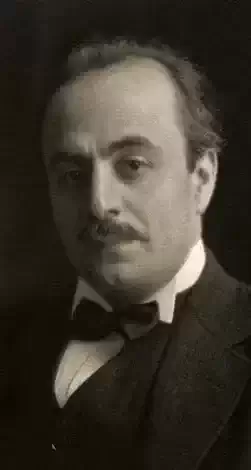
Khalil Gibran
Song of Love XXIV
I am the lover's eyes, and the spirit's
Wine, and the heart's nourishment.
I am a rose. My heart opens at dawn and
The virgin kisses me and places me
Upon her breast.
I am the house of true fortune, and the
Origin of pleasure, and the beginning
Of peace and tranquility. I am the gentle
Smile upon his lips of beauty. When youth
Overtakes me he forgets his toil, and his
Whole life becomes reality of sweet dreams.
I am the poet's elation,
And the artist's revelation,
And the musician's inspiration.
I am a sacred shrine in the heart of a
Child, adored by a merciful mother.
I appear to a heart's cry; I shun a demand;
My fullness pursues the heart's desire;
It shuns the empty claim of the voice.
I appeared to Adam through Eve
And exile was his lot;
Yet I revealed myself to Solomon, and
He drew wisdom from my presence.
I smiled at Helena and she destroyed Tarwada;
Yet I crowned Cleopatra and peace dominated
The Valley of the Nile.
I am like the ages -- building today
And destroying tomorrow;
I am like a god, who creates and ruins;
I am sweeter than a violet's sigh;
I am more violent than a raging tempest.
Gifts alone do not entice me;
Parting does not discourage me;
Poverty does not chase me;
Jealousy does not prove my awareness;
Madness does not evidence my presence.
Oh seekers, I am Truth, beseeching Truth;
And your Truth in seeking and receiving
And protecting me shall determine my
Behavior.
370
Emily Dickinson
If What we could-were what we would
If What we could-were what we would
Criterion-
be small-
It is the Ultimate of Talk-
The Impotence to Tell-
Criterion-
be small-
It is the Ultimate of Talk-
The Impotence to Tell-
369

Ella Wheeler Wilcox
Presumption
Whenever I am prone to doubt or wonder
I check myself, and say, 'That mighty One
Who made the solar system cannot blunder And
for the best all things are being done.'
Who set the stars on their eternal courses
Has fashioned this strange earth by come sure plan.
Bow low, bow low to those majestic forces,
Nor dare to doubt their wisdom - puny man.
You cannot put one little star in motion,
You cannot shape one single forest leaf,
Nor fling a mountain up, nor sink an ocean,
Presumptuous pigmy, large with unbelief.
You cannot bring one dawn of regal splendour
Nor bid the day to shadowy twilight fall,
Nor send the pale moon forth with radiance tender,
And dare you doubt the One who has done all?
'So much is wrong, there is such pain - such sinning.'
Yet look again - behold how much is right!
And He who formed the world from its beginning
Knows how o guide it upward to the light.
Your task, O man, is not to carp and cavil
At God's achievements, but with purpose strong
To cling to good, and turn away from evil That
is the way to help the world along.
370
Johann Wolfgang von Goethe
Hermann And Dorothea - III. Thalia
THE BURGHERS.
THUS did the prudent son escape from the hot conversation,
But the father continued precisely as he had begun it
What is not in a man can never come out of him, surely!
Never, I fear, shall I see fulfill'd my dearest of wishes,
That my son should be unlike his father, but better.
What would be the fate of a house or a town, if its inmates
Did not all take pride in preserving, renewing, improving,
As we are taught by the age, and by the wisdom of strangers?
Man is not born to spring out of the ground, just like a mere mushroom,
And to rot away soon in the very place that produced him!
Leaving behind him no trace of what he has done in his lifetime.
One can judge by the look of a house of the taste of its master,
As on ent'ring a town, one can judge the authorities' fitness.
For where the towers and walls are falling, where in the ditches
Dirt is collected, and dirt in every street is seen lying,
Where the stones come out of their groove, and are not replaced there,
Where the beams are rotting, and vainly the houses are waiting
New supports; that town is sure to be wretchedly managed.
For where order and cleanliness reign not supreme in high places,
Then to dirt and delay the citizens soon get accustom'd,
Just as the beggar's accustom'd to wear his cloths full of tatters.
Therefore I often have wish'd that Hermann would start on his travels
Ere he's much older, and visit at any rate Strasburg and Frankfort,
And that pleasant town, Mannheim, so evenly built and so cheerful.
He who has seen such large and cleanly cities rests never
Till his own native town, however small, he sees better'd.
Do not all strangers who visit us praise our well-mended gateways,
And the well-whited tower, the church so neatly repair'd too?
Do not all praise our pavements? Our well-arranged cover'd-in conduits,
Always well furnish'd with water, utility blending with safety,
So that a fire, whenever it happens, is straightway extinguish'd,--
Is not this the result of that conflagration so dreadful?
Six times in Council I superintended the town's works, receiving
Hearty thanks and assistance from every well-disposed burgher.
How I design'd, follow'd up, and ensured the completion of measures
Worthy men had projected, and afterwards left all unfinish'd!
Finally, every man in the Council took pleasure in working.
All put forth their exertions, and now they have finally settled
That new highway to make, which will join our town with the main road.
But I am greatly afraid that the young generation won't act thus;
Some on the one hand think only of pleasure and trumpery dresses,
Others wont stir out of doors, and pass all their time by the fireside,
And our Hermann, I fear, will always be one of this last sort.'
Forthwith to him replied the excellent sensible mother
'Father, you're always unjust whenever you speak of your son, and
That is the least likely way to obtain your wishes' fulfillment,
For we cannot fashion our children after our fancy.
We must have them and love them, as God has given them to us,
Bring them up for the best, and let each do as he listeth.
One has one kind of gift, another possesses another,
Each one employs them, and each in turn in his separate fashion
Good and happy becomes. My Hermann shall not be upbraided,
For I know that he well deserves the wealth he'll inherit;
He'll be an excellent landlord, a pattern to burghers and peasants,
And, as I clearly foresee, by no means the last in the Council.
But with your blame and reproaches, you daily dishearten him sadly,
As you have done just now, and make the poor fellow unhappy.'
Then she left the apartment, and after her son hasten'd quickly,
Hoping somewhere to find him, and with her words of affection
Gladden his heart, for he, the excellent son, well deserved it.
Smilingly, when she had closed the door, continued the father
'What a wonderful race of people are women and children.
All of them fain would do whatever pleases their fancy,
And we're only alow'd to praise them and flatter them freely.
Once for all there's truth in the ancient proverb which tells us:
He who moves not forward, goes backward! a capital saying!'
Speaking with much circumspection, the druggist made answer as follows
'What you say, good neighbour, is certainly true, and my plan is
Always to think of improvement, provided tho' new, 'tis not costly.
But what avails it in truth, unless one has plenty of money,
Active and fussy to he, improving both inside and outside?
Sadly confined are the means of a burgher; e'en when he knows it,
Little that's good he is able to do, his purse is too narrow,
And the sum wanted too great; and so he is always prevented.
I have had plenty of schemes! but then I was terribly frighten'd
At the expense, especially during a time of such danger.
Long had my house smiled upon me, decked out in modish exterior,
Long had my windows with large panes of glass resplendently glitterd.
Who can compete with a merchant, however, who, rolling in riches,
Also knows the manner in which what is best can be purchased?
Only look at the house up yonder, the new one: how handsome
Looks the stucco of those white scrolls on the green-colour'd panels!
Large are the plates of the windows--how shining and brilliant the panes are,
Quite eclipsing the rest of the houses that stand in the market!
Yet at the time of the fire, our two were by far the most handsome,
Mine at the sign of the Angel, and yours at the old Golden Lion.
Then my garden was famous throughout the whole country, and strangers
Used to stop as they pass'd and peep through my red-colourd palings
At my beggars of stone, and at my dwarfs, which were painted,
He to whom I gave coffee inside my beautiful grotto,
Which, alas! is now cover'd with dust and tumbling to pieces,
Used to rejoice in the colour'd glimmering light of the mussels,
Ranged in natural order around it, and connoisseurs even
Used with dazzled eyes to gaze at the spars and the coral.
Then, in the drawing-room, people look'd with delight on the painting,
Where the prim ladies and gentlemen walked in the garden demurely,
And with pointed fingers presented the flowers, and held them.
Ah, if only such things were now to be seen! Little care I
Now to go out; for everything needs to be alter'd and tasteful,
As it is call'd; and white are the benches of wood and the palings;
All things are simple and plain; and neither carving not gilding
Now are employ'd, and foreign timber is now all the fashion.
I should be only too pleased to possess some novelty also,
So as to march with the times, and my household furniture alter.
But we all are afraid to make the least alteration,
For who is able to pay the present charges of workmen?
Lately a fancy possess'd me, the angel Michael, whose figure
Hangs up over my shop, to treat to a new coat of gilding,
And the terrible Dragon, who round his feet is entwining;
But I have left him all brown; as he is; for the cost quite alarm'd me.'
370

Alexander Pope
On Mr. Gay
Of Manners gentle, of Affections mild;
In Wit, a Man; Simplicity, a Child:
With native Humour temp'ring virtuous Rage,
Form'd to delight at once and lash the age:
Above Temptation, in a low Estate, 5
And uncorrupted, ev'n among the Great:
A safe Companion, and an easy Friend,
Unblam'd thro' Life, lamented in thy End.
These are Thy Honours! not that here thy Bust
Is mix'd with Heroes, or with Kings thy dust; 10
But that the Worthy and the Good shall say,
Striking their pensive bosoms-
Here
lies GAY.
366

Walt Whitman
Tests
ALL submit to them, where they sit, inner, secure, unapproachable to
analysis, in the Soul;
Not traditions--not the outer authorities are the judges--they are
the judges of outer authorities, and of all traditions;
They corroborate as they go, only whatever corroborates themselves,
and touches themselves;
For all that, they have it forever in themselves to corroborate far
and near, without one exception.
369

Kabir
To what shore would you cross
To what shore would you cross,
O my heart?
there is no traveller before you,
there is no road:
Where is the movement,
where is the rest,
on that shore?
There is no water; no boat, no boatman, is there;
There is not so much as a rope to tow the boat, nor a man to draw it.
No earth, no sky, no time, no thing, is there: no shore, no ford!
There, there is neither body nor mind:
and where is the place that shall still the thirst of the soul?
You shall find naught in that emptiness.
Be strong, and enter into your own body:
for there your foothold is firm.
Consider it well,
O my heart!
go not elsewhere,
Kabîr says: 'Put all imaginations away,
and stand fast in that which you are.'
366

James Whitcomb Riley
Herr Weiser
Herr Weiser--! Three-score-years-and-ten--,
A hale white rose of his country-men,
Transplanted here in the Hoosier loam,
And blossomy as his German home--
As blossomy and as pure and sweet
As the cool green glen of his calm retreat,
Far withdrawn from the noisy town
Where trade goes clamoring up and down,
Whose fret and fever, and stress and strife,
May not trouble his tranquil life!
Breath of rest, what a balmy gust--!
Quite of the city's heat and dust,
Jostling down by the winding road,
Through the orchard ways of his quaint abode--.
Tether the horse, as we onward fare
Under the pear-trees trailing there,
And thumping the wood bridge at night
With lumps of ripeness and lush delight,
Till the stream, as it maunders on till dawn,
Is powdered and pelted and smiled upon.
Herr Weiser, with his wholesome face,
And the gentle blue of his eyes, and grace
Of unassuming honesty,
Be there to welcome you and me!
And what though the toil of the farm be stopped
And the tireless plans of the place be dropped,
While the prayerful master's knees are set
In beds of pansy and mignonette
And lily and aster and columbine,
Offered in love, as yours and mine--?
What, but a blessing of kindly thought,
Sweet as the breath of forget-me-not--!
What, but a spirit of lustrous love
White as the aster he bends above--!
What, but an odorous memory
Of the dear old man, made known to me
In days demanding a help like his--,
As sweet as the life of the lily is--
As sweet as the soul of a babe, bloom-wise
Born of a lily in paradise.
365
Johann Wolfgang von Goethe
The Country Schoolmaster
I.
A MASTER of a country school
Jump'd up one day from off his stool,
Inspired with firm resolve to try
To gain the best society;
So to the nearest baths he walk'd,
And into the saloon he stalk'd.
He felt quite. startled at the door,
Ne'er having seen the like before.
To the first stranger made he now
A very low and graceful bow,
But quite forgot to bear in mind
That people also stood behind;
His left-hand neighbor's paunch he struck
A grievous blow, by great ill luck;
Pardon for this he first entreated,
And then in haste his bow repeated.
His right hand neighbor next he hit,
And begg'd him, too, to pardon it;
But on his granting his petition,
Another was in like condition;
These compliments he paid to all,
Behind, before, across the hall;
At length one who could stand no more,
Show'd him impatiently the door.
May many, pond'ring on their crimes,
A moral draw from this betimes!
II.
As he proceeded on his way
He thought, "I was too weak to-day;
To bow I'll ne'er again be seen;
For goats will swallow what is green."
Across the fields he now must speed,
Not over stumps and stones, indeed,
But over meads and cornfields sweet,
Trampling down all with clumsy feet.
A farmer met him by-and-by,
And didn't ask him: how? or why?
But with his fist saluted him.
"I feel new life in every limb!"
Our traveller cried in ecstasy.
"Who art thou who thus gladden'st me?
May Heaven such blessings ever send!
Ne'er may I want a jovial friend!"
362

John Keats
Fragment. Where's The Poet?
Where's the Poet? show him! show him,
Muses nine! that I may know him.
'Tis the man who with a man
Is an equal, be he King,
Or poorest of the beggar-clan
Or any other wonderous thing
A man may be 'twixt ape and Plato;
'Tis the man who with a bird,
Wren or Eagle, finds his way to
All its instincts; he hath heard
The Lion's roaring, and can tell
What his horny throat expresseth,
And to him the Tiger's yell
Come articulate and presseth
Or his ear like mother-tongue.
362
Kabir
Having Crossed The River
Having crossed the river,
where will you go, O friend?
There's no road to tread,
No traveler ahead,
Neither a beginning, nor an end.
There's no water, no boat, no boatman, no cord;
No earth is there, no sky, no time, no bank, no ford.
You have forgotten the Self within,
Your search in the void will be in vain;
In a moment the life will ebb
And in this body you won't remain.
Be ever conscious of this, O friend,
You've to immerse within your Self;
Kabir says, salvation you won't then need,
For what you are, you would be indeed.
363
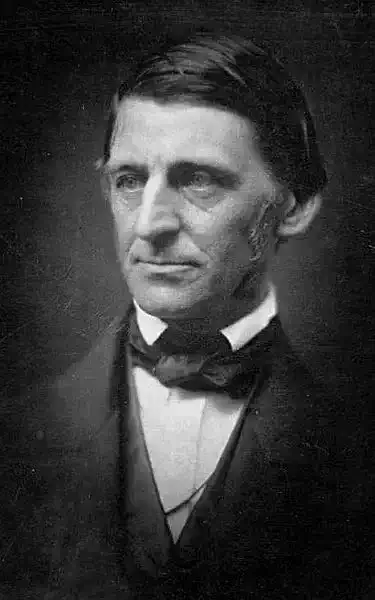
Ralph Waldo Emerson
Merops
What care I, so they stand the same,—
Things of the heavenly mind,—
How long the power to give them fame
Tarries yet behind?
Thus far to-day your favors reach,
O fair, appeasing Presences!
Ye taught my lips a single speech,
And a thousand silences.
Space grants beyond his fated road
No inch to the god of day,
And copious language still bestowed
One word, no more, to say.
361

Muhammad Iqbal
The Sun
O Sun! The world's essence and motivator you are
The organizer of the book of the world you are
The splendor of existence has been created by you
The verdure of the garden of existence depends on you
The spectacle of elements is maintained by you
The exigency of life in all is maintained by you
Your appearance confers stability on everything
Your illumination and concord is completion of life
You are the sun which establishes light in the world
Which establishes heart, intellect, essence and wisdom
O Sun! Bestow on us the light of wisdom
Bestow your luster's light on the intellect's eye
You are the decorator of necessaries of existence' assemblage
You are the Yazdan of the denizens of the high and the low
Your excellence is reflected from every living thing
The mountain range also shows your elegance
You are the sustainer of the life of all
You are the king of the light's children
There is no beginning and no end of yours
Free of limits of time is the light of yours
360
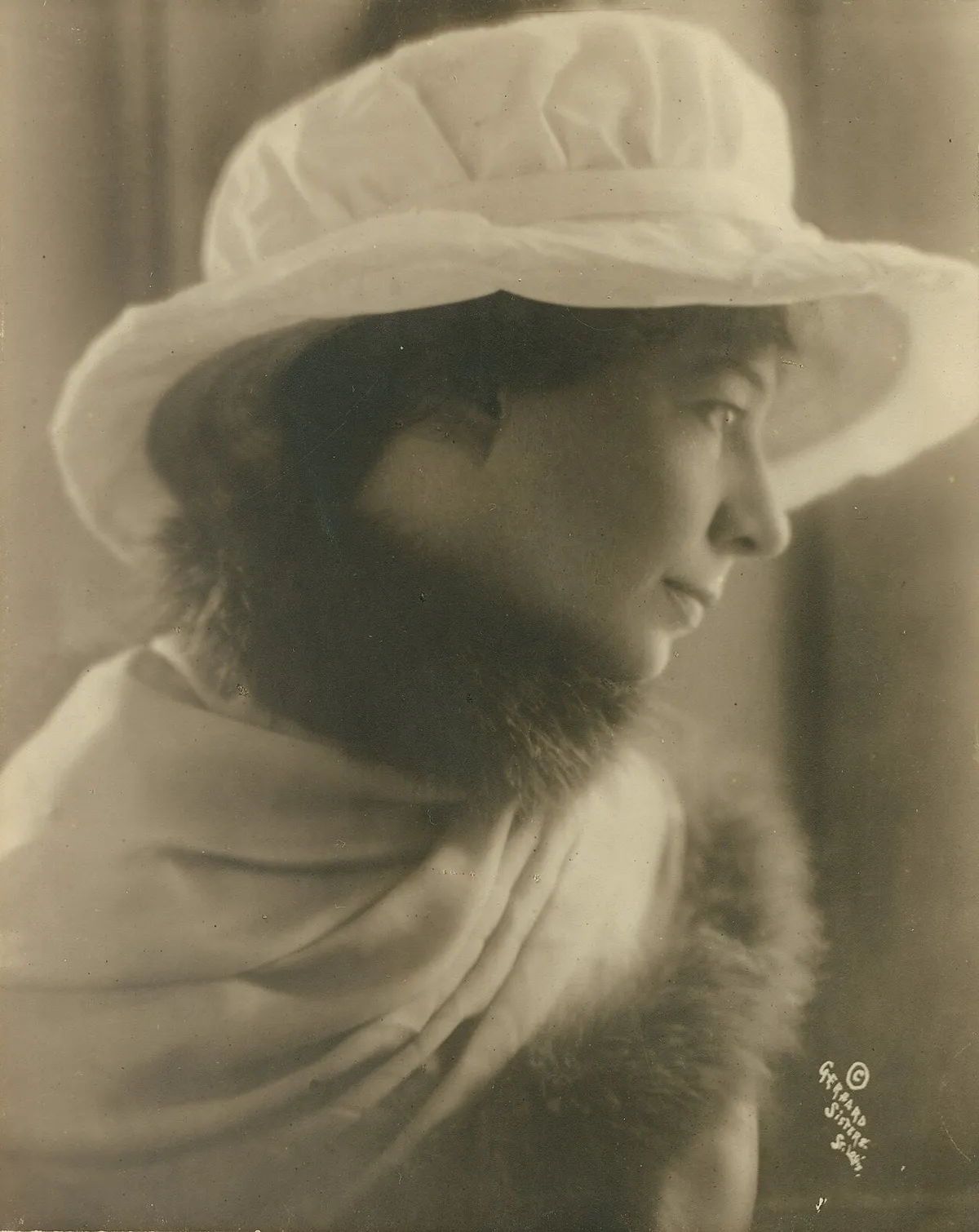
Sara Teasdale
Dust
When I went to look at what had long been hidden,
A jewel laid long ago in a secret place,
I trembled, for I thought to see its dark deep fire --
But only a pinch of dust blew up in my face.
I almost gave my life long ago for a thing
That has gone to dust now, stinging my eyes --
It is strange how often a heart must be broken
Before the years can make it wise.
361
Ella Wheeler Wilcox
Preaching Vs Practice
It is easy to sit in the sunshine
And talk to the man in the shade;
It is easy to float in a well-trimmed boat,
And point out the places to wade.
But once we pass into the shadows,
We murmur and fret and frown,
And, our length from the bank, we shout for a plank,
Or throw up our hands and go down.
It is easy to sit in your carriage,
And counsel the man on foot,
But get down and walk, and you'll change your talk,
As you feel the peg in your boot.
It is easy to tell the toiler
How best he can carry his pack,
But no one can rate a burden's weight
Until it has been on his back.
The up-curled mouth of pleasure,
Can prate of sorrow's worth,
But give it a sip, and a wryer lip,
Was never made on earth.
359

Henry Wadsworth Longfellow
Songo River. (Birds Of Passage. Flight The Fourth)
Nowhere such a devious stream,
Save in fancy or in dream,
Winding slow through bush and brake,
Links together lake and lake.
Walled with woods or sandy shelf,
Ever doubling on itself
Flows the stream, so still and slow
That it hardly seems to flow.
Never errant knight of old,
Lost in woodland or on wold,
Such a winding path pursued
Through the sylvan solitude.
Never school-boy, in his quest
After hazel-nut or nest,
Through the forest in and out
Wandered loitering thus about.
In the mirror of its tide
Tangled thickets on each side
Hang inverted, and between
Floating cloud or sky serene.
Swift or swallow on the wing
Seems the only living thing,
Or the loon, that laughs and flies
Down to those reflected skies.
Silent stream! thy Indian name
Unfamiliar is to fame;
For thou hidest here alone,
Well content to be unknown.
But thy tranquil waters teach
Wisdom deep as human speech,
Moving without haste or noise
In unbroken equipoise.
Though thou turnest no busy mill,
And art ever calm and still,
Even thy silence seems to say
To the traveller on his way:-
'Traveller, hurrying from the heat
Of the city, stay thy feet!
Rest awhile, nor longer waste
Life with inconsiderate haste!
'Be not like a stream that brawls
Loud with shallow waterfalls,
But in quiet self-control
Link together soul and soul.'
361
Alexander Pope
EPISTLE II: TO A LADY (Of the Characters of Women )
NOTHING so true as what you once let fall,
"Most Women have no Characters at all."
Matter too soft a lasting mark to bear,
And best distinguish'd by black, brown, or fair.
How many pictures of one Nymph we view,
All how unlike each other, all how true!
Arcadia's Countess, here, in ermin'd pride,
Is, there, Pastora by a fountain side.
Here Fannia, leering on her own good man,
And there, a naked Leda with a Swan.
Let then the Fair one beautifully cry,
In Magdalen's loose hair and lifted eye,
Or drest in smiles of sweet Cecilia shine,
With simpering Angels, Palms, and Harps divine;
Whether the Charmer sinner it, or saint it,
If Folly grow romantic, I must paint it.
Come then, the colours and the ground prepare!
Dip in the Rainbow, trick her off in Air;
Choose a firm Cloud, before it fall, and in it
Catch, ere she change, the Cynthia of this minute.
Rufa, whose eye quick-glancing o'er the Park,
Attracts each light gay meteor of a Spark,
Agrees as ill with Rufa studying Locke,
As Sappho's diamonds with her dirty smock;
Or Sappho at her toilet's greasy task,
With Sappho fragrant at an evening Masque:
So morning Insects that in muck begun,
Shine, buzz, and flyblow in the setting sun.
How soft is Silia! fearful to offend;
The Frail one's advocate, the Weak one's friend:
To her, Calista prov'd her conduct nice;
And good Simplicius asks of her advice.
Sudden, she storms! she raves! You tip the wink,
But spare your censure; Silia does not drink.
All eyes may see from what the change arose,
All eyes may see--a Pimple on her nose.
Papillia, wedded to her amorous spark,
Sighs for the shades--"How charming is a Park!"
A Park is purchas'd, but the Fair he sees
All bath'd in tears--"Oh odious, odious Trees!"
Ladies, like variegated Tulips, show;
'Tis to their Changes half their charms we owe;
Fine by defect, and delicately weak,
Their happy Spots the nice admirer take,
'Twas thus Calypso once each heart alarm'd,
Aw'd without Virtue, without Beauty charmed;
Her tongue bewitch'd as oddly as her Eyes,
Less Wit than Mimic, more a Wit than wise;
Strange graces still, and stranger flights she had,
Was just not ugly, and was just not mad;
Yet ne'er so sure our passion to create,
As when she touch'd the brink of all we hate.
Narcissa's nature, tolerably mild,
To make a wash, would hardly stew a child;
Has ev'n been prov'd to grant a Lover's pray'r,
And paid a Tradesman once to make him stare;
Gave alms at Easter, in a Christian trim,
And made a Widow happy, for a whim.
Why then declare Good-nature is her scorn,
When 'tis by that alone she can be borne?
Why pique all mortals, yet affect a name?
A fool to Pleasure, yet a slave to Fame:
Now deep in Taylor and the Book of Martyrs,
Now drinking citron with his Grace and Chartres:
Now Conscience chills her, and now Passion burns;
And Atheism and Religion take their turns;
A very Heathen in the carnal part,
Yet still a sad, good Christian at her heart.
See Sin in State, majestically drunk;
Proud as a Peeress, prouder as a Punk;
Chaste to her Husband, frank to all beside,
A teeming Mistress, but a barren Bride.
What then? let Blood and Body bear the fault,
Her Head's untouch'd, that noble Seat of Thought:
Such this day's doctrine--in another fit
She sins with Poets thro' pure Love of Wit.
What has not fir'd her bosom or her brain?
Caesar and Tallboy, Charles and Charlemagne.
As Helluo, late Dictator of the Feast,
The Nose of Hautgout, and the Tip of Taste,
Critick'd your wine, and analyz'd your meat,
Yet on plain Pudding deign'd at home to eat;
So Philomede, lecturing all mankind
On the soft Passion, and the Taste refin'd,
Th' Address, the Delicacy--stoops at once,
And makes her hearty meal upon a Dunce.
Flavia's a Wit, has too much sense to Pray;
To Toast our wants and wishes, is her way;
Nor asks of God, but of her Stars, to give
The mighty blessing, "while we live, to live."
Then all for Death, that Opiate of the soul!
Lucretia's dagger, Rosamonda's bowl.
Say, what can cause such impotence of mind?
A spark too fickle, or a Spouse too kind.
Wise Wretch! with Pleasures too refin'd to please;
With too much Spirit to be e'er at ease;
With too much Quickness ever to be taught;
With too much Thinking to have common Thought:
You purchase Pain with all that Joy can give,
And die of nothing but a Rage to live.
Turn then from Wits; and look on Simo's Mate,
No Ass so meek, no Ass so obstinate.
Or her, that owns her Faults, but never mends,
Because she's honest, and the best of Friends.
Or her, whose life the Church and Scandal share,
For ever in a Passion, or a Pray'r.
Or her, who laughs at Hell, but (like her Grace)
Cries, "Ah! how charming, if there's no such place!"
Or who in sweet vicissitude appears
Of Mirth and Opium, Ratafie and Tears,
The daily Anodyne, and nightly Draught,
To kill those foes to Fair ones, Time and Thought.
Woman and Fool are two hard things to hit;
For true No-meaning puzzles more than Wit.
But what are these to great Atossa's mind?
Scarce once herself, by turns all Womankind!
Who, with herself, or others, from her birth
Finds all her life one warfare upon earth:
Shines, in exposing Knaves, and painting Fools,
Yet is, whate'er she hates and ridicules.
No Thought advances, but her Eddy Brain
Whisks it about, and down it goes again.
Full sixty years the World has been her Trade,
The wisest Fool much Time has ever made.
From loveless youth to unrespected age,
No passion gratify'd except her Rage.
So much the Fury still outran the Wit,
The Pleasure miss'd her, and the Scandal hit.
Who breaks with her, provokes Revenge from Hell,
But he's a bolder man who dares be well.
Her ev'ry turn with Violence pursu'd,
Nor more a storm her Hate than Gratitude:
To that each Passion turns, or soon or late;
Love, if it makes her yield, must make her hate:
Superiors? death! and Equals? what a curse!
But an Inferior not dependant? worse.
Offend her, and she knows not to forgive;
Oblige her, and she'll hate you while you live:
But die, and she'll adore you--Then the Bust
And Temple rise--then fall again to dust.
Last night, her Lord was all that's good and great;
A Knave this morning, and his Will a Cheat.
Strange! by the Means defeated of the Ends,
By Spirit robb'd of Pow'r, by Warmth of Friends,
By Wealth of Followers! without one distress
Sick of herself thro' very selfishness!
Atossa, curs'd with ev'ry granted pray'r,
Childless with all her Children, wants an Heir.
To Heirs unknown descends th' unguarded store,
Or wanders, Heav'n-directed, to the Poor.
Pictures like these, dear Madam, to design,
Asks no firm hand, and no unerring line;
Some wandering touches, some reflected light,
Some flying stroke alone can hit 'em right:
For how should equal Colours do the knack?
Chameleons who can paint in white and black?
"Yet Chloe sure was form'd without a spot--"
Nature in her then err'd not, but forgot.
"With ev'ry pleasing, ev'ry prudent part,
Say, what can Chloe want?"--She wants a Heart.
She speaks, behaves, and acts just as she ought;
But never, never, reach'd one gen'rous Thought.
Virtue she finds too painful an endeavour,
Content to dwell in Decencies for ever.
So very reasonable, so unmov'd,
As never yet to love, or to be lov'd.
She, while her Lover pants upon her breast,
Can mark the figures on an Indian chest;
And when she sees her Friend in deep despair,
Observes how much a Chintz exceeds Mohair.
Forbid it Heav'n, a Favour or a Debt
She e'er should cancel--but she may forget.
Safe is your Secret still in Chloe's ear;
But none of Chloe's shall you ever hear.
Of all her Dears she never slander'd one,
But cares not if a thousand are undone.
Would Chloe know if you're alive or dead?
She bids her Footman put it in her head.
Chloe is prudent--Would you too be wise?
Then never break your heart when Chloe dies.
One certain Portrait may (I grant) be seen,
Which Heav'n has varnish'd out, and made a Queen:
The same for ever! and describ'd by all
With Truth and Goodness, as with Crown and Ball.
Poets heap Virtues, Painters Gems at will,
And show their zeal, and hide their want of skill.
'Tis well--but, Artists! who can paint or write,
To draw the Naked is your true delight.
That robe of Quality so struts and swells,
None see what Parts of Nature it conceals:
Th' exactest traits of Body or of Mind,
We owe to models of an humble kind.
If QUEENSBURY to strip there's no compelling,
'Tis from a Handmaid we must take a Helen.
From Peer or Bishop 'tis no easy thing
To draw the man who loves his God, or King:
Alas! I copy (or my draught would fail)
From honest Mah'met, or plain Parson Hale.
But grant, in Public Men sometimes are shown,
A Woman's seen in Private life alone:
Our bolder Talents in full light displayed;
Your Virtues open fairest in the shade.
Bred to disguise, in Public 'tis you hide;
There, none distinguish twixt your Shame or Pride,
Weakness or Delicacy; all so nice,
That each may seem a Virtue, or a Vice.
In Men, we various Ruling Passions find;
In Women, two almost divide the kind;
Those, only fix'd, they first or last obey,
The Love of Pleasure, and the Love of Sway.
That, Nature gives; and where the lesson taught
Is but to please, can Pleasure seem a fault?
Experience, this; by Man's oppression curst,
They seek the second not to lose the first.
Men, some to Business, some to pleasure take;
But ev'ry Woman is at heart a Rake:
Men, some to Quiet, some to public Strife;
But ev'ry Lady would be Queen for life.
Yet mark the fate of a whole Sex of Queens!
Pow'r all their end, but Beauty all the means:
In Youth they conquer, with so wild a rage,
As leaves them scarce a subject in their Age:
For foreign glory, foreign joy, they roam;
No thought of peace or happiness at home.
But Wisdom's triumph is a well-tim'd Retreat,
As hard a science to the Fair as Great!
Beauties, like Tyrants, old and friendless grown,
Yet hate repose, and dread to be alone,
Worn out in public, weary ev'ry eye,
Nor leave one sigh behind them when they die.
Pleasures the sex, as children Birds, pursue,
Still out of reach, yet never out of view;
Sure, if they catch, to spoil the Toy at most,
To covet flying, and regret when lost:
At last, to follies Youth could scarce defend,
It grows their Age's prudence to pretend;
Asham'd to own they gave delight before,
Reduc'd to feign it, when they give no more:
As Hags hold Sabbaths, less for joy than spite,
So these their merry, miserable Night;
Still round and round the Ghosts of Beauty glide,
And haunt the places where their Honour died.
See how the World its Veterans rewards!
A Youth of Frolics, an old Age of Cards;
Fair to no purpose, artful to no end,
Young without Lovers, old without a Friend;
A Fop their Passion, but their Prize a Sot;
Alive, ridiculous, and dead, forgot!
Ah Friend! to dazzle let the Vain design;
To raise the Thought, and touch the Heart be thine!
That Charm shall grow, while what fatigues the Ring,
Flaunts and goes down, an unregarded thing:
So when the Sun's broad beam has tir'd the sight,
All mild ascends the Moon's more sober light,
Serene in Virgin Modesty she shines,
And unobserv'd the glaring Orb declines.
Oh! blest with Temper, whose unclouded ray
Can make tomorrow cheerful as today;
She, who can love a Sister's charms, or hear
Sighs for a Daughter with unwounded ear;
She, who ne'er answers till a Husband cools,
Or, if she rules him, never shows she rules;
Charms by accepting, by submitting sways,
Yet has her humour most, when she obeys;
Let Fops or Fortune fly which way they will;
Disdains all loss of Tickets, or Codille;
Spleen, Vapours, or Smallpox, above them all,
And Mistress of herself, though China fall.
And yet, believe me, good as well as ill,
Woman's at best a Contradiction still.
Heav'n, when it strives to polish all it can
Its last best work, but forms a softer Man;
Picks from each sex, to make the Favorite blest,
Your love of Pleasure, our desire of Rest:
Blends, in exception to all general rules,
Your Taste of Follies, with our Scorn of Fools:
Reserve with Frankness, Art with Truth ally'd,
Courage with Softness, Modesty with Pride;
Fix'd Principles, with Fancy ever new;
Shakes all together, and produces--You.
Be this a Woman's Fame: with this unblest,
Toasts live a scorn, and Queens may die a jest.
This Phoebus promis'd (I forget the year)
When those blue eyes first open'd on the sphere;
Ascendant Phoebus watch'd that hour with care,
Averted half your Parents' simple Pray'r;
And gave you Beauty, but deny'd the Pelf
That buys your sex a Tyrant o'er itself.
The generous God, who Wit and Gold refines,
And ripens Spirits as he ripens Mines,
Kept Dross for Duchesses, the world shall know it,
To you gave Sense, Good Humour, and a Poet.
358

Ezra Pound
Post Mortem Conspectu
A brown, fat babe sitting in the lotus,
And you were glad and laughing
With a laughter not of this world.
It is good to splash in the water
And laughter is the end of all things.
And you were glad and laughing
With a laughter not of this world.
It is good to splash in the water
And laughter is the end of all things.
358
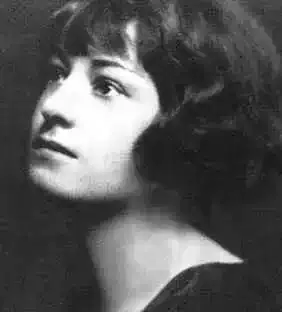
Dorothy Parker
Wisdom
This I say, and this I know:
Love has seen the last of me.
Love's a trodden lane to woe,
Love's a path to misery.
This I know, and knew before,
This I tell you, of my years:
Hide your heart, and lock your door.
Hell's afloat in lovers' tears.
Give your heart, and toss and moan;
What a pretty fool you look!
I am sage, who sit alone;
Here's my wool, and here's my book.
Look! A lad's a-waiting there,
Tall he is and bold, and gay.
What the devil do I care
What I know, and what I say?
356
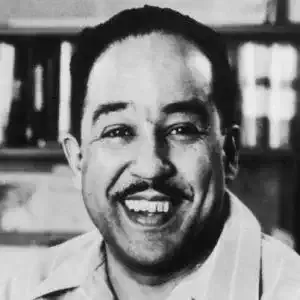
Langston Hughes
Wisdom and War
We do not care-
That much is clear.
Not enough
Of us care
Anywhere.
We are not wise-
For that reason,
Mankind dies.
To think
Is much against
The will.
Better-
And easier-
To kill.
That much is clear.
Not enough
Of us care
Anywhere.
We are not wise-
For that reason,
Mankind dies.
To think
Is much against
The will.
Better-
And easier-
To kill.
356
Ralph Waldo Emerson
The Problem
I like the church; I like a cowl;
I love a prophet of the soul;
And on my heart monastic aisles
Fall like sweet strains, or pensive smiles;
Yet not for all his faith can see
Would I that cowlèd churchman be.
Why should the vest on him allure,
Which I could not on me endure?
Not from a vain or shallow thought
His awful Jove young Phidias brought;
Never from lips of cunning fell
The thrilling Delphic oracle;
Out from the heart of nature rolled
The burdens of the Bible old;
The litanies of nations came,
Like the volcano's tongue of flame,
Up from the burning core below,--
The canticles of love and woe:
The hand that rounded Peter's dome
And groined the aisles of Christian Rome
Wrought in a sad sincerity;
Himself from God he could not free;
He builded better than he knew;--
The conscious stone to beauty grew.
Knowst thou what wove yon wood bird's nest
Of leaves and feathers from her breast?
Or how the fish outbuilt her shell,
Painting with morn each annual cell?
Or how the sacred pine tree adds
To her old leaves new myriads?
Such and so grew these holy piles,
Whilst love and terror laid the tiles.
Earth proudly wears the Parthenon,
As the best gem upon her zone,
And Morning opes with haste her lids
To gaze upon the Pyramids;
O'er England's abbeys bends the sky,
As on its friends, with kindred eye;
For out of Thought's interior sphere
These wonders rose to upper air;
And Nature gladly gave them place,
Adopted them into her race,
And granted them an equal date
With Andes and with Ararat.
These temples grew as grows the grass;
Art might obey, but not surpass.
The passive Master lent his hand
To the vast soul that o'er him planned;
And the same power that reared the shrine
Bestrode the tribes that knelt within.
Ever the fiery Pentecost
Girds with one flame the countless host,
Trances the heart through chanting choirs,
And through the priest the mind inspires.
The word unto the prophet spoken
Was writ on tables yet unbroken;
The word by seers or sibyls told,
In groves of oak, or fames of gold,
Still floats upon the morning wind,
Still whispters to the willing mind.
One accent of the Holy Ghost
The heedless world hath never lost.
I know what say the fathers wise,--
The Book itself before me lies,
Old Chrysostom, best Augustine,
And he who blent both in his line,
The younger Golden Lips or mines,
Taylor, the Shakespeare of divines.
His words are music in my ear.
I see his cowlèd portrait dear;
And yet, for all his faith could see,
I would not the good bishop be.
356
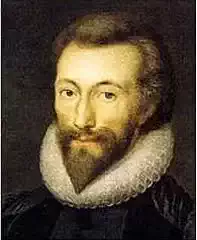
John Donne
To Mr. Rowland Woodward
LIKE one who in her third widowhood doth profess
Herself a nun, tied to retiredness,
So affects my Muse, now, a chaste fallowness.
Since she to few, yet to too many hath shown,
How love-song weeds and satiric thorns are grown,
Where seeds of better arts were early sown ;
Though to use and love poetry, to me,
Betroth'd to no one art, be no adultery ;
Omissions of good, ill, as ill deeds be.
For though to us it seems but light and thin,
Yet in those faithful scales, where God throws in
Men's works, vanity weighs as much as sin.
If our souls have stain'd their first white, yet we
May clothe them with faith, and dear honesty,
Which God imputes as native purity.
There is no virtue but religion.
Wise, valiant, sober, just, are names which none
Want, which want not vice-covering discretion.
Seek we then ourselves in ourselves ; for as
Men force the sun with much more force to pass,
By gathering his beams with a crystal glass,
So we—if we into ourselves will turn,
Blowing our spark of virtue—may out-burn
The straw which doth about our hearts sojourn.
You know physicians, when they would infuse
Into any oil the souls of simples, use
Places, where they may lie still warm, to choose.
So works retiredness in us. To roam
Giddily and be everywhere, but at home,
Such freedom doth a banishment become.
We are but farmers of ourselves, yet may,
If we can stock ourselves, and thrive, uplay
Much, much dear treasure for the great rent day.
Manure thyself then, to thyself be improved ;
And with vain outward things be no more moved,
But to know that I love thee and would be loved.
356