
Wisdom

George Herbert
Faith
Lord, how couldst thou so much appease
Thy wrath for sin, as when man's sight was dim,
And could see little, to regard his ease,
And bring by Faith all things to him?
Hungry I was, and had no meat:
I did conceit a most delicious feast;
I had it straight, and did as truly eat,
As ever did a welcome guest.
There is a rare outlandish root,
Which when I could not get, I thought it here:
That apprehension cur'd so well my foot,
That I can walk to heav'n well near.
I owed thousands and much more.
I did believe that I did nothing owe,
And liv'd accordingly; my creditor
Believes so too, and lets me go.
Faith makes me any thing, or all
That I believe is in the sacred story:
And where sin placeth me in Adam's fall,
Faith sets me higher in his glory.
If I go lower in the book,
What can be lower than the common manger?
Faith puts me there with him, who sweetly took
Our flesh and frailty, death and danger.
If bliss had lien in art or strength,
None but the wise or strong had gained it:
Where now by Faith all arms are of a length;
One size doth all conditions fit.
A peasant may believe as much
As a great Clerk, and reach the highest stature.
Thus dost thou make proud knowledge bend and crouch
While grace fills up uneven nature.
When creatures had no real light
Inherent in them, thou didst make the sun
Impute a lustre, and allow them bright;
And in this show what Christ hath done.
That which before was darkned clean
With bushy groves, pricking the looker's eye,
Vanisht away, when Faith did change the scene:
And then appear'd a glorious sky.
What though my body run to dust?
Faith cleaves unto it, counting ev'ry grain
With an exact and most particular trust,
Reserving all for flesh again.
354

Johann Wolfgang von Goethe
Lines On Seeing Schiller's Skull
WITHIN a gloomy charnel-house one day
I view'd the countless skulls, so strangely mated,
And of old times I thought, that now were grey.
Close pack'd they stand, that once so fiercely hated,
And hardy bones, that to the death contended,
Are lying cross'd,--to lie for ever, fated.
What held those crooked shoulder-blades suspended?
No one now asks; and limbs with vigour fired,
The hand, the foot--their use in life is ended.
Vainly ye sought the tomb for rest when tired;
Peace in the grave may not be yours; ye're driven
Back into daylight by a force inspired;
But none can love the wither'd husk, though even
A glorious noble kernel it contained.
To me, an adept, was the writing given
Which not to all its holy sense explained,
When 'mid the crowd, their icy shadows flinging,
I saw a form, that glorious still remained.
And even there, where mould and damp were clinging,
Gave me a blest, a rapture-fraught emotion,
As though from death a living fount were springing.
What mystic joy I felt! What rapt devotion!
That form, how pregnant with a godlike trace!
A look, how did it whirl me tow'rd that ocean
Whose rolling billows mightier shapes embrace!
Mysterious vessel! Oracle how dear!
Even to grasp thee is my hand too base,
Except to steal thee from thy prison here
With pious purpose, and devoutly go
Back to the air, free thoughts, and sunlight clear.
What greater gain in life can man e'er know
Than when God-Nature will to him explain
How into Spirit steadfastness may flow,
How steadfast, too, the Spirit-Born remain.
355

Ogden Nash
Old Dr. Valentine To His Son
Your hopeless patients will live,
Your healthy patients will die.
I have only this word to give:
Wonder, and find out why
Your healthy patients will die.
I have only this word to give:
Wonder, and find out why
355

Henry Wadsworth Longfellow
Ultima Thule: Robert Burns
I see amid the fields of Ayr
A ploughman, who, in foul and fair,
Sings at his task
So clear, we know not if it is
The laverock's song we hear, or his,
Nor care to ask.
For him the ploughing of those fields
A more ethereal harvest yields
Than sheaves of grain;
Songs flush with purple bloom the rye,
The plover's call, the curlew's cry,
Sing in his brain.
Touched by his hand, the wayside weed
Becomes a flower; the lowliest reed
Beside the stream
Is clothed with beauty; gorse and grass
And heather, where his footsteps pass,
The brighter seem.
He sings of love, whose flame illumes
The darkness of lone cottage rooms;
He feels the force,
The treacherous undertow and stress
Of wayward passions, and no less
The keen remorse.
At moments, wrestling with his fate,
His voice is harsh, but not with hate;
The brushwood, hung
Above the tavern door, lets fall
Its bitter leaf, its drop of gall
Upon his tongue.
But still the music of his song
Rises o'er all, elate and strong;
Its master-chords
Are Manhood, Freedom, Brotherhood,
Its discords but an interlude
Between the words.
And then to die so young and leave
Unfinished what he might achieve!
Yet better sure
Is this, than wandering up and down
An old man in a country town,
Infirm and poor.
For now he haunts his native land
As an immortal youth; his hand
Guides every plough;
He sits beside each ingle-nook,
His voice is in each rushing brook,
Each rustling bough.
His presence haunts this room to-night,
A form of mingled mist and light
From that far coast.
Welcome beneath this roof of mine!
Welcome! this vacant chair is thine,
Dear guest and ghost!
354
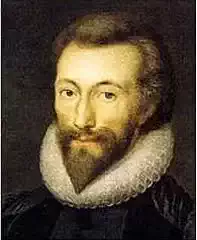
John Donne
To Mr. Tilman After He Had Taken Orders
THOU, whose diviner soul hath caused thee now
To put thy hand unto the holy plough,
Making lay-scornings of the ministry
Not an impediment, but victory ;
What bring'st thou home with thee ? how is thy mind
Affected since the vintage ? Dost thou find
New thoughts and stirrings in thee ? and, as steel
Touch'd with a loadstone, dost new motions feel ?
Or, as a ship after much pain and care
For iron and cloth brings home rich Indian ware,
Hast thou thus traffick'd, but with far more gain
Of noble goods, and with less time and pain ?
Thou art the same materials, as before,
Only the stamp is changèd, but no more.
And as new crowned kings alter the face,
But not the money's substance, so hath grace
Changed only God's old image by creation,
To Christ's new stamp, at this thy coronation ;
Or, as we paint angels with wings, because
They bear God's message and proclaim His laws,
Since thou must do the like and so must move,
Art thou new feather'd with celestial love ?
Dear, tell me where thy purchase lies, and show
What thy advantage is above, below.
But if thy gainings do surmount expression,
Why doth the foolish world scorn that profession,
Whose joys pass speech ? Why do they think unfit
That gentry should join families with it ?
As if their day were only to be spent
In dressing, mistressing and compliment.
Alas ! poor joys, but poorer men, whose trust
Seems richly placèd in sublimèd dust,
—For such are clothes and beauty, which though gay,
Are, at the best, but of sublimèd clay—
Let then the world thy calling disrespect,
But go thou on, and pity their neglect.
What function is so noble, as to be
Ambassador to God, and destiny ?
To open life ? to give kingdoms to more
Than kings give dignities? to keep heaven's door ?
Mary's prerogative was to bear Christ, so
'Tis preachers' to convey Him, for they do,
As angels out of clouds, from pulpits speak ;
And bless the poor beneath, the lame, the weak.
If then th' astronomers, whereas they spy
A new-found star, their optics magnify,
How brave are those, who with their engine can
Bring man to heaven, and heaven again to man ?
These are thy titles and pre-eminences,
In whom must meet God's graces, men's offences ;
And so the heavens which beget all things here,
And the earth, our mother, which these things doth bear ;
Both these in thee, are in thy calling knit
And make thee now a blest hermaphrodite.
350
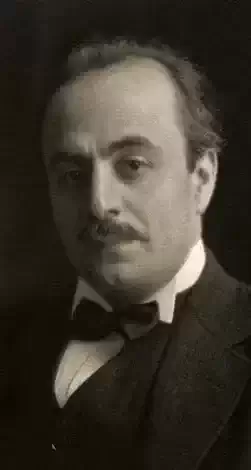
Khalil Gibran
Reason and Passion XV
And the priestess spoke again and said: "Speak to us of Reason and Passion."
And he answered saying:
Your soul is oftentimes a battlefield, upon which your reason and your judgment wage
war against passion and your appetite.
Would that I could be the peacemaker in your soul, that I might turn the discord and
the rivalry of your elements into oneness and melody.
But how shall I, unless you yourselves be also the peacemakers, nay, the lovers of all
your elements?
Your reason and your passion are the rudder and the sails of your seafaring soul.
If either your sails or our rudder be broken, you can but toss and drift, or else be held
at a standstill in mid-seas.
For reason, ruling alone, is a force confining; and passion, unattended, is a flame that
burns to its own destruction.
Therefore let your soul exalt your reason to the height of passion; that it may sing;
And let it direct your passion with reason, that your passion may live through its own
daily resurrection, and like the phoenix rise above its own ashes.
I would have you consider your judgment and your appetite even as you would two
loved guests in your house.
Surely you would not honour one guest above the other; for he who is more mindful of
one loses the love and the faith of both.
Among the hills, when you sit in the cool shade of the white poplars, sharing the peace
and serenity of distant fields and meadows - then let your heart say in silence, "God
rests in reason."
And when the storm comes, and the mighty wind shakes the forest, and thunder and
lightning proclaim the majesty of the sky, - then let your heart say in awe, "God moves
in passion."
And since you are a breath In God's sphere, and a leaf in God's forest, you too should
rest in reason and move in passion.
351

John Greenleaf Whittier
Bryant On His Birthday
We praise not now the poet's art,
The rounded beauty of his song;
Who weighs him from his life apart
Must do his nobler nature wrong.
Not for the eye, familiar grown
With charms to common sight denied,
The marvellous gift he shares alone
With him who walked on Rydal-side;
Not for rapt hymn nor woodland lay,
Too grave for smiles, too sweet for tears;
We speak his praise who wears to-day
The glory of his seventy years.
When Peace brings Freedom in her train,
Let happy lips his songs rehearse;
His life is now his noblest strain,
His manhood better than his verse!
Thank God! his hand on Nature's keys
Its cunning keeps at life's full span;
But, dimmed and dwarfed, in times like these,
The poet seems beside the man!
So be it! let the garlands die,
The singer's wreath, the painter's meed,
Let our names perish, if thereby
Our country may be saved and freed!
348

William Butler Yeats
The Coming Of Wisdom With Time
THOUGH leaves are many, the root is one;
Through all the lying days of my youth
I swayed my leaves and flowers in the sun;
Now I may wither into the truth.
Through all the lying days of my youth
I swayed my leaves and flowers in the sun;
Now I may wither into the truth.
347
John Donne
To Sir Henry Wotton At His Going Ambassador To Venice
AFTER those reverend papers, whose soul is
Our good and great king's loved hand and fear'd name ;
By which to you he derives much of his,
And, how he may, makes you almost the same,
A taper of his torch, a copy writ
From his oiginal, and a fair beam
Of the same warm and dazzling sun, though it
Must in another sphere his virtue stream ;
After those learned papers which your hand
Hath stored with notes of use and pleasures too,
From which rich treasury you may command
Fit matter whether you will write or do ;
After those loving papers where friends send,
With glad grief to your sea-ward steps, farewell,
Which thicken on you now, as prayers ascend
To heaven in troops, at a good man's passing-bell ;
Admit this honest paper, and allow
It such an audience as yourself would ask ;
What you must say at Venice, this means now,
And hath for nature, what you have for task.
To swear much love, not to be changed before
Honour, alone will to your fortune fit ;
Nor shall I then honour your fortune, more
Than I have done your honour, wanting it.
But 'tis an easier load, though both oppress,
To want, than govern greatness, for we are
In that, our own and only business,
In this, we must for others' vices care.
'Tis therefore well your spirits now are placed
In their last furnace, in activity ;
Which fits them—schools and courts and wars o'erpast—
To touch and test in any best degree.
For me—if there be such a thing as I—
Fortune—if there be such a thing as she—
Spies that I bear so well her tyranny,
That she thinks nothing else so fit for me.
But, though she part us, to hear my oft prayers
For your increase, God is as near me here ;
And to send you what I shall beg, His stairs
In length and ease are alike everywhere.
345

Emily Dickinson
Ideals are the Fairly Oil
Ideals are the Fairly Oil
With which we help the Wheel
But when the Vital Axle turns
The Eye rejects the Oil.
With which we help the Wheel
But when the Vital Axle turns
The Eye rejects the Oil.
341

Robert Browning
Rabbi Ben Ezra
Grow old along with me!
The best is yet to be,
The last of life, for which the first was made:
Our times are in His hand
Who saith 'A whole I planned,
Youth shows but half; trust God: see all, nor be afraid!'
Not that, amassing flowers,
Youth sighed 'Which rose make ours,
Which lily leave and then as best recall?'
Not that, admiring stars,
It yearned 'Nor Jove, nor Mars;
Mine be some figured flame which blends, transcends them all!'
Not for such hopes and fears
Annulling youth's brief years,
Do I remonstrate: folly wide the mark!
Rather I prize the doubt
Low kinds exist without,
Finished and finite clods, untroubled by a spark.
Poor vaunt of life indeed,
Were man but formed to feed
On joy, to solely seek and find and feast:
Such feasting ended, then
As sure an end to men;
Irks care the crop-full bird? Frets doubt the maw-crammed beast?
Rejoice we are allied
To That which doth provide
And not partake, effect and not receive!
A spark disturbs our clod;
Nearer we hold of God
Who gives, than of His tribes that take, I must believe.
Then, welcome each rebuff
That turns earth's smoothness rough,
Each sting that bids nor sit nor stand but go!
Be our joys three-parts pain!
Strive, and hold cheap the strain;
Learn, nor account the pang; dare, never grudge the throe!
For thence,--a paradox
Which comforts while it mocks,--
Shall life succeed in that it seems to fail:
What I aspired to be,
And was not, comforts me:
A brute I might have been, but would not sink i' the scale.
What is he but a brute
Whose flesh has soul to suit,
Whose spirit works lest arms and legs want play?
To man, propose this test--
Thy body at its best,
How far can that project thy soul on its lone way?
Yet gifts should prove their use:
I own the Past profuse
Of power each side, perfection every turn:
Eyes, ears took in their dole,
Brain treasured up the whole;
Should not the heart beat once 'How good to live and learn?'
Not once beat 'Praise be Thine!
I see the whole design,
I, who saw power, see now love perfect too:
Perfect I call Thy plan:
Thanks that I was a man!
Maker, remake, complete,--I trust what Thou shalt do!'
For pleasant is this flesh;
Our soul, in its rose-mesh
Pulled ever to the earth, still yearns for rest;
Would we some prize might hold
To match those manifold
Possessions of the brute,--gain most, as we did best!
Let us not always say,
'Spite of this flesh to-day
I strove, made head, gained ground upon the whole!'
As the bird wings and sings,
Let us cry 'All good things
Are ours, nor soul helps flesh more, now, than flesh helps soul!'
Therefore I summon age
To grant youth's heritage,
Life's struggle having so far reached its term:
Thence shall I pass, approved
A man, for aye removed
From the developed brute; a god though in the germ.
And I shall thereupon
Take rest, ere I be gone
Once more on my adventure brave and new:
Fearless and unperplexed,
When I wage battle next,
What weapons to select, what armour to indue.
Youth ended, I shall try
My gain or loss thereby;
Leave the fire ashes, what survives is gold:
And I shall weigh the same,
Give life its praise or blame:
Young, all lay in dispute; I shall know, being old.
For note, when evening shuts,
A certain moment cuts
The deed off, calls the glory from the grey:
A whisper from the west
Shoots--'Add this to the rest,
Take it and try its worth: here dies another day.'
So, still within this life,
Though lifted o'er its strife,
Let me discern, compare, pronounce at last,
This rage was right i' the main,
That acquiescence vain:
The Future I may face now I have proved the Past.'
For more is not reserved
To man, with soul just nerved
To act to-morrow what he learns to-day:
Here, work enough to watch
The Master work, and catch
Hints of the proper craft, tricks of the tool's true play.
As it was better, youth
Should strive, through acts uncouth,
Toward making, than repose on aught found made:
So, better, age, exempt
From strife, should know, than tempt
Further. Thou waitedst age: wait death nor be afraid!
Enough now, if the Right
And Good and Infinite
Be named here, as thou callest thy hand thine own
With knowledge absolute,
Subject to no dispute
From fools that crowded youth, nor let thee feel alone.
Be there, for once and all,
Severed great minds from small,
Announced to each his station in the Past!
Was I, the world arraigned,
Were they, my soul disdained,
Right? Let age speak the truth and give us peace at last!
Now, who shall arbitrate?
Ten men love what I hate,
Shun what I follow, slight what I receive;
Ten, who in ears and eyes
Match me: we all surmise,
They this thing, and I that: whom shall my soul believe?
Not on the vulgar mass
Called 'work,' must sentence pass,
Things done, that took the eye and had the price;
O'er which, from level stand,
The low world laid its hand,
Found straightway to its mind, could value in a trice:
But all, the world's coarse thumb
And finger failed to plumb,
So passed in making up the main account;
All instincts immature,
All purposes unsure,
That weighed not as his work, yet swelled the man's amount:
Thoughts hardly to be packed
Into a narrow act,
Fancies that broke through language and escaped;
All I could never be,
All, men ignored in me,
This, I was worth to God, whose wheel the pitcher shaped.
Ay, note that Potter's wheel,
That metaphor! and feel
Why time spins fast, why passive lies our clay,--
Thou, to whom fools propound,
When the wine makes its round,
'Since life fleets, all is change; the Past gone, seize to-day!'
Fool! All that is, at all,
Lasts ever, past recall;
Earth changes, but thy soul and God stand sure:
What entered into thee,
That was, is, and shall be:
Time's wheel runs back or stops: Potter and clay endure.
He fixed thee mid this dance
Of plastic circumstance,
This Present, thou, forsooth, wouldst fain arrest:
Machinery just meant
To give thy soul its bent,
Try thee and turn thee forth, sufficiently impressed.
What though the earlier grooves,
Which ran the laughing loves
Around thy base, no longer pause and press?
What though, about thy rim,
Skull-things in order grim
Grow out, in graver mood, obey the sterner stress?
Look not thou down but up!
To uses of a cup,
The festal board, lamp's flash and trumpet's peal,
The new wine's foaming flow,
The Master's lips a-glow!
Thou, heaven's consummate cup, what need'st thou with earth's wheel?
But I need, now as then,
Thee, God, who mouldest men;
And since, not even while the whirl was worst,
Did I,--to the wheel of life
With shapes and colours rife,
Bound dizzily,--mistake my end, to slake Thy thirst:
So, take and use Thy work:
Amend what flaws may lurk,
What strain o' the stuff, what warpings past the aim!
My times be in Thy hand!
Perfect the cup as planned!
Let age approve of youth, and death complete the same!
341
Khalil Gibran
Good and Evil XXII
And one of the elders of the city said, "Speak to us of Good and Evil."
And he answered:
Of the good in you I can speak, but not of the evil.
For what is evil but good tortured by its own hunger and thirst?
Verily when good is hungry it seeks food even in dark caves, and when it thirsts, it
drinks even of dead waters.
You are good when you are one with yourself.
Yet when you are not one with yourself you are not evil.
For a divided house is not a den of thieves; it is only a divided house.
And a ship without rudder may wander aimlessly among perilous isles yet sink not to
the bottom.
You are good when you strive to give of yourself.
Yet you are not evil when you seek gain for yourself.
For when you strive for gain you are but a root that clings to the earth and sucks at her
breast.
Surely the fruit cannot say to the root, "Be like me, ripe and full and ever giving of
your abundance."
For to the fruit giving is a need, as receiving is a need to the root.
You are good when you are fully awake in your speech,
Yet you are not evil when you sleep while your tongue staggers without purpose.
And even stumbling speech may strengthen a weak tongue.
You are good when you walk to your goal firmly and with bold steps.
Yet you are not evil when you go thither limping.
Even those who limp go not backward.
But you who are strong and swift, see that you do not limp before the lame, deeming it
kindness.
You are good in countless ways, and you are not evil when you are not good,
You are only loitering and sluggard.
Pity that the stags cannot teach swiftness to the turtles.
In your longing for your giant self lies your goodness: and that longing is in all of you.
But in some of you that longing is a torrent rushing with might to the sea, carrying the
secrets of the hillsides and the songs of the forest.
And in others it is a flat stream that loses itself in angles and bends and lingers before
it reaches the shore.
But let not him who longs much say to him who longs little, "Wherefore are you slow
and halting?"
For the truly good ask not the naked, "Where is your garment?" nor the houseless,
"What has befallen your house?"
342
William Butler Yeats
The Results Of Thought
ACQUAINTANCE; companion;
One dear brilliant woman;
The best-endowed, the elect,
All by their youth undone,
All, all, by that inhuman
Bitter glory wrecked.
But I have straightened out
Ruin, wreck and wrack;
I toiled long years and at length
Came to so deep a thought
I can summon back
All their wholesome strength.
What images are these
That turn dull-eyed away,
Or Shift Time's filthy load,
Straighten aged knees,
Hesitate or stay?
What heads shake or nod?
339
John Donne
Satire II
Sir; though (I thanke God for it) I do hate
Perfectly all this towne, yet there's one state
In all ill things so excellently best,
That hate, towards them, breeds pitty towards the rest.
Though Poetry indeed be such a sinne
As I thinke that brings dearths, and Spaniards in,
Though like the Pestilence and old fashion'd love,
Ridlingly it catch men; and doth remove
Never, till it be sterv'd out; yet their state
Is poore, disarm'd, like Papists, not worth hate.
One,(like a wretch, which at Barre judg'd as dead,
Yet prompts him which stands next, and cannot reade,
And saves his life)gives ideot actors meanes
(Starving himselfe)to live by'his labor'd sceanes;
As in some Organ, Puppits dance above
And bellows pant below, which them do move.
One would move Love by rimes; but witchcrafts charms
Bring not now their old feares, nor their old harmes:
Rammes, and slings now are seely battery,
Pistolets are the best Artillerie.
And they who write to Lords, rewards to get,
Are they not like singers at doores for meat?
And they who write, because all write, have still
That excuse for writing, and for writing ill.
But hee is worst, who (beggarly) doth chaw
Others wits fruits, and in his ravenous maw
Rankly digested, doth those things out-spue,
As his owne things; 'and they are his owne, 'tis true,
For if one eate my meate, though it be knowne
The meate was mine, th'excrement is his owne.
But these do mee no harme, nor they which use
To out-doe Dildoes, and out-usure Jewes;
To'out-drinke the sea, to'out-sweare the Letanie;
Who with sinnes all kindes as familiar bee
As Confessors; and for whose sinfull sake
Schoolemen new tenements in hell must make:
Whose strange sinnes, Canonists could hardly tell
In which Commandements large receit they dwell.
But these punish themselves; the insolence
Of Coscus onely breeds my just offence,
Whom time (which rots all, and makes botches poxe,
And plodding on, must make a calfe an oxe)
Hath made a Lawyer, which was (alas) of late
But a scarce Poet; jollier of this state,
Then are new benefic'd ministers, he throwes
Like nets, or lime-twigs, wheresoere he goes,
His title'of Barrister, on every wench,
And wooes in language of the Pleas, and Bench:
'A motion, Lady.' 'Speake Coscus.' 'I'have beene
In love, ever since tricesimo' of the Queene,
Continuall claimes I'have made, injunctions got
To stay my rivals suit, that hee should not
Proceed.' 'Spare mee.' 'In Hillary terme I went,
You said, If I returne next size in Lent,
I should be in remitter of your grace;
In th'interim my letters should take place
Of affidavits--': words, words, which would teare
The tender labyrinth of a soft maids eare,
More, more, then ten Sclavonians scolding, more
Then when winds in our ruin'd Abbeyes rore.
When sicke with Poetrie,'and possest with muse
Thou wast, and mad, I hop'd; but men which chuse
Law practise for meere gaine, bold soule, repute
Worse then imbrothel'd strumpets prostitute.
Now like an owlelike watchman, hee must walke
His hand still at a bill, now he must talke
Idly, like prisoners, which whole months will sweare
That onely suretiship hath brought them there,
And to'every suitor lye in every thing,
Like a Kings favorite, yea like a King;
Like a wedge in a blocke, wring to the barre,
Bearing like Asses, and more shameless farre
Then carted whores, lye, to the grave Judge; for
Bastardy'abounds not in Kings titles, nor
Symonie'and Sodomy in Churchmens lives,
As these things do in him; by these he thrives.
Shortly ('as the sea) hee'will compasse all our land;
From Scots, to Wight; from Mount, to Dover strand.
And spying heires melting with luxurie,
Satan will not joy at their sinnes, as hee.
For as a thrifty wench scrapes kitching-stuffe,
And barrelling the droppings, and the snuffe,
Of wasting candles, which in thirty yeare
(Relique-like kept) perchance buyes wedding geare;
Peecemeale he gets lands, and spends as much time
Wringing each Acre, as men pulling prime.
In parchments then, large as his fields, hee drawes
Assurances, bigge, as gloss'd civill lawes,
So huge, that men (in our times forwardnesse)
Are Fathers of the Church for writing lesse.
These hee writes not; nor for these written payes,
Therefore spares no length; as in those first dayes
When Luther was profest, he did desire
Short Pater nosters, saying as a Fryer
Each day his beads, but having left those lawes,
Addes to Christs prayer, the Power and glory clause.
But when he sells or changes land, he'impaires
His writings, and (unwatch'd) leaves out, ses heires,
As slily'as any Commenter goes by
Hard words, or sense; or in Divinity
As controverters, in vouch'd texts, leave out
Shrewd words, which might against them cleare the doubt.
Where are those spred woods which cloth'd heretofore
Those bought lands? not built, not burnt within dore.
Where's th'old landlords troops, and almes? In great hals
Carthusian fasts, and fulsome Bachanalls
Equally'I hate; meanes blesse; in rich mens homes
I bid kill some beasts, but no Hecatombs,
None starve, none surfet so; But (Oh) we'allow
Good workes as good, but out of fashion now,
Like old rich wardrops; but my words none drawes
Within the vast reach of th'huge statute lawes.
338

Kabir
The Word
Find the word, understand the word,
Depend on the word;
The word is heaven and space, the word the earth,
The word the universe.
The word is in our ears, the word is on our tongues,
The word the idol.
The word is the holy book, the word is harmony,
The word is music.
The word is magic, the word the Guru.
The word is the body, the word is the spirit, the word is being,
The word Not-being.
The word is man, the word is woman,
The Worshipped Great.
The word is the seen and unseen, the word is the existent
And the non-existent.
Know the word, says Kabir,
The word is All-powerful.
340

Claude Mckay
To a Poet
There is a lovely noise about your name,
Above the shoutings of the city clear,
More than a moment's merriment, whose claim
Will greater grow with every mellowed year.
The people will not bear you down the street,
Dancing to the strong rhythm of your words,
The modern kings will throttle you to greet
The piping voice of artificial birds.
But the rare lonely spirits, even mine,
Who love the immortal music of all days,
Will see the glory of your trailing line,
The bedded beauty of your haunting lays.
335
Emily Dickinson
Good to hide, and hear 'em hunt!
Good to hide, and hear 'em hunt!
Better, to be found,
If one care to, that is,
The Fox fits the Hound-
Good to know, and not tell,
Best, to know and tell,
Can one find the rare Ear
Not too dull-
Better, to be found,
If one care to, that is,
The Fox fits the Hound-
Good to know, and not tell,
Best, to know and tell,
Can one find the rare Ear
Not too dull-
332
Emily Dickinson
One dignity delays for all
One dignity delays for all-
One mitred Afternoon-
None can avoid this purple-
None evade this Crown!
Coach, it insures, and footmen-
Chamber, and state, and throng-
Bells, also, in the village
As we ride grand along!
What dignified Attendants!
What service when we pause!
How loyally at parting
Their hundred hats they raise!
Her pomp surpassing ermine
When simple You, and I,
Present our meek escutheon
And claim the rank to die!
334

William Shakespeare
Now, my co-mates and brothers in exile
Now, my co-mates and brothers in exile,
Hath not old customs make this life more sweet
Than that of painted pomp? Are not these woods
More free from peril than the envious court!
Here feel we not the penalty of Adam,
The seasons difference; as the icy fang
And churlish chiding of the winters wind,
Which when it bites and blows upon my body,
Even till I shrink with cold, I smile and say
This is no flattery; these are counsellors
That feelingly persuade me what I am.
Sweet are the uses of adversity;
Which, like the toad, ugly and venomous,
Wears yet a precious jewel in his head;
And this our life, exempt from public haunt,
Finds tongues in trees, books in the running brooks,
Sermons in stones, and good in everything.
I would not change it.
334
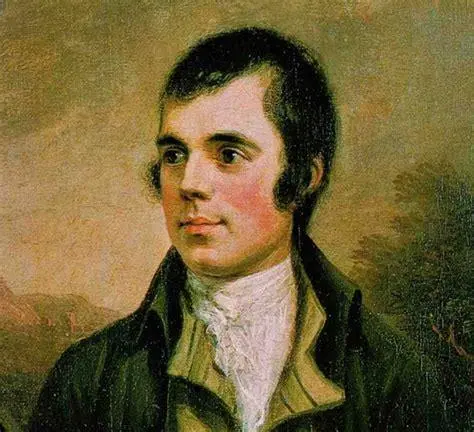
Robert Burns
Address to the Unco Guid
My Son, these maxims make a rule,
An' lump them aye thegither;
The Rigid Righteous is a fool,
The Rigid Wise anither:
The cleanest corn that ere was dight
May hae some pyles o' caff in;
So ne'er a fellow creature slight
For random fits o' daffin.
Solomon.--Eccles. ch. vii. verse
O ye wha are sae guid yoursel',
Sae pious and sae holy,
Ye've nought to do but mark and tell
Your neibours' fauts and folly!
Whase life is like a weel-gaun mill,
Supplied wi' store o' water;
The heapèd happer's ebbing still,
An' still the clap plays clatter.
Hear me, ye venerable core,
As counsel for poor mortals
That frequent pass douce Wisdom's door
For glaikit Folly's portals:
I, for their thoughtless, careless sakes,
Would here propone defences--
Their donsie tricks, their black mistakes,
Their failings and mischances.
Ye see your state wi' theirs compared,
And shudder at the niffer;
But cast a moment's fair regard,
What makes the mighty differ?
Discount what scant occassion gave,
That purity ye pride in;
And (what's aft mair than a' the lave)
Your better art o' hidin.
Think, when your castigated pulse
Gies now and then a wallop,
What ragings must his veins convulse,
That still eternal gallop!
Wi' wind and tide fair i' your tail,
Right on ye scud your sea-way;
But in the teeth o' baith to sail,
It maks a unco lee-way.
See Social Life and Glee sit down,
All joyous and unthinking,
Till, quite transmugrified, they're grown
Debauchery and Drinking:
O would they stay to calculate
Th' external consequences;
Or your more dreaded hell to state
Damnation of expenses!
Ye high, exalted, virtuous dames,
Tied up in godly laces,
Before ye gie poor Frailty names,
Suppose a change o' cases;
A dear-lov'd lad, convenience snug,
A treach'rous inclination--
But let me whisper i' your lug,
Ye're aiblins nae temptation.
Then gently scan your brother man,
Still gentler sister woman;
Tho' they may gang a kennin wrang,
To step aside is human;
One point must still be greatly dark,--
The moving Why they do it;
And just as lamely can ye mark,
How far perhaps they rue it.
Who made the heart, 'tis He alone
Decidedly can try us;
He knows each chord, its various tone,
Each spring, its various bias:
Then at the balance let's be mute,
We never can adjust it;
What's done we partly may compute,
But know not what's resisted.
332
Emily Dickinson
Knows how to forget!
Knows how to forget!
But could It teach it?
Easiest of Arts, they say
When one learn how
Dull Hearts have died
In the Acquisition
Sacrificed for Science
Is common, though, now-
I went to School
But was not wiser
Globe did not teach it
Nor Logarithm Show
"How to forget"!
Say-some-Philosopher!
Ah, to be erudite
Enough to know!
Is it in a Book?
So, I could buy it-
Is it like a Planet?
Telescopes would know-
If it be invention
It must have a Patent.
Rabbi of the Wise Book
Don't you know?
330
Johann Wolfgang von Goethe
On The Divan
HE who knows himself and others
Here will also see,
That the East and West, like brothers,
Parted ne'er shall be.
Thoughtfully to float for ever
'Tween two worlds, be man's endeavour!
So between the East and West
To revolve, be my behest!
Here will also see,
That the East and West, like brothers,
Parted ne'er shall be.
Thoughtfully to float for ever
'Tween two worlds, be man's endeavour!
So between the East and West
To revolve, be my behest!
327
Henry Van Dyke
Edmund Clarence Stedman
Oh, quick to feel the lightest touch
Of beauty or of truth,
Rich in the thoughtfulness of age,
The hopefulness of youth,
The courage of the gentle heart,
The wisdom of the pure,
The strength of finely tempered souls
To labour and endure!
The blue of springtime in your eyes
Was never quenched by pain;
And winter brought your head the crown
Of snow without a stain.
The poet's mind, the prince's heart,
You kept until the end,
Nor ever faltered in your work,
Nor ever failed a friend.
325

Alexander Pope
Epistles to Several Persons: Epistle IV, To Richard Boyle
Est brevitate opus, ut currat sententia, neu se
Impediat verbis lassas onerantibus aures:
Et sermone opus est modo tristi, saepe jocoso,
Defendente vicem modo Rhetoris atque Poetae,
Interdum urbani, parcentis viribus, atque
Extenuantis eas consulto.
(Horace, Satires, I, x, 17-22)
'Tis strange, the miser should his cares employ
To gain those riches he can ne'er enjoy:
Is it less strange, the prodigal should waste
His wealth to purchase what he ne'er can taste?
Not for himself he sees, or hears, or eats;
Artists must choose his pictures, music, meats:
He buys for Topham, drawings and designs,
For Pembroke, statues, dirty gods, and coins;
Rare monkish manuscripts for Hearne alone,
And books for Mead, and butterflies for Sloane.
Think we all these are for himself? no more
Than his fine wife, alas! or finer whore.
For what his Virro painted, built, and planted?
Only to show, how many tastes he wanted.
What brought Sir Visto's ill got wealth to waste?
Some daemon whisper'd, "Visto! have a taste."
Heav'n visits with a taste the wealthy fool,
And needs no rod but Ripley with a rule.
See! sportive fate, to punish awkward pride,
Bids Bubo build, and sends him such a guide:
A standing sermon, at each year's expense,
That never coxcomb reach'd magnificence!
You show us, Rome was glorious, not profuse,
And pompous buildings once were things of use.
Yet shall (my Lord) your just, your noble rules
Fill half the land with imitating fools;
Who random drawings from your sheets shall take,
And of one beauty many blunders make;
Load some vain church with old theatric state,
Turn arcs of triumph to a garden gate;
Reverse your ornaments, and hang them all
On some patch'd dog-hole ek'd with ends of wall;
Then clap four slices of pilaster on't,
That lac'd with bits of rustic, makes a front.
Or call the winds through long arcades to roar,
Proud to catch cold at a Venetian door;
Conscious they act a true Palladian part,
And, if they starve, they starve by rules of art.
Oft have you hinted to your brother peer,
A certain truth, which many buy too dear:
Something there is more needful than expense,
And something previous ev'n to taste--'tis sense:
Good sense, which only is the gift of Heav'n,
And though no science, fairly worth the sev'n:
A light, which in yourself you must perceive;
Jones and Le Notre have it not to give.
To build, to plant, whatever you intend,
To rear the column, or the arch to bend,
To swell the terrace, or to sink the grot;
In all, let Nature never be forgot.
But treat the goddess like a modest fair,
Nor overdress, nor leave her wholly bare;
Let not each beauty ev'rywhere be spied,
Where half the skill is decently to hide.
He gains all points, who pleasingly confounds,
Surprises, varies, and conceals the bounds.
Consult the genius of the place in all;
That tells the waters or to rise, or fall;
Or helps th' ambitious hill the heav'ns to scale,
Or scoops in circling theatres the vale;
Calls in the country, catches opening glades,
Joins willing woods, and varies shades from shades,
Now breaks, or now directs, th' intending lines;
Paints as you plant, and, as you work, designs.
Still follow sense, of ev'ry art the soul,
Parts answ'ring parts shall slide into a whole,
Spontaneous beauties all around advance,
Start ev'n from difficulty, strike from chance;
Nature shall join you; time shall make it grow
A work to wonder at--perhaps a Stowe.
Without it, proud Versailles! thy glory falls;
And Nero's terraces desert their walls:
The vast parterres a thousand hands shall make,
Lo! Cobham comes, and floats them with a lake:
Or cut wide views through mountains to the plain,
You'll wish your hill or shelter'd seat again.
Ev'n in an ornament its place remark,
Nor in an hermitage set Dr. Clarke.
Behold Villario's ten years' toil complete;
His quincunx darkens, his espaliers meet;
The wood supports the plain, the parts unite,
And strength of shade contends with strength of light;
A waving glow his bloomy beds display,
Blushing in bright diversities of day,
With silver-quiv'ring rills meander'd o'er-Enjoy
them, you! Villario can no more;
Tir'd of the scene parterres and fountains yield,
He finds at last he better likes a field.
Through his young woods how pleas'd Sabinus stray'd,
Or sat delighted in the thick'ning shade,
With annual joy the redd'ning shoots to greet,
Or see the stretching branches long to meet!
His son's fine taste an op'ner vista loves,
Foe to the dryads of his father's groves;
One boundless green, or flourish'd carpet views,
With all the mournful family of yews;
The thriving plants ignoble broomsticks made,
Now sweep those alleys they were born to shade.
At Timon's villa let us pass a day,
Where all cry out, "What sums are thrown away!"
So proud, so grand of that stupendous air,
Soft and agreeable come never there.
Greatness, with Timon, dwells in such a draught
As brings all Brobdingnag before your thought.
To compass this, his building is a town,
His pond an ocean, his parterre a down:
Who but must laugh, the master when he sees,
A puny insect, shiv'ring at a breeze!
Lo, what huge heaps of littleness around!
The whole, a labour'd quarry above ground.
Two cupids squirt before: a lake behind
Improves the keenness of the Northern wind.
His gardens next your admiration call,
On ev'ry side you look, behold the wall!
No pleasing intricacies intervene,
No artful wildness to perplex the scene;
Grove nods at grove, each alley has a brother,
And half the platform just reflects the other.
The suff'ring eye inverted Nature sees,
Trees cut to statues, statues thick as trees;
With here a fountain, never to be play'd;
And there a summerhouse, that knows no shade;
Here Amphitrite sails through myrtle bow'rs;
There gladiators fight, or die in flow'rs;
Unwater'd see the drooping sea horse mourn,
And swallows roost in Nilus' dusty urn.
My Lord advances with majestic mien,
Smit with the mighty pleasure, to be seen:
But soft--by regular approach--not yet-First
through the length of yon hot terrace sweat;
And when up ten steep slopes you've dragg'd your thighs,
Just at his study door he'll bless your eyes.
His study! with what authors is it stor'd?
In books, not authors, curious is my Lord;
To all their dated backs he turns you round:
These Aldus printed, those Du Sueil has bound.
Lo, some are vellum, and the rest as good
For all his Lordship knows, but they are wood.
For Locke or Milton 'tis in vain to look,
These shelves admit not any modern book.
And now the chapel's silver bell you hear,
That summons you to all the pride of pray'r:
Light quirks of music, broken and uneven,
Make the soul dance upon a jig to heaven.
On painted ceilings you devoutly stare,
Where sprawl the saints of Verrio or Laguerre,
On gilded clouds in fair expansion lie,
And bring all paradise before your eye.
To rest, the cushion and soft dean invite,
Who never mentions Hell to ears polite.
But hark! the chiming clocks to dinner call;
A hundred footsteps scrape the marble hall:
The rich buffet well-colour'd serpents grace,
And gaping Tritons spew to wash your face.
Is this a dinner? this a genial room?
No, 'tis a temple, and a hecatomb.
A solemn sacrifice, perform'd in state,
You drink by measure, and to minutes eat.
So quick retires each flying course, you'd swear
Sancho's dread doctor and his wand were there.
Between each act the trembling salvers ring,
From soup to sweet wine, and God bless the King.
In plenty starving, tantaliz'd in state,
And complaisantly help'd to all I hate,
Treated, caress'd, and tir'd, I take my leave,
Sick of his civil pride from morn to eve;
I curse such lavish cost, and little skill,
And swear no day was ever pass'd so ill.
Yet hence the poor are cloth'd, the hungry fed;
Health to himself, and to his infants bread
The lab'rer bears: What his hard heart denies,
His charitable vanity supplies.
Another age shall see the golden ear
Embrown the slope, and nod on the parterre,
Deep harvests bury all his pride has plann'd,
And laughing Ceres reassume the land.
Who then shall grace, or who improve the soil?
Who plants like Bathurst, or who builds like Boyle.
'Tis use alone that sanctifies expense,
And splendour borrows all her rays from sense.
His father's acres who enjoys in peace,
Or makes his neighbours glad, if he increase:
Whose cheerful tenants bless their yearly toil,
Yet to their Lord owe more than to the soil;
Whose ample lawns are not asham'd to feed
The milky heifer and deserving steed;
Whose rising forests, not for pride or show,
But future buildings, future navies, grow:
Let his plantations stretch from down to down,
First shade a country, and then raise a town.
You too proceed! make falling arts your care,
Erect new wonders, and the old repair;
Jones and Palladio to themselves restore,
And be whate'er Vitruvius was before:
Till kings call forth th' ideas of your mind,
Proud to accomplish what such hands design'd,
Bid harbours open, public ways extend,
Bid temples, worthier of the God, ascend;
Bid the broad arch the dang'rous flood contain,
The mole projected break the roaring main;
Back to his bounds their subject sea command,
And roll obedient rivers through the land;
These honours, peace to happy Britain brings,
These are imperial works, and worthy kings.
326