
Dreams and Imagination
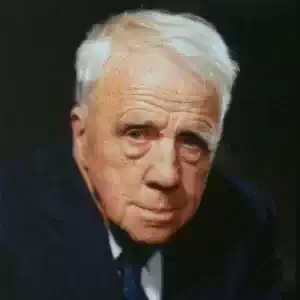
Robert Frost
In White: Frost's Early Version Of Design
A dented spider like a snow drop white
On a white Heal-all, holding up a moth
Like a white piece of lifeless satin cloth -
Saw ever curious eye so strange a sight? -
Portent in little, assorted death and blight
Like the ingredients of a witches' broth? -
The beady spider, the flower like a froth,
And the moth carried like a paper kite.
What had that flower to do with being white,
The blue prunella every child's delight.
What brought the kindred spider to that height?
(Make we no thesis of the miller's plight.)
What but design of darkness and of night?
Design, design! Do I use the word aright?
Anonymous submission.
892

William Butler Yeats
Introductory Lines (The Shadowy Waters)
I walked among the seven woods of Coole:
Shan-walla, where a willow-hordered pond
Gathers the wild duck from the winter dawn;
Shady Kyle-dortha; sunnier Kyle-na-no,
Where many hundred squirrels are as happy
As though they had been hidden by green bough's
Where old age cannot find them; Paire-na-lee,
Where hazel and ash and privet blind the paths:
Dim Paire-na-carraig, where the wild bees fling
Their sudden fragrances on the green air;
Dim Paire-na-tarav, where enchanted eyes
Have seen immortal, mild, proud shadows walk;
Dim Inchy wood, that hides badger and fox
And marten-cat, and borders that old wood
Wise Buddy Early called the wicked wood:
Seven odours, seven murmurs, seven woods.
I had not eyes like those enchanted eyes,
Yet dreamed that beings happier than men
Moved round me in the shadows, and at night
My dreams were clown by voices and by fires;
And the images I have woven in this story
Of Forgael and Dectora and the empty waters
Moved round me in the voices and the fires,
And more I may not write of, for they that cleave
The waters of sleep can make a chattering tongue
Heavy like stone, their wisdom being half silence.
How shall I name you, immortal, mild, proud shadows?
I only know that all we know comes from you,
And that you come from Eden on flying feet.
Is Eden far away, or do you hide
From human thought, as hares and mice and coneys
That run before the reaping-hook and lie
In the last ridge of the barley? Do our woods
And winds and ponds cover more quiet woods,
More shining winds, more star-glimmering ponds?
Is Eden out of time and out of space?
And do you gather about us when pale light
Shining on water and fallen among leaves,
And winds blowing from flowers, and whirr of feathers
And the green quiet, have uplifted the heart?
I have made this poem for you, that men may read it
Before they read of Forgael and Dectora,
As men in the old times, before the harps began,
Poured out wine for the high invisible ones.
872
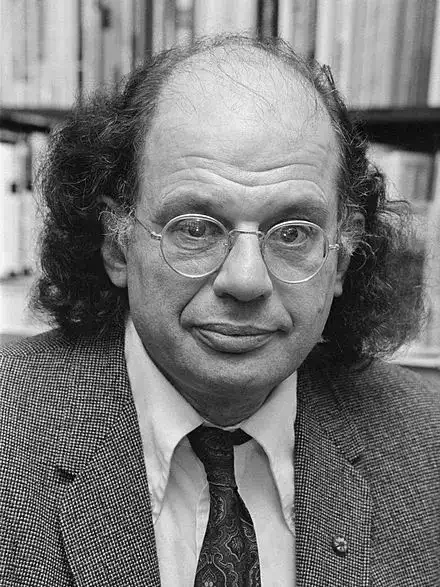
Allen Ginsberg
Sunflower Sutra
I walked on the banks of the tincan banana dock and sat down under the huge shade
of a Southern Pacific locomotive to look for the sunset over the box house hills and cry.
Jack Kerouac sat beside me on a busted rusty iron pole, companion, we thought the
same thoughts of the soul, bleak and blue and sad-eyed, surrounded by the gnarled
steel roots of trees of machinery.
The only water on the river mirrored the red sky, sun sank on top of final Frisco peaks,
no fish in that stream, no hermit in those mounts, just ourselves rheumy-eyed and
hung-over like old bums on the riverbank, tired and wily.
Look at the Sunflower, he said, there was a dead gray shadow against the sky, big as a
man, sitting dry on top of a pile of ancient sawdust-
--I rushed up enchanted--it was my first sunflower, memories of Blake--my
visions--Harlem
and Hells of the Eastern rivers, bridges clanking Joes greasy Sandwiches, dead baby
carriages, black treadless tires forgotten and unretreaded, the poem of the riverbank,
condoms & pots, steel knives, nothing stainless, only the dank muck and the
razor-sharp artifacts passing into the past-
and the gray Sunflower poised against the sunset, crackly bleak and dusty with the
smut and smog and smoke of olden locomotives in its eye-
corolla of bleary spikes pushed down and broken like a battered crown, seeds fallen out
of its face, soon-to-be-toothless mouth of sunny air, sunrays obliterated on its hairy
head like a dried wire spiderweb,
leaves stuck out like arms out of the stem, gestures from the sawdust root, broke
pieces of plaster fallen out of the black twigs, a dead fly in its ear,
Unholy battered old thing you were, my sunflower O my soul, I loved you then!
The grime was no man's grime but death and human locomotives,
all that dress of dust, that veil of darkened railroad skin, that smog of cheek, that
eyelid of black mis'ry, that sooty hand or phallus or protuberance of artificial
worse-than-dirt--industrial--modern--all that civilization spotting your crazy golden
crown-
and those blear thoughts of death and dusty loveless eyes and ends and withered roots
below, in the home-pile of sand and sawdust, rubber dollar bills, skin of machinery, the
guts and innards of the weeping coughing car, the empty lonely tincans with their rusty
tongues alack, what more could I name, the smoked ashes of some cock cigar, the
cunts of wheelbarrows and the milky breasts of cars, wornout asses out of chairs &
sphincters of dynamos--all these
entangled in your mummied roots--and you standing before me in the sunset, all your
glory in your form!
A perfect beauty of a sunflower! a perfect excellent lovely sunflower existence! a sweet
natural eye to the new hip moon, woke up alive and excited grasping in the sunset
shadow sunrise golden monthly breeze!
How many flies buzzed round you innocent of your grime, while you cursed the
heavens of your railroad and your flower soul?
Poor dead flower? when did you forget you were a flower? when did you look at your
skin and decide you were an impotent dirty old locomotive? the ghost of a locomotive?
the specter and shade of a once powerful mad American locomotive?
You were never no locomotive, Sunflower, you were a sunflower!
And you Locomotive, you are a locomotive, forget me not!
So I grabbed up the skeleton thick sunflower and stuck it at my side like a scepter,
and deliver my sermon to my soul, and Jack's soul too, and anyone who'll listen,
--We're not our skin of grime, we're not our dread bleak dusty imageless locomotive,
we're all golden sunflowers inside, blessed by our own seed & hairy naked
accomplishment-bodies growing into mad black formal sunflowers in the sunset, spied
on by our eyes under the shadow of the mad locomotive riverbank sunset Frisco hilly
tincan evening sitdown vision.
884
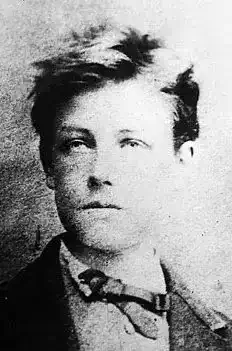
Arthur Rimbaud
Poets At Seven Years
And the mother, closing the work-book
Went off, proud, satisfied, not seeing,
In the blue eyes, under the lumpy brow,
The soul of her child given over to loathing.
All day he sweated obedience: very
Intelligent: yet dark habits, certain traits
Seemed to show bitter hypocrisies at work!
In the shadow of corridors with damp paper,
He stuck out his tongue in passing, two fists
In his groin, seeing specks under his shut lids.
A doorway open to evening: by the light
You’d see him, high up, groaning on the railing
Under a void of light hung from the roof. In summer,
Especially, vanquished, stupefied, stubborn,
He’d shut himself in the toilet’s coolness:
He could think in peace there, sacrificing his nostrils.
When the small garden cleansed of the smell of day,
Filled with light, behind the house, in winter,
Lying at the foot of a wall, buried in clay
Rubbing his dazzled eyes hard, for the visions,
He listened to the scabbed espaliers creaking.
Pity! His only companions were those children
Bare-headed and puny, eyes sunk in their cheeks,
Hiding thin fingers yellow and black with mud
Under old clothes soiled with excrement,
Who talked with the sweetness of the simple-minded!
And if his mother took fright, surprising him
At his vile compassions: the child’s deep
Tenderness overcame her astonishment.
All fine. She’d had the blue look, – that lies!
At seven he was making novels about life
In the great desert, where ravished Freedom shines,
Forests, suns, riverbanks, savannahs! – He used
Illustrated weeklies where he saw, blushing,
Smiling Italian girls, and Spanish women.
When the daughter of next door workers came by,
Eight years old – in Indian prints, brown-eyed,
A little brute, and jumped him from behind,
Shaking out her tresses, in a corner,
And he was under her, he bit her buttocks,
Since she never wore knickers:
– And, bruised by her fists and heels,
Carried the taste of her back to his room.
He feared the pallid December Sundays,
When, hair slicked back, at a mahogany table,
He read from a Bible with cabbage-green margins:
Dreams oppressed him each night in the alcove.
He didn’t love God: rather those men in the dusk,
Returning, black, in smocks, to the outer suburbs
Where the town-crier, with a triple drum beat,
Made the crowds laugh and murmur at the edicts.
– He dreamed of the amorous prairies, where
Luminous swells, pure odours, gold pubescences,
Stirred in the calm there, and then took flight!
And above all how he savoured sombre things,
When, in his bare room behind closed shutters,
High, and blue, and pierced with acrid damp,
He read his novel, mooned over endlessly,
Full of drowned forests, leaden ochre skies,
Flowers of flesh opening in star-filled woods,
Dizziness, epilepsies, defeats, compassion!
– While the street noises rumbled on below,
Lying alone on pieces of unbleached canvas,
With a violent presentiment of setting sail!
836

John Keats
Sleep And Poetry
As I lay in my bed slepe full unmete
Was unto me, but why that I ne might
Rest I ne wist, for there n'as erthly wight
[As I suppose] had more of hertis ese
Than I, for I n'ad sicknesse nor disese. — Chaucer
What is more gentle than a wind in summer?
What is more soothing than the pretty hummer
That stays one moment in an open flower,
And buzzes cheerily from bower to bower?
What is more tranquil than a musk-rose blowing
In a green island, far from all men's knowing?
More healthful than the leafiness of dales?
More secret than a nest of nightingales?
More serene than Cordelia's countenance?
More full of visions than a high romance?
What, but thee Sleep? Soft closer of our eyes!
Low murmurer of tender lullabies!
Light hoverer around our happy pillows!
Wreather of poppy buds, and weeping willows!
Silent entangler of a beauty's tresses!
Most happy listener! when the morning blesses
Thee for enlivening all the cheerful eyes
That glance so brightly at the new sun-rise.
But what is higher beyond thought than thee?
Fresher than berries of a mountain tree?
More strange, more beautiful, more smooth, more regal,
Than wings of swans, than doves, than dim-seen eagle?
What is it? And to what shall I compare it?
It has a glory, and naught else can share it:
The thought thereof is awful, sweet, and holy,
Chasing away all worldliness and folly;
Coming sometimes like fearful claps of thunder,
Or the low rumblings earth's regions under;
And sometimes like a gentle whispering
Of all the secrets of some wond'rous thing
That breathes about us in the vacant air;
So that we look around with prying stare,
Perhaps to see shapes of light, aerial limning,
And catch soft floatings from a faint-heard hymning;
To see the laurel wreath, on high suspended,
That is to crown our name when life is ended.
Sometimes it gives a glory to the voice,
And from the heart up-springs, rejoice! rejoice!
Sounds which will reach the Framer of all things,
And die away in ardent mutterings.
No one who once the glorious sun has seen,
And all the clouds, and felt his bosom clean
For his great Maker's presence, but must know
What 'tis I mean, and feel his being glow:
Therefore no insult will I give his spirit,
By telling what he sees from native merit.
O Poesy! for thee I hold my pen
That am not yet a glorious denizen
Of thy wide heaven- Should I rather kneel
Upon some mountain-top until I feel
A glowing splendour round about me hung,
And echo back the voice of thine own tongue?
O Poesy! for thee I grasp my pen
That am not yet a glorious denizen
Of thy wide heaven; yet, to my ardent prayer,
Yield from thy sanctuary some clear air,
Smooth'd for intoxication by the breath
Of flowering bays, that I may die a death
Of luxury, and my young spirit follow
The morning sun-beams to the great Apollo
Like a fresh sacrifice; or, if I can bear
The o'erwhelming sweets, 'twill bring to me the fair
Visions of all places: a bowery nook
Will be elysium- an eternal book
Whence I may copy many a lovely saying
About the leaves, and flowers- about the playing
Of nymphs in woods, and fountains; and the shade
Keeping a silence round a sleeping maid;
And many a verse from so strange influence
That we must ever wonder how, and whence
It came. Also imaginings will hover
Round my fire-side, and haply there discover
Vistas of solemn beauty, where I'd wander
In happy silence, like the clear Meander
Through its lone vales; and where I found a spot
Of awfuller shade, or an enchanted grot,
Or a green hill o'erspread with chequer'd dress
Of flowers, and fearful from its loveliness,
Write on my tablets all that was permitted,
All that was for our human senses fitted.
Then the events of this wide world I'd seize
Like a strong giant, and my spirit teaze
Till at its shoulders it should proudly see
Wings to find out an immortality.
Stop and consider! life is but a day;
A fragile dew-drop on its perilous way
From a tree's summit; a poor Indian's sleep
While his boat hastens to the monstrous steep
Of Montmorenci. Why so sad a moan?
Life is the rose's hope while yet unblown;
The reading of an ever-changing tale;
The light uplifting of a maiden's veil;
A pigeon tumbling in clear summer air;
A laughing school-boy, without grief or care,
Riding the springy branches of an elm.
O for ten years, that I may overwhelm
Myself in poesy; so I may do the deed
That my own soul has to itself decreed.
Then will I pass the countries that I see
In long perspective, and continually
Taste their pure fountains. First the realm I'll pass
Of Flora, and old Pan: sleep in the grass,
Feed upon apples red, and strawberries,
And choose each pleasure that my fancy sees;
Catch the white-handed nymphs in shady places,
To woo sweet kisses from averted faces,-
Play with their fingers, touch their shoulders white
Into a pretty shrinking with a bite
As hard as lips can make it: till agreed,
A lovely tale of human life we'll read.
And one will teach a tame dove how it best
May fan the cool air gently o'er my rest;
Another, bending o'er her nimble tread,
Will set a green robe floating round her head,
And still will dance with ever varied ease,
Smiling upon the flowers and the trees:
Another will entice me on, and on
Through almond blossoms and rich cinnamon;
Till in the bosom of a leafy world
We rest in silence, like two gems upcurl'd
In the recesses of a pearly shell.
And can I ever bid these joys farewell?
Yes, I must pass them for a nobler life,
Where I may find the agonies, the strife
Of human hearts: for lo! I see afar,
O'ersailing the blue cragginess, a car
And steeds with streamy manes- the charioteer
Looks out upon the winds with glorious fear:
And now the numerous tramplings quiver lightly
Along a huge cloud's ridge; and now with sprightly
Wheel downward come they into fresher skies,
Tipt round with silver from the sun's bright eyes.
Still downward with capacious whirl they glide;
And now I see them on the green-hill's side
In breezy rest among the nodding stalks.
The charioteer with wond'rous gesture talks
To the trees and mountains; and there soon appear
Shapes of delight, of mystery, and fear,
Passing along before a dusky space
Made by some mighty oaks: as they would chase
Some ever- fleeting music on they sweep.
Lo! how they murmur, laugh, and smile, and weep:
Some with upholden hand and mouth severe;
Some with their faces muffled to the ear
Between their arms; some, clear in youthful bloom,
Go glad and smilingly athwart the gloom;
Some looking back, and some with upward gaze;
Yes, thousands in a thousand different ways
Flit onward- now a lovely wreath of girls
Dancing their sleek hair into tangled curls;
And now broad wings. Most awfully intent
The driver of those steeds is forward bent,
And seems to listen: O that I might know
All that he writes with such a hurrying glow.
The visions all are fled- the car is fled
Into the light of heaven, and in their stead
A sense of real things comes doubly strong,
And, like a muddy stream, would bear along
My soul to nothingness: but I will strive
Against all doubtings, and will keep alive
The thought of that same chariot, and the strange
Journey it went.
Is there so small a range
In the present strength of manhood, that the high
Imagination cannot freely fly
As she was wont of old? prepare her steeds,
Paw up against the light, and do strange deeds
Upon the clouds? Has she not shown us all?
From the clear space of ether, to the small
Breath of new buds unfolding? From the meaning
Of Jove's large eye-brow, to the tender greening
Of April meadows? Here her altar shone,
E'en in this isle; and who could paragon
The fervid choir that lifted up a noise
Of harmony, to where it aye will poise
Its mighty self of convoluting sound,
Huge as a planet, and like that roll round,
Eternally around a dizzy void?
Ay, in those days the Muses were nigh cloy'd
With honors; nor had any other care
Than to sing out and sooth their wavy hair.
Could all this be forgotten? Yes, a schism
Nurtured by foppery and barbarism,
Made great Apollo blush for this his land.
Men were thought wise who could not understand
His glories: with a puling infant's force
They sway'd about upon a rocking horse,
And thought it Pegasus. Ah dismal soul'd!
The winds of heaven blew, the ocean roll'd
Its gathering waves- ye felt it not. The blue
Bared its eternal bosom, and the dew
Of summer nights collected still to make
The morning precious: beauty was awake!
Why were ye not awake? But ye were dead
To things ye knew not of,- were closely wed
To musty laws lined out with wretched rule
And compass vile: so that ye taught a school
Of dolts to smooth, inlay, and clip, and fit,
Till, like the certain wands of Jacob's wit,
Their verses tallied. Easy was the task:
A thousand handicraftsmen wore the mask
Of Poesy. Ill-fated, impious race!
That blasphemed the bright Lyrist to his face,
And did not know it,- no, they went about,
Holding a poor, decrepid standard out
Mark'd with most flimsy mottos, and in large
The name of one Boileau!
O ye whose charge
It is to hover round our pleasant hills!
Whose congregated majesty so fills
My boundly reverence, that I cannot trace
Your hallowed names, in this unholy place,
So near those common folk; did not their shames
Affright you? Did our old lamenting Thames
Delight you? Did ye never cluster round
Delicious Avon, with a mournful sound,
And weep? Or did ye wholly bid adieu
To regions where no more the laurel grew?
Or did ye stay to give a welcoming
To some lone spirits who could proudly sing
Their youth away, and die? 'Twas even so:
But let me think away those times of woe:
Now 'tis a fairer season; ye have breathed
Rich benedictions o'er us; ye have wreathed
Fresh garlands: for sweet music has been heard
In many places;- some has been upstirr'd
From out its crystal dwelling in a lake,
By a swan's ebon bill; from a thick brake,
Nested and quiet in a valley mild,
Bubbles a pipe; fine sounds are floating wild
About the earth: happy are ye and glad.
These things are doubtless: yet in truth we've had
Strange thunders from the potency of song;
Mingled indeed with what is sweet and strong,
From majesty: but in clear truth the themes
Are ugly clubs, the Poets' Polyphemes
Disturbing the grand sea. A drainless shower
Of light is poesy; 'tis the supreme of power;
'Tis might half slumb'ring on its own right arm.
The very archings of her eye-lids charm
A thousand willing agents to obey,
And still she governs with the mildest sway:
But strength alone though of the Muses born
Is like a fallen angel: trees uptorn,
Darkness, and worms, and shrouds, and sepulchres
Delight it; for it feeds upon the burrs,
And thorns of life; forgetting the great end
Of poesy, that it should be a friend
To sooth the cares, and lift the thoughts of man.
Yet I rejoice: a myrtle fairer than
E'er grew in Paphos, from the bitter weeds
Lifts its sweet head into the air, and feeds
A silent space with ever sprouting green.
All tenderest birds there find a pleasant screen,
Creep through the shade with jaunty fluttering,
Nibble the little cupped flowers and sing.
Then let us clear away the choking thorns
From round its gentle stem; let the young fawns,
Yeaned in after times, when we are flown,
Find a fresh sward beneath it, overgrown
With simple flowers: let there nothing be
More boisterous than a lover's bended knee;
Nought more ungentle than the placid look
Of one who leans upon a closed book;
Nought more untranquil than the grassy slopes
Between two hills. All hail delightful hopes!
As she was wont, th' imagination
Into most lovely labyrinths will be gone,
And they shall be accounted poet kings
Who simply tell the most heart-easing things.
O may these joys be ripe before I die.
Will not some say that I presumptuously
Have spoken? that from hastening disgrace
'Twere better far to hide my foolish face?
That whining boyhood should with reverence bow
Ere the dread thunderbolt could reach? How!
If I do hide myself, it sure shall be
In the very fane, the light of Poesy:
If I do fall, at least I will be laid
Beneath the silence of a poplar shade;
And over me the grass shall be smooth shaven;
And there shall be a kind memorial graven.
But off Despondence! miserable bane!
They should not know thee, who athirst to gain
A noble end, are thirsty every hour.
What though I am not wealthy in the dower
Of spanning wisdom; though I do not know
The shiftings of the mighty winds that blow
Hither and thither all the changing thoughts
Of man: though no great minist'ring reason sorts
Out the dark mysteries of human souls
To clear conceiving: yet there ever rolls
A vast idea before me, and I glean
Therefrom my liberty; thence too I've seen
The end and aim of Poesy. 'Tis clear
As anything most true; as that the year
Is made of the four seasons- manifest
As a large cross, some old cathedral's crest,
Lifted to the white clouds. Therefore should I
Be but the essence of deformity,
A coward, did my very eye-lids wink
At speaking out what I have dared to think.
Ah! rather let me like a madman run
Over some precipice; let the hot sun
Melt my Dedalian wings, and drive me down
Convuls'd and headlong! Stay! an inward frown
Of conscience bids me be more calm awhile.
An ocean dim, sprinkled with many an isle,
Spreads awfully before me. How much toil!
How many days! what desperate turmoil!
Ere I can have explored its widenesses.
Ah, what a task! upon my bended knees,
I could unsay those- no, impossible!
Impossible!
For sweet relief I'll dwell
On humbler thoughts, and let this strange assay
Begun in gentleness die so away.
E'en now all tumult from my bosom fades:
I turn full hearted to the friendly aids
That smooth the path of honour; brotherhood,
And friendliness the nurse of mutual good.
The hearty grasp that sends a pleasant sonnet
Into the brain ere one can think upon it;
The silence when some rhymes are coming out;
And when they're come, the very pleasant rout:
The message certain to be done to-morrow.
'Tis perhaps as well that it should be to borrow
Some precious book from out its snug retreat,
To cluster round it when we next shall meet.
Scarce can I scribble on; for lovely airs
Are fluttering round the room like doves in pairs;
Many delights of that glad day recalling,
When first my senses caught their tender falling.
And with these airs come forms of elegance
Stooping their shoulders o'er a horse's prance,
Careless, and grand-fingers soft and round
Parting luxuriant curls;- and the swift bound
Of Bacchus from his chariot, when his eye
Made Ariadne's cheek look blushingly.
Thus I remember all the pleasant flow
Of words at opening a portfolio.
Things such as these are ever harbingers
To trains of peaceful images: the stirs
Of a swan's neck unseen among the rushes:
A linnet starting all about the bushes:
A butterfly, with golden wings broad parted,
Nestling a rose, convuls'd as though it smarted
With over pleasure- many, many more,
Might I indulge at large in all my store
Of luxuries: yet I must not forget
Sleep, quiet with his poppy coronet:
For what there may be worthy in these rhymes
I partly owe to him: and thus, the chimes
Of friendly voices had just given place
To as sweet a silence, when I 'gan retrace
The pleasant day, upon a couch at ease.
It was a poet's house who keeps the keys
Of pleasure's temple. Round about were hung
The glorious features of the bards who sung
In other ages- cold and sacred busts
Smiled at each other. Happy he who trusts
To clear Futurity his darling fame!
Then there were fauns and satyrs taking aim
At swelling apples with a frisky leap
And reaching fingers, 'mid a luscious heap
Of vine-leaves. Then there rose to view a fane
Of liny marble, and thereto a train
Of nymphs approaching fairly o'er the sward:
One, loveliest, holding her white hand toward
The dazzling sun-rise: two sisters sweet
Bending their graceful figures till they meet
Over the trippings of a little child:
And some are hearing, eagerly, the wild
Thrilling liquidity of dewy piping.
See, in another picture, nymphs are wiping
Cherishingly Diana's timorous limbs;-
A fold of lawny mantle dabbling swims
At the bath's edge, and keeps a gentle motion
With the subsiding crystal: as when ocean
Heaves calmly its broad swelling smoothness o'er
Its rocky marge, and balances once more
The patient weeds; that now unshent by foam
Feel all about their undulating home.
Sappho's meek head was there half smiling down
At nothing; just as though the earnest frown
Of over thinking had that moment gone
From off her brow, and left her all alone.
Great Alfred's too, with anxious, pitying eyes,
As if he always listened to the sighs
Of the goaded world; and Kosciusko's worn
By horrid suffrance- mightily forlorn.
Petrarch, outstepping from the shady green,
Starts at the sight of Laura; nor can wean
His eyes from her sweet face. Most happy they!
For over them was seen a free display
Of out-spread wings, and from between them shone
The face of Poesy: from off her throne
She overlook'd things that I scarce could tell.
The very sense of where I was might well
Keep Sleep aloof: but more than that there came
Thought after thought to nourish up the flame
Within my breast; so that the morning light
Surprised me even from a sleepless night;
And up I rose refresh'd, and glad, and gay,
Resolving to begin that very day
These lines; and howsoever they be done,
I leave them as a father does his son.
825
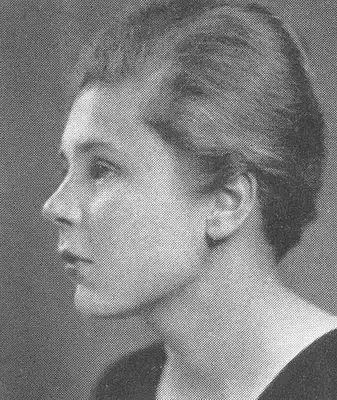
Elizabeth Bishop
The Man-moth
Here, above,
cracks in the buldings are filled with battered moonlight.
The whole shadow of Man is only as big as his hat.
It lies at his feet like a circle for a doll to stand on,
and he makes an inverted pin, the point magnetized to the moon.
He does not see the moon; he observes only her vast properties,
feeling the queer light on his hands, neither warm nor cold,
of a temperature impossible to records in thermometers.
But when the Man-Moth
pays his rare, although occasional, visits to the surface,
the moon looks rather different to him. He emerges
from an opening under the edge of one of the sidewalks
and nervously begins to scale the faces of the buildings.
He thinks the moon is a small hole at the top of the sky,
proving the sky quite useless for protection.
He trembles, but must investigate as high as he can climb.
Up the façades,
his shadow dragging like a photographer's cloth behind him
he climbs fearfully, thinking that this time he will manage
to push his small head through that round clean opening
and be forced through, as from a tube, in black scrolls on the light.
(Man, standing below him, has no such illusions.)
But what the Man-Moth fears most he must do, although
he fails, of course, and falls back scared but quite unhurt.
Then he returns
to the pale subways of cement he calls his home. He flits,
he flutters, and cannot get aboard the silent trains
fast enough to suit him. The doors close swiftly.
The Man-Moth always seats himself facing the wrong way
and the train starts at once at its full, terrible speed,
without a shift in gears or a gradation of any sort.
He cannot tell the rate at which he travels backwards.
Each night he must
be carried through artificial tunnels and dream recurrent dreams.
Just as the ties recur beneath his train, these underlie
his rushing brain. He does not dare look out the window,
for the third rail, the unbroken draught of poison,
runs there beside him. He regards it as a disease
he has inherited the susceptibility to. He has to keep
his hands in his pockets, as others must wear mufflers.
If you catch him,
hold up a flashlight to his eye. It's all dark pupil,
an entire night itself, whose haired horizon tightens
as he stares back, and closes up the eye. Then from the lids
one tear, his only possession, like the bee's sting, slips.
Slyly he palms it, and if you're not paying attention
he'll swallow it. However, if you watch, he'll hand it over,
cool as from underground springs and pure enough to drink.
774

John Milton
Il Penseroso
HENCE, vain deluding Joys,
............The brood of Folly without father bred!
How little you bested
............Or fill the fixed mind with all your toys!
Dwell in some idle brain,
............And fancies fond with gaudy shapes possess,
As thick and numberless
............As the gay motes that people the sun-beams,
Or likest hovering dreams,
............The fickle pensioners of Morpheus' train.
But, hail! thou Goddess sage and holy!
Hail, divinest Melancholy!
Whose saintly visage is too bright
To hit the sense of human sight,
And therefore to our weaker view
O'erlaid with black, staid Wisdom's hue;
Black, but such as in esteem
Prince Memnon's sister might beseem,
Or that starred Ethiop queen that strove
To set her beauty's praise above
The Sea-Nymphs, and their powers offended.
Yet thou art higher far descended:
Thee bright-haired Vesta long of yore
To solitary Saturn bore;
His daughter she; in Saturn's reign
Such mixture was not held a stain.
Oft in glimmering bowers and glades
He met her, and in secret shades
Of woody Ida's inmost grove,
Whilst yet there was no fear of Jove.
Come, pensive Nun, devout and pure,
Sober, steadfast, and demure,
All in a robe of darkest grain,
Flowing with majestic train,
And sable stole of cypress lawn
Over thy decent shoulders drawn.
Come; but keep thy wonted state,
With even step, and musing gait,
And looks commercing with the skies,
Thy rapt soul sitting in thine eyes:
There, held in holy passion still,
Forget thyself to marble, till
With a sad leaden downward cast
Thou fix them on the earth as fast.
And join with thee calm Peace and Quiet,
Spare Fast, that oft with gods doth diet,
And hears the Muses in a ring
Aye round about Jove's altar sing;
And add to these retired Leisure,
That in trim gardens takes his pleasure;
But, first and chiefest, with thee bring
Him that yon soars on golden wing,
Guiding the fiery-wheeled throne,
The Cherub Contemplation;
And the mute Silence hist along,
'Less Philomel will deign a song,
In her sweetest saddest plight,
Smoothing the rugged brow of Night,
While Cynthia checks her dragon yoke
Gently o'er the accustomed oak.
Sweet bird, that shunn'st the noise of folly,
Most musical, most melancholy!
Thee, chauntress, oft the woods among
I woo, to hear thy even-song;
And, missing thee,
I walk unseen
On the dry smooth-shaven green,
To behold the wandering moon,
Riding near her highest noon,
Like one that had been led astray
Through the heaven's wide pathless way,
And oft, as if her head she bowed,
Stooping through a fleecy cloud.
Oft, on a plat of rising ground,
I hear the far-off curfew sound,
Over some wide-watered shore,
Swinging slow with sullen roar;
Or, if the air will not permit,
Some still removed place will fit,
Where glowing embers through the room
Teach light to counterfeit a gloom,
Far from all resort of mirth,
Save the cricket on the hearth,
Or the bellman's drowsy charm
To bless the doors from nightly harm.
Or let my lamp, at midnight hour,
Be seen in some high lonely tower,
Where I may oft outwatch the Bear,
With thrice great Hermes, or unsphere
The spirit of Plato, to unfold
What worlds or what vast regions hold
The immortal mind that hath forsook
Her mansion in this fleshly nook;
And of those demons that are found
In fire, air, flood, or underground,
Whose power hath a true consent
With planet or with element.
Sometime let gorgeous Tragedy
In sceptred pall come sweeping by,
Presenting Thebes, or Pelops' line,
Or the tale of Troy divine,
Or what (though rare) of later age
Ennobled hath the buskined stage.
But, O sad Virgin! that thy power
Might raise Musaeus from his bower;
Or bid the soul of Orpheus sing
Such notes as, warbled to the string,
Drew iron tears down Pluto's cheek,
And made Hell grant what love did seek;
Or call up him that left half-told
The story of Cambuscan bold,
Of Camball, and of Algarsife,
And who had Canace to wife,
That owned the virtuous ring and glass,
And of the wondrous horse of brass
On which the Tartar king did ride;
And if aught else great bards beside
In sage and solemn tunes have sung,
Of turneys, and of trophies hung,
Of forests, and enchantments drear,
Where more is meant than meets the ear.
Thus, Night, oft see me in thy pale career,
Till civil-suited Morn appear,
Not tricked and frounced, as she was wont
With the Attic boy to hunt,
But kerchieft in a comely cloud
While rocking winds are piping loud,
Or ushered with a shower still,
When the gust hath blown his fill,
Ending on the rustling leaves,
With minute-drops from off the eaves.
And, when the sun begins to fling
His flaring beams, me, Goddess, bring
To arched walks of twilight groves,
And shadows brown, that Sylvan loves,
Of pine, or monumental oak,
Where the rude axe with heaved stroke
Was never heard the nymphs to daunt,
Or fright them from their hallowed haunt.
There, in close covert, by some brook,
Where no profaner eye may look,
Hide me from day's garish eye,
While the bee with honeyed thigh,
That at her flowery work doth sing,
And the waters murmuring,
With such consort as they keep,
Entice the dewy-feathered Sleep.
And let some strange mysterious dream
Wave at his wings, in airy stream
Of lively portraiture displayed,
Softly on my eyelids laid;
And, as I wake, sweet music breathe
Above, about, or underneath,
Sent by some Spirit to mortals good,
Or the unseen Genius of the wood.
But let my due feet never fail
To walk the studious cloister's pale,
And love the high embowed roof,
With antique pillars massy proof,
And storied windows richly dight,
Casting a dim religious light.
There let the pealing organ blow,
To the full-voiced quire below,
In service high and anthems clear,
As may with sweetness, through mine ear,
Dissolve me into ecstasies,
And bring all Heaven before mine eyes.
And may at last my weary age
Find out the peaceful hermitage,
The hairy gown and mossy cell,
Where I may sit and rightly spell
Of every star that heaven doth shew,
And every herb that sips the dew,
Till old experience do attain
To something like prophetic strain.
These pleasures, Melancholy, give;
And I with thee will choose to live.
786

Ella Wheeler Wilcox
A Naughty Little Comet
There was a little comet who lived near the Milky Way!
She loved to wander out at night and jump about and play.
The mother of the comet was a very good old star;
She used to scold her reckless child for venturing out too far.
She told her of the ogre, Sun, who loved on stars to sup,
And who asked no better pastime than in gobbling comets up.
But instead of growing cautious and of showing proper fear,
The foolish little comet edged up nearer, and more near.
She switched her saucy tail along right where the Sun could see,
And flirted with old Mars, and was as bold as bold could be.
She laughed to scorn the quiet stars who never frisked about;
She said there was no fun in life unless you ventured out.
She liked to make the planets stare, and wished no better mirth
Than just to see the telescopes aimed at her from the Earth.
She wondered how so many stars could mope through nights and days,
And let the sickly faced old Moon get all the love and praise.
And as she talked and tossed her head and switched her shining trail
The staid old mother star grew sad, her cheek grew wan and pale.
For she had lived there in the skies a million years or more,
And she had heard gay comets talk in just this way before.
And by and by there came an end to this gay comet's fun.
She went a tiny bit too far-and vanished in the Sun!
No more she swings her shining trail before the whole world's sight,
But quiet stars she laughed to scorn are twinkling every night.
786
Elizabeth Bishop
A Miracle for Breakfast
At six o'clock we were waiting for coffee,
waiting for coffee and the charitable crumb
that was going to be served from a certain balcony
--like kings of old, or like a miracle.
It was still dark. One foot of the sun
steadied itself on a long ripple in the river.
The first ferry of the day had just crossed the river.
It was so cold we hoped that the coffee
would be very hot, seeing that the sun
was not going to warm us; and that the crumb
would be a loaf each, buttered, by a miracle.
At seven a man stepped out on the balcony.
He stood for a minute alone on the balcony
looking over our heads toward the river.
A servant handed him the makings of a miracle,
consisting of one lone cup of coffee
and one roll, which he proceeded to crumb,
his head, so to speak, in the clouds--along with the sun.
Was the man crazy? What under the sun
was he trying to do, up there on his balcony!
Each man received one rather hard crumb,
which some flicked scornfully into the river,
and, in a cup, one drop of the coffee.
Some of us stood around, waiting for the miracle.
I can tell what I saw next; it was not a miracle.
A beautiful villa stood in the sun
and from its doors came the smell of hot coffee.
In front, a baroque white plaster balcony
added by birds, who nest along the river,
--I saw it with one eye close to the crumb-
and galleries and marble chambers. My crumb
my mansion, made for me by a miracle,
through ages, by insects, birds, and the river
working the stone. Every day, in the sun,
at breakfast time I sit on my balcony
with my feet up, and drink gallons of coffee.
We licked up the crumb and swallowed the coffee.
A window across the river caught the sun
as if the miracle were working, on the wrong balcony.
753
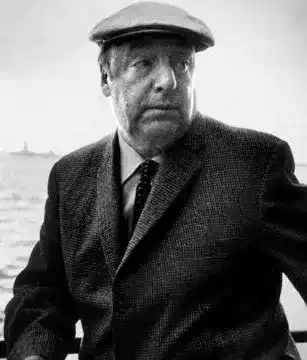
Pablo Neruda
Cat's Dream
How neatly a cat sleeps,
sleeps with its paws and its posture,
sleeps with its wicked claws,
and with its unfeeling blood,
sleeps with all the rings-a
series of burnt circles-which
have formed the odd geology
of its sand-colored tail.
I should like to sleep like a cat,
with all the fur of time,
with a tongue rough as flint,
with the dry sex of fire;
and after speaking to no one,
stretch myself over the world,
over roofs and landscapes,
with a passionate desire
to hunt the rats in my dreams.
I have seen how the cat asleep
would undulate, how the night
flowed through it like dark water;
and at times, it was going to fall
or possibly plunge into
the bare deserted snowdrifts.
Sometimes it grew so much in sleep
like a tiger's great-grandfather,
and would leap in the darkness over
rooftops, clouds and volcanoes.
Sleep, sleep cat of the night,
with episcopal ceremony
and your stone-carved moustache.
Take care of all our dreams;
control the obscurity
of our slumbering prowess
with your relentless heart
and the great ruff of your tail.
Translated by Alastair Reid
734

William Blake
The Chimney-Sweeper
When my mother died I was very young,
And my father sold me while yet my tongue
Could scarcely cry 'Weep! weep! weep! weep!'
So your chimneys I sweep, and in soot I sleep.
There's little Tom Dacre, who cried when his head,
That curled like a lamb's back, was shaved; so I said,
'Hush, Tom! never mind it, for, when your head's bare,
You know that the soot cannot spoil your white hair.'
And so he was quiet, and that very night,
As Tom was a-sleeping, he had such a sight! --
That thousands of sweepers, Dick, Joe, Ned, and Jack,
Were all of them locked up in coffins of black.
And by came an angel, who had a bright key,
And he opened the coffins, and let them all free;
Then down a green plain, leaping, laughing, they run,
And wash in a river, and shine in the sun.
Then naked and white, all their bags left behind,
They rise upon clouds, and sport in the wind;
And the Angel told Tom, if he'd be a good boy,
He'd have God for his father, and never want joy.
And so Tom awoke, and we rose in the dark,
And got with our bags and our brushes to work.
Though the morning was cold, Tom was happy and warm:
So, if all do their duty, they need not fear harm.
714
Arthur Rimbaud
Romance
When you are seventeen you aren't really serious.
-One fine evening, you've had enough of beer and lemonade,
And the rowdy cafes with their dazzling lights!
-You go walking beneath the green lime trees of the promenade.
The lime trees smell good on fine evenings in June!
The air is so soft sometimes, you close your eyelids;
The wind, full of sounds, - the town's not far away -
Carries odours of vines, and odours of beer...
II
-Then you see a very tiny rag
Of dark blue, framed by a small branch,
Pierced by an unlucky star which is melting away
With soft little shivers, small, perfectly white...
June night! Seventeen! - You let yourself get drunk.
The sap is champagne and goes straight to your head...
You are wandering; you feel a kiss on your lips
Which quivers there like something small and alive...
III
Your mad heart goes Crusoeing through all the romances,
-When, under the light of a pale street lamp,
Passes a young girl with charming little airs,
In the shadow of her father's terrifying stiff collar...
And because you strike her as absurdly naif,
As she trots along in her little ankle boots,
She turns, wide awake, with a brisk movement...
And then cavatinas die on your lips...
IV
You're in love. Taken until the month of August.
You're in love - Your sonnets make Her laugh.
All your friends disappear, you are not quite the thing.
-Then your adored one, one evening, condescends to write to you...!
That evening,... - you go back again to the dazzling cafes,
You ask for beer or for lemonade...
-You are not really serious when you are seventeen
And there are green lime trees on the promenade...
Original French
Roman
I
On n'est pas sérieux, quand on a dix-sept ans.
-Un beau soir, foin des bocks et de la limonade,
Des cafés tapageurs aux lustres éclatants !
-On va sous les tilleuls verts de la promenade.
Les tilleuls sentent bon dans les bons soirs de juin !
L'air est parfois si doux, qu'on ferme la paupière ;
Le vent chargé de bruits - la ville n'est pas loin -
A des parfums de vigne et des parfums de bière....
II
-Voilà qu'on aperçoit un tout petit chiffon
D'azur sombre, encadré d'une petite branche,
Piqué d'une mauvaise étoile, qui se fond
Avec de doux frissons, petite et toute blanche...
Nuit de juin ! Dix-sept ans ! - On se laisse griser.
La sève est du champagne et vous monte à la tête...
On divague ; on se sent aux lèvres un baiser
Qui palpite là, comme une petite bête....
III
Le coeur fou Robinsonne à travers les romans,
Lorsque, dans la clarté d'un pâle réverbère,
Passe une demoiselle aux petits airs charmants,
Sous l'ombre du faux col effrayant de son père...
Et, comme elle vous trouve immensément naïf,
Tout en faisant trotter ses petites bottines,
Elle se tourne, alerte et d'un mouvement vif....
-Sur vos lèvres alors meurent les cavatines...
IV
Vous êtes amoureux. Loué jusqu'au mois d'août.
Vous êtes amoureux. - Vos sonnets La font rire.
Tous vos amis s'en vont, vous êtes mauvais goût.
-Puis l'adorée, un soir, a daigné vous écrire...!
-Ce soir-là,... - vous rentrez aux cafés éclatants,
Vous demandez des bocks ou de la limonade..
-On n'est pas sérieux, quand on a dix-sept ans
Et qu'on a des tilleuls verts sur la promenade.
723

Lord Byron
The Dream
I
Our life is twofold; Sleep hath its own world,
A boundary between the things misnamed
Death and existence: Sleep hath its own world,
And a wide realm of wild reality,
And dreams in their development have breath,
And tears, and tortures, and the touch of joy;
They leave a weight upon our waking thoughts,
They take a weight from off waking toils,
They do divide our being; they become
A portion of ourselves as of our time,
And look like heralds of eternity;
They pass like spirits of the past they
speak
Like sibyls of the future; they have power The
tyranny of pleasure and of pain;
They make us what we were not what
they will,
And shake us with the vision that's gone by,
The dread of vanished shadows Are
they so?
Is not the past all shadow? What
are they?
Creations of the mind? The
mind can make
Substances, and people planets of its own
With beings brighter than have been, and give
A breath to forms which can outlive all flesh.
I would recall a vision which I dreamed
Perchance in sleep for
in itself a thought,
A slumbering thought, is capable of years,
And curdles a long life into one hour.
II
I saw two beings in the hues of youth
Standing upon a hill, a gentle hill,
Green and of mild declivity, the last
As 'twere the cape of a long ridge of such,
Save that there was no sea to lave its base,
But a most living landscape, and the wave
Of woods and cornfields,
and the abodes of men
Scattered at intervals, and wreathing smoke
Arising from such rustic roofs: the hill
Was crowned with a peculiar diadem
Of trees, in circular array, so fixed,
Not by the sport of nature, but of man:
These two, a maiden and a youth, were there
Gazing the
one on all that was beneath
Fair as herself but
the boy gazed on her;
And both were young, and one was beautiful:
And both were young yet
not alike in youth.
As the sweet moon on the horizon's verge,
The maid was on the eve of womanhood;
The boy had fewer summers, but his heart
Had far outgrown his years, and to his eye
There was but one beloved face on earth,
And that was shining on him; he had looked
Upon it till it could not pass away;
He had no breath, no being, but in hers:
She was his voice; he did not speak to her,
But trembled on her words; she was his sight,
For his eye followed hers, and saw with hers,
Which coloured all his objects; he
had ceased
To live within himself: she was his life,
The ocean to the river of his thoughts,
Which terminated all; upon a tone,
A touch of hers, his blood would ebb and flow,
And his cheek change tempestuously his
heart
Unknowing of its cause of agony.
But she in these fond feelings had no share:
Her sighs were not for him; to her he was
Even as a brother but
no more; 'twas much,
For brotherless she was, save in the name
Her infant friendship had bestowed on him;
Herself the solitary scion left
Of a timehonoured
race. It
was a name
Which pleased him, and yet pleased him not and
why?
Time taught him a deep answer when
she loved
Another; even now she loved another,
And on the summit of that hill she stood
Looking afar if yet her lover's steed
Kept pace with her expectancy, and flew.
III
A change came o'er the spirit of my dream.
There was an ancient mansion, and before
Its walls there was a steed caparisoned:
Within an antique Oratory stood
The Boy of whom I spake; he
was alone,
And pale, and pacing to and fro: anon
He sate him down, and seized a pen, and traced
Words which I could not guess of; then he leaned
His bowed head on his hands and shook, as 'twere
With a convulsion then
rose again,
And with his teeth and quivering hands did tear
What he had written, but he shed no tears.
And he did calm himself, and fix his brow
Into a kind of quiet: as he paused,
The Lady of his love reentered
there;
She was serene and smiling then, and yet
She knew she was by him beloved; she knew For
quickly comes such knowledge that
his heart
Was darkened with her shadow, and she saw
That he was wretched, but she saw not all.
He rose, and with a cold and gentle grasp
He took her hand; a moment o'er his face
A tablet of unutterable thoughts
Was traced, and then it faded, as it came;
He dropped the hand he held, and with slow steps
Retired, but not as bidding her adieu,
For they did part with mutual smiles; he passed
From out the massy gate of that old Hall,
And mounting on his steed he went his way;
And ne'er repassed that hoary threshold more.
IV
A change came o'er the spirit of my dream.
The Boy was sprung to manhood: in the wilds
Of fiery climes he made himself a home,
And his Soul drank their sunbeams; he was girt
With strange and dusky aspects; he was not
Himself like what he had been; on the sea
And on the shore he was a wanderer;
There was a mass of many images
Crowded like waves upon me, but he was
A part of all; and in the last he lay
Reposing from the noontide sultriness,
Couched among fallen columns, in the shade
Of ruined walls that had survived the names
Of those who reared them; by his sleeping side
Stood camels grazing, and some goodly steeds
Were fastened near a fountain; and a man,
Glad in a flowing garb, did watch the while,
While many of his tribe slumbered around:
And they were canopied by the blue sky,
So cloudless, clear, and purely beautiful,
That God alone was to be seen in heaven.
V
A change came o'er the spirit of my dream.
The Lady of his love was wed with One
Who did not love her better: in her home,
A thousand leagues from his, her
native home,
She dwelt, begirt with growing Infancy,
Daughters and sons of Beauty, but
behold!
Upon her face there was a tint of grief,
The settled shadow of an inward strife,
And an unquiet drooping of the eye,
As if its lid were charged with unshed tears.
What could her grief be? she
had all she loved,
And he who had so loved her was not there
To trouble with bad hopes, or evil wish,
Or illrepressed
affliction, her pure thoughts.
What could her grief be? she
had loved him not,
Nor given him cause to deem himself beloved,
Nor could he be a part of that which preyed
Upon her mind a
spectre of the past.
VI
A change came o'er the spirit of my dream.
The Wanderer was returned. I
saw him stand
Before an altar with
a gentle bride;
Her face was fair, but was not that which made
The Starlight of his Boyhood; as
he stood
Even at the altar, o'er his brow there came
The selfsame aspect and the quivering shock
That in the antique Oratory shook
His bosom in its solitude; and then As
in that hour a
moment o'er his face
The tablet of unutterable thoughts
Was traced and
then it faded as it came,
And he stood calm and quiet, and he spoke
The fitting vows, but heard not his own words,
And all things reeled around him; he could see
Not that which was, nor that which should have been But
the old mansion, and the accustomed hall,
And the remembered chambers, and the place,
The day, the hour, the sunshine, and the shade,
All things pertaining to that place and hour,
And her who was his destiny, came back
And thrust themselves between him and the light;
What business had they there at such a time?
VII
A change came o'er the spirit of my dream.
The Lady of his love; Oh!
she was changed,
As by the sickness of the soul; her mind
Had wandered from its dwelling, and her eyes,
They had not their own lustre, but the look
Which is not of the earth; she was become
The queen of a fantastic realm; her thoughts
Were combinations of disjointed things;
And forms impalpable and unperceived
Of others' sight familiar were to hers.
And this the world calls frenzy; but the wise
Have a far deeper madness, and the glance
Of melancholy is a fearful gift;
What is it but the telescope of truth?
Which strips the distance of its fantasies,
And brings life near in utter nakedness,
Making the cold reality too real!
VIII
A change came o'er the spirit of my dream.
The Wanderer was alone as heretofore,
The beings which surrounded him were gone,
Or were at war with him; he was a mark
For blight and desolation, compassed round
With Hatred and Contention; Pain was mixed
In all which was served up to him, until,
Like to the Pontic monarch of old days,
He fed on poisons, and they had no power,
But were a kind of nutriment; he lived
Through that which had been death to many men,
And made him friends of mountains; with the stars
And the quick Spirit of the Universe
He held his dialogues: and they did teach
To him the magic of their mysteries;
To him the book of Night was opened wide,
And voices from the deep abyss revealed
A marvel and a secret. Be
it so.
IX
My dream is past; it had no further change.
It was of a strange order, that the doom
Of these two creatures should be thus traced out
Almost like a reality the
one
To end in madness both
in misery.
716
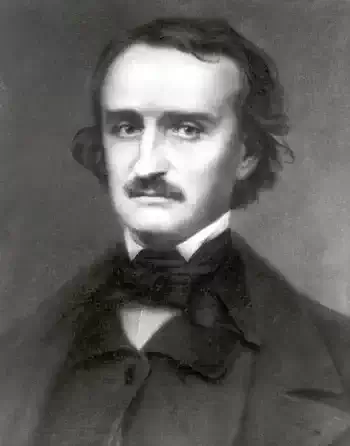
Edgar Allan Poe
The Haunted Palace
In the greenest of our valleys
By good angels tenanted,
Once a fair and stately palace
Radiant
palace- reared its head.
In the monarch Thought's dominion
It
stood there!
Never seraph spread a pinion
Over fabric half so fair!
Banners yellow, glorious, golden,
On its roof did float and flow,
(This- all this- was in the olden
Time long ago,)
And every gentle air that dallied,
In that sweet day,
Along the ramparts plumed and pallid,
A winged odor went away.
Wanderers in that happy valley,
Through two luminous windows, saw
Spirits moving musically,
To a lute's well-tuned law,
Round about a throne where, sitting
(Porphyrogene!)
In state his glory well-befitting,
The ruler of the realm was seen.
And all with pearl and ruby glowing
Was the fair palace door,
Through which came flowing, flowing, flowing,
And sparkling evermore,
A troop of Echoes, whose sweet duty
Was but to sing,
In voices of surpassing beauty,
The wit and wisdom of their king.
But evil things, in robes of sorrow,
Assailed the monarch's high estate.
(Ah, let us mourn!- for never morrow
Shall dawn upon him desolate!)
And round about his home the glory
That blushed and bloomed,
Is but a dim-remembered story
Of the old time entombed.
And travellers, now, within that valley,
Through the red-litten windows see
Vast forms, that move fantastically
To a discordant melody,
While, like a ghastly rapid river,
Through the pale door
A hideous throng rush out forever
And laugh- but smile no more.
-THE END
.
720
Arthur Rimbaud
Those Who Sit
Dark with knobbed growths,
peppered with pock-marks like hail,
their eyes ringed with green,
their swollen fingers clenched on their thigh-bones,
their skulls caked with indeterminate crusts
like the leprous growths on old walls;
in amorous seizures they have grafted
their weird bone structures
to the great dark skeletons of their chairs;
their feet are entwined, morning and evening,
on the rickety rails!
These old men have always been one flesh with their seats,
feeling bright suns drying their skins to the texture of calico,
or else, looking at the window-panes
where the snow is turning grey,
shivering with the painful shiver of the toad.
And their Seats are kind to them;
coloured brown with age, the straw yields
to the angularities of their buttocks;
the spirit of ancient suns lights up,
bound in these braids of ears in which the corn fermented.
And the Seated Ones, knees drawn up to their teeth,
green pianists whose ten fingers keep drumming under their seats,
listen to the tapping of each other's melancholy barcolles;
and their heads nod back and forth as in the act of love.
-Oh don't make them get up! It's a catastrophe!
They rear up like growling tom-cats when struck,
slowly spreading their shoulders... What rage!
Their trousers puff out at their swelling backsides.
And you listen to them as they bump
their bald head is against the dark walls,
stamping and stamping with their crooked feet;
and their coat-buttons are the eyes of wild beasts
which fix yours from the end of the corridors!
And then they have an invisible weapon which can kill:
returning, their eyes seep the black poison
with which the beaten bitch's eye is charged,
and you sweat, trapped in the horrible funnel.
Reseated, their fists retreating into soiled cuffs,
they think about those that have made them
get up and, from dawn until dusk,
their tonsils in bunches tremble
under their meagre chins, fir to burst.
When austere slumbers have lowered their lids
they dream on their arms of seats become fertile;
of perfect little loves of open-work chairs surrounding dignified desks.
Flowers of ink dropping pollen like commas lull them asleep
in their rows of squat flower-cups like dragonflies
threading their flight along the flags
-and their membra virilia are aroused by barbed ears of wheat.
725
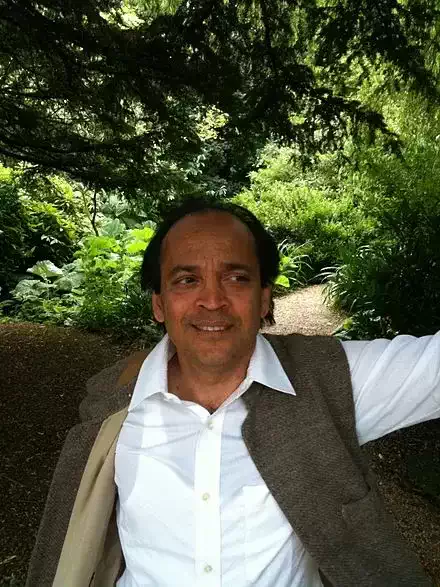
Vikram Seth
Time Zones
I willed my love to dream of me last night, that we might lie
at peace, if not beneath a single sheet, under one sky.
I dreamed of her but she could not alas humour my will;
it struck me suddenly that where she was was daylight still.
at peace, if not beneath a single sheet, under one sky.
I dreamed of her but she could not alas humour my will;
it struck me suddenly that where she was was daylight still.
701
Arthur Rimbaud
Sensation
In the blue summer evenings, I will go along the paths,
And walk over the short grass, as I am pricked by the wheat:
Daydreaming I will feel the coolness on my feet.
I will let the wind bathe my bare head.
I will not speak, I will have no thoughts:
But infinite love will mount in my soul;
And I will go far, far off, like a gypsy,
Through the country side-joyous as if I were with a woman.
691
Lewis Carroll
The White Knight's Song
'Haddock's Eyes' or 'The Aged Aged Man' or
'Ways and Means' or 'ASitting
On A Gate'
I'll tell thee everything I can;
There's little to relate.
I saw an aged, aged man,
Asitting
on a gate.
'Who are you, aged man?' I said.
'And how is it you live?'
And his answer trickled through my head
Like water through a sieve.
He said 'I look for butterflies
That sleep among the wheat;
I make them into muttonpies,
And sell them in the street.
I sell them unto men,' he said,
'Who sail on stormy seas;
And that's the way I get my bread
A
trifle, if you please.'
But I was thinking of a plan
To dye one's whiskers green,
And always use so large a fan
That it could not be seen.
So, having no reply to give
To what the old man said,
I cried, 'Come, tell me how you live!'
And thumped him on the head.
His accents mild took up the tale;
He said, 'I go my ways,
And when I find a mountainrill,
I set it in a blaze.
And thence they make a stuff they call
Rowland's Macassar OilYet
twopencehalfpenny
is all
They give me for my toil.'
But I was thinking of a way
To feed oneself on batter,
And so go on from day to day
Getting a little fatter.
I shook him well from side to side,
Until his face was blue;
'Come, tell me how you live,' I cried
'And what it is you do!'
He said, 'I hunt for haddocks' eyes
Among the heather bright,
And work them into waistcoatbuttons
In the silent night.
And these I do not sell for gold
Or coin of silvery shine,
But for a copper halfpenny,
And that will purchase nine.
'I sometimes dig for buttered rolls,
Or set limed twigs for crabs;
I sometimes search the grassy knolls
For wheels of hansomcabs.
And that's the way' (he gave a wink)
'By which I get my wealth
And
very gladly will I drink
Your Honor's noble health.'
I heard him then, for I had just
Completed my design
To keep the Menai bridge from rust
By boiling it in wine.
I thanked him much for telling me
The way he got his wealth,
But chiefly for his wish that he
Might drink my noble health.
And now, if e'er by chance I put
My fingers into glue,
Or madly squeeze a righthand
foot
Into a lefthand
shoe,
Or if I drop upon my toe
A very heavy weight,
I weep, for it reminds me so
Of that old man I used to know
Whose
look was mild, whose speech was slow,
Whose hair was whiter than the snow,
Whose face was very like a crow
With eyes, like cinders, all aglow,
Who seemed distracted with his woe,
Who rocked his body to and fro,
And muttered mumblingly and low,
As if his mouth were full of dough,
Who snorted like a buffalo
That
summer evening long ago
Asitting
on a gate.
685

Federico García Lorca
Adam
A tree of blood soaks the morning
where the newborn woman groans.
Her voice leaves glass in the wound
and on the panes, a diagram of bone.
The coming light establishes and wins
white limits of a fable that forgets
the tumult of veins in flight
toward the dim cool of the apple.
Adam dreams in the fever of the clay
of a child who comes galloping
through the double pulse of his cheek.
But a dark other Adam is dreaming
a neuter moon of seedless stone
where the child of light will burn.
668

Rabindranath Tagore
Lost Star
When the creation was new and all the stars shone in their first
splendor, the gods held their assembly in the sky and sang
`Oh, the picture of perfection! the joy unalloyed!'
But one cried of a sudden
---`It seems that somewhere there is a break in the chain of light
and one of the stars has been lost.'
The golden string of their harp snapped,
their song stopped, and they cried in dismay
---`Yes, that lost star was the best,
she was the glory of all heavens!'
From that day the search is unceasing for her,
and the cry goes on from one to the other
that in her the world has lost its one joy!
Only in the deepest silence of night the stars smile
and whisper among themselves
---`Vain is this seeking! unbroken perfection is over all!'
672
Allen Ginsberg
Understand That This Is a Dream
Real as a dream
What shall I do with this great opportunity to fly?
What is the interpretation of this planet, this moon?
if I can dream that I dream / and dream anything dreamable / can I dream
I am awake / and why do that?
When I dream in a dream that I wake / up what
happens when I try to move?
I dream that I move
and the effort moves and moves
till I move / and my arm hurts
Then I wake up / dismayed / I was dreaming / I was waking
when I was dreaming still / just now.
and try to remember next time in dreams
that I am in dreaming.
And dream anything I want when I'm awaken.
When I'm in awakeness what do I desire?
I desire to fulfill my emotional belly.
My whole body my heart in my fingertops thrill with some old fulfillments.
Pages of celestial rhymes burning fire-words
unconsumable but disappear.
Arcane parchments my own and the universe the answer.
Belly to Belly and knee to knee.
The hot spurt of my body to thee and thee
old boy / dreamy Earl / you Prince of Paterson / now king of me / lost
Haledon
first dream that made me take down my pants
urgently to show the cars / auto tracks / rolling down avenue hill.
That far back what do I remember / but the face of the leader of the gang
was blond / that loved me / one day on the steps of his house blocks away
all afternoon I told him about my magic Spell
I can do anything I want / palaces millions / chemistry sets / chicken
coops / white horses
stables and torture basements / I inspect my naked victims
chained upside down / my fingertips thrill approval on their thighs
white hairless cheeks I may kiss all I want
at my mercy. on the racks.
I pass with my strong attendants / I am myself naked
bending down with my buttocks out
for their smacks of reproval / o the heat of desire
liek shit in my asshole. The strange gang
across the street / thru the grocerystore / in the wood alley / out in the open
on the corner
Because I lied to the Dentist about that chickencoop roofing / slate stolen off
his garage
by me and the boy I loved who would punish me if he knew
what I loved him.
That now I have had that boy back in another blond form
Peter Orlovsky a Chinese teenager in Bangkok ten years twenty years
Jo Army on the campus / white blond loins / my mouth hath kisses /
full of his cock / my ass burning / full of his cock
all that I do desire. In dream and awake
this handsome body mine / answered
all I desired / intimate loves / open eyed / revealed at last / clothes on the
floor
Underwear the most revealing stripped off below the belly button in bed.
That's that / yes yes / the flat cocks the red pricks the gentle public hair /
alone with me
my magic spell. My power / what I desire alone / what after thirty years /
I got forever / after thirty years / satisfied enough with Peter / with all I
wanted /
with many men I knew one generation / our sperm passing
into our mouths and bellies / beautiful when I love / given.
Now the dream oldens / I olden / my hair a year long / my thirtyeight
birthday approaching.
I dream I
am bald / am disappearing / the campus unrecognizable / Haledon Avenue
will be covered with neon / motels / Supermarkets / iron
the porches and woods changed when i go back / to see Earl again
He'll be bald / fleshy father / I could pursie him further in the garage
If there's still a garage on the hill / on the planet / when I get back.
From Asia.
If I could even remember his name or his face / or find him /
When I was ten / perhaps he exists in some form.
With a belly and a belt and an auto
Whatever his last name / I never knew / in the phonebook / the Akashic
records.
I'll write my Inspiration for all Mankind to remember,
My Idea, the secret cave / in the clothes closet / that house probably down /
Nothing to go back to / everything's gone / only my idea
that's disappearing / even in dreams / gray dust piles / instant annihilation
of World War II and all its stainless steel shining-mouthed cannons
much less me and my grammar school kisses / I never kissed in time /
and go on kissing in dream and out on the street / as if it were for ever.
No forever left! Even my oldest forever gone, in Bangkok, in Benares,
swept up with words and bodies / all into the brown Ganges /
passing the burning grounds and / into the police state.
My mind, my mind / you had six feet of Earth to hoe /
Why didn't you remember and plant the seed of Law and gather the sprouts
of What?
the golden blossoms of what idea? If I dream that I dream / what dream
should I dream next? Motorcycle rickshaws / parting lamp shine / little
taxis / horses hoofs
on this Saigon midnight street. Angkor Wat ahead and the ruined city's old
Hindu faces
and there was a dream about Eternity. What should I dream when I wake?
What's left to dream, more Chinese meat? More magic Spells? More youths
to love before I change & disappear?
More dream words? For now that I know that I am dreaming /
What next for you Allen? Run down to the Presidents Palace full of Morphine /
The cocks crowing / in the street / Dawn trucks / What is the question?
Do I need sleep, now that there's light in the window?
I'll go to sleep. Signing off until / the next idea / the moving van arrives
empty
at the Doctor's house full of Chinese furniture.
661
Rabindranath Tagore
The Sailor
The boat of the boatman Madhu is moored at the wharf of Rajgunj.
It is uselessly laden with jute, and has been lying there idle
for ever so long.
If he would only lend me his boat, I should man her with a
hundred oars, and hoist sails, five or six or seven.
I should never steer her to stupid markets.
I should sail the seven seas and the thirteen rivers of
fairyland.
But, mother, you won't weep for me in a corner.
I am not going into the forest like Ramachandra to come back
only after fourteen years.
I shall become the prince of the story, and fill my boat with
whatever I like.
I shall take my friend Ashu with me. We shall sail merrily
across the ever seas and the thirteen rivers of fairyland.
We shall set sail in the early morning light.
When at noontide you are bathing at the pond, we shall be in
the land of a strange king.
We shall pass the ford of Tirpurni, and leave behind us the
desert of Tepantar.
When we come back it will be getting dark, and I shall tell
you of all that we have seen.
I shall cross the seven seas and the thirteen rivers of
fairyland.
649

Roger Mcgough
The Time I Like Best
The time I like best is am
when the snow is inches deep
which I'm yet to discover
'cause I'm under the covers
fast, fast asleep.
when the snow is inches deep
which I'm yet to discover
'cause I'm under the covers
fast, fast asleep.
629

Emily Dickinson
I started Early - Took my Dog
I started Early - Took my Dog -
And visited the Sea -
The Mermaids in the Basement
Came out to look at me -
And Frigates - in the Upper Floor
Extended Hempen Hands -
Presuming Me to be a Mouse -
Aground - upon the Sands -
But no Man moved Me - till the Tide
Went past my simple Shoe -
And past my Apron - and my Belt
And past my Bodice - too -
And made as He would eat me up -
As wholly as a Dew
Upon a Dandelion's Sleeve -
And then - I started - too -
And He - He followed - close behind -
I felt His Silver Heel
Upon my Ankle - Then my Shoes
Would overflow with Pearl -
Until We met the Solid Town -
No One He seemed to know -
And bowing - with a Mighty look -
At me - The Sea withdrew -
635