
Dreams and Imagination
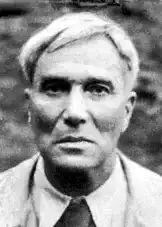
Boris Pasternak
Stars were racing
Stars were racing; waves were washing headlands.
Salt went blind, and tears were slowly drying.
Darkened were the bedrooms; thoughts were racing,
And the Sphinx was listening to the desert.
Candles swam. It seemed that the Colossus'
Blood grew cold; upon his lips was spreading
The blue shadow smile of the Sahara.
With the turning tide the night was waning.
Sea-breeze from Morocco touched the water.
Simooms blew. In snowdrifts snored Archangel.
Candles swam; the rough draft of 'The Prophet'
Slowly dried, and dawn broke on the Ganges.
582

Walt Whitman
The Sleepers
I WANDER all night in my vision,
Stepping with light feet, swiftly and noiselessly stepping and
stopping,
Bending with open eyes over the shut eyes of sleepers,
Wandering and confused, lost to myself, ill-assorted, contradictory,
Pausing, gazing, bending, and stopping.
How solemn they look there, stretch'd and still!
How quiet they breathe, the little children in their cradles!
The wretched features of ennuyés, the white features of
corpses, the livid faces of drunkards, the sick-gray faces of
onanists,
The gash'd bodies on battle-fields, the insane in their strong-door'd
rooms, the sacred idiots, the new-born emerging from gates, and
the dying emerging from gates,
The night pervades them and infolds them.
The married couple sleep calmly in their bed--he with his palm on the
hip of the wife, and she with her palm on the hip of the
husband,
The sisters sleep lovingly side by side in their bed,
The men sleep lovingly side by side in theirs,
And the mother sleeps, with her little child carefully wrapt.
The blind sleep, and the deaf and dumb sleep,
The prisoner sleeps well in the prison--the run-away son sleeps;
The murderer that is to be hung next day--how does he sleep?
And the murder'd person--how does he sleep?
The female that loves unrequited sleeps,
And the male that loves unrequited sleeps,
The head of the money-maker that plotted all day sleeps,
And the enraged and treacherous dispositions--all, all sleep.
I stand in the dark with drooping eyes by the worst-suffering and the
most restless,
I pass my hands soothingly to and fro a few inches from them,
The restless sink in their beds--they fitfully sleep.
Now I pierce the darkness--new beings appear,
The earth recedes from me into the night,
I saw that it was beautiful, and I see that what is not the earth is
beautiful.
I go from bedside to bedside--I sleep close with the other sleepers,
each in turn,
I dream in my dream all the dreams of the other dreamers,
And I become the other dreamers.
I am a dance--Play up, there! the fit is whirling me fast!
I am the ever-laughing--it is new moon and twilight,
I see the hiding of douceurs--I see nimble ghosts whichever way I
look,
Cache, and cache again, deep in the ground and sea, and where it is
neither ground or sea.
Well do they do their jobs, those journeymen divine,
Only from me can they hide nothing, and would not if they could,
I reckon I am their boss, and they make me a pet besides,
And surround me and lead me, and run ahead when I walk,
To lift their cunning covers, to signify me with stretch'd arms, and
resume the way;
Onward we move! a gay gang of blackguards! with mirth-shouting music,
and wild-flapping pennants of joy!
I am the actor, the actress, the voter, the politician;
The emigrant and the exile, the criminal that stood in the box,
He who has been famous, and he who shall be famous after to-day,
The stammerer, the well-form'd person, the wasted or feeble person.
I am she who adorn'd herself and folded her hair expectantly,
My truant lover has come, and it is dark.
Double yourself and receive me, darkness!
Receive me and my lover too--he will not let me go without him.
I roll myself upon you, as upon a bed--I resign myself to the
dusk.
He whom I call answers me, and takes the place of my lover,
He rises with me silently from the bed.
Darkness! you are gentler than my lover--his flesh was sweaty and
panting,
I feel the hot moisture yet that he left me.
My hands are spread forth, I pass them in all directions,
I would sound up the shadowy shore to which you are journeying.
Be careful, darkness! already, what was it touch'd me?
I thought my lover had gone, else darkness and he are one,
I hear the heart-beat--I follow, I fade away.
O hot-cheek'd and blushing! O foolish hectic!
O for pity's sake, no one must see me now! my clothes were stolen
while I was abed,
Now I am thrust forth, where shall I run?
Pier that I saw dimly last night, when I look'd from the windows!
Pier out from the main, let me catch myself with you, and stay--I
will not chafe you,
I feel ashamed to go naked about the world.
I am curious to know where my feet stand--and what this is flooding
me, childhood or manhood--and the hunger that crosses the
bridge between.
The cloth laps a first sweet eating and drinking,
Laps life-swelling yolks--laps ear of rose-corn, milky and just
ripen'd;
The white teeth stay, and the boss-tooth advances in darkness,
And liquor is spill'd on lips and bosoms by touching glasses, and the
best liquor afterward.
I descend my western course, my sinews are flaccid,
Perfume and youth course through me, and I am their wake.
It is my face yellow and wrinkled, instead of the old woman's,
I sit low in a straw-bottom chair, and carefully darn my grandson's
stockings.
It is I too, the sleepless widow, looking out on the winter midnight,
I see the sparkles of starshine on the icy and pallid earth.
A shroud I see, and I am the shroud--I wrap a body, and lie in the
coffin,
It is dark here under ground--it is not evil or pain here--it is
blank here, for reasons.
It seems to me that everything in the light and air ought to be
happy,
Whoever is not in his coffin and the dark grave, let him know he has
enough.
I see a beautiful gigantic swimmer, swimming naked through the eddies
of the sea,
His brown hair lies close and even to his head--he strikes out with
courageous arms--he urges himself with his legs,
I see his white body--I see his undaunted eyes,
I hate the swift-running eddies that would dash him head-foremost on
the rocks.
What are you doing, you ruffianly red-trickled waves?
Will you kill the courageous giant? Will you kill him in the prime of
his middle age?
Steady and long he struggles,
He is baffled, bang'd, bruis'd--he holds out while his strength holds
out,
The slapping eddies are spotted with his blood--they bear him away-they
roll him, swing him, turn him,
His beautiful body is borne in the circling eddies, it is continually
bruis'd on rocks,
Swiftly and out of sight is borne the brave corpse.
I turn, but do not extricate myself,
Confused, a past-reading, another, but with darkness yet.
The beach is cut by the razory ice-wind--the wreck-guns sound,
The tempest lulls--the moon comes floundering through the drifts.
I look where the ship helplessly heads end on--I hear the burst as
she strikes--I hear the howls of dismay--they grow fainter and
fainter.
I cannot aid with my wringing fingers,
I can but rush to the surf, and let it drench me and freeze upon me.
I search with the crowd--not one of the company is wash'd to us
alive;
In the morning I help pick up the dead and lay them in rows in a
barn.
Now of the older war-days, the defeat at Brooklyn,
Washington stands inside the lines--he stands on the intrench'd
hills, amid a crowd of officers,
His face is cold and damp--he cannot repress the weeping drops,
He lifts the glass perpetually to his eyes--the color is blanch'd
from his cheeks,
He sees the slaughter of the southern braves confided to him by their
parents.
The same, at last and at last, when peace is declared,
He stands in the room of the old tavern--the well-belov'd soldiers
all pass through,
The officers speechless and slow draw near in their turns,
The chief encircles their necks with his arm, and kisses them on the
cheek,
He kisses lightly the wet cheeks one after another--he shakes hands,
and bids good-by to the army.
Now I tell what my mother told me to-day as we sat at dinner
together,
Of when she was a nearly grown girl, living home with her parents on
the old homestead.
A red squaw came one breakfast time to the old homestead,
On her back she carried a bundle of rushes for rush-bottoming chairs,
Her hair, straight, shiny, coarse, black, profuse, half-envelop'd her
face,
Her step was free and elastic, and her voice sounded exquisitely as
she spoke.
My mother look'd in delight and amazement at the stranger,
She look'd at the freshness of her tall-borne face, and full and
pliant limbs,
The more she look'd upon her, she loved her,
Never before had she seen such wonderful beauty and purity,
She made her sit on a bench by the jamb of the fireplace--she cook'd
food for her,
She had no work to give her, but she gave her remembrance and
fondness.
The red squaw staid all the forenoon, and toward the middle of the
afternoon she went away,
O my mother was loth to have her go away!
All the week she thought of her--she watch'd for her many a month,
She remember'd her many a winter and many a summer,
But the red squaw never came, nor was heard of there again.
Now Lucifer was not dead--or if he was, I am his sorrowful terrible
heir;
I have been wrong'd--I am oppress'd--I hate him that oppresses me,
I will either destroy him, or he shall release me.
Damn him! how he does defile me!
How he informs against my brother and sister, and takes pay for their
blood!
How he laughs when I look down the bend, after the steamboat that
carries away my woman!
Now the vast dusk bulk that is the whale's bulk, it seems mine;
Warily, sportsman! though I lie so sleepy and sluggish, the tap of my
flukes is death.
A show of the summer softness! a contact of something unseen! an
amour of the light and air!
I am jealous, and overwhelm'd with friendliness,
And will go gallivant with the light and air myself,
And have an unseen something to be in contact with them also.
O love and summer! you are in the dreams, and in me!
Autumn and winter are in the dreams--the farmer goes with his thrift,
The droves and crops increase, and the barns are well-fill'd.
Elements merge in the night--ships make tacks in the dreams,
The sailor sails--the exile returns home,
The fugitive returns unharm'd--the immigrant is back beyond months
and years,
The poor Irishman lives in the simple house of his childhood, with
the well-known neighbors and faces,
They warmly welcome him--he is barefoot again, he forgets he is well
off;
The Dutchman voyages home, and the Scotchman and Welshman voyage
home, and the native of the Mediterranean voyages home,
To every port of England, France, Spain, enter well-fill'd ships,
The Swiss foots it toward his hills--the Prussian goes his way, the
Hungarian his way, and the Pole his way,
The Swede returns, and the Dane and Norwegian return.
The homeward bound, and the outward bound,
The beautiful lost swimmer, the ennuyé, the onanist, the
female that loves unrequited, the money-maker,
The actor and actress, those through with their parts, and those
waiting to commence,
The affectionate boy, the husband and wife, the voter, the nominee
that is chosen, and the nominee that has fail'd,
The great already known, and the great any time after to-day,
The stammerer, the sick, the perfect-form'd, the homely,
The criminal that stood in the box, the judge that sat and sentenced
him, the fluent lawyers, the jury, the audience,
The laugher and weeper, the dancer, the midnight widow, the red
squaw,
The consumptive, the erysipelite, the idiot, he that is wrong'd,
The antipodes, and every one between this and them in the dark,
I swear they are averaged now--one is no better than the other,
The night and sleep have liken'd them and restored them.
I swear they are all beautiful;
Every one that sleeps is beautiful--everything in the dim light is
beautiful,
The wildest and bloodiest is over, and all is peace.
Peace is always beautiful, The myth of heaven indicates peace and
night.
The myth of heaven indicates the Soul;
The Soul is always beautiful--it appears more or it appears less--it
comes, or it lags behind,
It comes from its embower'd garden, and looks pleasantly on itself,
and encloses the world,
Perfect and clean the genitals previously jetting, and perfect and
clean the womb cohering,
The head well-grown, proportion'd and plumb, and the bowels and
joints proportion'd and plumb.
The Soul is always beautiful,
The universe is duly in order, everything is in its place,
What has arrived is in its place, and what waits is in its place;
The twisted skull waits, the watery or rotten blood waits,
The child of the glutton or venerealee waits long, and the child of
the drunkard waits long, and the drunkard himself waits long,
The sleepers that lived and died wait--the far advanced are to go on
in their turns, and the far behind are to come on in their
turns,
The diverse shall be no less diverse, but they shall flow and unite-they
unite now.
The sleepers are very beautiful as they lie unclothed,
They flow hand in hand over the whole earth, from east to west, as
they lie unclothed,
The Asiatic and African are hand in hand--the European and American
are hand in hand,
Learn'd and unlearn'd are hand in hand, and male and female are hand
in hand,
The bare arm of the girl crosses the bare breast of her lover--they
press close without lust--his lips press her neck,
The father holds his grown or ungrown son in his arms with
measureless love, and the son holds the father in his arms with
measureless love,
The white hair of the mother shines on the white wrist of the
daughter,
The breath of the boy goes with the breath of the man, friend is
inarm'd by friend,
The scholar kisses the teacher, and the teacher kisses the scholar-the
wrong'd is made right,
The call of the slave is one with the master's call, and the master
salutes the slave,
The felon steps forth from the prison--the insane becomes sane--the
suffering of sick persons is reliev'd,
The sweatings and fevers stop--the throat that was unsound is sound-the
lungs of the consumptive are resumed--the poor distress'd
head is free,
The joints of the rheumatic move as smoothly as ever, and smoother
than ever,
Stiflings and passages open--the paralyzed become supple,
The swell'd and convuls'd and congested awake to themselves in
condition,
They pass the invigoration of the night, and the chemistry of the
night, and awake.
I too pass from the night,
I stay a while away, O night, but I return to you again, and love
you.
Why should I be afraid to trust myself to you?
I am not afraid--I have been well brought forward by you;
I love the rich running day, but I do not desert her in whom I lay so
long,
I know not how I came of you, and I know not where I go with you--but
I know I came well, and shall go well.
I will stop only a time with the night, and rise betimes;
I will duly pass the day, O my mother, and duly return to you.
582

Rabindranath Tagore
The Lotus
On the day when the lotus bloomed, alas, my mind was straying,
and I knew it not. My basket was empty and the flower remained unheeded.
Only now and again a sadness fell upon me, and I started up from my
dream and felt a sweet trace of a strange fragrance in the south wind.
That vague sweetness made my heart ache with longing and it seemed to
me that is was the eager breath of the summer seeking for its completion.
I knew not then that it was so near, that it was mine, and that this
perfect sweetness had blossomed in the depth of my own heart.
1,248
Rabindranath Tagore
The Unheeded Pageant
Ah, who was it coloured that little frock, my child, and covered
your sweet limbs with that little red tunic?
You have come out in the morning to play in the courtyard,
tottering and tumbling as you run.
But who was it coloured that little frock, my child?
What is it makes you laugh, my little life-bud?
Mother smiles at you standing on the threshold.
She claps her hands and her bracelets jingle, and you dance
with your bamboo stick in your hand like a tiny little shepherd.
But what is it makes you laugh, my little life-bud?
O beggar, what do you bed for, clinging to your mother's neck
with both your hands?
O greedy heart, shall I pluck the world like a fruit from the
sky to place it on your little rosy palm?
O beggar, what are you begging for?
The wind carries away in glee the tinkling of your anklet
bells.
The sun smiles and watches your toilet.
The sky watches over you when you sleep in your mother's arms,
and the morning comes tiptoe to your bed and kisses your eyes.
The wind carried away in glee the tinkling of your anklet
bells.
The fairy mistress of dreams is coming towards you, flying
through the twilight sky.
The world-mother keeps her seat by you in your mother's heart.
He who plays his music to the stars is standing at your window
with his flute.
And the fairy mistress of dreams is coming towards you, flying
through the twilight sky.
571
Rabindranath Tagore
Sleep-Stealer
Who stole sleep from baby's eyes? I must know.
Clasping her pitcher to her waist mother went to fetch water
from the village near by.
It was noon. The children's playtime was over; the ducks in
the pond were silent.
The shepherd boy lay asleep under the shadow of the banyan
tree.
The crane stood grave and still in the swamp near the mango
grove.
In the meanwhile the Sleep-stealer came and, snatching sleep
from baby's eyes, flew away.
When mother came back she found baby travelling the room over
on all fours.
Who stole sleep from our baby's eyes? I must know. I must find
her and chain her up.
I must look into that dark cave, where, through boulders and
scowling stones, trickles a tiny stream.
I must search in the drowsy shade of the bakula grove, where
pigeons coo in their corner, and fairies' anklets tinkle in the
stillness of starry nights.
In the evening I will peep into the whispering silence of the
bamboo forest, where fireflies squander their light, and will ask
every creature I meet, "Can anybody tell me where the Sleep-stealer
lives?"
Who stole sleep from baby's eyes? I must know.
Shouldn't I give her a good lesson if I could only catch her!
I would raid her nest and see where she hoards all her stolen
sleep.
I would plunder it all, and carry it home.
I would bind her two wings securely, set her on the bank of
the river, and then let her play at fishing with a reed among the
rushes and water-lilies.
When the marketing is over in the evening, and the village
children sit in their mothers' laps, then the night birds will
mockingly din her ears with:
"Whose sleep will you steal now?"
563

Rudyard Kipling
A Child's Garden
R. L. Stevenson
Now there is nothing wrong with me
Except -- I think it's called T.B.
And that is why I have to lay
Out in the garden all the day.
Our garden is not very wide
And cars go by on either side,
And make an angry-hooty noise
That rather startles little boys.
But worst of all is when they take
Me out in cars that growl and shake,
With charabancs so dreadful-near
I have to shut my eyes for fear.
But when I'm on my back again,
I watch the Croydon aeroplane
That flies across to France, and sings
Like hitting thick piano-strings.
When I am strong enough to do
The things I'm truly wishful to,
I'll never use a car or train
But always have an aeroplane;
And just go zooming round and round,
And frighten Nursey with the sound,
And see the angel-side of clouds,
And spit on all those motor-crowds!
567
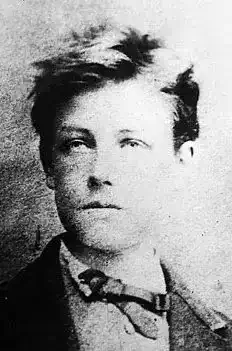
Arthur Rimbaud
Drunken Morning
Oh, my Beautiful! Oh, my Good!
Hideous fanfare where yet I do not stumble!
Oh, rack of enchantments!
For the first time, hurrah for the unheard-of work,
For the marvelous body! For the first time!
It began with the laughter of children, and there it will end.
This poison will stay in our veins even when, as the fanfares depart,
We return to our former disharmony.
Oh, now, we who are so worthy of these tortures!
Let us re-create ourselves after that superhuman promise
Made to our souls and our bodies at their creation:
That promise, that madness!
Elegance, silence, violence!
They promised to bury in shadows the tree of good and evil,
To banish tyrannical honesty,
So that we might flourish in our very pure love.
It began with a certain disgust, and it ended -
Since we could not immediately seize upon eternity -
It ended in a scattering of perfumes.
Laughter of children, discretion of slaves, austerity of virgins,
Horror of faces and objects here below,
Be sacred in the memory of the evening past.
It began in utter boorishness, and now it ends
In angels of fire and ice.
Little drunken vigil, blessed!
If only for the mask you have left us!
Method, we believe in you! We never forgot that yesterday
You glorified all of our ages.
We have faith in poison.
We will give our lives completely, every day.
FOR THIS IS THE ASSASSIN'S HOUR.
(translated by Paul Schmidt)
563
Arthur Rimbaud
Cities Vagabonds
These are cities!
And this is the people for whom these
Alleghenys and Lebanons of dream have been raised!
Castles of wood and crystal move on tracks and invisible winches.
Old craters ringed with mammoth statues and
coppery palms roar melodiously in flames.
Festivals of love reverberate
from the canals suspended behind the castles.
Chimes echo through the gorges like a chase.
Corporations of giant singers assemble,
their vestments and oriflames
brilliant as the mountain-peaks.
On platforms in the midst of gulfs,
Rolands brazen their bravuras.
From abysmal catwalks and the rooftops of inns,
a burning sky hoists flags upon the masts.
The collapse of apotheosis
unites the heights to the depths
where seraphic shecentaurs
wind among the avalanches.
Above the plateaus of the highest reaches,
the sea, troubled by the perpetual birth of Venus
and loaded with choral fleets amid
an uproar of pearls and precious conches,
grows dark at times with mortal thunder.
On the slopes,
harvests of flowers
as big as our weapons
and goblets are bellowing.
Processions of Mabs in red-opaline scale the ravines.
On high, their feet in the waterfalls and briars,
stags give suck to Diana.
Bacchantes of the suburbs weep,
and the moon burns and howls.
Venus enters the caves
of the black-smiths and hermits.
Clusters of belfries repeat the ideas of the people.
Issues from castles of bone an unknown music.
In the boroughs legends
are born and enthusiasm germinate.
A paradise of storms collapses.
Savages dance without stopping the festival of night.
And, for one hour, I descended into the swarm
of a boulevard of Baghdad
where groups of peple were singing
the joy of the new work,
circulating under a heavy wind
without being able to escape those fabulous phantoms
of the mountains to which one must return.
What good arms, what wondrous hour
will restore to me that region
whence come my slumbers
and least movements?
565

Ezra Pound
Apparuit
Golden rose the house, in the portal I saw
thee, a marvel, carven in subtle stuff, a
portent. Life died down in the lamp and flickered,
caught at the wonder.
Crimson, frosty with dew, the roses bend where
thou afar, moving in the glamorous sun,
drinkst in life of earth, of the air, the tissue
golden about thee.
Green the ways, the breath of the fields is thine there,
open lies the land, yet the steely going
darkly hast thou dared and the dreaded aether
parted before thee.
Swift at courage thou in the shell of gold, casting
a-loose the cloak of the body, earnest
straight, then shone thine oriel and the stunned light
faded about thee.
Half the graven shoulder, the throat aflash with
strands of light inwoven about it, loveliest
of all things, frail alabaster, ah me!
swift in departing.
Clothed in goldish weft, delicately perfect,
gone as wind ! The cloth of the magical hands!
Thou a slight thing, thou in access of cunning
dar'dst to assume this?
553

William Blake
The Angel
I dreamt a dream! What can it mean?
And that I was a maiden Queen
Guarded by an Angel mild:
Witless woe was ne'er beguiled!
And I wept both night and day,
And he wiped my tears away;
And I wept both day and night,
And hid from him my heart's delight.
So he took his wings, and fled;
Then the morn blushed rosy red.
I dried my tears, and armed my fears
With ten-thousand shields and spears.
Soon my Angel came again;
I was armed, he came in vain;
For the time of youth was fled,
And grey hairs were on my head.
1,062
Boris Pasternak
Definition of Creative Art
With shirt wide open at the collar,
Maned as Beethoven's bust, it stands;
Our conscience, dreams, the night and love,
Are as chessmen covered by its hands.
And one black king upon the board:
In sadness and in rage, forthright
It brings the day of doom.-Against
The pawn it brings the mounted knight.
In gardens where from icy spheres
The stars lean tender, linger near,
Tristan still sings, like a nightingale
On Isolde's vine, with trembling fear.
The gardens, ponds, and fences, made pure
By burning tears, and the whole great span,
Creation-are only burst of passion
Hoarded in the hearts of men.
554
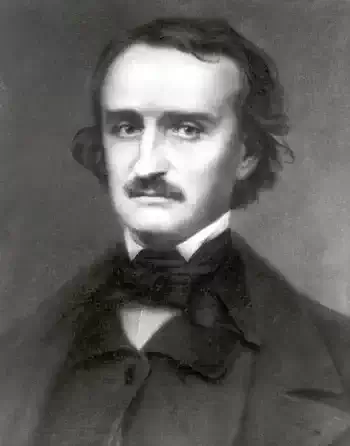
Edgar Allan Poe
Sonnet- To Science
Science! true daughter of Old Time thou art!
Who alterest all things with thy peering eyes.
Why preyest thou thus upon the poet's heart,
Vulture, whose wings are dull realities?
How should he love thee? or how deem thee wise,
Who wouldst not leave him in his wandering
To seek for treasure in the jewelled skies,
Albeit he soared with an undaunted wing?
Hast thou not dragged Diana from her car?
And driven the Hamadryad from the wood
To seek a shelter in some happier star?
Hast thou not torn the Naiad from her flood,
The Elfin from the green grass, and from me
The summer dream beneath the tamarind tree?
548

Kabir
I have been thinking
I have been thinking...
I have been thinking of the difference between water
I have been thinking
I have been thinkingand the waves on it. Rising,
water's still water, falling back,
it is water, will you give me a hint
how to tell them apart?
Because someone has made up the word
'wave,' do I have to distinguish it
from water?
There is a Secret One inside us;
the planets in all the galaxies
pass through his hands like beads.
That is a string of beads one should look at with luminous eyes.
548
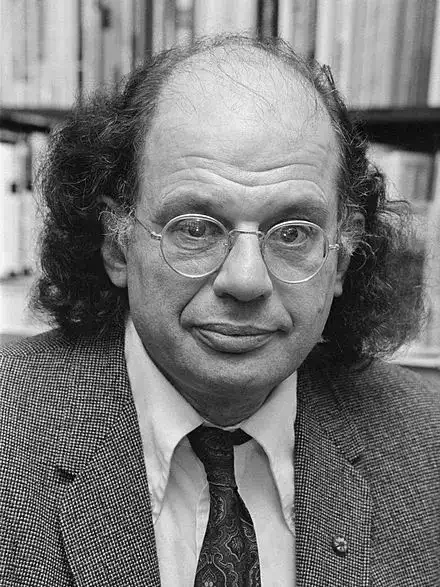
Allen Ginsberg
An Asphodel
O dear sweet rosy
unattainable desire
...how sad, no way
to change the mad
cultivated asphodel, the
visible reality...
and skin's appalling
petals--how inspired
to be so Iying in the living
room drunk naked
and dreaming, in the absence
of electricity...
over and over eating the low root
of the asphodel,
gray fate...
rolling in generation
on the flowery couch
as on a bank in Arden-my
only rose tonite's the treat
of my own nudity.
544
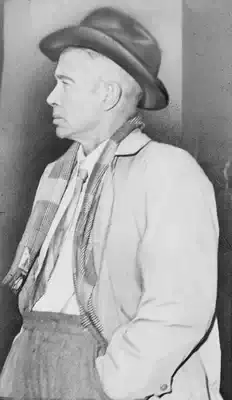
E. E. Cummings
this(let's remember)day died again and...
this(let's remember)day died again and
again;whose golden,crimson dooms conceive
an oceaning abyss of orange dream
larger than sky times earth:a flame beyond
soul immemorially forevering amand
as collapsing that grey mind by wave
doom disappeared,out of perhaps(who knows?)
eternity floated a blossoming
(while anyone might slowly count to soon)
rose-did you see her?darling,did you(kiss
me)quickly count to never?you were wrong
-then all the way from perfect nowhere came
(as easily as we forget something)
livingest the imaginable moon
540
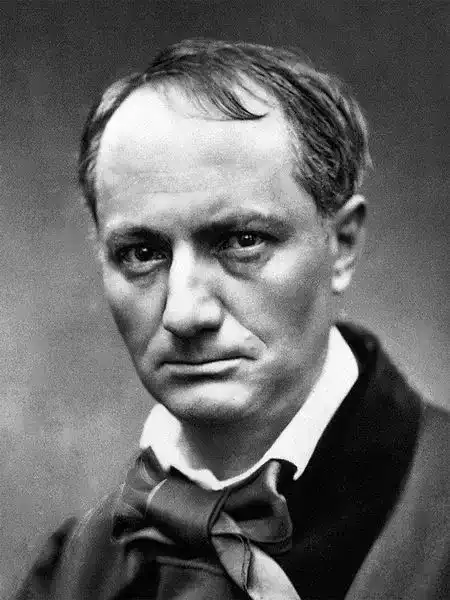
Charles Baudelaire
Correspondences
Nature is a temple whose living colonnades
Breathe forth a mystic speech in fitful sighs;
Man wanders among symbols in those glades
Where all things watch him with familiar eyes.
Like dwindling echoes gathered far away
Into a deep and thronging unison
Huge as the night or as the light of day,
All scents and sounds and colors meet as one.
Perfumes there are as sweet as the oboe's sound,
Green as the prairies, fresh as a child's caress,
- And there are others, rich, corrupt, profound
And of an infinite pervasiveness,
Like myrrh, or musk, or amber, the excite
The ecstasies of sense, the soul's delight.
533
William Blake
Sleep! Sleep! Beauty Bright
Sleep! sleep! beauty bright,
Dreaming o'er the joys of night;
Sleep! sleep! in thy sleep
Little sorrows sit and weep.
Sweet Babe, in thy face
Soft desires I can trace,
Secret joys and secret smiles,
Little pretty infant wiles.
As thy softest limbs I feel,
Smiles as of the morning steal
O'er thy cheek, and o'er thy breast
Where thy little heart does rest.
O! the cunning wiles that creep
In thy little heart asleep.
When thy little heart does wake
Then the dreadful lightnings break,
From thy cheek and from thy eye,
O'er the youthful harvests nigh.
Infant wiles and infant smiles
Heaven and Earth of peace beguiles.
529
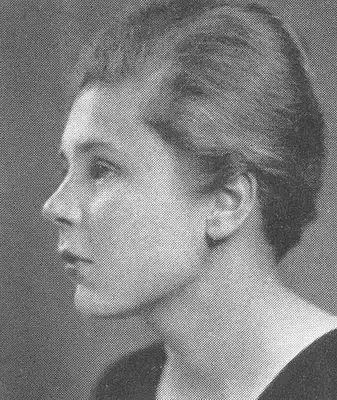
Elizabeth Bishop
Sleeping on the Ceiling
It is so peaceful on the ceiling!
It is the Place de la Concorde.
The little crystal chandelier
is off, the fountain is in the dark.
Not a soul is in the park.
Below, where the wallpaper is peeling,
the Jardin des Plantes has locked its gates.
Those photographs are animals.
The mighty flowers and foliage rustle;
under the leaves the insects tunnel.
We must go under the wallpaper
to meet the insect-gladiator,
to battle with a net and trident,
and leave the fountain and the square
But oh, that we could sleep up there...
513
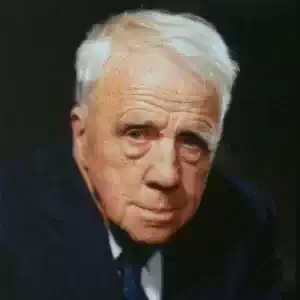
Robert Frost
A Boundless Moment
He halted in the wind, and -- what was that
Far in the maples, pale, but not a ghost?
He stood there bringing March against his thought,
And yet too ready to believe the most.
"Oh, that's the Paradise-in-bloom," I said;
And truly it was fair enough for flowers
had we but in us to assume in march
Such white luxuriance of May for ours.
We stood a moment so in a strange world,
Myself as one his own pretense deceives;
And then I said the truth (and we moved on).
A young beech clinging to its last year's leaves.
513
Rabindranath Tagore
Maya
That I should make much of myself and turn it on all sides,
thus casting colored shadows on thy radiance
---such is thy Maya.
Thou settest a barrier in thine own being
and then callest thy severed self in myriad notes.
This thy self-separation has taken body in me.
The poignant song is echoed through all the sky in many-coloued tears
and smiles, alarms and hopes; waves rise up and sink again,
dreams break and form.
In me is thy own defeat of self.
This screen that thou hast raised is painted with innumerable figures
with the brush of the night and the day.
Behind it thy seat is woven in wondrous mysteries of curves,
casting away all barren lines of straightness.
The great pageant of thee and me has overspread the sky.
With the tune of thee and me all the air is vibrant,
and all ages pass with the hiding and seeking of thee and me.
507
Rabindranath Tagore
Lover's Gifts XL: A Message Came
A message came from my youth of vanished days, saying, " I wait for
you among the quivering of unborn May, where smiles ripen for tears
and hours ache with songs unsung."
It says, "Come to me across the worn-out track of age, through
the gates of death. For dreams fade, hopes fail, the fathered
fruits of the year decay, but I am the eternal truth, and you shall
meet me again and again in your voyage of life from shore to
shore."
509
William Blake
The Crystal Cabinet
The Maiden caught me in the wild,
Where I was dancing merrily;
She put me into her Cabinet,
And lock'd me up with a golden key.
This cabinet is form'd of gold
And pearl and crystal shining bright,
And within it opens into a world
And a little lovely moony night.
Another England there I saw
Another London with its Tower,
Another Thames and other hills,
And another pleasant Surrey bower.
Another Maiden like herself,
Translucent, lovely, shining clear,
Threefold each in the other clos'd
O, what a pleasant trembling fear!
O, what a smile! a threefold smile
Fill'd me, that like a flame I burn'd;
I bent to kiss the lovely Maid,
And found a threefold kiss return'd.
I strove to seize the inmost form
With ardor fierce and hands of flame,
But burst the Crystal Cabinet,
And like a weeping Babe became--
A weeping Babe upon the wild,
And weeping Woman pale reclin'd,
And in the outward air again,
I fill'd with woes the passing wind.
.
979
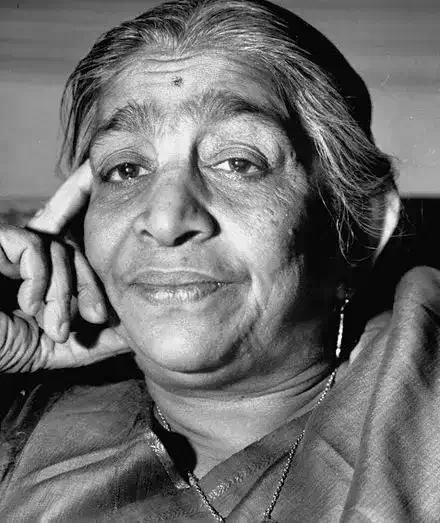
Sarojini Naidu
Cradle Song
FROM groves of spice,
O'er fields of rice,
Athwart the lotus-stream,
I bring for you,
Aglint with dew
A little lovely dream.
Sweet, shut your eyes,
The wild fire-fiies
Dance through the fairy neem;
From the poppy-bole
For you I stole
A little lovely dream.
Dear eyes, good-night,
In golden light
The stars around you gleam;
On you I press
With soft caress
A little lovely dream.
508
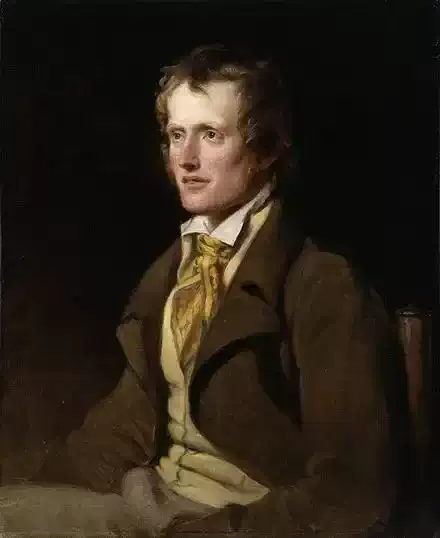
John Clare
A vision
I lost the love of heaven above,
I spurned the lust of earth below,
I felt the sweets of fancied love
And hell itself my only foe.
I lost earth's joys but felt the glow
Of heaven's flame abound in me
Till loveliness and I did grow
The bard of immortality.
I loved but woman fell away
I hid me from her faded fame,
I snatched the sun's eternal ray
And wrote till earth was but a name
In every language upon earth,
On every shore, o'er every sea,
I give my name immortal birth
And kept my spirit with the free.
504