
Work and Profession

Rudyard Kipling
The Young British Soldier
When the 'arf-made recruity goes out to the East
'E acts like a babe an' 'e drinks like a beast,
An' 'e wonders because 'e is frequent deceased
Ere 'e's fit for to serve as a soldier.
Serve, serve, serve as a soldier,
Serve, serve, serve as a soldier,
Serve, serve, serve as a soldier,
So-oldier OF the Queen!
Now all you recruities what's drafted to-day,
You shut up your rag-box an' 'ark to my lay,
An' I'll sing you a soldier as far as I may:
A soldier what's fit for a soldier.
Fit, fit, fit for a soldier . . .
First mind you steer clear o' the grog-sellers' huts,
For they sell you Fixed Bay'nets that rots out your guts --
Ay, drink that 'ud eat the live steel from your butts --
An' it's bad for the young British soldier.
Bad, bad, bad for the soldier . . .
When the cholera comes -- as it will past a doubt --
Keep out of the wet and don't go on the shout,
For the sickness gets in as the liquor dies out,
An' it crumples the young British soldier.
Crum-, crum-, crumples the soldier . . .
But the worst o' your foes is the sun over'ead:
You must wear your 'elmet for all that is said:
If 'e finds you uncovered 'e'll knock you down dead,
An' you'll die like a fool of a soldier.
Fool, fool, fool of a soldier . . .
If you're cast for fatigue by a sergeant unkind,
Don't grouse like a woman nor crack on nor blind;
Be handy and civil, and then you will find
That it's beer for the young British soldier.
Beer, beer, beer for the soldier . . .
Now, if you must marry, take care she is old --
A troop-sergeant's widow's the nicest I'm told,
For beauty won't help if your rations is cold,
Nor love ain't enough for a soldier.
'Nough, 'nough, 'nough for a soldier . . .
If the wife should go wrong with a comrade, be loath
To shoot when you catch 'em -- you'll swing, on my oath! --
Make 'im take 'er and keep 'er: that's Hell for them both,
An' you're shut o' the curse of a soldier.
Curse, curse, curse of a soldier . . .
When first under fire an' you're wishful to duck,
Don't look nor take 'eed at the man that is struck,
Be thankful you're livin', and trust to your luck
And march to your front like a soldier.
Front, front, front like a soldier . . .
When 'arf of your bullets fly wide in the ditch,
Don't call your Martini a cross-eyed old bitch;
She's human as you are -- you treat her as sich,
An' she'll fight for the young British soldier.
Fight, fight, fight for the soldier . . .
When shakin' their bustles like ladies so fine,
The guns o' the enemy wheel into line,
Shoot low at the limbers an' don't mind the shine,
For noise never startles the soldier.
Start-, start-, startles the soldier . . .
If your officer's dead and the sergeants look white,
Remember it's ruin to run from a fight:
So take open order, lie down, and sit tight,
And wait for supports like a soldier.
Wait, wait, wait like a soldier . . .
When you're wounded and left on Afghanistan's plains,
And the women come out to cut up what remains,
Jest roll to your rifle and blow out your brains
An' go to your Gawd like a soldier.
Go, go, go like a soldier,
Go, go, go like a soldier,
Go, go, go like a soldier,
So-oldier of the Queen!
548
Rudyard Kipling
Birds Of Prey March
March! The mud is cakin' good about our trousies.
Front! -- eyes front, an' watch the Colour-casin's drip.
Front! The faces of the women in the 'ouses
Ain't the kind o' things to take aboard the ship.
Cheer! An' we'll never march to victory.
Cheer! An' we'll never live to 'ear the cannon roar!
The Large Birds o' Prey
They will carry us away,
An' you'll never see your soldiers any more!
Wheel! Oh, keep your touch; we're goin' round a corner.
Time! -- mark time, an' let the men be'ind us close.
Lord! the transport's full, an' 'alf our lot not on 'er --
Cheer, O cheer! We're going off where no one knows.
March! The Devil's none so black as 'e is painted!
Cheer! We'll 'ave some fun before we're put away.
'Alt, an' 'and 'er out -- a woman's gone and fainted!
Cheer! Get on -- Gawd 'elp the married men to-day!
Hoi! Come up, you 'ungry beggars, to yer sorrow.
('Ear them say they want their tea, an' want it quick!)
You won't have no mind for slingers, not to-morrow --
No; you'll put the 'tween-decks stove out, bein' sick!
'Alt! The married kit 'as all to go before us!
'Course it's blocked the bloomin' gangway up again!
Cheer, O cheer the 'Orse Guards watchin' tender o'er us,
Keepin' us since eight this mornin' in the rain!
Stuck in 'eavy marchin'-order, sopped and wringin' --
Sick, before our time to watch 'er 'eave an' fall,
'Ere's your 'appy 'ome at last, an' stop your singin'.
'Alt! Fall in along the troop-deck! Silence all!
Cheer! For we'll never live to see no bloomin' victory!
Cheer! An' we'll never live to 'ear the cannon roar! (One cheer more!)
The jackal an' the kite
'Ave an 'ealthy appetite,
An' you'll never see your soldiers any more! ('Ip! Urroar!)
The eagle an' the crow
They are waitin' ever so,
An' you'll never see your soldiers any more! ('Ip! Urroar!)
Yes, the Large Birds o' Prey
They will carry us away,
An' you'll never see your soldiers any more!
548
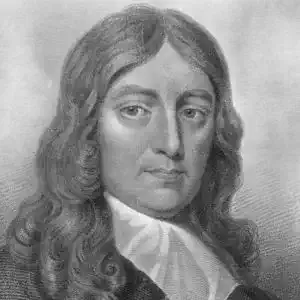
John Milton
On the University Carrier
Who sickened in the time of his Vacancy, being forbid to go to London by reason of the
Plague.
Here lies old Hobson. Death hath broke his girt,
And here, alas! hath laid him in the dirt;
Or else, the ways being foul, twenty to one
He’s here stuck in a slough, and overthrown.
’T was such a shifter that, if truth were known,
Death was half glad when he had got him down;
For he had any time this ten years full
Dodged with him betwixt Cambridge and The Bull.
And surely Death could never have prevailed,
Had not his weekly course of carriage failed;
But lately, finding him so long at home,
And thinking now his journey’s end was come,
And that he had ta’en up his latest Inn,
In the kind office of a Chamberlin
Showed him his room where he must lodge that night,
Pulled off his boots, and took away the light.
If any ask for him, it shall be said,
“Hobson has supped, and ’s newly gone to bed.”
537
Rudyard Kipling
Anchor Song
Heh! Walk her round. Heave, ah heave her short again!
Over, snatch her over, there, and hold her on the pawl.
Loose all sail, and brace your yards back and full --
Ready jib to pay her off and heave short all!
Well, ah fare you well; we can stay no more with you, my love --
Down, set down your liquor and your girl from off your knee;
For the wind has come to say:
"You must take me while you may,
If you'd go to Mother Carey
(Walk her down to Mother Carey!),
Oh, we're bound to Mother Carey where she feeds her chicks at sea!"
Heh! Walk her round. Break, ah break it out o' that!
Break our starboard-bower out, apeak, awash, and clear.
Port -- port she casts, with the harbour-mud beneath her foot,
And that's the last o' bottom we shall see this year!
Well, ah fare you well, for we've got to take her out again --
Take her out in ballast, riding light and cargo-free.
And it's time to clear and quit
When the hawser grips the bitt,
So we'll pay you with the foresheet and a promise from the sea!
Heh! Tally on. Aft and walk away with her!
Handsome to the cathead, now; O tally on the fall!
Stop, seize and fish, and easy on the davit-guy.
Up, well up the fluke of her, and inboard haul!
Well, ah fare you well, for the Channel wind's took hold of us,
Choking down our voices as we snatch the gaskets free.
And it's blowing up for night,
And she's dropping Light on Light,
And she's snorting under bonnets for a breath of open sea,
Wheel, full and by; but she'll smell her road alone to-night.
Sick she is and harbour-sick -- O sick to clear the land!
Roll down to Brest with the old Red Ensign over us --
Carry on and thrash her out with all she'll stand!
Well, ah fare you well, and it's Ushant slams the door on us,
Whirling like a windmill through the dirty scud to lee:
Till the last, last flicker goes
From the tumbling water-rows,
And we're off to Mother Carey
(Walk her down to Mother Carey!),
Oh, we're bound for Mother Carey where she feeds her chicks at sea!
530
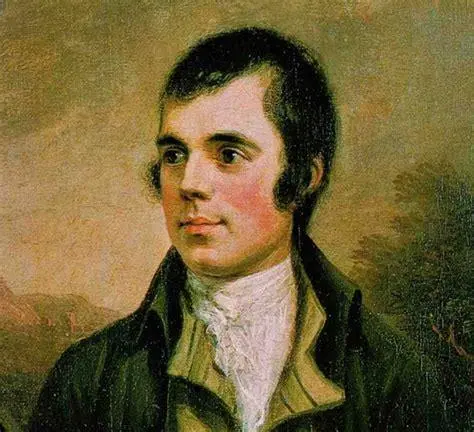
Robert Burns
Tam O' Shanter
A Tale
"Of Brownyis and of Bogillis full is this Buke."
Gawin Douglas.
When chapman billies leave the street,
And drouthy neibors neibors meet;
As market days are wearing late,
And folk begin to tak the gate,
While we sit bousing at the nappy,
An' getting fou and unco happy,
We think na on the lang Scots miles,
The mosses, waters, slaps and stiles,
That lie between us and our hame,
Where sits our sulky, sullen dame,
Gathering her brows like gathering storm,
Nursing her wrath to keep it warm.
This truth fand honest Tam o' Shanter,
As he frae Ayr ae night did canter:
(Auld Ayr, wham ne'er a town surpasses,
For honest men and bonie lasses).
O Tam! had'st thou but been sae wise,
As taen thy ain wife Kate's advice!
She tauld thee weel thou was a skellum,
A blethering, blustering, drunken blellum;
That frae November till October,
Ae market-day thou was na sober;
That ilka melder wi' the Miller,
Thou sat as lang as thou had siller;
That ev'ry naig was ca'd a shoe on
The Smith and thee gat roarin fou on;
That at the Lord's house, ev'n on Sunday,
Thou drank wi' Kirkton Jean till Monday;
She prophesied that late or soon,
Thou wad be found, deep drown'd in Doon,
Or catch'd wi' warlocks in the mirk,
By Alloway's auld, haunted kirk.
Ah, gentle dames! it gars me greet,
To think how mony counsels sweet,
How mony lengthen'd, sage advices,
The husband frae the wife despises!
But to our tale: - Ae market night,
Tam had got planted unco right,
Fast by the ingle, bleezing finely,
Wi' reaming swats that drank divinely;
And at his elbow, Souter Johnie,
His ancient, trusty, drouthy crony:
Tam lo'ed him like a very brither;
They had been fou for weeks thegither.
The night drave on wi' sangs an' clatter;
And aye the ale was growing better:
The Landlady and Tam grew gracious,
Wi' favours secret, sweet and precious:
The Souter tauld his queerest stories;
The Landlord's laugh was ready chorus:
The storm without might rair and rustle,
Tam did na mind the storm a whistle.
Care, mad to see a man sae happy,
E'en drown'd himsel amang the nappy.
As bees flee hame wi' lades o' treasure,
The minutes wing'd their way wi' pleasure:
Kings may be blest, but Tam was glorious,
O'er a' the ills o' life victorious!
But pleasures are like poppies spread,
You seize the flow'r, its bloom is shed;
Or like the snow falls in the river,
A moment white - then melts for ever;
Or like the Borealis race,
That flit ere you can point their place;
Or like the Rainbow's lovely form
Evanishing amid the storm. -
Nae man can tecther Time nor Tide,
The hour approaches Tam maun ride;
That hour, o' night's black arch the key-stane,
That dreary hour he mounts his beast in;
And sic a night he taks the road in,
As ne'er poor sinner was abroad in.
The wind blew as 'twad blawn its last;
The rattling showers rose on the blast;
The speedy gleams the darkness swallow'd;
Loud, deep, and lang the thunder bellow'd:
That night, a child might understand,
The deil had business on his hand.
Weel-mounted on his grey mare Meg,
A better never leg,
Tam skelpit on thro' dub and mire,
Despising wind, and rain, and fire;
Whiles holding fast his gude blue bonnett,
Whiles crooning o'er some auld Scots sonnet,
Whiles glow'rin round wi' prudent cares,
Lest bogles catch him unawares;
Kirk-Alloway was drawing nigh,
Where ghaists and houlets nightly cry.
By this time he was cross the ford,
Where in the snaw the chapman smoor'd;
And past the birks and meikle stane,
Where drunken Charlie brak's neck-bane;
And thro' the whins, and by the cairn,
Where hunters fand the murder'd bairn;
And near the thorn, aboon the well,
Where Mungo's mither hang'd hersel'.
Before him Doon pours all his floods,
The doubling storm roars thro' the woods,
The lightnings flash from pole to pole,
Near and more near the thunders roll,
When, glimmering thro' the groaning trees,
Kirk-Alloway seem'd in a bleeze,
Thro' ilka bore the beams were glancing,
And loud resounded mirth and dancing.
Inspiring bold John Barleycorn!
What dangers thou canst make us scorn!
Wi' tippeny, we fear nae evil;
Wi' usquabae, we'll face the devil!
The swats sae ream'd in Tammie's noddle,
Fair play, he car'd na deils a boddle,
But Maggie stood, right sair astonish'd,
Till, by the heel and hand admonish'd,
She ventur'd forward on the light;
And wow! Tam saw an unco sight!
Warlocks and witches in a dance:
Nae cotillon, brent new frae France,
But hornpipes, jigs, strathspeys, and reels,
Put life and mettle in their heels.
A winnock-bunker in the east,
There sat auld Nick, in shape o' beast;
A tousie tyke, black, grim, and large,
To gie them music was his charge.
He screw'd the pipes and gart them skirl,
Till roof and rafters a' did dirl. -
Coffins stood round, like open presses,
That shaw'd the Dead in their last dresses;
And (by some devilish cantraip sleight)
Each in its cauld hand held a light.
By which heroic Tam was able
To note upon the haly table,
A murderer's banes, in gibbet-airns;
Twa span-lang, wee, unchristened bairns;
A thief, new-cutted frae a rape,
Wi' his last gasp his gab did gape;
Five tomahawks, wi' blude red-rusted:
Five scimitars, wi' murder crusted;
A garter which a babe had strangled:
A knife, a father's throat had mangled,
Whom his ain son of life bereft,
The grey hairs yet stack to the heft;
Wi' mair of horrible and awfu',
Which even to name was be unlawfu'.
As Tammie glowr'd, amaz'd, and curious,
The mirth and fun grew fast and furious;
The Piper loud and louder blew,
The dancers quick and quicker flew,
They reel'd, they set, they cross'd, they cleekit,
Till ilka carlin swat and reekit,
And coost her duddies to the wark,
And linkit at it in her sark!
Now Tam, O Tam! had they been queans,
A' plump and strapping in their teens!
Their sarks, instead o' creeshie flainen,
Been snaw-white seventeen-hunder linen! -
Thir breeks o' mine, my only pair,
That aince were plush, o' guid blue hair,
I wud hae gien them off my hurdies,
For ae blink o' the bonie burdies!
But wither'd beldams, auld and droll,
Rigwoodie hags wad spean a foal,
Louping an' flinging on a crummock,
I wonder did na turn thy stomach.
But Tam kent what was what fu' brawlie:
There was ae winsome wench and waulie
That night enlisted in the core,
Lang after ken'd on Carrick shore
(For mony a beast to dead she shot,
And perish'd mony a bonie boat,
And shook baith meikle corn and bear,
And kept the country-side in fear);
Her cutty sark, o' Paisley harn,
That while a lassie she had worn,
In longitude tho' sorely scanty,
It was her best, and she was vauntie.
Ah! little ken'd thy reverend grannie,
That sark she coft for her wee Nannie,
Wi' twa pund Scots ('twas a' her riches),
Wad ever grac'd a dance of witches!
But here my Muse her wing maun cour,
Sic flights are far beyond her power;
To sing how Nannie lap and flang
(A souple jade she was and strang),
And how Tam stood, like ane bewitch'd,
And thought his very een enrich'd:
Even Satan glowr'd, and fidg'd fu' fain,
And hotch'd and blew wi' might and main:
Till first ae caper, syne anither,
Tam tint his reason a' thegither,
And roars out, "Weel done, Cutty-sark!"
And in an instant all was dark:
And scarcely had he Maggie rallied,
When out the hellish legion sallied.
As bees bizz out wi' angry fyke,
When plundering herds assail their byke;
As open pussie's mortal foes,
When, pop! she starts before their nose;
As eager runs the market-crowd,
When "Catch the thief!" resounds aloud;
So Maggie runs, the witches follow,
Wi' mony an eldritch skreich and hollo.
Ah, Tam! Ah, Tam! thou'll get thy fairin!
In hell they'll roast thee like a herrin!
In vain thy Kate awaits thy comin!
Kate soon will be a woefu' woman!
Now, do thy speedy utmost, Meg,
And win the key-stane o' the brig;
There, at them thou thy tail may toss,
A running stream they dare ne cross.
But ere the key-stane she could make,
The fient a tail she had to shake!
For Nannie, far before the rest,
Hard upon noble Maggie prest,
And flew at Tam wi' furious ettle;
But little wist she Maggie's mettle!
Ae spring brought off her master hale,
But left behind her ain grey tale:
The carlin claught her by the rump,
And left poor Maggie scarce a stump.
Now, wha this tale o' truth shall read,
Ilk man, and mother's son, take heed:
Whene'er to Drink you are inclin'd,
Or Cutty-sarks rin in your mind,
Think ye may buy the joys o'er dear;
Remember Tam o' Shanter's mare.
524

Ezra Pound
Mr. Nixon
In the cream gilded cabin of his steam yacht
Mr. Nixon advised me kindly, to advance with fewer
Dangers of delay. 'Consider
Carefully the reviewer.
'I was as poor as you are;
'When I began I got, of course,
'Advance on royalties, fifty at first,' said Mr. Nixon,
'Follow me, and take a column,
'Even if you have to work free.
'Butter reviewers. From fifty to three hundred
'I rose in eighteen months;
'The hardest nut I had to crack
'Was Dr. Dundas.
'I never mentioned a man but with the view
'Of selling my own works.
'The tip's a good one, as for literature
'It gives no man a sinecure.
'And no one knows, at sight, a masterpiece.
'And give up verse, my boy,
'There's nothing in it.'
Likewise a friend of Bloughram's once advised me:
Don't kick against the pricks,
Accept opinion. The 'Nineties' tried your game
And died, there's nothing in it.
X
Beneath the sagging roof
The stylist has taken shelter,
Unpaid, uncelebrated,
At last from the world's welter
Nature receives him;
With a placid and uneducated mistress
He exercises his talents
And the soil meets his distress.
The haven from sophistications and contentions
Leaks through its thatch;
He offers succulent cooking;
The door has a creaking latch.
XI
Conservatrix of Milésien'
Habits of mind and feeling,
Possibly. But in Ealing
With the most bank-clerkly of Englishmen ?
No, 'Milésian' is an exaggeration.
No instinct has survived in her
Older than those her grandmother
Told her would fit her station.
XII
‘Daphne with her thighs in bark
Stretches toward me her leafy hands,'
Subjectively. In the stuffed-satin drawing-room
I await The Lady Valentine's commands,
Knowing my coat has never been
Of precisely the fashion
To stimulate, in her,
A durable passion;
Doubtful, somewhat, of the value
Of well-gowned approbation
Of literary effort,
But never of The Lady Valentine's vocation:
Poetry, her border of ideas,
The edge, uncertain, but a means of blending
With other strata
Where the lower and higher have ending;
A hook to catch the Lady Jane's attention,
A modulation toward the theatre,
Also, in the case of revolution,
A possible friend and comforter.
Conduct, on the other hand, the soul
‘Which the highest cultures have nourished'
To Fleet St. where
Dr. Johnson flourished;
Beside this thoroughfare
The sale of half-hose has
Long since superseded the cultivation
Of Pierian roses.
523

Walt Whitman
Carol Of Occupations
COME closer to me;
Push close, my lovers, and take the best I possess;
Yield closer and closer, and give me the best you possess.
This is unfinish'd business with me--How is it with you?
(I was chill'd with the cold types, cylinder, wet paper between us.)
Male and Female!
I pass so poorly with paper and types, I must pass with the contact
of bodies and souls.
American masses!
I do not thank you for liking me as I am, and liking the touch of
me--I know that it is good for you to do so.
This is the carol of occupations;
In the labor of engines and trades, and the labor of fields, I find the developments,
And find the eternal meanings.
Workmen and Workwomen!
Were all educations, practical and ornamental, well display'd out of
me, what would it amount to?
Were I as the head teacher, charitable proprietor, wise statesman,
what would it amount to?
Were I to you as the boss employing and paying you, would that
satisfy you?
The learn'd, virtuous, benevolent, and the usual terms;
A man like me, and never the usual terms.
Neither a servant nor a master am I;
I take no sooner a large price than a small price--I will have my
own, whoever enjoys me;
I will be even with you, and you shall be even with me.
If you stand at work in a shop, I stand as nigh as the nighest in the
same shop;
If you bestow gifts on your brother or dearest friend, I demand as
good as your brother or dearest friend;
If your lover, husband, wife, is welcome by day or night, I must be
personally as welcome;
If you become degraded, criminal, ill, then I become so for your
sake;
If you remember your foolish and outlaw'd deeds, do you think I
cannot remember my own foolish and outlaw'd deeds?
If you carouse at the table, I carouse at the opposite side of the
table;
If you meet some stranger in the streets, and love him or her--why I
often meet strangers in the street, and love them.
Why, what have you thought of yourself?
Is it you then that thought yourself less?
Is it you that thought the President greater than you?
Or the rich better off than you? or the educated wiser than you?
Because you are greasy or pimpled, or that you were once drunk, or a
thief,
Or diseas'd, or rheumatic, or a prostitute--or are so now;
Or from frivolity or impotence, or that you are no scholar, and never
saw your name in print,
Do you give in that you are any less immortal?
Souls of men and women! it is not you I call unseen, unheard,
untouchable and untouching;
It is not you I go argue pro and con about, and to settle whether you
are alive or no;
I own publicly who you are, if nobody else owns.
Grown, half-grown, and babe, of this country and every country, indoors
and out-doors, one just as much as the other, I see,
And all else behind or through them.
The wife--and she is not one jot less than the husband;
The daughter--and she is just as good as the son;
The mother--and she is every bit as much as the father.
Offspring of ignorant and poor, boys apprenticed to trades,
Young fellows working on farms, and old fellows working on farms,
Sailor-men, merchant-men, coasters, immigrants,
All these I see--but nigher and farther the same I see;
None shall escape me, and none shall wish to escape me.
I bring what you much need, yet always have,
Not money, amours, dress, eating, but as good;
I send no agent or medium, offer no representative of value, but
offer the value itself.
There is something that comes home to one now and perpetually;
It is not what is printed, preach'd, discussed--it eludes discussion
and print;
It is not to be put in a book--it is not in this book;
It is for you, whoever you are--it is no farther from you than your
hearing and sight are from you;
It is hinted by nearest, commonest, readiest--it is ever provoked by
them.
You may read in many languages, yet read nothing about it;
You may read the President's Message, and read nothing about it
there;
Nothing in the reports from the State department or Treasury
department, or in the daily papers or the weekly papers,
Or in the census or revenue returns, prices current, or any accounts
of stock.
The sun and stars that float in the open air;
The apple-shaped earth, and we upon it--surely the drift of them is
something grand!
I do not know what it is, except that it is grand, and that it is
happiness,
And that the enclosing purport of us here is not a speculation, or
bon-mot, or reconnoissance,
And that it is not something which by luck may turn out well for us,
and without luck must be a failure for us,
And not something which may yet be retracted in a certain
contingency.
The light and shade, the curious sense of body and identity, the
greed that with perfect complaisance devours all things, the
endless pride and out-stretching of man, unspeakable joys and
sorrows,
The wonder every one sees in every one else he sees, and the wonders
that fill each minute of time forever,
What have you reckon'd them for, camerado?
Have you reckon'd them for a trade, or farm-work? or for the profits
of a store?
Or to achieve yourself a position? or to fill a gentleman's leisure,
or a lady's leisure?
Have you reckon'd the landscape took substance and form that it might
be painted in a picture?
Or men and women that they might be written of, and songs sung?
Or the attraction of gravity, and the great laws and harmonious
combinations, and the fluids of the air, as subjects for the
savans?
Or the brown land and the blue sea for maps and charts?
Or the stars to be put in constellations and named fancy names?
Or that the growth of seeds is for agricultural tables, or
agriculture itself?
Old institutions--these arts, libraries, legends, collections, and
the practice handed along in manufactures--will we rate them so
high?
Will we rate our cash and business high?--I have no objection;
I rate them as high as the highest--then a child born of a woman and
man I rate beyond all rate.
We thought our Union grand, and our Constitution grand;
I do not say they are not grand and good, for they are;
I am this day just as much in love with them as you;
Then I am in love with you, and with all my fellows upon the earth.
We consider bibles and religions divine--I do not say they are not
divine;
I say they have all grown out of you, and may grow out of you still;
It is not they who give the life--it is you who give the life;
Leaves are not more shed from the trees, or trees from the earth,
than they are shed out of you.
When the psalm sings instead of the singer;
When the script preaches instead of the preacher;
When the pulpit descends and goes, instead of the carver that carved
the supporting desk;
When I can touch the body of books, by night or by day, and when they
touch my body back again;
When a university course convinces, like a slumbering woman and child
convince;
When the minted gold in the vault smiles like the night-watchman's
daughter;
When warrantee deeds loafe in chairs opposite, and are my friendly
companions;
I intend to reach them my hand, and make as much of them as I do of
men and women like you.
The sum of all known reverence I add up in you, whoever you are;
The President is there in the White House for you--it is not you who
are here for him;
The Secretaries act in their bureaus for you--not you here for
them;
The Congress convenes every Twelfth-month for you;
Laws, courts, the forming of States, the charters of cities, the
going and coming of commerce and mails, are all for you.
List close, my scholars dear!
All doctrines, all politics and civilization, exurge from you;
All sculpture and monuments, and anything inscribed anywhere, are
tallied in you;
The gist of histories and statistics as far back as the records
reach, is in you this hour, and myths and tales the same;
If you were not breathing and walking here, where would they all be?
The most renown'd poems would be ashes, orations and plays would be
vacuums.
All architecture is what you do to it when you look upon it;
(Did you think it was in the white or gray stone? or the lines of the
arches and cornices?)
All music is what awakes from you when you are reminded by the
instruments;
It is not the violins and the cornets--it is not the oboe nor the
beating drums, nor the score of the baritone singer singing
his sweet romanza--nor that of the men's chorus, nor that of
the women's chorus,
It is nearer and farther than they.
Will the whole come back then?
Can each see signs of the best by a look in the looking-glass? is
there nothing greater or more?
Does all sit there with you, with the mystic, unseen Soul?
Strange and hard that paradox true I give;
Objects gross and the unseen Soul are one.
House-building, measuring, sawing the boards;
Blacksmithing, glass-blowing, nail-making, coopering, tin-roofing,
shingle-dressing,
Ship-joining, dock-building, fish-curing, ferrying, flagging of sidewalks
by flaggers,
The pump, the pile-driver, the great derrick, the coal-kiln and
brick-kiln,
Coal-mines, and all that is down there,--the lamps in the darkness,
echoes, songs, what meditations, what vast native thoughts
looking through smutch'd faces,
Iron-works, forge-fires in the mountains, or by the river-banks--men
around feeling the melt with huge crowbars--lumps of ore, the
due combining of ore, limestone, coal--the blast-furnace and
the puddling-furnace, the loup-lump at the bottom of the melt
at last--the rolling-mill, the stumpy bars of pig-iron, the
strong, clean-shaped T-rail for railroads;
Oil-works, silk-works, white-lead-works, the sugar-house, steam-saws,
the great mills and factories;
Stone-cutting, shapely trimmings for façades, or window or doorlintels--
the mallet, the tooth-chisel, the jib to protect the
thumb,
Oakum, the oakum-chisel, the caulking-iron--the kettle of boiling
vault-cement, and the fire under the kettle,
The cotton-bale, the stevedore's hook, the saw and buck of the
sawyer, the mould of the moulder, the working-knife of the
butcher, the ice-saw, and all the work with ice,
The implements for daguerreotyping--the tools of the rigger,
grappler, sail-maker, block-maker,
Goods of gutta-percha, papier-maché, colors, brushes, brush-making,
glazier's implements,
O you robust, sacred!
I cannot tell you how I love you;
All I love America for, is contained in men and women like you.
The veneer and glue-pot, the confectioner's ornaments, the decanter
and glasses, the shears and flat-iron,
The awl and knee-strap, the pint measure and quart measure, the
counter and stool, the writing-pen of quill or metal--the
making of all sorts of edged tools,
The brewery, brewing, the malt, the vats, every thing that is done by
brewers, also by wine-makers, also vinegar-makers,
Leather-dressing, coach-making, boiler-making, rope-twisting,
distilling, sign-painting, lime-burning, cotton-picking-electro-
plating, electrotyping, stereotyping,
Stave-machines, planing-machines, reaping-machines, ploughing
machines, thrashing-machines, steam wagons,
The cart of the carman, the omnibus, the ponderous dray;
Pyrotechny, letting off color'd fire-works at night, fancy figures
and jets;
Beef on the butcher's stall, the slaughter-house of the butcher, the
butcher in his killing-clothes,
The pens of live pork, the killing-hammer, the hog-hook, the
scalder's tub, gutting, the cutter's cleaver, the packer's
maul, and the plenteous winter-work of pork-packing;
Flour-works, grinding of wheat, rye, maize, rice--the barrels and the
half and quarter barrels, the loaded barges, the high piles on
wharves and levees;
The men, and the work of the men, on railroads, coasters, fish-boats,
canals;
The daily routine of your own or any man's life--the shop, yard,
store, or factory;
These shows all near you by day and night--workman! whoever you are,
your daily life!
In that and them the heft of the heaviest--in them far more than you
estimated, and far less also;
In them realities for you and me--in them poems for you and me;
In them, not yourself--you and your Soul enclose all things,
regardless of estimation;
In them the development good--in them, all themes and hints.
I do not affirm what you see beyond is futile--I do not advise you to
stop;
I do not say leadings you thought great are not great;
But I say that none lead to greater, than those lead to.
Will you seek afar off? you surely come back at last,
In things best known to you, finding the best, or as good as the
best,
In folks nearest to you finding the sweetest, strongest, lovingest;
Happiness, knowledge, not in another place, but this place--not for
another hour, but this hour;
Man in the first you see or touch--always in friend, brother, nighest
neighbor--Woman in mother, lover, wife;
The popular tastes and employments taking precedence in poems or any
where,
You workwomen and workmen of These States having your own divine and
strong life,
And all else giving place to men and women like you.
524
Rudyard Kipling
The Men That Fought At Minden
A Song of Instruction
The men that fought at Minden, they was rookies in their time --
So was them that fought at Waterloo!
All the 'ole command, yuss, from Minden to Maiwand,
They was once dam' sweeps like you!
Then do not be discouraged, 'Eaven is your 'elper,
We'll learn you not to forget;
An' you mustn't swear an' curse, or you'll only catch it worse,
For we'll make you soldiers yet!
The men that fought at Minden, they 'ad stocks beneath their chins,
Six inch 'igh an' more;
But fatigue it was their pride, and they would not be denied
To clean the cook-'ouse floor.
The men that fought at Minden, they had anarchistic bombs
Served to 'em by name of 'and-grenades;
But they got it in the eye (same as you will by-an'-by)
When they clubbed their field-parades.
The men that fought at Minden, they 'ad buttons up an' down,
Two-an'-twenty dozen of 'em told;
But they didn't grouse an' shirk at an hour's extry work,
They kept 'em bright as gold.
The men that fought at Minden, they was armed with musketoons,
Also, they was drilled by 'alberdiers;
I don't know what they were, but the sergeants took good care
They washed be'ind their ears.
The men that fought at Minden, they 'ad ever cash in 'and
Which they did not bank nor save,
But spent it gay an' free on their betters -- such as me --
For the good advice I gave.
The men that fought at Minden, they was civil -- yuss, they was --
Never didn't talk o' rights an' wrongs,
But they got it with the toe (same as you will get it -- so!) --
For interrupting songs.
The men that fought at Minden, they was several other things
Which I don't remember clear;
But that's the reason why, now the six-year men are dry,
The rooks will stand the beer!
Then do not be discouraged, 'Eaven is your 'elper,
We'll learn you not to forget;
An' you mustn't swear an' curse, or you'll only catch it worse,
For we'll make you soldiers yet!
Soldiers yet, if you've got it in you --
All for the sake of the Core;
Soldiers yet, if we 'ave to skin you --
Run an' get the beer, Johnny Raw -- Johnny Raw!
Ho! run an' get the beer, Johnny Raw!
523

Lord Byron
Churchill's Grave: A Fact Literally Rendered
I stood beside the grave of him who blazed
The comet of a season, and I saw
The humblest of all sepulchres, and gazed
With not the less of sorrow and of awe
On that neglected turf and quiet stone,
With name no clearer than the names unknown,
Which lay unread around it; and I ask'd
The Gardener of that ground, why it might be
That for this plant strangers his memory task'd,
Through the thick deaths of half a century?
And thus he answered '
Well, I do not know
Why frequent travellers turn to pilgrims so;
He died before my day of Sextonship,
And I had not the digging of this grave.'
And is this all? I thought and
do we rip
The veil of Immortality, and crave
I know not what of honour and of light
Through unborn ages, to endure this blight,
So soon, and so successless? As I said,
The Architect of all on which we tread,
For Earth is but a tombstone, did essay,
To extricate remembrance from the clay,
Whose minglings might confuse a Newton's thought,
Were it not that all life must end in one,
Of which we are but dreamers;as
he caught,
As 'twere the twilight of a former Sun,
Thus spoke he,'
I believe the man of whom
You wot, who lies in this selected tomb,
Was a most famous writer in his day,
And therefore travellers step from out their way
To pay him honour,and
myself whate'er
Your honour pleases:' then
most pleased I shook
From out my pocket's avaricious nook
Some certain coins of silver, which as 'twere
Perforce I gave this man, though I could spare
So much but inconveniently:
Ye
smile,
I see ye, ye profane ones! all the while,
Because my homely phrase the truth would tell.
You are the fools, not I for
I did dwell
With a deep thought, and with a soften'd eye,
On that Old Sexton's natural homily,
In which there was Obscurity and Fame The
Glory and the Nothing of a Name.
Diodati, 1816.
514
Rudyard Kipling
Giffen's Debt
Imprimis he was "broke." Thereafter left
His Regiment and, later, took to drink;
Then, having lost the balance of his friends,
"Went Fantee" -- joined the people of the land,
Turned three parts Mussulman and one Hindu,
And lived among the Gauri villagers,
Who gave him shelter and a wife or twain.
And boasted that a thorough, full-blood sahib
Had come among them. Thus he spent his time,
Deeply indebted to the village shroff
(Who never asked for payment), always drunk,
Unclean, abominable, out-at-heels;
Forgetting that he was an Englishman.
You know they dammed the Gauri with a dam,
And all the good contractors scamped their work
And all the bad material at hand
Was used to dam the Gauri -- which was cheap,
And, therefore, proper. Then the Gauri burst,
And several hundred thousand cubic tons
Of water dropped into the valley, flop,
And drowned some five-and-twenty villagers,
And did a lakh or two of detriment
To crops and cattle. When the flood went down
We found him dead, beneath an old dead horse,
Full six miles down the valley. So we said
He was a victim to the Demon Drink,
And moralised upon him for a week,
And then forgot him. Which was natural.
But, in the valley of the Gauri, men
Beneath the shadow of the big new dam,
Relate a foolish legend of the flood,
Accounting for the little loss of life
(Only those five-and-twenty villagers)
In this wise: -- On the evening of the flood,
They heard the groaning of the rotten dam,
And voices of the Mountain Devils. Then
And incarnation of the local God,
Mounted upon a monster-neighing horse,
And flourishing a flail-like whip, came down,
Breathing ambrosia, to the villages,
And fell upon the simple villagers
With yells beyond the power of mortal throat,
And blows beyond the power of mortal hand,
And smote them with his flail-like whip, and drove
Them clamorous with terror up the hill,
And scattered, with the monster-neighing steed,
Their crazy cottages about their ears,
And generally cleared those villages.
Then came the water, and the local God,
Breathing ambrosia, flourishing his whip,
And mounted on his monster-neighing steed,
Went down the valley with the flying trees
And residue of homesteads, while they watched
Safe on the mountain-side these wondrous things,
And knew that they were much beloved of Heaven.
Wherefore, and when the dam was newly built,
They raised a temple to the local God,
And burnt all manner of unsavoury things
Upon his altar, and created priests,
And blew into a conch and banged a bell,
And told the story of the Gauri flood
With circumstance and much embroidery. . . .
So hi, the whiskified Objectionable,
Unclean, abominable, out-at-heels,
Became the tutelary Deity
Of all the Gauri valley villages,
And may in time become a Solar Myth.
512
Walt Whitman
Debris
HE is wisest who has the most caution,
He only wins who goes far enough.
Any thing is as good as established, when that is established that
will produce it and continue it.
He only wins who goes far enough.
Any thing is as good as established, when that is established that
will produce it and continue it.
514
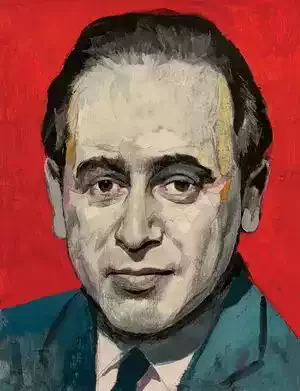
Paul Celan
There Was Earth
There was Earth in them, and
they dug.
They dug and they dug, and so
their Day went by, and their Night. And they did not praise God,
who, so they heard, wanted all this,
who, so they heard, knew of all this.
They dug and they heard nothing more;
did not grow wise, invented no Song,
thought up for themselves no Language.
They dug.
There came a Silence, there came a Storm,
There came every Ocean.
I dig, you dig, and it digs, the Worm,
and the Singing, there, says: They dig.
O someone, o none, o no one, o you:
Where did it lead to, that nowhere-leading?
O you dig and I dig, and I dig towards you,
and on our finger awakens the Ring.
512

Ella Wheeler Wilcox
Fame
If I should die, to-day,
To-morrow, maybe, the world would see
Would waken from sleep, and say,
"Why here was talent! why here was worth!
Why here was a luminous light o' the earth.
A soul as free
As the winds of the sea:
To whom was given
A dower of heaven.
And fame, and name, and glory belongs
To this dead singer of living songs.
Bring hither a wreath, for the bride of death!"
And so they would praise me, and so they would raise me
Mayhap, a column, high over the bed
Where I should be lying, all cold and dead.
But I am a living poet!
Walking abroad in the sunlight of God,
Not lying asleep, where the clay worms creep,
And the cold world will not show it,
E'en when it sees that my song should please;
But sneering says: "Avaunt, with thy lays
Do not sing them, and do not bring them
Into this rustling, bustling life.
We have no time, for a jingling rhyme,
In this scene of hurrying, worrying strife."
And so I say, there is but one way
To win me a name, and bring me fame.
And that is, to die, and be buried low,
When the world would praise me, an hour or so.
508
Rudyard Kipling
An Imperial Rescript
Now this is the tale of the Council the German Kaiser decreed,
To ease the strong of their burden, to help the weak in their need,
He sent a word to the peoples, who struggle, and pant, and sweat,
That the straw might be counted fairly and the tally of bricks be set.
The Lords of Their Hands assembled; from the East and the West they drew --
Baltimore, Lille, and Essen, Brummagem, Clyde, and Crewe.
And some were black from the furnace, and some were brown from the soil,
And some were blue from the dye-vat; but all were wearied of toil.
And the young King said: -- "I have found it, the road to the rest ye seek:
The strong shall wait for the weary, the hale shall halt for the weak;
With the even tramp of an army where no man breaks from the line,
Ye shall march to peace and plenty in the bond of brotherhood -- sign!"
The paper lay on the table, the strong heads bowed thereby,
And a wail went up from the peoples: -- "Ay, sign -- give rest, for we die!"
A hand was stretched to the goose-quill, a fist was cramped to scrawl,
When -- the laugh of a blue-eyed maiden ran clear through the council-hall.
And each one heard Her laughing as each one saw Her plain --
Saidie, Mimi, or Olga, Gretchen, or Mary Jane.
And the Spirit of Man that is in Him to the light of the vision woke;
And the men drew back from the paper, as a Yankee delegate spoke: --
"There's a girl in Jersey City who works on the telephone;
We're going to hitch our horses and dig for a house of our own,
With gas and water connections, and steam-heat through to the top;
And, W. Hohenzollern, I guess I shall work till I drop."
And an English delegate thundered: -- "The weak an' the lame be blowed!
I've a berth in the Sou'-West workshops, a home in the Wandsworth Road;
And till the 'sociation has footed my buryin' bill,
I work for the kids an' the missus. Pull up? I be damned if I will!"
And over the German benches the bearded whisper ran: --
"Lager, der girls und der dollars, dey makes or dey breaks a man.
If Schmitt haf collared der dollars, he collars der girl deremit;
But if Schmitt bust in der pizness, we collars der girl from Schmitt."
They passed one resolution: -- "Your sub-committee believe
You can lighten the curse of Adam when you've lightened the curse of Eve.
But till we are built like angels, with hammer and chisel and pen,
We will work for ourself and a woman, for ever and ever, amen."
Now this is the tale of the Council the German Kaiser held --
The day that they razored the Grindstone, the day that the Cat was belled,
The day of the Figs from Thistles, the day of the Twisted Sands,
The day that the laugh of a maiden made light of the Lords of Their Hands.
505
Rudyard Kipling
The Legends Of Evil
This is the sorrowful story
Told when the twilight fails
And the monkeys walk together
Holding their neighbours' tails: --
"Our fathers lived in the forest,
Foolish people were they,
They went down to the cornland
To teach the farmers to play.
"Our fathers frisked in the millet,
Our fathers skipped in the wheat,
Our fathers hung from the branches,
Our fathers danced in the street.
"Then came the terrible farmers,
Nothing of play they knew,
Only. . .they caught our fathers
And set them to labour too!
"Set them to work in the cornland
With ploughs and sickles and flails,
Put them in mud-walled prisons
And -- cut off their beautiful tails!
"Now, we can watch our fathers,
Sullen and bowed and old,
Stooping over the millet,
Sharing the silly mould,
"Driving a foolish furrow,
Mending a muddy yoke,
Sleeping in mud-walled prisons,
Steeping their food in smoke.
"We may not speak to our fathers,
For if the farmers knew
They would come up to the forest
And set us to labour too."
This is the horrible story
Told as the twilight fails
And the monkeys walk together
Holding their kinsmen's tails.
II
'Twas when the rain fell steady an' the Ark was pitched an' ready,
That Noah got his orders for to take the bastes below;
He dragged them all together by the horn an' hide an' feather,
An' all excipt the Donkey was agreeable to go.
Thin Noah spoke him fairly, thin talked to him sevarely,
An' thin he cursed him squarely to the glory av the Lord: --
"Divil take the ass that bred you, and the greater ass that fed you --
Divil go wid you, ye spalpeen!" an' the Donkey went aboard.
But the wind was always failin', an' 'twas most onaisy sailin',
An' the ladies in the cabin couldn't stand the stable air;
An' the bastes betwuxt the hatches, they tuk an' died in batches,
Till Noah said: -- "There's wan av us that hasn't paid his fare!"
For he heard a flusteration 'mid the bastes av all creation --
The trumpetin' av elephints an' bellowin' av whales;
An' he saw forninst the windy whin he wint to stop the shindy
The Divil wid a stable-fork bedivillin' their tails.
The Divil cursed outrageous, but Noah said umbrageous: --
"To what am I indebted for this tenant-right invasion?"
An' the Divil gave for answer: -- "Evict me if you can, sir,
For I came in wid the Donkey -- on Your Honour's invitation."
505
Rudyard Kipling
The Jacket
Through the Plagues of Egyp' we was chasin' Arabi,
Gettin' down an' shovin' in the sun;
An' you might 'ave called us dirty, an' you might ha' called us dry,
An' you might 'ave 'eard us talkin' at the gun.
But the Captain 'ad 'is jacket, an' the jacket it was new --
('Orse Gunners, listen to my song!)
An' the wettin' of the jacket is the proper thing to do,
Nor we didn't keep 'im waitin' very long.
One day they gave us orders for to shell a sand redoubt,
Loadin' down the axle-arms with case;
But the Captain knew 'is dooty, an' he took the crackers out
An' he put some proper liquor in its place.
An' the Captain saw the shrapnel, which is six-an'-thirty clear.
('Orse Gunners, listen to my song!)
"Will you draw the weight," sez 'e, "or will you draw the beer?"
An' we didn't keep 'im waitin' very long.
For the Captain, etc.
Then we trotted gentle, not to break the bloomin' glass,
Though the Arabites 'ad all their ranges marked;
But we dursn't 'ardly gallop, for the most was bottled Bass,
An' we'd dreamed of it since we was disembarked:
So we fired economic with the shells we 'ad in 'and,
('Orse Gunners, listen to my song!)
But the beggars under cover 'ad the impidence to stand,
An' we couldn't keep 'em waitin' very long.
And the Captain, etc.
So we finished 'arf the liquor (an' the Captain took champagne),
An' the Arabites was shootin' all the while;
An' we left our wounded 'appy with the empties on the plain,
An' we used the bloomin' guns for pro-jec-tile!
We limbered up an' galloped -- there were nothin' else to do --
('Orse Gunners, listen to my song!)
An' the Battery came a-boundin' like a boundin' kangaroo,
But they didn't watch us comin' very long.
As the Captain, etc.
We was goin' most extended -- we was drivin' very fine,
An' the Arabites were loosin' 'igh an' wide,
Till the Captain took the glassy with a rattlin' right incline,
An' we dropped upon their 'eads the other side.
Then we give 'em quarter -- such as 'adn't up and cut,
('Orse Gunners, listen to my song!)
An' the Captain stood a limberful of fizzy -- somethin' Brutt,
But we didn't leave it fizzing very long.
For the Captain, etc.
We might ha' been court-martialled, but it all come out all right
When they signalled us to join the main command.
There was every round expended, there was every gunner tight,
An' the Captain waved a corkscrew in 'is 'and.
But the Captain 'ad 'is jacket, etc.
503
Rudyard Kipling
How the Camel Got His Hump
The Camel's hump is an ugly lump
Which well you may see at the Zoo;
But uglier yet is the hump we get
From having too little to do.
Kiddies and grown-ups too-oo-oo,
If we haven't enough to do-oo-oo,
We get the hump--
Cameelious hump--
The hump that is black and blue!
We climb out of bed with a frouzly head,
And a snarly-yarly voice.
We shiver and scowl and we grunt and we growl
At our bath and our boots and our toys;
And there ought to be a corner for me
(And I know' there is one for you)
When we get the hump--
Cameelious hump--
The hump that is black and blue!
The cure for this ill is not to sit still,
Or frowst with a book by the fire;
But to take a large hoe and a shovel also,
And dig till you gently perspire;
And then you will find that the sun and the wind,
And the Djinn of the Garden too,
Have lifted the hump--
The horrible hump--
The hump that is black and blue!
I get it as well as you-oo-oo--
If I haven't enough to do-oo-oo!
We all get hump--
Cameelious hump--
Kiddies and grown-ups too!
503
Lord Byron
Epitaph On John Adams, Of Southwell - A Carrier, Who Died Of Drunkenness
JOHN ADAMS lies here, of the parish of Southwell,
A Carrier who carried his can to his mouth well:
He carried so much, and he carried so fast,
He could carry no more‑so was carried at last;
For, the liquor he drank, being too much for one,
He could not carry off,so
he's now carrion.
A Carrier who carried his can to his mouth well:
He carried so much, and he carried so fast,
He could carry no more‑so was carried at last;
For, the liquor he drank, being too much for one,
He could not carry off,so
he's now carrion.
503
Rudyard Kipling
The Story of Uriah
Jack Barrett went to Quetta
Because they told him to.
He left his wife at Simla
On three-fourths his monthly screw.
Jack Barrett died at Quetta
Ere the next month's pay he drew.
Jack Barrett went to Quetta.
He didn't understand
The reason of his transfer
From the pleasant mountain-land.
The season was September,
And it killed him out of hand.
Jack Barrett went to Quetta
And there gave up the ghost,
Attempting two men's duty
In that very healthy post;
And Mrs. Barrett mourned for him
Five lively months at most.
Jack Barrett's bones at Quetta
Enjoy profound repose;
But I shouldn't be astonished
If now his spirit knows
The reason of his transfer
From the Himalayan snows.
And, when the Last Great Bugle Call
Adown the Hurnai throbs,
And the last grim joke is entered
In the big black Book of Jobs.
And Quetta graveyards give again
Their victims to the air,
I shouldn't like to be the man
Who sent Jack Barrett there.
500
Rudyard Kipling
What Happened
Hurree Chunder Mookerjee, pride of Bow Bazaar,
Owner of a native press, "Barrishter-at-Lar,"
Waited on the Government with a claim to wear
Sabres by the bucketful, rifles by the pair.
Then the Indian Government winked a wicked wink,
Said to Chunder Mookerjee: "Stick to pen and ink.
They are safer implements, but, if you insist,
We will let you carry arms wheresoe'er you list."
Hurree Chunder Mookerjee sought the gunsmith and
Bought the tubes of Lancaster, Ballard, Dean, and Bland,
Bought a shiny bowie-knife, bought a town-made sword,
Jingled like a carriage-horse when he went abroad.
But the Indian Government, always keen to please,
Also gave permission to horrid men like these --
Yar Mahommed Yusufzai, down to kill or steal,
Chimbu Singh from Bikaneer, Tantia the Bhil;
Killar Khan the Marri chief, Jowar Singh the Sikh,
Nubbee Baksh Punjabi Jat, Abdul Huq Rafiq --
He was a Wahabi; last, little Boh Hla-oo
Took advantage of the Act -- took a Snider too.
They were unenlightened men, Ballard knew them not.
They procured their swords and guns chiefly on the spot;
And the lore of centuries, plus a hundred fights,
Made them slow to disregard one another's rights.
With a unanimity dear to patriot hearts
All those hairy gentlemen out of foreign parts
Said: "The good old days are back -- let us go to war!"
Swaggered down the Grand Trunk Road into Bow Bazaar,
Nubbee Baksh Punjabi Jat found a hide-bound flail;
Chimbu Singh from Bikaneer oiled his Tonk jezail;
Yar Mahommed Yusufzai spat and grinned with glee
As he ground the butcher-knife of the Khyberee.
Jowar Singh the Sikh procured sabre, quoit, and mace,
Abdul Huq, Wahabi, jerked his dagger from its place,
While amid the jungle-grass danced and grinned and jabbered
Little Boh Hla-oo and cleared his dah-blade from the scabbard.
What became of Mookerjee? Smoothly, who can say?
Yar Mahommed only grins in a nasty way,
Jowar Singh is reticent, Chimbu Singh is mute.
But the belts of all of them simply bulge with loot.
What became of Ballard's guns? Afghans black and grubby
Sell them for their silver weight to the men of Pubbi;
And the shiny bowie-knife and the town-made sword are
Hanging in a Marri camp just across the Border.
What became of Mookerjee? Ask Mahommed Yar
Prodding Siva's sacred bull down the Bow Bazaar.
Speak to placid Nubbee Baksh -- question land and sea --
Ask the Indian Congressmen -- only don't ask me!
499
Rudyard Kipling
The Four Angels
As Adam lay a-dreaming beneath the Apple Tree
The Angel of the Earth came down, and offered Earth in fee;
But Adam did not need it,
Nor the plough he would not speed it,
Singing: --"Earth and Water, Air and Fire,
What more can mortal man desire?"
(The Apple Tree's in bud)
As Adam lay a-dreaming beneath the Apple Tree
The Angel of the Waters offered all the Seas in fee;
But Adam would not take 'em,
Nor the ships he wouldn't make 'em,
Singing:--"Water, Earth and Air and Fire,
What more can mortal man desire? "
(The Apple Tree's in leaf.)
As Adam lay a-dreaming beneath the Apple Tree
The Angel of the Air he offered all the Air in fee;
But Adam did not crave it,
Nor the flight he wouldn't brave it,
Singing: --"Air and Water, Earth and Fire,
What more can mortal man desire:"
(The Apple Tree's in bloom.)
As Adam lay a-dreaming beneath the Apple Tree
The Angel of the Fire rose up and not a word said he;
But he wished a flame and made it,
And in Adam's heart he laid it,
Singing: --"Fire, Fire, burning Fire!
Stand up, and reach your heart's desire!"
(The Apple Blossom's set.)
As Adam was a-working outside of Eden-Wall,
He used the Earth, he used the Seas, he used the Air and all;
Till out of black disaster
He arose to be a master
Of Earth and Water, Air and Fire,
But never reached his heart's desire!
(The Apple Tree's cut down!)
497
Walt Whitman
Sparkles From The Wheel
WHERE the city's ceaseless crowd moves on, the live-long day,
Withdrawn, I join a group of children watching--I pause aside with
them.
By the curb, toward the edge of the flagging,
A knife-grinder works at his wheel, sharpening a great knife;
Bending over, he carefully holds it to the stone--by foot and knee,
With measur'd tread, he turns rapidly--As he presses with light but
firm hand,
Forth issue, then, in copious golden jets,
Sparkles from the wheel.
The scene, and all its belongings--how they seize and affect me!
The sad, sharp-chinn'd old man, with worn clothes, and broad
shoulder-band of leather;
Myself, effusing and fluid--a phantom curiously floating--now here
absorb'd and arrested;
The group, (an unminded point, set in a vast surrounding;)
The attentive, quiet children--the loud, proud, restive base of the
streets;
The low, hoarse purr of the whirling stone--the light-press'd blade,
Diffusing, dropping, sideways-darting, in tiny showers of gold,
Sparkles from the wheel.
500
Rudyard Kipling
Poor Honest Men
Your jar of Virginny
Will cost you a guinea,
Which you reckon too much by five shillings or ten;
But light your churchwarden
And judge it according,
When I've told you the troubles of poor honest men.
From the Capes of the Delaware,
As you are well aware,
We sail which tobacco for England-but then,
Our own British cruisers,
They watch us come through, sirs,
And they press half a score of us poor honest men!
Or if by quick sailing
(Thick weather prevailing )
We leave them behind ( as we do now and then)
We are sure of a gun from
Each frigate we run from,
Which is often destruction to poor honest men!
Broadsides the Atlantic
We tumble short-handed,
With shot-holes to plug and new canvas to bend;
And off the Azores,
Dutch, Dons and Monsieurs
Are waiting to terrify poor honest men.
Napoleon's embargo
Is laid on all cargo
Which comfort or aid to King George may intend;
And since roll, twist and leaf,
Of all comforts is chief,
They try for to steal it from poor honest men!
With no heart for fight,
We take refuge in flight,
But fire as we run, our retreat to defend;
Until our stern-chasers
Cut up her fore-braces,
And she flies off the wind from us poor honest men!
'Twix' the Forties and Fifties,
South-eastward the drift is,
And so, when we think we are making Land's End
Alas, it is Ushant
With half the King's Navy
Blockading French ports against poor honest men!
But they may not quit station
(Which is our salvation )
So swiftly we stand to the Nor'ard again;
And finding the tail of
A homeward-bound convoy,
We slip past the Scillies like poor honest men.
'Twix' the Lizard and Dover,
We hand our stuff over,
Though I may not inform how we do it, nor when.
But a light on each quarter,
Low down on the water,
Is well understanded by poor honest men.
Even then we have dangers,
From meddlesome strangers,
Who spy on our business and are not content
To take a smooth answer,
Except with a handspike . . .
And they say they are murdered by poor honest men!
To be drowned or be shot
Is our natural lot,
Why should we, moreover, be hanged in the end---
After all our great pains
For to dangle in chains
As though we were smugglers, not poor honest men?
496

Carl Sandburg
A Tall Man
The mouth of this man is a gaunt strong mouth.
The head of this man is a gaunt strong head.
The jaws of this man are bone of the Rocky Mountains, the Appalachians.
The eyes of this man are chlorine of two sobbing oceans,
Foam, salt, green, wind, the changing unknown.
The neck of this man is pith of buffalo prairie, old longing and new beckoning of corn
belt or cotton belt,
Either a proud Sequoia trunk of the wilderness
Or huddling lumber of a sawmill waiting to be a roof.
Brother mystery to man and mob mystery,
Brother cryptic to lifted cryptic hands,
He is night and abyss, he is white sky of sun, he is the head of the people.
The heart of him the red drops of the people,
The wish of him the steady gray-eagle crag-hunting flights of the people.
Humble dust of a wheel-worn road,
Slashed sod under the iron-shining plow,
These of service in him, these and many cities, many borders, many wrangles between
Alaska and the Isthmus, between the Isthmus and the Horn, and east and west of
Omaha, and east and west of Paris, Berlin, Petrograd.
The blood in his right wrist and the blood in his left wrist run with the right wrist
wisdom of the many and the left wrist wisdom of the many.
It is the many he knows, the gaunt strong hunger of the many.
495