
Work and Profession

Rudyard Kipling
Mulholland's Contract
The fear was on the cattle, for the gale was on the sea,
An' the pens broke up on the lower deck an' let the creatures free --
An' the lights went out on the lower deck, an' no one near but me.
I had been singin' to them to keep 'em quiet there,
For the lower deck is the dangerousest, requirin' constant care,
An' give to me as the strongest man, though used to drink and swear.
I see my chance was certain of bein' horned or trod,
For the lower deck was packed with steers thicker'n peas in a pod,
An' more pens broke at every roll -- so I made a Contract with God.
An' by the terms of the Contract, as I have read the same,
If He got me to port alive I would exalt His Name,
An' praise His Holy Majesty till further orders came.
He saved me from the cattle an' He saved me from the sea,
For they found me 'tween two drownded ones where the roll had landed me --
An' a four-inch crack on top of my head, as crazy as could be.
But that were done by a stanchion, an' not by a bullock at all,
An' I lay still for seven weeks convalessing of the fall,
An' readin' the shiny Scripture texts in the Seaman's Hospital.
An' I spoke to God of our Contract, an' He says to my prayer:
"I never puts on My ministers no more than they can bear.
So back you go to the cattle-boats an' preach My Gospel there.
"For human life is chancy at any kind of trade,
But most of all, as well you know, when the steers are mad-afraid;
So you go back to the cattle-boats an' preach 'em as I've said.
"They must quit drinkin' an' swearin', they mustn't knife on a blow,
They must quit gamblin' their wages, and you must preach it so;
For now those boats are more like Hell than anything else I know."
I didn't want to do it, for I knew what I should get,
An' I wanted to preach Religion, handsome an' out of the wet,
But the Word of the Lord were lain on me, an' I done what I was set.
I have been smit an' bruis]\ed, as warned would be the case,
An' turned my cheek to the smiter exactly as Scripture says;
But following that, I knocked him down an' led him up to Grace.
An' we have preaching on Sundays whenever the sea is calm,
An' I use no knife or pistol an' I never take no harm,
For the Lord abideth back of me to guide my fighting arm.
An' I sign for four-pound-ten a month and save the money clear,
An' I am in charge of the lower deck, an' I never lose a steer;
An' I believe in Almighty God an' preach His Gospel here.
The skippers say I'm crazy, but I can prove 'em wrong,
For I am in charge of the lower deck with all that doth belong --
Which they would not give to a lunatic, and the competition so strong!
492

Johann Wolfgang von Goethe
Authors
OVER the meadows, and down the stream,
And through the garden-walks straying,
He plucks the flowers that fairest seem;
His throbbing heart brooks no delaying.
His maiden then comes--oh, what ecstasy!
Thy flowers thou giv'st for one glance of her eye!
The gard'ner next door o'er the hedge sees the youth:
"I'm not such a fool as that, in good truth;
My pleasure is ever to cherish each flower,
And see that no birds my fruit e'er devour.
But when 'tis ripe, your money, good neighbour!
'Twas not for nothing I took all this labour!"
And such, methinks, are the author-tribe.
The one his pleasures around him strews,
That his friends, the public, may reap, if they choose;
The other would fain make them all subscribe.
494
Johann Wolfgang von Goethe
A Symbol
THE mason's trade Observe them well,
Resembles life, And watch them revealing
With all its strife,--How solemn feeling
Is like the stir made And wonderment swell
By man on earth's face. The hearts of the brave.
Though weal and woe The voice of the blest,
The future may hide, And of spirits on high
Unterrified Seems loudly to cry:
We onward go "To do what is best,
In ne'er changing race. Unceasing endeavour!
A veil of dread "In silence eterne
Hangs heavier still. Here chaplets are twin'd,
Deep slumbers fill That each noble mind
The stars over-head, Its guerdon may earn.--
And the foot-trodden grave. Then hope ye for ever!"
493
Rudyard Kipling
Cells
I've a head like a concertina: I've a tongue like a button-stick:
I've a mouth like an old potato, and I'm more than a little sick,
But I've had my fun o' the Corp'ral's Guard: I've made the cinders fly,
And I'm here in the Clink for a thundering drink
and blacking the Corporal's eye.
With a second-hand overcoat under my head,
And a beautiful view of the yard,
O it's pack-drill for me and a fortnight's C.B.
For "drunk and resisting the Guard!"
Mad drunk and resisting the Guard --
'Strewth, but I socked it them hard!
So it's pack-drill for me and a fortnight's C.B.
For "drunk and resisting the Guard."
I started o' canteen porter, I finished o' canteen beer,
But a dose o' gin that a mate slipped in, it was that that brought me here.
'Twas that and an extry double Guard that rubbed my nose in the dirt;
But I fell away with the Corp'ral's stock
and the best of the Corp'ral's shirt.
I left my cap in a public-house, my boots in the public road,
And Lord knows where, and I don't care, my belt and my tunic goed;
They'll stop my pay, they'll cut away the stripes I used to wear,
But I left my mark on the Corp'ral's face, and I think he'll keep it there!
My wife she cries on the barrack-gate, my kid in the barrack-yard,
It ain't that I mind the Ord'ly room -- it's that that cuts so hard.
I'll take my oath before them both that I will sure abstain,
But as soon as I'm in with a mate and gin, I know I'll do it again!
With a second-hand overcoat under my head,
And a beautiful view of the yard,
Yes, it's pack-drill for me and a fortnight's C.B.
For "drunk and resisting the Guard!"
Mad drunk and resisting the Guard --
'Strewth, but I socked it them hard!
So it's pack-drill for me and a fortnight's C.B.
For "drunk and resisting the Guard."
494

Robert Frost
Out, out--
The buzz-saw snarled and rattled in the yard
And made dust and dropped stove-length sticks of wood,
Sweet-scented stuff when the breeze drew across it.
And from there those that lifted eyes could count
Five mountain ranges one behind the other
Under the sunset far into Vermont.
And the saw snarled and rattled, snarled and rattled,
As it ran light, or had to bear a load.
And nothing happened: day was all but done.
Call it a day, I wish they might have said
To please the boy by giving him the half hour
That a boy counts so much when saved from work.
His sister stood beside them in her apron
To tell them "Supper." At the word, the saw,
As if to prove saws knew what supper meant,
Leaped out at the boy's hand, or seemed to leap--
He must have given the hand. However it was,
Neither refused the meeting. But the hand!
The boy's first outcry was a rueful laugh,
As he swung toward them holding up the hand
Half in appeal, but half as if to keep
The life from spilling. Then the boy saw all--
Since he was old enough to know, big boy
Doing a man's work, though a child at heart--
He saw all spoiled. "Don't let him cut my hand off--
The doctor, when he comes. Don't let him, sister!"
So. But the hand was gone already.
The doctor put him in the dark of ether.
He lay and puffed his lips out with his breath.
And then--the watcher at his pulse took fright.
No one believed. They listened at his heart.
Little--less--nothing!--and that ended it.
No more to build on there. And they, since they
Were not the one dead, turned to their affairs.
489
Rudyard Kipling
The Merchantmen
King Solomon drew merchantmen,
Because of his desire
For peacocks, apes, and ivory,
From Tarshish unto Tyre:
With cedars out of Lebanon
Which Hiram rafted down,
But we be only sailormen
That use in London Town.
Coastwise -- cross-seas -- round the world and back again --
Where the flaw shall head us or the full Trade suits --
Plain-sail -- storm-sail -- lay your board and tack again --
And that's the way we'll pay Paddy Doyle for his boots!
We bring no store of ingots,
Of spice or precious stones,
But that we have we gathered
With sweat and aching bones:
In flame beneath the tropics,
In frost upon the floe,
And jeopardy of every wind
That does between them go.
And some we got by purchase,
And some we had by trade,
And some we found by courtesy
Of pike and carronade --
At midnight, 'mid-sea meetings,
For charity to keep,
And light the rolling homeward-bound
That rode a foot too deep.
By sport of bitter weather
We're walty, strained, and scarred
From the kentledge on the kelson
To the slings upon the yard.
Six oceans had their will of us
To carry all away --
Our galley's in the Baltic,
And our boom's in Mossel Bay!
We've floundered off the Texel,
Awash with sodden deals,
We've slipped from Valparaiso
With the Norther at our heels:
We've ratched beyond the Crossets
That tusk the Southern Pole,
And dipped our gunnels under
To the dread Agulhas roll.
Beyond all outer charting
We sailed where none have sailed,
And saw the land-lights burning
On islands none have hailed;
Our hair stood up for wonder,
But, when the night was done,
There danced the deep to windward
Blue-empty 'neath the sun!
Strange consorts rode beside us
And brought us evil luck;
The witch-fire climbed our channels,
And flared on vane and truck:
Till, through the red tornado,
That lashed us nigh to blind,
We saw The Dutchman plunging,
Full canvas, head to wind!
We've heard the Midnight Leadsman
That calls the black deep down --
Ay, thrice we've heard The Swimmer,
The Thing that may not drown.
On frozen bunt and gasket
The sleet-cloud drave her hosts,
When, manned by more than signed with us,
We passed the Isle o' Ghosts!
And north, amid the hummocks,
A biscuit-toss below,
We met the silent shallop
That frighted whalers know;
For, down a cruel ice-lane,
That opened as he sped,
We saw dead Henry Hudson
Steer, North by West, his dead.
So dealt God's waters with us
Beneath the roaring skies,
So walked His signs and marvels
All naked to our eyes:
But we were heading homeward
With trade to lose or make --
Good Lord, they slipped behind us
In the tailing of our wake!
Let go, let go the anchors;
Now shamed at heart are we
To bring so poor a cargo home
That had for gift the sea!
Let go the great bow-anchors --
Ah, fools were we and blind --
The worst we stored with utter toil,
The best we left behind!
Coastwise -- cross-seas -- round the world and back again,
Whither flaw shall fail us or the Trades drive down:
Plain-sail -- storm-sail -- lay your board and tack again --
And all to bring a cargo up to London Town!
491
Rudyard Kipling
The Master-Cook
With us there rade a Maister-Cook that came
From the Rochelle which is neere Angouleme.
Littel hee was, but rounder than a topp,
And his small berd hadde dipped in manie a soppe,
His honde was smoother than beseemeth mann's,
And his discoorse was all of marzipans,
Of tripes of Caen, or Burdeux snailes swote,
And Seinte Menhoulde wher cooken pigges-foote.
To Thoulouse and to Bress and Carcasson
For pyes and fowles and chesnottes hadde hee wonne,
Of hammes of Thuringie colde hee prate,
And well hee knew what Princes hadde on plate
At Christmas-tide, from Artois to Gascogne.
Lordinges, quod hee, manne liveth nat alone
By bred, but meates rost and seethed, and broth,
And purchasable deinties, on mine othe.
Honey and hote gingere well liketh hee,
And whales-flesch mortred with spicerie.
For, lat be all how man denie or carpe,"
Him thries a daie his honger maketh sharpe,
And setteth him at boorde with hawkes eyne,
Snuffing what dish is set beforne to deyne,
Nor, till with meate he all--to fill to brim,
None other matter nowher mooveth him.
Lat holie Seintes sterve as bookes boast,
Most mannes soule is in his bellie most.
For, as man thinketh in his hearte is hee,
But, as hee eateth so his thought shall bee.
And Holie Fader's self (with reveraunce)
Oweth to Cooke his port and his presaunce.
Wherebye it cometh past disputison
Cookes over alle men have dominion,
Which follow them as schippe her gouvernail.
Enoff of wordes-beginneth heere my tale:--
484

Ezra Pound
Alf’s Seventh Bit
Did I 'ear it 'arf in a doze:
The Co-ops was a goin' somewhere,
Did I 'ear it while pickin' 'ops;
How they better start takin' care,
That the papers were gettin' together
And the larger stores were likewise
Considering something that would, as you
Might say, be a surprise
To the Co-ops, a echo or somethin'?
They tell me that branded goods
Don't get a discount like Mr. Selfridge
Of 25 per cent, on their ads., and the woods
Is where the Co-ops are goin' to,
And that Oxford Street site
Is not suited to co-operation
A sort of'Arab's dream in the night.
''We have plenty, so let it be.'
The example of these consumers in co-operation
Might cause thought and be therefore
A peril to Selfridge and the nation.
484
Robert Frost
The Death of the Hired Man
Mary sat musing on the lamp-flame at the table
Waiting for Warren. When she heard his step,
She ran on tip-toe down the darkened passage
To meet him in the doorway with the news
And put him on his guard. "Silas is back."
She pushed him outward with her through the door
And shut it after her. "Be kind," she said.
She took the market things from Warren's arms
And set them on the porch, then drew him down
To sit beside her on the wooden steps.
"When was I ever anything but kind to him?
But I'll not have the fellow back," he said.
"I told him so last haying, didn't I?
'If he left then,' I said, 'that ended it.'
What good is he? Who else will harbour him
At his age for the little he can do?
What help he is there's no depending on.
Off he goes always when I need him most.
'He thinks he ought to earn a little pay,
Enough at least to buy tobacco with,
So he won't have to beg and be beholden.'
'All right,' I say, 'I can't afford to pay
Any fixed wages, though I wish I could.'
'Someone else can.' 'Then someone else will have to.'
I shouldn't mind his bettering himself
If that was what it was. You can be certain,
When he begins like that, there's someone at him
Trying to coax him off with pocket-money,--
In haying time, when any help is scarce.
In winter he comes back to us. I'm done."
"Sh! not so loud: he'll hear you," Mary said.
"I want him to: he'll have to soon or late."
"He's worn out. He's asleep beside the stove.
When I came up from Rowe's I found him here,
Huddled against the barn-door fast asleep,
A miserable sight, and frightening, too--
You needn't smile--I didn't recognise him--
I wasn't looking for him--and he's changed.
Wait till you see."
"Where did you say he'd been?"
"He didn't say. I dragged him to the house,
And gave him tea and tried to make him smoke.
I tried to make him talk about his travels.
Nothing would do: he just kept nodding off."
"What did he say? Did he say anything?"
"But little."
"Anything? Mary, confess
He said he'd come to ditch the meadow for me."
"Warren!"
"But did he? I just want to know."
"Of course he did. What would you have him say?
Surely you wouldn't grudge the poor old man
Some humble way to save his self-respect.
He added, if you really care to know,
He meant to clear the upper pasture, too.
That sounds like something you have heard before?
Warren, I wish you could have heard the way
He jumbled everything. I stopped to look
Two or three times--he made me feel so queer--
To see if he was talking in his sleep.
He ran on Harold Wilson--you remember--
The boy you had in haying four years since.
He's finished school, and teaching in his college.
Silas declares you'll have to get him back.
He says they two will make a team for work:
Between them they will lay this farm as smooth!
The way he mixed that in with other things.
He thinks young Wilson a likely lad, though daft
On education--you know how they fought
All through July under the blazing sun,
Silas up on the cart to build the load,
Harold along beside to pitch it on."
"Yes, I took care to keep well out of earshot."
"Well, those days trouble Silas like a dream.
You wouldn't think they would. How some things linger!
Harold's young college boy's assurance piqued him.
After so many years he still keeps finding
Good arguments he sees he might have used.
I sympathise. I know just how it feels
To think of the right thing to say too late.
Harold's associated in his mind with Latin.
He asked me what I thought of Harold's saying
He studied Latin like the violin
Because he liked it--that an argument!
He said he couldn't make the boy believe
He could find water with a hazel prong--
Which showed how much good school had ever done him.
He wanted to go over that. But most of all
He thinks if he could have another chance
To teach him how to build a load of hay----"
"I know, that's Silas' one accomplishment.
He bundles every forkful in its place,
And tags and numbers it for future reference,
So he can find and easily dislodge it
In the unloading. Silas does that well.
He takes it out in bunches like big birds' nests.
You never see him standing on the hay
He's trying to lift, straining to lift himself."
"He thinks if he could teach him that, he'd be
Some good perhaps to someone in the world.
He hates to see a boy the fool of books.
Poor Silas, so concerned for other folk,
And nothing to look backward to with pride,
And nothing to look forward to with hope,
So now and never any different."
Part of a moon was falling down the west,
Dragging the whole sky with it to the hills.
Its light poured softly in her lap. She saw
And spread her apron to it. She put out her hand
Among the harp-like morning-glory strings,
Taut with the dew from garden bed to eaves,
As if she played unheard the tenderness
That wrought on him beside her in the night.
"Warren," she said, "he has come home to die:
You needn't be afraid he'll leave you this time."
"Home," he mocked gently.
"Yes, what else but home?
It all depends on what you mean by home.
Of course he's nothing to us, any more
Than was the hound that came a stranger to us
Out of the woods, worn out upon the trail."
"Home is the place where, when you have to go there,
They have to take you in."
"I should have called it
Something you somehow haven't to deserve."
Warren leaned out and took a step or two,
Picked up a little stick, and brought it back
And broke it in his hand and tossed it by.
"Silas has better claim on us you think
Than on his brother? Thirteen little miles
As the road winds would bring him to his door.
Silas has walked that far no doubt to-day.
Why didn't he go there? His brother's rich,
A somebody--director in the bank."
"He never told us that."
"We know it though."
"I think his brother ought to help, of course.
I'll see to that if there is need. He ought of right
To take him in, and might be willing to--
He may be better than appearances.
But have some pity on Silas. Do you think
If he'd had any pride in claiming kin
Or anything he looked for from his brother,
He'd keep so still about him all this time?"
"I wonder what's between them."
"I can tell you.
Silas is what he is--we wouldn't mind him--
But just the kind that kinsfolk can't abide.
He never did a thing so very bad.
He don't know why he isn't quite as good
As anyone. He won't be made ashamed
To please his brother, worthless though he is."
"I can't think Si ever hurt anyone."
"No, but he hurt my heart the way he lay
And rolled his old head on that sharp-edged chair-back.
He wouldn't let me put him on the lounge.
You must go in and see what you can do.
I made the bed up for him there to-night.
You'll be surprised at him--how much he's broken.
His working days are done; I'm sure of it."
"I'd not be in a hurry to say that."
"I haven't been. Go, look, see for yourself.
But, Warren, please remember how it is:
He's come to help you ditch the meadow.
He has a plan. You mustn't laugh at him.
He may not speak of it, and then he may.
I'll sit and see if that small sailing cloud
Will hit or miss the moon."
It hit the moon.
Then there were three there, making a dim row,
The moon, the little silver cloud, and she.
Warren returned--too soon, it seemed to her,
Slipped to her side, caught up her hand and waited.
"Warren," she questioned.
"Dead," was all he answered.
486
Rudyard Kipling
The Lowestoft Boat
East Coast Patrols of the War, -
In Lowestoft a boat was laid,
Mark well what I do say!
And she was built for the herring-trade,
But she has gone a-rovin', a-rovin', a-rovin',
The Lord knows where!
They gave her Government coal to burn,
And a Q.F. gun at bow and stern,
And sent her out a-rovin', etc.
Her skipper was mate of a bucko ship
Which always killed one man per trip,
So he is used to rovin', etc.
Her mate was skipper of a chapel in Wales,
And so he fights in topper and tails--
Religi-ous tho' rovin', etc.
Her engineer is fifty-eight,'
So he's prepared to meet his fate,
Which ain't unlikely rovin', etc.
Her leading-stoker's seventeen,
So he don't know what the Judgments mean,
Unless he cops 'em rovin', etc.
Her cook was chef in the Lost Dogs' Home,
Mark well what I do say!
And I'm sorry for Fritz when they all come
A-rovin', a-rovin', a-roarin' and a-rovin',
Round the North Sea rovin',
The Lord knows where!
481
Robert Frost
After Apple-Picking
My long two-pointed ladder's sticking through a tree
Toward heaven still,
And there's a barrel that I didn't fill
Beside it, and there may be two or three
Apples I didn't pick upon some bough.
But I am done with apple-picking now.
Essence of winter sleep is on the night,
The scent of apples: I am drowsing off.
I cannot rub the strangeness from my sight
I got from looking through a pane of glass
I skimmed this morning from the drinking trough
And held against the world of hoary grass.
It melted, and I let it fall and break.
But I was well
Upon my way to sleep before it fell,
And I could tell
What form my dreaming was about to take.
Magnified apples appear and disappear,
Stem end and blossom end,
And every fleck of russet showing clear.
My instep arch not only keeps the ache,
It keeps the pressure of a ladder-round.
I feel the ladder sway as the boughs bend.
And I keep hearing from the cellar bin
The rumbling sound
Of load on load of apples coming in.
For I have had too much
Of apple-picking: I am overtired
Of the great harvest I myself desired.
There were ten thousand thousand fruit to touch,
Cherish in hand, lift down, and not let fall.
For all
That struck the earth,
No matter if not bruised or spiked with stubble,
Went surely to the cider-apple heap
As of no worth.
One can see what will trouble
This sleep of mine, whatever sleep it is.
Were he not gone,
The woodchuck could say whether it's like his
Long sleep, as I describe its coming on,
Or just some human sleep.
477

Walt Whitman
The Ox tamer
IN a faraway northern county, in the placid, pastoral region,
Lives my farmer friend, the theme of my recitative, a famous Tamer of
Oxen:
There they bring him the three-year-olds and the four-year-olds, to
break them;
He will take the wildest steer in the world, and break him and tame
him;
He will go, fearless, without any whip, where the young bullock
chafes up and down the yard;
The bullock's head tosses restless high in the air, with raging eyes;
Yet, see you! how soon his rage subsides--how soon this Tamer tames
him:
See you! on the farms hereabout, a hundred oxen, young and old--and
he is the man who has tamed them;
They all know him--all are affectionate to him;
See you! some are such beautiful animals--so lofty looking!
Some are buff color'd--some mottled--one has a white line running
along his back--some are brindled,
Some have wide flaring horns (a good sign)--See you! the bright
hides;
See, the two with stars on their foreheads--See, the round bodies and
broad backs;
See, how straight and square they stand on their legs--See, what
fine, sagacious eyes;
See, how they watch their Tamer--they wish him near them--how they
turn to look after him!
What yearning expression! how uneasy they are when he moves away from
them:
--Now I marvel what it can be he appears to them, (books, politics,
poems depart--all else departs;)
I confess I envy only his fascination--my silent, illiterate friend,
Whom a hundred oxen love, there in his life on farms,
In the northern county far, in the placid, pastoral region.
477

Ella Wheeler Wilcox
What Had He Done?
I saw the farmer, when the day was done,
And the proud sun had sought his crimson bed,
And the mild stars came forward one by one-
I saw the sturdy farmer, and I said:
'What have you done to-day,
O farmer! say?'
'Oh! I have sown the wheat in yonder field,
And pruned my orchard to increase its yield,
And turned the furrow for a patch of corn:
This have I done, with other things, since morn.'
I saw the blacksmith in his smithy-door,
When day had vanished and the west grew red,
And all the busy noise and strife were o'er-
I saw the kingly blacksmith, and I said:
'What have you done to-day,
O blacksmith! say?
'Oh! I have made two plough-shares all complete,
And nailed the shoes on many horses' feet;
And-O my friend! I cannot tell you half,'
The man of muscle answered, with a laugh.
I saw the miller, when the day had gone,
And all the sunlight from the hills had fled,
And tender shadows crept across the lawn-
I saw the trusty miller, and I said:
'What have you done to-day,
O miller gray?'
'Oh! I have watched my mill from morn to night,
And never saw yon flour so snowy white.
And many are the mouths to-day I've fed,
I ween,' the merry miller laughed and said.
I saw another, when the night grew nigh,
And turned each daily toiler from his task,
When gold and crimson banners decked the sky-
I saw another, and I paused to ask:
'What have you done to-day,
Rumseller, say?'
But the rumseller turned with dropping head,
And not a single word in answer said.
What had he done? His work he knew full well
Was plunging human souls in deepest hell.
Alas! rumseller, on that awful day,
When death shall call you, and your race is run,
How can you answer? What can you hope to say?
When God shall ask you, 'What have you done?'
How can you meet the eye
Of the Most High?
When night approaches and the day grows late,
Think you to find the way to heaven's gate?
Think you to dwell with souls of righteous men?
Think you to enter in? If not, what then?
479
Ella Wheeler Wilcox
The Stevedores
We are the army stevedores, lusty and virile and strong,
We are given the hardest work of the war, and the hours are long.
We handle the heavy boxes, and shovel the dirty coal;
While soldiers and sailors work in the light, we burrow below like a mole.
But somebody has to do this work, or the soldiers could not fight!
And whatever work is given a man, is good if he does it right.
We are the army stevedores, and we are volunteers.
We did not wait for the draft to come, to put aside our fears;
We flung them away on the winds of fate, at the very first call of our land,
And each of us offered a willing heart and the strength of a brawny hand.
We are the army stevedores, and work as we must and may,
The cross of honour will never be ours to proudly wear away.
But the men at the Front could never be there,
And the battles could not be won,
If the stevedores stopped in their dull routine
And left their work undone.
Somebody has to do this work, be glad that it isn't you!
We are the army stevedores-give us our due!
474
Rudyard Kipling
L'envoi To Life's Handicap
My new-cut ashlar takes the light
Where crimson-blank the windows flare;
By my own work, before the night,
Great Overseer I make my prayer.
If there be good in that I wrought,
Thy hand compelled it, Master, Thine;
Where I have failed to meet Thy thought
I know, through Thee, the blame is mine.
One instant's toil to Thee denied
Stands all Eternity's offence,
Of that I did with Thee to guide
To Thee, through Thee, be excellence.
Who, lest all thought of Eden fade,
Bring'st Eden to the craftsman's brain,
Godlike to muse o'er his own trade
And Manlike stand with God again.
The depth and dream of my desire,
The bitter paths wherein I stray,
Thou knowest Who hast made the Fire,
Thou knowest Who hast made the Clay!
One stone the more swings to her place
In that dread Temple of Thy Worth --
It is enough that through Thy grace
I saw naught common on Thy earth.
Take not that vision from my ken;
Oh whatsoe'er may spoil or speed,
Help me to need no aid from men
That I may help such men as need!
470
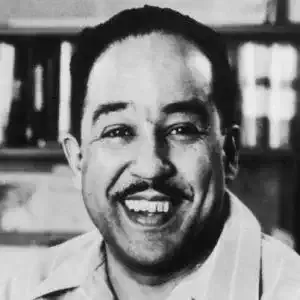
Langston Hughes
Brass Spittoons
Clean the spittoons, boy.
Detroit,
Chicago,
Atlantic City,
Palm Beach.
Clean the spittoons.
The steam in hotel kitchens,
And the smoke in hotel lobbies,
And the slime in hotel spittoons:
Part of my life.
Hey, boy!
A nickel,
A dime,
A dollar,
Two dollars a day.
Hey, boy!
A nickel,
A dime,
A dollar,
Two dollars
Buy shoes for the baby.
House rent to pay.
Gin on Saturday,
Church on Sunday.
My God!
Babies and gin and church
And women and Sunday
All mixed with dimes and
Dollars and clean spittoons
And house rent to pay.
Hey, boy!
A bright bowl of brass is beautiful to the Lord.
Bright polished brass like the cymbals
Of King David’s dancers,
Like the wine cups of Solomon.
Hey, boy!
A clean spittoon on the altar of the Lord.
A clean bright spittoon all newly polished—
At least I can offer that.
Com’mere, boy!
462
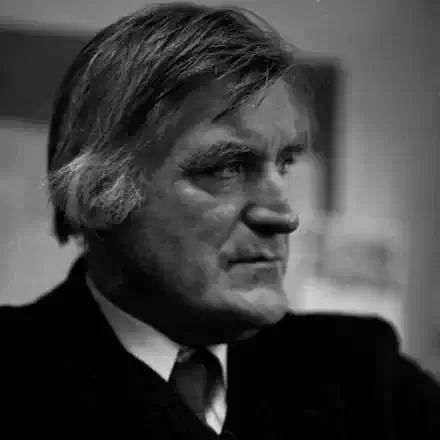
Ted Hughes
Tractor
The tractor stands frozen - an agony
To think of. All night
Snow packed its open entrails. Now a head-pincering gale,
A spill of molten ice, smoking snow,
Pours into its steel.
At white heat of numbness it stands
In the aimed hosing of ground-level fieriness.
It defied flesh and won't start.
Hands are like wounds already
Inside armour gloves, and feet are unbelievable
As if the toe-nails were all just torn off.
I stare at it in hatred. Beyond it
The copse hisses - capitulates miserably
In the fleeing, failing light. Starlings,
A dirtier sleetier snow, blow smokily, unendingly, over
Towards plantations Eastward.
All the time the tractor is sinking
Through the degrees, deepening
Into its hell of ice.
The starting lever
Cracks its action, like a snapping knuckle.
The battery is alive - but like a lamb
Trying to nudge its solid-frozen mother -
While the seat claims my buttock-bones, bites
With the space-cold of earth, which it has joined
In one solid lump.
I squirt commercial sure-fire
Down the black throat - it just coughs.
It ridicules me - a trap of iron stupidity
I've stepped into. I drive the battery
As if I were hammering and hammering
The frozen arrangement to pieces with a hammer
And it jabbers laughing pain-crying mockingly
Into happy life.
And stands
Shuddering itself full of heat, seeming to enlarge slowly
Like a demon demonstrating
A more-than-usually-complete materialization -
Suddenly it jerks from its solidarity
With the concrete, and lurches towards a stanchion
Bursting with superhuman well-being and abandon
Shouting Where Where?
Worse iron is waiting. Power-lift kneels
Levers awake imprisoned deadweight,
Shackle-pins bedded in cast-iron cow-shit.
The blind and vibrating condemned obedience
Of iron to the cruelty of iron,
Wheels screeched out of their night-locks -
Fingers
Among the tormented
Tonnage and burning of iron
Eyes
Weeping in the wind of chloroform
And the tractor, streaming with sweat,
Raging and trembling and rejoicing.
461
Ezra Pound
Ezra on the Strike
Wal, Thanksgivin' do be comin' round.
With the price of turkeys on the bound,
And coal, by gum! Thet were just found,
Is surely gettin' cheaper.
The winds will soon begin to howl,
And winter, in its yearly growl,
Across the medders begin to prowl,
And Jack Frost gettin' deeper.
By shucks! It seems to me,
That you I orter be
Thankful, that our Ted could see
A way to operate it.
I sez to Mandy, sure, sez I,
I'll bet thet air patch o' rye
Thet he'll squash 'em by-and-by,
And he did, by cricket!
No use talkin', he's the man -
One of the best thet ever ran,
Fer didn't I turn Republican
One o' the fust?
I 'lowed as how he'd beat the rest,
But old Si Perkins, he hemmed and guessed,
And sed as how it wuzn't best
To meddle with the trust.
461
Rudyard Kipling
Angutivaun Taina
Our gloves are stiff with the frozen blood,
Our furs with the drifted snow,
As we come in with the seal--the seal!
In from the edge of the floe.
Au jana! Aua! Oha! Haq!
And the yelping dog-teams go;
And the long whips crack, and the men come back,
Back from the edge of the floe!
We tracked our seal to his secret place,
We heard him scratch below,
We made our mark, and we watched beside,
Out on the edge of the floe.
We raised our lance when he rose to breathe,
We drove it downward--so!
And we played him thus, and we killed him thus,
Out on the edge of the floe.
Our gloves are glued with the frozen blood,
Our eyes with the drifting snow;
But we come back to our wives again,
Back from the edge of the floe!
Au jana! Aua! Oha! Haq!
And the loaded dog-teams go;
And the wives ran hear their men come back,
Back from the edge of the floe!
457
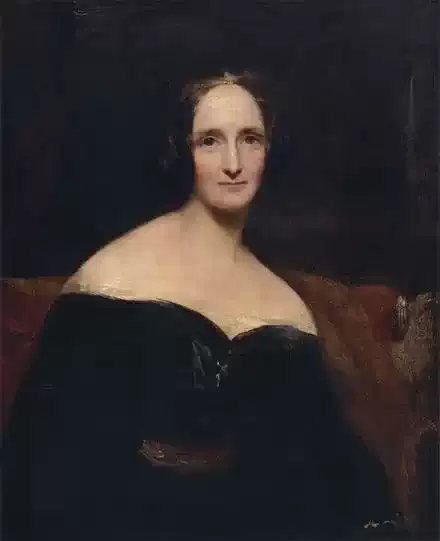
Percy Bysshe Shelley
To The Men Of England
Men of England, wherefore plough
For the lords who lay ye low?
Wherefore weave with toil and care
The rich robes your tyrants wear?
Wherefore feed and clothe and save,
From the cradle to the grave,
Those ungrateful drones who would
Drain your sweat -- nay, drink your blood?
Wherefore, Bees of England, forge
Many a weapon, chain, and scourge,
That these stingless drones may spoil
The forced produce of your toil?
Have ye leisure, comfort, calm,
Shelter, food, love's gentle balm?
Or what is it ye buy so dear
With your pain and with your fear?
The seed ye sow another reaps;
The wealth ye find another keeps;
The robes ye weave another wears;
The arms ye forge another bears.
Sow seed, -- but let no tyrant reap;
Find wealth, -- let no imposter heap;
Weave robes, -- let not the idle wear;
Forge arms, in your defence to bear.
Shrink to your cellars, holes, and cells;
In halls ye deck another dwells.
Why shake the chains ye wrought? Ye see
The steel ye tempered glance on ye.
With plough and spade and hoe and loom,
Trace your grave, and build your tomb,
And weave your winding-sheet, till fair
England be your sepulchre!
449
Ezra Pound
Ole Kate
When I was only a youngster,
Sing: toodle doodlede ootl
Ole Kate would git her 'arf a pint
And wouldn't' giv' a damn hoot.
'Them stairs! them stairs, them gordam stairs
Will be the death of me/
I never heerd her say nothin'
About the priv'lege of liberty.
She'd come a sweatin' up with the coals
An a-sloshin' round with 'er mop,
Startin' in about 6 a.m.
And didn't seem never to stop.
She died on the job they tells me,
Fell plump into her pail.
Never got properly tanked as I saw,
And never got took to jail,
Just went on a sloshin'
And totin' up scuttles of coal,
And kissin9 her cat fer diversion,
Cod rest her sloshin’ soul.
‘Gimme a kissy-cuddle'
She'd say to her tibby-cat,
But she never made no mention
Of this here proletariat.
445
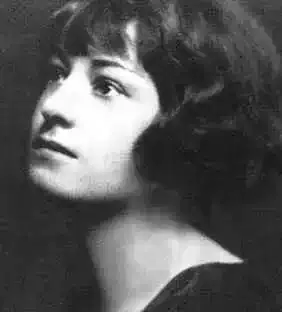
Dorothy Parker
Coda
There's little in taking or giving,
There's little in water or wine;
This living, this living, this living
Was never a project of mine.
Oh, hard is the struggle, and sparse is
The gain of the one at the top,
For art is a form of catharsis,
And love is a permanent flop,
And work is the province of cattle,
And rest's for a clam in a shell,
So I'm thinking of throwing the battle
Would
you kindly direct me to hell?
446
Rudyard Kipling
Parade-Song of the Camp-Animals
Elephants of the Gun-Teams
We lent to Alexander the strength of Hercules,
The wisdom of our foreheads, the cunning of our knees.
We bowed our necks to service--they ne'er were loosed again,--
Make way there, way for the ten-foot teams
Of the Forty-Pounder train!
Gun-Bullocks
Those heroes in their harnesses avoid a cannon-ball,
And what they know of powder upsets them one and all;
Then we come into action and tug the guns again,--
Make way there, way for the twenty yoke
Of the Forty-Pounder train!
Cavalry Horses
By the brand on my withers, the finest of tunes
Is played by the Lancers, Hussars, and Dragoons,
And it's sweeter than "Stables" or "Water" to me,
The Cavalry Canter of "Bonnie Dundee!"
Then feed us and break us and handle and groom,
And give us good riders and plenty of room,
And launch us in column of squadron and see
The Way of the War-horse to "Bonnie Dundee!"
Screw-Gun Mules
As me and my companions were scrambling up a hill,
The path was lost in rolling stones, but we went forward still;
For we can wriggle and climb, my lads, an turn up everywhere
And it's our delight on a mountain height, with a leg or two to spare!
Good luck to every sergeant, then, that lets us pick our road:
Bad luck to all the driver-men that cannot pack a load!
For we can wriggle and climb, my lads, and turn up everywhere,
And it's our delight on a mountain height, with a leg or two to spare!
Commissariat Camels
We haven't a camelty tune of our own
To help us trollop along,
But every neck is a hair-trombone
(Rtt-ta-ta-ta! is a hair-trombone! )
And this is our marching-song:
Can't! Don't! Shan't! Won't!
Pass it along the line!
Somebody's pack has slid from his back,
'Wish it were only mine!
Somebody's load has tipped off in the road--
Cheer for a halt and a row!
Urrr! Yarrh! Grr! Arrh!
Somebody's catching it now!
All The Beasts Together
Children of the Camp are we,
Serving each in his degree;
Children of the yoke and goad,
Pack and harness, pad and load.
See our line across the plain,
Like a heel-rope bent again,
Reaching, writhing, rolling far,
Sweeping all away to war!
While the men that walk beside,
Dusty, silent, heavy-eyed,
Cannot tell why we or they
March and suffer day by day.
Children of the Camp are we,
Serving each in his degree;
Children of the yoke and goad,
Pack and harness, pad and load!
444
Ella Wheeler Wilcox
Robin's Mistake
What do you think Red Robin
Found by a mow of hay?
Why, a flask brimful of liquor,
That the mowers brought that day
To slake their thirst in the hayfield.
And Robin he shook his head:
'Now, I wonder what they call it,
And how it tastes?' he said.
'I have seen the mowers drink it-
Why isn't it good for me?
So I'll just draw out the stopper
And get at the stuff, and see!'
But alas! for the curious Robin,
One draught, and he burned his throat
From his bill to his poor crop's lining,
And he could not utter a note.
And his head grew light and dizzy,
And he staggered left and right,
Tipped over the flask of brandy,
And spilled it, every mite.
But after awhile he sobered,
And quietly flew away,
And he never has tasted liquor,
Or touched it, since that day.
But I heard him say to his kindred.
In the course of a friendly chat,
'These men think they are above us,
Yet they drink such stuff as that!
Oh, the poor degraded creatures!
I am glad I am only a bird!'
Then he flew up over the meadow,
And that was all I heard.
440