
Work and Profession
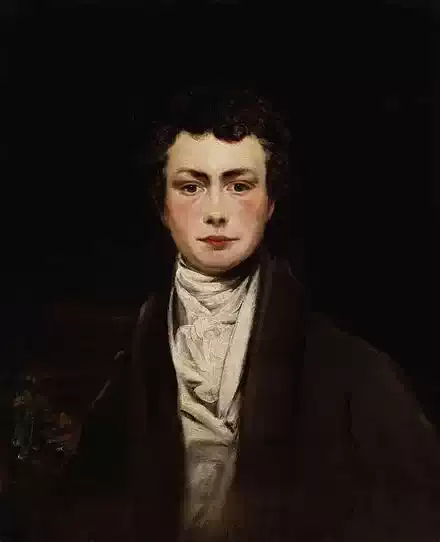
Thomas Moore
Enigma
Come riddle-me-ree, come riddle-me-ree,
And tell me, what my name may be.
I am nearly one hundred and thirty years old,
And therefore no chicken, as you may suppose; --
Though a dwarf in my youth (as my nurses have told),
I have, ev'ry year since, been outgrowing my clothes;
Till, at last, such a corpulent giant I stand,
That if folks were to furnish me now with a suit,
It would take ev'ry morsel of scrip in the land
But to measure my bulk from the head to the foot.
Hence, they who maintain me, grown sick of my stature,
To cover me nothing but rags will supply;
And the doctors declare that, in due course of nature,
About the year in rags I shall die.
Meanwhile I stalk hungry and bloated around,
An object of int'rest, most painful, to all;
In the warehouse, the cottage, the palace I'm found,
Holding citizen, peasant, and king in my thrall.
Then riddle-me-ree, oh riddle-me-ree,
Come, tell me what my name may be.
When the lord of the counting-house bends o'er his book,
Bright pictures of profit delighting to draw,
O'er his shoulders with large cipher eye-balls I look,
And down drops the pen from his paralyz'd paw!
When the Premier lies dreaming of dear Waterloo,
And expects through another to caper and prank it,
You'd laugh did you see, when I bellow out "Boo!"
How he hides his brave Waterloo head in the blanket.
When mighty Belshazzar brims high in the hall
His cup, full of gout, to Gaul's overthrow,
Lo, "Eight Hundred Millions" I write on the wall,
And the cup falls to earth and -- the gout to his toe!
But the joy of my heart is when largely I cram
My maw with the fruits of the Squirearchy's acres,
And, knowing who made me the thing that I am,
Like the monster of Frankenstein, worry my makers.
Then riddle-me-ree, come, riddle-me-ree,
And tell, if thou knows't, who I may be.
272

Henry Lawson
The City Bushman
It was pleasant up the country, City Bushman, where you went,
For you sought the greener patches and you travelled like a gent;
And you curse the trams and buses and the turmoil and the push,
Though you know the squalid city needn't keep you from the bush;
But we lately heard you singing of the `plains where shade is not',
And you mentioned it was dusty -- `all was dry and all was hot'.
True, the bush `hath moods and changes' -- and the bushman hath 'em, too,
For he's not a poet's dummy -- he's a man, the same as you;
But his back is growing rounder -- slaving for the absentee --
And his toiling wife is thinner than a country wife should be.
For we noticed that the faces of the folks we chanced to meet
Should have made a greater contrast to the faces in the street;
And, in short, we think the bushman's being driven to the wall,
And it's doubtful if his spirit will be `loyal thro' it all'.
Though the bush has been romantic and it's nice to sing about,
There's a lot of patriotism that the land could do without --
Sort of BRITISH WORKMAN nonsense that shall perish in the scorn
Of the drover who is driven and the shearer who is shorn,
Of the struggling western farmers who have little time for rest,
And are ruined on selections in the sheep-infested West;
Droving songs are very pretty, but they merit little thanks
From the people of a country in possession of the Banks.
And the `rise and fall of seasons' suits the rise and fall of rhyme,
But we know that western seasons do not run on schedule time;
For the drought will go on drying while there's anything to dry,
Then it rains until you'd fancy it would bleach the sunny sky --
Then it pelters out of reason, for the downpour day and night
Nearly sweeps the population to the Great Australian Bight.
It is up in Northern Queensland that the seasons do their best,
But it's doubtful if you ever saw a season in the West;
There are years without an autumn or a winter or a spring,
There are broiling Junes, and summers when it rains like anything.
In the bush my ears were opened to the singing of the bird,
But the `carol of the magpie' was a thing I never heard.
Once the beggar roused my slumbers in a shanty, it is true,
But I only heard him asking, `Who the blanky blank are you?'
And the bell-bird in the ranges -- but his `silver chime' is harsh
When it's heard beside the solo of the curlew in the marsh.
Yes, I heard the shearers singing `William Riley', out of tune,
Saw 'em fighting round a shanty on a Sunday afternoon,
But the bushman isn't always `trapping brumbies in the night',
Nor is he for ever riding when `the morn is fresh and bright',
And he isn't always singing in the humpies on the run --
And the camp-fire's `cheery blazes' are a trifle overdone;
We have grumbled with the bushmen round the fire on rainy days,
When the smoke would blind a bullock and there wasn't any blaze,
Save the blazes of our language, for we cursed the fire in turn
Till the atmosphere was heated and the wood began to burn.
Then we had to wring our blueys which were rotting in the swags,
And we saw the sugar leaking through the bottoms of the bags,
And we couldn't raise a chorus, for the toothache and the cramp,
While we spent the hours of darkness draining puddles round the camp.
Would you like to change with Clancy -- go a-droving? tell us true,
For we rather think that Clancy would be glad to change with you,
And be something in the city; but 'twould give your muse a shock
To be losing time and money through the foot-rot in the flock,
And you wouldn't mind the beauties underneath the starry dome
If you had a wife and children and a lot of bills at home.
Did you ever guard the cattle when the night was inky-black,
And it rained, and icy water trickled gently down your back
Till your saddle-weary backbone fell a-aching to the roots
And you almost felt the croaking of the bull-frog in your boots --
Sit and shiver in the saddle, curse the restless stock and cough
Till a squatter's irate dummy cantered up to warn you off?
Did you fight the drought and pleuro when the `seasons' were asleep,
Felling sheoaks all the morning for a flock of starving sheep,
Drinking mud instead of water -- climbing trees and lopping boughs
For the broken-hearted bullocks and the dry and dusty cows?
Do you think the bush was better in the `good old droving days',
When the squatter ruled supremely as the king of western ways,
When you got a slip of paper for the little you could earn,
But were forced to take provisions from the station in return --
When you couldn't keep a chicken at your humpy on the run,
For the squatter wouldn't let you -- and your work was never done;
When you had to leave the missus in a lonely hut forlorn
While you `rose up Willy Riley' -- in the days ere you were born?
Ah! we read about the drovers and the shearers and the like
Till we wonder why such happy and romantic fellows strike.
Don't you fancy that the poets ought to give the bush a rest
Ere they raise a just rebellion in the over-written West?
Where the simple-minded bushman gets a meal and bed and rum
Just by riding round reporting phantom flocks that never come;
Where the scalper -- never troubled by the `war-whoop of the push' --
Has a quiet little billet -- breeding rabbits in the bush;
Where the idle shanty-keeper never fails to make a draw,
And the dummy gets his tucker through provisions in the law;
Where the labour-agitator -- when the shearers rise in might --
Makes his money sacrificing all his substance for The Right;
Where the squatter makes his fortune, and `the seasons rise and fall',
And the poor and honest bushman has to suffer for it all;
Where the drovers and the shearers and the bushmen and the rest
Never reach the Eldorado of the poets of the West.
And you think the bush is purer and that life is better there,
But it doesn't seem to pay you like the `squalid street and square'.
Pray inform us, City Bushman, where you read, in prose or verse,
Of the awful `city urchin who would greet you with a curse'.
There are golden hearts in gutters, though their owners lack the fat,
And we'll back a teamster's offspring to outswear a city brat.
Do you think we're never jolly where the trams and buses rage?
Did you hear the gods in chorus when `Ri-tooral' held the stage?
Did you catch a ring of sorrow in the city urchin's voice
When he yelled for Billy Elton, when he thumped the floor for Royce?
Do the bushmen, down on pleasure, miss the everlasting stars
When they drink and flirt and so on in the glow of private bars?
You've a down on `trams and buses', or the `roar' of 'em, you said,
And the `filthy, dirty attic', where you never toiled for bread.
(And about that self-same attic -- Lord! wherever have you been?
For the struggling needlewoman mostly keeps her attic clean.)
But you'll find it very jolly with the cuff-and-collar push,
And the city seems to suit you, while you rave about the bush.
. . . . .
You'll admit that Up-the Country, more especially in drought,
Isn't quite the Eldorado that the poets rave about,
Yet at times we long to gallop where the reckless bushman rides
In the wake of startled brumbies that are flying for their hides;
Long to feel the saddle tremble once again between our knees
And to hear the stockwhips rattle just like rifles in the trees!
Long to feel the bridle-leather tugging strongly in the hand
And to feel once more a little like a native of the land.
And the ring of bitter feeling in the jingling of our rhymes
Isn't suited to the country nor the spirit of the times.
Let us go together droving, and returning, if we live,
Try to understand each other while we reckon up the div.
270

Robert W. Service
The Joy Of Being Poor
I
Let others sing of gold and gear, the joy of being rich;
But oh, the days when I was poor, a vagrant in a ditch!
When every dawn was like a gem, so radiant and rare,
And I had but a single coat, and not a single care;
When I would feast right royally on bacon, bread and beer,
And dig into a stack of hay and doze like any peer;
When I would wash beside a brook my solitary shirt,
And though it dried upon my back I never took a hurt;
When I went romping down the road contemptuous of care,
And slapped Adventure on the back -- by Gad! we were a pair;
When, though my pockets lacked a coin, and though my coat was old,
The largess of the stars was mine, and all the sunset gold;
When time was only made for fools, and free as air was I,
And hard I hit and hard I lived beneath the open sky;
When all the roads were one to me, and each had its allure . . .
Ye Gods! these were the happy days, the days when I was poor.
II
Or else, again, old pal of mine, do you recall the times
You struggled with your storyettes, I wrestled with my rhymes;
Oh, we were happy, were we not? -- we used to live so "high"
(A little bit of broken roof between us and the sky);
Upon the forge of art we toiled with hammer and with tongs;
You told me all your rippling yarns, I sang to you my songs.
Our hats were frayed, our jackets patched, our boots were down at heel,
But oh, the happy men were we, although we lacked a meal.
And if I sold a bit of rhyme, or if you placed a tale,
What feasts we had of tenderloins and apple-tarts and ale!
And yet how often we would dine as cheerful as you please,
Beside our little friendly fire on coffee, bread and cheese.
We lived upon the ragged edge, and grub was never sure,
But oh, these were the happy days, the days when we were poor.
III
Alas! old man, we're wealthy now, it's sad beyond a doubt;
We cannot dodge prosperity, success has found us out.
Your eye is very dull and drear, my brow is creased with care,
We realize how hard it is to be a millionaire.
The burden's heavy on our backs -- you're thinking of your rents,
I'm worrying if I'll invest in five or six per cents.
We've limousines, and marble halls, and flunkeys by the score,
We play the part . . . but say, old chap, oh, isn't it a bore?
We work like slaves, we eat too much, we put on evening dress;
We've everything a man can want, I think . . . but happiness.
Come, let us sneak away, old chum; forget that we are rich,
And earn an honest appetite, and scratch an honest itch.
Let's be two jolly garreteers, up seven flights of stairs,
And wear old clothes and just pretend we aren't millionaires;
And wonder how we'll pay the rent, and scribble ream on ream,
And sup on sausages and tea, and laugh and loaf and dream.
And when we're tired of that, my friend, oh, you will come with me;
And we will seek the sunlit roads that lie beside the sea.
We'll know the joy the gipsy knows, the freedom nothing mars,
The golden treasure-gates of dawn, the mintage of the stars.
We'll smoke our pipes and watch the pot, and feed the crackling fire,
And sing like two old jolly boys, and dance to heart's desire;
We'll climb the hill and ford the brook and camp upon the moor . . .
Old chap, let's haste, I'm mad to taste the Joy of Being Poor.
269
Henry Lawson
The Boss's Boots
The Shearers squint along the pens, they squint along the ‘shoots;’
The shearers squint along the board to catch the Boss’s boots;
They have no time to straighten up, they have no time to stare,
But when the Boss is looking on, they like to be aware.
The ‘rouser’ has no soul to save. Condemn the rouseabout!
And sling ’em in, and rip ’em through, and get the bell-sheep out ;
And skim it by the tips at times, or take it with the roots—
But ‘pink’ ’em nice and pretty when you see the Boss’s boots.
The shearing super sprained his foot, as bosses sometimes do—
And wore, until the shed cut out, one ‘side-spring’ and one shoe;
And though he changed his pants at times—some worn-out and some neat—
No ‘tiger’ there could possibly mistake the Boss’s feet.
The Boss affected larger boots than many Western men,
And Jim the Ringer swore the shoe was half as big again;
And tigers might have heard the boss ere any harm was done—
For when he passed it was a sort of dot and carry one.
But now there comes a picker-up who sprained his ankle, too,
And limping round the shed he found the Boss’s cast-off shoe.
He went to work, all legs and arms, as green-hand rousers will,
And never dreamed of Boss’s boots—much less of Bogan Bill.
Ye sons of sin that tramp and shear in hot and dusty scrubs,
Just keep away from ‘headin’ ’em,’ and keep away from pubs,
And keep away from handicaps—for so your sugar scoots—
And you may own a station yet and wear the Boss’s boots.
And Bogan by his mate was heard to mutter through his hair:
‘The Boss has got a rat to-day: he’s buckin’ everywhere—
‘He’s trainin’ for a bike, I think, the way he comes an’ scoots,
‘He’s like a bloomin’ cat on mud the way he shifts his boots.’
Now Bogan Bill was shearing rough and chanced to cut a teat ;
He stuck his leg in front at once, and slewed the ewe a bit;
He hurried up to get her through, when, close beside his shoot,
He saw a large and ancient shoe, in mateship with a boot.
He thought that he’d be fined all right—he couldn’t turn the ‘yoe;’
The more he wished the boss away, the more he wouldn’t go;
And Bogan swore amenfully—beneath his breath he swore—
And he was never known to ‘pink’ so prettily before.
And Bogan through his bristling scalp in his mind’s eye could trace,
The cold, sarcastic smile that lurked about the Boss’s face;
He cursed him with a silent curse in language known to few,
He cursed him from his boot right up, and then down to his shoe.
But while he shore so mighty clean, and while he screened the teat,
He fancied there was something wrong about the Boss’s feet:
The boot grew unfamiliar, and the odd shoe seemed awry,
And slowly up the trouser went the tail of Bogan’s eye,
Then swiftly to the features from a plaited green-hide belt—
You’d have to ring a shed or two to feel as Bogan felt—
For ’twas his green-hand picker-up (who wore a vacant look),
And Bogan saw the Boss outside consulting with his cook.
And Bogan Bill was hurt and mad to see that rouseabout
And Bogan laid his ‘Wolseley’ down and knocked that rouser out;
He knocked him right across the board, he tumbled through the shoot—
‘I’ll learn the fool,’ said Bogan Bill, ‘to flash the Boss’s boot!’
The rouser squints along the pens, he squints along the shoots,
And gives his men the office when they miss the Boss’s boots.
They have no time to straighten up, they’re too well-bred to stare,
But when the Boss is looking on they like to be aware.
The rouser has no soul to lose—it’s blarst the rouseabout!
And rip ’em through and yell for ‘tar’ and get the bell-sheep out,
And take it with the scum at times or take it with the roots,—
But ‘pink’ ’em nice and pretty when you see the Boss’s boots.
267
Henry Lawson
The Shearers
No church-bell rings them from the Track,
No pulpit lights theirblindness-'
Tis hardship, drought, and homelessness
That teach those Bushmen kindness:
The mateship born, in barren lands,
Of toil and thirst and danger,
The camp-fare for the wanderer set,
The first place to the stranger.
They do the best they can to-day--
Take no thought of the morrow;
Their way is not the old-world way--
They live to lend and borrow.
When shearing's done and cheques gone wrong,
They call it "time to slither"--
They saddle up and say "So-long!"
And ride the Lord knows whither.
And though he may be brown or black,
Or wrong man there, or right man,
The mate that's steadfast to his mates
They call that man a "white man!"
They tramp in mateship side by side--
The Protestant and Roman--
They call no biped lord or sir,
And touch their hat to no man!
They carry in their swags perhaps,
A portrait and a letter--
And, maybe, deep down in their hearts,
The hope of "something better."
Where lonely miles are long to ride,
And long, hot days recurrent,
There's lots of time to think of men
They might have been--but weren't.
They turn their faces to the west
And leave the world behind them
(Their drought-dry graves are seldom set
Where even mates can find them).
They know too little of the world
To rise to wealth or greatness;
But in these lines I gladly pay
My tribute to their greatness.
268

John Greenleaf Whittier
Dedication - Songs of Labor
I WOULD the gift I offer here
Might graces from thy favor take,
And, seen through Friendship's atmosphere,
On softened lines and coloring, wear
The unaccustomed light of beauty, for thy sake.
Few leaves of Fancy's spring remain:
But what I have I give to thee,
The o'er-sunned bloom of summer's plain,
And paler flowers, the latter rain
Calls from the westering slope of life's autumnal lea.
Above the fallen groves of green,
Where youth's enchanted forest stood,
Dry root and mossëd trunk between,
A sober after-growth is seen,
As springs the pine where falls the gay-leafed maple wood!
Yet birds will sing, and breezes play
Their leaf-harps in the sombre tree;
And through the bleak and wintry day
It keeps its steady green alway, —
So, even my after-thoughts may have a charm for thee.
Art's perfect forms no moral need,
And beauty is its own excuse;
But for the dull and flowerless weed
Some healing virtue still must plead,
And the rough ore must find its honors in its use.
So haply these, my simple lays
Of homely toil, may serve to show
The orchard bloom and tasselled maize
That skirt and gladden duty's ways,
The unsung beauty hid life's common things below.
Haply from them the toiler, bent
Above his forge or plough, may gain,
A manlier spirit of content,
And feel that life is wisest spent
Where the strong working hand makes strong the working brain.
The doom which to the guilty pair
Without the walls of Eden came,
Transforming sinless ease to care
And rugged toil, no more shall bear
The burden of old crime, or mark of primal shame.
A blessing now, a curse no more;
Since He, whose name we breathe with awe,
The coarse mechanic vesture wore,
A poor man toiling with the poor,
In labor, as in prayer, fulfilling the same law.
266

Anonymous
Episode
'TWAS now, men say, in his sovran's need
that the earl made known his noble strain,
craft and keenness and courage enduring.
Heedless of harm, though his hand was burned,
hardy-hearted, he helped his kinsman.
A little lower the loathsome beast
he smote with sword; his steel drove in
bright and burnished; that blaze began
to lose and lessen. At last the king
wielded his wits again, war-knife drew,
a biting blade by his breastplate hanging,
and the Weders'-helm smote that worm asunder,
felled the foe, flung forth its life.
So had they killed it, kinsmen both,
athelings twain: thus an earl should be
in danger's day! -- Of deeds of valor
this conqueror's-hour of the king was last,
of his work in the world. The wound began,
which that dragon-of-earth had erst inflicted,
to swell and smart; and soon he found
in his breast was boiling, baleful and deep,
pain of poison. The prince walked on,
wise in his thought, to the wall of rock;
then sat, and stared at the structure of giants,
where arch of stone and steadfast column
upheld forever that hall in earth.
Yet here must the hand of the henchman peerless
lave with water his winsome lord,
the king and conqueror covered with blood,
with struggle spent, and unspan his helmet.
Beowulf spake in spite of his hurt,
his mortal wound; full well he knew
his portion now was past and gone
of earthly bliss, and all had fled
of his file of days, and death was near:
"I would fain bestow on son of mine
this gear of war, were given me now
that any heir should after me come
of my proper blood. This people I ruled
fifty winters. No folk-king was there,
none at all, of the neighboring clans
who war would wage me with 'warriors'-friends'
and threat me with horrors. At home I bided
what fate might come, and I cared for mine own;
feuds I sought not, nor falsely swore
ever on oath. For all these things,
though fatally wounded, fain am I!
From the Ruler-of-Man no wrath shall seize me,
when life from my frame must flee away,
for killing of kinsmen! Now quickly go
and gaze on that hoard 'neath the hoary rock,
Wiglaf loved, now the worm lies low,
sleeps, heart-sore, of his spoil bereaved.
And fare in haste. I would fain behold
the gorgeous heirlooms, golden store,
have joy in the jewels and gems, lay down
softlier for sight of this splendid hoard
my life and the lordship I long have held."
265

Emily Dickinson
Morning-means Milking-to the Farmer
"Morning"-means "Milking"-to the FarmerDawn-
to the TeneriffeDice-
to the Maid-
Morning means just Risk-to the Lover-
Just revelation-to the Beloved
Epicures-date a Breakfast-by it
Brides-
an ApocalypseWorlds-
a FloodFaint-
going Lives-Their Lapse from SighingFaith-
The Experiment of Our Lord
to the TeneriffeDice-
to the Maid-
Morning means just Risk-to the Lover-
Just revelation-to the Beloved
Epicures-date a Breakfast-by it
Brides-
an ApocalypseWorlds-
a FloodFaint-
going Lives-Their Lapse from SighingFaith-
The Experiment of Our Lord
266

Ogden Nash
One From One Leaves Two
Higgledy piggledy, my black hen,
She lays eggs for gentlemen.
Gentlemen come every day
To count what my black hen doth lay.
If perchance she lays too many,
They fine my hen a pretty penny;
If perchance she fails to lay,
The gentlemen a bonus pay.
Mumbledy pumbledy, my red cow,
She’s cooperating now.
At first she didn’t understand
That milk production must be planned;
She didn’t understand at first
She either had to plan or burst,
But now the government reports
She’s giving pints instead of quarts.
Fiddle de dee, my next-door neighbors,
They are giggling at their labors.
First they plant the tiny seed,
Then they water, then they weed,
Then they hoe and prune and lop,
They they raise a record crop,
Then they laugh their sides asunder,
And plow the whole caboodle under.
Abracadabra, thus we learn
The more you create, the less you earn.
The less you earn, the more you’re given,
The less you lead, the more you’re driven,
The more destroyed, the more they feed,
The more you pay, the more they need,
The more you earn, the less you keep,
And now I lay me down to sleep.
I pray the Lord my soul to take
If the tax-collector hasn’t got it before I wake.
266
Henry Lawson
Song of the Old Bullock-Driver
Far back in the days when the blacks used to ramble
In long single file ’neath the evergreen tree,
The wool-teams in season came down from Coonamble,
And journeyed for weeks on their way to the sea,
’Twas then that our hearts and our sinews were stronger,
For those were the days when the bushman was bred.
We journeyed on roads that were rougher and longer
Than roads where the feet of our grandchildren tread.
With mates who have gone to the great Never-Never,
And mates whom I’ve not seen for many a day,
I camped on the banks of the Cudgegong River
And yarned at the fire by the old bullock-dray.
I would summon them back from the far Riverina,
From days that shall be from all others distinct,
And sing to the sound of an old concertina
Their rugged old songs where strange fancies were linked.
We never were lonely, for, camping together,
We yarned and we smoked the long evenings away,
And little I cared for the signs of the weather
When snug in my hammock slung under the dray.
We rose with the dawn, were it ever so chilly,
When yokes and tarpaulins were covered with frost,
And toasted the bacon and boiled the black billy,
Where high on the camp-fire the branches were tossed.
On flats where the air was suggestive of ’possums,
And homesteads and fences were hinting of change,
We saw the faint glimmer of appletree blossoms
And far in the distance the blue of the range;
And here in the rain, there was small use in flogging
The poor, tortured bullocks that tugged at the load,
When down to the axles the waggons were bogging
And traffic was making a marsh of the road.
’Twas hard on the beasts on the terrible pinches,
Where two teams of bullocks were yoked to a load,
And tugging and slipping, and moving by inches,
Half-way to the summit they clung to the road.
And then, when the last of the pinches was bested,
(You’ll surely not say that a glass was a sin?)
The bullocks lay down ’neath the gum trees and rested —
The bullockies steered for the bar of the inn.
Then slowly we crawled by the trees that kept tally
Of miles that were passed on the long journey down.
We saw the wild beauty of Capertee Valley,
As slowly we rounded the base of the Crown.
But, ah! the poor bullocks were cruelly goaded
While climbing the hills from the flats and the vales;
’Twas here that the teams were so often unloaded
That all knew the meaning of ‘counting your bales.’
And, oh! but the best-paying load that I carried
Was one to the run where my sweetheart was nurse.
We courted awhile, and agreed to get married,
And couple our futures for better or worse.
And as my old feet grew too weary to drag on
The miles of rough metal they met by the way,
My eldest grew up and I gave him the waggon —
He’s plodding along by the bullocks to-day.
265
Robert W. Service
Retired
I used to sing, when I was young,
The joy of idleness;
But now I'm grey I hold my tongue,
For frankly I confess
If I had not some job to do
I would be bored to death;
So I must toil until I'm through
With this asthmatic breath.
Where others slothfully would brood
beg for little chores,
To peel potatoes, chop the wood,
And even scrub the floors.
When slightly useful I can be,
I'm happy as a bboy;
Dish-washing is a boon to me,
And brushing boots a joy.
The young folks tell me: "Grandpa, please,
Don't be so manual;
You certainly have earned your ease -
Why don't you rest a spell?"
Say I: I'll have a heap of rest
On my sepulchral shelf;
So now please let me do my best
To justify myself."
For one must strive or one will die,
And work's our dearest friend;
God meant it so, and that is why
I'll toil unto the end.
I thank the Lord I'm full of beans,
So let me heft a hoe,
And I will don my garden jeans
And help the beans to grow.
263
Henry Lawson
For Australia
Now, with the wars of the world begun, they'll listen to you and me,
Now while the frightened nations run to the arms of democracy,
Now, when our blathering fools are scared, and the years have proved us right –
All unprovided and unprepared, the Outpost of the White!
"Get the people – no matter how," that is the way they rave,
Could a million paupers aid us now, or a tinpot squadron save?
The "loyal" drivel, the blatant boast are as shames that used to be –
Our fight shall be a fight for the coast, with the future for the sea!
We must turn our face to the only track that will take us through the worst –
Cable to charter that we lack, guns and cartridges first,
New machines that will make machines till our factories are complete –
Block the shoddy and Brummagem, pay them with wool and wheat.
Build to-morrow the foundry shed ['tis a task we dare not shirk],
Lay the runs and the engine-bed, and get the gear to work.
Have no fear when we raise the steam in the hurried factory –
We are not lacking in the brains that teem with originality.
Have no fear for the way is clear – we'll shackle the hands of greed –
Every lad is an engineer in his country's hour of need;
Many are brilliant, swift to learn, quick at invention too,
Born inventors whose young hearts burn to show what the South can do!
To show what the South can do, done well, and more than the North can do.
They'll make us the cartridge and make the shell, and the gun to carry true,
Give us the gear and the South is strong - and the docks shall yield us more;
The national arm like the national song comes with the first great war.
Books of science from every land, volumes on gunnery,
Practical teachers we have at hand, masters of chemistry.
Clear young heads that will sift and think in spite of authorities,
And brains that shall leap from invention's brink at the clash of factories.
Still be noble in peace or war, raise the national spirit high;
And this be our watchword for evermore: "For Australia – till we die!"
259
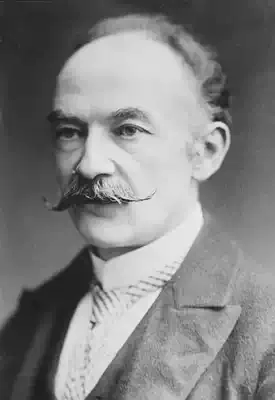
Thomas Hardy
The Stranger's Song
(As sung by Mr. Charles Charrington in the play of "The Three Wayfarers")
O MY trade it is the rarest one,
Simple shepherds all--
My trade is a sight to see;
For my customers I tie, and take 'em up on high,
And waft 'em to a far countree!
My tools are but common ones,
Simple shepherds all--
My tools are no sight to see:
A little hempen string, and a post whereon to swing,
Are implements enough for me!
To-morrow is my working day,
Simple shepherds all--
To-morrow is a working day for me:
For the farmer's sheep is slain, and the lad who did it ta'en,
And on his soul may God ha' mer-cy!
258
Henry Lawson
The Pavement Stones :A Song of the Unemployed
WHEN first I came to town, resolved
To fight my way alone,
No prouder foot than mine e’er trod
Upon the pavement stone;
But I am one in thousands,
And why should I repine?
The pavement stones have broken springs
In stronger feet than mine.
I brought to aid me all the hope
And energy of youth;
And in my heart I felt the strength
Of plain bucolic truth:
The independence nourished
Amid the hills and trees—
But, ah! the city hath a cure
For qualities like these.
I wonder oft how e’er I made
The efforts that I made,
For after three long weary years
I taught myself a trade.
And two more years and I was free
With strength and hope elate,
For “he that hath a trade,” they say,
“Hath also an estate.”
I tramped the streets and looked for work
And begged for work in vain,
Until I recked not, though I ne’er
Might touch my tools again.
I tramped the streets despairing;
My cheeks grew white and thin;
I felt the pavement wearing through
The leather, sock, and skin.
The bitter war goes on between
The idlers and the drones,
Until the hearts of men grow cold
And hard as pavement stones;
But I am one amid the crowd,
Then why should I repine?
The pavement stones have broken springs
In stronger feet than mine.
257
Robert W. Service
My Brothers
While I make rhymes my brother John
Makes shiny shoes which dames try on,
And finding to their fit and stance
They buy and wear with elegance;
But mine is quite another tale,-
For song there is no sale.
My brother Tom a tailor shop
Is owner of, and ladies stop
To try the models he has planned,
And richly pay, I understand:
Yet not even a dingy dime
Can I make with my rhyme.
My brother Jim sells stuff to eat
Like trotters, tripe and sausage meat.
I dare not by his window stop,
Lest he should offer me a chop;
For though a starving bard I be,
To hell, say I, with charity!
My brothers all are proud of purse,
But though my poverty I curse,
I would not for a diadem
Exchange my lowly lot with them:
A garret and a crust for me,
And reams and dreams of Poetry.
256

James Whitcomb Riley
Song
'Why do I sing--Tra-la-la-la-la!
Glad as a King?--Tra-la-la-la-la!
Well, since you ask,--
I have such a pleasant task,
I can not help but sing!
'Why do I smile--Tra-la-la-la-la!
Working the while?--Tra-la-la-la-la!
Work like this is play,--
So I'm playing all the day--
I can not help but smile!
'So, If you please--Tra-la-la-la-la!
Live at your ease!--Tra-la-la-la-la!
You've only got to turn,
And, you see, its bound to churn--
I can not help but please!'
The farmer pondered and scratched his head,
Reading over each mystic word.-'
Some o' the Dreamer's work!' he said-'
Ah, here's more--and name and date
In his hand-write'!'--And the good man read,-''
Patent applied for, July third,
Eighteen hundred and forty-eight'!'
The fragment fell from his nerveless grasp--
His awed lips thrilled with the joyous gasp:
'I see the p'int to the whole concern,-He's
studied out a patent churn!'
255
Robert W. Service
The Lost Master
"And when I come to die," he said,
"Ye shall not lay me out in state,
Nor leave your laurels at my head,
Nor cause your men of speech orate;
No monument your gift shall be,
No column in the Hall of Fame;
But just this line ye grave for me:
`He played the game.'"
So when his glorious task was done,
It was not of his fame we thought;
It was not of his battles won,
But of the pride with which he fought;
But of his zest, his ringing laugh,
His trenchant scorn of praise or blame:
And so we graved his epitaph,
"He played the game."
And so we, too, in humbler ways
Went forth to fight the fight anew,
And heeding neither blame nor praise,
We held the course he set us true.
And we, too, find the fighting sweet;
And we, too, fight for fighting's sake;
And though we go down in defeat,
And though our stormy hearts may break,
We will not do our Master shame:
We'll play the game, please God,
We'll play the game.
256
Henry Lawson
When The `Army' Prays For Watty
When the kindly hours of darkness, save for light of moon and star,
Hide the picture on the signboard over Doughty's Horse Bazaar;
When the last rose-tint is fading on the distant mulga scrub,
Then the Army prays for Watty at the entrance of his pub.
Now, I often sit at Watty's when the night is very near,
With a head that's full of jingles and the fumes of bottled beer,
For I always have a fancy that, if I am over there
When the Army prays for Watty, I'm included in the prayer.
Watty lounges in his arm-chair, in its old accustomed place,
With a fatherly expression on his round and passive face;
And his arms are clasped before him in a calm, contented way,
And he nods his head and dozes when he hears the Army pray.
And I wonder does he ponder on the distant years and dim,
Or his chances over yonder, when the Army prays for him?
Has he not a fear connected with the warm place down below,
Where, according to good Christians, all the publicans should go?
But his features give no token of a feeling in his breast,
Save of peace that is unbroken and a conscience well at rest;
And we guzzle as we guzzled long before the Army came,
And the loafers wait for `shouters' and -- they get there just the same.
It would take a lot of praying -- lots of thumping on the drum --
To prepare our sinful, straying, erring souls for Kingdom Come;
But I love my fellow-sinners, and I hope, upon the whole,
That the Army gets a hearing when it prays for Watty's soul.
253
Henry Lawson
Peter Anderson And Co.
He had offices in Sydney, not so many years ago,
And his shingle bore the legend `Peter Anderson and Co.',
But his real name was Careless, as the fellows understood --
And his relatives decided that he wasn't any good.
'Twas their gentle tongues that blasted any `character' he had --
He was fond of beer and leisure -- and the Co. was just as bad.
It was limited in number to a unit, was the Co. -'
Twas a bosom chum of Peter and his Christian name was Joe.
'Tis a class of men belonging to these soul-forsaken years:
Third-rate canvassers, collectors, journalists and auctioneers.
They are never very shabby, they are never very spruce --
Going cheerfully and carelessly and smoothly to the deuce.
Some are wanderers by profession, `turning up' and gone as soon,
Travelling second-class, or steerage (when it's cheap they go saloon);
Free from `ists' and `isms', troubled little by belief or doubt --
Lazy, purposeless, and useless -- knocking round and hanging out.
They will take what they can get, and they will give what they can give,
God alone knows how they manage -- God alone knows how they live!
They are nearly always hard-up, but are cheerful all the while --
Men whose energy and trousers wear out sooner than their smile!
They, no doubt, like us, are haunted by the boresome `if' or `might',
But their ghosts are ghosts of daylight -- they are men who live at night!
Peter met you with the comic smile of one who knows you well,
And is mighty glad to see you, and has got a joke to tell;
He could laugh when all was gloomy, he could grin when all was blue,
Sing a comic song and act it, and appreciate it, too.
Only cynical in cases where his own self was the jest,
And the humour of his good yarns made atonement for the rest.
Seldom serious -- doing business just as 'twere a friendly game --
Cards or billiards -- nothing graver. And the Co. was much the same.
They tried everything and nothing 'twixt the shovel and the press,
And were more or less successful in their ventures -- mostly less.
Once they ran a country paper till the plant was seized for debt,
And the local sinners chuckle over dingy copies yet.
They'd been through it all and knew it in the land of Bills and Jims --
Using Peter's own expression, they had been in `various swims'.
Now and then they'd take an office, as they called it, -- make a dash
Into business life as `agents' -- something not requiring cash.
(You can always furnish cheaply, when your cash or credit fails,
With a packing-case, a hammer, and a pound of two-inch nails --
And, maybe, a drop of varnish and sienna, too, for tints,
And a scrap or two of oilcloth, and a yard or two of chintz).
They would pull themselves together, pay a week's rent in advance,
But it never lasted longer than a month by any chance.
The office was their haven, for they lived there when hard-up --
A `daily' for a table cloth -- a jam tin for a cup;
And if the landlord's bailiff happened round in times like these
And seized the office-fittings -- well, there wasn't much to seize --
They would leave him in possession. But at other times they shot
The moon, and took an office where the landlord knew them not.
And when morning brought the bailiff there'd be nothing to be seen
Save a piece of bevelled cedar where the tenant's plate had been;
There would be no sign of Peter -- there would be no sign of Joe
Till another portal boasted `Peter Anderson and Co.'
And when times were locomotive, billiard-rooms and private bars --
Spicy parties at the cafe -- long cab-drives beneath the stars;
Private picnics down the Harbour -- shady campings-out, you know --
No one would have dreamed 'twas Peter -
no one would have thought 'twas Joe!
Free-and-easies in their `diggings', when the funds began to fail,
Bosom chums, cigars, tobacco, and a case of English ale --
Gloriously drunk and happy, till they heard the roosters crow --
And the landlady and neighbours made complaints about the Co.
But that life! it might be likened to a reckless drinking-song,
For it can't go on for ever, and it never lasted long.
. . . . .
Debt-collecting ruined Peter -- people talked him round too oft,
For his heart was soft as butter (and the Co.'s was just as soft);
He would cheer the haggard missus, and he'd tell her not to fret,
And he'd ask the worried debtor round with him to have a wet;
He would ask him round the corner, and it seemed to him and her,
After each of Peter's visits, things were brighter than they were.
But, of course, it wasn't business -- only Peter's careless way;
And perhaps it pays in heaven, but on earth it doesn't pay.
They got harder up than ever, and, to make it worse, the Co.
Went more often round the corner than was good for him to go.
`I might live,' he said to Peter, `but I haven't got the nerve --
I am going, Peter, going -- going, going -- no reserve.
Eat and drink and love they tell us, for to-morrow we may die,
Buy experience -- and we bought it -- we're experienced, you and I.'
Then, with a weary movement of his hand across his brow:
`The death of such philosophy's the death I'm dying now.
Pull yourself together, Peter; 'tis the dying wish of Joe
That the business world shall honour Peter Anderson and Co.
`When you feel your life is sinking in a dull and useless course,
And begin to find in drinking keener pleasure and remorse --
When you feel the love of leisure on your careless heart take holt,
Break away from friends and pleasure, though it give your heart a jolt.
Shun the poison breath of cities -- billiard-rooms and private bars,
Go where you can breathe God's air and see the grandeur of the stars!
Find again and follow up the old ambitions that you had --
See if you can raise a drink, old man, I'm feelin' mighty bad --
Hot and sweetened, nip o' butter -- squeeze o' lemon, Pete,' he sighed.
And, while Peter went to fetch it, Joseph went to sleep -- and died
With a smile -- anticipation, maybe, of the peace to come,
Or a joke to try on Peter -- or, perhaps, it was the rum.
. . . . .
Peter staggered, gripped the table, swerved as some old drunkard swerves --
At a gulp he drank the toddy, just to brace his shattered nerves.
It was awful, if you like. But then he hadn't time to think --
All is nothing! Nothing matters! Fill your glasses -- dead man's drink.
. . . . .
Yet, to show his heart was not of human decency bereft,
Peter paid the undertaker. He got drunk on what was left;
Then he shed some tears, half-maudlin, on the grave where lay the Co.,
And he drifted to a township where the city failures go.
Where, though haunted by the man he was, the wreck he yet might be,
Or the man he might have been, or by each spectre of the three,
And the dying words of Joseph, ringing through his own despair,
Peter `pulled himself together' and he started business there.
But his life was very lonely, and his heart was very sad,
And no help to reformation was the company he had --
Men who might have been, who had been, but who were not in the swim -'
Twas a town of wrecks and failures -- they appreciated him.
They would ask him who the Co. was -- that queer company he kept --
And he'd always answer vaguely -- he would say his partner slept;
That he had a `sleeping partner' -- jesting while his spirit broke --
And they grinned above their glasses, for they took it as a joke.
He would shout while he had money, he would joke while he had breath --
No one seemed to care or notice how he drank himself to death;
Till at last there came a morning when his smile was seen no more --
He was gone from out the office, and his shingle from the door,
And a boundary-rider jogging out across the neighb'ring run
Was attracted by a something that was blazing in the sun;
And he found that it was Peter, lying peacefully at rest,
With a bottle close beside him and the shingle on his breast.
Well, they analysed the liquor, and it would appear that he
Qualified his drink with something good for setting spirits free.
Though 'twas plainly self-destruction -- `'twas his own affair,' they said;
And the jury viewed him sadly, and they found -- that he was dead.
251
Henry Lawson
Knocked Up
I'm lyin' on the barren ground that's baked and cracked with drought,
And dunno if my legs or back or heart is most wore out;
I've got no spirits left to rise and smooth me achin' brow -I'm
too knocked up to light a fire and bile the billy now.
Oh it's trampin', trampin', tra-a-mpin', in flies an' dust an' heat,
Or it's trampin' trampin' tra-a-a-mpin'
through mud and slush 'n sleet;
It's tramp an' tramp for tucker -- one everlastin' strife,
An' wearin' out yer boots an' heart in the wastin' of yer life.
They whine o' lost an' wasted lives in idleness and crime -I've
wasted mine for twenty years, and grafted all the time
And never drunk the stuff I earned, nor gambled when I shore --
But somehow when yer on the track yer life seems wasted more.
A long dry stretch of thirty miles I've tramped this broilin' day,
All for the off-chance of a job a hundred miles away;
There's twenty hungry beggars wild for any job this year,
An' fifty might be at the shed while I am lyin' here.
The sinews in my legs seem drawn, red-hot -- 'n that's the truth;
I seem to weigh a ton, and ache like one tremendous tooth;
I'm stung between my shoulder-blades -- my blessed back seems broke;
I'm too knocked out to eat a bite -- I'm too knocked up to smoke.
The blessed rain is comin' too -- there's oceans in the sky,
An' I suppose I must get up and rig the blessed fly;
The heat is bad, the water's bad, the flies a crimson curse,
The grub is bad, mosquitoes damned -- but rheumatism's worse.
I wonder why poor blokes like me will stick so fast ter breath,
Though Shakespeare says it is the fear of somethin' after death;
But though Eternity be cursed with God's almighty curse --
What ever that same somethin' is I swear it can't be worse.
For it's trampin', trampin', tra-a-mpin' thro' hell across the plain,
And it's trampin' trampin' tra-a-mpin' thro' slush 'n mud 'n rain -A
livin' worse than any dog -- without a home 'n wife,
A-wearin' out yer heart 'n soul in the wastin' of yer life.
251
Robert W. Service
The Song Of The Camp-Fire
Heed me, feed me, I am hungry, I am red-tongued with desire;
Boughs of balsam, slabs of cedar, gummy fagots of the pine,
Heap them on me, let me hug them to my eager heart of fire,
Roaring, soaring up to heaven as a symbol and a sign.
Bring me knots of sunny maple, silver birch and tamarack;
Leaping, sweeping, I will lap them with my ardent wings of flame;
I will kindle them to glory, I will beat the darkness back;
Streaming, gleaming, I will goad them to my glory and my fame.
Bring me gnarly limbs of live-oak, aid me in my frenzied fight;
Strips of iron-wood, scaly blue-gum, writhing redly in my hold;
With my lunge of lurid lances, with my whips that flail the night,
They will burgeon into beauty, they will foliate in gold.
Let me star the dim sierras, stab with light the inland seas;
Roaming wind and roaring darkness! seek no mercy at my hands;
I will mock the marly heavens, lamp the purple prairies,
I will flaunt my deathless banners down the far, unhouseled lands.
In the vast and vaulted pine-gloom where the pillared forests frown,
By the sullen, bestial rivers running where God only knows,
On the starlit coral beaches when the combers thunder down,
In the death-spell of the barrens, in the shudder of the snows;
In a blazing belt of triumph from the palm-leaf to the pine,
As a symbol of defiance lo! the wilderness I span;
And my beacons burn exultant as an everlasting sign
Of unending domination, of the mastery of Man;
I, the Life, the fierce Uplifter, I that weaned him from the mire;
I, the angel and the devil, I, the tyrant and the slave;
I, the Spirit of the Struggle; I, the mighty God of Fire;
I, the Maker and Destroyer; I, the Giver and the Grave.
II
Gather round me, boy and grey-beard, frontiersman of every kind.
Few are you, and far and lonely, yet an army forms behind:
By your camp-fires shall they know you, ashes scattered to the wind.
Peer into my heart of solace, break your bannock at my blaze;
Smoking, stretched in lazy shelter, build your castles as you gaze;
Or, it may be, deep in dreaming, think of dim, unhappy days.
Let my warmth and glow caress you, for your trails are grim and hard;
Let my arms of comfort press you, hunger-hewn and battle-scarred:
O my lovers! how I bless you with your lives so madly marred!
For you seek the silent spaces, and their secret lore you glean:
For you win the savage races, and the brutish Wild you wean;
And I gladden desert places, where camp-fire has never been.
From the Pole unto the Tropics is there trail ye have not dared?
And because you hold death lightly, so by death shall you be spared,
(As the sages of the ages in their pages have declared).
On the roaring Arkilinik in a leaky bark canoe;
Up the cloud of Mount McKinley, where the avalanche leaps through;
In the furnace of Death Valley, when the mirage glimmers blue.
Now a smudge of wiry willows on the weary Kuskoquim;
Now a flare of gummy pine-knots where Vancouver's scaur is grim;
Now a gleam of sunny ceiba, when the Cuban beaches dim.
Always, always God's Great Open: lo! I burn with keener light
In the corridors of silence, in the vestibules of night;
'Mid the ferns and grasses gleaming, was there ever gem so bright?
Not for weaklings, not for women, like my brother of the hearth;
Ring your songs of wrath around me, I was made for manful mirth,
In the lusty, gusty greatness, on the bald spots of the earth.
Men, my masters! men, my lovers! ye have fought and ye have bled;
Gather round my ruddy embers, softly glowing is my bed;
By my heart of solace dreaming, rest ye and be comforted!
III
I am dying, O my masters! by my fitful flame ye sleep;
My purple plumes of glory droop forlorn.
Grey ashes choke and cloak me, and above the pines there creep
The stealthy silver moccasins of morn.
There comes a countless army, it's the Legion of the Light;
It tramps in gleaming triumph round the world;
And before its jewelled lances all the shadows of the night
Back in to abysmal darknesses are hurled.
Leap to life again, my lovers! ye must toil and never tire;
The day of daring, doing, brightens clear,
When the bed of spicy cedar and the jovial camp-fire
Must only be a memory of cheer.
There is hope and golden promise in the vast portentous dawn;
There is glamour in the glad, effluent sky:
Go and leave me; I will dream of you and love you when you're gone;
I have served you, O my masters! let me die.
A little heap of ashes, grey and sodden by the rain,
Wind-scattered, blurred and blotted by the snow:
Let that be all to tell of me, and glorious again,
Ye things of greening gladness, leap and glow!
A black scar in the sunshine by the palm-leaf or the pine,
Blind to the night and dead to all desire;
Yet oh, of life and uplift what a symbol and a sign!
Yet oh, of power and conquest what a destiny is mine!
A little heap of ashes -- Yea! a miracle divine,
The foot-print of a god, all-radiant Fire.
253
Robert W. Service
The Key Of The Street
"Miss Rosemary," I dourly said,
"Our balance verges on the red,
We must cut down our overhead.
One of the staff will have to go.
There's Mister Jones, he's mighty slow,
Although he does his best, I know.
"A deer old man; I like him well,
But age, alas! will always tell.
Miss Rosemary, please ring the bell
And tell old Jones to step this way . . .
Oh dear, oh dear, it isn't gay
To say the things I have to say.
"Come in and sit down, Mister Jones."
He thanks me in sepulchral tones.
Poor chap! I hear his creaking bones.
"Have a cigar? And how's your wife?
What's that! You're fearing for her life -
A cancer and the surgeon's knife. . . .
"Yes, operations are so dear,
But it's your comfort and your cheer
To know your job's so steady here."
These are his words; so meek and mild,
He looks just like a simple child . . .
Go! darn it! Suddenly I'm riled.
And so I say: "That's just too bad.
But Mister Jones. it's very sad,
You know what losses we have had.
We must cut down in times like these,
So here's a cheque, Oh take it please '
Twill help to pay your doctor's fees.
"And just to show how I appraise
Your work - despite these doleful days
I'm giving you . . . a little raise."
Said Rosemary: "Old Jones is crying."
Thought I: "Yes, each week I'll be sighing,
When from my pocket I am prying
Ten bucks to keep his wife from dying."
252
Henry Lawson
The Port O'Call
Our hull is seldom painted,
Our decks are seldom stoned;
Our sails are patched and cobbled
And chains by rust marooned.
Our rigging is untidy,
And all things in accord:—
We always sail on Friday
With thirteen souls on board.
For all the days save Friday
Were days of dark despair—
The fourteenth died of fever
Whenever he was there.
Our good ship is the Chancit—
Her oldest name of all;
But, in the ports we’re blown to,
She’s called the ‘Port o’ Call.’
Our captain old Wot Matters—
Our first mate young Hoo Kares,
Our cook is Wen Yew Wan Tit,
And so the Chancit fares.
The sweethearts, wives, and others—
And all we left behind—
Have many names to go by;
But mine is Never Mind.
We fear no hell hereafter,
We hope for no reward—
We always sail on Friday
With thirteen men on board.
And every wind’s a fair wind,
That suits us, one and all,
And every port we’re blown to
We call our port-of-call.
I’ve seen the poor boy striving
For just one chance to rise:
The light of truth and honour
And genius in his eyes.
His school-mates jeered and mocked him,
They mocked him through the town:
And his relatives scarce pitied,
While his parents crushed him down.
I’ve seen the young man fighting
The present and the past,
Till he triumphed in the city,
And fame was his at last!
And generous, but steadfast,
All for his Country then,
Unspoiled and all unconscious
He stood, a prince of men.
I’ve seen the husband ruined,
And drunken in the street,
When the World was all before him,
And the ball was at his feet—
Thrust down by fate most bitter,
Most cruel and unjust;
His children taught to loathe him,
And his name dragged in the dust.
. . . . .
Our hull is never painted,
Our decks are never stoned,
The cabin air is tainted,
The good ship is disowned;
Our rigging is untidy,
And all things in accord—
We always sail on Friday,
With thirteen hands on board.
I’ve seen strong bushmen slaving,
As men ne’er slaved before,
To win homes from the scrublands
And win their country more.
And I’ve seen their children scattered
As work-slaves on the soil;
And the old-age-pension begged for
After fifty years of toil!
And the Bush Muse is discarded,
There’s a wanton on the track,
And her panderers are sneering
At old soldiers of Out Back
The motor cars go racing
Past the Heroes of Long Years,
And the dust is in their faces
And the laughter in their ears.
We care not where we’re bound for,
Nor how the storm might howl;
For every wind’s a fair wind,
And every wind a foul.
There’s nothing left to sail for
Save that we keep our decks,
And watch for other castaways
On rafts from other wrecks.
248
John Greenleaf Whittier
The Lumbermen
WILDLY round our woodland quarters
Sad-voiced Autumn grieves;
Thickly down these swelling waters
Float his fallen leaves.
Through the tall and naked timber,
Column-like and old,
Gleam the sunsets of November,
From their skies of gold.
O'er us, to the southland heading,
Screams the gray wild-goose;
On the night-frost sounds the treading
Of the brindled moose.
Noiseless creeping, while we're sleeping,
Frost his task-work plies;
Soon, his icy bridges heaping,
Shall our log-piles rise.
When, with sounds of smothered thunder,
On some night of rain,
Lake and river break asunder
Winter's weakened chain,
Down the wild March flood shall bear them
To the saw-mill's wheel,
Or where Steam, the slave, shall tear them
With his teeth of steel.
Be it starlight, be it moonlight,
In these vales below,
When the earliest beams of sunlight
Streak the mountain's snow,
Crisps the hoar-frost, keen and early,
To our hurrying feet,
And the forest echoes clearly
All our blows repeat.
Where the crystal Ambijejis
Stretches broad and clear,
And Millnoket's pine-black ridges
Hide the browsing deer:
Where, through lakes and wide morasses,
Or through rocky walls,
Swift and strong, Penobscot passes
White with foamy falls;
Where, through clouds, are glimpses given
Of Katahdin's sides, —
Rock and forest piled to heaven,
Torn and ploughed by slides!
Far below, the Indian trapping,
In the sunshine warm;
Far above, the snow-cloud wrapping
Half the peak in storm!
Where are mossy carpets better
Than the Persian weaves,
And than Eastern perfumes sweeter
Seem the fading leaves;
And a music wild and solemn,
From the pine-tree's height,
Rolls its vast and sea-like volume
On the wind of night;
Make we here our camp of winter;
And, through sleet and snow,
Pitchy knot and beechen splinter
On our hearth shall glow.
Here, with mirth to lighten duty,
We shall lack alone
Woman's smile and girlhood's beauty,
Childhood's lisping tone.
But their hearth is brighter burning
For our toil to-day;
And the welcome of returning
Shall our loss repay,
When, like seamen from the waters,
From the woods we come,
Greeting sisters, wives, and daughters,
Angels of our home!
Not for us the measured ringing
From the village spire,
Not for us the Sabbath singing
Of the sweet-voiced choir.
Ours the old, majestic temple,
Where God's brightness shines
Down the dome so grand and ample,
Propped by lofty pines!
Through each branch-enwoven skylight,
Speaks He in the breeze,
As of old beneath the twilight
Of lost Eden's trees!
For His ear, the inward feeling
Needs no outward tongue;
He can see the spirit kneeling
While the axe is swung.
Heeding truth alone, and turning
From the false and dim,
Lamp of toil or altar burning
Are alike to Him.
Strike, then, comrades! Trade is waiting
On our rugged toil;
Far ships waiting for the freighting
Of our woodland spoil!
Ships, whose traffic links these highlands,
Bleak and cold, of ours,
With the citron-planted islands
Of a clime of flowers;
To our frosts the tribute bringing
Of eternal heats;
In our lap of winter flinging
Tropic fruits and sweets.
Cheerly, on the axe of labor,
Let the sunbeams dance,
Better than the flash of sabre
Or the gleam of lance!
Strike! With every blow is given
Freer sun and sky,
And the long-hid earth to heaven
Looks, with wondering eye!
Loud behind us grow the murmurs
Of the age to come;
Clang of smiths, and tread of farmers,
Bearing harvest home!
Here her virgin lap with treasures
Shall the green earth fill;
Waving wheat and golden maize-ears
Crown each beechen hill.
Keep who will the city's alleys,
Take the smooth-shorn plain;
Give to us the cedarn valleys,
Rocks and hills of Maine!
In our North-land, wild and woody,
Let us still have part:
Rugged nurse and mother sturdy,
Hold us to thy heart!
Oh, our free hearts beat the warmer
For thy breath of snow;
And our tread is all the firmer
For thy rocks below.
Freedom, hand in hand with labor,
Walketh strong and brave;
On the forehead of his neighbor
No man writeth Slave!
Lo, the day breaks! old Katahdin's
Pine-trees show its fires,
While from these dim forest gardens
Rise their blackened spires.
Up, my comrades! up and doing!
Manhood's rugged play
Still renewing, bravely hewing
Through the world our way!
246