
Sadness and Melancholy

Henry Lawson
When His Heart Is Growing Bitter
When his heart is growing bitter and his hair is growing grey,
And he hears the debt-collector knocking several times a day,
And the shrill voice of the Missus, blame, reiterate, accuse—
Then the poet who was famous feels inclined to damn the muse— .....
When he hears a sudden rapping—rapping at his chamber door,
Then he knows it's no good trying to write poems any more,
Then he bursts from out his chamber and he grabs his battered hat,
And he cadges Two Bob somewhere and gets beered up on his pat.
276

Gwendolyn Brooks
The Crazy Woman
I shall not sing a May song.
A May song should be gay.
I'll wait until November
And sing a song of gray.
I'll wait until November
That is the time for me.
I'll go out in the frosty dark
And sing most terribly.
And all the little people
Will stare at me and say,
"That is the Crazy Woman
Who would not sing in May."
Anonymous submission.
273

Robert W. Service
Mazie's Ghost
In London City I evade
For charming Burlington Arcade -
For thee in youth I met a maid
By name of Mazie,
Who lost no time in telling me
The Ritz put up a topping tea,
But having only shillings three
My smile was hazy.
:Instead," said I, "it might be sport
To take a bus to Hampton Court,"
(Her manner, I remarked, was short,)
But she assented.
We climbed on top, and all the way
I held her hand, I felt quite gay,
Bu Mazie, I regret to say,
Seemed discontented.
In fact we almost had a tiff.
It's true it rained and she was stiff,
And all she did was sneeze and sniff
And shudder coldly.
So I said: "Mazzie, there's the maze;
Let's frolic in its leafy ways,"
And buying tickets where one pays
I entered boldly.
The, as the game is, we were lots;
We dashed and darted, crissed and crossed,
But Mazie she got vexed and sauced
Me rather smartly.
There wasn't but us two about;
We hollered, no one heard our shout;
The rain poured down: "Oh let's get out,"
Cried Mazie tartly.
"Keep cool, says I. "You fool," says she;
"I'm sopping wet, I want my tea,
Please take me home," she wailed to me
In accents bitter.
Again we tried, this way and that,
Yet came to where we started at,
And Mazie acted like a cat,
A champion spitter.
She stomped and romped till all was blue,
Then sought herself to find the clue,
And when I saw her next 'twas through
A leafy screening;
"Come on, she cooed, "and join me here;
You'll take me to the Savoy, dear,
And Heidsieck shall our spirits cheer."
I got her meaning.
And yet I sought her everywhere;
I hurried here, I scurried there,
I took each likely lane, I swar,
As I surmised it:
The suddenly I saw once more,
Confronting me, the exit door,
And I was dashing through before
I realized it.
And there I spied a passing bus.
Thinks I: "It's mean to leave her thus,
But after all her fret and fuss
I can't abide her.
So I sped back to London town
And grubbed alone for half-a-crown,
On steak and kidney pie washed down
With sparkling cider.
But since I left that damsel fair,
The thought she may have perished there,
Of cold, starvation and dispair
Nigh drives me crazy.
So, stranger, if you should invade
The charming Burlington Arcade,
Tell me if you behold a shade,
Ghost of a most unhappy maid
By name of Mazie.
273

Muhammad Iqbal
The Withered Rose
O withered rose! How can I still call you a rose?
How can I call you the longing of nightingale's heart?
Once the zephyr's movement was your rocking cradle
In the garden's expanse joyous rose was your name
The morning breeze acknowledged your benevolence
The garden was like perfumer's tray by your presence
My weeping eye sheds dew on you
My desolate heart is concealed in your sorrow
You are a tiny picture of my destruction
You are the interpretation of my life's dream
Like a flute to my reed-brake I narrate my story
Listen O rose! I complain about separations!
274
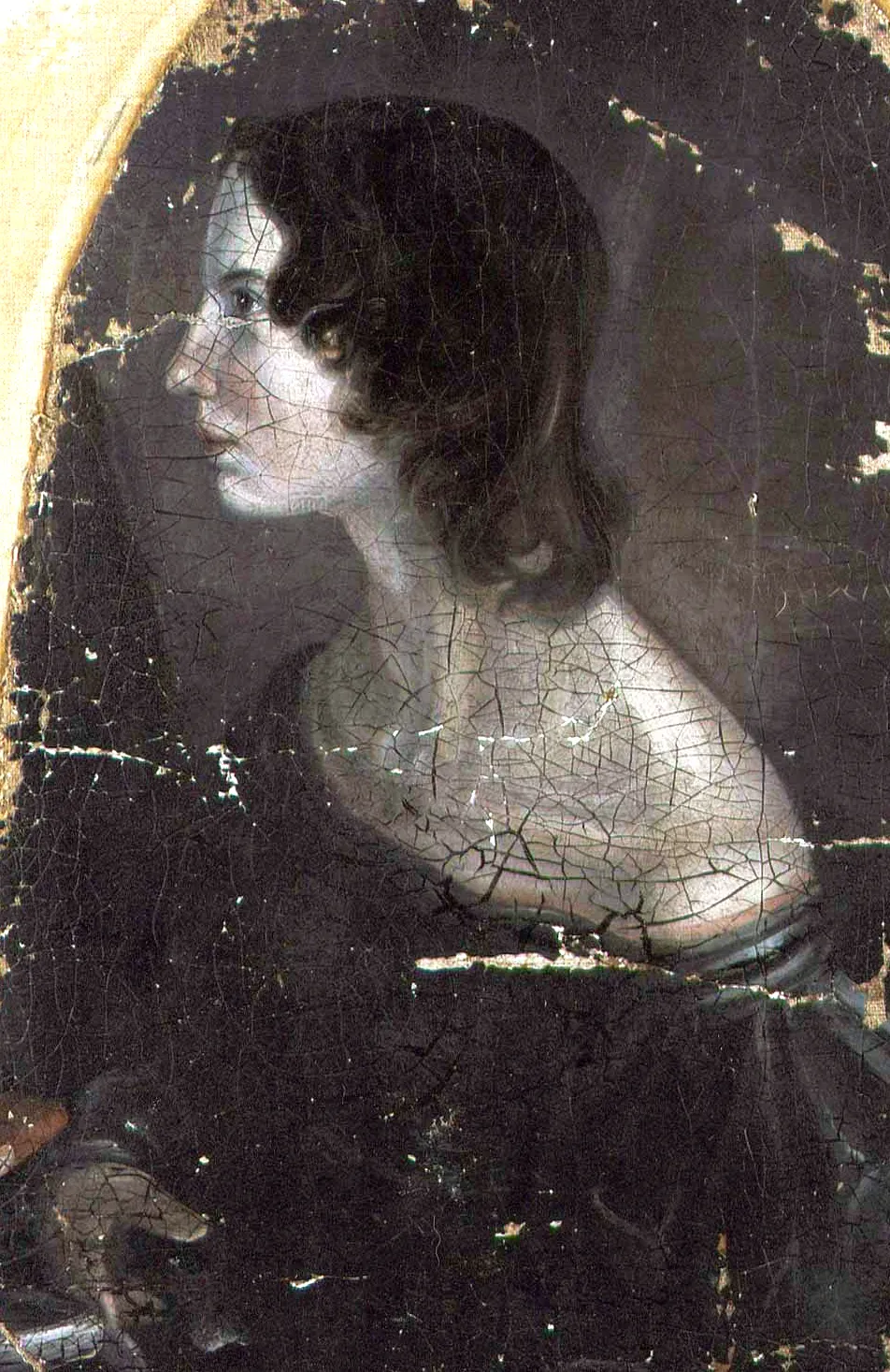
Emily Jane Brontë
A Day Dream
On a sunny brae, alone I lay
One summer afternoon;
It was the marriage-time of May
With her young lover, June.
From her mother's heart, seemed loath to part
That queen of bridal charms,
But her father smiled on the fairest child
He ever held in his arms.
The trees did wave their plumy crests,
The glad birds caroled clear;
And I, of all the wedding guests,
Was only sullen there!
There was not one, but wished to shun
My aspect void of cheer;
The very grey rocks, looking on,
Asked, "What do you here?"
And I could utter no reply;
In sooth, I did not know
Why I had brought a clouded eye
To greet the general glow.
So, resting on a heathy bank,
I took my heart to me;
And we together sadly sank
Into a reverie.
We thought, "When winter comes again,
Where will these bright things be?
All vanished, like a vision vain,
An unreal mockery!
The birds that now so blithely sing,
Through deserts, frozen dry,
Poor spectres of the perished spring,
In famished troops, will fly.
And why should we be glad at all?
The leaf is hardly green,
Before a token of its fall
Is on the surface seen!"
Now, whether it were really so,
I never could be sure;
But as in fit of peevish woe,
I stretched me on the moor.
A thousand thousand gleaming fires
Seemed kindling in the air;
A thousand thousand silvery lyres
Resounded far and near:
Methought, the very breath I breathed
Was full of sparks divine,
And all my heather-couch was wreathed
By that celestial shine!
And, while the wide earth echoing rung
To their strange minstrelsy,
The little glittering spirits sung,
Or seemed to sing, to me.
"O mortal! mortal! let them die;
Let time and tears destroy,
That we may overflow the sky
With universal joy!
Let grief distract the sufferer's breast,
And night obscure his way;
They hasten him to endless rest,
And everlasting day.
To thee the world is like a tomb,
A desert's naked shore;
To us, in unimagined bloom,
It brightens more and more!
And could we lift the veil, and give
One brief glimpse to thine eye,
Thou wouldst rejoice for those that live,
Because they live to die."
The music ceased; the noonday dream,
Like dream of night, withdrew;
But Fancy, still, will sometimes deem
Her fond creation true.
271

Emily Dickinson
Speech—is a prank of Parliament—
"Speech"—is a prank of Parliament—
"Tears"—is a trick of the nerve—
But the Heart with the heaviest freight on—
Doesn't—always—move—
"Tears"—is a trick of the nerve—
But the Heart with the heaviest freight on—
Doesn't—always—move—
272
Emily Dickinson
Except the Heaven had come so near
Except the Heaven had come so near-
So seemed to choose My Door-
The Distance would not haunt me so-
I had not hoped-before-
But just to hear the Grace depart-
I never thought to see-
Afflicts me with a Double loss'
Tis lost-and lost to me-
So seemed to choose My Door-
The Distance would not haunt me so-
I had not hoped-before-
But just to hear the Grace depart-
I never thought to see-
Afflicts me with a Double loss'
Tis lost-and lost to me-
270
Emily Dickinson
God permit industrious angels
God permit industrious angels
Afternoons to play.
I met one, -- forgot my school-mates,
All, for him, straightaway.
God calls home the angels promptly
At the setting sun;
I missed mine. How dreary marbles,
After playing the Crown!
Afternoons to play.
I met one, -- forgot my school-mates,
All, for him, straightaway.
God calls home the angels promptly
At the setting sun;
I missed mine. How dreary marbles,
After playing the Crown!
270
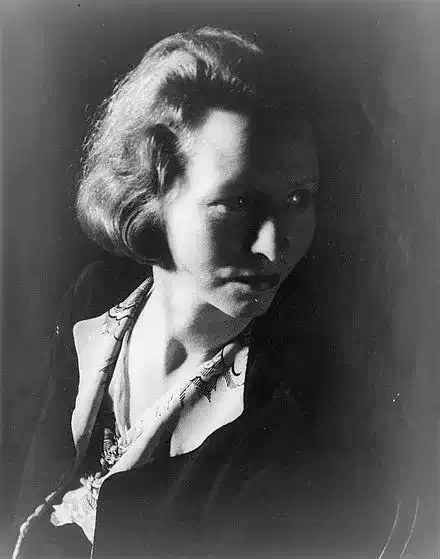
Edna St. Vincent Millay
Elegy Before Death
There will be rose and rhododendron
When you are dead and under ground;
Still will be heard from white syringas
Heavy with bees, a sunny sound;
Still will the tamaracks be raining
After the rain has ceased, and still
Will there be robins in the stubble,
Brown sheep upon the warm green hill.
Spring will not ail nor autumn falter;
Nothing will know that you are gone,
Saving alone some sullen plough-land
None but yourself sets foot upon;
Saving the may-weed and the pig-weed
Nothing will know that you are dead,—
These, and perhaps a useless wagon
Standing beside some tumbled shed.
Oh, there will pass with your great passing
Little of beauty not your own,—
Only the light from common water,
Only the grace from simple stone!
270
Emily Dickinson
As imperceptibly as Grief
As imperceptibly as Grief
The Summer lapsed away-
Too imperceptible at last
To seem like Perfidy-
A Quietness distilled
As Twilight long begun,
Or Nature spending with herself
Sequestered Afternoon-
The Dusk drew earlier in-
The Morning foreign shone-
A courteous, yet harrowing Grace,
As Guest, that would be gone-
And thus, without a Wing
Or service of a Keel
Our Summer made her light escape
Into the Beautiful.
269

Spike Milligan
Halved
The essence of true beauty
Lingers in all-encompassing rainbows
Of your joy and laughter
You hold my hand and smile
As we ensconce ourselves in our world of fire
Our love is all there is
I touch your face
Your gentleness astounds me
I'm held in the honour of your love
Then overnight, the wrold truns suor
mInnIts past the ELevenTHH HouRR
I'M A L N E
268

D.H. Lawrence
Anxiety
The hoar-frost crumbles in the sun,
The crisping steam of a train
Melts in the air, while two black birds
Sweep past the window again.
Along the vacant road, a red
Bicycle approaches; I wait
In a thaw of anxiety, for the boy
To leap down at our gate.
He has passed us by; but is it
Relief that starts in my breast?
Or a deeper bruise of knowing that still
She has no rest.
266
Emily Jane Brontë
'Fall, leaves, fall'
Fall, leaves, fall; die, flowers, away;
Lengthen night and shorten day;
Every leaf speaks bliss to me
Fluttering from the autumn tree.
I shall smile when wreaths of snow
Blossom where the rose should grow;
I shall sing when night's decay
Ushers in a drearier day.
Lengthen night and shorten day;
Every leaf speaks bliss to me
Fluttering from the autumn tree.
I shall smile when wreaths of snow
Blossom where the rose should grow;
I shall sing when night's decay
Ushers in a drearier day.
262
Robert W. Service
Music In The Bush
O'er the dark pines she sees the silver moon,
And in the west, all tremulous, a star;
And soothing sweet she hears the mellow tune
Of cow-bells jangled in the fields afar.
Quite listless, for her daily stent is done,
She stands, sad exile, at her rose-wreathed door,
And sends her love eternal with the sun
That goes to gild the land she'll see no more.
The grave, gaunt pines imprison her sad gaze,
All still the sky and darkling drearily;
She feels the chilly breath of dear, dead days
Come sifting through the alders eerily.
Oh, how the roses riot in their bloom!
The curtains stir as with an ancient pain;
Her old piano gleams from out the gloom
And waits and waits her tender touch in vain.
But now her hands like moonlight brush the keys
With velvet grace -- melodious delight;
And now a sad refrain from over seas
Goes sobbing on the bosom of the night;
And now she sings. (O! singer in the gloom,
Voicing a sorrow we can ne'er express,
Here in the Farness where we few have room
Unshamed to show our love and tenderness,
Our hearts will echo, till they beat no more,
That song of sadness and of motherland;
And, stretched in deathless love to England's shore,
Some day she'll hearken and she'll understand.)
A prima-donna in the shining past,
But now a mother growing old and gray,
She thinks of how she held a people fast
In thrall, and gleaned the triumphs of a day.
She sees a sea of faces like a dream;
She sees herself a queen of song once more;
She sees lips part in rapture, eyes agleam;
She sings as never once she sang before.
She sings a wild, sweet song that throbs with pain,
The added pain of life that transcends art --
A song of home, a deep, celestial strain,
The glorious swan-song of a dying heart.
A lame tramp comes along the railway track,
A grizzled dog whose day is nearly done;
He passes, pauses, then comes slowly back
And listens there -- an audience of one.
She sings -- her golden voice is passion-fraught,
As when she charmed a thousand eager ears;
He listens trembling, and she knows it not,
And down his hollow cheeks roll bitter tears.
She ceases and is still, as if to pray;
There is no sound, the stars are all alight --
Only a wretch who stumbles on his way,
Only a vagrant sobbing in the night.
259
Henry Lawson
The Babies of Walloon
He was lengthsman on the railway, and his station scarce deserved
That “pre-eminence in sorrow” of the Majesty he served,
But as dear to him and precious were the gifts reclaimed so soon—
Were the workman’s little daughters who were buried near Walloon.
Speak their names in tones that linger, just as though you held them dear;
There are eyes to which the mention of those names will bring a tear.
Little Kate and Bridget, straying in an autumn afternoon,
Were attracted by the lilies in the water of Walloon.
All is dark to us. The angels sing perhaps in Paradise
Of the younger sister’s danger, and the elder’s sacrifice;
But the facts were hidden from us, when the soft light from the moon
Glistened on the water-lilies o’er the Babies at Walloon.
Ah! the children love the lilies, while we elders are inclined
To the flowers that have poison for the body and the mind.
Better for the “strongly human” to have done with life as soon,
Better perish for a lily like the Babies of Walloon.
For they gather flowers early on the river far away,
Where the everlasting lilies keep their purity for aye,
And while summer brings our lilies to the run and the lagoon
May our children keep the legend of the Babies of Walloon.
257

William Wordsworth
The Reaper
Behold her, single in the field,
Yon solitary Highland Lass!
Reaping and singing by herself;
Stop here, or gently pass!
Alone she cuts and binds the grain,
And sings a melancholy strain;
O listen! for the vale profound
Is overflowing with the sound.
No nightingale did ever chaunt
More welcome notes to weary bands
Of travellers in some shady haunt,
Among Arabian sands:
A voice so thrilling ne'er was heard
In spring-time from the cuckoo-bird
Breaking the silence of the seas
Among the farthest Hebrides.
Will no one tell me what she sings?
Perhaps the plaintive numbers flow
For old, unhappy, far-off things,
And battles long ago:
Or is it some more humble lay,
Familiar matter of today?
Some natural sorrow, loss, or pain,
That has been, and may be again!
Whate'er the theme, the maiden sang
As if her song could have no ending;
I saw her singing at her work,
And o'er the sickle bending;
I listened, motionless and still;
And as I mounted up the hill
The music in my heart I bore,
Long after it was heard no more.
259
Henry Lawson
The Pavement Stones :A Song of the Unemployed
WHEN first I came to town, resolved
To fight my way alone,
No prouder foot than mine e’er trod
Upon the pavement stone;
But I am one in thousands,
And why should I repine?
The pavement stones have broken springs
In stronger feet than mine.
I brought to aid me all the hope
And energy of youth;
And in my heart I felt the strength
Of plain bucolic truth:
The independence nourished
Amid the hills and trees—
But, ah! the city hath a cure
For qualities like these.
I wonder oft how e’er I made
The efforts that I made,
For after three long weary years
I taught myself a trade.
And two more years and I was free
With strength and hope elate,
For “he that hath a trade,” they say,
“Hath also an estate.”
I tramped the streets and looked for work
And begged for work in vain,
Until I recked not, though I ne’er
Might touch my tools again.
I tramped the streets despairing;
My cheeks grew white and thin;
I felt the pavement wearing through
The leather, sock, and skin.
The bitter war goes on between
The idlers and the drones,
Until the hearts of men grow cold
And hard as pavement stones;
But I am one amid the crowd,
Then why should I repine?
The pavement stones have broken springs
In stronger feet than mine.
257

Christina Rossetti
Light Love
'Oh, sad thy lot before I came,
But sadder when I go;
My presence but a flash of flame,
A transitory glow
Between two barren wastes like snow.
What wilt thou do when I am gone,
Where wilt thou rest, my dear?
For cold thy bed to rest upon,
And cold the falling year
Whose withered leaves are lost and sere.'
She hushed the baby at her breast,
She rocked it on her knee:
'And I will rest my lonely rest,
Warmed with the thought of thee,
Rest lulled to rest by memory.'
She hushed the baby with her kiss,
She hushed it with her breast:
'Is death so sadder much than this—
Sure death that builds a nest
For those who elsewhere cannot rest?'
'Oh, sad thy note, my mateless dove,
With tender nestling cold;
But hast thou ne'er another love
Left from the days of old,
To build thy nest of silk and gold,
To warm thy paleness to a blush
When I am far away—
To warm thy coldness to a flush,
And turn thee back to May,
And turn thy twilight back to day?'
She did not answer him again,
But leaned her face aside,
Weary with the pang of shame and pain,
And sore with wounded pride:
He knew his very soul had lied.
She strained his baby in her arms,
His baby to her heart:
'Even let it go, the love that harms:
We twain will never part;
Mine own, his own, how dear thou art.'
'Now never teaze me, tender-eyed,
Sigh-voiced,' he said in scorn:
'For nigh at hand there blooms a bride,
My bride before the morn;
Ripe-blooming she, as thou forlorn.
Ripe-blooming she, my rose, my peach;
She woos me day and night:
I watch her tremble in my reach;
She reddens, my delight,
She ripens, reddens in my sight.'
'And is she like a sunlit rose?
Am I like withered leaves?
Haste where thy spiced garden blows:
But in bare Autumn eves
Wilt thou have store of harvest sheaves?
Thou leavest love, true love behind,
To seek a love as true;
Go, seek in haste: but wilt thou find?
Change new again for new;
Pluck up, enjoy—yea, trample too.
'Alas for her, poor faded rose,
Alas for her her, like me,
Cast down and trampled in the snows.'
'Like thee? nay, not like thee:
She leans, but from a guarded tree.
Farewell, and dream as long ago,
Before we ever met:
Farewell; my swift-paced horse seems slow.'
She raised her eyes, not wet
But hard, to Heaven: 'Does God forget?'
254
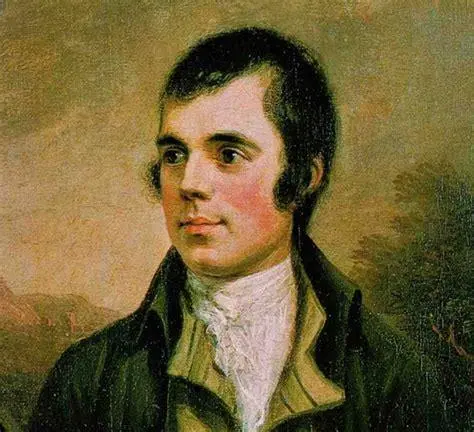
Robert Burns
Again Rejoicing Nature Sees
Again rejoicing nature sees
Her robe assume its vernal hues,
Her leafy looks wave in the breeze,
All freshly steep'd in morning dews.
And maun I still on Menie doat,
And bear the scorn that's in her ee?
For it's jet, jet black, an' it's like a hawk,
An' it winna let a body be!
In vain to me the cowslips blaw,
In vain to me the vi'lets spring;
In vain to me, in glen or shaw,
The mavis and the lintwhite sing.
And maun I still...
The merry ploughboy cheers his team,
Wi' joy the tentie seedsman stalks,
But life to me 's a weary dream,
A dream of ane that never wauks.
And maun I still...
The wanton coot the water skims,
Among the reeds the ducklings cry,
The stately swan majestic swims,
And every thing is blest but I.
And maun I still...
The shepherd steeks his faulding slap,
And owre the moorlands whistles shill,
Wi' wild, unequal, wand'ring step,
I meet him on the dewy hill.
And maun I still...
And when the lark, 'tween light and dark,
Blythe waukens by the daisy's side,
And mounts and sings on fluttering wings,
A woe-worn ghaist I hameward glide.
And maun I still...
Come, Winter, with thine angry howl,
And raging bend the naked tree;
Thy gloom will soothe my cheerless soul,
When Nature all is sad like me!
And maun I still...
255
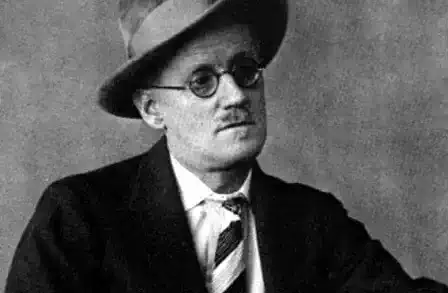
James Joyce
All Day I Hear the Noise of Waters
All day I hear the noise of waters
Making moan,
Sad as the sea-bird is when, going
Forth alone,
He hears the winds cry to the water's
Monotone.
The grey winds, the cold winds are blowing
Where I go.
I hear the noise of many waters
Far below.
All day, all night, I hear them flowing
To and fro.
Making moan,
Sad as the sea-bird is when, going
Forth alone,
He hears the winds cry to the water's
Monotone.
The grey winds, the cold winds are blowing
Where I go.
I hear the noise of many waters
Far below.
All day, all night, I hear them flowing
To and fro.
255
Robert Burns
The Gloomy Night Is Gath'ring Fast
The gloomy night is gath'ring fast,
Loud roars the wild inconstant blast;
Yon murky cloud is filled with rain,
I see it driving o'er the plain;
The hunter now has left the moor,
The scatt'red coveys meet secure;
While here I wander, prest with care,
Along the lonely banks of Ayr.
The Autumn mourns her rip'ning corn
By early Winter's ravage torn;
Across her placid, azure sky,
She sees the scowling tempest fly;
Chill runs my blood to hear it rave:
I think upon the stormy wave,
Where many a danger I must dare,
Far from the bonie banks of Ayr.
'Tis not the surging billows' roar,
'Tis not the fatal, deadly shore;
Tho' death inev'ry shape appear,
The wretched have no more to fear:
But round my heart the ties are bound,
That heart transpierc'd with many a wound;
These bleed afresh, those ties I tear,
To leave the bonie banks of Ayr.
Farewell, old Coila's hills and dales,
Her heathy moors and winding vales;
The scenes where wretched Fancy roves,
Pursuing past, unhappy loves!
Farewell my friends! Farewell my foes!
My peace with these, my love with those--
The bursting tears my heart declare,
Farewell, my bonie banks of Ayr.
255
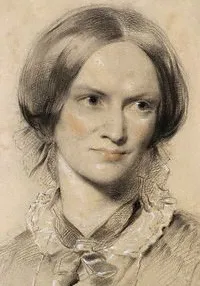
Charlotte Brontë
Evening Solace
THE human heart has hidden treasures,
In secret kept, in silence sealed;
The
thoughts, the hopes, the dreams, the pleasures,
Whose charms were broken if revealed.
And days may pass in gay confusion,
And nights in rosy riot fly,
While, lost in Fame's or Wealth's illusion,
The memory of the Past may die.
But, there are hours of lonely musing,
Such as in evening silence come,
When, soft as birds their pinions closing,
The heart's best feelings gather home.
Then in our souls there seems to languish
A tender grief that is not woe;
And thoughts that once wrung groans of anguish,
Now cause but some mild tears to flow.
And feelings, once as strong as passions,
Float softly backa
faded dream;
Our own sharp griefs and wild sensations,
The tale of others' sufferings seem.
Oh ! when the heart is freshly bleeding,
How longs it for that time to be,
When, through the mist of years receding,
Its woes but live in reverie !
And it can dwell on moonlight glimmer,
On evening shade and loneliness;
And, while the sky grows dim and dimmer,
Feel no untold and strange distress
Only
a deeper impulse given
By lonely hour and darkened room,
To solemn thoughts that soar to heaven,
Seeking a life and world to come.
255
Christina Rossetti
A Royal Princess
I, a princess, king-descended, decked with jewels, gilded, drest,
Would rather be a peasant with her baby at her breast,
For all I shine so like the sun, and am purple like the west.
Two and two my guards behind, two and two before,
Two and two on either hand, they guard me evermore;
Me, poor dove, that must not coo—eagle that must not soar.
All my fountains cast up perfumes, all my gardens grow
Scented woods and foreign spices, with all flowers in blow
That are costly, out of season as the seasons go.
All my walls are lost in mirrors, whereupon I trace
Self to right hand, self to left hand, self in every place,
Self-same solitary figure, self-same seeking face.
Then I have an ivory chair high to sit upon,
Almost like my father's chair, which is an ivory throne;
There I sit uplift and upright, there I sit alone.
Alone by day, alone by night, alone days without end;
My father and my mother give me treasures, search and spend—
O my father! O my mother! have you ne'er a friend?
As I am a lofty princess, so my father is
A lofty king, accomplished in all kingly subtilties,
Holding in his strong right hand world-kingdoms' balances.
He has quarrelled with his neighbours, he has scourged his foes;
Vassal counts and princes follow where his pennon goes,
Long-descended valiant lords whom the vulture knows,
On whose track the vulture swoops, when they ride in state
To break the strength of armies and topple down the great:
Each of these my courteous servant, none of these my mate.
My father counting up his strength sets down with equal pen
So many head of cattle, head of horses, head of men;
These for slaughter, these for breeding, with the how and when.
Some to work on roads, canals; some to man his ships;
Some to smart in mines beneath sharp overseers' whips;
Some to trap fur-beasts in lands where utmost winter nips.
Once it came into my heart, and whelmed me like a flood,
That these too are men and women, human flesh and blood;
Men with hearts and men with souls, though trodden down like mud.
Our feasting was not glad that night, our music was not gay:
On my mother's graceful head I marked a thread of grey,
My father frowning at the fare seemed every dish to weigh.
I sat beside them sole princess in my exalted place,
My ladies and my gentlemen stood by me on the dais:
A mirror showed me I look old and haggard in the face;
It showed me that my ladies all are fair to gaze upon,
Plump, plenteous-haired, to every one love's secret lore is known,
They laugh by day, they sleep by night; ah me, what is a throne?
The singing men and women sang that night as usual,
The dancers danced in pairs and sets, but music had a fall,
A melancholy windy fall as at a funeral.
Amid the toss of torches to my chamber back we swept;
My ladies loosed my golden chain; meantime I could have wept
To think of some in galling chains whether they waked or slept.
I took my bath of scented milk, delicately waited on,
They burned sweet things for my delight, cedar and cinnamon,
They lit my shaded silver lamp, and left me there alone.
A day went by, a week went by. One day I heard it said:
'Men are clamouring, women, children, clamouring to be fed;
Men like famished dogs are howling in the streets for bread.'
So two whispered by my door, not thinking I could hear,
Vulgar naked truth, ungarnished for a royal ear;
Fit for cooping in the background, not to stalk so near.
But I strained my utmost sense to catch this truth, and mark:
'There are families out grazing like cattle in the park.'
'A pair of peasants must be saved even if we build an ark.'
A merry jest, a merry laugh, each strolled upon his way;
One was my page, a lad I reared and bore with day by day;
One was my youngest maid as sweet and white as cream in May.
Other footsteps followed softly with a weightier tramp;
Voices said: 'Picked soldiers have been summoned from the camp
To quell these base-born ruffians who make free to howl and stamp.'
'Howl and stamp?' one answered: 'They made free to hurl a stone
At the minister's state coach, well aimed and stoutly thrown.'
'There's work then for the soldiers, for this rank crop must be mown.'
'One I saw, a poor old fool with ashes on his head,
Whimpering because a girl had snatched his crust of bread:
Then he dropped; when some one raised him, it turned out he was dead.'
'After us the deluge,' was retorted with a laugh:
'If bread's the staff of life, they must walk without a staff.'
'While I've a loaf they're welcome to my blessing and the chaff.'
These passed. The king: stand up. Said my father with a smile:
'Daughter mine, your mother comes to sit with you awhile,
She's sad to-day, and who but you her sadness can beguile?'
He too left me. Shall I touch my harp now while I wait,—
(I hear them doubling guard below before our palace gate—)
Or shall I work the last gold stitch into my veil of state;
Or shall my woman stand and read some unimpassioned scene,
There's music of a lulling sort in words that pause between;
Or shall she merely fan me while I wait here for the queen?
Again I caught my father's voice in sharp word of command:
'Charge!' a clash of steel: 'Charge again, the rebels stand.
Smite and spare not, hand to hand; smite and spare not, hand to hand.'
There swelled a tumult at the gate, high voices waxing higher;
A flash of red reflected light lit the cathedral spire;
I heard a cry for faggots, then I heard a yell for fire.
'Sit and roast there with your meat, sit and bake there with your bread,
You who sat to see us starve,' one shrieking woman said:
'Sit on your throne and roast with your crown upon your head.'
Nay, this thing will I do, while my mother tarrieth,
I will take my fine spun gold, but not to sew therewith,
I will take my gold and gems, and rainbow fan and wreath;
With a ransom in my lap, a king's ransom in my hand,
I will go down to this people, will stand face to face, will stand
Where they curse king, queen, and princess of this cursed land.
They shall take all to buy them bread, take all I have to give;
I, if I perish, perish; they to-day shall eat and live;
I, if I perish, perish; that's the goal I half conceive:
Once to speak before the world, rend bare my heart and show
The lesson I have learned which is death, is life, to know.
I, if I perish, perish; in the name of God I go.
252
