
Sadness and Melancholy
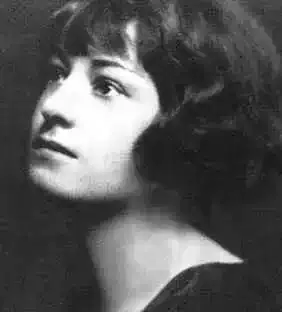
Dorothy Parker
Landscape
Now this must be the sweetest place
From here to heaven's end;
The field is white and flowering lace,
The birches leap and bend,
The hills, beneath the roving sun,
From green to purple pass,
And little, trifling breezes run
Their fingers through the grass.
So good it is, so gay it is,
So calm it is, and pure.
A one whose eyes may look on this
Must be the happier, sure.
But me- I see it flat and gray
And blurred with misery,
Because a lad a mile away
Has little need of me.
315
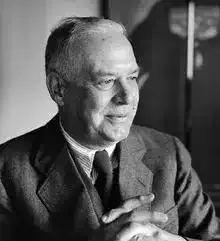
Wallace Stevens
Gray Room
Although you sit in a room that is gray,
Except for the silver
Of the straw-paper,
And pick
At your pale white gown;
Or lift one of the green beads
Of your necklace,
To let it fall;
Or gaze at your green fan
Printed with the red branches of a red willow;
Or, with one finger,
Move the leaf in the bowl--
The leaf that has fallen from the branches of the forsythia
Beside you...
What is all this?
I know how furiously your heart is beating.
314

Henry Wadsworth Longfellow
By The Fireside : The Open Window
The old house by the lindens
Stood silent in the shade,
And on the gravelled pathway
The light and shadow played.
I saw the nursery windows
Wide open to the air;
But the faces of the children,
They were no longer there.
The large Newfoundland house-dog
Was standing by the door;
He looked for his little playmates,
Who would return no more.
They walked not under the lindens,
They played not in the hall;
But shadow, and silence, and sadness
Were hanging over all.
The birds sang in the branches,
With sweet, familiar tone;
But the voices of the children
Will be heard in dreams alone!
And the boy that walked beside me,
He could not understand
Why closer in mine, ah! closer,
I pressed his warm, soft hand!
310

Henry Lawson
My Father-in-Law and I
MY father-in-law is a careworn man,
And a silent man is he;
But he summons a smile as well as he can
Whenever he meets with me.
The sign we make with a silent shake
That speaks of the days gone by—
Like men who meet at a funeral—
My father-in-law and I.
My father-in-law is a sober man
(And a virtuous man, I think);
But we spare a shilling whenever we can,
And we both drop in for a drink.
Our pints they fill, and we say, “Ah, well!”
With the sound of the world-old sigh—
Like the drink that comes after a funeral—
My father-in-law and I.
My father-in-law is a kindly man—
A domestic man is he.
He tries to look cheerful as well as he can
Whenever he meets with me.
But we stand and think till the second drink
In a silence that might imply
That we’d both get over a funeral,
My father-in-law and I.
311

Emily Dickinson
I was the slightest in the House
I was the slightest in the House-
I took the smallest Room-
At night, my little Lamp, and Book-
And one Geranium-
So stationed I could catch the Mint
That never ceased to fall-
And just my Basket-
Let me think-I'm sure-
That this was all-
I never spoke-unless addressed-
And then, 'twas brief and low-
I could not bear to live-aloud-
The Racket shamed me so-
And if it had not been so far-
And any one I knew
Were going-I had often thought
How noteless-I could die-
312

James Whitcomb Riley
Johnson's Boy
The world is turned ag'in' me,
And people says, 'They guess
That nothin' else is in me
But pure maliciousness!'
I git the blame for doin'
What other chaps destroy,
And I'm a-goin' to ruin
Because I'm 'Johnson's boy.'
THAT ain't my name--I'd ruther
They'd call me IKE or PAT--
But they've forgot the other--
And so have _I_, for that!
I reckon it's as handy,
When Nibsy breaks his toy,
Or some one steals his candy,
To say 'twas 'JOHNSON'S BOY!'
You can't git any water
At the pump, and find the spout
So durn chuck-full o' mortar
That you have to bore it out;
You tackle any scholar
In Wisdom's wise employ,
And I'll bet you half a dollar
He'll say it's 'Johnson's boy!'
Folks don't know how I suffer
In my uncomplainin' way--
They think I'm gittin' tougher
And tougher every day.
Last Sunday night, when Flinder
Was a-shoutin' out for joy,
And some one shook the winder,
He prayed for 'Johnson's boy.'
I'm tired of bein' follered
By farmers every day,
And then o' bein' collared
For coaxin' hounds away;
Hounds always plays me double-It's
a trick they all enjoy--
To git me into trouble,
Because I'm 'Johnson's boy.'
But if I git to Heaven,
I hope the Lord'll see
SOME boy has been perfect,
And lay it on to me;
I'll swell the song sonorous,
And clap my wings for joy,
And sail off on the chorus-
'Hurrah for 'Johnson's boy!''
308

Edna St. Vincent Millay
Kin To Sorrow
Am I kin to Sorrow,
That so oft
Falls the knocker of my door——
Neither loud nor soft,
But as long accustomed,
Under Sorrow's hand?
Marigolds around the step
And rosemary stand,
And then comes Sorrow—
And what does Sorrow care
For the rosemary
Or the marigolds there?
Am I kin to Sorrow?
Are we kin?
That so oft upon my door—
Oh, come in!
309
James Whitcomb Riley
A Feel In The Chris'mas-Air
They's a kind o' _feel_ in the air, to me.
When the Chris'mas-times sets in.
That's about as much of a mystery
As ever I've run ag'in!--
Fer instunce, now, whilse I gain in weight
And gineral health, I swear
They's a _goneness_ somers I can't quite state--
A kind o' _feel_ in the air.
They's a feel in the Chris'mas-air goes right
To the spot where a man _lives_ at!--
It gives a feller a' appetite--
They ain't no doubt about _that_!--
And yit they's _somepin_'--I don't know what--
That follers me, here and there,
And ha'nts and worries and spares me not--
A kind o' feel in the air!
They's a _feel_, as I say, in the air that's jest
As blame-don sad as sweet!--
In the same ra-sho as I feel the best
And am spryest on my feet,
They's allus a kind o' sort of a' _ache_
That I can't lo-cate no-where;--
But it comes with _Chris'mas_, and no mistake!--
A kind o' feel in the air.
Is it the racket the childern raise?-W'y,
_no_!--God bless 'em!--_no_!--
Is it the eyes and the cheeks ablaze--
Like my _own_ wuz, long ago?--
Is it the bleat o' the whistle and beat
O' the little toy-drum and blare
O' the horn?--_No! no!_--it is jest the sweet--
The sad-sweet feel in the air.
304

Johann Wolfgang von Goethe
To Lina
SHOULD these songs, love, as they fleet,
Chance again to reach thy hand,
At the piano take thy seat,
Where thy friend was wont to stand!
Sweep with finger bold the string,
Then the book one moment see:
But read not! do nought but sing!
And each page thine own will be!
Ah, what grief the song imparts
With its letters, black on white,
That, when breath'd by thee, our hearts
Now can break and now delight!
304
James Whitcomb Riley
At Crown Hill
Leave him here in the fresh
greening grasses and trees
And the symbols of love, and the solace of these-
The saintly white lilies and blossoms he keeps
In endless caress as
he breathlessly sleeps.
The tears of our eyes wrong the scene of his rest,
For the sky's at its clearest-the sun's at its best-
The earth at its greenest- its wild bud and bloom
At its sweetest-and sweetest its honey'd perfume.
Home! Home!-Leave him here in his lordly estate,
And with never a tear as we turn from the gate!
Turn back to the home that will know him no more,-
The vines at the window-the sun through the door,-
Nor sound of his voice, nor the light of his face!...
But the birds will sing on, and the rose, in his place,
Will tenderly smile til we daringly feign
He is home with us still, though the tremulous rain
Of our tears reappear, and again all is bloom,
And all prayerless we sob in the long-darkened room.
Heaven portions it thus-the old mystery dim,-
It is midnight to us-it is morning to him
301
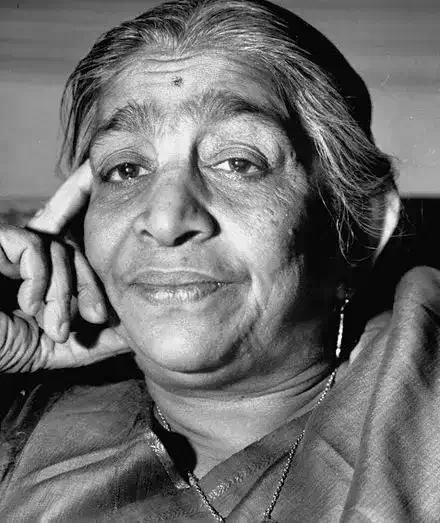
Sarojini Naidu
Transcience
Nay, do not grieve tho' life be full of sadness,
Dawn will not veil her spleandor for your grief,
Nor spring deny their bright, appointed beauty
To lotus blossom and ashoka leaf.
Nay, do not pine, tho' life be dark with trouble,
Time will not pause or tarry on his way;
To-day that seems so long, so strange, so bitter,
Will soon be some forgotten yesterday.
Nay, do not weep; new hopes, new dreams, new faces,
The unspent joy of all the unborn years,
Will prove your heart a traitor to its sorrow,
And make your eyes unfaithful to their tears.
297

Robert W. Service
The Sewing-Girl
The humble garret where I dwell
Is in that Quarter called the Latin;
It isn't spacious -- truth to tell,
There's hardly room to swing a cat in.
But what of that! It's there I fight
For food and fame, my Muse inviting,
And all the day and half the night
You'll find me writing, writing, writing.
Now, it was in the month of May
As, wrestling with a rhyme rheumatic,
I chanced to look across the way,
And lo! within a neighbor attic,
A hand drew back the window shade,
And there, a picture glad and glowing,
I saw a sweet and slender maid,
And she was sewing, sewing, sewing.
So poor the room, so small, so scant,
Yet somehow oh, so bright and airy.
There was a pink geranium plant,
Likewise a very pert canary.
And in the maiden's heart it seemed
Some fount of gladness must be springing,
For as alone I sadly dreamed
I heard her singing, singing, singing.
God love her! how it cheered me then
To see her there so brave and pretty;
So she with needle, I with pen,
We slaved and sang above the city.
And as across my streams of ink
I watched her from a poet's distance,
She stitched and sang . . . I scarcely think
She was aware of my existence.
And then one day she sang no more.
That put me out, there's no denying.
I looked -- she labored as before,
But, bless me! she was crying, crying.
Her poor canary chirped in vain;
Her pink geranium drooped in sorrow;
"Of course," said I, "she'll sing again.
Maybe," I sighed, "she will to-morrow."
Poor child; 'twas finished with her song:
Day after day her tears were flowing;
And as I wondered what was wrong
She pined and peaked above her sewing.
And then one day the blind she drew,
Ah! though I sought with vain endeavor
To pierce the darkness, well I knew
My sewing-girl had gone for ever.
And as I sit alone to-night
My eyes unto her room are turning . . .
I'd give the sum of all I write
Once more to see her candle burning,
Once more to glimpse her happy face,
And while my rhymes of cheer I'm ringing,
Across the sunny sweep of space
To hear her singing, singing, singing.
295
James Whitcomb Riley
The Old Year And The New
I.
As one in sorrow looks upon
The dead face of a loyal friend,
By the dim light of New Year's dawn
I saw the Old Year end.
Upon the pallid features lay
The dear old smile--so warm and bright
Ere thus its cheer had died away
In ashes of delight.
The hands that I had learned to love
With strength of passion half divine,
Were folded now, all heedless of
The emptiness of mine.
The eyes that once had shed their bright
Sweet looks like sunshine, now were dull,
And ever lidded from the light
That made them beautiful.
II.
The chimes of bells were in the air,
And sounds of mirth in hall and street,
With pealing laughter everywhere
And throb of dancing feet:
The mirth and the convivial din
Of revelers in wanton glee,
With tunes of harp and violin
In tangled harmony.
But with a sense of nameless dread,
I turned me, from the merry face
Of this newcomer, to my dead;
And, kneeling there a space,
I sobbed aloud, all tearfully:--
By this dear face so fixed and cold,
O Lord, let not this New Year be
As happy as the old!
293
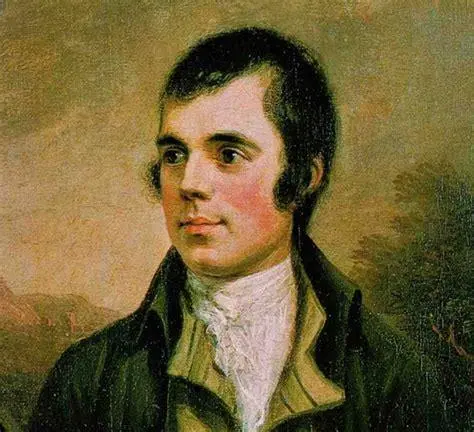
Robert Burns
Winter: A Dirge
The wintry west extends his blast,
And hail and rain does blaw;
Or the stormy north sends driving forth
The blinding sleet and snaw:
While, tumbling brown, the burn comes down,
And roars frae bank to brae;
And bird and beast in covert rest,
And pass the heartless day.
"The sweeping blast, the sky o'ercast,"
The joyless winter day
Let others fear, to me more dear
Than all the pride of May:
The tempest's howl, it soothes my soul,
My griefs it seems to join;
The leafless trees my fancy please,
Their fate resembles mine!
Thou Power Supreme, whose mighty scheme
These woes of mine fulfil,
Here firm I rest; they must be best,
Because they are Thy will!
Then all I want-O do Thou grant
This one request of mine!-
Since to enjoy Thou dost deny,
Assist me to resign.
291

Dante Alighieri
Autumn Song
Know'st thou not at the fall of the leaf
How the heart feels a languid grief
Laid on it for a covering,
And how sleep seems a goodly thing
In Autumn at the fall of the leaf?
And how the swift beat of the brain
Falters because it is in vain,
In Autumn at the fall of the leaf
Knowest thou not? and how the chief
Of joys seems--not to suffer pain?
Know'st thou not at the fall of the leaf
How the soul feels like a dried sheaf
Bound up at length for harvesting,
And how death seems a comely thing
In Autumn at the fall of the leaf?
291
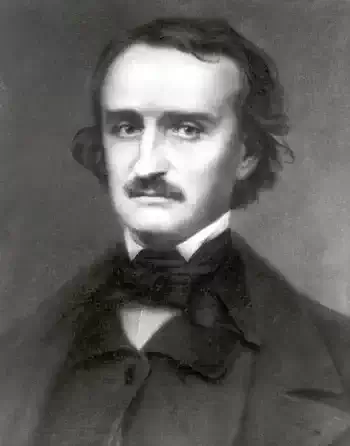
Edgar Allan Poe
A Dream Within A Dream
Take this kiss upon the brow!
And, in parting from you now,
Thus much let me avow
You
are not wrong, who deem
That my days have been a dream;
Yet if hope has flown away
In a night, or in a day,
In a vision, or in none,
Is it therefore the less gone?
All that we see or seem
Is but a dream within a dream.
I stand amid the roar
Of a surf-tormented shore,
And I hold within my hand
Grains of the golden sand
How
few! yet how they creep
Through my fingers to the deep,
While I weep- while I weep!
O God! can I not grasp
Them with a tighter clasp?
O God! can I not save
One from the pitiless wave?
Is all that we see or seem
But a dream within a dream?
287
Edgar Allan Poe
The Bells - A Collaboration
The bells! — ah, the bells!
The little silver bells!
How fairy-like a melody there floats
From their throats. —
From their merry little throats —
From the silver, tinkling throats
Of the bells, bells, bells —
Of the bells!
The bells! — ah, the bells!
The heavy iron bells!
How horrible a monody there floats
From their throats —
From their deep-toned throats —
From their melancholy throats!
How I shudder at the notes
Of the bells, bells, bells —
Of the bells!
285

Gwendolyn Brooks
A Sunset of the City
Already I am no longer looked at with lechery or love.
My daughters and sons have put me away with marbles and dolls,
Are gone from the house.
My husband and lovers are pleasant or somewhat polite
And night is night.
It is a real chill out,
The genuine thing.
I am not deceived, I do not think it is still summer
Because sun stays and birds continue to sing.
It is summer-gone that I see, it is summer-gone.
The sweet flowers indrying and dying down,
The grasses forgetting their blaze and consenting to brown.
It is a real chill out. The fall crisp comes
I am aware there is winter to heed.
There is no warm house
That is fitted with my need.
I am cold in this cold house this house
Whose washed echoes are tremulous down lost halls.
I am a woman, and dusty, standing among new affairs.
I am a woman who hurries through her prayers.
Tin intimations of a quiet core to be my
Desert and my dear relief
Come: there shall be such islanding from grief,
And small communion with the master shore.
Twang they. And I incline this ear to tin,
Consult a dual dilemma. Whether to dry
In humming pallor or to leap and die.
Somebody muffed it?? Somebody wanted to joke.
282
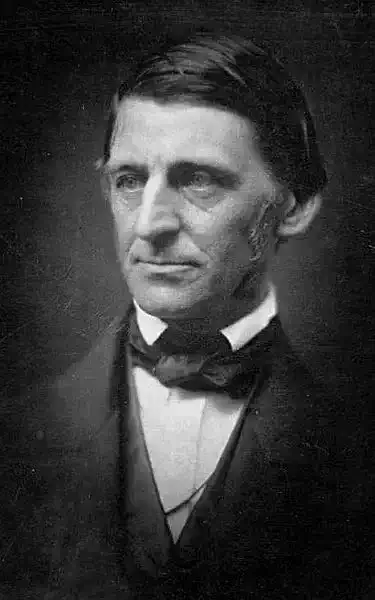
Ralph Waldo Emerson
Compensation
Why should I keep holiday,
When other men have none?
Why but because when these are gay,
I sit and mourn alone.
And why when mirth unseals all tongues
Should mine alone be dumb?
Ah! late I spoke to silent throngs,
And now their hour is come.
When other men have none?
Why but because when these are gay,
I sit and mourn alone.
And why when mirth unseals all tongues
Should mine alone be dumb?
Ah! late I spoke to silent throngs,
And now their hour is come.
283
Emily Dickinson
I got so I could take his name
I got so I could take his name
Without-
Tremendous gain-
That Stop-sensation-on my Soul-
And Thunder-in the Room-
I got so I could walk across
That Angle in the floor,
Where he turned so, and I turned-how-
And all our Sinew tore-
I got so I could stir the Box-
In which his letters grew
Without that forcing, in my breath-
As Staples-driven through-
Could dimly recollect a Grace-
I think, they call it "God"-
Renowned to ease Extremity-
When Formula, had failed-
And shape my HandsPetition's
way,
Tho' ignorant of a word
That Ordination-utters-
My Business, with the Cloud,
If any Power behind it, be,
Not subject to Despair-
It care, in some remoter way,
For so minute affair
As Misery-
Itself, too vast, for interrupting-more-
284
Dorothy Parker
Wail
Love has gone a-rocketing.
That is not the worst;
I could do without the thing,
And not be the first.
Joy has gone the way it came.
That is nothing new;
I could get along the same, --
Many people do.
Dig for me the narrow bed,
Now I am bereft.
All my pretty hates are dead,
And what have I left?
That is not the worst;
I could do without the thing,
And not be the first.
Joy has gone the way it came.
That is nothing new;
I could get along the same, --
Many people do.
Dig for me the narrow bed,
Now I am bereft.
All my pretty hates are dead,
And what have I left?
280
Robert W. Service
Poor Poet
'A man should write to please himself,'
He proudly said.
Well, see his poems on the shelf,
Dusty, unread.
When he came to my shop each day,
So peaked and cold,
I'd sneak one of his books away
And say 'twas sold.
And then by chance he looked below,
And saw a stack
Of his own work,--speechless with woe
He came not back.
I hate to think he took to drink,
And passed away;
I have not heard of him a word
Unto this day.
A man must write to please himself,
Of all it's true;
But happy they who spurning pelf-Please
people too.
279

Henry Van Dyke
If All the Skies
If all the skies were sunshine,
Our faces would be fain
To feel once more upon them
The cooling splash of rain.
If all the world were music,
Our hearts would often long
For one sweet strain of silence,
To break the endless song.
If life were always merry,
Our souls would seek relief,
And rest from weary laughter
In the quiet arms of grief.
277
Emily Dickinson
The Night was wide, and furnished scant
The Night was wide, and furnished scant
With but a single Star-
That often as a Cloud it met-
Blew out itself-for fear-
The Wind pursued the little Bush-
And drove away the Leaves
November left-then clambered up
And fretted in the Eaves-
No Squirrel went abroad-
A Dog's belated feet
Like intermittent Plush, he heard
Adown the empty Street-
To feel if Blinds be fast-
And closer to the fire-
Her little Rocking Chair to draw-
And shiver for the Poor-
The Housewife's gentle Task-
How pleasanter-said she
Unto the Sofa opposite-
The Sleet-than May, no Thee-
276