
Old Age and Ageing

Anonymous
The Old Man's Wish
If I live to be old, for I find I go down,
Let this be my fate: In a country town
May I have a warm house, with a stone at the gate,
And a cleanly young girl to rub my bald pate.
May I govern my passion with an absolute sway,
And grow wiser and better as my strength wears away,
Without gout or stone, by a gentle decay.
Near a shady grove, and a murmuring brook,
With the ocean at distance, whereupon I may look,
With a spacious plain without hedge or stile,
And an easy pad-nag to ride out a mile.
May I govern my passion with an absolute sway,
And grow wiser and better as my strength wears away,
Without gout or stone, by a gentle decay.
With Horace and Petrarch, and two or three more
Of the best wits that reign'd in the ages before,
With roast mutton, rather than ven'son or veal,
And clean though coarse linen at every meal.
May I govern my passion with an absolute sway,
And grow wiser and better as my strength wears away,
Without gout or stone, by a gentle decay.
With a pudding on Sundays, with stout humming liquor,
And remnants of Latin to welcome the vicar,
With Monte-Fiascone or Burgundy wine,
To drink the King's health as oft as I dine.
May I govern my passion with an absolute sway,
And grow wiser and better as my strength wears away,
Without gout or stone, by a gentle decay.
With a courage undaunted may I face my last day,
And when I am dead may the better sort say,
In the morning when sober, in the evening when mellow,
He's gone, and left not behind him his fellow.
May I govern my passion with an absolute sway,
And grow wiser and better as my strength wears away,
Without gout or stone, by a gentle decay.
284

Robert W. Service
Old Trouper
I was Mojeska's leading man
And famous parts I used to play,
But now I do the best I can
To earn my bread from day to day;
Here in this Burg of Breaking Hears,
Where one wins as a thousand fail,
I play a score of scurvy parts
Till Time writes Finis to my tale.
My wife is dead, my daughter wed,
With heaps of trouble of their own;
And though I hold aloft my head
I'm humble, scared and all alone . . .
To-night I burn each photograph,
Each record of my former fame,
And oh, how bitterly I laugh
And feed them to the hungry flame!
Behold how handsome I was then -
What glowing eye, what noble mien;
I towered above my fellow men,
And proudly strode the painted scene.
Ah, Vanity! What fools are we,
With empty ends and foolish aims . . .
There now, I fling with savage glee
My David Garrick to the flames.
"Is this a dagger that I see":
Oh, how I used to love that speech;
We were old-fashioned - "hams" maybe,
Yet we Young Arrogance could teach.
"Out, out brief candle!" There are gone
My Lear, my Hamlet and MacBeth;
And now by ashes cold and wan
I wait my cue, my prompter Death.
This life of ours is just a play;
Its end is fashioned from the start;
Fate writes each word we have to say,
And puppet-like we strut our part.
Once I wore laurels on my brow,
But now I wait, a sorry clown,
To make my furtive, farewell bow . . .
Haste Time! Oh, ring the Curtain down.
282

Thomas Hardy
She, To Him
I
WHEN you shall see me lined by tool of Time,
My lauded beauties carried off from me,
My eyes no longer stars as in their prime,
My name forgot of Maiden Fair and Free;
When in your being heart concedes to mind,
And judgment, though you scarce its process know,
Recalls the excellencies I once enshrined,
And you are irked that they have withered so:
Remembering that with me lies not the blame,
That Sportsman Time but rears his brood to kill,
Knowing me in my soul the very same--
One who would die to spare you touch of ill!--
Will you not grant to old affection's claim
The hand of friendship down Life's sunless hill?
279
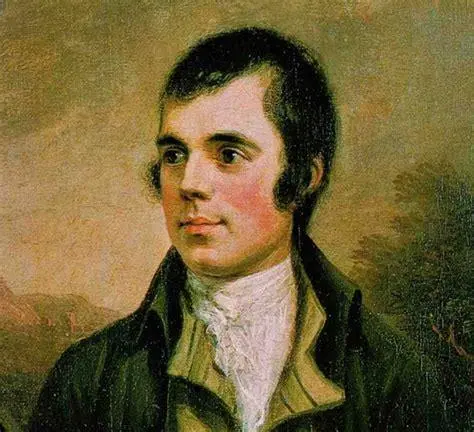
Robert Burns
John Anderson My Jo
John Anderson my jo, John,
When we were first acquent,
Your locks were like the raven,
Your bonny brow was brent;
But now your brow is bled, John,
Your locks are like the straw,
But blessings on your frosty pow,
John Anderson my jo!
John Anderson my jo, John,
We clamb the hill thegither
And monie a cantie day, John,
We've had wi' ane anither;
Now we maun totter down, John,
And hand in hand we'll go,
And sleep thegither at the foot,
John Anderson my jo!
275

Horácio
BkIII:XV Too Old
O, dear wife of poor Ibycus,
put an end to your wickedness, at last, and all
of your infamous goings-on:
now you are nearer the season for dying,
stop playing about with the girls,
and scattering a mist over shining stars.
What fits Pholoe is not quite
fitting for you, Chloris: while your daughter’s more
suited to storming the houses of lovers,
like a Bacchante stirred by the beating drum.
Her love for Nothus forces her
to gambol like a lascivious she-goat:
the wool that’s shorn near to noble
Luceria’s fitting for you, sad old thing,
not the dark red flower of the rose,
nor the lyre, nor the wine-jars drained to their dregs
274

Ogden Nash
The Sunset Years of Samuel Shy
Master I may be,
But not of my fate.
Now come the kisses, too many too late.
Tell me, O Parcae,
For fain would I know,
Where were these kisses three decades ago?
Girls there were plenty,
Mint julep girls, beer girls,
Gay younger married and headstrong career girls,
The girls of my friends
And the wives of my friends,
Some smugly settled and some at loose ends,
Sad girls, serene girls,
Girls breathless and turbulent,
Debs cosmopolitan, matrons suburbulent,
All of them amiable,
All of them cordial,
Innocent rousers of instincts primordial,
But even though health and wealth
Hadn't yet missed me,
None of them,
Not even Jenny,
Once kissed me.
These very same girls
Who with me have grown older
Now freely relax with a head on my shoulder,
And now come the kisses,
A flood in full spate,
The meaningless kisses, too many too late.
They kiss me hello,
They kiss me goodbye,
Should I offer a light, there's a kiss for reply.
They kiss me at weddings,
They kiss me at wakes,
The drop of a hat is less than it takes.
They kiss me at cocktails,
They kiss me at bridge,
It's all automatic, like slapping a midge.
The sound of their kisses
Is loud in my ears
Like the locusts that swarm every seventeen years.
I'm arthritic, dyspeptic,
Potentially ulcery,
And weary of kisses by custom compulsory.
Should my dear ones commit me
As senile demential,
It's from kisses perfunctory, inconsequential.
Answer, O Parcae,
For fain would I know,
Where were these kisses three decades ago?
272
Robert W. Service
The Centenarians
I asked of ancient gaffers three
The way of their ripe living,
And this is what they told to me
Without Misgiving.
The First: 'The why I've lived so long,
To my fond recollection
Is that for women, wine and song
I've had a predilection.
Full many a bawdy stave I've sung
With wenches of my choosing,
But of the joys that kept me young
The best was boozing.'
The Second: 'I'm a sage revered
Because I was a fool
And with the bourgeon of my beard
I kept my ardour cool.
On health I have conserved my hold
By never dissipating:
And that is why a hundred old
I'm celebrating.'
The Third: 'The explanation I
Have been so long a-olding,
Is that to wash I never try,
Despite conjugal scolding.
I hate the sight of soap and so
I seldom change my shirt:
Believe me, Brother, there is no
Preservative like dirt.'
So there you have the reasons three
Why age may you rejoice:
Booze, squalour and temerity,-Well,
you may take your choice.
Yet let me say, although it may
Your egoism hurt,
Of all the three it seems to me
The best is DIRT.
271
Robert W. Service
Washerwife
The aged Queen who passed away
Had sixty servants, so they say;
Twice sixty hands her shoes to tie:
Two soapy ones have I.
The old Queen had of beds a score;
A cot have I and ask no more.
For when the last is said and done
One can but die in one.
The old Queen rightly thought that she
Was better than the likes o' me;
And yet I'm glad despite her grace
I am not in her place.
The old Queen's gone and I am here,
To eat my tripe and drink my beer,
Athinkin' as I wash my clothes:
We must have monarchs, I suppose . . .
Well, well,--'Taint no skin off my nose!
270

Henry Lawson
Black Bonnet
A day of seeming innocence,
A glorious sun and sky,
And, just above my picket fence,
Black Bonnet passing by.
In knitted gloves and quaint old dress,
Without a spot or smirch,
Her worn face lit with peacefulness,
Old Granny goes to church.
Her hair is richly white, like milk,
That long ago was fair --
And glossy still the old black silk
She keeps for "chapel wear";
Her bonnet, of a bygone style,
That long has passed away,
She must have kept a weary while
Just as it is to-day.
The parasol of days gone by --
Old days that seemed the best --
The hymn and prayer books carried high
Against her warm, thin breast;
As she had clasped -- come smiles come tears,
Come hardship, aye, and worse --
On market days, through faded years,
The slender household purse.
Although the road is rough and steep,
She takes it with a will,
For, since she hushed her first to sleep
Her way has been uphill.
Instinctively I bare my head
(A sinful one, alas!)
Whene'er I see, by church bells led,
Brave Old Black Bonnet pass.
For she has known the cold and heat
And dangers of the Track:
Has fought bush-fires to save the wheat
And little home Out Back.
By barren creeks the Bushman loves,
By stockyard, hut, and pen,
The withered hands in those old gloves
Have done the work of men.
.....
They called it "Service" long ago
When Granny yet was young,
And in the chapel, sweet and low,
As girls her daughters sung.
And when in church she bends her head
(But not as others do)
She sees her loved ones, and her dead
And hears their voices too.
Fair as the Saxons in her youth,
Not forward, and not shy;
And strong in healthy life and truth
As after years went by:
She often laughed with sinners vain,
Yet passed from faith to sight --
God gave her beauty back again
The more her hair grew white.
She came out in the Early Days,
(Green seas, and blue -- and grey) --
The village fair, and English ways,
Seemed worlds and worlds away.
She fought the haunting loneliness
Where brooding gum trees stood;
And won through sickness and distress
As Englishwomen could.
.....
By verdant swath and ivied wall
The congregation's seen --
White nothings where the shadows fall,
Black blots against the green.
The dull, suburban people meet
And buzz in little groups,
While down the white steps to the street
A quaint old figure stoops.
And then along my picket fence
Where staring wallflowers grow -World-
wise Old Age, and Common-sense! --
Black Bonnet, nodding slow.
But not alone; for on each side
A little dot attends
In snowy frock and sash of pride,
And these are Granny's friends.
To them her mind is clear and bright,
Her old ideas are new;
They know her "real talk" is right,
Her "fairy talk" is true.
And they converse as grown-ups may,
When all the news is told;
The one so wisely young to-day,
The two so wisely old.
At home, with dinner waiting there,
She smooths her hair and face,
And puts her bonnet by with care
And dons a cap of lace.
The table minds its p's and q's
Lest one perchance be hit
By some rare dart which is a part
Of her old-fashioned wit.
.....
Her son and son's wife are asleep,
She puts her apron on --
The quiet house is hers to keep,
With all the youngsters gone.
There's scarce a sound of dish on dish
Or cup slipped into cup,
When left alone, as is her wish,
Black Bonnet "washes up."
269

Emily Dickinson
On that dear Frame the Years had worn
On that dear Frame the Years had worn
Yet precious as the House
In which We first experienced Light
The Witnessing, to Us-
Precious! It was conceiveless fair
As Hands the Grave had grimed
Should softly place within our own
Denying that they died.
Yet precious as the House
In which We first experienced Light
The Witnessing, to Us-
Precious! It was conceiveless fair
As Hands the Grave had grimed
Should softly place within our own
Denying that they died.
270

Jonathan Swift
Stella's Birthday March 13, 1727
This day, whate'er the Fates decree,
Shall still be kept with joy by me:
This day then let us not be told,
That you are sick, and I grown old;
Nor think on our approaching ills,
And talk of spectacles and pills.
To-morrow will be time enough
To hear such mortifying stuff.
Yet, since from reason may be brought
A better and more pleasing thought,
Which can, in spite of all decays,
Support a few remaining days:
From not the gravest of divines
Accept for once some serious lines.
Although we now can form no more
Long schemes of life, as heretofore;
Yet you, while time is running fast,
Can look with joy on what is past.
Were future happiness and pain
A mere contrivance of the brain,
As atheists argue, to entice
And fit their proselytes for vice;
(The only comfort they propose,
To have companions in their woes;)
Grant this the case; yet sure 'tis hard
That virtue, styl'd its own reward,
And by all sages understood
To be the chief of human good,
Should, acting, die, nor leave behind
Some lasting pleasure in the mind;
Which by remembrance will assuage
Grief, sickness, poverty, and age;
And strongly shoot a radiant dart
To shine through life's declining part.
Say, Stella, feel you no content,
Reflecting on a life well spent?
Your skilful hand employ'd to save
Despairing wretches from the grave;
And then supporting with your store
Those whom you dragg'd from death before?
So Providence on mortals waits,
Preserving what it first creates.
Your gen'rous boldness to defend
An innocent and absent friend;
That courage which can make you just
To merit humbled in the dust;
The detestation you express
For vice in all its glitt'ring dress;
That patience under torturing pain,
Where stubborn stoics would complain:
Must these like empty shadows pass,
Or forms reflected from a glass?
Or mere chimæras in the mind,
That fly, and leave no marks behind?
Does not the body thrive and grow
By food of twenty years ago?
And, had it not been still supplied,
It must a thousand times have died.
Then who with reason can maintain
That no effects of food remain?
And is not virtue in mankind
The nutriment that feeds the mind;
Upheld by each good action past,
And still continued by the last?
Then, who with reason can pretend
That all effects of virtue end?
Believe me, Stella, when you show
That true contempt for things below,
Nor prize your life for other ends,
Than merely to oblige your friends;
Your former actions claim their part,
And join to fortify your heart.
For Virtue, in her daily race,
Like Janus, bears a double face;
Looks back with joy where she has gone
And therefore goes with courage on:
She at your sickly couch will wait,
And guide you to a better state.
O then, whatever Heav'n intends,
Take pity on your pitying friends!
Nor let your ills affect your mind,
To fancy they can be unkind.
Me, surely me, you ought to spare,
Who gladly would your suff'rings share;
Or give my scrap of life to you,
And think it far beneath your due;
You, to whose care so oft I owe
That I'm alive to tell you so.
269
Robert W. Service
Clemenceau
His frown brought terror to his foes,
But now in twilight of his days
The pure perfection of a rose
Can kindle rapture in his gaze.
Where once he swung the sword of wrath
And peoples trembled at his word,
With hoe he trims a pansied path
And listens to a bird.
His large of life was lived with noise,
With war and strife and crash of kings:
But now he hungers for the joys
Of peace, and hush of homely things.
His old dog nuzzles by his knee,
And seems to say: 'Oh Master dear,
Please do not ever part from me!
We are so happy here.'
His ancient maid, as sky draws dim,
Calls to him that the soup grows cold.
She tyrannises over him
Who once held armies in his hold.
With slippers, old skull-cap and shawl
He dreams and dozes by the fire,
Sighing: 'Behold the end of all,
Sweet rest my sole desire.
'My task is done, my pen is still;
My Book is there for all to see,--
The final triumph of my will,
Ineffably, my victory.
A Tiger once, but now a lamb,
With frailing hand my gate I close.
How hushed my heart! My life how calm!
--Its crown a Rose.'
265
Robert W. Service
Retired
I used to sing, when I was young,
The joy of idleness;
But now I'm grey I hold my tongue,
For frankly I confess
If I had not some job to do
I would be bored to death;
So I must toil until I'm through
With this asthmatic breath.
Where others slothfully would brood
beg for little chores,
To peel potatoes, chop the wood,
And even scrub the floors.
When slightly useful I can be,
I'm happy as a bboy;
Dish-washing is a boon to me,
And brushing boots a joy.
The young folks tell me: "Grandpa, please,
Don't be so manual;
You certainly have earned your ease -
Why don't you rest a spell?"
Say I: I'll have a heap of rest
On my sepulchral shelf;
So now please let me do my best
To justify myself."
For one must strive or one will die,
And work's our dearest friend;
God meant it so, and that is why
I'll toil unto the end.
I thank the Lord I'm full of beans,
So let me heft a hoe,
And I will don my garden jeans
And help the beans to grow.
263
Ogden Nash
Peekabo, I Almost See You
Middle-aged life is merry, and I love to
lead it,
But there comes a day when your eyes
are all right but your arm isn't long
enough
to hold the telephone book where you can read it,
And your friends get jocular, so you go
to the oculist,
And of all your friends he is the joculist,
So over his facetiousness let us skim,
Only noting that he has been waiting for you ever since
you said Good evening to his grandfather clock under
the impression that it was him,
And you look at his chart and it says SHRDLU QWERTYOP,
and you say Well, why SHRDNTLU QWERTYOP? and he
says one set of glasses won't do.
You need two.
One for reading Erle Stanley Gardner's Perry Mason and
Keats's "Endymion" with,
And the other for walking around without saying Hello
to strange wymion with.
So you spend your time taking off your seeing glasses to put
on your reading glasses, and then remembering that your
reading glasses are upstairs or in the car,
And then you can't find your seeing glasses again because
without them on you can't see where they are.
Enough of such mishaps, they would try the patience of an
ox,
I prefer to forget both pairs of glasses and pass my declining
years saluting strange women and grandfather clocks.
261
Horácio
BkIV:X Age
O you who are cruel still, and a master of Venus’s gifts,
when a white, unexpected plumage surmounts all your arrogance,
and the tresses that wave on your shoulders have all been shorn away,
and the colour that now outshines the flower of the crimson rose
is transformed, my Ligurinus, and has changed into roughened skin:
whenever you look at your altered face in the mirror, you’ll say:
‘Why didn’t I have, when I was a youth, the mind I have today,
or why can’t those untouched cheeks return to visit this soul of mine?’
253
Jonathan Swift
Stella’s Birth-Day.1719-20
All travellers at first incline
Where'er they see the fairest sign
And if they find the chambers neat,
And like the liquor and the meat,
Will call again, and recommend
The Angel Inn to every friend.
And though the painting grows decay'd,
The house will never lose its trade:
Nay, though the treach'rous tapster, Thomas,
Hangs a new Angel two doors from us,
As fine as daubers' hands can make it,
In hopes that strangers may mistake it,
We think it both a shame and sin
To quit the true old Angel Inn.
Now this is Stella's case in fact,
An angel's face a little crack'd.
(Could poets or could painters fix
How angels look at thirty-six
This drew us in at first to find
In such a form an angel's mind;
And every virtue now supplies
The fainting rays of Stella's eyes.
See, at her levee crowding swains,
Whom Stella freely entertains
With breeding, humour, wit, and sense,
And puts them to so small expense;
Their minds so plentifully fills,
And makes such reasonable bills,
So little gets for what she gives,
We really wonder how she lives!
And had her stock been less, no doubt
She must have long ago run out.
Then, who can think we'll quit the place,
When Doll hangs out a newer face?
Nail'd to her window full in sight
All Christian people to invite.
Or stop and light at Chloe's head,
With scraps and leavings to be fed?
Then, Chloe, still go on to prate
Of thirty-six and thirty-eight;
Pursue your trade of scandal-picking,
Your hints that Stella is no chicken;
Your innuendoes, when you tell us,
That Stella loves to talk with fellows:
But let me warn you to believe
A truth, for which your soul should grieve;
That should you live to see the day,
When Stella's locks must all be gray,
When age must print a furrow'd trace
On every feature of her face;
Though you, and all your senseless tribe,
Could Art, or Time, or Nature bribe,
To make you look like Beauty's Queen,
And hold for ever at fifteen;
No bloom of youth can ever blind
The cracks and wrinkles of your mind:
All men of sense will pass your door,
And crowd to Stella's at four-score.
254
Robert W. Service
A Song Of Sixty-Five
Brave Thackeray has trolled of days when he was twenty-one,
And bounded up five flights of stairs, a gallant garreteer;
And yet again in mellow vein when youth was gaily run,
Has dipped his nose in Gascon wine, and told of Forty Year.
But if I worthy were to sing a richer, rarer time,
I'd tune my pipes before the fire and merrily I'd strive
To praise that age when prose again has given way to rhyme,
The Indian Summer days of life when I'll be Sixty-five;
For then my work will all be done, my voyaging be past,
And I'll have earned the right to rest where folding hills are green;
So in some glassy anchorage I'll make my cable fast, --
Oh, let the seas show all their teeth, I'll sit and smile serene.
The storm may bellow round the roof, I'll bide beside the fire,
And many a scene of sail and trail within the flame I'll see;
For I'll have worn away the spur of passion and desire. . . .
Oh yes, when I am Sixty-five, what peace will come to me.
I'll take my breakfast in my bed, I'll rise at half-past ten,
When all the world is nicely groomed and full of golden song;
I'll smoke a bit and joke a bit, and read the news, and then
I'll potter round my peach-trees till I hear the luncheon gong.
And after that I think I'll doze an hour, well, maybe two,
And then I'll show some kindred soul how well my roses thrive;
I'll do the things I never yet have found the time to do. . . .
Oh, won't I be the busy man when I am Sixty-five.
I'll revel in my library; I'll read De Morgan's books;
I'll grow so garrulous I fear you'll write me down a bore;
I'll watch the ways of ants and bees in quiet sunny nooks,
I'll understand Creation as I never did before.
When gossips round the tea-cups talk I'll listen to it all;
On smiling days some kindly friend will take me for a drive:
I'll own a shaggy collie dog that dashes to my call:
I'll celebrate my second youth when I am Sixty-five.
Ah, though I've twenty years to go, I see myself quite plain,
A wrinkling, twinkling, rosy-cheeked, benevolent old chap;
I think I'll wear a tartan shawl and lean upon a cane.
I hope that I'll have silver hair beneath a velvet cap.
I see my little grandchildren a-romping round my knee;
So gay the scene, I almost wish 'twould hasten to arrive.
Let others sing of Youth and Spring, still will it seem to me
The golden time's the olden time, some time round Sixty-five.
251

Alice Walker
like it
anyway!
I get to spend time with myself
whenever I want!
I get to feel
more love
than I ever thought
existed!
Everything appears to be made
of the stuff!
I feel this
especially for You! Though I may not remember
exactly which You
you are!
How cool is this!
Still, I get to spend time with myself
whenever I want!
And that is just a taste
as the old people used to say
down in Georgia
when I was a child
of what you get
for getting old.
Reminding us, as they witnessed our curiosity about them, that no matter the losses,
there's something fabulous going on at every stage of Life, something to let go of,
maybe, but for darn sure, something to get!
250
Robert W. Service
Awake To Smile
When I blink sunshine in my eyes
And hail the amber morn,
Before the rosy dew-drop dries
With sparkle on the thorn;
When boughs with robin rapture ring,
And bees hum in the may,--
Then call me young, with heart of Spring,
Though I be grey.
But when no more I know the joy
And urgence of that hour,
As like a happy-hearted boy
I leap to land aflower;
When gusto I no longer feel,
To rouse with glad hooray,--
Then call me old and let me steal
From men away.
Let me awaken with a smile
And go to garden glee,
For there is such a little while
Of living left to me;
But when star-wist I frail away,
Lord, let the hope beguile
That to Ecstatic Light I may
Awake to smile.
252
Robert W. Service
Growing Old
Somehow the skies don't seem so blue
As they used to be;
Blossoms have a fainter hue,
Grass less green I see.
There's no twinkle in a star,
Dawns don't seem so gold . . .
Yet, of course, I know they are:
Guess I'm growing old.
Somehow sunshine seems less bright,
Birds less gladly sing;
Moons don't thrill me with delight,
There's no kick in Spring.
Hills are steeper now and I'm
Sensitive to cold;
Lines are not so keen to rhyme . . .
Gosh! I'm growing old.
Yet in spite of failing things
I've no cause to grieve;
Age with all its ailing brings
Blessings, I believe:
Kindo' gentles up the mind
As the hope we hold
That with loving we will find
Friendliness in human kind,
Grace in growing old.
249

Christina Rossetti
Consider
Consider
The lilies of the field whose bloom is brief:—
We are as they;
Like them we fade away,
As doth a leaf.
Consider
The sparrows of the air of small account:
Our God doth view
Whether they fall or mount,—
He guards us too.
Consider
The lilies that do neither spin nor toil,
Yet are most fair:—
What profits all this care
And all this coil?
Consider
The birds that have no barn nor harvest-weeks;
God gives them food:—
Much more our Father seeks
To do us good.
Helen Grey
Because one loves you, Helen Grey,
Is that a reason you should pout,
And like a March wind veer about,
And frown, and say your shrewish say?
Don't strain the cord until it snaps,
Don't split the sound heart with your wedge,
Don't cut your fingers with the edge
Of your keen wit; you may, perhaps.
Because you're handsome, Helen Grey,
Is that a reason to be proud?
Your eyes are bold, your laugh is loud,
Your steps go mincing on their way;
But so you miss that modest charm
Which is the surest charm of all:
Take heed, you yet may trip and fall,
And no man care to stretch his arm.
Stoop from your cold height, Helen Grey,
Come down, and take a lowlier place;
Come down, to fill it now with grace;
Come down you must perforce some day:
For years cannot be kept at bay,
And fading years will make you old;
Then in their turn will men seem cold,
When you yourself are nipped and grey.
248
Robert W. Service
My Rocking-Chair
When I am old and worse for wear
I want to buy a rocking-chair,
And set it on a porch where shine
The stars of morning-glory vine;
With just beyond, a gleam of grass,
A shady street where people pass;
And some who come with time to spare,
To yarn beside my rocking-chair.
Then I will light my corn-cob pipe
And dose and dream and rarely gripe.
My morning paper on my knee
I won't allow to worry me.
For if I know the latest news
Is bad,--to read it I'll refuse,
Since I have always tried to see
The side of life that clicks with glee.
And looking back with days nigh done,
I feel I've had a heap of fun.
Of course I guess that more or less
It's you yourself make happiness
And if your needs are small and few,
Like me you may be happy too:
And end up with a hope, a prayer,
A chuckle in a rocking-chair.
250

D.H. Lawrence
Beautiful Old Age
It ought to be lovely to be old
to be full of the peace that comes of experience
and wrinkled ripe fulfilment.
The wrinkled smile of completeness that follows a life
lived undaunted and unsoured with accepted lies
they would ripen like apples, and be scented like pippins
in their old age.
Soothing, old people should be, like apples
when one is tired of love.
Fragrant like yellowing leaves, and dim with the soft
stillness and satisfaction of autumn.
And a girl should say:
It must be wonderful to live and grow old.
Look at my mother, how rich and still she is! -
And a young man should think: By Jove
my father has faced all weathers, but it's been a life!
245
Robert W. Service
The Host
I never could imagine God:
I don't suppose I ever will.
Beside His altar fire I nod
With senile drowsiness but still
In old of age as sight grows dim
I have a sense of Him.
For when I count my sum of days
I find so many sweet and good,
My mind is full of peace and praise,
My heart aglow with gratitude.
For my long living in the sun
I want to thank someone.
Someone who has been kind to me;
Some power within, if not on high,
Who shaped my gentle destiny,
And led me pleasant pastures by:
Who taught me, whether gay or grave,
To love the life He gave.
A Host of charity and cheer,
Within a Tavern warm and bright;
Who smiles and bids me have no fear
As forth I fare into the night:
From whom I beg no Heav'n, but bless
For earthly happiness.
246