
Old Age and Ageing

Walt Whitman
To Old Age
I SEE in you the estuary that enlarges and spreads itself grandly as
it pours in the great Sea.
it pours in the great Sea.
433

Henry Wadsworth Longfellow
Youth And Age. (Sonnet III.)
Oh give me back the days when loose and free
To my blind passion were the curb and rein,
Oh give me back the angelic face again,
With which all virtue buried seems to be!
Oh give my panting footsteps back to me,
That are in age so slow and fraught with pain,
And fire and moisture in the heart and brain,
If thou wouldst have me burn and weep for thee!
If it be true thou livest alone, Amor,
On the sweet-bitter tears of human hearts,
In an old man thou canst not wake desire;
Souls that have almost reached the other shore
Of a diviner love should feel the darts,
And be as tinder to a holier fire.
428

William Blake
Ah! Sunflower
Ah Sunflower, weary of time,
Who countest the steps of the sun;
Seeking after that sweet golden clime
Where the traveller's journey is done;
Where the Youth pined away with desire,
And the pale virgin shrouded in snow,
Arise from their graves, and aspire
Where my Sunflower wishes to go!
Who countest the steps of the sun;
Seeking after that sweet golden clime
Where the traveller's journey is done;
Where the Youth pined away with desire,
And the pale virgin shrouded in snow,
Arise from their graves, and aspire
Where my Sunflower wishes to go!
426

Johann Wolfgang von Goethe
Epitaph
As a boy, reserved and naughty;
As a youth, a coxcomb and haughty;
As a man, for action inclined;
As a greybeard, fickle in mind.--
Upon thy grave will people read:
This was a very man, indeed!
As a youth, a coxcomb and haughty;
As a man, for action inclined;
As a greybeard, fickle in mind.--
Upon thy grave will people read:
This was a very man, indeed!
422

Ezra Pound
The Tea Shop
The girl in the tea shop
Is not so beautiful as she was,
The August has worn against her.
She does not get up the stairs so eagerly;
Yes, she also will turn middle-aged,
And the glow of youth that she spread about us
As she brought us our muffins
Will be spread about us no longer.
She also will turn middle-aged.
Is not so beautiful as she was,
The August has worn against her.
She does not get up the stairs so eagerly;
Yes, she also will turn middle-aged,
And the glow of youth that she spread about us
As she brought us our muffins
Will be spread about us no longer.
She also will turn middle-aged.
410
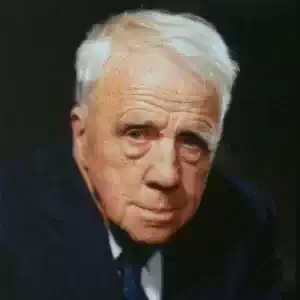
Robert Frost
A Cliff Dwelling
There sandy seems the golden sky
And golden seems the sandy plain.
No habitation meets the eye
Unless in the horizon rim,
Some halfway up the limestone wall,
That spot of black is not a stain
Or shadow, but a cavern hole,
Where someone used to climb and crawl
To rest from his besetting fears.
I see the callus on his soul
The disappearing last of him
And of his race starvation slim,
Oh years ago - ten thousand years.
410

Rudyard Kipling
Old Fighting-Men
All the world over, nursing their scars,
Sit the old fighting-men broke in the wars--
Sit the old fighting-men, surly and grim
Mocking the lilt of the conquerors' hymn.
Dust of the battle o'erwhelmed them and hid.
Fame never found them for aught that they did.
Wounded and spent to the lazar they drew,
Lining the road where the Legions roll through.
Sons of the Laurel who press to your meed,
(Worthy God's pity most--you who succeed!)
Ere you go triumphing, crowned, to the stars,
Pity poor fighting-men, broke in the wars!
408

William Butler Yeats
The Scholars
BALD heads forgetful of their sins,
Old, learned, respectable bald heads
Edit and annotate the lines
That young men, tossing on their beds,
Rhymed out in love's despair
To flatter beauty's ignorant ear.
All shuffle there; all cough in ink;
All wear the carpet with their shoes;
All think what other people think;
All know the man their neighbour knows.
Lord, what would they say
Did their Catullus walk that way?
403
William Butler Yeats
A Man Young And Old: VII. The Friends Of His Youth
Laughter not time destroyed my voice
And put that crack in it,
And when the moon's pot-bellied
I get a laughing fit,
For that old Madge comes down the lane,
A stone upon her breast,
And a cloak wrapped about the stone,
And she can get no rest
With singing hush and hush-a-bye;
She that has been wild
And barren as a breaking wave
Thinks that the stone's a child.
And Peter that had great affairs
And was a pushing man
Shrieks, 'I am King of the Peacocks,'
And perches on a stone;
And then I laugh till tears run down
And the heart thumps at my side,
Remembering that her shriek was love
And that he shrieks from pride.
405
Robert Frost
The Span Of Life
The old dog barks backwards without getting up.
I can remember when he was a pup.
Anonymous submission.
I can remember when he was a pup.
Anonymous submission.
386
Walt Whitman
Beautiful Women
WOMEN sit, or move to and fro--some old, some young;
The young are beautiful--but the old are more beautiful than the
young.
The young are beautiful--but the old are more beautiful than the
young.
382
Henry Wadsworth Longfellow
Morituri Salutamus: Poem for the Fiftieth Anniversary of th
Tempora labuntur, tacitisque senescimus annis,
Et fugiunt freno non remorante dies.
Ovid, Fastorum, Lib. vi.
"O Cæsar, we who are about to die
Salute you!" was the gladiators' cry
In the arena, standing face to face
With death and with the Roman populace.
O ye familiar scenes,--ye groves of pine,
That once were mine and are no longer mine,-Thou
river, widening through the meadows green
To the vast sea, so near and yet unseen,-Ye
halls, in whose seclusion and repose
Phantoms of fame, like exhalations, rose
And vanished,--we who are about to die,
Salute you; earth and air and sea and sky,
And the Imperial Sun that scatters down
His sovereign splendors upon grove and town.
Ye do not answer us! ye do not hear!
We are forgotten; and in your austere
And calm indifference, ye little care
Whether we come or go, or whence or where.
What passing generations fill these halls,
What passing voices echo from these walls,
Ye heed not; we are only as the blast,
A moment heard, and then forever past.
Not so the teachers who in earlier days
Led our bewildered feet through learning's maze;
They answer us--alas! what have I said?
What greetings come there from the voiceless dead?
What salutation, welcome, or reply?
What pressure from the hands that lifeless lie?
They are no longer here; they all are gone
Into the land of shadows,--all save one.
Honor and reverence, and the good repute
That follows faithful service as its fruit,
Be unto him, whom living we salute.
The great Italian poet, when he made
His dreadful journey to the realms of shade,
Met there the old instructor of his youth,
And cried in tones of pity and of ruth:
"Oh, never from the memory of my heart
Your dear, paternal image shall depart,
Who while on earth, ere yet by death surprised,
Taught me how mortals are immortalized;
How grateful am I for that patient care
All my life long my language shall declare."
To-day we make the poet's words our own,
And utter them in plaintive undertone;
Nor to the living only be they said,
But to the other living called the dead,
Whose dear, paternal images appear
Not wrapped in gloom, but robed in sunshine here;
Whose simple lives, complete and without flaw,
Were part and parcel of great Nature's law;
Who said not to their Lord, as if afraid,
"Here is thy talent in a napkin laid,"
But labored in their sphere, as men who live
In the delight that work alone can give.
Peace be to them; eternal peace and rest,
And the fulfilment of the great behest:
"Ye have been faithful over a few things,
Over ten cities shall ye reign as kings."
And ye who fill the places we once filled,
And follow in the furrows that we tilled,
Young men, whose generous hearts are beating high,
We who are old, and are about to die,
Salute you; hail you; take your hands in ours,
And crown you with our welcome as with flowers!
How beautiful is youth! how bright it gleams
With its illusions, aspirations, dreams!
Book of Beginnings, Story without End,
Each maid a heroine, and each man a friend!
Aladdin's Lamp, and Fortunatus' Purse,
That holds the treasures of the universe!
All possibilities are in its hands,
No danger daunts it, and no foe withstands;
In its sublime audacity of faith,
"Be thou removed!" it to the mountain saith,
And with ambitious feet, secure and proud,
Ascends the ladder leaning on the cloud!
As ancient Priam at the Scæan gate
Sat on the walls of Troy in regal state
With the old men, too old and weak to fight,
Chirping like grasshoppers in their delight
To see the embattled hosts, with spear and shield,
Of Trojans and Achaians in the field;
So from the snowy summits of our years
We see you in the plain, as each appears,
And question of you; asking, "Who is he
That towers above the others? Which may be
Atreides, Menelaus, Odysseus,
Ajax the great, or bold Idomeneus?"
Let him not boast who puts his armor on
As he who puts it off, the battle done.
Study yourselves; and most of all note well
Wherein kind Nature meant you to excel.
Not every blossom ripens into fruit;
Minerva, the inventress of the flute,
Flung it aside, when she her face surveyed
Distorted in a fountain as she played;
The unlucky Marsyas found it, and his fate
Was one to make the bravest hesitate.
Write on your doors the saying wise and old,
"Be bold! be bold!" and everywhere, "Be bold;
Be not too bold!" Yet better the excess
Than the defect; better the more than less;
Better like Hector in the field to die,
Than like a perfumed Paris turn and fly.
And now, my classmates; ye remaining few
That number not the half of those we knew,
Ye, against whose familiar names not yet
The fatal asterisk of death is set,
Ye I salute! The horologe of Time
Strikes the half-century with a solemn chime,
And summons us together once again,
The joy of meeting not unmixed with pain.
Where are the others? Voices from the deep
Caverns of darkness answer me: "They sleep!"
I name no names; instinctively I feel
Each at some well-remembered grave will kneel,
And from the inscription wipe the weeds and moss,
For every heart best knoweth its own loss.
I see their scattered gravestones gleaming white
Through the pale dusk of the impending night;
O'er all alike the impartial sunset throws
Its golden lilies mingled with the rose;
We give to each a tender thought, and pass
Out of the graveyards with their tangled grass,
Unto these scenes frequented by our feet
When we were young, and life was fresh and sweet.
What shall I say to you? What can I say
Better than silence is? When I survey
This throng of faces turned to meet my own,
Friendly and fair, and yet to me unknown,
Transformed the very landscape seems to be;
It is the same, yet not the same to me.
So many memories crowd upon my brain,
So many ghosts are in the wooded plain,
I fain would steal away, with noiseless tread,
As from a house where some one lieth dead.
I cannot go;--I pause;--I hesitate;
My feet reluctant linger at the gate;
As one who struggles in a troubled dream
To speak and cannot, to myself I seem.
Vanish the dream! Vanish the idle fears!
Vanish the rolling mists of fifty years!
Whatever time or space may intervene,
I will not be a stranger in this scene.
Here every doubt, all indecision, ends;
Hail, my companions, comrades, classmates, friends!
Ah me! the fifty years since last we met
Seem to me fifty folios bound and set
By Time, the great transcriber, on his shelves,
Wherein are written the histories of ourselves.
What tragedies, what comedies, are there;
What joy and grief, what rapture and despair!
What chronicles of triumph and defeat,
Of struggle, and temptation, and retreat!
What records of regrets, and doubts, and fears!
What pages blotted, blistered by our tears!
What lovely landscapes on the margin shine,
What sweet, angelic faces, what divine
And holy images of love and trust,
Undimmed by age, unsoiled by damp or dust!
Whose hand shall dare to open and explore
These volumes, closed and clasped forevermore?
Not mine. With reverential feet I pass;
I hear a voice that cries, "Alas! alas!
Whatever hath been written shall remain,
Nor be erased nor written o'er again;
The unwritten only still belongs to thee:
Take heed, and ponder well what that shall be."
As children frightened by a thunder-cloud
Are reassured if some one reads aloud
A tale of wonder, with enchantment fraught,
Or wild adventure, that diverts their thought,
Let me endeavor with a tale to chase
The gathering shadows of the time and place,
And banish what we all too deeply feel
Wholly to say, or wholly to conceal.
In mediæval Rome, I know not where,
There stood an image with its arm in air,
And on its lifted finger, shining clear,
A golden ring with the device, "Strike here!"
Greatly the people wondered, though none guessed
The meaning that these words but half expressed,
Until a learned clerk, who at noonday
With downcast eyes was passing on his way,
Paused, and observed the spot, and marked it well,
Whereon the shadow of the finger fell;
And, coming back at midnight, delved, and found
A secret stairway leading underground.
Down this he passed into a spacious hall,
Lit by a flaming jewel on the wall;
And opposite, in threatening attitude,
With bow and shaft a brazen statue stood.
Upon its forehead, like a coronet,
Were these mysterious words of menace set:
"That which I am, I am; my fatal aim
None can escape, not even yon luminous flame!"
Midway the hall was a fair table placed,
With cloth of gold, and golden cups enchased
With rubies, and the plates and knives were gold,
And gold the bread and viands manifold.
Around it, silent, motionless, and sad,
Were seated gallant knights in armor clad,
And ladies beautiful with plume and zone,
But they were stone, their hearts within were stone;
And the vast hall was filled in every part
With silent crowds, stony in face and heart.
Long at the scene, bewildered and amazed
The trembling clerk in speechless wonder gazed;
Then from the table, by his greed made bold,
He seized a goblet and a knife of gold,
And suddenly from their seats the guests upsprang,
The vaulted ceiling with loud clamors rang,
The archer sped his arrow, at their call,
Shattering the lambent jewel on the wall,
And all was dark around and overhead;-Stark
on the floor the luckless clerk lay dead!
The writer of this legend then records
Its ghostly application in these words:
The image is the Adversary old,
Whose beckoning finger points to realms of gold;
Our lusts and passions are the downward stair
That leads the soul from a diviner air;
The archer, Death; the flaming jewel, Life;
Terrestrial goods, the goblet and the knife;
The knights and ladies, all whose flesh and bone
By avarice have been hardened into stone;
The clerk, the scholar whom the love of pelf
Tempts from his books and from his nobler self.
The scholar and the world! The endless strife,
The discord in the harmonies of life!
The love of learning, the sequestered nooks,
And all the sweet serenity of books;
The market-place, the eager love of gain,
Whose aim is vanity, and whose end is pain!
But why, you ask me, should this tale be told
To men grown old, or who are growing old?
It is too late! Ah, nothing is too late
Till the tired heart shall cease to palpitate.
Cato learned Greek at eighty; Sophocles
Wrote his grand Oedipus, and Simonides
Bore off the prize of verse from his compeers,
When each had numbered more than fourscore years,
And Theophrastus, at fourscore and ten,
Had but begun his "Characters of Men."
Chaucer, at Woodstock with the nightingales,
At sixty wrote the Canterbury Tales;
Goethe at Weimar, toiling to the last,
Completed Faust when eighty years were past.
These are indeed exceptions; but they show
How far the gulf-stream of our youth may flow
Into the arctic regions of our lives,
Where little else than life itself survives.
As the barometer foretells the storm
While still the skies are clear, the weather warm
So something in us, as old age draws near,
Betrays the pressure of the atmosphere.
The nimble mercury, ere we are aware,
Descends the elastic ladder of the air;
The telltale blood in artery and vein
Sinks from its higher levels in the brain;
Whatever poet, orator, or sage
May say of it, old age is still old age.
It is the waning, not the crescent moon;
The dusk of evening, not the blaze of noon;
It is not strength, but weakness; not desire,
But its surcease; not the fierce heat of fire,
The burning and consuming element,
But that of ashes and of embers spent,
In which some living sparks we still discern,
Enough to warm, but not enough to burn.
What then? Shall we sit idly down and say
The night hath come; it is no longer day?
The night hath not yet come; we are not quite
Cut off from labor by the failing light;
Something remains for us to do or dare;
Even the oldest tree some fruit may bear;
Not Oedipus Coloneus, or Greek Ode,
Or tales of pilgrims that one morning rode
Out of the gateway of the Tabard Inn,
But other something, would we but begin;
For age is opportunity no less
Than youth itself, though in another dress,
And as the evening twilight fades away
The sky is filled with stars, invisible by day.
378
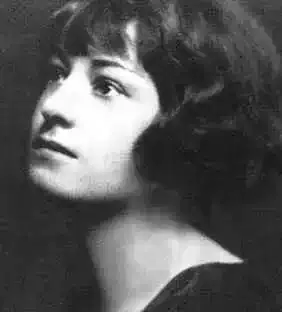
Dorothy Parker
The Little Old Lady in Lavender Silk
I was seventy-seven, come August,
I shall shortly be losing my bloom;
I've experienced zephyr and raw gust
And (symbolical) flood and simoom.
When you come to this time of abatement,
To this passing from Summer to Fall,
It is manners to issue a statement
As to what you got out of it all.
So I'll say, though reflection unnerves me
And pronouncements I dodge as I can,
That I think (if my memory serves me)
There was nothing more fun than a man!
In my youth, when the crescent was too wan
To embarrass with beams from above,
By the aid of some local Don Juan
I fell into the habit of love.
And I learned how to kiss and be merry- an
Education left better unsung.
My neglect of the waters Pierian
Was a scandal, when Grandma was young.
Though the shabby unbalanced the splendid,
And the bitter outmeasured the sweet,
I should certainly do as I then did,
Were I given the chance to repeat.
For contrition is hollow and wraithful,
And regret is no part of my plan,
And I think (if my memory's faithful)
There was nothing more fun than a man!
379
William Butler Yeats
The Old Men Admiring Themselves In The Water
I HEARD the old, old men say,
'Everything alters,
And one by one we drop away.'
They had hands like claws, and their knees
Were twisted like the old thorn-trees
By the waters.
I heard the old, old men say,
'All that's beautiful drifts away
Like the waters.'
'Everything alters,
And one by one we drop away.'
They had hands like claws, and their knees
Were twisted like the old thorn-trees
By the waters.
I heard the old, old men say,
'All that's beautiful drifts away
Like the waters.'
369

Robert Browning
Rabbi Ben Ezra
Grow old along with me!
The best is yet to be,
The last of life, for which the first was made:
Our times are in His hand
Who saith 'A whole I planned,
Youth shows but half; trust God: see all, nor be afraid!'
Not that, amassing flowers,
Youth sighed 'Which rose make ours,
Which lily leave and then as best recall?'
Not that, admiring stars,
It yearned 'Nor Jove, nor Mars;
Mine be some figured flame which blends, transcends them all!'
Not for such hopes and fears
Annulling youth's brief years,
Do I remonstrate: folly wide the mark!
Rather I prize the doubt
Low kinds exist without,
Finished and finite clods, untroubled by a spark.
Poor vaunt of life indeed,
Were man but formed to feed
On joy, to solely seek and find and feast:
Such feasting ended, then
As sure an end to men;
Irks care the crop-full bird? Frets doubt the maw-crammed beast?
Rejoice we are allied
To That which doth provide
And not partake, effect and not receive!
A spark disturbs our clod;
Nearer we hold of God
Who gives, than of His tribes that take, I must believe.
Then, welcome each rebuff
That turns earth's smoothness rough,
Each sting that bids nor sit nor stand but go!
Be our joys three-parts pain!
Strive, and hold cheap the strain;
Learn, nor account the pang; dare, never grudge the throe!
For thence,--a paradox
Which comforts while it mocks,--
Shall life succeed in that it seems to fail:
What I aspired to be,
And was not, comforts me:
A brute I might have been, but would not sink i' the scale.
What is he but a brute
Whose flesh has soul to suit,
Whose spirit works lest arms and legs want play?
To man, propose this test--
Thy body at its best,
How far can that project thy soul on its lone way?
Yet gifts should prove their use:
I own the Past profuse
Of power each side, perfection every turn:
Eyes, ears took in their dole,
Brain treasured up the whole;
Should not the heart beat once 'How good to live and learn?'
Not once beat 'Praise be Thine!
I see the whole design,
I, who saw power, see now love perfect too:
Perfect I call Thy plan:
Thanks that I was a man!
Maker, remake, complete,--I trust what Thou shalt do!'
For pleasant is this flesh;
Our soul, in its rose-mesh
Pulled ever to the earth, still yearns for rest;
Would we some prize might hold
To match those manifold
Possessions of the brute,--gain most, as we did best!
Let us not always say,
'Spite of this flesh to-day
I strove, made head, gained ground upon the whole!'
As the bird wings and sings,
Let us cry 'All good things
Are ours, nor soul helps flesh more, now, than flesh helps soul!'
Therefore I summon age
To grant youth's heritage,
Life's struggle having so far reached its term:
Thence shall I pass, approved
A man, for aye removed
From the developed brute; a god though in the germ.
And I shall thereupon
Take rest, ere I be gone
Once more on my adventure brave and new:
Fearless and unperplexed,
When I wage battle next,
What weapons to select, what armour to indue.
Youth ended, I shall try
My gain or loss thereby;
Leave the fire ashes, what survives is gold:
And I shall weigh the same,
Give life its praise or blame:
Young, all lay in dispute; I shall know, being old.
For note, when evening shuts,
A certain moment cuts
The deed off, calls the glory from the grey:
A whisper from the west
Shoots--'Add this to the rest,
Take it and try its worth: here dies another day.'
So, still within this life,
Though lifted o'er its strife,
Let me discern, compare, pronounce at last,
This rage was right i' the main,
That acquiescence vain:
The Future I may face now I have proved the Past.'
For more is not reserved
To man, with soul just nerved
To act to-morrow what he learns to-day:
Here, work enough to watch
The Master work, and catch
Hints of the proper craft, tricks of the tool's true play.
As it was better, youth
Should strive, through acts uncouth,
Toward making, than repose on aught found made:
So, better, age, exempt
From strife, should know, than tempt
Further. Thou waitedst age: wait death nor be afraid!
Enough now, if the Right
And Good and Infinite
Be named here, as thou callest thy hand thine own
With knowledge absolute,
Subject to no dispute
From fools that crowded youth, nor let thee feel alone.
Be there, for once and all,
Severed great minds from small,
Announced to each his station in the Past!
Was I, the world arraigned,
Were they, my soul disdained,
Right? Let age speak the truth and give us peace at last!
Now, who shall arbitrate?
Ten men love what I hate,
Shun what I follow, slight what I receive;
Ten, who in ears and eyes
Match me: we all surmise,
They this thing, and I that: whom shall my soul believe?
Not on the vulgar mass
Called 'work,' must sentence pass,
Things done, that took the eye and had the price;
O'er which, from level stand,
The low world laid its hand,
Found straightway to its mind, could value in a trice:
But all, the world's coarse thumb
And finger failed to plumb,
So passed in making up the main account;
All instincts immature,
All purposes unsure,
That weighed not as his work, yet swelled the man's amount:
Thoughts hardly to be packed
Into a narrow act,
Fancies that broke through language and escaped;
All I could never be,
All, men ignored in me,
This, I was worth to God, whose wheel the pitcher shaped.
Ay, note that Potter's wheel,
That metaphor! and feel
Why time spins fast, why passive lies our clay,--
Thou, to whom fools propound,
When the wine makes its round,
'Since life fleets, all is change; the Past gone, seize to-day!'
Fool! All that is, at all,
Lasts ever, past recall;
Earth changes, but thy soul and God stand sure:
What entered into thee,
That was, is, and shall be:
Time's wheel runs back or stops: Potter and clay endure.
He fixed thee mid this dance
Of plastic circumstance,
This Present, thou, forsooth, wouldst fain arrest:
Machinery just meant
To give thy soul its bent,
Try thee and turn thee forth, sufficiently impressed.
What though the earlier grooves,
Which ran the laughing loves
Around thy base, no longer pause and press?
What though, about thy rim,
Skull-things in order grim
Grow out, in graver mood, obey the sterner stress?
Look not thou down but up!
To uses of a cup,
The festal board, lamp's flash and trumpet's peal,
The new wine's foaming flow,
The Master's lips a-glow!
Thou, heaven's consummate cup, what need'st thou with earth's wheel?
But I need, now as then,
Thee, God, who mouldest men;
And since, not even while the whirl was worst,
Did I,--to the wheel of life
With shapes and colours rife,
Bound dizzily,--mistake my end, to slake Thy thirst:
So, take and use Thy work:
Amend what flaws may lurk,
What strain o' the stuff, what warpings past the aim!
My times be in Thy hand!
Perfect the cup as planned!
Let age approve of youth, and death complete the same!
341
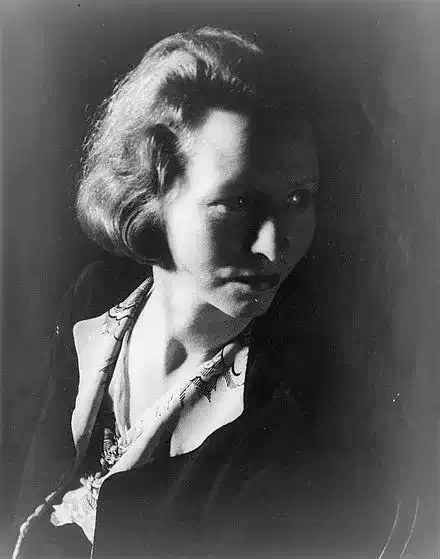
Edna St. Vincent Millay
To A Poet That Died Young
Minstrel, what have you to do
With this man that, after you,
Sharing not your happy fate,
Sat as England's Laureate?
Vainly, in these iron days,
Strives the poet in your praise,
Minstrel, by whose singing side
Beauty walked, until you died.
Still, though none should hark again,
Drones the blue-fly in the pane,
Thickly crusts the blackest moss,
Blows the rose its musk across,
Floats the boat that is forgot
None the less to Camelot.
Many a bard's untimely death
Lends unto his verses breath;
Here's a song was never sung:
Growing old is dying young.
Minstrel, what is this to you:
That a man you never knew,
When your grave was far and green,
Sat and gossipped with a queen?
Thalia knows how rare a thing
Is it, to grow old and sing;
When a brown and tepid tide
Closes in on every side.
Who shall say if Shelley's gold
Had withstood it to grow old?
337

James Whitcomb Riley
Grandfather Squeers
'My grandfather Squeers,' said The Raggedy Man,
As he solemnly lighted his pipe and began-
'The most indestructible man, for his years,
And the grandest on earth, was my grandfather Squeers!
'He said, when he rounded his three-score-and-ten,
'I've the hang of it now and can do it again!'
'He had frozen his heels so repeatedly, he
Could tell by them just what the weather would be;
'And would laugh and declare, 'while the _Almanac_ would
Most falsely prognosticate, _he_ never could!'
'Such a hale constitution had grandfather Squeers
That, 'though he'd used '_navy_' for sixty odd years,
'He still chewed a dime's-worth six days of the week,
While the seventh he passed with a chew in each cheek:
'Then my grandfather Squeers had a singular knack
Of sitting around on the small of his back,
'With his legs like a letter Y stretched o'er the grate
Wherein 'twas his custom to ex-pec-tor-ate.
'He was fond of tobacco in _manifold_ ways,
And would sit on the door-step, of sunshiny days,
'And smoke leaf-tobacco he'd raised strictly for
The pipe he'd used all through The Mexican War.'
And The Raggedy Man said, refilling the bowl
Of his own pipe and leisurely picking a coal
From the stove with his finger and thumb, 'You can see
What a tee-nacious habit he's fastened on me!
'And my grandfather Squeers took a special delight
In pruning his corns every Saturday night
'With a horn-handled razor, whose edge he excused
By saying 'twas one that his grandfather used;
'And, though deeply etched in the haft of the same
Was the ever-euphonious Wostenholm's name,
''Twas my grandfather's custom to boast of the blade
As 'A Seth Thomas razor--the best ever made!'
'No Old Settlers' Meeting, or Pioneers' Fair,
Was complete without grandfather Squeers in the chair
'To lead off the programme by telling folks how
'He used to shoot deer where the Court-House stands now'-
'How 'he felt, of a truth, to live over the past,
When the country was wild and unbroken and vast,
''That the little log cabin was just plenty fine
For himself, his companion, and fambly of nine!-
''When they didn't have even a pump, or a tin,
But drunk surface-water, year out and year in,
''From the old-fashioned gourd that was sweeter, by odds,
Than the goblets of gold at the lips of the gods!''
Then The Raggedy Man paused to plaintively say
It was clockin' along to'rds the close of the day--
And he'd _ought_ to get back to his work on the lawn,--
Then dreamily blubbered his pipe and went on:
'His teeth were imperfect--my grandfather owned
That he couldn't eat oysters unless they were 'boned';
'And his eyes were so weak, and so feeble of sight,
He couldn't sleep with them unless, every night,
'He put on his spectacles--all he possessed,--
Three pairs--with his goggles on top of the rest.
'And my grandfather always, retiring at night,
Blew down the lamp-chimney to put out the light;
'Then he'd curl up on edge like a shaving, in bed,
And puff and smoke pipes in his sleep, it is said:
'And would snore oftentimes as the legends relate,
Till his folks were wrought up to a terrible state,-
'Then he'd snort, and rear up, and roll over; and there,
In the subsequent hush they could hear him chew air.
'And so glaringly bald was the top of his head
That many's the time he has musingly said,
'As his eyes journeyed o'er its reflex in the glass,-'
I must set out a few signs of _Keep Off the Grass!_'
'So remarkably deaf was my grandfather Squeers
That he had to wear lightning-rods over his ears
'To even hear thunder--and oftentimes then
He was forced to request it to thunder again.'
326
Dorothy Parker
Afternoon
When I am old, and comforted,
And done with this desire,
With Memory to share my bed
And Peace to share my fire,
I'll comb my hair in scalloped bands
Beneath my laundered cap,
And watch my cool and fragile hands
Lie light upon my lap.
And I will have a sprigged gown
With lace to kiss my throat;
I'll draw my curtain to the town,
And hum a purring note.
And I'll forget the way of tears,
And rock, and stir my tea.
But oh, I wish those blessed years
Were further than they be!
325

Carl Sandburg
Mill-Doors
You never come back.
I say good-by when I see you going in the doors,
The hopeless open doors that call and wait
And take you then for—how many cents a day?
How many cents for the sleepy eyes and fingers?
I say good-by because I know they tap your wrists,
In the dark, in the silence, day by day,
And all the blood of you drop by drop,
And you are old before you are young.
You never come back.
322

Gwendolyn Brooks
Sadie and Maud
Maud went to college.
Sadie stayed home.
Sadie scraped life
With a fine toothed comb.
She didn't leave a tangle in
Her comb found every strand.
Sadie was one of the livingest chicks
In all the land.
Sadie bore two babies
Under her maiden name.
Maud and Ma and Papa
Nearly died of shame.
When Sadie said her last so-long
Her girls struck out from home.
(Sadie left as heritage
Her fine-toothed comb.)
Maud, who went to college,
Is a thin brown mouse.
She is living all alone
In this old house.
322
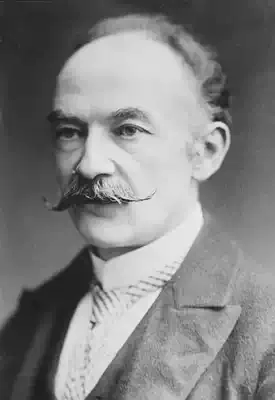
Thomas Hardy
An Ancient to Ancients
Where once we danced, where once we sang,
Gentlemen,
The floors are sunken, cobwebs hang,
And cracks creep; worms have fed upon
The doors. Yea, sprightlier times were then
Than now, with harps and tabrets gone,
Gentlemen!
Where once we rowed, where once we sailed,
Gentlemen,
And damsels took the tiller, veiled
Against too strong a stare (God wot
Their fancy, then or anywhen!)
Upon that shore we are clean forgot,
Gentlemen!
We have lost somewhat of that, afar and near,
Gentlemen,
The thinning of our ranks each year
Affords a hint we are nigh undone,
That shall not be ever again
The marked of many, loved of one,
Gentlemen.
In dance the polka hit our wish,
Gentlemen,
The paced quadrille, the spry schottische,
"Sir Roger."--And in opera spheres
The "Girl" (the famed "Bohemian"),
And "Trovatore" held the ears,
Gentlemen.
This season's paintings do not please,
Gentlemen
Like Etty, Mulready, Maclise;
Throbbing romance had waned and wanned;
No wizard wields the witching pen
Of Bulwer, Scott, Dumas, and Sand,
Gentlemen.
The bower we shrined to Tennyson,
Gentlemen,
Is roof-wrecked; damps there drip upon
Sagged seats, the creeper-nails are rust,
The spider is sole denizen;
Even she who voiced those rhymes is dust,
Gentlemen!
We who met sunrise sanguine-souled,
Gentlemen,
Are wearing weary. We are old;
These younger press; we feel our rout
Is imminent to Aïdes' den,--
That evening shades are stretching out,
Gentlemen!
And yet, though ours be failing frames,
Gentlemen,
So were some others' history names,
Who trode their track light-limbed and fast
As these youth, and not alien
From enterprise, to their long last,
Gentlemen.
Sophocles, Plato, Socrates,
Gentlemen,
Pythagoras, Thucydides,
Herodotus, and Homer,--yea,
Clement, Augustin, Origen,
Burnt brightlier towards their setting-day,
Gentlemen.
And ye, red-lipped and smooth-browed; list,
Gentlemen;
Much is there waits you we have missed;
Much lore we leave you worth the knowing,
Much, much has lain outside our ken;
Nay, rush not: time serves: we are going,
Gentlemen.
Gentlemen,
The floors are sunken, cobwebs hang,
And cracks creep; worms have fed upon
The doors. Yea, sprightlier times were then
Than now, with harps and tabrets gone,
Gentlemen!
Where once we rowed, where once we sailed,
Gentlemen,
And damsels took the tiller, veiled
Against too strong a stare (God wot
Their fancy, then or anywhen!)
Upon that shore we are clean forgot,
Gentlemen!
We have lost somewhat of that, afar and near,
Gentlemen,
The thinning of our ranks each year
Affords a hint we are nigh undone,
That shall not be ever again
The marked of many, loved of one,
Gentlemen.
In dance the polka hit our wish,
Gentlemen,
The paced quadrille, the spry schottische,
"Sir Roger."--And in opera spheres
The "Girl" (the famed "Bohemian"),
And "Trovatore" held the ears,
Gentlemen.
This season's paintings do not please,
Gentlemen
Like Etty, Mulready, Maclise;
Throbbing romance had waned and wanned;
No wizard wields the witching pen
Of Bulwer, Scott, Dumas, and Sand,
Gentlemen.
The bower we shrined to Tennyson,
Gentlemen,
Is roof-wrecked; damps there drip upon
Sagged seats, the creeper-nails are rust,
The spider is sole denizen;
Even she who voiced those rhymes is dust,
Gentlemen!
We who met sunrise sanguine-souled,
Gentlemen,
Are wearing weary. We are old;
These younger press; we feel our rout
Is imminent to Aïdes' den,--
That evening shades are stretching out,
Gentlemen!
And yet, though ours be failing frames,
Gentlemen,
So were some others' history names,
Who trode their track light-limbed and fast
As these youth, and not alien
From enterprise, to their long last,
Gentlemen.
Sophocles, Plato, Socrates,
Gentlemen,
Pythagoras, Thucydides,
Herodotus, and Homer,--yea,
Clement, Augustin, Origen,
Burnt brightlier towards their setting-day,
Gentlemen.
And ye, red-lipped and smooth-browed; list,
Gentlemen;
Much is there waits you we have missed;
Much lore we leave you worth the knowing,
Much, much has lain outside our ken;
Nay, rush not: time serves: we are going,
Gentlemen.
307
William Butler Yeats
The Living Beauty
I BADE, because the wick and oil are spent
And frozen are the channels of the blood,
My discontented heart to draw content
From beauty that is cast out of a mould
In bronze, or that in dazzling marble appears,
Appears, but when wc have gone is gone again,
Being more indifferent to our solitude
Than 'twere an apparition. O heart, we are old;
The living beauty is for younger men:
We cannot pay its rribute of wild tears.
297
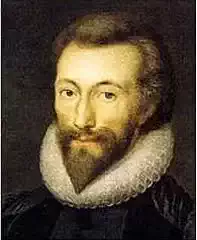
John Donne
Elegy IX: The Autumnal
No spring nor summer beauty hath such grace
As I have seen in one autumnal face.
Young beauties force our love, and that's a rape,
This doth but counsel, yet you cannot scape.
If 'twere a shame to love, here 'twere no shame;
Affection here takes reverence's name.
Were her first years the golden age? That's true,
But now she's gold oft tried and ever new.
That was her torrid and inflaming time,
This is her tolerable tropic clime.
Fair eyes, who asks more heat than comes from hence,
He in a fever wishes pestilence.
Call not these wrinkles, graves; if graves they were,
They were Love's graves, for else he is no where.
Yet lies not Love dead here, but here doth sit
Vow'd to this trench, like an anachorit;
And here till hers, which must be his death, come,
He doth not dig a grave, but build a tomb.
Here dwells he; though he sojourn ev'rywhere
In progress, yet his standing house is here:
Here where still evening is, not noon nor night,
Where no voluptuousness, yet all delight.
In all her words, unto all hearers fit,
You may at revels, you at council, sit.
This is Love's timber, youth his underwood;
There he, as wine in June, enrages blood,
Which then comes seasonabliest when our taste
And appetite to other things is past.
Xerxes' strange Lydian love, the platan tree,
Was lov'd for age, none being so large as she,
Or else because, being young, nature did bless
Her youth with age's glory, barrenness.
If we love things long sought, age is a thing
Which we are fifty years in compassing;
If transitory things, which soon decay,
Age must be loveliest at the latest day.
But name not winter faces, whose skin's slack,
Lank as an unthrift's purse, but a soul's sack;
Whose eyes seek light within, for all here's shade;
Whose mouths are holes, rather worn out than made;
Whose every tooth to a several place is gone,
To vex their souls at resurrection:
Name not these living death's-heads unto me,
For these, not ancient, but antique be.
I hate extremes, yet I had rather stay
With tombs than cradles, to wear out a day.
Since such love's natural lation is, may still
My love descend, and journey down the hill,
Not panting after growing beauties. So,
I shall ebb on with them who homeward go.
291
Gwendolyn Brooks
A Sunset of the City
Already I am no longer looked at with lechery or love.
My daughters and sons have put me away with marbles and dolls,
Are gone from the house.
My husband and lovers are pleasant or somewhat polite
And night is night.
It is a real chill out,
The genuine thing.
I am not deceived, I do not think it is still summer
Because sun stays and birds continue to sing.
It is summer-gone that I see, it is summer-gone.
The sweet flowers indrying and dying down,
The grasses forgetting their blaze and consenting to brown.
It is a real chill out. The fall crisp comes
I am aware there is winter to heed.
There is no warm house
That is fitted with my need.
I am cold in this cold house this house
Whose washed echoes are tremulous down lost halls.
I am a woman, and dusty, standing among new affairs.
I am a woman who hurries through her prayers.
Tin intimations of a quiet core to be my
Desert and my dear relief
Come: there shall be such islanding from grief,
And small communion with the master shore.
Twang they. And I incline this ear to tin,
Consult a dual dilemma. Whether to dry
In humming pallor or to leap and die.
Somebody muffed it?? Somebody wanted to joke.
282