
Old Age and Ageing

Ogden Nash
Crossing The Border
Senescence begins
And middle age ends
The day your descendents
Outnumber your friends.
And middle age ends
The day your descendents
Outnumber your friends.
237

Robert W. Service
At Eighty Years
As nothingness draws near
How I can see
Inexorably clear
My vanity.
My sum of worthiness
Always so small,
Dwindles from less to less
To none at all.
As grisly destiny
Claims me at last,
How grievous seem to me
Sins of my past!
How keen a conscience edge
Can come to be!
How pitiless the dredge
Of memory!
Ye proud ones of the earth
Who count your gains,
What cherish you of worth
For all your pains?
E'er death shall slam the door,
Will you, like me,
Face fate and count the score-
FUTILITY.
233

William Wordsworth
Simon Lee, The Old Huntsman
In the sweet shire of Cardigan,
Not far from pleasant Ivor-hall,
An old Man dwells, a little man,--
'Tis said he once was tall.
Full five-and-thirty years he lived
A running huntsman merry;
And still the centre of his cheek
Is red as a ripe cherry.
No man like him the horn could sound,
And hill and valley rang with glee
When Echo bandied, round and round,
The halloo of Simon Lee.
In those proud days, he little cared
For husbandry or tillage;
To blither tasks did Simon rouse
The sleepers of the village.
He all the country could outrun,
Could leave both man and horse behind;
And often, ere the chase was done,
He reeled, and was stone-blind.
And still there's something in the world
At which his heart rejoices;
For when the chiming hounds are out,
He dearly loves their voices!
But, oh the heavy change!--bereft
Of health, strength, friends, and kindred, see!
Old Simon to the world is left
In liveried poverty.
His Master's dead,--and no one now
Dwells in the Hall of Ivor;
Men, dogs, and horses, all are dead;
He is the sole survivor.
And he is lean and he is sick;
His body, dwindled and awry,
Rests upon ankles swoln and thick;
His legs are thin and dry.
One prop he has, and only one,
His wife, an aged woman,
Lives with him, near the waterfall,
Upon the village Common.
Beside their moss-grown hut of clay,
Not twenty paces from the door,
A scrap of land they have, but they
Are poorest of the poor.
This scrap of land he from the heath
Enclosed when he was stronger;
But what to them avails the land
Which he can till no longer?
Oft, working by her Husband's side,
Ruth does what Simon cannot do;
For she, with scanty cause for pride,
Is stouter of the two.
And, though you with your utmost skill
From labour could not wean them,
'Tis little, very little--all
That they can do between them.
Few months of life has he in store
As he to you will tell,
For still, the more he works, the more
Do his weak ankles swell.
My gentle Reader, I perceive
How patiently you've waited,
And now I fear that you expect
Some tale will be related.
O Reader! had you in your mind
Such stores as silent thought can bring,
O gentle Reader! you would find
A tale in every thing.
What more I have to say is short,
And you must kindly take it:
It is no tale; but, should you think,
Perhaps a tale you'll make it.
One summer-day I chanced to see
This old Man doing all he could
To unearth the root of an old tree,
A stump of rotten wood.
The mattock tottered in his hand;
So vain was his endeavour,
That at the root of the old tree
He might have worked for ever.
"You're overtasked, good Simon Lee,
Give me your tool," to him I said;
And at the word right gladly he
Received my proffered aid.
I struck, and with a single blow
The tangled root I severed,
At which the poor old Man so long
And vainly had endeavoured.
The tears into his eyes were brought,
And thanks and praises seemed to run
So fast out of his heart, I thought
They never would have done.
--I've heard of hearts unkind, kind deeds
With coldness still returning;
Alas! the gratitude of men
Hath oftener left me mourning.
231
Robert W. Service
The Petit Vieux
"Sow your wild oats in your youth," so we're always told;
But I say with deeper sooth: "Sow them when you're old."
I'll be wise till I'm about seventy or so:
Then, by Gad! I'll blossom out as an ancient beau.
I'll assume a dashing air, laugh with loud Ha! ha! . . .
How my grandchildren will stare at their grandpapa!
Their perfection aureoled I will scandalize:
Won't I be a hoary old sinner in their eyes!
Watch me, how I'll learn to chaff barmaids in a bar;
Scotches daily, gayly quaff, puff a fierce cigar.
I will haunt the Tango teas, at the stage-door stand;
Wait for Dolly Dimpleknees, bouquet in my hand.
Then at seventy I'll take flutters at roulette;
While at eighty hope I'll make good at poker yet;
And in fashionable togs to the races go,
Gayest of the gay old dogs, ninety years or so.
"Sow your wild oats while you're young," that's what you are told;
Don't believe the foolish tongue -- sow 'em when you're old.
Till you're threescore years and ten, take my humble tip,
Sow your nice tame oats and then . . . Hi, boys! Let 'er rip.
231
William Wordsworth
I Know an Old Man Constrained to Dwell
I know an aged Man constrained to dwell
In a large house of public charity,
Where he abides, as in a Prisoner's cell,
With numbers near, alas! no company.
When he could creep about, at will, though poor
And forced to live on alms, this old Man fed
A Redbreast, one that to his cottage door
Came not, but in a lane partook his bread.
There, at the root of one particular tree,
An easy seat this worn-out Labourer found
While Robin pecked the crumbs upon his knee
Laid one by one, or scattered on the ground.
Dear intercourse was theirs, day after day;
What signs of mutual gladness when they met!
Think of their common peace, their simple play,
The parting moment and its fond regret.
Months passed in love that failed not to fulfil,
In spite of season's change, its own demand,
By fluttering pinions here and busy bill;
There by caresses from a tremulous hand.
Thus in the chosen spot a tie so strong
Was formed between the solitary pair,
That when his fate had housed him 'mid a throng
The Captive shunned all converse proffered there.
Wife, children, kindred, they were dead and gone;
But, if no evil hap his wishes crossed,
One living Stay was left, and on that one
Some recompence for all that he had lost.
Oh that the good old Man had power to prove,
By message sent through air or visible token,
That still he loves the Bird, and still must love;
That friendship lasts though fellowship is broken!
229
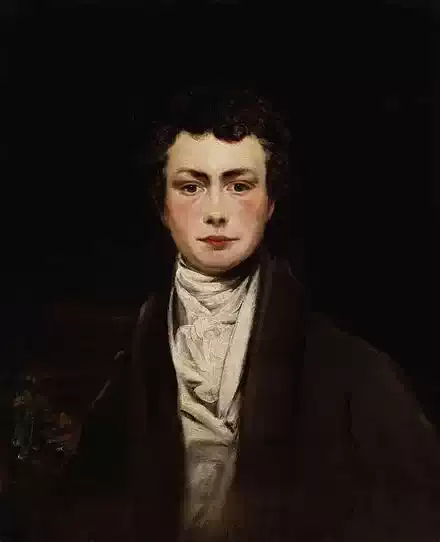
Thomas Moore
Oh, Banquet Not
Oh, banquet not in those shining bowers,
Where Youth resorts, but come to me,
For mine's a garden of faded flowers,
More fit for sorrow, for age, and thee.
And there we shall have our feast of tears,
And many a cup in silence pour;
Our guests, the shades of former years,
Our toasts, to lips that bloom no more.
There, while the myrtle's withering boughs
Their lifeless leaves around us shed,
We'll brim the bowl to broken vows
To friends long lost, the changed, the dead.
Or, while some blighted laurel waves
Its branches o'er the dreary spot,
We'll drink to those neglected graves
Where valour sleeps, unnamed, forgot.
218
Robert W. Service
Ripeness
With peace and rest
And wisdom sage,
Ripeness is best
Of every age.
With hands that fold
In pensive prayer,
For grave-yard mold
Prepare.
From fighting free
With fear forgot,
Let ripeness be,
Before the rot.
With heart of cheer
At eighty odd,
How man grows near
To God!
With passion spent
And life nigh run
Let us repent
The ill we've done.
And as we bless
With happy heart
Life's mellowness
--Depart.
202
Robert W. Service
Old Sweethearts
Oh Maggie, do you mind the day
We went to school together,
And as we stoppit by the way
I rolled you in the heather?
My! but you were the bonny lass
And we were awfu' late for class.
Your locks are now as white as snow,
And you are ripe and wrinkled,
A grandmother ten times or so,
Yet how your blue eyes twinkled
At me above your spectacles,
Recalling naughty neck-tickles!
It must be fifty years today
I left you for the Yukon;
You haven't changed - your just as gay
And just as sweet to look on.
But can you see in this old fool
The lad who made you late for school?
Oh Maggie, ask me in to tea
And we can talk things over,
And contemplate the nuptial state,
For I am still your lover:
And though the bell be slow to chime
We'll no be grudgin' o' the time
200
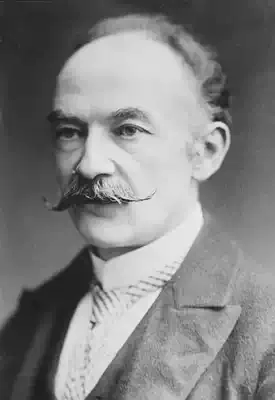
Thomas Hardy
The Colonel's Soliloquy (Southampton Docks: October, )
"The quay recedes. Hurrah! Ahead we go! . . .
It's true I've been accustomed now to home,
And joints get rusty, and one's limbs may grow
More fit to rest than roam.
"But I can stand as yet fair stress and strain;
There's not a little steel beneath the rust;
My years mount somewhat, but here's to't again!
And if I fall, I must.
"God knows that for myself I've scanty care;
Past scrimmages have proved as much to all;
In Eastern lands and South I've had my share
Both of the blade and ball.
"And where those villains ripped me in the flitch
With their old iron in my early time,
I'm apt at change of wind to feel a twitch,
Or at a change of clime.
"And what my mirror shows me in the morning
Has more of blotch and wrinkle than of bloom;
My eyes, too, heretofore all glasses scorning,
Have just a touch of rheum . . .
"Now sounds 'The Girl I've left behind me,'--Ah,
The years, the ardours, wakened by that tune!
Time was when, with the crowd's farewell 'Hurrah!'
'Twould lift me to the moon.
"But now it's late to leave behind me one
Who if, poor soul, her man goes underground,
Will not recover as she might have done
In days when hopes abound.
"She's waving from the wharfside, palely grieving,
As down we draw . . . Her tears make little show,
Yet now she suffers more than at my leaving
Some twenty years ago.
"I pray those left at home will care for her!
I shall come back; I have before; though when
The Girl you leave behind you is a grandmother,
Things may not be as then."
189

William Ernest Henley
Croquis
The beach was crowded. Pausing now and then,
He groped and fiddled doggedly along,
His worn face glaring on the thoughtless throng
The stony peevishness of sightless men.
He seemed scarce older than his clothes. Again,
Grotesquing thinly many an old sweet song,
So cracked his fiddle, his hand so frail and wrong,
You hardly could distinguish one in ten.
He stopped at last, and sat him on the sand,
And, grasping wearily his bread-winner,
Staring dim towards the blue immensity,
Then leaned his head upon his poor old hand.
He may have slept: he did not speak nor stir:
His gesture spoke a vast despondency.
182

Joyce Kilmer
Old Poets
(For Robert Cortez Holliday)
If I should live in a forest
And sleep underneath a tree,
No grove of impudent saplings
Would make a home for me.
I'd go where the old oaks gather,
Serene and good and strong,
And they would not sigh and tremble
And vex me with a song.
The pleasantest sort of poet
Is the poet who's old and wise,
With an old white beard and wrinkles
About his kind old eyes.
For these young flippertigibbets
A-rhyming their hours away
They won't be still like honest men
And listen to what you say.
The young poet screams forever
About his sex and his soul;
But the old man listens, and smokes his pipe,
And polishes its bowl.
There should be a club for poets
Who have come to seventy year.
They should sit in a great hall drinking
Red wine and golden beer.
They would shuffle in of an evening,
Each one to his cushioned seat,
And there would be mellow talking
And silence rich and sweet.
There is no peace to be taken
With poets who are young,
For they worry about the wars to be fought
And the songs that must be sung.
But the old man knows that he's in his chair
And that God's on His throne in the sky.
So he sits by the fire in comfort
And he lets the world spin by.
145
Previous
Page 4