
Life
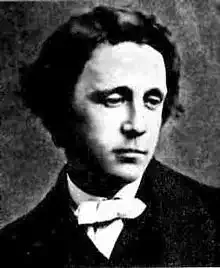
Lewis Carroll
Four Riddles
I
There was an ancient City, stricken down
With a strange frenzy, and for many a day
They paced from morn to eve the crowded town,
And danced the night away.
I asked the cause: the aged man grew sad:
They pointed to a building gray and tall,
And hoarsely answered "Step inside, my lad,
And then you'll see it all."
Yet what are all such gaieties to me
Whose thoughts are full of indices and surds?
x*x + 7x + 53 = 11/3
But something whispered "It will soon be done:
Bands cannot always play, nor ladies smile:
Endure with patience the distasteful fun
For just a little while!"
A change came o'er my Vision it
was night:
We clove a pathway through a frantic throng:
The steeds, wildplunging,
filled us with affright:
The chariots whirled along.
Within a marble hall a river ran A
living tide, half muslin and half cloth:
And here one mourned a broken wreath or fan,
Yet swallowed down her wrath;
And here one offered to a thirsty fair
(His words halfdrowned
amid those thunders tuneful)
Some frozen viand (there were many there),
A toothache
in each spoonful.
There comes a happy pause, for human strength
Will not endure to dance without cessation;
And every one must reach the point at length
Of absolute prostration.
At such a moment ladies learn to give,
To partners who would urge them overmuch,
A flat and yet decided negative Photographers
love such.
There comes a welcome summons hope
revives,
And fading eyes grow bright, and pulses quicken:
Incessant pop the corks, and busy knives
Dispense the tongue and chicken.
Flushed with new life, the crowd flows back again:
And all is tangled talk and mazy motion Much
like a waving field of golden grain,
Or a tempestuous ocean.
And thus they give the time, that Nature meant
For peaceful sleep and meditative snores,
To ceaseless din and mindless merriment
And waste of shoes and floors.
And One (we name him not) that flies the flowers,
That dreads the dances, and that shuns the salads,
They doom to pass in solitude the hours,
Writing acrosticballads.
How late it grows! The hour is surely past
That should have warned us with its double knock?
The twilight wanes, and morning comes at last "
Oh, Uncle, what's o'clock?"
The Uncle gravely nods, and wisely winks.
It MAY mean much, but how is one to know?
He opens his mouth yet
out of it, methinks,
No words of wisdom flow.
II
Empress of Art, for thee I twine
This wreath with all too slender skill.
Forgive my Muse each halting line,
And for the deed accept the will!
O day of tears! Whence comes this spectre grim,
Parting, like Death's cold river, souls that love?
Is not he bound to thee, as thou to him,
By vows, unwhispered here, yet heard above?
And still it lives, that keen and heavenward flame,
Lives in his eye, and trembles in his tone:
And these wild words of fury but proclaim
A heart that beats for thee, for thee alone!
But all is lost: that mighty mind o'erthrown,
Like sweet bells jangled, piteous sight to see!
"Doubt that the stars are fire," so runs his moan,
"Doubt Truth herself, but not my love for thee!"
A sadder vision yet: thine aged sire
Shaming his hoary locks with treacherous wile!
And dost thou now doubt Truth to be a liar?
And wilt thou die, that hast forgot to smile?
Nay, get thee hence! Leave all thy winsome ways
And the faint fragrance of thy scattered flowers:
In holy silence wait the appointed days,
And weep away the leadenfooted
hours.
III.
The air is bright with hues of light
And rich with laughter and with singing:
Young hearts beat high in ecstasy,
And banners wave, and bells are ringing:
But silence falls with fading day,
And there's an end to mirth and play.
Ah, welladay
Rest your old bones, ye wrinkled crones!
The kettle sings, the firelight dances.
Deep be it quaffed, the magic draught
That fills the soul with golden fancies!
For Youth and Pleasance will not stay,
And ye are withered, worn, and gray.
Ah, welladay!
O fair cold face! O form of grace,
For human passion madly yearning!
O weary air of dumb despair,
From marble won, to marble turning!
"Leave us not thus!" we fondly pray.
"We cannot let thee pass away!"
Ah, welladay!
IV.
My First is singular at best:
More plural is my Second:
My Third is far the pluralest So
pluralplural,
I protest
It scarcely can be reckoned!
My First is followed by a bird:
My Second by believers
In magic art: my simple Third
Follows, too often, hopes absurd
And plausible deceivers.
My First to get at wisdom tries A
failure melancholy!
My Second men revered as wise:
My Third from heights of wisdom flies
To depths of frantic folly.
My First is ageing day by day:
My Second's age is ended:
My Third enjoys an age, they say,
That never seems to fade away,
Through centuries extended.
My Whole? I need a poet's pen
To paint her myriad phases:
The monarch, and the slave, of men A
mountainsummit,
and a den
Of dark and deadly mazes
A flashing light a
fleeting shade Beginning,
end, and middle
Of all that human art hath made
Or wit devised! Go, seek HER aid,
If you would read my riddle!
259
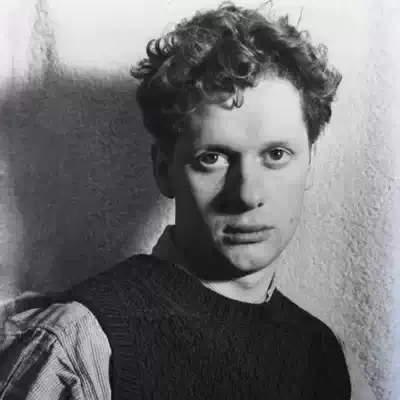
Dylan Thomas
From Love's First Fever to Her Plague
From love's first fever to her plague, from the soft second
And to the hollow minute of the womb,
From the unfolding to the scissored caul,
The time for breast and the green apron age
When no mouth stirred about the hanging famine,
All world was one, one windy nothing,
My world was christened in a stream of milk.
And earth and sky were as one airy hill.
The sun and mood shed one white light.
From the first print of the unshodden foot, the lifting
Hand, the breaking of the hair,
From the first scent of the heart, the warning ghost,
And to the first dumb wonder at the flesh,
The sun was red, the moon was grey,
The earth and sky were as two mountains meeting.
The body prospered, teeth in the marrowed gums,
The growing bones, the rumour of the manseed
Within the hallowed gland, blood blessed the heart,
And the four winds, that had long blown as one,
Shone in my ears the light of sound,
Called in my eyes the sound of light.
And yellow was the multiplying sand,
Each golden grain spat life into its fellow,
Green was the singing house.
The plum my mother picked matured slowly,
The boy she dropped from darkness at her side
Into the sided lap of light grew strong,
Was muscled, matted, wise to the crying thigh,
And to the voice that, like a voice of hunger,
Itched in the noise of wind and sun.
And from the first declension of the flesh
I learnt man's tongue, to twist the shapes of thoughts
Into the stony idiom of the brain,
To shade and knit anew the patch of words
Left by the dead who, in their moonless acre,
Need no word's warmth.
The root of tongues ends in a spentout cancer,
That but a name, where maggots have their X.
I learnt the verbs of will, and had my secret;
The code of night tapped on my tongue;
What had been one was many sounding minded.
One wound, one mind, spewed out the matter,
One breast gave suck the fever's issue;
From the divorcing sky I learnt the double,
The two-framed globe that spun into a score;
A million minds gave suck to such a bud
As forks my eye;
Youth did condense; the tears of spring
Dissolved in summer and the hundred seasons;
One sun, one manna, warmed and fed.
256
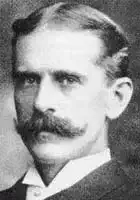
Henry Van Dyke
A Mile With Me
O who will walk a mile with me
Along life's merry way?
A comrade blithe and full of glee,
Who dares to laugh out loud and free,
And let his frolic fancy play,
Like a happy child, through the flowers gay
That fill the field and fringe the way
Where he walks a mile with me.
And who will walk a mile with me
Along life's weary way?
A friend whose heart has eyes to see
The stars shine out o'er the darkening lea,
And the quiet rest at the end o' the day,--
A friend who knows, and dares to say,
The brave, sweet words that cheer the way
Where he walks a mile with me.
With such a comrade, such a friend,
I fain would walk till journeys end,
Through summer sunshine, winter rain,
And then?--Farewell, we shall meet again!
253

Robert W. Service
Death In The Arctic
I
I took the clock down from the shelf;
"At eight," said I, "I shoot myself."
It lacked a minute of the hour,
And as I waited all a-cower,
A skinful of black, boding pain,
Bits of my life came back again. . . .
"Mother, there's nothing more to eat --
Why don't you go out on the street?
Always you sit and cry and cry;
Here at my play I wonder why.
Mother, when you dress up at night,
Red are your cheeks, your eyes are bright;
Twining a ribband in your hair,
Kissing good-bye you go down-stair.
Then I'm as lonely as can be.
Oh, how I wish you were with me!
Yet when you go out on the street,
Mother, there's always lots to eat. . . ."
II
For days the igloo has been dark;
But now the rag wick sends a spark
That glitters in the icy air,
And wakes frost sapphires everywhere;
Bright, bitter flames, that adder-like
Dart here and there, yet fear to strike
The gruesome gloom wherein they lie,
My comrades, oh, so keen to die!
And I, the last -- well, here I wait
The clock to strike the hour of eight. . . .
"Boy, it is bitter to be hurled
Nameless and naked on the world;
Frozen by night and starved by day,
Curses and kicks and clouts your pay.
But you must fight! Boy, look on me!
Anarch of all earth-misery;
Beggar and tramp and shameless sot;
Emblem of ill, in rags that rot.
Would you be foul and base as I?
Oh, it is better far to die!
Swear to me now you'll fight and fight,
Boy, or I'll kill you here to-night. . . ."
III
Curse this silence soft and black!
Sting, little light, the shadows back!
Dance, little flame, with freakish glee!
Twinkle with brilliant mockery!
Glitter on ice-robed roof and floor!
Jewel the bear-skin of the door!
Gleam in my beard, illume my breath,
Blanch the clock face that times my death!
But do not pierce that murk so deep,
Where in their sleeping-bags they sleep!
But do not linger where they lie,
They who had all the luck to die! . . .
"There is nothing more to say;
Let us part and go our way.
Since it seems we can't agree,
I will go across the sea.
Proud of heart and strong am I;
Not for woman will I sigh;
Hold my head up gay and glad:
You can find another lad. . . ."
IV
Above the igloo piteous flies
Our frayed flag to the frozen skies.
Oh, would you know how earth can be
A hell -- go north of Eighty-three!
Go, scan the snows day after day,
And hope for help, and pray and pray;
Have seal-hide and sea-lice to eat;
Melt water with your body's heat;
Sleep all the fell, black winter through
Beside the dear, dead men you knew.
(The walrus blubber flares and gleams --
O God! how long a minute seems!) . . .
"Mary, many a day has passed,
Since that morn of hot-head youth.
Come I back at last, at last,
Crushed with knowing of the truth;
How through bitter, barren years
You loved me, and me alone;
Waited, wearied, wept your tears --
Oh, could I atone, atone,
I would pay a million-fold!
Pay you for the love you gave.
Mary, look down as of old --
I am kneeling by your grave." . . .
V
Olaf, the Blonde, was first to go;
Bitten his eyes were by the snow;
Sightless and sealed his eyes of blue,
So that he died before I knew.
Here in those poor weak arms he died:
"Wolves will not get you, lad," I lied;
"For I will watch till Spring come round;
Slumber you shall beneath the ground."
Oh, how I lied! I scarce can wait:
Strike, little clock, the hour of eight! . . .
"Comrade, can you blame me quite?
The horror of the long, long night
Is on me, and I've borne with pain
So long, and hoped for help in vain.
So frail am I, and blind and dazed;
With scurvy sick, with silence crazed.
Beneath the Arctic's heel of hate,
Avid for Death I wait, I wait.
Oh if I falter, fail to fight,
Can you, dear comrade, blame me quite?" . . .
VI
Big Eric gave up months ago.
But seldom do men suffer so.
His feet sloughed off, his fingers died,
His hands shrunk up and mummified.
I had to feed him like a child;
Yet he was valiant, joked and smiled,
Talked of his wife and little one
(Thanks be to God that I have none),
Passed in the night without a moan,
Passed, and I'm here, alone, alone. . . .
"I've got to kill you, Dick.
Your life for mine, you know.
Better to do it quick,
A swift and sudden blow.
See! here's my hand to lick;
A hug before you go --
God! but it makes me sick:
Old dog, I love you so.
Forgive, forgive me, Dick --
A swift and sudden blow. . . ."
VII
Often I start up in the dark,
Thinking the sound of bells to hear.
Often I wake from sleep: "Oh, hark!
Help . . . it is coming . . . near and near."
Blindly I reel toward the door;
There the snow billows bleak and bare;
Blindly I seek my den once more,
Silence and darkness and despair.
Oh, it is all a dreadful dream!
Scurvy and cold and death and dearth;
I will awake to warmth and gleam,
Silvery seas and greening earth.
Life is a dream, its wakening,
Death, gentle shadow of God's wing. . . .
"Tick, little clock, my life away!
Even a second seems a day.
Even a minute seems a year,
Peopled with ghosts, that press and peer
Into my face so charnel white,
Lit by the devilish, dancing light.
Tick, little clock! mete out my fate:
Tortured and tense I wait, I wait. . . ."
VIII
Oh, I have sworn! the hour is nigh:
When it strikes eight, I die, I die.
Raise up the gun -- it stings my brow --
When it strikes eight . . . all ready . . . now -
* * * * *
Down from my hand the weapon dropped;
Wildly I stared. . . .
THE CLOCK HAD STOPPED.
IX
Phantoms and fears and ghosts have gone.
Peace seems to nestle in my brain.
Lo! the clock stopped, I'm living on;
Heart-sick I was, and less than sane.
Yet do I scorn the thing I planned,
Hearing a voice: "O coward, fight!"
Then the clock stopped . . . whose was the hand?
Maybe 'twas God's -- ah well, all's right.
Heap on me darkness, fold on fold!
Pain! wrench and rack me! What care I?
Leap on me, hunger, thirst and cold!
I will await my time to die;
Looking to Heaven that shines above;
Looking to God, and love . . . and love.
X
Hark! what is that? Bells, dogs again!
Is it a dream? I sob and cry.
See! the door opens, fur-clad men
Rush to my rescue; frail am I;
Feeble and dying, dazed and glad.
There is the pistol where it dropped.
"Boys, it was hard -- but I'm not mad. . . .
Look at the clock -- it stopped, it stopped.
Carry me out. The heavens smile.
See! there's an arch of gold above.
Now, let me rest a little while --
Looking to God and Love . . .and Love . . ."
254

Emily Dickinson
Upon Concluded Lives
Upon Concluded Lives
There's nothing cooler falls-
Than Life's sweet Calculations-
The mixing Bells and Palls-
Make Lacerating Tune-
To Ears the Dying Side'
Tis Coronal-and FuneralSaluting-
in the Road-
There's nothing cooler falls-
Than Life's sweet Calculations-
The mixing Bells and Palls-
Make Lacerating Tune-
To Ears the Dying Side'
Tis Coronal-and FuneralSaluting-
in the Road-
252
Robert W. Service
Awake To Smile
When I blink sunshine in my eyes
And hail the amber morn,
Before the rosy dew-drop dries
With sparkle on the thorn;
When boughs with robin rapture ring,
And bees hum in the may,--
Then call me young, with heart of Spring,
Though I be grey.
But when no more I know the joy
And urgence of that hour,
As like a happy-hearted boy
I leap to land aflower;
When gusto I no longer feel,
To rouse with glad hooray,--
Then call me old and let me steal
From men away.
Let me awaken with a smile
And go to garden glee,
For there is such a little while
Of living left to me;
But when star-wist I frail away,
Lord, let the hope beguile
That to Ecstatic Light I may
Awake to smile.
252

Henry Lawson
Knocked Up
I'm lyin' on the barren ground that's baked and cracked with drought,
And dunno if my legs or back or heart is most wore out;
I've got no spirits left to rise and smooth me achin' brow -I'm
too knocked up to light a fire and bile the billy now.
Oh it's trampin', trampin', tra-a-mpin', in flies an' dust an' heat,
Or it's trampin' trampin' tra-a-a-mpin'
through mud and slush 'n sleet;
It's tramp an' tramp for tucker -- one everlastin' strife,
An' wearin' out yer boots an' heart in the wastin' of yer life.
They whine o' lost an' wasted lives in idleness and crime -I've
wasted mine for twenty years, and grafted all the time
And never drunk the stuff I earned, nor gambled when I shore --
But somehow when yer on the track yer life seems wasted more.
A long dry stretch of thirty miles I've tramped this broilin' day,
All for the off-chance of a job a hundred miles away;
There's twenty hungry beggars wild for any job this year,
An' fifty might be at the shed while I am lyin' here.
The sinews in my legs seem drawn, red-hot -- 'n that's the truth;
I seem to weigh a ton, and ache like one tremendous tooth;
I'm stung between my shoulder-blades -- my blessed back seems broke;
I'm too knocked out to eat a bite -- I'm too knocked up to smoke.
The blessed rain is comin' too -- there's oceans in the sky,
An' I suppose I must get up and rig the blessed fly;
The heat is bad, the water's bad, the flies a crimson curse,
The grub is bad, mosquitoes damned -- but rheumatism's worse.
I wonder why poor blokes like me will stick so fast ter breath,
Though Shakespeare says it is the fear of somethin' after death;
But though Eternity be cursed with God's almighty curse --
What ever that same somethin' is I swear it can't be worse.
For it's trampin', trampin', tra-a-mpin' thro' hell across the plain,
And it's trampin' trampin' tra-a-mpin' thro' slush 'n mud 'n rain -A
livin' worse than any dog -- without a home 'n wife,
A-wearin' out yer heart 'n soul in the wastin' of yer life.
251

George Herbert
Man's Medley
Hark, how the birds do sing,
and woods do ring.
All creatures have their joy: and man hath his.
Yet if we rightly measure,
Man's joy and pleasure
Rather hereafter, than in present, is.
To this life things of sense
Make their pretense:
In th'other Angels have a right by birth:
Man ties them both alone,
And makes them one,
With th'one hand touching heav'n, with th'other earth.
In soul he mounts and flies,
In flesh he dies.
He wears a stuff whose thread is coarse and round,
But trimm'd with curious lace
And should take place
After the trimming, not the stuff and ground.
Not that he may not here
Taste of the cheer,
But as birds drink, and straight lift up their head,
So must he sip and think
Of better drink
He may attain to, after he is dead.
But as his joys are double,
So is his trouble.
He hath two winters, other things but one:
Both frosts and thoughts do nip,
And bite his lip;
And he of all things fears two deaths alone.
Yet ev'n the greatest griefs
May be reliefs,
Could he but take them right, and in their ways.
Happy is he, whose heart
Hath found the art
To turn his double pains to double praise.
249
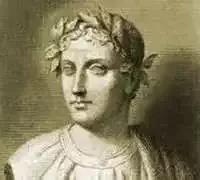
Horácio
BkIV:VII Diffugere Nives
The snow has vanished, already the grass returns to the fields,
and the leaves to the branches:
earth alters its state, and the steadily lessening rivers
slide quietly past their banks:
The Grace, and the Nymphs, with both of her sisters, is daring enough,
leading her dancers, naked.
The year, and the hour that snatches the kindly day away, warn you:
don’t hope for undying things.
Winter gives way to the westerly winds, spring’s trampled to ruin
by summer, and in its turn
fruitful autumn pours out its harvest, barely a moment before
lifeless winter is back again.
Yet swift moons are always repairing celestial losses:
while, when we have descended
to virtuous Aeneas, to rich Tullus and Ancus, our kings,
we’re only dust and shadow.
Who knows whether the gods above will add tomorrow’s hours
to the total of today?
All those you devote to a friendly spirit will escape from
the grasping hands of your heirs.
When once you’re dead, my Torquatus, and Minos pronounces
his splendid judgement on you,
no family, no eloquence, no righteousness even,
can restore you again:
Persephone never frees Hippolytus, chaste as he is,
from the shadow of darkness,
nor has Theseus, for his dear Pirithous, the power to
shatter those Lethean chains.
249
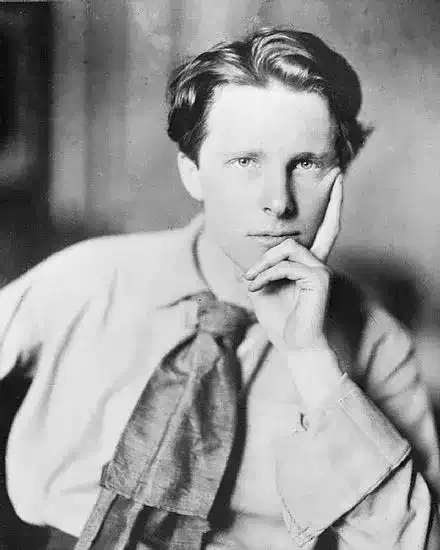
Rupert Brooke
The Fish
In a cool curving world he lies
And ripples with dark ecstasies.
The kind luxurious lapse and steal
Shapes all his universe to feel
And know and be; the clinging stream
Closes his memory, glooms his dream,
Who lips the roots o’ the shore, and glides
Superb on unreturning tides.
Those silent waters weave for him
A fluctuant mutable world and dim,
Where wavering masses bulge and gape
Mysterious, and shape to shape
Dies momently through whorl and hollow,
And form and line and solid follow
Solid and line and form to dream
Fantastic down the eternal stream;
An obscure world, a shifting world,
Bulbous, or pulled to thin, or curled,
Or serpentine, or driving arrows,
Or serene slidings, or March narrows.
There slipping wave and shore are one,
And weed and mud. No ray of sun,
But glow to glow fades down the deep
(As dream to unknown dream in sleep);
Shaken translucency illumes
The hyaline of drifting glooms;
The strange soft-handed depth subdues
Drowned colour there, but black to hues,
As death to living, decomposes—
Red darkness of the heart of roses,
Blue brilliant from dead starless skies,
And gold that lies behind the eyes,
The unknown unnameable sightless white
That is the essential flame of night,
Lustreless purple, hooded green,
The myriad hues that lie between
Darkness and darkness!…
And all’s one.
Gentle, embracing, quiet, dun,
The world he rests in, world he knows,
Perpetual curving. Only—grows
An eddy in that ordered falling,
A knowledge from the gloom, a calling
Weed in the wave, gleam in the mud—
The dark fire leaps along his blood;
Dateless and deathless, blind and still,
The intricate impulse works its will;
His woven world drops back; and he,
Sans providence, sans memory,
Unconscious and directly driven,
Fades to some dank sufficient heaven.
O world of lips, O world of laughter,
Where hope is fleet and thought flies after,
Of lights in the clear night, of cries
That drift along the wave and rise
Thin to the glittering stars above,
You know the hands, the eyes of love!
The strife of limbs, the sightless clinging,
The infinite distance, and the singing
Blown by the wind, a flame of sound,
The gleam, the flowers, and vast around
The horizon, and the heights above—
You know the sigh, the song of love!
But there the night is close, and there
Darkness is cold and strange and bare;
And the seered deeps are whisperless;
And rhythm is all deliciousness;
And joy is in the throbbing tide,
Whose intricate fingers beat and glide
In felt bewildering harmonies
Of trembling touch; and music is
The exquisite knocking of the blood.
Space is no more, under the mud;
His bliss is older than the sun.
Silent and straight the waters run.
The lights, the cries, the willows dim,
And the dark tide are one with him.
247

Henry Wadsworth Longfellow
Charles Sumner. (Birds Of Passage. Flight The Fourth)
Garlands upon his grave
And flowers upon his hearse,
And to the tender heart and brave
The tribute of this verse.
His was the troubled life,
The conflict and the pain,
The grief, the bitterness of strife,
The honor without stain.
Like Winkelried, he took
Into his manly breast
The sheaf of hostile spears, and broke
A path for the oppressed.
Then from the fatal field
Upon a nation's heart
Borne like a warrior on his shield!--
So should the brave depart.
Death takes us by surprise,
And stays our hurrying feet;
The great design unfinished lies,
Our lives are incomplete.
But in the dark unknown
Perfect their circles seem,
Even as a bridge's arch of stone
Is rounded in the stream.
Alike are life and death,
When life in death survives,
And the uninterrupted breath
Inspires a thousand lives.
Were a star quenched on high,
For ages would its light,
Still travelling downward from the sky,
Shine on our mortal sight.
So when a great man dies,
For years beyond our ken,
The light he leaves behind him lies
Upon the paths of men.
240
Henry Lawson
Possum A Lay of New Chumland
SO YER trav’lin’ for yer pleasure while yer writin’ for the press?
An’ yer huntin’ arter “copy”?—well, I’ve heer’d o’ that. I guess
You are gorn ter write a story that is gorn ter be yer best,
’Bout the “blunders an’ advenchers ov a new chum in the west?”
An’ you would be very thankful an’ acknowledge any hint?
Well, I karn’t say as I hankers fur ter see my name in print;
But I know a little story an’ I’ll tell it out ov hand
If yer’ll put it down in writin’ that the swells kin understand—
(It’s a story ov a new chum, and—a story ov the land.)
He had lately kum from Ingland—you cud tell it by ’s cap—
Fur “kerlonial exper’ence” (an’ he got it, too, poor chap).
’Twas in town he met the squatter, an’ he asked, as if in fun,
“If the boss ’ud want a flunkey or a coachy on the run?”
Well, it riz the boss’s dander, an’ he jumps clean orf ’is ’oss—
“Now, me fresh, sweet-scented beauty, watyer giv’nus?” sez the boss;
“I hev met yer kidney often, an’ yer mighty fresh an’ free,
But yer needn’t think yer gorn ter come a-lardin’ over me!”
But the new chum sed that ’onest he was lookin’ for a job,
An’ in spite of his appearance he had blued ’is bottom bob.
An’ as beggars karn’t be choosers same as people wot are rich,
Said he’d go as stoo’rd or gard’ner, but he warn’t partickler which.
Well, the joker seemed in earnest, so the boss began ter cool,
An’ he only blanked the new chum for a thund’rin’ jumpt-up fool.
Then he sed, “Well, there’s the fencin’, if yer’ll tramp it up from Perth,
The boys ’ll find yer su’thin p’r’aps, an’ giv’ yer wat yer worth.”
Ov course the squatter never thort ter see ’im any more,
But he wa’n’t the kind ov new chum that the squatter tuk ’im for;
No, he wa’n’t the kind er cockeroach that on’y kums ter shirk,
That wants ter git the sugar, but is fri’tened ov the work;
For he sold ’is watch ’n’ jool’ry, ’n’ lardi-dardy suits,
Stuck a swag upon his shoulder, ’n’ ’is feet in blucher boots;
An’ I dunno how he did it, he was anythin’ but strong,
But he ’umped his bluey ninety mile an’ kum to Bunglelong.
He earnt ’is pound and tucker borin’ holes an’ runnin’ wire,
An’ he’d work from dawn to sunset, an’ he never seemed to tire;
But he must have suffered orful from the tucker an’ the heat,
An’ the everlastin’ trampin’ made ’im tender in the feet,
An’ he must hev thort ov England w’en the everlastin’ flies
Ware a-worrit, worrit, worrit, an’ a-knawin’ at ’is eyes;
An’ he used to swear like thunder w’en the yaller sergeant ants
Took a mornin’ stroll, promiscus, on the inside ov ’is pants.
He uster make ’is damper six or seven inches thick—
It was doughey on the inside an’ the shell was like a brick,
An’ while the damper made ’im dream ov days ov long ago,
The little boodie rats ’ud kum an’ nibble out the dough.
He biled ’is taters soggy, an’ ’is junk was biled to rags
(The little boodie rats ’ud kum an’ chew ’s tucker bags),
But he took ’is troubles cheerful, an’ he fixed ’em like a pome,
An’ writ ’em in his darey to amuse the folks at home.
At first he flashed a coller an’ was keerful with ’is hat,
An’ he’d black ’is boots ov Sundays, but he soon grew out of that;
An’ he lernt ter bake ’is damper, an’ he leant to bile ’is junk
An’ sleep without a-getting up all night ter shake ’is bunk.
He soon got out ov takin’ “shorter cuts” across the flats,
An’ he learnt to fling ole bottles to the sorror of the rats,
An’ learnt to sling kerlonial and like the bushman’s way,
An’ it did us good to see ’im smoke ’is “nigger” in a clay.
He would sing an’ play ’is fiddle when we gathered round the blaze,
Till ole Frenchy got excited while he’d play the Mascylays;
An’ Bill ’ud take ’is hat off while he’d spout the Light Brigade,
An’ Scotchy got oneasy when the “Bony ’Ills” was played.
So we got ter like the new chum for we’d met with many wuss,
An’ we made it easy for ’im an’ he seemed to take to us:
The toilin’ an’ the trampin’ was a-cookin’ ’im we found,
So we made ’im cook an’ stoo’rd just ter keep the chap around.
Well, the months went bakin’ broilin’ on until Christmas nex’,
When we tramped it down to Perth to spend our ’ollyday (and cheques);
But Possum sed he’d save ’is tin an’ stay and mind the camp,
So we left ’im in possession an’ we started on our tramp;
(We useter call ’im Possum, but for short we called ’im Poss,
For ’is eyes was black an’ twinklin’ and a little chap he was),
We never would have left ’im if we’d know’d (but that’s the ru,
Comin’ back we found ’im dyin’ in ’is gunyah in the scrub.
We fixed ’im up an’ nursed ’im; but we seen without a doubt
That consumption was the matter, an’ the chap was peggin’ out;
But the lion heart inside ’im was as strong an’ stout as six,
An’ while he’d smile an’ thank us he would joke about ’is fix;
An’ he said ’twas very jolly to be dry-nursed in a tent,
An’ he reckoned that the Christmas was the best he’d ever spent;
He would talk of ’ome and Inglan’ when ’is head began ter swim,
But he never blamed the country that had been so ’ard on him.
He would say, “I like the country; if a feller’s blind er halt,
Or if he’s got konsumption, why it ain’t the country’s fault.
The tea that’s boil’d in billies is far sweeter stuff, I know,
Than the cursed drink w’at blasted all my chances long ago.
I would hev cum out sooner if it was my destiny,
An’ I daresay that the country would have made a man ov me.
But w’at’s the good ov energy, an’ wat’s the good er ‘push’
W’en a feller’s sick an’ dyin’ in a gunyah in the bush.”
But he tole me all about it as I sat beside ’is bunk—
How he’d spent ’is tin in Melbourne an’ was allers gettin’ drunk;
How he thort he’d take it easy while he had a little gold,
And, before he turned the new leaf, how he scribbled on the old;
An’ among a lot ov nonsense w’en ’is mind began to drift,
He told me that the new leaf was a heavy leaf to lift.
But w’ats the good er writin’ this, it’s nothin’ very new,
The land will see enough ov it an’ suffer for it, too.
An’ he said w’en he was dying, (when his lung was spit away)
An’ we all was standin’ round ’im in the gunyah where he lay,
An’ he said, “I’ve watched the sunset—when the wind began to ‘woosh’,
Like a layer ov coals a-glowin’—on the dark bed ov the bush;
An’ I felt my fingers slippin’—slippin’—slowly—from the ropes,
Wen the West was cold—like ashes—like the ashes of my hopes;
An’—I—— Sit beside me—Peter—let me ’old—a—bushman’s hand,
For I’m—gorn to—’ump—my bluey—through the gates ov—Newchumland.”
238

Wilfred Owen
Beauty: [Notes for an unfinished poem]
The beautiful, the fair, the elegant,
Is that which pleases us, says Kant,
Without a thought of interest or advantage.
I used to watch men when they spoke of beauty
And measure their enthusiasm. One
An old man, seeing a ( ) setting sun,
Praised it ( ) a certain sense of duty
To the calm evening and his time of life.
I know another man that never says a Beauty
But of a horse; ( )
Men seldom speak of beauty, beauty as such,
Not even lovers think about it much.
Women of course consider it for hours
In mirrors; ( )
A shrapnel ball -
Just where the wet skin glistened when he swam -
Like a fully-opened sea-anemone.
We both said 'What a beauty! What a beauty, lad'
I knew that in that flower he saw a hope
Of living on, and seeing again the roses of his home.
Beauty is that which pleases and delights,
Not bringing personal advantage - Kant.
But later on I heard
A canker worked into that crimson flower
And that he sank with it
And laid it with the anemones off Dover.
239
Robert W. Service
My Vineyard
To me at night the stars are vocal.
They say: 'Your planet's oh so local!
A speck of dust in heaven's ceiling;
Your faith divine a foolish feeling.
What odds if you are chaos hurled,
Yours is a silly little world.'
For their derision, haply true,
I hate the stars, as wouldn't you?
But whether earth be great or little,
I do not care a fishwife's spittle;
I do not fret its where or why,-Today's
a day and I am I.
Serene, afar from woe and worry
I tend my vines and do not hurry.
I buss the lass and tip the bottle,
Fill up the glass and rinse my throttle.
Tomorrow though the earth should perish,
The lust of life today I cherish.
Ah no, the stars I will not curse:
Though things are bad they might be worse.
So when vast constellations shine
I drink to them in ruby wine;
For they themselves,--although it odd is,
Somehow give me a sense that God is.
Because we trust and realise
His love he steers us in the skies.
For faith however foolish can
Be mighty helpful to a man:
And as I tend my vines so He
With tenderness looks after me.
233
Robert W. Service
Our Daily Bread
"Give me my daily bread.
It seems so odd,
When all is done and said,
This plea to God.
To pray for cake might be
The thing to do;
But bread, it seems to me,
Is just our due.
"Give me my daily toil,"
I ought to say (
If from life's cursed coil
I'd time to pray.)
Give me my daily sweat,
My body sore,
So that bread I may get
To toil for more.
"Give me my daily breath,"
Through half a sob,
Until untimely death
Shall end my job.
A crust for my award,
I cry in dread:
"Grant unto me. Oh Lord,
My daily bread!"
230
Robert W. Service
The Spirit Of The Unborn Babe
The Spirit of the Unborn Babe peered through the window-pane,
Peered through the window-pane that glowed like beacon in the night;
For, oh, the sky was desolate and wild with wind and rain;
And how the little room was crammed with coziness and light!
Except the flirting of the fire there was no sound at all;
The Woman sat beside the hearth, her knitting on her knee;
The shadow of her husband's head was dancing on the wall;
She looked with staring eyes at it, she looked yet did not see.
She only saw a childish face that topped the table rim,
A little wistful ghost that smiled and vanished quick away;
And then because her tender eyes were flooding to the brim,
She lowered her head. . . . "Don't sorrow, dear," she heard him softly say;
"It's over now. We'll try to be as happy as before
(Ah! they who little children have, grant hostages to pain).
We gave Life chance to wound us once, but never, never more. . . ."
The Spirit of the Unborn Babe fled through the night again.
The Spirit of the Unborn Babe went wildered in the dark;
Like termagants the winds tore down and whirled it with the snow.
And then amid the writhing storm it saw a tiny spark,
A window broad, a spacious room all goldenly aglow,
A woman slim and Paris-gowned and exquisitely fair,
Who smiled with rapture as she watched her jewels catch the blaze;
A man in faultless evening dress, young, handsome, debonnaire,
Who smoked his cigarette and looked with frank admiring gaze.
"Oh, we are happy, sweet," said he; "youth, health, and wealth are ours.
What if a thousand toil and sweat that we may live at ease!
What if the hands are worn and torn that strew our path with flowers!
Ah, well! we did not make the world; let us not think of these.
Let's seek the beauty-spots of earth, Dear Heart, just you and I;
Let other women bring forth life with sorrow and with pain.
Above our door we'll hang the sign: `No children need apply. . . .'"
The Spirit of the Unborn Babe sped through the night again.
The Spirit of the Unborn Babe went whirling on and on;
It soared above a city vast, it swept down to a slum;
It saw within a grimy house a light that dimly shone;
It peered in through a window-pane and lo! a voice said: "Come!"
And so a little girl was born amid the dirt and din,
And lived in spite of everything, for life is ordered so;
A child whose eyes first opened wide to swinishness and sin,
A child whose love and innocence met only curse and blow.
And so in due and proper course she took the path of shame,
And gladly died in hospital, quite old at twenty years;
And when God comes to weigh it all, ah! whose shall be the blame
For all her maimed and poisoned life, her torture and her tears?
For oh, it is not what we do, but what we have not done!
And on that day of reckoning, when all is plain and clear,
What if we stand before the Throne, blood-guilty every one? . . .
Maybe the blackest sins of all are Selfishness and Fear.
227

D.H. Lawrence
Mating
Round clouds roll in the arms of the wind,
The round earth rolls in a clasp of blue sky,
And see, where the budding hazels are thinned,
The wild anemones lie
In undulating shivers beneath the wind.
Over the blue of the waters ply
White ducks, a living flotilla of cloud;
And, look you, floating just thereby,
The blue-gleamed drake stems proud
Like Abraham, whose seed should multiply.
In the lustrous gleam of the water, there
Scramble seven toads across the silk, obscure leaves,
Seven toads that meet in the dusk to share
The darkness that interweaves
The sky and earth and water and live things everywhere.
Look now, through the woods where the beech-green spurts
Like a storm of emerald snow, look, see
A great bay stallion dances, skirts
The bushes sumptuously,
Going outward now in the spring to his brief deserts.
Ah love, with your rich, warm face aglow,
What sudden expectation opens you
So wide as you watch the catkins blow
Their dust from the birch on the blue
Lift of the pulsing wind—ah, tell me you know!
Ah, surely! Ah, sure from the golden sun
A quickening, masculine gleam floats in to all
Us creatures, people and flowers undone,
Lying open under his thrall,
As he begets the year in us. What, then, would you shun?
Why, I should think that from the earth there fly
Fine thrills to the neighbour stars, fine yellow beams
Thrown lustily off from our full-blown, high
Bursting globe of dreams,
To quicken the spheres that are virgin still in the sky.
Do you not hear each morsel thrill
With joy at travelling to plant itself within
The expectant one, therein to instil
New rapture, new shape to win,
From the thick of life wake up another will?
Surely, and if that I would spill
The vivid, ah, the fiery surplus of life,
From off my brimming measure, to fill
You, and flush you rife
With increase, do you call it evil, and always evil?
223
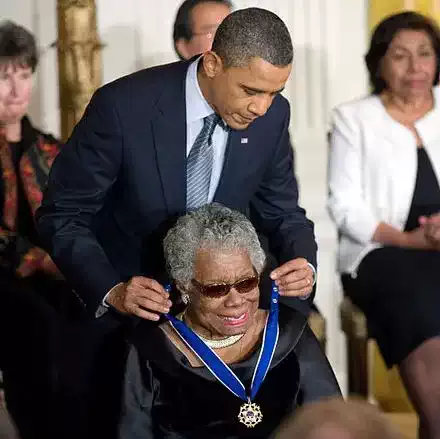
Maya Angelou
The Lesson
I keep on dying again.
Veins collapse, opening like the
Small fists of sleeping
Children.
Memory of old tombs,
Rotting flesh and worms do
Not convince me against
The challenge. The years
And cold defeat live deep in
Lines along my face.
They dull my eyes, yet
I keep on dying,
Because I love to live.
Veins collapse, opening like the
Small fists of sleeping
Children.
Memory of old tombs,
Rotting flesh and worms do
Not convince me against
The challenge. The years
And cold defeat live deep in
Lines along my face.
They dull my eyes, yet
I keep on dying,
Because I love to live.
215
Robert W. Service
Grey Gull
'Twas on an iron, icy day
I saw a pirate gull down-plane,
And hover in a wistful way
Nigh where my chickens picked their grain.
An outcast gull, so grey and old,
Withered of leg I watched it hop,
By hunger goaded and by cold,
To where each fowl full-filled its crop.
They hospitably welcomed it,
And at the food rack gave it place;
It ate and ate, it preened a bit,
By way way of gratitude and grace.
It parleyed with my barnyard cock,
Then resolutely winged away;
But I am fey in feather talk,
And this is what I heard it say:
"I know that you and all your tribe
Are shielded warm and fenced from fear;
With food and comfort you would bribe
My weary wings to linger here.
An outlaw scarred and leather-lean,
I battle with the winds of woe:
You think me scaly and unclean...
And yet my soul you do not know,
"I storm the golden gates of day,
I wing the silver lanes of night;
I plumb the deep for finny prey,
On wave I sleep in tempest height.
Conceived was I by sea and sky,
Their elements are fused in me;
Of brigand birds that float and fly
I am the freest of the free.
"From peak to plain, from palm to pine
I coast creation at my will;
The chartless solitudes are mine,
And no one seeks to do me ill.
Until some cauldron of the sea
Shall gulp for me and I shall cease...
Oh I have lived enormously
And I shall have prodigious peace."
With yellow bill and beady eye
This spoke, I think, that old grey gull;
And as I watched it Southward fly
Life seemed to be a-sudden dull.
For I have often held this thought -
If I could change this mouldy me,
By heaven! I would choose the lot,
Of all the gypsy birds, to be
A gull that spans the spacious sea.
208
Robert W. Service
Old David Smail
He dreamed away his hours in school;
He sat with such an absent air,
The master reckoned him a fool,
And gave him up in dull despair.
When other lads were making hay
You'd find him loafing by the stream;
He'd take a book and slip away,
And just pretend to fish . . . and dream.
His brothers passed him in the race;
They climbed the hill and clutched the prize.
He did not seem to heed, his face
Was tranquil as the evening skies.
He lived apart, he spoke with few;
Abstractedly through life he went;
Oh, what he dreamed of no one knew,
And yet he seemed to be content.
I see him now, so old and gray,
His eyes with inward vision dim;
And though he faltered on the way,
Somehow I almost envied him.
At last beside his bed I stood:
"And is Life done so soon?" he sighed;
"It's been so rich, so full, so good,
I've loved it all . . ." -- and so he died.
205

William Ernest Henley
Madam Life's a Piece in Bloom
Madam Life's a piece in bloom
Death goes dogging everywhere:
She's the tenant of the room,
He's the ruffian on the stair.
You shall see her as a friend,
You shall bilk him once or twice;
But he'll trap you in the end,
And he'll stick you for her price.
With his kneebones at your chest,
And his knuckles in your throat,
You would reason -- plead -- protest!
Clutching at her petticoat;
But she's heard it all before,
Well she knows you've had your fun,
Gingerly she gains the door,
And your little job is done.
205
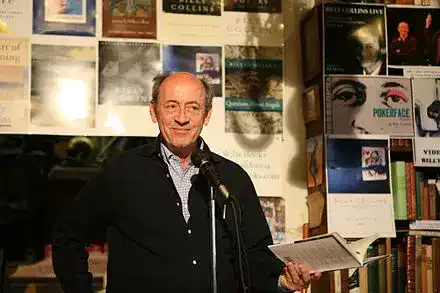
Billy Collins
I Go Back To The House For A Book
I turn around on the gravel and go back to the house for a book, something to read at
the doctor's office, and while I am inside, running the finger of inquisition along a shelf,
another me that did not bother to go back to the house for a book heads out on his
own, rolls down the driveway, and swings left toward town, a ghost in his ghost car,
another knot in the string of time, a good three minutes ahead of me — a spacing
that will now continue for the rest of my life.
196
Robert W. Service
At Thirty-Five
Three score and ten, the psalmist saith,
And half my course is well-nigh run;
I've had my flout at dusty death,
I've had my whack of feast and fun.
I've mocked at those who prate and preach;
I've laughed with any man alive;
But now with sobered heart I reach
The Great Divide of Thirty-five.
And looking back I must confess
I've little cause to feel elate.
I've played the mummer more or less;
I fumbled fortune, flouted fate.
I've vastly dreamed and little done;
I've idly watched my brothers strive:
Oh, I have loitered in the sun
By primrose paths to Thirty-five!
And those who matched me in the race,
Well, some are out and trampled down;
The others jog with sober pace;
Yet one wins delicate renown.
O midnight feast and famished dawn!
O gay, hard life, with hope alive!
O golden youth, forever gone,
How sweet you seem at Thirty-five!
Each of our lives is just a book
As absolute as Holy Writ;
We humbly read, and may not look
Ahead, nor change one word of it.
And here are joys and here are pains;
And here we fail and here we thrive;
O wondrous volume! what remains
When we reach chapter Thirty-five?
The very best, I dare to hope,
Ere Fate writes Finis to the tome;
A wiser head, a wider scope,
And for the gipsy heart, a home;
A songful home, with loved ones near,
With joy, with sunshine all alive:
Watch me grow younger every year --
Old Age! thy name is Thirty-five!
192
Robert W. Service
The Great Recall
I've wearied of so many things
Adored in youthful days;
Music no more my spirit wings,
E'en when Master play.
For stage and screen I have no heart,
Great paintings leave me cold;
Alas! I've lost the love of Art
That raptured me of old.
Only my love of books is left,
Yet that begins to pall;
And if of it I am bereft,
I'll read no more at all.
Then when I am too frail to walk
I'll sit out in the sun,
And there with Nature I will talk . . .
Last friend and dearest one.
For Nature's all in all to me;
My other loves are vain;
Her bosom brought me forth and she
Will take me back again.
So I will let her have her way,
For I've a feeling odd,
Whatever wiser men may say,
That she herself is GOD.
192