
Life
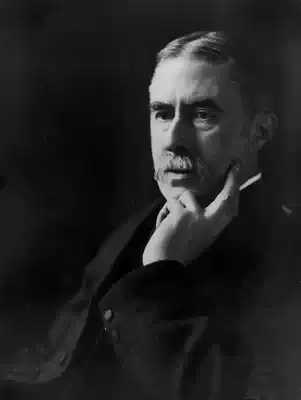
Alfred Edward Housman
You Smile Upon Your Friend To-Day
You smile upon your friend to-day,
To-day his ills are over;
You hearken to the lover's say,
And happy is the lover.
'Tis late to hearken, late to smile,
But better late than never;
I shall have lived a little while
Before I die for ever.
To-day his ills are over;
You hearken to the lover's say,
And happy is the lover.
'Tis late to hearken, late to smile,
But better late than never;
I shall have lived a little while
Before I die for ever.
343

John Greenleaf Whittier
The Reunion
The gulf of seven and fifty years
We stretch our welcoming hands across;
The distance but a pebble's toss
Between us and our youth appears.
For in life's school we linger on
The remnant of a once full list;
Conning our lessons, undismissed,
With faces to the setting sun.
And some have gone the unknown way,
And some await the call to rest;
Who knoweth whether it is best
For those who went or those who stay?
And yet despite of loss and ill,
If faith and love and hope remain,
Our length of days is not in vain,
And life is well worth living still.
Still to a gracious Providence
The thanks of grateful hearts are due,
For blessings when our lives were new,
For all the good vouchsafed us since.
The pain that spared us sorer hurt,
The wish denied, the purpose crossed,
And pleasure's fond occasions lost,
Were mercies to our small desert.
'T is something that we wander back,
Gray pilgrims, to our ancient ways,
And tender memories of old days
Walk with us by the Merrimac;
That even in life's afternoon
A sense of youth comes back again,
As through this cool September rain
The still green woodlands dream of June.
The eyes grown dim to present things
Have keener sight for bygone years,
And sweet and clear, in deafening ears,
The bird that sang at morning sings.
Dear comrades, scattered wide and far,
Send from their homes their kindly word,
And dearer ones, unseen, unheard,
Smile on us from some heavenly star.
For life and death with God are one,
Unchanged by seeming change His care
And love are round us here and there;
He breaks no thread His hand has spun.
Soul touches soul, the muster roll
Of life eternal has no gaps;
And after half a century's lapse
Our school-day ranks are closed and whole.
Hail and farewell! We go our way;
Where shadows end, we trust in light;
The star that ushers in the night
Is herald also of the day!
343
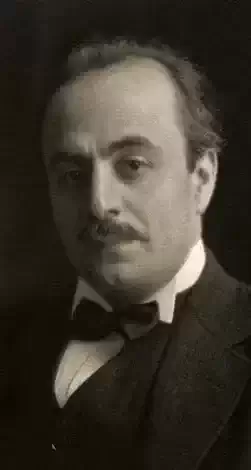
Khalil Gibran
Eating and Drinking chapter VI
Then an old man, a keeper of an inn, said, "Speak to us of Eating and Drinking."
And he said:
Would that you could live on the fragrance of the earth, and like an air plant be
sustained by the light.
But since you must kill to eat, and rob the young of its mother's milk to quench your
thirst, let it then be an act of worship,
And let your board stand an altar on which the pure and the innocent of forest and
plain are sacrificed for that which is purer and still more innocent in many.
When you kill a beast say to him in your heart,
"By the same power that slays you, I to am slain; and I too shall be consumed. For the
law that delivered you into my hand shall deliver me into a mightier hand.
Your blood and my blood is naught but the sap that feeds the tree of heaven."
And when you crush an apple with your teeth, say to it in your heart,
"Your seeds shall live in my body,
And the buds of your tomorrow shall blossom in my heart,
And your fragrance shall be my breath,
And together we shall rejoice through all the seasons."
And in the autumn, when you gather the grapes of your vineyard for the winepress,
say in you heart,
"I too am a vineyard, and my fruit shall be gathered for the winepress,
And like new wine I shall be kept in eternal vessels."
And in winter, when you draw the wine, let there be in your heart a song for each cup;
And let there be in the song a remembrance for the autumn days, and for the vineyard,
and for the winepress.
339
Henry Van Dyke
Gratitude
"Do you give thanks for this? -- or that?"
No, God be thanked
I am not grateful
In that cold, calculating way, with blessing ranked
As one, two, three, and four, -- that would be hateful.
I only know that every day brings good above"
My poor deserving;
I only feel that, in the road of Life, true Love
Is leading me along and never swerving.
Whatever gifts and mercies in my lot may fall,
I would not measure
As worth a certain price in praise, or great or small;
But take and use them all with simple pleasure.
For when we gladly eat our daily bread, we bless
The Hand that feeds us;
And when we tread the road of Life in cheerfulness,
Our very heart-beats praise the Love that leads us.
316
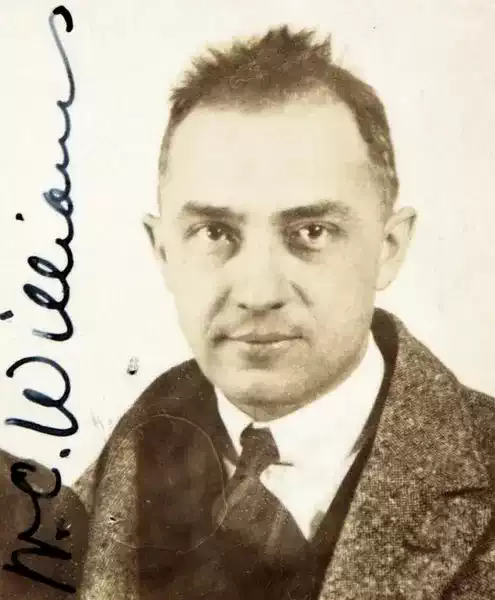
William Carlos Williams
The Term
A rumpled sheet
Of brown paper
About the length
And apparent bulk
Of a man was
Rolling with the
Wind slowly over
And over in
The street as
A car drove down
Upon it and
Crushed it to
The ground. Unlike
A man it rose
Again rolling
With the wind over
And over to be as
It was before.
Anonymous submission.
Of brown paper
About the length
And apparent bulk
Of a man was
Rolling with the
Wind slowly over
And over in
The street as
A car drove down
Upon it and
Crushed it to
The ground. Unlike
A man it rose
Again rolling
With the wind over
And over to be as
It was before.
Anonymous submission.
314

James Whitcomb Riley
No Boy Knows
There are many things that boys may know--
Why this and that are thus and so,--
Who made the world in the dark and lit
The great sun up to lighten it:
Boys know new things every day--
When they study, or when they play,--
When they idle, or sow and reap--
But no boy knows when he goes to sleep.
Boys who listen--or should, at least,--
May know that the round old earth rolls East;--
And know that the ice and the snow and the rain--
Ever repeating their parts again--
Are all just water the sunbeams first
Sip from the earth in their endless thirst,
And pour again till the low streams leap.--
But no boy knows when he goes to sleep.
A boy may know what a long glad while
It has been to him since the dawn's first smile,
When forth he fared in the realm divine
Of brook-laced woodland and spun-sunshine;--
He may know each call of his truant mates,
And the paths they went,--and the pasture-gates
Of the 'cross-lots home through the dusk so deep.--
But no boy knows when he goes to sleep.
O I have followed me, o'er and o'er,
From the flagrant drowse on the parlor-floor,
To the pleading voice of the mother when
I even doubted I heard it then--
To the sense of a kiss, and a moonlit room,
And dewy odors of locust-bloom--
A sweet white cot--and a cricket's cheep.--
But no boy knows when he goes to sleep.
308
John Greenleaf Whittier
The Lost Occasion
Some die too late and some too soon,
At early morning, heat of noon,
Or the chill evening twilight. Thou,
Whom the rich heavens did so endow
With eyes of power and Jove's own brow,
With all the massive strength that fills
Thy home-horizon's granite hills,
With rarest gifts of heart and head
From manliest stock inherited,
New England's stateliest type of man,
In port and speech Olympian;
Whom no one met, at first, but took
A second awed and wondering look
(As turned, perchance, the eyes of Greece
On Phidias' unveiled masterpiece);
Whose words in simplest homespun clad,
The Saxon strength of Caedmon's had,
With power reserved at need to reach
The Roman forum's loftiest speech,
Sweet with persuasion, eloquent
In passion, cool in argument,
Or, ponderous, falling on thy foes
As fell the Norse god's hammer blows,
Crushing as if with Talus' flail
Through Error's logic-woven mail,
And failing only when they tried
The adamant of the righteous side,-Thou,
foiled in aim and hope, bereaved
Of old friends, by the new deceived,
Too soon for us, too soon for thee,
Beside thy lonely Northern sea,
Where long and low the marsh-lands spread,
Laid wearily down thy August head.
Thou shouldst have lived to feel below
Thy feet Disunion's fierce upthrow;
The late-sprung mine that underlaid
Thy sad concessions vainly made.
Thou shouldst have seen from Sumter's wall
The star-flag of the Union fall,
And armed rebellion pressing on
The broken lines of Washington!
No stronger voice than thine had then
Called out the utmost might of men,
To make the Union's charter free
And strengthen law by liberty.
How had that stern arbitrament
To thy gray age youth's vigor lent,
Shaming ambition's paltry prize
Before thy disillusioned eyes;
Breaking the spell about thee wound
Like the green withes that Samson bound;
Redeeming in one effort grand,
Thyself and thy imperilled land!
Ah, cruel fate, that closed to thee,
O sleeper by the Northern sea,
The gates of opportunity!
God fills the gaps of human need,
Each crisis brings its word and deed.
Wise men and strong we did not lack;
But still, with memory turning back,
In the dark hours we thought of thee,
And thy lone grave beside the sea.
Above that grave the east winds blow,
And from the marsh-lands drifting slow
The sea-fog comes, with evermore
The wave-wash of a lonely shore,
And sea-bird's melancholy cry,
As Nature fain would typify
The sadness of a closing scene,
The loss of that which should have been.
But, where thy native mountains bare
Their foreheads to diviner air,
Fit emblem of enduring fame,
One lofty summit keeps thy name.
For thee the cosmic forces did
The rearing of that pyramid,
The prescient ages shaping with
Fire, flood, and frost thy monolith.
Sunrise and sunset lay thereon
With hands of light their benison,
The stars of midnight pause to set
Their jewels in its coronet.
And evermore that mountain mass
Seems climbing from the shadowy pass
To light, as if to manifest
Thy nobler self, thy life at best!
300
James Whitcomb Riley
A Worn-Out Pencil
Welladay!
Here I lay
You at rest--all worn away,
O my pencil, to the tip
Of our old companionship!
Memory
Sighs to see
What you are, and used to be,
Looking backward to the time
When you wrote your earliest rhyme!--
When I sat
Filing at
Your first point, and dreaming that
Your initial song should be
Worthy of posterity.
With regret
I forget
If the song be living yet,
Yet remember, vaguely now,
It was honest, anyhow.
You have brought
Me a thought--
Truer yet was never taught,--
That the silent song is best,
And the unsung worthiest.
So if I,
When I die,
May as uncomplainingly
Drop aside as now you do,
Write of me, as I of you:--
Here lies one
Who begun
Life a-singing, heard of none;
And he died, satisfied,
With his dead songs by his side.
296

Henry Lawson
The Drovers
Shrivelled leather, rusty buckles, and the rot is in our knuckles,
Scorched for months upon the pommel while the brittle rein hung free;
Shrunken eyes that once were lighted with fresh boyhood, dull and blighted—
And the sores upon our eyelids are unpleasant sights to see.
And our hair is thin and dying from the ends, with too long lying
In the night dews on the ashes of the Dry Countree.
Yes, we’ve seen ’em ‘bleaching whitely’ where the salt-bush sparkles brightly,
But their grins were over-friendly, so we passed and let them be.
And we’ve seen them ‘rather recent,’ and we’ve stopped to hide ’em decent
When they weren’t nice to handle and they weren’t too nice to see;
We have heard the dry bones rattle under fifteen hundred cattle—
Seen the rags go up in dust-clouds and the brittle joints kicked free;
But there’s little time to tarry, if you wish to live and marry,
When the cattle shy at something in the Dry Countree.
No, you needn’t fear the blacks on the Never Never tracks—
For the Myall in his freedom’s an uncommon sight to see;
Oh! we do not stick at trifles—and the trackers sneak their rifles,
And go strolling in the gloaming while the sergeant’s yarning free:
Round the Myalls creep the trackers—there’s a sound like firing crackers
And—the blacks are getting scarcer in the Dry Countree.
(Goes an unprotected maiden-’cross the clearing carrion-laden—
Oh they ride ’em down on horseback in the Dry Countree.)
But you don’t know what might happen when a tank is but a trap on
Roofs of hell, and there is nothing but the blaze of hell to see;
And the phantom water’s lapping—and no limb for saddle-strapping—
Better carry your revolver through the Dry Countree.
But I’m feeling gay and frisky, come with me and have a whisky!
Change of hells is all we live for (that’s my mate that’s got D.T.);
We have fought through hell’s own weather, he and I and death together—
Oh, the devil grins to greet us from the Dry Countree!
293

Gwendolyn Brooks
We Real Cool
The Pool Players.
Seven at the Golden Shovel.
We real cool. We
Left school. We
Lurk late. We
Strike straight. We
Sing sin. We
Thin gin. We
Jazz June. We
Die soon.
Seven at the Golden Shovel.
We real cool. We
Left school. We
Lurk late. We
Strike straight. We
Sing sin. We
Thin gin. We
Jazz June. We
Die soon.
292

Carl Sandburg
Last Answers
I wrote a poem on the mist
And a woman asked me what I meant by it.
I had thought till then only of the beauty of the mist,
how pearl and gray of it mix and reel,
And change the drab shanties with lighted lamps at evening
into points of mystery quivering with color.
I answered:
The whole world was mist once long ago and some day
it will all go back to mist,
Our skulls and lungs are more water than bone and tissue
And all poets love dust and mist because all the last answers
Go running back to dust and mist.
292

Robert W. Service
Two Husbands
Unpenitent, I grieve to state,
Two good men stood by heaven's gate,
Saint Peter coming to await.
The stopped the Keeper of the Keys,
Saying: "What suppliants are these,
Who wait me not on bended knees?
"To get my heavenly Okay
A man should have been used to pray,
Or suffered in some grievous way."
"Oh I have suffered," cried the first.
"Of wives I had the wicked worst,
Who made my life a plague accurst.
"Such martyrdom no tongue can tell;
In mercy's name it is not well
To doom me to another hell."
Saint Peter said: "I comprehend;
But tribulations have their end.
The gate is open, - go my friend."
Then said the second: "What of me?
More I deserve to pass than he,
For I've been wedded twice, you see."
Saint Peter looked at him a while,
And then he answered with a smile:
"Your application I will file.
"Yet twice in double yoke you've driven . . .
Though sinners with our Saints we leaven,
We don't take IMBECILES in heaven."
290
James Whitcomb Riley
Private Theatricals
A quite convincing axiom
Is, 'Life is like a play';
For, turning back its pages some
Few dog-eared years away,
I find where I
Committed my
Love-tale--with brackets where to sigh.
I feel an idle interest
To read again the page;
I enter, as a lover dressed,
At twenty years of age,
And play the part
With throbbing heart,
And all an actor's glowing art.
And she who plays my Lady-love
Excels!--Her loving glance
Has power her audience to move--
I am her audience.--
Her acting tact,
To tell the fact,
'Brings down the house' in every act.
And often we defy the curse
Of storms and thunder-showers,
To meet together and rehearse
This little play of ours--
I think, when she
'Makes love' to me,
She kisses very naturally!
. . . . . .
Yes; it's convincing--rather--
That 'Life is like a play':
I am playing 'Heavy Father'
In a 'Screaming Farce' to-day,
That so 'brings down
The house,' I frown,
And fain would 'ring the curtain down.'
283

Jonathan Swift
Robin And Harry
Robin to beggars with a curse,
Throws the last shilling in his purse;
And when the coachman comes for pay,
The rogue must call another day.
Grave Harry, when the poor are pressing
Gives them a penny and God's blessing;
But always careful of the main,
With twopence left, walks home in rain.
Robin from noon to night will prate,
Run out in tongue, as in estate;
And, ere a twelvemonth and a day,
Will not have one new thing to say.
Much talking is not Harry's vice;
He need not tell a story twice:
And, if he always be so thrifty,
His fund may last to five-and-fifty.
It so fell out that cautious Harry,
As soldiers use, for love must marry,
And, with his dame, the ocean cross'd;
(All for Love, or the World well Lost!)
Repairs a cabin gone to ruin,
Just big enough to shelter two in;
And in his house, if anybody come,
Will make them welcome to his modicum
Where Goody Julia milks the cows,
And boils potatoes for her spouse;
Or darns his hose, or mends his breeches,
While Harry's fencing up his ditches.
Robin, who ne'er his mind could fix,
To live without a coach-and-six,
To patch his broken fortunes, found
A mistress worth five thousand pound;
Swears he could get her in an hour,
If gaffer Harry would endow her;
And sell, to pacify his wrath,
A birth-right for a mess of broth.
Young Harry, as all Europe knows,
Was long the quintessence of beaux;
But, when espoused, he ran the fate
That must attend the married state;
From gold brocade and shining armour,
Was metamorphosed to a farmer;
His grazier's coat with dirt besmear'd;
Nor twice a-week will shave his beard.
Old Robin, all his youth a sloven,
At fifty-two, when he grew loving,
Clad in a coat of paduasoy,
A flaxen wig, and waistcoat gay,
Powder'd from shoulder down to flank,
In courtly style addresses Frank;
Twice ten years older than his wife,
Is doom'd to be a beau for life;
Supplying those defects by dress,
Which I must leave the world to guess.
285

George Herbert
Mortification
How soon doth man decay!
When clothes are taken from a chest of sweets
To swaddle infants, whose young breath
Scarce knows the way;
Those clouts are little winding-sheets,
Which do consign and send them unto Death.
When boyes go first to bed,
They step into their voluntarie graves;
Sleep binds them fast; onely their breath
Makes them not dead:
Successive nights, like rolling waves,
Convey them quickly who are bound for Death.
When Youth is frank and free,
And calls for musick, while his veins do swell,
All day exchanging mirth and breath
In companie,
That musick summons to the knell
Which shall befriend him at the house of Death.
When man grows staid and wise,
Getting a house and home, where he may move
Within the circle of his breath,
Schooling his eyes,
That dumbe inclosure maketh love
Unto the coffin, that attends his death.
When Age grows low and weak,
Marking his grave, and thawing ev'ry year,
Till all do melt and drown his breath
When he would speak,
A chair or litter shows the biere
Which shall convey him to the house of Death.
Man, ere he is aware,
Hath put together a solemnitie,
And drest his hearse, while he has breath
As yet to spare;
Yet, Lord, instruct us so to die,
That all these dyings may be LIFE in DEATH.
281

Christina Rossetti
Gone For Ever
O happy rosebud blooming
Upon thy parent tree,
Nay, thou art too presuming
For soon the earth entombing
Thy faded charms shall be,
And the chill damp consuming.
O happy skylark springing
Up to the broad blue sky,
Too fearless in thy winging,
Too gladsome in thy singing,
Thou also soon shalt lie
Where no sweet notes are ringing.
And through life's shine and shower
We shall have joy and pain;
But in the summer bower,
And at the morning hour,
We still shall look in vain
For the same bird and flower.
276
Robert W. Service
Property
The red-roofed house of dream design
Looks three ways on the sea;
For fifty years I've made it mine,
And held it part of me.
The pines I planted in my youth
Triumpantly are tall . . .
Yet now I know with sorry sooth
I have to leave it all.
Hard-hewn from out the living rock
And salty from the tide,
My house has braved the tempest shock
With hardihood and pride.
Each nook is memoried to me;
I've loved its every stone,
And cried to it exultantly:
"My own, my very own!"
Poor fool! To think that I possess.
I have but cannot hold;
And all that's mine is less and less
My own as I grow old.
My home shall ring with childish cheers
When I shall leave it lone;
My house will bide a hundred years
When I am in the bone.
Alas! No thing can be my own:
At most a life-long lease
Is all I hold, a little loan
From Time, that soon will cease.
For now by faint and failing breath
I feel that I must go . . .
Old House! You've never known a death,-Well,
now's your hour to know.
278
Robert W. Service
The Release
To-day within a grog-shop near
I saw a newly captured linnet,
Who beat against his cage in fear,
And fell exhausted every minute;
And when I asked the fellow there
If he to sell the bird were willing,
He told me with a careless air
That I could have it for a shilling.
And so I bought it, cage and all
(Although I went without my dinner),
And where some trees were fairly tall
And houses shrank and smoke was thinner,
The tiny door I open threw,
As down upon the grass I sank me:
Poor little chap! How quick he flew . . .
He didn't even wait to thank me.
Life's like a cage; we beat the bars,
We bruise our breasts, we struggle vainly;
Up to the glory of the stars
We strain with flutterings ungainly.
And then -- God opens wide the door;
Our wondrous wings are arched for flying;
We poise, we part, we sing, we soar . . .
Light, freedom, love. . . . Fools call it -- Dying.
276
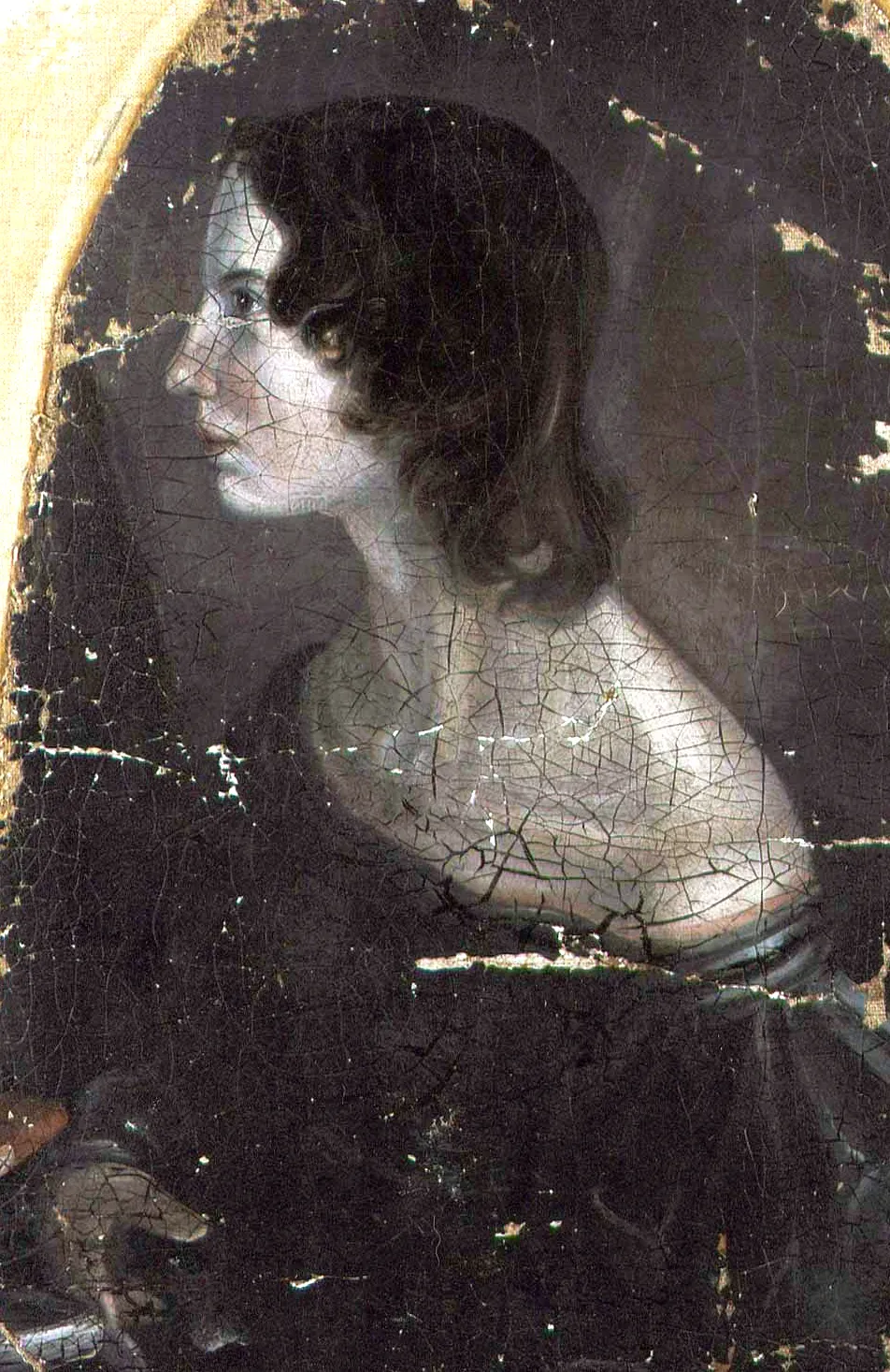
Emily Jane Brontë
A Day Dream
On a sunny brae, alone I lay
One summer afternoon;
It was the marriage-time of May
With her young lover, June.
From her mother's heart, seemed loath to part
That queen of bridal charms,
But her father smiled on the fairest child
He ever held in his arms.
The trees did wave their plumy crests,
The glad birds caroled clear;
And I, of all the wedding guests,
Was only sullen there!
There was not one, but wished to shun
My aspect void of cheer;
The very grey rocks, looking on,
Asked, "What do you here?"
And I could utter no reply;
In sooth, I did not know
Why I had brought a clouded eye
To greet the general glow.
So, resting on a heathy bank,
I took my heart to me;
And we together sadly sank
Into a reverie.
We thought, "When winter comes again,
Where will these bright things be?
All vanished, like a vision vain,
An unreal mockery!
The birds that now so blithely sing,
Through deserts, frozen dry,
Poor spectres of the perished spring,
In famished troops, will fly.
And why should we be glad at all?
The leaf is hardly green,
Before a token of its fall
Is on the surface seen!"
Now, whether it were really so,
I never could be sure;
But as in fit of peevish woe,
I stretched me on the moor.
A thousand thousand gleaming fires
Seemed kindling in the air;
A thousand thousand silvery lyres
Resounded far and near:
Methought, the very breath I breathed
Was full of sparks divine,
And all my heather-couch was wreathed
By that celestial shine!
And, while the wide earth echoing rung
To their strange minstrelsy,
The little glittering spirits sung,
Or seemed to sing, to me.
"O mortal! mortal! let them die;
Let time and tears destroy,
That we may overflow the sky
With universal joy!
Let grief distract the sufferer's breast,
And night obscure his way;
They hasten him to endless rest,
And everlasting day.
To thee the world is like a tomb,
A desert's naked shore;
To us, in unimagined bloom,
It brightens more and more!
And could we lift the veil, and give
One brief glimpse to thine eye,
Thou wouldst rejoice for those that live,
Because they live to die."
The music ceased; the noonday dream,
Like dream of night, withdrew;
But Fancy, still, will sometimes deem
Her fond creation true.
270
Robert W. Service
Causation
Said darling daughter unto me:
"oh Dad, how funny it would be
If you had gone to Mexico
A score or so of years ago.
Had not some whimsey changed your plan
I might have been a Mexican.
With lissome form and raven hair,
Instead of being fat and fair.
"Or if you'd sailed the Southern Seas
And mated with a Japanese
I might have been a squatty girl
With never golden locks to curl,
Who flirted with a painted fan,
And tinkled on a samisan,
And maybe slept upon a mat I'm
very glad I don't do that.
"When I consider the romance
Of all your youth of change and chance
I might, I fancy, just as well
Have bloomed a bold Tahitian belle,
Or have been born . . . but there - ah no!
I draw the line - and Esquimeaux.
It scares me stiff to think of what
I might have been - thank God! I'm not."
Said I: "my dear, don't be absurd,
Since everything that has occurred,
Through seeming fickle in your eyes,
Could not a jot be otherwise.
For in this casual cosmic biz
The world can be but what it is;
And nobody can dare deny
Part of this world is you and I.
Or call it fate or destiny
No other issue could there be.
Though half the world I've wandered through
Cause and effect have linked us two.
Aye, all the aeons of the past
Conspired to bring us here at last,
And all I ever chanced to do
Inevitably led to you.
To you, to make you what you are,
A maiden in a Morris car,
IN Harris tweeds, an airedale too,
But Anglo-Saxon through and through.
And all the good and ill I've done
In every land beneath the sun
Magnificently led to this
A country cottage and - your kiss."
269
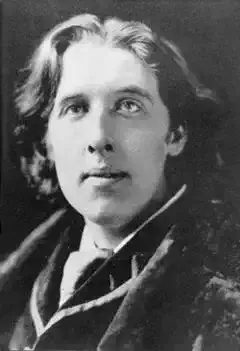
Oscar Wilde
Athenasia
To that gaunt House of Art which lacks for naught
Of all the great things men have saved from Time,
The withered body of a girl was brought
Dead ere the world's glad youth had touched its prime,
And seen by lonely Arabs lying hid
In the dim wound of some black pyramid.
But when they had unloosed the linen band
Which swathed the Egyptian's body,- lo! was found
Closed in the wasted hollow of her hand
A little seed, which sown in English ground
Did wondrous snow of starry blossoms bear,
And spread rich odors through our springtide air.
With such strange arts this flower did allure
That all forgotten was the asphodel,
And the brown bee, the lily's paramour,
Forsook the cup where he was wont to dwell,
For not a thing of earth it seemed to be,
But stolen from some heavenly Arcady.
In vain the sad narcissus, wan and white
At its own beauty, hung across the stream,
The purple dragon-fly had no delight
With its gold-dust to make his wings a-gleam,
Ah! no delight the jasmine-bloom to kiss,
Or brush the rain-pearls from the eucharis.
For love of it the passionate nightingale
Forgot the hills of Thrace, the cruel king,
And the pale dove no longer cared to sail
Through the wet woods at time of blossoming,
But round this flower of Egypt sought to float,
With silvered wing and amethystine throat.
While the hot sun blazed in his tower of blue
A cooling wind crept from the land of snows,
And the warm south with tender tears of dew
Drenched its white leaves when Hesperos uprose
Amid those sea-green meadows of the sky
On which the scarlet bars of sunset lie.
But when o'er wastes of lily-haunted field
The tired birds had stayed their amorous tune,
And broad and glittering like an argent shield
High in the sapphire heavens hung the moon,
Did no strange dream or evil memory make
Each tremulous petal of its blossoms shake?
Ah no! to this bright flower a thousand years
Seemed but the lingering of a summer's day,
It never knew the tide of cankering fears
Which turn a boy's gold hair to withered gray,
The dread desire of death it never knew,
Or how all folk that they were born must rue.
For we to death with pipe and dancing go,
Nor would we pass the ivory gate again,
As some sad river wearied of its flow
Through the dull plains, the haunts of common men,
Leaps lover-like into the terrible sea!
And counts it gain to die so gloriously.
We mar our lordly strength in barren strife
With the world's legions led by clamorous care,
It never feels decay but gathers life
From the pure sunlight and the supreme air,
We live beneath Time's wasting sovereignty,
It is the child of all eternity.
267

Emily Dickinson
We lose—because we win
We lose—because we win—
Gamblers—recollecting which
Toss their dice again!
Gamblers—recollecting which
Toss their dice again!
265
Robert W. Service
The Living Dead
Since I have come to years sedate
I see with more and more acumen
The bitter irony of Fate,
The vanity of all things human.
Why, just to-day some fellow said,
As I surveyed Fame's outer portal:
"By gad! I thought that you were dead."
Poor me, who dreamed to be immortal!
But that's the way with many men
Whose name one fancied time-defying;
We thought that they were dust and then
We found them living by their dying.
Like dogs we penmen have our day,
To brief best-sellerdom elected;
And then, "thumbs down," we slink away
And die forgotten and neglected.
Ah well, my lyric fling I've had;
A thousand bits of verse I've minted;
And some, alas! were very bad,
And some, alack! were best unprinted.
But if I've made my muse a bawd
(Since I am earthy as a ditch is),
I'll answer humbly to my God:
Most men at times have toyed with bitches.
Yes, I have played with Lady Rhyme,
And had a long and lovely innings;
And when the Umpire calls my time
I'll blandly quit and take my winnings.
I'll hie me to some Sleepydale,
And feed the ducks and pat the poodles,
And prime my paunch with cakes and ale,
And blether with the village noodles.
And then some day you'll idly scan
The Times obituary column,
And say: "Dear me, the poor old man!"
And for a moment you'll look solemn.
"So all this time he's been alive -
In realms of rhyme a second-rater . . .
But gad! to live to ninety-five:
Let's toast his ghost - a sherry, waiter!"
262
George Herbert
A Dialogue-Anthem
Alas, poor Death! Where is thy glory?
Where is thy famous force, thy ancient sting?
Alas, poor mortal, void of story!
Go spell and read how I have killed thy King.
Poor Death! And who was hurt thereby?
Thy curse being laid on Him makes thee accurst.
Let losers talk, yet thou shalt die;
These arms shall crush thee.
Spare not, do thy worst.
I shall be one day better than before;
Thou so much worse, that thou shalt be no more.
259