
Life

Johann Wolfgang von Goethe
Presence
ALL things give token of thee!
As soon as the bright sun is shining,
Thou too wilt follow, I trust.
When in the garden thou walk'st,
Thou then art the rose of all roses,
Lily of lilies as well.
When thou dost move in the dance,
Then each constellation moves also;
With thee and round thee they move.
Night! oh, what bliss were the night!
For then thou o'ershadow'st the lustre,
Dazzling and fair, of the moon.
Dazzling and beauteous art thou,
And flowers, and moon, and the planets
Homage pay, Sun, but to thee.
Sun! to me also be thou
Creator of days bright and glorious;
Life and Eternity this!
403
Johann Wolfgang von Goethe
Book Of Hafis - The Unlimited
THAT thou can't never end, doth make thee great,
And that thou ne'er beginnest, is thy fate.
Thy song is changeful as yon starry frame,
End and beginning evermore the same;
And what the middle bringeth, but contains
What was at first, and what at last remains.
Thou art of joy the true and minstrel-source,
From thee pours wave on wave with ceaseless force.
A mouth that's aye prepared to kiss,
A breast whence flows a loving song,
A throat that finds no draught amiss,
An open heart that knows no wrong.
And what though all the world should sink!
Hafis, with thee, alone with thee
Will I contend! joy, misery,
The portion of us twain shall be;
Like thee to love, like thee to drink,--
This be my pride,--this, life to me!
Now, Song, with thine own fire be sung,--
For thou art older, thou more young!
404

Robert Louis Stevenson
The Vagabond
Give to me the life I love,
Let the lave go by me,
Give the jolly heaven above
And the byway nigh me.
Bed in the bush with stars to see,
Bread I dip in the river -
There's the life for a man like me,
There's the life for ever.
Let the blow fall soon or late,
Let what will be o'er me;
Give the face of earth around
And the road before me.
Wealth I seek not, hope nor love,
Nor a friend to know me;
All I seek, the heaven above
And the road below me.
Or let autumn fall on me
Where afield I linger,
Silencing the bird on tree,
Biting the blue finger.
White as meal the frosty field -
Warm the fireside haven -
Not to autumn will I yield,
Not to winter even!
Let the blow fall soon or late,
Let what will be o'er me;
Give the face of earth around,
And the road before me.
Wealth I ask not, hope nor love,
Nor a friend to know me;
All I ask, the heaven above
And the road below me.
400

Carl Sandburg
A Father To His Son
A father sees his son nearing manhood.
What shall he tell that son?
'Life is hard; be steel; be a rock.'
And this might stand him for the storms
and serve him for humdrum monotony
and guide him among sudden betrayals
and tighten him for slack moments.
'Life is a soft loam; be gentle; go easy.'
And this too might serve him.
Brutes have been gentled where lashes failed.
The growth of a frail flower in a path up
has sometimes shattered and split a rock.
A tough will counts. So does desire.
So does a rich soft wanting.
Without rich wanting nothing arrives.
Tell him too much money has killed men
and left them dead years before burial:
the quest of lucre beyond a few easy needs
has twisted good enough men
sometimes into dry thwarted worms.
Tell him time as a stuff can be wasted.
Tell him to be a fool every so often
and to have no shame over having been a fool
yet learning something out of every folly
hoping to repeat none of the cheap follies
thus arriving at intimate understanding
of a world numbering many fools.
Tell him to be alone often and get at himself
and above all tell himself no lies about himself
whatever the white lies and protective fronts
he may use against other people.
Tell him solitude is creative if he is strong
and the final decisions are made in silent rooms.
Tell him to be different from other people
if it comes natural and easy being different.
Let him have lazy days seeking his deeper motives.
Let him seek deep for where he is born natural.
Then he may understand Shakespeare
and the Wright brothers, Pasteur, Pavlov,
Michael Faraday and free imaginations
Bringing changes into a world resenting change.
He will be lonely enough
to have time for the work
he knows as his own.
401

Ella Wheeler Wilcox
Poverty And Wealth
The stork flew over a town one day,
And back of each wing an infant lay;
One to a rich man’s home he brought,
And one he left at a labourer’s cot.
The rich man said, ‘My son shall be
A lordly ruler o’er land and sea.’
The labourer sighed, ‘’Tis the good God’s will
That I have another mouth to fill.’
The rich man’s son grew strong and fair,
And proud with the pride of a millionaire.
His motto in life was, ‘Live while you may, ’
And he crowded years in a single day.
He bought position and name and place,
And he bought him a wife with a handsome face.
He journeyed over the whole wide world,
But discontent his heart lay curled
Like a serpent hidden in leaves and moss,
And life seemed hollow and gold was dross.
He scoffed at woman, and doubted God,
And died like a beast and went back to the sod.
The son of the labourer tilled the soil,
And thanked God daily for health and toil.
He wedded for love in his youthful prime,
And two lives chorded in tune and time.
His wants were simple, and simple his creed,
To trust God fully: it served his need,
And lightened his labour, and helped him to die
With a smile on his lips and a hope in his eye.
When all is over and all is done,
Now which of these men was the richer one?
401
Johann Wolfgang von Goethe
As Broad As It's Long
MODEST men must needs endure,
And the bold must humbly bow;
Thus thy fate's the same, be sure,
Whether bold or modest thou.
And the bold must humbly bow;
Thus thy fate's the same, be sure,
Whether bold or modest thou.
402
Ella Wheeler Wilcox
Baby's First Journey
Lightly they hold him and lightly they sway him-
Soft as a pillow are somebody's arms.
Down he goes slowly, ever so lowly
Over the rim of the cradle they lay him
Baby's
first journey is free from alarms.
Baby is growing while Mama sings by-lo,
Sturdy and rosy and laughing and fair,
Crowing and growing past every one's knowing,
Out goes the cradle and in comes the 'high-lo,'
Baby's next journey is into this chair.
Crying or cooing or waking or sleeping,
Baby is ever a thing to adore.
Look at him yonder-oh what a wonder,
Who would believe it, the darling is creeping,
Baby's next journey is over the floor.
Sweeter and cuter and brighter and stronger,
Mama can see every day how he's grown.
Shoes are all battered, stockings all tattered,
Oh! but the baby is baby no longer
Look at the fellow-he's walking alone!
397
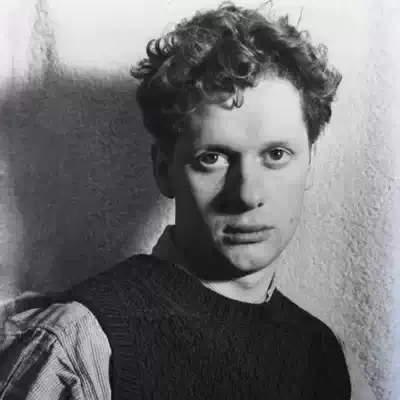
Dylan Thomas
This Bread I Break
This bread I break was once the oat,
This wine upon a foreign tree
Plunged in its fruit;
Man in the day or wine at night
Laid the crops low, broke the grape's joy.
Once in this time wine the summer blood
Knocked in the flesh that decked the vine,
Once in this bread
The oat was merry in the wind;
Man broke the sun, pulled the wind down.
This flesh you break, this blood you let
Make desolation in the vein,
Were oat and grape
Born of the sensual root and sap;
My wine you drink, my bread you snap.
389
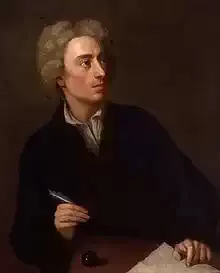
Alexander Pope
To Mrs. M. B. On Her Birthday
Oh be thou blest with all that Heav'n can send,
Long Health, long Youth, long Pleasure, and a Friend:
Not with those Toys the female world admire,
Riches that vex, and Vanities that tire.
With added years if Life bring nothing new,
But, like a Sieve, let ev'ry blessing thro',
Some joy still lost, as each vain year runs o'er,
And all we gain, some sad Reflection more;
Is that a Birth-Day? 'tis alas! too clear,
'Tis but the funeral of the former year.
Let Joy or Ease, let Affluence or Content,
And the gay Conscience of a life well spent,
Calm ev'ry thought, inspirit ev'ry grace.
Glow in thy heart, and smile upon thy face.
Let day improve on day, and year on year,
Without a Pain, a Trouble, or a Fear;
Till Death unfelt that tender frame destroy,
In some soft Dream, or Extasy of joy,
Peaceful sleep out the Sabbath of the Tomb,
And wake to Raptures in a Life to come.
387

William Butler Yeats
Those Dancing Days Are Gone
Come, let me sing into your ear;
Those dancing days are gone,
All that silk and satin gear;
Crouch upon a stone,
Wrapping that foul body up
In as foul a rag:
I carry the sun in a golden cup.
The moon in a silver bag.
Curse as you may I sing it through;
What matter if the knave
That the most could pleasure you,
The children that he gave,
Are somewhere sleeping like a top
Under a marble flag?
I carry the sun in a golden cup.
The moon in a silver bag.
I thought it out this very day.
Noon upon the clock,
A man may put pretence away
Who leans upon a stick,
May sing, and sing until he drop,
Whether to maid or hag:
I carry the sun in a golden cup,
The moon in a silver bag.
383

Nazim Hikmet
Hymn To Life
The hair falling on your forehead
suddenly lifted.
Suddenly something stirred on the ground.
The trees are whispering
in the dark.
Your bare arms will be cold.
Far off
where we can't see,
the moon must be rising.
It hasn't reached us yet,
slipping through the leaves
to light up your shoulder.
But I know
a wind comes up with the moon.
The trees are whispering.
Your bare arms will be cold.
From above,
from the branches lost in the dark,
something dropped at your feet.
You moved closer to me.
Under my hand your bare flesh is like the fuzzy skin of a fruit.
Neither a song of the heart nor "common sense"--
before the trees, birds, and insects,
my hand on my wife's flesh
is thinking.
Tonight my hand
can't read or write.
Neither loving nor unloving...
It's the tongue of a leopard at a spring,
a grape leaf,
a wolf's paw.
To move, breathe, eat, drink.
My hand is like a seed
splitting open underground.
Neither a song of the heart nor "common sense,"
neither loving nor unloving.
My hand thinking on my wife's flesh
is the hand of the first man.
Like a root that finds water underground,
it says to me:
"To eat, drink, cold, hot, struggle, smell, color--
not to live in order to die
but to die to live..."
And now
as red female hair blows across my face,
as something stirs on the ground,
as the trees whisper in the dark,
and as the moon rises far off
where we can't see,
my hand on my wife's flesh
before the trees, birds, and insects,
I want the right of life,
of the leopard at the spring, of the seed splitting open--
I want the right of the first man.
Trans. by Randy Blasing and Mutlu Konuk ()
384

William Blake
The Fly
Little Fly,
Thy summer's play
My thoughtless hand
Has brushed away.
Am not I
A fly like thee?
Or art not thou
A man like me?
For I dance
And drink, and sing,
Till some blind hand
Shall brush my wing.
If thought is life
And strength and breath
And the want
Of thought is death;
Then am I
A happy fly,
If I live,
Or if I die.
380
Carl Sandburg
Choices
They offer you many things,
I a few.
Moonlight on the play of fountains at night
With water sparkling a drowsy monotone,
Bare-shouldered, smiling women and talk
And a cross-play of loves and adulteries
And a fear of death
and a remembering of regrets:
All this they offer you.
I come with:
salt and bread
a terrible job of work
and tireless war;
Come and have now:
hunger.
danger
and hate.
381

Walt Whitman
My Picture-Callery
IN a little house keep I pictures suspended, it is not a fix'd house,
It is round, it is only a few inches from one side to the other;
Yet behold, it has room for all the shows of the world, all memories?
Here the tableaus of life, and here the groupings of death;
Here, do you know this? this is cicerone himself,
With finger rais'd he points to the prodigal pictures.
It is round, it is only a few inches from one side to the other;
Yet behold, it has room for all the shows of the world, all memories?
Here the tableaus of life, and here the groupings of death;
Here, do you know this? this is cicerone himself,
With finger rais'd he points to the prodigal pictures.
381
Robert Louis Stevenson
Away With Funeral Music
AWAY with funeral music - set
The pipe to powerful lips -
The cup of life's for him that drinks
And not for him that sips.
The pipe to powerful lips -
The cup of life's for him that drinks
And not for him that sips.
371
Johann Wolfgang von Goethe
The Brethren
SLUMBER and Sleep, two brethren ordain'd by the gods to their service,
Were by Prometheus implored, comfort to give to his race;
But though so light to the gods, too heavy for man was their burden,
We in their slumber find sleep, we in their sleep meet with death.
Were by Prometheus implored, comfort to give to his race;
But though so light to the gods, too heavy for man was their burden,
We in their slumber find sleep, we in their sleep meet with death.
365

Emily Dickinson
The Whole of it came not at once
The Whole of it came not at once'
Twas Murder by degrees-
A Thrust-and then for Life a chance-
The Bliss to cauterize-
The Cat reprieves the Mouse
She eases from her teeth
Just long enough for Hope to tease-
Then mashes it to death
'Tis Life's award-to die-
Contenteder if once-
Than dying half-then rallying
For consciouser Eclipse-
Twas Murder by degrees-
A Thrust-and then for Life a chance-
The Bliss to cauterize-
The Cat reprieves the Mouse
She eases from her teeth
Just long enough for Hope to tease-
Then mashes it to death
'Tis Life's award-to die-
Contenteder if once-
Than dying half-then rallying
For consciouser Eclipse-
362
Dylan Thomas
How Soon The Servant Sun
How soon the servant sun,
(Sir morrow mark),
Can time unriddle, and the cupboard stone,
(Fog has a bone
He'll trumpet into meat),
Unshelve that all my gristles have a gown
And the naked egg stand straight,
Sir morrow at his sponge,
(The wound records),
The nurse of giants by the cut sea basin,
(Fog by his spring
Soaks up the sewing tides),
Tells you and you, my masters, as his strange
Man morrow blows through food.
All nerves to serve the sun,
The rite of light,
A claw I question from the mouse's bone,
The long-tailed stone
Trap I with coil and sheet,
Let the soil squeal I am the biting man
And the velvet dead inch out.
How soon my level, lord,
(Sir morrow stamps
Two heels of water on the floor of seed),
Shall raise a lamp
Or spirit up a cloud,
Erect a walking centre in the shroud,
Invisible on the stump
A leg as long as trees,
This inward sir,
Mister and master, darkness for his eyes,
The womb-eyed, cries,
And all sweet hell, deaf as an hour's ear,
Blasts back the trumpet voice.
360

Ezra Pound
Post Mortem Conspectu
A brown, fat babe sitting in the lotus,
And you were glad and laughing
With a laughter not of this world.
It is good to splash in the water
And laughter is the end of all things.
And you were glad and laughing
With a laughter not of this world.
It is good to splash in the water
And laughter is the end of all things.
358

Ogden Nash
Introspective Reflection
I would live all my life in nonchalance and insouciance
Were it not for making a living, which is rather a nouciance.
Were it not for making a living, which is rather a nouciance.
356
Ogden Nash
Old Dr. Valentine To His Son
Your hopeless patients will live,
Your healthy patients will die.
I have only this word to give:
Wonder, and find out why
Your healthy patients will die.
I have only this word to give:
Wonder, and find out why
355

Henry Wadsworth Longfellow
The White Man's Foot
In his lodge beside a river,
Close beside a frozen river,
Sat an old man, sad and lonely.
White his hair was as a snow-drift;
Dull and low his fire was burning,
And the old man shook and trembled,
Folded in his Waubewyon,
In his tattered white-skin-wrapper,
Hearing nothing but the tempest
As it roared along the forest,
Seeing nothing but the snow-storm,
As it whirled and hissed and drifted.
All the coals were white with ashes,
And the fire was slowly dying,
As a young man, walking lightly,
At the open doorway entered.
Red with blood of youth his cheeks were,
Soft his eyes, as stars In Spring-time,
Bound his forehead was with grasses;
Bound and plumed with scented grasses,
On his lips a smile of beauty,
Filling all the lodge with sunshine,
In his hand a bunch of blossoms
Filling all the lodge with sweetness.
"Ah, my son!" exclaimed the old man,
"Happy are my eyes to see you.
Sit here on the mat beside me,
Sit here by the dying embers,
Let us pass the night together,
Tell me of your strange adventures,
Of the lands where you have travelled;
I will tell you of my prowess,
Of my many deeds of wonder."
From his pouch he drew his peace-pipe,
Very old and strangely fashioned;
Made of red stone was the pipe-head,
And the stem a reed with feathers;
Filled the pipe with bark of willow,
Placed a burning coal upon it,
Gave it to his guest, the stranger,
And began to speak in this wise:
"When I blow my breath about me,
When I breathe upon the landscape,
Motionless are all the rivers,
Hard as stone becomes the water!"
And the young man answered, smiling:
"When I blow my breath about me,
When I breathe upon the landscape,
Flowers spring up o'er all the meadows,
Singing, onward rush the rivers!"
"When I shake my hoary tresses,"
Said the old man darkly frowning,
"All the land with snow is covered;
All the leaves from all the branches
Fall and fade and die and wither,
For I breathe, and lo! they are not.
From the waters and the marshes,
Rise the wild goose and the heron,
Fly away to distant regions,
For I speak, and lo! they are not.
And where'er my footsteps wander,
All the wild beasts of the forest
Hide themselves in holes and caverns,
And the earth becomes as flintstone!"
"When I shake my flowing ringlets,"
Said the young man, softly laughing,
"Showers of rain fall warm and welcome,
Plants lift up their heads rejoicing,
Back Into their lakes and marshes
Come the wild goose and the heron,
Homeward shoots the arrowy swallow,
Sing the bluebird and the robin,
And where'er my footsteps wander,
All the meadows wave with blossoms,
All the woodlands ring with music,
All the trees are dark with foliage!"
While they spake, the night departed:
From the distant realms of Wabun,
From his shining lodge of silver,
Like a warrior robed and painted,
Came the sun, and said, "Behold me
Gheezis, the great sun, behold me!"
Then the old man's tongue was speechless
And the air grew warm and pleasant,
And upon the wigwam sweetly
Sang the bluebird and the robin,
And the stream began to murmur,
And a scent of growing grasses
Through the lodge was gently wafted.
And Segwun, the youthful stranger,
More distinctly in the daylight
Saw the icy face before him;
It was Peboan, the Winter!
From his eyes the tears were flowing,
As from melting lakes the streamlets,
And his body shrunk and dwindled
As the shouting sun ascended,
Till into the air it faded,
Till into the ground it vanished,
And the young man saw before him,
On the hearth-stone of the wigwam,
Where the fire had smoked and smouldered,
Saw the earliest flower of Spring-time,
Saw the Beauty of the Spring-time,
Saw the Miskodeed in blossom.
Thus it was that in the North-land
After that unheard-of coldness,
That intolerable Winter,
Came the Spring with all its splendor,
All its birds and all its blossoms,
All its flowers and leaves and grasses.
Sailing on the wind to northward,
Flying in great flocks, like arrows,
Like huge arrows shot through heaven,
Passed the swan, the Mahnahbezee,
Speaking almost as a man speaks;
And in long lines waving, bending
Like a bow-string snapped asunder,
Came the white goose, Waw-be-wawa;
And in pairs, or singly flying,
Mahng the loon, with clangorous pinions,
The blue heron, the Shuh-shuh-gah,
And the grouse, the Mushkodasa.
In the thickets and the meadows
Piped the bluebird, the Owaissa,
On the summit of the lodges
Sang the robin, the Opechee,
In the covert of the pine-trees
Cooed the pigeon, the Omemee;
And the sorrowing Hiawatha,
Speechless in his infinite sorrow,
Heard their voices calling to him,
Went forth from his gloomy doorway,
Stood and gazed into the heaven,
Gazed upon the earth and waters.
From his wanderings far to eastward,
From the regions of the morning,
From the shining land of Wabun,
Homeward now returned Iagoo,
The great traveller, the great boaster,
Full of new and strange adventures,
Marvels many and many wonders.
And the people of the village
Listened to him as he told them
Of his marvellous adventures,
Laughing answered him in this wise:
"Ugh! it is indeed Iagoo!
No one else beholds such wonders!"
He had seen, he said, a water
Bigger than the Big-Sea-Water,
Broader than the Gitche Gumee,
Bitter so that none could drink it!
At each other looked the warriors,
Looked the women at each other,
Smiled, and said, "It cannot be so!"
Kaw!" they said, it cannot be so!"
O'er it, said he, o'er this water
Came a great canoe with pinions,
A canoe with wings came flying,
Bigger than a grove of pine-trees,
Taller than the tallest tree-tops!
And the old men and the women
Looked and tittered at each other;
"Kaw!" they said, "we don't believe it!"
From its mouth, he said, to greet him,
Came Waywassimo, the lightning,
Came the thunder, Annemeekee!
And the warriors and the women
Laughed aloud at poor Iagoo;
"Kaw!" they said, "what tales you tell us!"
In it, said he, came a people,
In the great canoe with pinions
Came, he said, a hundred warriors;
Painted white were all their faces
And with hair their chins were covered!
And the warriors and the women
Laughed and shouted in derision,
Like the ravens on the tree-tops,
Like the crows upon the hemlocks.
"Kaw!" they said, "what lies you tell us!
Do not think that we believe them!"
Only Hiawatha laughed not,
But he gravely spake and answered
To their jeering and their jesting:
"True is all Iagoo tells us;
I have seen it in a vision,
Seen the great canoe with pinions,
Seen the people with white faces,
Seen the coming of this bearded
People of the wooden vessel
From the regions of the morning,
From the shining land of Wabun.
"Gitche Manito, the Mighty,
The Great Spirit, the Creator,
Sends them hither on his errand.
Sends them to us with his message.
Wheresoe'er they move, before them
Swarms the stinging fly, the Ahmo,
Swarms the bee, the honey-maker;
Wheresoe'er they tread, beneath them
Springs a flower unknown among us,
Springs the White-man's Foot in blossom.
"Let us welcome, then, the strangers,
Hail them as our friends and brothers,
And the heart's right hand of friendship
Give them when they come to see us.
Gitche Manito, the Mighty,
Said this to me in my vision.
"I beheld, too, in that vision
All the secrets of the future,
Of the distant days that shall be.
I beheld the westward marches
Of the unknown, crowded nations.
All the land was full of people,
Restless, struggling, toiling, striving,
Speaking many tongues, yet feeling
But one heart-beat in their bosoms.
In the woodlands rang their axes,
Smoked their towns in all the valleys,
Over all the lakes and rivers
Rushed their great canoes of thunder.
"Then a darker, drearier vision
Passed before me, vague and cloud-like;
I beheld our nation scattered,
All forgetful of my counsels,
Weakened, warring with each other:
Saw the remnants of our people
Sweeping westward, wild and woful,
Like the cloud-rack of a tempest,
Like the withered leaves of Autumn!"
352
Robert Louis Stevenson
In the Highlands
IN the highlands, in the country places,
Where the old plain men have rosy faces,
And the young fair maidens
Quiet eyes;
Where essential silence cheers and blesses,
And for ever in the hill-recesses
Her more lovely music
Broods and dies--
O to mount again where erst I haunted;
Where the old red hills are bird-enchanted,
And the low green meadows
Bright with sward;
And when even dies, the million-tinted,
And the night has come, and planets glinted,
Lo, the valley hollow
Lamp-bestarr'd!
O to dream, O to awake and wander
There, and with delight to take and render,
Through the trance of silence,
Quiet breath!
Lo! for there, among the flowers and grasses,
Only the mightier movement sounds and passes;
Only winds and rivers,
Life and death.
350
Henry Wadsworth Longfellow
A Day Of Sunshine. (Birds Of Passage. Flight The Second)
O gift of God! O perfect day:
Whereon shall no man work, but play;
Whereon it is enough for me,
Not to be doing, but to be!
Through every fibre of my brain,
Through every nerve, through every vein,
I feel the electric thrill, the touch
Of life, that seems almost too much.
I hear the wind among the trees
Playing celestial symphonies;
I see the branches downward bent,
Like keys of some great instrument.
And over me unrolls on high
The splendid scenery of the sky,
Where though a sapphire sea the sun
Sails like a golden galleon,
Towards yonder cloud-land in the West,
Towards yonder Islands of the Blest,
Whose steep sierra far uplifts
Its craggy summits white with drifts.
Blow, winds! and waft through all the rooms
The snow-flakes of the cherry-blooms!
Blow, winds! and bend within my reach
The fiery blossoms of the peach!
O Life and Love! O happy throng
Of thoughts, whose only speech is song!
O heart of man! canst thou not be
Blithe as the air is, and as free?
344