
Soul
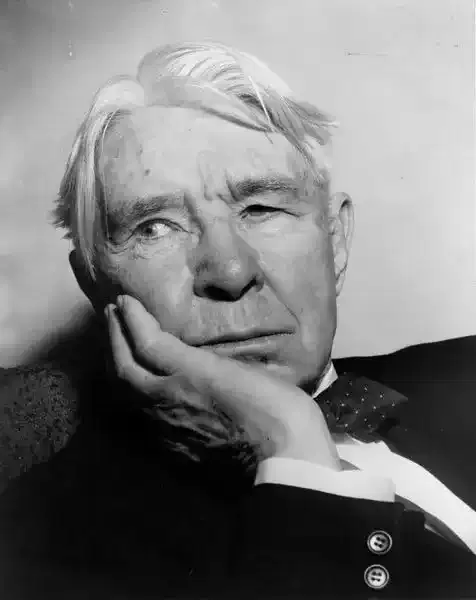
Carl Sandburg
Last Answers
I wrote a poem on the mist
And a woman asked me what I meant by it.
I had thought till then only of the beauty of the mist,
how pearl and gray of it mix and reel,
And change the drab shanties with lighted lamps at evening
into points of mystery quivering with color.
I answered:
The whole world was mist once long ago and some day
it will all go back to mist,
Our skulls and lungs are more water than bone and tissue
And all poets love dust and mist because all the last answers
Go running back to dust and mist.
Read more →
292

John Donne
Elegy IX: The Autumnal
No spring nor summer beauty hath such grace
As I have seen in one autumnal face.
Young beauties force our love, and that's a rape,
This doth but counsel, yet you cannot scape.
If 'twere a shame to love, here 'twere no shame;
Affection here takes reverence's name.
Were her first years the golden age? That's true,
But now she's gold oft tried and ever new.
That was her torrid and inflaming time,
This is her tolerable tropic clime.
Fair eyes, who asks more heat than comes from hence,
He in a fever wishes pestilence.
Call not these wrinkles, graves; if graves they were,
They were Love's graves, for else he is no where.
Yet lies not Love dead here, but here doth sit
Vow'd to this trench, like an anachorit;
And here till hers, which must be his death, come,
He doth not dig a grave, but build a tomb.
Here dwells he; though he sojourn ev'rywhere
In progress, yet his standing house is here:
Here where still evening is, not noon nor night,
Where no voluptuousness, yet all delight.
In all her words, unto all hearers fit,
You may at revels, you at council, sit.
This is Love's timber, youth his underwood;
There he, as wine in June, enrages blood,
Which then comes seasonabliest when our taste
And appetite to other things is past.
Xerxes' strange Lydian love, the platan tree,
Was lov'd for age, none being so large as she,
Or else because, being young, nature did bless
Her youth with age's glory, barrenness.
If we love things long sought, age is a thing
Which we are fifty years in compassing;
If transitory things, which soon decay,
Age must be loveliest at the latest day.
But name not winter faces, whose skin's slack,
Lank as an unthrift's purse, but a soul's sack;
Whose eyes seek light within, for all here's shade;
Whose mouths are holes, rather worn out than made;
Whose every tooth to a several place is gone,
To vex their souls at resurrection:
Name not these living death's-heads unto me,
For these, not ancient, but antique be.
I hate extremes, yet I had rather stay
With tombs than cradles, to wear out a day.
Since such love's natural lation is, may still
My love descend, and journey down the hill,
Not panting after growing beauties. So,
I shall ebb on with them who homeward go.
Read more →
292

Dylan Thomas
I Fellowed Sleep
I fellowed sleep who kissed me in the brain,
Let fall the tear of time; the sleeper's eye,
Shifting to light, turned on me like a moon.
So, planning-heeled, I flew along my man
And dropped on dreaming and the upward sky.
I fled the earth and, naked, climbed the weather,
Reaching a second ground far from the stars;
And there we wept I and a ghostly other,
My mothers-eyed, upon the tops of trees;
I fled that ground as lightly as a feather.
'My fathers' globe knocks on its nave and sings.'
'This that we tread was, too, your father's land.'
'But this we tread bears the angelic gangs
Sweet are their fathered faces in their wings.'
'These are but dreaming men. Breathe, and they fade.'
Faded my elbow ghost, the mothers-eyed,
As, blowing on the angels, I was lost
On that cloud coast to each grave-grabbing shade;
I blew the dreaming fellows to their bed
Where still they sleep unknowing of their ghost.
Then all the matter of the living air
Raised up a voice, and, climbing on the words,
I spelt my vision with a hand and hair,
How light the sleeping on this soily star,
How deep the waking in the worlded clouds.
There grows the hours' ladder to the sun,
Each rung a love or losing to the last,
The inches monkeyed by the blood of man.
And old, mad man still climbing in his ghost,
My fathers' ghost is climbing in the rain.
Read more →
291

Emily Dickinson
On this wondrous sea
On this wondrous sea
Sailing silently,
Ho! Pilot, ho!
Knowest thou the shore
Where no breakers roar-
Where the storm is o'er?
In the peaceful west
Many the sails at rest-
The anchors fast-
Thither I pilot thee-
Land Ho! Eternity!
Ashore at last!
Read more →
290
Dylan Thomas
Lie Still, Sleep Becalmed
Lie still, sleep becalmed, sufferer with the wound
In the throat, burning and turning. All night afloat
On the silent sea we have heard the sound
That came from the wound wrapped in the salt sheet.
Under the mile off moon we trembled listening
To the sea sound flowing like blood from the loud wound
And when the salt sheet broke in a storm of singing
The voices of all the drowned swam on the wind.
Open a pathway through the slow sad sail,
Throw wide to the wind the gates of the wandering boat
For my voyage to begin to the end of my wound,
We heard the sea sound sing, we saw the salt sheet tell.
Lie still, sleep becalmed, hide the mouth in the throat,
Or we shall obey, and ride with you through the drowned.
Read more →
290
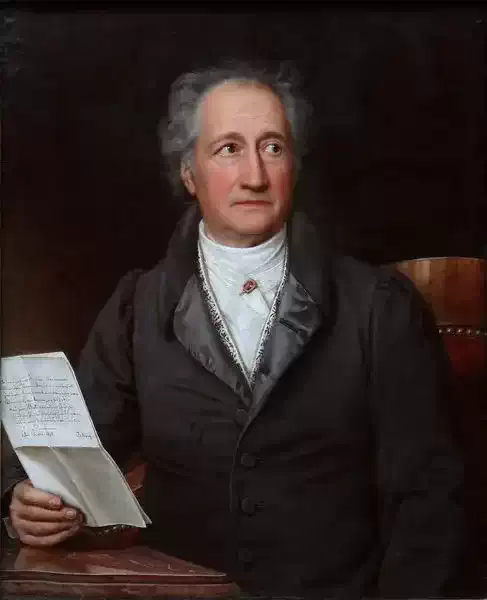
Johann Wolfgang von Goethe
Book Of Love - The Types
LIST, and in memory bear
These six fond loving pair.
Love, when aroused, kept true
Rustan and Rad!
Strangers approach from far
Joseph and Suleika;
Love, void of hope, is in
Ferhad and Schirin.
Born for each other are
Medschnun and Lily;
Loving, though old and grey,
Dschemil saw Boteinah.
Love's sweet caprice anon,
Brown maid and Solomon!
If thou dost mark them well,
Stronger thy love will swell.
Read more →
290

Gwendolyn Brooks
the sonnet-ballad
Oh mother, mother, where is happiness?
They took my lover's tallness off to war,
Left me lamenting. Now I cannot guess
What I can use an empty heart-cup for.
He won't be coming back here any more.
Some day the war will end, but, oh, I knew
When he went walking grandly out that door
That my sweet love would have to be untrue.
Would have to be untrue. Would have to court
Coquettish death, whose impudent and strange
Possessive arms and beauty (of a sort)
Can make a hard man hesitate--and change.
And he will be the one to stammer, "Yes."
Oh mother, mother, where is happiness?
Read more →
289

William Butler Yeats
The Chambermaid's First Song
HOW came this ranger
Now sunk in rest,
Stranger with strangcr.
On my cold breast?
What's left to Sigh for?
Strange night has come;
God's love has hidden him
Out of all harm,
Pleasure has made him
Weak as a worm.
Read more →
290

Anonymous
O Death, O Death, Rock Me Asleep
O Death, O Death, rock me asleep,
Bring me to quiet rest;
Let pass my weary guiltless ghost
Out of my careful breast.
Toll on, thou passing bell;
Ring out my doleful knell;
Thy sound my death abroad will tell,
For I must die,
There is no remedy.
My pains, my pains, who can express?
Alas, they are so strong!
My dolours will not suffer strength
My life for to prolong.
Toll on, thou passing bell;
Ring out my doleful knell;
Thy sound my death abroad will tell,
For I must die,
There is no remedy.
Alone, alone in prison strong
I wail my destiny:
Woe worth this cruel hap that I
Must taste this misery!
Toll on, thou passing bell;
Ring out my doleful knell;
Thy sound my death abroad will tell,
For I must die,
There is no remedy.
Farewell, farewell, my pleasures past!
Welcome, my present pain!
I feel my torment so increase
That life cannot remain.
Cease now, thou passing bell,
Ring out my doleful knoll,
For thou my death dost tell:
Lord, pity thou my soul!
Death doth draw nigh,
Sound dolefully:
For now I die,
I die, I die.
Read more →
289

Henry Lawson
Golden Gully
No one lives in Golden Gully, for its golden days are o’er,
And its clay shall never sully blucher-boots of diggers more,
For the diggers long have vanished — nought but broken shafts remain,
And the bush, by diggers banished, fast reclaims its own again.
Now, when dying Daylight slowly draws her fingers from the “Peak”,
The Weird Empress Melancholy rises from the reedy creek —
In the gap above the gully, while the dismal curlews scream
Loud to welcome her as ruler of the dreary night supreme —
Takes her throne, and by her presence fills the strange, uncertain air
With a ghostly phosphorescence of the horrors hidden there.
None would think, by camp-fire blazy, lighting fitfully the scene,
In the seasons that are hazy, how in seasons gone between,
Diggers yarned or joined in jolly ballads of the field and foam,
Or grew sad and melancholy over songs like “Home, Sweet Home” —
Songs of other times, demanding sullen tears that would not start,
Every digger understanding what was in his comrade’s heart.
It may seem to you a riddle how a poet’s fancies roam,
But methinks I hear a fiddle softly playing “Home, Sweet Home”
’Mid the trees, while meditative diggers round the camp-fire stand.
(Those were days before Australians learned to love their native land.)
Now the dismal curlew screeches round the shafts when night winds sough;
Startling murmurs, broken speeches, shake each twisted, tangled bough,
And whene’er the night comes dreary, darkened by the falling rain,
Voices, loud and dread and eerie, come again and come again —
Come like troubled souls forbidden rest until their tales are told —
Tales of deeds of darkness hidden in the whirl of days of gold —
Come like troubled spirits telling tales of dire and dread mishaps,
Kissing, falling, rising, swelling, dying in the dismal gaps.
When the coming daylight slowly lays her fingers on the “Peak”
Then the Empress Melancholy hurries off to swamps that reek.
But the scene is never cheery, be it sunshine, be it rain,
For the Gully keeps its dreary look till darkness comes again.
As you stand beside the broken shafts, where grass is growing thick,
You can almost hear a spoken word, or hear a thudding pick;
And your very soul seems sinking, foetid grows the morning air,
For you cannot help believing that there’s something buried there.
There’s a ring amid the saplings by a travelling circus worn,
That amused the noisy diggers e’er the rising race was born;
There’s a road where scrub encroaches that was once the main highway,
Over which two rival coaches dashed in glory twice a day;
Gone — all gone from Golden Gully, for its golden days are o’er,
And its clay shall never sully wheels of crowded coaches more.
Read more →
289

John Greenleaf Whittier
William Francis Bartlett
Oh, well may Essex sit forlorn
Beside her sea-blown shore;
Her well beloved, her noblest born,
Is hers in life no more!
No lapse of years can render less
Her memory's sacred claim;
No fountain of forgetfulness
Can wet the lips of Fame.
A grief alike to wound and heal,
A thought to soothe and pain,
The sad, sweet pride that mothers feel
To her must still remain.
Good men and true she has not lacked,
And brave men yet shall be;
The perfect flower, the crowning fact,
Of all her years was he!
As Galahad pure, as Merlin sage,
What worthier knight was found
To grace in Arthur's golden age
The fabled Table Round?
A voice, the battle's trumpet-note,
To welcome and restore;
A hand, that all unwilling smote,
To heal and build once more;
A soul of fire, a tender heart
Too warm for hate, he knew
The generous victor's graceful part
To sheathe the sword he drew.
When Earth, as if on evil dreams,
Looks back upon her wars,
And the white light of Christ outstreams
From the red disk of Mars,
His fame who led the stormy van
Of battle well may cease,
But never that which crowns the man
Whose victory was Peace.
Mourn, Essex, on thy sea-blown shore
Thy beautiful and brave,
Whose failing hand the olive bore,
Whose dying lips forgave!
Let age lament the youthful chief,
And tender eyes be dim;
The tears are more of joy than grief
That fall for one like him!
Read more →
291
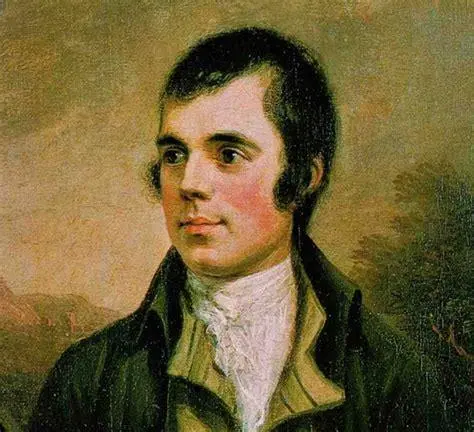
Robert Burns
Handsome Nell
O, once I lov'd a bonnie lass,
Aye, and I love her still;
And whilst that virtue warms my breast
I'll love my handsome Nell.
As bonnie lasses I hae seen,
And mony full as braw,
But for a modest gracefu' mien
The like I never saw.
A bonnie lass, I will confess,
Is pleasant to the ee,
But without some letter qualities
She's no a lass for me.
But Nellie's looks are blithe and sweet,
And what is best of a'
Her reputation is complete,
And fair without a flaw.
She dresses aye sae clean and neat,
Both decent and genteel;
And then there's something in her gait
Gars ony dress look weel.
A gaudy dress and gentle air
May slightly touch the heart,
But it's innocence and modesty
That polishes the dart.
'Tis this in Nelly pleases me,
'Tis this enchants my soul
For absolutely in my breast
She reigns without control.
Read more →
290
Emily Dickinson
I've seen a Dying Eye
I've seen a Dying Eye
Run round and round a Room-
In search of Something-as it seemed-
Then Cloudier become-
And then-obscure with Fog-
And then-be soldered down
Without disclosing what it be
'Twere blessed to have seen-
Read more →
290
Dylan Thomas
My Hero Bares His Nerves
My hero bares his nerves along my wrist
That rules from wrist to shoulder,
Unpacks the head that, like a sleepy ghost,
Leans on my mortal ruler,
The proud spine spurning turn and twist.
And these poor nerves so wired to the skull
Ache on the lovelorn paper
I hug to love with my unruly scrawl
That utters all love hunger
And tells the page the empty ill.
My hero bares my side and sees his heart
Tread; like a naked Venus,
The beach of flesh, and wind her bloodred plait;
Stripping my loin of promise,
He promises a secret heat.
He holds the wire from this box of nerves
Praising the mortal error
Of birth and death, the two sad knaves of thieves,
And the hunger's emperor;
He pulls that chain, the cistern moves.
Read more →
290
Dylan Thomas
Into Her Lying Down Head
I
Into her lying down head
His enemies entered bed,
Under the encumbered eyelid,
Through the rippled drum of the hair-buried ear;
And Noah's rekindled now unkind dove
Flew man-bearing there.
Last night in a raping wave
Whales unreined from the green grave
In fountains of origin gave up their love,
Along her innocence glided
Jaun aflame and savagely young King Lear,
Queen Catherine howling bare
And Samson drowned in his hair,
The colossal intimacies of silent
Once seen strangers or shades on a stair;
There the dark blade and wanton sighing her down
To a haycock couch and the scythes of his arms
Rode and whistled a hundred times
Before the crowing morning climbed;
Man was the burning England she was sleep-walking, and the enamouring island
Made her limbs blind by luminous charms,
Sleep to a newborn sleep in a swaddling loin-leaf stroked and sang
And his runaway beloved childlike laid in the acorned sand.
II
There where a numberless tongue
Wound their room with a male moan,
His faith around her flew undone
And darkness hung the walls with baskets of snakes,
A furnace-nostrilled column-membered
Super-or-near man
Resembling to her dulled sense
The thief of adolescence,
Early imaginary half remembered
Oceanic lover alone
Jealousy cannot forget for all her sakes,
Made his bad bed in her good
Night, and enjoyed as he would.
Crying, white gowned, from the middle moonlit stages
Out to the tiered and hearing tide,
Close and far she announced the theft of the heart
In the taken body at many ages,
Trespasser and broken bride
Celebrating at her side
All blood-signed assailing and vanished marriages in which he had no lovely part
Nor could share, for his pride, to the least
Mutter and foul wingbeat of the solemnizing nightpriest
Her holy unholy hours with the always anonymous beast.
III
Two sand grains together in bed,
Head to heaven-circling head,
Singly lie with the whole wide shore,
The covering sea their nightfall with no names;
And out of every domed and soil-based shell
One voice in chains declaims
The female, deadly, and male
Libidinous betrayal,
Golden dissolving under the water veil.
A she bird sleeping brittle by
Her lover's wings that fold to-morrow's flight,
Within the nested treefork
Sings to the treading hawk
Carrion, paradise, chirrup my bright yolk.
A blade of grass longs with the meadow,
A stone lies lost and locked in the lark-high hill.
Open as to the air to the naked shadow
O she lies alone and still,
Innocent between two wars,
With the incestuous secret brother in the seconds to perpetuate the stars,
A man torn up mourns in the sole night.
And the second comers, the severers, the enemies from the deep
Forgotten dark, rest their pulse and bury their dead in her faithless sleep.
Read more →
289
Emily Dickinson
By my Window have I for Scenery
By my Window have I for Scenery
Just a Sea-with a Stem-
If the Bird and the Farmer-deem it a "Pine"-
The Opinion will serve-for them-
It has no Port, nor a "Line"-but the Jays-
That split their route to the Sky-
Or a Squirrel, whose giddy Peninsula
May be easier reached-this way-
For Inlands-the Earth is the under side-
And the upper side-is the Sun-
And its Commerce-if Commerce it have-
Of Spice-I infer from the Odors borne-
Of its Voice-to affirm-when the Wind is within-
Can the Dumb-define the Divine?
The Definition of Melody-is-
That Definition is none
It-suggests to our FaithThey-
suggest to our Sight-
When the latter-is put away
I shall meet with Conviction I somewhere met
That Immortality-
Was the Pine at my Window a "Fellow
Of the Royal" Infinity?
Apprehensions-are God's introductions-
To be hallowed-accordingly-
Read more →
289
John Greenleaf Whittier
Marguerite
MASSACHUSETTS BAY, 1760.
THE robins sang in the orchard, the buds into
blossoms grew;
Little of human sorrow the buds and the robins
knew!
Sick, in an alien household, the poor French
neutral lay;
Into her lonesome garret fell the light of the April
day,
Through the dusty window, curtained by the spider's
warp and woof,
On the loose-laid floor of hemlock, on oaken ribs
of roof,
The bedquilt's faded patchwork, the teacups on the
stand,
The wheel with flaxen tangle, as it dropped from
her sick hand.
What to her was the song of the robin, or warm
morning light,
As she lay in the trance of the dying, heedless of
sound or sight?
Done was the work of her bands, she had eaten her
bitter bread;
The world of the alien people lay behind her dim
and dead.
But her soul went back to its child-time; she saw
the sun o'erflow
With gold the Basin of Minas, and set over
Gaspereau;
The low, bare flats at ebb-tide, the rush of the sea
at flood,
Through inlet and creek and river, from dike to
upland wood;
The gulls in the red of morning, the fish-hawk's
rise and fall,
The drift of the fog in moonshine, over the dark
coast-wall.
She saw the face of her mother, she heard the song
she sang;
And far off, faintly, slowly, the bell for vespers
rang.
By her bed the hard-faced mistress sat, smoothing
the wrinkled sheet,
Peering into the face, so helpless, and feeling the
ice-cold feet.
With a vague remorse atoning for her greed and
long abuse,
By care no longer heeded and pity too late for use.
Up the stairs of the garret softly the son of the
mistress stepped,
Leaned over the head-board, covering his face with
his hands, and wept.
Outspake the mother, who watched him sharply,
with brow a-frown
'What! love you the Papist, the beggar, the
charge of the town?'
Be she Papist or beggar who lies here, I know
and God knows
I love her, and fain would go with her wherever
she goes!
'O mother! that sweet face came pleading, for
love so athirst.
You saw but the town-charge; I knew her God's
angel at first.'
Shaking her gray head, the mistress hushed down
a bitter cry;
And awed by the silence and shadow of death
drawing nigh,
She murmured a psalm of the Bible; but closer
the young girl pressed,
With the last of her life in her fingers, the cross
to her breast.
'My son, come away,' cried the mother, her voice
cruel grown.
'She is joined to her idols, like Ephraim; let her
alone!'
But he knelt with his hand on her forehead, his
lips to her ear,
And he called back the soul that was passing
'Marguerite, do you hear?'
She paused on the threshold of Heaven; love, pity,
surprise,
Wistful, tender, lit up for an instant the cloud of
her eyes.
With his heart on his lips he kissed her, but never
her cheek grew red,
And the words the living long for he spake in the
ear of the dead.
And the robins sang in the orchard, where buds to
blossoms grew;
Of the folded hands and the still face never the
robins knew!
Read more →
291
Emily Dickinson
There is a flower that Bees prefer
There is a flower that Bees prefer-
And Butterflies-desire-
To gain the Purple Democrat
The Humming Bird-aspire-
And Whatsoever Insect pass-
A Honey bear away
Proportioned to his several dearth
And her-capacity-
Her face be rounder than the Moon
And ruddier than the Gown
Or Orchis in the Pasture-
Or Rhododendron-worn-
She doth not wait for June-
Before the World be Green-
Her sturdy little Countenance
Against the Wind-be seen-
Contending with the Grass-
Near Kinsman to Herself-
For Privilege of Sod and Sun-
Sweet Litigants for Life-
And when the Hills be full-
And newer fashions blow-
Doth not retract a single spice
For pang of jealousy-
Her Public-be the Noon-
Her Providence-the Sun-
Her Progress-by the Bee-proclaimed-
In sovereign-Swerveless Tune-
The Bravest-of the HostSurrendering-
the last-
Nor even of Defeat-aware-
What cancelled by the Frost-
Read more →
289
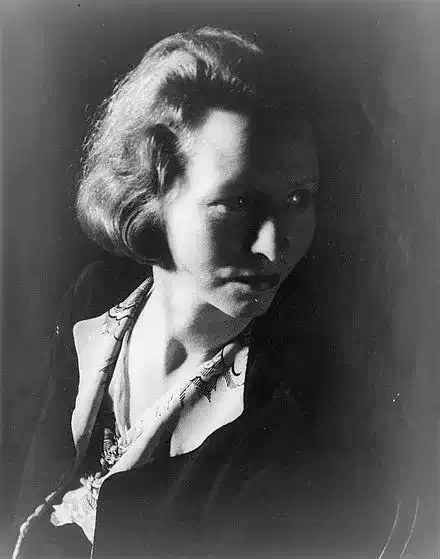
Edna St. Vincent Millay
Dirge
Boys and girls that held her dear,
Do your weeping now;
All you loved of her lies here.
Brought to earth the arrogant brow,
And the withering tongue
Chastened; do your weeping now.
Sing whatever songs are sung,
Wind whatever wreath,
For a playmate perished young,
For a spirit spent in death.
Boys and girls that held her dear,
All you loved of her lies here.
Read more →
289
Emily Dickinson
South Winds jostle them
South Winds jostle them-
Bumblebees come
Hover-
hesitate-
Drink, and are gone-
Butterflies pause
On their passage CashmereI-
softly plucking,
Present them here!
Read more →
290

Robert W. Service
Eyrie
Between the mountain and the sea
I've made a happy landing;
And here a peace has come to me
That passeth understanding;
A shining faith and purity
Beyond demanding.
With palm below and pine above,
Where wings of gulls are gleaming;
By orange tree and olive grove,
From walls of airy seeming,
My roses beg me not to rove,
But linger dreaming.
So I'm in love with life again,
And would with joy dissever
My days from ways of worldly men,
And mingle with them never:
Let silken roses to my ken
Whisper forever.
Read more →
290
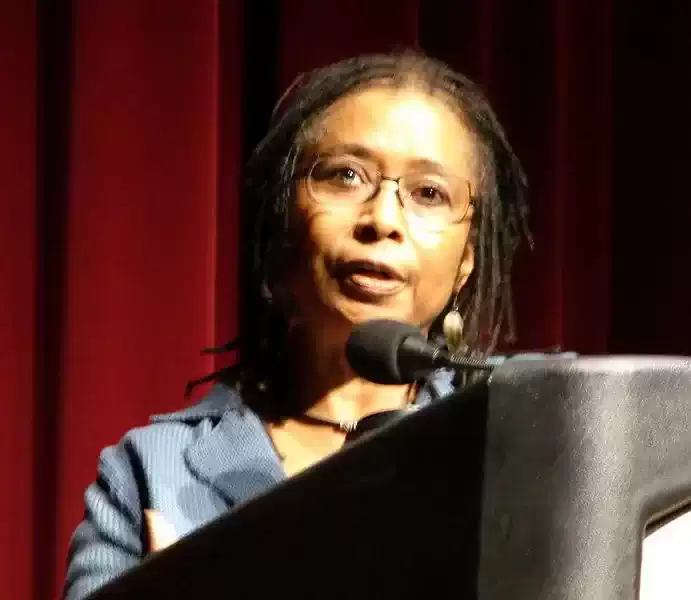
Alice Walker
Be Nobody's Darling
Be nobody's darling;
Be an outcast.
Take the contradictions
Of your life
And wrap around
You like a shawl,
To parry stones
To keep you warm.
Watch the people succumb
To madness
With ample cheer;
Let them look askance at you
And you askance reply.
Be an outcast;
Be pleased to walk alone
(Uncool)
Or line the crowded
River beds
With other impetuous
Fools.
Make a merry gathering
On the bank
Where thousands perished
For brave hurt words
They said.
But be nobody's darling;
Be an outcast.
Qualified to live
Among your dead.
Read more →
290
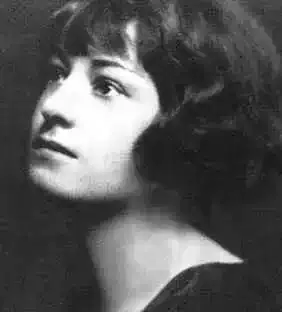
Dorothy Parker
Star Light, Star Bright--
Star, that gives a gracious dole,
What am I to choose?
Oh, will it be a shriven soul,
Or little buckled shoes?
Shall I wish a wedding-ring,
Bright and thin and round,
Or plead you send me covering
A
newly spaded mound?
Gentle beam, shall I implore
Gold, or sailing-ships,
Or beg I hate forevermore
A pair of lying lips?
Swing you low or high away,
Burn you hot or dim;
My only wish I dare not say
Lest
you should grant me him.
Read more →
289