
Soul

Emily Dickinson
A Solemn thing within the Soul
A Solemn thing within the Soul
To feel itself get ripe-
And golden hang-while farther up-
The Maker's Ladders stop-
And in the Orchard far below-
You hear a Being-drop-
A Wonderful-to feel the Sun
Still toiling at the Cheek
You thought was finished-
Cool of eye, and critical of Work-
He shifts the stem-a little-
To give your Core-a look-
But solemnest-to know
Your chance in Harvest moves
A little nearer-Every Sun
The Single-to some lives.
Read more →
287
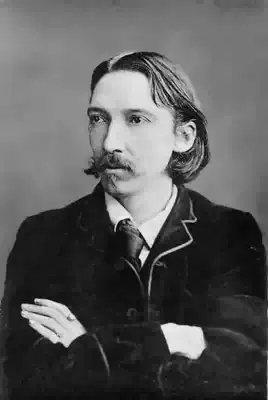
Robert Louis Stevenson
Lo! In Thine Honest Eyes I Read
LO! in thine honest eyes I read
The auspicious beacon that shall lead,
After long sailing in deep seas,
To quiet havens in June ease.
Thy voice sings like an inland bird
First by the seaworn sailor heard;
And like road sheltered from life's sea
Thine honest heart is unto me.
Read more →
287

John Greenleaf Whittier
Sunset On The Bearcamp
A gold fringe on the purpling hem
Of hills the river runs,
As down its long, green valley falls
The last of summer's suns.
Along its tawny gravel-bed
Broad-flowing, swift, and still,
As if its meadow levels felt
The hurry of the hill,
Noiseless between its banks of green
From curve to curve it slips;
The drowsy maple-shadows rest
Like fingers on its lips.
A waif from Carroll's wildest hills,
Unstoried and unknown;
The ursine legend of its name
Prowls on its banks alone.
Yet flowers as fair its slopes adorn
As ever Yarrow knew,
Or, under rainy Irish skies,
By Spenser's Mulla grew;
And through the gaps of leaning trees
Its mountain cradle shows
The gold against the amethyst,
The green against the rose.
Touched by a light that hath no name,
A glory never sung,
Aloft on sky and mountain wall
Are God's great pictures hung.
How changed the summits vast and old!
No longer granite-browed,
They melt in rosy mist; the rock
Is softer than the cloud;
The valley holds its breath; no leaf
Of all its elms is twirled
The silence of eternity
Seems falling on the world.
The pause before the breaking seals
Of mystery is this;
Yon miracle-play of night and day
Makes dumb its witnesses.
What unseen altar crowns the hills
That reach up stair on stair?
What eyes look through, what white wings fan
These purple veils of air?
What Presence from the heavenly heights
To those of earth stoops down?
Not vainly Hellas dreamed of gods
On Ida's snowy crown!
Slow fades the vision of the sky,
The golden water pales,
And over all the valley-land
A gray-winged vapor sails.
I go the common way of all;
The sunset fires will burn,
The flowers will blow, the river flow,
When I no more return.
No whisper from the mountain pine
Nor lapsing stream shall tell
The stranger, treading where I tread,
Of him who loved them well.
But beauty seen is never lost,
God's colors all are fast;
The glory of this sunset heaven
Into my soul has passed,
A sense of gladness unconfined
To mortal date or clime;
As the soul liveth, it shall live
Beyond the years of time.
Beside the mystic asphodels
Shall bloom the home-born flowers,
And new horizons flush and glow
With sunset hues of ours.
Farewell! these smiling hills must wear
Too soon their wintry frown,
And snow-cold winds from off them shake
The maple's red leaves down.
But I shall see a summer sun
Still setting broad and low;
The mountain slopes shall blush and bloom,
The golden water flow.
A lover's claim is mine on all
I see to have and hold,-The
rose-light of perpetual hills,
And sunsets never cold!
Read more →
289

Henry Wadsworth Longfellow
Tales Of A Wayside Inn : Part 2. Interlude V.
Well pleased the audience heard the tale.
The Theologian said: 'Indeed,
To praise you there is little need;
One almost hears the farmers flail
Thresh out your wheat, nor does there fail
A certain freshness, as you said,
And sweetness as of home-made bread.
But not less sweet and not less fresh
Are many legends that I know,
Writ by the monks of long-ago,
Who loved to mortify the flesh,
So that the soul might purer grow,
And rise to a diviner state;
And one of these--perhaps of all
Most beautiful--I now recall,
And with permission will narrate;
Hoping thereby to make amends
For that grim tragedy of mine,
As strong and black as Spanish wine,
I told last night, and wish almost
It had remained untold, my friends;
For Torquemada's awful ghost
Came to me in the dreams I dreamed,
And in the darkness glared and gleamed
Like a great lighthouse on the coast.'
The Student laughing said: 'Far more
Like to some dismal fire of bale
Flaring portentous on a hill;
Or torches lighted on a shore
By wreckers in a midnight gale.
No matter; be it as you will,
Only go forward with your tale.'
Read more →
288

Robert W. Service
My Inner Life
'Tis true my garments threadbare are,
And sorry poor I seem;
But inly I am richer far
Than any poet's dream.
For I've a hidden life no one
Can ever hope to see;
A sacred sanctuary none
May share with me.
Aloof I stand from out the strife,
Within my heart a song;
By virtue of my inner life
I to myself belong.
Against man-ruling I rebel,
Yet do not fear defeat,
For to my secret citadel
I may retreat.
Oh you who have an inner life
Beyond this dismal day
With wars and evil rumours rife,
Go blessedly your way.
Your refuge hold inviolate;
Unto yourself be true,
And shield serene from sordid fate
The Real You.
Read more →
287

William Shakespeare
Sonnet 51: Thus can my love excuse the slow offence
Thus can my love excuse the slow offence
Of my dull bearer, when from thee I speed:
From where thou art, why should I haste me thence?
Till I return, of posting is no need.
O, what excuse will my poor beast then find
When swift extremity can seem but slow?
Then should I spur, though mounted on the wind;
In wingèd speed no motion shall I know.
Then can no horse with my desire keep pace;
Therefore desire, of perfect'st love being made,
Shall neigh—no dull flesh—in his fiery race.
But love, for love, thus shall excuse my jade:
Since from thee going he went wilful-slow,
Towards thee I'll run, and give him leave to go.
Read more →
289

William Butler Yeats
A Man Young And Old: X. His Wildness
O bid me mount and sail up there
Amid the cloudy wrack,
For peg and Meg and Paris' love
That had so straight a back,
Are gone away, and some that stay
Have changed their silk for sack.
Were I but there and none to hear
I'd have a peacock cry,
For that is natural to a man
That lives in memory,
Being all alone I'd nurse a stone
And sing it lullaby.
Read more →
289
Emily Dickinson
All but Death, can be Adjusted
All but Death, can be Adjusted-
Dynasties repaired
Systems-
settled in their SocketsCitadels-
dissolved-
Wastes of Lives-resown with Colors
By Succeeding SpringsDeath-
unto itself-Exception-
Is exempt from Change-
Read more →
286
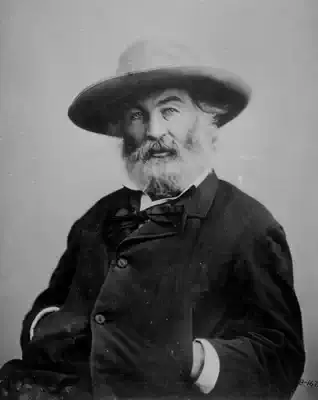
Walt Whitman
In The New Garden In All The Parts
IN the new garden, in all the parts,
In cities now, modern, I wander,
Though the second or third result, or still further, primitive yet,
Days, places, indifferent--though various, the same,
Time, Paradise, the Mannahatta, the prairies, finding me unchanged,
Death indifferent--Is it that I lived long since? Was I buried very
long ago?
For all that, I may now be watching you here, this moment;
For the future, with determined will, I seek--the woman of the
future,
You, born years, centuries after me, I seek.
Read more →
288
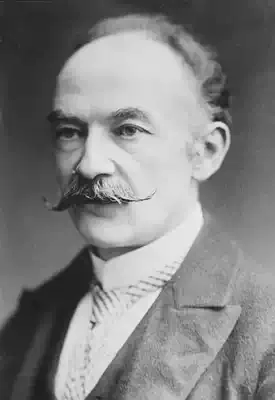
Thomas Hardy
Beeny Cliff
I
O the opal and the sapphire of that wandering western sea,
And the woman riding high above with bright hair flapping free-
The woman whom I loved so, and who loyally loved me.
I I
The pale mews plained below us, and the waves seemed far away
In a nether sky, engrossed in saying their ceaseless babbling say,
As we laughed light-heartedly aloft on that clear-sunned March day.
III
A little cloud then cloaked us, and there flew an irised rain,
And the Atlantic dyed its levels with a dull misfeatured stain,
And then the sun burst out again, and purples prinked the main.
IV
-Still in all its chasmal beauty bulks old Beeny to the sky,
And shall she and I not go there once again now March is nigh,
And the sweet things said in that March say anew there by and by?
V
What if still in chasmal beauty looms that wild weird western shore,
The woman now is-elsewhere-whom the ambling pony bore,
And nor knows nor cares for Beeny, and will laugh there nevermore.
Read more →
289
Emily Dickinson
Better—than Music! For I—who heard it
Better—than Music! For I—who heard it—
I was used—to the Birds—before—
This—was different—'Twas Translation—
Of all tunes I knew—and more—
'Twasn't contained—like other stanza—
No one could play it—the second time—
But the Composer—perfect Mozart—
Perish with him—that Keyless Rhyme!
So—Children—told how Brooks in Eden—
Bubbled a better—Melody—
Quaintly infer—Eve's great surrender—
Urging the feet—that would—not—fly—
Children—matured—are wiser—mostly—
Eden—a legend—dimly told—
Eve—and the Anguish—Grandame's story—
But—I was telling a tune—I heard—
Not such a strain—the Church—baptizes—
When the last Saint—goes up the Aisles—
Not such a stanza splits the silence—
When the Redemption strikes her Bells—
Let me not spill—its smallest cadence—
Humming—for promise—when alone—
Humming—until my faint Rehearsal—
Drop into tune—around the Throne—
Read more →
286
Emily Dickinson
I have a King, who does not speak
I have a King, who does not speak
So-
wondering-thro' the hours meek
I trudge the day away-
Half glad when it is night, and sleep,
If, haply, thro' a dream, to peep
In parlors, shut by day.
And if I do-when morning comes-
It is as if a hundred drums
Did round my pillow roll,
And shouts fill all my Childish sky,
And Bells keep saying "Victory"
From steeples in my soul!
And if I don't-the little Bird
Within the Orchard, is not heard,
And I omit to pray
"Father, thy will be done" today
For my will goes the other way,
And it were perjury!
Read more →
286
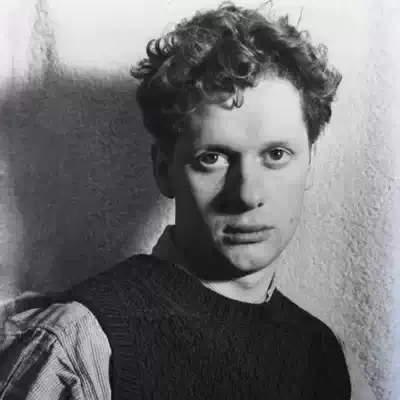
Dylan Thomas
A Saint About To Fall
A saint about to fall,
The stained flats of heaven hit and razed
To the kissed kite hems of his shawl,
On the last street wave praised
The unwinding, song by rock,
Of the woven wall
Of his father's house in the sands,
The vanishing of the musical ship-work and the chucked bells,
The wound-down cough of the blood-counting clock
Behind a face of hands,
On the angelic etna of the last whirring featherlands,
Wind-heeled foot in the hole of a fireball,
Hymned his shrivelling flock,
On the last rick's tip by spilled wine-wells
Sang heaven hungry and the quick
Cut Christbread spitting vinegar and all
The mazes of his praise and envious tongue were worked in flames and shells.
Glory cracked like a flea.
The sun-leaved holy candlewoods
Drivelled down to one singeing tree
With a stub of black buds,
The sweet, fish-gilled boats bringing blood
Lurched through a scuttled sea
With a hold of leeches and straws,
Heaven fell with his fall and one crocked bell beat the left air.
O wake in me in my house in the mud
Of the crotch of the squawking shores,
Flicked from the carbolic city puzzle in a bed of sores
The scudding base of the familiar sky,
The lofty roots of the clouds.
From an odd room in a split house stare,
Milk in your mouth, at the sour floods
That bury the sweet street slowly, see
The skull of the earth is barbed with a war of burning brains and hair.
Strike in the time-bomb town,
Raise the live rafters of the eardrum,
Throw your fear a parcel of stone
Through the dark asylum,
Lapped among herods wail
As their blade marches in
That the eyes are already murdered,
The stocked heart is forced, and agony has another mouth to feed.
O wake to see, after a noble fall,
The old mud hatch again, the horrid
Woe drip from the dishrag hands and the pressed sponge of the forehead,
The breath draw back like a bolt through white oil
And a stranger enter like iron.
Cry joy that hits witchlike midwife second
Bullies into rough seas you so gentle
And makes with a flick of the thumb and sun
A thundering bullring of your silent and girl-circled island.
Read more →
286
John Greenleaf Whittier
Our River
FOR A SUMMER FESTIVAL AT 'THE LAURELS' ON THE MERRIMAC.
Once more on yonder laurelled height
The summer flowers have budded;
Once more with summer's golden light
The vales of home are flooded;
And once more, by the grace of Him
Of every good the Giver,
We sing upon its wooded rim
The praises of our river,
Its pines above, its waves below,
The west-wind down it blowing,
As fair as when the young Brissot
Beheld it seaward flowing,-And
bore its memory o'er the deep,
To soothe a martyr's sadness,
And fresco, hi his troubled sleep,
His prison-walls with gladness.
We know the world is rich with streams
Renowned in song and story,
Whose music murmurs through our dreams
Of human love and glory
We know that Arno's banks are fair,
And Rhine has castled shadows,
And, poet-tuned, the Doon and Ayr
Go singing down their meadows.
But while, unpictured and unsung
By painter or by poet,
Our river waits the tuneful tongue
And cunning hand to show it,-We
only know the fond skies lean
Above it, warm with blessing,
And the sweet soul of our Undine
Awakes to our caressing.
No fickle sun-god holds the flocks
That graze its shores in keeping;
No icy kiss of Dian mocks
The youth beside it sleeping
Our Christian river loveth most
The beautiful and human;
The heathen streams of Naiads boast,
But ours of man and woman.
The miner in his cabin hears
The ripple we are hearing;
It whispers soft to homesick ears
Around the settler's clearing
In Sacramento's vales of corn,
Or Santee's bloom of cotton,
Our river by its valley-born
Was never yet forgotten.
The drum rolls loud, the bugle fills
The summer air with clangor;
The war-storm shakes the solid hills
Beneath its tread of anger;
Young eyes that last year smiled in ours
Now point the rifle's barrel,
And hands then stained with fruits and flowers
Bear redder stains of quarrel.
But blue skies smile, and flowers bloom on,
And rivers still keep flowing,
The dear God still his rain and sun
On good and ill bestowing.
His pine-trees whisper, 'Trust and wait!'
His flowers are prophesying
That all we dread of change or fate
His live is underlying.
And thou, O Mountain-born!--no more
We ask the wise Allotter
Than for the firmness of thy shore,
The calmness of thy water,
The cheerful lights that overlay,
Thy rugged slopes with beauty,
To match our spirits to our day
And make a joy of duty.
Read more →
289
Thomas Hardy
Her Dilemma
THE two were silent in a sunless church,
Whose mildewed walls, uneven paving-stones,
And wasted carvings passed antique research;
And nothing broke the clock's dull monotones.
Leaning against a wormy poppy-head,
So wan and worn that he could scarcely stand,
--For he was soon to die,--he softly said,
"Tell me you love me!"--holding hard her hand.
She would have given a world to breathe "yes" truly,
So much his life seemed hanging on her mind,
And hence she lied, her heart persuaded throughly,
'Twas worth her soul to be a moment kind.
But the sad need thereof, his nearing death,
So mocked humanity that she shamed to prize
A world conditioned thus, or care for breath
Where Nature such dilemmas could devise.
Read more →
289
Robert W. Service
An Olive Fire
An olive fire's a lovely thing;
Somehow it makes me think of Spring
As in my grate it over-spills
With dancing flames like daffodils.
They flirt and frolic, twist and twine,
The brassy fire-irons wink and shine. . . .
Leap gold, you flamelets! Laugh and sing:
An olive fire's a lovely thing.
An olive fire's a household shrine:
A crusty loaf, a jug of wine,
An apple and a chunk of cheese -
Oh I could be content with these.
But if my curse of oil is there,
To fry a fresh-caught fish, I swear
I do not envy any king,
As sitting by my hearth I sing:
An olive fire's a lovely thing.
When old and worn, of life I tire,
I'll sit before an olive fire,
And watch the feather ash like snow
As softly as a rose heart glow;
The tawny roots will loose their hoard
Of sunbeams centuries have stored,
And flames like yellow chicken's cheep,
Till in my heart Peace is so deep:
With hands prayer-clasped I sleep . . . and sleep.
Read more →
289
Emily Dickinson
He found my Being—set it up
He found my Being—set it up—
Adjusted it to place—
Then carved his name—upon it—
And bade it to the East
Be faithful—in his absence—
And he would come again—
With Equipage of Amber—
That time—to take it Home—
Read more →
287
Henry Wadsworth Longfellow
Flower-De-Luce: The Bridge Of Cloud
Burn, O evening hearth, and waken
Pleasant visions, as of old!
Though the house by winds be shaken,
Safe I keep this room of gold!
Ah, no longer wizard Fancy
Builds her castles in the air,
Luring me by necromancy
Up the never-ending stair!
But, instead, she builds me bridges
Over many a dark ravine,
Where beneath the gusty ridges
Cataracts dash and roar unseen.
And I cross them, little heeding
Blast of wind or torrent's roar,
As I follow the receding
Footsteps that have gone before.
Naught avails the imploring gesture,
Naught avails the cry of pain!
When I touch the flying vesture,
'Tis the gray robe of the rain.
Baffled I return, and, leaning
O'er the parapets of cloud,
Watch the mist that intervening
Wraps the valley in its shroud.
And the sounds of life ascending
Faintly, vaguely, meet the ear,
Murmur of bells and voices blending
With the rush of waters near.
Well I know what there lies hidden,
Every tower and town and farm,
And again the land forbidden
Reassumes its vanished charm.
Well I know the secret places,
And the nests in hedge and tree;
At what doors are friendly faces,
In what hearts are thoughts of me.
Through the mist and darkness sinking,
Blown by wind and beaten by shower,
Down I fling the thought I'm thinking,
Down I toss this Alpine flower.
Read more →
289

Johann Wolfgang von Goethe
Book Of Parables - In The Koran With Strange Delight
In the Koran with strange delight
A peacock's feather met my sight:
Thou'rt welcome in this holy place,
The highest prize on earth's wide face!
As in the stars of heaven, in thee,
God's greatness in the small we see;
For he whose gaze whole worlds bath bless'd
His eye hath even here impress'd,
And the light down in beauty dress'd,
So that e'en monarchs cannot hope
In splendour with the bird to cope.
Meekly enjoy thy happy lot,
And so deserve that holy spot!
Read more →
289
John Greenleaf Whittier
The Clear Vision
I did but dream. I never knew
What charms our sternest season wore.
Was never yet the sky so blue,
Was never earth so white before.
Till now I never saw the glow
Of sunset on yon hills of snow,
And never learned the bough's designs
Of beauty in its leafless lines.
Did ever such a morning break
As that my eastern windows see?
Did ever such a moonlight take
Weird photographs of shrub and tree?
Rang ever bells so wild and fleet
The music of the winter street?
Was ever yet a sound by half
So merry as you school-boy's laugh?
O Earth! with gladness overfraught,
No added charm thy face hath found;
Within my heart the change is wrought,
My footsteps make enchanted ground.
From couch of pain and curtained room
Forth to thy light and air I come,
To find in all that meets my eyes
The freshness of a glad surprise.
Fair seem these winter days, and soon
Shall blow the warm west-winds of spring,
To set the unbound rills in tune
And hither urge the bluebird's wing.
The vales shall laugh in flowers, the woods
Grow misty green with leafing buds,
And violets and wind-flowers sway
Against the throbbing heart of May.
Break forth, my lips, in praise, and own
The wiser love severely kind;
Since, richer for its chastening grown,
I see, whereas I once was blind.
The world, O Father! hath not wronged
With loss the life by Thee prolonged;
But still, with every added year,
More beautiful Thy works appear!
As Thou hast made thy world without,
Make Thou more fair my world within;
Shine through its lingering clouds of doubt;
Rebuke its haunting shapes of sin;
Fill, brief or long, my granted span
Of life with love to thee and man;
Strike when thou wilt the hour of rest,
But let my last days be my best!
Read more →
288

Gwendolyn Brooks
My Dreams, My Works, Must Wait Till After Hell
I hold my honey and I store my bread
In little jars and cabinets of my will.
I label clearly, and each latch and lid
I bid, Be firm till I return from hell.
I am very hungry. I am incomplete.
And none can give me any word but Wait,
The puny light. I keep my eyes pointed in;
Hoping that, when the devil days of my hurt
Drag out to their last dregs and I resume
On such legs as are left me, in such heart
As I can manage, remember to go home,
My taste will not have turned insensitive
To honey and bread old purity could love.
Read more →
288

Horácio
BkII:XIV Eheu Fugaces
Oh how the years fly, Postumus, Postumus,
they’re slipping away, virtue brings no respite
from the wrinkles that furrow our brow,
impending old age, Death the invincible:
not even, my friend, if with three hundred bulls
every day, you appease pitiless Pluto,
jailor of three-bodied Geryon,
who imprisons Tityos by the sad
stream, that every one of us must sail over,
whoever we are that enjoy earth’s riches,
whether we’re wealthy, or whether we are
the most destitute of humble farmers.
In vain we’ll escape from bloodiest warfare,
from the breakers’ roar in the Adriatic,
in vain, on the autumn seas, we’ll fear
the southerly that shatters our bodies:
We’re destined to gaze at Cocytus, winding,
dark languid river: the infamous daughters
of Danaus: and at Sisyphus,
son of Aeolus, condemned to long toil.
We’re destined to leave earth, home, our loving wife,
nor will a single tree, that you planted here,
follow you, it’s briefly-known master,
except for the much-detested cypress.
A worthier heir will drink your Caecuban,
that cellar a hundred keys are protecting,
and stain the street with a vintage wine,
finer than those at the Pontiff’s table.
Read more →
289
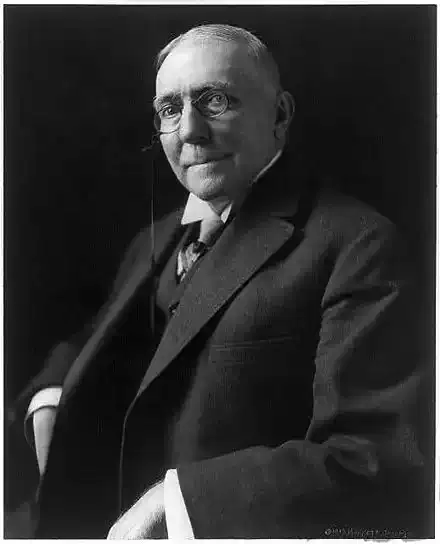
James Whitcomb Riley
We Must Believe
_'Lord, I believe: help Thou mine unbelief.'_
We must believe--
Being from birth endowed with love and trust--
Born unto loving;--and how simply just
That love--that faith!--even in the blossom-face
The babe drops dreamward in its resting-place,
Intuitively conscious of the sure
Awakening to rapture ever pure
And sweet and saintly as the mother's own,
Or the awed father's, as his arms are thrown
O'er wife and child, to round about them weave
And wind and bind them as one harvest-sheaf
Of love--to cleave to, and _forever_ cleave....
Lord, I believe:
Help Thou mine unbelief.
We must believe--
Impelled since infancy to seek some clear
Fulfillment, still withheld all seekers here;--
For never have we seen perfection nor
The glory we are ever seeking for:
But we _have_ seen--all mortal souls as one--
Have seen its _promise_, in the morning sun--
Its blest assurance, in the stars of night;--
The ever-dawning of the dark to light;--
The tears down-falling from all eyes that grieve--
The eyes uplifting from all deeps of grief,
Yearning for what at last we shall receive....
Lord, I believe:
Help Thou mine unbelief.
We must believe--
For still all unappeased our hunger goes,
From life's first waking, to its last repose:
The briefest life of any babe, or man
Outwearing even the allotted span,
Is each a life unfinished--incomplete:
For these, then, of th' outworn, or unworn feet
Denied one toddling step--O there must be
Some fair, green, flowery pathway endlessly
Winding through lands Elysian! Lord, receive
And lead each as Thine Own Child--even the Chief
Of us who didst Immortal life achieve....
Lord, I believe:
Help Thou mine unbelief.
Read more →
285