
Soul
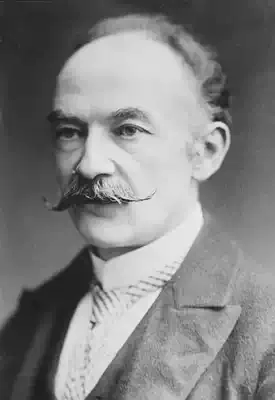
Thomas Hardy
Doom and She
I
There dwells a mighty pair -
Slow, statuesque, intense -
Amid the vague Immense:
None can their chronicle declare,
Nor why they be, nor whence.
,h II
Mother of all things made,
Matchless in artistry,
Unlit with sight is she. -
And though her ever well-obeyed
Vacant of feeling he.
III
The Matron mildly asks -
A throb in every word -
"Our clay-made creatures, lord,
How fare they in their mortal tasks
Upon Earth's bounded bord?
IV
"The fate of those I bear,
Dear lord, pray turn and view,
And notify me true;
Shapings that eyelessly I dare
Maybe I would undo.
V
"Sometimes from lairs of life
Methinks I catch a groan,
Or multitudinous moan,
As though I had schemed a world of strife,
Working by touch alone."
VI
"World-weaver!" he replies,
"I scan all thy domain;
But since nor joy nor pain
Doth my clear substance recognize,
I read thy realms in vain.
VII
"World-weaver! what IS Grief?
And what are Right, and Wrong,
And Feeling, that belong
To creatures all who owe thee fief?
What worse is Weak than Strong?" . . .
VIII
--Unlightened, curious, meek,
She broods in sad surmise . . .
--Some say they have heard her sighs
On Alpine height or Polar peak
When the night tempests rise.
Read more →
285

Anonymous
The Old Man's Wish
If I live to be old, for I find I go down,
Let this be my fate: In a country town
May I have a warm house, with a stone at the gate,
And a cleanly young girl to rub my bald pate.
May I govern my passion with an absolute sway,
And grow wiser and better as my strength wears away,
Without gout or stone, by a gentle decay.
Near a shady grove, and a murmuring brook,
With the ocean at distance, whereupon I may look,
With a spacious plain without hedge or stile,
And an easy pad-nag to ride out a mile.
May I govern my passion with an absolute sway,
And grow wiser and better as my strength wears away,
Without gout or stone, by a gentle decay.
With Horace and Petrarch, and two or three more
Of the best wits that reign'd in the ages before,
With roast mutton, rather than ven'son or veal,
And clean though coarse linen at every meal.
May I govern my passion with an absolute sway,
And grow wiser and better as my strength wears away,
Without gout or stone, by a gentle decay.
With a pudding on Sundays, with stout humming liquor,
And remnants of Latin to welcome the vicar,
With Monte-Fiascone or Burgundy wine,
To drink the King's health as oft as I dine.
May I govern my passion with an absolute sway,
And grow wiser and better as my strength wears away,
Without gout or stone, by a gentle decay.
With a courage undaunted may I face my last day,
And when I am dead may the better sort say,
In the morning when sober, in the evening when mellow,
He's gone, and left not behind him his fellow.
May I govern my passion with an absolute sway,
And grow wiser and better as my strength wears away,
Without gout or stone, by a gentle decay.
Read more →
284

Robert W. Service
Visibility
Because my eyes were none to bright
Strong spectacles I bought,
And lo! there sprang into my sight
A life beyond my thought:
A world of wonder and delight
My magic lenses brought.
Aye, sudden leaping in my sight
The far became the near;
Life unbelievably was bright,
And vividly was clear.
My heart was lifted with delight,
Then--then I shrank in fear.
For faces I had thought were gay
I saw were lined with care,
While strange corruption and decay
Surprised me everywhere:
Dismayed I put my specs away,-Such
truth I could not bear.
And now I do not want to see
With clarity of view;
For while there's heaven hell may be
More tragically true:
Though dim may be Reality,
Sheer love shines through.
Read more →
284

Emily Dickinson
Life—is what we make of it
Life—is what we make of it—
Death—we do not know—
Christ's acquaintance with Him
Justify Him—though—
He—would trust no stranger—
Other—could betray—
Just His own endorsement—
That—sufficeth Me—
All the other Distance
He hath traversed first—
No New Mile remaineth—
Far as Paradise—
His sure foot preceding—
Tender Pioneer—
Base must be the Coward
Dare not venture—now—
Read more →
284
Emily Dickinson
I hide myself within my flower
I hide myself within my flower,
That fading from your Vase,
You, unsuspecting, feel for me-
Almost a loneliness.
Read more →
284

Gwendolyn Brooks
Primer For Blacks
Blackness
is a title,
is a preoccupation,
is a commitment Blacks
are to comprehend—
and in which you are
to perceive your Glory.
The conscious shout
of all that is white is
“It’s Great to be white.”
The conscious shout
of the slack in Black is
'It's Great to be white.'
Thus all that is white
has white strength and yours.
The word Black
has geographic power,
pulls everybody in:
Blacks here—
Blacks there—
Blacks wherever they may be.
And remember, you Blacks, what they told you—
remember your Education:
“one Drop—one Drop
maketh a brand new Black.”
Oh mighty Drop.
______And because they have given us kindly
so many more of our people
Blackness
stretches over the land.
Blackness—
the Black of it,
the rust-red of it,
the milk and cream of it,
the tan and yellow-tan of it,
the deep-brown middle-brown high-brown of it,
the “olive” and ochre of it—
Blackness
marches on.
The huge, the pungent object of our prime out-ride
is to Comprehend,
to salute and to Love the fact that we are Black,
which is our “ultimate Reality,”
which is the lone ground
from which our meaningful metamorphosis,
from which our prosperous staccato,
group or individual, can rise.
Self-shriveled Blacks.
Begin with gaunt and marvelous concession:
YOU are our costume and our fundamental bone.
All of you—
you COLORED ones,
you NEGRO ones,
those of you who proudly cry
“I’m half INDian”—
those of you who proudly screech
“I’VE got the blood of George WASHington in MY veins”
ALL of you—
you proper Blacks,
you half-Blacks,
you wish-I-weren’t Blacks,
Niggeroes and Niggerenes.
You.
Read more →
285
Emily Dickinson
Twas Crisis—All the length had passed
'Twas Crisis—All the length had passed—
That dull—benumbing time
There is in Fever or Event—
And now the Chance had come—
The instant holding in its claw
The privilege to live
Or warrant to report the Soul
The other side the Grave.
The Muscles grappled as with leads
That would not let the Will—
The Spirit shook the Adamant—
But could not make it feel.
The Second poised—debated—shot—
Another had begun—
And simultaneously, a Soul
Escaped the House unseen—
Read more →
285
Emily Dickinson
I got so I could take his name
I got so I could take his name
Without-
Tremendous gain-
That Stop-sensation-on my Soul-
And Thunder-in the Room-
I got so I could walk across
That Angle in the floor,
Where he turned so, and I turned-how-
And all our Sinew tore-
I got so I could stir the Box-
In which his letters grew
Without that forcing, in my breath-
As Staples-driven through-
Could dimly recollect a Grace-
I think, they call it "God"-
Renowned to ease Extremity-
When Formula, had failed-
And shape my HandsPetition's
way,
Tho' ignorant of a word
That Ordination-utters-
My Business, with the Cloud,
If any Power behind it, be,
Not subject to Despair-
It care, in some remoter way,
For so minute affair
As Misery-
Itself, too vast, for interrupting-more-
Read more →
284

John Greenleaf Whittier
The Minister’s Daughter
In the minister's morning sermon
He had told of the primal fall,
And how thenceforth the wrath of God
Rested on each and all.
And how of His will and pleasure,
All souls, save a chosen few,
Were doomed to the quenchless burning,
And held in the way thereto.
Yet never by faith's unreason
A saintlier soul was tried,
And never the harsh old lesson
A tenderer heart belied.
And, after the painful service
On that pleasant Sabbath day,
He walked with his little daughter
Through the apple-bloom of May.
Sweet in the fresh green meadows
Sparrow and blackbird sung;
Above him their tinted petals
The blossoming orchards hung.
Around on the wonderful glory
The minister looked and smiled;
'How good is the Lord who gives us
These gifts from His hand, my child.
'Behold in the bloom of apples
And the violets in the sward
A hint of the old, lost beauty
Of the Garden of the Lord!'
Then up spake the little maiden,
Treading on snow and pink
'O father! these pretty blossoms
Are very wicked, I think.
'Had there been no Garden of Eden
There never had been a fall;
And if never a tree had blossomed
God would have loved us all.'
'Hush, child!' the father answered,
'By His decree man fell;
His ways are in clouds and darkness,
But He doeth all things well.
'And whether by His ordaining
To us cometh good or ill,
Joy or pain, or light or shadow,
We must fear and love Him still.'
'Oh, I fear Him!' said the daughter,
'And I try to love Him, too;
But I wish He was good and gentle,
Kind and loving as you.'
The minister groaned in spirit
As the tremulous lips of pain
And wide, wet eyes uplifted
Questioned his own in vain.
Bowing his head he pondered
The words of the little one;
Had he erred in his life-long teaching?
Had he wrong to his Master done?
To what grim and dreadful idol
Had he lent the holiest name?
Did his own heart, loving and human,
The God of his worship shame?
And lo! from the bloom and greenness,
From the tender skies above,
And the face of his little daughter,
He read a lesson of love.
No more as the cloudy terror
Of Sinai's mount of law,
But as Christ in the Syrian lilies
The vision of God he saw.
And, as when, in the clefts of Horeb,
Of old was His presence known,
The dread Ineffable Glory
Was Infinite Goodness alone.
Thereafter his hearers noted
In his prayers a tenderer strain,
And never the gospel of hatred
Burned on his lips again.
And the scoffing tongue was prayerful,
And the blinded eyes found sight,
And hearts, as flint aforetime,
Grew soft in his warmth and light.
Read more →
285
Emily Dickinson
All overgrown by cunning moss
All overgrown by cunning moss,
All interspersed with weed,
The little cage of "Currer Bell"
In quiet "Haworth" laid.
Gathered from many wanderings-
Gethsemane can tell
Thro' what transporting anguish
She reached the Asphodel!
Soft falls the sounds of Eden
Upon her puzzled ear-
Oh what an afternoon for Heaven,
When "Bronte" entered there!
Read more →
285

Henry Wadsworth Longfellow
In The Harbour: Chimes
Sweet chimes! that in the loneliness of night
Salute the passing hour, and in the dark
And silent chambers of the household mark
The movements of the myriad orbs of light!
Through my closed eyelids, by the inner sight,
I see the constellations in the arc
Of their great circles moving on, and hark!
I almost hear them singing in their flight.
Better than sleep it is to lie awake,
O'er-canopied by the vast starry dome
Of the immeasurable sky; to feel
The slumbering world sink under us, and make
Hardly an eddy,--a mere rush of foam
On the great sea beneath a sinking keel.
Read more →
286

Alice Walker
Working Class Hero
My brothers knew
The things you know.
I did not scorn
learning them;
It’s just my mind
Was busy being trained
For “Other Things”:
Poetry, Philosophy, Literature.
Survival, for a girl.
But now,
What a relief
To see you understand
The ways
Of horses
Their shyness
& hatred
Of
Loneliness:
That you will not
Hesitate
To rescue
An old horse,
Dying on
His feet
&
That you will
Cheerfully
Wash him,
Aged
&
Incontinent
Head
To
Toe. Missing
With your bucket
&
Rag
Not
One
Hidden
Crevice
As he
Trembles
& weeps.
What peace
To see
Raising chickens
Does not
Mystify you
and
Hot water heaters
& their ways
Are well known;
That electricity
& how it
Works
Is something
Within
Your grasp.
That you can
Get a car
To run
By poking
It in
A few mysterious
Places
Under
The hood.
That you can
Fix a
Broken
Anything: battery, truck, stove,
Door, fridge, lamp, chicken coop hinge
While teaching me
The ins and outs
Of Opera
Or
While singing
Lusty
Italian
Tenor
That
Shakes
The walls.
That you can
Sit, comfy,
Unperturbed
By traffic
In the womb-like
Back seat
Of my
Aging
Chariot
While I drive
& you
Ride
The silver
Black
& Golden
Horses
Of
Your
Trumpet.
Read more →
285

Robert Browning
Overhead the Tree-Tops Meet
Overhead the tree-tops meet,
Flowers and grass spring 'neath one's feet;
There was nought above me, and nought below,
My childhood had not learned to know:
For what are the voices of birds
—Ay, and of beasts,—but words—our words,
Only so much more sweet?
The knowledge of that with my life begun!
But I had so near made out the sun,
And counted your stars, the Seven and One,
Like the fingers of my hand:
Nay, I could all but understand
Wherefore through heaven the white moon ranges,
And just when out of her soft fifty changes
No unfamiliar face might overlook me—
Suddenly God took me!
Read more →
286
Robert W. Service
Fallen Leaves
Why should I be the first to fall
Of all the leaves on this old tree?
Though sadly soon I know that all
Will lose their hold and follow me.
While my birth-brothers bravely blow,
Why should I be first to go?
Why should I be the last to cling
Of all the leaves on this bleak bough?
I've fluttered since the fire of Spring
And I am worn and withered now.
I would escape the Winter gale
And sleep soft-silvered by a snail.
When swoop the legions of the snow
To pitch their tents in roaring weather
We fallen leaves will lie below
And rot rejoicingly together;
And from our rich and dark decay
Will laugh our brothers of the May.
Read more →
283
Anonymous
Episode
THEN fashioned for him the folk of Geats
firm on the earth a funeral-pile,
and hung it with helmets and harness of war
and breastplates bright, as the boon he asked;
and they laid amid it the mighty chieftain,
heroes mourning their master dear.
Then on the hill that hugest of balefires
the warriors wakened. Wood-smoke rose
black over blaze, and blent was the roar
of flame with weeping (the wind was still),
till the fire had broken the frame of bones,
hot at the heart. In heavy mood
their misery moaned they, their master's death.
Wailing her woe, the widow old,
her hair upbound, for Beowulf's death
sung in her sorrow, and said full oft
she dreaded the doleful days to come,
deaths enow, and doom of battle,
and shame. -- The smoke by the sky was devoured.
The folk of the Weders fashioned there
on the headland a barrow broad and high,
by ocean-farers far descried:
in ten days' time their toil had raised it,
the battle-brave's beacon. Round brands of the pyre
a wall they built, the worthiest ever
that wit could prompt in their wisest men.
They placed in the barrow that precious booty,
the rounds and the rings they had reft erewhile,
hardy heroes, from hoard in cave, --
trusting the ground with treasure of earls,
gold in the earth, where ever it lies
useless to men as of yore it was.
Then about that barrow the battle-keen rode,
atheling-born, a band of twelve,
lament to make, to mourn their king,
chant their dirge, and their chieftain honor.
They praised his earlship, his acts of prowess
worthily witnessed: and well it is
that men their master-friend mightily laud,
heartily love, when hence he goes
from life in the body forlorn away.
Thus made their mourning the men of Geatland,
for their hero's passing his hearth-companions:
quoth that of all the kings of earth,
of men he was mildest and most beloved,
to his kin the kindest, keenest for praise.
Read more →
281
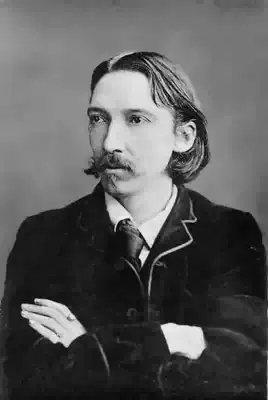
Robert Louis Stevenson
Love, What Is Love
LOVE - what is love? A great and aching heart;
Wrung hands; and silence; and a long despair.
Life - what is life? Upon a moorland bare
To see love coming and see love depart.
Read more →
283
Emily Dickinson
To my small Hearth His fire came
To my small Hearth His fire came-
And all my House aglow
Did fan and rock, with sudden light'
Twas Sunrise-'twas the Sky-
Impanelled from no Summer brief-
With limit of Decay'
Twas Noon-without the News of Night-
Nay, Nature, it was Day-
Read more →
281

William Butler Yeats
Old Tom Again
Things out of perfection sail,
And all their swelling canvas wear,
Nor shall the self-begotten fail
Though fantastic men suppose
Building-yard and stormy shore,
Winding-sheet and swaddling - clothes.
Read more →
283
Thomas Hardy
Heiress And Architect
For A. W. B.
SHE sought the Studios, beckoning to her side
An arch-designer, for she planned to build.
He was of wise contrivance, deeply skilled
In every intervolve of high and wide--
Well fit to be her guide.
"Whatever it be,"
Responded he,
With cold, clear voice, and cold, clear view,
"In true accord with prudent fashionings
For such vicissitudes as living brings,
And thwarting not the law of stable things,
That will I do."
"Shape me," she said, "high walls with tracery
And open ogive-work, that scent and hue
Of buds, and travelling bees, may come in through,
The note of birds, and singings of the sea,
For these are much to me."
"An idle whim!"
Broke forth from him
Whom nought could warm to gallantries:
"Cede all these buds and birds, the zephyr's call,
And scents, and hues, and things that falter all,
And choose as best the close and surly wall,
For winter's freeze."
"Then frame," she cried, "wide fronts of crystal glass,
That I may show my laughter and my light--
Light like the sun's by day, the stars' by night--
Till rival heart-queens, envying, wail, 'Alas,
Her glory!' as they pass."
"O maid misled!"
He sternly said,
Whose facile foresight pierced her dire;
"Where shall abide the soul when, sick of glee,
It shrinks, and hides, and prays no eye may see?
Those house them best who house for secrecy,
For you will tire."
"A little chamber, then, with swan and dove
Ranged thickly, and engrailed with rare device
Of reds and purples, for a Paradise
Wherein my Love may greet me, I my Love,
When he shall know thereof?"
"This, too, is ill,"
He answered still,
The man who swayed her like a shade.
"An hour will come when sight of such sweet nook
Would bring a bitterness too sharp to brook,
When brighter eyes have won away his look;
For you will fade."
Then said she faintly: "O, contrive some way--
Some narrow winding turret, quite mine own,
To reach a loft where I may grieve alone!
It is a slight thing; hence do not, I pray,
This last dear fancy slay!"
"Such winding ways
Fit not your days,"
Said he, the man of measuring eye;
"I must even fashion as my rule declares,
To wit: Give space (since life ends unawares)
To hale a coffined corpse adown the stairs;
For you will die."
Read more →
282
John Greenleaf Whittier
To Lydia Maria Child
ON READING HER POEM IN 'THE STANDARD.'
The sweet spring day is glad with music,
But through it sounds a sadder strain;
The worthiest of our narrowing circle
Sings Loring's dirges o'er again.
O woman greatly loved! I join thee
In tender memories of our friend;
With thee across the awful spaces
The greeting of a soul I send!
What cheer hath he? How is it with him?
Where lingers he this weary while?
Over what pleasant fields of Heaven
Dawns the sweet sunrise of his smile?
Does he not know our feet are treading
The earth hard down on Slavery's grave?
That, in our crowning exultations,
We miss the charm his presence gave?
Why on this spring air comes no whisper
From him to tell us all is well?
Why to our flower-time comes no token
Of lily and of asphodel?
I feel the unutterable longing,
Thy hunger of the heart is mine;
I reach and grope for hands in darkness,
My ear grows sharp for voice or sign.
Still on the lips of all we question
The finger of God's silence lies;
Will the lost hands in ours be folded?
Will the shut eyelids ever rise?
O friend! no proof beyond this yearning,
This outreach of our hearts, we need;
God will not mock the hope He giveth,
No love He prompts shall vainly plead.
Then let us stretch our hands in darkness,
And call our loved ones o'er and o'er;
Some day their arms shall close about us,
And the old voices speak once more.
No dreary splendors wait our coming
Where rapt ghost sits from ghost apart;
Homeward we go to Heaven's thanksgiving,
The harvest-gathering of the heart.
Read more →
283
Emily Dickinson
A throe upon the features
A throe upon the features-
A hurry in the breath-
An ecstasy of parting
Denominated "Death"-
An anguish at the mention
Which when to patience grown,
I've known permission given
To rejoin its own.
Read more →
282

Muhammad Iqbal
The Crescent
The sun's boat is broken and drowned in the Nile
But a piece is floating about on the water of the Nile
The twilight's pure blood drips into the sky's basin
Has the lancet of Nature drawn the sun's blood?
Has the sky stolen the ear ring of the evening's bride?
Or has the fragile cord in the Nile's waters strolling?
Your caravan is afoot without help of bell's call
The human ear cannot hear your foot-steps' sound
You show the spectacle of rise and fall to the eyes
Where is your home? To which country are you going?
O star-like planet take me with yourself
The prick of Longing's thorn keeps me restless
I am seeking light, I am weary in this habitation
I am the restless child in the existence's school…
Read more →
282
Emily Dickinson
The Bee is not afraid of me
The Bee is not afraid of me.
I know the Butterfly.
The pretty people in the Woods
Receive me cordially-
The Brooks laugh louder when I come-
The Breezes madder play;
Wherefore mine eye thy silver mists,
Wherefore, Oh Summer's Day?
Read more →
281

Dylan Thomas
Out Of The Sighs
Out of the sighs a little comes,
But not of grief, for I have knocked down that
Before the agony; the spirit grows,
Forgets, and cries;
A little comes, is tasted and found good;
All could not disappoint;
There must, be praised, some certainty,
If not of loving well, then not,
And that is true after perpetual defeat.
After such fighting as the weakest know,
There's more than dying;
Lose the great pains or stuff the wound,
He'll ache too long
Through no regret of leaving woman waiting
For her soldier stained with spilt words
That spill such acrid blood.
Were that enough, enough to ease the pain,
Feeling regret when this is wasted
That made me happy in the sun,
How much was happy while it lasted,
Were vagueness enough and the sweet lies plenty,
The hollow words could bear all suffering
And cure me of ills.
Were that enough, bone, blood, and sinew,
The twisted brain, the fair-formed loin,
Groping for matter under the dog's plate,
Man should be cured of distemper.
For all there is to give I offer:
Crumbs, barn, and halter.
Read more →
281