
Soul

William Butler Yeats
He Gives His Beloved Certain Rhymes
FASTEN your hair with a golden pin,
And bind up every wandering tress;
I bade my heart build these poor rhymes:
It worked at them, day out, day in,
Building a sorrowful loveliness
Out of the battles of old times.
You need but lift a pearl-pale hand,
And bind up your long hair and sigh;
And all men's hearts must burn and beat;
And candle-like foam on the dim sand,
And stars climbing the dew-dropping sky,
Live but to light your passing feet.
Read more →
277

Billy Collins
The Iron Bridge
I am standing on a disused iron bridge
that was erected in 1902,
according to the iron plaque bolted into a beam,
the year my mother turned one.
Imagine--a mother in her infancy,
and she was a Canadian infant at that,
one of the great infants of the province of Ontario.
But here I am leaning on the rusted railing
looking at the water below,
which is flat and reflective this morning,
sky-blue and streaked with high clouds,
and the more I look at the water,
which is like a talking picture,
the more I think of 1902
when workmen in shirts and caps
riveted this iron bridge together
across a thin channel joining two lakes
where wildflowers blow along the shore now
and pairs of swans float in the leafy coves.
1902--my mother was so tiny
she could have fit into one of those oval
baskets for holding apples,
which her mother could have lined with a soft cloth
and placed on the kitchen table
so she could keep an eye on infant Katherine
while she scrubbed potatoes or shelled a bag of peas,
the way I am keeping an eye on that cormorant
who just broke the glassy surface
and is moving away from me and the iron bridge,
swiveling his curious head,
slipping out to where the sun rakes the water
and filters through the trees that crowd the shore.
And now he dives,
disappears below the surface,
and while I wait for him to pop up,
I picture him flying underwater with his strange wings,
as I picture you, my tiny mother,
who disappeared last year,
flying somewhere with your strange wings,
your wide eyes, and your heavy wet dress,
kicking deeper down into a lake
with no end or name, some boundless province of water.
Read more →
274

John Greenleaf Whittier
Hymns From The French Of Lamartine
I.
'Encore un hymne, O ma lyre
Un hymn pour le Seigneur,
Un hymne dans mon delire,
Un hymne dans mon bonheur.'
One hymn more, O my lyre!
Praise to the God above,
Of joy and life and love,
Sweeping its strings of fire!
Oh, who the speed of bird and wind
And sunbeam's glance will lend to me,
That, soaring upward, I may find
My resting-place and home in Thee?
Thou, whom my soul, midst doubt and gloom,
Adoreth with a fervent flame,-Mysterious
spirit! unto whom
Pertain nor sign nor name!
Swiftly my lyre's soft murmurs go,
Up from the cold and joyless earth,
Back to the God who bade them flow,
Whose moving spirit sent them forth.
But as for me, O God! for me,
The lowly creature of Thy will,
Lingering and sad, I sigh to Thee,
An earth-bound pilgrim still!
Was not my spirit born to shine
Where yonder stars and suns are glowing?
To breathe with them the light divine
From God's own holy altar flowing?
To be, indeed, whate'er the soul
In dreams hath thirsted for so long,-A
portion of heaven's glorious whole
Of loveliness and song?
Oh, watchers of the stars at night,
Who breathe their fire, as we the air,-Suns,
thunders, stars, and rays of light,
Oh, say, is He, the Eternal, there?
Bend there around His awful throne
The seraph's glance, the angel's knee?
Or are thy inmost depths His own,
O wild and mighty sea?
Thoughts of my soul, how swift ye go!
Swift as the eagle's glance of fire,
Or arrows from the archer's bow,
To the far aim of your desire!
Thought after thought, ye thronging rise,
Like spring-doves from the startled wood,
Bearing like them your sacrifice
Of music unto God!
And shall these thoughts of joy and love
Come back again no more to me?
Returning like the patriarch's dove
Wing-weary from the eternal sea,
To bear within my longing arms
The promise-bough of kindlier skies,
Plucked from the green, immortal palms
Which shadow Paradise?
All-moving spirit! freely forth
At Thy command the strong wind goes
Its errand to the passive earth,
Nor art can stay, nor strength oppose,
Until it folds its weary wing
Once more within the hand divine;
So, weary from its wandering,
My spirit turns to Thine!
Child of the sea, the mountain stream,
From its dark caverns, hurries on,
Ceaseless, by night and morning's beam,
By evening's star and noontide's sun,
Until at last it sinks to rest,
O'erwearied, in the waiting sea,
And moans upon its mother's breast,-So
turns my soul to Thee!
O Thou who bidst the torrent flow,
Who lendest wings unto the wind,-Mover
of all things! where art Thou?
Oh, whither shall I go to find
The secret of Thy resting-place?
Is there no holy wing for me,
That, soaring, I may search the space
Of highest heaven for Thee?
Oh, would I were as free to rise
As leaves on autumn's whirlwind borne,-The
arrowy light of sunset skies,
Or sound, or ray, or star of morn,
Which melts in heaven at twilight's close,
Or aught which soars unchecked and free
Through earth and heaven; that I might lose
Myself in finding Thee!
II.
LE CRI DE L'AME.
'Quand le souffle divin qui flotte sur le monde.'
When the breath divine is flowing,
Zephyr-like o'er all things going,
And, as the touch of viewless fingers,
Softly on my soul it lingers,
Open to a breath the lightest,
Conscious of a touch the slightest,-As
some calm, still lake, whereon
Sinks the snowy-bosomed swan,
And the glistening water-rings
Circle round her moving wings
When my upward gaze is turning
Where the stars of heaven are burning
Through the deep and dark abyss,
Flowers of midnight's wilderness,
Blowing with the evening's breath
Sweetly in their Maker's path
When the breaking day is flushing
All the east, and light is gushing
Upward through the horizon's haze,
Sheaf-like, with its thousand rays,
Spreading, until all above
Overflows with joy and love,
And below, on earth's green bosom,
All is changed to light and blossom:
When my waking fancies over
Forms of brightness flit and hover
Holy as the seraphs are,
Who by Zion's fountains wear
On their foreheads, white and broad,
'Holiness unto the Lord!'
When, inspired with rapture high,
It would seem a single sigh
Could a world of love create;
That my life could know no date,
And my eager thoughts could fill
Heaven and Earth, o'erflowing still!
Then, O Father! Thou alone,
From the shadow of Thy throne,
To the sighing of my breast
And its rapture answerest.
All my thoughts, which, upward winging,
Bathe where Thy own light is springing,-All
my yearnings to be free
Are at echoes answering Thee!
Seldom upon lips of mine,
Father! rests that name of Thine;
Deep within my inmost breast,
In the secret place of mind,
Like an awful presence shrined,
Doth the dread idea rest
Hushed and holy dwells it there,
Prompter of the silent prayer,
Lifting up my spirit's eye
And its faint, but earnest cry,
From its dark and cold abode,
Unto Thee, my Guide and God!
Read more →
274
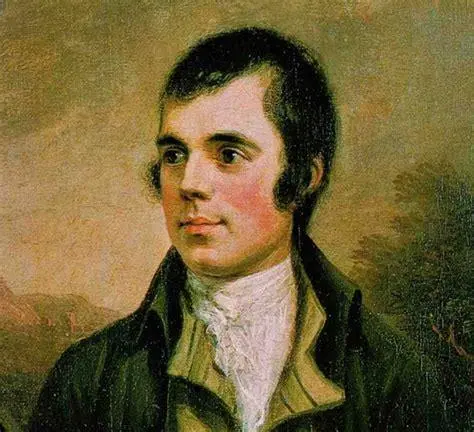
Robert Burns
Bonie Peggy Alison
Tune - "The Braes o' Balquhidder."
Chor. - And I'll kiss thee yet, yet,
And I'll kiss thee o'er again:
And I'll kiss thee yet, yet,
My bonie Peggy Alison.
Ilk care and fear, when thou art near
I evermair defy them, O!
Young kings upon their hansel throne
Are no sae blest as I am, O!
And I'll kiss thee yet, yet, &c.
When in my arms, wi' a' thy charms,
I clasp my countless treasure, O!
I seek nae mair o' Heaven to share
Than sic a moment's pleasure, O!
And I'll kiss thee yet, yet, &c.
And by thy een sae bonie blue,
I swear I'm thine for ever, O!
And on thy lips I seal my vow,
And break it shall I never, O!
And I'll kiss thee yet, yet, &c.
Read more →
275

John Donne
Holy Sonnet XIII: What If This Present Were The World's Last Night?
What if this present were the world's last night?
Mark in my heart, O soul, where thou dost dwell,
The picture of Christ crucified, and tell
Whether that countenance can thee affright,
Tears in his eyes quench the amazing light,
Blood fills his frowns, which from his pierced head fell.
And can that tongue adjudge thee unto hell,
Which prayed forgiveness for his foes' fierce spite?
No, no; but as in my idolatry
I said to all my profane mistresses,
Beauty, of pity, foulness only is
A sign of rigour: so I say to thee,
To wicked spirits are horrid shapes assigned,
This beauteous form assures a piteous mind.
Read more →
276

Emily Dickinson
Reverse cannot befall
Reverse cannot befall
That fine Prosperity
Whose Sources are interior-
As soon-Adversity
A Diamond-overtake
In far-Bolivian Ground-
Misfortune hath no implement
Could mar it-if it found-
Read more →
274
Emily Dickinson
Bound-a trouble
Bound-a trouble-
And lives can bear it!
Limit-how deep a bleeding go!
So-many-drops-of vital scarlet-
Deal with the soul
As with Algebra!
Tell it the Ages-to a cypher-
And it will ache-contented-on
Sing-
at its pain-as any Workman-
Notching the fall of the Even Sun!
Read more →
274

Robert W. Service
The Release
To-day within a grog-shop near
I saw a newly captured linnet,
Who beat against his cage in fear,
And fell exhausted every minute;
And when I asked the fellow there
If he to sell the bird were willing,
He told me with a careless air
That I could have it for a shilling.
And so I bought it, cage and all
(Although I went without my dinner),
And where some trees were fairly tall
And houses shrank and smoke was thinner,
The tiny door I open threw,
As down upon the grass I sank me:
Poor little chap! How quick he flew . . .
He didn't even wait to thank me.
Life's like a cage; we beat the bars,
We bruise our breasts, we struggle vainly;
Up to the glory of the stars
We strain with flutterings ungainly.
And then -- God opens wide the door;
Our wondrous wings are arched for flying;
We poise, we part, we sing, we soar . . .
Light, freedom, love. . . . Fools call it -- Dying.
Read more →
276
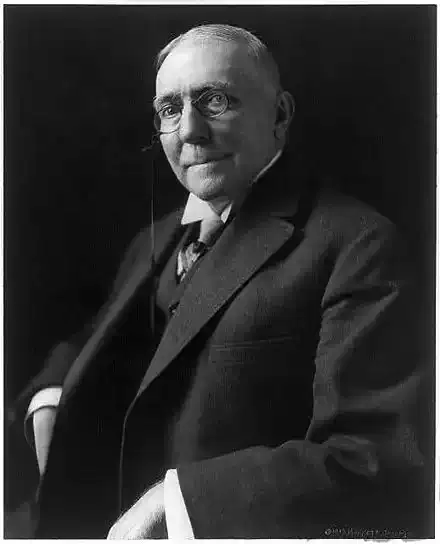
James Whitcomb Riley
The Harp Of The Minstrel
The harp of the minstrel has never a tone
As sad as the song in his bosom to-night,
For the magical touch of his fingers alone
Can not waken the echoes that breathe it aright;
But oh! as the smile of the moon may impart
A sorrow to one in an alien clime,
Let the light of the melody fall on the heart,
And cadence his grief into musical rhyme.
The faces have faded, the eyes have grown dim
That once were his passionate love and his pride;
And alas! all the smiles that once blossomed for him
Have fallen away as the flowers have died.
The hands that entwined him the laureate's wreath
And crowned him with fame in the long, long ago,
Like the laurels are withered and folded beneath
The grass and the stubble--the frost and the snow.
Then sigh, if thou wilt, as the whispering strings
Strive ever in vain for the utterance clear,
And think of the sorrowful spirit that sings,
And jewel the song with the gem of a tear.
For the harp of the minstrel has never a tone
As sad as the song in his bosom tonight,
And the magical touch of his fingers alone
Can not waken the echoes that breathe it aright.
Read more →
274

Henry Lawson
The Great Grey Plain
Out West, where the stars are brightest,
Where the scorching north wind blows,
And the bones of the dead gleam whitest,
And the sun on a desert glows --
Yet within the selfish kingdom
Where man starves man for gain,
Where white men tramp for existence -Wide
lies the Great Grey Plain.
No break in its awful horizon,
No blur in the dazzling haze,
Save where by the bordering timber
The fierce, white heat-waves blaze,
And out where the tank-heap rises
Or looms when the sunlights wane,
Till it seems like a distant mountain
Low down on the Great Grey Plain.
No sign of a stream or fountain,
No spring on its dry, hot breast,
No shade from the blazing noontide
Where a weary man might rest.
Whole years go by when the glowing
Sky never clouds for rain --
Only the shrubs of the desert
Grow on the Great Grey Plain.
From the camp, while the rich man's dreaming,
Come the `traveller' and his mate,
In the ghastly dawnlight seeming
Like a swagman's ghost out late;
And the horseman blurs in the distance,
While still the stars remain,
A low, faint dust-cloud haunting
His track on the Great Grey Plain.
And all day long from before them
The mirage smokes away --
That daylight ghost of an ocean
Creeps close behind all day
With an evil, snake-like motion,
As the waves of a madman's brain:
'Tis a phantom NOT like water
Out there on the Great Grey Plain.
There's a run on the Western limit
Where a man lives like a beast,
And a shanty in the mulga
That stretches to the East;
And the hopeless men who carry
Their swags and tramp in pain -
The footmen must not tarry
Out there on the Great Grey Plain.
Out West, where the stars are brightest,
Where the scorching north wind blows,
And the bones of the dead seem whitest,
And the sun on a desert glows --
Out back in the hungry distance
That brave hearts dare in vain --
Where beggars tramp for existence -There
lies the Great Grey Plain.
'Tis a desert not more barren
Than the Great Grey Plain of years,
Where a fierce fire burns the hearts of men -Dries
up the fount of tears:
Where the victims of a greed insane
Are crushed in a hell-born strife --
Where the souls of a race are murdered
On the Great Grey Plain of Life!
Read more →
275

George Herbert
Employment (I)
If as a flower doth spread and die,
Thou wouldst extend me to some good,
Before I were by frost's extremity
Nipt in the bud;
The sweetness and the praise were thine;
But the extension and the room,
Which in thy garland I should fill, were mine
At thy great doom.
For as thou dost impart thy grace,
The greater shall our glory be.
The measure of our joys is in this place,
The stuff with thee.
Let me not languish then, and spend
A life as barren to thy praise,
As is the dust, to which that life doth tend,
But with delays.
All things are busy; only I
Neither bring honey with the bees,
Nor flowers to make that, nor the husbandry
To water these.
I am no link of thy great chain,
But all my company is a weed.
Lord place me in thy consort; give one strain
To my poor reed.
Read more →
275
Emily Dickinson
I've none to tell me to but Thee
I've none to tell me to but Thee
So when Thou failest, nobody.
It was a little tie-
It just held Two, nor those it held
Since Somewhere thy sweet Face has spilled
Beyond my Boundary-
If things were opposite-and Me
And Me it were-that ebbed from Thee
On some unanswering ShoreWould'st
Thou seek so-just say
That I the Answer may pursue
Unto the lips it eddied through
So-
overtaking Thee-
Read more →
274
Emily Dickinson
'Twas warm—at first—like Us
'Twas warm—at first—like Us—
Until there crept upon
A Chill—like frost upon a Glass—
Till all the scene—be gone.
The Forehead copied Stone—
The Fingers grew too cold
To ache—and like a Skater's Brook—
The busy eyes—congealed—
It straightened—that was all—
It crowded Cold to Cold—
It multiplied indifference—
As Pride were all it could—
And even when with Cords—
'Twas lowered, like a Weight—
It made no Signal, nor demurred,
But dropped like Adamant.
Read more →
274
George Herbert
The Temper
How should I praise thee, Lord! how should my rhymes
Gladly engrave thy love in steel,
If what my soul doth feel sometimes
My soul might ever feel!
Although there were some forty heav'ns, or more,
Sometimes I peer above them all;
Sometimes I hardly reach a score,
Sometimes to hell I fall.
O rack me not to such a vast extent;
Those distances belong to thee:
The world's too little for thy tent,
A grave too big for me.
Wilt thou meet arms with man, that thou dost stretch
A crum of dust from heav'n to hell?
Will great God measure with a wretch?
Shall he thy stature spell?
O let me, when thy roof my soul hath hid,
O let me roost and nestle there:
Then of a sinner thou art rid,
And I of hope and fear.
Yet take thy way; for sure thy way is best:
Stretch or contract me, thy poor debtor:
This is but tuning of my breast,
To make the music better.
Whether I fly with angels, fall with dust,
Thy hands made both, and I am there:
Thy power and love, my love and trust
Make one place ev'ry where.
Read more →
275
James Whitcomb Riley
Dan Paine
Old friend of mine, whose chiming name
Has been the burthen of a rhyme
Within my heart since first I came
To know thee in thy mellow prime;
With warm emotions in my breast
That can but coldly be expressed,
And hopes and wishes wild and vain,
I reach my hand to thee, Dan Paine.
In fancy, as I sit alone
In gloomy fellowship with care,
I hear again thy cheery tone,
And wheel for thee an easy chair;
And from my hand the pencil falls--
My book upon the carpet sprawls,
As eager soul and heart and brain,
Leap up to welcome thee, Dan Paine.
A something gentle in thy mein,
A something tender in thy voice,
Has made my trouble so serene,
I can but weep, from very choice.
And even then my tears, I guess,
Hold more of sweet than bitterness,
And more of gleaming shine than rain,
Because of thy bright smile, Dan Paine.
The wrinkles that the years have spun
And tangled round thy tawny face,
Are kinked with laughter, every one,
And fashioned in a mirthful grace.
And though the twinkle of thine eyes
Is keen as frost when Summer dies,
It can not long as frost remain
While thy warm soul shines out, Dan Paine.
And so I drain a health to thee;--
May merry Joy and jolly Mirth
Like children clamber on thy knee,
And ride thee round the happy earth!
And when, at last, the hand of Fate
Shall lift the latch of Canaan's gate,
And usher me in thy domain,
Smile on me just as now, Dan Paine.
Read more →
275
Emily Dickinson
Garland for Queens, may be
Garland for Queens, may be
Laurels-
for rare degree
Of soul or sword.
Ah-but remembering me
Ah-
but remembering thee-
Nature in chivalry-
Nature in charity-
Nature in equity-
This Rose ordained!
Read more →
275
Henry Lawson
The Scamps
Of home, name and wealth and ambition bereft—
We are children of fortune and luck:
They deny there’s a shred of our characters left,
But they cannot deny us the pluck!
We are vagabond scamps, we are kings over all—
There is little on earth we desire—
We are devils who stand with our backs to the wall,
And who call on the cowards to fire!
There are some of us here who were noble and good,
And who learnt in ingratitude’s schools—
They were born of the selfish and misunderstood,
They were soft, they were ‘smoodgers’ or fools.
With their hands in their pockets to help every friend
In a fix—and they never asked how:
Beware of them you who have money to lend,
For it’s little you’d get from them now.
There are some of us here who were lovers of old—
In the days that were nearer to God;
The girl was more precious than honour or gold,
And they worshipped the ground where she trod;
But she trampled their hearts and they suffered and knew
How the soul of a woman to read—
They will never again to a woman be true;
Let the girls who may meet them take heed!
There are some of us here who were devils from birth,
Who would steal the eye out of a friend—
But we judge not or blame not the worst on the earth,
For it comes to the same in the end.
There are some of us here who were ruined by wrong—
To whom justice and love came too late—
And they threw them aside and go singing a song,
And they know that their mistress is fate.
We were some of us failures at suicide, too—
We are most of us back from the dead—
But we’ve all found the courage to battle it through,
Till the strength of our bodies is sped:
With a flag that is dyed with our hearts’-blood unfurled,
We are marching and marching afar—
We are comrades of all who are fighting the world,
For the world made us all what we are.
Read more →
274

Christina Rossetti
The Thread of Life
I
The irresponsive silence of the land,
The irresponsive sounding of the sea,
Speak both one message of one sense to me:--
Aloof, aloof, we stand aloof, so stand
Thou too aloof bound with the flawless band
Of inner solitude; we bind not thee;
But who from thy self-chain shall set thee free?
What heart shall touch thy heart? what hand thy hand?--
And I am sometimes proud and sometimes meek,
And sometimes I remember days of old
When fellowship seemed not so far to seek
And all the world and I seemed much less cold,
And at the rainbow's foot lay surely gold,
And hope felt strong and life itself not weak.
II
Thus am I mine own prison. Everything
Around me free and sunny and at ease:
Or if in shadow, in a shade of trees
Which the sun kisses, where the gay birds sing
And where all winds make various murmuring;
Where bees are found, with honey for the bees;
Where sounds are music, and where silences
Are music of an unlike fashioning.
Then gaze I at the merrymaking crew,
And smile a moment and a moment sigh
Thinking: Why can I not rejoice with you?
But soon I put the foolish fancy by:
I am not what I have nor what I do;
But what I was I am, I am even I.
III
Therefore myself is that one only thing
I hold to use or waste, to keep or give;
My sole possession every day I live,
And still mine own despite Time's winnowing.
Ever mine own, while moons and seasons bring
From crudeness ripeness mellow and sanitive;
Ever mine own, till Death shall ply his sieve;
And still mine own, when saints break grave and sing.
And this myself as king unto my King
I give, to Him Who gave Himself for me;
Who gives Himself to me, and bids me sing
A sweet new song of His redeemed set free;
he bids me sing: O death, where is thy sting?
And sing: O grave, where is thy victory?
Read more →
272

D.H. Lawrence
The Ship of Death
I
Now it is autumn and the falling fruit
and the long journey towards oblivion.
The apples falling like great drops of dew
to bruise themselves an exit from themselves.
And it is time to go, to bid farewell
to one's own self, and find an exit
from the fallen self.
II
Have you built your ship of death, O have you?
O build your ship of death, for you will need it.
The grim frost is at hand, when the apples will fall
thick, almost thundrous, on the hardened earth.
And death is on the air like a smell of ashes!
Ah! can't you smell it?
And in the bruised body, the frightened soul
finds itself shrinking, wincing from the cold
that blows upon it through the orifices.
III
And can a man his own quietus make
with a bare bodkin?
With daggers, bodkins, bullets, man can make
a bruise or break of exit for his life;
but is that a quietus, O tell me, is it quietus?
Surely not so! for how could murder, even self-murder
ever a quietus make?
IV
O let us talk of quiet that we know,
that we can know, the deep and lovely quiet
of a strong heart at peace!
How can we this, our own quietus, make?
V
Build then the ship of death, for you must take
the longest journey, to oblivion.
And die the death, the long and painful death
that lies between the old self and the new.
Already our bodies are fallen, bruised, badly bruised,
already our souls are oozing through the exit
of the cruel bruise.
Already the dark and endless ocean of the end
is washing in through the breaches of our wounds,
Already the flood is upon us.
Oh build your ship of death, your little ark
and furnish it with food, with little cakes, and wine
for the dark flight down oblivion.
VI
Piecemeal the body dies, and the timid soul
has her footing washed away, as the dark flood rises.
We are dying, we are dying, we are all of us dying
and nothing will stay the death-flood rising within us
and soon it will rise on the world, on the outside world.
We are dying, we are dying, piecemeal our bodies are dying
and our strength leaves us,
and our soul cowers naked in the dark rain over the flood,
cowering in the last branches of the tree of our life.
VII
We are dying, we are dying, so all we can do
is now to be willing to die, and to build the ship
of death to carry the soul on the longest journey.
A little ship, with oars and food
and little dishes, and all accoutrements
fitting and ready for the departing soul.
Now launch the small ship, now as the body dies
and life departs, launch out, the fragile soul
in the fragile ship of courage, the ark of faith
with its store of food and little cooking pans
and change of clothes,
upon the flood's black waste
upon the waters of the end
upon the sea of death, where still we sail
darkly, for we cannot steer, and have no port.
There is no port, there is nowhere to go
only the deepening blackness darkening still
blacker upon the soundless, ungurgling flood
darkness at one with darkness, up and down
and sideways utterly dark, so there is no direction any more
and the little ship is there; yet she is gone.
She is not seen, for there is nothing to see her by.
She is gone! gone! and yet
somewhere she is there.
Nowhere!
VIII
And everything is gone, the body is gone
completely under, gone, entirely gone.
The upper darkness is heavy as the lower,
between them the little ship
is gone
It is the end, it is oblivion.
IX
And yet out of eternity a thread
separates itself on the blackness,
a horizontal thread
that fumes a little with pallor upon the dark.
Is it illusion? or does the pallor fume
A little higher?
Ah wait, wait, for there's the dawn
the cruel dawn of coming back to life
out of oblivion
Wait, wait, the little ship
drifting, beneath the deathly ashy grey
of a flood-dawn.
Wait, wait! even so, a flush of yellow
and strangely, O chilled wan soul, a flush of rose.
A flush of rose, and the whole thing starts again.
X
The flood subsides, and the body, like a worn sea-shell
emerges strange and lovely.
And the little ship wings home, faltering and lapsing
on the pink flood,
and the frail soul steps out, into the house again
filling the heart with peace.
Swings the heart renewed with peace
even of oblivion.
Oh build your ship of death. Oh build it!
for you will need it.
For the voyage of oblivion awaits you.
Read more →
272
George Herbert
Sin (I)
Lord, with what care hast Thou begirt us round!
Parents first season us; then schoolmasters
Deliver us to laws; -they send us bound
To rules of reason, holy messengers,
Pulpits and Sundays, sorrow dogging sin,
Afflictions sorted, anguish of all sizes,
Fine nets and stratagems to catch us in,
Bibles laid open, millions of surprises,
Blessings beforehand, ties of gratefulness,
The sound of glory ringing in our ears;
Without, our shame; within, our consciences;
Angels and grace, eternal hopes and fears:
Yet all these fences and their whole array
One cunning bosom-sin blows quite away.
Read more →
273
Emily Dickinson
Speech—is a prank of Parliament—
"Speech"—is a prank of Parliament—
"Tears"—is a trick of the nerve—
But the Heart with the heaviest freight on—
Doesn't—always—move—
Read more →
272
Robert Burns
Highland Mary
Ye banks, and braes, and streams around
The castle o' Montgomery,
Green be your woods, and fair your flowers,
Your waters never drumlie!
There Simmer first unfald her robes,
And there the langest tarry:
For there I took the last Fareweel
O' my sweet Highland Mary.
How sweetly bloom'd the gay, green birk,
How rich the hawthorn's blossom;
As underneath their fragrant shade,
I clasp'd her to my bosom!
The golden Hours, on angel wings,
Flew o'er me and my Dearie;
For dear to me as light and life
Was my sweet Highland Mary.
Wi' mony a vow, and lock'd embrace,
Our parting was fu' tender;
And pledging aft to meet again,
We tore oursels asunder:
But Oh, fell Death's untimely frost,
That nipt my Flower sae early!
Now green's the sod, and cauld's the clay,
That wraps my Highland Mary!
O pale, pale now, those rosy lips
I aft hae kiss'd sae fondly!
And clos'd for ay, the sparkling glance,
That dwalt on me sae kindly!
And mouldering now in silent dust,
That heart that lo'ed me dearly!
But still within my bosom's core
Shall live my Highland Mary.
Read more →
274
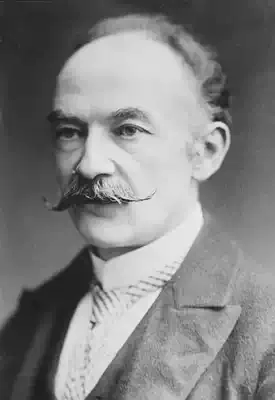
Thomas Hardy
The Self-Unseeing
Here is the ancient floor,
Footworn and hollowed and thin,
Here was the former door
Where the dead feet walked in.
She sat here in her chair,
Smiling into the fire;
He who played stood there,
Bowing it higher and higher.
Childlike, I danced in a dream;
Blessings emblazoned that day;
Everything glowed with a gleam;
Yet we were looking away!
Read more →
273
Henry Lawson
The Last Review
Turn the light down, nurse, and leave me, while I hold my last review,
For
the Bush
is slipping from me, and the town is going too:
Draw the blinds, the streets are lighted, and I hear the tramp of feet—
And I’m weary, very weary, of the
Faces in the Street
.
In the dens of Grind and Heartbreak, in the streets of Never-Rest,
I have lost the scent and colour and the music of the West:
And I would recall old faces with the memories they bring—
Where are Bill and Jim and Mary and the
Songs They used to Sing
?
They are coming! They are coming! they are passing through the room
With the smell of gum leaves burning, and the scent of
Wattle bloom!
And behind them in the timber, after dust and heat and toil,
Others sit beside the camp fire yarning while the billies boil.
In the Gap above the ridges there’s a flash and there’s a glow—
Swiftly down the scrub-clad siding come the
Lights of Cobb and Co
.:
Red face from the box-seat beaming—Oh, how plain those faces come!
From his ‘Golden-Hole’ ’tis Peter M’Intosh who’s going home.
Dusty patch in desolation, bare slab walls and earthen floor,
And a blinding drought is blazing from horizons to the door:
Milkless tea and ration sugar, damper junk and pumpkin mash—
And a
Day on our Selection
passes by me in a flash.
Rush of big wild-eyed store bullocks while the sheep crawl hopelessly,
And the loaded wool teams rolling, lurching on like ships at sea:
With his whip across his shoulder (and the wind just now abeam),
There goes
Jimmy Nowlett
ploughing through the dust beside his team!
Sunrise on the diggings! (Oh! what life and hearts and hopes are here)
From a hundred pointing forges comes a tinkle, tinkle clear—
Strings of drays with wash to puddle, clack of countless windlass boles,
Here and there
the red flag flying
, flying over golden holes.
Picturesque, unreal, romantic, chivalrous, and brave and free;
Clean in living, true in mateship—reckless generosity.
Mates are buried here as comrades who on fields of battle fall—
And—the dreams, the aching, hoping lover hearts beneath it all!
Rough-built theatres and stages where the world’s best actors trod—
Singers bringing reckless rovers nearer boyhood, home and God;
Paid in laughter, tears and nuggets in the play that fortune plays—
’Tis the palmy days of Gulgong—Gulgong in
the Roaring Days.
Pass the same old scenes before me—and again my heart can ache—
There the
Drover’s Wife
sits watching (not as Eve did) for a snake.
And I see the drear deserted goldfields when the night is late,
And the stony face of Mason watching by his
Father’s Mate.
And I see my
Haggard Women
plainly as they were in life,
’Tis the form of Mrs. Spicer and her friend,
Joe Wilson’s wife,
Sitting hand in hand
‘Past Carin
’,’ not a sigh and not a moan,
Staring steadily before her and the tears just trickle down.
It was
No Place for a Woman
—where the women worked like men—
From the Bush and Jones’ Alley come their haunting forms again.
And, let this thing be remembered when I’ve answered to the roll,
That I pitied haggard women—wrote for them with all my soul.
Narrow bed-room in the City in the hard days that are dead—
An alarm clock on the table, and a pale boy on the bed:
Arvie Aspinalls Alarm Clock with its harsh and startling call
Never more shall break his slumbers—I was Arvie Aspinall.
Maoriland
and
Steelman
, cynic, spieler, stiff-lipped, battler-through
(Kept a wife and child in comfort, but of course they never knew—
Thought he was an honest bagman)—Well, old man, you needn’t hug—
Sentimental; you of all men!—Steelman, Oh! I was a mug!
Ghostly lines of scrub at daybreak—dusty daybreak in the drought—
And a lonely swagman tramping on the track to
Further Out
:
Like a shade the form of Mitchell, nose-bag full and bluey up
And between the swag and shoulders lolls his foolish cattle-pup.
Kindly cynic, sad comedian! Mitchell! when you’ve left the Track,
And have shed your load of sorrow as we slipped our swags out back,
We shall have a yarn together in the land of
Rest Awhile
—
And across his ragged shoulder Mitchell smiles his quiet smile.
Shearing sheds and tracks and shanties—girls that wait at homestead gates—
Camps and stern-eyed Union leaders, and
Joe Wilson and his Mates
True and straight, and to my fancy, each one as he passes through
Deftly down upon the table slips a dusty ‘note’ or two.
So at last the end has found me—(end of all the human push)
And again in silence round me come my
Children of the Bush
!—
Listen, who are young, and let them—if I in late and bitter days
Wrote some reckless lines—forget them—there is little there to praise.
I was human, very human, and if in the days misspent
I have injured man or woman, it was done without intent.
If at times I blundered blindly—bitter heart and aching brow—
If I wrote a line unkindly—I am sorry for it now.
Days in London
like a nightmare—dreams of foreign lands and sea—
And
Australia
is the only land that seemeth real to me.
Tell the Bushmen to Australia and each other to be true—
‘Tell the boys to stick together!’ I have held my
Last Review.
Read more →
272