
Soul
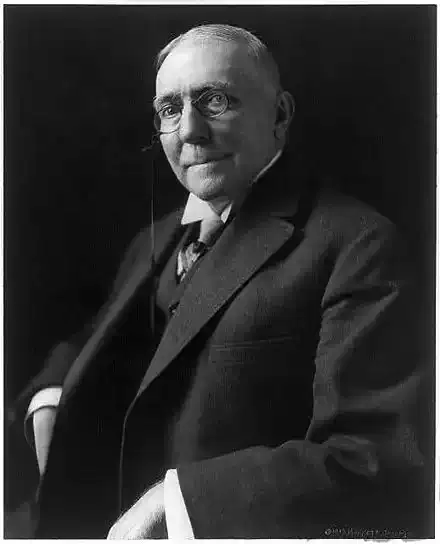
James Whitcomb Riley
A Dream Of Long Ago
Lying listless in the mosses
Underneath a tree that tosses
Flakes of sunshine, and embosses
Its green shadow with the snow-Drowsy-
eyed, I sink in slumber
Born of fancies without number--
Tangled fancies that encumber
Me with dreams of long ago.
Ripples of the river singing;
And the water-lilies swinging
Bells of Parian, and ringing
Peals of perfume faint and fine,
While old forms and fairy faces
Leap from out their hiding-places
In the past, with glad embraces
Fraught with kisses sweet as wine.
Willows dip their slender fingers
O'er the little fisher's stringers,
While he baits his hook and lingers
Till the shadows gather dim;
And afar off comes a calling
Like the sounds of water falling,
With the lazy echoes drawling
Messages of haste to him.
Little naked feet that tinkle
Through the stubble-fields, and twinkle
Down the winding road, and sprinkle
Little mists of dusty rain,
While in pasture-lands the cattle
Cease their grazing with a rattle
Of the bells whose clappers tattle
To their masters down the lane.
Trees that hold their tempting treasures
O'er the orchard's hedge embrasures,
Furnish their forbidden pleasures
As in Eden lands of old;
And the coming of the master
Indicates a like disaster
To the frightened heart that faster
Beats pulsations manifold.
Puckered lips whose pipings tingle
In staccato notes that mingle
Musically with the jingle-
Haunted winds that lightly fan
Mellow twilights, crimson-tinted
By the sun, and picture-printed
Like a book that sweetly hinted
Of the Nights Arabian.
Porticoes with columns plaited
And entwined with vines and freighted
With a bloom all radiated
With the light of moon and star;
Where some tender voice is winging
In sad flights of song, and singing
To the dancing fingers flinging
Dripping from the sweet guitar.
Would my dreams were never taken
From me: that with faith unshaken
I might sleep and never waken
On a weary world of woe!
Links of love would never sever
As I dreamed them, never, never!
I would glide along forever
Through the dreams of long ago.
Read more →
280

Alice Walker
What Makes The Dalai Lama Lovable?
His posture
From so many years
Holding his robe with one hand
Is odd.
His gait
Also.
One's own body
Aches
Witnessing
The sloping
Shoulders
& Angled
Neck;
One hopes
He
Attends
Yoga class
Or does Yoga
On his own
As part
Of prayer.
He smiles
As he bows
To Everything:
Accepting
The heavy
Burdens
Of
This earth;
It's
Toxic
Evils
& Prolific
Insults.
Even so,
He sleeps
Through
The night
Like a child
Because
Thank goodness
That is something
Else
Daylong
Meditation
Assures.
You could cry
Yourself to sleep
On his behalf
& He
Has done that
Too.
Life
Has been
A great
Endless
Tearing away
For
Him.
From
Mother, Father, Siblings, Country, Home.
And yet
Clearly
His mother
Loved him;
His brother & sister
Too:
Even his
Not so constant father,
Who
When Tenzin was
A boy
Shared
With him
Delicious
Scraps
Of
Succulent
Pork.
He laughs
Telling this
Story
Over half a century
Later
&
To who knows
How many
Puzzled
Vegetarians:
About
The way he sat
Behind
His father's chair
Like a dog,
Relishing
Each juicy
Greasy
Bite.
Whenever I see
The Dalai Lama
My first impulse
Is to laugh
I am so happy
To
Lay eyes
On
One
So effortlessly
Beautiful.
That balding head
That holds
A shine;
Those wire framed
Glasses
That might
Have come
From
Anywhere.
His look of having given
All he has.
He is my teacher;
Just staying alive.
Other teachers
I have had
Resemble him
In some way;
They too
Were
&
Are
Smart
And Humble;
Fascinated
By Science & things like
Time,
Eternity,
Cause & Effect;
The Evolution
Of the Soul.
A soul
That
Might
Or might not
Exist.
They too
See all of us
-Banker, murderer, gardener, thief -
When they look
Out across
The world:
But that is not all
They see.
They see our suffering;
Our striving
To find
The right path;
The one with heart
We may only
Have heard
About.
The Dalai Lama is Cool
A modern word
For
"Divine"
Because he wants
Only
Our collective
Health
& Happiness.
That's it!
What makes
Him
Lovable
Is
His holiness.
Read more →
280

Emily Dickinson
Before you thought of spring
Before you thought of spring,
Except as a surmise,
You see, God bless his suddenness,
A fellow in the skies
Of independent hues,
A little weather-worn,
Inspiriting habiliments
Of indigo and brown.
With specimens of song,
As if for you to choose,
Discretion in the interval,
With gay delays he goes
To some superior tree
Without a single leaf,
And shouts for joy to nobody
But his seraphic self!
Read more →
278

John Greenleaf Whittier
The Brown Dwarf of Rügen (From Narrative and Legendary Poems )
THE pleasant isle of Rügen looks the Baltic water o'er,
To the silver-sanded beaches of the Pomeranian shore;
And in the town of Rambin a little boy and maid
Plucked the meadow-flowers together and in the sea-surf played.
Alike were they in beauty if not in their degree:
He was the Amptman's first-born, the miller's child was she.
Now of old the isle of Rügen was full of Dwarfs and Trolls,
The brown-faced little Earth-men, the people without souls;
And for every man and woman in Rügen's island found
Walking in air and sunshine, a Troll was underground.
It chanced the little maiden, one morning, strolled away
Among the haunted Nine Hills, where the elves and goblins play.
That day, in barley fields below, the harvesters had known
Of evil voices in the air, and heard the small horns blown.
She came not back; the search for her in field and wood was vain:
They cried her east, they cried her west, but she came not again.
"She's down among the Brown Dwarfs," said the dream-wives wise and old,
And prayers were made, and masses said, and Rambin's church bell tolled.
Five years her father mourned her; and then John Deitrich said:
"I will find my little playmate, be she alive or dead."
He watched among the Nine Hills, he heard the Brown Dwarfs sing,
And saw them dance by moonlight merrily in a ring.
And when their gay-robed leader tossed up his cap of red,
Young Deitrich caught it as it fell, and thrust it on his head.
The Troll came crouching at his feet and wept for lack of it.
"Oh, give me back my magic cap, for your great head unfit!"
"Nay," Deitrich said; "the Dwarf who throws his charmëd cap away,
Must serve its finder at his will, and for his folly pay.
"You stole my pretty Lisbeth, and hid her in the earth;
And you shall ope the door of glass and let me lead her forth."
"She will not come; she's one of us; she's mine!" the Brown Dwarf said;
"The day is set, the cake is baked, to-morrow we shall wed."
"The fell fiend fetch thee!" Deitrich cried, "and keep thy foul tongue still.
Quick! open, to thy evil world, the glass door of the hill!"
The Dwarf obeyed; and youth and Troll down the long stairway passed,
And saw in dim and sunless light a country strange and vast.
Weird, rich, and wonderful, he saw the elfin under-land, -Its
palaces of precious stones, its streets of golden sand.
He came unto a banquet-hall with tables richly spread,
Where a young maiden served to him the red wine and the bread.
How fair she seemed among the Trolls so ugly and so wild!
Yet pale and very sorrowful, like one who never smiled!
Her low, sweet voice, her gold-brown hair, her tender blue eyes seemed
Like something he had seen elsewhere or something he had dreamed.
He looked; he clasped her in his arms; he knew the long-lost one;
"O Lisbeth! See thy playmate -- I am the Amptman's son!"
She leaned her fair head on his breast, and through her sobs she spoke:
"Oh, take me from this evil place, and from the elfin folk!
"And let me tread the grass-green fields and smell the flowers again,
And feel the soft wind on my cheek and hear the dropping rain!
"And oh, to hear the singing bird, the rustling of the tree,
The lowing cows, the bleat of sheep, the voices of the sea;
"And oh, upon my father's knee to set beside the door,
And hear the bell of vespers ring in Rambin church once more!"
He kissed her cheek, he kissed her lips; the Brown Dwarf groaned to see,
And tore his tangled hair and ground his long teeth angrily.
But Deitrich said: "For five long years this tender Christian maid
Has served you in your evil world, and well must she be paid!
"Haste! -- hither bring me precious gems, the richest in your store;
Then when we pass the gate of glass, you'll take your cap once more."
No choice was left the baffled Troll, and, murmuring, he obeyed,
And filled the pockets of the youth and apron of the maid.
They left the dreadful under-land and passed the gate of glass;
They felt the sunshine's warm caress, they trod the soft, green grass.
And when, beneath, they saw the Dwarf stretch up to them his brown
And crooked claw-like fingers, they tossed his red cap down.
Oh, never shone so bright a sun, was never sky so blue,
As hand in hand they homeward walked the pleasant meadows through!
And never sang the birds so sweet in Rambin's woods before,
And never washed the waves so soft along the Baltic shore;
And when beneath his door-yard trees the father met his child,
The bells rung out their merriest peal, the folks with joy ran wild.
And soon from Rambin's holy church the twain came forth as one,
The Amptman kissed a daughter, the miller blest a son.
John Deitrich's fame went far and wide, and nurse and maid crooned o'er
Their cradle song: "Sleep on, sleep well, the Trolls shall come no more!"
for in the haunted Nine Hills he set a cross of stone;
And Elf and Brown Dwarf sought in vain a door where door was none.
The tower he built in Rambin, fair Rügen's pride and boast,
Looked o'er the Baltic water to the Pomeranian coast;
And, for his worth ennobled, and rich beyond compare,
Count Deitrich and his lovely bride dwelt long and happy there.
Read more →
278
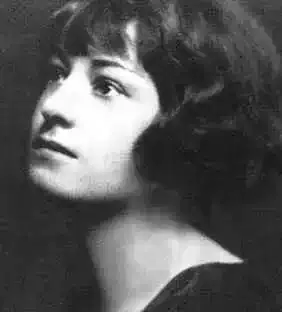
Dorothy Parker
The Last Question
New love, new love, where are you to lead me?
All along a narrow way that marks a crooked line.
How are you to slake me, and how are you to feed me?
With bitter yellow berries, and a sharp new wine.
New love, new love, shall I be forsaken?
One shall go a-wandering, and one of us must sigh.
Sweet it is to slumber, but how shall we awaken
Whose
will be the broken heart, when dawn comes by?
Read more →
278
Alice Walker
Knowing you might some day come
Knowing you might some day come
and how unprepared I’ve always
been
like Mr. Sloppy
in Charles Dickens’
our Mutual Friend
I made a list:
not meat, vegetables, beer and pudding
but number l, warmth.
number 2, warmth.
number 3, warmth.
number 4, a good snuggler.
number 5, someone who sings
while he/she works.
number 6, a dancer.
number 7, someone who grows & is
intrigued by
the mind. And
by the spirit too.
Number 7, someone who is loved
by animals; and loves
them back without
a thought.
number 8, someone who smells
delicious.
number 9, someone whose anger
lasts no longer than mine.
number 10, someone who
stands beside me. behind me. If necessary
in front of me.
number 11, someone who
is a passable cook.
number 12, Someone who laughs
a lot, thinks I have a fine
sense
of humor
& has friends.
number 13, someone who can be
original in dress:
stylish
warlock –In silver, lapis
& black – to my witch.
Read more →
277

Henry Wadsworth Longfellow
Santa Teresa's Bookmark. (From The Spanish Of Santa Teresa)
Let nothing disturb thee,
Nothing affright thee
All things are passing;
God never changeth;
Patient endurance
Attaineth to all things;
Who God possesseth
In nothing is wanting;
Alone God sufficeth.
Read more →
279

William Butler Yeats
Before The World Was Made
If I make the lashes dark
And the eyes more bright
And the lips more scarlet,
Or ask if all be right
From mirror after mirror,
No vanity's displayed:
I'm looking for the face I had
Before the world was made.
What if I look upon a man
As though on my beloved,
And my blood be cold the while
And my heart unmoved?
Why should he think me cruel
Or that he is betrayed?
I'd have him love the thing that was
Before the world was made.
Read more →
279

Robert W. Service
Failure
He wrote a play; by day and night
He strove with passion and delight;
Yet knew, long ere the curtain drop,
His drama was a sorry flop.
In Parliament he sought a seat;
Election Day brought dire defeat;
Yet he had wooed with word and pen
Prodigiously his fellow men.
And then he wrote a lighter play
That made him famous in a day.
He won a seat in Parliament,
And starry was the way he went.
Yet as he neared the door of death
They heard him say with broken breath:
'For all I've spoken, planned and penned,
I'm just a wash-out in the end.'
So are we all; our triumphs won
Are mean by what we might have done.
Our victories that men applaud
Are sordid in the sight of God.
Read more →
279
Robert W. Service
New Year's Eve
It's cruel cold on the water-front, silent and dark and drear;
Only the black tide weltering, only the hissing snow;
And I, alone, like a storm-tossed wreck, on this night of the glad New Year,
Shuffling along in the icy wind, ghastly and gaunt and slow.
They're playing a tune in McGuffy's saloon, and it's cheery and bright in there
(God! but I'm weak -- since the bitter dawn, and never a bite of food);
I'll just go over and slip inside -- I mustn't give way to despair -Perhaps
I can bum a little booze if the boys are feeling good.
They'll jeer at me, and they'll sneer at me, and they'll call me a whiskey soak;
("Have a drink? Well, thankee kindly, sir, I don't mind if I do.")
A drivelling, dirty, gin-joint fiend, the butt of the bar-room joke;
Sunk and sodden and hopeless -- "Another? Well, here's to you!"
McGuffy is showing a bunch of the boys how Bob Fitzsimmons hit;
The barman is talking of Tammany Hall, and why the ward boss got fired.
I'll just sneak into a corner and they'll let me alone a bit;
The room is reeling round and round . . .O God! but I'm tired, I'm tired. . . .
* * * * *
Roses she wore on her breast that night. Oh, but their scent was sweet!
Alone we sat on the balcony, and the fan-palms arched above;
The witching strain of a waltz by Strauss came up to our cool retreat,
And I prisoned her little hand in mine, and I whispered my plea of love.
Then sudden the laughter died on her lips, and lowly she bent her head;
And oh, there came in the deep, dark eyes a look that was heaven to see;
And the moments went, and I waited there, and never a word was said,
And she plucked from her bosom a rose of red and shyly gave it to me.
Then the music swelled to a crash of joy, and the lights blazed up like day,
And I held her fast to my throbbing heart, and I kissed her bonny brow.
"She is mine, she is mine for evermore!" the violins seemed to say,
And the bells were ringing the New Year in -- O God! I can hear them now.
Don't you remember that long, last waltz, with its sobbing, sad refrain?
Don't you remember that last good-by, and the dear eyes dim with tears?
Don't you remember that golden dream, with never a hint of pain,
Of lives that would blend like an angel-song in the bliss of the coming years?
Oh, what have I lost! What have I lost! Ethel, forgive, forgive!
The red, red rose is faded now, and it's fifty years ago.
'Twere better to die a thousand deaths than live each day as I live!
I have sinned, I have sunk to the lowest depths -- but oh, I have suffered so!
Hark! Oh, hark! I can hear the bells! . . . Look! I can see her there,
Fair as a dream . . . but it fades . . . And now -- I can hear the dreadful hum
Of the crowded court . . . See! the Judge looks down . . .
NOT GUILTY, my Lord, I swear . . .
The bells -- I can hear the bells again! . . . Ethel, I come, I come! . . .
* * * * *
"Rouse up, old man, it's twelve o'clock. You can't sleep here, you know.
Say! ain't you got no sentiment? Lift up your muddled head;
Have a drink to the glad New Year, a drop before you go -You
darned old dirty hobo . . . My God! Here, boys! He's DEAD!"
Read more →
278
James Whitcomb Riley
The Legend Glorified
'I deem that God is not disquieted'--
This in a mighty poet's rhymes I read;
And blazoned so forever doth abide
Within my soul the legend glorified.
Though awful tempests thunder overhead,
I deem that God is not disquieted,--
The faith that trembles somewhat yet is sure
Through storm and darkness of a way secure.
Bleak winters, when the naked spirit hears
The break of hearts, through stinging sleet of tears,
I deem that God is not disquieted;
Against all stresses am I clothed and fed.
Nay, even with fixed eyes and broken breath,
My feet dip down into the tides of death,
Nor any friend be left, nor prayer be said,
I deem that God is not disquieted.
Read more →
279
Emily Dickinson
Of Consciousness, her awful Mate
Of Consciousness, her awful Mate
The Soul cannot be rid-
As easy the secreting her
Behind the Eyes of God.
The deepest hid is sighted first
And scant to Him the Crowd-
What triple Lenses burn upon
The Escapade from God-
Read more →
279
Emily Dickinson
She hideth Her the last
She hideth Her the last-
And is the first, to rise-
Her Night doth hardly recompense
The Closing of Her eyes-
She doth Her Purple Work-
And putteth Her away
In low Apartments in the Sod -
As worthily as We.
To imitate her life
As impotent would be
As make of Our imperfect Mints,
The Julep-of the Bee-
Read more →
279
Emily Dickinson
The Day that I was crowned
The Day that I was crowned
Was like the other Days-
Until the Coronation came-
And then-'twas Otherwise-
As Carbon in the Coal
And Carbon in the Gem
Are One-and yet the former
Were dull for Diadem-
I rose, and all was plain-
But when the Day declined
Myself and It, in Majesty
Were equally-adorned-
The Grace that I-was chose-
To Me-surpassed the Crown
That was the Witness for the Grace'
Twas even that 'twas Mine-
Read more →
277
Emily Dickinson
Joy to have merited the Pain
Joy to have merited the Pain-
To merit the Release-
Joy to have perished every step-
To Compass Paradise
Pardon-to look upon thy face-
With these old fashioned Eyes-
Better than new-could be-for that-
Though bought in Paradise-
Because they looked on thee before-
And thou hast looked on them-
Prove Me-My Hazel Witnesses
The features are the same-
So fleet thou wert, when present-
So infinite-when gone-
An Orient's Apparition-
Remanded of the Morn-
The Height I recollect'
Twas even with the Hills-
The Depth upon my Soul was notched-
As Floods-on Whites of Wheels-
To Haunt-till Time have dropped
His last Decade away,
And Haunting actualize-to last
At least-Eternity-
Read more →
276

George Herbert
A Dialogue
Man. SWEETEST Saviour, if my soul
Were but worth the having,
Quickly should I then control
Any thought of waving.
But when all my care and pains
Cannot give the name of gains
To Thy wretch so full of stains,
What delight or hope remains?
Saviour. What, child, is the balance thine,
Thine the poise and measure?
If I say, 'Thou shalt be Mine,'
Finger not My treasure.
What the gains in having thee
Do amount to, only He
Who for man was sold can see;
That transferr'd th' accounts to Me.
Man. But as I can see no merit
Leading to this favour,
So the way to fit me for it
Is beyond my savour.
As the reason, then, is Thine,
So the way is none of mine;
I disclaim the whole design;
Sin disclaims and I resign.
Saviour. That is all: if that I could
Get without repining;
And My clay, My creature, would
Follow My resigning;
That as I did freely part
With My glory and desert,
Left all joys to feel all smart----
Man. Ah, no more! Thou break'st my heart!
Read more →
277
Henry Van Dyke
If All the Skies
If all the skies were sunshine,
Our faces would be fain
To feel once more upon them
The cooling splash of rain.
If all the world were music,
Our hearts would often long
For one sweet strain of silence,
To break the endless song.
If life were always merry,
Our souls would seek relief,
And rest from weary laughter
In the quiet arms of grief.
Read more →
277
Emily Dickinson
Too little way the House must lie
Too little way the House must lie
From every Human Heart
That holds in undisputed Lease
A white inhabitant-
Too narrow is the Right between-
Too imminent the chance-
Each Consciousness must emigrate
And lose its neighbor once-
Read more →
277

John Donne
Holy Sonnet VIII: If Faithfull Soules
If faithfull soules be alike glorifi'd
As Angels, then my fathers soul doth see,
And adds this even to full felecitie,
That valiantly I hels wide mouth o'stride:
But if our mindes to these soules be descry'd
By circumstances, and by signes that be
Apparent in us, not immediately,
How shall my mindes white truth by them be try'd?
They see idolatrous lovers weepe and mourne,
And vile blasphemous Conjurers to call
On Jesus name, and Pharisaicall
Dissemblers feigne devotion. Then turne
O pensive soule, to God, for he knows best
Thy true griefe, for he put it in my breast.
Read more →
277

D.H. Lawrence
Dreams Old
I have opened the window to warm my hands on the sill
Where the sunlight soaks in the stone: the afternoon
Is full of dreams, my love, the boys are all still
In a wistful dream of Lorna Doone.
The clink of the shunting engines is sharp and fine,
Like savage music striking far off, and there
On the great, uplifted blue palace, lights stir and shine
Where the glass is domed in the blue, soft air.
There lies the world, my darling, full of wonder and wistfulness and strange
Recognition and greetings of half-acquaint things, as I greet the cloud
Of blue palace aloft there, among misty indefinite dreams that range
At the back of my life’s horizon, where the dreamings of past lives crowd.
Over the nearness of Norwood Hill, through the mellow veil
Of the afternoon glows to me the old romance of David and Dora,
With the old, sweet, soothing tears, and laughter that shakes the sail
Of the ship of the soul over seas where dreamed dreams lure the unoceaned explorer.
All the bygone, hushèd years
Streaming back where the mist distils
Into forgetfulness: soft-sailing waters where fears
No longer shake, where the silk sail fills
With an unfelt breeze that ebbs over the seas, where the storm
Of living has passed, on and on
Through the coloured iridescence that swims in the warm
Wake of the tumult now spent and gone,
Drifts my boat, wistfully lapsing after
The mists of vanishing tears and the echo of laughter.
Read more →
276
James Whitcomb Riley
Tom Van Arden
Tom Van Arden, my old friend,
Our warm fellowship is one
Far too old to comprehend
Where its bond was first begun:
Mirage-like before my gaze
Gleams a land of other days,
Where two truant boys, astray,
Dream their lazy lives away.
There's a vision, in the guise
Of Midsummer, where the Past
Like a weary beggar lies
In the shadow Time has cast;
And as blends the bloom of trees
With the drowsy hum of bees,
Fragrant thoughts and murmurs blend,
Tom Van Arden, my old friend.
Tom Van Arden, my old friend,
All the pleasures we have known
Thrill me now as I extend
This old hand and grasp your own--
Feeling, in the rude caress,
All affection's tenderness;
Feeling, though the touch be rough,
Our old souls are soft enough.
So we'll make a mellow hour:
Fill your pipe, and taste the wine--
Warp your face, if it be sour,
I can spare a smile from mine;
If it sharpen up your wit,
Let me feel the edge of it--
I have eager ears to lend,
Tom Van Arden, my old friend.
Tom Van Arden, my old friend,
Are we 'lucky dogs,' indeed?
Are we all that we pretend
In the jolly life we lead?--
Bachelors, we must confess,
Boast of 'single blessedness'
To the world, but not alone-Man's
best sorrow is his own!
And the saddest truth is this,--
Life to us has never proved
What we tasted in the kiss
Of the women we have loved:
Vainly we congratulate
Our escape from such a fate
As their lying lips could send,
Tom Van Arden, my old friend!
Tom Van Arden, my old friend,
Hearts, like fruit upon the stem,
Ripen sweetest, I contend,
As the frost falls over them:
Your regard for me to-day
Makes November taste of May,
And through every vein of rhyme
Pours the blood of summer-time.
When our souls are cramped with youth
Happiness seems far away
In the future, while, in truth,
We look back on it to-day
Through our tears, nor dare to boast,-'
Better to have loved and lost!'
Broken hearts are hard to mend,
Tom Van Arden, my old friend.
Tom Van Arden, my old friend,
I grow prosy, and you tire;
Fill the glasses while I bend
To prod up the failing fire. . . .
You are restless:--I presume
There's a dampness in the room.--
Much of warmth our nature begs,
With rheumatics in our legs! . . .
Humph! the legs we used to fling
Limber-jointed in the dance,
When we heard the fiddle ring
Up the curtain of Romance,
And in crowded public halls
Played with hearts like jugglers' balls.--
FEATS OF MOUNTEBANKS, DEPEND!--
Tom Van Arden, my old friend.
Tom Van Arden, my old friend,
Pardon, then, this theme of mine:
While the firelight leaps to lend
Higher color to the wine,--
I propose a health to those
Who have HOMES, and home's repose,
Wife- and child-love without end!
. . . Tom Van Arden, my old friend.
Read more →
277

Henry Lawson
The Cross-Roads
Once more I write a line to you,
While darker shadows fall;
Dear friends of mine who have been true,
And steadfast through it all.
If I have written bitter rhymes,
With many lines that halt,
And if I have been false at times
It was not all my fault.
To Heaven’s decree I would not bow,
And I sank very low—
The bitter things are written now,
And we must let them go.
But I feel softened as I write;
The better spirit springs,
And I am very sad to-night
Because of many things.
The friendships that I have abused,
The trust I did betray,
The talents that I have misused,
The gifts I threw away.
The things that did me little good,
And—well my cheeks might burn—
The kindly letters that I should
Have answered by return.
But you might deem them answered now,
And answered from my heart;
And injured friends will understand
’Tis I who feel the smart.
But I have done with barren strife
And dark imaginings,
And in my future work and life
Will seek the better things.
Read more →
277

Emily Jane Brontë
High waving heather 'neath stormy blasts bending
High waving heather 'neath stormy blasts bending,
Midnight and moonlight and bright shining stars,
Darkness and glory rejoicingly blending,
Earth rising to heaven and heaven descending,
Man's spirit away from its drear dungeon sending,
Bursting the fetters and breaking the bars.
All down the mountain sides wild forests lending
One mighty voice to the life-giving wind,
Rivers their banks in their jubilee rending,
Fast through the valleys a reckless course wending,
Wider and deeper their waters extending,
Leaving a desolate desert behind.
Shining and lowering and swelling and dying,
Changing forever from midnight to noon;
Roaring like thunder, like soft music sighing,
Shadows on shadows advancing and flying,
Lighning-bright flashes the deep gloom defying,
Coming as swiftly and fading as soon.
Read more →
277
John Greenleaf Whittier
Palestine
Blest land of Judea! thrice hallowed of song,
Where the holiest of memories pilgrim-like throng;
In the shade of thy palms, by the shores of thy sea,
On the hills of thy beauty, my heart is with thee.
With the eye of a spirit I look on that shore,
Where pilgrim and prophet have lingered before;
With the glide of a spirit, I traverse the sod
Made bright by the steps of the angels of God.
Blue sea of the hills! in my spirit I hear
Thy waters, Genasseret, chime on my ear;
Where the Lowly and Just with the people sat down,
And thy spray on the dust of His sandals was thrown.
Beyond are Bethulia's mountains of green,
And the desolate hills of the wild Godarene;
And I pause on the goat-crags of Tabor to see
The gleam of thy waters, oh dark Gallilee!
Hark, a sound in the vallies! where, swollen and strong,
Thy river, oh Kishon, is sweeping along;
Where the Canaanite strove with Jehovah in vain,
And thy torrent grew dark with the blood of the slain.
There down from his mountains stern Zebulon came,
And Naphtali's stag, with his eye-balls of flame,
And the chariots of Jabin rolled harmlessly on,
For the arm of the Lord was Abinoam's son!
There sleep the still rocks and the caverns which rang
To the song which the beautiful Prophetess sang,
When the Princes of Issachar stood by her side,
And the shout of a host in its triumph replied.
Lo! Bethlehem's hill-site before me is seen,
With the mountains around, and the vallies between;
There rested the shepherds of Judah, and there
The song of the angels rose sweet on the air.
And Bethany's palm-trees in beauty still throw
Their shadows at noon on the ruins below;
But where are the sisters who hastened to greet
The lowly Redeemer, and sit at His feet?
I tread where the TWELVE in their wayfaring trod;
I stand where they stood with the CHOSEN of GOD!
Where his blessing was heard, and his lessons were taught,
Where the blind were restored, and the healing was wrought.
Oh, here with his flock the sad Wanderer came,
These hills he toiled over in grief are the same
The founts where he drank by the wayside still flow,
And the same airs are blowing which breathed on his brow.
And throned on her hills sits Jerusalem yet,
But with dust on her forehead, and chains on her feet:
For the crown of her pride to the mocker hath gone,
And the holy Shechinah is dark where it shone!
But wherefore this dream of the earthly abode
Of Humanity clothed in the brightness of God?
Were my spirit but turned from the outward and dim,
It could gaze, even now, on the presence of Him!
Not in clouds and in terrors, but gentle as when
In love and in meekness he moved among men;
And the voice which breathed peace to the waves of the sea,
In the hush of my spirit would whisper to me!
And what if my feet may not tread where He stood,
Nor my ears hear the dashing of Gallilee's flood,
Nor my eyes see the cross which He bowed him to bear,
Nor my knees press Gethsemane's garden of prayer.
Yet, Loved of the Father, Thy spirit is near
To the meek, and the lowly, and penitent here;
And the voice of thy love is the same even now,
As at Bethany's tomb, or on Olivet's brow,mdash;
Oh, the outward hath gone!-but in glory and power,
The SPIRIT surviveth the things of an hour;
Unchanged, undecaying, its Pentecost flame
On the heart's secret altar is burning the same!
Read more →
277