
Soul

John Greenleaf Whittier
The Wish Of To-Day
I ask not now for gold to gild
With mocking shine a weary frame;
The yearning of the mind is stilled,
I ask not now for Fame.
A rose-cloud, dimly seen above,
Melting in heaven's blue depths away;
Oh, sweet, fond dream of human Love
For thee I may not pray.
But, bowed in lowliness of mind,
I make my humble wishes known;
I only ask a will resigned,
O Father, to Thine own!
To-day, beneath Thy chastening eye
I crave alone for peace and rest,
Submissive in Thy hand to lie,
And feel that it is best.
A marvel seems the Universe,
A miracle our Life and Death;
A mystery which I cannot pierce,
Around, above, beneath.
In vain I task my aching brain,
In vain the sage's thought I scan,
I only feel how weak and vain,
How poor and blind, is man.
And now my spirit sighs for home,
And longs for light whereby to see,
And, like a weary child, would come,
O Father, unto Thee!
Though oft, like letters traced on sand,
My weak resolves have passed away,
In mercy lend Thy helping hand
Unto my prayer to-day!
Read more →
268

George Herbert
Sonnet (II)
O
Sure Lord, there is enough in thee to dry
Oceans of Ink ; for, as the Deluge did
Cover the Earth, so doth thy Majesty :
Each Cloud distills thy praise, and doth forbid
Poets to turn it to another use.
Roses and Lillies speak thee ; and to make
A pair of Cheeks of them, is thy abuse.
Why should I Womens eyes for Chrystal take?
Such poor invention burns in their low mind,
Whose fire is wild, and doth not upward go
To praise, and on thee Lord, some Ink bestow.
Open the bones, and you shall nothing find
In the best face but filth, when Lord, in thee
The beauty lies, in the discovery
Read more →
267
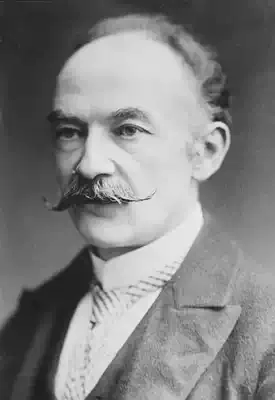
Thomas Hardy
The Souls of the Slain
I
The thick lids of Night closed upon me
Alone at the Bill
Of the Isle by the Race {} -
Many-caverned, bald, wrinkled of face -
And with darkness and silence the spirit was on me
To brood and be still.
II
No wind fanned the flats of the ocean,
Or promontory sides,
Or the ooze by the strand,
Or the bent-bearded slope of the land,
Whose base took its rest amid everlong motion
Of criss-crossing tides.
III
Soon from out of the Southward seemed nearing
A whirr, as of wings
Waved by mighty-vanned flies,
Or by night-moths of measureless size,
And in softness and smoothness well-nigh beyond hearing
Of corporal things.
IV
And they bore to the bluff, and alighted -
A dim-discerned train
Of sprites without mould,
Frameless souls none might touch or might hold -
On the ledge by the turreted lantern, farsighted
By men of the main.
V
And I heard them say "Home!" and I knew them
For souls of the felled
On the earth's nether bord
Under Capricorn, whither they'd warred,
And I neared in my awe, and gave heedfulness to them
With breathings inheld.
VI
Then, it seemed, there approached from the northward
A senior soul-flame
Of the like filmy hue:
And he met them and spake: "Is it you,
O my men?" Said they, "Aye! We bear homeward and hearthward
To list to our fame!"
VII
"I've flown there before you," he said then:
"Your households are well;
But--your kin linger less
On your glory arid war-mightiness
Than on dearer things."--"Dearer?" cried these from the dead then,
"Of what do they tell?"
VIII
"Some mothers muse sadly, and murmur
Your doings as boys -
Recall the quaint ways
Of your babyhood's innocent days.
Some pray that, ere dying, your faith had grown firmer,
And higher your joys.
IX
"A father broods: 'Would I had set him
To some humble trade,
And so slacked his high fire,
And his passionate martial desire;
Had told him no stories to woo him and whet him
To this due crusade!"
X
"And, General, how hold out our sweethearts,
Sworn loyal as doves?"
--"Many mourn; many think
It is not unattractive to prink
Them in sables for heroes. Some fickle and fleet hearts
Have found them new loves."
XI
"And our wives?" quoth another resignedly,
"Dwell they on our deeds?"
--"Deeds of home; that live yet
Fresh as new--deeds of fondness or fret;
Ancient words that were kindly expressed or unkindly,
These, these have their heeds."
XII
--"Alas! then it seems that our glory
Weighs less in their thought
Than our old homely acts,
And the long-ago commonplace facts
Of our lives--held by us as scarce part of our story,
And rated as nought!"
XIII
Then bitterly some: "Was it wise now
To raise the tomb-door
For such knowledge? Away!"
But the rest: "Fame we prized till to-day;
Yet that hearts keep us green for old kindness we prize now
A thousand times more!"
XIV
Thus speaking, the trooped apparitions
Began to disband
And resolve them in two:
Those whose record was lovely and true
Bore to northward for home: those of bitter traditions
Again left the land,
XV
And, towering to seaward in legions,
They paused at a spot
Overbending the Race -
That engulphing, ghast, sinister place -
Whither headlong they plunged, to the fathomless regions
Of myriads forgot.
XVI
And the spirits of those who were homing
Passed on, rushingly,
Like the Pentecost Wind;
And the whirr of their wayfaring thinned
And surceased on the sky, and but left in the gloaming
Sea-mutterings and me.
Read more →
267
John Greenleaf Whittier
Tauler
Tauler, the preacher, walked, one autumn day,
Without the walls of Strasburg, by the Rhine,
Pondering the solemn Miracle of Life;
As one who, wandering in a starless night,
Feels momently the jar of unseen waves,
And hears the thunder of an unknown sea,
Breaking along an unimagined shore.
And as he walked he prayed. Even the same
Old prayer with which, for half a score of years,
Morning, and noon, and evening, lip and heart
Had groaned: 'Have pity upon me, Lord!
Thou seest, while teaching others, I am blind.
Send me a man who can direct my steps!'
Then, as he mused, he heard along his path
A sound as of an old man's staff among
The dry, dead linden-leaves; and, looking up,
He saw a stranger, weak, and poor, and old.
'Peace be unto thee, father!' Tauler said,
'God give thee a good day!' The old man raised
Slowly his calm blue eyes. 'I thank thee, son;
But all my days are good, and none are ill.'
Wondering thereat, the preacher spake again,
'God give thee happy life.' The old man smiled,
'I never am unhappy.'
Tauler laid
His hand upon the stranger's coarse gray sleeve
'Tell me, O father, what thy strange words mean.
Surely man's days are evil, and his life
Sad as the grave it leads to.' 'Nay, my son,
Our times are in God's hands, and all our days
Are as our needs; for shadow as for sun,
For cold as heat, for want as wealth, alike
Our thanks are due, since that is best which is;
And that which is not, sharing not His life,
Is evil only as devoid of good.
And for the happiness of which I spake,
I find it in submission to his will,
And calm trust in the holy Trinity
Of Knowledge, Goodness, and Almighty Power.'
Silently wondering, for a little space,
Stood the great preacher; then he spake as one
Who, suddenly grappling with a haunting thought
Which long has followed, whispering through the dark
Strange terrors, drags it, shrieking, into light
'What if God's will consign thee hence to Hell?'
'Then,' said the stranger, cheerily, 'be it so.
What Hell may be I know not; this I know,
I
cannot lose the presence of the Lord.
One arm, Humility, takes hold upon
His dear Humanity; the other, Love,
Clasps his Divinity. So where I go
He goes; and better fire-walled Hell with Him
Than golden-gated Paradise without.'
Tears sprang in Tauler's eyes. A sudden light,
Like the first ray which fell on chaos, clove
Apart the shadow wherein he had walked
Darkly at noon. And, as the strange old man
Went his slow way, until his silver hair
Set like the white moon where the hills of vine
Slope to the Rhine, he bowed his head and said
'My prayer is answered. God hath sent the man
Long sought, to teach me, by his simple trust,
Wisdom the weary schoolmen never knew.'
So, entering with a changed and cheerful step
The city gates, he saw, far down the street,
A mighty shadow break the light of noon,
Which tracing backward till its airy lines
Hardened to stony plinths, he raised his eyes
O'er broad facade and lofty pediment,
O'er architrave and frieze and sainted niche,
Up the stone lace-work chiselled by the wise
Erwin of Steinbach, dizzily up to where
In the noon-brightness the great Minster's tower,
Jewelled with sunbeams on its mural crown,
Rose like a visible prayer. 'Behold!' he said,
'The stranger's faith made plain before mine eyes.
As yonder tower outstretches to the earth
The dark triangle of its shade alone
When the clear day is shining on its top,
So, darkness in the pathway of Man's life
Is but the shadow of God's providence,
By the great Sun of Wisdom cast thereon;
And what is dark below is light in Heaven.'
Read more →
267

Henry Lawson
Will Yer Write It Down for Me?
In the parlour of the shanty where the lives have all gone wrong,
When a singer or reciter gives a story or a song,
Where the poet’s heart is speaking to their hearts in every line,
Till the hardest curse and blubber at the thoughts of Auld Lang Syne;
Then a boozer lurches forward with an oath for all disguise—
Prayers and curses in his soul, and tears and liquor in his eyes—
Grasps the singer or reciter with a death-grip by the hand:
‘That’s the truth, bloke! Sling it at ’em! Oh! Gorbli’me, that was grand!
‘Don’t mind me; I’ve got ’em. You know! What’s yer name, bloke! Don’t yer see?
‘Who’s the bloke what wrote the po’try? Will yer write it down fer me?’
And the backblocks’ bard goes through it, ever seeking as he goes
For the line of least resistance to the hearts of men he knows;
And he tracks their hearts in mateship, and he tracks them out alone—
Seeking for the power to sway them, till he finds it in his own,
Feels what they feel, loves what they love, learns to hate what they condemn,
Takes his pen in tears and triumph, and he writes it down for them.
Read more →
266
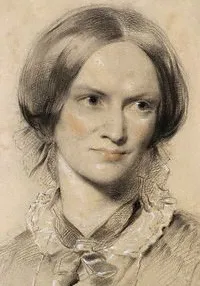
Charlotte Brontë
The Letter
WHAT is she writing ? Watch her now,
How fast her fingers move !
How eagerly her youthful brow
Is bent in thought above !
Her long curls, drooping, shade the light,
She puts them quick aside,
Nor knows, that band of crystals bright,
Her hasty touch untied.
It slips adown her silken dress,
Falls glittering at her feet;
Unmarked it falls, for she no less
Pursues her labour sweet.
The very loveliest hour that shines,
Is in that deep blue sky;
The golden sun of June declines,
It has not caught her eye.
The cheerful lawn, and unclosed gate,
The white road, far away,
In vain for her light footsteps wait,
She comes not forth today.
There is an open door of glass
Close by that lady's chair,
From thence, to slopes of mossy grass,
Descends a marble stair.
Tall plants of bright and spicy bloom
Around the threshold grow;
Their leaves and blossoms shade the room,
From that sun's deepening glow.
Why does she not a moment glance
Between the clustering flowers,
And mark in heaven the radiant dance
Of evening's rosy hours ?
O look again ! Still fixed her eye,
Unsmiling, earnest, still,
And fast her pen and fingers fly,
Urged by her eager will.
Her soul is in th' absorbing task;
To whom, then, doth she write ?
Nay, watch her still more closely, ask
Her own eyes' serious light;
Where do they turn, as now her pen
Hangs o'er th' unfinished line ?
Whence fell the tearful gleam that then
Did in their dark spheres shine ?
The summerparlour
looks so dark,
When from that sky you turn,
And from th' expanse of that green park,
You scarce may aught discern.
Yet o'er the piles of porcelain rare,
O'er flowerstand,
couch, and vase,
Sloped, as if leaning on the air,
One picture meets the gaze.
'Tis there she turns; you may not see
Distinct, what form defines
The clouded mass of mystery
Yon broad gold frame confines.
But look again; inured to shade
Your eyes now faintly trace
A stalwart form, a massive head,
A firm, determined face.
Black Spanish locks, a sunburnt cheek,
A brow high, broad, and white,
Where every furrow seems to speak
Of mind and moral might.
Is that her god ? I cannot tell;
Her eye a moment met
Th' impending picture, then it fell
Darkened and dimmed and wet.
A moment more, her task is done,
And sealed the letter lies;
And now, towards the setting sun
She turns her tearful eyes.
Those tears flow over, wonder not,
For by the inscription, see
In what a strange and distant spot
Her heart of hearts must be !
Three seas and many a league of land
That letter must pass o'er,
E'er read by him to whose loved hand
'Tis sent from England's shore.
Remote colonial wilds detain
Her husband, loved though stern;
She, 'mid that smiling English scene,
Weeps for his wished return.
Read more →
267
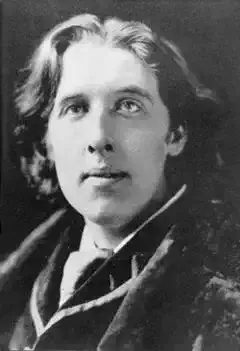
Oscar Wilde
Athenasia
To that gaunt House of Art which lacks for naught
Of all the great things men have saved from Time,
The withered body of a girl was brought
Dead ere the world's glad youth had touched its prime,
And seen by lonely Arabs lying hid
In the dim wound of some black pyramid.
But when they had unloosed the linen band
Which swathed the Egyptian's body,- lo! was found
Closed in the wasted hollow of her hand
A little seed, which sown in English ground
Did wondrous snow of starry blossoms bear,
And spread rich odors through our springtide air.
With such strange arts this flower did allure
That all forgotten was the asphodel,
And the brown bee, the lily's paramour,
Forsook the cup where he was wont to dwell,
For not a thing of earth it seemed to be,
But stolen from some heavenly Arcady.
In vain the sad narcissus, wan and white
At its own beauty, hung across the stream,
The purple dragon-fly had no delight
With its gold-dust to make his wings a-gleam,
Ah! no delight the jasmine-bloom to kiss,
Or brush the rain-pearls from the eucharis.
For love of it the passionate nightingale
Forgot the hills of Thrace, the cruel king,
And the pale dove no longer cared to sail
Through the wet woods at time of blossoming,
But round this flower of Egypt sought to float,
With silvered wing and amethystine throat.
While the hot sun blazed in his tower of blue
A cooling wind crept from the land of snows,
And the warm south with tender tears of dew
Drenched its white leaves when Hesperos uprose
Amid those sea-green meadows of the sky
On which the scarlet bars of sunset lie.
But when o'er wastes of lily-haunted field
The tired birds had stayed their amorous tune,
And broad and glittering like an argent shield
High in the sapphire heavens hung the moon,
Did no strange dream or evil memory make
Each tremulous petal of its blossoms shake?
Ah no! to this bright flower a thousand years
Seemed but the lingering of a summer's day,
It never knew the tide of cankering fears
Which turn a boy's gold hair to withered gray,
The dread desire of death it never knew,
Or how all folk that they were born must rue.
For we to death with pipe and dancing go,
Nor would we pass the ivory gate again,
As some sad river wearied of its flow
Through the dull plains, the haunts of common men,
Leaps lover-like into the terrible sea!
And counts it gain to die so gloriously.
We mar our lordly strength in barren strife
With the world's legions led by clamorous care,
It never feels decay but gathers life
From the pure sunlight and the supreme air,
We live beneath Time's wasting sovereignty,
It is the child of all eternity.
Read more →
267

Johann Wolfgang von Goethe
To The Golden Heart That He Wore Around His Neck
OH thou token loved of joys now perish'd
That I still wear from my neck suspended,
Art thou stronger than our spirit-bond so cherish'd?
Or canst thou prolong love's days untimely ended?
Lily, I fly from thee! I still am doom'd to range
Thro' countries strange,
Thro' distant vales and woods, link'd on to thee!
Ah, Lily's heart could surely never fall
So soon away from me!
As when a bird bath broken from his thrall,
And seeks the forest green,
Proof of imprisonment he bears behind him,
A morsel of the thread once used to bind him;
The free-born bird of old no more is seen,
For he another's prey bath been.
Read more →
268

Emily Dickinson
A Mien to move a Queen
A Mien to move a Queen-
Half Child-Half Heroine-
An Orleans in the Eye
That puts its manner by
For humbler Company
When none are near
Even a Tear-
Its frequent Visitor-
A Bonnet like a Duke-
And yet a Wren's Peruke
Were not so shy
Of Goer by-
And Hands-so slight-
They would elate a Sprite
With Merriment-
A Voice that Alters-Low
And on the Ear can go
Like Let of Snow-
Or shift supreme-
As tone of Realm
On Subjects Diadem-
Too small-to fear-
Too distant-to endear-
And so Men Compromise
And just-revere-
Read more →
267
Thomas Hardy
Transformations
Portion of this yew
Is a man my grandsire knew,
Bosomed here at its foot:
This branch may be his wife,
A ruddy human life
Now turned to a green shoot.
These grasses must be made
Of her who often prayed,
Last century, for repose;
And the fair girl long ago
Whom I often tried to know
May be entering this rose.
So, they are not underground,
But as nerves and veins abound
In the growths of upper air,
And they feel the sun and rain,
And the energy again
That made them what they were!
Read more →
268

William Wordsworth
To A Sexton
Let thy wheel-barrow alone--
Wherefore, Sexton, piling still
In thy bone-house bone on bone?
'Tis already like a hill
In a field of battle made,
Where three thousand skulls are laid;
These died in peace each with the other,--
Father, sister, friend, and brother.
Mark the spot to which I point!
From this platform, eight feet square,
Take not even a finger-joint:
Andrew's whole fire-side is there.
Here, alone, before thine eyes,
Simon's sickly daughter lies,
From weakness now, and pain defended,
Whom he twenty winters tended.
Look but at the gardener's pride--
How he glories, when he sees
Roses, lilies, side by side,
Violets in families!
By the heart of Man, his tears,
By his hopes and by his fears,
Thou, too heedless, art the Warden
Of a far superior garden.
Thus then, each to other dear,
Let them all in quiet lie,
Andrew there, and Susan here,
Neighbours in mortality.
And, should I live through sun and rain
Seven widowed years without my Jane,
O Sexton, do not then remove her,
Let one grave hold the Loved and Lover!
Read more →
265
Thomas Hardy
The Dame of Athelhall
I
"Soul! Shall I see thy face," she said,
"In one brief hour?
And away with thee from a loveless bed
To a far-off sun, to a vine-wrapt bower,
And be thine own unseparated,
And challenge the world's white glower?
II
She quickened her feet, and met him where
They had predesigned:
And they clasped, and mounted, and cleft the air
Upon whirling wheels; till the will to bind
Her life with his made the moments there
Efface the years behind.
III
Miles slid, and the sight of the port upgrew
As they sped on;
When slipping its bond the bracelet flew
From her fondled arm. Replaced anon,
Its cameo of the abjured one drew
Her musings thereupon.
IV
The gaud with his image once had been
A gift from him:
And so it was that its carving keen
Refurbished memories wearing dim,
Which set in her soul a throe of teen,
And a tear on her lashes' brim.
V
"I may not go!" she at length upspake,
"Thoughts call me back -
I would still lose all for your dear, dear sake;
My heart is thine, friend! But my track
I home to Athelhall must take
To hinder household wrack!"
VI
He appealed. But they parted, weak and wan:
And he left the shore;
His ship diminished, was low, was gone;
And she heard in the waves as the daytide wore,
And read in the leer of the sun that shone,
That they parted for evermore.
VII
She homed as she came, at the dip of eve
On Athel Coomb
Regaining the Hall she had sworn to leave . . .
The house was soundless as a tomb,
And she entered her chamber, there to grieve
Lone, kneeling, in the gloom.
VIII
From the lawn without rose her husband's voice
To one his friend:
"Another her Love, another my choice,
Her going is good. Our conditions mend;
In a change of mates we shall both rejoice;
I hoped that it thus might end!
IX
"A quick divorce; she will make him hers,
And I wed mine.
So Time rights all things in long, long years -
Or rather she, by her bold design!
I admire a woman no balk deters:
She has blessed my life, in fine.
X
"I shall build new rooms for my new true bride,
Let the bygone be:
By now, no doubt, she has crossed the tide
With the man to her mind. Far happier she
In some warm vineland by his side
Than ever she was with me."
Read more →
266
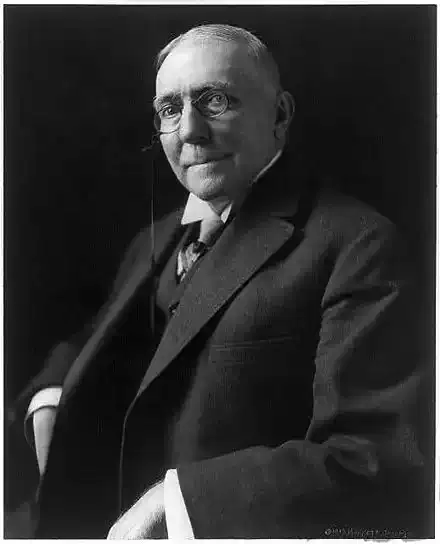
James Whitcomb Riley
A Letter To A Friend
The past is like a story
I have listened to in dreams
That vanished in the glory
Of the Morning's early gleams;
And--at my shadow glancing--
I feel a loss of strength,
As the Day of Life advancing
Leaves it shorn of half its length.
But it's all in vain to worry
At the rapid race of Time--
And he flies in such a flurry
When I trip him with a rhyme,
I'll bother him no longer
Than to thank you for the thought
That 'my fame is growing stronger
As you really think it ought.'
And though I fall below it,
I might know as much of mirth
To live and die a poet
Of unacknowledged worth;
For Fame is but a vagrant--
Though a loyal one and brave,
And his laurels ne'er so fragrant
As when scattered o'er the grave.
Read more →
265
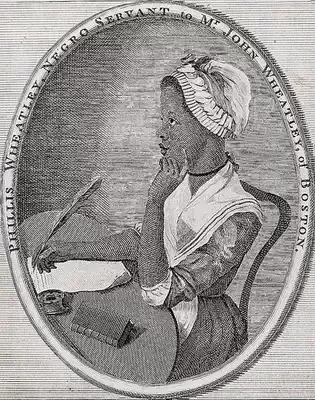
Phillis Wheatley
To A Lady On Her Remarkable Preservation In A Hurrican In North-Carolina
THOUGH thou did'st hear the tempest from afar,
And felt'st the horrors of the wat'ry war,
To me unknown, yet on this peaceful shore
Methinks I hear the storm tumultuous roar,
And how stern Boreas with impetuous hand
Compell'd the Nereids to usurp the land.
Reluctant rose the daughters of the main,
And slow ascending glided o'er the plain,
Till AEolus in his rapid chariot drove
In gloomy grandeur from the vault above:
Furious he comes. His winged sons obey
Their frantic sire, and madden all the sea.
The billows rave, the wind's fierce tyrant roars,
And with his thund'ring terrors shakes the shores:
Broken by waves the vessel's frame is rent,
And strows with planks the wat'ry element.
But thee, Maria, a kind Nereid's shield
Preserv'd from sinking, and thy form upheld:
And sure some heav'nly oracle design'd
At that dread crisis to instruct thy mind
Things of eternal consequence to weigh,
And to thine heart just feelings to convey
Of things above, and of the future doom,
And what the births of the dread world to come.
From tossing seas I welcome thee to land.
"Resign her, Nereid," 'twas thy God's command.
Thy spouse late buried, as thy fears conceiv'd,
Again returns, thy fears are all reliev'd:
Thy daughter blooming with superior grace
Again thou see'st, again thine arms embrace;
O come, and joyful show thy spouse his heir,
And what the blessings of maternal care!
Read more →
266
John Greenleaf Whittier
The Call Of The Christian
Not always as the whirlwind's rush
On Horeb's mount of fear,
Not always as the burning bush
To Midian's shepherd seer,
Nor as the awful voice which came
To Israel's prophet bards,
Nor as the tongues of cloven flame,
Nor gift of fearful words,-
Not always thus, with outward sign
Of fire or voice from Heaven,
The message of a truth divine,
The call of God is given!
Awaking in the human heart
Love for the true and right,-Zeal
for the Christian's better part,
Strength for the Christian's fight.
Nor unto manhood's heart alone
The holy influence steals
Warm with a rapture not its own,
The heart of woman feels!
As she who by Samaria's wall
The Saviour's errand sought,-As
those who with the fervent Paul
And meek Aquila wrought:
Or those meek ones whose martyrdom
Rome's gathered grandeur saw
Or those who in their Alpine home
Braved the Crusader's war,
When the green Vaudois, trembling, heard,
Through all its vales of death,
The martyr's song of triumph poured
From woman's failing breath.
And gently, by a thousand things
Which o'er our spirits pass,
Like breezes o'er the harp's fine strings,
Or vapors o'er a glass,
Leaving their token strange and new
Of music or of shade,
The summons to the right and true
And merciful is made.
Oh, then, if gleams of truth and light
Flash o'er thy waiting mind,
Unfolding to thy mental sight
The wants of human-kind;
If, brooding over human grief,
The earnest wish is known
To soothe and gladden with relief
An anguish not thine own;
Though heralded with naught of fear,
Or outward sign or show;
Though only to the inward ear
It whispers soft and low;
Though dropping, as the manna fell,
Unseen, yet from above,
Noiseless as dew-fall, heed it well,--Thy
Father's call of love!
Read more →
265
Henry Lawson
The Bard of Furthest Out
He longed to be a Back-Blocks Bard,
And fame he wished to win—
He wrote at night and studied hard
(He read The Bulletin);
He sent in “stuff” unceasingly,
But couldn’t get it through;
And so, at last, he came to me
To see what I could do.
The poet’s light was in his eye,
He aimed to be a man;
He bought a bluey and a fly,
A brand new billy-can.
I showed him how to roll his swag
And “sling it” with the best;
I gave him my old water-bag,
And pointed to the west.
“Now you can take the train as far
As Blazes if you like—
The wealthy go by motor-car
(Some travellers go by bike);
They race it through without a rest,
And find it very tame—
But if you tramp it to the west
You’ll get there just the same.
“(No matter if the hour is late,
The morning goes Out-Back),
You do not need a dog nor mate,
You’ll find them on the track.
You must avoid such deadly rhymes
As ‘self’ and ‘elf’ and ‘shelf’.
But were it as in other times,
I’d go with you myself.
“Those days are done for me, but ah!
On hills where you shall be,
The wattle and the waratah
Are good to smell and see.
But there’s a scent, my heart believes,
That ‘travellers’ set higher
Than wattle—’tis the dried gum leaves
That light the evening fire.
“The evening fire and morning fire
Are one fire in the Bush.
(You’ll find the points that you require
As towards the west you push.)
And as you pass by ancient ways,
Old camps, and mountain springs,
The spirits of the Roaring Days
Will whisper many things.
“The lonely ridge-and-gully belt—
The spirit of the whole
It must be seen; it must be felt—
Must sink into your soul!
The summer silence-creek-oaks’ sigh—
The windy, rainy “woosh”—
’Tis known to other men, and I—
The Spirit of the Bush!
“So on, and on, through dust and heat,
When past the spurs you be—
And you shall meet whom you shall meet,
And see what you shall see,
You need not claim the stranger’s due,
They yield it everywhere,
And mateship is a thing that you
Must take for granted there.
“And in the land of Lord-knows-where—
Right up and furthest out—
You find a new Australia there
That we know nought about.
Live as they live, fight as they fight,
Succeed as they succeed,
And then come back again and write
For all the world to read.”
I’ve got a note from Hungerford,
’Tis written frank and fair;
The bushman’s grim philosophy—
The bushman’s grin are there.
And tramping on through rain and drought—
Unlooked for and unmissed—
I may have sent to furthest out
The Great Bush Novelist.
Read more →
265

Robert W. Service
Clemenceau
His frown brought terror to his foes,
But now in twilight of his days
The pure perfection of a rose
Can kindle rapture in his gaze.
Where once he swung the sword of wrath
And peoples trembled at his word,
With hoe he trims a pansied path
And listens to a bird.
His large of life was lived with noise,
With war and strife and crash of kings:
But now he hungers for the joys
Of peace, and hush of homely things.
His old dog nuzzles by his knee,
And seems to say: 'Oh Master dear,
Please do not ever part from me!
We are so happy here.'
His ancient maid, as sky draws dim,
Calls to him that the soup grows cold.
She tyrannises over him
Who once held armies in his hold.
With slippers, old skull-cap and shawl
He dreams and dozes by the fire,
Sighing: 'Behold the end of all,
Sweet rest my sole desire.
'My task is done, my pen is still;
My Book is there for all to see,--
The final triumph of my will,
Ineffably, my victory.
A Tiger once, but now a lamb,
With frailing hand my gate I close.
How hushed my heart! My life how calm!
--Its crown a Rose.'
Read more →
265
Emily Dickinson
Where I have lost, I softer tread
Where I have lost, I softer tread-
I sow sweet flower from garden bed-
I pause above that vanished head
And mourn.
Whom I have lost, I pious guard
From accent harsh, or ruthless word-
Feeling as if their pillow heard,
Though stone!
When I have lost, you'll know by this-
A Bonnet black-A dusk surplice-
A little tremor in my voice
Like this!
Why, I have lost, the people know
Who dressed in flocks of purest snow
Went home a century ago
Next Bliss!
Read more →
264
Emily Dickinson
Savior! I've no one else to tell
Savior! I've no one else to tell-
And so I trouble thee.
I am the one forgot thee so-
Dost thou remember me?
Nor, for myself, I came so far-
That were the little load-
I brought thee the imperial Heart
I had not strength to hold-
The Heart I carried in my own-
Till mine too heavy grew
Yet-
strangest-heavier since it went-
Is it too large for you?
Read more →
265

Gwendolyn Brooks
Of Robert Frost
There is a little lightning in his eyes.
Iron at the mouth.
His brows ride neither too far up nor down.
He is splendid. With a place to stand.
Some glowing in the common blood.
Some specialness within.
Read more →
264
Thomas Hardy
The Rambler
I do not see the hills around,
Nor mark the tints the copses wear;
I do not note the grassy ground
And constellated daisies there.
I hear not the contralto note
Of cuckoos hid on either hand,
The whirr that shakes the nighthawk's throat
When eve's brown awning hoods the land.
Some say each songster, tree and mead--
All eloquent of love divine--
Receives their constant careful heed:
Such keen appraisement is not mine.
The tones around me that I hear,
The aspects, meanings, shapes I see,
Are those far back ones missed when near,
And now perceived too late by me!
Read more →
265
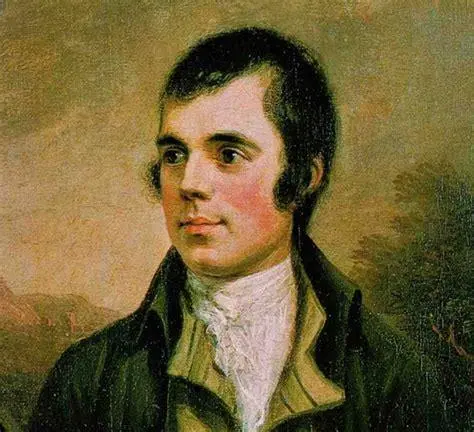
Robert Burns
Despondency -- An Ode
Oppress'd with grief, oppress'd with care,
A burden more than I can bear,
I set me down and sigh:
O life! thou art a galling load,
Along a rough, a weary road,
To wretches such as I!
Dim backward as I cast my view,
What sick'ning scenes appear!
What sorrows yet may pierce me thro',
Too justly I may fear!
Still caring, despairing,
Must be my bitter doom;
My woes here shall close ne'er
But with the closing tomb!
Happy, ye sons of busy life,
Who, equal to the bustling strife,
No other view regard!
Ev'n when the wished end's denied,
Yet while the busy means are plied,
They bring their own reward:
Whilst I, a hope-abandon'd wight,
Unfitted with an aim,
Meet ev'ry sad returning night,
And joyless morn the same;
You, bustling, and justling,
Forget each grief and pain;
I, listless, yet restless,
Find every prospect vain.
How blest the Solitary's lot,
Who, all-forgetting, all-forgot,
Within his humble cell,
The cavern wild with tangling roots,
Sits o'er his newly-gather'd fruits,
Beside his crystal well!
Or, haply, to his ev'ning thought,
By unfrequented stream,
The ways of men are distant brought,
A faint collected dream:
While praising, and raising
His thoughts to heav'n on high,
As wand'ring, meand'ring,
He views the solemn sky.
Than I, no lonely hermit plac'd
Where never human footstep trac'd,
Less fit to play the part;
The lucky moment to improve,
And just to stop, and just to move,
With self-respecting art:
But ah! those pleasures, loves, and joys,
Which I too keenly taste,
The Solitary can despise,
Can want, and yet be blest!
He needs not, he heeds not,
Or human love or hate,
Whilst I here must cry here,
At perfidy ingrate!
Oh! enviable, early days,
When dancing thoughtless pleasure's maze,
To care, to guilt unknown!
How ill exchang'd for riper times,
To feel the follies, or the crimes
Of others, or my own !
Ye tiny elves that guiltless sport
Like linnets in the bush,
Ye little know the ills ye court,
When manhood is your wish!
The losses, the crosses,
That active man engage
The fears all, the tears all,
Of dim-declining age!
Read more →
264
Henry Van Dyke
The Mocking-Bird
In mirth he mocks the other birds at noon,
Catching the lilt of every easy tune;
But when the day departs he sings of love,--
His own wild song beneath the listening moon.
Read more →
264
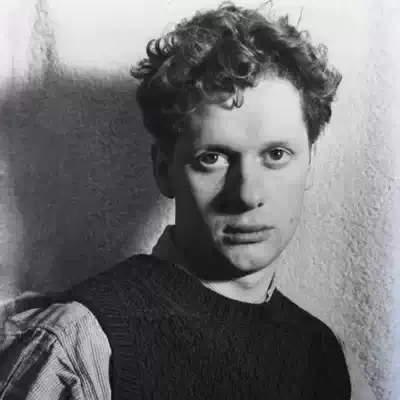
Dylan Thomas
I, In My Intricate Image
I
I, in my intricate image, stride on two levels,
Forged in man's minerals, the brassy orator
Laying my ghost in metal,
The scales of this twin world tread on the double,
My half ghost in armour hold hard in death's corridor,
To my man-iron sidle.
Beginning with doom in the bulb, the spring unravels,
Bright as her spinning-wheels, the colic season
Worked on a world of petals;
She threads off the sap and needles, blood and bubble
Casts to the pine roots, raising man like a mountain
Out of the naked entrail.
Beginning with doom in the ghost, and the springing marvels,
Image of images, my metal phantom
Forcing forth through the harebell,
My man of leaves and the bronze root, mortal, unmortal,
I, in my fusion of rose and male motion,
Create this twin miracle.
This is the fortune of manhood: the natural peril,
A steeplejack tower, bonerailed and masterless,
No death more natural;
Thus the shadowless man or ox, and the pictured devil,
In seizure of silence commit the dead nuisance.
The natural parallel.
My images stalk the trees and the slant sap's tunnel,
No tread more perilous, the green steps and spire
Mount on man's footfall,
I with the wooden insect in the tree of nettles,
In the glass bed of grapes with snail and flower,
Hearing the weather fall.
Intricate manhood of ending, the invalid rivals,
Voyaging clockwise off the symboled harbour,
Finding the water final,
On the consumptives' terrace taking their two farewells,
Sail on the level, the departing adventure,
To the sea-blown arrival.
II
They climb the country pinnacle,
Twelve winds encounter by the white host at pasture,
Corner the mounted meadows in the hill corral;
They see the squirrel stumble,
The haring snail go giddily round the flower,
A quarrel of weathers and trees in the windy spiral.
As they dive, the dust settles,
The cadaverous gravels, falls thick and steadily,
The highroad of water where the seabear and mackerel
Turn the long sea arterial
Turning a petrol face blind to the enemy
Turning the riderless dead by the channel wall.
(Death instrumental,
Splitting the long eye open, and the spiral turnkey,
Your corkscrew grave centred in navel and nipple,
The neck of the nostril,
Under the mask and the ether, they making bloody
The tray of knives, the antiseptic funeral;
Bring out the black patrol,
Your monstrous officers and the decaying army,
The sexton sentinel, garrisoned under thistles,
A cock-on-a-dunghill
Crowing to Lazarus the morning is vanity,
Dust be your saviour under the conjured soil.)
As they drown, the chime travels,
Sweetly the diver's bell in the steeple of spindrift
Rings out the Dead Sea scale;
And, clapped in water till the triton dangles,
Strung by the flaxen whale-weed, from the hangman's raft,
Hear they the salt glass breakers and the tongues of burial.
(Turn the sea-spindle lateral,
The grooved land rotating, that the stylus of lightning
Dazzle this face of voices on the moon-turned table,
Let the wax disk babble
Shames and the damp dishonours, the relic scraping.
These are your years' recorders. The circular world stands still.)
III
They suffer the undead water where the turtle nibbles,
Come unto sea-stuck towers, at the fibre scaling,
The flight of the carnal skull
And the cell-stepped thimble;
Suffer, my topsy-turvies, that a double angel
Sprout from the stony lockers like a tree on Aran.
Be by your one ghost pierced, his pointed ferrule,
Brass and the bodiless image, on a stick of folly
Star-set at Jacob's angle,
Smoke hill and hophead's valley,
And the five-fathomed Hamlet on his father's coral
Thrusting the tom-thumb vision up the iron mile.
Suffer the slash of vision by the fin-green stubble,
Be by the ships' sea broken at the manstring anchored
The stoved bones' voyage downward
In the shipwreck of muscle;
Give over, lovers, locking, and the seawax struggle,
Love like a mist or fire through the bed of eels.
And in the pincers of the boiling circle,
The sea and instrument, nicked in the locks of time,
My great blood's iron single
In the pouring town,
I, in a wind on fire, from green Adam's cradle,
No man more magical, clawed out the crocodile.
Man was the scales, the death birds on enamel,
Tail, Nile, and snout, a saddler of the rushes,
Time in the hourless houses
Shaking the sea-hatched skull,
And, as for oils and ointments on the flying grail,
All-hollowed man wept for his white apparel.
Man was Cadaver's masker, the harnessing mantle,
Windily master of man was the rotten fathom,
My ghost in his metal neptune
Forged in man's mineral.
This was the god of beginning in the intricate seawhirl,
And my images roared and rose on heaven's hill.
Read more →
265