
Soul

Emily Dickinson
The bustle in a house
The bustle in a house
The morning after death
Is solemnest of industries
Enacted upon earth,-
The sweeping up the heart,
And putting love away
We shall not want to use again
Until eternity.
Read more →
270
Emily Dickinson
God permit industrious angels
God permit industrious angels
Afternoons to play.
I met one, -- forgot my school-mates,
All, for him, straightaway.
God calls home the angels promptly
At the setting sun;
I missed mine. How dreary marbles,
After playing the Crown!
Read more →
270
Emily Dickinson
Unit, like Death, for Whom?
Unit, like Death, for Whom?
True, like the Tomb,
Who tells no secret
Told to Him-
The Grave is strict-
Tickets admit
Just two-the Bearer-
And the Borne-
And seat-just One-
The Living-tell-
The Dying-but a Syllable-
The Coy Dead-None-
No Chatter-here-no tea-
So Babbler, and Bohea-stay there-
But Gravity-and Expectation-and Fear-
A tremor just, that All's not sure.
Read more →
270

Robert W. Service
The Ape And God
Son put a poser up to me
That made me scratch my head:
"God made the whole wide world," quoth he;
"That's right, my boy," I said.
Said son: "He mad the mountains soar,
And all the plains lie flat;
But Dad, what did he do before
He did all that?
Said I: "Creation was his biz;
He set the stars to shine;
The sun and moon and all that is
Were His unique design.
The Cosmos is his concrete thought,
The Universe his chore..."
Said Son: "I understand, but what
Did He before?"
I gave it up; I could not cope
With his enquiring prod,
And must admit I've little hope
Of understanding God.
Indeed I find more to my mind
The monkey in the tree
In whose crude form Nature defined
Our human destiny.
Thought I: "Why search for Deity
In visionary shape?
'Twould better be if we could see
The angel in the ape.
Let mystic seek a God above:
Far wiser he who delves,
To find in kindliness and love
God in ourselves."
Read more →
271
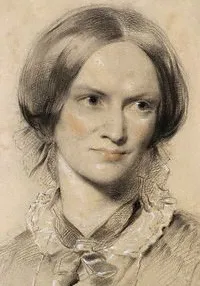
Charlotte Brontë
Preference
NOT in scorn do I reprove thee,
Not in pride thy vows I waive,
But, believe, I could not love thee,
Wert thou prince, and I a slave.
These, then, are thine oaths of passion ?
This, thy tenderness for me ?
Judged, even, by thine own confession,
Thou art steeped in perfidy.
Having vanquished, thou wouldst leave me !
Thus I read thee long ago;
Therefore, dared I not deceive thee,
Even with friendship's gentle show.
Therefore, with impassive coldness
Have I ever met thy gaze;
Though, full oft, with daring boldness,
Thou thine eyes to mine didst raise.
Why that smile ? Thou now art deeming
This my coldness all untrue,
But
a mask of frozen seeming,
Hiding secret fires from view.
Touch my hand, thou selfdeceiver,
Naybe
calm, for I am so:
Does it burn ? Does my lip quiver ?
Has mine eye a troubled glow ?
Canst thou call a moment's colour
To my foreheadto
my cheek ?
Canst thou tinge their tranquil pallor
With one flattering, feverish streak?
Am I marble ? What ! no woman
Could so calm before thee stand ?
Nothing living, sentient, human,
Could so coldly take thy hand ?
Yesa
sister might, a mother:
My goodwill
is sisterly:
Dream not, then, I strive to smother
Fires that inly burn for thee.
Rave not, rage not, wrath is fruitless,
Fury cannot change my mind;
I but deem the feeling rootless
Which so whirls in passion's wind.
Can I love ? Oh, deeplytruly
Warmlyfondlybut
not thee;
And my love is answered duly,
With an equal energy.
Wouldst thou see thy rival ? Hasten,
Draw that curtain soft aside,
Look where yon thick branches chasten
Noon, with shades of eventide.
In that glade, where foliage blending
Forms a green arch overhead,
Sits thy rival thoughtful bending
O'er a stand with papers spread
Motionless, his fingers plying
That untired, unresting pen;
Time and tide unnoticed flying,
There he sitsthe
first of men !
Man of conscienceman
of reason;
Stern, perchance, but ever just;
Foe to falsehood, wrong, and treason,
Honour's shield, and virtue's trust !
Worker, thinker, firm defender
Of Heaven's truthman's
liberty;
Soul of ironproof
to slander,
Rock where founders tyranny.
Fame he seeks notbut
full surely
She will seek him, in his home;
This I know, and wait securely
For the atoning hour to come.
To that man my faith is given,
Therefore, soldier, cease to sue;
While God reigns in earth and heaven,
I to him will still be true !
Read more →
269
Robert W. Service
The Lure Of Little Voices
There's a cry from out the loneliness -- oh, listen, Honey, listen!
Do you hear it, do you fear it, you're a-holding of me so?
You're a-sobbing in your sleep, dear, and your lashes, how they glisten -Do
you hear the Little Voices all a-begging me to go?
All a-begging me to leave you. Day and night they're pleading, praying,
On the North-wind, on the West-wind, from the peak and from the plain;
Night and day they never leave me -- do you know what they are saying?
"He was ours before you got him, and we want him once again."
Yes, they're wanting me, they're haunting me, the awful lonely places;
They're whining and they're whimpering as if each had a soul;
They're calling from the wilderness, the vast and God-like spaces,
The stark and sullen solitudes that sentinel the Pole.
They miss my little camp-fires, ever brightly, bravely gleaming
In the womb of desolation, where was never man before;
As comradeless I sought them, lion-hearted, loving, dreaming,
And they hailed me as a comrade, and they loved me evermore.
And now they're all a-crying, and it's no use me denying;
The spell of them is on me and I'm helpless as a child;
My heart is aching, aching, but I hear them, sleeping, waking;
It's the Lure of Little Voices, it's the mandate of the Wild.
I'm afraid to tell you, Honey, I can take no bitter leaving;
But softly in the sleep-time from your love I'll steal away.
Oh, it's cruel, dearie, cruel, and it's God knows how I'm grieving;
But His loneliness is calling, and He knows I must obey.
Read more →
270
Robert W. Service
Contentment
Bed and bread are all I need
In my happy day;
Love of Nature is my creed,
Unto her I pray;
Sun and sky my spirit feed
On my happy way.
To no man I bow the head,
None may master me;
I will eat my crust of bread
Lauding liberty;
And upon my truckle bed
Glory to be free.
You who grab for sordid gold,
You who fight for fame,
Shiny dross your fingers hold,
Empty is your aim.
--Soon we fatten graveyard mould,
Rich and poor the same.
So from world of want and woe
I retreat with dread;
Tuned to Nature glad I go
With my bite of bread:
Praising God I lay me low
On my truckle bed.
Read more →
269

D.H. Lawrence
The Hands of the Betrothed
Her tawny eyes are onyx of thoughtlessness,
Hardened they are like gems in ancient modesty;
Yea, and her mouth’s prudent and crude caress
Means even less than her many words to me.
Though her kiss betrays me also this, this only
Consolation, that in her lips her blood at climax clips
Two wild, dumb paws in anguish on the lonely
Fruit of my heart, ere down, rebuked, it slips.
I know from her hardened lips that still her heart is
Hungry for me, yet if I put my hand in her breast
She puts me away, like a saleswoman whose mart is
Endangered by the pilferer on his quest.
But her hands are still the woman, the large, strong hands
Heavier than mine, yet like leverets caught in steel
When I hold them; my still soul understands
Their dumb confession of what her sort must feel.
For never her hands come nigh me but they lift
Like heavy birds from the morning stubble, to settle
Upon me like sleeping birds, like birds that shift
Uneasily in their sleep, disturbing my mettle.
How caressingly she lays her hand on my knee,
How strangely she tries to disown it, as it sinks
In my flesh and bone and forages into me,
How it stirs like a subtle stoat, whatever she thinks!
And often I see her clench her fingers tight
And thrust her fists suppressed in the folds of her skirt;
And sometimes, how she grasps her arms with her bright
Big hands, as if surely her arms did hurt.
And I have seen her stand all unaware
Pressing her spread hands over her breasts, as she
Would crush their mounds on her heart, to kill in there
The pain that is her simple ache for me.
Her strong hands take my part, the part of a man
To her; she crushes them into her bosom deep
Where I should lie, and with her own strong span
Closes her arms, that should fold me in sleep.
Ah, and she puts her hands upon the wall,
Presses them there, and kisses her bright hands,
Then lets her black hair loose, the darkness fall
About her from her maiden-folded bands.
And sits in her own dark night of her bitter hair
Dreaming—God knows of what, for to me she’s the same
Betrothed young lady who loves me, and takes care
Of her womanly virtue and of my good name.
Read more →
269
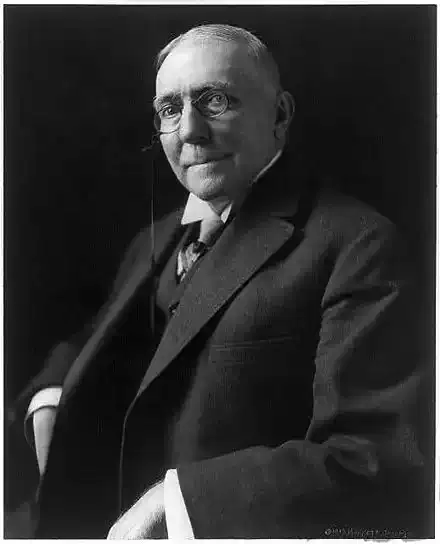
James Whitcomb Riley
Mr. Hammond's Parable--The Dreamer
I
He was a Dreamer of the Days:
Indolent as a lazy breeze
Of midsummer, in idlest ways
Lolling about in the shade of trees.
The farmer turned--as he passed him by
Under the hillside where he kneeled
Plucking a flower--with scornful eye
And rode ahead in the harvest field
Muttering--'Lawz! ef that-air shirk
Of a boy was mine fer a week er so,
He'd quit _dreamin'_ and git to work
And _airn_ his livin'--er--Well! _I_ know!'
And even kindlier rumor said,
Tapping with finger a shaking head,-'
Got such a curious kind o' way-Wouldn't
surprise me much, I say!'
Lying limp, with upturned gaze
Idly dreaming away his days.
No companions? Yes, a book
Sometimes under his arm he took
To read aloud to a lonesome brook.
And school-boys, truant, once had heard
A strange voice chanting, faint and dim--
Followed the echoes, and found it him,
Perched in a tree-top like a bird,
Singing, clean from the highest limb;
And, fearful and awed, they all slipped by
To wonder in whispers if he could fly.
'Let him alone!' his father said
When the old schoolmaster came to say,
'He took no part in his books to-day--
Only the lesson the readers read.--
His mind seems sadly going astray!'
'Let him alone!' came the mournful tone,
And the father's grief in his sad eyes shone--
Hiding his face in his trembling hand,
Moaning, 'Would I could understand!
But as heaven wills it I accept
Uncomplainingly!' So he wept.
Then went 'The Dreamer' as he willed,
As uncontrolled as a light sail filled
Flutters about with an empty boat
Loosed from its moorings and afloat:
Drifted out from the busy quay
Of dull school-moorings listlessly;
Drifted off on the talking breeze,
All alone with his reveries;
Drifted on, as his fancies wrought-
Out on the mighty gulfs of thought.
II
The farmer came in the evening gray
And took the bars of the pasture down;
Called to the cows in a coaxing way,
'Bess' and 'Lady' and 'Spot' and 'Brown,'
While each gazed with a wide-eyed stare,
As though surprised at his coming there--
Till another tone, in a higher key,
Brought their obeyance lothfully.
Then, as he slowly turned and swung
The topmost bar to its proper rest,
Something fluttered along and clung
An instant, shivering at his breast--
A wind-scared fragment of legal cap,
Which darted again, as he struck his hand
On his sounding chest with a sudden slap,
And hurried sailing across the land.
But as it clung he had caught the glance
Of a little penciled countenance,
And a glamour of written words; and hence,
A minute later, over the fence,
'Here and there and gone astray
Over the hills and far away,'
He chased it into a thicket of trees
And took it away from the captious breeze.
A scrap of paper with a rhyme
Scrawled upon it of summertime:
A pencil-sketch of a dairy-maid,
Under a farmhouse porch's shade,
Working merrily; and was blent
With her glad features such sweet content,
That a song she sung in the lines below
Seemed delightfully _apropos_:--
Read more →
269
Emily Dickinson
Uncertain lease—develops lustre
Uncertain lease—develops lustre
On Time
Uncertain Grasp, appreciation
Of Sum—
The shorter Fate—is oftener the chiefest
Because
Inheritors upon a tenure
Prize—
Read more →
269
Robert W. Service
Comfort
Say! You've struck a heap of trouble -Bust
in business, lost your wife;
No one cares a cent about you,
You don't care a cent for life;
Hard luck has of hope bereft you,
Health is failing, wish you'd die --
Why, you've still the sunshine left you
And the big, blue sky.
Sky so blue it makes you wonder
If it's heaven shining through;
Earth so smiling 'way out yonder,
Sun so bright it dazzles you;
Birds a-singing, flowers a-flinging
All their fragrance on the breeze;
Dancing shadows, green, still meadows -Don't
you mope, you've still got these.
These, and none can take them from you;
These, and none can weigh their worth.
What! you're tired and broke and beaten? -Why,
you're rich -- you've got the earth!
Yes, if you're a tramp in tatters,
While the blue sky bends above
You've got nearly all that matters -You've
got God, and God is love.
Read more →
269
Emily Dickinson
Crumbling is not an instant's Act
Crumbling is not an instant's Act
A fundamental pause
Dilapidation's processes
Are organized Decays.
'Tis first a Cobweb on the Soul
A Cuticle of Dust
A Borer in the Axis
An Elemental Rust-
Ruin is formal-Devil's work
Consecutive and slow-
Fail in an instant, no man did
Slipping-is Crash's law.
Read more →
269

Henry Wadsworth Longfellow
Tales Of A Wayside Inn : The Theologian's Tale; The Legend Beautiful
'Hads't thou stayed, I must have fled!'
That is what the Vision said.
In his chamber all alone,
Kneeling on the floor of stone,
Prayed the Monk in deep contrition
For his sins of indecision,
Prayed for greater self-denial
In temptation and in trial;
It was noonday by the dial,
And the Monk was all alone.
Suddenly, as if it lightened,
An unwonted splendor brightened
All within him and without him
In that narrow cell of stone;
And he saw the Blessed Vision
Of our Lord, with light Elysian
Like a vesture wrapped about him,
Like a garment round him thrown.
Not as crucified and slain,
Not in agonies of pain,
Not with bleeding hands and feet,
Did the Monk his Master see;
But as in the village street,
In the house or harvest-field,
Halt and lame and blind he healed,
When he walked in Galilee.
In an attitude imploring,
Hands upon his bosom crossed,
Wondering, worshipping, adoring,
Knelt the Monk in rapture lost.
Lord, he thought, in heaven that reignest,
Who am I, that thus thou deignest
To reveal thyself to me?
Who am I, that from the centre
Of thy glory thou shouldst enter
This poor cell, my guest to be?
Then amid his exaltation,
Loud the convent bell appalling,
From its belfry calling, calling,
Rang through court and corridor
With persistent iteration
He had never heard before.
It was now the appointed hour
When alike in shine or shower,
Winter's cold or summer's heat,
To the convent portals came
All the blind and halt and lame,
All the beggars of the street,
For their daily dole of food
Dealt them by the brotherhood;
And their almoner was he
Who upon his bended knee,
Rapt in silent ecstasy
Of divinest self-surrender,
Saw the Vision and the Splendor.
Deep distress and hesitation
Mingled with his adoration;_
Should he go, or should he stay?
Should he leave the poor to wait
Hungry at the convent gate,
Till the Vision passed away?
Should he slight his radiant guest,
Slight this visitant celestial,
For a crowd of ragged, bestial
Beggars at the convent gate?
Would the Vision there remain?
Would the Vision come again?
Then a voice within his breast
Whispered, audible and clear
As if to the outward ear:
'Do thy duty; that is best;
Leave unto thy Lord the rest!'
Straightway to his feet he started,
And with longing look intent
On the Blessed Vision bent,
Slowly from his cell departed,
Slowly on his errand went.
At the gate the poor were waiting,
Looking through the iron grating,_
With that terror in the eye
That is only seen in those
Who amid their wants and woes
Hear the sound of doors that close,
And of feet that pass them by;
Grown familiar with disfavor,
Grown familiar with the savor
Of the bread by which men die!
But to-day, they knew not why,
Like the gate of Paradise
Seemed the convent sate to rise,
Like a sacrament divine
Seemed to them the bread and wine.
In his heart the Monk was praying,
Thinking of the homeless poor,
What they suffer and endure;
What we see not, what we see;
And the inward voice was saying:
'Whatsoever thing thou doest
To the least of mine and lowest,
That thou doest unto me!'
Unto me! but had the Vision
Come to him in beggar's clothing,
Come a mendicant imploring,
Would he then have knelt adoring,
Or have listened with derision,
And have turned away with loathing.
Thus his conscience put the question,
Full of troublesome suggestion,
As at length, with hurried pace,
Towards his cell he turned his face,
And beheld the convent bright
With a supernatural light,
Like a luminous cloud expanding
Over floor and wall and ceiling.
But he paused with awe-struck feeling
At the threshold of his door,
For the Vision still was standing
As he left it there before,
When the convent bell appalling,
From its belfry calling, calling,
Summoned him to feed the poor.
Through the long hour intervening
It had waited his return,
And he felt his bosom burn,
Comprehending all the meaning,
When the Blessed Vision said,
'Hadst thou stayed, I must have fled!'
Read more →
269
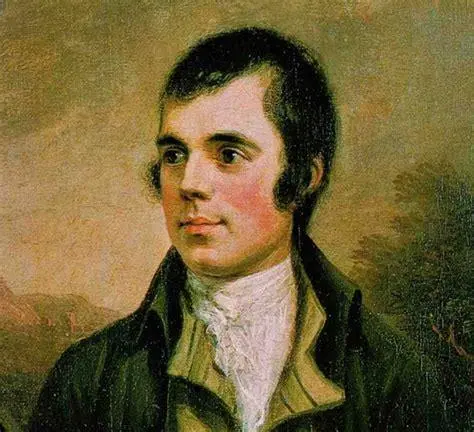
Robert Burns
Green Grow The Rashes
Green grow the rashes, O!
Green grow the rashes, O!
The sweetest hours that e'er I spend,
Are spent amang the lasses, O!
There's nought but care on every han'
In every hour that passes, O;
What signifies the life o' man,
An 'twere na for the lasses, O?
The warl'ly race may riches chase,
An' riches still may fly them, O;
An' though at last they catch them fast,
Their hearts can ne'er enjoy them, O.
But gi'e me a canny hour at e'en,
My arms about my dearie, O,
An' warl'ly cares an' warl'ly men
May a' gae tapsalteerie, O!
For you sae douce, ye sneer at this,
Ye're nought but senseless asses, O;
The wisest man the warl' e'er saw,
He dearly loved the lasses, O.
Auld Nature swears the lovely dears
Her noblest work she classes, O;
Her 'prentice han' she tried on man,
An' then she made the lasses, O.
Read more →
270

Muhammad Iqbal
Mirza Ghalib
Through you the secret was revealed to the human intellect
That innumerable enigmas are solved by human intellect
You were the complete soul, literary assembly was your body
You adorned as well as remained veiled from the assembly
Your eye is longing to witness that veiled Beauty
Which is veiled in everything as the pathos of life
The assemblage of existence is rich with your harp
As mountain's silence by the brook's melodious harp
The garden of your imagination bestows glory on the universe
From the field of your thought worlds grow like meadows
Life is concealed in the humor of your verse
Picture's lips move with your command of language
Speech is very proud of the elegance of your miraculous lips
Thurayyah is astonished at your style's elegance
Beloved of literature itself loves your style
Delhi's bud is mocking at the rose of Shiraz
Ah! You are resting in the midst of Delhi's ruins
Your counterpart is resting in the Weimar's garden
Matching you in literary elegance is not possible
Till maturity of thought and imagination are combined
Ah! What has befallen the land of India!
Ah! The inspirer of the super-critical eye!
The lock of Urdu's hair still craves for combing
This candle still craves for moth's heart-felt pathos
O Jahanabad! O cradle of learning and art
Your entire super-structure is a silent lament
The sun and the moon are asleep in every speck of your dust
Though innumerable other gems are also hidden in your dust
Does another world-famous person like him also lie buried in you?
Does another gem like him also lie concealed in you?
Read more →
268

Jonathan Swift
Stella's Birthday March 13, 1727
This day, whate'er the Fates decree,
Shall still be kept with joy by me:
This day then let us not be told,
That you are sick, and I grown old;
Nor think on our approaching ills,
And talk of spectacles and pills.
To-morrow will be time enough
To hear such mortifying stuff.
Yet, since from reason may be brought
A better and more pleasing thought,
Which can, in spite of all decays,
Support a few remaining days:
From not the gravest of divines
Accept for once some serious lines.
Although we now can form no more
Long schemes of life, as heretofore;
Yet you, while time is running fast,
Can look with joy on what is past.
Were future happiness and pain
A mere contrivance of the brain,
As atheists argue, to entice
And fit their proselytes for vice;
(The only comfort they propose,
To have companions in their woes;)
Grant this the case; yet sure 'tis hard
That virtue, styl'd its own reward,
And by all sages understood
To be the chief of human good,
Should, acting, die, nor leave behind
Some lasting pleasure in the mind;
Which by remembrance will assuage
Grief, sickness, poverty, and age;
And strongly shoot a radiant dart
To shine through life's declining part.
Say, Stella, feel you no content,
Reflecting on a life well spent?
Your skilful hand employ'd to save
Despairing wretches from the grave;
And then supporting with your store
Those whom you dragg'd from death before?
So Providence on mortals waits,
Preserving what it first creates.
Your gen'rous boldness to defend
An innocent and absent friend;
That courage which can make you just
To merit humbled in the dust;
The detestation you express
For vice in all its glitt'ring dress;
That patience under torturing pain,
Where stubborn stoics would complain:
Must these like empty shadows pass,
Or forms reflected from a glass?
Or mere chimæras in the mind,
That fly, and leave no marks behind?
Does not the body thrive and grow
By food of twenty years ago?
And, had it not been still supplied,
It must a thousand times have died.
Then who with reason can maintain
That no effects of food remain?
And is not virtue in mankind
The nutriment that feeds the mind;
Upheld by each good action past,
And still continued by the last?
Then, who with reason can pretend
That all effects of virtue end?
Believe me, Stella, when you show
That true contempt for things below,
Nor prize your life for other ends,
Than merely to oblige your friends;
Your former actions claim their part,
And join to fortify your heart.
For Virtue, in her daily race,
Like Janus, bears a double face;
Looks back with joy where she has gone
And therefore goes with courage on:
She at your sickly couch will wait,
And guide you to a better state.
O then, whatever Heav'n intends,
Take pity on your pitying friends!
Nor let your ills affect your mind,
To fancy they can be unkind.
Me, surely me, you ought to spare,
Who gladly would your suff'rings share;
Or give my scrap of life to you,
And think it far beneath your due;
You, to whose care so oft I owe
That I'm alive to tell you so.
Read more →
269

Henry Lawson
The Old Jimmy Woodser
The old Jimmy Woodser comes into the bar
Unwelcomed, unnoticed, unknown,
Too old and too odd to be drunk with, by far;
So he glides to the end where the lunch baskets are
And they say that he tipples alone.
His frockcoat is green and the nap is no more,
And his hat is not quite at its best;
He wears the peaked collar our grandfathers wore,
The black-ribbon tie that was legal of yore,
And the coat buttoned over his breast.
When first he came in, for a moment I thought
That my vision or wits were astray;
For a picture and page out of Dickens he brought--‘
Twas an old file dropped in from the Chancery Court
To the wine-vault just over the way.
But I dreamed, as he tasted his “bitter” to-night
And the lights in the bar-room grew dim,
That the shades of the friends of that other day’s light,
And of girls that were bright in our grandfathers” sight,
Lifted shadowy glasses to him.
Then I opened the door, and the old man passed out,
With his short, shuffling step and bowed head;
And I sighed; for I felt, as I turned me about,
An odd sense of respect---born of whisky no doubt---
For the life that was fifty years dead.
And I thought---there are times when our memory trends
Through the future, as ‘twere on its own---
That I, out-of-date ere my pilgrimage ends,
In a new-fashioned bar to dead loves and dead friends
Might drink, like the old man, alone.
Read more →
268
Emily Dickinson
They ask but our Delight
They ask but our Delight-
The Darlings of the Soil
And grant us all their Countenance
For a penurious smile.
Read more →
268

Edward Lear
Imitation of The Olden Poets
Time is a taper waning fast!
Use it, man, well whilst it doth last:
Lest burning downwards it consume away,
Before thou hast commenced the labour of the day.
Time is a pardon of a goodly soil!
Plenty shall crown thine honest toil:
But if uncultivated, rankest weeds
Shall choke the efforts of the rising seeds.
Time is a leasehold of uncertain date!
Granted to thee by everlasting fate.
Neglect not thou, ere thy short term expire,
To save thy soul from ever-burning fire.
Read more →
268

Spike Milligan
Halved
The essence of true beauty
Lingers in all-encompassing rainbows
Of your joy and laughter
You hold my hand and smile
As we ensconce ourselves in our world of fire
Our love is all there is
I touch your face
Your gentleness astounds me
I'm held in the honour of your love
Then overnight, the wrold truns suor
mInnIts past the ELevenTHH HouRR
I'M A L N E
Read more →
268

John Greenleaf Whittier
The Pressed Gentian
The time of gifts has come again,
And, on my northern window-pane,
Outlined against the day's brief light,
A Christmas token hangs in sight.
The wayside travellers, as they pass,
Mark the gray disk of clouded glass;
And the dull blankness seems, perchance,
Folly to their wise ignorance.
They cannot from their outlook see
The perfect grace it hath for me;
For there the flower, whose fringes through
The frosty breath of autumn blew,
Turns from without its face of bloom
To the warm tropic of my room,
As fair as when beside its brook
The hue of bending skies it took.
So from the trodden ways of earth,
Seem some sweet souls who veil their worth,
And offer to the careless glance
The clouding gray of circumstance.
They blossom best where hearth-fires burn,
To loving eyes alone they turn
The flowers of inward grace, that hide
Their beauty from the world outside.
But deeper meanings come to me,
My half-immortal flower, from thee!
Man judges from a partial view,
None ever yet his brother knew;
The Eternal Eye that sees the whole
May better read the darkened soul,
And find, to outward sense denied,
The flower upon its inmost side
Read more →
267
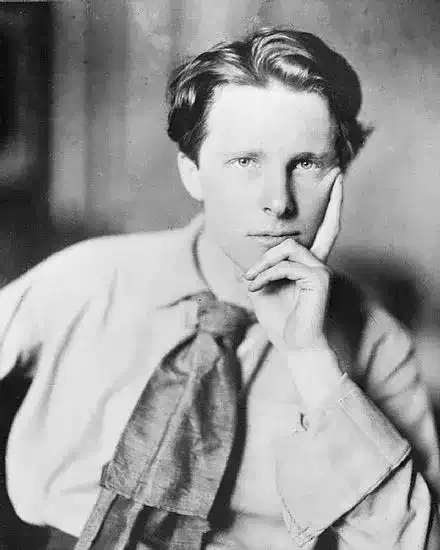
Rupert Brooke
Mary and Gabriel
Young Mary, loitering once her garden way,
Felt a warm splendour grow in the April day,
As wine that blushes water through. And soon,
Out of the gold air of the afternoon,
One knelt before her: hair he had, or fire,
Bound back above his ears with golden wire,
Baring the eager marble of his face.
Not man's nor woman's was the immortal grace
Rounding the limbs beneath that robe of white,
And lighting the proud eyes with changeless light,
Incurious. Calm as his wings, and fair,
That presence filled the garden.
She stood there,
Saying, "What would you, Sir?"
He told his word,
"Blessed art thou of women!" Half she heard,
Hands folded and face bowed, half long had known,
The message of that clear and holy tone,
That fluttered hot sweet sobs about her heart;
Such serene tidings moved such human smart.
Her breath came quick as little flakes of snow.
Her hands crept up her breast. She did but know
It was not hers. She felt a trembling stir
Within her body, a will too strong for her
That held and filled and mastered all. With eyes
Closed, and a thousand soft short broken sighs,
She gave submission; fearful, meek, and glad. . . .
She wished to speak. Under her breasts she had
Such multitudinous burnings, to and fro,
And throbs not understood; she did not know
If they were hurt or joy for her; but only
That she was grown strange to herself, half lonely,
All wonderful, filled full of pains to come
And thoughts she dare not think, swift thoughts and dumb,
Human, and quaint, her own, yet very far,
Divine, dear, terrible, familiar . . .
Her heart was faint for telling; to relate
Her limbs' sweet treachery, her strange high estate,
Over and over, whispering, half revealing,
Weeping; and so find kindness to her healing.
'Twixt tears and laughter, panic hurrying her,
She raised her eyes to that fair messenger.
He knelt unmoved, immortal; with his eyes
Gazing beyond her, calm to the calm skies;
Radiant, untroubled in his wisdom, kind.
His sheaf of lilies stirred not in the wind.
How should she, pitiful with mortality,
Try the wide peace of that felicity
With ripples of her perplexed shaken heart,
And hints of human ecstasy, human smart,
And whispers of the lonely weight she bore,
And how her womb within was hers no more
And at length hers?
Being tired, she bowed her head;
And said, "So be it!"
The great wings were spread
Showering glory on the fields, and fire.
The whole air, singing, bore him up, and higher,
Unswerving, unreluctant. Soon he shone
A gold speck in the gold skies; then was gone.
The air was colder, and grey. She stood alone.
Read more →
268

Dylan Thomas
I Make This In A Warring Absence
I make this in a warring absence when
Each ancient, stone-necked minute of love's season
Harbours my anchored tongue, slips the quaystone,
When, praise is blessed, her pride in mast and fountain
Sailed and set dazzling by the handshaped ocean,
In that proud sailing tree with branches driven
Through the last vault and vegetable groyne,
And this weak house to marrow-columned heaven,
Is corner-cast, breath's rag, scrawled weed, a vain
And opium head, crow stalk, puffed, cut, and blown,
Or like the tide-looped breastknot reefed again
Or rent ancestrally the roped sea-hymen,
And, pride is last, is like a child alone
By magnet winds to her blind mother drawn,
Bread and milk mansion in a toothless town.
She makes for me a nettle's innocence
And a silk pigeon's guilt in her proud absence,
In the molested rocks the shell of virgins,
The frank, closed pearl, the sea-girls' lineaments
Glint in the staved and siren-printed caverns,
Is maiden in the shameful oak, omens
Whalebed and bulldance, the gold bush of lions,
Proud as a sucked stone and huge as sandgrains.
These are her contraries: the beast who follows
With priest's grave foot and hand of five assassins
Her molten flight up cinder-nesting columns,
Calls the starved fire herd, is cast in ice,
Lost in a limp-treed and uneating silence,
Who scales a hailing hill in her cold flintsteps
Falls on a ring of summers and locked noons.
I make a weapon of an ass's skeleton
And walk the warring sands by the dead town.
Cudgel great air, wreck east, and topple sundown,
Storm her sped heart, hang with beheaded veins
Its wringing shell, and let her eyelids fasten.
Destruction, picked by birds, brays through the jaw-bone,
And, for that murder's sake, dark with contagion
Like an approaching wave I sprawl to ruin.
Ruin, the room of errors, one rood dropped
Down the stacked sea and water-pillared shade,
Weighed in rock shroud, is my proud pyramid;
Where, wound in emerald linen and sharp wind,
The hero's head lies scraped of every legend,
Comes love's anatomist with sun-gloved hand
Who picks the live heart on a diamond.
'His mother's womb had a tongue that lapped up mud,'
Cried the topless, inchtaped lips from hank and hood
In that bright anchorground where I lay linened,
'A lizard darting with black venom's thread
Doubled, to fork him back, through the lockjaw bed
And the breath-white, curtained mouth of seed.'
'See,' drummed the taut masks, 'how the dead ascend:
In the groin's endless coil a man is tangled.'
These once-blind eyes have breathed a wind of visions,
The cauldron's root through this once-rindless hand
Fumed like a tree, and tossed a burning bird;
With loud, torn tooth and tail and cobweb drum
The crumpled packs fled past this ghost in bloom,
And, mild as pardon from a cloud of pride,
The terrible world my brother bares his skin.
Now in the cloud's big breast lie quiet countries,
Delivered seas my love from her proud place
Walks with no wound, nor lightning in her face,
A calm wind blows that raised the trees like hair
Once where the soft snow's blood was turned to ice.
And though my love pulls the pale, nippled air,
Prides of to-morrow suckling in her eyes,
Yet this I make in a forgiving presence.
Read more →
267

William Wordsworth
Elegiac Stanzas
Lulled by the sound of pastoral bells,
Rude Nature's Pilgrims did we go,
From the dread summit of the Queen
Of mountains, through a deep ravine,
Where, in her holy chapel, dwells
"Our Lady of the Snow."
The sky was blue, the air was mild;
Free were the streams and green the bowers;
As if, to rough assaults unknown,
The genial spot had 'ever' shown
A countenance that as sweetly smiled--
The face of summer-hours.
And we were gay, our hearts at ease;
With pleasure dancing through the frame
We journeyed; all we knew of care--
Our path that straggled here and there;
Of trouble--but the fluttering breeze;
Of Winter--but a name.
If foresight could have rent the veil
Of three short days--but hush--no more!
Calm is the grave, and calmer none
Than that to which thy cares are gone,
Thou Victim of the stormy gale;
Asleep on ZURICH'S shore!
O GODDARD! what art thou?--a name--
A sunbeam followed by a shade!
Nor more, for aught that time supplies,
The great, the experienced, and the wise:
Too much from this frail earth we claim,
And therefore are betrayed.
We met, while festive mirth ran wild,
Where, from a deep lake's mighty urn,
Forth slips, like an enfranchised slave,
A sea-green river, proud to lave,
With current swift and undefiled,
The towers of old LUCERNE.
We parted upon solemn ground
Far-lifted towards the unfading sky;
But all our thoughts were 'then' of Earth,
That gives to common pleasures birth;
And nothing in our hearts we found
That prompted even a sigh.
Fetch, sympathising Powers of air,
Fetch, ye that post o'er seas and lands,
Herbs, moistened by Virginian dew,
A most untimely grave to strew,
Whose turf may never know the care
Of 'kindred' human hands!
Beloved by every gentle Muse
He left his Transatlantic home:
Europe, a realised romance,
Had opened on his eager glance;
What present bliss!--what golden views!
What stores for years to come!
Though lodged within no vigorous frame,
His soul her daily tasks renewed,
Blithe as the lark on sun-gilt wings
High poised--or as the wren that sings
In shady places, to proclaim
Her modest gratitude.
Not vain is sadly-uttered praise;
The words of truth's memorial vow
Are sweet as morning fragrance shed
From flowers 'mid GOLDAU'S ruins bred;
As evening's fondly-lingering rays,
On RIGHI'S silent brow.
Lamented Youth! to thy cold clay
Fit obsequies the Stranger paid;
And piety shall guard the Stone
Which hath not left the spot unknown
Where the wild waves resigned their prey--
And 'that' which marks thy bed.
And, when thy Mother weeps for Thee,
Lost Youth! a solitary Mother;
This tribute from a casual Friend
A not unwelcome aid may lend,
To feed the tender luxury,
The rising pang to smother.
Read more →
267