
Soul

Christina Rossetti
Sound Sleep
Some are laughing, some are weeping;
She is sleeping, only sleeping.
Round her rest wild flowers are creeping;
There the wind is heaping, heaping
Sweetest sweets of Summer's keeping.
By the corn-fields ripe for reaping.
There are lilies, and there blushes
The deep rose, and there the thrushes
Sing till latest sunlight flushes
In the west; a fresh wind brushes
Through the leaves while evening hushes.
There by day the lark is singing
And the grass and weeds are springing;
There by night the bat is winging;
There for ever winds are bringing
Far-off chimes of church-bells ringing.
Night and morning, noon and even,
Their sound fills her dreams with Heaven:
The long strife at lent is striven:
Till her grave-bands shall be riven
Such is the good portion given
To her soul at rest and shriven.
Read more →
234

Emily Dickinson
To learn the Transport by the Pain
To learn the Transport by the Pain
As Blind Men learn the sun!
To die of thirst-suspecting
That Brooks in Meadows run!
To stay the homesick-homesick feet
Upon a foreign shore-
Haunted by native lands, the while-
And blue-beloved air!
This is the Sovereign Anguish!
This-the signal woe!
These are the patient "Laureates"
Whose voices-trained-below-
Ascend in ceaseless Carol-
Inaudible, indeed,
To us-the duller scholars
Of the Mysterious Bard!
Read more →
233

Robert W. Service
The Search
I bought a young and lovely bride,
Paying her father gold;
Lamblike she rested by my side,
As cold as ice is cold.
No love in her could I awake,
Even for pity's sake.
I bought rich books I could not read,
And pictures proud and rare;
Reproachfully they seemed to plead
And hunger for my care;
But to their beauty I was blind,
Even as is a hind.
The bearded merchants heard my cry:
'I'll give all I posses
If only, only I can buy
A little happiness.'
Alas! I sought without avail:
They had not that for sale.
I gave my riches to the poor
And dared the desert lone;
Now of God's heaven I am sure
Though I am rag and bone . . .
Aye, richer than the Aga Khan,
At last--a happy man.
Read more →
233
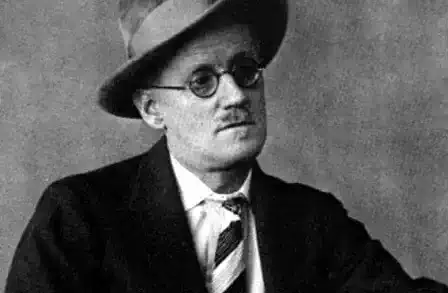
James Joyce
I Would in That Sweet Bosom Be
I would in that sweet bosom be
(O sweet it is and fair it is!)
Where no rude wind might visit me.
Because of sad austerities
I would in that sweet bosom be.
I would be ever in that heart
(O soft I knock and soft entreat her!)
Where only peace might be my part.
Austerities were all the sweeter
So I were ever in that heart.
Read more →
234

D.H. Lawrence
Brother and Sister
The shorn moon trembling indistinct on her path,
Frail as a scar upon the pale blue sky,
Draws towards the downward slope: some sorrow hath
Worn her down to the quick, so she faintly fares
Along her foot-searched way without knowing why
She creeps persistent down the sky’s long stairs.
Some day they see, though I have never seen,
The dead moon heaped within the new moon’s arms;
For surely the fragile, fine young thing had been
Too heavily burdened to mount the heavens so.
But my heart stands still, as a new, strong dread alarms
Me; might a young girl be heaped with such shadow of woe?
Since Death from the mother moon has pared us down to the quick,
And cast us forth like shorn, thin moons, to travel
An uncharted way among the myriad thick
Strewn stars of silent people, and luminous litter
Of lives which sorrows like mischievous dark mice chavel
To nought, diminishing each star’s glitter,
Since Death has delivered us utterly, naked and white,
Since the month of childhood is over, and we stand alone,
Since the beloved, faded moon that set us alight
Is delivered from us and pays no heed though we moan
In sorrow, since we stand in bewilderment, strange
And fearful to sally forth down the sky’s long range.
We may not cry to her still to sustain us here,
We may not hold her shadow back from the dark.
Oh, let us here forget, let us take the sheer
Unknown that lies before us, bearing the ark
Of the covenant onwards where she cannot go.
Let us rise and leave her now, she will never know.
Read more →
230
Robert W. Service
The Passing Of The Year
My glass is filled, my pipe is lit,
My den is all a cosy glow;
And snug before the fire I sit,
And wait to feel the old year go.
I dedicate to solemn thought
Amid my too-unthinking days,
This sober moment, sadly fraught
With much of blame, with little praise.
Old Year! upon the Stage of Time
You stand to bow your last adieu;
A moment, and the prompter's chime
Will ring the curtain down on you.
Your mien is sad, your step is slow;
You falter as a Sage in pain;
Yet turn, Old Year, before you go,
And face your audience again.
That sphinx-like face, remote, austere,
Let us all read, whate'er the cost:
O Maiden! why that bitter tear?
Is it for dear one you have lost?
Is it for fond illusion gone?
For trusted lover proved untrue?
O sweet girl-face, so sad, so wan
What hath the Old Year meant to you?
And you, O neighbour on my right
So sleek, so prosperously clad!
What see you in that aged wight
That makes your smile so gay and glad?
What opportunity unmissed?
What golden gain, what pride of place?
What splendid hope? O Optimist!
What read you in that withered face?
And You, deep shrinking in the gloom,
What find you in that filmy gaze?
What menace of a tragic doom?
What dark, condemning yesterdays?
What urge to crime, what evil done?
What cold, confronting shape of fear?
O haggard, haunted, hidden One
What see you in the dying year?
And so from face to face I flit,
The countless eyes that stare and stare;
Some are with approbation lit,
And some are shadowed with despair.
Some show a smile and some a frown;
Some joy and hope, some pain and woe:
Enough! Oh, ring the curtain down!
Old weary year! it's time to go.
My pipe is out, my glass is dry;
My fire is almost ashes too;
But once again, before you go,
And I prepare to meet the New:
Old Year! a parting word that's true,
For we've been comrades, you and I --
I thank God for each day of you;
There! bless you now! Old Year, good-bye!
Read more →
232

John Greenleaf Whittier
Raphael
I shall not soon forget that sight
The glow of Autumn's westering day,
A hazy warmth, a dreamy light,
On Raphael's picture lay.
It was a simple print I saw,
The fair face of a musing boy;
Yet, while I gazed, a sense of awe
Seemed blending with my joy.
A simple print,--the graceful flow
Of boyhood's soft and wavy hair,
And fresh young lip and cheek, and brow
Unmarked and clear, were there.
Yet through its sweet and calm repose
I saw the inward spirit shine;
It was as if before me rose
The white veil of a shrine.
As if, as Gothland's sage has told,
The hidden life, the man within,
Dissevered from its frame and mould,
By mortal eye were seen.
Was it the lifting of that eye,
The waving of that pictured hand?
Loose as a cloud-wreath on the sky,
I saw the walls expand.
The narrow room had vanished,--space,
Broad, luminous, remained alone,
Through which all hues and shapes of grace
And beauty looked or shone.
Around the mighty master came
The marvels which his pencil wrought,
Those miracles of power whose fame
Is wide as human thought.
There drooped thy more than mortal face,
O Mother, beautiful and mild
Enfolding in one dear embrace
Thy Saviour and thy Child!
The rapt brow of the Desert John;
The awful glory of that day
When all the Father's brightness shone
Through manhood's veil of clay.
And, midst gray prophet forms, and wild
Dark visions of the days of old,
How sweetly woman's beauty smiled
Through locks of brown and gold!
There Fornarina's fair young face
Once more upon her lover shone,
Whose model of an angel's grace
He borrowed from her own.
Slow passed that vision from my view,
But not the lesson which it taught;
The soft, calm shadows which it threw
Still rested on my thought:
The truth, that painter, bard, and sage,
Even in Earth's cold and changeful clime,
Plant for their deathless heritage
The fruits and flowers of time.
We shape ourselves the joy or fear
Of which the coming life is made,
And fill our Future's atmosphere
With sunshine or with shade.
The tissue of the Life to be
We weave with colors all our own,
And in the field of Destiny
We reap as we have sown.
Still shall the soul around it call
The shadows which it gathered here,
And, painted on the eternal wall,
The Past shall reappear.
Think ye the notes of holy song
On Milton's tuneful ear have died?
Think ye that Raphael's angel throng
Has vanished from his side?
Oh no!--We live our life again;
Or warmly touched, or coldly dim,
The pictures of the Past remain,--Man's
works shall follow him!
Read more →
232
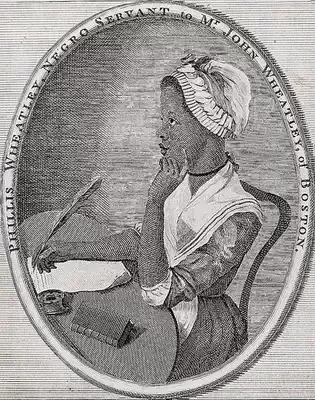
Phillis Wheatley
To A Lady On The Death Of The Three Relations
WE trace the pow'r of Death from tomb to tomb,
And his are all the ages yet to come.
'Tis his to call the planets from on high,
To blacken Phoebus, and dissolve the sky;
His too, when all in his dark realms are hurl'd,
From its firm base to shake the solid world;
His fatal sceptre rules the spacious whole,
And trembling nature rocks from pole to pole.
Awful he moves, and wide his wings are spread:
Behold thy brother number'd with the dead!
From bondage freed, the exulting spirit flies
Beyond Olympus, and these starry skies.
Lost in our woe for thee, blest shade, we mourn
In vain; to earth thou never must return.
Thy sisters too, fair mourner, feel the dart
Of Death, and with fresh torture rend thine heart.
Weep not for them, and leave the world behind.
As a young plant by hurricanes up torn,
So near its parent lies the newly born--
But 'midst the bright ehtereal train behold
It shines superior on a throne of gold:
Then, mourner, cease; let hope thy tears restrain,
Smile on the tomb, and sooth the raging pain.
On yon blest regions fix thy longing view,
Mindless of sublunary scenes below;
Ascend the sacred mount, in thought arise,
And seek substantial and immortal joys;
Where hope receives, where faith to vision springs,
And raptur'd seraphs tune th' immortal strings
To strains extatic. Thou the chorus join,
And to thy father tune the praise divine.
Read more →
232
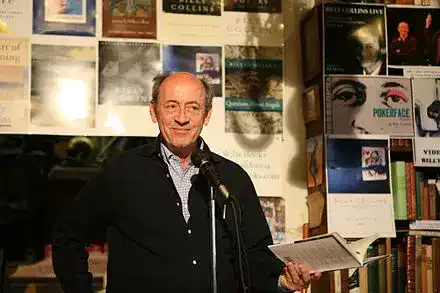
Billy Collins
Invention
Tonight the moon is a cracker,
with a bite out of it
floating in the night,
and in a week or so
according to the calendar
it will probably look
like a silver football,
and nine, maybe ten days ago
it reminded me of a thin bright claw.
But eventually -by
the end of the month,
I reckon -
it will waste away
to nothing,
nothing but stars in the sky,
and I will have a few nights
to myself,
a little time to rest my jittery pen.
Read more →
230
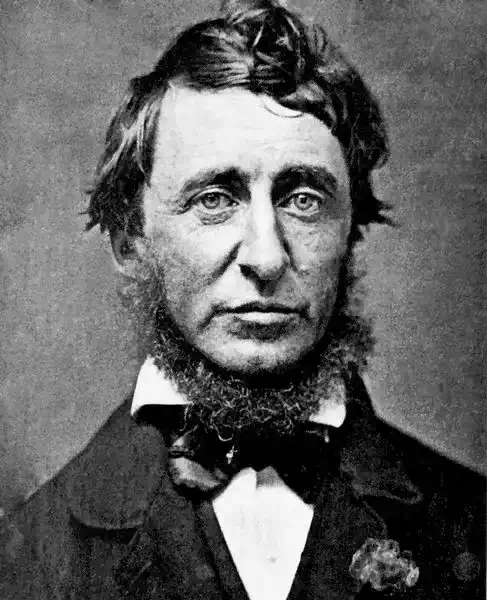
Henry David Thoreau
Epitaph On The World
Here lies the body of this world,
Whose soul alas to hell is hurled.
This golden youth long since was past,
Its silver manhood went as fast,
An iron age drew on at last;
'Tis vain its character to tell,
The several fates which it befell,
What year it died, when 'twill arise,
We only know that here it lies.
Read more →
230
D.H. Lawrence
Excursion
I wonder, can the night go by;
Can this shot arrow of travel fly
Shaft-golden with light, sheer into the sky
Of a dawned to-morrow,
Without ever sleep delivering us
From each other, or loosing the dolorous
Unfruitful sorrow!
What is it then that you can see
That at the window endlessly
You watch the red sparks whirl and flee
And the night look through?
Your presence peering lonelily there
Oppresses me so, I can hardly bear
To share the train with you.
You hurt my heart-beats’ privacy;
I wish I could put you away from me;
I suffocate in this intimacy,
For all that I love you;
How I have longed for this night in the train,
Yet now every fibre of me cries in pain
To God to remove you.
But surely my soul’s best dream is still
That one night pouring down shall swill
Us away in an utter sleep, until
We are one, smooth-rounded.
Yet closely bitten in to me
Is this armour of stiff reluctancy
That keeps me impounded.
So, dear love, when another night
Pours on us, lift your fingers white
And strip me naked, touch me light,
Light, light all over.
For I ache most earnestly for your touch,
Yet I cannot move, however much
I would be your lover.
Night after night with a blemish of day
Unblown and unblossomed has withered away;
Come another night, come a new night, say
Will you pluck me apart?
Will you open the amorous, aching bud
Of my body, and loose the burning flood
That would leap to you from my heart?
Read more →
232
Emily Dickinson
Forever at His side to walk
Forever at His side to walk-
The smaller of the two!
Brain of His Brain-
Blood of His Blood-
Two lives-One Being-now-
Forever of His fate to taste-
If grief-the largest part-
If joy-to put my piece away
For that beloved Heart-
All life-to know each other-
Whom we can never learn-
And bye and bye-a Change-
Called Heaven-
Rapt Neighborhoods of Men-
Just finding out-what puzzled us-
Without the lexicon!
Read more →
232
Emily Dickinson
Flowers—Well—if anybody
Flowers—Well—if anybody
Can the ecstasy define—
Half a transport—half a trouble—
With which flowers humble men:
Anybody find the fountain
From which floods so contra flow—
I will give him all the Daisies
Which upon the hillside blow.
Too much pathos in their faces
For a simple breast like mine—
Butterflies from St. Domingo
Cruising round the purple line—
Have a system of aesthetics—
Far superior to mine.
Read more →
230

Henry Lawson
Written Afterwards
So the days of my tramping are over,
And the days of my riding are done—
I’m about as content as a rover
Will ever be under the sun;
I write, after reading your letter—
My pipe with old memories rife—
And I feel in a mood that had better
Not meet the true eyes of the wife.
You must never admit a suggestion
That old things are good to recall;
You must never consider the question:
‘Was I happier then, after all?’
You must banish the old hope and sorrow
That make the sad pleasures of life,
You must live for To-day and To-morrow
If you want to be just to the wife.
I have changed since the first day I kissed her.
Which is due—Heaven bless her!—to her;
I’m respected and trusted—I’m ‘Mister,’
Addressed by the children as ‘Sir.’
And I feel the respect without feigning—
But you’d laugh the great laugh of your life
If you only saw me entertaining
An old lady friend of the wife.
By-the-way, when you’re writing, remember
That you never went drinking with me,
And forget our last night of December,
Lest our sev’ral accounts disagree.
And, for my sake, old man, you had better
Avoid the old language of strife,
For the technical terms of your letter
May be misunderstood by the wife.
Never hint of the girls appertaining
To the past (when you’re writing again),
For they take such a lot of explaining,
And you know how I hate to explain.
There are some things, we know to our sorrow,
That cut to the heart like a knife,
And your past is To-day and To-morrow
If you want to be true to the wife.
I believe that the creed we were chums in
Was grand, but too abstract and bold,
And the knowledge of life only comes in
When you’re married and fathered and old.
And it’s well. You may travel as few men,
You may stick to a mistress for life;
But the world, as it is, born of woman
Must be seen through the eyes of the wife.
No doubt you are dreaming as I did
And going the careless old pace,
While my future grows dull and decided,
And the world narrows down to the Place.
Let it be. If my ‘treason’s’ resented,
You may do worse, old man, in your life;
Let me dream, too, that I am contented—
For the sake of a true little wife.
Read more →
231
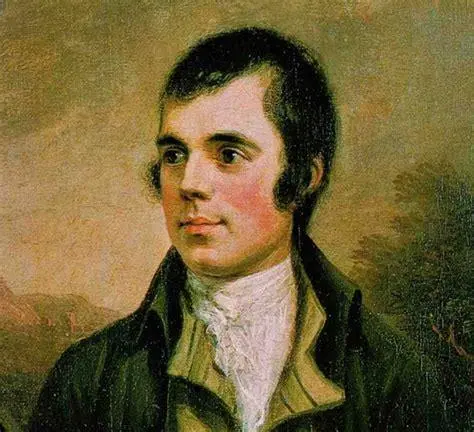
Robert Burns
Montgomerie's Peggy
Tune - "Galla Water."
Altho' my bed were in yon muir,
Amang the heather, in my plaidie;
Yet happy, happy would I be,
Had I my dear Montgomerie's Peggy.
When o'er the hill beat surly storms,
And winter nights were dark and rainy;
I'd seek some dell, and in my arms
I'd shelter dear Montgomerie's Peggy.
Were I a baron proud and high,
And horse and servants waiting ready;
Then a' 'twad gie o' joy to me, -
The sharin't with Montgomerie's Peggy.
Read more →
232
Phillis Wheatley
Isaiah Lxiii -------
SAY, heav'nly muse, what king or mighty God,
That moves sublime from Idumea's road?
In Bosrah's dies, with martial glories join'd,
His purple vesture waves upon the wind.
Why thus enrob'd delights he to appear
In the dread image of the Pow'r of war?
Compres'd in wrath the swelling wine-press groan'd,
It bled, and pour'd the gushing purple round.
"Mine was the act," th' Almighty Saviour said,
And shook the dazzling glories of his head,
"When all forsook I trod the press alone,
"And conquer'd by omnipotence my own;
"For man's release sustain'd the pond'rous load,
"For man the wrath of an immortal God:
"To execute th' Eternal's dread command
"My soul I sacrific'd with willing hand;
"Sinless I stood before the avenging frown,
"Atoning thus for vices not my own."
His eye the ample field of battle round
Survey'd, but no created succours found;
His own omnipotence sustain'd the right,
His vengeance sunk the haughty foes in night;
Beneath his feet the prostrate troops were spread,
And round him lay the dying, and the dead.
Great God, what light'ning flashes from thine eyes?
What pow'r withstands if thou indignant rise?
Against thy Zion though her foes may rage,
And all their cunning, all their strength engage,
Yet she serenely on thy bosom lies,
Smiles at their arts, and all their force defies.
Read more →
231

George Herbert
Affliction (II)
Kill me not ev'ry day,
Thou Lord of life, since thy one death for me
Is more than all my deaths can be,
Though I in broken pay
Die over each hour of Methusalem's stay.
If all men's tears were let
Into one common sewer, sea, and brine;
What were they all, compar'd to thine?
Wherein if they were set,
They would discolour thy most bloody sweat.
Thou art my grief alone,
Thou Lord conceal it not: and as thou art
All my delight, so all my smart:
Thy cross took up in one,
By way of imprest, all my future moan.
Read more →
230
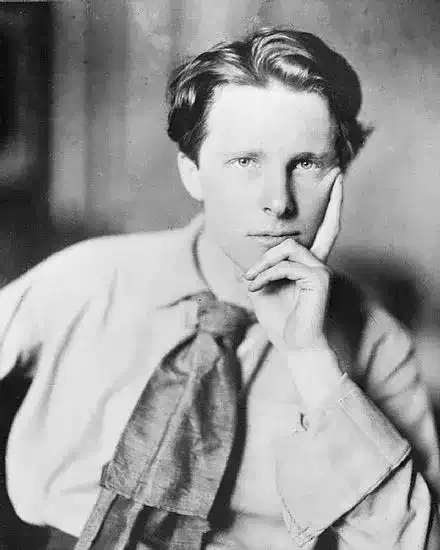
Rupert Brooke
Seaside
Swiftly out from the friendly lilt of the band,
The crowd's good laughter, the loved eyes of men,
I am drawn nightward; I must turn again
Where, down beyond the low untrodden strand,
There curves and glimmers outward to the unknown
The old unquiet ocean. All the shade
Is rife with magic and movement. I stray alone
Here on the edge of silence, half afraid,
Waiting a sign. In the deep heart of me
The sullen waters swell towards the moon,
And all my tides set seaward.
From inland
Leaps a gay fragment of some mocking tune,
That tinkles and laughs and fades along the sand,
And dies between the seawall and the sea.
Read more →
231
Emily Dickinson
My Faith is larger than the Hills
My Faith is larger than the Hills-
So when the Hills decay-
My Faith must take the Purple Wheel
To show the Sun the way
'Tis first He steps upon the Vane-
And then-upon the Hill-
And then abroad the World He go
To do His Golden Will-
And if His Yellow feet should miss-
The Bird would not arise-
The Flowers would slumber on their Stems-
No Bells have Paradise-
How dare I, therefore, stint a faith
On which so vast depends-
Lest Firmament should fail for me-
The Rivet in the Bands
Read more →
231
Emily Dickinson
Two—were immortal twice
Two—were immortal twice—
The privilege of few—
Eternity—obtained—in Time—
Reversed Divinity—
That our ignoble Eyes
The quality conceive
Of Paradise superlative—
Through their Comparative.
Read more →
231
Henry Lawson
The Unknown God
The President to Kingdoms,
As in the Days of Old;
The King to the Republic,
As it had been foretold.
They could not read the spelling,
They would not hear the call;
They would not brook the telling
Of Writing on the Wall.
I buy my Peace with Slaughter,
With Peace I fashion War;
I drown the land with water,
With land I build the shore.
I walk with Son and Daughter
Where Ocean rolled before.
I build a town where sea was
A tower where tempests roar.
From bays in distant islands,
And rocks in lonely seas,
With unseen Death in silence
I smite mine enemies!
The great Cathedral crashes
Where once a city stood;
I build again on ashes
And breed on clotted blood!
I link the seas together,
And at my sign and will
The train runs on the ocean bed,
The great ship climbs the hill!
For pastime I flood deserts
With water from the rill;
And in my tireless leisure hours
I empty lakes, and fill.
I plumb the seas beneath us
And fathom skies above,
Yet I make Peace for hatred
And I make War for love.
I race beneath the ranges
And sit where Mystery dwells—
Yet mankind sees no changes,
They ask for “miracles!”
I own the world and span its
Lone lands from Pole to Pole;
I live in other planets,
Yet do not know my soul—
The soul that none may fathom,
Whose secrets none may tell,
The soul that none may humble,
The Soul Unconquerable!
I am the God of Ages!
I am the Unknown God!
My life is written pages
Wherever man hath trod.
From bounds of Polar regions,
To where the Desert reigns,
I’ve left my myriad legions
On countless vanished plains.
And I shall reign for ever
On earth while oceans roll,
In shape of man, or woman,
Through my immortal soul;
Yet I can love and suffer,
Be angry, or be mild,
And I can bow me down and weep
Just like a mortal child.
I conquer Death and Living,
And Fiends in shape of men,
For I rejoice in giving
Not to receive again.
For I am Man!—and Mortal!
And Mammon’s Towers must fall,
Though Greed draws all his pencils through
The Writing on the Wall!
Read more →
231
Emily Dickinson
There is a pain—so utter
There is a pain—so utter—
It swallows substance up—
Then covers the Abyss with Trance—
So Memory can step
Around—across—upon it—
As one within a Swoon—
Goes safely—where an open eye—
Would drop Him—Bone by Bone.
Read more →
231
Henry David Thoreau
Inspiration
Whate'er we leave to God, God does,
And blesses us;
The work we choose should be our own,
God leaves alone.
If with light head erect I sing,
Though all the Muses lend their force,
From my poor love of anything,
The verse is weak and shallow as its source.
But if with bended neck I grope
Listening behind me for my wit,
With faith superior to hope,
More anxious to keep back than forward it;
Making my soul accomplice there
Unto the flame my heart hath lit,
Then will the verse forever wear--
Time cannot bend the line which God hath writ.
Always the general show of things
Floats in review before my mind,
And such true love and reverence brings,
That sometimes I forget that I am blind.
But now there comes unsought, unseen,
Some clear divine electuary,
And I, who had but sensual been,
Grow sensible, and as God is, am wary.
I hearing get, who had but ears,
And sight, who had but eyes before,
I moments live, who lived but years,
And truth discern, who knew but learning's lore.
I hear beyond the range of sound,
I see beyond the range of sight,
New earths and skies and seas around,
And in my day the sun doth pale his light.
A clear and ancient harmony
Pierces my soul through all its din,
As through its utmost melody--
Farther behind than they, farther within.
More swift its bolt than lightning is,
Its voice than thunder is more loud,
It doth expand my privacies
To all, and leave me single in the crowd.
It speaks with such authority,
With so serene and lofty tone,
That idle Time runs gadding by,
And leaves me with Eternity alone.
Now chiefly is my natal hour,
And only now my prime of life;
Of manhood's strength it is the flower,
'Tis peace's end and war's beginning strife.
It comes in summer's broadest noon,
By a grey wall or some chance place,
Unseasoning Time, insulting June,
And vexing day with its presuming face.
Such fragrance round my couch it makes,
More rich than are Arabian drugs,
That my soul scents its life and wakes
The body up beneath its perfumed rugs.
Such is the Muse, the heavenly maid,
The star that guides our mortal course,
Which shows where life's true kernel's laid,
Its wheat's fine flour, and its undying force.
She with one breath attunes the spheres,
And also my poor human heart,
With one impulse propels the years
Around, and gives my throbbing pulse its start.
I will not doubt for evermore,
Nor falter from a steadfast faith,
For thought the system be turned o'er,
God takes not back the word which once He saith.
I will not doubt the love untold
Which not my worth nor want has bought,
Which wooed me young, and woos me old,
And to this evening hath me brought.
My memory I'll educate
To know the one historic truth,
Remembering to the latest date
The only true and sole immortal youth.
Be but thy inspiration given,
No matter through what danger sought,
I'll fathom hell or climb to heaven,
And yet esteem that cheap which love has bought.
Fame cannot tempt the bard
Who's famous with his God,
Nor laurel him reward
Who has his Maker's nod.
Read more →
230
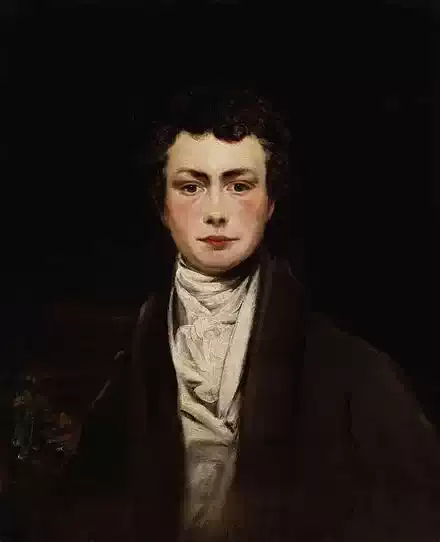
Thomas Moore
Lesbia Hath a Beaming Eye
Lesbia hath a beaming eye,
But no one knows for whom it beameth;
Right and left its arrows fly,
But what they aim at no one dreameth.
Sweeter 'tis to gaze upon
My Nora's lid that seldom rises;
Few its looks, but every one,
Like unexpected light, surprises!
Oh, my Nora Creina, dear,
My gentle, bashful Nora Creina,
Beauty lies
In many eyes,
But Love in yours, my Nora Creina.
Lesbia wears a robe of gold,
But all so close the nymph hath laced it,
Not a charm of beauty's mould
Presumes to stay where Nature placed it.
Oh! my Nora's gown for me,
That floats as wild as mountain breezes,
Leaving every beauty free
To sink or swell as Heaven pleases.
Yes, my Nora Creina, dear,
My simple, graceful Nora Creina,
Nature's dress
Is loveliness --
The dress you wear, my Nora Creina.
Lesbia hath a wit refined,
But, when its points are gleaning round us,
Who can tell if they're design'd
To dazzle merely, or to wound us?
Pillow'd on my Nora's heart,
In safer slumber Love reposes --
Bed of peace! whose roughest part
Is but the crumpling of the roses.
Oh! my Nora Creina, dear,
My mild, my artless Nora Creina!
Wit, though bright,
Hath no such light
As warms your eyes, my Nora Creina.
Read more →
231