
Soul

William Wordsworth
To a Sky-Lark
Up with me! up with me into the clouds!
For thy song, Lark, is strong;
Up with me, up with me into the clouds!
Singing, singing,
With clouds and sky about thee ringing,
Lift me, guide me till I find
That spot which seems so to thy mind!
I have walked through wildernesses dreary
And to-day my heart is weary;
Had I now the wings of a Faery,
Up to thee would I fly.
There is madness about thee, and joy divine
In that song of thine;
Lift me, guide me high and high
To thy banqueting-place in the sky.
Joyous as morning
Thou art laughing and scorning;
Thou hast a nest for thy love and thy rest,
And, though little troubled with sloth,
Drunken Lark! thou would'st be loth
To be such a traveller as I.
Happy, happy Liver,
With a soul as strong as a mountain river
Pouring out praise to the Almighty Giver,
Joy and jollity be with us both!
Alas! my journey, rugged and uneven,
Through prickly moors or dusty ways must wind;
But hearing thee, or others of thy kind,
As full of gladness and as free of heaven,
I, with my fate contented, will plod on,
And hope for higher raptures, when life's day is done.
Read more →
230
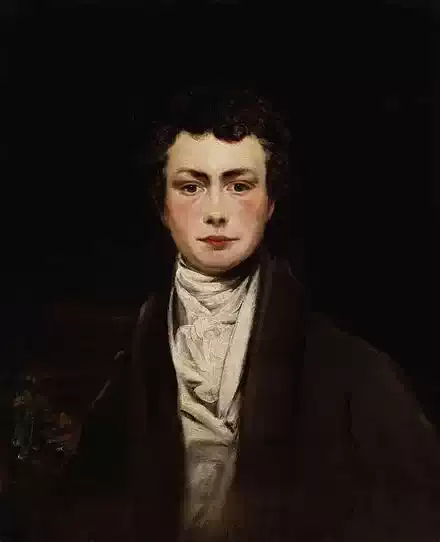
Thomas Moore
After the Battle
Night closed around the conqueror's way,
And lightnings show'd the distant hill,
Where those who lost that dreadful day
Stood few and faint, but fearless still.
The soldier's hope, the patriot's zeal,
For ever dimm'd, for ever crost --
Oh! who shall say what heroes feel,
When all but life and honour's lost?
The last sad hour of freedom's dream,
And valour's task, moved slowly by,
While mute they watch'd, till morning's beam
Should rise and give them light to die.
There's yet a world, where souls are free,
Where tyrants taint not nature's bliss; --
If death that world's bright opening be,
Oh! who would live a slave in this?
Read more →
229

Robert W. Service
The Visionary
If fortune had not granted me
To suck the Muse's teats,
I think I would have liked to be
A sweeper of the streets;
And city gutters glad to groom,
Have heft a bonny broom.
There--as amid the crass and crush
The limousines swished by,
I would have leaned upon my brush
With visionary eye:
Deeming despite their loud allure
That I was rich, they poor.
Aye, though in garb terrestrial,
To Heaven I would pray,
And dream with broom celestial
I swept the Milky Way;
And golden chariots would ring,
And harps of Heaven sing.
And all the strumpets passing me,
And heelers of the Ward
Would glorified Madonnas be,
And angels of the Lord;
And all the brats in gutters grim
Be rosy cherubim.
Read more →
229
William Wordsworth
I Know an Old Man Constrained to Dwell
I know an aged Man constrained to dwell
In a large house of public charity,
Where he abides, as in a Prisoner's cell,
With numbers near, alas! no company.
When he could creep about, at will, though poor
And forced to live on alms, this old Man fed
A Redbreast, one that to his cottage door
Came not, but in a lane partook his bread.
There, at the root of one particular tree,
An easy seat this worn-out Labourer found
While Robin pecked the crumbs upon his knee
Laid one by one, or scattered on the ground.
Dear intercourse was theirs, day after day;
What signs of mutual gladness when they met!
Think of their common peace, their simple play,
The parting moment and its fond regret.
Months passed in love that failed not to fulfil,
In spite of season's change, its own demand,
By fluttering pinions here and busy bill;
There by caresses from a tremulous hand.
Thus in the chosen spot a tie so strong
Was formed between the solitary pair,
That when his fate had housed him 'mid a throng
The Captive shunned all converse proffered there.
Wife, children, kindred, they were dead and gone;
But, if no evil hap his wishes crossed,
One living Stay was left, and on that one
Some recompence for all that he had lost.
Oh that the good old Man had power to prove,
By message sent through air or visible token,
That still he loves the Bird, and still must love;
That friendship lasts though fellowship is broken!
Read more →
230
Robert W. Service
My Library
Like prim Professor of a College
I primed my shelves with books of knowledge;
And now I stand before them dumb,
Just like a child that sucks its thumb,
And stares forlorn and turns away,
With dolls or painted bricks to play.
They glour at me, my tomes of learning.
"You dolt!" they jibe; "you undiscerning
Moronic oaf, you make a fuss,
With highbrow swank selecting us;
Saying: "I'll read you all some day' -
And now you yawn and turn away.
"Unwanted wait we with our store
Of facts and philosophic lore;
The scholarship of all the ages
Snug packed within our uncut pages;
The mystery of all mankind
In part revealed - but you are blind.
"You have no time to read, you tell us;
Oh, do not think that we are jealous
Of all the trash that wins your favour,
The flimsy fiction that you savour:
We only beg that sometimes you
Will spare us just an hour or two.
"For all the minds that went to make us
Are dust if folk like you forsake us,
And they can only live again
By virtue of your kindling brain;
In magice print they packed their best:
Come - try their wisdom to digest. . . ."
Said I: "Alas! I am not able;
I lay my cards upon the table,
And with deep shame and blame avow
I am too old to read you now;
So I will lock you in glass cases
And shun your sad, reproachful faces."
* * * * * * * * *
My library is noble planned,
Yet in it desolate I stand;
And though my thousand books I prize,
Feeling a witling in their eyes,
I turn from them in weariness
To wallow in the Daily Press.
For, oh, I never, never will
The noble field of knowledge till:
I pattern words with artful tricks,
As children play with painted bricks,
And realize with futile woe,
Nothing I know - nor want to know.
My library has windowed nooks;
And so I turn from arid books
To vastitude of sea and sky,
And like a child content am I
With peak and plain and brook and tree,
Crying: "Behold! the books for me:
Nature, be thou my Library!"
Read more →
228

John Greenleaf Whittier
The Wife Of Manoah To Her Husband
Against the sunset's glowing wall
The city towers rise black and tall,
Where Zorah, on its rocky height,
Stands like an armed man in the light.
Down Eshtaol's vales of ripened grain
Falls like a cloud the night amain,
And up the hillsides climbing slow
The barley reapers homeward go.
Look, dearest! how our fair child's head
The sunset light hath hallowed,
Where at this olive's foot he lies,
Uplooking to the tranquil skies.
Oh, while beneath the fervent heat
Thy sickle swept the bearded wheat,
I've watched, with mingled joy and dread,
Our child upon his grassy bed.
Joy, which the mother feels alone
Whose morning hope like mine had flown,
When to her bosom, over-blessed,
A dearer life than hers is pressed.
Dread, for the future dark and still,
Which shapes our dear one to its will;
Forever in his large calm eyes,
I read a tale of sacrifice.
The same foreboding awe I felt
When at the altar's side we knelt,
And he, who as a pilgrim came,
Rose, winged and glorious, through the flame.
I slept not, though the wild bees made
A dreamlike murmuring in the shade,
And on me the warm-fingered hours
Pressed with the drowsy smell of flowers.
Before me, in a vision, rose
The hosts of Israel's scornful foes,-Rank
over rank, helm, shield, and spear,
Glittered in noon's hot atmosphere.
I heard their boast, and bitter word,
Their mockery of the Hebrew's Lord,
I saw their hands His ark assail,
Their feet profane His holy veil.
No angel down the blue space spoke,
No thunder from the still sky broke;
But in their midst, in power and awe,
Like God's waked wrath, our child I saw!
A child no more!--harsh-browed and strong,
He towered a giant in the throng,
And down his shoulders, broad and bare,
Swept the black terror of his hair.
He raised his arm--he smote amain;
As round the reaper falls the grain,
So the dark host around him fell,
So sank the foes of Israel!
Again I looked. In sunlight shone
The towers and domes of Askelon;
Priest, warrior, slave, a mighty crowd
Within her idol temple bowed.
Yet one knelt not; stark, gaunt, and blind,
His arms the massive pillars twined,-An
eyeless captive, strong with hate,
He stood there like an evil Fate.
The red shrines smoked,--the trumpets pealed
He stooped,--the giant columns reeled;
Reeled tower and fane, sank arch and wall,
And the thick dust-cloud closed o'er all!
Above the shriek, the crash, the groan
Of the fallen pride of Askelon,
I heard, sheer down the echoing sky,
A voice as of an angel cry,-
The voice of him, who at our side
Sat through the golden eventide;
Of him who, on thy altar's blaze,
Rose fire-winged, with his song of praise.
'Rejoice o'er Israel's broken chain,
Gray mother of the mighty slain!
Rejoice!' it cried, 'he vanquisheth!
The strong in life is strong in death!
'To him shall Zorah's daughters raise
Through coming years their hymns of praise,
And gray old men at evening tell
Of all be wrought for Israel.
'And they who sing and they who hear
Alike shall hold thy memory dear,
And pour their blessings on thy head,
O mother of the mighty dead!'
It ceased; and though a sound I heard
As if great wings the still air stirred,
I only saw the barley sheaves
And hills half hid by olive leaves.
I bowed my face, in awe and fear,
On the dear child who slumbered near;
'With me, as with my only son,
O God,' I said, 'Thy will be done!'
Read more →
227

Christina Rossetti
At Home
When I was dead, my spirit turned
To seek the much-frequented house:
I passed the door, and saw my friends
Feasting beneath green orange boughs;
From hand to hand they pushed the wine,
They sucked the pulp of plum and peach;
They sang, they jested, and they laughed,
For each was loved of each.
I listened to thier honest chat:
Said one: "To-morrow we shall be
Plod plod along the featureless sands,
And coasting miles and miles of sea."
Said one: "Before the turn of tide
We will achieve the eyrie-seat."
Said one: "To-morrow shall be like
To-day, but much more sweet."
"To-morrow," said they, strong with hope,
And dwelt upon the pleasant way:
"To-morrow," cried they, one and all,
While no one spoke of yesterday.
Their life stood full at blessed noon;
I, only I, had passed away:
"To-morrow and to-day," they cried;
I was of yesterday.
I shivered comfortless, but cast
No chill across the table-cloth;
I, all-forgotten, shivered, sad
To stay, and yet to part how loth:
I passed from the familiar room,
I who from love had passed away,
Like the remembrance of a guest
That tarrieth but a day.
Read more →
228
John Greenleaf Whittier
We May Not Climb the Heavenly Steeps
We may not climb the heavenly steeps
To bring the Lord Christ down;
In vain we search the lowest deeps
For Him who fills Heaven's throne.
But to the contrite spirit yet
A present help is He;
And faith has yet its Olivet,
And love its Galilee.
The healing of His seamless dress
Is by our beds of pain;
We touch Him in life's throng and press,
And we are whole again.
Through Him the first fond prayers are said,
Our lips of childhood frame;
The last low whispers of our dead
Are burdened with His Name.
O Lord and Saviour of us all,
Whate'er our name or sign,
We own Thy sway, we hear Thy call,
And form our lives by Thine.
We faintly hear, we dimly see,
In differing phrase we pray;
But, dim or clear, we own in Thee
The Life, the Truth, the Way.
Read more →
229
Robert W. Service
Baby Sitter
From torrid heat to frigid cold
I've rovered land and sea;
And now, with halting heart I hold
My grandchild on my knee:
Yet while I've eighty years all told,
Of moons she has but three.
She sleeps, that fragile miniature
Of future maidenhood;
She will be wonderful, I'm sure,
As over her I brood;
She is so innocent, so pure,
I know she will be good.
My way I've won from woe to weal,
And hard has been the fight;
Yet in my ingle-nook I feel
A wondrous peace to-night;
And over me serenely steal
Warm waves of love and light.
"What sloppy stuff!" I hear you say.
"Give us a lusty song."
Alas! I'm bent and gnarled and grey,-My
life may not be long:
Yet let its crown of glory be
This child upon me knee.
Read more →
230
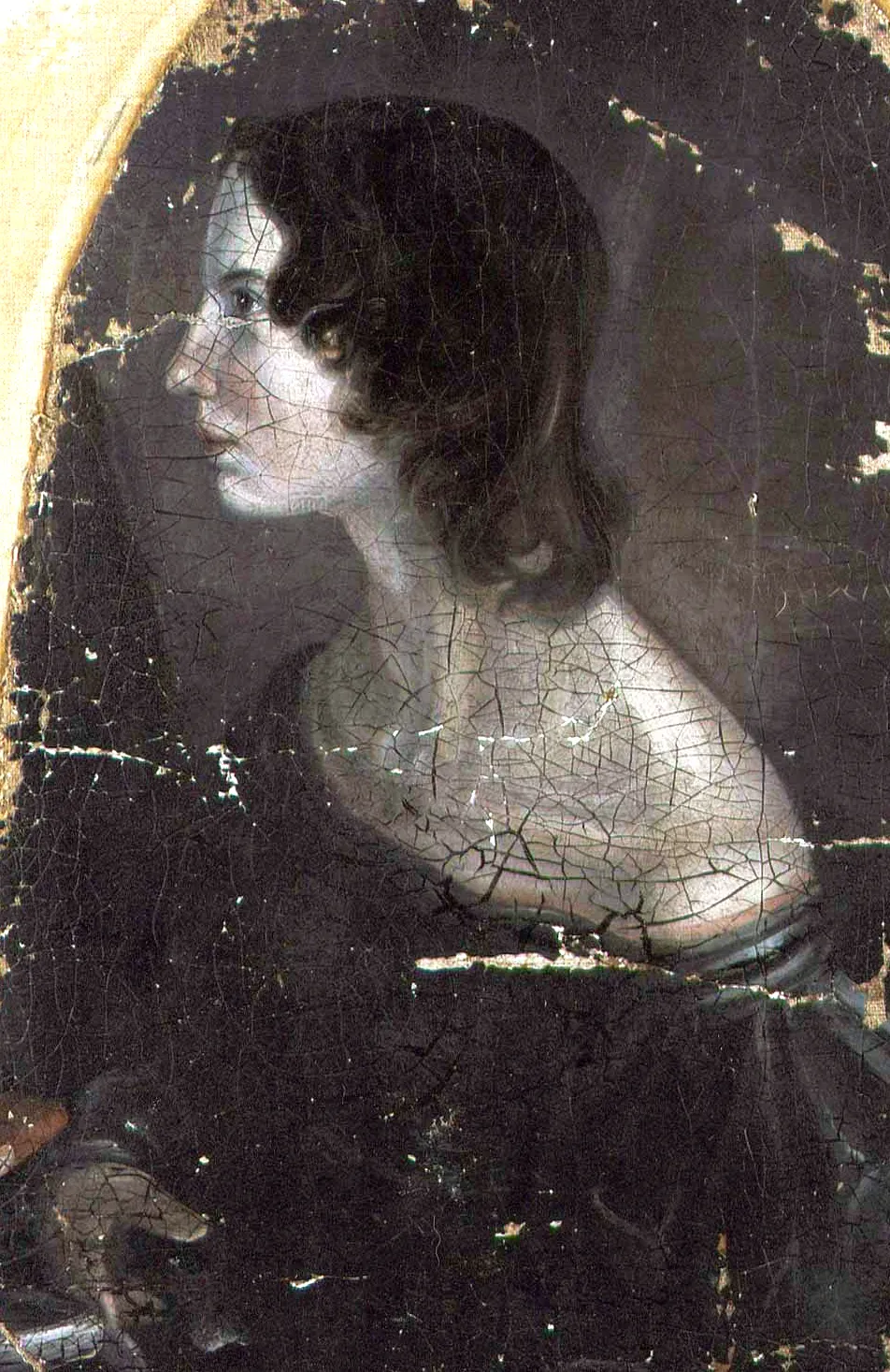
Emily Jane Brontë
Hope
Hope was but a timid friend;
She sat without the grated den,
Watching how my fate would tend,
Even as selfish-hearted men.
She was cruel in her fear;
Through the bars, one dreary day,
I looked out to see her there,
And she turned her face away!
Like a false guard, false watch keeping,
Still, in strife, she whispered peace;
She would sing while I was weeping;
If I listened, she would cease.
False she was, and unrelenting;
When my last joys strewed the ground,
Even Sorrow saw, repenting,
Those sad relics scattered round;
Hope, whose whisper would have given
Balm to all my frenzied pain,
Stretched her wings, and soared to heaven,
Went, and ne'er returned again!
Read more →
227

Henry Lawson
The Cockney Soul
From Woolwich and Brentford and Stamford Hill, from Richmond into the Strand,
Oh, the Cockney soul is a silent soul – as it is in every land!
But out on the sand with a broken band it's sarcasm spurs them through;
And, with never a laugh, in a gale and a half, 'tis the Cockney cheers the crew.
Oh, send them a tune from the music-halls with a chorus to shake the sky!
Oh, give them a deep-sea chanty now – and a star to steer them by!
Now this is a song of the great untrained, a song of the Unprepared,
Who had never the brains to plead unfit, or think of the things they dared;
Of the grocer-souled and the draper-souled, and the clerks of the four o'clock,
Who stood for London and died for home in the nineteen-fourteen shock.
Oh, this is a pork-shop warrior's chant – come back from it, maimed and blind,
To a little old counter in Grey's Inn-road and a tiny parlour behind;
And the bedroom above, where the wife and he go silently mourning yet
For a son-in-law who shall never come back and a dead son's room "To Let".
(But they have a boy "in the fried-fish line" in a shop across the "wye",
Who will take them "aht" and "abaht" to-night and cheer their old eyes dry.)
And this is a song of the draper's clerk (what have you all to say?) –
He'd a tall top-hat and a walking-coat in the city every day –
He wears no flesh on his broken bones that lie in the shell-churned loam;
For he went over the top and struck with his cheating yard-wand – home.
(Oh, touch your hat to the tailor-made before you are aware,
And lilt us a lay of Bank-holiday and the lights of Leicester-square!)
Hats off to the dowager lady at home in her house in Russell-square!
Like the pork-shop back and the Brixton flat, they are silently mourning there;
For one lay out ahead of the rest in the slush 'neath a darkening sky,
With the blood of a hundred earls congealed and his eye-glass to his eye.
(He gave me a cheque in an envelope on a distant gloomy day;
He gave me his hand at the mansion door and he said: "Good-luck! Good-bai!")
Read more →
227
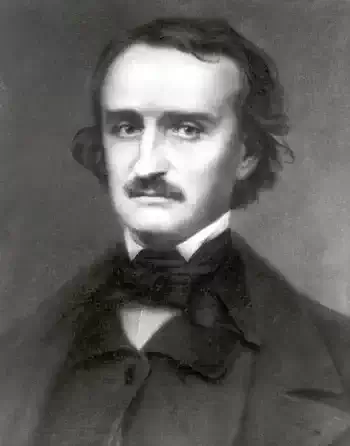
Edgar Allan Poe
Sancta Maria
Sancta Maria! turn thine eyes -
Upon the sinner's sacrifice,
Of fervent prayer and humble love,
From thy holy throne above.
At morn - at noon - at twilight dim -
Maria! thou hast heard my hymn!
In joy and wo - in good and ill -
Mother of God, be with me still!
When the Hours flew brightly by,
And not a cloud obscured the sky,
My soul, lest it should truant be,
Thy grace did guide to thine and thee;
Now, when storms of Fate o'ercast
Darkly my Present and my Past,
Let my Future radiant shine
With sweet hopes of thee and thine!
Read more →
229
Christina Rossetti
Come Unto Me
Oh, for the time gone by, when thought of Christ
Made His Yoke easy and His Burden light;
When my heart stirred within me at the sight
Of Altar spread for awful Eucharist;
When all my hopes His promises sufficed,
When my Soul watched for Him by day, by night,
When my lamp lightened and my robe was white,
And all seemed loss, except the Pearl unpriced.
Yet, since He calls me still with tender Call,
Since He remembers Whom I half forgot,
I even will run my race and bear my lot:
For Faith the walls of Jericho cast down,
And Hope to whoso runs holds forth a Crown,
And Love is Christ, and Christ is All in all.
Read more →
227

Emily Dickinson
He fumbles at your spirit
He fumbles at your spirit
As players at the keys
Before they drop full music on;
He stuns you by degrees,
Prepares your brittle substance
For the ethereal blow,
By fainter hammers, further heard,
Then nearer, then so slow
Your breath has time to straighten,
Your brain to bubble cool, --
Deals one imperial thunderbolt
That scalps your naked soul.
Read more →
229
Christina Rossetti
By The Waters Of Babylon
Here where I dwell I waste to skin and bone;
The curse is come upon me, and I waste
In penal torment powerless to atone.
The curse is come on me, which makes no haste
And doth not tarry, crushing both the proud
Hard man and him the sinner double-faced.
Look not upon me, for my soul is bowed
Within me, as my body in this mire;
My soul crawls dumb-struck, sore-bested and cowed.
As Sodom and Gomorrah scourged by fire,
As Jericho before God's trumpet-peal,
So we the elect ones perish in His ire.
Vainly we gird on sackcloth, vainly kneel
With famished faces toward Jerusalem:
His heart is shut against us not to feel,
His ears against our cry He shutteth them,
His hand He shorteneth that He will not save,
His law is loud against us to condemn:
And we, as unclean bodies in the grave
Inheriting corruption and the dark,
Are outcast from His presence which we crave.
Our Mercy hath departed from His Ark,
Our Glory hath departed from His rest,
Our Shield hath left us naked as a mark
Unto all pitiless eyes made manifest.
Our very Father hath forsaken us,
Our God hath cast us from Him: we oppressed
Unto our foes are even marvellous,
A hissing and a butt for pointing hands,
Whilst God Almighty hunts and grinds us thus;
For He hath scattered us in alien lands,
Our priests, our princes, our anointed king,
And bound us hand and foot with brazen bands.
Here while I sit my painful heart takes wing
Home to the home-land I must see no more,
Where milk and honey flow, where waters spring
And fail not, where I dwelt in days of yore
Under my fig-tree and my fruitful vine,
There where my parents dwelt at ease before:
Now strangers press the olives that are mine,
Reap all the corners of my harvest-field,
And make their fat hearts wanton with my wine;
To them my trees, to them my garden yield
Their sweets and spices and their tender green,
O'er them in noontide heat outspread their shield.
Yet these are they whose fathers had not been
Housed with my dogs, whom hip and thigh we smote
And with their blood washed their pollutions clean,
Purging the land which spewed them from its throat;
Their daughters took we for a pleasant prey,
Choice tender ones on whom the fathers doat.
Now they in turn have led our own away;
Our daughters and our sisters and our wives
Sore weeping as they weep who curse the day,
To live, remote from help, dishonoured lives,
Soothing their drunken masters with a song,
Or dancing in their golden tinkling gyves:
Accurst if they remember through the long
Estrangement of their exile, twice accursed
If they forget and join the accursed throng.
How doth my heart that is so wrung not burst
When I remember that my way was plain,
And that God's candle lit me at the first,
Whilst now I grope in darkness, grope in vain,
Desiring but to find Him Who is lost,
To find Him once again, but once again.
His wrath came on us to the uttermost,
His covenanted and most righteous wrath:
Yet this is He of Whom we made our boast,
Who lit the Fiery Pillar in our path,
Who swept the Red Sea dry before our feet,
Who in His jealousy smote kings, and hath
Sworn once to David: One shall fill thy seat
Born of thy body, as the sun and moon
'Stablished for aye in sovereignty complete.
O Lord, remember David, and that soon.
The Glory hath departed, Ichabod!
Yet now, before our sun grow dark at noon,
Before we come to nought beneath Thy rod,
Before we go down quick into the pit,
Remember us for good, O God, our God:—
Thy Name will I remember, praising it,
Though Thou forget me, though Thou hide Thy face,
And blot me from the Book which Thou hast writ;
Thy Name will I remember in my praise
And call to mind Thy faithfulness of old,
Though as a weaver Thou cut off my days,
And end me as a tale ends that is told.
Read more →
227
Robert W. Service
The Spirit Of The Unborn Babe
The Spirit of the Unborn Babe peered through the window-pane,
Peered through the window-pane that glowed like beacon in the night;
For, oh, the sky was desolate and wild with wind and rain;
And how the little room was crammed with coziness and light!
Except the flirting of the fire there was no sound at all;
The Woman sat beside the hearth, her knitting on her knee;
The shadow of her husband's head was dancing on the wall;
She looked with staring eyes at it, she looked yet did not see.
She only saw a childish face that topped the table rim,
A little wistful ghost that smiled and vanished quick away;
And then because her tender eyes were flooding to the brim,
She lowered her head. . . . "Don't sorrow, dear," she heard him softly say;
"It's over now. We'll try to be as happy as before
(Ah! they who little children have, grant hostages to pain).
We gave Life chance to wound us once, but never, never more. . . ."
The Spirit of the Unborn Babe fled through the night again.
The Spirit of the Unborn Babe went wildered in the dark;
Like termagants the winds tore down and whirled it with the snow.
And then amid the writhing storm it saw a tiny spark,
A window broad, a spacious room all goldenly aglow,
A woman slim and Paris-gowned and exquisitely fair,
Who smiled with rapture as she watched her jewels catch the blaze;
A man in faultless evening dress, young, handsome, debonnaire,
Who smoked his cigarette and looked with frank admiring gaze.
"Oh, we are happy, sweet," said he; "youth, health, and wealth are ours.
What if a thousand toil and sweat that we may live at ease!
What if the hands are worn and torn that strew our path with flowers!
Ah, well! we did not make the world; let us not think of these.
Let's seek the beauty-spots of earth, Dear Heart, just you and I;
Let other women bring forth life with sorrow and with pain.
Above our door we'll hang the sign: `No children need apply. . . .'"
The Spirit of the Unborn Babe sped through the night again.
The Spirit of the Unborn Babe went whirling on and on;
It soared above a city vast, it swept down to a slum;
It saw within a grimy house a light that dimly shone;
It peered in through a window-pane and lo! a voice said: "Come!"
And so a little girl was born amid the dirt and din,
And lived in spite of everything, for life is ordered so;
A child whose eyes first opened wide to swinishness and sin,
A child whose love and innocence met only curse and blow.
And so in due and proper course she took the path of shame,
And gladly died in hospital, quite old at twenty years;
And when God comes to weigh it all, ah! whose shall be the blame
For all her maimed and poisoned life, her torture and her tears?
For oh, it is not what we do, but what we have not done!
And on that day of reckoning, when all is plain and clear,
What if we stand before the Throne, blood-guilty every one? . . .
Maybe the blackest sins of all are Selfishness and Fear.
Read more →
228
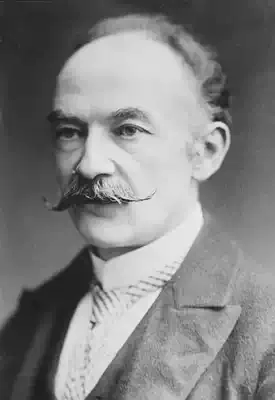
Thomas Hardy
I have lived with Shades
I
I have lived with Shades so long,
So long have talked to them,
I sped to street and throng,
That sometimes they
In their dim style
Will pause awhile
To hear my say;
II
And take me by the hand,
And lead me through their rooms
In the To-Be, where Dooms
Half-wove and shapeless stand:
And show from there
The dwindled dust
And rot and rust
Of things that were.
III
"Now turn," they said to me
One day: "Look whence we came,
And signify his name
Who gazes thence at thee" --
-- "Nor name nor race
Know I, or can,"
I said, "Of man
So commonplace."
IV
"He moves me not at all:
I note no ray or jot
Of rareness in his lot,
Or star exceptional.
Into the dim
Dead throngs around
He'll sink, nor sound
Be left of him."
V
"Yet," said they, "his frail speech,
Hath accents pitched like thine --
Thy mould and his define
A likeness each to each --
But go! Deep pain
Alas, would be
His name to thee,
And told in vain!"
Read more →
229
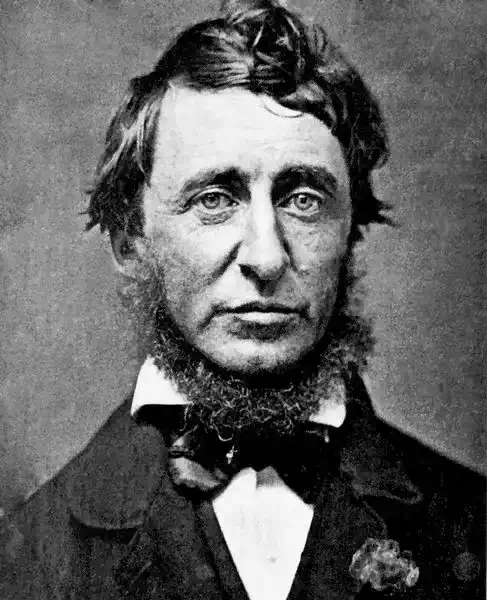
Henry David Thoreau
The Inward Morning
Packed in my mind lie all the clothes
Which outward nature wears,
And in its fashion's hourly change
It all things else repairs.
In vain I look for change abroad,
And can no difference find,
Till some new ray of peace uncalled
Illumes my inmost mind.
What is it gilds the trees and clouds,
And paints the heavens so gay,
But yonder fast-abiding light
With its unchanging ray?
Lo, when the sun streams through the wood,
Upon a winter's morn,
Where'er his silent beams intrude,
The murky night is gone.
How could the patient pine have known
The morning breeze would come,
Or humble flowers anticipate
The insect's noonday hum--
Till the new light with morning cheer
From far streamed through the aisles,
And nimbly told the forest trees
For many stretching miles?
I've heard within my inmost soul
Such cheerful morning news,
In the horizon of my mind
Have seen such orient hues,
As in the twilight of the dawn,
When the first birds awake,
Are heard within some silent wood,
Where they the small twigs break,
Or in the eastern skies are seen,
Before the sun appears,
The harbingers of summer heats
Which from afar he bears.
Read more →
229
William Wordsworth
Ruth
When Ruth was left half desolate,
Her Father took another Mate;
And Ruth, not seven years old,
A slighted child, at her own will
Went wandering over dale and hill,
In thoughtless freedom, bold.
And she had made a pipe of straw,
And music from that pipe could draw
Like sounds of winds and floods;
Had built a bower upon the green,
As if she from her birth had been
An infant of the woods.
Beneath her father's roof, alone
She seemed to live; her thoughts her own;
Herself her own delight;
Pleased with herself, nor sad, nor gay;
And, passing thus the live-long day,
She grew to woman's height.
There came a Youth from Georgia's shore--
A military casque he wore,
With splendid feathers drest;
He brought them from the Cherokees;
The feathers nodded in the breeze,
And made a gallant crest.
From Indian blood you deem him sprung:
But no! he spake the English tongue,
And bore a soldier's name;
And, when America was free
From battle and from jeopardy,
He 'cross the ocean came.
With hues of genius on his cheek
In finest tones the Youth could speak:
--While he was yet a boy,
The moon, the glory of the sun,
And streams that murmur as they run,
Had been his dearest joy.
He was a lovely Youth! I guess
The panther in the wilderness
Was not so fair as he;
And, when he chose to sport and play,
No dolphin ever was so gay
Upon the tropic sea.
Among the Indians he had fought,
And with him many tales he brought
Of pleasure and of fear;
Such tales as told to any maid
By such a Youth, in the green shade,
Were perilous to hear.
He told of girls--a happy rout!
Who quit their fold with dance and shout,
Their pleasant Indian town,
To gather strawberries all day long;
Returning with a choral song
When daylight is gone down.
He spake of plants that hourly change
Their blossoms, through a boundless range
Of intermingling hues;
With budding, fading, faded flowers
They stand the wonder of the bowers
From morn to evening dews.
He told of the magnolia, spread
High as a cloud, high over head!
The cypress and her spire;
--Of flowers that with one scarlet gleam
Cover a hundred leagues, and seem
To set the hills on fire.
The Youth of green savannahs spake,
And many an endless, endless lake,
With all its fairy crowds
Of islands, that together lie
As quietly as spots of sky
Among the evening clouds.
"How pleasant," then he said, "it were
A fisher or a hunter there,
In sunshine or in shade
To wander with an easy mind;
And build a household fire, and find
A home in every glade!
"What days and what bright years! Ah me!
Our life were life indeed, with thee
So passed in quiet bliss,
And all the while," said he, "to know
That we were in a world of woe,
On such an earth as this!"
And then he sometimes interwove
Fond thoughts about a father's love
"For there," said he, "are spun
Around the heart such tender ties,
That our own children to our eyes
Are dearer than the sun.
"Sweet Ruth! and could you go with me
My helpmate in the woods to be,
Our shed at night to rear;
Or run, my own adopted bride,
A sylvan huntress at my side,
And drive the flying deer!
"Beloved Ruth!"--No more he said,
The wakeful Ruth at midnight shed
A solitary tear:
She thought again--and did agree
With him to sail across the sea,
And drive the flying deer.
"And now, as fitting is and right,
We in the church our faith will plight,
A husband and a wife."
Even so they did; and I may say
That to sweet Ruth that happy day
Was more than human life.
Through dream and vision did she sink,
Delighted all the while to think
That on those lonesome floods,
And green savannahs, she should share
His board with lawful joy, and bear
His name in the wild woods.
But, as you have before been told,
This Stripling, sportive, gay, and bold,
And, with his dancing crest,
So beautiful, through savage lands
Had roamed about, with vagrant bands
Of Indians in the West.
The wind, the tempest roaring high,
The tumult of a tropic sky,
Might well be dangerous food
For him, a Youth to whom was given
So much of earth--so much of heaven,
And such impetuous blood.
Whatever in those climes he found
Irregular in sight or sound
Did to his mind impart
A kindred impulse, seemed allied
To his own powers, and justified
The workings of his heart.
Nor less, to feed voluptuous thought,
The beauteous forms of nature wrought,
Fair trees and gorgeous flowers;
The breezes their own languor lent;
The stars had feelings, which they sent
Into those favoured bowers.
Yet, in his worst pursuits, I ween
That sometimes there did intervene
Pure hopes of high intent:
For passions linked to forms so fair
And stately, needs must have their share
Of noble sentiment.
But ill he lived, much evil saw,
With men to whom no better law
Nor better life was known;
Deliberately, and undeceived,
Those wild men's vices he received,
And gave them back his own.
His genius and his moral frame
Were thus impaired, and he became
The slave of low desires:
A Man who without self-control
Would seek what the degraded soul
Unworthily admires.
And yet he with no feigned delight
Had wooed the Maiden, day and night
Had loved her, night and morn:
What could he less than love a Maid
Whose heart with so much nature played?
So kind and so forlorn!
Sometimes, most earnestly, he said,
"O Ruth! I have been worse than dead;
False thoughts, thoughts bold and vain,
Encompassed me on every side
When I, in confidence and pride,
Had crossed the Atlantic main.
"Before me shone a glorious world--
Fresh as a banner bright, unfurled
To music suddenly:
I looked upon those hills and plains,
And seemed as if let loose from chains,
To live at liberty.
"No more of this; for now, by thee
Dear Ruth! more happily set free
With nobler zeal I burn;
My soul from darkness is released,
Like the whole sky when to the east
The morning doth return."
Full soon that better mind was gone;
No hope, no wish remained, not one,--
They stirred him now no more;
New objects did new pleasure give,
And once again he wished to live
As lawless as before.
Meanwhile, as thus with him it fared,
They for the voyage were prepared,
And went to the sea-shore,
But, when they thither came the Youth
Deserted his poor Bride, and Ruth
Could never find him more.
God help thee, Ruth!--Such pains she had,
That she in half a year was mad,
And in a prison housed;
And there, with many a doleful song
Made of wild words, her cup of wrong
She fearfully caroused.
Yet sometimes milder hours she knew,
Nor wanted sun, nor rain, nor dew,
Nor pastimes of the May;
--They all were with her in her cell;
And a clear brook with cheerful knell
Did o'er the pebbles play.
When Ruth three seasons thus had lain,
There came a respite to her pain;
She from her prison fled;
But of the Vagrant none took thought;
And where it liked her best she sought
Her shelter and her bread.
Among the fields she breathed again:
The master-current of her brain
Ran permanent and free;
And, coming to the Banks of Tone,
There did she rest; and dwell alone
Under the greenwood tree.
The engines of her pain, the tools
That shaped her sorrow, rocks and pools,
And airs that gently stir
The vernal leaves--she loved them still;
Nor ever taxed them with the ill
Which had been done to her.
A Barn her 'winter' bed supplies;
But, till the warmth of summer skies
And summer days is gone,
(And all do in this tale agree)
She sleeps beneath the greenwood tree,
And other home hath none.
An innocent life, yet far astray!
And Ruth will, long before her day,
Be broken down and old:
Sore aches she needs must have! but less
Of mind, than body's wretchedness,
From damp, and rain, and cold.
If she is prest by want of food,
She from her dwelling in the wood
Repairs to a road-side;
And there she begs at one steep place
Where up and down with easy pace
The horsemen-travellers ride.
That oaten pipe of hers is mute,
Or thrown away; but with a flute
Her loneliness she cheers:
This flute, made of a hemlock stalk,
At evening in his homeward walk
The Quantock woodman hears.
I, too, have passed her on the hills
Setting her little water-mills
By spouts and fountains wild--
Such small machinery as she turned
Ere she had wept, ere she had mourned,
A young and happy Child!
Farewell! and when thy days are told,
Ill-fated Ruth, in hallowed mould
Thy corpse shall buried be,
For thee a funeral bell shall ring,
And all the congregation sing
A Christian psalm for thee.
Read more →
229

Anonymous
Will He No Come Back Again?
Royal Charlie's now awa,
Safely owre the friendly main;
Mony a heart will break in twa,
Should he ne'er come back again.
Will you no come back again?
Will you no come back again?
Better lo'ed you'll never be,
And will you no come back again?
Mony a traitor 'mang the isles
Brak the band o' nature's law;
Mony a traitor, wi' his wiles,
Sought to wear his life awa.
Will he no come back again?
Will he no come back again?
Better lo'ed he'll never be,
And will he no come back again?
The hills he trode were a' his ain,
And bed beneath the birken tree;
The bush that hid him on the plain,
There's none on earth can claim but he.
Will he no come back again?
Will he no come back again?
Better lo'ed he'll never be,
And will he no come back again?
Whene'er I hear the blackbird sing,
Unto the e'ening sinking down,
Or merl that makes the woods to ring,
To me they hae nae ither soun',
Than, Will he no come back again?
Will he no come back again?
Better lo'ed he'll never be,
And will he no come back again?
Mony a gallant sodger fought,
Mony a gallant chief did fa';
Death itself were dearly bought,
A' for Scotland's king and law.
Will he no come back again?
Will he no come back again?
Better lo'ed he'll never be,
And will he no come back again?
Sweet the lav'rock's note and lang,
Lilting wildly up the glen;
And aye the o'erword o' the sang
Is "Will he no come back again?"
Will he no come back again?
Will he no come back again?
Better lo'ed he'll never be,
And will he no come back again?
Read more →
226
Thomas Hardy
I Need Not Go
I need not go
Through sleet and snow
To where I know
She waits for me;
She will wait me there
Till I find it fair,
And have time to spare
From company.
When I've overgot
The world somewhat,
When things cost not
Such stress and strain,
Is soon enough
By cypress sough
To tell my Love
I am come again.
And if some day,
When none cries nay,
I still delay
To seek her side,
(Though ample measure
Of fitting leisure
Await my pleasure)
She will riot chide.
What--not upbraid me
That I delayed me,
Nor ask what stayed me
So long? Ah, no! -
New cares may claim me,
New loves inflame me,
She will not blame me,
But suffer it so.
Read more →
225
Robert W. Service
The Trail Of No Return
So now I take a bitter road
Whereon no bourne I see,
And wearily I lift the load
That once I bore with glee.
For me no more by sea or shore
Adventure's star shall burn,
As I forsake wild ways to take
The Trail of No Return.
Such paths of peril I have trod:
In sun and shade they lay.
And some went wistfully to God,
And some the devil's way.
But there is one I may not shun,
Though long my life's sojourn:
A dawn will break when I must take
The Trail of No Return.
Farewell to friends, good-bye to foes,
Adieu to smile or frown;
My voyaging is nigh its close,
And dark is drifting down.
With weary feet my way I beat,
Yet holy light discern . . .
So let me take without heart-break
The Trail of No Return.
Read more →
226

Spike Milligan
Goodbye S.S.
Go away girl, go away
and let me pack my dreams
Now where did I put those yesteryears
made up with broken seams
Where shall I sweep the pieces
my God they still look new
There's a taxi waiting at the door
but there's only room for you
Read more →
226

D.H. Lawrence
Lui et Elle
She is large and matronly
And rather dirty,
A little sardonic-looking, as if domesticity had driven her to it.
Though what she does, except lay four eggs at random in the garden once a year
And put up with her husband,
I don't know.
She likes to eat.
She hurries up, striding reared on long uncanny legs
When food is going.
Oh yes, she can make haste when she likes.
She snaps the soft bread from my hand in great mouthfuls,
Opening her rather pretty wedge of an iron, pristine face
Into an enormously wide-beaked mouth
Like sudden curved scissors,
And gulping at more than she can swallow, and working her thick, soft tongue,
And having the bread hanging over her chin.
O Mistress, Mistress,
Reptile mistress,
Your eye is very dark, very bright,
And it never softens
Although you watch.
She knows,
She knows well enough to come for food,
Yet she sees me not;
Her bright eye sees, but not me, not anything,
Sightful, sightless, seeing and visionless,
Reptile mistress.
Taking bread in her curved, gaping, toothless mouth,
She has no qualm when she catches my finger in her steel overlapping gums,
But she hangs on, and my shout and my shrinking are nothing to her.
She does not even know she is nipping me with her curved beak.
Snake-like she draws at my finger, while I drag it in horror away.
Mistress, reptile mistress,
You are almost too large, I am almost frightened.
He is much smaller,
Dapper beside her,
And ridiculously small.
Her laconic eye has an earthy, materialistic look,
His, poor darling, is almost fiery.
His wimple, his blunt-prowed face,
His low forehead, his skinny neck, his long, scaled, striving legs,
So striving, striving,
Are all more delicate than she,
And he has a cruel scar on his shell.
Poor darling, biting at her feet,
Running beside her like a dog, biting her earthy, splay feet,
Nipping her ankles,
Which she drags apathetic away, though without retreating into her shell.
Agelessly silent,
And with a grim, reptile determination,
Cold, voiceless age-after-age behind him, serpents' long obstinacy
Of horizontal persistence.
Little old man
Scuffling beside her, bending down, catching his opportunity,
Parting his steel-trap face, so suddenly, and seizing her scaly ankle,
And hanging grimly on,
Letting go at last as she drags away,
And closing his steel-trap face.
His steel-trap, stoic, ageless, handsome face.
Alas, what a fool he looks in this scuffle.
And how he feels it!
The lonely rambler, the stoic, dignified stalker through chaos,
The immune, the animate,
Enveloped in isolation,
Fore-runner.
Now look at him!
Alas, the spear is through the side of his isolation.
His adolescence saw him crucified into sex,
Doomed, in the long crucifixion of desire, to seek his consummation beyond himself.
Divided into passionate duality,
He, so finished and immune, now broken into desirous fragmentariness,
Doomed to make an intolerable fool of himself
In his effort toward completion again.
Poor little earthy house-inhabiting Osiris,
The mysterious bull tore him at adolescence into pieces,
And he must struggle after reconstruction, ignominiously.
And so behold him following the tail
Of that mud-hovel of his slowly rambling spouse,
Like some unhappy bull at the tail of a cow,
But with more than bovine, grim, earth-dank persistence.
Suddenly seizing the ugly ankle as she stretches out to walk,
Roaming over the sods,
Or, if it happen to show, at her pointed, heavy tail
Beneath the low-dropping back-board of her shell.
Their two shells like domed boats bumping,
Hers huge, his small;
Their splay feet rambling and rowing like paddles,
And stumbling mixed up in one another,
In the race of love --
Two tortoises,
She huge, he small.
She seems earthily apathetic,
And he has a reptile's awful persistence.
I heard a woman pitying her, pitying the Mère Tortue.
While I, I pity Monsieur.
'He pesters her and torments her,' said the woman.
How much more is he pestered and tormented, say I.
What can he do?
He is dumb, he is visionless,
Conceptionless.
His black, sad-lidded eye sees but beholds not
As her earthen mound moves on,
But he catches the folds of vulnerable, leathery skin,
Nail-studded, that shake beneath her shell,
And drags at these with his beak,
Drags and drags and bites,
While she pulls herself free, and rows her dull mound along.
Read more →
224