
Soul

Robert W. Service
Sinister Sooth
You say I am the slave of Fate
Bound by unalterable laws.
I harken, but your words I hate,
Your damnable Effect and Cause.
If there's no hope for happy Chance
Give me the bliss of ignorance.
You say my life ends with the tomb;
This brain, my mind machine, will rot;
Its many million cells that room
My personality and thought
Will in the Dark Destroyer's term
Provide a banquet for the worm.
You say--yet though your wisdom wells,
To it I am unreconciled;
My mind admits, my heart rebels . . .
O let me listen like a child
To Him who spoke with blessed breath
From bench of toil in Nazareth!
Read more →
222
Robert W. Service
To A Tycoon
Since much has been your mirth
And fair your fate,
Friend, leave your lot of earth
Less desolate.
With frailing overdue,
Why don't you try
The bit of God in you
To justify?
Try to discern the grace
All greed above,
That may uplift the race
To realm of love.
For in you is a spark,
A heaven-glow,
That will illume the dark
Before you go.
Aye, though it be that you
To Faith are blind,
There's one thing you can do,
It's--just be kind.
The anguish understand,
Of hearts that bleed:
Friends, lend a helping hand
To those in need.
Read more →
223

Christina Rossetti
Lord Jesus, Who Would Think That I Am Thine?
Lord Jesus, who would think that I am Thine?
Ah, who would think
Who sees me ready to turn back or sink,
That Thou art mine?
I cannot hold Thee fast though Thou art mine:
Hold Thou me fast,
So earth shall know at last and heaven at last
That I am Thine.
Read more →
221

D.H. Lawrence
Liaison
A big bud of moon hangs out of the twilight,
Star-spiders spinning their thread
Hang high suspended, withouten respite
Watching us overhead.
Come then under the trees, where the leaf-cloths
Curtain us in so dark
That here we’re safe from even the ermin-moth’s
Flitting remark.
Here in this swarthy, secret tent,
Where black boughs flap the ground,
You shall draw the thorn from my discontent,
Surgeon me sound.
This rare, rich night! For in here
Under the yew-tree tent
The darkness is loveliest where I could sear
You like frankincense into scent.
Here not even the stars can spy us,
Not even the white moths write
With their little pale signs on the wall, to try us
And set us affright.
Kiss but then the dust from off my lips,
But draw the turgid pain
From my breast to your bosom, eclipse
My soul again.
Waste me not, I beg you, waste
Not the inner night:
Taste, oh taste and let me taste
The core of delight.
Read more →
221

Emily Dickinson
'Tis true—They shut me in the Cold
'Tis true—They shut me in the Cold—
But then—Themselves were warm
And could not know the feeling 'twas—
Forget it—Lord—of Them—
Let not my Witness hinder Them
In Heavenly esteem—
No Paradise could be—Conferred
Through Their beloved Blame—
The Harm They did—was short—And since
Myself—who bore it—do—
Forgive Them—Even as Myself—
Or else—forgive not me—
Read more →
223
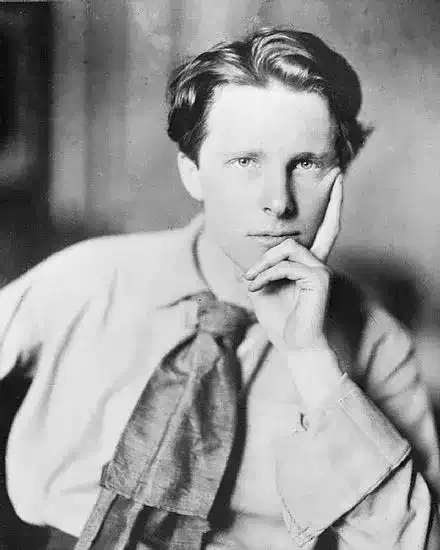
Rupert Brooke
The Call
Out of the nothingness of sleep,
The slow dreams of Eternity,
There was a thunder on the deep:
I came, because you called to me.
I broke the Night's primeval bars,
I dared the old abysmal curse,
And flashed through ranks of frightened stars
Suddenly on the universe!
The eternal silences were broken;
Hell became Heaven as I passed. --
What shall I give you as a token,
A sign that we have met, at last?
I'll break and forge the stars anew,
Shatter the heavens with a song;
Immortal in my love for you,
Because I love you, very strong.
Your mouth shall mock the old and wise,
Your laugh shall fill the world with flame,
I'll write upon the shrinking skies
The scarlet splendour of your name,
Till Heaven cracks, and Hell thereunder
Dies in her ultimate mad fire,
And darkness falls, with scornful thunder,
On dreams of men and men's desire.
Then only in the empty spaces,
Death, walking very silently,
Shall fear the glory of our faces
Through all the dark infinity.
So, clothed about with perfect love,
The eternal end shall find us one,
Alone above the Night, above
The dust of the dead gods, alone.
Read more →
224
Emily Dickinson
Who Court obtain within Himself
Who Court obtain within Himself
Sees every Man a King-
And Poverty of Monarchy
Is an interior thing-
No Man depose
Whom Fate Ordain-
And Who can add a Crown
To Him who doth continual
Conspire against His Own
Read more →
221

John Greenleaf Whittier
The Changeling ( From The Tent on the Beach )
FOR the fairest maid in Hampton
They needed not to search,
Who saw young Anna favor
Come walking into church,-
Or bringing from the meadows,
At set of harvest-day,
The frolic of the blackbirds,
The sweetness of the hay.
Now the weariest of all mothers,
The saddest two years' bride,
She scowls in the face of her husband,
And spurns her child aside.
"Rake out the red coals, goodman,-For
there the child shall lie,
Till the black witch comes to fetch her
And both up chimney fly.
"It's never my own little daughter,
It's never my own," she said;
"The witches have stolen my Anna,
And left me an imp instead.
"Oh, fair and sweet was my baby,
Blue eyes, and hair of gold;
But this is ugly and wrinkled,
Cross, and cunning, and old.
"I hate the touch of her fingers,
I hate the feel of her skin;
It's not the milk from my bosom,
But my blood, that she sucks in.
"My face grows sharp with the torment;
Look! my arms are skin and bone!
Rake open the red coals, goodman,
And the witch shall have her own.
"She'll come when she hears it crying,
In the shape of an owl or bat,
And she'll bring us our darling Anna
In place of her screeching brat."
Then the goodman, Ezra Dalton,
Laid his hand upon her head:
Thy sorrow is great, O woman!
I sorrow with thee," he said.
"The paths to trouble are many
And never but one sure way
Leads out to the light beyond it:
My poor wife, let us pray."
Then he said to the great All-Father,
"Thy daughter is weak and blind;
Let her sight come back, and clothe her
Once more in her right mind.
"Lead her out of this evil shadow,
Out of these fancies wild;
Let the holy love of the mother
Turn again to her child.
"Make her lips like the lips of Mary
Kissing her blessed Son;
Let her hands, like the hands of Jesus,
Rest on her little one.
"Comfort the soul of thy handmaid,
Open her prison-door,
And thine shall be all the glory
And praise forevermore."
Then into the face of its mother
The baby looked up and smiled;
And the cloud of her soul was lifted,
And she knew her little child.
A beam of the slant west sunshine
Made the wan face almost fair,
Lit the blue eyes' patient wonder
And the rings of pale gold hair.
She kissed it on lip and forehead,
She kissed it on cheek and chink
And she bared her snow-white bosom
To the lips so pale and thin.
Oh, fair on her bridal morning
Was the maid who blushed and smiled,
But fairer to Ezra Dalton
Looked the mother of his child.
With more than a lover's fondness
He stooped to her worn young face,
And the nursing child and the mother
He folded in one embrace.
"Blessed be God!" he murmured.
"Blessed be God!" she said;
"For I see, who once was blinded,-I
live, who once was dead.
"Now mount and ride, my goodman,
As thou lovest thy own soul!
Woe's me, if my wicked fancies
Be the death of Goody Cole!"
His horse he saddled and bridled,
And into the night rode he,
Now through the great black woodland,
Now by the white-beached sea.
He rode through the silent clearings,
He came to the ferry wide,
And thrice he called to the boatman
Asleep on the other side.
He set his horse to the river,
He swam to Newbury town,
And he called up Justice Sewall
In his nightcap and his gown.
And the grave and worshipful justice
(Upon whose soul be peace!)
Set his name to the jailer's warrant
For Goodwife Cole's release.
Then through the night the hoof-beats
Went sounding like a flail;
And Goody Cole at cockcrow
Came forth from Ipswich jail.
.
Read more →
220

Phillis Wheatley
To His Honour the Lieutenant-Governor
All-Conquering Death! by thy resistless pow'r,
Hope's tow'ring plumage falls to rise no more!
Of scenes terrestrial how the glories fly,
Forget their splendors, and submit to die!
Who ere escap'd thee, but the saint of old
Beyond the flood in sacred annals told,
And the great sage, whom fiery coursers drew
To heav'n's bright portals from Elisha's view;
Wond'ring he gaz'd at the refulgent car,
Then snatch'd the mantle floating on the air.
From Death these only could exemption boast,
And without dying gain'd th' immortal coast.
Not falling millions sate the tyrant's mind,
Nor can the victor's progress be confin'd.
But cease thy strife with Death, fond Nature, cease:
He leads the virtuous to the realms of peace;
His to conduct to the immortal plains,
Where heav'n's Supreme in bliss and glory reigns.
There sits, illustrious Sir, thy beauteous spouse;
A gem-blaz'd circle beaming on her brows.
Hail'd with acclaim among the heav'nly choirs,
Her soul new-kindling with seraphic fires,
To notes divine she tunes the vocal strings,
While heav'n's high concave with the music rings.
Virtue's rewards can mortal pencil paint?
No--all descriptive arts, and eloquence are faint;
Nor canst thou, Oliver, assent refuse
To heav'nly tidings from the Afric muse.
As soon may change thy laws, eternal fate,
As the saint miss the glories I relate;
Or her Benevolence forgotten lie,
Which wip'd the trick'ling tear from Misry's eye.
Three amiable Daughters who died when just arrived to Womens Estate.
Whene'er the adverse winds were known to blow,
When loss to loss * ensu'd, and woe to woe,
Calm and serene beneath her father's hand
She sat resign'd to the divine command.
No longer then, great Sir, her death deplore,
And let us hear the mournful sigh no more,
Restrain the sorrow streaming from thine eye,
Be all thy future moments crown'd with joy!
Nor let thy wishes be to earth confin'd,
But soaring high pursue th' unbodied mind.
Forgive the muse, forgive th' advent'rous lays,
That fain thy soul to heav'nly scenes would raise.
Read more →
220
Emily Dickinson
The World-stands-solemner-to me
The World-stands-solemner-to me-
Since I was wed-to Him-
A modesty befits the soul
That bears another's-name-
A doubt-if it be fair-indeed-
To wear that perfect-pearl-
The Man-upon the Woman-binds-
To clasp her soul-for all-
A prayer, that it more angel-prove-
A whiter Gift-within-
To that munificence, that chose-
So unadorned-a Queen-
A Gratitude-that such be true-
It had esteemed the Dream-
Too beautiful-for Shape to prove-
Or posture-to redeem!
Read more →
219
Rupert Brooke
Flight
Voices out of the shade that cried,
And long noon in the hot calm places,
And children's play by the wayside,
And country eyes, and quiet faces --
All these were round my steady paces.
Those that I could have loved went by me;
Cool gardened homes slept in the sun;
I heard the whisper of water nigh me,
Saw hands that beckoned, shone, were gone
In the green and gold. And I went on.
For if my echoing footfall slept,
Soon a far whispering there'd be
Of a little lonely wind that crept
From tree to tree, and distantly
Followed me, followed me. . . .
But the blue vaporous end of day
Brought peace, and pursuit baffled quite,
Where between pine-woods dipped the way.
I turned, slipped in and out of sight.
I trod as quiet as the night.
The pine-boles kept perpetual hush;
And in the boughs wind never swirled.
I found a flowering lowly bush,
And bowed, slid in, and sighed and curled,
Hidden at rest from all the world.
Safe! I was safe, and glad, I knew!
Yet -- with cold heart and cold wet brows
I lay. And the dark fell. . . . There grew
Meward a sound of shaken boughs;
And ceased, above my intricate house;
And silence, silence, silence found me. . . .
I felt the unfaltering movement creep
Among the leaves. They shed around me
Calm clouds of scent, that I did weep;
And stroked my face. I fell asleep.
Read more →
219
Phillis Wheatley
On The Death Of A Youn Gentleman
WHO taught thee conflict with the pow'rs of night,
To vanquish satan in the fields of light?
Who strung thy feeble arms with might unknown,
How great thy conquest, and how bright thy crown!
War with each princedom, throne, and pow'r is o'er,
The scene is ended to return no more.
O could my muse thy seat on high behold,
How deckt with laurel, how enrich'd with gold!
O could she hear what praise thine harp employs,
How sweet thine anthems, how divine thy joys!
What heav'nly grandeur should exalt her strain!
What holy raptures in her numbers reign!
To sooth the troubles of the mind to peace,
To still the tumult of life's tossing seas,
To ease the anguish of the parents heart,
What shall my sympathizing verse impart?
Where is the balm to heal so deep a wound?
Where shall a sov'reign remedy be found?
Look, gracious Spirit, from thine heav'nly bow'r,
And thy full joys into their bosoms pour;
The raging tempest of their grief control,
And spread the dawn of glory through the soul,
To eye the path the saint departed trod,
And trace him to the bosom of his God.
Read more →
219
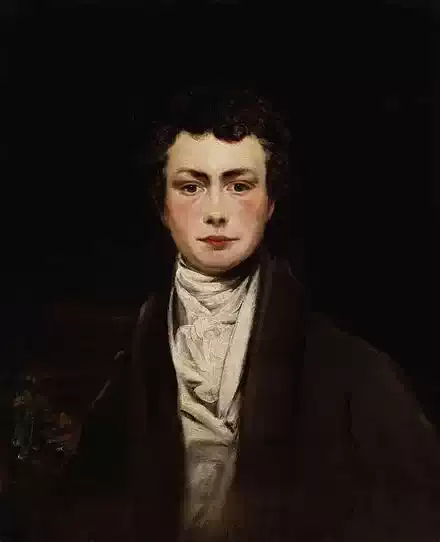
Thomas Moore
Whene'er I See Those Smiling Eyes
Whene'er I see those smiling eyes,
So full of hope, and joy, and light,
As if no cloud could ever rise,
To dim a heaven so purely bright --
I sigh to think how soon that brow
In grief may lose its every ray,
And that light heart, so joyous now,
Almost forget it once was gay.
For time will come with all its blights,
The ruin'd hope, the friend unkind,
And love, that leaves, where'er it lights,
A chill'd or burning heart behind:
While youth, that now like snow appears,
Ere sullied by the darkening rain,
When once 'tis touch'd by sorrow's tears,
Can never shine so bright again.
Read more →
221
Emily Dickinson
Should you but fail at—Sea
Should you but fail at—Sea—
In sight of me—
Or doomed lie—
Next Sun—to die—
Or rap—at Paradise—unheard
I'd harass God
Until he let you in!
Read more →
219
Emily Dickinson
What is—
What is—"Paradise"—
Who live there—
Are they "Farmers"—
Do they "hoe"—
Do they know that this is "Amherst"—
And that I—am coming—too—
Do they wear "new shoes"—in "Eden"—
Is it always pleasant—there—
Won't they scold us—when we're homesick—
Or tell God—how cross we are—
You are sure there's such a person
As "a Father"—in the sky—
So if I get lost—there—ever—
Or do what the Nurse calls "die"—
I shan't walk the "Jasper"—barefoot—
Ransomed folks—won't laugh at me—
Maybe—"Eden" a'n't so lonesome
As New England used to be!
Read more →
220
D.H. Lawrence
Tortoise Family Connections
On he goes, the little one,
Bud of the universe,
Pediment of life.
Setting off somewhere, apparently.
Whither away, brisk egg?
His mother deposited him on the soil as if he were no more than droppings,
And now he scuffles tinily past her as if she were an old rusty tin.
A mere obstacle,
He veers round the slow great mound of her --
Tortoises always foresee obstacles.
It is no use my saying to him in an emotional voice:
'This is your Mother, she laid you when you were an egg.'
He does not even trouble to answer: 'Woman, what have I to do with thee?'
He wearily looks the other way,
And she even more wearily looks another way still,
Each with the utmost apathy,
Incognisant,
Unaware,
Nothing.
As for papa,
He snaps when I offer him his offspring,
Just as he snaps when I poke a bit of stick at him,
Because he is irascible this morning, an irascible tortoise
Being touched with love, and devoid of fatherliness.
Father and mother,
And three little brothers,
And all rambling aimless, like little perambulating pebbles scattered in the garden,
Not knowing each other from bits of earth or old tins.
Except that papa and mama are old acquaintances, of course,
Though family feeling there is none, not even the beginnings.
Fatherless, motherless, brotherless, sisterless
Little tortoise.
Row on then, small pebble,
Over the clods of the autumn, wind-chilled sunshine,
Young gaiety.
Does he look for a companion?
No, no, don't think it.
He doesn't know he is alone;
Isolation is his birthright,
This atom.
To row forward, and reach himself tall on spiny toes,
To travel, to burrow into a little loose earth, afraid of the night,
To crop a little substance,
To move, and to be quite sure that he is moving:
Basta!
To be a tortoise!
Think of it, in a garden of inert clods
A brisk, brindled little tortoise, all to himself --
Adam!
In a garden of pebbles and insects
To roam, and feel the slow heart beat
Tortoise-wise, the first bell sounding
From the warm blood, in the dark-creation morning.
Moving, and being himself,
Slow, and unquestioned,
And inordinately there, O stoic!
Wandering in the slow triumph of his own existence,
Ringing the soundless bell of his presence in chaos,
And biting the frail grass arrogantly,
Decidedly arrogantly.
Read more →
219
Rupert Brooke
Blue Evening
My restless blood now lies a-quiver,
Knowing that always, exquisitely,
This April twilight on the river
Stirs anguish in the heart of me.
For the fast world in that rare glimmer
Puts on the witchery of a dream,
The straight grey buildings, richly dimmer,
The fiery windows, and the stream
With willows leaning quietly over,
The still ecstatic fading skies . . .
And all these, like a waiting lover,
Murmur and gleam, lift lustrous eyes,
Drift close to me, and sideways bending
Whisper delicious words.
But I
Stretch terrible hands, uncomprehending,
Shaken with love; and laugh; and cry.
My agony made the willows quiver;
I heard the knocking of my heart
Die loudly down the windless river,
I heard the pale skies fall apart,
And the shrill stars' unmeaning laughter,
And my voice with the vocal trees
Weeping. And Hatred followed after,
Shrilling madly down the breeze.
In peace from the wild heart of clamour,
A flower in moonlight, she was there,
Was rippling down white ways of glamour
Quietly laid on wave and air.
Her passing left no leaf a-quiver.
Pale flowers wreathed her white, white brows.
Her feet were silence on the river;
And 'Hush!' she said, between the boughs.
Read more →
220

Emily Jane Brontë
I Am the Only Being Whose Doom
I am the only being whose doom
No tongue would ask no eye would mourn
I never caused a thought of gloom
A smile of joy since I was born
In secret pleasure - secret tears
This changeful life has slipped away
As friendless after eighteen years
As lone as on my natal day
There have been times I cannot hide
There have been times when this was drear
When my sad soul forgot its pride
And longed for one to love me here
But those were in the early glow
Of feelings since subdued by care
And they have died so long ago
I hardly now believe they were
First melted off the hope of youth
Then Fancy's rainbow fast withdrew
And then experience told me truth
In mortal bosoms never grew
'Twas grief enough to think mankind
All hollow servile insincere -
But worse to trust to my own mind
And find the same corruption there
Read more →
220
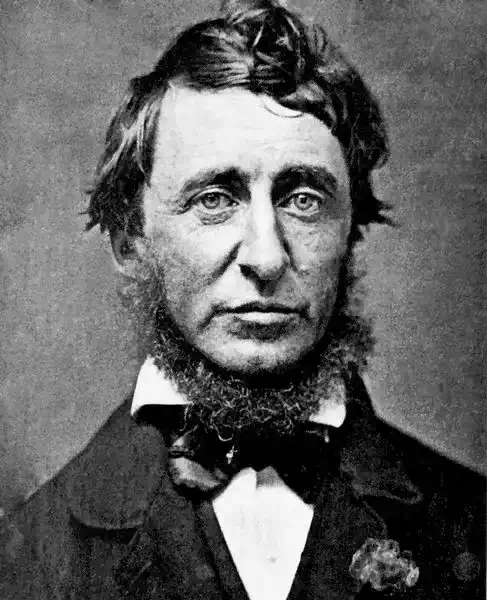
Henry David Thoreau
All Things Are Current Found
ALL things are current found
On earthly ground,
Spirits and elements
Have their descents.
Night and day, year on year,
High and low, far and near,
These are our own aspects,
These are our own regrets.
Ye gods of the shore,
Who abide evermore,
I see you far headland,
Stretching on either hand;
I hear the sweet evening sounds
From your undecaying grounds;
Cheat me no more with time,
Take me to your clime.
Read more →
220

Anonymous
The Seven Virgins
ALL under the leaves and the leaves of life
I met with virgins seven,
And one of them was Mary mild,
Our Lord's mother of Heaven.
'O what are you seeking, you seven fair maids,
All under the leaves of life?
Come tell, come tell, what seek you
All under the leaves of life?'
'We're seeking for no leaves, Thomas,
But for a friend of thine;
We're seeking for sweet Jesus Christ,
To be our guide and thine.'
'Go down, go down, to yonder town,
And sit in the gallery,
And there you'll see sweet Jesus Christ
Nail'd to a big yew-tree.'
So down they went to yonder town
As fast as foot could fall,
And many a grievous bitter tear
From the virgins' eyes did fall.
'O peace, Mother, O peace, Mother,
Your weeping doth me grieve:
I must suffer this,' He said,
'For Adam and for Eve.
'O Mother, take you John Evangelist
All for to be your son,
And he will comfort you sometimes,
Mother, as I have done.'
'O come, thou John Evangelist,
Thou'rt welcome unto me;
But more welcome my own dear Son,
Whom I nursed on my knee.'
Then He laid His head on His right shoulder,
Seeing death it struck Him nigh--
'The Holy Ghost be with your soul,
I die, Mother dear, I die.'
O the rose, the gentle rose,
And the fennel that grows so green!
God give us grace in every place
To pray for our king and queen.
Furthermore for our enemies all
Our prayers they should be strong:
Amen, good Lord; your charity
Is the ending of my song.
Read more →
218
Robert W. Service
The Revelation
The same old sprint in the morning, boys, to the same old din and smut;
Chained all day to the same old desk, down in the same old rut;
Posting the same old greasy books, catching the same old train:
Oh, how will I manage to stick it all, if I ever get back again?
We've bidden good-bye to life in a cage, we're finished with pushing a pen;
They're pumping us full of bellicose rage, they're showing us how to be men.
We're only beginning to find ourselves; we're wonders of brawn and thew;
But when we go back to our Sissy jobs, -- oh, what are we going to do?
For shoulders curved with the counter stoop will be carried erect and square;
And faces white from the office light will be bronzed by the open air;
And we'll walk with the stride of a new-born pride, with a new-found joy in our eyes,
Scornful men who have diced with death under the naked skies.
And when we get back to the dreary grind, and the bald-headed boss's call,
Don't you think that the dingy window-blind, and the dingier office wall,
Will suddenly melt to a vision of space, of violent, flame-scarred night?
Then . . . oh, the joy of the danger-thrill, and oh, the roar of the fight!
Don't you think as we peddle a card of pins the counter will fade away,
And again we'll be seeing the sand-bag rims, and the barb-wire's misty grey?
As a flat voice asks for a pound of tea, don't you fancy we'll hear instead
The night-wind moan and the soothing drone of the packet that's overhead?
Don't you guess that the things we're seeing now will haunt us through all the years;
Heaven and hell rolled into one, glory and blood and tears;
Life's pattern picked with a scarlet thread, where once we wove with a grey
To remind us all how we played our part in the shock of an epic day?
Oh, we're booked for the Great Adventure now, we're pledged to the Real Romance;
We'll find ourselves or we'll lose ourselves somewhere in giddy old France;
We'll know the zest of the fighter's life; the best that we have we'll give;
We'll hunger and thirst; we'll die . . . but first -- we'll live; by the gods, we'll live!
We'll breathe free air and we'll bivouac under the starry sky;
We'll march with men and we'll fight with men, and we'll see men laugh and die;
We'll know such joy as we never dreamed; we'll fathom the deeps of pain:
But the hardest bit of it all will be -- when we come back home again.
For some of us smirk in a chiffon shop, and some of us teach in a school;
Some of us help with the seat of our pants to polish an office stool;
The merits of somebody's soap or jam some of us seek to explain,
But all of us wonder what we'll do when we have to go back again.
Read more →
221
Robert W. Service
The Ballad Of Salvation Bill
'Twas in the bleary middle of the hard-boiled Arctic night,
I was lonesome as a loon, so if you can,
Imagine my emotions of amazement and delight
When I bumped into that Missionary Man.
He was lying lost and dying in the moon's unholy leer,
And frozen from his toes to finger-tips'
The famished wolf-pack ringed him; but he didn't seem to fear,
As he pressed his ice-bond Bible to his lips.
'Twas the limit of my trap-line, with the cabin miles away,
And every step was like a stab of pain;
But I packed him like a baby, and I nursed him night and day,
Till I got him back to health and strength again.
So there we were, benighted in the shadow of the Pole,
And he might have proved a priceless little pard,
If he hadn't got to worrying about my blessed soul,
And a-quotin' me his Bible by the yard.
Now there was I, a husky guy, whose god was Nicotine,
With a "coffin-nail" a fixture in my mug;
I rolled them in the pages of a pulpwood magazine,
And hacked them with my jack-knife from the plug.
For, Oh to know the bliss and glow that good tobacco means,
Just live among the everlasting ice . . .
So judge my horror when I found my stock of magazines
Was chewed into a chowder by the mice.
A woeful week went by and not a single pill I had,
Me that would smoke my forty in a day;
I sighed, I swore, I strode the floor; I felt I would go mad:
The gospel-plugger watched me with dismay.
My brow was wet, my teeth were set, my nerves were rasping raw;
And yet that preacher couldn't understand:
So with despair I wrestled there - when suddenly I saw
The volume he was holding in his hand.
Then something snapped inside my brain, and with an evil start
The wolf-man in me woke to rabid rage.
"I saved your lousy life," says I; "so show you have a heart,
And tear me out a solitary page."
He shrank and shrivelled at my words; his face went pewter white;
'Twas just as if I'd handed him a blow:
And then . . . and then he seemed to swell, and grow to Heaven's height,
And in a voice that rang he answered: "No!"
I grabbed my loaded rifle and I jabbed it to his chest:
"Come on, you shrimp, give me that Book," says I.
Well sir, he was a parson, but he stacked up with the best,
And for grit I got to hand it to the guy.
"If I should let you desecrate this Holy Word," he said,
"My soul would be eternally accurst;
So go on, Bill, I'm ready. You can pump me full of lead
And take it, but - you've got to kill me first."
Now I'm no foul assassin, though I'm full of sinful ways,
And I knew right there the fellow had me beat;
For I felt a yellow mongrel in the glory of his gaze,
And I flung my foolish firearm at his feet,
Then wearily I turned away, and dropped upon my bunk,
And there I lay and blubbered like a kid.
"Forgive me, pard," says I at last, "for acting like a skunk,
But hide the blasted rifle..." Which he did.
And he also hid his Bible, which was maybe just as well,
For the sight of all that paper gave me pain;
And there were crimson moments when I felt I'd o to hell
To have a single cigarette again.
And so I lay day after day, and brooded dark and deep,
Until one night I thought I'd end it all;
Then rough I roused the preacher, where he stretched pretending sleep,
With his map of horror turned towards the wall.
"See here, my pious pal," says I, "I've stood it long enough...
Behold! I've mixed some strychnine in a cup;
Enough to kill a dozen men - believe me it's no bluff;
Now watch me, for I'm gonna drink it up.
You've seen me bludgeoned by despair through bitter days and nights,
And now you'll see me squirming as I die.
You're not to blame, you've played the game according to your lights...
But how would Christ have played it? - Well, good-bye..."
With that I raised the deadly drink and laid it to my lips,
But he was on me with a tiger-bound;
And as we locked and reeled and rocked with wild and wicked grips,
The poison cup went crashing to the ground.
"Don't do it, Bill," he madly shrieked. "Maybe I acted wrong.
See, here's my Bible - use it as you will;
But promise me - you'll read a little as you go along...
You do! Then take it, Brother; smoke your fill."
And so I did. I smoked and smoked from Genesis to Job,
And as I smoked I read each blessed word;
While in the shadow of his bunk I heard him sigh and sob,
And then . . . a most peculiar thing occurred.
I got to reading more and more, and smoking less and less,
Till just about the day his heart was broke,
Says I: "Here, take it back, me lad. I've had enough I guess.
Your paper makes a mighty rotten smoke."
So then and there with plea and prayer he wrestled for my soul,
And I was racked and ravaged by regrets.
But God was good, for lo! next day there came the police patrol,
With paper for a thousand cigarettes. . .
So now I'm called Salvation Bill; I teach the Living Law,
And Bally-hoo the Bible with the best;
And if a guy won't listen - why, I sock him on the jaw,
And preach the Gospel sitting on his chest.
Read more →
221
Rupert Brooke
The Chilterns
Your hands, my dear, adorable,
Your lips of tenderness
-- Oh, I've loved you faithfully and well,
Three years, or a bit less.
It wasn't a success.
Thank God, that's done! and I'll take the road,
Quit of my youth and you,
The Roman road to Wendover
By Tring and Lilley Hoo,
As a free man may do.
For youth goes over, the joys that fly,
The tears that follow fast;
And the dirtiest things we do must lie
Forgotten at the last;
Even Love goes past.
What's left behind I shall not find,
The splendour and the pain;
The splash of sun, the shouting wind,
And the brave sting of rain,
I may not meet again.
But the years, that take the best away,
Give something in the end;
And a better friend than love have they,
For none to mar or mend,
That have themselves to friend.
I shall desire and I shall find
The best of my desires;
The autumn road, the mellow wind
That soothes the darkening shires.
And laughter, and inn-fires.
White mist about the black hedgerows,
The slumbering Midland plain,
The silence where the clover grows,
And the dead leaves in the lane,
Certainly, these remain.
And I shall find some girl perhaps,
And a better one than you,
With eyes as wise, but kindlier,
And lips as soft, but true.
And I daresay she will do.
Read more →
219
Christina Rossetti
Herself A Rose Who Bore The Rose
Herself a rose, who bore the Rose,
She bore the Rose and felt its thorn.
All loveliness new-born
Took on her bosom its repose,
And slept and woke there night and morn.
Lily herself, she bore the one
Fair Lily; sweeter, whiter, far
Than she or others are:
The Sun of Righteousness her Son,
She was His morning star.
She gracious, He essential Grace,
He was the Fountain, she the rill:
Her goodness to fulfil
And gladness, with proportioned pace
He led her steps through good and ill.
Christ's mirror she of grace and love,
Of beauty and of life and death:
By hope and love and faith
Transfigured to His likeness, 'Dove,
Spouse, Sister, Mother,' Jesus saith.
Read more →
218