
Soul

Robert W. Service
The Mountain And The Lake
I know a mountain thrilling to the stars,
Peerless and pure, and pinnacled with snow;
Glimpsing the golden dawn o'er coral bars,
Flaunting the vanisht sunset's garnet glow;
Proudly patrician, passionless, serene;
Soaring in silvered steeps where cloud-surfs break;
Virgin and vestal -- Oh, a very Queen!
And at her feet there dreams a quiet lake.
My lake adores my mountain -- well I know,
For I have watched it from its dawn-dream start,
Stilling its mirror to her splendid snow,
Framing her image in its trembling heart;
Glassing her graciousness of greening wood,
Kissing her throne, melodiously mad,
Thrilling responsive to her every mood,
Gloomed with her sadness, gay when she is glad.
My lake has dreamed and loved since time was born;
Will love and dream till time shall cease to be;
Gazing to Her in worship half forlorn,
Who looks towards the stars and will not see --
My peerless mountain, splendid in her scorn. . . .
Alas! poor little lake! Alas! poor me!
Read more →
220
Robert W. Service
Imagination
A gaunt and hoary slab of stone
I found in desert place,
And wondered why it lay alone
In that abandoned place.
Said I: 'Maybe a Palace stood
Where now the lizards crawl,
With courts of musky quietude
And turrets tall.
Maybe where low the vultures wing
'Mid mosque and minaret,
The proud pavilion of a King
Was luminously set.
'Mid fairy fountains, alcoves dim,
Upon a garnet throne
He ruled,--and now all trace of him
Is just this stone.
Ah well, I've done with wandering,
But from a blousy bar
I see with drunk imagining
A Palace like a star.
I build it up from one grey stone
With gardens hanging high,
And dream . . . Long, long ere Babylon
It's King was I.
Read more →
219

Christina Rossetti
A Better Ressurection
I have no wit, no words, no tears;
My heart within me like a stone
Is numbed too much for hopes or fears.
Look right, look left, I dwell alone;
I lift mine eyes, but dimmed with grief
No everlasting hills I see;
My life is in the falling leaf:
O Jesus, quicken me.
My life is like a faded leaf,
My harvest dwindled to a husk:
Truly my life is void and brief
And tedious in the barren dusk;
My life is like a frozen thing,
No bud nor greenness can I see:
Yet rise it shall--the sap of spring;
O Jesus, rise in me.
My life is like a broken bowl,
A broken bowl that cannot hold
One drop of water for my soul
Or cordial in the searching cold;
Cast in the fire the perished thing;
Melt and remould it, till it be
A royal cup for Him, my King:
O Jesus, drink of me.
Read more →
218
Robert W. Service
The Telegraph Operator
I will not wash my face;
I will not brush my hair;
I "pig" around the place-There's
nobody to care.
Nothing but rock and tree;
Nothing but wood and stone,
Oh, God, it's hell to be
Alone, alone, alone!
Snow-peaks and deep-gashed draws
Corral me in a ring.
I feel as if I was
The only living thing
On all this blighted earth;
And so I frowst and shrink,
And crouching by my hearth
I hear the thoughts I think.
I think of all I miss--
The boys I used to know;
The girls I used to kiss;
The coin I used to blow:
The bars I used to haunt;
The racket and the row;
The beers I didn't want
(I wish I had 'em now).
Day after day the same,
Only a little worse;
No one to grouch or blame--
Oh, for a loving curse!
Oh, in the night I fear,
Haunted by nameless things,
Just for a voice to cheer,
Just for a hand that clings!
Faintly as from a star
Voices come o'er the line;
Voices of ghosts afar,
Not in this world of mine;
Lives in whose loom I grope;
Words in whose weft I hear
Eager the thrill of hope,
Awful the chill of fear.
I'm thinking out aloud;
I reckon that is bad;
(The snow is like a shroud)--
Maybe I'm going mad.
Say! wouldn't that be tough?
This awful hush that hugs
And chokes one is enough
To make a man go "bugs".
There's not a thing to do;
I cannot sleep at night;
No wonder I'm so blue;
Oh, for a friendly fight!
The din and rush of strife;
A music-hall aglow;
A crowd, a city, life--
Dear God, I miss it so!
Here, you have moped enough!
Brace up and play the game!
But say, it's awful tough--
Day after day the same
(I've said that twice, I bet).
Well, there's not much to say.
I wish I had a pet,
Or something I could play.
Cheer up! don't get so glum
And sick of everything;
The worst is yet to come;
God help you till the Spring.
God shield you from the Fear;
Teach you to laugh, not moan.
Ha! ha! it sounds so queer--
Alone, alone, alone!
Read more →
217
Robert W. Service
The Whistle Of Sandy McGraw
You may talk o' your lutes and your dulcimers fine,
Your harps and your tabors and cymbals and a',
But here in the trenches jist gie me for mine
The wee penny whistle o' Sandy McGraw.
Oh, it's: "Sandy, ma lad, will you lilt us a tune?"
And Sandy is willin' and trillin' like mad;
Sae silvery sweet that we a' throng aroun',
And some o' it's gay, but the maist o' it's sad.
Jist the wee simple airs that sink intae your hert,
And grup ye wi' love and wi' longin' for hame;
And ye glour like an owl till you're feelin' the stert
O' a tear, and you blink wi' a feelin' o' shame.
For his song's o' the heather, and here in the dirt
You listen and dream o' a land that's sae braw,
And he mak's you forget a' the harm and the hurt,
For he pipes like a laverock, does Sandy McGraw.
* * * * *
At Eepers I mind me when rank upon rank
We rose from the trenches and swept like the gale,
Till the rapid-fire guns got us fell on the flank
And the murderin' bullets came swishin' like hail:
Till a' that were left o' us faltered and broke;
Till it seemed for a moment a panicky rout,
When shrill through the fume and the flash and the smoke
The wee valiant voice o' a whistle piped out.
`The Campbells are Comin'': Then into the fray
We bounded wi' bayonets reekin' and raw,
And oh we fair revelled in glory that day,
Jist thanks to the whistle o' Sandy McGraw.
* * * * *
At Loose, it wis after a sconnersome fecht,
On the field o' the slain I wis crawlin' aboot;
And the rockets were burnin' red holes in the nicht;
And the guns they were veciously thunderin' oot;
When sudden I heard a bit sound like a sigh,
And there in a crump-hole a kiltie I saw:
"Whit ails ye, ma lad? Are ye woundit?" says I.
"I've lost ma wee whustle," says Sandy McGraw.
"'Twas oot by yon bing where we pressed the attack,
It drapped frae ma pooch, and between noo and dawn
There isna much time so I'm jist crawlin' back. . . ."
"Ye're daft, man!" I telt him, but Sandy wis gone.
Weel, I waited a wee, then I crawled oot masel,
And the big stuff wis gorin' and roarin' around,
And I seemed tae be under the oxter o' hell,
And Creation wis crackin' tae bits by the sound.
And I says in ma mind: "Gang ye back, ye auld fule!"
When I thrilled tae a note that wis saucy and sma';
And there in a crater, collected and cool,
Wi' his wee penny whistle wis Sandy McGraw.
Ay, there he wis playin' as gleg as could be,
And listenin' hard wis a spectacled Boche;
Then Sandy turned roon' and he noddit tae me,
And he says: "Dinna blab on me, Sergeant McTosh.
The auld chap is deein'. He likes me tae play.
It's makin' him happy. Jist see his een shine!"
And thrillin' and sweet in the hert o' the fray
Wee Sandy wis playin' The Watch on the Rhine.
* * * * *
The last scene o' a' -- 'twas the day that we took
That bit o' black ruin they ca' Labbiesell.
It seemed the hale hillside jist shivered and shook,
And the red skies were roarin' and spewin' oot shell.
And the Sergeants were cursin' tae keep us in hand,
And hard on the leash we were strainin' like dugs,
When upward we shot at the word o' command,
And the bullets were dingin' their songs in oor lugs.
And onward we swept wi' a yell and a cheer,
And a' wis destruction, confusion and din,
And we knew that the trench o' the Boches wis near,
And it seemed jist the safest bit hole tae be in.
So we a' tumbled doon, and the Boches were there,
And they held up their hands, and they yelled: "Kamarad!"
And I merched aff wi' ten, wi' their palms in the air,
And my! I wis prood-like, and my! I wis glad.
And I thocht: if ma lassie could see me jist then. . . .
When sudden I sobered at somethin' I saw,
And I stopped and I stared, and I halted ma men,
For there on a stretcher wis Sandy McGraw.
Weel, he looks in ma face, jist as game as ye please:
"Ye ken hoo I hate tae be workin'," says he;
"But noo I can play in the street for bawbees,
Wi' baith o' ma legs taken aff at the knee."
And though I could see he wis rackit wi' pain,
He reached for his whistle and stertit tae play;
And quaverin' sweet wis the pensive refrain:
The floors o' the forest are a' wede away.
Then sudden he stoppit: "Man, wis it no grand
Hoo we took a' them trenches?" . . . He shakit his heid:
"I'll -- no -- play -- nae -- mair ----" feebly doon frae his hand
Slipped the wee penny whistle and -- Sandy wis deid.
* * * * *
And so you may talk o' your Steinways and Strads,
Your wonderful organs and brasses sae braw;
But oot in the trenches jist gie me, ma lads,
Yon wee penny whistle o' Sandy McGraw.
Read more →
216
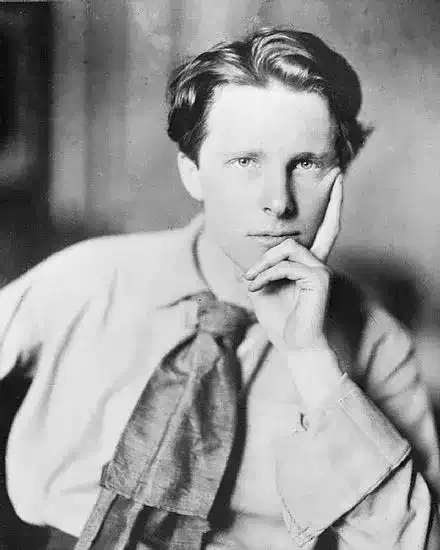
Rupert Brooke
The One Before the Last
I dreamt I was in love again
With the One Before the Last,
And smiled to greet the pleasant pain
Of that innocent young past.
But I jumped to feel how sharp had been
The pain when it did live,
How the faded dreams of Nineteen-ten
Were Hell in Nineteen-five.
The boy's woe was as keen and clear,
The boy's love just as true,
And the One Before the Last, my dear,
Hurt quite as much as you.
* * * * *
Sickly I pondered how the lover
Wrongs the unanswering tomb,
And sentimentalizes over
What earned a better doom.
Gently he tombs the poor dim last time,
Strews pinkish dust above,
And sighs, "The dear dead boyish pastime!
But THIS -- ah, God! -- is Love!"
-- Better oblivion hide dead true loves,
Better the night enfold,
Than men, to eke the praise of new loves,
Should lie about the old!
* * * * *
Oh! bitter thoughts I had in plenty.
But here's the worst of it --
I shall forget, in Nineteen-twenty,
YOU ever hurt abit!
Read more →
218

William Wordsworth
Inside of King's College Chapel, Cambridge
. Tax not the royal Saint with vain expense,
With ill-matched aims the Architect who planned--
Albeit labouring for a scanty band
Of white-robed Scholars only--this immense
And glorious Work of fine intelligence!
Give all thou canst; high Heaven rejects the lore
Of nicely-calculated less or more;
So deemed the man who fashioned for the sense
These lofty pillars, spread that branching roof
Self-poised, and scooped into ten thousand cells,
Where light and shade repose, where music dwells
Lingering--and wandering on as loth to die;
Like thoughts whose very sweetness yieldeth proof
That they were born for immortality.
Read more →
216
Robert W. Service
The Little Old Log Cabin
When a man gits on his uppers in a hard-pan sort of town,
An' he ain't got nothin' comin' an' he can't afford ter eat,
An' he's in a fix for lodgin' an' he wanders up an' down,
An' you'd fancy he'd been boozin', he's so locoed 'bout the feet;
When he's feelin' sneakin' sorry an' his belt is hangin' slack,
An' his face is peaked an' gray-like an' his heart gits down an' whines,
Then he's apt ter git a-thinkin' an' a-wishin' he was back
In the little ol' log cabin in the shadder of the pines.
When he's on the blazin' desert an' his canteen's sprung a leak,
An' he's all alone an' crazy an' he's crawlin' like a snail,
An' his tongue's so black an' swollen that it hurts him fer to speak,
An' he gouges down fer water an' the raven's on his trail;
When he's done with care and cursin' an' he feels more like to cry,
An' he sees ol' Death a-grinnin' an' he thinks upon his crimes,
Then he's like ter hev' a vision, as he settles down ter die,
Of the little ol' log cabin an' the roses an' the vines.
Oh, the little ol' log cabin, it's a solemn shinin' mark,
When a feller gits ter sinnin' an' a-goin' ter the wall,
An' folks don't understand him an' he's gropin' in the dark,
An' he's sick of bein' cursed at an' he's longin' fer his call!
When the sun of life's a-sinkin' you can see it 'way above,
On the hill from out the shadder in a glory 'gin the sky,
An' your mother's voice is callin', an' her arms are stretched in love,
An' somehow you're glad you're goin', an' you ain't a-scared to die;
When you'll be like a kid again an' nestle to her breast,
An' never leave its shelter, an' forget, an' love, an' rest.
Read more →
216

George Herbert
Jordan
Who says that fictions only and false hair
Become a verse? Is there in truth no beauty?
Is all good structure in a winding stair?
May no lines pass, except they do their duty
Not to a true, but painted chair?
Is it no verse, except enchanted groves
And sudden arbours shadow coarse-spun lines?
Must purling streams refresh a lover's loves?
Must all be veiled, while he that reads divines,
Catching the sense at two removes?
Shepherds are honest people: let them sing:
Riddle who list, for me, and pull for prime:
I envy no man's nightingale or spring;
Nor let them punish me with loss of rhyme,
Who plainly say, My God, My King.
Read more →
218
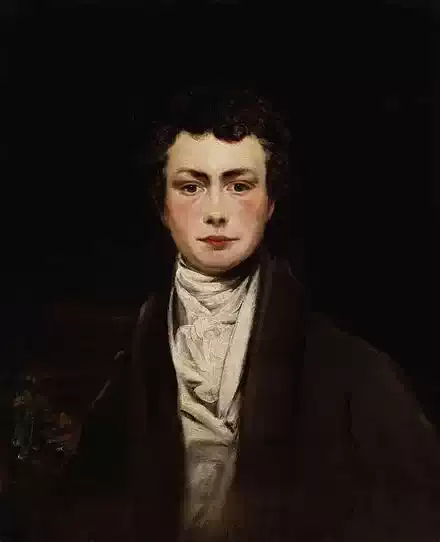
Thomas Moore
I Wish I Was By That Dim Lake
I wish I was by that dim Lake,
Where sinful souls their farewell take
Of this vain world, and half-way lie
In death's cold shadow, ere they die.
There, there, far from thee,
Deceitful world, my home should be;
Where, come what might of gloom and pain,
False hope should n'er deceive again.
The lifeless sky, the mournful sound
Of unseen waters falling round;
The dry leaves, quivering o'er my head,
Like man, unquiet even when dead!
These, ay, these shall wean
My soul from life's deluding scene,
And turn each thought, o'ercharged with gloom
Like willows, downward towards the tomb.
As they, who to their couch at night
Would win repose, first quench the light,
So must the hopes, that keep this breast
Awake, be quench'd, ere it can rest.
Cold, cold, this heart must grow,
Unmmoved by either joy or woe,
Like freezing founts, where all that's thrown
Within their current turns to stone.
Read more →
216
Robert W. Service
Sensibility
I
Once, when a boy, I killed a cat.
I guess it's just because of that
A cat evokes my tenderness,
And takes so kindly my caress.
For with a rich, resonant purr
It sleeks an arch or ardent fur
So vibrantly against my shin;
And as I tickle tilted chin
And rub the roots of velvet ears
Its tail in undulation rears.
Then tremoring with all its might,
In blissful sensuous delight,
It looks aloft with lambent eyes,
Mystic, Egyptianly wise,
And O so eloquently tries
In every fibre to express
Consummate trust and friendliness.
II
I think the longer that we live
The more do we grow sensitive
Of hurt and harm to man and beast,
And learn to suffer at the least
Surmise of other's suffering;
Till pity, lie an eager spring
Wells up, and we are over-fain
To vibrate to the chords of pain.
For look you - after three-score yeas
I see with anguish nigh to tears
That starveling cat so sudden still
I set my terrier to to kill.
Great, golden memories pale away,
But that unto my dying day
Will haunt and haunt me horribly.
Why, even my poor dog felt shame
And shrank away as if to blame
of that poor mangled mother-cat
Would ever lie at his doormat.
III
What's done is done. No power can bring
To living joy a slaughtered thing.
Aye, if of life I gave my own
I could not for my guilt atone.
And though in stress of sea and land
Sweet breath has ended at my hand,
That boyhood killing in my eyes
A thousand must epitomize.
Yet to my twilight steals a thought:
Somehow forgiveness may be bought;
Somewhere I'll live my life again
So finely sensitized to pain,
With heart so rhymed to truth and right
That Truth will be a blaze of light;
All all the evil I have wrought
Will haggardly to home be brought. . . .
Then will I know my hell indeed,
And bleed where I made others bleed,
Till purged by penitence of sin
To Peace (or Heaven) I may win.
Well, anyway, you know the why
We are so pally, cats and I;
So if you have the gift of shame,
O Fellow-sinner, be the same.
Read more →
217
Thomas Moore
Oh, Banquet Not
Oh, banquet not in those shining bowers,
Where Youth resorts, but come to me,
For mine's a garden of faded flowers,
More fit for sorrow, for age, and thee.
And there we shall have our feast of tears,
And many a cup in silence pour;
Our guests, the shades of former years,
Our toasts, to lips that bloom no more.
There, while the myrtle's withering boughs
Their lifeless leaves around us shed,
We'll brim the bowl to broken vows
To friends long lost, the changed, the dead.
Or, while some blighted laurel waves
Its branches o'er the dreary spot,
We'll drink to those neglected graves
Where valour sleeps, unnamed, forgot.
Read more →
218
William Wordsworth
Surprised by Joy
Surprised By Joy
Surprised by joy — impatient as the Wind
I turned to share the transport--Oh! with whom
But Thee, deep buried in the silent tomb,
That spot which no vicissitude can find?
Love, faithful love, recalled thee to my mind--
But how could I forget thee? Through what power,
Even for the least division of an hour,
Have I been so beguiled as to be blind
To my most grievous loss?--That thought's return
Was the worst pang that sorrow ever bore,
Save one, one only, when I stood forlorn,
Knowing my heart's best treasure was no more;
That neither present time, nor years unborn
Could to my sight that heavenly face restore.
Read more →
212
Robert W. Service
Longevity
I watched one day a parrot grey - 'twas in a barber shop.
"Cuckold!" he cried, until I sighed: "You feathered devil, stop!"
Then balefully he looked at me, and slid along his perch,
With sneering eye that seemed to pry me very soul to search.
So fierce, so bold, so grim, so cold, so agate was his stare:
And then that bird I thought I heard this sentiment declare:
"As it appears, a hundred years a parrot may survive,
When you are gone I'll sit upon this perch and be alive.
In this same spot I'll drop my crot, and crack my sunflower seeds,
And cackle loud when in a shroud you rot beneath the weeds.
I'll carry on when carrion you lie beneath the yew;
With claw and beak my grub I'll seek when grubs are seeking you."
"Foul fowl! said I, "don't prophesy, I'll jolly well contrive
That when I rot in bone-yard lot you cease to be alive."
So I bespoke that barber bloke: "Joe, here's a five pound note.
It's crisp and new, and yours if you will slice that parrot's throat."
"In part," says he, "I must agree, for poor I be in pelf,
With right good will I'll take your bill, but - cut his throat yourself."
So it occurred I took that bird to my ancestral hall,
And there he sat and sniggered at the portraits on the wall.
I sought to cut his wind-pipe but he gave me such a peck,
So cross was I, I swore I'd try to wring his blasted neck;
When shrill he cried: "It's parrotcide what you propose to do;
For every time you make a rhyme you're just a parrot too."
Said I: "It's true. I bow to you. Poor parrots are we all."
And now I sense with reverence the wisdom of his poll.
For every time I want a rhyme he seems to find the word;
In any doubt he helps me out - a most amazing bird.
This line that lies before your eyes he helped me to indite;
I sling the ink but often think it's he who ought to write.
It's he who should in mystic mood concoct poetic screeds,
And I who ought to drop my crot and crackle sunflower seeds.
A parrot nears a hundred years (or so the legend goes),
So were I he this century I might see to its close.
Then I might swing within my ring while revolutions roar,
And watch a world to ruin hurled - and find it all a bore.
As upside-down I cling and clown, I might with parrot eyes
Blink blandly when excited men are moulding Paradise.
New Christs might die, while grimly I would croak and carry on,
Till gnarled and old I should behold the year TWO THOUSAND dawn.
But what a fate! How I should hate upon my perch to sit,
And nothing do to make anew a world for angels fit.
No, better far, though feeble are my lyric notes and flat,
Be dead and done than anyone who lives a life like that.
Though critic-scarred a humble bard I feel I'd rather be,
Than flap and flit and shriek and spit through all a century.
So feathered friend, until the end you may divide my den,
And make a mess, which (more or less) I clean up now and then.
But I prefer the doom to share of dead and gone compeers,
Than parrot be, and live to see ten times a hundred years.
Read more →
213
Robert W. Service
Death's Way
Old Man Death's a lousy heel who will not play the game:
Let Graveyard yawn and doom down crash, he'll sneer and turn away.
But when the sky with rapture rings and joy is like a flame,
Then Old Man Death grins evilly, and swings around to slay.
Jack Duval was my chosen pal in the ranks of the Reckless Men.
Thick as thieves they used to say, and it may be that we were:
Where the price of life is a naked knife and dammed are nine in ten,
It doesn't do to be curious in the Legion Etrangère.
So when it came to a hidden shame our mugs were zippered tight;
He never asked me what I'd done, and he would never tell;
But though like men we revelled, when it came to bloody fight
I knew that I could bank on him clear to the hubs of hell.
They still tell how we held the Fort back on the blasted bled,
And blazed from out the shambles till the fagged relief arrived.
"The garrison are slaughtered all," the Captain grimly said:
Piped Jack: "Give us a slug of hooch and say that TWO survived."
Then was that time we were lost, canteen and carcase dry,
As on we staggered with the thought: "Here's where our story ends."
Ten desert days delirious, when black against the sky,
We saw a line of camels, and the Arabs were our friends.
And last of all, the lurid night we crashed the gates of hell
And stemmed the Teuton torrent as it roared on every side;
And we were left in blood and mud to rot on the Moselle -
Two lacerated Legionaires, whom all supposed had died.
Three times death thought to take us and three times he stayed his hand;
But when we left the Legion what a happy pair we were,
Then reckless roving up and down the sunny land,
I found Jack eating bouillabaisse back on the Cannebière.
"Next week I wed," he gaily said, "the sweetest girl on earth.
I wonder why did Death pass by just then and turn to gloat?
"Oh I'm so happy! You must come and join us in our mirth."...
Death struck ... Jack gasped and choked and - died:
A fishbone in his throat.
Read more →
215
Thomas Moore
The Irish Peasant to his Mistress
Through grief and through danger thy smile hath cheer'd my way,
Till hope seem'd to bud from each thorn that round me lay;
The darker our fortune, the brighter our pure love burn'd,
Till shame into glory, till fear into zeal was turn'd;
Yes, slave as I was, in thy arms my spirit felt free,
And bless'd even the sorrows that made me more dear to thee.
Thy rival was honour'd, while thou wert wrong'd and scorn'd,
Thy crown was of briers, while gold her brows adorn'd;
She woo'd me to temples, while thou lay'st hid in caves,
Her friends were all masters, while thine, alas! were slaves;
Yet cold in the earth, at thy feet, I would rather be,
Then wed what I loved not, or turn one thought from thee.
They slander thee sorely, who say thy vows are frail --
Hadst thou been a false one, thy cheek had look'd less pale.
They say, too, so long thou hast worn those lingering chains --
That deep in thy heart they have printed their servile stains --
Oh! foul is the slander -- no chain could that soul subdue --
Where shineth thy spirit, there liberty shineth too!
Read more →
214
Robert W. Service
The Hearth-Stone
The leaves are sick and jaundiced, they
Drift down the air;
December's sky is sodden grey,
Dark with despair;
A bleary dawn will light anon
A world of care.
My name is cut into a stone,
No care have I;
The letters drool, as I alone
Forgotten lie:
With weed my grave is overgrown,
None cometh nigh.
A hundred hollow years will speed
As I decay;
And I'll be comrade to the weed,
Kin to the clay;
Until some hind in homing-need
Will pass my way.
Until some lover seeking hearth
With joy will see
My nameless stone sunk in the earth
And it will be
The ruddy birth of childish mirth,
And elder glee.
And none will dream it bore my name
Decades ago;
A scribbling fool of little fame,
Who loved life so . . .
Well, flesh is grass and Time must pass,-Heigh
ho! Heigh ho!
Read more →
215
Robert W. Service
Beachcomber
When I have come with happy heart to sixty years and ten,
I'll buy a boat and sail away upon a summer sea;
And in a little lonely isle that's far and far from men,
In peace and praise I'll spend the days the Gods allow to me.
For I am weary of a strife so pitiless and vain;
And in a far and fairy isle, bewilderingly bright,
I'll learn to know the leap and glow of rapture once again,
And welcome every living dawn with wonder and delight.
And there I'll build a swan-white house above the singing foam,
With brooding eaves, where joyously rich roses climb and cling;
With crotons in a double row, like wine and honeycomb,
And flame trees dripping golden rain, and palms pavilioning.
And there I'll let the wind and wave do what they will with me;
And I will dwell unto the end with loveliness and joy;
And drink from out the crystal spring, and eat from off the tree,
As simple as a savage is, as careless as a boy.
For I have come to think that Life's a lamentable tale,
And all we break our hearts to win is little worth our while;
For fame and fortune in the end are comfortless and stale,
And it is best to dream and rest upon a radiant isle.
So I'll blot out the bitter years of sufferance and scorn,
And I'll forget the fear and fret, the poverty and pain;
And in a shy and secret isle I'll be a man newborn,
And fashion life to heart's desire, and seek my soul again.
For when I come with happy heart to sixty years and ten,
I fondly hope the best of life will yet remain to me;
And so I'll burn my foolish books and break my futile pen,
And seek a tranced and tranquil isle, that dreams eternally.
I'll turn my back on all the world, I'll bid my friends adieu;
Unto the blink I'll leave behind what gold I have to give;
And in a jewelled solitude I'll mould my life anew,
And nestling close to Nature's heart, I'll learn at last . . . to live.
Read more →
214
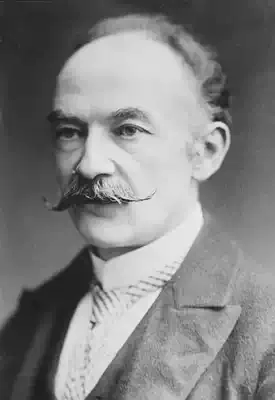
Thomas Hardy
How Great My Grief (Triolet)
How great my grief, my joys how few,
Since first it was my fate to know thee!
- Have the slow years not brought to view
How great my grief, my joys how few,
Nor memory shaped old times anew,
Nor loving-kindness helped to show thee
How great my grief, my joys how few,
Since first it was my fate to know thee?
Read more →
212

Wilfred Owen
The Kind Ghosts
She sleeps on soft, last breaths; but no ghost looms
Out of the stillness of her palace wall,
Her wall of boys on boys and dooms on dooms.
She dreams of golden gardens and sweet glooms,
Not marvelling why her roses never fall
Nor what red mouths were torn to make their blooms.
The shades keep down which well might roam her hall.
Quiet their blood lies in her crimson rooms
And she is not afraid of their footfall.
They move not from her tapestries, their pall,
Nor pace her terraces, their hecatombs,
Lest aught she be disturbed, or grieved at all.
Read more →
212

John Greenleaf Whittier
To My Friend OnThe Death Of His Sister
Thine is a grief, the depth of which another
May never know;
Yet, o'er the waters, O my stricken brother!
To thee I go.
I lean my heart unto thee, sadly folding
Thy hand in mine;
With even the weakness of my soul upholding
The strength of thine.
I never knew, like thee, the dear departed;
I stood not by
When, in calm trust, the pure and tranquil-hearted
Lay down to die.
And on thy ears my words of weak condoling
Must vainly fall
The funeral bell which in thy heart is tolling,
Sounds over all!
I will not mock thee with the poor world's common
And heartless phrase,
Nor wrong the memory of a sainted woman
With idle praise.
With silence only as their benediction,
God's angels come
Where, in the shadow of a great affliction,
The soul sits dumb!
Yet, would I say what thy own heart approveth
Our Father's will,
Calling to Him the dear one whom He loveth,
Is mercy still.
Not upon thee or thine the solemn angel
Hath evil wrought
Her funeral anthem is a glad evangel,-The
good die not!
God calls our loved ones, but we lose not wholly
What He hath given;
They live on earth, in thought and deed, as truly
As in His heaven.
And she is with thee; in thy path of trial
She walketh yet;
Still with the baptism of thy self-denial
Her locks are wet.
Up, then, my brother! Lo, the fields of harvest
Lie white in view
She lives and loves thee, and the God thou servest
To both is true.
Thrust in thy sickle! England's toilworn peasants
Thy call abide;
And she thou mourn'st, a pure and holy presence,
Shall glean beside!
Read more →
212
Thomas Moore
Desmond's Song
By the Feal's wave benighted,
No star in the skies,
To thy door by Love lighted,
I first saw those eyes.
Some voice whisper'd o'er me,
As the threshold I cross'd,
There was ruin before me,
If I loved, I was lost.
Love came, and brought sorrow
Too soon in his train;
Yet so sweet, that to-morrow
'Twere welcome again.
Though misery's full measure
My portion should be,
I would drain it with pleasure,
If pour'd out by thee.
You, who call it dishonour
To bow to this flame,
If you've eyes, look but on her,
And blush while you blame.
Hath the pearl less whiteness
Because of its birth?
Hath the violet less brightness
For growing near earth?
No -- Man for his glory
To ancestry flies;
But Woman's bright story
Is told in her eyes.
While the Monarch but traces
Through mortals his line,
Beauty, born of the Graces,
Ranks next to Divine!
Read more →
214
Rupert Brooke
The Life Beyond
He wakes, who never thought to wake again,
Who held the end was Death. He opens eyes
Slowly, to one long livid oozing plain
Closed down by the strange eyeless heavens.
He lies;
And waits; and once in timeless sick surmise
Through the dead air heaves up an unknown hand,
Like a dry branch. No life is in that land,
Himself not lives, but is a thing that cries;
An unmeaning point upon the mud; a speck
Of moveless horror; an Immortal One
Cleansed of the world, sentient and dead; a fly
Fast-stuck in grey sweat on a corpse’s neck.
I though when love for you died, I should die.
It’s dead. Alone, most strangely, I live on.
Read more →
212
William Wordsworth
The Prelude, Book : School-time (Continued)
. Thus far, O Friend! have we, though leaving much
Unvisited, endeavour'd to retrace
My life through its first years, and measured back
The way I travell'd when I first began
To love the woods and fields; the passion yet
Was in its birth, sustain'd, as might befal,
By nourishment that came unsought, for still,
From week to week, from month to month, we liv'd
A round of tumult: duly were our games
Prolong'd in summer till the day-light fail'd;
No chair remain'd before the doors, the bench
And threshold steps were empty; fast asleep
The Labourer, and the old Man who had sate,
A later lingerer, yet the revelry
Continued, and the loud uproar: at last,
When all the ground was dark, and the huge clouds
Were edged with twinkling stars, to bed we went,
With weary joints, and with a beating mind.
Ah! is there one who ever has been young,
Nor needs a monitory voice to tame
The pride of virtue, and of intellect?
And is there one, the wisest and the best
Of all mankind, who does not sometimes wish
For things which cannot be, who would not give,
If so he might, to duty and to truth
The eagerness of infantine desire?
A tranquillizing spirit presses now
On my corporeal frame: so wide appears
The vacancy between me and those days,
Which yet have such self-presence in my mind
That, sometimes, when I think of them, I seem
Two consciousnesses, conscious of myself
And of some other Being. A grey Stone
Of native rock, left midway in the Square
Of our small market Village, was the home
And centre of these joys, and when, return'd
After long absence, thither I repair'd,
I found that it was split, and gone to build
A smart Assembly-room that perk'd and flar'd
With wash and rough-cast elbowing the ground
Which had been ours. But let the fiddle scream,
And be ye happy! yet, my Friends! I know
That more than one of you will think with me
Of those soft starry nights, and that old Dame
From whom the stone was nam'd who there had sate
And watch'd her Table with its huckster's wares
Assiduous, thro' the length of sixty years.
We ran a boisterous race; the year span round
With giddy motion. But the time approach'd
That brought with it a regular desire
For calmer pleasures, when the beauteous forms
Of Nature were collaterally attach'd
To every scheme of holiday delight,
And every boyish sport, less grateful else,
And languidly pursued. When summer came
It was the pastime of our afternoons
To beat along the plain of Windermere
With rival oars, and the selected bourne
Was now an Island musical with birds
That sang for ever; now a Sister Isle
Beneath the oaks' umbrageous covert, sown
With lillies of the valley, like a field;
And now a third small Island where remain'd
An old stone Table, and a moulder'd Cave,
A Hermit's history. In such a race,
So ended, disappointment could be none,
Uneasiness, or pain, or jealousy:
We rested in the shade, all pleas'd alike,
Conquer'd and Conqueror. Thus the pride of strength,
And the vain-glory of superior skill
Were interfus'd with objects which subdu'd
And temper'd them, and gradually produc'd
A quiet independence of the heart.
And to my Friend, who knows me, I may add,
Unapprehensive of reproof, that hence
Ensu'd a diffidence and modesty,
And I was taught to feel, perhaps too much,
The self-sufficing power of solitude.
No delicate viands sapp'd our bodily strength;
More than we wish'd we knew the blessing then
Of vigorous hunger, for our daily meals
Were frugal, Sabine fare! and then, exclude
A little weekly stipend, and we lived
Through three divisions of the quarter'd year
In pennyless poverty. But now, to School
Return'd, from the half-yearly holidays,
We came with purses more profusely fill'd,
Allowance which abundantly suffic'd
To gratify the palate with repasts
More costly than the Dame of whom I spake,
That ancient Woman, and her board supplied.
Hence inroads into distant Vales, and long
Excursions far away among the hills,
Hence rustic dinners on the cool green ground,
Or in the woods, or near a river side,
Or by some shady fountain, while soft airs
Among the leaves were stirring, and the sun
Unfelt, shone sweetly round us in our joy.
Nor is my aim neglected, if I tell
How twice in the long length of those half-years
We from our funds, perhaps, with bolder hand
Drew largely, anxious for one day, at least,
To feel the motion of the galloping Steed;
And with the good old Inn-keeper, in truth,
On such occasion sometimes we employ'd
Sly subterfuge; for the intended bound
Of the day's journey was too distant far
For any cautious man, a Structure famed
Beyond its neighbourhood, the antique Walls
Of that large Abbey which within the vale
Of Nightshade, to St. Mary's honour built,
Stands yet, a mouldering Pile, with fractured Arch,
Belfry, and Images, and living Trees,
A holy Scene! along the smooth green turf
Our Horses grazed: to more than inland peace
Left by the sea wind passing overhead
(Though wind of roughest temper) trees and towers
May in that Valley oftentimes be seen,
Both silent and both motionless alike;
Such is the shelter that is there, and such
The safeguard for repose and quietness.
Our steeds remounted, and the summons given,
With whip and spur we by the Chauntry flew
In uncouth race, and left the cross-legg'd Knight,
And the stone-Abbot, and that single Wren
Which one day sang so sweetly in the Nave
Of the old Church, that, though from recent showers
The earth was comfortless, and, touch'd by faint
Internal breezes, sobbings of the place,
And respirations, from the roofless walls
The shuddering ivy dripp'd large drops, yet still,
So sweetly 'mid the gloom the invisible Bird
Sang to itself, that there I could have made
My dwelling-place, and liv'd for ever there
To hear such music. Through the Walls we flew
And down the valley, and a circuit made
In wantonness of heart, through rough and smooth
We scamper'd homeward. Oh! ye Rocks and Streams,
And that still Spirit of the evening air!
Even in this joyous time I sometimes felt
Your presence, when with slacken'd step we breath'd
Along the sides of the steep hills, or when,
Lighted by gleams of moonlight from the sea,
We beat with thundering hoofs the level sand.
Upon the Eastern Shore of Windermere,
Above the crescent of a pleasant Bay,
There stood an Inn, no homely-featured Shed,
Brother of the surrounding Cottages,
But 'twas a splendid place, the door beset
With Chaises, Grooms, and Liveries, and within
Decanters, Glasses, and the blood-red Wine.
In ancient times, or ere the Hall was built
On the large Island, had this Dwelling been
More worthy of a Poet's love, a Hut,
Proud of its one bright fire, and sycamore shade.
But though the rhymes were gone which once inscribed
The threshold, and large golden characters
On the blue-frosted Signboard had usurp'd
The place of the old Lion, in contempt
And mockery of the rustic painter's hand,
Yet to this hour the spot to me is dear
With all its foolish pomp. The garden lay
Upon a slope surmounted by the plain
Of a small Bowling-green; beneath us stood
A grove; with gleams of water through the trees
And over the tree-tops; nor did we want
Refreshment, strawberries and mellow cream.
And there, through half an afternoon, we play'd
On the smooth platform, and the shouts we sent
Made all the mountains ring. But ere the fall
Of night, when in our pinnace we return'd
Over the dusky Lake, and to the beach
Of some small Island steer'd our course with one,
The Minstrel of our troop, and left him there,
And row'd off gently, while he blew his flute
Alone upon the rock; Oh! then the calm
And dead still water lay upon my mind
Even with a weight of pleasure, and the sky
Never before so beautiful, sank down
Into my heart, and held me like a dream.
Thus daily were my sympathies enlarged,
And thus the common range of visible things
Grew dear to me: already I began
To love the sun, a Boy I lov'd the sun,
Not as I since have lov'd him, as a pledge
And surety of our earthly life, a light
Which while we view we feel we are alive;
But, for this cause, that I had seen him lay
His beauty on the morning hills, had seen
The western mountain touch his setting orb,
In many a thoughtless hour, when, from excess
Of happiness, my blood appear'd to flow
With its own pleasure, and I breath'd with joy.
And from like feelings, humble though intense,
To patriotic and domestic love
Analogous, the moon to me was dear;
For I would dream away my purposes,
Standing to look upon her while she hung
Midway between the hills, as if she knew
No other region; but belong'd to thee,
Yea, appertain'd by a peculiar right
To thee and thy grey huts, my darling Vale!
Those incidental charms which first attach'd
My heart to rural objects, day by day
Grew weaker, and I hasten on to tell
How Nature, intervenient till this time,
And secondary, now at length was sought
For her own sake. But who shall parcel out
His intellect, by geometric rules,
Split, like a province, into round and square?
Who knows the individual hour in which
His habits were first sown, even as a seed,
Who that shall point, as with a wand, and say,
'This portion of the river of my mind
Came from yon fountain?' Thou, my Friend! art one
More deeply read in thy own thoughts; to thee
Science appears but, what in truth she is,
Not as our glory and our absolute boast,
But as a succedaneum, and a prop
To our infirmity. Thou art no slave
Of that false secondary power, by which,
In weakness, we create distinctions, then
Deem that our puny boundaries are things
Which we perceive, and not which we have made.
To thee, unblinded by these outward shows,
The unity of all has been reveal'd
And thou wilt doubt with me, less aptly skill'd
Than many are to class the cabinet
Of their sensations, and, in voluble phrase,
Run through the history and birth of each,
As of a single independent thing.
Hard task to analyse a soul, in which,
Not only general habits and desires,
But each most obvious and particular thought,
Not in a mystical and idle sense,
But in the words of reason deeply weigh'd,
Hath no beginning. Bless'd the infant Babe,
(For with my best conjectures I would trace
The progress of our Being) blest the Babe,
Nurs'd in his Mother's arms, the Babe who sleeps
Upon his Mother's breast, who, when his soul
Claims manifest kindred with an earthly soul,
Doth gather passion from his Mother's eye!
Such feelings pass into his torpid life
Like an awakening breeze, and hence his mind
Even [in the first trial of its powers]
Is prompt and watchful, eager to combine
In one appearance, all the elements
And parts of the same object, else detach'd
And loth to coalesce. Thus, day by day,
Subjected to the discipline of love,
His organs and recipient faculties
Are quicken'd, are more vigorous, his mind spreads,
Tenacious of the forms which it receives.
In one beloved presence, nay and more,
In that most apprehensive habitude
And those sensations which have been deriv'd
From this beloved Presence, there exists
A virtue which irradiates and exalts
All objects through all intercourse of sense.
No outcast he, bewilder'd and depress'd;
Along his infant veins are interfus'd
The gravitation and the filial bond
Of nature, that connect him with the world.
Emphatically such a Being lives,
An inmate of this active universe;
From nature largely he receives; nor so
Is satisfied, but largely gives again,
For feeling has to him imparted strength,
And powerful in all sentiments of grief,
Of exultation, fear, and joy, his mind,
Even as an agent of the one great mind,
Creates, creator and receiver both,
Working but in alliance with the works
Which it beholds.--Such, verily, is the first
Poetic spirit of our human life;
By uniform control of after years
In most abated or suppress'd, in some,
Through every change of growth or of decay,
Pre-eminent till death. From early days,
Beginning not long after that first time
In which, a Babe, by intercourse of touch,
I held mute dialogues with my Mother's heart
I have endeavour'd to display the means
Whereby this infant sensibility,
Great birthright of our Being, was in me
Augmented and sustain'd. Yet is a path
More difficult before me, and I fear
That in its broken windings we shall need
The chamois' sinews, and the eagle's wing:
For now a trouble came into my mind
From unknown causes. I was left alone,
Seeking the visible world, nor knowing why.
The props of my affections were remov'd,
And yet the building stood, as if sustain'd
By its own spirit! All that I beheld
Was dear to me, and from this cause it came,
That now to Nature's finer influxes
My mind lay open, to that more exact
And intimate communion which our hearts
Maintain with the minuter properties
Of objects which already are belov'd,
And of those only. Many are the joys
Of youth; but oh! what happiness to live
When every hour brings palpable access
Of knowledge, when all knowledge is delight,
And sorrow is not there. The seasons came,
And every season to my notice brought
A store of transitory qualities
Which, but for this most watchful power of love
Had been neglected, left a register
Of permanent relations, else unknown,
Hence life, and change, and beauty, solitude
More active, even, than 'best society',
Society made sweet as solitude
By silent inobtrusive sympathies,
And gentle agitations of the mind
From manifold distinctions, difference
Perceived in things, where to the common eye,
No difference is; and hence, from the same source
Sublimer joy; for I would walk alone,
In storm and tempest, or in starlight nights
Beneath the quiet Heavens; and, at that time,
Have felt whate'er there is of power in sound
To breathe an elevated mood, by form
Or image unprofaned; and I would stand,
Beneath some rock, listening to sounds that are
The ghostly language of the ancient earth,
Or make their dim abode in distant winds.
Thence did I drink the visionary power.
I deem not profitless those fleeting moods
Of shadowy exultation: not for this,
That they are kindred to our purer mind
And intellectual life; but that the soul,
Remembering how she felt, but what she felt
Remembering not, retains an obscure sense
Of possible sublimity, to which,
With growing faculties she doth aspire,
With faculties still growing, feeling still
That whatsoever point they gain, they still
Have something to pursue. And not alone,
In grandeur and in tumult, but no less
In tranquil scenes, that universal power
And fitness in the latent qualities
And essences of things, by which the mind
Is mov'd by feelings of delight, to me
Came strengthen'd with a superadded soul,
A virtue not its own. My morning walks
Were early; oft, before the hours of School
I travell'd round our little Lake, five miles
Of pleasant wandering, happy time! more dear
For this, that one was by my side, a Friend
Then passionately lov'd; with heart how full
Will he peruse these lines, this page, perhaps
A blank to other men! for many years
Have since flow'd in between us; and our minds,
Both silent to each other, at this time
We live as if those hours had never been.
Nor seldom did I lift our cottage latch
Far earlier, and before the vernal thrush
Was audible, among the hills I sate
Alone, upon some jutting eminence
At the first hour of morning, when the Vale
Lay quiet in an utter solitude.
How shall I trace the history, where seek
The origin of what I then have felt?
Oft in these moments such a holy calm
Did overspread my soul, that I forgot
That I had bodily eyes, and what I saw
Appear'd like something in myself, a dream,
A prospect in my mind. 'Twere long to tell
What spring and autumn, what the winter snows,
And what the summer shade, what day and night,
The evening and the morning, what my dreams
And what my waking thoughts supplied, to nurse
That spirit of religious love in which
I walked with Nature. But let this, at least
Be not forgotten, that I still retain'd
My first creative sensibility,
That by the regular action of the world
My soul was unsubdu'd. A plastic power
Abode with me, a forming hand, at times
Rebellious, acting in a devious mood,
A local spirit of its own, at war
With general tendency, but for the most
Subservient strictly to the external things
With which it commun'd. An auxiliar light
Came from my mind which on the setting sun
Bestow'd new splendor, the melodious birds,
The gentle breezes, fountains that ran on,
Murmuring so sweetly in themselves, obey'd
A like dominion; and the midnight storm
Grew darker in the presence of my eye.
Hence by obeisance, my devotion hence,
And hence my transport. Nor should this, perchance,
Pass unrecorded, that I still have lov'd
The exercise and produce of a toil
Than analytic industry to me
More pleasing, and whose character I deem
Is more poetic as resembling more
Creative agency. I mean to speak
Of that interminable building rear'd
By observation of affinities
In objects where no brotherhood exists
To common minds. My seventeenth year was come
And, whether from this habit, rooted now
So deeply in my mind, or from excess
Of the great social principle of life,
Coercing all things into sympathy,
To unorganic natures I transferr'd
My own enjoyments, or, the power of truth
Coming in revelation, I convers'd
With things that really are, I, at this time
Saw blessings spread around me like a sea.
Thus did my days pass on, and now at length
From Nature and her overflowing soul
I had receiv'd so much that all my thoughts
Were steep'd in feeling; I was only then
Contented when with bliss ineffable
I felt the sentiment of Being spread
O'er all that moves, and all that seemeth still,
O'er all, that, lost beyond the reach of thought
And human knowledge, to the human eye
Invisible, yet liveth to the heart,
O'er all that leaps, and runs, and shouts, and sings,
Or beats the gladsome air, o'er all that glides
Beneath the wave, yea, in the wave itself
And mighty depth of waters. Wonder not
If such my transports were; for in all things
I saw one life, and felt that it was joy.
One song they sang, and it was audible,
Most audible then when the fleshly ear,
O'ercome by grosser prelude of that strain,
Forgot its functions, and slept undisturb'd.
If this be error, and another faith
Find easier access to the pious mind,
Yet were I grossly destitute of all
Those human sentiments which make this earth
So dear, if I should fail, with grateful voice
To speak of you, Ye Mountains and Ye Lakes,
And sounding Cataracts! Ye Mists and Winds
That dwell among the hills where I was born.
If, in my youth, I have been pure in heart,
If, mingling with the world, I am content
With my own modest pleasures, and have liv'd,
With God and Nature communing, remov'd
From little enmities and low desires,
The gift is yours; if in these times of fear,
This melancholy waste of hopes o'erthrown,
If, 'mid indifference and apathy
And wicked exultation, when good men,
On every side fall off we know not how,
To selfishness, disguis'd in gentle names
Of peace, and quiet, and domestic love,
Yet mingled, not unwillingly, with sneers
On visionary minds; if in this time
Of dereliction and dismay, I yet
Despair not of our nature; but retain
A more than Roman confidence, a faith
That fails not, in all sorrow my support,
The blessing of my life, the gift is yours,
Ye mountains! thine, O Nature! Thou hast fed
My lofty speculations; and in thee,
For this uneasy heart of ours I find
A never-failing principle of joy,
And purest passion. Thou, my Friend! wert rear'd
In the great City, 'mid far other scenes;
But we, by different roads at length have gain'd
The self-same bourne. And for this cause to Thee
I speak, unapprehensive of contempt,
The insinuated scoff of coward tongues,
And all that silent language which so oft
In conversation betwixt man and man
Blots from the human countenance all trace
Of beauty and of love. For Thou hast sought
The truth in solitude, and Thou art one,
The most intense of Nature's worshippers
In many things my Brother, chiefly here
In this my deep devotion. Fare Thee well!
Health, and the quiet of a healthful mind
Attend thee! seeking oft the haunts of men,
And yet more often living with Thyself,
And for Thyself, so haply shall thy days
Be many, and a blessing to mankind.
Read more →
213