
Soul

Johann Wolfgang von Goethe
The Goblet
ONCE I held a well-carved brimming goblet,--
In my two hands tightly clasp'd I held it,
Eagerly the sweet wine sipp'd I from it,
Seeking there to drown all care and sorrow.
Amor enter'd in, and found me sitting,
And he gently smiled in modest fashion,
Smiled as though the foolish one he pitied.
"Friend, I know a far more beauteous vessel,
One wherein to sink thy spirit wholly;
Say, what wilt thou give me, if I grant it,
And with other nectar fill it for thee?"
Oh, how kindly hath he kept his promise!
For to me, who long had yearn'd, he granted
Thee, my Lida, fill'd with soft affection.
When I clasp mine arms around thee fondly,
When I drink in love's long-hoarded balsam
From thy darling lips so true, so faithful,
Fill'd with bliss thus speak I to my spirit
"No! a vessel such as this, save Amor
Never god hath fashion'd or been lord of!
Such a form was ne'er produced by Vulcan
With his cunning, reason-gifted hammers!
On the leaf-crown'd mountains may Lyaeus
Bid his Fauns, the oldest and the wisest,
Pass the choicest clusters through the winepress,
And himself watch o'er the fermentation:
Such a draught no toil can e'er procure him!"
Read more →
389

Emily Dickinson
Before I got my eye put out
Before I got my eye put out
I liked as well to see-
As other Creatures, that have Eyes
And know no other way-
But were it told to me-Today-
That I might have the sky
For mine-I tell you that my Heart
Would split, for size of me-
The Meadows-mine-
The Mountains-mine-
All Forests-Stintless Stars-
As much of Noon as I could take
Between my finite eyes-
The Motions of the Dipping Birds-
The Morning's Amber Road-
For mine-to look at when I liked-
The News would strike me dead-
So safer-guess-with just my soul
Upon the Window pane-
Where other Creatures put their eyes
Incautious-
of the Sun-
Read more →
389
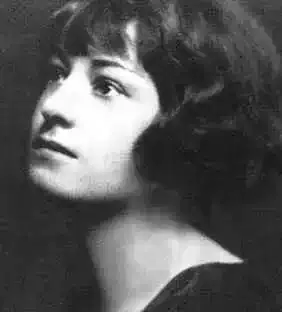
Dorothy Parker
Pattern
Leave me to my lonely pillow.
Go, and take your silly posies
Who has vowed to wear the willow
Looks a fool, tricked out in roses.
Who are you, my lad, to ease me?
Leave your pretty words unspoken.
Tinkling echoes little please me,
Now my heart is freshly broken.
Over young are you to guide me,
And your blood is slow and sleeping.
If you must, then sit beside me....
Tell me, why have I been weeping?
Read more →
386

William Butler Yeats
Crazy Jane Reproved
I care not what the sailors say:
All those dreadful thunder-stones,
All that storm that blots the day
Can but show that Heaven yawns;
Great Europa played the fool
That changed a lover for a bull.
Fol de rol, fol de rol.
To round that shell's elaborate whorl,
Adorning every secret track
With the delicate mother-of-pearl,
Made the joints of Heaven crack:
So never hang your heart upon
A roaring, ranting journeyman.
Fol de rol, fol de rol.
Read more →
386

Walter de la Mare
The Spirit of Air
Coral and clear emerald,
And amber from the sea,
Lilac-coloured amethyst,
Chalcedony;
The lovely Spirit of Air
Floats on a cloud and doth ride,
Clad in the beauties of earth
Like a bride.
So doth she haunt me; and words
Tell but a tithe of the tale.
Sings all the sweetness of Spring
Even in the nightengale?
Nay, but with echoes she cries
Of the valley of love;
Dews on the thorns of her feet,
And darkness above.
Read more →
386

Henry Wadsworth Longfellow
Earlier Poems : Autumn
With what a glory comes and goes the year!
The buds of spring, those beautiful harbingers
Of sunny skies and cloudless times, enjoy
Life's newness, and earth's garniture spread out;
And when the silver habit of the clouds
Comes down upon the autumn sun, and with
A sober gladness the old year takes up
His bright inheritance of golden fruits,
A pomp and pageant fill the splendid scene.
There is a beautiful spirit breathing now
Its mellow richness on the clustered trees,
And, from a beaker full of richest dyes,
Pouring new glory on the autumn woods,
And dipping in warm light the pillared clouds.
Morn on the mountain, like a summer bird,
Lifts up her purple wing, and in the vales
The gentle wind, a sweet and passionate wooer,
Kisses the blushing leaf, and stirs up life
Within the solemn woods of ash deep-crimsoned,
And silver beech, and maple yellow-leaved,
Where Autumn, like a faint old man, sits down
By the wayside a-weary. Through the trees
The golden robin moves. The purple finch,
That on wild cherry and red cedar feeds,
A winter bird, comes with its plaintive whistle,
And pecks by the witch-hazel, whilst aloud
From cottage roofs the warbling blue-bird sings,
And merrily, with oft-repeated stroke,
Sounds from the threshing-floor the busy flail.
O what a glory doth this world put on
For him who, with a fervent heart, goes forth
Under the bright and glorious sky, and looks
On duties well performed, and days well spent!
For him the wind, ay, and the yellow leaves,
Shall have a voice, and give him eloquent teachings.
He shall so hear the solemn hymn that Death
Has lifted up for all, that he shall go
To his long resting-place without a tear.
Read more →
386
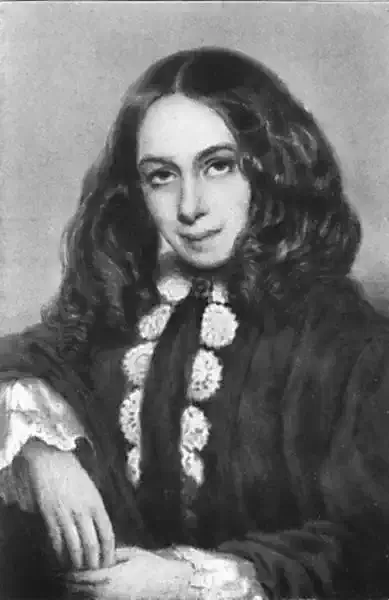
Elizabeth Barrett Browning
Sonnet XXIX: I Think of Thee
I think of thee!--my thoughts do twine and bud
About thee,as wild vines, about a tree,
Put out broad leaves, and soon there's nought to see
Except the straggling green which hides the wood.
Yet, O my palm-tree, be it understood
I will not have my thoughts instead of thee
Who art dearer, better! Rather, instantly
Renew thy presence; as a strong tree should,
Rustle thy boughs and set thy trunk all bare,
And let these bands of greenery which insphere thee
Drop heavily down,--burst, shattered, everywhere!
Because, in this deep joy to see and hear thee
And breathe within thy shadow a new air,
I do not think of thee--I am too near thee.
Read more →
385
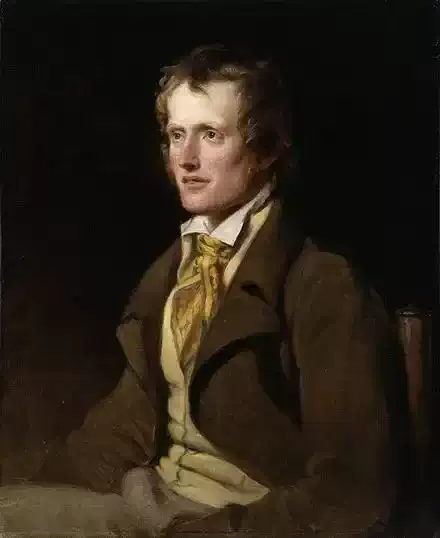
John Clare
Summer
Come we to the summer, to the summer we will come,
For the woods are full of bluebells and the hedges full of bloom,
And the crow is on the oak a-building of her nest,
And love is burning diamonds in my true lover's breast;
She sits beneath the whitethorn a-plaiting of her hair,
And I will to my true lover with a fond request repair;
I will look upon her face, I will in her beauty rest,
And lay my aching weariness upon her lovely breast.
The clock-a-clay is creeping on the open bloom of May,
The merry bee is trampling the pinky threads all day,
And the chaffinch it is brooding on its grey mossy nest
In the whitethorn bush where I will lean upon my lover's breast;
I'll lean upon her breast and I'll whisper in her ear
That I cannot get a wink o'sleep for thinking of my dear;
I hunger at my meat and I daily fade away
Like the hedge rose that is broken in the heat of the day.
Read more →
385

John Donne
The Bait
Come live with me, and be my love,
And we will some new pleasures prove
Of golden sands, and crystal brooks,
With silken lines, and silver hooks.
There will the river whispering run
Warm'd by thy eyes, more than the sun;
And there the 'enamour'd fish will stay,
Begging themselves they may betray.
When thou wilt swim in that live bath,
Each fish, which every channel hath,
Will amorously to thee swim,
Gladder to catch thee, than thou him.
If thou, to be so seen, be'st loth,
By sun or moon, thou dark'nest both,
And if myself have leave to see,
I need not their light having thee.
Let others freeze with angling reeds,
And cut their legs with shells and weeds,
Or treacherously poor fish beset,
With strangling snare, or windowy net.
Let coarse bold hands from slimy nest
The bedded fish in banks out-wrest;
Or curious traitors, sleeve-silk flies,
Bewitch poor fishes' wand'ring eyes.
For thee, thou need'st no such deceit,
For thou thyself art thine own bait:
That fish, that is not catch'd thereby,
Alas, is wiser far than I.
Read more →
385

Ella Wheeler Wilcox
Platonic
I knew it the first of the summer,
I knew it the same at the end,
That you and your love were plighted,
But couldn’t you be my friend?
Couldn’t we sit in the twilight,
Couldn’t we walk on the shore
With only a pleasant friendship
To bind us, and nothing more?
There was not a word of folly
Spoken between us two,
Though we lingered oft in the garden
Till the roses were wet with dew.
We touched on a thousand subjects –
The moon and the worlds above, -
And our talk was tinctured with science,
And everything else, save love.
A wholly Platonic friendship
You said I had proven to you
Could bind a man and a woman
The whole long season through,
With never a thought of flirting,
Though both were in their youth,
What would you have said, my lady,
If you had known the truth!
What would you have done, I wonder,
Had I gone on my knees to you
And told you my passionate story,
There in the dusk and the dew?
My burning, burdensome story,
Hidden and hushed so long –
My story of hopeless loving –
Say, would you have thought it wrong?
But I fought with my heart and conquered,
I hid my wound from sight;
You were going away in the morning,
And I said a calm goodnight.
But now when I sit in the twilight,
Or when I walk by the sea
That friendship, quite Platonic,
Comes surging over me.
And a passionate longing fills me
For the roses, the dusk, the dew;
For the beautiful summer vanished,
For the moonlight walks – and you.
Read more →
385
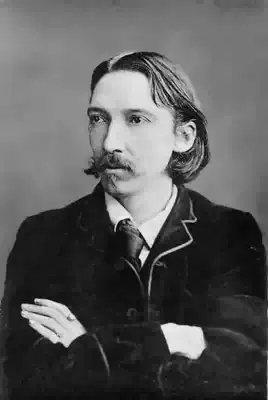
Robert Louis Stevenson
Men Are Heaven's Piers
MEN are Heaven's piers; they evermore
Unwearying bear the skyey floor;
Man's theatre they bear with ease,
Unfrowning cariatides!
I, for my wife, the sun uphold,
Or, dozing, strike the seasons cold.
She, on her side, in fairy-wise
Deals in diviner mysteries,
By spells to make the fuel burn
And keep the parlour warm, to turn
Water to wine, and stones to bread,
By her unconquered hero-head.
A naked Adam, naked Eve,
Alone the primal bower we weave;
Sequestered in the seas of life,
A Crusoe couple, man and wife,
With all our good, with all our will,
Our unfrequented isle we fill;
And victor in day's petty wars,
Each for the other lights the stars.
Come then, my Eve, and to and fro
Let us about our garden go;
And, grateful-hearted, hand in hand
Revisit all our tillage land,
And marvel at our strange estate,
For hooded ruin at the gate
Sits watchful, and the angels fear
To see us tread so boldly here.
Meanwhile, my Eve, with flower and grass
Our perishable days we pass;
Far more the thorn observe - and see
How our enormous sins go free -
Nor less admire, beside the rose,
How far a little virtue goes.
Read more →
386
Henry Wadsworth Longfellow
The Ghosts
Never stoops the soaring vulture
On his quarry in the desert,
On the sick or wounded bison,
But another vulture, watching
From his high aerial look-out,
Sees the downward plunge, and follows;
And a third pursues the second,
Coming from the invisible ether,
First a speck, and then a vulture,
Till the air is dark with pinions.
So disasters come not singly;
But as if they watched and waited,
Scanning one another's motions,
When the first descends, the others
Follow, follow, gathering flock-wise
Round their victim, sick and wounded,
First a shadow, then a sorrow,
Till the air is dark with anguish.
Now, o'er all the dreary North-land,
Mighty Peboan, the Winter,
Breathing on the lakes and rivers,
Into stone had changed their waters.
From his hair he shook the snow-flakes,
Till the plains were strewn with whiteness,
One uninterrupted level,
As if, stooping, the Creator
With his hand had smoothed them over.
Through the forest, wide and wailing,
Roamed the hunter on his snow-shoes;
In the village worked the women,
Pounded maize, or dressed the deer-skin;
And the young men played together
On the ice the noisy ball-play,
On the plain the dance of snow-shoes.
One dark evening, after sundown,
In her wigwam Laughing Water
Sat with old Nokomis, waiting
For the steps of Hiawatha
Homeward from the hunt returning.
On their faces gleamed the firelight,
Painting them with streaks of crimson,
In the eyes of old Nokomis
Glimmered like the watery moonlight,
In the eyes of Laughing Water
Glistened like the sun in water;
And behind them crouched their shadows
In the corners of the wigwam,
And the smoke In wreaths above them
Climbed and crowded through the smoke-flue.
Then the curtain of the doorway
From without was slowly lifted;
Brighter glowed the fire a moment,
And a moment swerved the smoke-wreath,
As two women entered softly,
Passed the doorway uninvited,
Without word of salutation,
Without sign of recognition,
Sat down in the farthest corner,
Crouching low among the shadows.
From their aspect and their garments,
Strangers seemed they in the village;
Very pale and haggard were they,
As they sat there sad and silent,
Trembling, cowering with the shadows.
Was it the wind above the smoke-flue,
Muttering down into the wigwam?
Was it the owl, the Koko-koho,
Hooting from the dismal forest?
Sure a voice said in the silence:
"These are corpses clad in garments,
These are ghosts that come to haunt you,
From the kingdom of Ponemah,
From the land of the Hereafter!"
Homeward now came Hiawatha
From his hunting in the forest,
With the snow upon his tresses,
And the red deer on his shoulders.
At the feet of Laughing Water
Down he threw his lifeless burden;
Nobler, handsomer she thought him,
Than when first he came to woo her,
First threw down the deer before her,
As a token of his wishes,
As a promise of the future.
Then he turned and saw the strangers,
Cowering, crouching with the shadows;
Said within himself, "Who are they?
What strange guests has Minnehaha?"
But he questioned not the strangers,
Only spake to bid them welcome
To his lodge, his food, his fireside.
When the evening meal was ready,
And the deer had been divided,
Both the pallid guests, the strangers,
Springing from among the shadows,
Seized upon the choicest portions,
Seized the white fat of the roebuck,
Set apart for Laughing Water,
For the wife of Hiawatha;
Without asking, without thanking,
Eagerly devoured the morsels,
Flitted back among the shadows
In the corner of the wigwam.
Not a word spake Hiawatha,
Not a motion made Nokomis,
Not a gesture Laughing Water;
Not a change came o'er their features;
Only Minnehaha softly
Whispered, saying, "They are famished;
Let them do what best delights them;
Let them eat, for they are famished."
Many a daylight dawned and darkened,
Many a night shook off the daylight
As the pine shakes off the snow-flakes
From the midnight of its branches;
Day by day the guests unmoving
Sat there silent in the wigwam;
But by night, in storm or starlight,
Forth they went into the forest,
Bringing fire-wood to the wigwam,
Bringing pine-cones for the burning,
Always sad and always silent.
And whenever Hiawatha
Came from fishing or from hunting,
When the evening meal was ready,
And the food had been divided,
Gliding from their darksome corner,
Came the pallid guests, the strangers,
Seized upon the choicest portions
Set aside for Laughing Water,
And without rebuke or question
Flitted back among the shadows.
Never once had Hiawatha
By a word or look reproved them;
Never once had old Nokomis
Made a gesture of impatience;
Never once had Laughing Water
Shown resentment at the outrage.
All had they endured in silence,
That the rights of guest and stranger,
That the virtue of free-giving,
By a look might not be lessened,
By a word might not be broken.
Once at midnight Hiawatha,
Ever wakeful, ever watchful,
In the wigwam, dimly lighted
By the brands that still were burning,
By the glimmering, flickering firelight
Heard a sighing, oft repeated,
From his couch rose Hiawatha,
From his shaggy hides of bison,
Pushed aside the deer-skin curtain,
Saw the pallid guests, the shadows,
Sitting upright on their couches,
Weeping in the silent midnight.
And he said: "O guests! why is it
That your hearts are so afflicted,
That you sob so in the midnight?
Has perchance the old Nokomis,
Has my wife, my Minnehaha,
Wronged or grieved you by unkindness,
Failed in hospitable duties?"
Then the shadows ceased from weeping,
Ceased from sobbing and lamenting,
And they said, with gentle voices:
"We are ghosts of the departed,
Souls of those who once were with you.
From the realms of Chibiabos
Hither have we come to try you,
Hither have we come to warn you.
"Cries of grief and lamentation
Reach us in the Blessed Islands;
Cries of anguish from the living,
Calling back their friends departed,
Sadden us with useless sorrow.
Therefore have we come to try you;
No one knows us, no one heeds us.
We are but a burden to you,
And we see that the departed
Have no place among the living.
"Think of this, O Hiawatha!
Speak of it to all the people,
That henceforward and forever
They no more with lamentations
Sadden the souls of the departed
In the Islands of the Blessed.
"Do not lay such heavy burdens
In the graves of those you bury,
Not such weight of furs and wampum,
Not such weight of pots and kettles,
For the spirits faint beneath them.
Only give them food to carry,
Only give them fire to light them.
"Four days is the spirit's journey
To the land of ghosts and shadows,
Four its lonely night encampments;
Four times must their fires be lighted.
Therefore, when the dead are buried,
Let a fire, as night approaches,
Four times on the grave be kindled,
That the soul upon its journey
May not lack the cheerful firelight,
May not grope about in darkness.
"Farewell, noble Hiawatha!
We have put you to the trial,
To the proof have put your patience,
By the insult of our presence,
By the outrage of our actions.
We have found you great and noble.
Fail not in the greater trial,
Faint not In the harder struggle."
When they ceased, a sudden darkness
Fell and filled the silent wigwam.
Hiawatha heard a rustle
As of garments trailing by him,
Heard the curtain of the doorway
Lifted by a hand he saw not,
Felt the cold breath of the night air,
For a moment saw the starlight;
But he saw the ghosts no longer,
Saw no more the wandering spirits
From the kingdom of Ponemah,
From the land of the Hereafter.
Read more →
385
William Butler Yeats
The Secret Rose
FAR-OFF, most secret, and inviolate Rose,
Enfold me in my hour of hours; where those
Who sought thee in the Holy Sepulchre,
Or in the wine-vat, dwell beyond the stir
And tumult of defeated dreams; and deep
Among pale eyelids, heavy with the sleep
Men have named beauty. Thy great leaves enfold
The ancient beards, the helms of ruby and gold
Of the crowned Magi; and the king whose eyes
Saw the pierced Hands and Rood of elder rise
In Druid vapour and make the torches dim;
Till vain frenzy awoke and he died; and him
Who met Fand walking among flaming dew
By a grey shore where the wind never blew,
And lost the world and Emer for a kiss;
And him who drove the gods out of their liss,
And till a hundred moms had flowered red
Feasted, and wept the barrows of his dead;
And the proud dreaming king who flung the crown
And sorrow away, and calling bard and clown
Dwelt among wine-stained wanderers in deep woods:
And him who sold tillage, and house, and goods,
And sought through lands and islands numberless years,
Until he found, with laughter and with tears,
A woman of so shining loveliness
That men threshed corn at midnight by a tress,
A little stolen tress. I, too, await
The hour of thy great wind of love and hate.
When shall the stars be blown about the sky,
Like the sparks blown out of a smithy, and die?
Surely thine hour has come, thy great wind blows,
Far-off, most secret, and inviolate Rose?
Read more →
385
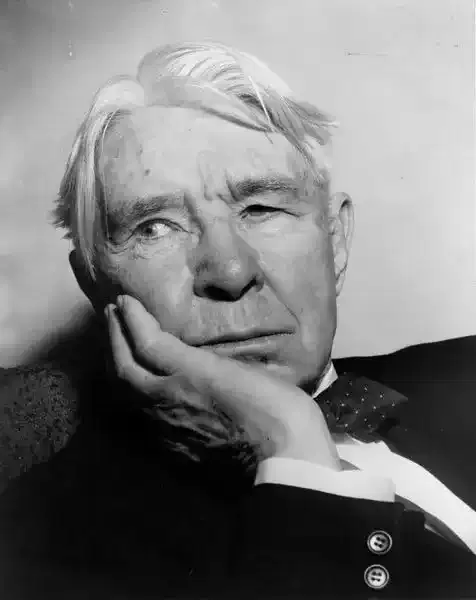
Carl Sandburg
Haunts
There are places I go when I am strong.
One is a marsh pool where I used to go
with a long-ear hound-dog.
One is a wild crabapple tree; I was there
a moonlight night with a girl.
The dog is gone; the girl is gone; I go to these
places when there is no other place to go.
Read more →
385
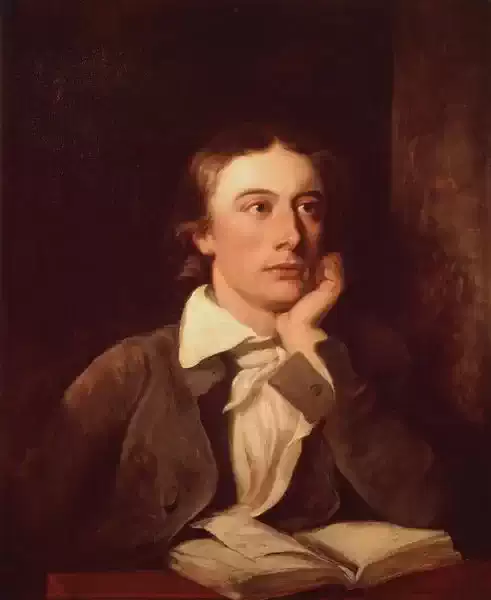
John Keats
On Leaving Some Friends At An Early Hour
Give me a golden pen, and let me lean
On heaped-up flowers, in regions clear, and far;
Bring me a tablet whiter than a star,
Or hand of hymning angel, when 'tis seen
The silver strings of heavenly harp atween:
And let there glide by many a pearly car
Pink robes, and wavy hair, and diamond jar,
And half-discovered wings, and glances keen.
The while let music wander round my ears,
And as it reaches each delicious ending,
Let me write down a line of glorious tone,
And full of many wonders of the spheres:
For what a height my spirit is contending!
'Tis not content so soon to be alone.
Read more →
385
Dorothy Parker
I Shall Come Back
I shall come back without fanfaronade
Of wailing wind and graveyard panoply;
But, trembling, slip from cool Eternity-
A mild and most bewildered little shade.
I shall not make sepulchral midnight raid,
But softly come where I had longed to be
In April twilight's unsung melody,
And I, not you, shall be the one afraid.
Strange, that from lovely dreamings of the dead
I shall come back to you, who hurt me most.
You may not feel my hand upon your head,
I'll be so new and inexpert a ghost.
Perhaps you will not know that I am near-
And that will break my ghostly heart, my dear.
Read more →
385
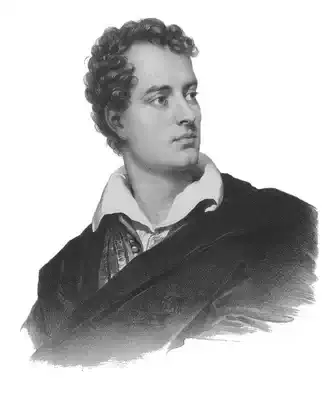
Lord Byron
The Spell Is Broke, The Charm Is Flown!
The spell is broke; the charm is flown!
Thus is it with life's fitful fever:
We madly smile when we should groan:
Delirium is our best deceiver.
Each lucid interval of thought
Recalls the woes of Nature's charter;
And he that acts as wise men ought,
But lives, as saints have died, a martyr.
Read more →
386
Emily Dickinson
Of all the Sounds despatched abroad
Of all the Sounds despatched abroad,
There's not a Charge to me
Like that old measure in the Boughs-
That phraseless Melody-
The Wind does-working like a Hand,
Whose fingers Comb the Sky-
Then quiver down-with tufts of Tune-
Permitted Gods, and me-
Inheritance, it is, to us-
Beyond the Art to Earn-
Beyond the trait to take away
By Robber, since the Gain
Is gotten not of fingers-
And inner than the Bone-
Hid golden, for the whole of Days,
And even in the Urn,
I cannot vouch the merry Dust
Do not arise and play
In some odd fashion of its own,
Some quainter Holiday,
When Winds go round and round in Bands-
And thrum upon the door,
And Birds take places, overhead,
To bear them Orchestra.
I crave Him grace of Summer Boughs,
If such an Outcast be-
Who never heard that fleshless ChantRise-
solemn-on the Tree,
As if some Caravan of Sound
Off Deserts, in the Sky,
Had parted Rank,
Then knit, and swept-
In Seamless Company-
Read more →
384
Henry Wadsworth Longfellow
Fire. (Sonnet II.)
Not without fire can any workman mould
The iron to his preconceived design,
Nor can the artist without fire refine
And purify from all its dross the gold;
Nor can revive the phoenix, we are told,
Except by fire. Hence if such death be mine
I hope to rise again with the divine,
Whom death augments, and time cannot make old.
O sweet, sweet death! O fortunate fire that burns
Within me still to renovate my days,
Though I am almost numbered with the dead!
If by its nature unto heaven returns
This element, me, kindled in its blaze,
Will it bear upward when my life is fled.
Read more →
386
Dorothy Parker
The Searched Soul
When I consider, pro and con,
What things my love is built upon --
A curly mouth; a sinewed wrist;
A questioning brow; a pretty twist
Of words as old and tried as sin;
A pointed ear; a cloven chin;
Long, tapered limbs; and slanted eyes
Not cold nor kind nor darkly wise --
When so I ponder, here apart,
What shallow boons suffice my heart,
What dust-bound trivia capture me,
I marvel at my normalcy.
Read more →
386
Henry Van Dyke
Victor Hugo
Heart of France for a hundred years,
Passionate, sensitive, proud, and strong,
Quick to throb with her hopes and fears,
Fierce to flame with her sense of wrong!
You, who hailed with a morning song
Dream-light gilding a throne of old:
You, who turned when the dream grew cold,
Singing still, to the light that shone
Pure from Liberty's ancient throne,
Over the human throng!
You, who dared in the dark eclipse,--
When the pygmy heir of a giant name
Dimmed the face of the land with shame,--
Speak the truth with indignant lips,
Call him little whom men called great,
Scoff at him, scorn him, deny him,
Point to the blood on his robe of state,
Fling back his bribes and defy him!
You, who fronted the waves of fate
As you faced the sea from your island home,
Exiled, yet with a soul elate,
Sending songs o'er the rolling foam,
Bidding the heart of man to wait
For the day when all should see
Floods of wrath from the frowning skies
Fall on an Empire founded in lies,
And France again be free!
You, who came in the Terrible Year
Swiftly back to your broken land,
Now to your heart a thousand times more dear,--
Prayed for her, sung to her, fought for her,
Patiently, fervently wrought for her,
Till once again,
After the storm of fear and pain,
High in the heavens the star of France stood clear!
You, who knew that a man must take
Good and ill with a steadfast soul,
Holding fast, while the billows roll
Over his head, to the things that make
Life worth living for great and small,--
Honour and pity and truth,
The heart and the hope of youth,
And the good God over all!
You, to whom work was rest,
Dauntless Toiler of the Sea,
Following ever the joyful quest
Of beauty on the shores of old Romance,
Bard of the poor of France,
And warrior-priest of world-wide charity!
You who loved little children best
Of all the poets that ever sung,
Great heart, golden heart,
Old, and yet ever young,
Minstrel of liberty,
Lover of all free, winged things,
Now at last you are free,--
Your soul has its wings!
Heart of France for a hundred years,
Floating far in the light that never fails you,
Over the turmoil of mortal hopes and fears
Victor, forever victor, the whole world hails you!
Read more →
384
William Butler Yeats
The Man Who Dreamed Of Faeryland
HE stood among a crowd at Dromahair;
His heart hung all upon a silken dress,
And he had known at last some tenderness,
Before earth took him to her stony care;
But when a man poured fish into a pile,
It Seemed they raised their little silver heads,
And sang what gold morning or evening sheds
Upon a woven world-forgotten isle
Where people love beside the ravelled seas;
That Time can never mar a lover's vows
Under that woven changeless roof of boughs:
The singing shook him out of his new ease.
He wandered by the sands of Lissadell;
His mind ran all on money cares and fears,
And he had known at last some prudent years
Before they heaped his grave under the hill;
But while he passed before a plashy place,
A lug-worm with its grey and muddy mouth
Sang that somewhere to north or west or south
There dwelt a gay, exulting, gentle race
Under the golden or the silver skies;
That if a dancer stayed his hungry foot
It seemed the sun and moon were in the fruit:
And at that singing he was no more wise.
He mused beside the well of Scanavin,
He mused upon his mockers: without fail
His sudden vengeance were a country tale,
When earthy night had drunk his body in;
But one small knot-grass growing by the pool
Sang where -- unnecessary cruel voice --
Old silence bids its chosen race rejoice,
Whatever ravelled waters rise and fall
Or stormy silver fret the gold of day,
And midnight there enfold them like a fleece
And lover there by lover be at peace.
The tale drove his fine angry mood away.
He slept under the hill of Lugnagall;
And might have known at last unhaunted sleep
Under that cold and vapour-turbaned steep,
Now that the earth had taken man and all:
Did not the worms that spired about his bones
proclaim with that unwearied, reedy cry
That God has laid His fingers on the sky,
That from those fingers glittering summer runs
Upon the dancer by the dreamless wave.
Why should those lovers that no lovers miss
Dream, until God burn Nature with a kiss?
The man has found no comfort in the grave.
Read more →
386
William Butler Yeats
The Cloak, The Boat And The Shoes
'What do you make so fair and bright?'
'I make the cloak of Sorrow:
O lovely to see in all men's sight
Shall be the cloak of Sorrow,
In all men's sight.'
'What do you build with sails for flight?'
'I build a boat for Sorrow:
O swift on the seas all day and night
Saileth the rover Sorrow,
All day and night.'
What do you weave with wool so white?'
'I weave the shoes of Sorrow:
Soundless shall be the footfall light
In all men's ears of Sorrow,
Sudden and light.'
Read more →
385

Claude Mckay
The Plateau
It was the silver, heart-enveloping view
Of the mysterious sea-line far away,
Seen only on a gleaming gold-white day,
That made it dear and beautiful to you.
And Laura loved it for the little hill,
Where the quartz sparkled fire, barren and dun,
Whence in the shadow of the dying sun,
She contemplated Hallow's wooden mill.
While Danny liked the sheltering high grass,
In which he lay upon a clear dry night,
To hear and see, screened skilfully from sight,
The happy lovers of the valley pass.
But oh! I loved it for the big round moon
That swung out of the clouds and swooned aloft,
Burning with passion, gloriously soft,
Lighting the purple flowers of fragrant June.
Read more →
384