
Soul
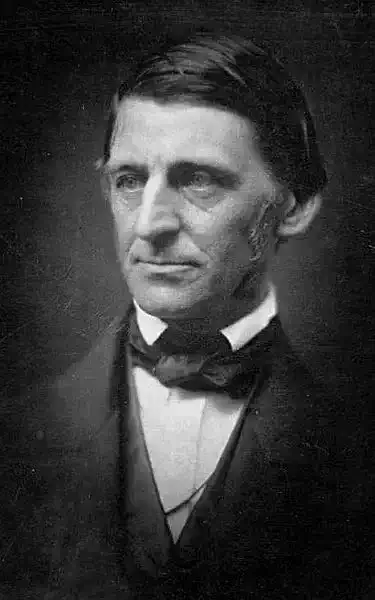
Ralph Waldo Emerson
Merlin I
Thy trivial harp will never please
Or fill my craving ear;
Its chords should ring as blows the breeze,
Free, peremptory, clear.
No jingling serenader's art,
Nor tinkle of piano strings,
Can make the wild blood start
In its mystic springs.
The kingly bard
Must smite the chords rudely and hard,
As with hammer or with mace,
That they may render back
Artful thunder that conveys
Secrets of the solar track,
Sparks of the supersolar blaze.
Merlin's blows are strokes of fate,
Chiming with the forest-tone,
When boughs buffet boughs in the wood;
Chiming with the gasp and moan
Of the ice-imprisoned flood;
With the pulse of manly hearts,
With the voice of orators,
With the din of city arts,
With the cannonade of wars.
With the marches of the brave,
And prayers of might from martyrs' cave.
Great is the art,
Great be the manners of the bard!
He shall not his brain encumber
With the coil of rhythm and number,
But, leaving rule and pale forethought,
He shall aye climb
For his rhyme:
Pass in, pass in, the angels say,
In to the upper doors;
Nor count compartments of the floors,
But mount to Paradise
By the stairway of surprise.
Blameless master of the games,
King of sport that never shames;
He shall daily joy dispense
Hid in song's sweet influence.
Things more cheerly live and go,
What time the subtle mind
Plays aloud the tune whereto
Their pulses beat,
And march their feet,
And their members are combined.
By Sybarites beguiled
He shall no task decline;
Merlin's mighty line,
Extremes of nature reconciled,
Bereaved a tyrant of his will,
And made the lion mild.
Songs can the tempest still,
Scattered on the stormy air,
Mould the year to fair increase,
And bring in poetic peace.
He shall not seek to weave,
In weak unhappy times,
Efficacious rhymes;
Wait his returning strength,
Bird, that from the nadir's floor,
To the zenith's top could soar,
The soaring orbit of the muse exceeds that journey's length!
Nor, profane, affect to hit
Or compass that by meddling wit,
Which only the propitious mind
Publishes when 'tis inclined.
There are open hours
When the god's will sallies free,
And the dull idiot might see
The flowing fortunes of a thousand years;
Sudden, at unawares,
Self-moved fly-to the doors,
Nor sword of angels could reveal
What they conceal.
Read more →
392

Claude Mckay
Futility
Oh, I have tried to laugh the pain away,
Let new flames brush my love-springs like a feather.
But the old fever seizes me to-day,
As sickness grips a soul in wretched weather.
I have given up myself to every urge,
With not a care of precious powers spent,
Have bared my body to the strangest scourge,
To soothe and deaden my heart's unhealing rent.
But you have torn a nerve out of my frame,
A gut that no physician can replace,
And reft my life of happiness and aim.
Oh what new purpose shall I now embrace?
What substance hold, what lovely form pursue,
When my thought burns through everything to you?
Read more →
390
Henry Van Dyke
Peace
I
IN EXCELSIS
Two dwellings, Peace, are thine.
One is the mountain-height,
Uplifted in the loneliness of light
Beyond the realm of shadows,--fine,
And far, and clear,--where advent of the night
Means only glorious nearness of the stars,
And dawn, unhindered, breaks above the bars
That long the lower world in twilight keep.
Thou sleepest not, and hast no need of sleep,
For all thy cares and fears have dropped away;
The night's fatigue, the fever-fret of day,
Are far below thee; and earth's weary wars,
In vain expense of passion, pass
Before thy sight like visions in a glass,
Or like the wrinkles of the storm that creep
Across the sea and leave no trace
Of trouble on that immemorial face,--
So brief appear the conflicts, and so slight
The wounds men give, the things for which they fight.
Here hangs a fortress on the distant steep,--
A lichen clinging to the rock:
There sails a fleet upon the deep,--
A wandering flock
Of snow-winged gulls: and yonder, in the plain,
A marble palace shines,--a grain
Of mica glittering in the rain.
Beneath thy feet the clouds are rolled
By voiceless winds: and far between
The rolling clouds new shores and peaks are seen,
In shimmering robes of green and gold,
And faint aerial hue
That silent fades into the silent blue.
Thou, from thy mountain-hold,
All day, in tranquil wisdom, looking down
On distant scenes of human toil and strife,
All night, with eyes aware of loftier life,
Uplooking to the sky, where stars are sown,
Dost watch the everlasting fields grow white
Unto the harvest of the sons of light,
And welcome to thy dwelling-place sublime
The few strong souls that dare to climb
The slippery crags and find thee on the height.
II
DE PROFUNDIS
But in the depth thou hast another home,
For hearts less daring, or more frail.
Thou dwellest also in the shadowy vale;
And pilgrim-souls that roam
With weary feet o'er hill and dale,
Bearing the burden and the heat
Of toilful days,
Turn from the dusty ways
To find thee in thy green and still retreat.
Here is no vision wide outspread
Before the lonely and exalted seat
Of all-embracing knowledge. Here, instead,
A little garden, and a sheltered nook,
With outlooks brief and sweet
Across the meadows, and along the brook,--
A little stream that little knows
Of the great sea towards which it gladly flows,--
A little field that bears a little wheat
To make a portion of earth's daily bread.
The vast cloud-armies overhead
Are marshalled, and the wild wind blows
Its trumpet, but thou canst not tell
Whence the storm comes nor where it goes.
Nor dost thou greatly care, since all is well;
Thy daily task is done,
And though a lowly one,
Thou gavest it of thy best,
And art content to rest
In patience till its slow reward is won.
Not far thou lookest, but thy sight is clear;
Not much thou knowest, but thy faith is dear;
For life is love, and love is always near.
Here friendship lights the fire, and every heart,
Sure of itself and sure of all the rest,
Dares to be true, and gladly takes its part
In open converse, bringing forth its best:
Here is Sweet music, melting every chain
Of lassitude and pain:
And here, at last, is sleep, the gift of gifts,
The tender nurse, who lifts
The soul grown weary of the waking world,
And lays it, with its thoughts all furled,
Its fears forgotten, and its passions still,
On the deep bosom of the Eternal Will.
Read more →
391

Henry Wadsworth Longfellow
The Angel And The Child. (From Jean Reboul, The Baker Of Nismes)
An angel with a radiant face,
Above a cradle bent to look,
Seemed his own image there to trace,
As in the waters of a brook.
'Dear child! who me resemblest so,'
It whispered, 'come, O come with me!
Happy together let us go,
The earth unworthy is of thee!
'Here none to perfect bliss attain;
The soul in pleasure suffering lies;
Joy hath an undertone of pain,
And even the happiest hours their sighs.
'Fear doth at every portal knock;
Never a day serene and pure
From the o'ershadowing tempest's shock
Hath made the morrow's dawn secure.
'What then, shall sorrows and shall fears
Come to disturb so pure a brow?
And with the bitterness of tears
These eyes of azure troubled grow?
'Ah no! into the fields of space,
Away shalt thou escape with me;
And Providence will grant thee grace
Of all the days that were to be.
'Let no one in thy dwelling cower,
In sombre vestments draped and veiled;
But let them welcome thy last hour,
As thy first moments once they hailed.
'Without a cloud be there each brow;
There let the grave no shadow cast;
When one is pure as thou art now,
The fairest day is still the last.'
And waving wide his wings of white,
The angel, at these words, had sped
Towards the eternal realms of light!--
Poor mother! see, thy son is dead!
Read more →
390

Safo
We put the urn abord ship
We put the urn aboard ship
with this inscription:
This is the dust of little
Timas who unmarried was led
into Persephone's dark bedroom
And she being far from home, girls
her age took new-edged blades
to cut, in mourning for her,
these curls of their soft hair
Read more →
392
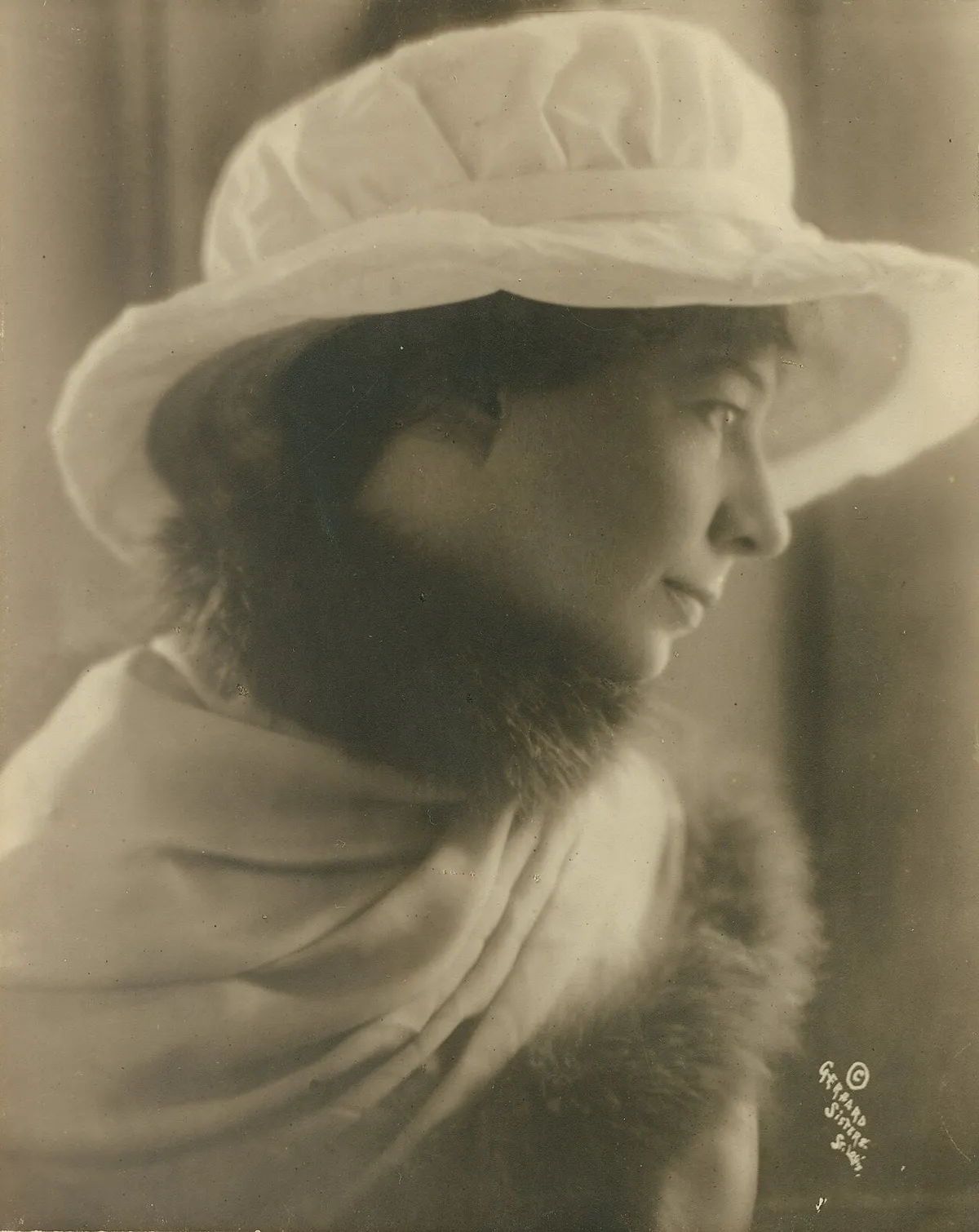
Sara Teasdale
May Wind
I said, "I have shut my heart
As one shuts an open door,
That Love may starve therein
And trouble me no more."
But over the roofs there came
The wet new wind of May,
And a tune blew up from the curb
Where the street-pianos play.
My room was white with the sun
And Love cried out in me,
"I am strong, I will break your heart
Unless you set me free."
Read more →
391
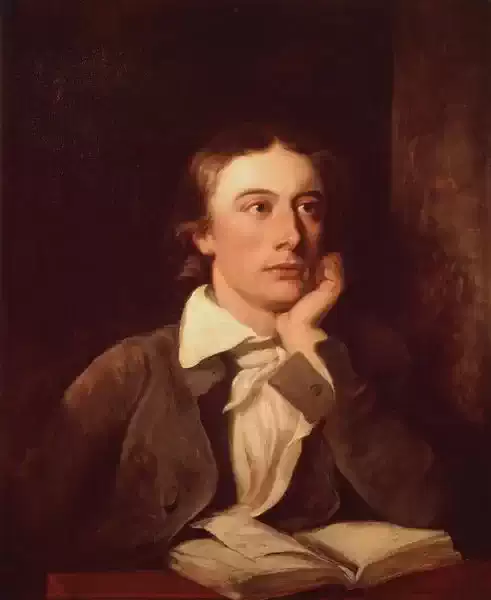
John Keats
Apollo And The Graces
APOLLO
WHICH of the fairest three
To-day will ride with me?
My steeds are all pawing at the threshold of the morn:
Which of the fairest three
To-day will ride with me
Across the gold Autumn's whole Kingdom of corn?
THE GRACES all answer
I will, I - I - I
young Apollo let me fly
Along with thee,
I will- I, I, I,
The many wonders see
I - I - I - I
And thy lyre shall never have a slackened string:
I, I, I, I,
Thro' the golden day will sing.
Read more →
390

John Donne
The Paradox
No Lover saith, I love, nor any other
Can judge a perfect Lover;
Hee thinkes that else none can, nor will agree
That any loves but hee;
I cannot say I'lov'd. for who can say
Hee was kill'd yesterday?
Lover withh excesse of heat, more yong than old,
Death kills with too much cold;
Wee dye but once, and who lov'd last did die,
Hee that saith twice, doth lye:
For though hee seeme to move, and stirre a while,
It doth the sense beguile.
Such life is like the light which bideth yet
When the lights life is set,
Or like the heat, which fire in solid matter
Leave behinde, two houres after.
Once I lov's and dy'd; and am now become
Mine Epitaph and Tombe.
Here dead men speake their last, and so do I;
Love-slaine, loe, here I lye.
Read more →
388

Ella Wheeler Wilcox
The Truth Teller
The Truth Teller lifts the curtain,
And shows us the people's plight;
And everything seems uncertain,
And nothing at all looks right.
Yet out of the blackness groping,
My heart finds a world in bloom;
For it somehow is fashioned for hoping,
And it cannot live in the gloom.
He tells us from border to border,
That race is warring with race;
With riot and mad disorder,
The earth is a wretched place;
And yet ere the sun is setting
I am thinking of peace, not strife;
For my heart has a way of forgetting
All things save the joy of life.
I heard in my Youth's beginning
That earth was a region of woe,
And trouble, and sorrow, and sinning:
The Truth Teller told me so.
I knew it was true, and tragic;
And I mourned over much that was wrong;
And then, by some curious magic,
The heart of me burst into song.
The years have been going, going,
A mixture of pleasure and pain;
But the Truth Teller's books are showing
That evil is on the gain.
And I know that I ought to be grieving,
And I should be too sad to sing;
But somehow I keep on believing
That life is a glorious thing.
Read more →
387
Ella Wheeler Wilcox
Beyond
It seemeth such a little way to me
Across to that strange country – the Beyond;
And yet, not strange, for it has grown to be
The home of those whom I am so fond,
They make it seem familiar and most dear,
As journeying friends bring distant regions near.
So close it lies, that when my sight is clear
I think I almost see the gleaming strand.
I know I feel those who have gone from here
Come near enough sometimes, to touch my hand.
I often think, but for our veiled eyes,
We should find heaven right round about us lies.
I cannot make it seem a day to dread,
When from this dear earth I shall journey out
To that still dear country of the dead,
And join the lost ones, so long dreamed about.
I love this world, yet shall I love to go
And meet the friends who wait for me, I know.
I never stand above a bier and see
The seal of death set on some well-loved face
But that I think ‘One more to welcome me,
When I shall cross the intervening space
Between this land and that one “over there”;
One more to make the strange Beyond seem fair.’
And so for me there is no sting to death,
And so the grave has lost its victory.
It is but crossing – with a bated breath,
And white, set face – a little strip of sea,
To find the loved ones waiting on the shore,
More beautiful, more precious than before.
Read more →
387
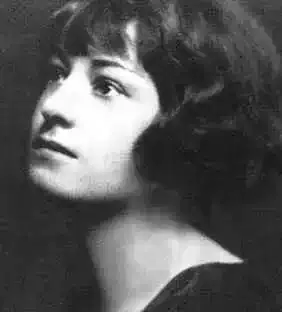
Dorothy Parker
August
When my eyes are weeds,
And my lips are petals, spinning
Down the wind that has beginning
Where the crumpled beeches start
In a fringe of salty reeds;
When my arms are elder-bushes,
And the rangy lilac pushes
Upward, upward through my heart;
Summer, do your worst!
Light your tinsel moon, and call on
Your performing stars to fall on
Headlong through your paper sky;
Nevermore shall I be cursed
By a flushed and amorous slattern,
With her dusty laces' pattern
Trailing, as she straggles by.
Read more →
389

William Shakespeare
Dirge of the Three Queens
URNS and odours bring away!
Vapours, sighs, darken the day!
Our dole more deadly looks than dying;
Balms and gums and heavy cheers,
Sacred vials fill'd with tears,
And clamours through the wild air flying!
Come, all sad and solemn shows,
That are quick-eyed Pleasure's foes!
We convent naught else but woes.
Read more →
388
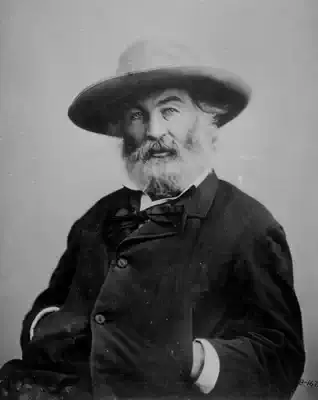
Walt Whitman
A Child's Amaze
SILENT and amazed, even when a little boy,
I remember I heard the preacher every Sunday put God in his
statements,
As contending against some being or influence.
Read more →
388

William Butler Yeats
Michael Robartes and the Dancer
He. Opinion is not worth a rush;
In this altar-piece the knight,
Who grips his long spear so to push
That dragon through the fading light,
Loved the lady; and it's plain
The half-dead dragon was her thought,
That every morning rose again
And dug its claws and shrieked and fought.
Could the impossible come to pass
She would have time to turn her eyes,
Her lover thought, upon the glass
And on the instant would grow wise.
She. You mean they argued.
He. Put it so;
But bear in mind your lover's wage
Is what your looking-glass can show,
And that he will turn green with rage
At all that is not pictured there.
She. May I not put myself to college?
He. Go pluck Athena by the hair;
For what mere book can grant a knowledge
With an impassioned gravity
Appropriate to that beating breast,
That vigorous thigh, that dreaming eye?
And may the devil take the rest.
She. And must no beautiful woman be
Learned like a man?
He. Paul Veronese
And all his sacred company
Imagined bodies all their days
By the lagoon you love so much,
For proud, soft, ceremonious proof
That all must come to sight and touch;
While Michael Angelo's Sistine roof
His 'Morning' and his 'Night' disclose
How sinew that has been pulled tight,
Or it may be loosened in repose,
Can rule by supernatural right
Yet be but sinew.
She. I have heard said
There is great danger in the body.
He. Did God in portioning wine and bread
Give man His thought or His mere body?
She. My wretched dragon is perplexed.
He. I have principles to prove me right.
It follows from this Latin text
That blest souls are not composite,
And that all beautiful women may
Live in uncomposite blessedness,
And lead us to the like -- if they
Will banish every thought, unless
The lineaments that please their view
When the long looking-glass is full,
Even from the foot-sole think it too.
She. They say such different things at school.
Read more →
390
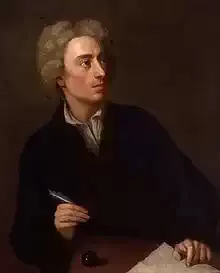
Alexander Pope
To Mrs. M. B. On Her Birthday
Oh be thou blest with all that Heav'n can send,
Long Health, long Youth, long Pleasure, and a Friend:
Not with those Toys the female world admire,
Riches that vex, and Vanities that tire.
With added years if Life bring nothing new,
But, like a Sieve, let ev'ry blessing thro',
Some joy still lost, as each vain year runs o'er,
And all we gain, some sad Reflection more;
Is that a Birth-Day? 'tis alas! too clear,
'Tis but the funeral of the former year.
Let Joy or Ease, let Affluence or Content,
And the gay Conscience of a life well spent,
Calm ev'ry thought, inspirit ev'ry grace.
Glow in thy heart, and smile upon thy face.
Let day improve on day, and year on year,
Without a Pain, a Trouble, or a Fear;
Till Death unfelt that tender frame destroy,
In some soft Dream, or Extasy of joy,
Peaceful sleep out the Sabbath of the Tomb,
And wake to Raptures in a Life to come.
Read more →
388
William Butler Yeats
Two Songs of a Fool
I
A speckled cat and a tame hare
Eat at my hearthstone
And seep there;
And both look up to me alone
For learning and defence
As I look up to Providence.
I start out of my sleep to think
Some day I may forget
Their food and drink;
Or, the house door left unshut,
The hare may run till it's found
The horn's sweet note and the tooth of the hound.
I bear a burden that might well try
Men that do all by rule,
And what can I
That am a wandering-witted fool
But pray to God that He ease
My great responsibilities?
II
I slept on my three-leged stool by the fire,
The speckled cat slept on my knee;
We never thought to enquire
Where the brown hare might be,
And whether the door were shut.
Who knows how she drank the wind
Stretched up on two legs from the mat,
Before she had settled her mind
To drum with her heel and to leap?
Had I but awakened from sleep
And called her name, she had heard,
It may be, and not have stirred,
That now, it may be, has found
The horn's sweet note and the tooth of the hound.
Read more →
390
Ella Wheeler Wilcox
Artist's Life
Of all the waltzes the great Strauss wrote,
mad with melody, rhythm--rife
From the very first to the final note,
Give me his "Artist's Life!"
It stirs my blood to my finger ends,
Thrills me and fills me with vague unrest,
And all that is sweetest and saddest blends
Together within my breast.
It brings back that night in the dim arcade,
In love's sweet morning and life's best prime,
When the great brass orchestra played and played,
And set our thoughts to rhyme.
It brings back that Winter of mad delights,
Of leaping pulses and tripping feet,
And those languid moon-washed Summer nights
When we heard the band in the street.
It brings back rapture and glee and glow,
It brings back passion and pain and strife,
And so of all the waltzes I know,
Give me the "Artist's Life."
For it is so full of the dear old time--
So full of the dear friends I knew.
And under its rhythm, and lilt, and rhyme,
I am always finding--you.
Read more →
388
Claude Mckay
Thirst
My spirit wails for water, water now!
My tongue is aching dry, my throat is hot
For water, fresh rain shaken from a bough,
Or dawn dews heavy in some leafy spot.
My hungry body's burning for a swim
In sunlit water where the air is cool,
As in Trout Valley where upon a limb
The golden finch sings sweetly to the pool.
Oh water, water, when the night is done,
When day steals gray-white through the windowpane,
Clear silver water when I wake, alone,
All impotent of parts, of fevered brain;
Pure water from a forest fountain first,
To wash me, cleanse me, and to quench my thirst!
Read more →
389
William Shakespeare
Sonnet 56: Sweet love, renew thy force; be it not said
Sweet love, renew thy force; be it not said
Thy edge should blunter be than appetite,
Which but to-day by feeding is allay'd,
To-morrow sharpen'd in his former might:
So, love, be thou; although to-day thou fill
Thy hungry eyes even till they wink with fullness,
To-morrow see again, and do not kill
The spirit of love with a perpetual dullness.
Let this sad interim like the ocean be
Which parts the shore, where two contracted new
Come daily to the banks, that, when they see
Return of love, more blest may be the view;
Else call it winter, which being full of care
Makes summer's welcome thrice more wish'd, more rare.
Read more →
390
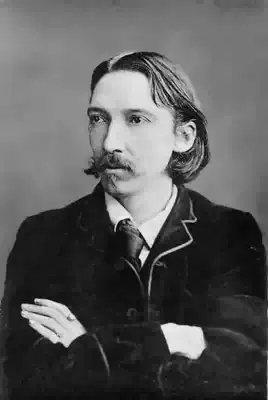
Robert Louis Stevenson
Sonnet III
I have a hoard of treasure in my breast;
The grange of memory steams against the door,
Full of my bygone lifetime's garnered store -
Old pleasures crowned with sorrow for a zest,
Old sorrow grown a joy, old penance blest,
Chastened remembrance of the sins of yore
That, like a new evangel, more and more
Supports our halting will toward the best.
Ah! what to us the barren after years
May bring of joy or sorrow, who can tell?
O, knowing not, who cares? It may be well
That we shall find old pleasures and old fears,
And our remembered childhood seen thro' tears,
The best of Heaven and the worst of Hell.
Read more →
389
Sara Teasdale
Dew
As dew leaves the cobweb lightly
Threaded with stars,
Scattering jewels on the fence
And the pasture bars;
As dawn leaves the dry grass bright
And the tangled weeds
Bearing a rainbow gem
On each of their seeds;
So has your love, my lover,
Fresh as the dawn,
Made me a shining road
To travel on,
Set every common sight
Of tree or stone
Delicately alight
For me alone.
Read more →
389
Ella Wheeler Wilcox
Inspiration
Not like a daring, bold, aggressive boy,
Is inspiration, eager to pursue,
But rather like a maiden, fond, yet coy,
Who gives herself to him who best doth woo.
Once she may smile, or thrice, thy soul to fire,
In passing by, but when she turns her face,
Thou must persist and seek her with desire,
If thou wouldst win the favor of her grace.
And if, like some winged bird she cleaves the air,
And leaves thee spent and stricken on the earth,
Still must thou strive to follow even there,
That she may know thy valor and thy worth.
Then shall she come unveiling all her charms,
Giving thee joy for pain, and smiles for tears;
Then shalt thou clasp her with possessing arms,
The while she murmurs music in thine ears.
But ere her kiss has faded from thy cheek,
She shall flee from thee over hill and glade,
So must thou seek and ever seek and seek
For each new conquest of this phantom maid.
Read more →
389

Johann Wolfgang von Goethe
Trilogy Of Passion 03 Atonement
PASSION brings reason--who can pacify
An anguish'd heart whose loss hath been so great?
Where are the hours that fled so swiftly by?
In vain the fairest thou didst gain from fate;
Sad is the soul, confused the enterprise;
The glorious world, how on the sense it dies!
In million tones entwined for evermore,
Music with angel-pinions hovers there,
To pierce man's being to its inmost core,
Eternal beauty has its fruit to bear;
The eye grows moist, in yearnings blest reveres
The godlike worth of music as of tears.
And so the lighten'd heart soon learns to see
That it still lives, and beats, and ought to beat,
Off'ring itself with joy and willingly,
In grateful payment for a gift so sweet.
And then was felt,--oh may it constant prove!--
The twofold bliss of music and of love.
Read more →
387
William Butler Yeats
Friends
NOW must I these three praise --
Three women that have wrought
What joy is in my days:
One because no thought,
Nor those unpassing cares,
No, not in these fifteen
Many-times-troubled years,
Could ever come between
Mind and delighted mind;
And one because her hand
Had strength that could unbind
What none can understand,
What none can have and thrive,
Youth's dreamy load, till she
So changed me that I live
Labouring in ecstasy.
And what of her that took
All till my youth was gone
With scarce a pitying look?
How could I praise that one?
When day begins to break
I count my good and bad,
Being wakeful for her sake,
Remembering what she had,
What eagle look still shows,
While up from my heart's root
So great a sweetness flows
I shake from head to foot.
Read more →
388