
Soul
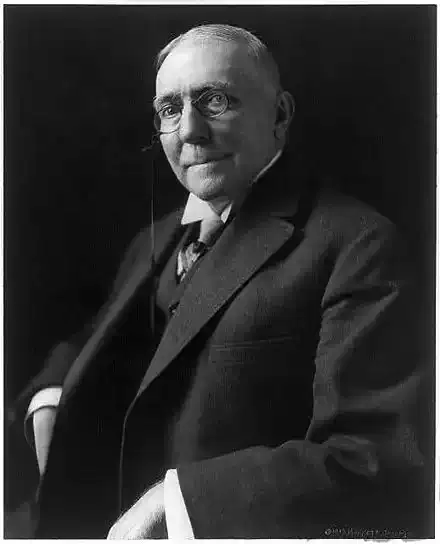
James Whitcomb Riley
The Ripest Peach
The ripest peach is highest on the tree --
And so her love, beyond the reach of me,
Is dearest in my sight. Sweet breezes, bow
Her heart down to me where I worship now!
She looms aloft where every eye may see
The ripest peach is highest on the tree.
Such fruitage as her love I know, alas!
I may not reach here from the orchard grass.
I drink the sunshine showered past her lips
As roses drain the dewdrop as it drips.
The ripest peach is highest on the tree,
And so mine eyes gaze upward eagerly.
Why -- why do I not turn away in wrath
And pluck some heart here hanging in my path? -Love's
lower boughs bend with them -- but, ah me!
The ripest peach is highest on the tree!
Read more →
393
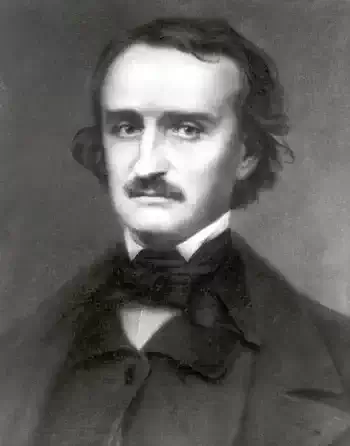
Edgar Allan Poe
Lenore
Ah, broken is the golden bowl! the spirit flown forever!
Let the bell toll!- a saintly soul floats on the Stygian river;
And, Guy de Vere, hast thou no tear?- weep now or nevermore!
See! on yon drear and rigid bier low lies thy love, Lenore!
Come! let the burial rite be read- the funeral song be sung!
An
anthem for the queenliest dead that ever died so young
A
dirge for her the doubly dead in that she died so young.
"Wretches! ye loved her for her wealth and hated her for her pride,
And when she fell in feeble health, ye blessed her- that she died!
How shall the ritual, then, be read?- the requiem how be sung
By you- by yours, the evil eye,- by yours, the slanderous tongue
That did to death the innocence that died, and died so young?"
Peccavimus; but rave not thus! and let a Sabbath song
Go up to God so solemnly the dead may feel no wrong.
The sweet Lenore hath "gone before," with Hope, that flew beside,
Leaving thee wild for the dear child that should have been thy
bride.
For her, the fair and debonair, that now so lowly lies,
The life upon her yellow hair but not within her eyes
The life still there, upon her hair- the death upon her eyes.
"Avaunt! avaunt! from fiends below, the indignant ghost is riven
From
Hell unto a high estate far up within the HeavenFrom
grief and groan, to a golden throne, beside the King of
Heaven!
Let no bell toll, then,- lest her soul, amid its hallowed mirth,
Should catch the note as it doth float up from the damned Earth!
And I!- to-night my heart is light!- no dirge will I upraise,
But waft the angel on her flight with a Paean of old days!"
Read more →
393
John Donne
The Ecstasy
Where, like a pillow on a bed
A pregnant bank swell'd up to rest
The violet's reclining head,
Sat we two, one another's best.
Our hands were firmly cemented
With a fast balm, which thence did spring;
Our eye-beams twisted, and did thread
Our eyes upon one double string;
So to'intergraft our hands, as yet
Was all the means to make us one,
And pictures in our eyes to get
Was all our propagation.
As 'twixt two equal armies fate
Suspends uncertain victory,
Our souls (which to advance their state
Were gone out) hung 'twixt her and me.
And whilst our souls negotiate there,
We like sepulchral statues lay;
All day, the same our postures were,
And we said nothing, all the day.
If any, so by love refin'd
That he soul's language understood,
And by good love were grown all mind,
Within convenient distance stood,
He (though he knew not which soul spake,
Because both meant, both spake the same)
Might thence a new concoction take
And part far purer than he came.
This ecstasy doth unperplex,
We said, and tell us what we love;
We see by this it was not sex,
We see we saw not what did move;
But as all several souls contain
Mixture of things, they know not what,
Love these mix'd souls doth mix again
And makes both one, each this and that.
A single violet transplant,
The strength, the colour, and the size,
(All which before was poor and scant)
Redoubles still, and multiplies.
When love with one another so
Interinanimates two souls,
That abler soul, which thence doth flow,
Defects of loneliness controls.
We then, who are this new soul, know
Of what we are compos'd and made,
For th' atomies of which we grow
Are souls. whom no change can invade.
But oh alas, so long, so far,
Our bodies why do we forbear?
They'are ours, though they'are not we; we are
The intelligences, they the spheres.
We owe them thanks, because they thus
Did us, to us, at first convey,
Yielded their senses' force to us,
Nor are dross to us, but allay.
On man heaven's influence works not so,
But that it first imprints the air;
So soul into the soul may flow,
Though it to body first repair.
As our blood labors to beget
Spirits, as like souls as it can,
Because such fingers need to knit
That subtle knot which makes us man,
So must pure lovers' souls descend
T' affections, and to faculties,
Which sense may reach and apprehend,
Else a great prince in prison lies.
To'our bodies turn we then, that so
Weak men on love reveal'd may look;
Love's mysteries in souls do grow,
But yet the body is his book.
And if some lover, such as we,
Have heard this dialogue of one,
Let him still mark us, he shall see
Small change, when we'are to bodies gone.
Read more →
395

Claude Mckay
On Broadway
About me young careless feet
Linger along the garish street;
Above, a hundred shouting signs
Shed down their bright fantastic glow
Upon the merry crowd and lines
Of moving carriages below.
Oh wonderful is Broadway -- only
My heart, my heart is lonely.
Desire naked, linked with Passion,
Goes trutting by in brazen fashion;
From playhouse, cabaret and inn
The rainbow lights of Broadway blaze
All gay without, all glad within;
As in a dream I stand and gaze
At Broadway, shining Broadway -- only
My heart, my heart is lonely.
Read more →
392

William Butler Yeats
Spilt Milk
WE that have done and thought,
That have thought and done,
Must ramble, and thin out
Like milk spilt on a stone.
Read more →
395

Ella Wheeler Wilcox
The Way Of It
This is the way of it, wide world over,
One is beloved, and one is the lover,
One gives and the other receives.
One lavishes all in a wild emotion,
One offers a smile for a life’s devotion,
One hopes and the other believes,
One lies awake in the night to weep,
And the other drifts off in a sweet sound sleep.
One soul is aflame with a godlike passion,
One plays with love in an idler’s fashion,
One speaks and the other hears.
One sobs, ‘I love you, ’ and wet eyes to show it,
And one laughs lightly, and says, ‘I know it, ’
With smiles for the other’s tears.
One lives for the other and nothing beside,
And the other remembers the world is wide.
This is the way of it, sad earth over,
The heart that breaks is the heart of the lover,
And the other learns to forget.
‘For what is the use in endless sorrow?
Though the sun goes down, it will rise tomorrow;
And life is not over yet.’
Oh! I know this truth, if I know no other,
That passionate Love is Pain’s own mother.
Read more →
393
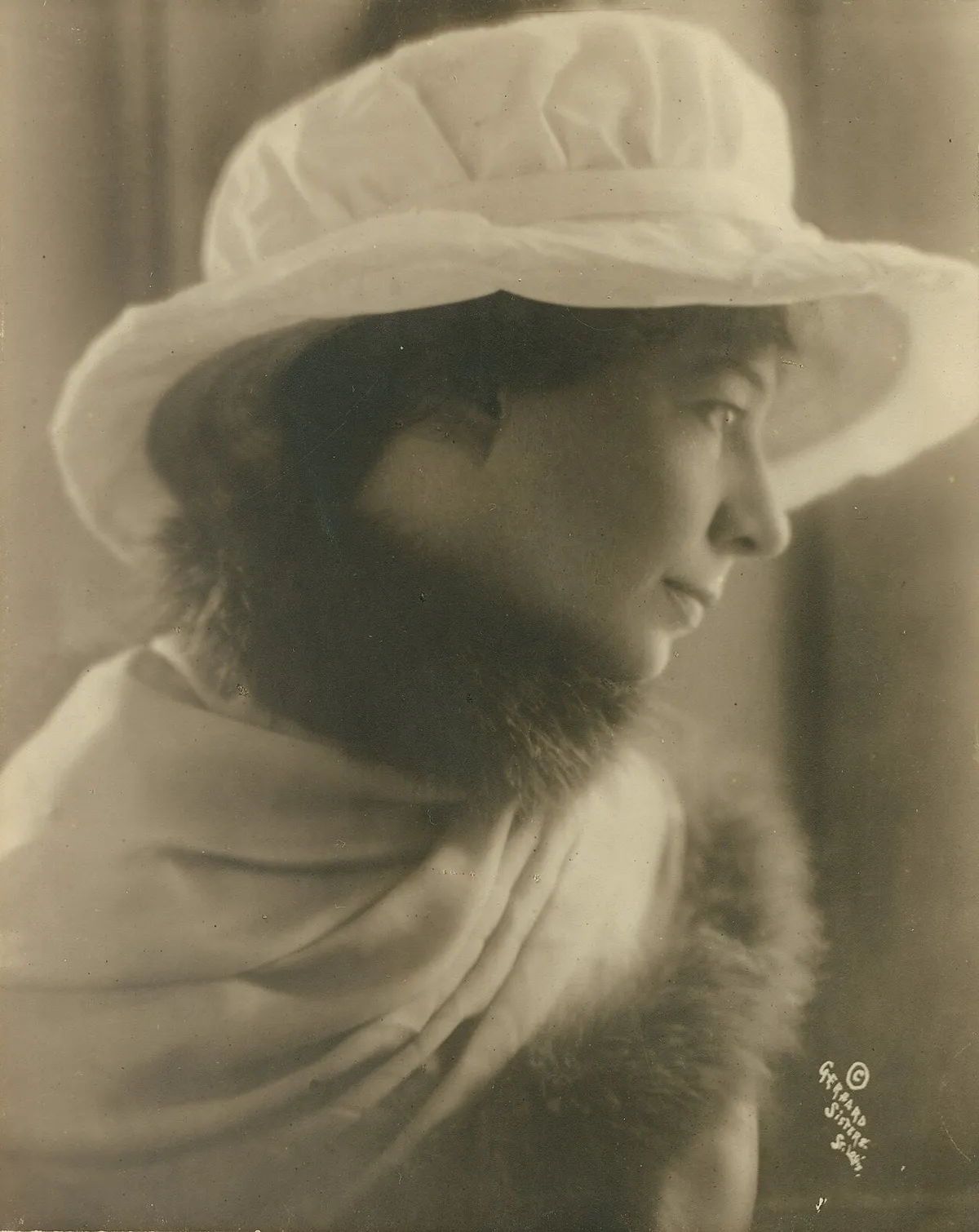
Sara Teasdale
Love and Death
Shall we, too, rise forgetful from our sleep,
And shall my soul that lies within your hand
Remember nothing, as the blowing sand
Forgets the palm where long blue shadows creep
When winds along the darkened desert sweep?
Or would it still remember, tho' it spanned
A thousand heavens, while the planets fanned
The vacant ether with their voices deep?
Soul of my soul, no word shall be forgot,
Nor yet alone, beloved, shall we see
The desolation of extinguished suns,
Nor fear the void wherethro' our planet runs,
For still together shall we go and not
Fare forth alone to front eternity.
Read more →
394
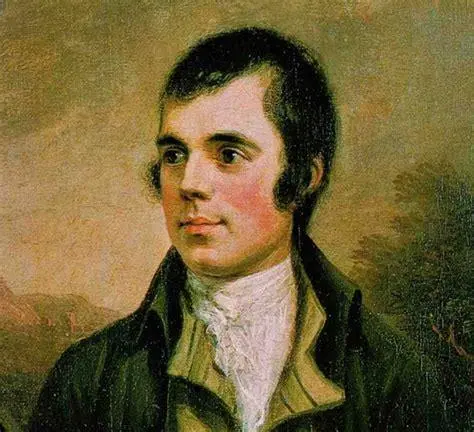
Robert Burns
Love in the Guise of Frindship
Talk not of love, it gives me pain,
For love has been my foe;
He bound me in an iron chain,
And plung'd me deep in woe.
But friendship's pure and lasting joys,
My heart was form'd to prove;
There, welcome win and wear the prize,
But never talk of love.
Your friendship much can make me blest,
O why that bliss destroy?
Why urge the only, one request
You know I will deny?
Your thought, if Love must harbour there,
Conceal it in that thought;
Nor cause it in that thought;
Nor cause me from my bosom tear
The very friend I sought.
Read more →
392
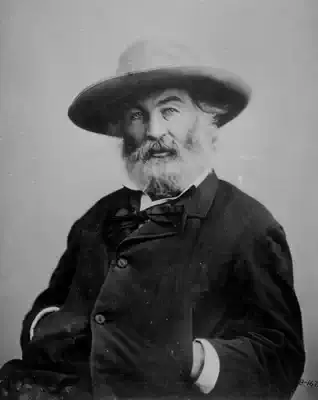
Walt Whitman
Scented Herbage Of My Breast
SCENTED herbage of my breast,
Leaves from you I yield, I write, to be perused best afterwards,
Tomb-leaves, body-leaves, growing up above me, above death,
Perennial roots, tall leaves--O the winter shall not freeze you,
delicate leaves,
Every year shall you bloom again--out from where you retired, you
shall emerge again;
O I do not know whether many, passing by, will discover you, or
inhale your faint odor--but I believe a few will;
O slender leaves! O blossoms of my blood! I permit you to tell, in
your own way, of the heart that is under you;
O burning and throbbing--surely all will one day be accomplish'd;
O I do not know what you mean, there underneath yourselves--you are
not happiness,
You are often more bitter than I can bear--you burn and sting me,
Yet you are very beautiful to me, you faint-tinged roots--you make me
think of Death,
Death is beautiful from you--(what indeed is finally beautiful,
except Death and Love?)
--O I think it is not for life I am chanting here my chant of
lovers--I think it must be for Death,
For how calm, how solemn it grows, to ascend to the atmosphere of
lovers,
Death or life I am then indifferent--my Soul declines to prefer,
I am not sure but the high Soul of lovers welcomes death most;
Indeed, O Death, I think now these leaves mean precisely the same as
you mean;
Grow up taller, sweet leaves, that I may see! grow up out of my
breast!
Spring away from the conceal'd heart there!
Do not fold yourself so in your pink-tinged roots, timid leaves!
Do not remain down there so ashamed, herbage of my breast!
Come, I am determin'd to unbare this broad breast of mine--I have
long enough stifled and choked:
--Emblematic and capricious blade, I leave you--now you serve me not;
Away! I will say what I have to say, by itself,
I will escape from the sham that was proposed to me,
I will sound myself and comrades only--I will never again utter a
call, only their call,
I will raise, with it, immortal reverberations through The States,
I will give an example to lovers, to take permanent shape and will
through The States;
Through me shall the words be said to make death exhilarating;
Give me your tone therefore, O Death, that I may accord with it,
Give me yourself--for I see that you belong to me now above all, and
are folded inseparably together--you Love and Death are;
Nor will I allow you to balk me any more with what I was calling
life,
For now it is convey'd to me that you are the purports essential,
That you hide in these shifting forms of life, for reasons--and that
they are mainly for you,
That you, beyond them, come forth, to remain, the real reality,
That behind the mask of materials you patiently wait, no matter how
long,
That you will one day, perhaps, take control of all,
That you will perhaps dissipate this entire show of appearance,
That may-be you are what it is all for--but it does not last so very
long;
But you will last very long.
Read more →
392
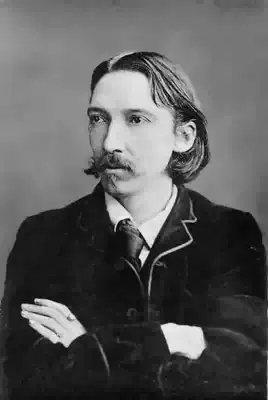
Robert Louis Stevenson
The Clock's Clear Voice Into The Clearer Air
THE cock's clear voice into the clearer air
Where westward far I roam,
Mounts with a thrill of hope,
Falls with a sigh of home.
A rural sentry, he from farm and field
The coming morn descries,
And, mankind's bugler, wakes
The camp of enterprise.
He sings the morn upon the westward hills
Strange and remote and wild;
He sings it in the land
Where once I was a child.
He brings to me dear voices of the past,
The old land and the years:
My father calls for me,
My weeping spirit hears.
Fife, fife, into the golden air, O bird,
And sing the morning in;
For the old days are past
And new days begin.
Read more →
390
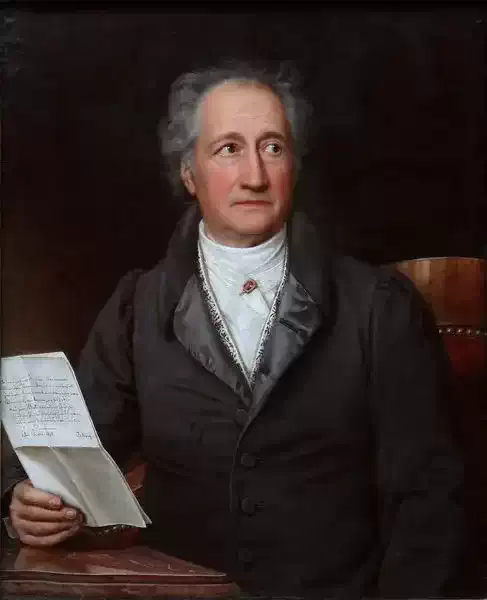
Johann Wolfgang von Goethe
To My Friend - Ode II
THOU go'st! I murmur--
Go! let me murmur.
Oh, worthy man,
Fly from this land!
Deadly marshes,
Steaming mists of October
Here interweave their currents,
Blending for ever.
Noisome insects
Here are engender'd;
Fatal darkness
Veils their malice.
The fiery-tongued serpent,
Hard by the sedgy bank,
Stretches his pamper'd body,
Caress'd by the sun's bright beams.
Tempt no gentle night-rambles
Under the moon's cold twilight!
Loathsome toads hold their meetings
Yonder at every crossway.
Injuring not,
Fear will they cause thee.
Oh, worthy man,
Fly from this land!
Read more →
390

George Herbert
The Sinner
Lord, how I am all ague, when I seek
What I have treasur'd in my memory!
Since, if my soul make even with the week,
Each seventh note by right is due to thee.
I find there quarries of pil'd vanities,
But shreds of holiness, that dare not venture
To show their face, since cross to thy decrees:
There the circumference earth is, heav'n the centre.
In so much dregs the quintessence is small:
The spirit and good extract of my heart
Comes to about the many hundredth part.
Yet Lord restore thine image, hear my call:
And though my hard heart scarce to thee can groan,
Remember that thou once didst write in stone.
Read more →
390
Sara Teasdale
Faces
People that I meet and pass
In the city's broken roar,
Faces that I lose so soon
And have never found before,
Do you know how much you tell
In the meeting of our eyes,
How ashamed I am, and sad
To have pierced your poor disguise?
Secrets rushing without sound
Crying from your hiding places --
Let me go, I cannot bear
The sorrow of the passing faces.
-- People in the restless street,
Can it be, oh can it be
In the meeting of our eyes
That you know as much of me?
Read more →
390
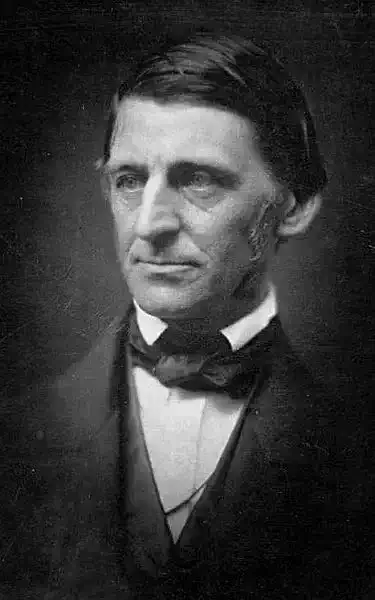
Ralph Waldo Emerson
Sursum Corda
Seek not the Spirit, if it hide,
Inexorable to thy zeal:
Baby, do not whine and chide;
Art thou not also real?
Why should'st thou stoop to poor excuse?
Turn on the Accuser roundly; say,
"Here am I, here will I remain
Forever to myself soothfast,
Go thou, sweet Heaven, or, at thy pleasure stay."—
Already Heaven with thee its lot has cast,
For it only can absolutely deal.
Read more →
390
Claude Mckay
Memorial
Your body was a sacred cell always,
A jewel that grew dull in garish light,
An opal which beneath my wondering gaze
Gleamed rarely, softly throbbing in the night.
I touched your flesh with reverential hands,
For you were sweet and timid like a flower
That blossoms out of barren tropic sands,
Shedding its perfume in one golden hour.
You yielded to my touch with gentle grace,
And though my passion was a mighty wave
That buried you beneath its strong embrace,
You were yet happy in the moment's grave.
Still more than passion consummate to me,
More than the nuptials immemorial sung,
Was the warm thrill that melted me to see
Your clean brown body, beautiful and young;
The joy in your maturity at length,
The peace that filled my soul like cooling wine,
When you responded to my tender strength,
And pressed your heart exulting into mine.
How shall I with such memories of you
In coarser forms of love fruition find?
No, I would rather like a ghost pursue
The fairy phantoms of my lonely mind.
Read more →
391

Emily Dickinson
Soto! Explore thyself!
Soto! Explore thyself!
Therein thyself shalt find
The "Undiscovered Continent"-
No Settler had the Mind.
Read more →
390
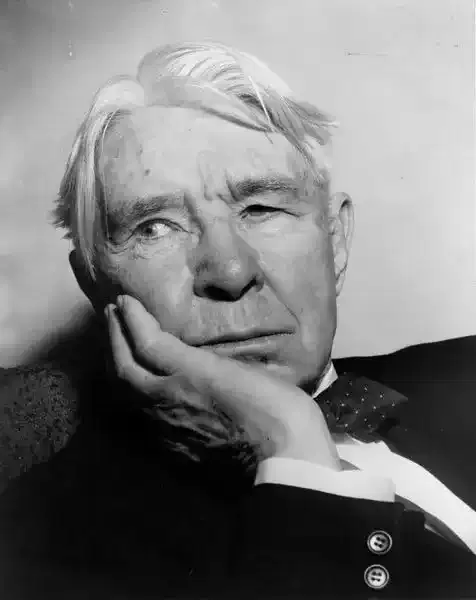
Carl Sandburg
Always The Mob
Jesus emptied the devils of one man into forty hogs and the hogs took the edge of a
high rock and dropped off and down into the sea: a mob.
The sheep on the hills of Australia, blundering fourfooted in the sunset mist to the
dark, they go one way, they hunt one sleep, they find one pocket of grass for all.
Karnak? Pyramids? Sphinx paws tall as a coolie? Tombs kept for kings and sacred
cows? A mob.
Young roast pigs and naked dancing girls of Belshazzar, the room where a thousand sat
guzzling when a hand wrote: Mene, mene, tekel, upharsin? A mob.
The honeycomb of green that won the sun as the Hanging Gardens of Nineveh, flew to
its shape at the hands of a mob that followed the fingers of Nebuchadnezzar: a mob of
one hand and one plan.
Stones of a circle of hills at Athens, staircases of a mountain in Peru, scattered clans of
marble dragons in China: each a mob on the rim of a sunrise: hammers and wagons
have them now.
Locks and gates of Panama? The Union Pacific crossing deserts and tunneling
mountains? The Woolworth on land and the Titanic at sea? Lighthouses blinking a coast
line from Labrador to Key West? Pig iron bars piled on a barge whistling in a fog off
Sheboygan? A mob: hammers and wagons have them to-morrow.
The mob? A typhoon tearing loose an island from thousand-year moorings and
bastions, shooting a volcanic ash with a fire tongue that licks up cities and peoples.
Layers of worms eating rocks and forming loam and valley floors for potatoes, wheat,
watermelons.
The mob? A jag of lightning, a geyser, a gravel mass loosening…
The mob … kills or builds … the mob is Attila or Ghengis Khan, the mob is Napoleon,
Lincoln.
I am born in the mob—I die in the mob—the same goes for you—I don’t care who you
are.
I cross the sheets of fire in No Man’s land for you, my brother—I slip a steel tooth into
your throat, you my brother—I die for you and I kill you—It is a twisted and gnarled
thing, a crimson wool:
One more arch of stars,
In the night of our mist,
In the night of our tears.
Read more →
391
Ella Wheeler Wilcox
The Unattained
A vision beauteous as the morn,
With heavenly eyes and tresses streaming,
Slow glided o'er a field late shorn
Where walked a poet idly dreaming.
He saw her, and joy lit his face.
"Oh, vanish not at human speaking,"
He cried, "thou form of magic grace,
Thou art the poem I am seeking.
"I've sought thee long! I claim thee now---
My thought embodied, living, real."
She shook the tresses from her brow.
"Nay, nay!" she said, "I am ideal.
I am the phantom of desire---
The spirit of all great endeavour,
I am the voice that says, 'Come higher.'
That calls men up and up for ever.
"'Tis not alone the thought supreme
That here upon thy path has risen;
I am the artist's highest dream,
The ray of light he cannot prison.
I am the sweet ecstatic note
Than all glad music gladder, clearer,
That trembles in the singer's throat,
And dies without a human hearer.
"I am the greater, better yield,
That leads and cheers thy farmer neighbour,
For me he bravely tills the field
And whistles gaily at his labour.
Not thou alone, O poet soul,
Dost seek me through an endless morrow,
But to the toiling, hoping whole
I am at once the hope and sorrow.
The spirit of the unattained,
I am to those who seek to name me,
A good desired but never gained.
All shall pursue, but none shall claim me."
Read more →
391
Ella Wheeler Wilcox
To An Astrologer
Nay, seer, I do not doubt thy mystic lore,
Nor question that the tenor of my life,
Past, present and the future, is revealed
There in my horoscope. I do believe
That yon dead moon compels the haughty seas
To ebb and flow, and that my natal star
Stands like a stern-browed sentinel in space
And challenges events; nor lets one grief,
Or joy, or failure, or success, pass on
To mar or bless my earthly lot, until
It proves its Karmic right to come to me.
All this I grant, but more than this I know!
Before the solar systems were conceived,
When nothing was but the unnamable,
My spirit lived, an atom of the Cause.
Through countless ages and in many forms
It has existed, ere it entered in
This human frame to serve its little day
Upon the earth. The deathless Me of me,
The spark from that great all-creative fire
Is part of that eternal source called God,
And mightier than the universe.
Why, he
Who knows, and knowing, never once forgets
The pedigree divine of his own soul,
Can conquer, shape and govern destiny
And use vast space as ‘twere a board for chess
With stars for pawns; can change his horoscope
To suit his will; turn failure to success,
And from preordained sorrows, harvest joy.
There is no puny planet, sun or moon,
Or zodiacal sign which can control
The God in us! If we bring that to bear
Upon events, we mold them to our wish,
Tis when the infinite ‘neath the finite gropes
That men are governed by their horoscopes.
Read more →
391
Emily Dickinson
Ample make this bed.
Ample make this bed.
Make this bed with awe;
In it wait till judgment break
Excellent and fair.
Be its mattress straight,
Be its pillow round;
Let no sunrise' yellow noise
Interrupt this ground.
Read more →
392
Hilaire Belloc
From: Dedicatory Ode
I will not try the reach again,
I will not set my sail alone,
To moor a boat bereft of men
At Yarnton's tiny docks of stone.
But I will sit beside the fire,
And put my hand before my eyes,
And trace, to fill my heart's desire,
The last of all our Odysseys.
The quiet evening kept her tryst:
Beneath an open sky we rode,
And passed into a wandering mist
Along the perfect Evenlode.
The tender Evenlode that makes
Her meadows hush to hear the sound
Of waters mingling in the brakes,
And binds my heart to English ground.
A lovely river, all alone,
She lingers in the hills and holds
A hundred little towns of stone,
Forgotten in the western wolds.
Read more →
390

Henry Wadsworth Longfellow
In The Harbour: Autumn Within
It is autumn; not without
But within me is the cold.
Youth and spring are all about;
It is I that have grown old.
Birds are darting through the air,
Singing, building without rest;
Life is stirring everywhere,
Save within my lonely breast.
There is silence: the dead leaves
Fall and rustle and are still;
Beats no flail upon the sheaves,
Comes no murmur from the mill.
Read more →
392
Ella Wheeler Wilcox
Optimism
Talk happiness. The world is sad enough
Without your woes. No path is wholly rough;
Look for the places that are smooth and clear,
And speak of those, to rest the weary ear
Of Earth, so hurt by one continuous strain
Of human discontent and grief and pain.
Talk faith. The world is better off without
Your uttered ignorance and morbid doubt.
If you have faith in God, or man, or self,
Say so. If not, push back upon the shelf
Of silence all your thoughts, till faith shall come;
No one will grieve because your lips are dumb.
Talk health. The dreary, never-changing tale
Of mortal maladies is worn and stale.
You cannot charm, or interest, or please
By harping on that minor chord, disease.
Say you are well, or all is well with you,
And God shall hear your words and make them true.
Read more →
392
Claude Mckay
A Memory of June
When June comes dancing o'er the death of May,
With scarlet roses tinting her green breast,
And mating thrushes ushering in her day,
And Earth on tiptoe for her golden guest,
I always see the evening when we met--
The first of June baptized in tender rain--
And walked home through the wide streets, gleaming wet,
Arms locked, our warm flesh pulsing with love's pain.
I always see the cheerful little room,
And in the corner, fresh and white, the bed,
Sweet scented with a delicate perfume,
Wherein for one night only we were wed;
Where in the starlit stillness we lay mute,
And heard the whispering showers all night long,
And your brown burning body was a lute
Whereon my passion played his fevered song.
When June comes dancing o'er the death of May,
With scarlet roses staining her fair feet,
My soul takes leave of me to sing all day
A love so fugitive and so complete.
Read more →
390