
Soul
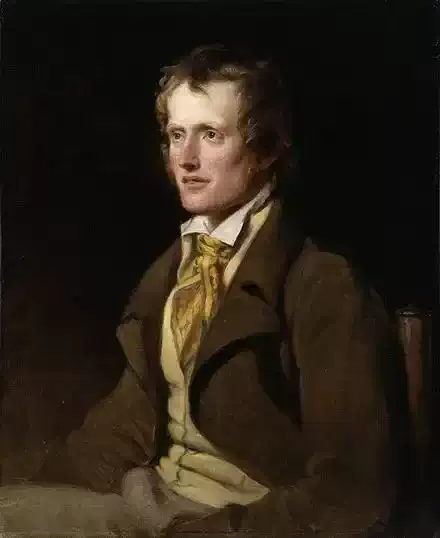
John Clare
Fragment
The cataract, whirling down the precipice,
Elbows down rocks and, shouldering, thunders through.
Roars, howls, and stifled murmurs never cease;
Hell and its agonies seem hid below.
Thick rolls the mist, that smokes and falls in dew;
The trees and greenwood wear the deepest green.
Horrible mysteries in the gulph stare through,
Roars of a million tongues, and none knows what they mean.
Read more →
396
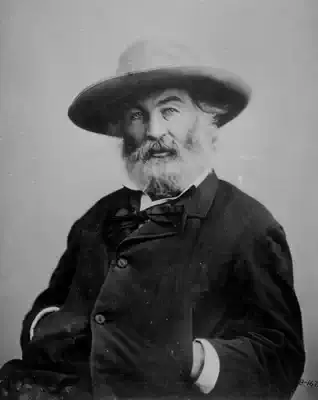
Walt Whitman
Of The Terrible Doubt Of Apperarances
OF the terrible doubt of appearances,
Of the uncertainty after all--that we may be deluded,
That may-be reliance and hope are but speculations after all,
That may-be identity beyond the grave is a beautiful fable only,
May-be the things I perceive--the animals, plants, men, hills,
shining and flowing waters,
The skies of day and night--colors, densities, forms--May-be these
are, (as doubtless they are,) only apparitions, and the real
something has yet to be known;
(How often they dart out of themselves, as if to confound me and mock
me!
How often I think neither I know, nor any man knows, aught of them;)
May-be seeming to me what they are, (as doubtless they indeed but
seem,) as from my present point of view--And might prove, (as
of course they would,) naught of what they appear, or naught
any how, from entirely changed points of view;
--To me, these, and the like of these, are curiously answer'd by my
lovers, my dear friends;
When he whom I love travels with me, or sits a long while holding me
by the hand,
When the subtle air, the impalpable, the sense that words and reason
hold not, surround us and pervade us,
Then I am charged with untold and untellable wisdom--I am silent--I
require nothing further,
I cannot answer the question of appearances, or that of identity
beyond the grave;
But I walk or sit indifferent--I am satisfied,
He ahold of my hand has completely satisfied me.
Read more →
399
Walt Whitman
Virgil Strange I Kept On The Field
VIGIL strange I kept on the field one night:
When you, my son and my comrade, dropt at my side that day,
One look I but gave, which your dear eyes return'd, with a look I
shall never forget;
One touch of your hand to mine, O boy, reach'd up as you lay on the
ground;
Then onward I sped in the battle, the even-contested battle;
Till late in the night reliev'd, to the place at last again I made my
way;
Found you in death so cold, dear comrade--found your body, son of
responding kisses, (never again on earth responding;)
Bared your face in the starlight--curious the scene--cool blew the
moderate night-wind;
Long there and then in vigil I stood, dimly around me the battlefield
spreading;
Vigil wondrous and vigil sweet, there in the fragrant silent
night;
But not a tear fell, not even a long-drawn sigh--Long, long I gazed;
Then on the earth partially reclining, sat by your side, leaning my
chin in my hands;
Passing sweet hours, immortal and mystic hours with you, dearest
comrade--Not a tear, not a word;
Vigil of silence, love and death--vigil for you my son and my
soldier,
As onward silently stars aloft, eastward new ones upward stole;
Vigil final for you, brave boy, (I could not save you, swift was your
death,
I faithfully loved you and cared for you living--I think we shall
surely meet again;)
Till at latest lingering of the night, indeed just as the dawn
appear'd,
My comrade I wrapt in his blanket, envelop'd well his form,
Folded the blanket well, tucking it carefully over head, and
carefully under feet;
And there and then, and bathed by the rising sun, my son in his
grave, in his rude-dug grave I deposited;
Ending my vigil strange with that--vigil of night and battlefield
dim;
Vigil for boy of responding kisses, (never again on earth
responding;)
Vigil for comrade swiftly slain--vigil I never forget, how as day
brighten'd,
I rose from the chill ground, and folded my soldier well in his
blanket,
And buried him where he fell.
Read more →
398
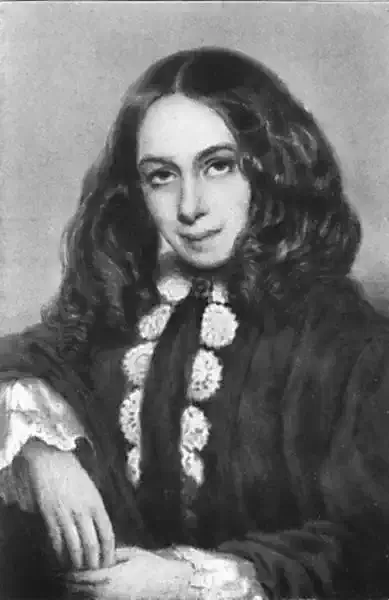
Elizabeth Barrett Browning
Sonnet VII: The Face of All the World
The face of all the world is changed, I think,
Since first I heard the footsteps of thy soul
Move still, oh, still, beside me, as they stole
Betwixt me and the dreadful outer brink
Of obvious death, where I, who thought to sink,
Was caught up into love, and taught the whole
Of life in a new rhythm. The cup of dole
God gave for baptism, I am fain to drink,
And praise its sweetness, Sweet, with thee anear.
The names of country, heaven, are changed away
For where thou art or shalt be, there or here;
And this . . . this lute and song . . . loved yesterday,
(The singing angels know) are only dear
Because thy name moves right in what they say.
Read more →
395

John Donne
Annunciation
Salvation to all that will is nigh;
That All, which always is all everywhere,
Which cannot sin, and yet all sins must bear,
Which cannot die, yet cannot choose but die,
Lo, faithful virgin, yields Himself to lie
In prison, in thy womb; and though He there
Can take no sin, nor thou give, yet He will wear,
Taken from thence, flesh, which death's force may try.
Ere by the spheres time was created, thou
Wast in His mind, who is thy Son and Brother;
Whom thou conceivst, conceived; yea thou art now
Thy Maker's maker, and thy Father's mother;
Thou hast light in dark, and shutst in little room,
Immensity cloistered in thy dear womb.
Read more →
394
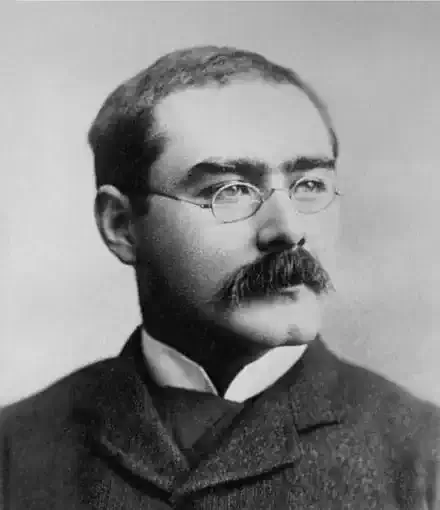
Rudyard Kipling
The Cure
Long years ago, ere R--lls or R--ce
Trebled the mileage man could cover;
When Sh--nks's Mare was H--bs--n's Choice,
And Bl--r--ot had not flown to Dover:
When good hoteliers looked askance
If any power save horse-flesh drew vans--
'Time was in easy, hand-made France,
I met the Cure of Saint Juvans.
He was no babbler, but, at last,
One learned from things he left unspoken
How in some fiery, far-off past,
His, and a woman's, heart were broken.
He sought for death, but found it not,
Yet, seeking, found his true vocation,
And fifty years, by all forgot,
Toiled at a simple folk's salvation.
His pay was lower than our Dole;
The piteous little church he tended
Had neither roof nor vestments whole
Save what his own hard fingers mended:
While, any hour, at every need
(As Conscience or La Grippe assailed 'em),
His parish bade him come with speed,
And, foot or cart, he never failed 'em,
His speech--to suit his hearers--ran
From pure Parisian to gross peasant,
With interludes North African
If any Legionnaire were present:
And when some wine-ripe atheist mocked
His office or the Faith he knelt in,
He left the sinner dumb and shocked
By oaths his old Battalion dealt in.
And he was learned in Death and Life;
And he was Logic's self (as France is).
He knew his flock-man, maid, and wife--
Their forebears, failings, and finances.
Spite, Avarice, Devotion, Lies--
Passion ablaze or sick Obsession--
He dealt with each physician-wise;
Stern or most tender, at Confession...
To-day? God knows where he may lie--
His Cross of weathered beads above him:
But one not worthy to untie
His shoe-string, prays you read--and love him!
Read more →
395

William Shakespeare
The Rival Poet Sonnets (78 - 86)
LXXVIII
So oft have I invoked thee for my Muse,
And found such fair assistance in my verse
As every alien pen hath got my use
And under thee their poesy disperse.
Thine eyes, that taught the dumb on high to sing
And heavy ignorance aloft to fly,
Have added feathers to the learned's wing
And given grace a double majesty.
Yet be most proud of that which I compile,
Whose influence is thine, and born of thee:
In others' works thou dost but mend the style,
And arts with thy sweet graces graced be;
But thou art all my art, and dost advance
As high as learning my rude ignorance.
LXXIX
Whilst I alone did call upon thy aid,
My verse alone had all thy gentle grace;
But now my gracious numbers are decay'd,
And my sick Muse doth give an other place.
I grant, sweet love, thy lovely argument
Deserves the travail of a worthier pen;
Yet what of thee thy poet doth invent
He robs thee of, and pays it thee again.
He lends thee virtue, and he stole that word
From thy behaviour; beauty doth he give,
And found it in thy cheek: he can afford
No praise to thee, but what in thee doth live.
Then thank him not for that which he doth say,
Since what he owes thee, thou thyself dost pay.
LXXX
O! how I faint when I of you do write,
Knowing a better spirit doth use your name,
And in the praise thereof spends all his might,
To make me tongue-tied speaking of your fame.
But since your worth, wide as the ocean is,
The humble as the proudest sail doth bear,
My saucy bark, inferior far to his,
On your broad main doth wilfully appear.
Your shallowest help will hold me up afloat,
Whilst he upon your soundless deep doth ride;
Or, being wrack'd, I am a worthless boat,
He of tall building, and of goodly pride:
Then if he thrive and I be cast away,
The worst was this, my love was my decay.
LXXXI
Or I shall live your epitaph to make,
Or you survive when I in earth am rotten,
From hence your memory death cannot take,
Although in me each part will be forgotten.
Your name from hence immortal life shall have,
Though I, once gone, to all the world must die:
The earth can yield me but a common grave,
When you entombed in men's eyes shall lie.
Your monument shall be my gentle verse,
Which eyes not yet created shall o'er-read;
And tongues to be, your being shall rehearse,
When all the breathers of this world are dead;
You still shall live, such virtue hath my pen,
Where breath most breathes, even in the mouths of men.
LXXXII
I grant thou wert not married to my Muse,
And therefore mayst without attaint o'erlook
The dedicated words which writers use
Of their fair subject, blessing every book.
Thou art as fair in knowledge as in hue,
Finding thy worth a limit past my praise;
And therefore art enforced to seek anew
Some fresher stamp of the time-bettering days.
And do so, love; yet when they have devis'd,
What strained touches rhetoric can lend,
Thou truly fair, wert truly sympathiz'd
In true plain words, by thy true-telling friend;
And their gross painting might be better usd
Where cheeks need blood; in thee it is abusd.
LXXXIII
I never saw that you did painting need,
And therefore to your fair no painting set;
I found, or thought I found, you did exceed
The barren tender of a poet's debt:
And therefore have I slept in your report,
That you yourself, being extant, well might show
How far a modern quill doth come too short,
Speaking of worth, what worth in you doth grow.
This silence for my sin you did impute,
Which shall be most my glory being dumb;
For I impair not beauty being mute,
When others would give life, and bring a tomb.
There lives more life in one of your fair eyes
Than both your poets can in praise devise.
LXXXIV
Who is it that says most, which can say more,
Than this rich praise, that you alone, are you,
In whose confine immured is the store
Which should example where your equal grew?
Lean penury within that pen doth dwell
That to his subject lends not some small glory;
But he that writes of you, if he can tell
That you are you, so dignifies his story.
Let him but copy what in you is writ,
Not making worse what nature made so clear,
And such a counterpart shall fame his wit,
Making his style admired every where.
You to your beauteous blessings add a curse,
Being fond on praise, which makes your praises worse.
LXXXV
My tongue-tied Muse in manners holds her still,
While comments of your praise richly compiled,
Reserve thy character with golden quill,
And precious phrase by all the Muses filed.
I think good thoughts, whilst others write good words,
And like unlettered clerk still cry 'Amen'
To every hymn that able spirit affords,
In polished form of well-refined pen.
Hearing you praised, I say ''tis so, 'tis true,'
And to the most of praise add something more;
But that is in my thought, whose love to you,
Though words come hindmost, holds his rank before.
Then others, for the breath of words respect,
Me for my dumb thoughts, speaking in effect.
LXXXVI
Was it the proud full sail of his great verse,
Bound for the prize of all too precious you,
That did my ripe thoughts in my brain inhearse,
Making their tomb the womb wherein they grew?
Was it his spirit, by spirits taught to write
Above a mortal pitch, that struck me dead?
No, neither he, nor his compeers by night
Giving him aid, my verse astonished.
He, nor that affable familiar ghost
Which nightly gulls him with intelligence,
As victors of my silence cannot boast;
I was not sick of any fear from thence:
But when your countenance filled up his line,
Then lacked I matter; that enfeebled mine.
Read more →
394

William Butler Yeats
Cuchulain Comforted
A MAN that had six mortal wounds, a man
Violent and famous, strode among the dead;
Eyes stared out of the branches and were gone.
Then certain Shrouds that muttered head to head
Came and were gone. He leant upon a tree
As though to meditate on wounds and blood.
A Shroud that seemed to have authority
Among those bird-like things came, and let fall
A bundle of linen. Shrouds by two and thrce
Came creeping up because the man was still.
And thereupon that linen-carrier said:
'Your life can grow much sweeter if you will
'Obey our ancient rule and make a shroud;
Mainly because of what we only know
The rattle of those arms makes us afraid.
'We thread the needles' eyes, and all we do
All must together do.' That done, the man
Took up the nearest and began to sew.
'Now must we sing and sing the best we can,
But first you must be told our character:
Convicted cowards all, by kindred slain
'Or driven from home and left to dic in fear.'
They sang, but had nor human tunes nor words,
Though all was done in common as before;
They had changed their thtoats and had the throats of birds.
Read more →
395
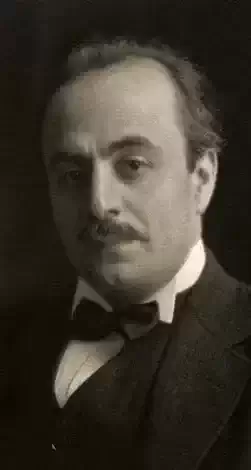
Khalil Gibran
The Farewell XXVIII
And now it was evening.
And Almitra the seeress said, "Blessed be this day and this place and your spirit that
has spoken."
And he answered, Was it I who spoke? Was I not also a listener?
Then he descended the steps of the Temple and all the people followed him. And he
reached his ship and stood upon the deck.
And facing the people again, he raised his voice and said:
People of Orphalese, the wind bids me leave you.
Less hasty am I than the wind, yet I must go.
We wanderers, ever seeking the lonelier way, begin no day where we have ended
another day; and no sunrise finds us where sunset left us.
Even while the earth sleeps we travel.
We are the seeds of the tenacious plant, and it is in our ripeness and our fullness of
heart that we are given to the wind and are scattered.
Brief were my days among you, and briefer still the words I have spoken.
But should my voice fade in your ears, and my love vanish in your memory, then I will
come again,
And with a richer heart and lips more yielding to the spirit will I speak.
Yea, I shall return with the tide,
And though death may hide me, and the greater silence enfold me, yet again will I
seek your understanding.
And not in vain will I seek.
If aught I have said is truth, that truth shall reveal itself in a clearer voice, and in
words more kin to your thoughts.
I go with the wind, people of Orphalese, but not down into emptiness;
And if this day is not a fulfillment of your needs and my love, then let it be a promise
till another day. Know therefore, that from the greater silence I shall return.
The mist that drifts away at dawn, leaving but dew in the fields, shall rise and gather
into a cloud and then fall down in rain.
And not unlike the mist have I been.
In the stillness of the night I have walked in your streets, and my spirit has entered
your houses,
And your heart-beats were in my heart, and your breath was upon my face, and I knew
you all.
Ay, I knew your joy and your pain, and in your sleep your dreams were my dreams.
And oftentimes I was among you a lake among the mountains.
I mirrored the summits in you and the bending slopes, and even the passing flocks of
your thoughts and your desires.
And to my silence came the laughter of your children in streams, and the longing of
your youths in rivers.
And when they reached my depth the streams and the rivers ceased not yet to sing.
But sweeter still than laughter and greater than longing came to me.
It was boundless in you;
The vast man in whom you are all but cells and sinews;
He in whose chant all your singing is but a soundless throbbing.
It is in the vast man that you are vast,
And in beholding him that I beheld you and loved you.
For what distances can love reach that are not in that vast sphere?
What visions, what expectations and what presumptions can outsoar that flight?
Like a giant oak tree covered with apple blossoms is the vast man in you.
His mind binds you to the earth, his fragrance lifts you into space, and in his durability
you are deathless.
You have been told that, even like a chain, you are as weak as your weakest link.
This is but half the truth. You are also as strong as your strongest link.
To measure you by your smallest deed is to reckon the power of ocean by the frailty of
its foam.
To judge you by your failures is to cast blame upon the seasons for their inconsistency.
Ay, you are like an ocean,
And though heavy-grounded ships await the tide upon your shores, yet, even like an
ocean, you cannot hasten your tides.
And like the seasons you are also,
And though in your winter you deny your spring,
Yet spring, reposing within you, smiles in her drowsiness and is not offended.
Think not I say these things in order that you may say the one to the other, "He
praised us well. He saw but the good in us."
I only speak to you in words of that which you yourselves know in thought.
And what is word knowledge but a shadow of wordless knowledge?
Your thoughts and my words are waves from a sealed memory that keeps records of
our yesterdays,
And of the ancient days when the earth knew not us nor herself,
And of nights when earth was upwrought with confusion,
Wise men have come to you to give you of their wisdom. I came to take of your
wisdom:
And behold I have found that which is greater than wisdom.
It is a flame spirit in you ever gathering more of itself,
While you, heedless of its expansion, bewail the withering of your days.
It is life in quest of life in bodies that fear the grave.
There are no graves here.
These mountains and plains are a cradle and a stepping-stone.
Whenever you pass by the field where you have laid your ancestors look well
thereupon, and you shall see yourselves and your children dancing hand in hand.
Verily you often make merry without knowing.
Others have come to you to whom for golden promises made unto your faith you have
given but riches and power and glory.
Less than a promise have I given, and yet more generous have you been to me.
You have given me deeper thirsting after life.
Surely there is no greater gift to a man than that which turns all his aims into parching
lips and all life into a fountain.
And in this lies my honour and my reward, -
That whenever I come to the fountain to drink I find the living water itself thirsty;
And it drinks me while I drink it.
Some of you have deemed me proud and over-shy to receive gifts.
To proud indeed am I to receive wages, but not gifts.
And though I have eaten berries among the hill when you would have had me sit at
your board,
And slept in the portico of the temple where you would gladly have sheltered me,
Yet was it not your loving mindfulness of my days and my nights that made food sweet
to my mouth and girdled my sleep with visions?
For this I bless you most:
You give much and know not that you give at all.
Verily the kindness that gazes upon itself in a mirror turns to stone,
And a good deed that calls itself by tender names becomes the parent to a curse.
And some of you have called me aloof, and drunk with my own aloneness,
And you have said, "He holds council with the trees of the forest, but not with men.
He sits alone on hill-tops and looks down upon our city."
True it is that I have climbed the hills and walked in remote places.
How could I have seen you save from a great height or a great distance?
How can one be indeed near unless he be far?
And others among you called unto me, not in words, and they said,
Stranger, stranger, lover of unreachable heights, why dwell you among the summits
where eagles build their nests?
Why seek you the unattainable?
What storms would you trap in your net,
And what vaporous birds do you hunt in the sky?
Come and be one of us.
Descend and appease your hunger with our bread and quench your thirst with our
wine."
In the solitude of their souls they said these things;
But were their solitude deeper they would have known that I sought but the secret of
your joy and your pain,
And I hunted only your larger selves that walk the sky.
But the hunter was also the hunted:
For many of my arrows left my bow only to seek my own breast.
And the flier was also the creeper;
For when my wings were spread in the sun their shadow upon the earth was a turtle.
And I the believer was also the doubter;
For often have I put my finger in my own wound that I might have the greater belief in
you and the greater knowledge of you.
And it is with this belief and this knowledge that I say,
You are not enclosed within your bodies, nor confined to houses or fields.
That which is you dwells above the mountain and roves with the wind.
It is not a thing that crawls into the sun for warmth or digs holes into darkness for
safety,
But a thing free, a spirit that envelops the earth and moves in the ether.
If this be vague words, then seek not to clear them.
Vague and nebulous is the beginning of all things, but not their end,
And I fain would have you remember me as a beginning.
Life, and all that lives, is conceived in the mist and not in the crystal.
And who knows but a crystal is mist in decay?
This would I have you remember in remembering me:
That which seems most feeble and bewildered in you is the strongest and most
determined.
Is it not your breath that has erected and hardened the structure of your bones?
And is it not a dream which none of you remember having dreamt that building your
city and fashioned all there is in it?
Could you but see the tides of that breath you would cease to see all else,
And if you could hear the whispering of the dream you would hear no other sound.
But you do not see, nor do you hear, and it is well.
The veil that clouds your eyes shall be lifted by the hands that wove it,
And the clay that fills your ears shall be pierced by those fingers that kneaded it.
And you shall see
And you shall hear.
Yet you shall not deplore having known blindness, nor regret having been deaf.
For in that day you shall know the hidden purposes in all things,
And you shall bless darkness as you would bless light.
After saying these things he looked about him, and he saw the pilot of his ship standing
by the helm and gazing now at the full sails and now at the distance.
And he said:
Patient, over-patient, is the captain of my ship.
The wind blows, and restless are the sails;
Even the rudder begs direction;
Yet quietly my captain awaits my silence.
And these my mariners, who have heard the choir of the greater sea, they too have
heard me patiently.
Now they shall wait no longer.
I am ready.
The stream has reached the sea, and once more the great mother holds her son
against her breast.
Fare you well, people of Orphalese.
This day has ended.
It is closing upon us even as the water-lily upon its own tomorrow.
What was given us here we shall keep,
And if it suffices not, then again must we come together and together stretch our
hands unto the giver.
Forget not that I shall come back to you.
A little while, and my longing shall gather dust and foam for another body.
A little while, a moment of rest upon the wind, and another woman shall bear me.
Farewell to you and the youth I have spent with you.
It was but yesterday we met in a dream.
You have sung to me in my aloneness, and I of your longings have built a tower in the
sky.
But now our sleep has fled and our dream is over, and it is no longer dawn.
The noontide is upon us and our half waking has turned to fuller day, and we must
part.
If in the twilight of memory we should meet once more, we shall speak again together
and you shall sing to me a deeper song.
And if our hands should meet in another dream, we shall build another tower in the
sky.
So saying he made a signal to the seamen, and straightaway they weighed anchor and
cast the ship loose from its moorings, and they moved eastward.
And a cry came from the people as from a single heart, and it rose the dusk and was
carried out over the sea like a great trumpeting.
Only Almitra was silent, gazing after the ship until it had vanished into the mist.
And when all the people were dispersed she still stood alone upon the sea-wall,
remembering in her heart his saying,
A little while, a moment of rest upon the wind, and another woman shall bear me."
Read more →
395

Wilfred Owen
Futility
Move him into the sun--
Gently its touch awoke him once,
At home, whispering of fields unsown.
Always it awoke him, even in France,
Until this morning and this snow.
If anything might rouse him now
The kind old sun will know.
Think how it wakes the seeds--
Woke, once, the clays of a cold star.
Are limbs so dear-achieved, are sides
Full-nerved,--still warm,--too hard to stir?
Was it for this the clay grew tall?
--O what made fatuous sunbeams toil
To break earth's sleep at all?
Read more →
393

Johann Wolfgang von Goethe
The Farewell
LET mine eye the farewell say,
That my lips can utter ne'er;
Fain I'd be a man to-day,
Yet 'tis hard, oh, hard to bear!
Mournful in an hour like this
Is love's sweetest pledge, I ween;
Cold upon thy mouth the kiss,
Faint thy fingers' pressure e'en.
Oh what rapture to my heart
Used each stolen kiss to bring!
As the violets joy impart,
Gather'd in the early spring.
Now no garlands I entwine,
Now no roses pluck. for thee,
Though 'tis springtime, Fanny mine,
Dreary autumn 'tis to me!
Read more →
393
Johann Wolfgang von Goethe
Book Of Contemplation - Suleika
THE mirror tells me, I am fair!
Thou sayest, to grow old my fate will be.
Nought in God's presence changeth e'er,--
Love him, for this one moment, then, in me.
Read more →
395

Alexander Pope
The Rape of the Lock: Canto 5
She said: the pitying audience melt in tears,
But Fate and Jove had stopp'd the Baron's ears.
In vain Thalestris with reproach assails,
For who can move when fair Belinda fails?
Not half so fix'd the Trojan could remain,
While Anna begg'd and Dido rag'd in vain.
Then grave Clarissa graceful wav'd her fan;
Silence ensu'd, and thus the nymph began.
"Say, why are beauties prais'd and honour'd most,
The wise man's passion, and the vain man's toast?
Why deck'd with all that land and sea afford,
Why angels call'd, and angel-like ador'd?
Why round our coaches crowd the white-glov'd beaux,
Why bows the side-box from its inmost rows?
How vain are all these glories, all our pains,
Unless good sense preserve what beauty gains:
That men may say, when we the front-box grace:
'Behold the first in virtue, as in face!'
Oh! if to dance all night, and dress all day,
Charm'd the smallpox, or chas'd old age away;
Who would not scorn what housewife's cares produce,
Or who would learn one earthly thing of use?
To patch, nay ogle, might become a saint,
Nor could it sure be such a sin to paint.
But since, alas! frail beauty must decay,
Curl'd or uncurl'd, since locks will turn to grey,
Since painted, or not painted, all shall fade,
And she who scorns a man, must die a maid;
What then remains but well our pow'r to use,
And keep good humour still whate'er we lose?
And trust me, dear! good humour can prevail,
When airs, and flights, and screams, and scolding fail.
Beauties in vain their pretty eyes may roll;
Charms strike the sight, but merit wins the soul."
So spoke the dame, but no applause ensu'd;
Belinda frown'd, Thalestris call'd her prude.
"To arms, to arms!" the fierce virago cries,
And swift as lightning to the combat flies.
All side in parties, and begin th' attack;
Fans clap, silks rustle, and tough whalebones crack;
Heroes' and heroines' shouts confus'dly rise,
And bass, and treble voices strike the skies.
No common weapons in their hands are found,
Like gods they fight, nor dread a mortal wound.
So when bold Homer makes the gods engage,
And heav'nly breasts with human passions rage;
'Gainst Pallas, Mars; Latona, Hermes arms;
And all Olympus rings with loud alarms.
Jove's thunder roars, heav'n trembles all around;
Blue Neptune storms, the bellowing deeps resound;
Earth shakes her nodding tow'rs, the ground gives way;
And the pale ghosts start at the flash of day!
Triumphant Umbriel on a sconce's height
Clapp'd his glad wings, and sate to view the fight:
Propp'd on their bodkin spears, the sprites survey
The growing combat, or assist the fray.
While through the press enrag'd Thalestris flies,
And scatters death around from both her eyes,
A beau and witling perish'd in the throng,
One died in metaphor, and one in song.
"O cruel nymph! a living death I bear,"
Cried Dapperwit, and sunk beside his chair.
A mournful glance Sir Fopling upwards cast,
"Those eyes are made so killing"--was his last.
Thus on Mæeander's flow'ry margin lies
Th' expiring swan, and as he sings he dies.
When bold Sir Plume had drawn Clarissa down,
Chloe stepp'd in, and kill'd him with a frown;
She smil'd to see the doughty hero slain,
But at her smile, the beau reviv'd again.
Now Jove suspends his golden scales in air,
Weighs the men's wits against the lady's hair;
The doubtful beam long nods from side to side;
At length the wits mount up, the hairs subside.
See, fierce Belinda on the baron flies,
With more than usual lightning in her eyes,
Nor fear'd the chief th' unequal fight to try,
Who sought no more than on his foe to die.
But this bold lord with manly strength endu'd,
She with one finger and a thumb subdu'd:
Just where the breath of life his nostrils drew,
A charge of snuff the wily virgin threw;
The Gnomes direct, to ev'ry atom just,
The pungent grains of titillating dust.
Sudden, with starting tears each eye o'erflows,
And the high dome re-echoes to his nose.
"Now meet thy fate", incens'd Belinda cried,
And drew a deadly bodkin from her side.
(The same, his ancient personage to deck,
Her great great grandsire wore about his neck
In three seal-rings; which after, melted down,
Form'd a vast buckle for his widow's gown:
Her infant grandame's whistle next it grew,
The bells she jingled, and the whistle blew;
Then in a bodkin grac'd her mother's hairs,
Which long she wore, and now Belinda wears.)
"Boast not my fall," he cried, "insulting foe!
Thou by some other shalt be laid as low.
Nor think, to die dejects my lofty mind;
All that I dread is leaving you benind!
Rather than so, ah let me still survive,
And burn in Cupid's flames--but burn alive."
"Restore the lock!" she cries; and all around
"Restore the lock!" the vaulted roofs rebound.
Not fierce Othello in so loud a strain
Roar'd for the handkerchief that caus'd his pain.
But see how oft ambitious aims are cross'd,
The chiefs contend 'till all the prize is lost!
The lock, obtain'd with guilt, and kept with pain,
In ev'ry place is sought, but sought in vain:
With such a prize no mortal must be blest,
So Heav'n decrees! with Heav'n who can contest?
Some thought it mounted to the lunar sphere,
Since all things lost on earth are treasur'd there.
There hero's wits are kept in pond'rous vases,
And beaux' in snuff boxes and tweezercases.
There broken vows and deathbed alms are found,
And lovers' hearts with ends of riband bound;
The courtier's promises, and sick man's prayers,
The smiles of harlots, and the tears of heirs,
Cages for gnats, and chains to yoke a flea,
Dried butterflies, and tomes of casuistry.
But trust the Muse--she saw it upward rise,
Though mark'd by none but quick, poetic eyes:
(So Rome's great founder to the heav'ns withdrew,
To Proculus alone confess'd in view)
A sudden star, it shot through liquid air,
And drew behind a radiant trail of hair.
Not Berenice's locks first rose so bright,
The heav'ns bespangling with dishevell'd light.
The Sylphs behold it kindling as it flies,
And pleas'd pursue its progress through the skies.
This the beau monde shall from the Mall survey,
And hail with music its propitious ray.
This the blest lover shall for Venus take,
And send up vows from Rosamonda's lake.
This Partridge soon shall view in cloudless skies,
When next he looks through Galileo's eyes;
And hence th' egregious wizard shall foredoom
The fate of Louis, and the fall of Rome.
Then cease, bright nymph! to mourn thy ravish'd hair,
Which adds new glory to the shining sphere!
Not all the tresses that fair head can boast
Shall draw such envy as the lock you lost.
For, after all the murders of your eye,
When, after millions slain, yourself shall die:
When those fair suns shall set, as set they must,
And all those tresses shall be laid in dust,
This lock, the Muse shall consecrate to fame
And 'midst the stars inscribe Belinda's name.
Read more →
393
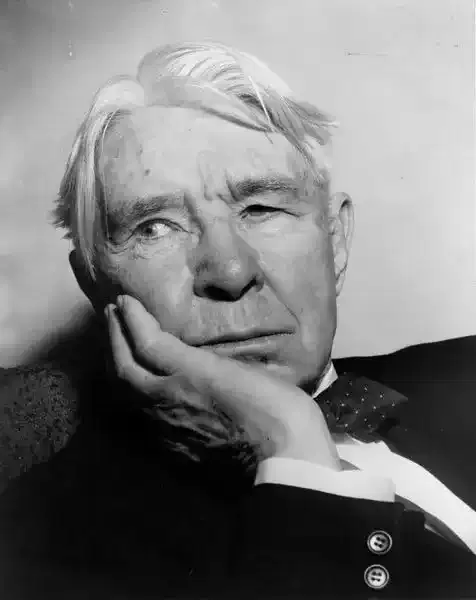
Carl Sandburg
Jan Kubelik
Your bow swept over a string, and a long low note quivered to the air.
(A mother of Bohemia sobs over a new child perfect learning to suck milk.)
Your bow ran fast over all the high strings fluttering and wild.
(All the girls in Bohemia are laughing on a Sunday afternoon in the hills with their
lovers.)
Read more →
394
William Shakespeare
Sonnet 106: When in the chronicle of wasted time
When in the chronicle of wasted time
I see descriptions of the fairest wights,
And beauty making beautiful old rhyme
In praise of ladies dead and lovely knights,
Then, in the blazon of sweet beauty's best,
Of hand, of foot, of lip, of eye, of brow,
I see their antique pen would have express'd
Even such a beauty as you master now.
So all their praises are but prophecies
Of this our time, all you prefiguring;
And, for they look'd but with divining eyes,
They had not skill enough your worth to sing:
For we, which now behold these present days,
Had eyes to wonder, but lack tongues to praise.
Read more →
393
Carl Sandburg
And This Will Be All....
And this will be all?
And the gates will never open again?
And the dust and the wind will play around the rusty door hinges and the songs of
October moan, Why-oh, why-oh?
And you will look to the mountains
And the mountains will look to you
And you will wish you were a mountain
And the mountain will wish nothing at all?
This will be all?
The gates will never-never open again?
The dust and the wind only
And the rusty door hinges and moaning October
And Why-oh, why-oh, in the moaning dry leaves,
This will be all?
Nothing in the air but songs
And no singers, no mouths to know the songs?
You tell us a woman with a heartache tells you it is so?
This will be all?
Read more →
395
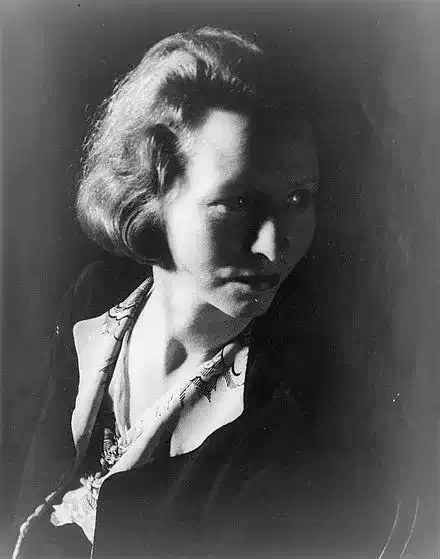
Edna St. Vincent Millay
The Penitent
I had a little Sorrow,
Born of a little Sin,
I found a room all damp with gloom
And shut us all within;
And, "Little Sorrow, weep," said I,
"And, Little Sin, pray God to die,
And I upon the floor will lie
And think how bad I've been!"
Alas for pious planning—
It mattered not a whit!
As far as gloom went in that room,
The lamp might have been lit!
My little Sorrow would not weep,
My little Sin would go to sleep—
To save my soul I could not keep
My graceless mind on it!
So I got up in anger,
And took a book I had,
And put a ribbon on my hair
To please a passing lad,
And, "One thing there's no getting by—
I've been a wicked girl," said I:
"But if I can't be sorry, why,
I might as well be glad!"
Read more →
393

Henry Wadsworth Longfellow
Flower-De-Luce: Hawthorne
How beautiful it was, that one bright day
In the long week of rain!
Though all its splendor could not chase away
The omnipresent pain.
The lovely town was white with apple-blooms,
And the great elms o'erhead
Dark shadows wove on their aerial looms
Shot through with golden thread.
Across the meadows, by the gray old manse,
The historic river flowed:
I was as one who wanders in a trance,
Unconscious of his road.
The faces of familiar friends seemed strange;
Their voices I could hear,
And yet the words they uttered seemed to change
Their meaning to my ear.
For the one face I looked for was not there,
The one low voice was mute;
Only an unseen presence filled the air,
And baffled my pursuit.
Now I look back, and meadow, manse, and stream
Dimly my thought defines;
I only see--a dream within a dream--
The hill-top hearsed with pines.
I only hear above his place of rest
Their tender undertone,
The infinite longings of a troubled breast,
The voice so like his own.
There in seclusion and remote from men
The wizard hand lies cold,
Which at its topmost speed let fall the pen,
And left the tale half told.
Ah! who shall lift that wand of magic power,
And the lost clew regain?
The unfinished window in Aladdin's tower
Unfinished must remain!
Read more →
395
William Butler Yeats
The Pilgrim
I FASTED for some forty days on bread and buttermilk,
For passing round the bottle with girls in rags or silk,
In country shawl or Paris cloak, had put my wits astray,
And what's the good of women, for all that they can say
Is fol de rol de rolly O.
Round Lough Derg's holy island I went upon the stones,
I prayed at all the Stations upon my matrow-bones,
And there I found an old man, and though, I prayed all day
And that old man beside me, nothing would he say
But fol de rol de rolly O.
All know that all the dead in the world about that place are stuck,
And that should mother seek her son she'd have but little luck
Because the fires of purgatory have ate their shapes away;
I swear to God I questioned them, and all they had to say
Was fol de rol de rolly O.
A great black ragged bird appeared when I was in the boat;
Some twenty feet from tip to tip had it stretched rightly out,
With flopping and with flapping it made a great display,
But I never stopped to question, what could the boatman say
But fol de rol de rolly O.
Now I am in the public-house and lean upon the wall,
So come in rags or come in silk, in cloak or country shawl,
And come with learned lovers or with what men you may,
For I can put the whole lot down, and all I have to say
Is fol de rol de rolly O.
Read more →
394
William Shakespeare
Sonnet 125: Were't aught to me I bore the canopy
Were't aught to me I bore the canopy,
With my extern the outward honouring,
Or laid great bases for eternity,
Which proves more short than waste or ruining?
Have I not seen dwellers on form and favour
Lose all, and more, by paying too much rent
For compound sweet forgoing simple savour,
Pitiful thrivers in their gazing spent?
No, let me be obsequious in thy heart,
And take thou my oblation, poor but free,
Which is not mixed with seconds, knows no art
But mutual render, only me for thee.
Hence, thou suborned informer, a true soul
When most impeached stands least in thy control.
Read more →
394

Kabir
Tell me Brother
Tell me, Brother, how can I renounce Maya?
When I gave up the tying of ribbons, still I tied my garment about me:
When I gave up tying my garment, still I covered my body in its folds.
So, when I give up passion, I see that anger remains;
And when I renounce anger, greed is with me still;
And when greed is vanquished, pride and vainglory remain;
When the mind is detached and casts Maya away, still it clings to the letter.
Kabîr says, 'Listen to me, dear Sadhu! the true path is rarely found.'
Read more →
393
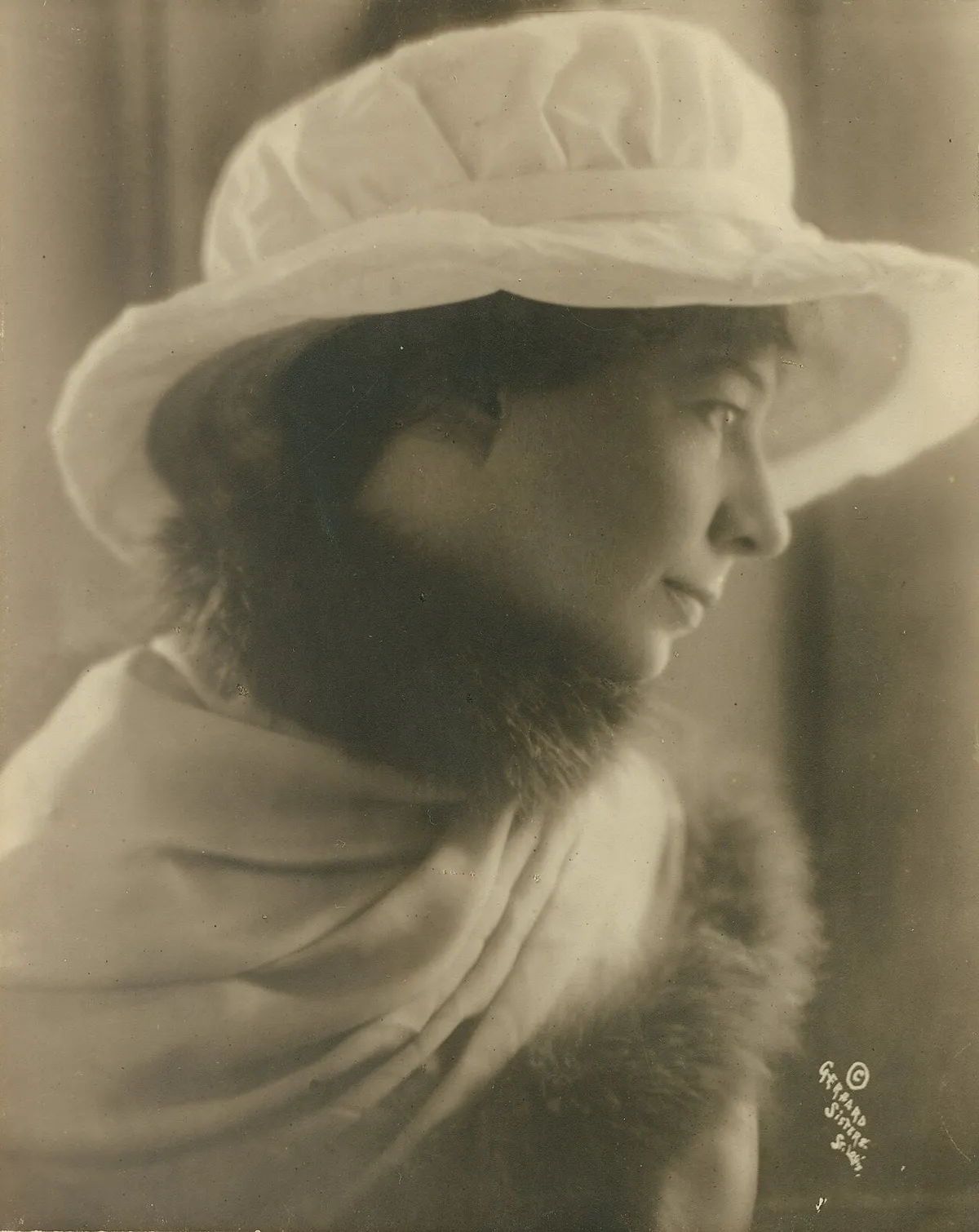
Sara Teasdale
Tides
Love in my heart was a fresh tide flowing
Where the starlike sea gulls soar;
The sun was keen and the foam was blowing
High on the rocky shore.
But now in the dusk the tide is turning,
Lower the sea gulls soar,
And the waves that rose in resistless yearning
Are broken forevermore.
Read more →
395
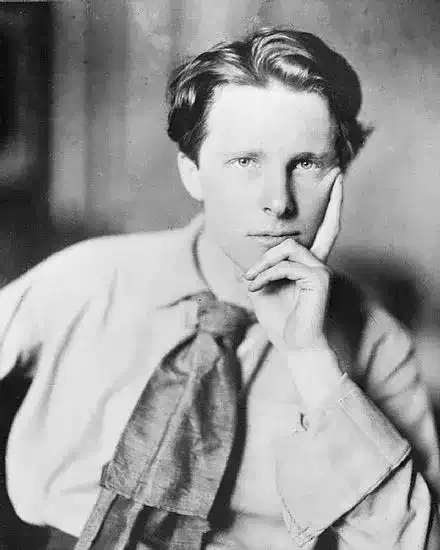
Rupert Brooke
I: Peace
Now, God be thanked Who has watched us with His hour,
And caught our youth, and wakened us from sleeping,
With hand made sure, clear eye, and sharpened power,
To turn, as swimmers into cleanness leaping,
Glad from a world grown old and cold and weary,
Leave the sick hearts that honour could not move,
And half-men, and their dirty songs and dreary,
And all the little emptiness of love!
Oh! we, who have known shame, we have found release there,
Where there's no ill, no grief, but sleep has mending,
Naught broken save this body, lost but breath;
Nothing to shake the laughing heart's long peace there
But only agony, and that has ending;
And the worst friend and enemy is but Death.
Read more →
394
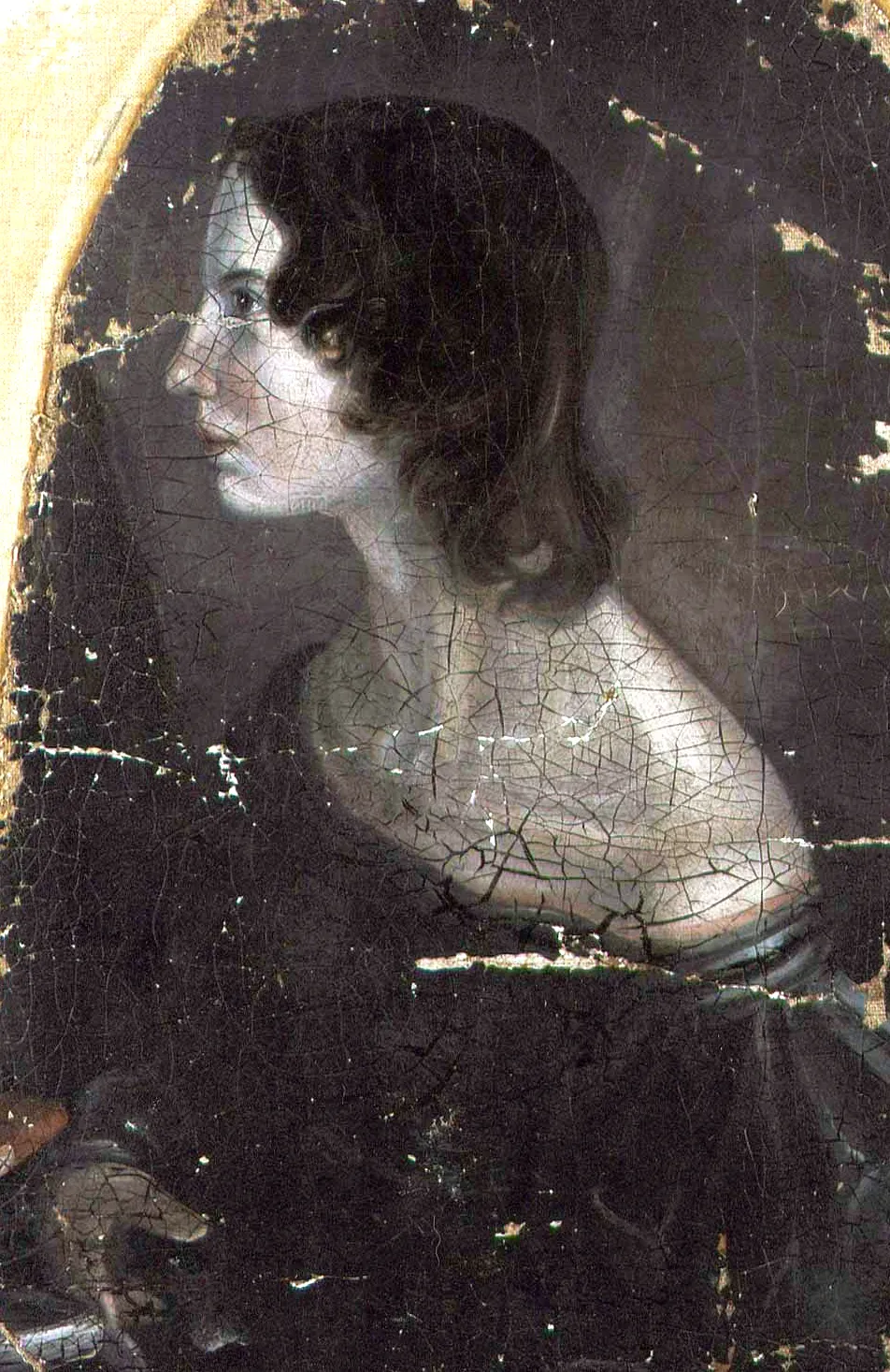
Emily Jane Brontë
The Old Stoic
Riches I hold in light esteem;
And Love I laugh to scorn;
And lust of fame was but a dream
That vanished with the morn:
And if I pray, the only prayer
That moves my lips for me
Is, 'Leave the heart that now I bear,
And give me liberty!'
Yes, as my swift days near their goal,
'Tis all that I implore;
In life and death, a chainless soul,
With courage to endure.
Read more →
393