
Soul

William Butler Yeats
Solomon And The Witch
AND thus declared that Arab lady:
'Last night, where under the wild moon
On grassy mattress I had laid me,
Within my arms great Solomon,
I suddenly cried out in a strange tongue
Not his, not mine.'
Who understood
Whatever has been said, sighed, sung,
Howled, miau-d, barked, brayed, belled, yelled, cried, crowed,
Thereon replied: 'A cockerel
Crew from a blossoming apple bough
Three hundred years before the Fall,
And never crew again till now,
And would not now but that he thought,
Chance being at one with Choice at last,
All that the brigand apple brought
And this foul world were dead at last.
He that crowed out eternity
Thought to have crowed it in again.
For though love has a spider's eye
To find out some appropriate pain --
Aye, though all passion's in the glance --
For every nerve, and tests a lover
With cruelties of Choice and Chance;
And when at last that murder's over
Maybe the bride-bed brings despair,
For each an imagined image brings
And finds a real image there;
Yet the world ends when these two things,
Though several, are a single light,
When oil and wick are burned in one;
Therefore a blessed moon last night
Gave Sheba to her Solomon.'
'Yet the world stays.'
'If that be so,
Your cockerel found us in the wrong
Although he thought it. worth a crow.
Maybe an image is too strong
Or maybe is not strong enough.'
'The night has fallen; not a sound
In the forbidden sacred grove
Unless a petal hit the ground,
Nor any human sight within it
But the crushed grass where we have lain!
And the moon is wilder every minute.
O! Solomon! let us try again.'
Read more →
402
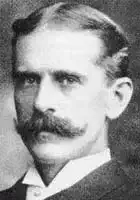
Henry Van Dyke
Joyful, Joyful, We Adore Thee
Joyful, joyful we adore Thee, God of glory, Lord of love,
Hearts unfold like flowers before Thee, hail Thee as the sun above.
Melt the clouds of sin and sadness, drive the dark of doubt away;
Giver of immortal gladness, fill us with the light of day.
All Thy works with joy surround Thee, earth and heav'n reflect Thy rays,
Stars and agnels sing around Thee, center of unbroken praise;
Field and forest, vale and moutain, flow'ry meadow, flashing sea,
Chanting birds and flowing fountain call us to rejoice in Thee.
Thou art givind and forgiving, ever blessing, ever blest,
Wellspring of the joy of living, ocean depth of happy rest.
Thou our Father, Christ our Brother, all who live in love are Thine;
Teach us how to love each other, lift us to the Joy Divine.
Mortals, join the mighty chorus which the morning stars began,
Father love is reigning o'er us, brother love binds man to man.
Ever singing, march we onward, victors in the midst of strife;
Joyful music lifts us sunward, in the triumph song of life.
Read more →
399
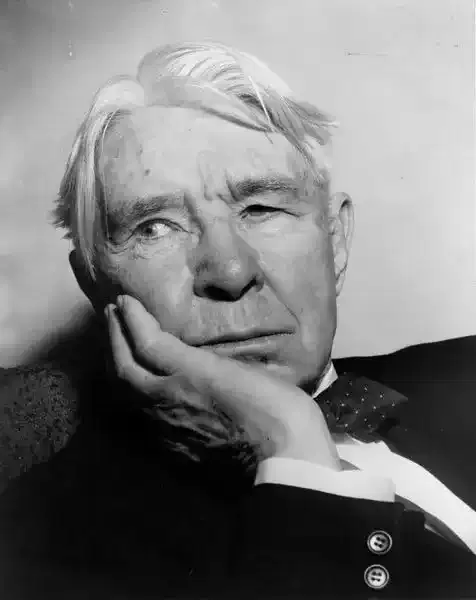
Carl Sandburg
Pool
Out of the fire
Came a man sunken
To less than cinders,
A tea-cup of ashes or so.
And I,
The gold in the house,
Writhed into a stiff pool.
Read more →
401
William Butler Yeats
Anashuya And Vijaya
A little Indian temple in the Golden Age. Around it a garden;
around that the forest. Anashuya, the young priestess, kneelinq
within the temple.
Anashuya. Send peace on all the lands and flickering
corn. --
O, may tranquillity walk by his elbow
When wandering in the forest, if he love
No other. -- Hear, and may the indolent flocks
Be plentiful. -- And if he love another,
May panthers end him. -- Hear, and load our king
With wisdom hour by hour. -- May we two stand,
When we are dead, beyond the setting suns,
A little from the other shades apart,
With mingling hair, and play upon one lute.
Vijaya [entering and throwing a lily at her]. Hail! hail, my
Anashuya.
Anashuya. No: be still.
I, priestess of this temple, offer up
prayers for the land.
Vijaya. I will wait here, Amrita.
Anashuya. By mighty Brahma's ever-rustling robe,
Who is Amrita? Sorrow of all sorrows!
Another fills your mind.
Vijaya. My mother's name.
Anashuya [sings, coming out of the temple].
A sad, sad thought went by me slowly:
Sigh, O you little stars.! O sigh and shake your blue
apparel.!
The sad, sad thought has gone from me now wholly:
Sing, O you little stars.! O sing and raise your rapturous
carol
To mighty Brahma, be who made you many as the sands,
And laid you on the gates of evening with his quiet hands.
(Sits down on the steps of the temple.j
Vijaya, I have brought my evening rice;
The sun has laid his chin on the grey wood,
Weary, with all his poppies gathered round him.
Vijaya. The hour when Kama, full of sleepy laughter,
Rises, and showers abroad his fragrant arrows,
Piercing the twilight with their murmuring barbs.
Anashuya. See-how the sacred old flamingoes come.
Painting with shadow all the marble steps:
Aged and wise, they seek their wonted perches
Within the temple, devious walking, made
To wander by their melancholy minds.
Yon tall one eyes my supper; chase him away,
Far, far away. I named him after you.
He is a famous fisher; hour by hour
He ruffles with his bill the minnowed streams.
Ah! there he snaps my rice. I told you so.
Now cuff him off. He's off! A kiss for you,
Because you saved my rice. Have you no thanks?
Vijaya [sings]. Sing you of her, O first few stars,
Whom Brahma, touching with his finger, praises, for you
hold
The van of wandering quiet; ere you be too calm and old,
Sing, turning in your cars,
Sing, till you raise your hands and sigh, and from your carheads
peer,
With all your whirling hair, and drop many an azure tear.
Anashuya. What know the pilots of the stars of tears?
Vijaya. Their faces are all worn, and in their eyes
Flashes the fire of sadness, for they see
The icicles that famish all the North,
Where men lie frozen in the glimmering snow;
And in the flaming forests cower the lion
And lioness, with all their whimpering cubs;
And, ever pacing on the verge of things,
The phantom, Beauty, in a mist of tears;
While we alone have round us woven woods,
And feel the softness of each other's hand,
Amrita, while -- -
Anashuya [going away from him].
Ah me! you love another,
[Bursting into tears.]
And may some sudden dreadful ill befall her!
Vijaya. I loved another; now I love no other.
Among the mouldering of ancient woods
You live, and on the village border she,
With her old father the blind wood-cutter;
I saw her standing in her door but now.
Anashuya. Vijaya, swear to love her never more.
Vijaya. Ay, ay.
Anashuya. Swear by the parents of the gods,
Dread oath, who dwell on sacred Himalay,
On the far Golden peak; enormous shapes,
Who still were old when the great sea was young;
On their vast faces mystery and dreams;
Their hair along the mountains rolled and filled
From year to year by the unnumbered nests
Of aweless birds, and round their stirless feet
The joyous flocks of deer and antelope,
Who never hear the unforgiving hound.
Swear!
Vijaya. By the parents of the gods, I swear.
Anashuya [sings]. I have forgiven, O new star!
Maybe you have not heard of us, you have come forth so
newly,
You hunter of the fields afar!
Ah, you will know my loved one by his hunter's arrows
truly,
Shoot on him shafts of quietness, that he may ever keep
A lonely laughter, and may kiss his hands to me in sleep.
Farewell, Vijaya. Nay, no word, no word;
I, priestess of this temple, offer up
Prayers for the land.
[Vijaya goes.]
O Brahma, guard in sleep
The merry lambs and the complacent kine,
The flies below the leaves, and the young mice
In the tree roots, and all the sacred flocks
Of red flamingoes; and my love, Vijaya;
And may no restless fay with fidget finger
Trouble his sleeping: give him dreams of me.
Read more →
401
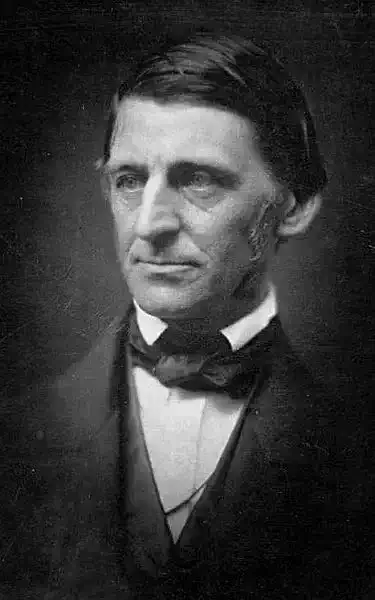
Ralph Waldo Emerson
My Garden
If I could put my woods in song
And tell what's there enjoyed,
All men would to my gardens throng,
And leave the cities void.
In my plot no tulips blow,--
Snow-loving pines and oaks instead;
And rank the savage maples grow
From Spring's faint flush to Autumn red.
My garden is a forest ledge
Which older forests bound;
The banks slope down to the blue lake-edge,
Then plunge to depths profound.
Here once the Deluge ploughed,
Laid the terraces, one by one;
Ebbing later whence it flowed,
They bleach and dry in the sun.
The sowers made haste to depart,--
The wind and the birds which sowed it;
Not for fame, nor by rules of art,
Planted these, and tempests flowed it.
Waters that wash my garden-side
Play not in Nature's lawful web,
They heed not moon or solar tide,--
Five years elapse from flood to ebb.
Hither hasted, in old time, Jove,
And every god,--none did refuse;
And be sure at last came Love,
And after Love, the Muse.
Keen ears can catch a syllable,
As if one spake to another,
In the hemlocks tall, untamable,
And what the whispering grasses smother.
Æolian harps in the pine
Ring with the song of the Fates;
Infant Bacchus in the vine,--
Far distant yet his chorus waits.
Canst thou copy in verse one chime
Of the wood-bell's peal and cry,
Write in a book the morning's prime,
Or match with words that tender sky?
Wonderful verse of the gods,
Of one import, of varied tone;
They chant the bliss of their abodes
To man imprisoned in his own.
Ever the words of the gods resound;
But the porches of man's ear
Seldom in this low life's round
Are unsealed, that he may hear.
Wandering voices in the air
And murmurs in the wold
Speak what I cannot declare,
Yet cannot all withhold.
When the shadow fell on the lake,
The whirlwind in ripples wrote
Air-bells of fortune that shine and break,
And omens above thought.
But the meanings cleave to the lake,
Cannot be carried in book or urn;
Go thy ways now, come later back,
On waves and hedges still they burn.
These the fates of men forecast,
Of better men than live to-day;
If who can read them comes at last
He will spell in the sculpture,'Stay.'
Read more →
400
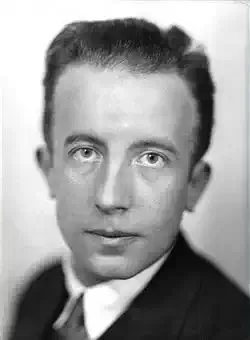
Paul Éluard
At the Window
I have not always had this certainty, this pessimism which reassures the best among
us. There was
a time when my friends laughed at me. I was not the master of my words. A certain
indifference, I
have not always known well what I wanted to say, but most often it was because I had
nothing to
say. The necessity of speaking and the desire not to be heard. My life hanging only by
a thread.
There was a time when I seemed to understand nothing. My chains floated on the
water.
All my desires are born of my dreams. And I have proven my love with words. To what
fantastic
creatures have I entrusted myself, in what dolorous and ravishing world has my
imagination
enclosed me? I am sure of having been loved in the most mysterious of domains, my
own. The
language of my love does not belong to human language, my human body does not
touch the flesh
of my love. My amorous imagination has always been constant and high enough so
that nothing
could attempt to convince me of error.
Read more →
398
William Butler Yeats
Blood And The Moon
BLESSED be this place,
More blessed still this tower;
A bloody, arrogant power
Rose out of the race
Uttering, mastering it,
Rose like these walls from these
Storm-beaten cottages --
In mockery I have set
A powerful emblem up,
And sing it rhyme upon rhyme
In mockery of a time
HaIf dead at the top.
Alexandria's was a beacon tower, and Babylon's
An image of the moving heavens, a log-book of the
sun's journey and the moon's;
And Shelley had his towers, thought's crowned powers
he called them once.
I declare this tower is my symbol; I declare
This winding, gyring, spiring treadmill of a stair is my
ancestral stair;
That Goldsmith and the Dean, Berkeley and Burke
have travelled there.
Swift beating on his breast in sibylline frenzy blind
Because the heart in his blood-sodden breast had
dragged him down into mankind,
Goldsmith deliberately sipping at the honey-pot of his
mind,
And haughtier-headed Burke that proved the State a
tree,
That this unconquerable labyrinth of the birds, century
after century,
Cast but dead leaves to mathematical equality;
And God-appointed Berkeley that proved all things a
dream,
That this pragmatical, preposterous pig of a world, its
farrow that so solid seem,
Must vanish on the instant if the mind but change its
theme;
Saeva Indignatio and the labourer's hire,
The strength that gives our blood and state magnanimity
of its own desire;
Everything that is not God consumed with intellectual
fire.
III
The purity of the unclouded moon
Has flung its atrowy shaft upon the floor.
Seven centuries have passed and it is pure,
The blood of innocence has left no stain.
There, on blood-saturated ground, have stood
Soldier, assassin, executioner.
Whether for daily pittance or in blind fear
Or out of abstract hatred, and shed blood,
But could not cast a single jet thereon.
Odour of blood on the ancestral stair!
And we that have shed none must gather there
And clamour in drunken frenzy for the moon.
IV
Upon the dusty, glittering windows cling,
And seem to cling upon the moonlit skies,
Tortoiseshell butterflies, peacock butterflies,
A couple of night-moths are on the wing.
Is every modern nation like the tower,
Half dead at the top? No matter what I said,
For wisdom is the property of the dead,
A something incompatible with life; and power,
Like everything that has the stain of blood,
A property of the living; but no stain
Can come upon the visage of the moon
When it has looked in glory from a cloud.
Read more →
396

Henry Wadsworth Longfellow
Milton
I pace the sounding sea-beach and behold
How the voluminous billows roll and run,
Upheaving and subsiding, while the sun
Shines through their sheeted emerald far unrolled,
And the ninth wave, slow gathering fold by fold
All its loose-flowing garments into one,
Plunges upon the shore, and floods the dun
Pale reach of sands, and changes them to gold.
So in majestic cadence rise and fall
The mighty undulations of thy song,
O sightless bard, England's Mæonides!
And ever and anon, high over all
Uplifted, a ninth wave superb and strong,
Floods all the soul with its melodious seas.
Read more →
397

Walter de la Mare
Music
When music sounds, gone is the earth I know,
And all her lovely things even lovelier grow;
Her flowers in vision flame, her forest trees
Lift burdened branches, stilled with ecstasies.
When music sounds, out of the water rise
Naiads whose beauty dims my waking eyes,
Rapt in strange dreams burns each enchanted face,
With solemn echoing stirs their dwelling-place.
When music sounds, all that I was I am
Ere to this haunt of brooding dust I came;
And from Time's woods break into distant song
The swift-winged hours, as I hasten along.
Read more →
397

Claude Mckay
O Word I Love to Sing
O word I love to sing! thou art too tender
For all the passions agitating me;
For all my bitterness thou art too tender,
I cannot pour my red soul into thee.
O haunting melody! thou art too slender,
Too fragile like a globe of crystal glass;
For all my stormy thoughts thou art too slender,
The burden from my bosom will not pass.
O tender word! O melody so slender!
O tears of passion saturate with brine,
O words, unwilling words, ye can not render
My hatred for the foe of me and mine.
Read more →
397

Emily Dickinson
A Death blow is a Life blow to Some
A Death blow is a Life blow to Some
Who till they died, did not alive become-
Who had they lived, had died but when
They died, Vitality begun.
Read more →
397
James Whitcomb Riley
Farmer Whipple--Bachelor
It's a mystery to see me--a man o' fifty-four,
Who's lived a cross old bachelor fer thirty year' and more-A-
lookin' glad and smilin'! And they's none o' you can say
That you can guess the reason why I feel so good to-day!
I must tell you all about it! But I'll have to deviate
A little in beginnin', so's to set the matter straight
As to how it comes to happen that I never took a wife--
Kindo' 'crawfish' from the Present to the Springtime of my life!
I was brought up in the country: Of a family of five--
Three brothers and a sister--I'm the only one alive,--
Fer they all died little babies; and 'twas one o' Mother's ways,
You know, to want a daughter; so she took a girl to raise.
The sweetest little thing she was, with rosy cheeks, and fat--
We was little chunks o' shavers then about as high as that!
But someway we sort a' SUITED-like! and Mother she'd declare
She never laid her eyes on a more lovin' pair
Than WE was! So we growed up side by side fer thirteen year',
And every hour of it she growed to me more dear!-W'y,
even Father's dyin', as he did, I do believe
Warn't more affectin' to me than it was to see her grieve!
I was then a lad o' twenty; and I felt a flash o' pride
In thinkin' all depended on ME now to pervide
Fer Mother and fer Mary; and I went about the place
With sleeves rolled up--and workin', with a mighty smilin'
face.--
Fer SOMEPIN' ELSE was workin'! but not a word I said
Of a certain sort o' notion that was runnin' through my head,-'
Some day I'd maybe marry, and a BROTHER'S love was one
Thing--a LOVER'S was another!' was the way the notion run!
I remember onc't in harvest, when the 'cradle-in' ' was done,
(When the harvest of my summers mounted up to twenty-one),
I was ridin' home with Mary at the closin' o' the day-A-
chawin' straws and thinkin', in a lover's lazy way!
And Mary's cheeks was burnin' like the sunset down the lane:
I noticed she was thinkin', too, and ast her to explain.
Well--when she turned and KISSED ME, WITH HER ARMS AROUND
ME--LAW!
I'd a bigger load o' Heaven than I had a load o' straw!
I don't p'tend to learnin', but I'll tell you what's a fac',
They's a mighty truthful sayin' somers in a' almanac--
Er SOMERS--'bout 'puore happiness'--perhaps some folks'll laugh
At the idy--'only lastin' jest two seconds and a half.'-
But it's jest as true as preachin'!--fer that was a SISTER'S
kiss,
And a sister's lovin' confidence a-tellin' to me this:-'
SHE was happy, BEIN' PROMISED TO THE SON O' FARMER BROWN.'--
And my feelin's struck a pardnership with sunset and went down!
I don't know HOW I acted, and I don't know WHAT I said,--
Fer my heart seemed jest a-turnin' to an ice-cold lump o' lead;
And the hosses kind o'glimmered before me in the road,
And the lines fell from my fingers--And that was all I knowed-
Fer--well, I don't know HOW long--They's a dim rememberence
Of a sound o' snortin' horses, and a stake-and-ridered fence
A-whizzin' past, and wheat-sheaves a-dancin' in the air,
And Mary screamin' 'Murder!' and a-runnin' up to where
_I_ was layin' by the roadside, and the wagon upside down
A-leanin' on the gate-post, with the wheels a-whirlin' roun'!
And I tried to raise and meet her, but I couldn't, with a vague
Sort o' notion comin' to me that I had a broken leg.
Well, the women nussed me through it; but many a time I'd sigh
As I'd keep a-gittin' better instid o' goin' to die,
And wonder what was left ME worth livin' fer below,
When the girl I loved was married to another, don't you know!
And my thoughts was as rebellious as the folks was good and kind
When Brown and Mary married--Railly must 'a' been my MIND
Was kind o' out o' kilter!--fer I hated Brown, you see,
Worse'n PIZEN--and the feller whittled crutches out fer ME--
And done a thousand little ac's o' kindness and respec'--
And me a-wishin' all the time that I could break his neck!
My relief was like a mourner's when the funeral is done
When they moved to Illinois in the Fall o' Forty-one.
Then I went to work in airnest--I had nothin' much in view
But to drownd out rickollections--and it kep' me busy, too!
But I slowly thrived and prospered, tel Mother used to say
She expected yit to see me a wealthy man some day.
Then I'd think how little MONEY was, compared to happiness--
And who'd be left to use it when I died I couldn't guess!
But I've still kep' speculatin' and a-gainin' year by year,
Tel I'm payin' half the taxes in the county, mighty near!
Well!--A year ago er better, a letter comes to hand
Astin' how I'd like to dicker fer some Illinois land-'
The feller that had owned it,' it went ahead to state,
'Had jest deceased, insolvent, leavin' chance to speculate,'--
And then it closed by sayin' that I'd 'better come and see.'-
I'd never been West, anyhow--a'most too wild fer ME,
I'd allus had a notion; but a lawyer here in town
Said I'd find myself mistakend when I come to look around.
So I bids good-by to Mother, and I jumps aboard the train,
A-thinkin' what I'd bring her when I come back home again--
And ef she'd had an idy what the present was to be,
I think it's more'n likely she'd 'a' went along with me!
Cars is awful tejus ridin', fer all they go so fast!
But finally they called out my stoppin'-place at last:
And that night, at the tavern, I dreamp' I was a train
O' cars, and SKEERED at somepin', runnin' down a country lane!
Well, in the morning airly--after huntin' up the man--
The lawyer who was wantin' to swap the piece o' land--
We started fer the country; and I ast the history
Of the farm--its former owner--and so forth, etcetery!
And--well--it was interESTin'--I su'prised him, I suppose,
By the loud and frequent manner in which I blowed my nose!--
But his su'prise was greater, and it made him wonder more,
When I kissed and hugged the widder when she met us at the
door!--
IT WAS MARY: . . . They's a feelin' a-hidin' down in here--
Of course I can't explain it, ner ever make it clear.--
It was with us in that meetin', I don't want you to fergit!
And it makes me kind o'nervous when I think about it yit!
I BOUGHT that farm, and DEEDED it, afore I left the town
With 'title clear to mansions in the skies,' to Mary Brown!
And fu'thermore, I took her and the CHILDERN--fer you see,
They'd never seed their Grandma--and I fetched 'em home with me.
So NOW you've got an idy why a man o' fifty-four,
Who's lived a cross old bachelor fer thirty year' and more
Is a-lookin' glad and smilin'!--And I've jest come into town
To git a pair o' license fer to MARRY Mary Brown.
Read more →
397
Sara Teasdale
The Treasure
When they see my songs
They will sigh and say,
"Poor soul, wistful soul,
Lonely night and day."
They will never know
All your love for me
Surer than the spring,
Stronger than the sea;
Hidden out of sight
Like a miser's gold
In forsaken fields
Where the wind is cold.
Read more →
396
Claude Mckay
One Year After
I
Not once in all our days of poignant love,
Did I a single instant give to thee
My undivided being wholly free.
Not all thy potent passion could remove
The barrier that loomed between to prove
The full supreme surrendering of me.
Oh, I was beaten, helpless utterly
Against the shadow-fact with which I strove.
For when a cruel power forced me to face
The truth which poisoned our illicit wine,
That even I was faithless to my race
Bleeding beneath the iron hand of thine,
Our union seemed a monstrous thing and base!
I was an outcast from thy world and mine.
II
Adventure-seasoned and storm-buffeted,
I shun all signs of anchorage, because
The zest of life exceeds the bound of laws.
New gales of tropic fury round my head
Break lashing me through hours of soulful dread;
But when the terror thins and, spent, withdraws,
Leaving me wondering awhile, I pause--
But soon again the risky ways I tread!
No rigid road for me, no peace, no rest,
While molten elements run through my blood;
And beauty-burning bodies manifest
Their warm, heart-melting motions to be wooed;
And passion boldly rising in my breast,
Like rivers of the Spring, lets loose its flood.
Read more →
396
Emily Dickinson
So from the mould
So from the mould
Scarlet and Gold
Many a Bulb will rise-
Hidden away, cunningly, From sagacious eyes.
So from Cocoon
Many a Worm
Leap so Highland gay,
Peasants like me,
Peasants like Thee
Gaze perplexedly!
Read more →
398

Jack Kerouac
Trees
But a tree has
a long suffering shape
Is
spread in half
by 2 limbed fate
Rises from gray rain
pavements
To traffic in the bleak
brown air
Of cities radar television
nameless dumb &numb mis connicumb
Throwing twigs the
color of ink To white souled
heaven, with
A reality of its own uses
Read more →
397
William Butler Yeats
The Heart Of The Woman
O WHAT to me the little room
That was brimmed up with prayer and rest;
He bade me out into the gloom,
And my breast lies upon his breast.
O what to me my mother's care,
The house where I was safe and warm;
The shadowy blossom of my hair
Will hide us from the bitter storm.
O hiding hair and dewy eyes,
I am no more with life and death,
My heart upon his warm heart lies,
My breath is mixed into his breath.
Read more →
399

Ella Wheeler Wilcox
Let Me Lean Hard
Let me lean hard upon the Eternal Breast;
In all earth's devious ways, I sought for rest
And found it not. I will be strong, said I,
And lean upon myself. I will not cry
And importune all heaven with my complaint,
But not my strength fails, and I fall, I faint:
Let me lean hard.
Let me lean hard upon the unfailing Arm.
I said I will walk on, I fear no harm,
The spark divine within my soul will show
The upward pathway where my feet should go,
But now the heights to which I msot aspire
Are lost in clouds. I stumble and I tire;
Let me lean hard.
Let me lean harder yet. That swerveless force
Which speeds the solar systems on their course
Can take, unfelt, the burden of my woe,
Which bears me to the dust and hurts me so;
I thought my strength enough for any fate,
But lo! I sink beneath my sorrow's weight:
Let me lean hard.
Read more →
398
Ralph Waldo Emerson
Grace
How much, preventing God! how much I owe
To the defenses thou hast round me set:
Example, custom, fear, occasional slow,
These scorned bondmen were my parapet.
I dare not peep over this parapet
To gauge with glance the roaring gulf beelow,
The depths of sin to which I had descended,
Had not these me against myself defended.
Read more →
398
Emily Dickinson
Whose are the little beds, I asked
Whose are the little beds, I asked
Which in the valleys lie?
Some shook their heads, and others smiled-
And no one made reply.
Perhaps they did not hear, I said,
I will inquire again-
Whose are the beds-the tiny beds
So thick upon the plain?
'Tis Daisy, in the shortest-
A little further on-
Nearest the door-to wake the Ist-
Little Leontoden.
'Tis Iris, Sir, and Aster-
Anemone, and Bell-
Bartsia, in the blanket red-
And chubby Daffodil.
Meanwhile, at many cradles
Her busy foot she plied-
Humming the quaintest lullaby
That ever rocked a child.
Hush! Epigea wakens!
The Crocus stirs her lids
Rhodora's
cheek is crimson,
She's dreaming of the woods!
Then turning from them reverent-
Their bedtime 'tis, she said-
The Bumble bees will wake them
When April woods are red.
Read more →
396
Carl Sandburg
Bath
A man saw the whole world as a grinning skull and cross-bones. The rose flesh of life
shriveled from all faces. Nothing counts. Everything is a fake. Dust to dust and ashes
to ashes and then an old darkness and a useless silence. So he saw it all. Then he went
to a Mischa Elman concert. Two hours waves of sound beat on his eardrums. Music
washed something or other inside him. Music broke down and rebuilt something or
other in his head and heart. He joined in five encores for the young Russian Jew with
the fiddle. When he got outside his heels hit the sidewalk a new way. He was the same
man in the same world as before. Only there was a singing fire and a climb of roses
everlastingly over the world he looked on.
Read more →
397
Edna St. Vincent Millay
Passer Mortuus Est
Death devours all lovely things;
Lesbia with her sparrow
Shares the darkness,—presently
Every bed is narrow.
Unremembered as old rain
Dries the sheer libation,
And the little petulant hand
Is an annotation.
After all, my erstwhile dear,
My no longer cherished,
Need we say it was not love,
Now that love is perished?
Read more →
398
Kabir
The Moon Shines In My Body
The moon shines in my body,
but my blind eyes cannot see it:
The moon is within me,
and so is the sun.
The unstruck drum of Eternity is sounded within me;
but my deaf ears cannot hear it.
So long as man clamours for the 'I' and the 'Mine',
his works are as naught:
When all love of the 'I' and the 'Mine' is dead,
then the work of the Lord is done.
For work has no other aim than the getting of knowledge:
When that comes, then work is put away.
The flower blooms for the fruit:
when the fruit comes, the flower withers.
The musk is in the deer,
but it seeks it not within itself:
it wanders in quest of grass.
Read more →
398