
Soul

Mirza Ghalib
Ghazal
I wish to go and dwell,
In such a place,
Where there's no one else.
No one to understand my speech,
No one around to talk with,
There, I want to reach.
I wish to build,
One such house,
Without a door to enter,
Without the boundary walls,
Thus there will be no neighbours,
And there will be no guard.
There will be no one thus,
To take care of me,
When I will fell ill.
And there will be no one,
To mourn or cry,
When I will die.
Read more →
380
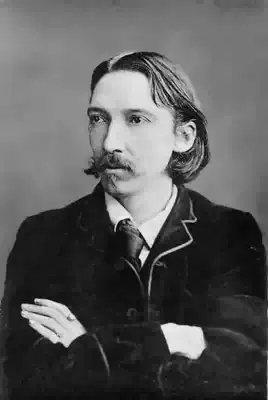
Robert Louis Stevenson
Sonnet VII
The strong man's hand, the snow-cool head of age,
The certain-footed sympathies of youth -
These, and that lofty passion after truth,
Hunger unsatisfied in priest or sage
Or the great men of former years, he needs
That not unworthily would dare to sing
(Hard task!) black care's inevitable ring
Settling with years upon the heart that feeds
Incessantly on glory. Year by year
The narrowing toil grows closer round his feet;
With disenchanting touch rude-handed time
The unlovely web discloses, and strange fear
Leads him at last to eld's inclement seat,
The bitter north of life - a frozen clime.
Read more →
381
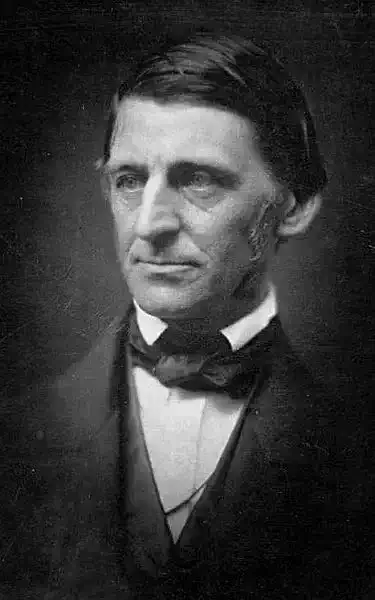
Ralph Waldo Emerson
Threnody
The south-wind brings
Life, sunshine, and desire,
And on every mount and meadow
Breathes aromatic fire,
But over the dead he has no power,
The lost, the lost he cannot restore,
And, looking over the hills, I mourn
The darling who shall not return.
I see my empty house,
I see my trees repair their boughs,
And he, —the wondrous child,
Whose silver warble wild
Outvalued every pulsing sound
Within the air's cerulean round,
The hyacinthine boy, for whom
Morn well might break, and April bloom,
The gracious boy, who did adorn
The world whereinto he was born,
And by his countenance repay
The favor of the loving Day,
Has disappeared from the Day's eye;
Far and wide she cannot find him,
My hopes pursue, they cannot bind him.
Returned this day the south-wind searches
And finds young pines and budding birches,
But finds not the budding man;
Nature who lost him, cannot remake him;
Fate let him fall, Fate can't retake him;
Nature, Fate, men, him seek in vain.
And whither now, my truant wise and sweet,
Oh, whither tend thy feet?
I had the right, few days ago,
Thy steps to watch, thy place to know;
How have I forfeited the right?
Hast thou forgot me in a new delight?
I hearken for thy household cheer,
O eloquent child!
Whose voice, an equal messenger,
Conveyed thy meaning mild.
What though the pains and joys
Whereof it spoke were toys
Fitting his age and ken;—
Yet fairest dames and bearded men,
Who heard the sweet request
So gentle, wise, and grave,
Bended with joy to his behest,
And let the world's affairs go by,
Awhile to share his cordial game,
Or mend his wicker wagon frame,
Still plotting how their hungry ear
That winsome voice again might hear,
For his lips could well pronounce
Words that were persuasions.
Gentlest guardians marked serene
His early hope, his liberal mien,
Took counsel from his guiding eyes
To make this wisdom earthly wise.
Ah! vainly do these eyes recall
The school-march, each day's festival,
When every morn my bosom glowed
To watch the convoy on the road;—
The babe in willow wagon closed,
With rolling eyes and face composed,
With children forward and behind,
Like Cupids studiously inclined,
And he, the Chieftain, paced beside,
The centre of the troop allied,
With sunny face of sweet repose,
To guard the babe from fancied foes,
The little Captain innocent
Took the eye with him as he went,
Each village senior paused to scan
And speak the lovely caravan.
From the window I look out
To mark thy beautiful parade
Stately marching in cap and coat
To some tune by fairies played;
A music heard by thee alone
To works as noble led thee on.
Now love and pride, alas, in vain,
Up and down their glances strain.
The painted sled stands where it stood,
The kennel by the corded wood,
The gathered sticks to stanch the wall
Of the snow-tower, when snow should fall,
The ominous hole he dug in the sand,
And childhood's castles built or planned.
His daily haunts I well discern,
The poultry yard, the shed, the barn,
And every inch of garden ground
Paced by the blessed feet around,
From the road-side to the brook;
Whereinto he loved to look.
Step the meek birds where erst they ranged,
The wintry garden lies unchanged,
The brook into the stream runs on,
But the deep-eyed Boy is gone.
On that shaded day,
Dark with more clouds than tempests are,
When thou didst yield thy innocent breath
In bird-like heavings unto death,
Night came, and Nature had not thee,—
I said, we are mates in misery.
The morrow dawned with needless glow,
Each snow-bird chirped, each fowl must crow,
Each tramper started,— but the feet
Of the most beautiful and sweet
Of human youth had left the hill
And garden,—they were bound and still,
There's not a sparrow or a wren,
There's not a blade of autumn grain,
Which the four seasons do not tend,
And tides of life and increase lend,
And every chick of every bird,
And weed and rock-moss is preferred.
O ostriches' forgetfulness!
O loss of larger in the less!
Was there no star that could be sent,
No watcher in the firmament,
No angel from the countless host,
That loiters round the crystal coast,
Could stoop to heal that only child,
Nature's sweet marvel undefiled,
And keep the blossom of the earth,
Which all her harvests were not worth?
Not mine, I never called thee mine,
But nature's heir,— if I repine,
And, seeing rashly torn and moved,
Not what I made, but what I loved.
Grow early old with grief that then
Must to the wastes of nature go,—
'Tis because a general hope
Was quenched, and all must doubt and grope
For flattering planets seemed to say,
This child should ills of ages stay,—
By wondrous tongue and guided pen
Bring the flown muses back to men. —
Perchance, not he, but nature ailed,
The world, and not the infant failed,
It was not ripe yet, to sustain
A genius of so fine a strain,
Who gazed upon the sun and moon
As if he came unto his own,
And pregnant with his grander thought,
Brought the old order into doubt.
Awhile his beauty their beauty tried,
They could not feed him, and he died,
And wandered backward as in scorn
To wait an Æon to be born.
Ill day which made this beauty waste;
Plight broken, this high face defaced!
Some went and came about the dead,
And some in books of solace read,
Some to their friends the tidings say,
Some went to write, some went to pray,
One tarried here, there hurried one,
But their heart abode with none.
Covetous death bereaved us all
To aggrandize one funeral.
The eager Fate which carried thee
Took the largest part of me.
For this losing is true dying,
This is lordly man's down-lying,
This is slow but sure reclining,
Star by star his world resigning.
O child of Paradise!
Boy who made dear his father's home
In whose deep eyes
Men read the welfare of the times to come;
I am too much bereft;
The world dishonored thou hast left;
O truths and natures costly lie;
O trusted, broken prophecy!
O richest fortune sourly crossed;
Born for the future, to the future lost!
The deep Heart answered, Weepest thou?
Worthier cause for passion wild,
If I had not taken the child.
And deemest thou as those who pore
With aged eyes short way before?
Think'st Beauty vanished from the coast
Of matter, and thy darling lost?
Taught he not thee, — the man of eld,
Whose eyes within his eyes beheld
Heaven's numerous hierarchy span
The mystic gulf from God to man?
To be alone wilt thou begin,
When worlds of lovers hem thee in?
To-morrow, when the masks shall fall
That dizen nature's carnival,
The pure shall see, by their own will,
Which overflowing love shall fill,—
'Tis not within the force of Fate
The fate-conjoined to separate.
But thou, my votary, weepest thou?
I gave thee sight, where is it now?
I taught thy heart beyond the reach
Of ritual, Bible, or of speech;
Wrote in thy mind's transparent table
As far as the incommunicable;
Taught thee each private sign to raise
Lit by the supersolar blaze.
Past utterance and past belief,
And past the blasphemy of grief,
The mysteries of nature's heart,—
And though no muse can these impart,
Throb thine with nature's throbbing breast,
And all is clear from east to west.
I came to thee as to a friend,
Dearest, to thee I did not send
Tutors, but a joyful eye,
Innocence that matched the sky,
Lovely locks a form of wonder,
Laughter rich as woodland thunder;
That thou might'st entertain apart
The richest flowering of all art;
And, as the great all-loving Day
Through smallest chambers takes its way,
That thou might'st break thy daily bread
With Prophet, Saviour, and head;
That thou might'st cherish for thine own
The riches of sweet Mary's Son,
Boy-Rabbi, Israel's Paragon:
And thoughtest thou such guest
Would in thy hall take up his rest?
Would rushing life forget its laws,
Fate's glowing revolution pause?
High omens ask diviner guess,
Not to be conned to tediousness.
And know, my higher gifts unbind
The zone that girds the incarnate mind,
When the scanty shores are full
With Thought's perilous whirling pool,
When frail Nature can no more,—
Then the spirit strikes the hour,
My servant Death with solving rite
Pours finite into infinite.
Wilt thou freeze love's tidal flow,
Whose streams through nature circling go?
Nail the star struggling to its track
On the half-climbed Zodiack?
Light is light which radiates,
Blood is blood which circulates,
Life is life which generates,
And many-seeming life is one,—
Wilt thou transfix and make it none,
Its onward stream too starkly pent
In figure, bone, and lineament?
Wilt thou uncalled interrogate
Talker! the unreplying fate?
Nor see the Genius of the whole
Ascendant in the private soul,
Beckon it when to go and come,
Self-announced its hour of doom.
Fair the soul's recess and shrine,
Magic-built, to last a season,
Masterpiece of love benign!
Fairer than expansive reason
Whose omen 'tis, and sign.
Wilt thou not ope this heart to know
What rainbows teach and sunsets show,
Verdict which accumulates
From lengthened scroll of human fates,
Voice of earth to earth returned,
Prayers of heart that inly burned;
Saying, what is excellent,
As God lives, is permanent
Hearts are dust, hearts' loves remain,
Heart's love will meet thee again.
Revere the Maker; fetch thine eye
Up to His style, and manners of the sky.
Not of adamant and gold
Built He heaven stark and cold,
No, but a nest of bending reeds,
Flowering grass and scented weeds,
Or like a traveller's fleeting tent,
Or bow above the tempest pent,
Built of tears and sacred flames,
And virtue reaching to its aims;
Built of furtherance and pursuing,
Not of spent deeds, but of doing.
Silent rushes the swift Lord
Through ruined systems still restored,
Broad-sowing, bleak and void to bless,
Plants with worlds the wilderness,
Waters with tears of ancient sorrow
Apples of Eden ripe to-morrow;
House and tenant go to ground,
Lost in God, in Godhead found.
Read more →
381
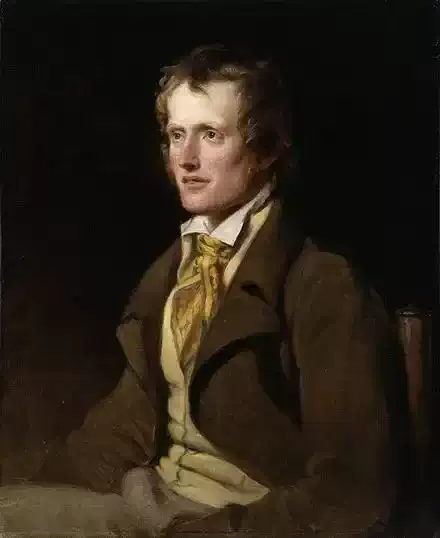
John Clare
The Shepherd's Tree
Huge elm, with rifted trunk all notched and scarred,
Like to a warrior's destiny! I love
To stretch me often on thy shadowed sward,
And hear the laugh of summer leaves above;
Or on thy buttressed roots to sit, and lean
In careless attitude, and there reflect
On times and deeds and darings that have been -
Old castaways, now swallowed in neglect, -
While thou art towering in thy strength of heart,
Stirring the soul to vain imaginings
In which life's sordid being hath no part.
The wind of that eternal ditty sings,
Humming of future things, that burn the mind
To leave some fragment of itself behind.
Read more →
380
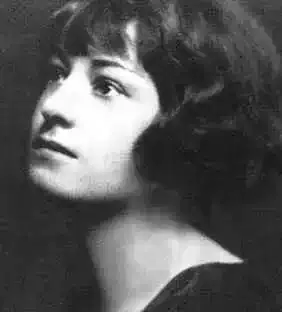
Dorothy Parker
The Little Old Lady in Lavender Silk
I was seventy-seven, come August,
I shall shortly be losing my bloom;
I've experienced zephyr and raw gust
And (symbolical) flood and simoom.
When you come to this time of abatement,
To this passing from Summer to Fall,
It is manners to issue a statement
As to what you got out of it all.
So I'll say, though reflection unnerves me
And pronouncements I dodge as I can,
That I think (if my memory serves me)
There was nothing more fun than a man!
In my youth, when the crescent was too wan
To embarrass with beams from above,
By the aid of some local Don Juan
I fell into the habit of love.
And I learned how to kiss and be merry- an
Education left better unsung.
My neglect of the waters Pierian
Was a scandal, when Grandma was young.
Though the shabby unbalanced the splendid,
And the bitter outmeasured the sweet,
I should certainly do as I then did,
Were I given the chance to repeat.
For contrition is hollow and wraithful,
And regret is no part of my plan,
And I think (if my memory's faithful)
There was nothing more fun than a man!
Read more →
379
Robert Louis Stevenson
Tales Of Arabia
YES, friend, I own these tales of Arabia
Smile not, as smiled their flawless originals,
Age-old but yet untamed, for ages
Pass and the magic is undiminished.
Thus, friend, the tales of the old Camaralzaman,
Ayoub, the Slave of Love, or the Calendars,
Blind-eyed and ill-starred royal scions,
Charm us in age as they charmed in childhood.
Fair ones, beyond all numerability,
Beam from the palace, beam on humanity,
Bright-eyed, in truth, yet soul-less houris
Offering pleasure and only pleasure.
Thus they, the venal Muses Arabian,
Unlike, indeed, the nobler divinities,
Greek Gods or old time-honoured muses,
Easily proffer unloved caresses.
Lost, lost, the man who mindeth the minstrelsy;
Since still, in sandy, glittering pleasances,
Cold, stony fruits, gem-like but quite in-
Edible, flatter and wholly starve him.
Read more →
381
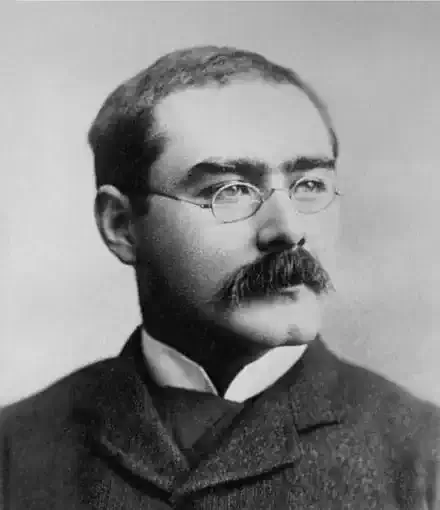
Rudyard Kipling
The Hyaenas
After the burial-parties leave
And the baffled kites have fled;
The wise hyaenas come out at eve
To take account of our dead.
How he died and why he died
Troubles them not a whit.
They snout the bushes and stones aside
And dig till they come to it.
They are only resolute they shall eat
That they and their mates may thrive,
And they know that the dead are safer meat
Than the weakest thing alive.
(For a goat may butt, and a worm may sting,
And a child will sometimes stand;
But a poor dead soldier of the King
Can never lift a hand.)
They whoop and halloo and scatter the dirt
Until their tushes white
Take good hold in the army shirt,
And tug the corpse to light,
And the pitiful face is shewn again
For an instant ere they close;
But it is not discovered to living men --
Only to God and to those
Who, being soulless, are free from shame,
Whatever meat they may find.
Nor do they defile the dead man's name --
That is reserved for his kind.
Read more →
380
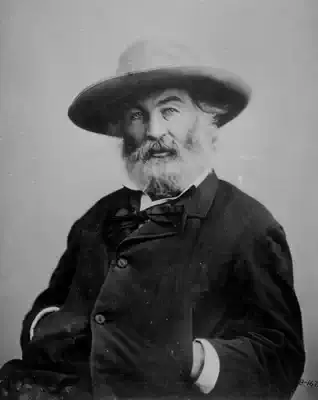
Walt Whitman
Manhattan Streets I Saunter'd, Pondering
MANHATTAN'S streets I saunter'd, pondering,
On time, space, reality--on such as these, and abreast with them,
prudence.
After all, the last explanation remains to be made about prudence;
Little and large alike drop quietly aside from the prudence that
suits immortality.
The Soul is of itself;
All verges to it--all has reference to what ensues;
All that a person does, says, thinks, is of consequence;
Not a move can a man or woman make, that affects him or her in a day,
month, any part of the direct life-time, or the hour of death,
but the same affects him or her onward afterward through the
indirect life-time.
The indirect is just as much as the direct,
The spirit receives from the body just as much as it gives to the
body, if not more.
Not one word or deed--not venereal sore, discoloration, privacy of
the onanist, putridity of gluttons or rum-drinkers, peculation,
cunning, betrayal, murder, seduction, prostitution, but has
results beyond death, as really as before death.
Charity and personal force are the only investments worth anything.
No specification is necessary--all that a male or female does, that
is vigorous, benevolent, clean, is so much profit to him or
her, in the unshakable order of the universe, and through the
whole scope of it forever.
Who has been wise, receives interest,
Savage, felon, President, judge, farmer, sailor, mechanic, literat,
young, old, it is the same,
The interest will come round--all will come round.
Singly, wholly, to affect now, affected their time, will forever
affect all of the past, and all of the present, and all of the
future,
All the brave actions of war and peace,
All help given to relatives, strangers, the poor, old, sorrowful,
young children, widows, the sick, and to shunn'd persons,
All furtherance of fugitives, and of the escape of slaves,
All self-denial that stood steady and aloof on wrecks, and saw others
fill the seats of the boats,
All offering of substance or life for the good old cause, or for a
friend's sake, or opinion's sake,
All pains of enthusiasts, scoff'd at by their neighbors,
All the limitless sweet love and precious suffering of mothers,
All honest men baffled in strifes recorded or unrecorded,
All the grandeur and good of ancient nations whose fragments we
inherit,
All the good of the dozens of ancient nations unknown to us by name,
date, location,
All that was ever manfully begun, whether it succeeded or no,
All suggestions of the divine mind of man, or the divinity of his
mouth, or the shaping of his great hands;
All that is well thought or said this day on any part of the globe-or
on any of the wandering stars, or on any of the fix'd stars,
by those there as we are here;
All that is henceforth to be thought or done by you, whoever you are,
or by any one;
These inure, have inured, shall inure, to the identities from which
they sprang, or shall spring.
Did you guess anything lived only its moment?
The world does not so exist--no parts palpable or impalpable so
exist;
No consummation exists without being from some long previous
consummation--and that from some other,
Without the farthest conceivable one coming a bit nearer the
beginning than any.
Whatever satisfies Souls is true;
Prudence entirely satisfies the craving and glut of Souls;
Itself only finally satisfies the Soul;
The Soul has that measureless pride which revolts from every lesson
but its own.
Now I give you an inkling;
Now I breathe the word of the prudence that walks abreast with time,
space, reality,
That answers the pride which refuses every lesson but its own.
What is prudence, is indivisible,
Declines to separate one part of life from every part,
Divides not the righteous from the unrighteous, or the living from
the dead,
Matches every thought or act by its correlative,
Knows no possible forgiveness, or deputed atonement,
Knows that the young man who composedly peril'd his life and lost it,
has done exceedingly well for himself without doubt,
That he who never peril'd his life, but retains it to old age in
riches and ease, has probably achiev'd nothing for himself
worth mentioning;
Knows that only that person has really learn'd, who has learn'd to
prefer results,
Who favors Body and Soul the same,
Who perceives the indirect assuredly following the direct,
Who in his spirit in any emergency whatever neither hurries or,
avoids death.
Read more →
380
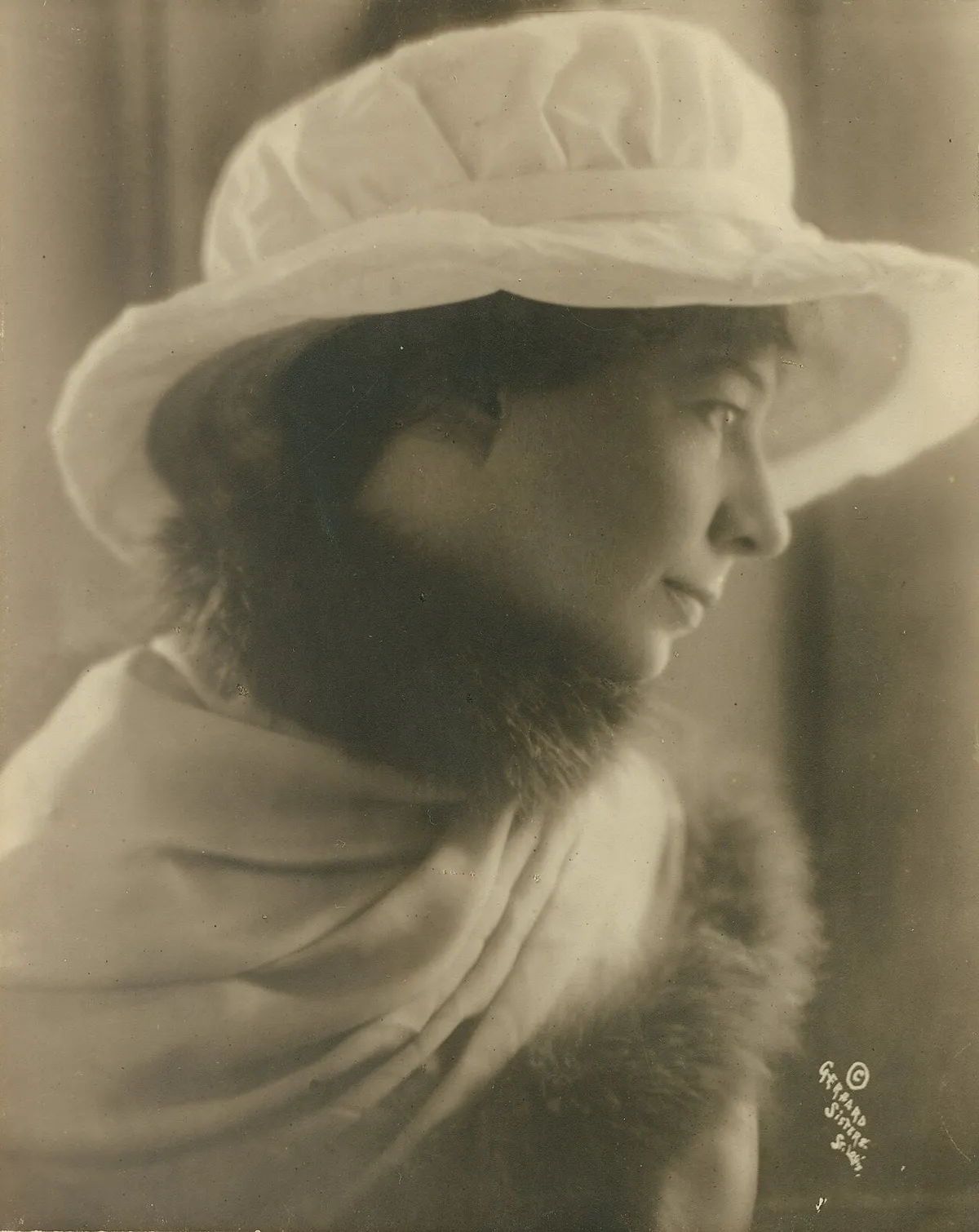
Sara Teasdale
White Fog
Heaven-invading hills are drowned
In wide moving waves of mist,
Phlox before my door are wound
In dripping wreaths of amethyst.
Ten feet away the solid earth
Changes into melting cloud,
There is a hush of pain and mirth,
No bird has heart to speak aloud.
Here in a world without a sky,
Without the ground, without the sea,
The one unchanging thing is I,
Myself remains to comfort me.
Read more →
381
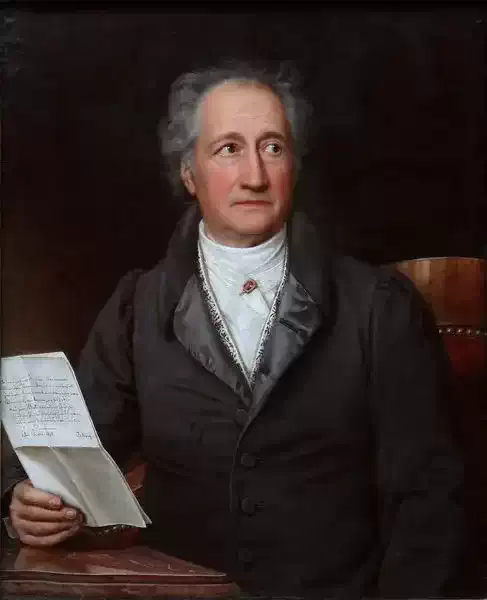
Johann Wolfgang von Goethe
My Goddess
SAY, which Immortal
Merits the highest reward?
With none contend I,
But I will give it
To the aye-changing,
Ever-moving
Wondrous daughter of Jove.
His best-beloved offspring.
Sweet Phantasy.
For unto her
Hath he granted
All the fancies which erst
To none allow'd he
Saving himself;
Now he takes his pleasure
In the mad one.
She may, crowned with roses,
With staff twined round with lilies,
Roam thro' flow'ry valleys,
Rule the butterfly-people,
And soft-nourishing dew
With bee-like lips
Drink from the blossom:
Or else she may
With fluttering hair
And gloomy looks
Sigh in the wind
Round rocky cliffs,
And thousand-hued.
Like morn and even.
Ever changing,
Like moonbeam's light,
To mortals appear.
Let us all, then,
Adore the Father!
The old, the mighty,
Who such a beauteous
Ne'er-fading spouse
Deigns to accord
To perishing mortals!
To us alone
Doth he unite her,
With heavenly bonds,
While he commands her,
in joy and sorrow,
As a true spouse
Never to fly us.
All the remaining
Races so poor
Of life-teeming earth.
In children so rich.
Wander and feed
In vacant enjoyment,
And 'mid the dark sorrows
Of evanescent
Restricted life,
Bow'd
by the heavy
Yoke of Necessity.
But unto us he
Hath his most versatile,
Most cherished daughter
Granted,-what joy!
Lovingly greet her
As a beloved one!
Give her the woman's
Place in our home!
And oh, may the aged
Stepmother Wisdom
Her gentle spirit
Ne'er seek to harm!
Yet know I her sister,
The older, sedater,
Mine own silent friend;
Oh, may she never,
Till life's lamp is quench'd,
Turn away from me,-
That noble inciter,
Comforter,-Hope!
Read more →
381

Henry Wadsworth Longfellow
To the River Charles
River! that in silence windest
Through the meadows, bright and free,
Till at length thy rest thou findest
In the bosom of the sea!
Four long years of mingled feeling,
Half in rest, and half in strife,
I have seen thy waters stealing
Onward, like the stream of life.
Thou hast taught me, Silent River!
Many a lesson, deep and long;
Thou hast been a generous giver;
I can give thee but a song.
Oft in sadness and in illness,
I have watched thy current glide,
Till the beauty of its stillness
Overflowed me, like a tide.
And in better hours and brighter,
When I saw thy waters gleam,
I have felt my heart beat lighter,
And leap onward with thy stream.
Not for this alone I love thee,
Nor because thy waves of blue
From celestial seas above thee
Take their own celestial hue.
Where yon shadowy woodlands hide thee,
And thy waters disappear,
Friends I love have dwelt beside thee,
And have made thy margin dear.
More than this;--thy name reminds me
Of three friends, all true and tried;
And that name, like magic, binds me
Closer, closer to thy side.
Friends my soul with joy remembers!
How like quivering flames they start,
When I fan the living embers
On the hearth-stone of my heart!
'T is for this, thou Silent River!
That my spirit leans to thee;
Thou hast been a generous giver,
Take this idle song from me.
Read more →
380
Sara Teasdale
May Day
A delicate fabric of bird song
Floats in the air,
The smell of wet wild earth
Is everywhere.
Red small leaves of the maple
Are clenched like a hand,
Like girls at their first communion
The pear trees stand.
Oh I must pass nothing by
Without loving it much,
The raindrop try with my lips,
The grass with my touch;
For how can I be sure
I shall see again
The world on the first of May
Shining after the rain?
Read more →
381

William Shakespeare
Sonnet 152: In loving thee thou know'st I am forsworn
In loving thee thou know'st I am forsworn,
But thou art twice forsworn, to me love swearing,
In act thy bed-vow broke and new faith torn,
In vowing new hate after new love bearing.
But why of two oaths' breach do I accuse thee,
When I break twenty? I am perjured most;
For all my vows are oaths but to misuse thee
And all my honest faith in thee is lost,
For I have sworn deep oaths of thy deep kindness,
Oaths of thy love, thy truth, thy constancy,
And, to enlighten thee, gave eyes to blindness,
Or made them swear against the thing they see;
For I have sworn thee fair; more perjured I,
To swear against the truth so foul a lie!
Read more →
381
Johann Wolfgang von Goethe
Swiss Song
Up in th' mountain
I was a-sitting,
With the bird there
As my guest,
Blithely singing,
Blithely springing,
And building
His nest.
In the garden
I was a-standing,
And the bee there
Saw as well,
Buzzing, humming,
Going, coming,
And building
His cell.
O'er the meadow
I was a-going,
And there saw the
Butterflies,
Sipping, dancing,
Flying, glancing,
And charming
The eyes.
And then came my
Dear Hansel,
And I show'd them
With glee,
Sipping, quaffing,
And he, laughing,
Sweet kisses
Gave me.
Read more →
380
Sara Teasdale
What Do I Care?
What do I care, in the dreams and the languor of spring,
That my songs do not show me at all?
For they are a fragrance, and I am a flint and a fire,
I am an answer, they are only a call.
But what do I care, for love will be over so soon,
Let my heart have its say and my mind stand idly by,
For my mind is proud and strong enough to be silent,
It is my heart that makes my songs, not I.
Read more →
380
Johann Wolfgang von Goethe
Trilogy Of Passion 01 To Werther
ONCE more, then, much-wept shadow, thou dost dare
Boldly to face the day's clear light,
To meet me on fresh blooming meadows fair,
And dost not tremble at my sight.
Those happy times appear return'd once more.
When on one field we quaff'd refreshing dew,
And, when the day's unwelcome toils were o'er,
The farewell sunbeams bless'd our ravish'd view;
Fate bade thee go,--to linger here was mine,--
Going the first, the smaller loss was thine.
The life of man appears a glorious fate:
The day how lovely, and the night how great!
And we 'mid Paradise-like raptures plac'd,
The sun's bright glory scarce have learn'd to taste.
When strange contending feelings dimly cover,
Now us, and now the forms that round us hover;
One's feelings by no other are supplied,
'Tis dark without, if all is bright inside;
An outward brightness veils my sadden'd mood,
When Fortune smiles,--how seldom understood!
Now think we that we know her, and with might
A woman's beauteous form instils delight;
The youth, as glad as in his infancy,
The spring-time treads, as though the spring were he
Ravish'd, amazed, he asks, how this is done?
He looks around, the world appears his own.
With careless speed he wanders on through space,
Nor walls, nor palaces can check his race;
As some gay flight of birds round tree-tops plays,
So 'tis with him who round his mistress strays;
He seeks from AEther, which he'd leave behind him,
The faithful look that fondly serves to bind him.
Yet first too early warn'd, and then too late,
He feels his flight restrain'd, is captur'd straight
To meet again is sweet, to part is sad,
Again to meet again is still more glad,
And years in one short moment are enshrin'd;
But, oh, the harsh farewell is hid behind!
Thou smilest, friend, with fitting thoughts inspired;
By a dread parting was thy fame acquired,
Thy mournful destiny we sorrow'd o'er,
For weal and woe thou left'st us evermore,
And then again the passions' wavering force
Drew us along in labyrinthine course;
And we, consumed by constant misery,
At length must part--and parting is to die!
How moving is it, when the minstrel sings,
To 'scape the death that separation brings!
Oh grant, some god, to one who suffers so,
To tell, half-guilty, his sad tale of woe.
Read more →
380
Sara Teasdale
Jewls
If I should see your eyes again,
I know how far their look would go --
Back to a morning in the park
With sapphire shadows on the snow.
Or back to oak trees in the spring
When you unloosed my hair and kissed
The head that lay against your knees
In the leaf shadow's amethyst.
And still another shining place
We would remember -- how the dun
Wild mountain held us on its crest
One diamond morning white with sun.
But I will turn my eyes from you
As women turn to put away
The jewels they have worn at night
And cannot wear in sober day.
Read more →
381
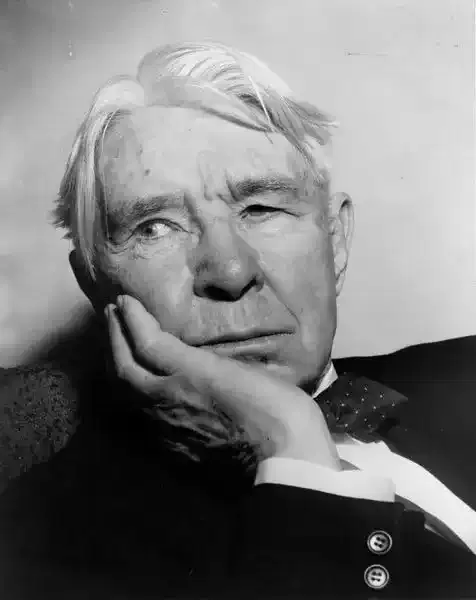
Carl Sandburg
Back Yard
Shine on, O moon of summer.
Shine to the leaves of grass, catalpa and oak,
All silver under your rain to-night.
An Italian boy is sending songs to you to-night from an accordion.
A Polish boy is out with his best girl; they marry next month; to-night they are
throwing you kisses.
An old man next door is dreaming over a sheen that sits in a cherry tree in his back
yard.
The clocks say I must go—I stay here sitting on the back porch drinking white thoughts
you rain down.
Shine on, O moon,
Shake out more and more silver changes.
Read more →
380
Robert Louis Stevenson
The Piper
AGAIN I hear you piping, for I know the tune so well, -
You rouse the heart to wander and be free,
Tho' where you learned your music, not the God of song can tell,
For you pipe the open highway and the sea.
O piper, lightly footing, lightly piping on your way,
Tho' your music thrills and pierces far and near,
I tell you you had better pipe to someone else to-day,
For you cannot pipe my fancy from my dear.
You sound the note of travel through the hamlet and the town;
You would lure the holy angels from on high;
And not a man can hear you, but he throws the hammer down
And is off to see the countries ere he die.
But now no more I wander, now unchanging here I stay;
By my love, you find me safely sitting here:
And pipe you ne'er so sweetly, till you pipe the hills away,
You can never pipe my fancy from my dear.
Read more →
381
John Donne
Holy Sonnet XIX: Oh, to Vex Me
Oh, to vex me, contraryes meet in one:
Inconstancy unnaturally hath begott
A constant habit; that when I would not
I change in vowes, and in devotione.
As humorous is my contritione
As my prophane Love, and as soone forgott:
As ridlingly distemper'd, cold and hott,
As praying, as mute; as infinite, as none.
I durst not view heaven yesterday; and to day
In prayers, and flattering speaches I court God:
To morrow I quake with true feare of his rod.
So my devout fitts come and go away
Like a fantistique Ague: save that here
Those are my best dayes, when I shake with feare.
Read more →
377
Dorothy Parker
Autumn Valentine
In May my heart was breaking
Oh,
wide the wound, and deep!
And bitter it beat at waking,
And sore it split in sleep.
And when it came November,
I sought my heart, and sighed,
"Poor thing, do you remember?"
"What heart was that?" it cried.
Read more →
377
Henry Wadsworth Longfellow
Garfield
'E venni dal martirio a questa pace.'
These words the poet heard in Paradise,
Uttered by one who, bravely dying here,
In the true faith was living in that sphere
Where the celestial cross of sacrifice
Spread its protecting arms athwart the skies;
And set thereon, like jewels crystal clear,
The souls magnanimous, that knew not fear,
Flashed their effulgence on his dazzled eyes.
Ah me! how dark the discipline of pain,
Were not the suffering followed by the sense
Of infinite rest and infinite release!
This is our consolation; and again
A great soul cries to us in our suspense,
'I came from martyrdom unto this peace!'
Read more →
379
John Donne
An Anatomy Of The World...
When that rich soul which to her heaven is gone,
Whom all do celebrate, who know they have one
(For who is sure he hath a soul, unless
It see, and judge, and follow worthiness,
And by deeds praise it? He who doth not this,
May lodge an inmate soul, but 'tis not his)
When that queen ended here her progress time,
And, as t'her standing house, to heaven did climb,
Where loath to make the saints attend her long,
She's now a part both of the choir, and song;
This world, in that great earthquake languished;
For in a common bath of tears it bled,
Which drew the strongest vital spirits out;
But succour'd then with a perplexed doubt,
Whether the world did lose, or gain in this,
(Because since now no other way there is,
But goodness, to see her, whom all would see,
All must endeavour to be good as she)
This great consumption to a fever turn'd,
And so the world had fits; it joy'd, it mourn'd;
And, as men think, that agues physic are,
And th' ague being spent, give over care,
So thou, sick world, mistak'st thy self to be
Well, when alas, thou'rt in a lethargy.
Her death did wound and tame thee then, and then
Thou might'st have better spar'd the sun, or man.
That wound was deep, but 'tis more misery
That thou hast lost thy sense and memory.
'Twas heavy then to hear thy voice of moan,
But this is worse, that thou art speechless grown.
Thou hast forgot thy name thou hadst; thou wast
Nothing but she, and her thou hast o'erpast.
For, as a child kept from the font until
A prince, expected long, come to fulfill
The ceremonies, thou unnam'd had'st laid,
Had not her coming, thee her palace made;
Her name defin'd thee, gave thee form, and frame,
And thou forget'st to celebrate thy name.
Some months she hath been dead (but being dead,
Measures of times are all determined)
But long she'ath been away, long, long, yet none
Offers to tell us who it is that's gone.
But as in states doubtful of future heirs,
When sickness without remedy impairs
The present prince, they're loath it should be said,
'The prince doth languish,' or 'The prince is dead;'
So mankind feeling now a general thaw,
A strong example gone, equal to law,
The cement which did faithfully compact
And glue all virtues, now resolv'd, and slack'd,
Thought it some blasphemy to say sh'was dead,
Or that our weakness was discovered
In that confession; therefore spoke no more
Than tongues, the soul being gone, the loss deplore.
But though it be too late to succour thee,
Sick world, yea dead, yea putrified, since she
Thy' intrinsic balm, and thy preservative,
Can never be renew'd, thou never live,
I (since no man can make thee live) will try,
What we may gain by thy anatomy.
Her death hath taught us dearly that thou art
Corrupt and mortal in thy purest part.
Let no man say, the world itself being dead,
'Tis labour lost to have discovered
The world's infirmities, since there is none
Alive to study this dissection;
For there's a kind of world remaining still,
Though she which did inanimate and fill
The world, be gone, yet in this last long night,
Her ghost doth walk; that is a glimmering light,
A faint weak love of virtue, and of good,
Reflects from her on them which understood
Her worth; and though she have shut in all day,
The twilight of her memory doth stay,
Which, from the carcass of the old world free,
Creates a new world, and new creatures be
Produc'd. The matter and the stuff of this,
Her virtue, and the form our practice is.
And though to be thus elemented, arm
These creatures from home-born intrinsic harm,
(For all assum'd unto this dignity
So many weedless paradises be,
Which of themselves produce no venomous sin,
Except some foreign serpent bring it in)
Yet, because outward storms the strongest break,
And strength itself by confidence grows weak,
This new world may be safer, being told
The dangers and diseases of the old;
For with due temper men do then forgo,
Or covet things, when they their true worth know.
There is no health; physicians say that we
At best enjoy but a neutrality.
And can there be worse sickness than to know
That we are never well, nor can be so?
We are born ruinous: poor mothers cry
That children come not right, nor orderly;
Except they headlong come and fall upon
An ominous precipitation.
How witty's ruin! how importunate
Upon mankind! It labour'd to frustrate
Even God's purpose; and made woman, sent
For man's relief, cause of his languishment.
They were to good ends, and they are so still,
But accessory, and principal in ill,
For that first marriage was our funeral;
One woman at one blow, then kill'd us all,
And singly, one by one, they kill us now.
We do delightfully our selves allow
To that consumption; and profusely blind,
We kill our selves to propagate our kind.
And yet we do not that; we are not men;
There is not now that mankind, which was then,
When as the sun and man did seem to strive,
(Joint tenants of the world) who should survive;
When stag, and raven, and the long-liv'd tree,
Compar'd with man, died in minority;
When, if a slow-pac'd star had stol'n away
From the observer's marking, he might stay
Two or three hundred years to see't again,
And then make up his observation plain;
When, as the age was long, the size was great
(Man's growth confess'd, and recompens'd the meat),
So spacious and large, that every soul
Did a fair kingdom, and large realm control;
And when the very stature, thus erect,
Did that soul a good way towards heaven direct.
Where is this mankind now? Who lives to age,
Fit to be made Methusalem his page?
Alas, we scarce live long enough to try
Whether a true-made clock run right, or lie.
Old grandsires talk of yesterday with sorrow,
And for our children we reserve tomorrow.
So short is life, that every peasant strives,
In a torn house, or field, to have three lives.
And as in lasting, so in length is man
Contracted to an inch, who was a span;
For had a man at first in forests stray'd,
Or shipwrack'd in the sea, one would have laid
A wager, that an elephant, or whale,
That met him, would not hastily assail
A thing so equall to him; now alas,
The fairies, and the pigmies well may pass
As credible; mankind decays so soon,
We'are scarce our fathers' shadows cast at noon,
Only death adds t'our length: nor are we grown
In stature to be men, till we are none.
But this were light, did our less volume hold
All the old text; or had we chang'd to gold
Their silver; or dispos'd into less glass
Spirits of virtue, which then scatter'd was.
But 'tis not so; w'are not retir'd, but damp'd;
And as our bodies, so our minds are cramp'd;
'Tis shrinking, not close weaving, that hath thus
In mind and body both bedwarfed us.
We seem ambitious, God's whole work t'undo;
Of nothing he made us, and we strive too,
To bring our selves to nothing back; and we
Do what we can, to do't so soon as he.
With new diseases on our selves we war,
And with new physic, a worse engine far.
Thus man, this world's vice-emperor, in whom
All faculties, all graces are at home
(And if in other creatures they appear,
They're but man's ministers and legates there
To work on their rebellions, and reduce
Them to civility, and to man's use);
This man, whom God did woo, and loath t'attend
Till man came up, did down to man descend,
This man, so great, that all that is, is his,
O what a trifle, and poor thing he is!
If man were anything, he's nothing now;
Help, or at least some time to waste, allow
T'his other wants, yet when he did depart
With her whom we lament, he lost his heart.
She, of whom th'ancients seem'd to prophesy,
When they call'd virtues by the name of she;
She in whom virtue was so much refin'd,
That for alloy unto so pure a mind
She took the weaker sex; she that could drive
The poisonous tincture, and the stain of Eve,
Out of her thoughts, and deeds, and purify
All, by a true religious alchemy,
She, she is dead; she's dead: when thou knowest this,
Thou knowest how poor a trifling thing man is,
And learn'st thus much by our anatomy,
The heart being perish'd, no part can be free,
And that except thou feed (not banquet) on
The supernatural food, religion,
Thy better growth grows withered, and scant;
Be more than man, or thou'rt less than an ant.
Then, as mankind, so is the world's whole frame
Quite out of joint, almost created lame,
For, before God had made up all the rest,
Corruption ent'red, and deprav'd the best;
It seiz'd the angels, and then first of all
The world did in her cradle take a fall,
And turn'd her brains, and took a general maim,
Wronging each joint of th'universal frame.
The noblest part, man, felt it first; and then
Both beasts and plants, curs'd in the curse of man.
So did the world from the first hour decay,
That evening was beginning of the day,
And now the springs and summers which we see,
Like sons of women after fifty be.
And new philosophy calls all in doubt,
The element of fire is quite put out,
The sun is lost, and th'earth, and no man's wit
Can well direct him where to look for it.
And freely men confess that this world's spent,
When in the planets and the firmament
They seek so many new; they see that this
Is crumbled out again to his atomies.
'Tis all in pieces, all coherence gone,
All just supply, and all relation;
Prince, subject, father, son, are things forgot,
For every man alone thinks he hath got
To be a phoenix, and that then can be
None of that kind, of which he is, but he.
This is the world's condition now, and now
She that should all parts to reunion bow,
She that had all magnetic force alone,
To draw, and fasten sund'red parts in one;
She whom wise nature had invented then
When she observ'd that every sort of men
Did in their voyage in this world's sea stray,
And needed a new compass for their way;
She that was best and first original
Of all fair copies, and the general
Steward to fate; she whose rich eyes and breast
Gilt the West Indies, and perfum'd the East;
Whose having breath'd in this world, did bestow
Spice on those Isles, and bade them still smell so,
And that rich India which doth gold inter,
Is but as single money, coin'd from her;
She to whom this world must it self refer,
As suburbs or the microcosm of her,
She, she is dead; she's dead: when thou know'st this,
Thou know'st how lame a cripple this world is
....
Read more →
377
Henry Wadsworth Longfellow
The Native Land. (From The Spanish Of Francisco De Aldana)
Clear fount of light! my native land on high,
Bright with a glory that shall never fade!
Mansion of truth! without a veil or shade,
Thy holy quiet meets the spirit's eye.
There dwells the soul in its ethereal essence,
Gasping no longer for life's feeble breath;
But, sentinelled in heaven, its glorious presence
With pitying eye beholds, yet fears not, death.
Beloved country! banished from thy shore,
A stranger in this prison-house of clay,
The exiled spirit weeps and sighs for thee!
Heavenward the bright perfections I adore
Direct, and the sure promise cheers the way,
That, whither love aspires, there shall my dwelling be.
Read more →
378