
Soul

Emily Dickinson
Mama never forgets her birds
Mama never forgets her birds,
Though in another tree-
She looks down just as often
And just as tenderly
As when her little mortal nest
With cunning care she wove-
If either of her "sparrows fall,"
She "notices," above.
Read more →
374

Walter de la Mare
Alexander
It was the Great Alexander,
Capped with a golden helm,
Sate in the ages, in his floating ship,
In a dead calm.
Voices of sea-maids singing
Wandered across the deep:
The sailors labouring on their oars
Rowed as in sleep.
All the high pomp of Asia,
Charmed by that siren lay,
Out of their weary and dreaming minds
Faded away.
Like a bold boy sate their Captain,
His glamour withered and gone,
In the souls of his brooding mariners,
While the song pined on.
Time like a falling dew,
Life like the scene of a dream
Laid between slumber and slumber
Only did seem. . . .
O Alexander, then,
In all us mortals too,
Wax not so overbold
On the wave dark-blue!
Come the calm starry night,
Who then will hear
Aught save the singing
Of the sea-maids clear?
Read more →
376
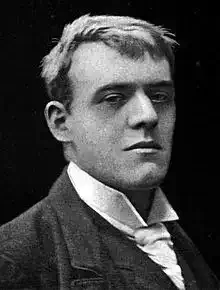
Hilaire Belloc
The Statue
When we are dead, some Hunting-boy will pass
And find a stone half-hidden in tall grass
And grey with age: but having seen that stone
(Which was your image), ride more slowly on.
Read more →
376
Emily Dickinson
It was too late for Man
It was too late for Man-
But early, yet, for GodCreation-
impotent to help-
But Prayer-remained-Our Side-
How excellent the Heaven-
When Earth-cannot be had-
How hospitable-then-the face
Of our Old Neighbor-God-
Read more →
375

Henry Wadsworth Longfellow
Birds Of Passage
Black shadows fall
From the lindens tall,
That lift aloft their massive wall
Against the southern sky;
And from the realms
Of the shadowy elms
A tide-like darkness overwhelm
The fields that round us lie.
But the night is fair,
And everywhere
A warm, soft vapor fills the air,
And distant sounds seem near;
And above, in the light
Of the star-lit night,
Swift birds of passage wing their flight
Through the dewy atmosphere.
I hear the beat
Of their pinions fleet,
As from the land of snow and sleet
They seek a southern lea.
I hear the cry
Of their voices high
Falling dreamily through the sky,
But their forms I cannot see.
Oh, say not so!
Those sounds that flow
In murmurs of delight and woe
Come not from wings of birds.
They are the throngs
Of the poet's songs,
Murmurs of pleasures, and pains, and wrongs,
The sound of winged words.
This is the cry
Of souls, that high
On toiling, beating pinions, fly,
Seeking a warmer clime.
From their distant flight
Through realms of light
It falls into our world of night,
With the murmuring sound of rhyme.
Read more →
376
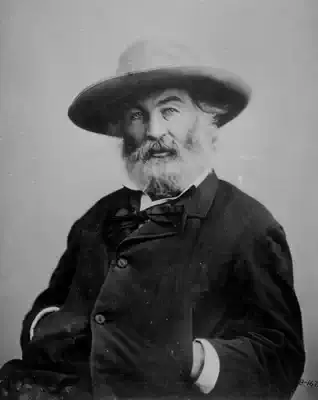
Walt Whitman
Not Heaving From My Ribb'd Breast Only
NOT heaving from my ribb'd breast only;
Not in sighs at night, in rage, dissatisfied with myself;
Not in those long-drawn, ill-supprest sighs;
Not in many an oath and promise broken;
Not in my wilful and savage soul's volition;
Not in the subtle nourishment of the air;
Not in this beating and pounding at my temples and wrists;
Not in the curious systole and diastole within, which will one day
cease;
Not in many a hungry wish, told to the skies only;
Not in cries, laughter, defiances, thrown from me when alone, far in
the wilds;
Not in husky pantings through clench'd teeth;
Not in sounded and resounded words--chattering words, echoes, dead
words;
Not in the murmurs of my dreams while I sleep,
Nor the other murmurs of these incredible dreams of every day;
Nor in the limbs and senses of my body, that take you and dismiss you
continually--Not there;
Not in any or all of them, O adhesiveness! O pulse of my life!
Need I that you exist and show yourself, any more than in these
songs.
Read more →
376

William Butler Yeats
In The Seven Woods
I HAVE heard the pigeons of the Seven Woods
Make their faint thunder, and the garden bees
Hum in the lime-tree flowers; and put away
The unavailing outcries and the old bitterness
That empty the heart. I have forgot awhile
Tara uprooted, and new commonness
Upon the throne and crying about the streets
And hanging its paper flowers from post to post,
Because it is alone of all things happy.
I am contented, for I know that Quiet
Wanders laughing and eating her wild heart
Among pigeons and bees, while that Great Archer,
Who but awaits His hour to shoot, still hangs
A cloudy quiver over Pairc-na-lee.
Read more →
375
Henry Wadsworth Longfellow
The Old Clock on the Stairs
Somewhat back from the village street
Stands the old-fashioned country-seat.
Across its antique portico
Tall poplar-trees their shadows throw;
And from its station in the hall
An ancient timepiece says to all, -
"Forever -- never!
Never -- forever!"
Half-way up the stairs it stands,
And points and beckons with its hands
From its case of massive oak,
Like a monk, who, under his cloak,
Crosses himself, and sighs, alas!
With sorrowful voice to all who pass, -
"Forever -- never!
Never -- forever!"
By day its voice is low and light;
But in the silent dead of night,
Distinct as a passing footstep's fall,
It echoes along the vacant hall,
Along the ceiling, along the floor,
And seems to say, at each chamber-door, -
"Forever -- never!
Never -- forever!"
Through days of sorrow and of mirth,
Through days of death and days of birth,
Through every swift vicissitude
Of changeful time, unchanged it has stood,
And as if, like God, it all things saw,
It calmly repeats those words of awe, -
"Forever -- never!
Never -- forever!"
In that mansion used to be
Free-hearted Hospitality;
His great fires up the chimney roared;
The stranger feasted at his board;
But, like the skeleton at the feast,
That warning timepiece never ceased, -
"Forever -- never!
Never -- forever!"
There groups of merry children played,
There youths and maidens dreaming strayed;
O precious hours! O golden prime,
And affluence of love and time!
Even as a miser counts his gold,
Those hours the ancient timepiece told, -
"Forever -- never!
Never -- forever!"
From that chamber, clothed in white,
The bride came forth on her wedding night;
There, in that silent room below,
The dead lay in his shroud of snow;
And in the hush that followed the prayer,
Was heard the old clock on the stair, -
"Forever -- never!
Never -- forever!"
All are scattered now and fled,
Some are married, some are dead;
And when I ask, with throbs of pain,
"Ah! when shall they all meet again?"
As in the days long since gone by,
The ancient timepiece makes reply, -
"Forever -- never!
Never -- forever!"
Never here, forever there,
Where all parting, pain, and care,
And death, and time shall disappear, -Forever
there, but never here!
The horologe of Eternity
Sayeth this incessantly, -
"Forever -- never!
Never -- forever!"
Read more →
374
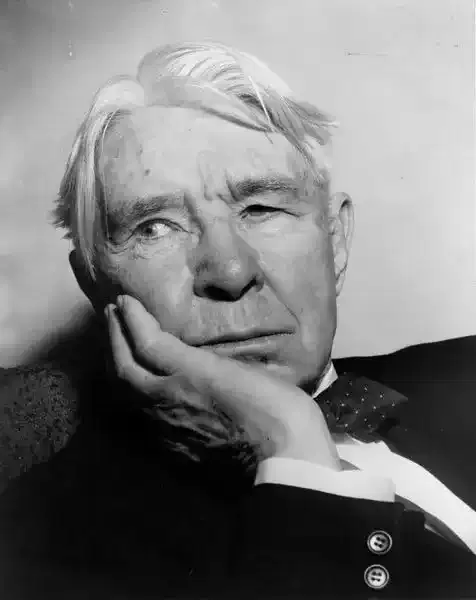
Carl Sandburg
Shirt
My shirt is a token and symbol,
more than a cover for sun and rain,
my shirt is a signal,
and a teller of souls.
I can take off my shirt and tear it,
and so make a ripping razzly noise,
and the people will say,
"Look at him tear his shirt."
I can keep my shirt on.
I can stick around and sing like a little bird
and look 'em all in the eye and never be fazed.
I can keep my shirt on.
Read more →
375
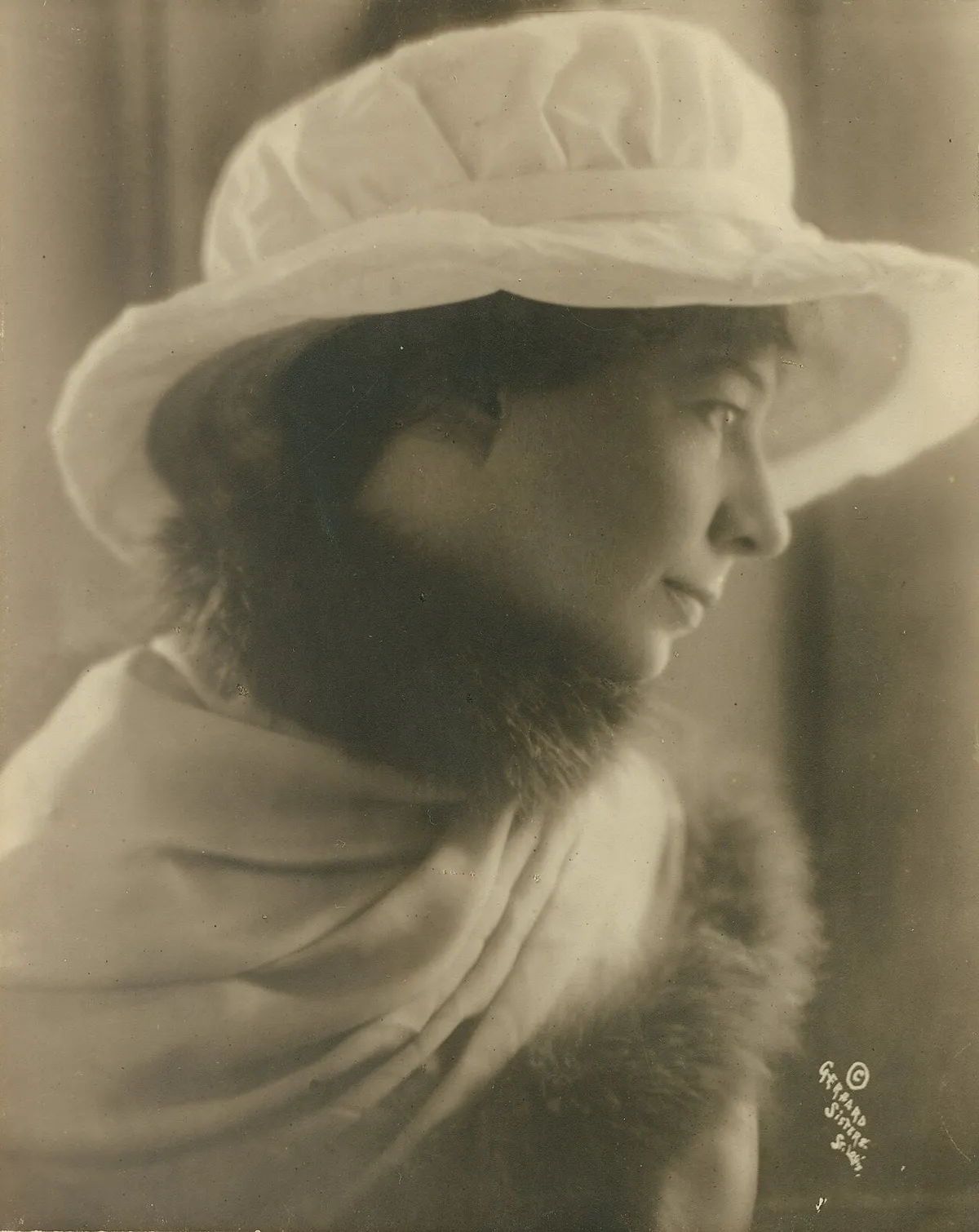
Sara Teasdale
Driftwood
My forefathers gave me
My spirit's shaken flame,
The shape of hands, the beat of heart,
The letters of my name.
But it was my lovers,
And not my sleeping sires,
Who gave the flame its changeful
And iridescent fires;
As the driftwood burning
Learned its jewelled blaze
From the sea's blue splendor
Of colored nights and days.
Read more →
375
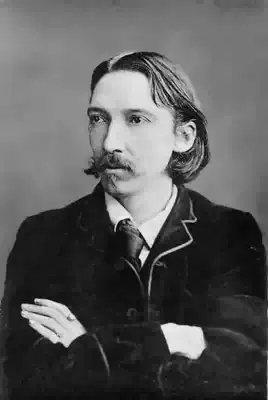
Robert Louis Stevenson
Looking-Glass River
Smooth it glides upon its travel,
Here a wimple, there a gleam--
O the clean gravel!
O the smooth stream!
Sailing blossoms, silver fishes,
Pave pools as clear as air--
How a child wishes
To live down there!
We can see our colored faces
Floating on the shaken pool
Down in cool places,
Dim and very cool;
Till a wind or water wrinkle,
Dipping marten, plumping trout,
Spreads in a twinkle
And blots all out.
See the rings pursue each other;
All below grows black as night,
Just as if mother
Had blown out the light!
Patience, children, just a minute--
See the spreading circles die;
The stream and all in it
Will clear by-and-by.
Read more →
375
Emily Dickinson
Forget! The lady with the Amulet
Forget! The lady with the Amulet
Forget she wore it at her Heart
Because she breathed against
Was Treason twixt?
Deny! Did Rose her Bee-
For Privilege of Play
Or Wile of Butterfly
Or Opportunity-Her Lord away?
The lady with the Amulet-will face-
The Bee-in Mausoleum laid-
Discard his Bride-
But longer than the little Rill-
That cooled the Forehead of the Hill-
While Other-went the Sea to fill-
And Other-went to turn the MillI'll
do thy Will-
Read more →
376
Robert Louis Stevenson
Know You The River NEar To Grez
KNOW you the river near to Grez,
A river deep and clear?
Among the lilies all the way,
That ancient river runs to-day
From snowy weir to weir.
Old as the Rhine of great renown,
She hurries clear and fast,
She runs amain by field and town
From south to north, from up to down,
To present on from past.
The love I hold was borne by her;
And now, though far away,
My lonely spirit hears the stir
Of water round the starling spur
Beside the bridge at Grez.
So may that love forever hold
In life an equal pace;
So may that love grow never old,
But, clear and pure and fountain-cold,
Go on from grace to grace.
Read more →
374
Henry Wadsworth Longfellow
Hymn to the Night
I heard the trailing garments of the Night
Sweep through her marble halls!
I saw her sable skirts all fringed with light
From the celestial walls!
I felt her presence, by its spell of might,
Stoop o'er me from above;
The calm, majestic presence of the Night,
As of the one I love.
I heard the sounds of sorrow and delight,
The manifold, soft chimes,
That fill the haunted chambers of the Night
Like some old poet's rhymes.
From the cool cisterns of the midnight air
My spirit drank repose;
The fountain of perpetual peace flows there,-From
those deep cisterns flows.
O holy Night! from thee I learn to bear
What man has borne before!
Thou layest thy finger on the lips of Care,
And they complain no more.
Peace! Peace! Orestes-like I breathe this prayer!
Descend with broad-winged flight,
The welcome, the thrice-prayed for, the most fair,
The best-beloved Night!
Read more →
376
Emily Dickinson
No Rack can torture me
No Rack can torture me-
My Soul-at Liberty-
Behind this mortal Bone
There knits a bolder One-
You cannot prick with saw-
Nor pierce with Scimitar-
Two Bodies-therefore be-
Bind One-The Other fly-
The Eagle of his Nest
No easier divest-
And gain the Sky
Than mayest Thou-
Except Thyself may be
Thine Enemy-
Captivity is ConsciousnessSo's
Liberty.
Read more →
374
William Butler Yeats
The Indian To His Love
THE island dreams under the dawn
And great boughs drop tranquillity;
The peahens dance on a smooth lawn,
A parrot sways upon a tree,
Raging at his own image in the enamelled sea.
Here we will moor our lonely ship
And wander ever with woven hands,
Murmuring softly lip to lip,
Along the grass, along the sands,
Murmuring how far away are the unquiet lands:
How we alone of mortals are
Hid under quiet boughs apart,
While our love grows an Indian star,
A meteor of the burning heart,
One with the tide that gleams, the wings that gleam
and dart,
The heavy boughs, the burnished dove
That moans and sighs a hundred days:
How when we die our shades will rove,
When eve has hushed the feathered ways,
With vapoury footsole by the water's drowsy blaze.
Read more →
375
Carl Sandburg
Broadway
I shall never forget you, Broadway
Your golden and calling lights.
I’ll remember you long,
Tall-walled river of rush and play.
Hearts that know you hate you
And lips that have given you laughter
Have gone to their ashes of life and its roses,
Cursing the dreams that were lost
In the dust of your harsh and trampled stones.
Read more →
376
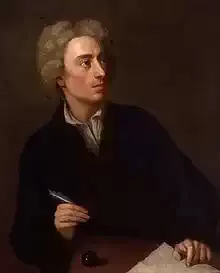
Alexander Pope
From an Essay on Man
Heav'n from all creatures hides the book of fate,
All but the page prescrib'd, their present state:
From brutes what men, from men what spirits know:
Or who could suffer being here below?
The lamb thy riot dooms to bleed today,
Had he thy reason, would he skip and play?
Pleas'd to the last, he crops the flow'ry food,
And licks the hand just rais'd to shed his blood.
Oh blindness to the future! kindly giv'n,
That each may fill the circle mark'd by Heav'n:
Who sees with equal eye, as God of all,
A hero perish, or a sparrow fall,
Atoms or systems into ruin hurl'd,
And now a bubble burst, and now a world.
Hope humbly then; with trembling pinions soar;
Wait the great teacher Death; and God adore.
What future bliss, he gives not thee to know,
But gives that hope to be thy blessing now.
Hope springs eternal in the human breast:
Man never is, but always to be blest:
The soul, uneasy and confin'd from home,
Rests and expatiates in a life to come.
Lo! the poor Indian, whose untutor'd mind
Sees God in clouds, or hears him in the wind;
His soul, proud science never taught to stray
Far as the solar walk, or milky way;
Yet simple nature to his hope has giv'n,
Behind the cloud topp'd hill, an humbler heav'n;
Some safer world in depth of woods embrac'd,
Some happier island in the wat'ry waste,
Where slaves once more their native land behold,
No fiends torment, no Christians thirst for gold.
To be, contents his natural desire,
He asks no angel's wing, no seraph's fire;
But thinks, admitted to that equal sky.
Read more →
376
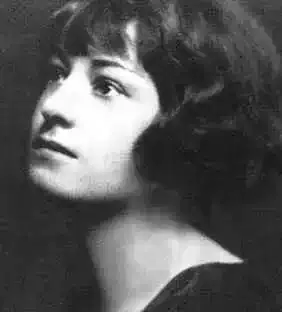
Dorothy Parker
Rondeau Redoublé
[and scarcely worth the trouble, at that]
The same to me are somber days and gay.
Though Joyous dawns the rosy morn, and bright,
Because my dearest love is gone away
Within my heart is melancholy night.
My heart beats low in loneliness, despite
That riotous Summer holds the earth in sway.
In cerements my spirit is bedight;
The same to me are somber days and gay.
Though breezes in the rippling grasses play,
And waves dash high and far in glorious might,
I thrill no longer to the sparkling day,
Though joyous dawns the rosy morn, and bright.
Ungraceful seems to me the swallow's flight;
As well might heaven's blue be sullen gray;
My soul discerns no beauty in their sight
Because my dearest love is gone away.
Let roses fling afar their crimson spray,
And virgin daisies splash the fields with white,
Let bloom the poppy hotly as it may,
Within my heart is melancholy night.
And this, O love, my pitiable plight
Whenever from my circling arms you stray;
This little world of mine has lost its light....
I hope to God, my dear, that you can say
The same to me.
Read more →
376
Henry Wadsworth Longfellow
Vittoria Colonna
Once more, once more, Inarimé,
I see thy purple hills!--once more
I hear the billows of the bay
Wash the white pebbles on thy shore.
High o'er the sea-surge and the sands,
Like a great galleon wrecked and cast
Ashore by storms, thy castle stands,
A mouldering landmark of the Past.
Upon its terrace-walk I see
A phantom gliding to and fro;
It is Colonna,--it is she
Who lived and loved so long ago.
Pescara's beautiful young wife,
The type of perfect womanhood,
Whose life was love, the life of life,
That time and change and death withstood.
For death, that breaks the marriage band
In others, only closer pressed
The wedding-ring upon her hand
And closer locked and barred her breast.
She knew the life-long martyrdom,
The weariness, the endless pain
Of waiting for some one to come
Who nevermore would come again.
The shadows of the chestnut trees,
The odor of the orange blooms,
The song of birds, and, more than these,
The silence of deserted rooms;
The respiration of the sea,
The soft caresses of the air,
All things in nature seemed to be
But ministers of her despair;
Till the o'erburdened heart, so long
Imprisoned in itself, found vent
And voice in one impassioned song
Of inconsolable lament.
Then as the sun, though hidden from sight,
Transmutes to gold the leaden mist,
Her life was interfused with light,
From realms that, though unseen, exist,
Inarimé! Inarimé!
Thy castle on the crags above
In dust shall crumble and decay,
But not the memory of her love.
Read more →
373
Walt Whitman
O Bitter Sprig! Confession Sprig!
O BITTER sprig! Confession sprig!
In the bouquet I give you place also--I bind you in,
Proceeding no further till, humbled publicly,
I give fair warning, once for all.
I own that I have been sly, thievish, mean, a prevaricator, greedy,
derelict,
And I own that I remain so yet.
What foul thought but I think it--or have in me the stuff out of
which it is thought?
What in darkness in bed at night, alone or with a companion?
Read more →
372

William Shakespeare
Sonnet 7: Lo, in the orient when the gracious light
Lo, in the orient when the gracious light
Lifts up his burning head, each under eye
Doth homage to his new-appearing sight,
Serving with looks his sacred majesty;
And having climbed the steep-up heavenly hill,
Resembling strong youth in his middle age,
Yet mortal looks adore his beauty still,
Attending on his golden pilgrimage;
But when from highmost pitch, with weary car,
Like feeble age, he reeleth from the day,
The eyes, 'fore duteous, now converted are
From his low tract and look another way.
So thou, thyself outgoing in thy noon,
Unlooked on diest, unless thou get a son.
Read more →
372
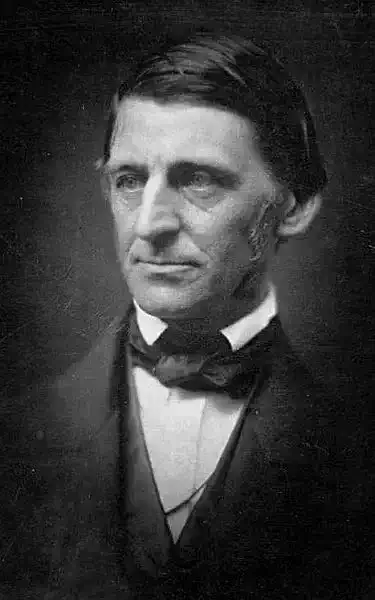
Ralph Waldo Emerson
To Eva
O Fair and stately maid, whose eye
Was kindled in the upper sky
At the same torch that lighted mine;
For so I must interpret still
Thy sweet dominion o'er my will,
A sympathy divine.
Ah! let me blameless gaze upon
Features that seem in heart my own,
Nor fear those watchful sentinels
Which charm the more their glance forbids,
Chaste glowing underneath their lids
With fire that draws while it repels.
Thine eyes still shined for me, though far
I lonely roved the land or sea,
As I behold yon evening star,
Which yet beholds not me.
This morn I climbed the misty hill,
And roamed the pastures through;
How danced thy form before my path,
Amidst the deep-eyed dew!
When the red bird spread his sable wing,
And showed his side of flame,
When the rose-bud ripened to the rose,
In both I read thy name.
Read more →
372

Kabir
The Guest is inside you, and also inside me
The Guest is inside you, and also inside me;
you know the sprout is hidden inside the seed.
We are all struggling; none of us has gone far.
Let your arrogance go, and look around inside.
The blue sky opens out further and farther,
the daily sense of failure goes away,
the damage I have done to myself fades,
a million suns come forward with light,
when I sit firmly in that world.
I hear bells ringing that no one has shaken,
inside 'love' there is more joy than we know of,
rain pours down, although the sky is clear of clouds,
there are whole rivers of light.
The universe is shot through in all parts by a single sort of love.
How hard it is to feel that joy in all our four bodies!
Those who hope to be reasonable about it fail.
The arrogance of reason has separated us from that love.
With the word 'reason' you already feel miles away.
How lucky Kabir is, that surrounded by all this joy
he sings inside his own little boat.
His poems amount to one soul meeting another.
These songs are about forgetting dying and loss.
They rise above both coming in and going out.
Read more →
373