
Soul

William Butler Yeats
He Mourns For The Change That Has Come Upon Him And His Beloved, And Longs For The End Of The World
DO you not hear me calling, white deer with no horns?
I have been changed to a hound with one red ear;
I have been in the Path of Stones and the Wood of Thorns,
For somebody hid hatred and hope and desire and fear
Under my feet that they follow you night and day.
A man with a hazel wand came without sound;
He changed me suddenly; I was looking another way;
And now my calling is but the calling of a hound;
And Time and Birth and Change are hurrying by.
I would that the Boar without bristles had come from the West
And had rooted the sun and moon and stars out of the sky
And lay in the darkness, grunting, and turning to his rest.
Read more →
372

Emily Dickinson
A Route of Evanescence
A Route of Evanescence
With a revolving Wheel--
A Resonance of Emerald--
A Rush of Cochineal--
And every Blossom on the Bush
Adjusts its tumbled Head--
The mail from Tunis, probably,
An easy Morning's Ride--
Read more →
371

Nazim Hikmet
Letters From A Man In Solitary
I carved your name on my watchband
with my fingernail.
Where I am, you know,
I don't have a pearl-handled jackknife
(they won't give me anything sharp)
or a plane tree with its head in the clouds.
Trees may grow in the yard,
but I'm not allowed
to see the sky overhead...
How many others are in this place?
I don't know.
I'm alone far from them,
they're all together far from me.
To talk anyone besides myself
is forbidden.
So I talk to myself.
But I find my conversation so boring,
my dear wife, that I sing songs.
And what do you know,
that awful, always off-key voice of mine
touches me so
that my heart breaks.
And just like the barefoot orphan
lost in the snow
in those old sad stories, my heart
-- with moist blue eyes
and a little red runny rose --
wants to snuggle up in your arms.
It doesn't make me blush
that right now
I'm this weak,
this selfish,
this human simply.
No doubt my state can be explained
physiologically, psychologically, etc.
Or maybe it's
this barred window,
this earthen jug,
these four walls,
which for months have kept me from hearing
another human voice.
It's five o'clock, my dear.
Outside,
with its dryness,
eerie whispers,
mud roof,
and lame, skinny horse
standing motionless in infinity
-- I mean, it's enough to drive the man inside crazy with grief --
outside, with all its machinery and all its art,
a plains night comes down red on treeless space.
Again today, night will fall in no time.
A light will circle the lame, skinny horse.
And the treeless space, in this hopeless landscape
stretched out before me like the body of a hard man,
will suddenly be filled with stars.
We'll reach the inevitable end once more,
which is to say the stage is set
again today for an elaborate nostalgia.
Me,
the man inside,
once more I'll exhibit my customary talent,
and singing an old-fashioned lament
in the reedy voice of my childhood,
once more, by God, it will crush my unhappy heart
to hear you inside my head,
so far
away, as if I were watching you
in a smoky, broken mirror...
It's spring outside, my dear wife, spring.
Outside on the plain, suddenly the smell
of fresh earth, birds singing, etc.
It's spring, my dear wife,
the plain outside sparkles...
And inside the bed comes alive with bugs,
the water jug no longer freezes,
and in the morning sun floods the concrete...
The sun--
every day till noon now
it comes and goes
from me, flashing off
and on...
And as the day turns to afternoon, shadows climb the walls,
the glass of the barred window catches fire,
and it's night outside,
a cloudless spring night...
And inside this is spring's darkest hour.
In short, the demon called freedom,
with its glittering scales and fiery eyes,
possesses the man inside
especially in spring...
I know this from experience, my dear wife,
from experience...
Sunday today.
Today they took me out in the sun for the first time.
And I just stood there, struck for the first time in my life
by how far away the sky is,
how blue
and how wide.
Then I respectfully sat down on the earth.
I leaned back against the wall.
For a moment no trap to fall into,
no struggle, no freedom, no wife.
Only earth, sun, and me...
I am happy.
Trans. by Randy Blasing and Mutlu Konuk ()
Read more →
372
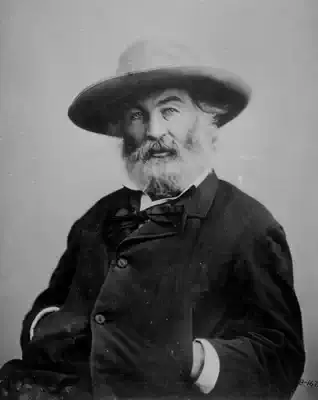
Walt Whitman
What Am I, After All?
WHAT am I, after all, but a child, pleas'd with the sound of my own
name? repeating it over and over;
I stand apart to hear--it never tires me.
To you, your name also;
Did you think there was nothing but two or three pronunciations in
the sound of your name?
Read more →
372
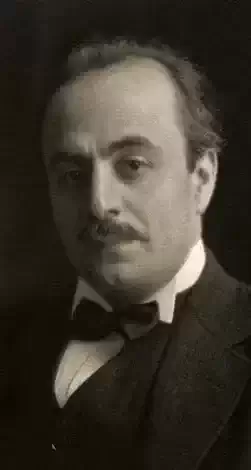
Khalil Gibran
Self-Knowledge XVII
And a man said, "Speak to us of Self-Knowledge."
And he answered, saying:
Your hearts know in silence the secrets of the days and the nights.
But your ears thirst for the sound of your heart's knowledge.
You would know in words that which you have always know in thought.
You would touch with your fingers the naked body of your dreams.
And it is well you should.
The hidden well-spring of your soul must needs rise and run murmuring to the sea;
And the treasure of your infinite depths would be revealed to your eyes.
But let there be no scales to weigh your unknown treasure;
And seek not the depths of your knowledge with staff or sounding line.
For self is a sea boundless and measureless.
Say not, "I have found the truth," but rather, "I have found a truth."
Say not, "I have found the path of the soul." Say rather, "I have met the soul walking
upon my path."
For the soul walks upon all paths.
The soul walks not upon a line, neither does it grow like a reed.
The soul unfolds itself, like a lotus of countless petals.
Read more →
373
William Butler Yeats
The Old Men Admiring Themselves In The Water
I HEARD the old, old men say,
'Everything alters,
And one by one we drop away.'
They had hands like claws, and their knees
Were twisted like the old thorn-trees
By the waters.
I heard the old, old men say,
'All that's beautiful drifts away
Like the waters.'
Read more →
372
William Butler Yeats
Form the Green Helmet And Other Poems
HIS DREAM
I SWAYED upon the gaudy stem
The butt-end of a steering-oar,
And saw wherever I could turn
A crowd upon a shore.
And though I would have hushed the crowd,
There was no mother's son but said,
'What is the figure in a shroud
Upon a gaudy bed?'
And after running at the brim
Cried out upon that thing beneath
-- It had such dignity of limb --
By the sweet name of Death.
Though I'd my finger on my lip,
What could I but take up the song?
And running crowd and gaudy ship
Cried out the whole night long,
Crying amid the glittering sea,
Naming it with ecstatic breath,
Because it had such dignity,
By the sweet name of Death.
Read more →
372
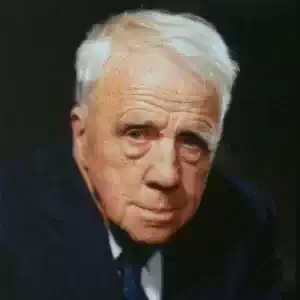
Robert Frost
A Question
A voice said, Look me in the stars
And tell me truly, men of earth,
If all the soul-and-body scars
Were not too much to pay for birth.
Read more →
372
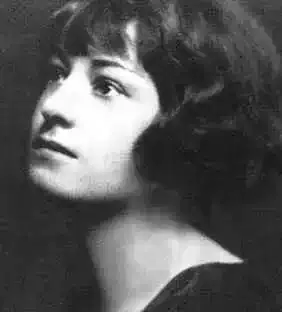
Dorothy Parker
On Being A Woman
Why is it, when I am in Rome,
I'd give an eye to be at home,
But when on native earth I be,
My soul is sick for Italy?
And why with you, my love, my lord,
Am I spectacularly bored,
Yet do you up and leave me- then
I scream to have you back again?
Read more →
371

Ella Wheeler Wilcox
An Empty Crib
Beside a crib that holds a baby’s stocking,
A tattered picture book, a broken toy,
A sleeping mother dreams that she is rocking
Her fair-haired cherub boy.
Upon the cradle’s side her light touch keeping,
She gently rocks it, crooning low a song;
And smiles to think her little one is sleeping,
So peacefully and long.
Step light, breathe low, break not her rapturous dreaming,
Wake not the sleeper from her trance of joy,
For never more save in sweet slumber-seeming
Will she watch o’er her little boy.
God pity her when from her dream Elysian
She wakes to see the empty crib, and weep;
Knowing her joy was but a sleeper’s vision,
Tread lightly – let her sleep.
Read more →
371
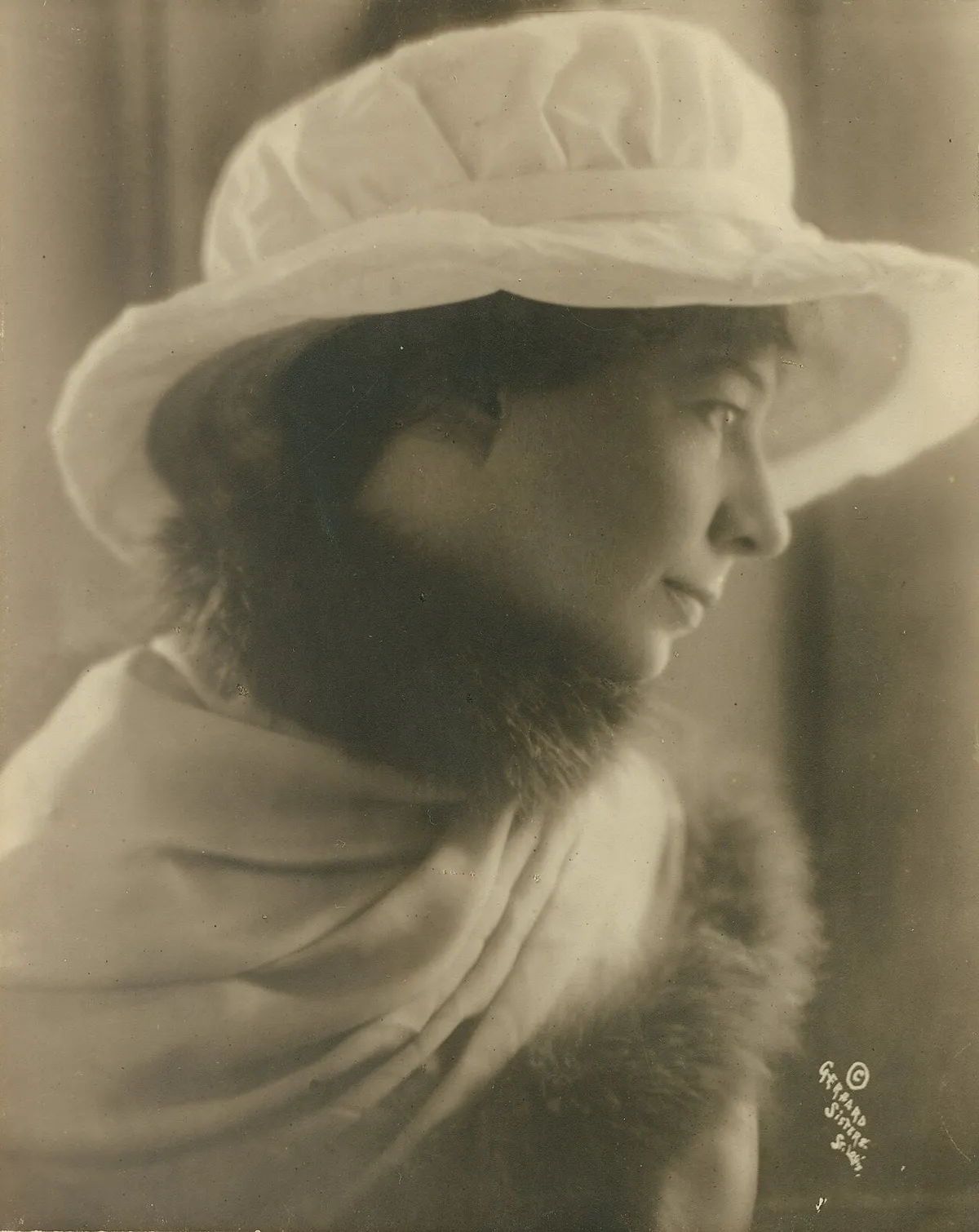
Sara Teasdale
The Dreams of My Heart
The dreams of my heart and my mind pass,
Nothing stays with me long,
But I have had from a child
The deep solace of song;
If that should ever leave me,
Let me find death and stay
With things whose tunes are played out and forgotten
Like the rain of yesterday.
Read more →
374
William Butler Yeats
The Players Ask For A Blessing On The Psalteries And On Themselves
Three Voices [together]. Hurry to bless the hands that play,
The mouths that speak, the notes and strings,
O masters of the glittering town!
O! lay the shrilly trumpet down,
Though drunken with the flags that sway
Over the ramparts and the towers,
And with the waving of your wings.
First Voice. Maybe they linger by the way.
One gathers up his purple gown;
One leans and mutters by the wall --
He dreads the weight of mortal hours.
Second Voice. O no, O no! they hurry down
Like plovers that have heard the call.
Third Voice. O kinsmen of the Three in One,
O kinsmen, bless the hands that play.
The notes they waken shall live on
When all this heavy history's done;
Our hands, our hands must ebb away.
Three Voices [together]. The proud and careless notes live on,
But bless our hands that ebb away.
Read more →
373
Ella Wheeler Wilcox
Woman To Man
You do but jest, sir, and you jest not well,
How could the hand be enemy of the arm,
Or seed and sod be rivals! How could light
Feel jealousy of heat, plant of the leaf
Or competition dwell 'twixt lip and smile?
Are we not part and parcel of yourselves?
Like strands in one great braid we intertwine
And make the perfect whole. You could not be,
Unless we gave you birth; we are the soil
From which you sprang, yet sterile were that soil
Save as you planted. (Though in the Book we read
One woman bore a child with no man's aid
We find no record of a man-child born
Without the aid of woman! Fatherhood
Is but a small achievement at the best
While motherhood comprises heaven and hell.)
This ever-growing argument of sex
Is most unseemly, and devoid of sense.
Why waste more time in controversy, when
There is not time enough for all of love,
Our rightful occupation in this life.
Why prate of our defects, of where we fail
When just the story of our worth would need
Eternity for telling, and our best
Development comes ever thro' your praise,
As through our praise you reach your highest self.
Oh! had you not been miser of your praise
And let our virtues be their own reward
The old established, order of the world
Would never have been changed. Small blame is ours
For this unsexing of ourselves, and worse
Effeminizing of the male. We were
Content, sir, till you starved us, heart and brain.
All we have done, or wise, or otherwise
Traced to the root, was done for love of you.
Let us taboo all vain comparisons,
And go forth as God meant us, hand in hand,
Companions, mates and comrades evermore;
Two parts of one divinely ordained whole.
Read more →
373
Dorothy Parker
Testament
Oh, let it be a night of lyric rain
And singing breezes, when my bell is tolled.
I have so loved the rain that I would hold
Last in my ears its friendly, dim refraln.
I shall lie cool and quiet, who have lain
Fevered, and watched the book of day unfold.
Death will not see me flinch; the heart is bold
That pain has made incapable of pain.
Kinder the busy worms than ever love;
It will be peace to lie there, empty-eyed,
My bed made secret by the leveling showers,
My breast replenishing the weeds above.
And you will say of me, "Then has she died?
Perhaps I should have sent a spray of flowers."
Read more →
372
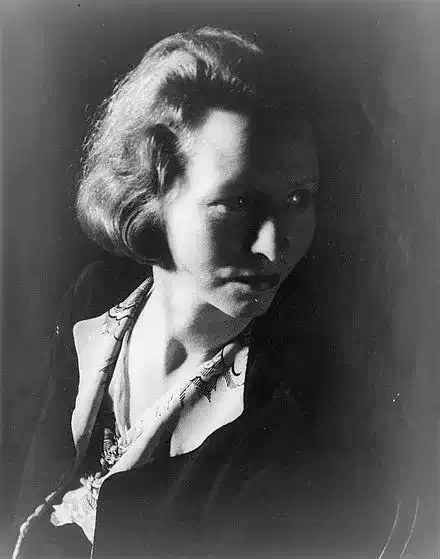
Edna St. Vincent Millay
To Kathleen
Still must the poet as of old,
In barren attic bleak and cold,
Starve, freeze, and fashion verses to
Such things as flowers and song and you;
Still as of old his being give
In Beauty's name, while she may live,
Beauty that may not die as long
As there are flowers and you and song.
Read more →
372
Boris Pasternak
The garden scatters burnt-up beetles...
The garden scatters burnt-up beetles
Like brazen ash, from braziers burst.
I witness, by my lighted candle,
A newly blossomed universe.
And like a not yet known religion
I enter this unheard of night,
In which the shabbily-grey poplar
Has curtained off the lunar light.
The pond is a presented secret.
Oh, whispers of the appletree!
The garden hangs-a pile construction,
And holds the sky in front of me.
Read more →
371
William Butler Yeats
An Image From A Past Life
He. Never until this night have I been stirred.
The elaborate starlight throws a reflection
On the dark stream,
Till all the eddies gleam;
And thereupon there comes that scream
From terrified, invisible beast or bird:
Image of poignant recollection.
She. An image of my heart that is smitten through
Out of all likelihood, or reason,
And when at last,
Youth's bitterness being past,
I had thought that all my days were cast
Amid most lovely places; smitten as though
It had not learned its lesson.
He. Why have you laid your hands upon my eyes?
What can have suddenly alarmed you
Whereon 'twere best
My eyes should never rest?
What is there but the slowly fading west,
The river imaging the flashing skies,
All that to this moment charmed you?
She. A Sweetheart from another life floats there
As though she had been forced to linger
From vague distress
Or arrogant loveliness,
Merely to loosen out a tress
Among the starry eddies of her hair
Upon the paleness of a finger.
He. But why should you grow suddenly afraid
And start -- I at your shoulder --
Imagining
That any night could bring
An image up, or anything
Even to eyes that beauty had driven mad,
But images to make me fonder?
She. Now She has thrown her arms above her head;
Whether she threw them up to flout me,
Or but to find,
Now that no fingers bind,
That her hair streams upon the wind,
I do not know, that know I am afraid
Of the hovering thing night brought me.
Read more →
373
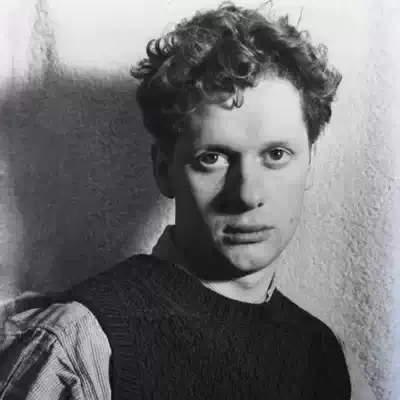
Dylan Thomas
Poem In October
It was my thirtieth year to heaven
Woke to my hearing from harbour and neighbour wood
And the mussel pooled and the heron
Priested shore
The morning beckon
With water praying and call of seagull and rook
And the knock of sailing boats on the net webbed wall
Myself to set foot
That second
In the still sleeping town and set forth.
My birthday began with the water-
Birds and the birds of the winged trees flying my name
Above the farms and the white horses
And I rose
In rainy autumn
And walked abroad in a shower of all my days.
High tide and the heron dived when I took the road
Over the border
And the gates
Of the town closed as the town awoke.
A springful of larks in a rolling
Cloud and the roadside bushes brimming with whistling
Blackbirds and the sun of October
Summery
On the hill's shoulder,
Here were fond climates and sweet singers suddenly
Come in the morning where I wandered and listened
To the rain wringing
Wind blow cold
In the wood faraway under me.
Pale rain over the dwindling harbour
And over the sea wet church the size of a snail
With its horns through mist and the castle
Brown as owls
But all the gardens
Of spring and summer were blooming in the tall tales
Beyond the border and under the lark full cloud.
There could I marvel
My birthday
Away but the weather turned around.
It turned away from the blithe country
And down the other air and the blue altered sky
Streamed again a wonder of summer
With apples
Pears and red currants
And I saw in the turning so clearly a child's
Forgotten mornings when he walked with his mother
Through the parables
Of sun light
And the legends of the green chapels
And the twice told fields of infancy
That his tears burned my cheeks and his heart moved in mine.
These were the woods the river and sea
Where a boy
In the listening
Summertime of the dead whispered the truth of his joy
To the trees and the stones and the fish in the tide.
And the mystery
Sang alive
Still in the water and singingbirds.
And there could I marvel my birthday
Away but the weather turned around. And the true
Joy of the long dead child sang burning
In the sun.
It was my thirtieth
Year to heaven stood there then in the summer noon
Though the town below lay leaved with October blood.
O may my heart's truth
Still be sung
On this high hill in a year's turning.
Read more →
372
Edna St. Vincent Millay
Sonnets (1923)
VIII8.
Oh, oh, you will be sorry for that word!
.
Give back my book and take my kiss instead.
.
Was it my enemy or my friend I heard,
.
"What a big book for such a little head!"
.
Come, I will show you now my newest hat,
.
And you may watch me purse my mouth and prink!
.
Oh, I shall love you still, and all of that.
.
I never again shall tell you what I think.
.
I shall be sweet and crafty, soft and sly;
.
You will not catch me reading any more:
.
I shall be called a wife to pattern by;
.
And some day when you knock and push the door,
.
Some sane day, not too bright and not too stormy,
.
I shall be gone, and you may whistle for me. IX9.
Here is a wound that never will heal, I know,
.
Being wrought not of a dearness and a death,
.
But of a love turned ashes and the breath
.
Gone out of beauty; never again will grow
.
The grass on that scarred acre, though I sow
.
Young seed there yearly and the sky bequeath
.
Its friendly weathers down, far underneath
.
Shall be such bitterness of an old woe.
.
That April should be shattered by a gust,
.
That August should be levelled by a rain,
.
I can endure, and that the lifted dust
.
Of man should settle to the earth again;
.
But that a dream can die, will be a thrust
.
Between my ribs forever of hot pain. XVIII18.
I, being born a woman and distressed
.
By all the needs and notions of my kind,
.
Am urged by your propinquity to find
.
Your person fair, and feel a certain zest
.
To bear your body's weight upon my breast:
.
So subtly is the fume of life designed,
.
To clarify the pulse and cloud the mind,
.
And leave me once again undone, possessed.
.
Think not for this, however, the poor treason
.
Of my stout blood against my staggering brain,
.
I shall remember you with love, or season
.
My scorn with pity, -- let me make it plain:
.
I find this frenzy insufficient reason
.
For conversation when we meet again. XIX19.
What lips my lips have kissed, and where, and why,
.
I have forgotten, and what arms have lain
.
Under my head till morning; but the rain
.
Is full of ghosts to-night, that tap and sigh
.
Upon the glass and listen for reply,
.
And in my heart there stirs a quiet pain
.
For unremembered lads that not again
.
Will turn to me at midnight with a cry.
.
Thus in the winter stands the lonely tree,
.
Nor knows what birds have vanished one by one,
.
Yet knows its boughs more silent than before:
.
I cannot say what loves have come and gone,
.
I only know that summer sang in me
.
A little while, that in me sings no more.
Read more →
372
Emily Dickinson
I cannot live with You (No. 640)
I cannot live with You--
It would be Life--
And Life is over there--
Behind the Shelf
The Sexton keeps the Key to--
Putting up
Our Life--His Porcelain--
Like a Cup--
Discarded of the Housewife-Quaint--
or Broke--
A newer Sevres pleases--
Old Ones crack--
I could not die--with You--
For One must wait
To shut the Other's Gaze down-You--
could not--
And I--could I stand by
And see You--freeze--
Without my Right of Frost-Death's
privilege?
Nor could I rise--with You--
Because Your Face
Would put out Jesus'--
That New Grace
Glow plain--and foreign
On my homesick Eye--
Except that You than He
Shone closer by-
They'd judge Us--How--
For You--served Heaven--You know,
Or sought to--
I could not--
Because You saturated Sight--
And I had no more Eyes
For sordid excellence
As Paradise
And were You lost, I would be--
Though My Name
Rang loudest
On the Heavenly fame--
And were You--saved--
And I--condemned to be
Where You were not--
That self--were Hell to Me--
So We must meet apart--
You there--I--here--
With just the Door ajar
That Oceans are--and Prayer--
And that White Sustenance--
Despair--
Read more →
371
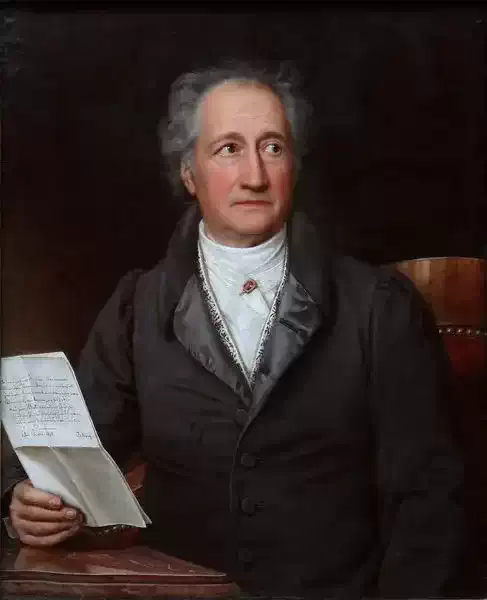
Johann Wolfgang von Goethe
From Faust - II. Prologue In Heaven
THE ARCHANGELS' SONG.
RAPHAEL.
THE sun still chaunts, as in old time,
With brother-spheres in choral song,
And with his thunder-march sublime
Moves his predestined course along.
Strength find the angels in his sight,
Though he by none may fathomed be;
Still glorious is each work of might
As when first form'd in majesty.
GABRIEL.
And swift and swift, in wondrous guise,
Revolves the earth in splendour bright,
The radiant hues of Paradise
Alternating with deepest night.
From out the gulf against the rock,
In spreading billows foams the ocean,--
And cliff and sea with mighty shock,
The spheres whirl round in endless motion.
MICHAEL.
And storms in emulation growl
From land to sea, from sea to land,
And fashion, as they wildly howl,
A circling, wonder-working band.
Destructive flames in mad career
Precede Thy thunders on their way;
Yet, Lord, Thy messengers revere
The soft mutations of Thy day.
THE THREE.
Strength find the angels in Thy sight,
Though none may hope to fathom Thee;
Still glorious are Thy works of might,
As when first form'd in majesty.
Read more →
371
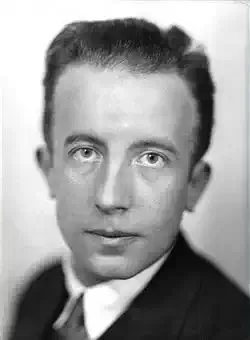
Paul Éluard
The Deaf and Blind
Do we reach the sea with clocks
In our pockets, with the noise of the sea
In the sea, or are we the carriers
Of a purer and more silent water?
The water rubbing against our hands sharpens knives.
The warriors have found their weapons in the waves
And the sound of their blows is like
The rocks that smash the boats at night.
It is the storm and the thunder. Why not the silence
Of the flood, for we have dreamt within us
Space for the greatest silence and we breathe
Like the wind over terrible seas, like the wind
That creeps slowly over every horizon.
Read more →
371
William Butler Yeats
A First Confession
I admit the briar
Entangled in my hair
Did not injure me;
My blenching and trembling,
Nothing but dissembling,
Nothing but coquetry.
I long for truth, and yet
I cannot stay from that
My better self disowns,
For a man's attention
Brings such satisfaction
To the craving in my bones.
Brightness that I pull back
From the Zodiac,
Why those questioning eyes
That are fixed upon me?
What can they do but shun me
If empty night replies?
Read more →
369
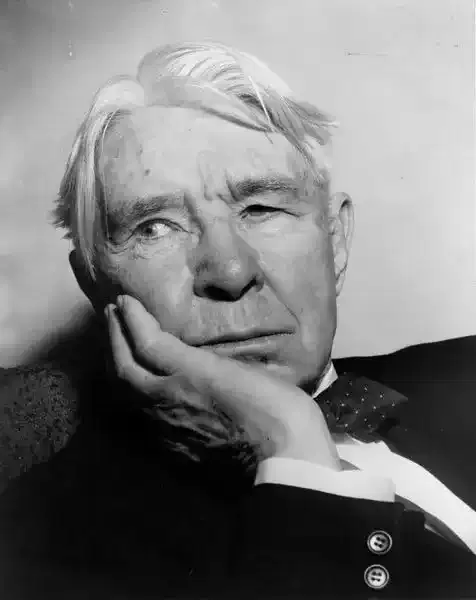
Carl Sandburg
Under the Harvest Moon
Under the harvest moon,
When the soft silver
Drips shimmering
Over the garden nights,
Death, the gray mocker,
Comes and whispers to you
As a beautiful friend
Who remembers.
Under the summer roses
When the flagrant crimson
Lurks in the dusk
Of the wild red leaves,
Love, with little hands,
Comes and touches you
With a thousand memories,
And asks you
Beautiful, unanswerable questions.
Read more →
369