
Soul
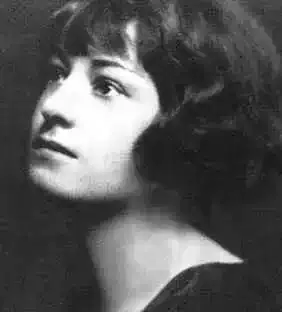
Dorothy Parker
Braggart
The days will rally, wreathing
Their crazy tarantelle;
And you must go on breathing,
But I'll be safe in hell.
Like January weather,
The years will bite and smart,
And pull your bones together
To wrap your chattering heart.
The pretty stuff you're made of
Will crack and crease and dry.
The thing you are afraid of
Will look from every eye.
You will go faltering after
The bright, imperious line,
And split your throat on laughter,
And burn your eyes with brine.
You will be frail and musty
With peering, furtive head,
Whilst I am young and lusty
Among the roaring dead.
Read more →
368
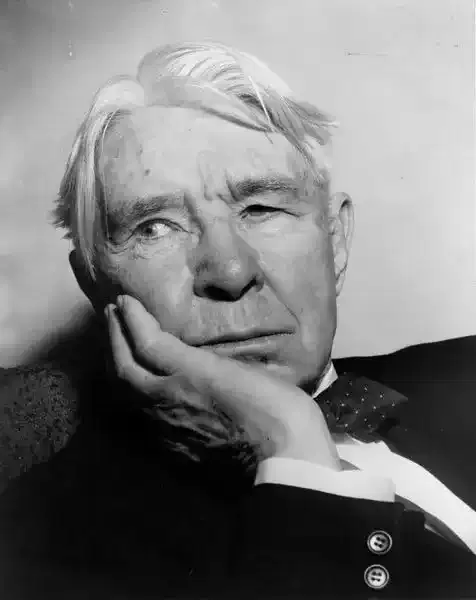
Carl Sandburg
An Electric Sign Goes Dark
Poland, France, Judea ran in her veins,
Singing to Paris for bread, singing to Gotham in a fizz at the pop of a bottle’s cork.
“Won’t you come and play wiz me” she sang … and “I just can’t make my eyes
behave.”
“Higgeldy-Piggeldy,” “Papa’s Wife,” “Follow Me” were plays.
Did she wash her feet in a tub of milk? Was a strand of pearls sneaked from her trunk?
The newspapers asked.
Cigarettes, tulips, pacing horses, took her name.
Twenty years old … thirty … forty …
Forty-five and the doctors fathom nothing, the doctors quarrel, the doctors use silver
tubes feeding twenty-four quarts of blood into the veins, the respects of a prize-fighter,
a cab driver.
And a little mouth moans: It is easy to die when they are dying so many grand deaths
in France.
A voice, a shape, gone.
A baby bundle from Warsaw … legs, torso, head … on a hotel bed at The Savoy.
The white chiselings of flesh that flung themselves in somersaults, straddles, for
packed houses:
A memory, a stage and footlights out, an electric sign on Broadway dark.
She belonged to somebody, nobody.
No one man owned her, no ten nor a thousand.
She belonged to many thousand men, lovers of the white chiseling of arms and
shoulders, the ivory of a laugh, the bells of song.
Railroad brakemen taking trains across Nebraska prairies, lumbermen jaunting in pine
and tamarack of the Northwest, stock ranchers in the middle west, mayors of southern
cities
Say to their pals and wives now: I see by the papers Anna Held is dead.
Read more →
367

Henry Wadsworth Longfellow
The Two Rivers
Slowly the hour-hand of the clock moves round;
So slowly that no human eye hath power
To see it move! Slowly in shine or shower
The painted ship above it, homeward bound,
Sails, but seems motionless, as if aground;
Yet both arrive at last; and in his tower
The slumberous watchman wakes and strikes the hour,
A mellow, measured, melancholy sound.
Midnight! the outpost of advancing day!
The frontier town and citadel of night!
The watershed of Time, from which the streams
Of Yesterday and To-morrow take their way,
One to the land of promise and of light,
One to the land of darkness and of dreams!
II.
O River of Yesterday, with current swift
Through chasms descending, and soon lost to sight,
I do not care to follow in their flight
The faded leaves, that on thy bosom drift!
O River of To-morrow, I uplift
Mine eyes, and thee I follow, as the night
Wanes into morning, and the dawning light
Broadens, and all the shadows fade and shift!
I follow, follow, where thy waters run
Through unfrequented, unfamiliar fields,
Fragrant with flowers and musical with song;
Still follow, follow; sure to meet the sun,
And confident, that what the future yields
Will be the right, unless myself be wrong.
III.
Yet not in vain, O River of Yesterday,
Through chasms of darkness to the deep descending,
I heard thee sobbing in the rain, and blending
Thy voice with other voices far away.
I called to thee, and yet thou wouldst not stay,
But turbulent, and with thyself contending,
And torrent-like thy force on pebbles spending,
Thou wouldst not listen to a poet's lay.
Thoughts, like a loud and sudden rush of wings,
Regrets and recollections of things past,
With hints and prophecies of things to be,
And inspirations, which, could they be things,
And stay with us, and we could hold them fast,
Were our good angels,--these I owe to thee.
IV.
And thou, O River of To-morrow, flowing
Between thy narrow adamantine walls,
But beautiful, and white with waterfalls,
And wreaths of mist, like hands the pathway showing;
I hear the trumpets of the morning blowing,
I hear thy mighty voice, that calls and calls,
And see, as Ossian saw in Morven's halls,
Mysterious phantoms, coming, beckoning, going!
It is the mystery of the unknown
That fascinates us; we are children still,
Wayward and wistful; with one hand we cling
To the familiar things we call our own,
And with the other, resolute of will,
Grope in the dark for what the day will bring.
Read more →
366

Emily Dickinson
You constituted Time
You constituted Time-
I deemed Eternity
A Revelation of Yourself'
Twas therefore Deity
The Absolute-removed
The Relative away-
That I unto Himself adjust
My slow idolatry-
Read more →
367
Henry Wadsworth Longfellow
Allah. (From The German Of Mahlmann)
Allah gives light in darkness,
Allah gives rest in pain,
Cheeks that are white with weeping
Allah paints red again.
The flowers and the blossoms wither,
Years vanish with flying fleet;
But my heart will live on forever,
That here in sadness beat.
Gladly to Allah's dwelling
Yonder would I take flight;
There will the darkness vanish,
There will my eyes have sight.
Read more →
366
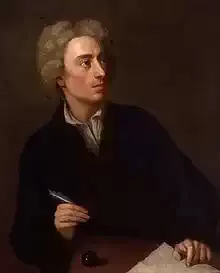
Alexander Pope
Prayer of St. Francis Xavier
Thou art my God, sole object of my love;
Not for the hope of endless joys above;
Nor for the fear of endless pains below,
Which they who love thee not must undergo.
For me, and such as me, thou deign'st to bear
An ignominious cross, the nails, the spear:
A thorny crown transpierc'd thy sacred brow,
While bloody sweats from ev'ry member flow.
For me in tortures thou resignd'st thy breath,
Embrac'd me on the cross, and sav'd me by thy death.
And can these sufferings fail my heart to move?
What but thyself can now deserve my love?
Such as then was, and is, thy love to me,
Such is, and shall be still, my love to thee -
To thee, Redeemer! mercy's sacred spring!
My God, my Father, Maker, and my King!
Read more →
366

William Shakespeare
Sonnet 150: O, from what power hast thou this powerful might
O, from what power hast thou this powerful might
With insufficiency my heart to sway?
To make me give the lie to my true sight,
And swear that brightness doth not grace the day?
Whence hast thou this becoming of things ill,
That in the very refuse of thy deeds
There is such strength and warrantize of skill
That, in my mind, thy worst all best exceeds?
Who taught thee how to make me love thee more
The more I hear and see just cause of hate?
O, though I love what others do abhor,
With others thou shouldst not abhor my state:
If thy unworthiness raised love in me,
More worthy I to be beloved of thee.
Read more →
369

William Butler Yeats
He Thinks Of Those Who Have Spoken Evil Of His Beloved
HALF close your eyelids, loosen your hair,
And dream about the great and their pride;
They have spoken against you everywhere,
But weigh this song with the great and their pride;
I made it out of a mouthful of air,
Their children's children shall say they have lied.
Read more →
367

Henry Lawson
Past Carin'
Now up and down the siding brown
The great black crows are flyin',
And down below the spur, I know,
Another `milker's' dyin';
The crops have withered from the ground,
The tank's clay bed is glarin',
But from my heart no tear nor sound,
For I have gone past carin' -Past
worryin' or carin',
Past feelin' aught or carin';
But from my heart no tear nor sound,
For I have gone past carin'.
Through Death and Trouble, turn about,
Through hopeless desolation,
Through flood and fever, fire and drought,
And slavery and starvation;
Through childbirth, sickness, hurt, and blight,
And nervousness an' scarin',
Through bein' left alone at night,
I've got to be past carin'.
Past botherin' or carin',
Past feelin' and past carin';
Through city cheats and neighbours' spite,
I've come to be past carin'.
Our first child took, in days like these,
A cruel week in dyin',
All day upon her father's knees,
Or on my poor breast lyin';
The tears we shed -- the prayers we said
Were awful, wild -- despairin'!
I've pulled three through, and buried two
Since then -- and I'm past carin'.
I've grown to be past carin',
Past worryin' and wearin';
I've pulled three through and buried two
Since then, and I'm past carin'.
'Twas ten years first, then came the worst,
All for a dusty clearin',
I thought, I thought my heart would burst
When first my man went shearin';
He's drovin' in the great North-west,
I don't know how he's farin';
For I, the one that loved him best,
Have grown to be past carin'.
I've grown to be past carin'
Past lookin' for or carin';
The girl that waited long ago,
Has lived to be past carin'.
My eyes are dry, I cannot cry,
I've got no heart for breakin',
But where it was in days gone by,
A dull and empty achin'.
My last boy ran away from me,
I know my temper's wearin',
But now I only wish to be
Beyond all signs of carin'.
Past wearyin' or carin',
Past feelin' and despairin';
And now I only wish to be
Beyond all signs of carin'.
Read more →
367
Emily Dickinson
He put the Belt around my life
He put the Belt around my life
I heard the Buckle snap-
And turned away, imperial,
My Lifetime folding up-
Deliberate, as a Duke would do
A Kingdom's Title Deed-
Henceforth, a Dedicated sort-
A Member of the Cloud.
Yet not too far to come at call-
And do the little Toils
That make the Circuit of the Rest-
And deal occasional smiles
To lives that stoop to notice mine-
And kindly ask it in-
Whose invitation, know you not
For Whom I must decline?
Read more →
366

Robert Browning
Summum Bonum
All the breath and the bloom of the year in the bag of one bee:
All the wonder and wealth of the mine in the heart of one gem:
In the core of one pearl all the shade and the shine of the sea:
Breath and bloom, shade and shine, wonder, wealth, and--how far above them--
Truth, that's brighter than gem,
Trust, that's purer than pearl,--
Brightest truth, purest trust in the universe--all were for me
In the kiss of one girl
Read more →
367
Henry Wadsworth Longfellow
By The Fireside : Resignation
There is no flock, however watched and tended,
But one dead lamb is there!
There is no fireside, howsoe'er defended,
But has one vacant chair!
The air is full of farewells to the dying,
And mournings for the dead;
The heart of Rachel, for her children crying,
Will not be comforted!
Let us be patient! These severe afflictions
Not from the ground arise,
But oftentimes celestial benedictions
Assume this dark disguise.
We see but dimly through the mists and vapors;
Amid these earthly damps
What seem to us but sad, funereal tapers
May be heaven's distant lamps.
There is no Death! What seems so is transition;
This life of mortal breath
Is but a suburb of the life elysian,
Whose portal we call Death.
She is not dead,--the child of our affection,--
But gone unto that school
Where she no longer needs our poor protection,
And Christ himself doth rule.
In that great cloister's stillness and seclusion,
By guardian angels led,
Safe from temptation, safe from sin's pollution,
She lives, whom we call dead.
Day after day we think what she is doing
In those bright realms of air;
Year after year, her tender steps pursuing,
Behold her grown more fair.
Thus do we walk with her, and keep unbroken
The bond which nature gives,
Thinking that our remembrance, though unspoken,
May reach her where she lives.
Not as a child shall we again behold her;
For when with raptures wild
In our embraces we again enfold her,
She will not be a child;
But a fair maiden, in her Father's mansion,
Clothed with celestial grace;
And beautiful with all the soul's expansion
Shall we behold her face.
And though at times impetuous with emotion
And anguish long suppressed,
The swelling heart heaves moaning like the ocean,
That cannot be at rest,--
We will be patient, and assuage the feeling
We may not wholly stay;
By silence sanctifying, not concealing,
The grief that must have way.
Read more →
368
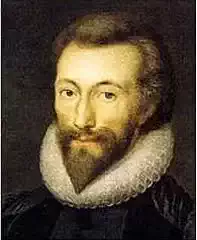
John Donne
Valediction to his Book
I'LL tell thee now (dear love) what thou shalt do
To anger destiny, as she doth us ;
How I shall stay, though she eloign me thus,
And how posterity shall know it too ;
How thine may out-endure
Sibyl's glory, and obscure
Her who from Pindar could allure,
And her, through whose help Lucan is not lame,
And her, whose book (they say) Homer did find, and name.
Study our manuscripts, those myriads
Of letters, which have past 'twixt thee and me ;
Thence write our annals, and in them will be
To all whom love's subliming fire invades,
Rule and example found ;
There the faith of any ground
No schismatic will dare to wound,
That sees, how Love this grace to us affords,
To make, to keep, to use, to be these his records.
This book, as long-lived as the elements,
Or as the world's form, this all-gravèd tome
In cypher writ, or new made idiom ;
We for Love's clergy only are instruments ;
When this book is made thus,
Should again the ravenous
Vandals and Goths invade us,
Learning were safe ; in this our universe,
Schools might learn sciences, spheres music, angels verse.
Here Love's divines—since all divinity
Is love or wonder—may find all they seek,
Whether abstract spiritual love they like,
Their souls exhaled with what they do not see ;
Or, loth so to amuse
Faith's infirmity, they choose
Something which they may see and use ;
For, though mind be the heaven, where love doth sit,
Beauty a convenient type may be to figure it.
Here more than in their books may lawyers find,
Both by what titles mistresses are ours,
And how prerogative these states devours,
Transferr'd from Love himself, to womankind ;
Who, though from heart and eyes,
They exact great subsidies,
Forsake him who on them relies ;
And for the cause, honour, or conscience give ;
Chimeras vain as they or their prerogative.
Here statesmen—or of them, they which can read—
May of their occupation find the grounds ;
Love, and their art, alike it deadly wounds,
If to consider what 'tis, one proceed.
In both they do excel
Who the present govern well,
Whose weakness none doth, or dares tell ;
In this thy book, such will there something see,
As in the Bible some can find out alchemy.
Thus vent thy thoughts ; abroad I'll study thee,
As he removes far off, that great heights takes ;
How great love is, presence best trial makes,
But absence tries how long this love will be ;
To take a latitude
Sun, or stars, are fitliest view'd
At their brightest, but to conclude
Of longitudes, what other way have we,
But to mark when and where the dark eclipses be?
Read more →
364
Henry Wadsworth Longfellow
The Hanging Of The Crane
The lights are out, and gone are all the guests
That thronging came with merriment and jests
To celebrate the Hanging of the Crane
In the new house,--into the night are gone;
But still the fire upon the hearth burns on,
And I alone remain.
O fortunate, O happy day,
When a new household finds its place
Among the myriad homes of earth,
Like a new star just sprung to birth,
And rolled on its harmonious way
Into the boundless realms of space!
So said the guests in speech and song,
As in the chimney, burning bright,
We hung the iron crane to-night,
And merry was the feast and long.
II.
And now I sit and muse on what may be,
And in my vision see, or seem to see,
Through floating vapors interfused with light,
Shapes indeterminate, that gleam and fade,
As shadows passing into deeper shade
Sink and elude the sight.
For two alone, there in the hall,
As spread the table round and small;
Upon the polished silver shine
The evening lamps, but, more divine,
The light of love shines over all;
Of love, that says not mine and thine,
But ours, for ours is thine and mine.
They want no guests, to come between
Their tender glances like a screen,
And tell them tales of land and sea,
And whatsoever may betide
The great, forgotten world outside;
They want no guests; they needs must be
Each other's own best company.
III.
The picture fades; as at a village fair
A showman's views, dissolving into air,
Again appear transfigured on the screen,
So in my fancy this; and now once more,
In part transfigured, through the open door
Appears the selfsame scene.
Seated, I see the two again,
But not alone; they entertain
A little angel unaware,
With face as round as is the moon;
A royal guest with flaxen hair,
Who, throned upon his lofty chair,
Drums on the table with his spoon,
Then drops it careless on the floor,
To grasp at things unseen before.
Are these celestial manners? these
The ways that win, the arts that please?
Ah yes; consider well the guest,
And whatsoe'er he does seems best;
He ruleth by the right divine
Of helplessness, so lately born
In purple chambers of the morn,
As sovereign over thee and thine.
He speaketh not; and yet there lies
A conversation in his eyes;
The golden silence of the Greek,
The gravest wisdom of the wise,
Not spoken in language, but in looks
More legible than printed books,
As if he could but would not speak.
And now, O monarch absolute,
Thy power is put to proof; for, lo!
Resistless, fathomless, and slow,
The nurse comes rustling like the sea,
And pushes back thy chair and thee,
And so good night to King Canute.
IV.
As one who walking in a forest sees
A lovely landscape through the parted frees,
Then sees it not, for boughs that intervene
Or as we see the moon sometimes revealed
Through drifting clouds, and then again concealed,
So I behold the scene.
There are two guests at table now;
The king, deposed and older grown,
No longer occupies the throne,--
The crown is on his sister's brow;
A Princess from the Fairy Isles,
The very pattern girl of girls.
All covered and embowered in curls,
Rose-tinted from the Isle of Flowers,
And sailing with soft, silken sails
From far-off Dreamland into ours.
Above their bowls with rims of blue
Four azure eyes of deeper hue
Are looking, dreamy with delight;
Limpid as planets that emerge
Above the ocean's rounded verge,
Soft-shining through the summer night.
Steadfast they gaze, yet nothing see
Beyond the horizon of their bowls;
Nor care they for the world that rolls
With all its freight of troubled souls
Into the days that are to be.
V.
Again the tossing boughs shut out the scene,
Again the drifting vapors intervene,
And the moon's pallid disk is hidden quite;
And now I see the table wider grown,
As round a pebble into water thrown
Dilates a ring of light.
I see the table wider grown,
I see it garlanded with guests,
As if fair Ariadne's Crown
Out of the sky had fallen down;
Maidens within whose tender breasts
A thousand restless hopes and fears,
Forth reaching to the coming years,
Flutter awhile, then quiet lie
Like timid birds that fain would fly,
But do not dare to leave their nests;--
And youths, who in their strength elate
Challenge the van and front of fate,
Eager as champions to be
In the divine knight-errantry
Of youth, that travels sea and land
Seeking adventures, or pursues,
Through cities, and through solitudes
Frequented by the lyric Muse,
The phantom with the beckoning hand,
That still allures and still eludes.
O sweet illusions of the brain!
O sudden thrills of fire and frost!
The world is bright while ye remain,
And dark and dead when ye are lost!
VI.
The meadow-brook, that seemeth to stand still,
Quickens its current as it nears the mill;
And so the stream of Time that lingereth
In level places, and so dull appears,
Runs with a swifter current as it nears
The gloomy mills of Death.
And now, like the magician's scroll,
That in the owner's keeping shrinks
With every wish he speaks or thinks,
Till the last wish consumes the whole,
The table dwindles, and again
I see the two alone remain.
The crown of stars is broken in parts;
Its jewels, brighter than the day,
Have one by one been stolen away
To shine in other homes and hearts.
One is a wanderer now afar
In Ceylon or in Zanzibar,
Or sunny regions of Cathay;
And one is in the boisterous camp
Mid clink of arms and horses' tramp,
And battle's terrible array.
I see the patient mother read,
With aching heart, of wrecks that float
Disabled on those seas remote,
Or of some great heroic deed
On battle-fie1ds where thousands bleed
To lift one hero into fame.
Anxious she bends her graceful head
Above these chronicles of pain,
And trembles with a secret dread
Lest there among the drowned or slain
She find the one beloved name.
VII.
After a day of cloud and wind and rain
Sometimes the setting sun breaks out again,
And touching all the darksome woods with light,
Smiles on the fields, until they laugh and sing,
Then like a ruby from the horizon's ring
Drops down into the night.
What see I now? The night is fair,
The storm of grief, the clouds of care,
The wind, the rain, have passed away;
The lamps are lit, the fires burn bright,
The house is full of life and light:
It is the Golden Wedding day.
The guests come thronging in once more,
Quick footsteps sound along the floor,
The trooping children crowd the stair,
And in and out and everywhere
Flashes along the corridor
The sunshine of their golden hair.
On the round table in the hall
Another Ariadne's Crown
Out of the sky hath fallen down;
More than one Monarch of the Moon
Is drumming with his silver spoon;
The light of love shines over all.
O fortunate, O happy day!
The people sing, the people say.
The ancient bridegroom and the bride,
Smiling contented and serene
Upon the blithe, bewildering scene,
Behold, well pleased, on every side
Their forms and features multiplied,
As the reflection of a light
Between two burnished mirrors gleams,
Or lamps upon a bridge at night
Stretch on and on before the sight,
Till the long vista endless seems.
Read more →
364

Kabir
To what shore would you cross
To what shore would you cross,
O my heart?
there is no traveller before you,
there is no road:
Where is the movement,
where is the rest,
on that shore?
There is no water; no boat, no boatman, is there;
There is not so much as a rope to tow the boat, nor a man to draw it.
No earth, no sky, no time, no thing, is there: no shore, no ford!
There, there is neither body nor mind:
and where is the place that shall still the thirst of the soul?
You shall find naught in that emptiness.
Be strong, and enter into your own body:
for there your foothold is firm.
Consider it well,
O my heart!
go not elsewhere,
Kabîr says: 'Put all imaginations away,
and stand fast in that which you are.'
Read more →
366

Ella Wheeler Wilcox
Widows
The world was widowed by the death of Christ:
Vainly its suffering soul for peace has sought
And found it not.
For nothing, nothing, nothing has sufficed
To bring back comfort to the stricken house
From whence has gone the Master and the Spouse.
In its long widowhood the world has striven
To find diversion. It has turned away
From the vast awefull silences of Heaven
(Which answer but with silence when we pray)
And sought for something to assuage its grief.
Some surcease and relief
From sorrow, in pursuit of mortal joys.
It drowned God's stillness in a sea of noise;
It lost God's presence in a blur of forms;
Till, bruised and bleeding with life's brutal storms,
Unto immutable and speechless space
The World lifts up its face,
Its haggard, tear-drenched face,
And cries aloud for faith's supreme reward,
The promised Second Coming of its Lord.
So many widows, widows everywhere,
The whole earth teems with widows.
Guns that blare-
Winged monsters of the air-
And deep-sea monsters leaping through the water,
Hell bent on slaughter,
All these plough paths for widows. Maids at dawn,
And brides at noon, ere eventide pass on
Into the ranks of widows: but to weep
Just for a little space; then will grief sleep
In their young bosoms, where sweet hope belongs,
New love will sing once more its age-old songs,
And life bloom as a rose-tree blooms again
After a night of rain.
There are complacent widows clothed in crêpe
Who simulate a grief that is not real.
Through paths of seeming sorrow they escape
From disappointed hopes to some ideal,
Or, from the penury of unloved wives
Walk forth to opulent lives.
And there are widows who shed all their tears
Just at the first
In one wild burst,
And then go lilting lightly down the years:
Black butterflies, they flit from flower to flower
And live in the thin pleasures of the hour;
Merging their tender memories of the dead
In tenderer dreams of being once more wed.
But there are others: women who have proved
That loving greatly means so being loved.
Women who through full beauteous years have grown
Into the very body, souls, and heart
Of their dear comrades. When death tears apart
Such close-knit bonds as these, and one alone
Out to the larger freer life is called,
And one is left-
Then God in heaven must sometimes be appalled
At the wild anguish of the soul bereft,
And unto His Son must say, 'I did not know
Mortals could suffer so.'
But Christ, remembering Gethsemane,
Will answer softly, 'It was known to Me.'
God's alchemist, old Time, will merge to calm
That bitter anguish; but there is no balm
Save the sweet certitude that each long day
Is one step in a stair
That circles up to where freed spirits stay.
Widows, so many widows everywhere.
The world was widowed by the death of Christ,
And nothing, nothing, nothing has sufficed
To bring back comfort to the stricken house
From whence has gone the Master and the Spouse.
Hasten, dear Lord, with Thy Millennium,
Hasten and come.
Read more →
365
Henry Wadsworth Longfellow
By The Fireside : Tegner's Death (Tegner's Drapa)
I heard a voice, that cried,
'Balder the Beautiful
Is dead, is dead!'
And through the misty air
Passed like the mournful cry
Of sunward sailing cranes.
I saw the pallid corpse
Of the dead sun
Borne through the Northern sky.
Blasts from Niffelheim
Lifted the sheeted mists
Around him as he passed.
And the voice forever cried,
'Balder the Beautiful
Is dead, is dead!'
And died away
Through the dreary night,
In accents of despair.
Balder the Beautiful,
God of the summer sun,
Fairest of all the Gods!
Light from his forehead beamed,
Runes were upon his tongue,
As on the warrior's sword.
All things in earth and air
Bound were by magic spell
Never to do him harm;
Even the plants and stones;
All save the mistletoe,
The sacred mistletoe!
Hoeder, the blind old God,
Whose feet are shod with silence,
Pierced through that gentle breast
With his sharp spear, by fraud
Made of the mistletoe,
The accursed mistletoe!
They laid him in his ship,
With horse and harness,
As on a funeral pyre.
Odin placed
A ring upon his finger,
And whispered in his ear.
They launched the burning ship!
It floated far away
Over the misty sea,
Till like the sun it seemed,
Sinking beneath the waves.
Balder returned no more!
So perish the old Gods!
But out of the sea of Time
Rises a new land of song,
Fairer than the old.
Over its meadows green
Walk the young bards and sing.
Build it again,
O ye bards,
Fairer than before!
Ye fathers of the new race,
Feed upon morning dew,
Sing the new Song of Love!
The law of force is dead!
The law of love prevails!
Thor, the thunderer,
Shall rule the earth no more,
No more, with threats,
Challenge the meek Christ.
Sing no more,
O ye bards of the North,
Of Vikings and of Jarls!
Of the days of Eld
Preserve the freedom only,
Not the deeds of blood!
Read more →
365
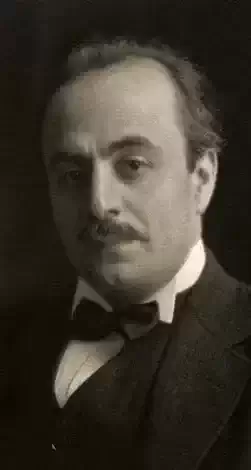
Khalil Gibran
Vision X
There in the middle of the field, by the side of a crystalline stream, I saw a bird-cage
whose rods and hinges were fashioned by an expert's hands. In one corner lay a dead
bird, and in another were two basins -- one empty of water and the other of seeds. I
stood there reverently, as if the lifeless bird and the murmur of the water were worthy
of deep silence and respect -- something worth of examination and meditation by the
heard and conscience.
As I engrossed myself in view and thought, I found that the poor creature had died of
thirst beside a stream of water, and of hunger in the midst of a rich field, cradle of life;
like a rich man locked inside his iron safe, perishing from hunger amid heaps of gold.
Before my eyes I saw the cage turned suddenly into a human skeleton, and the dead
bird into a man's heart which was bleeding from a deep wound that looked like the lips
of a sorrowing woman. A voice came from that wound saying, "I am the human heart,
prisoner of substance and victim of earthly laws.
"In God's field of Beauty, at the edge of the stream of life, I was imprisoned in the cage
of laws made by man.
"In the center of beautiful Creation I died neglected because I was kept from enjoying
the freedom of God's bounty.
"Everything of beauty that awakens my love and desire is a disgrace, according to
man's conceptions; everything of goodness that I crave is but naught, according to his
judgment.
"I am the lost human heart, imprisoned in the foul dungeon of man's dictates, tied with
chains of earthly authority, dead and forgotten by laughing humanity whose tongue is
tied and whose eyes are empty of visible tears."
All these words I heard, and I saw them emerging with a stream of ever thinning blood
from that wounded heart.
More was said, but my misted eyes and crying should prevented further sight or
hearing.
Read more →
366
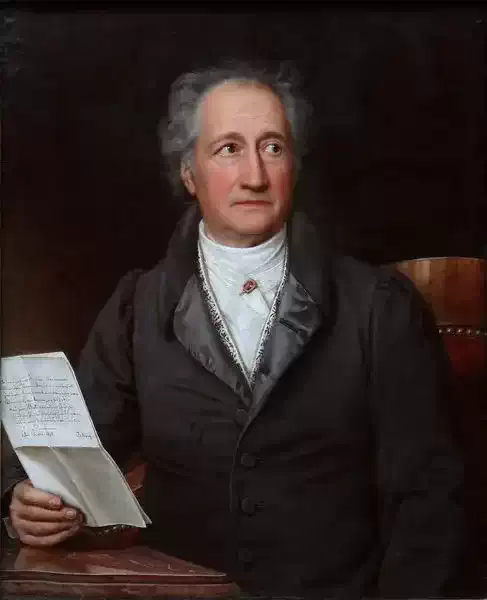
Johann Wolfgang von Goethe
The Traveller And The Farm-Maiden
HE.
CANST thou give, oh fair and matchless maiden,
'Neath the shadow of the lindens yonder,--
Where I'd fain one moment cease to wander,--
Food and drink to one so heavy laden?
SHE.
Wouldst thou find refreshment, traveller weary,
Bread, ripe fruit and cream to meet thy wishes,--
None but Nature's plain and homely dishes,--
Near the spring may soothe thy wanderings dreary.
HE.
Dreams of old acquaintance now pass through me,
Ne'er-forgotten queen of hours of blisses.
Likenesses I've often found, but this is
One that quite a marvel seemeth to me!
SHE.
Travellers often wonder beyond measure,
But their wonder soon see cause to smother;
Fair and dark are often like each other,
Both inspire the mind with equal pleasure.
HE.
Not now for the first time I surrender
To this form, in humble adoration;
It was brightest midst the constellation
In the hail adorn'd with festal splendour.
SHE.
Be thou joyful that 'tis in my power
To complete thy strange and merry story!
Silks behind her, full of purple glory,
Floated, when thou saw'st her in that hour.
HE.
No, in truth, thou hast not sung it rightly!
Spirits may have told thee all about it;
Pearls and gems they spoke of, do not doubt it,--
By her gaze eclipsed,--it gleam'd so brightly!
SHE.
This one thing I certainly collected:
That the fair one--(say nought, I entreat thee!)
Fondly hoping once again to meet thee,
Many a castle in the air erected.
HE.
By each wind I ceaselessly was driven,
Seeking gold and honour, too, to capture!
When my wand'rings end, then oh, what rapture,
If to find that form again 'tis given!
SHE.
'Tis the daughter of the race now banish'd
That thou seest, not her likeness only;
Helen and her brother, glad though lonely,
Till this farm of their estate now vanish'd.
HE.
But the owner surely is not wanting
Of these plains, with ev'ry beauty teeming?
Verdant fields, broad meads, and pastures gleaming,
Gushing springs, all heav'nly and enchanting.
SHE.
Thou must hunt the world through, wouldst thou find him!--
We have wealth enough in our possession,
And intend to purchase the succession,
When the good man leaves the world behind him.
HE.
I have learnt the owner's own condition,
And, fair maiden, thou indeed canst buy it;
But the cost is great, I won't deny it,--
Helen is the price,--with thy permission!
SHE.
Did then fate and rank keep us asunder,
And must Love take this road, and no other?
Yonder comes my dear and trusty brother;
What will he say to it all, I wonder?
Read more →
365
John Donne
Self-Love
He that cannot choose but love,
And strives against it still,
Never shall my fancy move,
For he loves 'gainst his will;
Nor he which is all his own,
And can at pleasure choose,
When I am caught he can be gone,
And when he list refuse.
Nor he that loves none but fair,
For such by all are sought;
Nor he that can for foul ones care,
For his judgement then is nought;
Nor he that hath wit, for he
Will make me his jest or slave;
Nor a fool, for when others...,
He can neither....;
Nor he that still his Mistress pays,
For she is thralled therefore;
Nor he that pays not, for he says
Within She's worth no more.
Is there then no kind of men
Whom I may freely prove?
I will vent that humour then
In mine own self-love.
Read more →
365
Henry Van Dyke
Dulcis Memoria
Long, long ago I heard a little song,
(Ah, was it long ago, or yesterday?)
So lowly, slowly wound the tune along,
That far into my heart it found the way:
A melody consoling and endearing;
And still, in silent hours, I'm often hearing
The small, sweet song that does not die away.
Long, long ago I saw a little flower,-(
Ah, was it long ago, or yesterday?)
So fair of face and fragrant for an hour,
That something dear to me it seemed to say:
A thought of joy that blossomed into being
Without a word; and now I'm often seeing
The friendly flower that does not fade away.
Long, long ago we had a little child,-(
Ah, was it long ago, or yesterday?)
Into his mother's eyes and mine he smiled
Unconscious love; warm in our arms he lay.
An angel called! Dear heart, we could not hold him;
Yet secretly your arms and mine infold him--
Our little child who does not go away.
Long, long ago? Ah, memory, make it clear-(
It was not long ago, but yesterday,)
So little and so helpless and so dear
Let not the song be lost, the flower decay!
His voice, his waking eyes, his gentle sleeping:
The smallest things are safest in thy keeping.
Sweet memory, keep our child with us always.
Read more →
365
John Donne
Resurrection, imperfect
Sleep sleep old Sun, thou canst not have repast
As yet, the wound thou took’st on friday last;
Sleep then, and rest; The world may bearer thy stay,
A better Sun rose before thee to day,
Who, not content to’englighten all that dwell
On the earths face, as thou, enlightned hell,
And made the darker fires languish in that vale,
As, at thy presence here, our fires grow pale.
Whose body having walk’d on earth, and now
Hasting to Heaven, would, that he might allow
Himself unto all stations, and fill all,
For these three days become a mineral;
He was all gold when he lay down, but rose
All tincture, and doth not alone dispose
Leaden and iron wills to good, but is
Of power to make even sinful flesh like his.
Had one of those, whose credulous piety
Thought, that a Soul one might discern and see
Go from a body,’at this sepulcher been,
And, issuing from the sheet, this body seen,
He would have justly thought this body a soul,
If not of any man, yet of the whole.
Desunt cætera
Read more →
364
Emily Dickinson
The first Day's Night had come
The first Day's Night had come-
And grateful that a thing
So terrible-had been endured-
I told my Soul to sing-
She said her Strings were snapt-
Her Bow-to Atoms blown-
And so to mend her-gave me work
Until another Morn-
And then-a Day as huge
As Yesterdays in pairs,
Unrolled its horror in my face-
Until it blocked my eyes-
My Brain-begun to laugh-
I mumbled-like a fool-
And tho' 'tis Years ago-that Day-
My Brain keeps giggling-still.
And Something's odd-within-
That person that I was-
And this One-do not feel the same-
Could it be Madness-this?
Read more →
364
Ella Wheeler Wilcox
In The Cup
There is grief in the cup!
I saw a proud mother set wine on the board;
The eyes of her son sparkled bright as she poured
The ruddy stream into the glass in his hand.
The cup was of silver; the lady was grand
In her satins and laces; her proud heart was glad
In the love of her fair, noble son; but, oh! sad,
Oh! so sad ere a year had passed by,
And the soft light had gone from her beautiful eye.
For the boy that she loved, with a love strong as death,
In the chill hours of morn with a drunkard's foul breath
And a drunkard's fierce oath, reeled and staggered his way
To his home, a dark blot on the face of the day.
There is shame in the cup!
The tempter said, 'Drink,' and a fair maiden quaffed
Till her cheeks glowed the hue of the dangerous draught.
The voice of the tempter spoke low in her ear
Words that once would have started the quick, angry tear,
But wine blunts the conscience, and wine dulls the brain,
She listened and smiled, and he whispered again.
He lifted the goblet: 'Once more,' he said, 'drink,'
And the soul of the maiden was lost in the brink.
There is death in the cup!
A man in God's image, strong, noble, and grand,
With talents that crowned him a prince of the land,
Sipped the ruddy red wine!-sipped it lightly at first,
Until from its chains broke the demon of thirst.
And thirst became master, and man became slave,
And he ended his life in the drunkard's poor grave.
Wealth, fame, talents, beauty, and life swallowed up,
Grief, shame, death, destruction, are all in the cup.
Read more →
365