
Soul

Emily Dickinson
Doubt Me! My Dim Companion!
Doubt Me! My Dim Companion!
Why, God, would be content
With but a fraction of the Life-
Poured thee, without a stint-
The whole of me-forever-
What more the Woman can,
Say quick, that I may dower thee
With last Delight I own!
It cannot be my Spirit-
For that was thine, before-
I ceded all of Dust I knew-
What Opulence the more
Had I-a freckled Maiden,
Whose farthest of Degree,
Was-that she might-
Some distant Heaven,
Dwell timidly, with thee!
Sift her, from Brow to Barefoot!
Strain till your last Surmise-
Drop, like a Tapestry, away,
Before the Fire's Eyes-
Winnow her finest fondness-
But hallow just the snow
Intact, in Everlasting flake-
Oh, Caviler, for you!
Read more →
364

John Donne
Holy Sonnet V: I Am a Little World
I am a little world made cunningly
Of Elements, and an Angelike spright,
But black sinne hath betraid to endlesse night
My worlds both parts, and (oh) both parts must die.
You which beyond that heaven which was most high
Have found new sphears, and of new lands can write,
Powre new seas in mine eyes, that so I might
Drowne my world with my weeping earnestly,
Or wash it if it must be drown'd no more;
But oh it must be burnt! alas the fire
Of lust and envie have burnt it heretofore,
And made it fouler; Let their flames retire,
And burne me o Lord, with a fiery zeale
Of thee and thy house, which doth in eating heale.
Read more →
365
John Donne
The Triple Fool
I am two fools, I know-
For loving, and for saying so
In whining poetry;
But where's that wiseman that would not be I,
If she would not deny?
Then, as th' earths inward narrow crooked lanes
Do purge sea waters fretful salt away,
I thought, if I could draw my pains
Through rhymes vexation, I should them allay.
Grief brought to numbers cannot be so fierce,
For he tames it that fetters it in verse.
But when I have done so,
Some man, his art and voice to show,
Doth set and sing my pain,
And, by delighting many, frees again
Grief, which verse did restrain.
To Love and Grief tribute of verse belongs,
But not of such as pleases when 'tis read;
Both are increased by such songs,
For both their triumphs so are published;
And I, which was two fooles, do so grow three;
Who are a little wise, the best fools be.
Read more →
365

Johann Wolfgang von Goethe
The Brethren
SLUMBER and Sleep, two brethren ordain'd by the gods to their service,
Were by Prometheus implored, comfort to give to his race;
But though so light to the gods, too heavy for man was their burden,
We in their slumber find sleep, we in their sleep meet with death.
Read more →
365
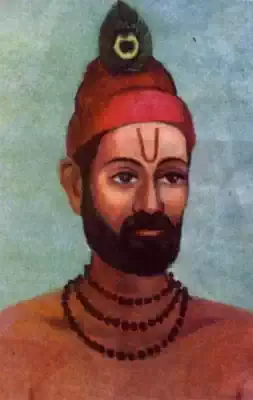
Kabir
The Bride-Soul
When will that day dawn, Mother;
When the One I took birth for
Holds me to His heart with deathless love?
I long for the bliss of divine union.
I long to lose my body, mind, and soul
And become one with my husband.
When will that day dawn, Mother?
Husband, fulfil now the longing I have had
Since before the universe was made.
Enter me completely and release me.
In terrible lonely years without You
I yearn and yearn for You.
I spend sleepless nights hunting for You,
Gazing into darkness after You,
With unblinking hopeless eyes.
When will that day dawn, Mother?
When will my Lord hold me to His heart?
My empty bed, like a hungry tigress,
Devours me whenever I try to sleep.
Listen to your slave's prayer -
Come and put out this blaze of agony
That consumes my soul and body.
When will He hold me to His heart?
When will that day dawn, Mother?
Kabir sings, "If I ever meet You, my Beloved,
I'll cling to you so fiercely You melt into me;
I'll sing from inside You songs of union,
World-dissolving songs of Eternal Bliss."
Read more →
365
Emily Dickinson
Exultation is the going
Exultation is the going
Of an inland soul to sea,
Past the houses-past the headlands-
Into deep Eternity-
Bred as we, among the mountains,
Can the sailor understand
The divine intoxication
Of the first league out from land?
Read more →
365
Johann Wolfgang von Goethe
The Best
WHEN head and heart are busy, say,
What better can be found?
Who neither loves nor goes astray,
Were better under ground.
Read more →
365
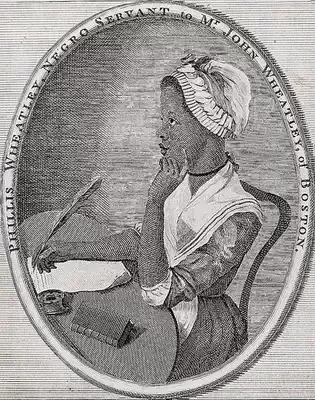
Phillis Wheatley
An Hymn To The Evening
SOON as the sun forsook the eastern main
The pealing thunder shook the heav'nly plain;
Majestic grandeur! From the zephyr's wing,
Exhales the incense of the blooming spring.
Soft purl the streams, the birds renew their notes,
And through the air their mingled music floats.
Through all the heav'ns what beauteous dies are
spread!
But the west glories in the deepest red:
So may our breasts with ev'ry virtue glow,
The living temples of our God below!
Fill'd with the praise of him who gives the light,
And draws the sable curtains of the night,
Let placid slumbers sooth each weary mind,
At morn to wake more heav'nly, more refin'd;
So shall the labours of the day begin
More pure, more guarded from the snares of sin.
Night's leaden sceptre seals my drowsy eyes,
Read more →
366
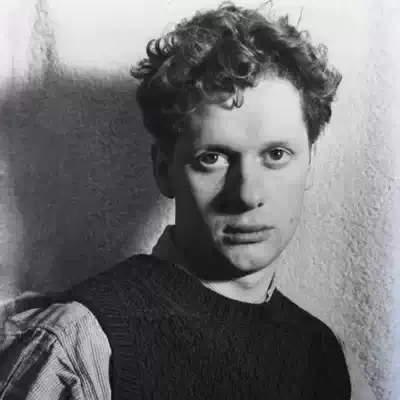
Dylan Thomas
Here In This spring
Here in this spring, stars float along the void;
Here in this ornamental winter
Down pelts the naked weather;
This summer buries a spring bird.
Symbols are selected from the years'
Slow rounding of four seasons' coasts,
In autumn teach three seasons' fires
And four birds' notes.
I should tell summer from the trees, the worms
Tell, if at all, the winter's storms
Or the funeral of the sun;
I should learn spring by the cuckooing,
And the slug should teach me destruction.
A worm tells summer better than the clock,
The slug's a living calendar of days;
What shall it tell me if a timeless insect
Says the world wears away?
Read more →
364
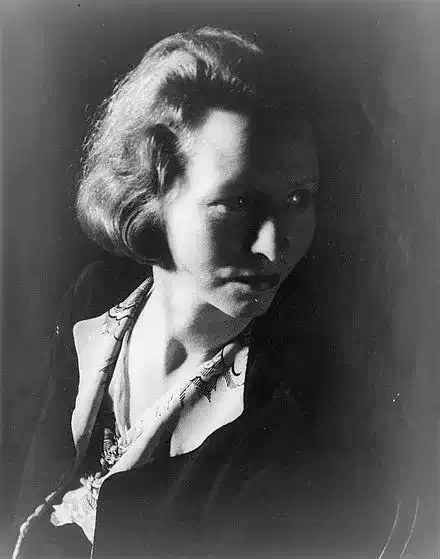
Edna St. Vincent Millay
The Singing-Woman From The Wood's Edge
What should I be but a prophet and a liar,
Whose mother was a leprechaun, whose father was a friar?
Teethed on a crucifix and cradled under water,
What should I be but the fiend's god-daughter?
And who should be my playmates but the adder and the frog,
That was got beneath a furze-bush and born in a bog?
And what should be my singing, that was christened at an altar,
But Aves and Credos and Psalms out of the Psalter?
You will see such webs on the wet grass, maybe,
As a pixie-mother weaves for her baby,
You will find such flame at the wave's weedy ebb
As flashes in the meshes of a mer-mother's web,
But there comes to birth no common spawn
From the love a a priest for a leprechaun,
And you never have seen and you never will see
Such things as the things that swaddled me!
After all's said and after all's done,
What should I be but a harlot and a nun?
In through the bushes, on any foggy day,
My Da would come a-swishing of the drops away,
With a prayer for my death and a groan for my birth,
A-mumbling of his beads for all that he was worth.
And there'd sit my Ma, with her knees beneath her chin,
A-looking in his face and a-drinking of it in,
And a-marking in the moss some funny little saying
That would mean just the opposite of all that he was praying!
He taught me the holy-talk of Vesper and of Matin,
He heard me my Greek and he heard me my Latin,
He blessed me and crossed me to keep my soul from evil,
And we watched him out of sight, and we conjured up the devil!
Oh, the things I haven't seen and the things I haven't known,
What with hedges and ditches till after I was grown,
And yanked both way by my mother and my father,
With a "Which would you better?" and a " Which would you
rather?"
With him for a sire and her for a dam,
What should I be but just what I am?
Read more →
364
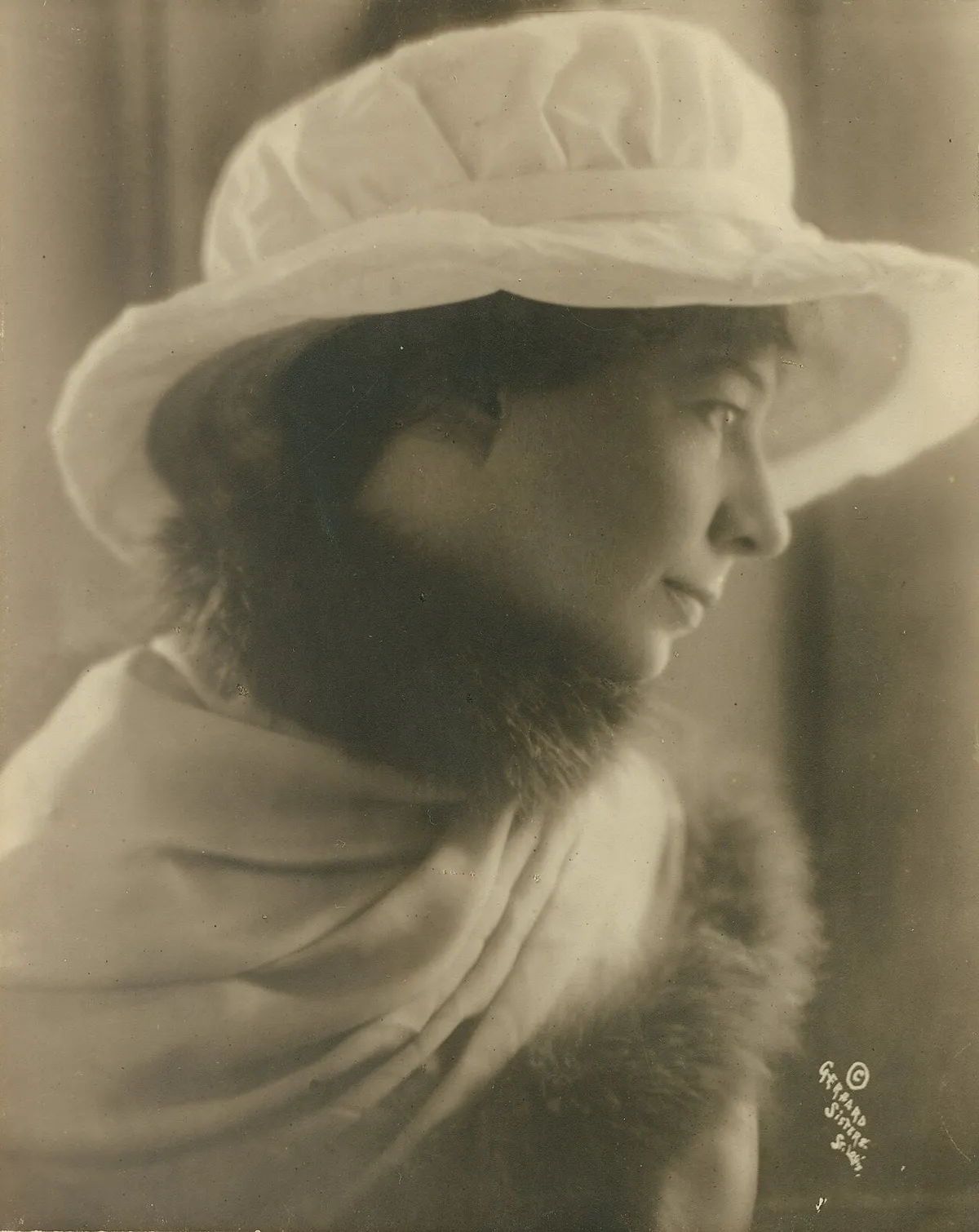
Sara Teasdale
Gray Eyes
It was April when you came
The first time to me,
And my first look in your eyes
Was like my first look at the sea.
We have been together
Four Aprils now
Watching for the green
On the swaying willow bough;
Yet whenever I turn
To your gray eyes over me,
It is as though I looked
For the first time at the sea.
Read more →
366
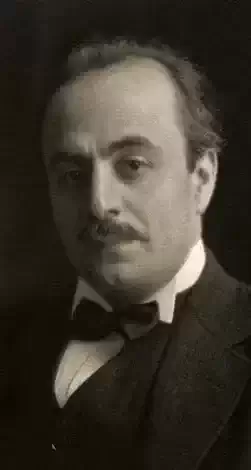
Khalil Gibran
Beauty XXV
And a poet said, "Speak to us of Beauty."
Where shall you seek beauty, and how shall you find her unless she herself be your
way and your guide?
And how shall you speak of her except she be the weaver of your speech?
The aggrieved and the injured say, "Beauty is kind and gentle.
Like a young mother half-shy of her own glory she walks among us."
And the passionate say, "Nay, beauty is a thing of might and dread.
Like the tempest she shakes the earth beneath us and the sky above us."
The tired and the weary say, "beauty is of soft whisperings. She speaks in our spirit.
Her voice yields to our silences like a faint light that quivers in fear of the shadow."
But the restless say, "We have heard her shouting among the mountains,
And with her cries came the sound of hoofs, and the beating of wings and the roaring
of lions."
At night the watchmen of the city say, "Beauty shall rise with the dawn from the east."
And at noontide the toilers and the wayfarers say, "we have seen her leaning over the
earth from the windows of the sunset."
In winter say the snow-bound, "She shall come with the spring leaping upon the hills."
And in the summer heat the reapers say, "We have seen her dancing with the autumn
leaves, and we saw a drift of snow in her hair."
All these things have you said of beauty.
Yet in truth you spoke not of her but of needs unsatisfied,
And beauty is not a need but an ecstasy.
It is not a mouth thirsting nor an empty hand stretched forth,
But rather a heart enflamed and a soul enchanted.
It is not the image you would see nor the song you would hear,
But rather an image you see though you close your eyes and a song you hear though
you shut your ears.
It is not the sap within the furrowed bark, nor a wing attached to a claw,
But rather a garden forever in bloom and a flock of angels for ever in flight.
People of Orphalese, beauty is life when life unveils her holy face.
But you are life and you are the veil.
Beauty is eternity gazing at itself in a mirror.
But you are eternity and you are the mirror.
Read more →
364
John Donne
The Annunciation And Passion
TAMELY, frail body, abstain to-day ; to-day
My soul eats twice, Christ hither and away.
She sees Him man, so like God made in this,
That of them both a circle emblem is,
Whose first and last concur ; this doubtful day
Of feast or fast, Christ came, and went away ;
She sees Him nothing, twice at once, who's all ;
She sees a cedar plant itself, and fall ;
Her Maker put to making, and the head
Of life at once not yet alive, yet dead ;
She sees at once the Virgin Mother stay
Reclused at home, public at Golgotha ;
Sad and rejoiced she's seen at once, and seen
At almost fifty, and at scarce fifteen ;
At once a son is promised her, and gone ;
Gabriell gives Christ to her, He her to John ;
Not fully a mother, she's in orbity ;
At once receiver and the legacy.
All this, and all between, this day hath shown,
Th' abridgement of Christ's story, which makes one—
As in plain maps, the furthest west is east—
Of th' angels Ave, and Consummatum est.
How well the Church, God's Court of Faculties,
Deals, in sometimes, and seldom joining these.
As by the self-fix'd Pole we never do
Direct our course, but the next star thereto,
Which shows where th'other is, and which we say
—Because it strays not far—doth never stray,
So God by His Church, nearest to him, we know,
And stand firm, if we by her motion go.
His Spirit, as His fiery pillar, doth
Lead, and His Church, as cloud ; to one end both.
This Church by letting those days join, hath shown
Death and conception in mankind is one ;
Or 'twas in Him the same humility,
That He would be a man, and leave to be ;
Or as creation He hath made, as God,
With the last judgment but one period,
His imitating spouse would join in one
Manhood's extremes ; He shall come, He is gone ;
Or as though one blood drop, which thence did fall,
Accepted, would have served, He yet shed all,
So though the least of His pains, deeds, or words,
Would busy a life, she all this day affords.
This treasure then, in gross, my soul, uplay,
And in my life retail it every day.
Read more →
362
Emily Dickinson
Empty my Heart, of Thee
Empty my Heart, of Thee-
Its single Artery-
Begin, and leave Thee out-
Simply Extinction's Date-
Much Billow hath the Sea-
One Baltic-They-
Subtract Thyself, in play,
And not enough of me
Is left-to put away"
Myself" meanth Thee-
Erase the Root-no TreeThee-
then-no me-
The Heavens stripped
Eternity's
vast pocket, picked-
Read more →
362

Henry Wadsworth Longfellow
The Four Princesses At Wilna. A Photograph
Sweet faces, that from pictured casements lean
As from a castle window, looking down
On some gay pageant passing through a town,
Yourselves the fairest figures in the scene;
With what a gentle grace, with what serene
Unconsciousness ye wear the triple crown
Of youth and beauty and the fair renown
Of a great name, that ne'er hath tarnished been!
From your soft eyes, so innocent and sweet,
Four spirits, sweet and innocent as they,
Gaze on the world below, the sky above;
Hark! there is some one singing in the street;
'Faith, Hope, and Love! these three,' he seems to say;
'These three; and greatest of the three is Love.'
Read more →
362

Muhammad Iqbal
The Sun
O Sun! The world's essence and motivator you are
The organizer of the book of the world you are
The splendor of existence has been created by you
The verdure of the garden of existence depends on you
The spectacle of elements is maintained by you
The exigency of life in all is maintained by you
Your appearance confers stability on everything
Your illumination and concord is completion of life
You are the sun which establishes light in the world
Which establishes heart, intellect, essence and wisdom
O Sun! Bestow on us the light of wisdom
Bestow your luster's light on the intellect's eye
You are the decorator of necessaries of existence' assemblage
You are the Yazdan of the denizens of the high and the low
Your excellence is reflected from every living thing
The mountain range also shows your elegance
You are the sustainer of the life of all
You are the king of the light's children
There is no beginning and no end of yours
Free of limits of time is the light of yours
Read more →
362

Ella Wheeler Wilcox
The Lady And The Dame
So thou hast the art, good dame, thou swearest,
To keep Time's perishing touch at bay
From the roseate splendor of the cheek so tender,
And the silver threads from the gold away;
And the tell-tale years that have hurried by us
Shall tiptoe back, and, with kind good-will,
They shall take their traces from off our faces,
If we will trust to thy magic skill.
Thou speakest fairly; but if I listen
And buy thy secret and prove its truth,
Hast thou the potion and magic lotion
To give me also the heart of youth?
With the cheek of rose and the eye of beauty,
And the lustrous locks of life's lost prime,
Wilt thou bring thronging each hope and longing
That made the glory of that dead Time?
When the sap in the trees sets young buds bursting,
And the song of the birds fills the air like spray,
Will rivers of feeling come once more stealing
From the beautiful hills of the far-away?
Wilt thou demolish the tower of reason
And fling forever down into the dust,
The caution time brought me, the lessons life taught me,
And put in their places my old sweet trust?
If Time's footprint from my brow is driven,
Canst thou, too, take with thy subtle powers
The burden of thinking, and let me go drinking
The careless pleasures of youth's bright hours?
If silver threads from my tresses vanish,
If a glow once more in my pale cheek gleams,
Wilt thou slay duty and give back the beauty
Of days untroubled by aught but dreams?
When the soft, fair arms of the siren Summer
Encircle the earth in their languorous fold,
Will vast, deep oceans of sweet emotions
Surge through my veins as they surged of old?
Canst thou bring back from a day long vanished
The leaping pulse and the boundless aim?
I will pay thee double for all thy trouble,
If thou wilt restore all these, good dame.
Read more →
363
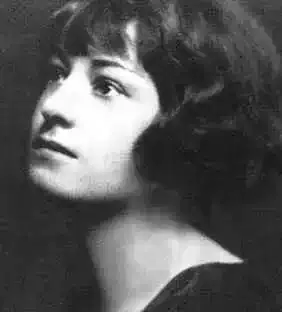
Dorothy Parker
Sonnet For The End Of A Sequence
So take my vows and scatter them to sea;
Who swears the sweetest is no more than human.
And say no kinder words than these of me:
"Ever she longed for peace, but was a woman!
And thus they are, whose silly female dust
Needs little enough to clutter it and bind it,
Who meet a slanted gaze, and ever must
Go build themselves a soul to dwell behind it."
For now I am my own again, my friend!
This scar but points the whiteness of my breast;
This frenzy, like its betters, spins an end,
And now I am my own. And that is best.
Therefore, I am immeasurably grateful
To you, for proving shallow, false, and hateful.
Read more →
361
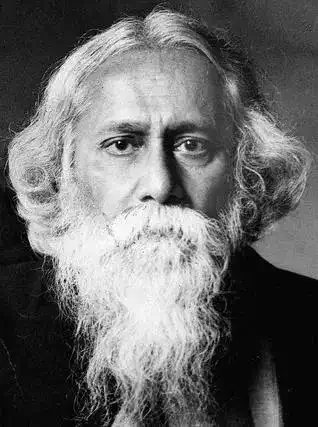
Rabindranath Tagore
Lover's Gifts XLIII: Dying, You Have Left Behind
Dying, you have left behind you the great sadness of the Eternal
in my life. You have painted my thought's horizon with the sunset
colours of your departure, leaving a track of tears across the
earth to love's heaven. Clasped in your dear arms, life and death
united in me in a marriage bond.
I think I can see you watching there in the balcony with your
lamp lighted, where the end and the beginning of all things meet.
My world went hence through the doors that you opened-you holding
the cup of death to my lips, filling it with life from your own.
Read more →
363
Kabir
Having Crossed The River
Having crossed the river,
where will you go, O friend?
There's no road to tread,
No traveler ahead,
Neither a beginning, nor an end.
There's no water, no boat, no boatman, no cord;
No earth is there, no sky, no time, no bank, no ford.
You have forgotten the Self within,
Your search in the void will be in vain;
In a moment the life will ebb
And in this body you won't remain.
Be ever conscious of this, O friend,
You've to immerse within your Self;
Kabir says, salvation you won't then need,
For what you are, you would be indeed.
Read more →
363

William Shakespeare
Sonnet 136: If thy soul cheque thee that I come so near
If thy soul cheque thee that I come so near,
Swear to thy blind soul that I was thy 'Will,'
And will, thy soul knows, is admitted there;
Thus far for love my love-suit, sweet, fulfil.
'Will' will fulfil the treasure of thy love,
Ay, fill it full with wills, and my will one.
In things of great receipt with ease we prove
Among a number one is reckon'd none:
Then in the number let me pass untold,
Though in thy stores' account I one must be;
For nothing hold me, so it please thee hold
That nothing me, a something sweet to thee:
Make but my name thy love, and love that still,
And then thou lovest me, for my name is 'Will.'
Read more →
362
Henry Wadsworth Longfellow
King Trisanku
Viswamitra the Magician,
By his spells and incantations,
Up to Indra's realms elysian
Raised Trisanku, king of nations.
Indra and the gods offended
Hurled him downward, and descending
In the air he hung suspended,
With these equal powers contending.
Thus by aspirations lifted,
By misgivings downward driven,
Human hearts are tossed and drifted
Midway between earth and heaven.
Read more →
362
Kabir
Are you looking for me?
Are you looking for me? I am in the next seat.
My shoulder is against yours.
you will not find me in the stupas, not in Indian shrine
rooms, nor in synagogues, nor in cathedrals:
not in masses, nor kirtans, not in legs winding
around your own neck, nor in eating nothing but
vegetables.
When you really look for me, you will see me
instantly -you
will find me in the tiniest house of time.
Kabir says: Student, tell me, what is God?
He is the breath inside the breath.
Read more →
362

William Butler Yeats
Words For Music Perhaps
I - CRAZY JANE AND THE BISHOP
BRING me to the blasted oak
That I, midnight upon the stroke,
(All find safety in the tomb.)
May call down curses on his head
Because of my dear Jack that's dead.
Coxcomb was the least he said:
The solid man and the coxcomb.
Nor was he Bishop when his ban
Banished Jack the Journeyman,
(All find safety in the tomb.)
Nor so much as parish priest,
Yet he, an old book in his fist,
Cried that we lived like beast and beast:
The solid man and the coxcomb.
The Bishop has a skin, God knows,
Wrinkled like the foot of a goose,
(All find safety in the tomb.)
Nor can he hide in holy black
The heron's hunch upon his back,
But a birch-tree stood my Jack:
The solid man and the coxcomb.
Jack had my virginity,
And bids me to the oak, for he
(all find safety in the tomb.)
Wanders out into the night
And there is shelter under it,
But should that other come, I spit:
The solid man and the coxcomb.
II - CRAZY JANE REPROVED
I CARE not what the sailors say:
All those dreadful thunder-stones,
All that storm that blots the day
Can but show that Heaven yawns;
Great Europa played the fool
That changed a lover for a bull.
Fol de rol, fol de rol.
To round that shell's elaborate whorl,
Adorning every secret track
With the delicate mother-of-pearl,
Made the joints of Heaven crack:
So never hang your heart upon
A roaring, ranting journeyman.
Fol de rol, fol de rol.
III - CRAZY JANE ON THE DAY OF JUDGMENT
'LOVE is all
Unsatisfied
That cannot take the whole
Body and soul';
And that is what Jane said.
'Take the sour
If you take me
I can scoff and lour
And scold for an hour.'
'That's certainly the case,' said he.
'Naked I lay,
The grass my bed;
Naked and hidden away,
That black day';
And that is what Jane said.
'What can be shown?
What true love be?
All could be known or shown
If Time were but gone.'
'That's certainly the case,' said he.
IV - CRAZY JANE AND JACK THE JOURNEYMAN
I KNOW, although when looks meet
I tremble to the bone,
The more I leave the door unlatched
The sooner love is gone,
For love is but a skein unwound
Between the dark and dawn.
A lonely ghost the ghost is
That to God shall come;
I -- love's skein upon the ground,
My body in the tomb --
Shall leap into the light lost
In my mother's womb.
But were I left to lie alone
In an empty bed,
The skein so bound us ghost to ghost
When he turned his head
passing on the road that night,
Mine must walk when dead.
V - CRAZY JANE ON GOD
THAT lover of a night
Came when he would,
Went in the dawning light
Whether I would or no;
Men come, men go;
All things remain in God.
Banners choke the sky;
Men-at-arms tread;
Armoured horses neigh
In the narrow pass:
All things remain in God.
Before their eyes a house
That from childhood stood
Uninhabited, ruinous,
Suddenly lit up
From door to top:
All things remain in God.
I had wild Jack for a lover;
Though like a road
That men pass over
My body makes no moan
But sings on:
All things remain in God.
VI - CRAZY JANE TALKS WITH THE BISHOP
I MET the Bishop on the road
And much said he and I.
'Those breasts are flat and fallen now,
Those veins must soon be dry;
Live in a heavenly mansion,
Not in some foul sty.'
'Fair and foul are near of kin,
And fair needs foul,' I cried.
'My friends are gone, but that's a truth
Nor grave nor bed denied,
Learned in bodily lowliness
And in the heart's pride.
'A woman can be proud and stiff
When on love intent;
But Love has pitched his mansion in
The place of excrement;
For nothing can be sole or whole
That has not been rent.'
VII - CRAZY JANE GROWN OLD LOOKS AT THE DANCERS
I FOUND that ivory image there
Dancing with her chosen youth,
But when he wound her coal-black hair
As though to strangle her, no scream
Or bodily movement did I dare,
Eyes under eyelids did so gleam;
Love is like the lion's tooth.
When She, and though some said she played
I said that she had danced heart's truth,
Drew a knife to strike him dead,
I could but leave him to his fate;
For no matter what is said
They had all that had their hate;
Love is like the lion's tooth.
Did he die or did she die?
Seemed to die or died they both?
God be with the times when I
Cared not a thraneen for what chanced
So that I had the limbs to try
Such a dance as there was danced --
Love is like the lion's tooth.
VIII - GIRL'S SONG
I WENT out alone
To sing a song or two,
My fancy on a man,
And you know who.
Another came in sight
That on a stick relied
To hold himself upright;
I sat and cried.
And that was all my song --
When everything is told,
Saw I an old man young
Or young man old?
IX - YOUNG MAN'S SONG
'SHE will change,' I cried.
'Into a withered crone.'
The heart in my side,
That so still had lain,
In noble rage replied
And beat upon the bone:
'Uplift those eyes and throw
Those glances unafraid:
She would as bravely show
Did all the fabric fade;
No withered crone I saw
Before the world was made.'
Abashed by that report,
For the heart cannot lie,
I knelt in the dirt.
And all shall bend the knee
To my offended heart
Until it pardon me.
X - HER ANXIETY
EARTH in beauty dressed
Awaits returning spring.
All true love must die,
Alter at the best
Into some lesser thing.
Prove that I lie.
Such body lovers have,
Such exacting breath,
That they touch or sigh.
Every touch they give,
Love is nearer death.
Prove that I lie.
XI - HIS CONFIDENCE
UNDYING love to buy
I wrote upon
The corners of this eye
All wrongs done.
What payment were enough
For undying love?
I broke my heart in two
So hard I struck.
What matter? for I know
That out of rock,
Out of a desolate source,
Love leaps upon its course.
XII - LOVE'S LONELINESS
OLD fathers, great-grandfathers,
Rise as kindred should.
If ever lover's loneliness
Came where you stood,
Pray that Heaven protect us
That protect your blood.
The mountain throws a shadow,
Thin is the moon's horn;
What did we remember
Under the ragged thorn?
Dread has followed longing,
And our hearts are torn.
XIII - HER DREAM
I DREAMED as in my bed I lay,
All night's fathomless wisdom come,
That I had shorn my locks away
And laid them on Love's lettered tomb:
But something bore them out of sight
In a great tumult of the air,
And after nailed upon the night
Berenice's burning hair.
XIV - HIS BARGAIN
WHO talks of Plato's spindle;
What set it whirling round?
Eternity may dwindle,
Time is unwound,
Dan and Jerry Lout
Change their loves about.
However they may take it,
Before the thread began
I made, and may not break it
When the last thread has run,
A bargain with that hair
And all the windings there.
XV - THREE THINGS
'O CRUEL Death, give three things back,'
Sang a bone upon the shore;
'A child found all a child can lack,
Whether of pleasure or of rest,
Upon the abundance of my breast':
A bone wave-whitened and dried in the wind.
'Three dear things that women know,'
Sang a bhone upon the shore;
'A man if I but held him so
When my body was alive
Found all the pleasure that life gave':
A bone wave-whitened and dried in the wind.
'The third thing that I think of yet,'
Sang a bone upon the shore,
'Is that morning when I met
Face to face my rightful man
And did after stretch and yawn':
A bone wave-whitened and dried in the wind.
XVI - LULLABY
BELOVED, may your sleep be sound
That have found it where you fed.
What were all the world's alarms
To mighty paris when he found
Sleep upon a golden bed
That first dawn in Helen's arms?
Sleep, beloved, such a sleep
As did that wild Tristram know
When, the potion's work being done,
Roe could run or doe could leap
Under oak and beechen bough,
Roe could leap or doe could run;
Such a sleep and sound as fell
Upon Eurotas' grassy bank
When the holy bird, that there
Accomplished his predestined will,
From the limbs of Leda sank
But not from her protecting care.
XVII - AFTER LONG SILENCE
SPEECH after long silence; it is right,
All other lovers being estranged or dead,
Unfriendly lamplight hid under its shade,
The curtains drawn upon unfriendly night,
That we descant and yet again descant
Upon the supreme theme of Art and Song:
Bodily decrepitude is wisdom; young
We loved each other and were ignorant.
XVIII - MAD AS THE MIST AND SNOW
BOLT and bar the shutter,
For the foul winds blow:
Our minds are at their best this night,
And I seem to know
That everything outside us is
Mad as the mist and snow.
Horace there by Homer stands,
Plato stands below,
And here is Tully's open page.
How many years ago
Were you and I unlettered lads
Mad as the mist and snow?
You ask what makes me sigh, old friend,
What makes me shudder so?
I shudder and I sigh to think
That even Cicero
And many-minded Homer were
Mad as the mist and snow.
XIX - THOSE DANCING DAYS ARE GONE
COME, let me sing into your ear;
Those dancing days are gone,
All that silk and satin gear;
Crouch upon a stone,
Wrapping that foul body up
In as foul a rag:
I carry the sun in a golden cup.
The moon in a silver bag.
Curse as you may I sing it through;
What matter if the knave
That the most could pleasure you,
The children that he gave,
Are somewhere sleeping like a top
Under a marble flag?
I carry the sun in a golden cup.
The moon in a silver bag.
I thought it out this very day.
Noon upon the clock,
A man may put pretence away
Who leans upon a stick,
May sing, and sing until he drop,
Whether to maid or hag:
I carry the sun in a golden cup,
The moon in a silver bag.
XX - 'I AM OF IRELAND'
AM of Ireland,
And the Holy Land of Ireland,
And time runs on,' cried she.
'Come out of charity,
Come dance with me in Ireland.'
One man, one man alone
In that outlandish gear,
One solitary man
Of all that rambled there
Had turned his stately head.
That is a long way off,
And time runs on,' he said,
'And the night grows rough.'
I am of Ireland,
And the Holy Land of Ireland,
And time runs on,' cried she.
'Come out of charity
And dance with me in Ireland.'
The fiddlers are all thumbs,
Or the fiddle-string accursed,
The drums and the kettledrums
And the trumpets all are burst,
And the trombone,' cried he,
'The trumpet and trombone,'
And cocked a malicious eye,
'But time runs on, runs on.'
I am of Ireland,
And the Holy Land of Ireland,
And time runs on,' cried she.
'Come out of charity
And dance with me in Ireland.'
XXI - THE DANCER AT CRUACHAN AND CRO-PATRICK
I, PROCLAIMING that there is
Among birds or beasts or men
One that is perfect or at peace.
Danced on Cruachan's windy plain,
Upon Cro-patrick sang aloud;
All that could run or leap or swim
Whether in wood, water or cloud,
Acclaiming, proclaiming, declaiming Him.
XXII - TOM THE LUNATIC
SANG old Tom the lunatic
That sleeps under the canopy:
'What change has put my thoughts astray
And eyes that had s-o keen a sight?
What has turned to smoking wick
Nature's pure unchanging light?
'Huddon and Duddon and Daniel O'Leary.
Holy Joe, the beggar-man,
Wenching, drinking, still remain
Or sing a penance on the road;
Something made these eyeballs weary
That blinked and saw them in a shroud.
'Whatever stands in field or flood,
Bird, beast, fish or man,
Mare or stallion, cock or hen,
Stands in God's unchanging eye
In all the vigour of its blood;
In that faith I live or die.'
XXIII - TOM AT CRUACHAN
ON Cruachan's plain slept he
That must sing in a rhyme
What most could shake his soul:
'The stallion Eternit
Mounted the mare of Time,
'Gat the foal of the world.'
XXIV - OLD TOM AGAIN
THINGS out of perfection sail,
And all their swelling canvas wear,
Nor shall the self-begotten fail
Though fantastic men suppose
Building-yard and stormy shore,
Winding-sheet and swaddling -- clothes.
XXV - THE DELPHIC ORACLE UPON PLOTINUS
BEHOLD that great Plotinus swim,
Buffeted by such seas;
Bland Rhadamanthus beckons him,
But the Golden Race looks dim,
Salt blood blocks his eyes.
Scattered on the level grass
Or winding through the grove
plato there and Minos pass,
There stately Pythagoras
And all the choir of Love.
Read more →
362