
Soul

Henry Wadsworth Longfellow
In The Harbour: The City And The Sea
The panting City cried to the Sea,
'I am faint with heat,--O breathe on me!'
And the Sea said, 'Lo, I breathe! but my breath
To some will be life, to others death!'
As to Prometheus, bringing ease
In pain, come the Oceanides,
So to the City, hot with the flame
Of the pitiless sun, the east wind came.
It came from the heaving breast of the deep,
Silent as dreams are, and sudden as sleep.
Life-giving, death-giving, which will it be;
O breath of the merciful, merciless Sea?
Read more →
327
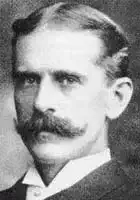
Henry Van Dyke
Master of Music
Glory of architect, glory of painter, and sculptor, and bard,
Living forever in temple and picture and statue and song, --
Look how the world with the lights that they lit is illumined and starred,
Brief was the flame of their life, but the lamps of their art burn long!
Where is the Master of Music, and how has he vanished away?
Where is the work that he wrought with his wonderful art in the air?
Gone, -- it is gone like the glow on the cloud at the close of the day!
The Master has finished his work, and the glory of music is -- where?
Once, at the wave of his wand, all the billows of musical sound
Followed his will, as the sea was ruled by the prophet of old:
Now that his hand is relaxed, and his rod has dropped to the ground,
Silent and dark are the shores where the marvellous harmonies rolled!
Nay, but not silent the hearts that were filled by that life-giving sea;
Deeper and purer forever the tides of their being will roll,
Grateful and joyful, O Master, because they have listened to thee, --
The glory of music endures in the depths of the human soul.
Read more →
325

Nazim Hikmet
A Spring Piece Left In The Middle
Taut, thick fingers punch
the teeth of my typewriter.
Three words are down on paper
in capitals:
SPRING
SPRING
SPRING...
And me -- poet, proofreader,
the man who's forced to read
two thousand bad lines
every day
for two liras--
why,
since spring
has come, am I
still sitting here
like a ragged
black chair?
My head puts on its cap by itself,
I fly out of the printer's,
I'm on the street.
The lead dirt of the composing room
on my face,
seventy-five cents in my pocket.
SPRING IN THE AIR...
In the barbershops
they're powdering
the sallow cheeks
of the pariah of Publishers Row.
And in the store windows
three-color bookcovers
flash like sunstruck mirrors.
But me,
I don't have even a book of ABC's
that lives on this street
and carries my name on its door!
But what the hell...
I don't look back,
the lead dirt of the composing room
on my face,
seventy-five cents in my pocket,
SPRING IN THE AIR...
*
The piece got left in the middle.
It rained and swamped the lines.
But oh! what I would have written...
The starving writer sitting on his three-thousand-page
three-volume manuscript
wouldn't stare at the window of the kebab joint
but with his shining eyes would take
the Armenian bookseller's dark plump daughter by storm...
The sea would start smelling sweet.
Spring would rear up
like a sweating red mare
and, leaping onto its bare back,
I'd ride it
into the water.
Then
my typewriter would follow me
every step of the way.
I'd say:
"Oh, don't do it!
Leave me alone for an hour..."
then
my head-my hair failing out--
would shout into the distance:
"I AM IN LOVE..."
*
I'm twenty-seven,
she's seventeen.
"Blind Cupid,
lame Cupid,
both blind and lame Cupid
said, Love this girl,"
I was going to write;
I couldn't say it
but still can!
But if
it rained,
if the lines I wrote got swamped,
if I have twenty-five cents left in my pocket,
what the hell...
Hey, spring is here spring is here spring
spring is here!
My blood is budding inside me!
and April
Trans. by Randy Blasing and Mutlu Konuk ()
Read more →
325

John Greenleaf Whittier
To Fredrika Bremer
Seeress of the misty Norland,
Daughter of the Vikings bold,
Welcome to the sunny Vineland,
Which thy fathers sought of old!
Soft as flow of Siija's waters,
When the moon of summer shines,
Strong as Winter from his mountains
Roaring through the sleeted pines.
Heart and ear, we long have listened
To thy saga, rune, and song;
As a household joy and presence
We have known and loved thee long.
By the mansion's marble mantel,
Round the log-walled cabin's hearth,
Thy sweet thoughts and northern fancies
Meet and mingle with our mirth.
And o'er weary spirits keeping
Sorrow's night-watch, long and chill,
Shine they like thy sun of summer
Over midnight vale and hill.
We alone to thee are strangers,
Thou our friend and teacher art;
Come, and know us as we know thee;
Let us meet thee heart to heart!
To our homes and household altars
We, in turn, thy steps would lead,
As thy loving hand has led us
O'er the threshold of the Swede.
Read more →
326
Henry Van Dyke
Edmund Clarence Stedman
Oh, quick to feel the lightest touch
Of beauty or of truth,
Rich in the thoughtfulness of age,
The hopefulness of youth,
The courage of the gentle heart,
The wisdom of the pure,
The strength of finely tempered souls
To labour and endure!
The blue of springtime in your eyes
Was never quenched by pain;
And winter brought your head the crown
Of snow without a stain.
The poet's mind, the prince's heart,
You kept until the end,
Nor ever faltered in your work,
Nor ever failed a friend.
Read more →
325

Dylan Thomas
Clown in the Moon
My tears are like the quiet drift
Of petals from some magic rose;
And all my grief flows from the rift
Of unremembered skies and snows.
I think, that if I touched the earth,
It would crumble;
It is so sad and beautiful,
So tremulously like a dream.
Read more →
324
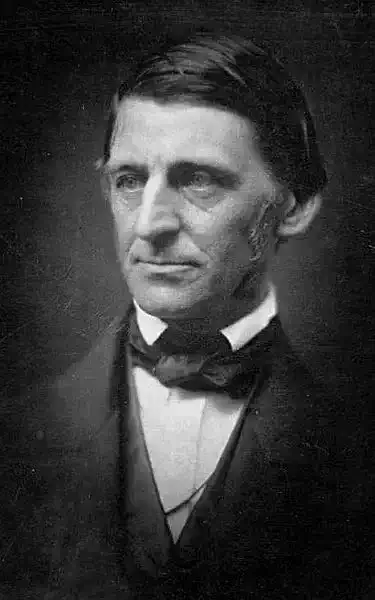
Ralph Waldo Emerson
Dirge
Knows he who tills this lonely field
To reap its scanty corn,
What mystic fruit his acres yield
At midnight and at morn?
In the long sunny afternoon,
The plain was full of ghosts,
I wandered up, I wandered down,
Beset by pensive hosts.
The winding Concord gleamed below,
Pouring as wide a flood
As when my brothers long ago,
Came with me to the wood.
But they are gone,— the holy ones,
Who trod with me this lonely vale,
The strong, star-bright companions
Are silent, low, and pale.
My good, my noble, in their prime,
Who made this world the feast it was,
Who learned with me the lore of time,
Who loved this dwelling-place.
They took this valley for their toy,
They played with it in every mood,
A cell for prayer, a hall for joy,
They treated nature as they would.
They colored the horizon round,
Stars flamed and faded as they bade,
All echoes hearkened for their sound,
They made the woodlands glad or mad.
I touch this flower of silken leaf
Which once our childhood knew
Its soft leaves wound me with a grief
Whose balsam never grew.
Hearken to yon pine warbler
Singing aloft in the tree;
Hearest thou, O traveller!
What he singeth to me?
Not unless God made sharp thine ear
With sorrow such as mine,
Out of that delicate lay couldst thou
The heavy dirge divine.
Go, lonely man, it saith,
They loved thee from their birth,
Their hands were pure, and pure their faith,
There are no such hearts on earth.
Ye drew one mother's milk,
One chamber held ye all;
A very tender history
Did in your childhood fall.
Ye cannot unlock your heart,
The key is gone with them;
The silent organ loudest chants
The master's requiem.
Read more →
326
Henry Wadsworth Longfellow
Song Of The Silent Land. (From The German Of Salis)
Into the Silent Land!
Ah! who shall lead us thither?
Clouds in the evening sky more darkly gather,
And shattered wrecks lie thicker on the strand.
Who leads us with a gentle hand
Thither, O thither,
Into the Silent Land?
Into the Silent Land!
To you, ye boundless regions
Of all perfection! Tender morning-visions
Of beauteous souls! The Future's pledge and band!
Who in Life's battle firm doth stand,
Shall bear Hope's tender blossoms
Into the Silent Land!
O Land! O Land!
For all the broken-hearted
The mildest herald by our faith allotted,
Beckons, and with inverted torch doth stand
To lead us with a gentle hand
Into the land of the great Departed,
Into the Silent Land!
Read more →
326

William Shakespeare
Sonnet 145: Those lips that Love's own hand did make
Those lips that Love's own hand did make
Breath'd forth the sound that said I hate
To me that languish'd for her sake:
But when she saw my woeful state,
Straight in her heart did mercy come.
Chiding that tongue, that ever sweet
Was used in giving gentle doom:
And taught it thus anew to greet:
'I hate' she alter'd with an end
That follow'd it as gentle day
Doth follow night, who like a fiend
From heaven to hell is flown away.
'I hate' from hate away she threw,
And sav'd my life, saying 'not you'
Read more →
326
Henry Wadsworth Longfellow
The Slave In The Dismal Swamp
In dark fens of the Dismal Swamp
The hunted Negro lay;
He saw the fire of the midnight camp,
And heard at times a horse's tramp
And a bloodhound's distant bay.
Where will-o'-the-wisps and glow-worms shine,
In bulrush and in brake;
Where waving mosses shroud the pine,
And the cedar grows, and the poisonous vine
Is spotted like the snake;
Where hardly a human foot could pass,
Or a human heart would dare,
On the quaking turf of the green morass
He crouched in the rank and tangled grass,
Like a wild beast in his lair.
A poor old slave, infirm and lame;
Great scars deformed his face;
On his forehead he bore the brand of shame,
And the rags, that hid his mangled frame,
Were the livery of disgrace.
All things above were bright and fair,
All things were glad and free;
Lithe squirrels darted here and there,
And wild birds filled the echoing air
With songs of Liberty!
On him alone was the doom of pain,
From the morning of his birth;
On him alone the curse of Cain
Fell, like a flail on the garnered grain,
And struck him to the earth!
Read more →
324

Emily Dickinson
There's something quieter than sleep
There's something quieter than sleep
Within this inner room!
It wears a sprig upon its breast-
And will not tell its name.
Some touch it, and some kiss it-
Some chafe its idle hand-
It has a simple gravity
I do not understand!
I would not weep if I were they-
How rude in one to sob!
Might scare the quiet fairy
Back to her native wood!
While simple-hearted neighbors
Chat of the "Early dead"We-
prone to periphrasis
Remark that Birds have fled!
Read more →
325
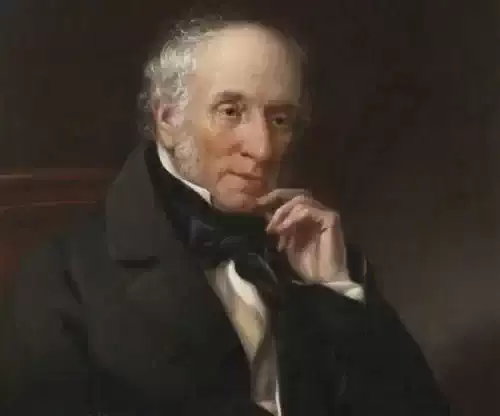
William Wordsworth
Influence of Natural Objects
Wisdom and Spirit of the universe!
Thou Soul, that art the Eternity of thought!
And giv'st to forms and images a breath
And everlasting motion! not in vain,
By day or star-light, thus from my first dawn
Of childhood didst thou intertwine for me
The passions that build up our human soul;
Not with the mean and vulgar works of Man;
But with high objects, with enduring things,
With life and nature; purifying thus
The elements of feeling and of thought,
And sanctifying by such discipline
Both pain and fear,--until we recognise
A grandeur in the beatings of the heart.
Nor was this fellowship vouchsafed to me
With stinted kindness. In November days,
When vapours rolling down the valleys made
A lonely scene more lonesome; among woods
At noon; and 'mid the calm of summer nights,
When, by the margin of the trembling lake,
Beneath the gloomy hills, homeward I went
In solitude, such intercourse was mine:
Mine was it in the fields both day and night,
And by the waters, all the summer long.
And in the frosty season, when the sun
Was set, and, visible for many a mile,
The cottage-windows through the twilight blazed,
I heeded not the summons: happy time
It was indeed for all of us; for me
It was a time of rapture! Clear and loud
The village-clock tolled six--I wheeled about,
Proud and exulting like an untired horse
That cares not for his home.--All shod with steel
We hissed along the polished ice, in games
Confederate, imitative of the chase
And woodland pleasures,--the resounding horn,
The pack loud-chiming, and the hunted hare.
So through the darkness and the cold we flew,
And not a voice was idle: with the din
Smitten, the precipices rang aloud;
The leafless trees and every icy crag
Tinkled like iron; while far-distant hills
Into the tumult sent an alien sound
Of melancholy, not unnoticed while the stars,
Eastward, were sparkling clear, and in the west
The orange sky of evening died away.
Not seldom from the uproar I retired
Into a silent bay, or sportively
Glanced sideway, leaving the tumultuous throng,
To cut across the reflex of a star;
Image, that, flying still before me, gleamed
Upon the glassy plain: and oftentimes,
When we had given our bodies to the wind,
And all the shadowy banks on either side
Came sweeping through the darkness, spinning still
The rapid line of motion, then at once
Have I, reclining back upon my heels,
Stopped short; yet still the solitary cliffs
Wheeled by me--even as if the earth had rolled
With visible motion her diurnal round!
Behind me did they stretch in solemn train,
Feebler and feebler, and I stood and watched
Till all was tranquil as a summer sea.
Read more →
325
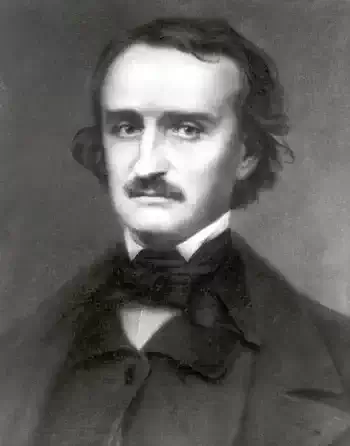
Edgar Allan Poe
The Forest Reverie
'Tis said that when
The hands of men
Tamed this primeval wood,
And hoary trees with groans of woe,
Like warriors by an unknown foe,
Were in their strength subdued,
The virgin Earth Gave instant birth
To springs that ne'er did flow
That in the sun Did rivulets run,
And all around rare flowers did blow
The wild rose pale Perfumed the gale
And the queenly lily adown the dale
(Whom the sun and the dew
And the winds did woo),
With the gourd and the grape luxuriant grew.
So when in tears
The love of years
Is wasted like the snow,
And the fine fibrils of its life
By the rude wrong of instant strife
Are broken at a blow
Within the heart
Do springs upstart
Of which it doth now know,
And strange, sweet dreams,
Like silent streams
That from new fountains overflow,
With the earlier tide
Of rivers glide
Deep in the heart whose hope has died--
Quenching the fires its ashes hide,--
Its ashes, whence will spring and grow
Sweet flowers, ere long,
The rare and radiant flowers of song!
Read more →
322
John Greenleaf Whittier
Chalkey Hall
How bland and sweet the greeting of this breeze
To him who flies
From crowded street and red wall's weary gleam,
Till far behind him like a hideous dream
The close dark city lies
Here, while the market murmurs, while men throng
The marble floor
Of Mammon's altar, from the crush and din
Of the world's madness let me gather in
My better thoughts once more.
Oh, once again revive, while on my ear
The cry of Gain
And low hoarse hum of Traffic die away,
Ye blessed memories of my early day
Like sere grass wet with rain!
Once more let God's green earth and sunset air
Old feelings waken;
Through weary years of toil and strife and ill,
Oh, let me feel that my good angel still
Hath not his trust forsaken.
And well do time and place befit my mood
Beneath the arms
Of this embracing wood, a good man made
His home, like Abraham resting in the shade
Of Mamre's lonely palms.
Here, rich with autumn gifts of countless years,
The virgin soil
Turned from the share he guided, and in rain
And summer sunshine throve the fruits and grain
Which blessed his honest toil.
Here, from his voyages on the stormy seas,
Weary and worn,
He came to meet his children and to bless
The Giver of all good in thankfulness
And praise for his return.
And here his neighbors gathered in to greet
Their friend again,
Safe from the wave and the destroying gales,
Which reap untimely green Bermuda's vales,
And vex the Carib main.
To hear the good man tell of simple truth,
Sown in an hour
Of weakness in some far-off Indian isle,
From the parched bosom of a barren soil,
Raised up in life and power.
How at those gatherings in Barbadian vales,
A tendering love
Came o'er him, like the gentle rain from heaven,
And words of fitness to his lips were given,
And strength as from above.
How the sad captive listened to the Word,
Until his chain
Grew lighter, and his wounded spirit felt
The healing balm of consolation melt
Upon its life-long pain
How the armed warrior sat him down to hear
Of Peace and Truth,
And the proud ruler and his Creole dame,
Jewelled and gorgeous in her beauty came,
And fair and bright-eyed youth.
Oh, far away beneath New England's sky,
Even when a boy,
Following my plough by Merrimac's green shore,
His simple record I have pondered o'er
With deep and quiet joy.
And hence this scene, in sunset glory warm,-Its
woods around,
Its still stream winding on in light and shade,
Its soft, green meadows and its upland glade,-To
me is holy ground.
And dearer far than haunts where Genius keeps
His vigils still;
Than that where Avon's son of song is laid,
Or Vaucluse hallowed by its Petrarch's shade,
Or Virgil's laurelled hill.
To the gray walls of fallen Paraclete,
To Juliet's urn,
Fair Arno and Sorrento's orange-grove,
Where Tasso sang, let young Romance and Love
Like brother pilgrims turn.
But here a deeper and serener charm
To all is given;
And blessed memories of the faithful dead
O'er wood and vale and meadow-stream have shed
The holy hues of Heaven!
Read more →
323
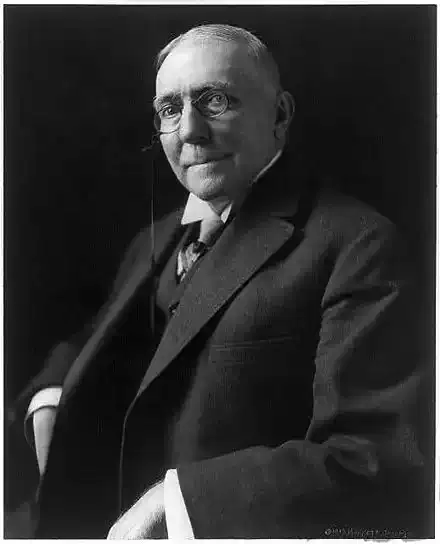
James Whitcomb Riley
My Jolly Friend's Secret
Ah, friend of mine, how goes it,
Since you've taken you a mate?--
Your smile, though, plainly shows it
Is a very happy state!
Dan Cupid's necromancy!
You must sit you down and dine,
And lubricate your fancy
With a glass or two of wine.
And as you have 'deserted,'
As my other chums have done,
While I laugh alone diverted,
As you drop off one by one--
And I've remained unwedded,
Till--you see--look here--that I'm,
In a manner, 'snatched bald-headed'
By the sportive hand of Time!
I'm an 'old 'un!' yes, but wrinkles
Are not so plenty, quite,
As to cover up the twinkles
Of the BOY--ain't I right?
Yet, there are ghosts of kisses
Under this mustache of mine
My mem'ry only misses
When I drown 'em out with wine.
From acknowledgment so ample,
You would hardly take me for
What I am--a perfect sample
Of a 'jolly bachelor';
Not a bachelor has being
When he laughs at married life
But his heart and soul's agreeing
That he ought to have a wife!
Ah, ha I old chum, this claret,
Like Fatima, holds the key
Of the old Blue-Beardish garret
Of my hidden mystery!
Did you say you'd like to listen?
Ah, my boy! the 'SAD NO MORE!'
And the tear-drops that will glisten--
TURN THE CATCH UPON THE DOOR,
And sit you down beside me,
And put yourself at ease-I'll
trouble you to slide me
That wine decanter, please;
The path is kind o' mazy
Where my fancies have to go,
And my heart gets sort o' lazy
On the journey--don't you know?
Let me see--when I was twenty-It's
a lordly age, my boy,
When a fellow's money's plenty,
And the leisure to enjoy--
And a girl--with hair as golden
As--THAT; and lips--well--quite
As red as THIS I'm holdin'
Between you and the light.
And eyes and a complexion--
Ah, heavens!--le'-me-see-Well,--
just in this connection,--
DID YOU LOCK THAT DOOR FOR ME?
Did I start in recitation
My past life to recall?
Well, THAT'S an indication
I am purty tight--that's all!
Read more →
324

William Butler Yeats
The Meditation Of The Old Fisherman
YOU waves, though you dance by my feet like children at play,
Though you glow and you glance, though you purr and you dart;
In the Junes that were warmer than these are, the waves were more gay,
When I was a boy with never a crack in my heart.
The herring are not in the tides as they were of old;
My sorrow! for many a creak gave the creel in the-cart
That carried the take to Sligo town to be sold,
When I was a boy with never a crack in my heart.
And ah, you proud maiden, you are not so fair when his oar
Is heard on the water, as they were, the proud and apart,
Who paced in the eve by the nets on the pebbly shore,
When I was a boy with never a crack in my heart.
Read more →
322

Walter de la Mare
Melmillo
Three and thirty birds there stood
In an elder in a wood;
Called Melmillo -- flew off three,
Leaving thirty in the tree;
Called Melmillo -- nine now gone,
And the boughs held twenty-one;
Called Melmillo -- and eighteen
Left but three to nod and preen;
Called Melmillo -- three--two--one--
Now of birds were feathers none.
Then stole slim Me.millo in
To that wood all dusk and green,
And with lean long palms outspread
Softly a strange dance did tread;
Not a note of music she
Had for echoing company;
All the birds were flown to rest
In the hollow of her breast;
In the wood -- thorn, elder willow --
Danced alone -- lone danced Melmillo.
Read more →
324
John Greenleaf Whittier
April
'T is the noon of the spring-time, yet never a bird
In the wind-shaken elm or the maple is heard;
For green meadow-grasses wide levels of snow,
And blowing of drifts where the crocus should blow;
Where wind-flower and violet, amber and white,
On south-sloping brooksides should smile in the light,
O'er the cold winter-beds of their late-waking roots
The frosty flake eddies, the ice-crystal shoots;
And, longing for light, under wind-driven heaps,
Round the boles of the pine-wood the ground-laurel creeps,
Unkissed of the sunshine, unbaptized of showers,
With buds scarcely swelled, which should burst into flowers
We wait for thy coming, sweet wind of the south!
For the touch of thy light wings, the kiss of thy mouth;
For the yearly evangel thou bearest from God,
Resurrection and life to the graves of the sod!
Up our long river-valley, for days, have not ceased
The wail and the shriek of the bitter northeast,
Raw and chill, as if winnowed through ices and snow,
All the way from the land of the wild Esquimau,
Until all our dreams of the land of the blest,
Like that red hunter's, turn to the sunny southwest.
O soul of the spring-time, its light and its breath,
Bring warmth to this coldness, bring life to this death;
Renew the great miracle; let us behold
The stone from the mouth of the sepulchre rolled,
And Nature, like Lazarus, rise, as of old!
Let our faith, which in darkness and coldness has lain,
Revive with the warmth and the brightness again,
And in blooming of flower and budding of tree
The symbols and types of our destiny see;
The life of the spring-time, the life of the whole,
And, as sun to the sleeping earth, love to the soul!
Read more →
322
Emily Dickinson
My Worthiness is all my Doubt
My Worthiness is all my Doubt-
His Merit-all my fear-
Contrasting which, my quality
Do lowlier-appear-
Lest I should insufficient prove
For His beloved Need-
The Chiefest Apprehension
Upon my thronging Mind
'Tis true-that Deity to stoop
Inherently incline-
For nothing higher than Itself
Itself can rest upon-
So I-the undivine abode
Of His Elect Content-
Conform my Soul-as 'twere a Church,
Unto Her Sacrament-
Read more →
323
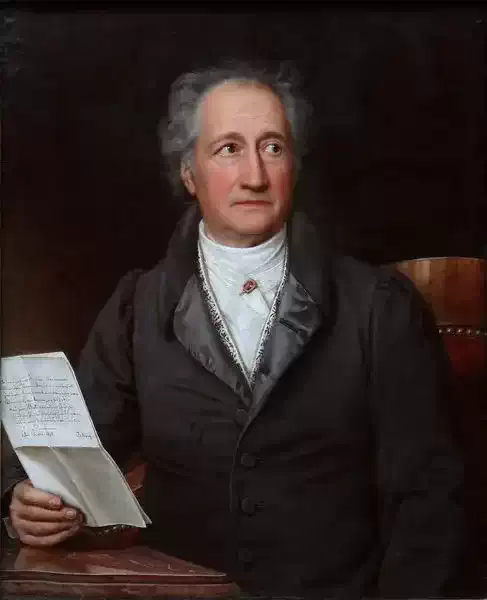
Johann Wolfgang von Goethe
The Wanderer
WANDERER.
YOUNG woman, may God bless thee,
Thee, and the sucking infant
Upon thy breast!
Let me, 'gainst this rocky wall,
Neath the elm-tree's shadow,
Lay aside my burden,
Near thee take my rest.
WOMAN.
What vocation leads thee,
While the day is burning,
Up this dusty path?
Bring'st thou goods from out the town
Round the country?
Smil'st thou, stranger,
At my question?
WANDERER.
From the town no goods I bring.
Cool is now the evening;
Show to me the fountain
'Whence thou drinkest,
Woman young and kind!
WOMAN.
Up the rocky pathway mount;
Go thou first! Across the thicket
Leads the pathway tow'rd the cottage
That I live in,
To the fountain
Whence I drink.
WANDERER.
Signs of man's arranging hand
See I 'mid the trees!
Not by thee these stones were join'd,
Nature, who so freely scatterest!
WOMAN.
Up, still up!
WANDERER.
Lo, a mossy architrave is here!
I discern thee, fashioning spirit!
On the stone thou hast impress'd thy seal.
WOMAN.
Onward, stranger!
WANDERER.
Over an inscription am I treading!
'Tis effaced!
Ye are seen no longer,
Words so deeply graven,
Who your master's true devotion
Should have shown to thousand grandsons!
WOMAN.
At these stones, why
Start'st thou, stranger?
Many stones are lying yonder
Round my cottage.
WANDERER.
Yonder?
WOMAN.
Through the thicket,
Turning to the left,
Here!
WANDERER.
Ye Muses and ye Graces!
WOMAN.
This, then, is my cottage.
WANDERER.
'Tis a ruin'd temple!
WOMAN.
Just below it, see,
Springs the fountain
Whence I drink.
WANDERER.
Thou dost hover
O'er thy grave, all glowing,
Genius! while upon thee
Hath thy master-piece
Fallen crumbling,
Thou Immortal One!
WOMAN.
Stay, a cup I'll fetch thee
Whence to drink.
WANDERER.
Ivy circles thy slender
Form so graceful and godlike.
How ye rise on high
From the ruins,
Column-pair
And thou, their lonely sister yonder,--
How thou,
Dusky moss upon thy sacred head,--
Lookest down in mournful majesty
On thy brethren's figures
Lying scatter'd
At thy feet!
In the shadow of the bramble
Earth and rubbish veil them,
Lofty grass is waving o'er them
Is it thus thou, Nature, prizest
Thy great masterpiece's masterpiece?
Carelessly destroyest thou
Thine own sanctuary,
Sowing thistles there?
WOMAN.
How the infant sleeps!
Wilt thou rest thee in the cottage,
Stranger? Wouldst thou rather
In the open air still linger?
Now 'tis cool! take thou the child
While I go and draw some water.
Sleep on, darling! sleep!
WANDERER.
Sweet is thy repose!
How, with heaven-born health imbued,
Peacefully he slumbers!
Oh thou, born among the ruins
Spread by great antiquity,
On thee rest her spirit!
He whom it encircles
Will, in godlike consciousness,
Ev'ry day enjoy.
Full, of germ, unfold,
As the smiling springtime's
Fairest charm,
Outshining all thy fellows!
And when the blossom's husk is faded,
May the full fruit shoot forth
From out thy breast,
And ripen in the sunshine!
WOMAN.
God bless him!--Is he sleeping still?
To the fresh draught I nought can add,
Saving a crust of bread for thee to eat.
WANDERER.
I thank thee well.
How fair the verdure all around!
How green!
WOMAN.
My husband soon
Will home return
From labour. Tarry, tarry, man,
And with us eat our evening meal.
WANDERER.
Is't here ye dwell?
WOMAN.
Yonder, within those walls we live.
My father 'twas who built the cottage
Of tiles and stones from out the ruins.
'Tis here we dwell.
He gave me to a husbandman,
And in our arms expired.--
Hast thou been sleeping, dearest heart
How lively, and how full of play!
Sweet rogue!
WANDERER.
Nature, thou ever budding one,
Thou formest each for life's enjoyments,
And, like a mother, all thy children dear,
Blessest with that sweet heritage,--a home
The swallow builds the cornice round,
Unconscious of the beauties
She plasters up.
The caterpillar spins around the bough,
To make her brood a winter house;
And thou dost patch, between antiquity's
Most glorious relics,
For thy mean use,
Oh man, a humble cot,--
Enjoyest e'en mid tombs!--
Farewell, thou happy woman!
WOMAN.
Thou wilt not stay, then?
WANDERER.
May God preserve thee,
And bless thy boy!
WOMAN.
A happy journey!
WANDERER.
Whither conducts the path
Across yon hill?
WOMAN.
To Cuma.
WANDERER.
How far from hence?
WOMAN.
'Tis full three miles.
WANDERER.
Farewell!
Oh Nature, guide me on my way!
The wandering stranger guide,
Who o'er the tombs
Of holy bygone times
Is passing,
To a kind sheltering place,
From North winds safe,
And where a poplar grove
Shuts out the noontide ray!
And when I come
Home to my cot
At evening,
Illumined by the setting sun,
Let me embrace a wife like this,
Her infant in her arms!
Read more →
323
Henry Wadsworth Longfellow
The Golden Legend: II. A Farm In The Odenwald
A garden; morning;_ PRINCE HENRY _seated, with a
book_. ELSIE, _at a distance, gathering flowers._
_Prince Henry (reading)._ One morning, all alone,
Out of his convent of gray stone,
Into the forest older, darker, grayer,
His lips moving as if in prayer,
His head sunken upon his breast
As in a dream of rest,
Walked the Monk Felix. All about
The broad, sweet sunshine lay without,
Filling the summer air;
And within the woodlands as he trod,
The twilight was like the Truce of God
With worldly woe and care;
Under him lay the golden moss;
And above him the boughs of hemlock-tree
Waved, and made the sign of the cross,
And whispered their Benedicites;
And from the ground
Rose an odor sweet and fragrant
Of the wild flowers and the vagrant
Vines that wandered,
Seeking the sunshine, round and round.
These he heeded not, but pondered
On the volume in his hand,
A volume of Saint Augustine;
Wherein he read of the unseen
Splendors of God's great town
In the unknown land,
And, with his eyes cast down
In humility, he said:
'I believe, O God,
What herein I have read,
But alas! I do not understand!'
And lo! he heard
The sudden singing of a bird,
A snow-white bird, that from a cloud
Dropped down,
And among the branches brown
Sat singing
So sweet, and clear, and loud,
It seemed a thousand harp strings ringing.
And the Monk Felix closed his book,
And long, long,
With rapturous look,
He listened to the song,
And hardly breathed or stirred,
Until he saw, as in a vision,
The land Elysian,
And in the heavenly city heard
Angelic feet
Fall on the golden flagging of the street.
And he would fain
Have caught the wondrous bird,
But strove in vain;
For it flew away, away,
Far over hill and dell,
And instead of its sweet singing
He heard the convent bell
Suddenly in the silence ringing
For the service of noonday.
And he retraced
His pathway homeward sadly and in haste.
In the convent there was a change!
He looked for each well known face,
But the faces were new and strange;
New figures sat in the oaken stalls,
New voices chaunted in the choir,
Yet the place was the same place,
The same dusky walls
Of cold, gray stone,
The same cloisters and belfry and spire.
A stranger and alone
Among that brotherhood
The Monk Felix stood
'Forty years,' said a Friar.
'Have I been Prior
Of this convent in the wood,
But for that space
Never have I beheld thy face!'
The heart of the Monk Felix fell:
And he answered with submissive tone,
'This morning, after the hour of Prime,
I left my cell,
And wandered forth alone,
Listening all the time
To the melodious singing
Of a beautiful white bird,
Until I heard
The bells of the convent ringing
Noon from their noisy towers,
It was as if I dreamed;
For what to me had seemed
Moments only, had been hours!'
'Years!' said a voice close by.
It was an aged monk who spoke,
From a bench of oak
Fastened against the wall;-
He was the oldest monk of all.
For a whole century
Had he been there,
Serving God in prayer,
The meekest and humblest of his creatures.
He remembered well the features
Of Felix, and he said,
Speaking distinct and slow:
'One hundred years ago,
When I was a novice in this place,
There was here a monk, full of God's grace,
Who bore the name
Of Felix, and this man must be the same.'
And straightway
They brought forth to the light of day
A volume old and brown,
A huge tome, bound
With brass and wild-boar's hide,
Therein were written down
The names of all who had died
In the convent, since it was edified.
And there they found,
Just as the old monk said,
That on a certain day and date,
One hundred years before,
Had gone forth from the convent gate
The Monk Felix, and never more
Had entered that sacred door.
He had been counted among the dead!
And they knew, at last,
That, such had been the power
Of that celestial and immortal song,
A hundred years had passed,
And had not seemed so long
As a single hour!
(ELSIE _comes in with flowers._)
_Elsie._ Here are flowers for you,
But they are not all for you.
Some of them are for the Virgin
And for Saint Cecilia.
_Prince Henry._ As thou standest there,
Thou seemest to me like the angel
That brought the immortal roses
To Saint Cecilia's bridal chamber.
_Elsie._ But these will fade.
_Prince Henry._ Themselves will fade,
But not their memory,
And memory has the power
To re-create them from the dust.
They remind me, too,
Of martyred Dorothea,
Who from celestial gardens sent
Flowers as her witnesses
To him who scoffed and doubted.
_Elsie._ Do you know the story
Of Christ and the Sultan's daughter?
That is the prettiest legend of them all.
_Prince Henry._ Then tell it to me.
But first come hither.
Lay the flowers down beside me.
And put both thy hands in mine.
Now tell me the story.
_Elsie._ Early in the morning
The Sultan's daughter
Walked in her father's garden,
Gathering the bright flowers,
All full of dew.
_Prince Henry._ Just as thou hast been doing
This morning, dearest Elsie.
_Elsie._ And as she gathered them,
She wondered more and more
Who was the Master of the Flowers,
And made them grow
Out of the cold, dark earth.
'In my heart,' she said,
'I love him; and for him
Would leave my father's palace,
To labor in his garden.'
_Prince Henry._ Dear, innocent child!
How sweetly thou recallest
The long-forgotten legend,
That in my early childhood
My mother told me!
Upon my brain
It reappears once more,
As a birth-mark on the forehead
When a hand suddenly
Is laid upon it, and removed!
_Elsie._ And at midnight,
As she lay upon her bed,
She heard a voice
Call to her from the garden,
And, looking forth from her window,
She saw a beautiful youth
Standing among the flowers.
It was the Lord Jesus;
And she went down to him,
And opened the door for him;
And he said to her, 'O maiden!
Thou hast thought of me with love,
And for thy sake
Out of my Father's kingdom
Have I come hither:
I am the Master of the Flowers.
My garden is in Paradise,
And if thou wilt go with me,
Thy bridal garland
Shall be of bright red flowers.'
And then he took from his finger
A golden ring,
And asked the Sultan's daughter
If she would be his bride.
And when she answered him with love,
His wounds began to bleed,
And she said to him,
'O Love! how red thy heart is,
And thy hands are full of roses,'
'For thy sake,' answered he,
'For thy sake is my heart so red,
For thee I bring these roses.
I gathered them at the cross
Whereon I died for thee!
Come, for my Father calls.
Thou art my elected bride!'
And the Sultan's daughter
Followed him to his Father's garden.
_Prince Henry._ Wouldst thou have done so, Elsie?
_Elsie._ Yes, very gladly.
_Prince Henry._ Then the Celestial Bridegroom
Will come for thee also.
Upon thy forehead he will place,
Not his crown of thorns,
But a crown of roses.
In thy bridal chamber,
Like Saint Cecilia,
Thou shall hear sweet music,
And breathe the fragrance
Of flowers immortal!
Go now and place these flowers
Before her picture.
* * * * *
A ROOM IN THE FARM-HOUSE.
* * * * *
_Twilight._ URSULA _spinning._ GOTTLIEB _asleep in his
chair._
_Ursula._ Darker and darker! Hardly a glimmer
Of light comes in at the window-pane;
Or is it my eyes are growing dimmer?
I cannot disentangle this skein,
Nor wind it rightly upon the reel.
Elsie!
_Gottlieb (starting)_. The stopping of thy wheel
Has wakened me out of a pleasant dream.
I thought I was sitting beside a stream,
And heard the grinding of a mill,
When suddenly the wheels stood still,
And a voice cried 'Elsie' in my ear!
It startled me, it seemed so near.
_Ursula._ I was calling her: I want a light.
I cannot see to spin my flax.
Bring the lamp, Elsie. Dost thou hear?
_Elsie (within)._ In a moment!
_Gottlieb._ Where are Bertha and Max?
_Ursula._ They are sitting with Elsie at the door.
She is telling them stories of the wood,
And the Wolf, and Little Red Ridinghood.
_Gottlieb_. And where is the Prince?
_Ursula_. In his room overhead;
I heard him walking across the floor,
As he always does, with a heavy tread.
(ELSIE _comes in with a lamp_. MAX _and_ BERTHA _follow her;
and they all sing the Evening Song on the lighting of the lamps_.)
EVENING SONG.
O gladsome light
Of the Father Immortal,
And of the celestial
Sacred and blessed
Jesus, our Saviour!
Now to the sunset
Again hast thou brought us;
And, seeing the evening
Twilight, we bless thee,
Praise thee, adore thee!
Father omnipotent!
Son, the Life-giver!
Spirit, the Comforter!
Worthy at all times
Of worship and wonder!
_Prince Henry (at the door)_. Amen!
_Ursula_. Who was it said Amen?
_Elsie_. It was the Prince: he stood at the door,
And listened a moment, as we chaunted
The evening song. He is gone again.
I have often seen him there before.
_Ursula_. Poor Prince!
_Gottlieb_. I thought the house was haunted!
Poor Prince, alas! and yet as mild
And patient as the gentlest child!
_Max._ I love him because he is so good,
And makes me such fine bows and arrows,
To shoot at the robins and the sparrows,
And the red squirrels in the wood!
_Bertha._ I love him, too!
_Gottlieb._ Ah, yes! we all
Love him, from the bottom of our hearts;
He gave us the farm, the house, and the grange,
He gave us the horses and the carts,
And the great oxen in the stall,
The vineyard, and the forest range!
We have nothing to give him but our love!
_Bertha._ Did he give us the beautiful stork above
On the chimney-top, with its large, round nest?
_Gottlieb._ No, not the stork; by God in heaven,
As a blessing, the dear, white stork was given;
But the Prince has given us all the rest.
God bless him, and make him well again.
_Elsie._ Would I could do something for his sake,
Something to cure his sorrow and pain!
_Gottlieb._ That no one can; neither thou nor I,
Nor any one else.
_Elsie._ And must he die?
_Ursula._ Yes; if the dear God does not take
Pity upon him, in his distress,
And work a miracle!
_Gottlieb._ Or unless
Some maiden, of her own accord,
Offers her life for that of her lord,
And is willing to die in his stead.
_Elsie._ I will!
_Ursula._ Prithee, thou foolish child, be still!
Thou shouldst not say what thou dost not mean!
_Elsie._ I mean it truly!
_Max._ O father! this morning,
Down by the mill, in the ravine,
Hans killed a wolf, the very same
That in the night to the sheepfold came,
And ate up my lamb, that was left outside.
_Gottlieb._ I am glad he is dead. It will be a warning
To the wolves in the forest, far and wide.
_Max._ And I am going to have his hide!
_Bertha._ I wonder if this is the wolf that ate
Little Red Ridinghood!
_Ursula._ O, no!
That wolf was killed a long while ago.
Come, children, it is growing late.
_Max._ Ah, how I wish I were a man,
As stout as Hans is, and as strong!
I would do nothing else, the whole day long,
But just kill wolves.
_Gottlieb._ Then go to bed,
And grow as fast as a little boy can.
Bertha is half asleep already.
See how she nods her heavy head,
And her sleepy feet are so unsteady
She will hardly be able to creep upstairs.
_Ursula._ Good-night, my children. Here's the light.
And do not forget to say your prayers
Before you sleep.
_Gottlieb._ Good-night!
_Max and Bertha._ Good-night!
(_They go out with_ ELSIE.)
_Ursula, (spinning)._ She is a strange and wayward child,
That Elsie of ours. She looks so old,
And thoughts and fancies weird and wild
Seem of late to have taken hold
Of her heart, that was once so docile and mild!
_Gottlieb._ She is like all girls.
_Ursula._ Ah no, forsooth!
Unlike all I have ever seen.
For she has visions and strange dreams,
And in all her words and ways, she seems
Much older than she is in truth.
Who would think her but fourteen?
And there has been of late such a change!
My heart is heavy with fear and doubt
That she may not live till the year is out.
She is so strange,--so strange,--so strange!
_Gottlieb._ I am not troubled with any such fear!
She will live and thrive for many a year.
* * * * *
ELSIE'S CHAMBER.
* * * * *
_Night._ ELSIE _praying._
_Elsie._ My Redeemer and my Lord,
I beseech thee, I entreat thee,
Guide me in each act and word,
That hereafter I may meet thee,
Watching, waiting, hoping, yearning,
With my lamp well trimmed and burning!
Interceding
With these bleeding
Wounds upon thy hands and side,
For all who have lived and erred
Thou hast suffered, thou hast died,
Scourged, and mocked, and crucified,
And in the grave hast thou been buried!
If my feeble prayer can reach thee,
O my Saviour, I beseech thee,
Even as thou hast died for me,
More sincerely
Let me follow where thou leadest,
Let me, bleeding as thou bleedest,
Die, if dying I may give
Life to one who asks to live,
And more nearly,
Dying thus, resemble thee!
* * * * *
THE CHAMBER OF GOTTLIEB AND URSULA.
* * * * *
_Midnight._ ELSIE _standing by their bedside, weeping._
_Gottlieb._ The wind is roaring; the rushing rain
Is loud upon roof and window-pane,
As if the Wild Huntsman of Rodenstein,
Boding evil to me and mine,
Were abroad to-night with his ghostly train!
In the brief lulls of the tempest wild,
The dogs howl in the yard; and hark!
Some one is sobbing in the dark,
Here in the chamber!
_Elsie._ It is I.
_Ursula._ Elsie! what ails thee, my poor child?
_Elsie._ I am disturbed and much distressed,
In thinking our dear Prince must die,
I cannot close mine eyes, nor rest.
_Gottlieb._ What wouldst thou? In the Power Divine
His healing lies, not in our own;
It is in the hand of God alone.
_Elsie._ Nay, he has put it into mine,
And into my heart!
_Gottlieb._ Thy words are wild!
_Ursula._ What dost thou mean? my child! my child!
_Elsie._ That for our dear Prince Henry's sake
I will myself the offering make,
And give my life to purchase his.
_Ursula_ Am I still dreaming, or awake?
Thou speakest carelessly of death,
And yet thou knowest not what it is.
_Elsie._ 'T is the cessation of our breath.
Silent and motionless we lie;
And no one knoweth more than this.
I saw our little Gertrude die,
She left off breathing, and no more
I smoothed the pillow beneath her head.
She was more beautiful than before.
Like violets faded were her eyes;
By this we knew that she was dead.
Through the open window looked the skies
Into the chamber where she lay,
And the wind was like the sound of wings,
As if angels came to bear her away.
Ah! when I saw and felt these things,
I found it difficult to stay;
I longed to die, as she had died,
And go forth with her, side by side.
The Saints are dead, the Martyrs dead,
And Mary, and our Lord, and I
Would follow in humility
The way by them illumined!
_Ursula._ My child! my child! thou must not die!
_Elsie_ Why should I live? Do I not know
The life of woman is full of woe?
Toiling on and on and on,
With breaking heart, and tearful eyes,
And silent lips, and in the soul
The secret longings that arise,
Which this world never satisfies!
Some more, some less, but of the whole
Not one quite happy, no, not one!
_Ursula._ It is the malediction of Eve!
_Elsie._ In place of it, let me receive
The benediction of Mary, then.
_Gottlieb._ Ah, woe is me! Ah, woe is me!
Most wretched am I among men!
_Ursula._ Alas! that I should live to see
Thy death, beloved, and to stand
Above thy grave! Ah, woe the day!
_Elsie._ Thou wilt not see it. I shall lie
Beneath the flowers of another land,
For at Salerno, far away
Over the mountains, over the sea,
It is appointed me to die!
And it will seem no more to thee
Than if at the village on market-day
I should a little longer stay
Than I am used.
_Ursula._ Even as thou sayest!
And how my heart beats, when thou stayest!
I cannot rest until my sight
Is satisfied with seeing thee.
What, then, if thou wert dead?
_Gottlieb_ Ah me!
Of our old eyes thou art the light!
The joy of our old hearts art thou!
And wilt thou die?
_Ursula._ Not now! not now!
_Elsie_ Christ died for me, and shall not I
Be willing for my Prince to die?
You both are silent; you cannot speak.
This said I, at our Saviour's feast,
After confession, to the priest,
And even he made no reply.
Does he not warn us all to seek
The happier, better land on high,
Where flowers immortal never wither,
And could he forbid me to go thither?
_Gottlieb._ In God's own time, my heart's delight!
When he shall call thee, not before!
_Elsie._ I heard him call. When Christ ascended
Triumphantly, from star to star,
He left the gates of heaven ajar.
I had a vision in the night,
And saw him standing at the door
Of his Father's mansion, vast and splendid,
And beckoning to me from afar.
I cannot stay!
_Gottlieb._ She speaks almost
As if it were the Holy Ghost
Spake through her lips, and in her stead!
What if this were of God?
_Ursula._ Ah, then
Gainsay it dare we not.
_Gottlieb._ Amen!
Elsie! the words that thou hast said
Are strange and new for us to hear,
And fill our hearts with doubt and fear.
Whether it be a dark temptation
Of the Evil One, or God's inspiration,
We in our blindness cannot say.
We must think upon it, and pray;
For evil and good in both resembles.
If it be of God, his will be done!
May he guard us from the Evil One!
How hot thy hand is! how it trembles!
Go to thy bed, and try to sleep.
_Ursula._ Kiss me. Good-night; and do not weep!
(ELSIE _goes out._)
Ah, what an awful thing is this!
I almost shuddered at her kiss.
As if a ghost had touched my cheek,
I am so childish and so weak!
As soon as I see the earliest gray
Of morning glimmer in the east,
I will go over to the priest,
And hear what the good man has to say!
* * * * *
A VILLAGE CHURCH.
* * * * *
_A woman kneeling at the confessional.
The Parish Priest (from within)_. Go, sin no
more! Thy penance o'er,
A new and better life begin!
God maketh thee forever free
From the dominion of thy sin!
Go, sin no more! He will restore
The peace that filled thy heart before,
And pardon thine iniquity!
(_The woman goes out. The Priest comes forth, and
walks slowly up and down the church_.)
O blessed Lord! how much I need
Thy light to guide me on my way!
So many hands, that, without heed,
Still touch thy wounds, and make them bleed!
So many feet, that, day by day,
Still wander from thy fold astray!
Unless thou fill me with thy light,
I cannot lead thy flock aright;
Nor, without thy support, can bear
The burden of so great a care,
But am myself a castaway!
(_A pause_.)
The day is drawing to its close;
And what good deeds, since first it rose,
Have I presented, Lord, to thee,
As offerings of my ministry?
What wrong repressed, what right maintained
What struggle passed, what victory gained,
What good attempted and attained?
Feeble, at best, is my endeavor!
I see, but cannot reach, the height
That lies forever in the light,
And yet forever and forever,
When seeming just within my grasp,
I feel my feeble hands unclasp,
And sink discouraged into night!
For thine own purpose, thou hast sent
The strife and the discouragement!
(_A pause_.)
Why stayest thou, Prince of Hoheneck?
Why keep me pacing to and fro
Amid these aisles of sacred gloom,
Counting my footsteps as I go,
And marking with each step a tomb?
Why should the world for thee make room,
And wait thy leisure and thy beck?
Thou comest in the hope to hear
Some word of comfort and of cheer.
What can I say? I cannot give
The counsel to do this and live;
But rather, firmly to deny
The tempter, though his power is strong,
And, inaccessible to wrong,
Still like a martyr live and die!
(_A pause_.)
The evening air grows dusk and brown;
I must go forth into the town,
To visit beds of pain and death,
Of restless limbs, and quivering breath,
And sorrowing hearts, and patient eyes
That see, through tears, the sun go down,
But never more shall see it rise.
The poor in body and estate,
The sick and the disconsolate.
Must not on man's convenience wait.
(_Goes out. Enter_ LUCIFER, _as a Priest_. LUCIFER,
_with a genuflexion, mocking_.)
This is the Black Pater-noster.
God was my foster,
He fostered me
Under the book of the Palm-tree!
St. Michael was my dame.
He was born at Bethlehem,
He was made of flesh and blood.
God send me my right food,
My right food, and shelter too,
That I may to yon kirk go,
To read upon yon sweet book
Which the mighty God of heaven shook.
Open, open, hell's gates!
Shut, shut, heaven's gates!
All the devils in the air
The stronger be, that hear the Black Prayer!
(_Looking round the church_.)
What a darksome and dismal place!
I wonder that any man has the face
To call such a hole the House of the Lord,
And the Gate of Heaven,--yet such is the word.
Ceiling, and walls, and windows old,
Covered with cobwebs, blackened with mould;
Dust on the pulpit, dust on the stairs,
Dust on the benches, and stalls, and chairs!
The pulpit, from which such ponderous sermons
Have fallen down on the brains of the Germans,
With about as much real edification
As if a great Bible, bound in lead,
Had fallen, and struck them on the head;
And I ought to remember that sensation!
Here stands the holy water stoup!
Holy-water it may be to many,
But to me, the veriest Liquor Gehennae!
It smells like a filthy fast day soup!
Near it stands the box for the poor;
With its iron padlock, safe and sure,
I and the priest of the parish know
Whither all these charities go;
Therefore, to keep up the institution,
I will add my little contribution!
(_He puts in money._)
Underneath this mouldering tomb,
With statue of stone, and scutcheon of brass,
Slumbers a great lord of the village.
All his life was riot and pillage,
But at length, to escape the threatened doom
Of the everlasting, penal fire,
He died in the dress of a mendicant friar,
And bartered his wealth for a daily mass.
But all that afterward came to pass,
And whether he finds it dull or pleasant,
Is kept a secret for the present,
At his own particular desire.
And here, in a corner of the wall,
Shadowy, silent, apart from all,
With its awful portal open wide,
And its latticed windows on either side,
And its step well worn by the bended knees
Of one or two pious centuries,
Stands the village confessional!
Within it, as an honored guest,
I will sit me down awhile and rest!
(_Seats himself in the confessional_.)
Here sits the priest, and faint and low,
Like the sighing of an evening breeze,
Comes through these painted lattices
The ceaseless sound of human woe,
Here, while her bosom aches and throbs
With deep and agonizing sobs,
That half are passion, half contrition,
The luckless daughter of perdition
Slowly confesses her secret shame!
The time, the place, the lover's name!
Here the grim murderer, with a groan,
From his bruised conscience rolls the stone,
Thinking that thus he can atone
For ravages of sword and flame!
Indeed, I marvel, and marvel greatly,
How a priest can sit here so sedately,
Reading, the whole year out and in,
Naught but the catalogue of sin,
And still keep any faith whatever
In human virtue! Never! never!
I cannot repeat a thousandth part
Of the horrors and crimes and sins and woes
That arise, when with palpitating throes
The graveyard in the human heart
Gives up its dead, at the voice of the priest,
As if he were an archangel, at least.
It makes a peculiar atmosphere,
This odor of earthly passions and crimes,
Such as I like to breathe, at times,
And such as often brings me here
In the hottest and most pestilential season.
To-day, I come for another reason;
To foster and ripen an evil thought
In a heart that is almost to madness wrought,
And to make a murderer out of a prince,
A sleight of hand I learned long since!
He comes In the twilight he will not see
the difference between his priest and me!
In the same net was the mother caught!
(_Prince Henry entering and kneeling at the confessional._)
Remorseful, penitent, and lowly,
I come to crave, O Father holy,
Thy benediction on my head.
_Lucifer_. The benediction shall be said
After confession, not before!
'T is a God speed to the parting guest,
Who stands already at the door,
Sandalled with holiness, and dressed
In garments pure from earthly stain.
Meanwhile, hast thou searched well thy breast?
Does the same madness fill thy brain?
Or have thy passion and unrest
Vanished forever from thy mind?
_Prince Henry_. By the same madness still made blind,
By the same passion still possessed,
I come again to the house of prayer,
A man afflicted and distressed!
As in a cloudy atmosphere,
Through unseen sluices of the air,
A sudden and impetuous wind
Strikes the great forest white with fear,
And every branch, and bough, and spray
Points all its quivering leaves one way,
And meadows of grass, and fields of grain,
And the clouds above, and the slanting rain,
And smoke from chimneys of the town,
Yield themselves to it, and bow down,
So does this dreadful purpose press
Onward, with irresistible stress,
And all my thoughts and faculties,
Struck level by the strength of this,
From their true inclination turn,
And all stream forward to Salem!
_Lucifer_. Alas! we are but eddies of dust,
Uplifted by the blast, and whirled
Along the highway of the world
A moment only, then to fall
Back to a common level all,
At the subsiding of the gust!
_Prince Henry_. O holy Father! pardon in me
The oscillation of a mind
Unsteadfast, and that cannot find
Its centre of rest and harmony!
For evermore before mine eyes
This ghastly phantom flits and flies,
And as a madman through a crowd,
With frantic gestures and wild cries,
It hurries onward, and aloud
Repeats its awful prophecies!
Weakness is wretchedness! To be strong
Is to be happy! I am weak,
And cannot find the good I seek,
Because I feel and fear the wrong!
_Lucifer_. Be not alarmed! The Church is kind--
And in her mercy and her meekness
She meets half-way her children's weakness,
Writes their transgressions in the dust!
Though in the Decalogue we find
The mandate written, 'Thou shalt not kill!'
Yet there are cases when we must.
In war, for instance, or from scathe
To guard and keep the one true Faith!
We must look at the Decalogue in the light
Of an ancient statute, that was meant
For a mild and general application,
To be understood with the reservation,
That, in certain instances, the Right
Must yield to the Expedient!
Thou art a Prince. If thou shouldst die,
What hearts and hopes would prostrate he!
What noble deeds, what fair renown,
Into the grave with thee go down!
What acts of valor and courtesy
Remain undone, and die with thee!
Thou art the last of all thy race!
With thee a noble name expires,
And vanishes from the earth's face
The glorious memory of thy sires!
She is a peasant. In her veins
Flows common and plebeian blood;
It is such as daily and hourly stains
The dust and the turf of battle plains,
By vassals shed, in a crimson flood,
Without reserve, and without reward,
At the slightest summons of their lord!
But thine is precious, the fore-appointed
Blood of kings, of God's anointed!
Moreover, what has the world in store
For one like her, but tears and toil?
Daughter of sorrow, serf of the soil,
A peasant's child and a peasant's wife,
And her soul within her sick and sore
With the roughness and barrenness of life!
I marvel not at the heart's recoil
From a fate like this, in one so tender,
Nor at its eagerness to surrender
All the wretchedness, want, and woe
That await it in this world below,
For the unutterable splendor
Of the world of rest beyond the skies.
So the Church sanctions the sacrifice:
Therefore inhale this healing balm,
And breathe this fresh life into thine;
Accept the comfort and the calm
She offers, as a gift divine,
Let her fall down and anoint thy feet
With the ointment costly and most sweet
Of her young blood, and thou shall live.
_Prince Henry._ And will the righteous Heaven forgive?
No action, whether foul or fair,
Is ever done, but it leaves somewhere
A record, written by fingers ghostly,
As a blessing or a curse, and mostly
In the greater weakness or greater strength
Of the acts which follow it, till at length
The wrongs of ages are redressed,
And the justice of God made manifest!
_Lucifer_ In ancient records it is stated
That, whenever an evil deed is done,
Another devil is created
To scourge and torment the offending one!
But evil is only good perverted,
And Lucifer, the Bearer of Light,
But an angel fallen and deserted,
Thrust from his Father's house with a curse
Into the black and endless night.
_Prince Henry._ If justice rules the universe,
From the good actions of good men
Angels of light should be begotten,
And thus the balance restored again.
_Lucifer._ Yes; if the world were not so rotten,
And so given over to the Devil!
_Prince Henry._ But this deed, is it good or evil?
Have I thine absolution free
To do it, and without restriction?
_Lucifer._ Ay; and from whatsoever sin
Lieth around it and within,
From all crimes in which it may involve thee,
I now release thee and absolve thee!
_Prince Henry._ Give me thy holy benediction.
_Lucifer._ (_stretching forth his hand and muttering_),
Maledictione perpetua
Maledicat vos
Pater eternus!
_The Angel_ (_with the aeolian harp_). Take heed! take heed!
Noble art thou in thy birth,
By the good and the great of earth
Hast thou been taught!
Be noble in every thought
And in every deed!
Let not the illusion of thy senses
Betray thee to deadly offences.
Be strong! be good! be pure!
The right only shall endure,
All things else are but false pretences!
I entreat thee, I implore,
Listen no more
To the suggestions of an evil spirit,
That even now is there,
Making the foul seem fair,
And selfishness itself a virtue and a merit!
* * * * *
A ROOM IN THE FARM-HOUSE.
* * * * *
_Gottlieb_. It is decided! For many days,
And nights as many, we have had
A nameless terror in our breast,
Making us timid, and afraid
Of God, and his mysterious ways!
We have been sorrowful and sad;
Much have we suffered, much have prayed
That he would lead us as is best,
And show us what his will required.
It is decided; and we give
Our child, O Prince, that you may live!
_Ursula_. It is of God. He has inspired
This purpose in her; and through pain,
Out of a world of sin and woe,
He takes her to himself again.
The mother's heart resists no longer;
With the Angel of the Lord in vain
It wrestled, for he was the stronger.
_Gottlieb_. As Abraham offered long ago
His son unto the Lord, and even
The Everlasting Father in heaven
Gave his, as a lamb unto the slaughter,
So do I offer up my daughter!
(URSULA _hides her face_.)
_Elsie_. My life is little,
Only a cup of water,
But pure and limpid.
Take it, O my Prince!
Let it refresh you,
Let it restore you.
It is given willingly,
It is given freely;
May God bless the gift!
_Prince Henry._ And the giver!
_Gottlieb._ Amen!
_Prince Henry._ I accept it!
_Gottlieb._ Where are the children?
_Ursula._ They are already asleep.
_Gottlieb._ What if they were dead?
* * * * *
IN THE GARDEN.
* * * * *
_Elsie._ I have one thing to ask of you.
_Prince Henry._ What is it?
It is already granted.
_Elsie._ Promise me,
When we are gone from here, and on our way
Are journeying to Salerno, you will not,
By word or deed, endeavor to dissuade me
And turn me from my purpose, but remember
That as a pilgrim to the Holy City
Walks unmolested, and with thoughts of pardon
Occupied wholly, so would I approach
The gates of Heaven, in this great jubilee,
With my petition, putting off from me
All thoughts of earth, as shoes from off my feet.
Promise me this.
_Prince Henry._ Thy words fall from thy lips
Like roses from the lips of Angelo: and angels
Might stoop to pick them up!
_Elsie._ Will you not promise?
_Prince Henry._ If ever we depart upon this journey,
So long to one or both of us, I promise.
_Elsie._ Shall we not go, then? Have you lifted me
Into the air, only to hurl me back
Wounded upon the ground? and offered me
The waters of eternal life, to bid me
Drink the polluted puddles of this world?
_Prince Henry._ O Elsie! what a lesson thou dost teach me!
The life which is, and that which is to come,
Suspended hang in such nice equipoise
A breath disturbs the balance; and that scale
In which we throw our hearts preponderates,
And the other, like an empty one, flies up,
And is accounted vanity and air!
To me the thought of death is terrible,
Having such hold on life. To thee it is not
So much even as the lifting of a latch;
Only a step into the open air
Out of a tent already luminous
With light that shines through its transparent walls!
O pure in heart! from thy sweet dust shall grow
Lilies, upon whose petals will be written
'Ave Maria' in characters of gold!
Read more →
322
Henry Wadsworth Longfellow
Voices Of The Night : Footsteps of Angels
When the hours of Day are numbered,
And the voices of the Night
Wake the better soul, that slumbered,
To a holy, calm delight;
Ere the evening lamps are lighted,
And, like phantoms grim and tall,
Shadows from the fitful firelight
Dance upon the parlor wall;
Then the forms of the departed
Enter at the open door;
The beloved, the true-hearted,
Come to visit me once more;
He, the young and strong, who cherished
Noble longings for the strife,
By the roadside fell and perished,
Weary with the march of life!
They, the holy ones and weakly,
Who the cross of suffering bore,
Folded their pale hands so meekly,
Spake with us on earth no more!
And with them the Being Beauteous,
Who unto my youth was given,
More than all things else to love me,
And is now a saint in heaven.
With a slow and noiseless footstep
Comes that messenger divine,
Takes the vacant chair beside me,
Lays her gentle hand in mine.
And she sits and gazes at me
With those deep and tender eyes,
Like the stars, so still and saint-like,
Looking downward from the skies.
Uttered not, yet comprehended,
Is the spirit's voiceless prayer,
Soft rebukes, in blessings ended,
Breathing from her lips of air.
Oh, though oft depressed and lonely,
All my fears are laid aside,
If I but remember only
Such as these have lived and died!
Read more →
323
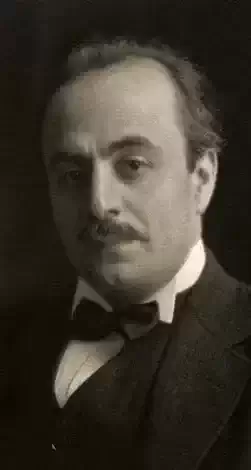
Khalil Gibran
Crime and Punishment chapter XII
Then one of the judges of the city stood forth and said, "Speak to us of Crime and
Punishment."
And he answered saying:
It is when your spirit goes wandering upon the wind,
That you, alone and unguarded, commit a wrong unto others and therefore unto
yourself.
And for that wrong committed must you knock and wait a while unheeded at the gate
of the blessed.
Like the ocean is your god-self;
It remains for ever undefiled.
And like the ether it lifts but the winged.
Even like the sun is your god-self;
It knows not the ways of the mole nor seeks it the holes of the serpent.
But your god-self does not dwell alone in your being.
Much in you is still man, and much in you is not yet man,
But a shapeless pigmy that walks asleep in the mist searching for its own awakening.
And of the man in you would I now speak.
For it is he and not your god-self nor the pigmy in the mist, that knows crime and the
punishment of crime.
Oftentimes have I heard you speak of one who commits a wrong as though he were
not one of you, but a stranger unto you and an intruder upon your world.
But I say that even as the holy and the righteous cannot rise beyond the highest which
is in each one of you,
So the wicked and the weak cannot fall lower than the lowest which is in you also.
And as a single leaf turns not yellow but with the silent knowledge of the whole tree,
So the wrong-doer cannot do wrong without the hidden will of you all.
Like a procession you walk together towards your god-self.
You are the way and the wayfarers.
And when one of you falls down he falls for those behind him, a caution against the
stumbling stone.
Ay, and he falls for those ahead of him, who though faster and surer of foot, yet
removed not the stumbling stone.
And this also, though the word lie heavy upon your hearts:
The murdered is not unaccountable for his own murder,
And the robbed is not blameless in being robbed.
The righteous is not innocent of the deeds of the wicked,
And the white-handed is not clean in the doings of the felon.
Yea, the guilty is oftentimes the victim of the injured,
And still more often the condemned is the burden-bearer for the guiltless and
unblamed.
You cannot separate the just from the unjust and the good from the wicked;
For they stand together before the face of the sun even as the black thread and the
white are woven together.
And when the black thread breaks, the weaver shall look into the whole cloth, and he
shall examine the loom also.
If any of you would bring judgment the unfaithful wife,
Let him also weight the heart of her husband in scales, and measure his soul with
measurements.
And let him who would lash the offender look unto the spirit of the offended.
And if any of you would punish in the name of righteousness and lay the ax unto the
evil tree, let him see to its roots;
And verily he will find the roots of the good and the bad, the fruitful and the fruitless,
all entwined together in the silent heart of the earth.
And you judges who would be just,
What judgment pronounce you upon him who though honest in the flesh yet is a thief
in spirit?
What penalty lay you upon him who slays in the flesh yet is himself slain in the spirit?
And how prosecute you him who in action is a deceiver and an oppressor,
Yet who also is aggrieved and outraged?
And how shall you punish those whose remorse is already greater than their misdeeds?
Is not remorse the justice which is administered by that very law which you would fain
serve?
Yet you cannot lay remorse upon the innocent nor lift it from the heart of the guilty.
Unbidden shall it call in the night, that men may wake and gaze upon themselves.
And you who would understand justice, how shall you unless you look upon all deeds in
the fullness of light?
Only then shall you know that the erect and the fallen are but one man standing in
twilight between the night of his pigmy-self and the day of his god-self,
And that the corner-stone of the temple is not higher than the lowest stone in its
foundation.
Read more →
323
John Greenleaf Whittier
Among the Hills
PRELUDE
ALONG the roadside, like the flowers of gold
That tawny Incas for their gardens wrought,
Heavy with sunshine droops the golden-rod,
And the red pennons of the cardinal-flowers
Hang motionless upon their upright staves.
The sky is hot and hazy, and the wind,
Vying-weary with its long flight from the south,
Unfelt; yet, closely scanned, yon maple leaf
With faintest motion, as one stirs in dreams,
Confesses it. The locust by the wall
Stabs the noon-silence with his sharp alarm.
A single hay-cart down the dusty road
Creaks slowly, with its driver fast asleep
On the load’s top. Against the neighboring hill,
Huddled along the stone wall’s shady side,
The sheep show white, as if a snowdrift still
Defied the dog-star. Through the open door
A drowsy smell of flowers-gray heliotrope,
And white sweet clover, and shy mignonette—
Comes faintly in, and silent chorus lends
To the pervading symphony of peace.
No time is this for hands long over-worn
To task their strength; and (unto Him be praise
Who giveth quietness!) the stress and strain
Of years that did the work of centuries
Have ceased, and we can draw our breath once more
Freely and full. So, as yon harvesters
Make glad their nooning underneath the elms
With tale and riddle and old snatch of song,
I lay aside grave themes, and idly turn
The leaves of memory’s sketch-book, dreaming o’er
Old summer pictures of the quiet hills,
And human life, as quiet, at their feet.
And yet not idly all. A farmer’s son,
Proud of field-lore and harvest craft, and feeling
All their fine possibilities, how rich
And restful even poverty and toil
Become when beauty, harmony, and love
Sit at their humble hearth as angels sat
At evening in the patriarch’s tent, when man
Makes labor noble, and his farmer’s frock
The symbol of a Christian chivalry
Tender and just and generous to her
Who clothes with grace all duty; still, I know
Too well the picture has another side,—
How wearily the grind of toil goes on
Where love is wanting, how the eye and ear
And heart are starved amidst the plenitude
Of nature, and how hard and colorless
Is life without an atmosphere. I look
Across the lapse of half a century,
And call to mind old homesteads, where no flower
Told that the spring had come, but evil weeds,
Nightshade and rough-leaved burdock in the place
Of the sweet doorway greeting of the rose
And honeysuckle, where the house walls seemed
Blistering in sun, without a tree or vine
To cast the tremulous shadow of its leaves
Across the curtainless windows, from whose panes
Fluttered the signal rags of shiftlessness.
Within, the cluttered kitchen-floor, unwashed
(Broom-clean I think they called it); the best room
Stifling with cellar damp, shut from the air
In hot midsummer, bookless, pictureless,
Save the inevitable sampler hung
Over the fireplace, or a mourning piece,
A green-haired woman, peony-cheeked, beneath
Impossible willows; the wide-throated hearth
Bristling with faded pine-boughs half concealing
The piled-up rubbish at the chimney’s back;
And, in sad keeping with all things about them,
Shrill, querulous-women, sour and sullen men,
Untidy, loveless, old before their time,
With scarce a human interest save their own
Monotonous round of small economies,
Or the poor scandal of the neighborhood;
Blind to the beauty everywhere revealed,
Treading the May-flowers with regardless feet;
For them the song-sparrow and the bobolink
Sang not, nor winds made music in the leaves;
For them in vain October’s holocaust
Burned, gold and crimson, over all the hills,
The sacramental mystery of the woods.
Church-goers, fearful of the unseen Powers,
But grumbling over pulpit-tax and pew-rent,
Saving, as shrewd economists, their souls
And winter pork with the least possible outlay
Of salt and sanctity; in daily life
Showing as little actual comprehension
Of Christian charity and love and duty,
As if the Sermon on the Mount had been
Outdated like a last year’s almanac
Rich in broad woodlands and in half-tilled fields,
And yet so pinched and bare and comfortless,
The veriest straggler limping on his rounds,
The sun and air his sole inheritance,
Laughed at a poverty that paid its taxes,
And hugged his rags in self-complacency!
Not such should be the homesteads of a land
Where whoso wisely wills and acts may dwell
As king and lawgiver, in broad-acred state,
With beauty, art, taste, culture, books, to make
His hour of leisure richer than a life
Of fourscore to the barons of old time,
Our yeoman should be equal to his home
Set in the fair, green valleys, purple walled,
A man to match his mountains, not to creep
Dwarfed and abased below them. I would fain
In this light way (of which I needs must own
With the knife-grinder of whom Canning sings,
“Story, God bless you! I have none to tell you!”)
Invite the eye to see and heart to feel
The beauty and the joy within their reach,—
Home, and home loves, and the beatitudes
Of nature free to all. Haply in years
That wait to take the places of our own,
Heard where some breezy balcony looks down
On happy homes, or where the lake in the moon
Sleeps dreaming of the mountains, fair as Ruth,
In the old Hebrew pastoral, at the feet
Of Boaz, even this simple lay of mine
May seem the burden of a prophecy,
Finding its late fulfilment in a change
Slow as the oak’s growth, lifting manhood up
Through broader culture, finer manners, love,
And reverence, to the level of the hills.
O Golden Age, whose light is of the dawn,
And not of sunset, forward, not behind,
Flood the new heavens and earth, and with thee bring
All the old virtues, whatsoever things
Are pure and honest and of good repute,
But add thereto whatever bard has sung
Or seer has told of when in trance and dream
They saw the Happy Isles of prophecy
Let Justice hold her scale, and Truth divide
Between the right and wrong; but give the heart
The freedom of its fair inheritance;
Let the poor prisoner, cramped and starved so long,
At Nature’s table feast his ear and eye
With joy and wonder; let all harmonies
Of sound, form, color, motion, wait upon
The princely guest, whether in soft attire
Of leisure clad, or the coarse frock of toil,
And, lending life to the dead form of faith,
Give human nature reverence for the sake
Of One who bore it, making it divine
With the ineffable tenderness of God;
Let common need, the brotherhood of prayer,
The heirship of an unknown destiny,
The unsolved mystery round about us, make
A man more precious than the gold of Ophir.
Sacred, inviolate, unto whom all things
Should minister, as outward types and signs
Of the eternal beauty which fulfils
The one great purpose of creation, Love,
The sole necessity of Earth and Heaven!
. . . . .
For weeks the clouds had raked the hills
And vexed the vales with raining,
And all the woods were sad with mist,
And all the brooks complaining.
At last, a sudden night-storm tore
The mountain veils asunder,
And swept the valleys clean before
The bosom of the thunder.
Through Sandwich notch the west-wind sang
Good morrow to the cotter;
And once again Chocorua’s horn
Of shadow pierced the water.
Above his broad lake Ossipee,
Once more the sunshine wearing,
Stooped, tracing on that silver shield
His grim armorial bearing.
Clear drawn against the hard blue sky,
The peaks had winter’s keenness;
And, close on autumn’s frost, the vales
Had more than June’s fresh greenness.
Again the sodden forest floors
With golden lights were checkered,
Once more rejoicing leaves in wind
And sunshine danced and flickered.
It was as if the summer’s late
Atoning for it’s sadness
Had borrowed every season’s charm
To end its days in gladness.
I call to mind those banded vales
Of shadow and of shining,
Through which, my hostess at my side,
I drove in day’s declining.
We held our sideling way above
The river’s whitening shallows,
By homesteads old, with wide-flung barns
Swept through and through by swallows,—
By maple orchards, belts of pine
And larches climbing darkly
The mountain slopes, and, over all,
The great peaks rising starkly.
You should have seen that long hill-range
With gaps of brightness riven,—
How through each pass and hollow streamed
The purpling lights of heaven,—
Rivers of gold-mist flowing down
From far celestial fountains,—
The great sun flaming through the rifts
Beyond the wall of mountains.
We paused at last where home-bound cows
Brought down the pasture’s treasure,
And in the barn the rhythmic flails
Beat out a harvest measure.
We heard the night-hawk’s sullen plunge,
The crow his tree-mates calling:
The shadows lengthening down the slopes
About our feet were falling.
And through them smote the level sun
In broken lines of splendor,
Touched the gray rocks and made the green
Of the shorn grass more tender.
The maples bending o’er the gate,
Their arch of leaves just tinted
With yellow warmth, the golden glow
Of coming autumn hinted.
Keen white between the farm-house showed,
And smiled on porch and trellis,
The fair democracy of flowers
That equals cot and palace.
And weaving garlands for her dog,
’Twixt chidings and caresses,
A human flower of childhood shook
The sunshine from her tresses.
On either hand we saw the signs
Of fancy and of shrewdness,
Where taste had wound its arms of vines
Round thrift’s uncomely rudeness.
The sun-brown farmer in his frock
Shook hands, and called to Mary
Bare-armed, as Juno might, she came,
White-aproned from her dairy.
Her air, her smile, her motions, told
Of womanly completeness;
A music as of household songs
Was in her voice of sweetness.
Not fair alone in curve and line,
But something more and better,
The secret charm eluding art,
Its spirit, not its letter;—
An inborn grace that nothing lacked
Of culture or appliance,
The warmth of genial courtesy,
The calm of self-reliance.
Before her queenly womanhood
How dared our hostess utter
The paltry errand of her need
To buy her fresh-churned butter?
She led the way with housewife pride,
Her goodly store disclosing,
Full tenderly the golden balls
With practised hands disposing.
Then, while along the western hills
We watched the changeful glory
Of sunset, on our homeward way,
I heard her simple story.
The early crickets sang; the stream
Plashed through my friend’s narration:
Her rustic patois of the hills
Lost in my free-translation.
“More wise,” she said, “than those who swarm
Our hills in middle summer,
She came, when June’s first roses blow,
To greet the early comer.
“From school and ball and rout she came,
The city’s fair, pale daughter,
To drink the wine of mountain air
Beside the Bearcamp Water.
“Her step grew firmer on the hills
That watch our homesteads over;
On cheek and lip, from summer fields,
She caught the bloom of clover.
“For health comes sparkling in the streams
From cool Chocorua stealing:
There’s iron in our Northern winds;
Our pines are trees of healing.
“She sat beneath the broad-armed elms
That skirt the mowing-meadow,
And watched the gentle west-wind weave
The grass with shine and shadow.
“Beside her, from the summer heat
To share her grateful screening,
With forehead bared, the farmer stood,
Upon his pitchfork leaning.
“Framed in its damp, dark locks, his face
Had nothing mean or common,—
Strong, manly, true, the tenderness
And pride beloved of woman.
“She looked up, glowing with the health
The country air had brought her,
And, laughing, said: ‘You lack a wife,
Your mother lacks a daughter.
“‘To mend your frock and bake your bread
You do not need a lady:
Be sure among these brown old homes
Is some one waiting ready,—
“‘Some fair, sweet girl with skilful hand
And cheerful heart for treasure,
Who never played with ivory keys,
Or danced the polka’s measure.’
“He bent his black brows to a frown,
He set his white teeth tightly.
‘’T is well,’ he said, ‘for one like you
To choose for me so lightly.
“You think, because my life is rude
I take no note of sweetness:
I tell you love has naught to do
With meetness or unmeetness.
“‘Itself its best excuse, it asks
No leave of pride or fashion
When silken zone or homespun frock
It stirs with throbs of passion.
“‘You think me deaf and blind: you bring
Your winning graces hither
As free as if from cradle-time
We two had played together.
“‘You tempt me with your laughing eyes,
Your cheek of sundown’s blushes,
A motion as of waving grain,
A music as of thrushes.
“‘The plaything of your summer sport,
The spells you weave around me
You cannot at your will undo,
Nor leave me as you found me.
“‘You go as lightly as you came,
Your life is well without me;
What care you that these hills will close
Like prison-walls about me?
“‘No mood is mine to seek a wife,
Or daughter for my mother
Who loves you loses in that love
All power to love another!
“‘I dare your pity or your scorn,
With pride your own exceeding;
I fling my heart into your lap
Without a word of pleading.’
“She looked up in his face of pain
So archly, yet so tender
‘And if I lend you mine,’ she said,
‘Will you forgive the lender?
“‘Nor frock nor tan can hide the man;
And see you not, my farmer,
How weak and fond a woman waits
Behind this silken armor?
“‘I love you: on that love alone,
And not my worth, presuming,
Will you not trust for summer fruit
The tree in May-day blooming?’
“Alone the hangbird overhead,
His hair-swung cradle straining,
Looked down to see love’s miracle,—
The giving that is gaining.
“And so the farmer found a wife,
His mother found a daughter
There looks no happier home than hers
On pleasant Bearcamp Water.
“Flowers spring to blossom where she walks
The careful ways of duty;
Our hard, stiff lines of life with her
Are flowing curves of beauty.
“Our homes are cheerier for her sake,
Our door-yards brighter blooming,
And all about the social air
Is sweeter for her coming.
“Unspoken homilies of peace
Her daily life is preaching;
The still refreshment of the dew
Is her unconscious teaching.
“And never tenderer hand than hers
Unknits the brow of ailing;
Her garments to the sick man’s ear
Have music in their trailing.
“And when, in pleasant harvest moons,
The youthful huskers gather,
Or sleigh-drives on the mountain ways
Defy the winter weather,—
“In sugar-camps, when south and warm
The winds of March are blowing,
And sweetly from its thawing veins
The maple’s blood is flowing,—
“In summer, where some lilied pond
Its virgin zone is baring,
Or where the ruddy autumn fire
Lights up the apple-paring,—
“The coarseness of a ruder time
Her finer mirth displaces,
A subtler sense of pleasure fills
Each rustic sport she graces.
“Her presence lends its warmth and health
To all who come before it.
If woman lost us Eden, such
As she alone restore it.
“For larger life and wiser aims
The farmer is her debtor;
Who holds to his another’s heart
Must needs be worse or better.
“Through her his civic service shows
A purer-toned ambition;
No double consciousness divides
The man and politician.
“In party’s doubtful ways he trusts
Her instincts to determine;
At the loud polls, the thought of her
Recalls Christ’s Mountain Sermon.
“He owns her logic of the heart,
And wisdom of unreason,
Supplying, while he doubts and weighs,
The needed word in season.
“He sees with pride her richer thought,
Her fancy’s freer ranges;
And love thus deepened to respect
Is proof against all changes.
“And if she walks at ease in ways
His feet are slow to travel,
And if she reads with cultured eyes
What his may scarce unravel,
“Still clearer, for her keener sight
Of beauty and of wonder,
He learns the meaning of the hills
He dwelt from childhood under.
“And higher, warmed with summer lights,
Or winter-crowned and hoary,
The ridged horizon lifts for him
Its inner veils of glory.
“He has his own free, bookless lore,
The lessons nature taught him,
The wisdom which the woods and hills
And toiling men have brought him:
“The steady force of will whereby
Her flexile grace seems sweeter;
The sturdy counterpoise which makes
Her woman’s life completer.
“A latent fire of soul which lacks
No breath of love to fan it;
And wit, that, like his native brooks,
Plays over solid granite.
“How dwarfed against his manliness
She sees the poor pretension,
The wants, the aims, the follies, born
Of fashion and convention.
“How life behind its accidents
Stands strong and self-sustaining,
The human fact transcending all
The losing and the gaining.
“And so in grateful interchange
Of teacher and of hearer,
Their lives their true distinctness keep
While daily drawing nearer.
“And if the husband or the wife
In home’s strong light discovers
Such slight defaults as failed to meet
The blinded eyes of lovers,
“Why need we care to ask?—who dreams
Without their thorns of roses,
Or wonders that the truest steel
The readiest spark discloses?
“For still in mutual sufferance lies
The secret of true living;
Love scarce is love that never knows
The sweetness of forgiving.
“We send the Squire to General Court,
He takes his young wife thither;
No prouder man election day
Rides through the sweet June weather.
“He sees with eyes of manly trust
All hearts to her inclining;
Not less for him his household light
That others share its shining.”
Thus, while my hostess spake, there grew
Before me, warmer tinted
And outlined with a tenderer grace,
The picture that she hinted.
The sunset smouldered as we drove
Beneath the deep hill-shadows.
Below us wreaths of white fog walked
Like ghosts the haunted meadows.
Sounding the summer night, the stars
Dropped down their golden plummets;
The pale arc of the Northern lights
Rose o’er the mountain summits,—
Until, at last, beneath its bridge,
We heard the Bearcamp flowing,
And saw across the mapled lawn
The welcome home lights glowing;—
And, musing on the tale I heard,
’T were well, thought I, if often
To rugged farm-life came the gift
To harmonize and soften;—
If more and more we found the troth
Of fact and fancy plighted,
And culture’s charm and labor’s strength
In rural homes united,—
The simple life, the homely hearth,
With beauty’s sphere surrounding,
And blessing toil where toil abounds
With graces more abounding.
Read more →
323