
Soul
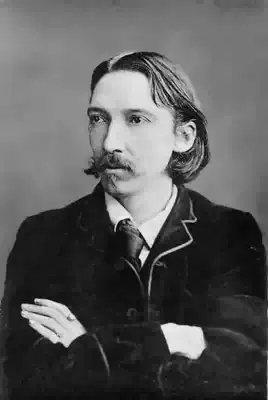
Robert Louis Stevenson
Katherine
We see you as we see a face
That trembles in a forest place
Upon the mirror of a pool
Forever quiet, clear and cool;
And in the wayward glass, appears
To hover between smiles and tears,
Elfin and human, airy and true,
And backed by the reflected blue.
Read more →
315

John Donne
To His Mistress Going to Bed
Come, Madam, come, all rest my powers defy,
Until I labour, I in labour lie.
The foe oft-times having the foe in sight,
Is tired with standing though they never fight.
Off with that girdle, like heaven's zone glistering,
But a far fairer world encompassing.
Unpin that spangled breastplate which you wear,
That th' eyes of busy fools may be stopped there.
Unlace yourself, for that harmonious chime
Tells me from you, that now 'tis your bed time.
Off with that happy busk, which I envy,
That still can be, and still can stand so nigh.
Your gown going off, such beauteous state reveals,
As when from flowery meads th' hill's shadow steals.
Off with that wiry coronet and show
The hairy diadem which on you doth grow;
Now off with those shoes, and then safely tread
In this love's hallowed temple, this soft bed.
In such white robes heaven's angels used to be
Received by men; thou angel bring'st with thee
A heaven like Mahomet's paradise; and though
Ill spirits walk in white, we easily know
By this these angels from an evil sprite,
Those set our hairs, but these our flesh upright.
License my roving hands, and let them go
Before, behind, between, above, below.
O my America, my new found land,
My kingdom, safeliest when with one man manned,
My mine of precious stones, my empery,
How blessed am I in this discovering thee!
To enter in these bonds, is to be free;
Then where my hand is set, my seal shall be.
Full nakedness, all joys are due to thee
As souls unbodied, bodies unclothed must be,
To taste whole joys. Gems which you women use
Are like Atlanta's balls, cast in men's views,
That when a fool's eye lighteth on a gem,
His earthly soul may covet theirs, not them.
Like pictures, or like books' gay coverings made
For laymen, are all women thus arrayed;
Themselves are mystic books, which only we
Whom their imputed grace will dignify
Must see revealed. Then since I may know,
As liberally, as to a midwife, show
Thyself: cast all, yea, this white linen hence,
Here is no penance, much less innocence.
To teach thee, I am naked first, why then
What needst thou have more covering than a man.
Read more →
315

Edna St. Vincent Millay
Pity Me Not Because The Light Of Day
Pity me not because the light of day
At close of day no longer walks the sky;
Pity me not for beauties passed away
From field and thicket as the the year goes by;
Pity me not the waning of the moon,
Nor that the ebbing tide goes out to sea,
Nor that a man's desire is hushed so soon,
And you no longer look with love on me.
This have I known always: Love is no more
Than the wide blossom which the wind assails,
Than the great tide that treads the shifting shore,
Strewing fresh wreckage gathered in the gales:
Pity me that the heart is slow to learn
What the swift mind beholds at ever turn.
Read more →
314
John Donne
Holy Sonnet VII: At The Round Earth's Imagined Corners Blow
At the round earth's imagined corners blow
Your trumpets, angels, and arise, arise
From death, you numberless infinities
Of souls, and to your scattered bodies go,
All whom the flood did, and fire shall, overthrow,
All whom war, dearth, age, agues, tyrannies,
Despair, law, chance, hath slain, and you whose eyes
Shall behold God, and never taste death's woe.
But let them sleep, Lord, and me mourn a space,
For, if above all these my sins abound,
'Tis late to ask abundance of Thy grace,
When we are there. Here on this lowly ground
Teach me how to repent; for that's as good
As if Thou'dst sealed my pardon, with Thy blood.
Read more →
316

William Shakespeare
Sonnet 62: Sin of self-love possesseth all mine eye
Sin of self-love possesseth all mine eye,
And all my soul, and all my every part;
And for this sin there is no remedy,
It is so grounded inward in my heart.
Methinks no face so gracious is as mine,
No shape so true, no truth of such account;
And for my self mine own worth do define,
As I all other in all worths surmount.
But when my glass shows me myself indeed
Beated and chapped with tanned antiquity,
Mine own self-love quite contrary I read;
Self so self-loving were iniquity.
'Tis thee, myself, that for my self I praise,
Painting my age with beauty of thy days.
Read more →
315

Khalil Gibran
Song of the Soul XXII
In the depth of my soul there is
A wordless song - a song that lives
In the seed of my heart.
It refuses to melt with ink on
Parchment; it engulfs my affection
In a transparent cloak and flows,
But not upon my lips.
How can I sigh it? I fear it may
Mingle with earthly ether;
To whom shall I sing it? It dwells
In the house of my soul, in fear of
Harsh ears.
When I look into my inner eyes
I see the shadow of its shadow;
When I touch my fingertips
I feel its vibrations.
The deeds of my hands heed its
Presence as a lake must reflect
The glittering stars; my tears
Reveal it, as bright drops of dew
Reveal the secret of a withering rose.
It is a song composed by contemplation,
And published by silence,
And shunned by clamor,
And folded by truth,
And repeated by dreams,
And understood by love,
And hidden by awakening,
And sung by the soul.
It is the song of love;
What Cain or Esau could sing it?
It is more fragrant than jasmine;
What voice could enslave it?
It is heartbound, as a virgin's secret;
What string could quiver it?
Who dares unite the roar of the sea
And the singing of the nightingale?
Who dares compare the shrieking tempest
To the sigh of an infant?
Who dares speak aloud the words
Intended for the heart to speak?
What human dares sing in voice
The song of God?
Read more →
313

John Greenleaf Whittier
The Cry Of A Lost Soul
In that black forest, where, when day is done,
With a snake's stillness glides the Amazon
Darkly from sunset to the rising sun,
A cry, as of the pained heart of the wood,
The long, despairing moan of solitude
And darkness and the absence of all good,
Startles the traveller, with a sound so drear,
So full of hopeless agony and fear,
His heart stands still and listens like his ear.
The guide, as if he heard a dead-bell toll,
Starts, drops his oar against the gunwale's thole,
Crosses himself, and whispers, 'A lost soul!'
'No, Senor, not a bird. I know it well,-It
is the pained soul of some infidel
Or cursed heretic that cries from hell.
'Poor fool! with hope still mocking his despair,
He wanders, shrieking on the midnight air
For human pity and for Christian prayer.
'Saints strike him dumb! Our Holy Mother hath
No prayer for him who, sinning unto death,
Burns always in the furnace of God's wrath!'
Thus to the baptized pagan's cruel lie,
Lending new horror to that mournful cry,
The voyager listens, making no reply.
Dim burns the boat-lamp: shadows deepen round,
From giant trees with snake-like creepers wound,
And the black water glides without a sound.
But in the traveller's heart a secret sense
Of nature plastic to benign intents,
And an eternal good in Providence,
Lifts to the starry calm of heaven his eyes;
And to! rebuking all earth's ominous cries,
The Cross of pardon lights the tropic skies!
'Father of all!' he urges his strong plea,
'Thou lovest all: Thy erring child may be
Lost to himself, but never lost to Thee!
'All souls are Thine; the wings of morning bear
None from that Presence which is everywhere,
Nor hell itself can hide, for Thou art there.
'Through sins of sense, perversities of will,
Through doubt and pain, through guilt and shame and ill,
Thy pitying eye is on Thy creature still.
'Wilt thou not make, Eternal Source and Goal!
In Thy long years, life's broken circle whole,
And change to praise the cry of a lost soul?'
Read more →
313

Muhammad Iqbal
The Cloud On The Mountain
Elevation bestows the sky's nearness to my abode
I am the mountain's cloud, my skirt sprinkles roses
Now the wilderness, now the rose garden is my abode
City and wilderness are mine, ocean is mine, forest is mine
If I want to return to some valley for the night
The mountain's verdure is my carpet of velvet
Nature has taught me to be a pearl spreader
To chant the camel song for the camel of the Beloved of Mercy
To be the comforter of the dispirited farmer's heart
To be the elegance of the assembly of the garden's trees
I spread out over the face of the earth like the locks
I get arranged and adorned by the breeze's
I tantalize the expecting eye from a distance
As I pass silently over some habitation
As I approach strolling towards a brook's bank
I endow the brook with ear rings of whirlpools
I am the hope of the freshly grown field's verdure
I am the ocean's offspring, I am nourished by the sun
I gave ocean's tumult to the mountain spring
I charmed the birds into thrilling chants
I pronounced 'Rise' standing by the verdure's head
I conferred the taste for smile to the rose-bud
By my benevolence farmers' huts on the mountain side
Are converted into bed chambers of the opulent.
Read more →
313

Kabir
The self forgets itself
The self forgets itself
as a frantic dog in a glass temple
barks himself to death;
as a lion, seeing a form in the well,
leaps on the image;
as a rutting elephant sticks his tusk
in a crystal boulder.
The monkey has his fistful of sweets
and won't let go. So
from house to house
he gibbers.
Kabir says, parrot-on-a-pole:
who has caught you?
Read more →
312
John Donne
A Hymn To Christ At The Author's Last Going Into Germany
In what torn ship soever I embark,
That ship shall be my emblem of thy Ark;
What sea soever swallow me, that flood
Shall be to me an emblem of thy blood;
Though thou with clouds of anger do disguise
Thy face, yet through that mask I know those eyes,
Which, though they turn away sometimes,
They never will despise.
I sacrifice this Island unto thee,
And all whom I loved there, and who loved me;
When I have put our seas 'twixt them and me,
Put thou thy sea betwixt my sins and thee.
As the tree's sap doth seek the root below
In winter, in my winter now I go,
Where none but thee, th' Eternal root
Of true Love, I may know.
Nor thou nor thy religion dost control
The amorousness of an harmonious Soul,
But thou wouldst have that love thyself: as thou
Art jealous, Lord, so I am jealous now,
Thou lov'st not, till from loving more, Thou free
My soul: who ever gives, takes liberty:
O, if thou car'st not whom I love
Alas, thou lov'st not me.
Seal then this bill of my Divorce to All,
On whom those fainter beams of love did fall;
Marry those loves, which in youth scattered be
On Fame, Wit, Hopes (false mistresses) to thee.
Churches are best for Prayer, that have least light:
To see God only, I go out of sight:
And to 'scape stormy days, I choose
An Everlasting night.
Read more →
314
John Greenleaf Whittier
A Summer Pilgrimage
To kneel before some saintly shrine,
To breathe the health of airs divine,
Or bathe where sacred rivers flow,
The cowled and turbaned pilgrims go.
I too, a palmer, take, as they
With staff and scallop-shell, my way
To feel, from burdening cares and ills,
The strong uplifting of the hills.
The years are many since, at first,
For dreamed-of wonders all athirst,
I saw on Winnipesaukee fall
The shadow of the mountain wall.
Ah! where are they who sailed with me
The beautiful island-studded sea?
And am I he whose keen surprise
Flashed out from such unclouded eyes?
Still, when the sun of summer burns,
My longing for the hills returns;
And northward, leaving at my back
The warm vale of the Merrimac,
I go to meet the winds of morn,
Blown down the hill-gaps, mountain-born,
Breathe scent of pines, and satisfy
The hunger of a lowland eye.
Again I see the day decline
Along a ridged horizon line;
Touching the hill-tops, as a nun
Her beaded rosary, sinks the sun.
One lake lies golden, which shall soon
Be silver in the rising moon;
And one, the crimson of the skies
And mountain purple multiplies.
With the untroubled quiet blends
The distance-softened voice of friends;
The girl's light laugh no discord brings
To the low song the pine-tree sings;
And, not unwelcome, comes the hail
Of boyhood from his nearing sail.
The human presence breaks no spell,
And sunset still is miracle!
Calm as the hour, methinks I feel
A sense of worship o'er me steal;
Not that of satyr-charming Pan,
No cult of Nature shaming man,
Not Beauty's self, but that which lives
And shines through all the veils it weaves,-Soul
of the mountain, lake, and wood,
Their witness to the Eternal Good!
And if, by fond illusion, here
The earth to heaven seems drawing near,
And yon outlying range invites
To other and serener heights,
Scarce hid behind its topmost swell,
The shining Mounts Delectable
A dream may hint of truth no less
Than the sharp light of wakefulness.
As through her vale of incense smoke.
Of old the spell-rapt priestess spoke,
More than her heathen oracle,
May not this trance of sunset tell
That Nature's forms of loveliness
Their heavenly archetypes confess,
Fashioned like Israel's ark alone
From patterns in the Mount made known?
A holier beauty overbroods
These fair and faint similitudes;
Yet not unblest is he who sees
Shadows of God's realities,
And knows beyond this masquerade
Of shape and color, light and shade,
And dawn and set, and wax and wane,
Eternal verities remain.
O gems of sapphire, granite set!
O hills that charmed horizons fret
I know how fair your morns can break,
In rosy light on isle and lake;
How over wooded slopes can run
The noonday play of cloud and sun,
And evening droop her oriflamme
Of gold and red in still Asquam.
The summer moons may round again,
And careless feet these hills profane;
These sunsets waste on vacant eyes
The lavish splendor of the skies;
Fashion and folly, misplaced here,
Sigh for their natural atmosphere,
And travelled pride the outlook scorn
Of lesser heights than Matterhorn.
But let me dream that hill and sky
Of unseen beauty prophesy;
And in these tinted lakes behold
The trailing of the raiment fold
Of that which, still eluding gaze,
Allures to upward-tending ways,
Whose footprints make, wherever found,
Our common earth a holy ground.
Read more →
313

Emily Dickinson
God is a distant—stately Lover
God is a distant—stately Lover—
Woos, as He states us—by His Son—
Verily, a Vicarious Courtship—
"Miles", and "Priscilla", were such an One—
But, lest the Soul—like fair "Priscilla"
Choose the Envoy—and spurn the Groom—
Vouches, with hyperbolic archness—
"Miles", and "John Alden" were Synonym—
Read more →
312
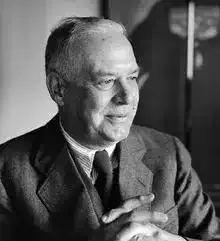
Wallace Stevens
Gray Room
Although you sit in a room that is gray,
Except for the silver
Of the straw-paper,
And pick
At your pale white gown;
Or lift one of the green beads
Of your necklace,
To let it fall;
Or gaze at your green fan
Printed with the red branches of a red willow;
Or, with one finger,
Move the leaf in the bowl--
The leaf that has fallen from the branches of the forsythia
Beside you...
What is all this?
I know how furiously your heart is beating.
Read more →
314
John Donne
Holy Sonnet XI: Spit In My Face You Jewes
Spit in my face you Jewes, and pierce my side,
Buffet, and scoffe, scourge, and crucifie mee,
For I have sinn'd, and sinn'd, and onely hee,
Who could do no iniquitie, hath dyed:
But by my death can not be satisfied
My sinnes, which passe the Jewes impiety:
They kill'd once an inglorious man, but I
Crucifie him daily, being now glorified.
Oh let mee then, his strange love still admire:
Kings pardon, but he bore our punishment.
And Jacob came cloth'd in vile harsh attire
But to supplant, and with gainfull intent:
God cloth'd himselfe in vile mans flesh, that so
Hee might be weake enough to suffer woe.
Read more →
314

Henry Wadsworth Longfellow
Evangeline: Part The Second. I.
MANY a weary year had passed since the burning of Grand-Pré,
When on the falling tide the freighted vessels departed,
Bearing a nation, with all its household gods, into exile,
Exile without an end, and without an example in story.
Far asunder, on separate coasts, the Acadians landed;
Scattered were they, like flakes of snow, when the wind from the northeast
Strikes aslant through the fogs that darken the Banks of Newfoundland.
Friendless, homeless, hopeless, they wandered from city to city,
From the cold lakes of the North to sultry Southern savannas,-
From the bleak shores of the sea to the lands where the Father of Waters
Seizes the hills in his hands, and drags them down to the ocean,
Deep in their sands to bury the scattered bones of the mammoth.
Friends they sought and homes; and many, despairing, heart-broken,
Asked of the earth but a grave, and no longer a friend nor a fireside.
Written their history stands on tablets of stone in the churchyards.
Long among them was seen a maiden who waited and wandered,
Lowly and meek in spirit, and patiently suffering all things.
Fair was she and young; but, alas! before her extended,
Dreary and vast and silent, the desert of life, with its pathway
Marked by the graves of those who had sorrowed and suffered before her,
Passions long extinguished, and hopes long dead and abandoned,
As the emigrant's way o'er the Western desert is marked by
Camp-fires long consumed, and bones that bleach in the sunshine.
Something there was in her life incomplete, imperfect, unfinished;
As if a morning of June, with all its music and sunshine,
Suddenly paused in the sky, and, fading, slowly descended
Into the east again, from whence it late had arisen.
Sometimes she lingered in towns, till, urged by the fever within her,
Urged by a restless longing, the hunger and thirst of the spirit,
She would commence again her endless search and endeavor;
Sometimes in churchyards strayed, and gazed on the crosses and tombstones,
Sat by some nameless grave, and thought that perhaps in its bosom
He was already at rest, and she longed to slumber beside him.
Sometimes a rumor, a hearsay, an inarticulate whisper,
Came with its airy hand to point and beckon her forward.
Sometimes she spake with those who had seen her beloved and known him,
But it was long ago, in some far-off place or forgotten.
'Gabriel Lajeunesse!' they said; 'O yes! we have seen him.
He was with Basil the blacksmith, and both have gone to the prairies;
Coureurs-des-Bois are they, and famous hunters and trappers,'
'Gabriel Lajeunesse!' said others; 'O yes! we have seen him.
He is a Voyageur in the lowlands of Louisiana.'
Then would they say: 'Dear child! why dream and wait for him longer?
Are there not other youths as fair as Gabriel? others
Who have hearts as tender and true, and spirits as loyal?
Here is Baptiste Leblanc, the notary's son, who has loved thee
Many a tedious year; come, give him thy hand and be happy!
Thou art too fair to be left to braid St. Catherine's tresses.'
Then would Evangeline answer, serenely but sadly, 'I cannot!
Whither my heart has gone, there follows my hand, and not elsewhere.
For when the heart goes before, like a lamp, and illumines the pathway,
Many things are made clear, that else lie hidden in darkness.'
Thereupon the priest, her friend and father-confessor,
Said, with a smile, 'O daughter! thy God thus speaketh within thee!
Talk not of wasted affection, affection never was wasted;
If it enrich not the heart of another, its waters, returning
Back to their springs, like the rain, shall fill them full of refreshment;
That which the fountain sends forth returns again to the fountain.
Patience; accomplish thy labor; accomplish thy work of affection!
Sorrow and silence are strong, and patient endurance is godlike.
Therefore accomplish thy labor of love, till the heart is made godlike,
Purified, strengthened, perfected, and rendered more worthy of heaven!'
Cheered by the good man's words, Evangeline labored and waited.
Still in her heart she heard the funeral dirge of the ocean,
But with its sound there was mingled a voice that whispered, 'Despair not!'
Thus did that poor soul wander in want and cheerless discomfort,
Bleeding, barefooted, over the shards and thorns of existence.
Let me essay, O Muse! to follow the wanderer's footsteps;-
Not through each devious path, each changeful year of existence;
But as a traveller follows a streamlet's course through the valley:
Far from its margin at times, and seeing the gleam of its water
Here and there, in some open space, and at intervals only;
Then drawing nearer its banks, through sylvan glooms that conceal it,
Though he behold it not, he can hear its continuous murmur;
Happy, at length, if he find the spot where it reaches an outlet.
Read more →
313

Mirza Ghalib
The dropp dies in the river
The dropp dies in the riverof its joy
Pain goes so far it cures itself
In the spring after the heavy rain the cloud disappears
That was nothing but tears
In the spring the mirror turns green
holding a miracle
Change the shining wind
The rose led us to our eyes
Let whatever is be open.
[Translated by W. S. Merwin and Aijaz Ahmed]
Read more →
312

Claude Mckay
The Tropics in New York
Bananas ripe and green, and ginger-root,
Cocoa in pods and alligator pears,
And tangerines and mangoes and grape fruit,
Fit for the highest prize at parish fairs,
Set in the window, bringing memories
Of fruit-trees laden by low-singing rills,
And dewy dawns, and mystical blue skies
In benediction over nun-like hills.
My eyes grew dim, and I could no more gaze;
A wave of longing through my body swept,
And, hungry for the old, familiar ways,
I turned aside and bowed my head and wept.
Read more →
312
John Donne
Holy Sonnet XI: Spit In My Face You Jews, And Pierce My Side
Spit in my face you Jews, and pierce my side,
Buffet, and scoff, scourge, and crucify me,
For I have sinned, and sinned, and only he
Who could do no iniquity hath died:
But by my death can not be satisfied
My sins, which pass the Jews' impiety:
They killed once an inglorious man, but I
Crucify him daily, being now glorified.
Oh let me, then, his strange love still admire:
Kings pardon, but he bore our punishment.
And Jacob came clothed in vile harsh attire
But to supplant, and with gainful intent:
God clothed himself in vile man's flesh, that so
He might be weak enough to suffer woe.
Read more →
313

Dante Alighieri
Love and the Gentle Heart
Love and the gentle heart are one thing,
just as the poet says in his verse,
each from the other one as well divorced
as reason from the mind’s reasoning.
Nature craves love, and then creates love king,
and makes the heart a palace where he’ll stay,
perhaps a shorter or a longer day,
breathing quietly, gently slumbering.
Then beauty in a virtuous woman’s face
makes the eyes yearn, and strikes the heart,
so that the eyes’ desire’s reborn again,
and often, rooting there with longing, stays,
Till love, at last, out of its dreaming starts.
Woman’s moved likewise by a virtuous man.
Read more →
312
John Greenleaf Whittier
Birchbrook Mill
A NOTELESS stream, the Birchbrook runs
Beneath its leaning trees;
That low, soft ripple is its own,
That dull roar is the sea's.
Of human signs it sees alone
The distant church spire's tip,
And, ghost-like, on a blank of gray,
The white sail of a ship.
No more a toiler at the wheel,
It wanders at its will;
Nor dam nor pond is left to tell
Where once was Birchbrook mill.
The timbers of that mill have fed
Long since a farmer's fires;
His doorsteps are the stones that ground
The harvest of his sires.
Man trespassed here; but Nature lost
No right of her domain;
She waited, and she brought the old
Wild beauty back again.
By day the sunlight through the leaves
Falls on its moist, green sod,
And wakes the violet bloom of spring
And autumn's golden-rod.
Its birches whisper to the wind,
The swallow dips her wings
In the cool spray, and on its banks
The gray song-sparrow sings.
But from it, when the dark night falls,
The school-girl shrinks with dread;
The farmer, home-bound from his fields,
Goes by with quickened tread.
They dare not pause to hear the grind
Of shadowy stone on stone;
The plashing of a water-wheel
Where wheel there now is none.
Has not a cry of pain been heard
Above the clattering mill?
The pawing of an unseen horse,
Who waits his mistress still?
Yet never to the listener's eye
Has sight confirmed the sound;
A wavering birch line marks alone
The vacant pasture ground.
No ghostly arms fling up to heaven
The agony of prayer;
No spectral steed impatient shakes
His white mane on the air.
The meaning of that common dread
No tongue has fitly told;
The secret of the dark surmise
The brook and birches hold.
What nameless horror of the past
Broods here forevermore?
What ghost his unforgiven sin
Is grinding o'er and o'er?
Does, then, immortal memory play
The actor's tragic part,
Rehearsals of a mortal life
And unveiled human heart?
God's pity spare a guilty soul
That drama of its ill,
And let the scenic curtain fall
On Birchbrook's haunted mill
Read more →
313
John Greenleaf Whittier
Inscriptions on a Sun-Dial
For Dr Henry L Bowditch
With warning hand I mark Time's rapid
flight
From life's glad morning to it's solemn
night;
Yet through thee dear God's love, I also
show
There's Light above me by the shade
below.
Read more →
312
Henry Wadsworth Longfellow
By The Seaside : Sir Humphrey Gilbert
Southward with fleet of ice
Sailed the corsair Death;
Wild and gast blew the blast,
And the east-wind was his breath.
His lordly ships of ice
Glisten in the sun;
On each side, like pennons wide,
Flashing crystal streamlets run.
His sails of white sea-mist
Dripped with silver rain;
But where he passed there were cast
Leaden shadows o'er the main.
Eastward from Campobello
Sir Humphrey Gilbert sailed;
Three days or more seaward he bore,
Then, alas! the land-wind failed.
Alas! the land-wind failed,
And ice-cold grew the night;
And nevermore, on sea or shore,
Should Sir Humphrey see the light.
He sat upon the deck,
The Book was in his hand;
'Do not fear! Heaven is as near,'
He said, 'by water as by land!'
In the first watch of the night,
Without a signal's sound,
Out of the sea, mysteriously,
The fleet of Death rose all around.
The moon and the evening star
Were hanging in the shrouds;
Every mast, as it passed,
Seemed to rake the passing clouds.
They grappled with their prize,
At midnight black and cold!
As of a rock was the shock;
Heavily the ground-swell rolled.
Southward through day and dark,
They drift in cold embrace,
With mist and rain, o'er the open main;
Yet there seems no change of place.
Southward, forever southward,
They drift through dark and day;
And like a dream, in the Gulf-Stream
Sinking, vanish all away.
Read more →
313
William Shakespeare
Fairy Land v
FULL fathom five thy father lies;
Of his bones are coral made;
Those are pearls that were his eyes:
Nothing of him that doth fade,
But doth suffer a sea-change
Into something rich and strange.
Sea-nymphs hourly ring his knell:
Ding-dong.
Hark! now I hear them-Ding-
dong, bell!
Read more →
313
