

Poems in this topic
Society and the World
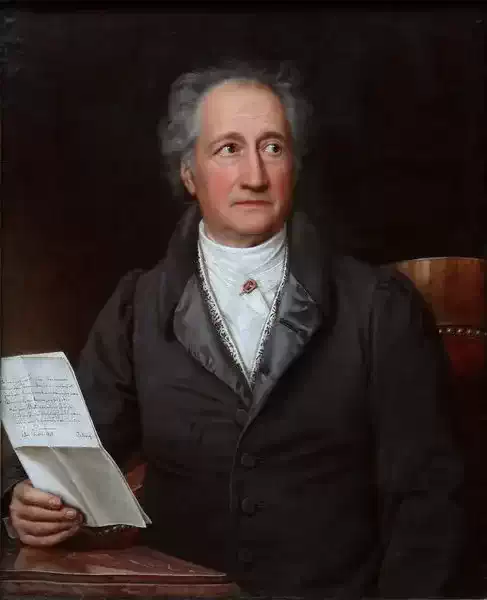
Johann Wolfgang von Goethe
Book Of Contemplation - Five Things
Book Of Contemplation - Five Things
WHAT makes time short to me?
Activity!
What makes it long and spiritless?
'Tis idleness!
What brings us to debt?
To delay and forget!
What makes us succeed?
Decision with speed
How to fame to ascend?
Oneself to defend!
WHAT makes time short to me?
Activity!
What makes it long and spiritless?
'Tis idleness!
What brings us to debt?
To delay and forget!
What makes us succeed?
Decision with speed
How to fame to ascend?
Oneself to defend!
420
Johann Wolfgang von Goethe
Ballad Of The Banished And Returning Count
Ballad Of The Banished And Returning Count
OH, enter old minstrel, thou time-honour'd one!
We children are here in the hall all alone,
The portals we straightway will bar.
Our mother is praying, our father is gone
To the forest, on wolves to make war.
Oh sing us a ballad, the tale then repeat,
'Till brother and I learn it right;
We long have been hoping a minstrel to meet,
For children hear tales with delight.
"At midnight, when darkness its fearful veil weaves,
His lofty and stately old castle he leaves,
But first he has buried his wealth.
What figure is that in his arms one perceives,
As the Count quits the gateway by stealth?
O'er what is his mantle so hastily thrown?
What bears he along in his flight?
A daughter it is, and she gently sleeps on"--
The children they hear with delight.
"The morning soon glimmers. the world is so wide,
In valleys and forests a home is supplied,
The bard in each village is cheer'd.
Thus lives he and wanders, while years onward glide,
And longer still waxes his beard;
But the maiden so fair in his arms grows amain,
'Neath her star all-protecting and bright,
Secured in the mantle from wind and from rain--"
The children they hear with delight.
"And year upon year with swift footstep now steals,
The mantle it fades, many rents it reveals,
The maiden no more it can hold.
The father he sees her, what rapture he feels!
His joy cannot now be controll'd.
How worthy she seems of the race whence she springs,
How noble and fair to the sight!
What wealth to her dearly-loved father she brings!"--
The children they hear with delight.
"Then comes there a princely knight galloping by,
She stretches her hand out, as soon as he's nigh,
But alms he refuses to give.
He seizes her hand, with a smile in his eye:
'Thou art mine!' he exclaims, 'while I live!'
'When thou know'st,' cries the old man, 'the treasure that's
there,
A princess thou'lt make her of right;
Betroth'd be she now, on this spot green and fair--'"
The children they hear with delight.
"So she's bless'd by the priest on the hallowed place,
And she goes with a smiling but sorrowful face,
From her father she fain would not part.
The old man still wanders with ne'er-changing pace,
He covers with joy his sad heart.
So I think of my daughter, as years pass away,
And my grandchildren far from my sight;
I bless them by night, and I bless them by day"--
The children they hear with delight.
He blesses the children: a knocking they hear,
The father it is! They spring forward in fear,
The old man they cannot conceal-"
Thou beggar, wouldst lure, then, my children so dear?
Straight seize him, ye vassals of steel!
To the dungeon most deep, with the fool-hardy knave!"
The mother from far hears the fight;
She hastens with flatt'ring entreaty to crave--
The children they hear with delight.
The vassals they suffer the Bard to stand there,
And mother and children implore him to spare,
The proud prince would stifle his ire,
'Till driven to fury at hearing their prayer,
His smouldering anger takes fire:
"Thou pitiful race! Oh, thou beggarly crew!
Eclipsing my star, once so bright!
Ye'll bring me destruction, ye sorely shall rue!"
The children they hear with affright.
The old man still stands there with dignified mien,
The vassals of steel quake before him, I ween,
The Count's fury increases in power;
"My wedded existence a curse long has been,
And these are the fruits from that flower!
'Tis ever denied, and the saying is true,
That to wed with the base-born is right;
The beggar has borne me a beggarly crew,--"
The children they hear with affright.
"If the husband, the father, thus treats you with scorn,
If the holiest bonds by him rashly are torn,
Then come to your father--to me!
The beggar may gladden life's pathway forlorn,
Though aged and weak he may be.
This castle is mine! thou hast made it thy prey,
Thy people 'twas put me to flight;
The tokens I bear will confirm what I say"--
The children they hear with delight.
"The king who erst govern'd returneth again,
And restores to the Faithful the goods that were ta'en,
I'll unseal all my treasures the while;
The laws shall be gentle, and peaceful the reign"--
The old man thus cries with a smile-
"Take courage, my son! all hath turned out for good,
And each hath a star that is bright,
Those the princess hath borne thee are princely in blood,"--
The children thy hear with delight.
OH, enter old minstrel, thou time-honour'd one!
We children are here in the hall all alone,
The portals we straightway will bar.
Our mother is praying, our father is gone
To the forest, on wolves to make war.
Oh sing us a ballad, the tale then repeat,
'Till brother and I learn it right;
We long have been hoping a minstrel to meet,
For children hear tales with delight.
"At midnight, when darkness its fearful veil weaves,
His lofty and stately old castle he leaves,
But first he has buried his wealth.
What figure is that in his arms one perceives,
As the Count quits the gateway by stealth?
O'er what is his mantle so hastily thrown?
What bears he along in his flight?
A daughter it is, and she gently sleeps on"--
The children they hear with delight.
"The morning soon glimmers. the world is so wide,
In valleys and forests a home is supplied,
The bard in each village is cheer'd.
Thus lives he and wanders, while years onward glide,
And longer still waxes his beard;
But the maiden so fair in his arms grows amain,
'Neath her star all-protecting and bright,
Secured in the mantle from wind and from rain--"
The children they hear with delight.
"And year upon year with swift footstep now steals,
The mantle it fades, many rents it reveals,
The maiden no more it can hold.
The father he sees her, what rapture he feels!
His joy cannot now be controll'd.
How worthy she seems of the race whence she springs,
How noble and fair to the sight!
What wealth to her dearly-loved father she brings!"--
The children they hear with delight.
"Then comes there a princely knight galloping by,
She stretches her hand out, as soon as he's nigh,
But alms he refuses to give.
He seizes her hand, with a smile in his eye:
'Thou art mine!' he exclaims, 'while I live!'
'When thou know'st,' cries the old man, 'the treasure that's
there,
A princess thou'lt make her of right;
Betroth'd be she now, on this spot green and fair--'"
The children they hear with delight.
"So she's bless'd by the priest on the hallowed place,
And she goes with a smiling but sorrowful face,
From her father she fain would not part.
The old man still wanders with ne'er-changing pace,
He covers with joy his sad heart.
So I think of my daughter, as years pass away,
And my grandchildren far from my sight;
I bless them by night, and I bless them by day"--
The children they hear with delight.
He blesses the children: a knocking they hear,
The father it is! They spring forward in fear,
The old man they cannot conceal-"
Thou beggar, wouldst lure, then, my children so dear?
Straight seize him, ye vassals of steel!
To the dungeon most deep, with the fool-hardy knave!"
The mother from far hears the fight;
She hastens with flatt'ring entreaty to crave--
The children they hear with delight.
The vassals they suffer the Bard to stand there,
And mother and children implore him to spare,
The proud prince would stifle his ire,
'Till driven to fury at hearing their prayer,
His smouldering anger takes fire:
"Thou pitiful race! Oh, thou beggarly crew!
Eclipsing my star, once so bright!
Ye'll bring me destruction, ye sorely shall rue!"
The children they hear with affright.
The old man still stands there with dignified mien,
The vassals of steel quake before him, I ween,
The Count's fury increases in power;
"My wedded existence a curse long has been,
And these are the fruits from that flower!
'Tis ever denied, and the saying is true,
That to wed with the base-born is right;
The beggar has borne me a beggarly crew,--"
The children they hear with affright.
"If the husband, the father, thus treats you with scorn,
If the holiest bonds by him rashly are torn,
Then come to your father--to me!
The beggar may gladden life's pathway forlorn,
Though aged and weak he may be.
This castle is mine! thou hast made it thy prey,
Thy people 'twas put me to flight;
The tokens I bear will confirm what I say"--
The children they hear with delight.
"The king who erst govern'd returneth again,
And restores to the Faithful the goods that were ta'en,
I'll unseal all my treasures the while;
The laws shall be gentle, and peaceful the reign"--
The old man thus cries with a smile-
"Take courage, my son! all hath turned out for good,
And each hath a star that is bright,
Those the princess hath borne thee are princely in blood,"--
The children thy hear with delight.
389
Johann Wolfgang von Goethe
Blindman's Buff
Blindman's Buff
OH, my Theresa dear!
Thine eyes, I greatly fear,
Can through the bandage see!
Although thine eyes are bound,
By thee I'm quickly found,
And wherefore shouldst thou catch but me?
Ere long thou held'st me fast,
With arms around me cast,
Upon thy breast I fell;
Scarce was thy bandage gone,
When all my joy was flown,
Thou coldly didst the blind repel.
He groped on ev'ry side,
His limbs he sorely tried,
While scoffs arose all round;
If thou no love wilt give,
In sadness I shall live,
As if mine eyes remain'd still bound.
OH, my Theresa dear!
Thine eyes, I greatly fear,
Can through the bandage see!
Although thine eyes are bound,
By thee I'm quickly found,
And wherefore shouldst thou catch but me?
Ere long thou held'st me fast,
With arms around me cast,
Upon thy breast I fell;
Scarce was thy bandage gone,
When all my joy was flown,
Thou coldly didst the blind repel.
He groped on ev'ry side,
His limbs he sorely tried,
While scoffs arose all round;
If thou no love wilt give,
In sadness I shall live,
As if mine eyes remain'd still bound.
398
Johann Wolfgang von Goethe
Authors
Authors
OVER the meadows, and down the stream,
And through the garden-walks straying,
He plucks the flowers that fairest seem;
His throbbing heart brooks no delaying.
His maiden then comes--oh, what ecstasy!
Thy flowers thou giv'st for one glance of her eye!
The gard'ner next door o'er the hedge sees the youth:
"I'm not such a fool as that, in good truth;
My pleasure is ever to cherish each flower,
And see that no birds my fruit e'er devour.
But when 'tis ripe, your money, good neighbour!
'Twas not for nothing I took all this labour!"
And such, methinks, are the author-tribe.
The one his pleasures around him strews,
That his friends, the public, may reap, if they choose;
The other would fain make them all subscribe.
OVER the meadows, and down the stream,
And through the garden-walks straying,
He plucks the flowers that fairest seem;
His throbbing heart brooks no delaying.
His maiden then comes--oh, what ecstasy!
Thy flowers thou giv'st for one glance of her eye!
The gard'ner next door o'er the hedge sees the youth:
"I'm not such a fool as that, in good truth;
My pleasure is ever to cherish each flower,
And see that no birds my fruit e'er devour.
But when 'tis ripe, your money, good neighbour!
'Twas not for nothing I took all this labour!"
And such, methinks, are the author-tribe.
The one his pleasures around him strews,
That his friends, the public, may reap, if they choose;
The other would fain make them all subscribe.
489
Johann Wolfgang von Goethe
Authors
Authors
OVER the meadows, and down the stream,
And through the garden-walks straying,
He plucks the flowers that fairest seem;
His throbbing heart brooks no delaying.
His maiden then comes--oh, what ecstasy!
Thy flowers thou giv'st for one glance of her eye!
The gard'ner next door o'er the hedge sees the youth:
"I'm not such a fool as that, in good truth;
My pleasure is ever to cherish each flower,
And see that no birds my fruit e'er devour.
But when 'tis ripe, your money, good neighbour!
'Twas not for nothing I took all this labour!"
And such, methinks, are the author-tribe.
The one his pleasures around him strews,
That his friends, the public, may reap, if they choose;
The other would fain make them all subscribe.
OVER the meadows, and down the stream,
And through the garden-walks straying,
He plucks the flowers that fairest seem;
His throbbing heart brooks no delaying.
His maiden then comes--oh, what ecstasy!
Thy flowers thou giv'st for one glance of her eye!
The gard'ner next door o'er the hedge sees the youth:
"I'm not such a fool as that, in good truth;
My pleasure is ever to cherish each flower,
And see that no birds my fruit e'er devour.
But when 'tis ripe, your money, good neighbour!
'Twas not for nothing I took all this labour!"
And such, methinks, are the author-tribe.
The one his pleasures around him strews,
That his friends, the public, may reap, if they choose;
The other would fain make them all subscribe.
489
Johann Wolfgang von Goethe
As Broad As It's Long
As Broad As It's Long
MODEST men must needs endure,
And the bold must humbly bow;
Thus thy fate's the same, be sure,
Whether bold or modest thou.
MODEST men must needs endure,
And the bold must humbly bow;
Thus thy fate's the same, be sure,
Whether bold or modest thou.
394
Johann Wolfgang von Goethe
Another
Another
Go! obedient to my call,
Turn to profit thy young days,
Wiser make betimes thy breast
In Fate's balance as it sways,
Seldom is the cock at rest;
Thou must either mount, or fall,
Thou must either rule and win,
Or submissively give in,
Triumph, or else yield to clamour:
Be the anvil or the hammer.
Go! obedient to my call,
Turn to profit thy young days,
Wiser make betimes thy breast
In Fate's balance as it sways,
Seldom is the cock at rest;
Thou must either mount, or fall,
Thou must either rule and win,
Or submissively give in,
Triumph, or else yield to clamour:
Be the anvil or the hammer.
392
Johann Wolfgang von Goethe
A Symbol
A Symbol
THE mason's trade Observe them well,
Resembles life, And watch them revealing
With all its strife,--How solemn feeling
Is like the stir made And wonderment swell
By man on earth's face. The hearts of the brave.
Though weal and woe The voice of the blest,
The future may hide, And of spirits on high
Unterrified Seems loudly to cry:
We onward go "To do what is best,
In ne'er changing race. Unceasing endeavour!
A veil of dread "In silence eterne
Hangs heavier still. Here chaplets are twin'd,
Deep slumbers fill That each noble mind
The stars over-head, Its guerdon may earn.--
And the foot-trodden grave. Then hope ye for ever!"
THE mason's trade Observe them well,
Resembles life, And watch them revealing
With all its strife,--How solemn feeling
Is like the stir made And wonderment swell
By man on earth's face. The hearts of the brave.
Though weal and woe The voice of the blest,
The future may hide, And of spirits on high
Unterrified Seems loudly to cry:
We onward go "To do what is best,
In ne'er changing race. Unceasing endeavour!
A veil of dread "In silence eterne
Hangs heavier still. Here chaplets are twin'd,
Deep slumbers fill That each noble mind
The stars over-head, Its guerdon may earn.--
And the foot-trodden grave. Then hope ye for ever!"
484
Johann Wolfgang von Goethe
A Symbol
A Symbol
THE mason's trade Observe them well,
Resembles life, And watch them revealing
With all its strife,--How solemn feeling
Is like the stir made And wonderment swell
By man on earth's face. The hearts of the brave.
Though weal and woe The voice of the blest,
The future may hide, And of spirits on high
Unterrified Seems loudly to cry:
We onward go "To do what is best,
In ne'er changing race. Unceasing endeavour!
A veil of dread "In silence eterne
Hangs heavier still. Here chaplets are twin'd,
Deep slumbers fill That each noble mind
The stars over-head, Its guerdon may earn.--
And the foot-trodden grave. Then hope ye for ever!"
THE mason's trade Observe them well,
Resembles life, And watch them revealing
With all its strife,--How solemn feeling
Is like the stir made And wonderment swell
By man on earth's face. The hearts of the brave.
Though weal and woe The voice of the blest,
The future may hide, And of spirits on high
Unterrified Seems loudly to cry:
We onward go "To do what is best,
In ne'er changing race. Unceasing endeavour!
A veil of dread "In silence eterne
Hangs heavier still. Here chaplets are twin'd,
Deep slumbers fill That each noble mind
The stars over-head, Its guerdon may earn.--
And the foot-trodden grave. Then hope ye for ever!"
484
Johann Wolfgang von Goethe
A Legacy
A Legacy
No living atom comes at last to naught!
Active in each is still the eternal Thought:
Hold fast to Being if thou wouldst be blest.
Being is without end; for changeless laws
Bind that from which the All its glory draws
Of living treasures endlessly possessed.
Unto the wise of old this truth was known,
Such wisdom knit their noble souls in one;
Then hold thou still the lore of ancient days!
To that high power thou ow'st it, son of man,
By whose decree the earth its circuit ran
And all the planets went their various ways.
Then inward turn at once thy searching eyes;
Thence shalt thou see the central truth arise
From which no lofty soul goes e'er astray;
There shalt thou miss no needful guiding sign-
For conscience lives, and still its light divine
Shall be the sun of all thy moral day.
Next shalt thou trust thy senses' evidence,
And fear from them no treacherous offence
While the mind's watchful eye thy road commands:
With lively pleasure contemplate the scene
And roam securely, teachable, serene,
At will throughout a world of fruitful lands.
Enjoy in moderation all life gives:
Where it rejoices in each thing that lives
Let reason be thy guide and make thee see.
Then shall the distant past be present still,
The future, ere it comes, thy vision fill-
Each single moment touch eternity.
Then at the last shalt thou achieve thy quest,
And in one final, firm conviction rest:
What bears for thee true fruit alone is true.
Prove all things, watch the movement of the world
As down the various ways its tribes are whirled;
Take thou thy stand among the chosen few.
Thus hath it been of old; in solitude
The artist shaped what thing to him seemed good,
The wise man hearkened to his own soul's voice.
Thus also shalt thou find thy greatest bliss;
To lead where the elect shall follow-this
And this alone is worth a hero's choice.
No living atom comes at last to naught!
Active in each is still the eternal Thought:
Hold fast to Being if thou wouldst be blest.
Being is without end; for changeless laws
Bind that from which the All its glory draws
Of living treasures endlessly possessed.
Unto the wise of old this truth was known,
Such wisdom knit their noble souls in one;
Then hold thou still the lore of ancient days!
To that high power thou ow'st it, son of man,
By whose decree the earth its circuit ran
And all the planets went their various ways.
Then inward turn at once thy searching eyes;
Thence shalt thou see the central truth arise
From which no lofty soul goes e'er astray;
There shalt thou miss no needful guiding sign-
For conscience lives, and still its light divine
Shall be the sun of all thy moral day.
Next shalt thou trust thy senses' evidence,
And fear from them no treacherous offence
While the mind's watchful eye thy road commands:
With lively pleasure contemplate the scene
And roam securely, teachable, serene,
At will throughout a world of fruitful lands.
Enjoy in moderation all life gives:
Where it rejoices in each thing that lives
Let reason be thy guide and make thee see.
Then shall the distant past be present still,
The future, ere it comes, thy vision fill-
Each single moment touch eternity.
Then at the last shalt thou achieve thy quest,
And in one final, firm conviction rest:
What bears for thee true fruit alone is true.
Prove all things, watch the movement of the world
As down the various ways its tribes are whirled;
Take thou thy stand among the chosen few.
Thus hath it been of old; in solitude
The artist shaped what thing to him seemed good,
The wise man hearkened to his own soul's voice.
Thus also shalt thou find thy greatest bliss;
To lead where the elect shall follow-this
And this alone is worth a hero's choice.
485
Johann Wolfgang von Goethe
A Legacy
A Legacy
No living atom comes at last to naught!
Active in each is still the eternal Thought:
Hold fast to Being if thou wouldst be blest.
Being is without end; for changeless laws
Bind that from which the All its glory draws
Of living treasures endlessly possessed.
Unto the wise of old this truth was known,
Such wisdom knit their noble souls in one;
Then hold thou still the lore of ancient days!
To that high power thou ow'st it, son of man,
By whose decree the earth its circuit ran
And all the planets went their various ways.
Then inward turn at once thy searching eyes;
Thence shalt thou see the central truth arise
From which no lofty soul goes e'er astray;
There shalt thou miss no needful guiding sign-
For conscience lives, and still its light divine
Shall be the sun of all thy moral day.
Next shalt thou trust thy senses' evidence,
And fear from them no treacherous offence
While the mind's watchful eye thy road commands:
With lively pleasure contemplate the scene
And roam securely, teachable, serene,
At will throughout a world of fruitful lands.
Enjoy in moderation all life gives:
Where it rejoices in each thing that lives
Let reason be thy guide and make thee see.
Then shall the distant past be present still,
The future, ere it comes, thy vision fill-
Each single moment touch eternity.
Then at the last shalt thou achieve thy quest,
And in one final, firm conviction rest:
What bears for thee true fruit alone is true.
Prove all things, watch the movement of the world
As down the various ways its tribes are whirled;
Take thou thy stand among the chosen few.
Thus hath it been of old; in solitude
The artist shaped what thing to him seemed good,
The wise man hearkened to his own soul's voice.
Thus also shalt thou find thy greatest bliss;
To lead where the elect shall follow-this
And this alone is worth a hero's choice.
No living atom comes at last to naught!
Active in each is still the eternal Thought:
Hold fast to Being if thou wouldst be blest.
Being is without end; for changeless laws
Bind that from which the All its glory draws
Of living treasures endlessly possessed.
Unto the wise of old this truth was known,
Such wisdom knit their noble souls in one;
Then hold thou still the lore of ancient days!
To that high power thou ow'st it, son of man,
By whose decree the earth its circuit ran
And all the planets went their various ways.
Then inward turn at once thy searching eyes;
Thence shalt thou see the central truth arise
From which no lofty soul goes e'er astray;
There shalt thou miss no needful guiding sign-
For conscience lives, and still its light divine
Shall be the sun of all thy moral day.
Next shalt thou trust thy senses' evidence,
And fear from them no treacherous offence
While the mind's watchful eye thy road commands:
With lively pleasure contemplate the scene
And roam securely, teachable, serene,
At will throughout a world of fruitful lands.
Enjoy in moderation all life gives:
Where it rejoices in each thing that lives
Let reason be thy guide and make thee see.
Then shall the distant past be present still,
The future, ere it comes, thy vision fill-
Each single moment touch eternity.
Then at the last shalt thou achieve thy quest,
And in one final, firm conviction rest:
What bears for thee true fruit alone is true.
Prove all things, watch the movement of the world
As down the various ways its tribes are whirled;
Take thou thy stand among the chosen few.
Thus hath it been of old; in solitude
The artist shaped what thing to him seemed good,
The wise man hearkened to his own soul's voice.
Thus also shalt thou find thy greatest bliss;
To lead where the elect shall follow-this
And this alone is worth a hero's choice.
485
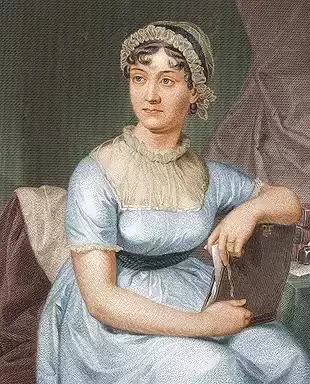
Jane Austen
Oh! Mr Best You're Very Bad
Oh! Mr Best You're Very Bad
Oh! Mr. Best, you're very bad
And all the world shall know it;
Your base behaviour shall be sung
By me, a tunefull Poet.--
You used to go to Harrowgate
Each summer as it came,
And why I pray should you refuse
To go this year the same?--
The way's as plain, the road's as smooth,
The Posting not increased;
You're scarcely stouter than you were,
Not younger Sir at least.--
If e'er the waters were of use
Why now their use forego?
You may not live another year,
All's mortal here below.--
It is your duty Mr Best
To give your health repair.
Vain else your Richard's pills will be,
And vain your Consort's care.
But yet a nobler Duty calls
You now towards the North.
Arise ennobled--as Escort
Of Martha Lloyd stand forth.
She wants your aid--she honours you
With a distinguished call.
Stand forth to be the friend of her
Who is the friend of all.--
Take her, and wonder at your luck,
In having such a Trust.
Her converse sensible and sweet
Will banish heat and dust.--
So short she'll make the journey seem
You'll bid the Chaise stand still.
T'will be like driving at full speed
From Newb'ry to Speen hill.--
Convey her safe to Morton's wife
And I'll forget the past,
And write some verses in your praise
As finely and as fast.
But if you still refuse to go
I'll never let your rest,
Buy haunt you with reproachful song
Oh! wicked Mr. Best!--
Oh! Mr. Best, you're very bad
And all the world shall know it;
Your base behaviour shall be sung
By me, a tunefull Poet.--
You used to go to Harrowgate
Each summer as it came,
And why I pray should you refuse
To go this year the same?--
The way's as plain, the road's as smooth,
The Posting not increased;
You're scarcely stouter than you were,
Not younger Sir at least.--
If e'er the waters were of use
Why now their use forego?
You may not live another year,
All's mortal here below.--
It is your duty Mr Best
To give your health repair.
Vain else your Richard's pills will be,
And vain your Consort's care.
But yet a nobler Duty calls
You now towards the North.
Arise ennobled--as Escort
Of Martha Lloyd stand forth.
She wants your aid--she honours you
With a distinguished call.
Stand forth to be the friend of her
Who is the friend of all.--
Take her, and wonder at your luck,
In having such a Trust.
Her converse sensible and sweet
Will banish heat and dust.--
So short she'll make the journey seem
You'll bid the Chaise stand still.
T'will be like driving at full speed
From Newb'ry to Speen hill.--
Convey her safe to Morton's wife
And I'll forget the past,
And write some verses in your praise
As finely and as fast.
But if you still refuse to go
I'll never let your rest,
Buy haunt you with reproachful song
Oh! wicked Mr. Best!--
157
Jane Austen
Happy the Lab'rer
Happy the Lab'rer
Happy the lab'rer in his Sunday clothes!
In light-drab coat, smart waistcoat, well-darn'd hose,
Andhat upon his head, to church he goes;
As oft, with conscious pride, he downward throws
A glance upon the ample cabbage rose
That, stuck in button-hole, regales his nose,
He envies not the gayest London beaux.
In church he takes his seat among the rows,
Pays to the place the reverence he owes,
Likes best the prayers whose meaning least he knows,
Lists to the sermon in a softening doze,
And rouses joyous at the welcome close.
Happy the lab'rer in his Sunday clothes!
In light-drab coat, smart waistcoat, well-darn'd hose,
Andhat upon his head, to church he goes;
As oft, with conscious pride, he downward throws
A glance upon the ample cabbage rose
That, stuck in button-hole, regales his nose,
He envies not the gayest London beaux.
In church he takes his seat among the rows,
Pays to the place the reverence he owes,
Likes best the prayers whose meaning least he knows,
Lists to the sermon in a softening doze,
And rouses joyous at the welcome close.
214
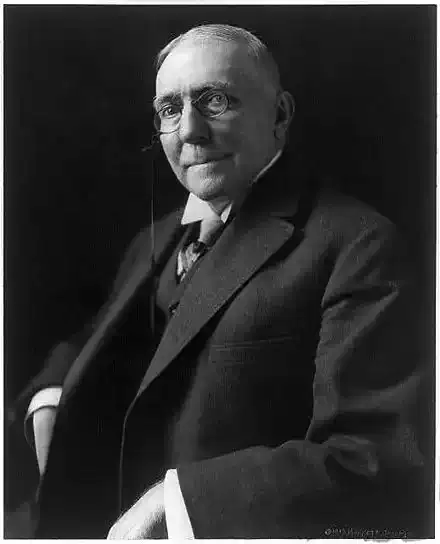
James Whitcomb Riley
Where The Children Used To Play
Where The Children Used To Play
The old farm-home is Mother's yet and mine,
And filled it is with plenty and to spare--,
But we are lonely here in life's decline,
Though fortune smiles around us everywhere:
We look across the gold
Of the harvests, as of old--
The corn, the fragrant clover, and the hay;
But most we turn our gaze,
As with eyes of other days,
To the orchard where the children used to play.
O from our life's full measure
And rich hoard of worldly treasure
We often turn our weary eyes away,
And hand in hand we wander
Down the old path winding yonder
To the orchard where the children used to play.
Our sloping pasture-lands are filled with herds;
The barn and granary-bins are bulging o'ver;
The grove's a paradise of singing birds--
The woodland brook leaps laughing by the door;
Yet lonely, lonely still,
Let us prosper as we will,
Our old hearts seem so empty everyway--
We can only through a mist
See the faces we have kissed
In the orchard where the children used to play.
O from our life's full measure
And rich hoard of worldly treasure
We often turn our weary eyes away,
And hand in hand we wander
Down the old path winding yonder
To the orchard where the children used to play.
The old farm-home is Mother's yet and mine,
And filled it is with plenty and to spare--,
But we are lonely here in life's decline,
Though fortune smiles around us everywhere:
We look across the gold
Of the harvests, as of old--
The corn, the fragrant clover, and the hay;
But most we turn our gaze,
As with eyes of other days,
To the orchard where the children used to play.
O from our life's full measure
And rich hoard of worldly treasure
We often turn our weary eyes away,
And hand in hand we wander
Down the old path winding yonder
To the orchard where the children used to play.
Our sloping pasture-lands are filled with herds;
The barn and granary-bins are bulging o'ver;
The grove's a paradise of singing birds--
The woodland brook leaps laughing by the door;
Yet lonely, lonely still,
Let us prosper as we will,
Our old hearts seem so empty everyway--
We can only through a mist
See the faces we have kissed
In the orchard where the children used to play.
O from our life's full measure
And rich hoard of worldly treasure
We often turn our weary eyes away,
And hand in hand we wander
Down the old path winding yonder
To the orchard where the children used to play.
281
James Whitcomb Riley
Told By
Told By
Coming, clean from the Maryland-end
Of this great National Road of ours,
Through your vast West; with the time to spend,
Stopping for days in the main towns, where
Every citizen seemed a friend,
And friends grew thick as the wayside flowers,--
I found no thing that I might narrate
More singularly strange or queer
Than a thing I found in your sister-state
Ohio,--at a river-town--down here
In my notebook: _Zanesville--situate
On the stream Muskingum--broad and clear,
And navigable, through half the year,
North, to Coshocton; south, as far
As Marietta._--But these facts are
Not of the _story_, but the _scene_
Of the simple little tale I mean
To tell _directly_--from this, straight through
To the _end_ that is best worth listening to:
Eastward of Zanesville, two or three
Miles from the town, as our stage drove in,
I on the driver's seat, and he
Pointing out this and that to me,--
On beyond us--among the rest--
A grovey slope, and a fluttering throng
Of little children, which he 'guessed'
Was a picnic, as we caught their thin
High laughter, as we drove along,
Clearer and clearer. Then suddenly
He turned and asked, with a curious grin,
What were my views on _Slavery? 'Why?'_
I asked, in return, with a wary eye.
'Because,' he answered, pointing his whip
At a little, whitewashed house and shed
On the edge of the road by the grove ahead,-'
Because there are two slaves _there_,' he said-'
Two Black slaves that I've passed each trip
For eighteen years.--Though they've been set free,
They have been slaves ever since!' said he.
And, as our horses slowly drew
Nearer the little house in view,
All briefly I heard the history
Of this little old Negro woman and
Her husband, house and scrap of land;
How they were slaves and had been made free
By their dying master, years ago
In old Virginia; and then had come
North here into a _free_ state--so,
Safe forever, to found a home--
For themselves alone?--for they left South there
Five strong sons, who had, alas!
All been sold ere it came to pass
This first old master with his last breath
Had freed the _parents_.--(He went to death
Agonized and in dire despair
That the poor slave _children_ might not share
Their parents' freedom. And wildly then
He moaned for pardon and died. Amen!)
Thus, with their freedom, and little sum
Of money left them, these two had come
North, full twenty long years ago;
And, settling there, they had hopefully
Gone to work, in their simple way,
Hauling--gardening--raising sweet
Corn, and popcorn.--Bird and bee
In the garden-blooms and the apple-tree
Singing with them throughout the slow
Summer's day, with its dust and heat--
The crops that thirst and the rains that fail;
Or in Autumn chill, when the clouds hung low,
And hand-made hominy might find sale
In the near town-market; or baking pies
And cakes, to range in alluring show
At the little window, where the eyes
Of the Movers' children, driving past,
Grew fixed, till the big white wagons drew
Into a halt that would sometimes last
Even the space of an hour or two--
As the dusty, thirsty travelers made
Their noonings there in the beeches' shade
By the old black Aunty's spring-house, where,
Along with its cooling draughts, were found
Jugs of her famous sweet spruce-beer,
Served with her gingerbread-horses there,
While Aunty's snow-white cap bobbed 'round
Till the children's rapture knew no bound,
As she sang and danced for them, quavering clear
And high the chant of her old slave-days-
'Oh, Lo'd, Jinny! my toes is so',
Dancin' on yo' sandy flo'!'
Even so had they wrought all ways
To earn the pennies, and hoard them, too,--
And with what ultimate end in view?--
They were saving up money enough to be
Able, in time, to buy their own
Five children back.
Ah! the toil gone through!
And the long delays and the heartaches, too,
And self-denials that they had known!
But the pride and glory that was theirs
When they first hitched up their shackly cart
For the long, long journey South.--The start
In the first drear light of the chilly dawn,
With no friends gathered in grieving throng,--
With no farewells and favoring prayers;
But, as they creaked and jolted on,
Their chiming voices broke in song-
''Hail, all hail! don't you see the stars a-fallin'?
Hail, all hail! I'm on my way.
Gideon[1] am
A healin' ba'm--
I belong to the blood-washed army.
Gideon am
A healin' ba'm--
On my way!''
And their _return!_--with their oldest boy
Along with them! Why, their happiness
Spread abroad till it grew a joy
_Universal_--It even reached
And thrilled the town till the _Church_ was stirred
Into suspecting that wrong was wrong!--
And it stayed awake as the preacher preached
A _Real_ 'Love'-text that he had not long
To ransack for in the Holy Word.
And the son, restored, and welcomed so,
Found service readily in the town;
And, with the parents, sure and slow,
_He_ went 'saltin' de cole cash down.'
So with the _next_ boy--and each one
In turn, till _four_ of the five at last
Had been bought back; and, in each case,
With steady work and good homes not
Far from the parents, _they_ chipped in
To the family fund, with an equal grace.
Thus they managed and planned and wrought,
And the old folks throve--Till the night before
They were to start for the lone last son
In the rainy dawn--their money fast
Hid away in the house,--two mean,
Murderous robbers burst the door.
...Then, in the dark, was a scuffle--a fall--
An old man's gasping cry--and then
A woman's fife-like shriek.
...Three men
Splashing by on horseback heard
The summons: And in an instant all
Sprung to their duty, with scarce a word.
And they were _in time_--not only to save
The lives of the old folks, but to bag
Both the robbers, and buck-and-gag
And land them safe in the county-jail--
Or, as Aunty said, with a blended awe
And subtlety,--'Safe in de calaboose whah
De dawgs caint bite 'em!'
--So prevail
The faithful!--So had the Lord upheld
His servants of both deed and prayer,--
HIS the glory unparalleled-_
Theirs_ the reward,--their every son
Free, at last, as the parents were!
And, as the driver ended there
In front of the little house, I said,
All fervently, 'Well done! well done!'
At which he smiled, and turned his head
And pulled on the leaders' lines and--'See!'
He said,--''you can read old Aunty's sign?'
And, peering down through these specs of mine
On a little, square board-sign, I read:
'Stop, traveler, if you think it fit,
And quench your thirst for a-fip-and-a-bit.
The rocky spring is very clear,
And soon converted into beer.'
And, though I read aloud, I could
Scarce hear myself for laugh and shout
Of children--a glad multitude
Of little people, swarming out
Of the picnic-grounds I spoke about.--
And in their rapturous midst, I see
Again--through mists of memory--
A black old Negress laughing up
At the driver, with her broad lips rolled
Back from her teeth, chalk-white, and gums
Redder than reddest red-ripe plums.
He took from her hand the lifted cup
Of clear spring-water, pure and cold,
And passed it to me: And I raised my hat
And drank to her with a reverence that
My conscience knew was justly due
The old black face, and the old eyes, too--
The old black head, with its mossy mat
Of hair, set under its cap and frills
White as the snows on Alpine hills;
Drank to the old _black_ smile, but yet
Bright as the sun on the violet,--
Drank to the gnarled and knuckled old
Black hands whose palms had ached and bled
And pitilessly been worn pale
And white almost as the palms that hold
Slavery's lash while the victim's wail
Fails as a crippled prayer might fail.--
Aye, with a reverence infinite,
I drank to the old black face and head--
The old black breast with its life of light--
The old black hide with its heart of gold.
Coming, clean from the Maryland-end
Of this great National Road of ours,
Through your vast West; with the time to spend,
Stopping for days in the main towns, where
Every citizen seemed a friend,
And friends grew thick as the wayside flowers,--
I found no thing that I might narrate
More singularly strange or queer
Than a thing I found in your sister-state
Ohio,--at a river-town--down here
In my notebook: _Zanesville--situate
On the stream Muskingum--broad and clear,
And navigable, through half the year,
North, to Coshocton; south, as far
As Marietta._--But these facts are
Not of the _story_, but the _scene_
Of the simple little tale I mean
To tell _directly_--from this, straight through
To the _end_ that is best worth listening to:
Eastward of Zanesville, two or three
Miles from the town, as our stage drove in,
I on the driver's seat, and he
Pointing out this and that to me,--
On beyond us--among the rest--
A grovey slope, and a fluttering throng
Of little children, which he 'guessed'
Was a picnic, as we caught their thin
High laughter, as we drove along,
Clearer and clearer. Then suddenly
He turned and asked, with a curious grin,
What were my views on _Slavery? 'Why?'_
I asked, in return, with a wary eye.
'Because,' he answered, pointing his whip
At a little, whitewashed house and shed
On the edge of the road by the grove ahead,-'
Because there are two slaves _there_,' he said-'
Two Black slaves that I've passed each trip
For eighteen years.--Though they've been set free,
They have been slaves ever since!' said he.
And, as our horses slowly drew
Nearer the little house in view,
All briefly I heard the history
Of this little old Negro woman and
Her husband, house and scrap of land;
How they were slaves and had been made free
By their dying master, years ago
In old Virginia; and then had come
North here into a _free_ state--so,
Safe forever, to found a home--
For themselves alone?--for they left South there
Five strong sons, who had, alas!
All been sold ere it came to pass
This first old master with his last breath
Had freed the _parents_.--(He went to death
Agonized and in dire despair
That the poor slave _children_ might not share
Their parents' freedom. And wildly then
He moaned for pardon and died. Amen!)
Thus, with their freedom, and little sum
Of money left them, these two had come
North, full twenty long years ago;
And, settling there, they had hopefully
Gone to work, in their simple way,
Hauling--gardening--raising sweet
Corn, and popcorn.--Bird and bee
In the garden-blooms and the apple-tree
Singing with them throughout the slow
Summer's day, with its dust and heat--
The crops that thirst and the rains that fail;
Or in Autumn chill, when the clouds hung low,
And hand-made hominy might find sale
In the near town-market; or baking pies
And cakes, to range in alluring show
At the little window, where the eyes
Of the Movers' children, driving past,
Grew fixed, till the big white wagons drew
Into a halt that would sometimes last
Even the space of an hour or two--
As the dusty, thirsty travelers made
Their noonings there in the beeches' shade
By the old black Aunty's spring-house, where,
Along with its cooling draughts, were found
Jugs of her famous sweet spruce-beer,
Served with her gingerbread-horses there,
While Aunty's snow-white cap bobbed 'round
Till the children's rapture knew no bound,
As she sang and danced for them, quavering clear
And high the chant of her old slave-days-
'Oh, Lo'd, Jinny! my toes is so',
Dancin' on yo' sandy flo'!'
Even so had they wrought all ways
To earn the pennies, and hoard them, too,--
And with what ultimate end in view?--
They were saving up money enough to be
Able, in time, to buy their own
Five children back.
Ah! the toil gone through!
And the long delays and the heartaches, too,
And self-denials that they had known!
But the pride and glory that was theirs
When they first hitched up their shackly cart
For the long, long journey South.--The start
In the first drear light of the chilly dawn,
With no friends gathered in grieving throng,--
With no farewells and favoring prayers;
But, as they creaked and jolted on,
Their chiming voices broke in song-
''Hail, all hail! don't you see the stars a-fallin'?
Hail, all hail! I'm on my way.
Gideon[1] am
A healin' ba'm--
I belong to the blood-washed army.
Gideon am
A healin' ba'm--
On my way!''
And their _return!_--with their oldest boy
Along with them! Why, their happiness
Spread abroad till it grew a joy
_Universal_--It even reached
And thrilled the town till the _Church_ was stirred
Into suspecting that wrong was wrong!--
And it stayed awake as the preacher preached
A _Real_ 'Love'-text that he had not long
To ransack for in the Holy Word.
And the son, restored, and welcomed so,
Found service readily in the town;
And, with the parents, sure and slow,
_He_ went 'saltin' de cole cash down.'
So with the _next_ boy--and each one
In turn, till _four_ of the five at last
Had been bought back; and, in each case,
With steady work and good homes not
Far from the parents, _they_ chipped in
To the family fund, with an equal grace.
Thus they managed and planned and wrought,
And the old folks throve--Till the night before
They were to start for the lone last son
In the rainy dawn--their money fast
Hid away in the house,--two mean,
Murderous robbers burst the door.
...Then, in the dark, was a scuffle--a fall--
An old man's gasping cry--and then
A woman's fife-like shriek.
...Three men
Splashing by on horseback heard
The summons: And in an instant all
Sprung to their duty, with scarce a word.
And they were _in time_--not only to save
The lives of the old folks, but to bag
Both the robbers, and buck-and-gag
And land them safe in the county-jail--
Or, as Aunty said, with a blended awe
And subtlety,--'Safe in de calaboose whah
De dawgs caint bite 'em!'
--So prevail
The faithful!--So had the Lord upheld
His servants of both deed and prayer,--
HIS the glory unparalleled-_
Theirs_ the reward,--their every son
Free, at last, as the parents were!
And, as the driver ended there
In front of the little house, I said,
All fervently, 'Well done! well done!'
At which he smiled, and turned his head
And pulled on the leaders' lines and--'See!'
He said,--''you can read old Aunty's sign?'
And, peering down through these specs of mine
On a little, square board-sign, I read:
'Stop, traveler, if you think it fit,
And quench your thirst for a-fip-and-a-bit.
The rocky spring is very clear,
And soon converted into beer.'
And, though I read aloud, I could
Scarce hear myself for laugh and shout
Of children--a glad multitude
Of little people, swarming out
Of the picnic-grounds I spoke about.--
And in their rapturous midst, I see
Again--through mists of memory--
A black old Negress laughing up
At the driver, with her broad lips rolled
Back from her teeth, chalk-white, and gums
Redder than reddest red-ripe plums.
He took from her hand the lifted cup
Of clear spring-water, pure and cold,
And passed it to me: And I raised my hat
And drank to her with a reverence that
My conscience knew was justly due
The old black face, and the old eyes, too--
The old black head, with its mossy mat
Of hair, set under its cap and frills
White as the snows on Alpine hills;
Drank to the old _black_ smile, but yet
Bright as the sun on the violet,--
Drank to the gnarled and knuckled old
Black hands whose palms had ached and bled
And pitilessly been worn pale
And white almost as the palms that hold
Slavery's lash while the victim's wail
Fails as a crippled prayer might fail.--
Aye, with a reverence infinite,
I drank to the old black face and head--
The old black breast with its life of light--
The old black hide with its heart of gold.
323
James Whitcomb Riley
Told By
Told By
Coming, clean from the Maryland-end
Of this great National Road of ours,
Through your vast West; with the time to spend,
Stopping for days in the main towns, where
Every citizen seemed a friend,
And friends grew thick as the wayside flowers,--
I found no thing that I might narrate
More singularly strange or queer
Than a thing I found in your sister-state
Ohio,--at a river-town--down here
In my notebook: _Zanesville--situate
On the stream Muskingum--broad and clear,
And navigable, through half the year,
North, to Coshocton; south, as far
As Marietta._--But these facts are
Not of the _story_, but the _scene_
Of the simple little tale I mean
To tell _directly_--from this, straight through
To the _end_ that is best worth listening to:
Eastward of Zanesville, two or three
Miles from the town, as our stage drove in,
I on the driver's seat, and he
Pointing out this and that to me,--
On beyond us--among the rest--
A grovey slope, and a fluttering throng
Of little children, which he 'guessed'
Was a picnic, as we caught their thin
High laughter, as we drove along,
Clearer and clearer. Then suddenly
He turned and asked, with a curious grin,
What were my views on _Slavery? 'Why?'_
I asked, in return, with a wary eye.
'Because,' he answered, pointing his whip
At a little, whitewashed house and shed
On the edge of the road by the grove ahead,-'
Because there are two slaves _there_,' he said-'
Two Black slaves that I've passed each trip
For eighteen years.--Though they've been set free,
They have been slaves ever since!' said he.
And, as our horses slowly drew
Nearer the little house in view,
All briefly I heard the history
Of this little old Negro woman and
Her husband, house and scrap of land;
How they were slaves and had been made free
By their dying master, years ago
In old Virginia; and then had come
North here into a _free_ state--so,
Safe forever, to found a home--
For themselves alone?--for they left South there
Five strong sons, who had, alas!
All been sold ere it came to pass
This first old master with his last breath
Had freed the _parents_.--(He went to death
Agonized and in dire despair
That the poor slave _children_ might not share
Their parents' freedom. And wildly then
He moaned for pardon and died. Amen!)
Thus, with their freedom, and little sum
Of money left them, these two had come
North, full twenty long years ago;
And, settling there, they had hopefully
Gone to work, in their simple way,
Hauling--gardening--raising sweet
Corn, and popcorn.--Bird and bee
In the garden-blooms and the apple-tree
Singing with them throughout the slow
Summer's day, with its dust and heat--
The crops that thirst and the rains that fail;
Or in Autumn chill, when the clouds hung low,
And hand-made hominy might find sale
In the near town-market; or baking pies
And cakes, to range in alluring show
At the little window, where the eyes
Of the Movers' children, driving past,
Grew fixed, till the big white wagons drew
Into a halt that would sometimes last
Even the space of an hour or two--
As the dusty, thirsty travelers made
Their noonings there in the beeches' shade
By the old black Aunty's spring-house, where,
Along with its cooling draughts, were found
Jugs of her famous sweet spruce-beer,
Served with her gingerbread-horses there,
While Aunty's snow-white cap bobbed 'round
Till the children's rapture knew no bound,
As she sang and danced for them, quavering clear
And high the chant of her old slave-days-
'Oh, Lo'd, Jinny! my toes is so',
Dancin' on yo' sandy flo'!'
Even so had they wrought all ways
To earn the pennies, and hoard them, too,--
And with what ultimate end in view?--
They were saving up money enough to be
Able, in time, to buy their own
Five children back.
Ah! the toil gone through!
And the long delays and the heartaches, too,
And self-denials that they had known!
But the pride and glory that was theirs
When they first hitched up their shackly cart
For the long, long journey South.--The start
In the first drear light of the chilly dawn,
With no friends gathered in grieving throng,--
With no farewells and favoring prayers;
But, as they creaked and jolted on,
Their chiming voices broke in song-
''Hail, all hail! don't you see the stars a-fallin'?
Hail, all hail! I'm on my way.
Gideon[1] am
A healin' ba'm--
I belong to the blood-washed army.
Gideon am
A healin' ba'm--
On my way!''
And their _return!_--with their oldest boy
Along with them! Why, their happiness
Spread abroad till it grew a joy
_Universal_--It even reached
And thrilled the town till the _Church_ was stirred
Into suspecting that wrong was wrong!--
And it stayed awake as the preacher preached
A _Real_ 'Love'-text that he had not long
To ransack for in the Holy Word.
And the son, restored, and welcomed so,
Found service readily in the town;
And, with the parents, sure and slow,
_He_ went 'saltin' de cole cash down.'
So with the _next_ boy--and each one
In turn, till _four_ of the five at last
Had been bought back; and, in each case,
With steady work and good homes not
Far from the parents, _they_ chipped in
To the family fund, with an equal grace.
Thus they managed and planned and wrought,
And the old folks throve--Till the night before
They were to start for the lone last son
In the rainy dawn--their money fast
Hid away in the house,--two mean,
Murderous robbers burst the door.
...Then, in the dark, was a scuffle--a fall--
An old man's gasping cry--and then
A woman's fife-like shriek.
...Three men
Splashing by on horseback heard
The summons: And in an instant all
Sprung to their duty, with scarce a word.
And they were _in time_--not only to save
The lives of the old folks, but to bag
Both the robbers, and buck-and-gag
And land them safe in the county-jail--
Or, as Aunty said, with a blended awe
And subtlety,--'Safe in de calaboose whah
De dawgs caint bite 'em!'
--So prevail
The faithful!--So had the Lord upheld
His servants of both deed and prayer,--
HIS the glory unparalleled-_
Theirs_ the reward,--their every son
Free, at last, as the parents were!
And, as the driver ended there
In front of the little house, I said,
All fervently, 'Well done! well done!'
At which he smiled, and turned his head
And pulled on the leaders' lines and--'See!'
He said,--''you can read old Aunty's sign?'
And, peering down through these specs of mine
On a little, square board-sign, I read:
'Stop, traveler, if you think it fit,
And quench your thirst for a-fip-and-a-bit.
The rocky spring is very clear,
And soon converted into beer.'
And, though I read aloud, I could
Scarce hear myself for laugh and shout
Of children--a glad multitude
Of little people, swarming out
Of the picnic-grounds I spoke about.--
And in their rapturous midst, I see
Again--through mists of memory--
A black old Negress laughing up
At the driver, with her broad lips rolled
Back from her teeth, chalk-white, and gums
Redder than reddest red-ripe plums.
He took from her hand the lifted cup
Of clear spring-water, pure and cold,
And passed it to me: And I raised my hat
And drank to her with a reverence that
My conscience knew was justly due
The old black face, and the old eyes, too--
The old black head, with its mossy mat
Of hair, set under its cap and frills
White as the snows on Alpine hills;
Drank to the old _black_ smile, but yet
Bright as the sun on the violet,--
Drank to the gnarled and knuckled old
Black hands whose palms had ached and bled
And pitilessly been worn pale
And white almost as the palms that hold
Slavery's lash while the victim's wail
Fails as a crippled prayer might fail.--
Aye, with a reverence infinite,
I drank to the old black face and head--
The old black breast with its life of light--
The old black hide with its heart of gold.
Coming, clean from the Maryland-end
Of this great National Road of ours,
Through your vast West; with the time to spend,
Stopping for days in the main towns, where
Every citizen seemed a friend,
And friends grew thick as the wayside flowers,--
I found no thing that I might narrate
More singularly strange or queer
Than a thing I found in your sister-state
Ohio,--at a river-town--down here
In my notebook: _Zanesville--situate
On the stream Muskingum--broad and clear,
And navigable, through half the year,
North, to Coshocton; south, as far
As Marietta._--But these facts are
Not of the _story_, but the _scene_
Of the simple little tale I mean
To tell _directly_--from this, straight through
To the _end_ that is best worth listening to:
Eastward of Zanesville, two or three
Miles from the town, as our stage drove in,
I on the driver's seat, and he
Pointing out this and that to me,--
On beyond us--among the rest--
A grovey slope, and a fluttering throng
Of little children, which he 'guessed'
Was a picnic, as we caught their thin
High laughter, as we drove along,
Clearer and clearer. Then suddenly
He turned and asked, with a curious grin,
What were my views on _Slavery? 'Why?'_
I asked, in return, with a wary eye.
'Because,' he answered, pointing his whip
At a little, whitewashed house and shed
On the edge of the road by the grove ahead,-'
Because there are two slaves _there_,' he said-'
Two Black slaves that I've passed each trip
For eighteen years.--Though they've been set free,
They have been slaves ever since!' said he.
And, as our horses slowly drew
Nearer the little house in view,
All briefly I heard the history
Of this little old Negro woman and
Her husband, house and scrap of land;
How they were slaves and had been made free
By their dying master, years ago
In old Virginia; and then had come
North here into a _free_ state--so,
Safe forever, to found a home--
For themselves alone?--for they left South there
Five strong sons, who had, alas!
All been sold ere it came to pass
This first old master with his last breath
Had freed the _parents_.--(He went to death
Agonized and in dire despair
That the poor slave _children_ might not share
Their parents' freedom. And wildly then
He moaned for pardon and died. Amen!)
Thus, with their freedom, and little sum
Of money left them, these two had come
North, full twenty long years ago;
And, settling there, they had hopefully
Gone to work, in their simple way,
Hauling--gardening--raising sweet
Corn, and popcorn.--Bird and bee
In the garden-blooms and the apple-tree
Singing with them throughout the slow
Summer's day, with its dust and heat--
The crops that thirst and the rains that fail;
Or in Autumn chill, when the clouds hung low,
And hand-made hominy might find sale
In the near town-market; or baking pies
And cakes, to range in alluring show
At the little window, where the eyes
Of the Movers' children, driving past,
Grew fixed, till the big white wagons drew
Into a halt that would sometimes last
Even the space of an hour or two--
As the dusty, thirsty travelers made
Their noonings there in the beeches' shade
By the old black Aunty's spring-house, where,
Along with its cooling draughts, were found
Jugs of her famous sweet spruce-beer,
Served with her gingerbread-horses there,
While Aunty's snow-white cap bobbed 'round
Till the children's rapture knew no bound,
As she sang and danced for them, quavering clear
And high the chant of her old slave-days-
'Oh, Lo'd, Jinny! my toes is so',
Dancin' on yo' sandy flo'!'
Even so had they wrought all ways
To earn the pennies, and hoard them, too,--
And with what ultimate end in view?--
They were saving up money enough to be
Able, in time, to buy their own
Five children back.
Ah! the toil gone through!
And the long delays and the heartaches, too,
And self-denials that they had known!
But the pride and glory that was theirs
When they first hitched up their shackly cart
For the long, long journey South.--The start
In the first drear light of the chilly dawn,
With no friends gathered in grieving throng,--
With no farewells and favoring prayers;
But, as they creaked and jolted on,
Their chiming voices broke in song-
''Hail, all hail! don't you see the stars a-fallin'?
Hail, all hail! I'm on my way.
Gideon[1] am
A healin' ba'm--
I belong to the blood-washed army.
Gideon am
A healin' ba'm--
On my way!''
And their _return!_--with their oldest boy
Along with them! Why, their happiness
Spread abroad till it grew a joy
_Universal_--It even reached
And thrilled the town till the _Church_ was stirred
Into suspecting that wrong was wrong!--
And it stayed awake as the preacher preached
A _Real_ 'Love'-text that he had not long
To ransack for in the Holy Word.
And the son, restored, and welcomed so,
Found service readily in the town;
And, with the parents, sure and slow,
_He_ went 'saltin' de cole cash down.'
So with the _next_ boy--and each one
In turn, till _four_ of the five at last
Had been bought back; and, in each case,
With steady work and good homes not
Far from the parents, _they_ chipped in
To the family fund, with an equal grace.
Thus they managed and planned and wrought,
And the old folks throve--Till the night before
They were to start for the lone last son
In the rainy dawn--their money fast
Hid away in the house,--two mean,
Murderous robbers burst the door.
...Then, in the dark, was a scuffle--a fall--
An old man's gasping cry--and then
A woman's fife-like shriek.
...Three men
Splashing by on horseback heard
The summons: And in an instant all
Sprung to their duty, with scarce a word.
And they were _in time_--not only to save
The lives of the old folks, but to bag
Both the robbers, and buck-and-gag
And land them safe in the county-jail--
Or, as Aunty said, with a blended awe
And subtlety,--'Safe in de calaboose whah
De dawgs caint bite 'em!'
--So prevail
The faithful!--So had the Lord upheld
His servants of both deed and prayer,--
HIS the glory unparalleled-_
Theirs_ the reward,--their every son
Free, at last, as the parents were!
And, as the driver ended there
In front of the little house, I said,
All fervently, 'Well done! well done!'
At which he smiled, and turned his head
And pulled on the leaders' lines and--'See!'
He said,--''you can read old Aunty's sign?'
And, peering down through these specs of mine
On a little, square board-sign, I read:
'Stop, traveler, if you think it fit,
And quench your thirst for a-fip-and-a-bit.
The rocky spring is very clear,
And soon converted into beer.'
And, though I read aloud, I could
Scarce hear myself for laugh and shout
Of children--a glad multitude
Of little people, swarming out
Of the picnic-grounds I spoke about.--
And in their rapturous midst, I see
Again--through mists of memory--
A black old Negress laughing up
At the driver, with her broad lips rolled
Back from her teeth, chalk-white, and gums
Redder than reddest red-ripe plums.
He took from her hand the lifted cup
Of clear spring-water, pure and cold,
And passed it to me: And I raised my hat
And drank to her with a reverence that
My conscience knew was justly due
The old black face, and the old eyes, too--
The old black head, with its mossy mat
Of hair, set under its cap and frills
White as the snows on Alpine hills;
Drank to the old _black_ smile, but yet
Bright as the sun on the violet,--
Drank to the gnarled and knuckled old
Black hands whose palms had ached and bled
And pitilessly been worn pale
And white almost as the palms that hold
Slavery's lash while the victim's wail
Fails as a crippled prayer might fail.--
Aye, with a reverence infinite,
I drank to the old black face and head--
The old black breast with its life of light--
The old black hide with its heart of gold.
323
James Whitcomb Riley
To a Boy Whistling
To a Boy Whistling
The smiling face of a happy boy
With its enchanted key
Is now unlocking in memory
My store of heartiest joy.
And my lost life again to-day,
In pleasant colors all aglow,
From rainbow tints, to pure white snow,
Is a panorama sliding away.
The whistled air of a simple tune
Eddies and whirls my thoughts around,
As fairy balloons of thistle-down
Sail through the air of June.
O happy boy with untaught grace!
What is there in the world to give
That can buy one hour of the life you live
Or the trivial cause of your smiling face!
The smiling face of a happy boy
With its enchanted key
Is now unlocking in memory
My store of heartiest joy.
And my lost life again to-day,
In pleasant colors all aglow,
From rainbow tints, to pure white snow,
Is a panorama sliding away.
The whistled air of a simple tune
Eddies and whirls my thoughts around,
As fairy balloons of thistle-down
Sail through the air of June.
O happy boy with untaught grace!
What is there in the world to give
That can buy one hour of the life you live
Or the trivial cause of your smiling face!
247
James Whitcomb Riley
The Town Karnteel
The Town Karnteel
The Town Karnteel--! It's who'll reveal
Its praises jushtifiable?
For who can sing av anything
So lovely and reliable?
Whin Summer, Spring, or Winter lies
From Malin's Head to Tipperary,
There's no such town for interprise
Bechuxt Youghal and Londonderry!
There's not its likes in Ireland--
For twic't the week, be gorries!
They're playing jigs upon the band,
And joomping there in sacks-- and-- and--
And racing, wid wheelborries!
Kanteel-- it's there, like any fair,
The purty gurrls is plinty, sure--!
And man-alive! At forty-five
The leg's av me air twinty, sure!
I lave me cares, and hoein' too,
Behint me, as is sinsible,
And it's Karnteel I'm goin' to,
To cilebrate in principle!
For there's the town av all the land!
And twic't the week, be-gorries!
They're playing jigs upon the band,
And joomping there in sacks-- and-- and--
And racing, wid wheelborries!
And whilst I feel for owld Karnteel
That I've no phrases glorious,
It stands above the need av love
That boasts in voice uproarious--!
Lave that for Cork, and Dublin too,
And Armagh and Killarney thin--,
And Karnteel won't be troublin' you
Wid any jilous blarney, thin!
For there's the town av all the land
Where twic't the week, be-gorries!
They're playing jigs upon the band,
And joomping there in sacks-- and-- and--
And racing, wid wheelborries!
The Town Karnteel--! It's who'll reveal
Its praises jushtifiable?
For who can sing av anything
So lovely and reliable?
Whin Summer, Spring, or Winter lies
From Malin's Head to Tipperary,
There's no such town for interprise
Bechuxt Youghal and Londonderry!
There's not its likes in Ireland--
For twic't the week, be gorries!
They're playing jigs upon the band,
And joomping there in sacks-- and-- and--
And racing, wid wheelborries!
Kanteel-- it's there, like any fair,
The purty gurrls is plinty, sure--!
And man-alive! At forty-five
The leg's av me air twinty, sure!
I lave me cares, and hoein' too,
Behint me, as is sinsible,
And it's Karnteel I'm goin' to,
To cilebrate in principle!
For there's the town av all the land!
And twic't the week, be-gorries!
They're playing jigs upon the band,
And joomping there in sacks-- and-- and--
And racing, wid wheelborries!
And whilst I feel for owld Karnteel
That I've no phrases glorious,
It stands above the need av love
That boasts in voice uproarious--!
Lave that for Cork, and Dublin too,
And Armagh and Killarney thin--,
And Karnteel won't be troublin' you
Wid any jilous blarney, thin!
For there's the town av all the land
Where twic't the week, be-gorries!
They're playing jigs upon the band,
And joomping there in sacks-- and-- and--
And racing, wid wheelborries!
294
James Whitcomb Riley
The Town Karnteel
The Town Karnteel
The Town Karnteel--! It's who'll reveal
Its praises jushtifiable?
For who can sing av anything
So lovely and reliable?
Whin Summer, Spring, or Winter lies
From Malin's Head to Tipperary,
There's no such town for interprise
Bechuxt Youghal and Londonderry!
There's not its likes in Ireland--
For twic't the week, be gorries!
They're playing jigs upon the band,
And joomping there in sacks-- and-- and--
And racing, wid wheelborries!
Kanteel-- it's there, like any fair,
The purty gurrls is plinty, sure--!
And man-alive! At forty-five
The leg's av me air twinty, sure!
I lave me cares, and hoein' too,
Behint me, as is sinsible,
And it's Karnteel I'm goin' to,
To cilebrate in principle!
For there's the town av all the land!
And twic't the week, be-gorries!
They're playing jigs upon the band,
And joomping there in sacks-- and-- and--
And racing, wid wheelborries!
And whilst I feel for owld Karnteel
That I've no phrases glorious,
It stands above the need av love
That boasts in voice uproarious--!
Lave that for Cork, and Dublin too,
And Armagh and Killarney thin--,
And Karnteel won't be troublin' you
Wid any jilous blarney, thin!
For there's the town av all the land
Where twic't the week, be-gorries!
They're playing jigs upon the band,
And joomping there in sacks-- and-- and--
And racing, wid wheelborries!
The Town Karnteel--! It's who'll reveal
Its praises jushtifiable?
For who can sing av anything
So lovely and reliable?
Whin Summer, Spring, or Winter lies
From Malin's Head to Tipperary,
There's no such town for interprise
Bechuxt Youghal and Londonderry!
There's not its likes in Ireland--
For twic't the week, be gorries!
They're playing jigs upon the band,
And joomping there in sacks-- and-- and--
And racing, wid wheelborries!
Kanteel-- it's there, like any fair,
The purty gurrls is plinty, sure--!
And man-alive! At forty-five
The leg's av me air twinty, sure!
I lave me cares, and hoein' too,
Behint me, as is sinsible,
And it's Karnteel I'm goin' to,
To cilebrate in principle!
For there's the town av all the land!
And twic't the week, be-gorries!
They're playing jigs upon the band,
And joomping there in sacks-- and-- and--
And racing, wid wheelborries!
And whilst I feel for owld Karnteel
That I've no phrases glorious,
It stands above the need av love
That boasts in voice uproarious--!
Lave that for Cork, and Dublin too,
And Armagh and Killarney thin--,
And Karnteel won't be troublin' you
Wid any jilous blarney, thin!
For there's the town av all the land
Where twic't the week, be-gorries!
They're playing jigs upon the band,
And joomping there in sacks-- and-- and--
And racing, wid wheelborries!
294
James Whitcomb Riley
The Little Town O' Tailholt
The Little Town O' Tailholt
You kin boast about yer cities, and their stiddy growth and size,
And brag about yer County-seats, and business enterprise,
And railroads, and factories, and all sich foolery--
But the little Town o' Tailholt is big enough fer me!
You kin harp about yer churches, with their steeples in the clouds,
And gas about yer graded streets, and blow about yer crowds;
You kin talk about yer 'theaters,' and all you've got to see--
But the little Town o' Tailholt is show enough fer me!
They hain't no style in our town-- hit's little-like and small--
They hain't no 'churches,' nuther--, jes' the meetin' house is all;
They's no sidewalks, to speak of-- but the highway's allus free,
And the little Town o' Tailholt is wide enough fer me!
Some find it discommodin'-like, I'm willin' to admit,
To hev but one post-office, and a womern keepin' hit,
And the drug-store, and shoe-shop, and grocery, all three--
But the little Town o' Tailholt is handy 'nough fer me!
You kin smile and turn yer nose up, and joke and hev yer fun,
And laugh and holler 'Tail-holts is better holts'n none!
Ef the city suits you better w'y, hit's where you'd ort'o be--
But the little Town o' Tailholt's good enough fer me!
You kin boast about yer cities, and their stiddy growth and size,
And brag about yer County-seats, and business enterprise,
And railroads, and factories, and all sich foolery--
But the little Town o' Tailholt is big enough fer me!
You kin harp about yer churches, with their steeples in the clouds,
And gas about yer graded streets, and blow about yer crowds;
You kin talk about yer 'theaters,' and all you've got to see--
But the little Town o' Tailholt is show enough fer me!
They hain't no style in our town-- hit's little-like and small--
They hain't no 'churches,' nuther--, jes' the meetin' house is all;
They's no sidewalks, to speak of-- but the highway's allus free,
And the little Town o' Tailholt is wide enough fer me!
Some find it discommodin'-like, I'm willin' to admit,
To hev but one post-office, and a womern keepin' hit,
And the drug-store, and shoe-shop, and grocery, all three--
But the little Town o' Tailholt is handy 'nough fer me!
You kin smile and turn yer nose up, and joke and hev yer fun,
And laugh and holler 'Tail-holts is better holts'n none!
Ef the city suits you better w'y, hit's where you'd ort'o be--
But the little Town o' Tailholt's good enough fer me!
279
James Whitcomb Riley
The Hoosier Folk-Child
The Hoosier Folk-Child
The Hoosier Folk-Child--all unsung--
Unlettered all of mind and tongue;
Unmastered, unmolested--made
Most wholly frank and unafraid:
Untaught of any school--unvexed
Of law or creed--all unperplexed--
Unsermoned, aye, and undefiled,
An all imperfect-perfect child--
A type which (Heaven forgive us!) you
And I do tardy honor to,
And so, profane the sanctities
Of our most sacred memories.
Who, growing thus from boy to man,
That dares not be American?
Go, Pride, with prudent underbuzz--
Go _whistle_! as the Folk-Child does.
The Hoosier Folk-Child's world is not
Much wider than the stable-lot
Between the house and highway fence
That bounds the home his father rents.
His playmates mostly are the ducks
And chickens, and the boy that 'shucks
Corn by the shock,' and talks of town,
And whether eggs are 'up' or 'down,'
And prophesies in boastful tone
Of 'owning horses of his own,'
And 'being his own man,' and 'when
He gets to be, what he'll do then.'--
Takes out his jack-knife dreamily
And makes the Folk-Child two or three
Crude corn-stalk figures,--a wee span
Of horses and a little man.
The Hoosier Folk-Child's eyes are wise
And wide and round as Brownies' eyes:
The smile they wear is ever blent
With all-expectant wonderment,--
On homeliest things they bend a look
As rapt as o'er a picture-book,
And seem to ask, whate'er befall,
The happy reason of it all:--
Why grass is all so glad a green,
And leaves--and what their lispings mean;--
Why buds grow on the boughs, and why
They burst in blossom by and by--
As though the orchard in the breeze
Had shook and popped its _popcorn-trees_,
To lure and whet, as well they might,
Some seven-league giant's appetite!
The Hoosier Folk-Child's chubby face
Has scant refinement, caste or grace,--
From crown to chin, and cheek to cheek,
It bears the grimy water-streak
Of rinsings such as some long rain
Might drool across the window-pane
Wherethrough he peers, with troubled frown,
As some lorn team drives by for town.
His brow is elfed with wispish hair,
With tangles in it here and there,
As though the warlocks snarled it so
At midmirk when the moon sagged low,
And boughs did toss and skreek and shake,
And children moaned themselves awake,
With fingers clutched, and starting sight
Blind as the blackness of the night!
The Hoosier Folk-Child!--Rich is he
In all the wealth of poverty!
He owns nor title nor estate,
Nor speech but half articulate,--
He owns nor princely robe nor crown;--
Yet, draped in patched and faded brown,
He owns the bird-songs of the hills--
The laughter of the April rills;
And his are all the diamonds set.
In Morning's dewy coronet,--
And his the Dusk's first minted stars
That twinkle through the pasture-bars,
And litter all the skies at night
With glittering scraps of silver light;--
The rainbow's bar, from rim to rim,
In beaten gold, belongs to him.
The Hoosier Folk-Child--all unsung--
Unlettered all of mind and tongue;
Unmastered, unmolested--made
Most wholly frank and unafraid:
Untaught of any school--unvexed
Of law or creed--all unperplexed--
Unsermoned, aye, and undefiled,
An all imperfect-perfect child--
A type which (Heaven forgive us!) you
And I do tardy honor to,
And so, profane the sanctities
Of our most sacred memories.
Who, growing thus from boy to man,
That dares not be American?
Go, Pride, with prudent underbuzz--
Go _whistle_! as the Folk-Child does.
The Hoosier Folk-Child's world is not
Much wider than the stable-lot
Between the house and highway fence
That bounds the home his father rents.
His playmates mostly are the ducks
And chickens, and the boy that 'shucks
Corn by the shock,' and talks of town,
And whether eggs are 'up' or 'down,'
And prophesies in boastful tone
Of 'owning horses of his own,'
And 'being his own man,' and 'when
He gets to be, what he'll do then.'--
Takes out his jack-knife dreamily
And makes the Folk-Child two or three
Crude corn-stalk figures,--a wee span
Of horses and a little man.
The Hoosier Folk-Child's eyes are wise
And wide and round as Brownies' eyes:
The smile they wear is ever blent
With all-expectant wonderment,--
On homeliest things they bend a look
As rapt as o'er a picture-book,
And seem to ask, whate'er befall,
The happy reason of it all:--
Why grass is all so glad a green,
And leaves--and what their lispings mean;--
Why buds grow on the boughs, and why
They burst in blossom by and by--
As though the orchard in the breeze
Had shook and popped its _popcorn-trees_,
To lure and whet, as well they might,
Some seven-league giant's appetite!
The Hoosier Folk-Child's chubby face
Has scant refinement, caste or grace,--
From crown to chin, and cheek to cheek,
It bears the grimy water-streak
Of rinsings such as some long rain
Might drool across the window-pane
Wherethrough he peers, with troubled frown,
As some lorn team drives by for town.
His brow is elfed with wispish hair,
With tangles in it here and there,
As though the warlocks snarled it so
At midmirk when the moon sagged low,
And boughs did toss and skreek and shake,
And children moaned themselves awake,
With fingers clutched, and starting sight
Blind as the blackness of the night!
The Hoosier Folk-Child!--Rich is he
In all the wealth of poverty!
He owns nor title nor estate,
Nor speech but half articulate,--
He owns nor princely robe nor crown;--
Yet, draped in patched and faded brown,
He owns the bird-songs of the hills--
The laughter of the April rills;
And his are all the diamonds set.
In Morning's dewy coronet,--
And his the Dusk's first minted stars
That twinkle through the pasture-bars,
And litter all the skies at night
With glittering scraps of silver light;--
The rainbow's bar, from rim to rim,
In beaten gold, belongs to him.
357
James Whitcomb Riley
The Good, Old-Fashioned People
The Good, Old-Fashioned People
When we hear Uncle Sidney tell
About the long-ago
An' old, old friends he loved so well
When _he_ was young--My-oh!--
Us childern all wish _we'd 'a'_ bin
A-livin' then with Uncle,--so
We could a-kindo' happened in
On them old friends he used to know!--
The good, old-fashioned people--
The hale, hard-working people--
The kindly country people
'At Uncle used to know!
They was God's people, Uncle says,
An' gloried in His name,
An' worked, without no selfishness,
An' loved their neighbers same
As they was kin: An' when they biled
Their tree-molasses, in the Spring,
Er butchered in the Fall, they smiled
An' sheered with all jist ever'thing!--
The good, old-fashioned people--
The hale, hard-working people--
The kindly country people
'At Uncle used to know!
He tells about 'em, lots o' times,
Till we'd all ruther hear
About 'em than the Nurs'ry Rhymes
Er Fairies--mighty near!--
Only sometimes he stops so long
An' then talks on so low an' slow,
It's purt'-nigh sad as any song
To listen to him talkin' so
Of the good, old-fashioned people--
The hale, hard-working people--
The kindly country people
'At Uncle used to know!
When we hear Uncle Sidney tell
About the long-ago
An' old, old friends he loved so well
When _he_ was young--My-oh!--
Us childern all wish _we'd 'a'_ bin
A-livin' then with Uncle,--so
We could a-kindo' happened in
On them old friends he used to know!--
The good, old-fashioned people--
The hale, hard-working people--
The kindly country people
'At Uncle used to know!
They was God's people, Uncle says,
An' gloried in His name,
An' worked, without no selfishness,
An' loved their neighbers same
As they was kin: An' when they biled
Their tree-molasses, in the Spring,
Er butchered in the Fall, they smiled
An' sheered with all jist ever'thing!--
The good, old-fashioned people--
The hale, hard-working people--
The kindly country people
'At Uncle used to know!
He tells about 'em, lots o' times,
Till we'd all ruther hear
About 'em than the Nurs'ry Rhymes
Er Fairies--mighty near!--
Only sometimes he stops so long
An' then talks on so low an' slow,
It's purt'-nigh sad as any song
To listen to him talkin' so
Of the good, old-fashioned people--
The hale, hard-working people--
The kindly country people
'At Uncle used to know!
278
James Whitcomb Riley
The Drum
The Drum
O the drum!
There is some
Intonation in thy grum
Monotony of utterance that strikes the spirit dumb,
As we hear
Through the clear
And unclouded atmosphere,
Thy palpitating syllables roll in upon the car!
There's a part
Of the art
Of thy music-throbbing heart
That thrills a something in us that awakens with a start,
And in rhyme
With the chime
And exactitude of time,
Goes marching on to glory to thy melody sublime.
And the guest
Of the breast
That thy rolling robs of rest
Is a patriotic spirit as a Continental dressed;
And he looms
From the glooms
Of a century of tombs,
And the blood he spilled at Lexington in living beauty blooms.
And his eyes
Wear the guise
Of a purpose pure and wise,
As the love of them is lifted to a something in the skies
That is bright
Red and white,
With a blur of starry light,
As it laughs in silken ripples to the breezes day and night.
There are deep
Hushes creep
O'er the pulses as they leap,
As thy tumult, fainter growing, on the silence falls asleep,
While the prayer
Rising there
Wills the sea and earth and air
As a heritage to Freedom's sons and daughters everywhere.
Then, with sound
As profound
As the thunderings resound,
Come thy wild reverberations in a throe that shakes the ground,
And a cry
Flung on high,
Like the flag it flutters by,
Wings rapturously upward till it nestles in the sky.
O the drum!
There is some
Intonation in thy grum
Monotony of utterance that strikes the spirit dumb,
As we hear
Through the clear
And unclouded atmosphere,
Thy palpitating syllables roll in upon the ear!
O the drum!
There is some
Intonation in thy grum
Monotony of utterance that strikes the spirit dumb,
As we hear
Through the clear
And unclouded atmosphere,
Thy palpitating syllables roll in upon the car!
There's a part
Of the art
Of thy music-throbbing heart
That thrills a something in us that awakens with a start,
And in rhyme
With the chime
And exactitude of time,
Goes marching on to glory to thy melody sublime.
And the guest
Of the breast
That thy rolling robs of rest
Is a patriotic spirit as a Continental dressed;
And he looms
From the glooms
Of a century of tombs,
And the blood he spilled at Lexington in living beauty blooms.
And his eyes
Wear the guise
Of a purpose pure and wise,
As the love of them is lifted to a something in the skies
That is bright
Red and white,
With a blur of starry light,
As it laughs in silken ripples to the breezes day and night.
There are deep
Hushes creep
O'er the pulses as they leap,
As thy tumult, fainter growing, on the silence falls asleep,
While the prayer
Rising there
Wills the sea and earth and air
As a heritage to Freedom's sons and daughters everywhere.
Then, with sound
As profound
As the thunderings resound,
Come thy wild reverberations in a throe that shakes the ground,
And a cry
Flung on high,
Like the flag it flutters by,
Wings rapturously upward till it nestles in the sky.
O the drum!
There is some
Intonation in thy grum
Monotony of utterance that strikes the spirit dumb,
As we hear
Through the clear
And unclouded atmosphere,
Thy palpitating syllables roll in upon the ear!
276
James Whitcomb Riley
The Drum
The Drum
O the drum!
There is some
Intonation in thy grum
Monotony of utterance that strikes the spirit dumb,
As we hear
Through the clear
And unclouded atmosphere,
Thy palpitating syllables roll in upon the car!
There's a part
Of the art
Of thy music-throbbing heart
That thrills a something in us that awakens with a start,
And in rhyme
With the chime
And exactitude of time,
Goes marching on to glory to thy melody sublime.
And the guest
Of the breast
That thy rolling robs of rest
Is a patriotic spirit as a Continental dressed;
And he looms
From the glooms
Of a century of tombs,
And the blood he spilled at Lexington in living beauty blooms.
And his eyes
Wear the guise
Of a purpose pure and wise,
As the love of them is lifted to a something in the skies
That is bright
Red and white,
With a blur of starry light,
As it laughs in silken ripples to the breezes day and night.
There are deep
Hushes creep
O'er the pulses as they leap,
As thy tumult, fainter growing, on the silence falls asleep,
While the prayer
Rising there
Wills the sea and earth and air
As a heritage to Freedom's sons and daughters everywhere.
Then, with sound
As profound
As the thunderings resound,
Come thy wild reverberations in a throe that shakes the ground,
And a cry
Flung on high,
Like the flag it flutters by,
Wings rapturously upward till it nestles in the sky.
O the drum!
There is some
Intonation in thy grum
Monotony of utterance that strikes the spirit dumb,
As we hear
Through the clear
And unclouded atmosphere,
Thy palpitating syllables roll in upon the ear!
O the drum!
There is some
Intonation in thy grum
Monotony of utterance that strikes the spirit dumb,
As we hear
Through the clear
And unclouded atmosphere,
Thy palpitating syllables roll in upon the car!
There's a part
Of the art
Of thy music-throbbing heart
That thrills a something in us that awakens with a start,
And in rhyme
With the chime
And exactitude of time,
Goes marching on to glory to thy melody sublime.
And the guest
Of the breast
That thy rolling robs of rest
Is a patriotic spirit as a Continental dressed;
And he looms
From the glooms
Of a century of tombs,
And the blood he spilled at Lexington in living beauty blooms.
And his eyes
Wear the guise
Of a purpose pure and wise,
As the love of them is lifted to a something in the skies
That is bright
Red and white,
With a blur of starry light,
As it laughs in silken ripples to the breezes day and night.
There are deep
Hushes creep
O'er the pulses as they leap,
As thy tumult, fainter growing, on the silence falls asleep,
While the prayer
Rising there
Wills the sea and earth and air
As a heritage to Freedom's sons and daughters everywhere.
Then, with sound
As profound
As the thunderings resound,
Come thy wild reverberations in a throe that shakes the ground,
And a cry
Flung on high,
Like the flag it flutters by,
Wings rapturously upward till it nestles in the sky.
O the drum!
There is some
Intonation in thy grum
Monotony of utterance that strikes the spirit dumb,
As we hear
Through the clear
And unclouded atmosphere,
Thy palpitating syllables roll in upon the ear!
276