

Poems in this topic
Society and the World
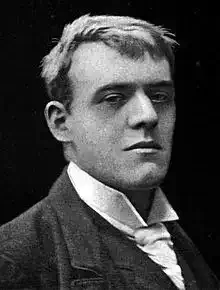
Hilaire Belloc
Sarah Byng, Who Could Not Read And Was Tossed Into A Thorny Hedge By A
Sarah Byng, Who Could Not Read And Was Tossed Into A Thorny Hedge By A
Bull
Some years ago you heard me sing
My doubts on Alexander Byng.
His sister Sarah now inspires
My jaded Muse, my failing fires.
Of Sarah Byng the tale is told
How when the child was twelve years old
She could not read or write a line.
Her sister Jane, though barely nine,
Could spout the Catechism through
And parts of Matthew Arnold too,
While little Bill who came between
Was quite unnaturally keen
On 'Athalie', by Jean Racine.
But not so Sarah! Not so Sal!
She was a most uncultured girl
Who didn't care a pinch of snuff
For any literary stuff
And gave the classics all a miss.
Observe the consequence of this!
As she was walking home one day,
Upon the fields across her way
A gate, securely padlocked, stood,
And by its side a piece of wood
On which was painted plain and full,
BEWARE THE VERY FURIOUS BULL
Alas! The young illiterate
Went blindly forward to her fate,
And ignorantly climbed the gate!
Now happily the Bull that day
Was rather in the mood for play
Than goring people through and through
As Bulls so very often do;
He tossed her lightly with his horns
Into a prickly hedge of thorns,
And stood by laughing while she strode
And pushed and struggled to the road.
The lesson was not lost upon
The child, who since has always gone
A long way round to keep away
From signs, whatever they may say,
And leaves a padlocked gate alone.
Moreover she has wisely grown
Confirmed in her instinctive guess
That literature breeds distress.
Bull
Some years ago you heard me sing
My doubts on Alexander Byng.
His sister Sarah now inspires
My jaded Muse, my failing fires.
Of Sarah Byng the tale is told
How when the child was twelve years old
She could not read or write a line.
Her sister Jane, though barely nine,
Could spout the Catechism through
And parts of Matthew Arnold too,
While little Bill who came between
Was quite unnaturally keen
On 'Athalie', by Jean Racine.
But not so Sarah! Not so Sal!
She was a most uncultured girl
Who didn't care a pinch of snuff
For any literary stuff
And gave the classics all a miss.
Observe the consequence of this!
As she was walking home one day,
Upon the fields across her way
A gate, securely padlocked, stood,
And by its side a piece of wood
On which was painted plain and full,
BEWARE THE VERY FURIOUS BULL
Alas! The young illiterate
Went blindly forward to her fate,
And ignorantly climbed the gate!
Now happily the Bull that day
Was rather in the mood for play
Than goring people through and through
As Bulls so very often do;
He tossed her lightly with his horns
Into a prickly hedge of thorns,
And stood by laughing while she strode
And pushed and struggled to the road.
The lesson was not lost upon
The child, who since has always gone
A long way round to keep away
From signs, whatever they may say,
And leaves a padlocked gate alone.
Moreover she has wisely grown
Confirmed in her instinctive guess
That literature breeds distress.
465
Hilaire Belloc
Sarah Byng, Who Could Not Read And Was Tossed Into A Thorny Hedge By A
Sarah Byng, Who Could Not Read And Was Tossed Into A Thorny Hedge By A
Bull
Some years ago you heard me sing
My doubts on Alexander Byng.
His sister Sarah now inspires
My jaded Muse, my failing fires.
Of Sarah Byng the tale is told
How when the child was twelve years old
She could not read or write a line.
Her sister Jane, though barely nine,
Could spout the Catechism through
And parts of Matthew Arnold too,
While little Bill who came between
Was quite unnaturally keen
On 'Athalie', by Jean Racine.
But not so Sarah! Not so Sal!
She was a most uncultured girl
Who didn't care a pinch of snuff
For any literary stuff
And gave the classics all a miss.
Observe the consequence of this!
As she was walking home one day,
Upon the fields across her way
A gate, securely padlocked, stood,
And by its side a piece of wood
On which was painted plain and full,
BEWARE THE VERY FURIOUS BULL
Alas! The young illiterate
Went blindly forward to her fate,
And ignorantly climbed the gate!
Now happily the Bull that day
Was rather in the mood for play
Than goring people through and through
As Bulls so very often do;
He tossed her lightly with his horns
Into a prickly hedge of thorns,
And stood by laughing while she strode
And pushed and struggled to the road.
The lesson was not lost upon
The child, who since has always gone
A long way round to keep away
From signs, whatever they may say,
And leaves a padlocked gate alone.
Moreover she has wisely grown
Confirmed in her instinctive guess
That literature breeds distress.
Bull
Some years ago you heard me sing
My doubts on Alexander Byng.
His sister Sarah now inspires
My jaded Muse, my failing fires.
Of Sarah Byng the tale is told
How when the child was twelve years old
She could not read or write a line.
Her sister Jane, though barely nine,
Could spout the Catechism through
And parts of Matthew Arnold too,
While little Bill who came between
Was quite unnaturally keen
On 'Athalie', by Jean Racine.
But not so Sarah! Not so Sal!
She was a most uncultured girl
Who didn't care a pinch of snuff
For any literary stuff
And gave the classics all a miss.
Observe the consequence of this!
As she was walking home one day,
Upon the fields across her way
A gate, securely padlocked, stood,
And by its side a piece of wood
On which was painted plain and full,
BEWARE THE VERY FURIOUS BULL
Alas! The young illiterate
Went blindly forward to her fate,
And ignorantly climbed the gate!
Now happily the Bull that day
Was rather in the mood for play
Than goring people through and through
As Bulls so very often do;
He tossed her lightly with his horns
Into a prickly hedge of thorns,
And stood by laughing while she strode
And pushed and struggled to the road.
The lesson was not lost upon
The child, who since has always gone
A long way round to keep away
From signs, whatever they may say,
And leaves a padlocked gate alone.
Moreover she has wisely grown
Confirmed in her instinctive guess
That literature breeds distress.
465
Hilaire Belloc
On Torture: A Public Singer
On Torture: A Public Singer
Torture will give a dozen pence or more
To keep a drab from bawling at his door.
The public taste is quite a different thing-
Torture is positively paid to sing.
Torture will give a dozen pence or more
To keep a drab from bawling at his door.
The public taste is quite a different thing-
Torture is positively paid to sing.
415
Hilaire Belloc
On Vital Statistics
On Vital Statistics
Ill fares the land to hast'ning ills a prey (1)
Where wealth accumulates and men decay.'
But how much more unfortunate are those
Where wealth declines and population grows!
(1)This line is execrable; and I note it.
I quote it as the faulty poet wrote it.
Ill fares the land to hast'ning ills a prey (1)
Where wealth accumulates and men decay.'
But how much more unfortunate are those
Where wealth declines and population grows!
(1)This line is execrable; and I note it.
I quote it as the faulty poet wrote it.
343
Hilaire Belloc
On Vital Statistics
On Vital Statistics
Ill fares the land to hast'ning ills a prey (1)
Where wealth accumulates and men decay.'
But how much more unfortunate are those
Where wealth declines and population grows!
(1)This line is execrable; and I note it.
I quote it as the faulty poet wrote it.
Ill fares the land to hast'ning ills a prey (1)
Where wealth accumulates and men decay.'
But how much more unfortunate are those
Where wealth declines and population grows!
(1)This line is execrable; and I note it.
I quote it as the faulty poet wrote it.
343
Hilaire Belloc
Matilda Who told Lies, and was Burned to Death
Matilda Who told Lies, and was Burned to Death
Matilda told such Dreadful Lies,
It made one Gasp and Stretch one's Eyes;
Her Aunt, who, from her Earliest Youth,
Had kept a Strict Regard for Truth,
Attempted to Believe Matilda:
The effort very nearly killed her,
And would have done so, had not She
Discovered this Infirmity.
For once, towards the Close of Day,
Matilda, growing tired of play,
And finding she was left alone,
Went tiptoe to the Telephone
And summoned the Immediate Aid
Of London's Noble Fire-Brigade.
Within an hour the Gallant Band
Were pouring in on every hand,
From Putney, Hackney Downs, and Bow.
With Courage high and Hearts a-glow,
They galloped, roaring through the Town,
'Matilda's House is Burning Down!'
Inspired by British Cheers and Loud
Proceeding from the Frenzied Crowd,
They ran their ladders through a score
Of windows on the Ball Room Floor;
And took Peculiar Pains to Souse
The Pictures up and down the House,
Until Matilda's Aunt succeeded
In showing them they were not needed;
And even then she had to pay
To get the Men to go away,
It happened that a few Weeks later
Her Aunt was off to the Theatre
To see that Interesting Play
The Second Mrs. Tanqueray.
She had refused to take her Niece
To hear this Entertaining Piece:
A Deprivation Just and Wise
To Punish her for Telling Lies.
That Night a Fire did break out--
You should have heard Matilda Shout!
You should have heard her Scream and Bawl,
And throw the window up and call
To People passing in the Street-(
The rapidly increasing Heat
Encouraging her to obtain
Their confidnce) -- but all in vain!
For every time she shouted 'Fire!'
They only answered 'Little Liar!'
And therefore when her Aunt returned,
Matilda, and the House, were Burned.
Matilda told such Dreadful Lies,
It made one Gasp and Stretch one's Eyes;
Her Aunt, who, from her Earliest Youth,
Had kept a Strict Regard for Truth,
Attempted to Believe Matilda:
The effort very nearly killed her,
And would have done so, had not She
Discovered this Infirmity.
For once, towards the Close of Day,
Matilda, growing tired of play,
And finding she was left alone,
Went tiptoe to the Telephone
And summoned the Immediate Aid
Of London's Noble Fire-Brigade.
Within an hour the Gallant Band
Were pouring in on every hand,
From Putney, Hackney Downs, and Bow.
With Courage high and Hearts a-glow,
They galloped, roaring through the Town,
'Matilda's House is Burning Down!'
Inspired by British Cheers and Loud
Proceeding from the Frenzied Crowd,
They ran their ladders through a score
Of windows on the Ball Room Floor;
And took Peculiar Pains to Souse
The Pictures up and down the House,
Until Matilda's Aunt succeeded
In showing them they were not needed;
And even then she had to pay
To get the Men to go away,
It happened that a few Weeks later
Her Aunt was off to the Theatre
To see that Interesting Play
The Second Mrs. Tanqueray.
She had refused to take her Niece
To hear this Entertaining Piece:
A Deprivation Just and Wise
To Punish her for Telling Lies.
That Night a Fire did break out--
You should have heard Matilda Shout!
You should have heard her Scream and Bawl,
And throw the window up and call
To People passing in the Street-(
The rapidly increasing Heat
Encouraging her to obtain
Their confidnce) -- but all in vain!
For every time she shouted 'Fire!'
They only answered 'Little Liar!'
And therefore when her Aunt returned,
Matilda, and the House, were Burned.
662
Hilaire Belloc
Heroic Poem in Praise of Wine
Heroic Poem in Praise of Wine
To exalt, enthrone, establish and defend,
To welcome home mankind's mysterious friend
Wine, true begetter of all arts that be;
Wine, privilege of the completely free;
Wine the recorder; wine the sagely strong;
Wine, bright avenger of sly-dealing wrong,
Awake, Ausonian Muse, and sing the vineyard song!
Sing how the Charioteer from Asia came,
And on his front the little dancing flame
Which marked the God-head. Sing the Panther-team,
The gilded Thrysus twirling, and the gleam
Of cymbals through the darkness. Sing the drums.
He comes; the young renewer of Hellas comes!
The Seas await him. Those Aegean Seas
Roll from the dawning, ponderous, ill at ease,
In lifts of lead, whose cresting hardly breaks
To ghostly foam, when suddenly there awakes
A mountain glory inland. All the skies
Are luminous; and amid the sea bird cries
The mariner hears a morning breeze arise.
Then goes the Pageant forward. The sea-way
Silvers the feet of that august array
Trailing above the waters, through the airs;
And as they pass a wind before them bears
The quickening word, the influence magical.
The Islands have received it, marble-tall;
The long shores of the mainland. Something fills
The warm Euboean combes, the sacred hills
Of Aulis and of Argos. Still they move
Touching the City walls, the Temple grove,
Till, far upon the horizon-glint, a gleam
Of light, of trembling light, revealed they seem
Turned to a cloud, but to a cloud that shines,
And everywhere as they pass, the Vines! The Vines!
The Vines, the conquering Vines! And the Vine
breaths
Her savour through the upland, empty heaths
Of treeless wastes; the Vines have come to where
The dark Pelasgian steep defends the lair
Of the wolf's hiding; to the empty fields
By Aufidus, the dry campaign that yields
No harvest for the husbandman, but now
Shall bear a nobler foison than the plough;
To where, festooned along the tall elm trees,
Tendrils are mirrored in Tyrrhenian seas;
To where the South awaits them; even to where
Stark, African informed of burning air,
Upturned to Heaven the broad Hipponian plain
Extends luxurious and invites the main.
Guelma's a mother: barren Thaspsa breeds;
And northward in the valleys, next the meads
That sleep by misty river banks, the Vines
Have struck to spread below the solemn pines.
The Vines are on the roof-trees. All the Shrines
And Homes of men are consecrate with Vines.
And now the task of that triumphant day
Has reached to victory. In the reddening ray
With all his train, from hard Iberian lands
Fulfilled, apparent, that Creator stands
Halted on Atlas. Far Beneath him, far,
The strength of Ocean darkening and the star
Beyond all shores. There is a silence made.
It glorifies: and the gigantic shade
Of Hercules adores him from the West.
Dead Lucre: burnt Ambition: Wine is best.
But what are these that from the outer murk
Of dense mephitic vapours creeping lurk
To breathe foul airs from that corrupted well
Which oozes slime along the floor of Hell?
These are the stricken palsied brood of sin
In whose vile veins, poor, poisonous and thin,
Decoctions of embittered hatreds crawl:
These are the Water-Drinkers, cursed all!
On what gin-sodden Hags, what flaccid sires
Bred these White Slugs from what exhaust desires?
In what close prison's horror were their wiles
Watched by what tyrant power with evil smiles;
Or in what caverns, blocked from grace and air
Received they, then, the mandates of despair?
What! Must our race, our tragic race, that roam
All exiled from our first, and final, home:
That in one moment of temptation lost
Our heritage, and now wander, hunger-tost
Beyond the Gates (still speaking with our eyes
For ever of remembered Paradise),
Must we with every gift accepted, still,
With every joy, receive attendant ill?
Must some lewd evil follow all our good
And muttering dog our brief beatitude?
A primal doom, inexorable, wise,
Permitted, ordered, even these to rise.
Even in the shadow of so bright a Lord
Must swarm and propagate the filthy horde
Debased, accursed I say, abhorrent and abhorred.
Accursed and curse-bestowing. For whosoe'er
Shall suffer their contagion, everywhere
Falls from the estate of man and finds his end
To the mere beverage of the beast condemned.
For such as these in vain the Rhine has rolled
Imperial centuries by hills of gold;
For such as these the flashing Rhone shall rage
In vain its lightning through the Hermitage
Or level-browed divine Touraine receive
The tribute of her vintages at eve.
For such as these Burgundian heats in vain
Swell the rich slope or load the empurpled plain.
Bootless for such as these the mighty task
Of bottling God the Father in a flask
And leading all Creation down distilled
To one small ardent sphere immensely filled.
With memories empty, with experience null,
With vapid eye-balls meaningless and dull
They pass unblest through the unfruitful light;
And when we open the bronze doors of Night,
When we in high carousal, we reclined,
Spur up to Heaven the still ascending mind,
Pass with the all inspiring, to and fro,
The torch of genius and the Muse's glow,
They, lifeless, stare at vacancy alone
Or plan mean traffic, or repeat their moan.
We, when repose demands us, welcomed are
In young white arms, like our great Exemplar
Who, wearied with creation, takes his rest
And sinks to sleep on Ariadne's breast.
They through the darkness into darkness press
Despised, abandoned and companionless.
And when the course of either's sleep has run
We leap to life like heralds of the sun;
We from the couch in roseate mornings gay
Salute as equals the exultant day
While they, the unworthy, unrewarded, they
The dank despisers of the Vine, arise
To watch grey dawns and mourn indifferent skies.
Forget them! Form the Dionysian ring
And pulse the ground, and Io, Io, sing.
Father Lenaean, to whom our strength belongs,
Our loves, our wars, our laughter and our songs,
Remember our inheritance, who praise
Your glory in these last unhappy days
When beauty sickens and a muddied robe
Of baseness fouls the universal globe.
Though all the Gods indignant and their train
Abandon ruined man, do thou remain!
By thee the vesture of our life was made,
The Embattled Gate, the lordly Colonnade,
The woven fabric's gracious hues, the sound
Of trumpets, and the quivering fountain-round,
And, indestructible, the Arch, and, high,
The Shaft of Stone that stands against the sky,
And, last, the guardian-genius of them, Rhyme,
Come from beyond the world to conquer time:
All these are thine, Lenaean.
By thee do seers the inward light discern;
By thee the statue lives, the Gods return;
By thee the thunder and the falling foam
Of loud Acquoria's torrent call to Rome;
Alba rejoices in a thousand springs,
Gensano laughs, and Orvieto sings...
But, Ah! With Orvieto, with that name
Of dark, Eturian, subterranean flame
The years dissolve. I am standing in that hour
Of majesty Septembral, and the power
Which swells the clusters when the nights are still
With autumn stars on Orvieto hill.
Had these been mine, Ausonian Muse, to know
The large contented oxen heaving slow;
To count my sheaves at harvest; so to spend
Perfected days in peace until the end;
With every evening's dust of gold to hear
The bells upon the pasture height, the clear
Full horn of herdsmen gathering in the kine
To ancient byres in hamlets Appenine,
And crown abundant age with generous ease:
Had these, Ausonian Muse, had these, had these.....
But since I would not, since I could not stay,
Let me remember even in this my day
How, when the ephemeral vision's lure is past
All, all, must face their Passion at the last
Was there not one that did to Heaven complain
How, driving through the midnight and the rain,
He struck, the Atlantic seethe and surge before,
Wrecked in the North along a lonely shore
To make the lights of home and hear his name no
more.
Was there not one that from a desperate field
Rode with no guerdon but a rifted shield;
A name disherited; a broken sword;
Wounds unrenowned; battle beneath no Lord;
Strong blows, but on the void, and toil without
reward.
When from the waste of such long labour done
I too must leave the grape-ennobling sun
And like the vineyard worker take my way
Down the long shadows of declining day,
Bend on the sombre plain my clouded sight
And leave the mountain to the advancing night,
Come to the term of all that was mine own
With nothingness before me, and alone;
Then to what hope of answer shall I turn?
Comrade-Commander whom I dared not earn,
What said You then to trembling friends and
few?
"A moment, and I drink it with you new:
But in my Father's Kingdom." So, my Friend,
Let not Your cup desert me in the end.
But when the hour of mine adventure's near
Just and benignant, let my youth appear
Bearing a Chalice, open, golden, wide,
With benediction graven on its side.
So touch my dying lip: so bridge that deep:
So pledge my waking from the gift of sleep,
And, sacramental, raise me the Divine:
Strong brother in God and last companion, Wine.
To exalt, enthrone, establish and defend,
To welcome home mankind's mysterious friend
Wine, true begetter of all arts that be;
Wine, privilege of the completely free;
Wine the recorder; wine the sagely strong;
Wine, bright avenger of sly-dealing wrong,
Awake, Ausonian Muse, and sing the vineyard song!
Sing how the Charioteer from Asia came,
And on his front the little dancing flame
Which marked the God-head. Sing the Panther-team,
The gilded Thrysus twirling, and the gleam
Of cymbals through the darkness. Sing the drums.
He comes; the young renewer of Hellas comes!
The Seas await him. Those Aegean Seas
Roll from the dawning, ponderous, ill at ease,
In lifts of lead, whose cresting hardly breaks
To ghostly foam, when suddenly there awakes
A mountain glory inland. All the skies
Are luminous; and amid the sea bird cries
The mariner hears a morning breeze arise.
Then goes the Pageant forward. The sea-way
Silvers the feet of that august array
Trailing above the waters, through the airs;
And as they pass a wind before them bears
The quickening word, the influence magical.
The Islands have received it, marble-tall;
The long shores of the mainland. Something fills
The warm Euboean combes, the sacred hills
Of Aulis and of Argos. Still they move
Touching the City walls, the Temple grove,
Till, far upon the horizon-glint, a gleam
Of light, of trembling light, revealed they seem
Turned to a cloud, but to a cloud that shines,
And everywhere as they pass, the Vines! The Vines!
The Vines, the conquering Vines! And the Vine
breaths
Her savour through the upland, empty heaths
Of treeless wastes; the Vines have come to where
The dark Pelasgian steep defends the lair
Of the wolf's hiding; to the empty fields
By Aufidus, the dry campaign that yields
No harvest for the husbandman, but now
Shall bear a nobler foison than the plough;
To where, festooned along the tall elm trees,
Tendrils are mirrored in Tyrrhenian seas;
To where the South awaits them; even to where
Stark, African informed of burning air,
Upturned to Heaven the broad Hipponian plain
Extends luxurious and invites the main.
Guelma's a mother: barren Thaspsa breeds;
And northward in the valleys, next the meads
That sleep by misty river banks, the Vines
Have struck to spread below the solemn pines.
The Vines are on the roof-trees. All the Shrines
And Homes of men are consecrate with Vines.
And now the task of that triumphant day
Has reached to victory. In the reddening ray
With all his train, from hard Iberian lands
Fulfilled, apparent, that Creator stands
Halted on Atlas. Far Beneath him, far,
The strength of Ocean darkening and the star
Beyond all shores. There is a silence made.
It glorifies: and the gigantic shade
Of Hercules adores him from the West.
Dead Lucre: burnt Ambition: Wine is best.
But what are these that from the outer murk
Of dense mephitic vapours creeping lurk
To breathe foul airs from that corrupted well
Which oozes slime along the floor of Hell?
These are the stricken palsied brood of sin
In whose vile veins, poor, poisonous and thin,
Decoctions of embittered hatreds crawl:
These are the Water-Drinkers, cursed all!
On what gin-sodden Hags, what flaccid sires
Bred these White Slugs from what exhaust desires?
In what close prison's horror were their wiles
Watched by what tyrant power with evil smiles;
Or in what caverns, blocked from grace and air
Received they, then, the mandates of despair?
What! Must our race, our tragic race, that roam
All exiled from our first, and final, home:
That in one moment of temptation lost
Our heritage, and now wander, hunger-tost
Beyond the Gates (still speaking with our eyes
For ever of remembered Paradise),
Must we with every gift accepted, still,
With every joy, receive attendant ill?
Must some lewd evil follow all our good
And muttering dog our brief beatitude?
A primal doom, inexorable, wise,
Permitted, ordered, even these to rise.
Even in the shadow of so bright a Lord
Must swarm and propagate the filthy horde
Debased, accursed I say, abhorrent and abhorred.
Accursed and curse-bestowing. For whosoe'er
Shall suffer their contagion, everywhere
Falls from the estate of man and finds his end
To the mere beverage of the beast condemned.
For such as these in vain the Rhine has rolled
Imperial centuries by hills of gold;
For such as these the flashing Rhone shall rage
In vain its lightning through the Hermitage
Or level-browed divine Touraine receive
The tribute of her vintages at eve.
For such as these Burgundian heats in vain
Swell the rich slope or load the empurpled plain.
Bootless for such as these the mighty task
Of bottling God the Father in a flask
And leading all Creation down distilled
To one small ardent sphere immensely filled.
With memories empty, with experience null,
With vapid eye-balls meaningless and dull
They pass unblest through the unfruitful light;
And when we open the bronze doors of Night,
When we in high carousal, we reclined,
Spur up to Heaven the still ascending mind,
Pass with the all inspiring, to and fro,
The torch of genius and the Muse's glow,
They, lifeless, stare at vacancy alone
Or plan mean traffic, or repeat their moan.
We, when repose demands us, welcomed are
In young white arms, like our great Exemplar
Who, wearied with creation, takes his rest
And sinks to sleep on Ariadne's breast.
They through the darkness into darkness press
Despised, abandoned and companionless.
And when the course of either's sleep has run
We leap to life like heralds of the sun;
We from the couch in roseate mornings gay
Salute as equals the exultant day
While they, the unworthy, unrewarded, they
The dank despisers of the Vine, arise
To watch grey dawns and mourn indifferent skies.
Forget them! Form the Dionysian ring
And pulse the ground, and Io, Io, sing.
Father Lenaean, to whom our strength belongs,
Our loves, our wars, our laughter and our songs,
Remember our inheritance, who praise
Your glory in these last unhappy days
When beauty sickens and a muddied robe
Of baseness fouls the universal globe.
Though all the Gods indignant and their train
Abandon ruined man, do thou remain!
By thee the vesture of our life was made,
The Embattled Gate, the lordly Colonnade,
The woven fabric's gracious hues, the sound
Of trumpets, and the quivering fountain-round,
And, indestructible, the Arch, and, high,
The Shaft of Stone that stands against the sky,
And, last, the guardian-genius of them, Rhyme,
Come from beyond the world to conquer time:
All these are thine, Lenaean.
By thee do seers the inward light discern;
By thee the statue lives, the Gods return;
By thee the thunder and the falling foam
Of loud Acquoria's torrent call to Rome;
Alba rejoices in a thousand springs,
Gensano laughs, and Orvieto sings...
But, Ah! With Orvieto, with that name
Of dark, Eturian, subterranean flame
The years dissolve. I am standing in that hour
Of majesty Septembral, and the power
Which swells the clusters when the nights are still
With autumn stars on Orvieto hill.
Had these been mine, Ausonian Muse, to know
The large contented oxen heaving slow;
To count my sheaves at harvest; so to spend
Perfected days in peace until the end;
With every evening's dust of gold to hear
The bells upon the pasture height, the clear
Full horn of herdsmen gathering in the kine
To ancient byres in hamlets Appenine,
And crown abundant age with generous ease:
Had these, Ausonian Muse, had these, had these.....
But since I would not, since I could not stay,
Let me remember even in this my day
How, when the ephemeral vision's lure is past
All, all, must face their Passion at the last
Was there not one that did to Heaven complain
How, driving through the midnight and the rain,
He struck, the Atlantic seethe and surge before,
Wrecked in the North along a lonely shore
To make the lights of home and hear his name no
more.
Was there not one that from a desperate field
Rode with no guerdon but a rifted shield;
A name disherited; a broken sword;
Wounds unrenowned; battle beneath no Lord;
Strong blows, but on the void, and toil without
reward.
When from the waste of such long labour done
I too must leave the grape-ennobling sun
And like the vineyard worker take my way
Down the long shadows of declining day,
Bend on the sombre plain my clouded sight
And leave the mountain to the advancing night,
Come to the term of all that was mine own
With nothingness before me, and alone;
Then to what hope of answer shall I turn?
Comrade-Commander whom I dared not earn,
What said You then to trembling friends and
few?
"A moment, and I drink it with you new:
But in my Father's Kingdom." So, my Friend,
Let not Your cup desert me in the end.
But when the hour of mine adventure's near
Just and benignant, let my youth appear
Bearing a Chalice, open, golden, wide,
With benediction graven on its side.
So touch my dying lip: so bridge that deep:
So pledge my waking from the gift of sleep,
And, sacramental, raise me the Divine:
Strong brother in God and last companion, Wine.
723
Hilaire Belloc
Godolphin Horne
Godolphin Horne
Who was cursed with the Sin of Pride, and Became a Boot-Black.
Godolphin Horne was Nobly Born;
He held the Human Race in Scorn,
And lived with all his Sisters where
His father lived, in Berkeley Square.
And oh! The Lad was Deathly Proud!
He never shook your Hand or Bowed,
But merely smirked and nodded thus:
How perfectly ridiculous!
Alas! That such Affected Tricks
Should flourish in a Child of Six!
(For such was Young Godolphin's age).
Just then, the Court required a Page,
Whereat the Lord High Chamberlain
(The Kindest and the Best of Men),
He went good-naturedly and took
A perfectly enormous Book
Called People Qualified to Be
Attendant on His Majesty,
And murmured, as he scanned the list
(To see that no one should be missed),
"There's William Coutts has got the Flu,
And Billy Higgs would never do,
And Guy de Vere is far too young,
And ... wasn't D'Alton's father hung?
And as for Alexander Byng!-...
I think I know the kind of thing,
A Churchman, cleanly, nobly born,
Come, let us say Godolphin Horne?"
But hardly had he said the word
When Murmurs of Dissent were heard.
The King of Iceland's Eldest Son
Said, "Thank you! I am taking none!"
The Aged Duchess of Athlone
Remarked, in her sub-acid tone,
"I doubt if He is what we need!"
With which the Bishops all agreed;
And even Lady Mary Flood
(So kind, and oh! So really good)
Said, "No! He wouldn't do at all,
He'd make us feel a lot too small."
The Chamberlain said, "Well, well, well!
No doubt you're right. One cannot tell!"
He took his Gold and Diamond Pen
And scratched Godolphin out again.
So now Godolphin is the Boy
Who Blacks the Boots at the Savoy.
Who was cursed with the Sin of Pride, and Became a Boot-Black.
Godolphin Horne was Nobly Born;
He held the Human Race in Scorn,
And lived with all his Sisters where
His father lived, in Berkeley Square.
And oh! The Lad was Deathly Proud!
He never shook your Hand or Bowed,
But merely smirked and nodded thus:
How perfectly ridiculous!
Alas! That such Affected Tricks
Should flourish in a Child of Six!
(For such was Young Godolphin's age).
Just then, the Court required a Page,
Whereat the Lord High Chamberlain
(The Kindest and the Best of Men),
He went good-naturedly and took
A perfectly enormous Book
Called People Qualified to Be
Attendant on His Majesty,
And murmured, as he scanned the list
(To see that no one should be missed),
"There's William Coutts has got the Flu,
And Billy Higgs would never do,
And Guy de Vere is far too young,
And ... wasn't D'Alton's father hung?
And as for Alexander Byng!-...
I think I know the kind of thing,
A Churchman, cleanly, nobly born,
Come, let us say Godolphin Horne?"
But hardly had he said the word
When Murmurs of Dissent were heard.
The King of Iceland's Eldest Son
Said, "Thank you! I am taking none!"
The Aged Duchess of Athlone
Remarked, in her sub-acid tone,
"I doubt if He is what we need!"
With which the Bishops all agreed;
And even Lady Mary Flood
(So kind, and oh! So really good)
Said, "No! He wouldn't do at all,
He'd make us feel a lot too small."
The Chamberlain said, "Well, well, well!
No doubt you're right. One cannot tell!"
He took his Gold and Diamond Pen
And scratched Godolphin out again.
So now Godolphin is the Boy
Who Blacks the Boots at the Savoy.
467
Hilaire Belloc
Ha'nacker Mill
Ha'nacker Mill
Sally is gone that was so kindly,
Sally is gone from Ha'nacker Hill
And the Briar grows ever since then so blindly;
And ever since then the clapper is still...
And the sweeps have fallen from Ha'nacker Mill.
Ha'nacker Hill is in Desolation:
Ruin a-top and a field unploughed.
And Spirits that call on a fallen nation,
Spirits that loved her calling aloud,
Spirits abroad in a windy cloud.
Spirits that call and no one answers -Ha'nacker's
down and England's done.
Wind and Thistle for pipe and dancers,
And never a ploughman under the Sun:
Never a ploughman. Never a one.
Sally is gone that was so kindly,
Sally is gone from Ha'nacker Hill
And the Briar grows ever since then so blindly;
And ever since then the clapper is still...
And the sweeps have fallen from Ha'nacker Mill.
Ha'nacker Hill is in Desolation:
Ruin a-top and a field unploughed.
And Spirits that call on a fallen nation,
Spirits that loved her calling aloud,
Spirits abroad in a windy cloud.
Spirits that call and no one answers -Ha'nacker's
down and England's done.
Wind and Thistle for pipe and dancers,
And never a ploughman under the Sun:
Never a ploughman. Never a one.
368
Hilaire Belloc
Fatigue
Fatigue
I'm tired of Love: I'm still more tired of Rhyme.
But Money gives me pleasure all the time.
I'm tired of Love: I'm still more tired of Rhyme.
But Money gives me pleasure all the time.
488
Hilaire Belloc
Epitah on the Politician Himself
Epitah on the Politician Himself
Here richly, with ridiculous display,
The Politician's corpse was laid away.
While all of his acquaintance sneered and slanged
I wept: for I had longed to see him hanged.
Another on the Same
This, the last ornament among the peers,
Bribed, bullied, swindled and blackmailed for years:
But Death's what even Politicians fail
To bribe or swindle, bully or blackmail.
On Another Politician
The Politician, dead and turned to clay,
Will make a clout to keep the wind away.
I am not fond of draughts, and yet I doubt
If I could get myself to touch that clout.
On Yet Another
Fame to her darling Shifter glory gives;
And Shifter is immortal while he lives.
Epitah Upon Himself
Lauda tu Ilarion audacem et splendidum,
Who was always beginning things and never ended 'em.
Here richly, with ridiculous display,
The Politician's corpse was laid away.
While all of his acquaintance sneered and slanged
I wept: for I had longed to see him hanged.
Another on the Same
This, the last ornament among the peers,
Bribed, bullied, swindled and blackmailed for years:
But Death's what even Politicians fail
To bribe or swindle, bully or blackmail.
On Another Politician
The Politician, dead and turned to clay,
Will make a clout to keep the wind away.
I am not fond of draughts, and yet I doubt
If I could get myself to touch that clout.
On Yet Another
Fame to her darling Shifter glory gives;
And Shifter is immortal while he lives.
Epitah Upon Himself
Lauda tu Ilarion audacem et splendidum,
Who was always beginning things and never ended 'em.
636
Hilaire Belloc
Epitah on the Politician Himself
Epitah on the Politician Himself
Here richly, with ridiculous display,
The Politician's corpse was laid away.
While all of his acquaintance sneered and slanged
I wept: for I had longed to see him hanged.
Another on the Same
This, the last ornament among the peers,
Bribed, bullied, swindled and blackmailed for years:
But Death's what even Politicians fail
To bribe or swindle, bully or blackmail.
On Another Politician
The Politician, dead and turned to clay,
Will make a clout to keep the wind away.
I am not fond of draughts, and yet I doubt
If I could get myself to touch that clout.
On Yet Another
Fame to her darling Shifter glory gives;
And Shifter is immortal while he lives.
Epitah Upon Himself
Lauda tu Ilarion audacem et splendidum,
Who was always beginning things and never ended 'em.
Here richly, with ridiculous display,
The Politician's corpse was laid away.
While all of his acquaintance sneered and slanged
I wept: for I had longed to see him hanged.
Another on the Same
This, the last ornament among the peers,
Bribed, bullied, swindled and blackmailed for years:
But Death's what even Politicians fail
To bribe or swindle, bully or blackmail.
On Another Politician
The Politician, dead and turned to clay,
Will make a clout to keep the wind away.
I am not fond of draughts, and yet I doubt
If I could get myself to touch that clout.
On Yet Another
Fame to her darling Shifter glory gives;
And Shifter is immortal while he lives.
Epitah Upon Himself
Lauda tu Ilarion audacem et splendidum,
Who was always beginning things and never ended 'em.
636
Hilaire Belloc
Courtesy
Courtesy
Of Courtesy, it is much less
Than Courage of Heart or Holiness,
Yet in my Walks it seems to me
That the Grace of God is in Courtesy.
On Monks I did in Storrington fall,
They took me straight into their Hall;
I saw Three Pictures on a wall,
And Courtesy was in them all.
The first the Annunciation;
The second the Visitation;
The third the Consolation,
Of God that was Our Lady's Son.
The first was of St. Gabriel;
On Wings a-flame from Heaven he fell;
And as he went upon one knee
He shone with Heavenly Courtesy.
Our Lady out of Nazareth rode -
It was Her month of heavy load;
Yet was her face both great and kind,
For Courtesy was in Her Mind.
The third it was our Little Lord,
Whom all the Kings in arms adored;
He was so small you could not see
His large intent of Courtesy.
Our Lord, that was Our Lady's Son,
Go bless you, People, one by one;
My Rhyme is written, my work is done.
Of Courtesy, it is much less
Than Courage of Heart or Holiness,
Yet in my Walks it seems to me
That the Grace of God is in Courtesy.
On Monks I did in Storrington fall,
They took me straight into their Hall;
I saw Three Pictures on a wall,
And Courtesy was in them all.
The first the Annunciation;
The second the Visitation;
The third the Consolation,
Of God that was Our Lady's Son.
The first was of St. Gabriel;
On Wings a-flame from Heaven he fell;
And as he went upon one knee
He shone with Heavenly Courtesy.
Our Lady out of Nazareth rode -
It was Her month of heavy load;
Yet was her face both great and kind,
For Courtesy was in Her Mind.
The third it was our Little Lord,
Whom all the Kings in arms adored;
He was so small you could not see
His large intent of Courtesy.
Our Lord, that was Our Lady's Son,
Go bless you, People, one by one;
My Rhyme is written, my work is done.
464
Hilaire Belloc
An Author’s Hope
An Author’s Hope
When I am dead, I hope it may be said:
‘His sins were scarlet, but his books were read.’
When I am dead, I hope it may be said:
‘His sins were scarlet, but his books were read.’
529
Hilaire Belloc
Ballade to Our Lady of Czestochowa
Ballade to Our Lady of Czestochowa
I
Lady and Queen and Mystery manifold
And very Regent of the untroubled sky,
Whom in a dream St. Hilda did behold
And heard a woodland music passing by:
You shall receive me when the clouds are high
With evening and the sheep attain the fold.
This is the faith that I have held and hold,
And this is that in which I mean to die.
II
Steep are the seas and savaging and cold
In broken waters terrible to try;
And vast against the winter night the wold,
And harbourless for any sail to lie.
But you shall lead me to the lights, and I
Shall hymn you in a harbour story told.
This is the faith that I have held and hold,
And this is that in which I mean to die.
III
Help of the half-defeated, House of gold,
Shrine of the Sword, and Tower of Ivory;
Splendour apart, supreme and aureoled,
The Battler's vision and the World's reply.
You shall restore me, O my last Ally,
To vengence and the glories of the bold.
This is the faith that I have held and hold,
And this is that in which I mean to die.
Envoi
Prince of the degradations, bought and sold,
These verses, written in your crumbling sty,
Proclaim the faith that I have held and hold
And publish that in which I mean to die.
I
Lady and Queen and Mystery manifold
And very Regent of the untroubled sky,
Whom in a dream St. Hilda did behold
And heard a woodland music passing by:
You shall receive me when the clouds are high
With evening and the sheep attain the fold.
This is the faith that I have held and hold,
And this is that in which I mean to die.
II
Steep are the seas and savaging and cold
In broken waters terrible to try;
And vast against the winter night the wold,
And harbourless for any sail to lie.
But you shall lead me to the lights, and I
Shall hymn you in a harbour story told.
This is the faith that I have held and hold,
And this is that in which I mean to die.
III
Help of the half-defeated, House of gold,
Shrine of the Sword, and Tower of Ivory;
Splendour apart, supreme and aureoled,
The Battler's vision and the World's reply.
You shall restore me, O my last Ally,
To vengence and the glories of the bold.
This is the faith that I have held and hold,
And this is that in which I mean to die.
Envoi
Prince of the degradations, bought and sold,
These verses, written in your crumbling sty,
Proclaim the faith that I have held and hold
And publish that in which I mean to die.
450
Hilaire Belloc
[Month of] September
[Month of] September
I, from a window where the Meuse is wide,
Looked eastward out to the September night;
The men that in the hopeless battle died
Rose, and deployed, and stationed for the fight;
A brumal army, vague and ordered large
For mile on mile by some pale general,-
I saw them lean by companies to the charge,
But no man living heard the bugle-call.
And fading still, and pointing to their scars,
They fled in lessening clouds, where gray and high
Dawn lay along the heaven in misty bars;
But watching from that eastern casement, I
Saw the Republic splendid in the sky,
And round her terrible head the morning stars.
I, from a window where the Meuse is wide,
Looked eastward out to the September night;
The men that in the hopeless battle died
Rose, and deployed, and stationed for the fight;
A brumal army, vague and ordered large
For mile on mile by some pale general,-
I saw them lean by companies to the charge,
But no man living heard the bugle-call.
And fading still, and pointing to their scars,
They fled in lessening clouds, where gray and high
Dawn lay along the heaven in misty bars;
But watching from that eastern casement, I
Saw the Republic splendid in the sky,
And round her terrible head the morning stars.
448
Hilaire Belloc
[Month of] September
[Month of] September
I, from a window where the Meuse is wide,
Looked eastward out to the September night;
The men that in the hopeless battle died
Rose, and deployed, and stationed for the fight;
A brumal army, vague and ordered large
For mile on mile by some pale general,-
I saw them lean by companies to the charge,
But no man living heard the bugle-call.
And fading still, and pointing to their scars,
They fled in lessening clouds, where gray and high
Dawn lay along the heaven in misty bars;
But watching from that eastern casement, I
Saw the Republic splendid in the sky,
And round her terrible head the morning stars.
I, from a window where the Meuse is wide,
Looked eastward out to the September night;
The men that in the hopeless battle died
Rose, and deployed, and stationed for the fight;
A brumal army, vague and ordered large
For mile on mile by some pale general,-
I saw them lean by companies to the charge,
But no man living heard the bugle-call.
And fading still, and pointing to their scars,
They fled in lessening clouds, where gray and high
Dawn lay along the heaven in misty bars;
But watching from that eastern casement, I
Saw the Republic splendid in the sky,
And round her terrible head the morning stars.
448
Hilaire Belloc
[Month of] March
[Month of] March
The north-cast wind has come from Norroway,
Roaring he came above the white waves' tips!
The foam of the loud sea was on his lips,
And all his hair was salt with falling spray.
Over the keen light of northern day
He cast his snow cloud's terrible eclipse;
Beyond our banks he suddenly struck the ships,
And left them labouring on his landward way.
The certain course that to my strength belongs
Drives him with gathering purpose and control
Until across Vendean flats he sees
Ocean, the eldest of his enemies.
Then wheels he for him, glorying in goal
And gives him challenge, bellowing battle songs.
The north-cast wind has come from Norroway,
Roaring he came above the white waves' tips!
The foam of the loud sea was on his lips,
And all his hair was salt with falling spray.
Over the keen light of northern day
He cast his snow cloud's terrible eclipse;
Beyond our banks he suddenly struck the ships,
And left them labouring on his landward way.
The certain course that to my strength belongs
Drives him with gathering purpose and control
Until across Vendean flats he sees
Ocean, the eldest of his enemies.
Then wheels he for him, glorying in goal
And gives him challenge, bellowing battle songs.
478
Hilaire Belloc
[Month of) July
[Month of) July
The Kings come riding back from the Crusade,
The purple Kings and all their mounted men;
They fill the street with clamorous cavalcade;
The Kings have broken down the Saracen.
Singing a great song of the eastern wars,
In crimson ships across the sea they came,
With crimson sails and diamonded dark oars,
That made the Mediterranean flash with flame.
And reading how, in that far month, the ranks
Formed on the edge of the desert, armoured all,
I wish to God that I had been with them
When the first Norman leapt upon the wall,
And Godfrey led the foremost of the Franks,
And young Lord Raymond stormed Jerusalem.
The Kings come riding back from the Crusade,
The purple Kings and all their mounted men;
They fill the street with clamorous cavalcade;
The Kings have broken down the Saracen.
Singing a great song of the eastern wars,
In crimson ships across the sea they came,
With crimson sails and diamonded dark oars,
That made the Mediterranean flash with flame.
And reading how, in that far month, the ranks
Formed on the edge of the desert, armoured all,
I wish to God that I had been with them
When the first Norman leapt upon the wall,
And Godfrey led the foremost of the Franks,
And young Lord Raymond stormed Jerusalem.
450
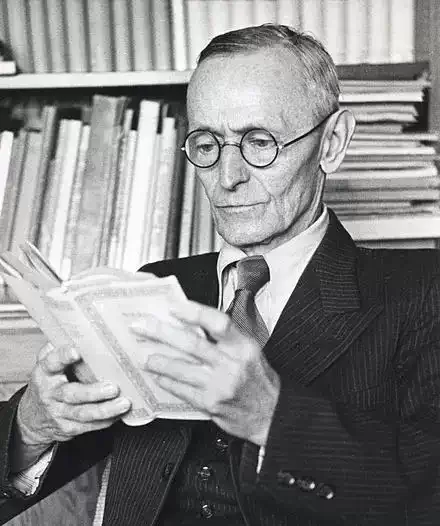
Hermann Hesse
Thinking Of A Friend At Night
Thinking Of A Friend At Night
In this evil year, autumn comes early...
I walk by night in the field, alone, the rain clatters,
The wind on my hat...And you? And you, my friend?
You are standing--maybe--and seeing the sickle moon
Move in a small arc over the forests
And bivouac fire, red in the black valley.
You are lying--maybe--in a straw field and sleeping
And dew falls cold on your forehead and battle jacket.
It's possible tonight you're on horseback,
The farthest outpost, peering along, with a gun in your fist,
Smiling, whispering, to your exhausted horse.
Maybe--I keep imagining--you are spending the night
As a guest in a strange castle with a park
And writing a letter by candlelight, and tapping
On the piano keys by the window,
Groping for a sound...
--And maybe
You are already silent, already dead, and the day
Will shine no longer into your beloved
Serious eyes, and your beloved brown hand hangs wilted,
And your white forehead split open--Oh, if only,
If only, just once, that last day, I had shown you, told you
Something of my love, that was too timid to speak!
But you know me, you know...and, smiling, you nod
Tonight in front of your strange castle,
And you nod to your horse in the drenched forest,
And you nod to your sleep to your harsh clutter of straw,
And think about me, and smile.
And maybe,
Maybe some day you will come back from the war,
and take a walk with me some evening,
And somebody will talk about Longwy, Luttich, Dammerkirch,
And smile gravely, and everything will be as before,
And no one will speak a word of his worry,
Of his worry and tenderness by night in the field,
Of his love. And with a single joke
You will frighten away the worry, the war, the uneasy nights,
The summer lightning of shy human friendship,
Into the cool past that will never come back.
Translated by James Wright
Submitted by Holt
In this evil year, autumn comes early...
I walk by night in the field, alone, the rain clatters,
The wind on my hat...And you? And you, my friend?
You are standing--maybe--and seeing the sickle moon
Move in a small arc over the forests
And bivouac fire, red in the black valley.
You are lying--maybe--in a straw field and sleeping
And dew falls cold on your forehead and battle jacket.
It's possible tonight you're on horseback,
The farthest outpost, peering along, with a gun in your fist,
Smiling, whispering, to your exhausted horse.
Maybe--I keep imagining--you are spending the night
As a guest in a strange castle with a park
And writing a letter by candlelight, and tapping
On the piano keys by the window,
Groping for a sound...
--And maybe
You are already silent, already dead, and the day
Will shine no longer into your beloved
Serious eyes, and your beloved brown hand hangs wilted,
And your white forehead split open--Oh, if only,
If only, just once, that last day, I had shown you, told you
Something of my love, that was too timid to speak!
But you know me, you know...and, smiling, you nod
Tonight in front of your strange castle,
And you nod to your horse in the drenched forest,
And you nod to your sleep to your harsh clutter of straw,
And think about me, and smile.
And maybe,
Maybe some day you will come back from the war,
and take a walk with me some evening,
And somebody will talk about Longwy, Luttich, Dammerkirch,
And smile gravely, and everything will be as before,
And no one will speak a word of his worry,
Of his worry and tenderness by night in the field,
Of his love. And with a single joke
You will frighten away the worry, the war, the uneasy nights,
The summer lightning of shy human friendship,
Into the cool past that will never come back.
Translated by James Wright
Submitted by Holt
596
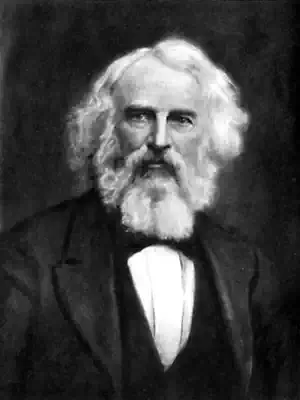
Henry Wadsworth Longfellow
Vox Populi. (Birds Of Passage. Flight The Third)
Vox Populi. (Birds Of Passage. Flight The Third)
When Mazarvan the Magician
Journeyed westward through Cathay,
Nothing heard he but the praises
Of Badoura on his way.
But the lessening rumor ended
When he came to Khaledan,
There the folk were talking only
Of Prince Camaralzaman,
So it happens with the poets:
Every province hath its own;
Camaralzaman is famous
Where Badoura is unknown.
When Mazarvan the Magician
Journeyed westward through Cathay,
Nothing heard he but the praises
Of Badoura on his way.
But the lessening rumor ended
When he came to Khaledan,
There the folk were talking only
Of Prince Camaralzaman,
So it happens with the poets:
Every province hath its own;
Camaralzaman is famous
Where Badoura is unknown.
316
Henry Wadsworth Longfellow
Village Blacksmith, The
Village Blacksmith, The
Under a spreading chestnut tree
The village smithy stands;
The Smith, a mighty man is he,
With large and sinewy hands;
And the muscles of his brawny arms
Are strong as iron bands.
His hair is crisp, and black, and long,
His face is like the tan;
His brow is wet with honest sweat,
He earns whate'er he can
And looks the whole world in the face
For he owes not any man.
Week in, week out, from morn till night,
You can hear his bellows blow;
You can hear him swing his heavy sledge,
With measured beat and slow,
Like a sexton ringing the village bell,
When the evening sun is low.
And children coming home from school
Look in at the open door;
They love to see the flaming furge,
And hear the bellows roar,
And catch the burning sparks that fly
Like chaff from a threshing floor.
He goes on Sunday to the church
and sits among his boys;
He hears the parson pray and preach.
He hears his daughter's voice
singing in the village choir,
And it makes his heart rejoice.
It sounds to him like her mother's voice,
Singing in Paradise!
He needs must think of her once more,
How in the grave she lies;
And with his hard, rough hand he wipes
A tear out of his eyes.
Toiling, rejoicing,-sorrowing,
Onward through life he goes;
Each morning sees some task begin,
Each evening sees it close;
Something attempted, something done,
Has earned a night's repose.
Thanks, thanks to thee, my worthy friend
For the lesson thou hast taught!
Thus at the flaming forge of life
Our fortunes must be wrought;
Thus on its sounding anvil shaped
Each burning deed and thought!
Under a spreading chestnut tree
The village smithy stands;
The Smith, a mighty man is he,
With large and sinewy hands;
And the muscles of his brawny arms
Are strong as iron bands.
His hair is crisp, and black, and long,
His face is like the tan;
His brow is wet with honest sweat,
He earns whate'er he can
And looks the whole world in the face
For he owes not any man.
Week in, week out, from morn till night,
You can hear his bellows blow;
You can hear him swing his heavy sledge,
With measured beat and slow,
Like a sexton ringing the village bell,
When the evening sun is low.
And children coming home from school
Look in at the open door;
They love to see the flaming furge,
And hear the bellows roar,
And catch the burning sparks that fly
Like chaff from a threshing floor.
He goes on Sunday to the church
and sits among his boys;
He hears the parson pray and preach.
He hears his daughter's voice
singing in the village choir,
And it makes his heart rejoice.
It sounds to him like her mother's voice,
Singing in Paradise!
He needs must think of her once more,
How in the grave she lies;
And with his hard, rough hand he wipes
A tear out of his eyes.
Toiling, rejoicing,-sorrowing,
Onward through life he goes;
Each morning sees some task begin,
Each evening sees it close;
Something attempted, something done,
Has earned a night's repose.
Thanks, thanks to thee, my worthy friend
For the lesson thou hast taught!
Thus at the flaming forge of life
Our fortunes must be wrought;
Thus on its sounding anvil shaped
Each burning deed and thought!
719
Henry Wadsworth Longfellow
Village Blacksmith, The
Village Blacksmith, The
Under a spreading chestnut tree
The village smithy stands;
The Smith, a mighty man is he,
With large and sinewy hands;
And the muscles of his brawny arms
Are strong as iron bands.
His hair is crisp, and black, and long,
His face is like the tan;
His brow is wet with honest sweat,
He earns whate'er he can
And looks the whole world in the face
For he owes not any man.
Week in, week out, from morn till night,
You can hear his bellows blow;
You can hear him swing his heavy sledge,
With measured beat and slow,
Like a sexton ringing the village bell,
When the evening sun is low.
And children coming home from school
Look in at the open door;
They love to see the flaming furge,
And hear the bellows roar,
And catch the burning sparks that fly
Like chaff from a threshing floor.
He goes on Sunday to the church
and sits among his boys;
He hears the parson pray and preach.
He hears his daughter's voice
singing in the village choir,
And it makes his heart rejoice.
It sounds to him like her mother's voice,
Singing in Paradise!
He needs must think of her once more,
How in the grave she lies;
And with his hard, rough hand he wipes
A tear out of his eyes.
Toiling, rejoicing,-sorrowing,
Onward through life he goes;
Each morning sees some task begin,
Each evening sees it close;
Something attempted, something done,
Has earned a night's repose.
Thanks, thanks to thee, my worthy friend
For the lesson thou hast taught!
Thus at the flaming forge of life
Our fortunes must be wrought;
Thus on its sounding anvil shaped
Each burning deed and thought!
Under a spreading chestnut tree
The village smithy stands;
The Smith, a mighty man is he,
With large and sinewy hands;
And the muscles of his brawny arms
Are strong as iron bands.
His hair is crisp, and black, and long,
His face is like the tan;
His brow is wet with honest sweat,
He earns whate'er he can
And looks the whole world in the face
For he owes not any man.
Week in, week out, from morn till night,
You can hear his bellows blow;
You can hear him swing his heavy sledge,
With measured beat and slow,
Like a sexton ringing the village bell,
When the evening sun is low.
And children coming home from school
Look in at the open door;
They love to see the flaming furge,
And hear the bellows roar,
And catch the burning sparks that fly
Like chaff from a threshing floor.
He goes on Sunday to the church
and sits among his boys;
He hears the parson pray and preach.
He hears his daughter's voice
singing in the village choir,
And it makes his heart rejoice.
It sounds to him like her mother's voice,
Singing in Paradise!
He needs must think of her once more,
How in the grave she lies;
And with his hard, rough hand he wipes
A tear out of his eyes.
Toiling, rejoicing,-sorrowing,
Onward through life he goes;
Each morning sees some task begin,
Each evening sees it close;
Something attempted, something done,
Has earned a night's repose.
Thanks, thanks to thee, my worthy friend
For the lesson thou hast taught!
Thus at the flaming forge of life
Our fortunes must be wrought;
Thus on its sounding anvil shaped
Each burning deed and thought!
719
Henry Wadsworth Longfellow
Venice
Venice
White swan of cities, slumbering in thy nest
So wonderfully built among the reeds
Of the lagoon, that fences thee and feeds,
As sayeth thy old historian and thy guest!
White water-lily, cradled and caressed
By ocean streams, and from the silt and weeds
Lifting thy golden filaments and seeds,
Thy sun-illumined spires, thy crown and crest!
White phantom city, whose untrodden streets
Are rivers, and whose pavements are the shifting
Shadows of palaces and strips of sky;
I wait to see thee vanish like the fleets
Seen in mirage, or towers of cloud uplifting
In air their unsubstantial masonry.
White swan of cities, slumbering in thy nest
So wonderfully built among the reeds
Of the lagoon, that fences thee and feeds,
As sayeth thy old historian and thy guest!
White water-lily, cradled and caressed
By ocean streams, and from the silt and weeds
Lifting thy golden filaments and seeds,
Thy sun-illumined spires, thy crown and crest!
White phantom city, whose untrodden streets
Are rivers, and whose pavements are the shifting
Shadows of palaces and strips of sky;
I wait to see thee vanish like the fleets
Seen in mirage, or towers of cloud uplifting
In air their unsubstantial masonry.
323