

Poems in this topic
Consciousness and Self-Knowledge
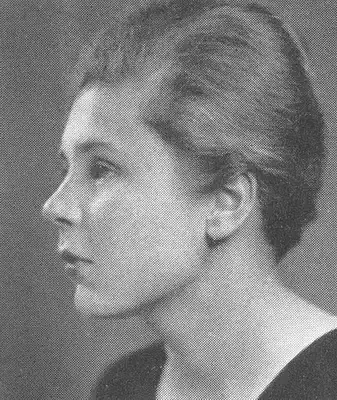
Elizabeth Bishop
Giant Snail
Giant Snail
The rain has stopped. The waterfall will roar like that all
night. I have come out to take a walk and feed. My body--foot,
that is--is wet and cold and covered with sharp gravel. It is
white, the size of a dinner plate. I have set myself a goal, a
certain rock, but it may well be dawn before I get there.
Although I move ghostlike and my floating edges barely graze
the ground, I am heavy, heavy, heavy. My white muscles are
already tired. I give the impression of mysterious ease, but it is
only with the greatest effort of my will that I can rise above the
smallest stones and sticks. And I must not let myself be distracted
by those rough spears of grass. Don't touch them. Draw
back. Withdrawal is always best.
The rain has stopped. The waterfall makes such a noise! (And
what if I fall over it?) The mountains of black rock give off such
clouds of steam! Shiny streamers are hanging down their sides.
When this occurs, we have a saying that the Snail Gods have
come down in haste. I could never descend such steep escarpments,
much less dream of climbing them.
That toad was too big, too, like me. His eyes beseeched my
love. Our proportions horrify our neighbors.
Rest a minute; relax. Flattened to the ground, my body is like
a pallid, decomposing leaf. What's that tapping on my shell?
Nothing. Let's go on.
My sides move in rhythmic waves, just off the ground, from
front to back, the wake of a ship, wax-white water, or a slowly
melting floe. I am cold, cold, cold as ice. My blind, white bull's
head was a Cretan scare-head; degenerate, my four horns that
can't attack. The sides of my mouth are now my hands. They
press the earth and suck it hard. Ah, but I know my shell is
beautiful, and high, and glazed, and shining. I know it well,
although I have not seen it. Its curled white lip is of the finest
enamel. Inside, it is as smooth as silk, and I, I fill it to perfection.
My wide wake shines, now it is growing dark. I leave a lovely
opalescent ribbon: I know this.
But O! I am too big. I feel it. Pity me.
If and when I reach the rock, I shall go into a certain crack
there for the night. The waterfall below will vibrate through
my shell and body all night long. In that steady pulsing I can
rest. All night I shall be like a sleeping ear.
The rain has stopped. The waterfall will roar like that all
night. I have come out to take a walk and feed. My body--foot,
that is--is wet and cold and covered with sharp gravel. It is
white, the size of a dinner plate. I have set myself a goal, a
certain rock, but it may well be dawn before I get there.
Although I move ghostlike and my floating edges barely graze
the ground, I am heavy, heavy, heavy. My white muscles are
already tired. I give the impression of mysterious ease, but it is
only with the greatest effort of my will that I can rise above the
smallest stones and sticks. And I must not let myself be distracted
by those rough spears of grass. Don't touch them. Draw
back. Withdrawal is always best.
The rain has stopped. The waterfall makes such a noise! (And
what if I fall over it?) The mountains of black rock give off such
clouds of steam! Shiny streamers are hanging down their sides.
When this occurs, we have a saying that the Snail Gods have
come down in haste. I could never descend such steep escarpments,
much less dream of climbing them.
That toad was too big, too, like me. His eyes beseeched my
love. Our proportions horrify our neighbors.
Rest a minute; relax. Flattened to the ground, my body is like
a pallid, decomposing leaf. What's that tapping on my shell?
Nothing. Let's go on.
My sides move in rhythmic waves, just off the ground, from
front to back, the wake of a ship, wax-white water, or a slowly
melting floe. I am cold, cold, cold as ice. My blind, white bull's
head was a Cretan scare-head; degenerate, my four horns that
can't attack. The sides of my mouth are now my hands. They
press the earth and suck it hard. Ah, but I know my shell is
beautiful, and high, and glazed, and shining. I know it well,
although I have not seen it. Its curled white lip is of the finest
enamel. Inside, it is as smooth as silk, and I, I fill it to perfection.
My wide wake shines, now it is growing dark. I leave a lovely
opalescent ribbon: I know this.
But O! I am too big. I feel it. Pity me.
If and when I reach the rock, I shall go into a certain crack
there for the night. The waterfall below will vibrate through
my shell and body all night long. In that steady pulsing I can
rest. All night I shall be like a sleeping ear.
609
Elizabeth Bishop
Five Flights Up
Five Flights Up
Still dark.
The unknown bird sits on his usual branch.
The little dog next door barks in his sleep
inquiringly, just once.
Perhaps in his sleep, too, the bird inquires
once or twice, quavering.
Questions---if that is what they are--answered
directly, simply,
by day itself.
Enormous morning, ponderous, meticulous;
gray light streaking each bare branch,
each single twig, along one side,
making another tree, of glassy veins...
The bird still sits there. Now he seems to yawn.
The little black dog runs in his yard.
His owner's voice arises, stern,
"You ought to be ashamed!"
What has he done?
He bounces cheerfully up and down;
he rushes in circles in the fallen leaves.
Obviously, he has no sense of shame.
He and the bird know everything is answered,
all taken care of,
no need to ask again.
---Yesterday brought to today so lightly!
(A yesterday I find almost impossible to lift.)
Still dark.
The unknown bird sits on his usual branch.
The little dog next door barks in his sleep
inquiringly, just once.
Perhaps in his sleep, too, the bird inquires
once or twice, quavering.
Questions---if that is what they are--answered
directly, simply,
by day itself.
Enormous morning, ponderous, meticulous;
gray light streaking each bare branch,
each single twig, along one side,
making another tree, of glassy veins...
The bird still sits there. Now he seems to yawn.
The little black dog runs in his yard.
His owner's voice arises, stern,
"You ought to be ashamed!"
What has he done?
He bounces cheerfully up and down;
he rushes in circles in the fallen leaves.
Obviously, he has no sense of shame.
He and the bird know everything is answered,
all taken care of,
no need to ask again.
---Yesterday brought to today so lightly!
(A yesterday I find almost impossible to lift.)
568
Elizabeth Bishop
Conversation
Conversation
The tumult in the heart
keeps asking questions.
And then it stops and undertakes to answer
in the same tone of voice.
No one could tell the difference.
Uninnocent, these conversations start,
and then engage the senses,
only half-meaning to.
And then there is no choice,
and then there is no sense;
until a name
and all its connotation are the same.
The tumult in the heart
keeps asking questions.
And then it stops and undertakes to answer
in the same tone of voice.
No one could tell the difference.
Uninnocent, these conversations start,
and then engage the senses,
only half-meaning to.
And then there is no choice,
and then there is no sense;
until a name
and all its connotation are the same.
531
Elizabeth Bishop
A Prodigal
A Prodigal
The brown enormous odor he lived by
was too close, with its breathing and thick hair,
for him to judge. The floor was rotten; the sty
was plastered halfway up with glass-smooth dung.
Light-lashed, self-righteous, above moving snouts,
the pigs' eyes followed him, a cheerful stare-even
to the sow that always ate her young-till,
sickening, he leaned to scratch her head.
But sometimes mornings after drinking bouts
(he hid the pints behind the two-by-fours),
the sunrise glazed the barnyard mud with red
the burning puddles seemed to reassure.
And then he thought he almost might endure
his exile yet another year or more.
But evenings the first star came to warn.
The farmer whom he worked for came at dark
to shut the cows and horses in the barn
beneath their overhanging clouds of hay,
with pitchforks, faint forked lightnings, catching light,
safe and companionable as in the Ark.
The pigs stuck out their little feet and snored.
The lantern--like the sun, going away-laid
on the mud a pacing aureole.
Carrying a bucket along a slimy board,
he felt the bats' uncertain staggering flight,
his shuddering insights, beyond his control,
touching him. But it took him a long time
finally to make up his mind to go home.
The brown enormous odor he lived by
was too close, with its breathing and thick hair,
for him to judge. The floor was rotten; the sty
was plastered halfway up with glass-smooth dung.
Light-lashed, self-righteous, above moving snouts,
the pigs' eyes followed him, a cheerful stare-even
to the sow that always ate her young-till,
sickening, he leaned to scratch her head.
But sometimes mornings after drinking bouts
(he hid the pints behind the two-by-fours),
the sunrise glazed the barnyard mud with red
the burning puddles seemed to reassure.
And then he thought he almost might endure
his exile yet another year or more.
But evenings the first star came to warn.
The farmer whom he worked for came at dark
to shut the cows and horses in the barn
beneath their overhanging clouds of hay,
with pitchforks, faint forked lightnings, catching light,
safe and companionable as in the Ark.
The pigs stuck out their little feet and snored.
The lantern--like the sun, going away-laid
on the mud a pacing aureole.
Carrying a bucket along a slimy board,
he felt the bats' uncertain staggering flight,
his shuddering insights, beyond his control,
touching him. But it took him a long time
finally to make up his mind to go home.
750
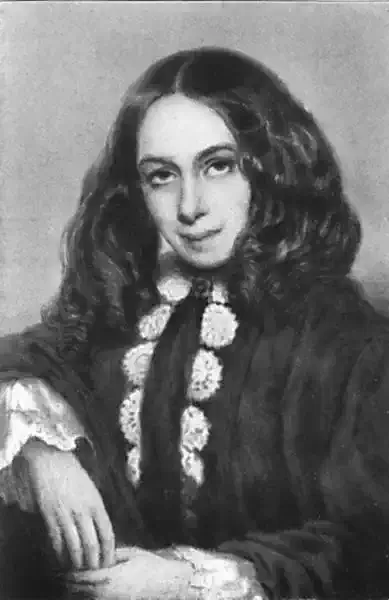
Elizabeth Barrett Browning
XXXVII
XXXVII
Pardon, oh, pardon, that my soul should make,
Of all that strong divineness which I know
For thine and thee, an image only so
Formed of the sand, and fit to shift and break.
It is that distant years which did not take
Thy sovranty, recoiling with a blow,
Have forced my swimming brain to undergo
Their doubt and dread, and blindly to forsake
Thy purity of likeness and distort
Thy worthiest love to a worthless counterfeit:
As if a shipwrecked Pagan, safe in port,
His guardian sea-god to commemorate,
Should set a sculptured porpoise, gills a-snort
And vibrant tail, within the temple-gate.
Pardon, oh, pardon, that my soul should make,
Of all that strong divineness which I know
For thine and thee, an image only so
Formed of the sand, and fit to shift and break.
It is that distant years which did not take
Thy sovranty, recoiling with a blow,
Have forced my swimming brain to undergo
Their doubt and dread, and blindly to forsake
Thy purity of likeness and distort
Thy worthiest love to a worthless counterfeit:
As if a shipwrecked Pagan, safe in port,
His guardian sea-god to commemorate,
Should set a sculptured porpoise, gills a-snort
And vibrant tail, within the temple-gate.
537
Elizabeth Barrett Browning
XXXII
XXXII
The first time that the sun rose on thine oath
To love me, I looked forward to the moon
To slacken all those bonds which seemed too soon
And quickly tied to make a lasting troth.
Quick-loving hearts, I thought, may quickly loathe;
And, looking on myself, I seemed not one
For such man's love !--more like an out-of-tune
Worn viol, a good singer would be wroth
To spoil his song with, and which, snatched in haste,
Is laid down at the first ill-sounding note.
I did not wrong myself so, but I placed
A wrong on thee. For perfect strains may float
'Neath master-hands, from instruments defaced,--
And great souls, at one stroke, may do and doat.
The first time that the sun rose on thine oath
To love me, I looked forward to the moon
To slacken all those bonds which seemed too soon
And quickly tied to make a lasting troth.
Quick-loving hearts, I thought, may quickly loathe;
And, looking on myself, I seemed not one
For such man's love !--more like an out-of-tune
Worn viol, a good singer would be wroth
To spoil his song with, and which, snatched in haste,
Is laid down at the first ill-sounding note.
I did not wrong myself so, but I placed
A wrong on thee. For perfect strains may float
'Neath master-hands, from instruments defaced,--
And great souls, at one stroke, may do and doat.
473
Elizabeth Barrett Browning
XVII
XVII
My poet, thou canst touch on all the notes
God set between his After and Before,
And strike up and strike off the general roar
Of the rushing worlds a melody that floats
In a serene air purely. Antidotes
Of medicated music, answering for
Mankind's forlornest uses, thou canst pour
From thence into their ears. God's will devotes
Thine to such ends, and mine to wait on thine.
How, Dearest, wilt thou have me for most use ?
A hope, to sing by gladly ? or a fine
Sad memory, with thy songs to interfuse ?
A shade, in which to sing--of palm or pine ?
A grave, on which to rest from singing ? Choose.
My poet, thou canst touch on all the notes
God set between his After and Before,
And strike up and strike off the general roar
Of the rushing worlds a melody that floats
In a serene air purely. Antidotes
Of medicated music, answering for
Mankind's forlornest uses, thou canst pour
From thence into their ears. God's will devotes
Thine to such ends, and mine to wait on thine.
How, Dearest, wilt thou have me for most use ?
A hope, to sing by gladly ? or a fine
Sad memory, with thy songs to interfuse ?
A shade, in which to sing--of palm or pine ?
A grave, on which to rest from singing ? Choose.
467
Elizabeth Barrett Browning
XV
XV
Accuse me not, beseech thee, that I wear
Too calm and sad a face in front of thine;
For we two look two ways, and cannot shine
With the same sunlight on our brow and hair.
On me thou lookest with no doubting care,
As on a bee shut in a crystalline;
Since sorrow hath shut me safe in love's divine,
And to spread wing and fly in the outer air
Were most impossible failure, if I strove
To fail so. But I look on thee--on thee--
Beholding, besides love, the end of love,
Hearing oblivion beyond memory;
As one who sits and gazes from above,
Over the rivers to the bitter sea.
Accuse me not, beseech thee, that I wear
Too calm and sad a face in front of thine;
For we two look two ways, and cannot shine
With the same sunlight on our brow and hair.
On me thou lookest with no doubting care,
As on a bee shut in a crystalline;
Since sorrow hath shut me safe in love's divine,
And to spread wing and fly in the outer air
Were most impossible failure, if I strove
To fail so. But I look on thee--on thee--
Beholding, besides love, the end of love,
Hearing oblivion beyond memory;
As one who sits and gazes from above,
Over the rivers to the bitter sea.
426
Elizabeth Barrett Browning
The Soul's Expression
The Soul's Expression
WITH stammering lips and insufficient sound
I strive and struggle to deliver right
That music of my nature, day and night
With dream and thought and feeling interwound
And inly answering all the senses round
With octaves of a mystic depth and height
Which step out grandly to the infinite
From the dark edges of the sensual ground.
This song of soul I struggle to outbear
Through portals of the sense, sublime and whole,
And utter all myself into the air:
But if I did it,--as the thunder-roll
Breaks its own cloud, my flesh would perish there,
Before that dread apocalypse of soul.
WITH stammering lips and insufficient sound
I strive and struggle to deliver right
That music of my nature, day and night
With dream and thought and feeling interwound
And inly answering all the senses round
With octaves of a mystic depth and height
Which step out grandly to the infinite
From the dark edges of the sensual ground.
This song of soul I struggle to outbear
Through portals of the sense, sublime and whole,
And utter all myself into the air:
But if I did it,--as the thunder-roll
Breaks its own cloud, my flesh would perish there,
Before that dread apocalypse of soul.
347
Elizabeth Barrett Browning
Tears
Tears
THANK God, bless God, all ye who suffer not
More grief than ye can weep for. That is well--
That is light grieving ! lighter, none befell
Since Adam forfeited the primal lot.
Tears ! what are tears ? The babe weeps in its cot,
The mother singing, at her marriage-bell
The bride weeps, and before the oracle
Of high-faned hills the poet has forgot
Such moisture on his cheeks. Thank God for grace,
Ye who weep only ! If, as some have done,
Ye grope tear-blinded in a desert place
And touch but tombs,--look up I those tears will run
Soon in long rivers down the lifted face,
And leave the vision clear for stars and sun
THANK God, bless God, all ye who suffer not
More grief than ye can weep for. That is well--
That is light grieving ! lighter, none befell
Since Adam forfeited the primal lot.
Tears ! what are tears ? The babe weeps in its cot,
The mother singing, at her marriage-bell
The bride weeps, and before the oracle
Of high-faned hills the poet has forgot
Such moisture on his cheeks. Thank God for grace,
Ye who weep only ! If, as some have done,
Ye grope tear-blinded in a desert place
And touch but tombs,--look up I those tears will run
Soon in long rivers down the lifted face,
And leave the vision clear for stars and sun
463
Elizabeth Barrett Browning
Sonnet XXVI: I Lived With Visions
Sonnet XXVI: I Lived With Visions
I lived with visions for my company
Instead of men and women, years ago,
And found them gentle mates, nor thought to know
A sweeter music than they played to me.
But soon their trailing purple was not free
Of this world's dust, their lutes did silent grow,
And I myself grew faint and blind below
Their vanishing eyes. Then thou didst come--to be,
Belovèd, what they seemed. Their shining fronts,
Their songs, their splendors (better, yet the same,
As river water hallowed into fonts),
Met in thee, and from out thee overcame
My soul with satisfaction of all wants:
Because God's gifts put man's best dreams to shame.
I lived with visions for my company
Instead of men and women, years ago,
And found them gentle mates, nor thought to know
A sweeter music than they played to me.
But soon their trailing purple was not free
Of this world's dust, their lutes did silent grow,
And I myself grew faint and blind below
Their vanishing eyes. Then thou didst come--to be,
Belovèd, what they seemed. Their shining fronts,
Their songs, their splendors (better, yet the same,
As river water hallowed into fonts),
Met in thee, and from out thee overcame
My soul with satisfaction of all wants:
Because God's gifts put man's best dreams to shame.
375
Elizabeth Barrett Browning
My Heart and I
My Heart and I
I.
ENOUGH ! we're tired, my heart and I.
We sit beside the headstone thus,
And wish that name were carved for us.
The moss reprints more tenderly
The hard types of the mason's knife,
As heaven's sweet life renews earth's life
With which we're tired, my heart and I.
II.
You see we're tired, my heart and I.
We dealt with books, we trusted men,
And in our own blood drenched the pen,
As if such colours could not fly.
We walked too straight for fortune's end,
We loved too true to keep a friend ;
At last we're tired, my heart and I.
III.
How tired we feel, my heart and I !
We seem of no use in the world ;
Our fancies hang grey and uncurled
About men's eyes indifferently ;
Our voice which thrilled you so, will let
You sleep; our tears are only wet :
What do we here, my heart and I ?
IV.
So tired, so tired, my heart and I !
It was not thus in that old time
When Ralph sat with me 'neath the lime
To watch the sunset from the sky.
`Dear love, you're looking tired,' he said;
I, smiling at him, shook my head :
'Tis now we're tired, my heart and I.
V.
So tired, so tired, my heart and I !
Though now none takes me on his arm
To fold me close and kiss me warm
Till each quick breath end in a sigh
Of happy languor. Now, alone,
We lean upon this graveyard stone,
Uncheered, unkissed, my heart and I.
VI.
Tired out we are, my heart and I.
Suppose the world brought diadems
To tempt us, crusted with loose gems
Of powers and pleasures ? Let it try.
We scarcely care to look at even
A pretty child, or God's blue heaven,
We feel so tired, my heart and I.
VII.
Yet who complains ? My heart and I ?
In this abundant earth no doubt
Is little room for things worn out :
Disdain them, break them, throw them by
And if before the days grew rough
We once were loved, used, -- well enough,
I think, we've fared, my heart and I.
I.
ENOUGH ! we're tired, my heart and I.
We sit beside the headstone thus,
And wish that name were carved for us.
The moss reprints more tenderly
The hard types of the mason's knife,
As heaven's sweet life renews earth's life
With which we're tired, my heart and I.
II.
You see we're tired, my heart and I.
We dealt with books, we trusted men,
And in our own blood drenched the pen,
As if such colours could not fly.
We walked too straight for fortune's end,
We loved too true to keep a friend ;
At last we're tired, my heart and I.
III.
How tired we feel, my heart and I !
We seem of no use in the world ;
Our fancies hang grey and uncurled
About men's eyes indifferently ;
Our voice which thrilled you so, will let
You sleep; our tears are only wet :
What do we here, my heart and I ?
IV.
So tired, so tired, my heart and I !
It was not thus in that old time
When Ralph sat with me 'neath the lime
To watch the sunset from the sky.
`Dear love, you're looking tired,' he said;
I, smiling at him, shook my head :
'Tis now we're tired, my heart and I.
V.
So tired, so tired, my heart and I !
Though now none takes me on his arm
To fold me close and kiss me warm
Till each quick breath end in a sigh
Of happy languor. Now, alone,
We lean upon this graveyard stone,
Uncheered, unkissed, my heart and I.
VI.
Tired out we are, my heart and I.
Suppose the world brought diadems
To tempt us, crusted with loose gems
Of powers and pleasures ? Let it try.
We scarcely care to look at even
A pretty child, or God's blue heaven,
We feel so tired, my heart and I.
VII.
Yet who complains ? My heart and I ?
In this abundant earth no doubt
Is little room for things worn out :
Disdain them, break them, throw them by
And if before the days grew rough
We once were loved, used, -- well enough,
I think, we've fared, my heart and I.
482
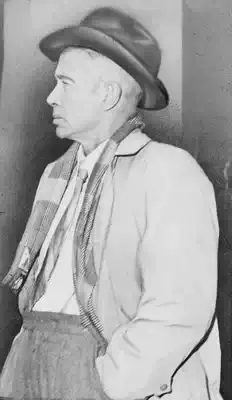
E. E. Cummings
maggie and milly and molly and may
maggie and milly and molly and may
maggie and milly and molly and may
went down to the beach (to play one day)
and maggie discovered a shell that sang
so sweetly she couldn’t remember her troubles,and
milly befriended a stranded star
whose rays five languid fingers were;
and molly was chased by a horrible thing
which raced sideways while blowing bubbles:and
may came home with a smooth round stone
as small as a world and as large as alone.
For whatever we lose(like a you or a me)
it’s always ourselves we find in the sea
maggie and milly and molly and may
went down to the beach (to play one day)
and maggie discovered a shell that sang
so sweetly she couldn’t remember her troubles,and
milly befriended a stranded star
whose rays five languid fingers were;
and molly was chased by a horrible thing
which raced sideways while blowing bubbles:and
may came home with a smooth round stone
as small as a world and as large as alone.
For whatever we lose(like a you or a me)
it’s always ourselves we find in the sea
920
E. E. Cummings
if everything happens that can't be done
if everything happens that can't be done
if everything happens that can't be done
(and anything's righter
than books
could plan)
the stupidest teacher will almost guess
(with a run
skip
around we go yes)
there's nothing as something as one
one hasn't a why or because or although
(and buds know better
than books
don't grow)
one's anything old being everything new
(with a what
which
around we come who)
one's everyanything so
so world is a leaf so tree is a bough
(and birds sing sweeter
than books
tell how)
so here is away and so your is a my
(with a down
up
around again fly)
forever was never till now
now i love you and you love me
(and books are shutter
than books
can be)
and deep in the high that does nothing but fall
(with a shout
each
around we go all)
there's somebody calling who's we
we're anything brighter than even the sun
(we're everything greater
than books
might mean)
we're everanything more than believe
(with a spin
leap
alive we're alive)
we're wonderful one times one
if everything happens that can't be done
(and anything's righter
than books
could plan)
the stupidest teacher will almost guess
(with a run
skip
around we go yes)
there's nothing as something as one
one hasn't a why or because or although
(and buds know better
than books
don't grow)
one's anything old being everything new
(with a what
which
around we come who)
one's everyanything so
so world is a leaf so tree is a bough
(and birds sing sweeter
than books
tell how)
so here is away and so your is a my
(with a down
up
around again fly)
forever was never till now
now i love you and you love me
(and books are shutter
than books
can be)
and deep in the high that does nothing but fall
(with a shout
each
around we go all)
there's somebody calling who's we
we're anything brighter than even the sun
(we're everything greater
than books
might mean)
we're everanything more than believe
(with a spin
leap
alive we're alive)
we're wonderful one times one
658
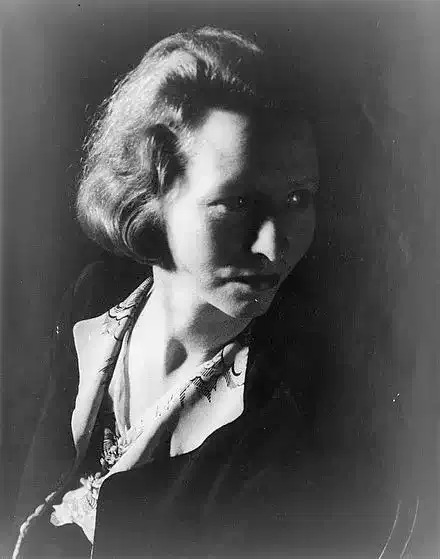
Edna St. Vincent Millay
Wild Swans
Wild Swans
I looked in my heart while the wild swans went over.
And what did I see I had not seen before?
Only a question less or a question more:
Nothing to match the flight of wild birds flying.
Tiresome heart, forever living and dying,
House without air, I leave you and lock your door.
Wild swans, come over the town, come over
The town again, trailing your legs and crying!
I looked in my heart while the wild swans went over.
And what did I see I had not seen before?
Only a question less or a question more:
Nothing to match the flight of wild birds flying.
Tiresome heart, forever living and dying,
House without air, I leave you and lock your door.
Wild swans, come over the town, come over
The town again, trailing your legs and crying!
339
Edna St. Vincent Millay
The Plaid Dress
The Plaid Dress
Strong sun, that bleach
The curtains of my room, can you not render
Colourless this dress I wear?—
This violent plaid
Of purple angers and red shames; the yellow stripe
Of thin but valid treacheries; the flashy green of kind deeds done
Through indolence high judgments given here in haste;
The recurring checker of the serious breach of taste?
No more uncoloured than unmade,
I fear, can be this garment that I may not doff;
Confession does not strip it off,
To send me homeward eased and bare;
All through the formal, unoffending evening, under the clean
Bright hair,
Lining the subtle gown. . .it is not seen,
But it is there.
Strong sun, that bleach
The curtains of my room, can you not render
Colourless this dress I wear?—
This violent plaid
Of purple angers and red shames; the yellow stripe
Of thin but valid treacheries; the flashy green of kind deeds done
Through indolence high judgments given here in haste;
The recurring checker of the serious breach of taste?
No more uncoloured than unmade,
I fear, can be this garment that I may not doff;
Confession does not strip it off,
To send me homeward eased and bare;
All through the formal, unoffending evening, under the clean
Bright hair,
Lining the subtle gown. . .it is not seen,
But it is there.
358
Edna St. Vincent Millay
The Concert
The Concert
No, I will go alone.
I will come back when it's over.
Yes, of course I love you.
No, it will not be long.
Why may you not come with me?—
You are too much my lover.
You would put yourself
Between me and song.
If I go alone,
Quiet and suavely clothed,
My body will die in its chair,
And over my head a flame,
A mind that is twice my own,
Will mark with icy mirth
The wise advance and retreat
Of armies without a country,
Storming a nameless gate,
Hurling terrible javelins down
From the shouting walls of a singing town
Where no women wait!
Armies clean of love and hate,
Marching lines of pitiless sound
Climbing hills to the sun and hurling
Golden spears to the ground!
Up the lines a silver runner
Bearing a banner whereon is scored
The milk and steel of a bloodless wound
Healed at length by the sword!
You and I have nothing to do with music.
We may not make of music a filigree frame,
Within which you and I,
Tenderly glad we came,
Sit smiling, hand in hand.
Come now, be content.
I will come back to you, I swear I will;
And you will know me still.
I shall be only a little taller
Than when I went.
No, I will go alone.
I will come back when it's over.
Yes, of course I love you.
No, it will not be long.
Why may you not come with me?—
You are too much my lover.
You would put yourself
Between me and song.
If I go alone,
Quiet and suavely clothed,
My body will die in its chair,
And over my head a flame,
A mind that is twice my own,
Will mark with icy mirth
The wise advance and retreat
Of armies without a country,
Storming a nameless gate,
Hurling terrible javelins down
From the shouting walls of a singing town
Where no women wait!
Armies clean of love and hate,
Marching lines of pitiless sound
Climbing hills to the sun and hurling
Golden spears to the ground!
Up the lines a silver runner
Bearing a banner whereon is scored
The milk and steel of a bloodless wound
Healed at length by the sword!
You and I have nothing to do with music.
We may not make of music a filigree frame,
Within which you and I,
Tenderly glad we came,
Sit smiling, hand in hand.
Come now, be content.
I will come back to you, I swear I will;
And you will know me still.
I shall be only a little taller
Than when I went.
396
Edna St. Vincent Millay
Renascence
Renascence
All I could see from where I stood
Was three long mountains and a wood;
I turned and looked another way,
And saw three islands in a bay.
So with my eyes I traced the line
Of the horizon, thin and fine,
Straight around till I was come
Back to where I'd started from;
And all I saw from where I stood
Was three long mountains and a wood.
Over these things I could not see;
These were the things that bounded me;
And I could touch them with my hand,
Almost, I thought, from where I stand.
And all at once things seemed so small
My breath came short, and scarce at all.
But, sure, the sky is big, I said;
Miles and miles above my head;
So here upon my back I'll lie
And look my fill into the sky.
And so I looked, and, after all,
The sky was not so very tall.
The sky, I said, must somewhere stop,
And -- sure enough! -- I see the top!
The sky, I thought, is not so grand;
I 'most could touch it with my hand!
And, reaching up my hand to try,
I screamed to feel it touch the sky.
I screamed, and -- lo! -- Infinity
Came down and settled over me;
And, pressing of the Undefined
The definition on my mind,
Held up before my eyes a glass
Through which my shrinking sight did pass
Until it seemed I must behold
Immensity made manifold;
Whispered to me a word whose sound
Deafened the air for worlds around,
And brought unmuffled to my ears
The gossiping of friendly spheres,
The creaking of the tented sky,
The ticking of Eternity.
I saw and heard, and knew at last
The How and Why of all things, past,
And present, and forevermore.
The universe, cleft to the core,
Lay open to my probing sense
That, sick'ning, I would fain pluck thence
But could not, -- nay! But needs must suck
At the great wound, and could not pluck
My lips away till I had drawn
All venom out. -- Ah, fearful pawn!
For my omniscience paid I toll
In infinite remorse of soul.
All sin was of my sinning, all
Atoning mine, and mine the gall
Of all regret. Mine was the weight
Of every brooded wrong, the hate
That stood behind each envious thrust,
Mine every greed, mine every lust.
And all the while for every grief,
Each suffering, I craved relief
With individual desire, --
Craved all in vain! And felt fierce fire
About a thousand people crawl;
Perished with each, -- then mourned for all!
A man was starving in Capri;
He moved his eyes and looked at me;
I felt his gaze, I heard his moan,
And knew his hunger as my own.
I saw at sea a great fog-bank
Between two ships that struck and sank;
A thousand screams the heavens smote;
And every scream tore through my throat.
No hurt I did not feel, no death
That was not mine; mine each last breath
That, crying, met an answering cry
From the compassion that was I.
All suffering mine, and mine its rod;
Mine, pity like the pity of God.
Ah, awful weight! Infinity
Pressed down upon the finite Me!
My anguished spirit, like a bird,
Beating against my lips I heard;
Yet lay the weight so close about
There was no room for it without.
And so beneath the Weight lay I
And suffered death, but could not die.
Long had I lain thus, craving death,
When quietly the earth beneath
Gave way, and inch by inch, so great
At last had grown the crushing weight,
Into the earth I sank till I
Full six feet under ground did lie,
And sank no more, -- there is no weight
Can follow here, however great.
From off my breast I felt it roll,
And as it went my tortured soul
Burst forth and fled in such a gust
That all about me swirled the dust.
Deep in the earth I rested now;
Cool is its hand upon the brow
And soft its breast beneath the head
Of one who is so gladly dead.
And all at once, and over all,
The pitying rain began to fall;
I lay and heard each pattering hoof
Upon my lowly, thatched roof,
And seemed to love the sound far more
Than ever I had done before.
For rain it hath a friendly sound
To one who's six feet underground;
And scarce the friendly voice or face:
A grave is such a quiet place.
The rain, I said, is kind to come
And speak to me in my new home.
I would I were alive again
To kiss the fingers of the rain,
To drink into my eyes the shine
Of every slanting silver line,
To catch the freshened, fragrant breeze
From drenched and dripping apple-trees.
For soon the shower will be done,
And then the broad face of the sun
Will laugh above the rain-soaked earth
Until the world with answering mirth
Shakes joyously, and each round drop
Rolls, twinkling, from its grass-blade top.
How can I bear it; buried here,
While overhead the sky grows clear
And blue again after the storm?
O, multi-colored, multiform,
Beloved beauty over me,
That I shall never, never see
Again! Spring-silver, autumn-gold,
That I shall never more behold!
Sleeping your myriad magics through,
Close-sepulchred away from you!
O God, I cried, give me new birth,
And put me back upon the earth!
Upset each cloud's gigantic gourd
And let the heavy rain, down-poured
In one big torrent, set me free,
Washing my grave away from me!
I ceased; and, through the breathless hush
That answered me, the far-off rush
Of herald wings came whispering
Like music down the vibrant string
Of my ascending prayer, and -- crash!
Before the wild wind's whistling lash
The startled storm-clouds reared on high
And plunged in terror down the sky,
And the big rain in one black wave
Fell from the sky and struck my grave.
I know not how such things can be
I only know there came to me
A fragrance such as never clings
To aught save happy living things;
A sound as of some joyous elf
Singing sweet songs to please himself,
And, through and over everything,
A sense of glad awakening.
The grass, a-tiptoe at my ear,
Whispering to me I could hear;
I felt the rain's cool finger-tips
Brushed tenderly across my lips,
Laid gently on my sealed sight,
And all at once the heavy night
Fell from my eyes and I could see, --
A drenched and dripping apple-tree,
A last long line of silver rain,
A sky grown clear and blue again.
And as I looked a quickening gust
Of wind blew up to me and thrust
Into my face a miracle
Of orchard-breath, and with the smell, --
I know not how such things can be! --
I breathed my soul back into me.
Ah! Up then from the ground sprang I
And hailed the earth with such a cry
As is not heard save from a man
Who has been dead, and lives again.
About the trees my arms I wound;
Like one gone mad I hugged the ground;
I raised my quivering arms on high;
I laughed and laughed into the sky,
Till at my throat a strangling sob
Caught fiercely, and a great heart-throb
Sent instant tears into my eyes;
O God, I cried, no dark disguise
Can e'er hereafter hide from me
Thy radiant identity!
Thou canst not move across the grass
But my quick eyes will see Thee pass,
Nor speak, however silently,
But my hushed voice will answer Thee.
I know the path that tells Thy way
Through the cool eve of every day;
God, I can push the grass apart
And lay my finger on Thy heart!
The world stands out on either side
No wider than the heart is wide;
Above the world is stretched the sky, --
No higher than the soul is high.
The heart can push the sea and land
Farther away on either hand;
The soul can split the sky in two,
And let the face of God shine through.
But East and West will pinch the heart
That cannot keep them pushed apart;
And he whose soul is flat -- the sky
Will cave in on him by and by.
All I could see from where I stood
Was three long mountains and a wood;
I turned and looked another way,
And saw three islands in a bay.
So with my eyes I traced the line
Of the horizon, thin and fine,
Straight around till I was come
Back to where I'd started from;
And all I saw from where I stood
Was three long mountains and a wood.
Over these things I could not see;
These were the things that bounded me;
And I could touch them with my hand,
Almost, I thought, from where I stand.
And all at once things seemed so small
My breath came short, and scarce at all.
But, sure, the sky is big, I said;
Miles and miles above my head;
So here upon my back I'll lie
And look my fill into the sky.
And so I looked, and, after all,
The sky was not so very tall.
The sky, I said, must somewhere stop,
And -- sure enough! -- I see the top!
The sky, I thought, is not so grand;
I 'most could touch it with my hand!
And, reaching up my hand to try,
I screamed to feel it touch the sky.
I screamed, and -- lo! -- Infinity
Came down and settled over me;
And, pressing of the Undefined
The definition on my mind,
Held up before my eyes a glass
Through which my shrinking sight did pass
Until it seemed I must behold
Immensity made manifold;
Whispered to me a word whose sound
Deafened the air for worlds around,
And brought unmuffled to my ears
The gossiping of friendly spheres,
The creaking of the tented sky,
The ticking of Eternity.
I saw and heard, and knew at last
The How and Why of all things, past,
And present, and forevermore.
The universe, cleft to the core,
Lay open to my probing sense
That, sick'ning, I would fain pluck thence
But could not, -- nay! But needs must suck
At the great wound, and could not pluck
My lips away till I had drawn
All venom out. -- Ah, fearful pawn!
For my omniscience paid I toll
In infinite remorse of soul.
All sin was of my sinning, all
Atoning mine, and mine the gall
Of all regret. Mine was the weight
Of every brooded wrong, the hate
That stood behind each envious thrust,
Mine every greed, mine every lust.
And all the while for every grief,
Each suffering, I craved relief
With individual desire, --
Craved all in vain! And felt fierce fire
About a thousand people crawl;
Perished with each, -- then mourned for all!
A man was starving in Capri;
He moved his eyes and looked at me;
I felt his gaze, I heard his moan,
And knew his hunger as my own.
I saw at sea a great fog-bank
Between two ships that struck and sank;
A thousand screams the heavens smote;
And every scream tore through my throat.
No hurt I did not feel, no death
That was not mine; mine each last breath
That, crying, met an answering cry
From the compassion that was I.
All suffering mine, and mine its rod;
Mine, pity like the pity of God.
Ah, awful weight! Infinity
Pressed down upon the finite Me!
My anguished spirit, like a bird,
Beating against my lips I heard;
Yet lay the weight so close about
There was no room for it without.
And so beneath the Weight lay I
And suffered death, but could not die.
Long had I lain thus, craving death,
When quietly the earth beneath
Gave way, and inch by inch, so great
At last had grown the crushing weight,
Into the earth I sank till I
Full six feet under ground did lie,
And sank no more, -- there is no weight
Can follow here, however great.
From off my breast I felt it roll,
And as it went my tortured soul
Burst forth and fled in such a gust
That all about me swirled the dust.
Deep in the earth I rested now;
Cool is its hand upon the brow
And soft its breast beneath the head
Of one who is so gladly dead.
And all at once, and over all,
The pitying rain began to fall;
I lay and heard each pattering hoof
Upon my lowly, thatched roof,
And seemed to love the sound far more
Than ever I had done before.
For rain it hath a friendly sound
To one who's six feet underground;
And scarce the friendly voice or face:
A grave is such a quiet place.
The rain, I said, is kind to come
And speak to me in my new home.
I would I were alive again
To kiss the fingers of the rain,
To drink into my eyes the shine
Of every slanting silver line,
To catch the freshened, fragrant breeze
From drenched and dripping apple-trees.
For soon the shower will be done,
And then the broad face of the sun
Will laugh above the rain-soaked earth
Until the world with answering mirth
Shakes joyously, and each round drop
Rolls, twinkling, from its grass-blade top.
How can I bear it; buried here,
While overhead the sky grows clear
And blue again after the storm?
O, multi-colored, multiform,
Beloved beauty over me,
That I shall never, never see
Again! Spring-silver, autumn-gold,
That I shall never more behold!
Sleeping your myriad magics through,
Close-sepulchred away from you!
O God, I cried, give me new birth,
And put me back upon the earth!
Upset each cloud's gigantic gourd
And let the heavy rain, down-poured
In one big torrent, set me free,
Washing my grave away from me!
I ceased; and, through the breathless hush
That answered me, the far-off rush
Of herald wings came whispering
Like music down the vibrant string
Of my ascending prayer, and -- crash!
Before the wild wind's whistling lash
The startled storm-clouds reared on high
And plunged in terror down the sky,
And the big rain in one black wave
Fell from the sky and struck my grave.
I know not how such things can be
I only know there came to me
A fragrance such as never clings
To aught save happy living things;
A sound as of some joyous elf
Singing sweet songs to please himself,
And, through and over everything,
A sense of glad awakening.
The grass, a-tiptoe at my ear,
Whispering to me I could hear;
I felt the rain's cool finger-tips
Brushed tenderly across my lips,
Laid gently on my sealed sight,
And all at once the heavy night
Fell from my eyes and I could see, --
A drenched and dripping apple-tree,
A last long line of silver rain,
A sky grown clear and blue again.
And as I looked a quickening gust
Of wind blew up to me and thrust
Into my face a miracle
Of orchard-breath, and with the smell, --
I know not how such things can be! --
I breathed my soul back into me.
Ah! Up then from the ground sprang I
And hailed the earth with such a cry
As is not heard save from a man
Who has been dead, and lives again.
About the trees my arms I wound;
Like one gone mad I hugged the ground;
I raised my quivering arms on high;
I laughed and laughed into the sky,
Till at my throat a strangling sob
Caught fiercely, and a great heart-throb
Sent instant tears into my eyes;
O God, I cried, no dark disguise
Can e'er hereafter hide from me
Thy radiant identity!
Thou canst not move across the grass
But my quick eyes will see Thee pass,
Nor speak, however silently,
But my hushed voice will answer Thee.
I know the path that tells Thy way
Through the cool eve of every day;
God, I can push the grass apart
And lay my finger on Thy heart!
The world stands out on either side
No wider than the heart is wide;
Above the world is stretched the sky, --
No higher than the soul is high.
The heart can push the sea and land
Farther away on either hand;
The soul can split the sky in two,
And let the face of God shine through.
But East and West will pinch the heart
That cannot keep them pushed apart;
And he whose soul is flat -- the sky
Will cave in on him by and by.
390
Edna St. Vincent Millay
Not Even My Pride Shall Suffer Much
Not Even My Pride Shall Suffer Much
Not even my pride shall suffer much;
Not even my pride at all, maybe,
If this ill-timed, intemperate clutch
Be loosed by you and not by me,
Will suffer; I have been so true
A vestal to that only pride
Wet wood cannot extinguish, nor
Sand, nor its embers scattered, for,
See all these years, it has not died.
And if indeed, as I dare think,
You cannot push this patient flame,
By any breath your lungs could store,
Even for a moment to the floor
To crawl there, even for a moment crawl,
What can you mix for me to drink
That shall deflect me? What you do
Is either malice, crude defense
Of ego, or indifference:
I know these things as well as you;
You do not dazzle me at all—
Some love, and some simplicity,
Might well have been the death of me—
Not even my pride shall suffer much;
Not even my pride at all, maybe,
If this ill-timed, intemperate clutch
Be loosed by you and not by me,
Will suffer; I have been so true
A vestal to that only pride
Wet wood cannot extinguish, nor
Sand, nor its embers scattered, for,
See all these years, it has not died.
And if indeed, as I dare think,
You cannot push this patient flame,
By any breath your lungs could store,
Even for a moment to the floor
To crawl there, even for a moment crawl,
What can you mix for me to drink
That shall deflect me? What you do
Is either malice, crude defense
Of ego, or indifference:
I know these things as well as you;
You do not dazzle me at all—
Some love, and some simplicity,
Might well have been the death of me—
299
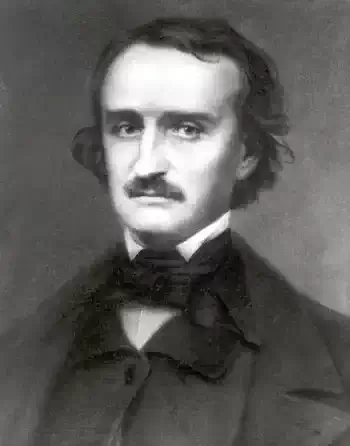
Edgar Allan Poe
To F--S S. O--D
To F--S S. O--D
Thou wouldst be loved?- then let thy heart
From its present pathway part not!
Being everything which now thou art,
Be nothing which thou art not.
So with the world thy gentle ways,
Thy grace, thy more than beauty,
Shall be an endless theme of praise,
And love- a simple duty.
Thou wouldst be loved?- then let thy heart
From its present pathway part not!
Being everything which now thou art,
Be nothing which thou art not.
So with the world thy gentle ways,
Thy grace, thy more than beauty,
Shall be an endless theme of praise,
And love- a simple duty.
284
Edgar Allan Poe
In Youth I have Known One
In Youth I have Known One
How often we forget all time, when lone
Admiring Nature's universal throne;
Her woods - her winds - her mountains - the intense
Reply of Hers to Our intelligence!
I.
In youth I have known one with whom the Earth
In secret communing held - as he with it,
In daylight, and in beauty, from his birth:
Whose fervid, flickering torch of life was lit
From the sun and stars, whence he had drawn forth
A passionate light - such for his spirit was fit -
And yet that spirit knew - not in the hour
Of its own fervour - what had o'er it power.
II.
Perhaps it may be that my mind is wrought
To a fever by the moonbeam that hangs o'er,
But I will half believe that wild light fraught
With more of sovereignty than ancient lore
Hath ever told - or is it of a thought
The unembodied essence, and no more
That with a quickening spell doth o'er us pass
As dew of the night time, o'er the summer grass?
III.
Doth o'er us pass, when as th' expanding eye
To the loved object - so the tear to the lid
Will start, which lately slept in apathy?
And yet it need not be - (that object) hid
From us in life - but common - which doth lie
Each hour before us - but then only bid
With a strange sound, as of a harpstring broken
T' awake us - 'Tis a symbol and a token
IV.
Of what in other worlds shall be - and given
In beauty by our God, to those alone
Who otherwise would fall from life and Heaven
Drawn by their heart's passion, and that tone,
That high tone of the spirit which hath striven
Though not with Faith - with godliness - whose throne
With desperate energy 't hath beaten down;
Wearing its own deep feeling as a crown.
How often we forget all time, when lone
Admiring Nature's universal throne;
Her woods - her winds - her mountains - the intense
Reply of Hers to Our intelligence!
I.
In youth I have known one with whom the Earth
In secret communing held - as he with it,
In daylight, and in beauty, from his birth:
Whose fervid, flickering torch of life was lit
From the sun and stars, whence he had drawn forth
A passionate light - such for his spirit was fit -
And yet that spirit knew - not in the hour
Of its own fervour - what had o'er it power.
II.
Perhaps it may be that my mind is wrought
To a fever by the moonbeam that hangs o'er,
But I will half believe that wild light fraught
With more of sovereignty than ancient lore
Hath ever told - or is it of a thought
The unembodied essence, and no more
That with a quickening spell doth o'er us pass
As dew of the night time, o'er the summer grass?
III.
Doth o'er us pass, when as th' expanding eye
To the loved object - so the tear to the lid
Will start, which lately slept in apathy?
And yet it need not be - (that object) hid
From us in life - but common - which doth lie
Each hour before us - but then only bid
With a strange sound, as of a harpstring broken
T' awake us - 'Tis a symbol and a token
IV.
Of what in other worlds shall be - and given
In beauty by our God, to those alone
Who otherwise would fall from life and Heaven
Drawn by their heart's passion, and that tone,
That high tone of the spirit which hath striven
Though not with Faith - with godliness - whose throne
With desperate energy 't hath beaten down;
Wearing its own deep feeling as a crown.
328
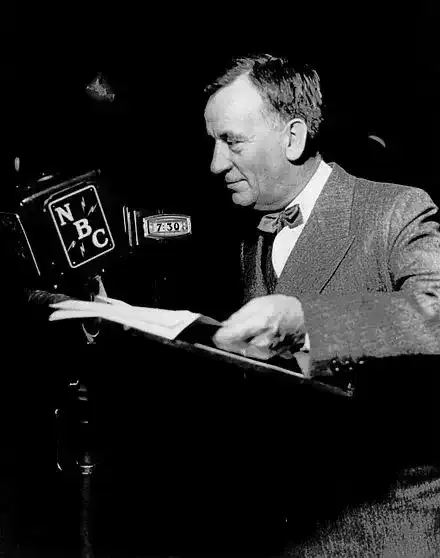
Edgar Albert Guest
Selfishness
Selfishness
Search history, my boy, and see
What petty selfishness has done.
Find if you can one victory
That little minds have ever won.
There is no record there to read
Of men who fought for self alone,
No instance of a single deed
Splendor they may proudly own.
Through all life's story you will find
The miser—with his hoarded gold—
A hermit, dreary and unkind,
An outcast from the human fold.
Men hold him up to view with scorn,
A creature by his wealth enslaved,
A spirit craven and forlorn,
Doomed by the money he has saved.
No man was ever truly great
Who sought to serve himself alone,
Who put himself above the state,
Above the friends about him thrown.
No man was ever truly glad
Who risked his joy on hoarded pelf,
And gave of nothing that he had
Through fear of needing it himself.
For selfishness is wintry cold,
And bitter are its joys at last,
The very charms it tries to hold,
With woes are quickly overcast.
And only he shall gladly live,
And bravely die when God shall call,
Who gathers but that he may give,
And with his fellows shares his all.
Search history, my boy, and see
What petty selfishness has done.
Find if you can one victory
That little minds have ever won.
There is no record there to read
Of men who fought for self alone,
No instance of a single deed
Splendor they may proudly own.
Through all life's story you will find
The miser—with his hoarded gold—
A hermit, dreary and unkind,
An outcast from the human fold.
Men hold him up to view with scorn,
A creature by his wealth enslaved,
A spirit craven and forlorn,
Doomed by the money he has saved.
No man was ever truly great
Who sought to serve himself alone,
Who put himself above the state,
Above the friends about him thrown.
No man was ever truly glad
Who risked his joy on hoarded pelf,
And gave of nothing that he had
Through fear of needing it himself.
For selfishness is wintry cold,
And bitter are its joys at last,
The very charms it tries to hold,
With woes are quickly overcast.
And only he shall gladly live,
And bravely die when God shall call,
Who gathers but that he may give,
And with his fellows shares his all.
864
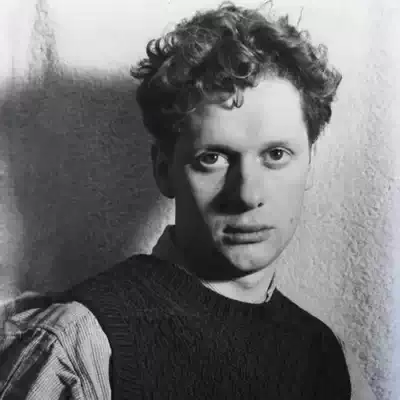
Dylan Thomas
When I Woke
When I Woke
When I woke, the town spoke.
Birds and clocks and cross bells
Dinned aside the coiling crowd,
The reptile profligates in a flame,
Spoilers and pokers of sleep,
The next-door sea dispelled
Frogs and satans and woman-luck,
While a man outside with a billhook,
Up to his head in his blood,
Cutting the morning off,
The warm-veined double of Time
And his scarving beard from a book,
Slashed down the last snake as though
It were a wand or subtle bough,
Its tongue peeled in the wrap of a leaf.
Every morning I make,
God in bed, good and bad,
After a water-face walk,
The death-stagged scatter-breath
Mammoth and sparrowfall
Everybody's earth.
Where birds ride like leaves and boats like ducks
I heard, this morning, waking,
Crossly out of the town noises
A voice in the erected air,
No prophet-progeny of mine,
Cry my sea town was breaking.
No Time, spoke the clocks, no God, rang the bells,
I drew the white sheet over the islands
And the coins on my eyelids sang like shells.
When I woke, the town spoke.
Birds and clocks and cross bells
Dinned aside the coiling crowd,
The reptile profligates in a flame,
Spoilers and pokers of sleep,
The next-door sea dispelled
Frogs and satans and woman-luck,
While a man outside with a billhook,
Up to his head in his blood,
Cutting the morning off,
The warm-veined double of Time
And his scarving beard from a book,
Slashed down the last snake as though
It were a wand or subtle bough,
Its tongue peeled in the wrap of a leaf.
Every morning I make,
God in bed, good and bad,
After a water-face walk,
The death-stagged scatter-breath
Mammoth and sparrowfall
Everybody's earth.
Where birds ride like leaves and boats like ducks
I heard, this morning, waking,
Crossly out of the town noises
A voice in the erected air,
No prophet-progeny of mine,
Cry my sea town was breaking.
No Time, spoke the clocks, no God, rang the bells,
I drew the white sheet over the islands
And the coins on my eyelids sang like shells.
422
Dylan Thomas
Should Lanterns Shine
Should Lanterns Shine
Should lanterns shine, the holy face,
Caught in an octagon of unaccustomed light,
Would wither up, an any boy of love
Look twice before he fell from grace.
The features in their private dark
Are formed of flesh, but let the false day come
And from her lips the faded pigments fall,
The mummy cloths expose an ancient breast.
I have been told to reason by the heart,
But heart, like head, leads helplessly;
I have been told to reason by the pulse,
And, when it quickens, alter the actions' pace
Till field and roof lie level and the same
So fast I move defying time, the quiet gentleman
Whose beard wags in Egyptian wind.
I have heard may years of telling,
And many years should see some change.
The ball I threw while playing in the park
Has not yet reached the ground.
Should lanterns shine, the holy face,
Caught in an octagon of unaccustomed light,
Would wither up, an any boy of love
Look twice before he fell from grace.
The features in their private dark
Are formed of flesh, but let the false day come
And from her lips the faded pigments fall,
The mummy cloths expose an ancient breast.
I have been told to reason by the heart,
But heart, like head, leads helplessly;
I have been told to reason by the pulse,
And, when it quickens, alter the actions' pace
Till field and roof lie level and the same
So fast I move defying time, the quiet gentleman
Whose beard wags in Egyptian wind.
I have heard may years of telling,
And many years should see some change.
The ball I threw while playing in the park
Has not yet reached the ground.
270