

Humanity and Solidarity
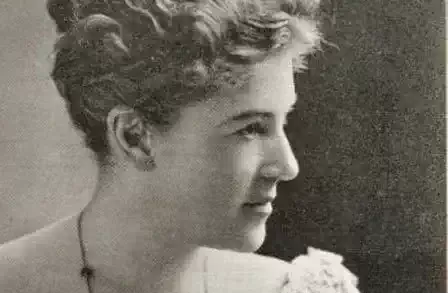
Ella Wheeler Wilcox
All Roads That Lead To God Are Good
All roads that lead to God are good.
What matters it, your faith, or mine?
Both centre at the goal divine
Of love’s eternal Brotherhood.
The kindly life in house or street –
The life of prayer and mystic rite –
The student’s search for truth and light –
These paths at one great Junction meet.
Before the oldest book was writ,
Full many a prehistoric soul
Arrived at this unchanging goal,
Through changeless Love, that leads to it.
What matters that one found his Christ
In rising sun, or burning fire?
In faith within him did not tire,
His longing for the Truth sufficed.
Before our modern hell was brought
To edify the modern world,
Full many a hate-filled soul was hurled
In lakes of fire by its own thought.
A thousand creeds have come and gone,
But what is that to you or me?
Creeds are but branches of a tree –
The root of love lives on and on.
Though branch by branch proved withered wood,
The root is warm with precious wine.
Then keep your faith, and leave me mine –
All roads that lead to God are good.
Ella Wheeler Wilcox
A Grey Mood
As we hurry away to the end, my friend,
Of this sad little farce called existence,
We are sure that the future will bring one thing,
And that is the grave in the distance.
And so when our lives run along all wrong,
And nothing seems real or certain,
We can comfort ourselves with the thought (or not)
Of that spectre behind the curtain.
But we haven’t much time to repine or whine,
Or to wound or jostle each other;
And the hour for us each is to-day, I say,
If we mean to assist a brother.
And there is no pleasure that earth gives birth,
But the worry it brings is double;
And all that repays for the strife of life,
Is helping some soul in trouble.
I tell you, if I could go back the track
To my life’s morning hour,
I would not set forth, seeking name or fame,
Or that poor bauble called power.
I would be like the sunlight, and live to give;
I would lend, but I would not borrow;
Nor would I be blind and complain of pain,
Forgetting the meaning of sorrow.
This world is a vaporous jest at best,
Tossed off by the gods in laughter;
And a cruel attempt at wit were it
If nothing better came after.
It is reeking with hearts that ache and break,
Which we ought to comfort and strengthen,
As we hurry away to the end, my friend,
And the shadows behind us lengthen.
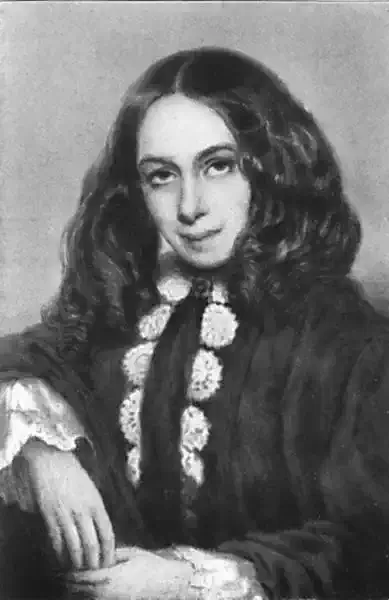
Elizabeth Barrett Browning
The Runaway Slave at Pilgrim's Point
I.
I stand on the mark beside the shore
Of the first white pilgrim's bended knee,
Where exile turned to ancestor,
And God was thanked for liberty.
I have run through the night, my skin is as dark,
I bend my knee down on this mark . . .
I look on the sky and the sea.
II.
O pilgrim-souls, I speak to you!
I see you come out proud and slow
From the land of the spirits pale as dew. . .
And round me and round me ye go!
O pilgrims, I have gasped and run
All night long from the whips of one
Who in your names works sin and woe.
III.
And thus I thought that I would come
And kneel here where I knelt before,
And feel your souls around me hum
In undertone to the ocean's roar;
And lift my black face, my black hand,
Here, in your names, to curse this land
Ye blessed in freedom's evermore.
IV.
I am black, I am black;
And yet God made me, they say.
But if He did so, smiling back
He must have cast His work away
Under the feet of His white creatures,
With a look of scorn,--that the dusky features
Might be trodden again to clay.
V.
And yet He has made dark things
To be glad and merry as light.
There's a little dark bird sits and sings;
There's a dark stream ripples out of sight;
And the dark frogs chant in the safe morass,
And the sweetest stars are made to pass
O'er the face of the darkest night.
VI.
But we who are dark, we are dark!
Ah, God, we have no stars!
About our souls in care and cark
Our blackness shuts like prison bars:
The poor souls crouch so far behind,
That never a comfort can they find
By reaching through the prison-bars.
VII.
Indeed, we live beneath the sky, . . .
That great smooth Hand of God, stretched out
On all His children fatherly,
To bless them from the fear and doubt,
Which would be, if, from this low place,
All opened straight up to His face
Into the grand eternity.
VIII.
And still God's sunshine and His frost,
They make us hot, they make us cold,
As if we were not black and lost:
And the beasts and birds, in wood and fold,
Do fear and take us for very men!
Could the weep-poor-will or the cat of the glen
Look into my eyes and be bold?
IX.
I am black, I am black!--
But, once, I laughed in girlish glee;
For one of my colour stood in the track
Where the drivers drove, and looked at me--
And tender and full was the look he gave:
Could a slave look so at another slave?--
I look at the sky and the sea.
X.
And from that hour our spirits grew
As free as if unsold, unbought:
Oh, strong enough, since we were two
To conquer the world, we thought!
The drivers drove us day by day;
We did not mind, we went one way,
And no better a liberty sought.
XI.
In the sunny ground between the canes,
He said 'I love you' as he passed:
When the shingle-roof rang sharp with the rains,
I heard how he vowed it fast:
While others shook, he smiled in the hut
As he carved me a bowl of the cocoa-nut,
Through the roar of the hurricanes.
XII.
I sang his name instead of a song;
Over and over I sang his name--
Upward and downward I drew it along
My various notes; the same, the same!
I sang it low, that the slave-girls near
Might never guess from aught they could hear,
It was only a name.
XIII.
I look on the sky and the sea--
We were two to love, and two to pray,--
Yes, two, O God, who cried to Thee,
Though nothing didst Thou say.
Coldly Thou sat'st behind the sun!
And now I cry who am but one,
How wilt Thou speak to-day?--
XIV.
We were black, we were black!
We had no claim to love and bliss:
What marvel, if each turned to lack?
They wrung my cold hands out of his,--
They dragged him . . . where ? . . . I crawled to touch
His blood's mark in the dust! . . . not much,
Ye pilgrim-souls, . . . though plain as this!
XV.
Wrong, followed by a deeper wrong!
Mere grief's too good for such as I.
So the white men brought the shame ere long
To strangle the sob of my agony.
They would not leave me for my dull
Wet eyes!--it was too merciful
To let me weep pure tears and die.
XVI.
I am black, I am black!--
I wore a child upon my breast
An amulet that hung too slack,
And, in my unrest, could not rest:
Thus we went moaning, child and mother,
One to another, one to another,
Until all ended for the best:
XVII.
For hark ! I will tell you low . . . Iow . . .
I am black, you see,--
And the babe who lay on my bosom so,
Was far too white . . . too white for me;
As white as the ladies who scorned to pray
Beside me at church but yesterday;
Though my tears had washed a place for my knee.
XVIII.
My own, own child! I could not bear
To look in his face, it was so white.
I covered him up with a kerchief there;
I covered his face in close and tight:
And he moaned and struggled, as well might be,
For the white child wanted his liberty--
Ha, ha! he wanted his master right.
XIX.
He moaned and beat with his head and feet,
His little feet that never grew--
He struck them out, as it was meet,
Against my heart to break it through.
I might have sung and made him mild--
But I dared not sing to the white-faced child
The only song I knew.
XX.
I pulled the kerchief very close:
He could not see the sun, I swear,
More, then, alive, than now he does
From between the roots of the mango . . . where
. . . I know where. Close! a child and mother
Do wrong to look at one another,
When one is black and one is fair.
XXI.
Why, in that single glance I had
Of my child's face, . . . I tell you all,
I saw a look that made me mad . . .
The master's look, that used to fall
On my soul like his lash . . . or worse!
And so, to save it from my curse,
I twisted it round in my shawl.
XXII.
And he moaned and trembled from foot to head,
He shivered from head to foot;
Till, after a time, he lay instead
Too suddenly still and mute.
I felt, beside, a stiffening cold, . . .
I dared to lift up just a fold . . .
As in lifting a leaf of the mango-fruit.
XXIII.
But my fruit . . . ha, ha!--there, had been
(I laugh to think on't at this hour! . . .)
Your fine white angels, who have seen
Nearest the secret of God's power, . . .
And plucked my fruit to make them wine,
And sucked the soul of that child of mine,
As the humming-bird sucks the soul of the flower.
XXIV.
Ha, ha, for the trick of the angels white!
They freed the white child's spirit so.
I said not a word, but, day and night,
I carried the body to and fro;
And it lay on my heart like a stone . . . as chill.
--The sun may shine out as much as he will:
I am cold, though it happened a month ago.
XXV.
From the white man's house, and the black man's hut,
I carried the little body on,
The forest's arms did round us shut,
And silence through the trees did run:
They asked no question as I went,--
They stood too high for astonishment,--
They could see God sit on His throne.
XXVI.
My little body, kerchiefed fast,
I bore it on through the forest . . . on:
And when I felt it was tired at last,
I scooped a hole beneath the moon.
Through the forest-tops the angels far,
With a white sharp finger from every star,
Did point and mock at what was done.
XXVII.
Yet when it was all done aright, . . .
Earth, 'twixt me and my baby, strewed,
All, changed to black earth, . . . nothing white, . . .
A dark child in the dark,--ensued
Some comfort, and my heart grew young:
I sate down smiling there and sung
The song I learnt in my maidenhood.
XXVIII.
And thus we two were reconciled,
The white child and black mother, thus:
For, as I sang it, soft and wild
The same song, more melodious,
Rose from the grave whereon I sate!
It was the dead child singing that,
To join the souls of both of us.
XXIX.
I look on the sea and the sky!
Where the pilgrims' ships first anchored lay,
The free sun rideth gloriously;
But the pilgrim-ghosts have slid away
Through the earliest streaks of the morn.
My face is black, but it glares with a scorn
Which they dare not meet by day.
XXX.
Ah!--in their 'stead, their hunter sons!
Ah, ah! they are on me--they hunt in a ring--
Keep off! I brave you all at once--
I throw off your eyes like snakes that sting!
You have killed the black eagle at nest, I think:
Did you never stand still in your triumph, and shrink
From the stroke of her wounded wing?
XXXI.
(Man, drop that stone you dared to lift!--)
I wish you, who stand there five a-breast,
Each, for his own wife's joy and gift,
A little corpse as safely at rest
As mine in the mangos!--Yes, but she
May keep live babies on her knee,
And sing the song she liketh best.
XXXll.
I am not mad: I am black.
I see you staring in my face--
I know you, staring, shrinking back--
Ye are born of the Washington-race:
And this land is the free America:
And this mark on my wrist . . . (I prove what I say)
Ropes tied me up here to the flogging-place.
XXXIII.
You think I shrieked then? Not a sound!
I hung, as a gourd hangs in the sun.
I only cursed them all around,
As softly as I might have done
My very own child!--From these sands
Up to the mountains, lift your hands,
O slaves, and end what I begun!
XXXIV.
Whips, curses; these must answer those!
For in this UNION, you have set
Two kinds of men in adverse rows,
Each loathing each: and all forget
The seven wounds in Christ's body fair;
While HE sees gaping everywhere
Our countless wounds that pay no debt.
XXXV.
Our wounds are different. Your white men
Are, after all, not gods indeed,
Nor able to make Christs again
Do good with bleeding. We who bleed . . .
(Stand off!) we help not in our loss!
We are too heavy for our cross,
And fall and crush you and your seed.
XXXVI.
I fall, I swoon! I look at the sky:
The clouds are breaking on my brain;
I am floated along, as if I should die
Of liberty's exquisite pain--
In the name of the white child, waiting for me
In the death-dark where we may kiss and agree,
White men, I leave you all curse-free
In my broken heart's disdain!
Elizabeth Barrett Browning
A Curse For A Nation
I heard an angel speak last night,
And he said 'Write!
Write a Nation's curse for me,
And send it over the Western Sea.'
I faltered, taking up the word:
'Not so, my lord!
If curses must be, choose another
To send thy curse against my brother.
'For I am bound by gratitude,
By love and blood,
To brothers of mine across the sea,
Who stretch out kindly hands to me.'
'Therefore,' the voice said, 'shalt thou write
My curse to-night.
From the summits of love a curse is driven,
As lightning is from the tops of heaven.'
'Not so,' I answered. 'Evermore
My heart is sore
For my own land's sins: for little feet
Of children bleeding along the street:
'For parked-up honors that gainsay
The right of way:
For almsgiving through a door that is
Not open enough for two friends to kiss:
'For love of freedom which abates
Beyond the Straits:
For patriot virtue starved to vice on
Self-praise, self-interest, and suspicion:
'For an oligarchic parliament,
And bribes well-meant.
What curse to another land assign,
When heavy-souled for the sins of mine?'
'Therefore,' the voice said, 'shalt thou write
My curse to-night.
Because thou hast strength to see and hate
A foul thing done within thy gate.'
'Not so,' I answered once again.
'To curse, choose men.
For I, a woman, have only known
How the heart melts and the tears run down.'
'Therefore,' the voice said, 'shalt thou write
My curse to-night.
Some women weep and curse, I say
(And no one marvels), night and day.
'And thou shalt take their part to-night,
Weep and write.
A curse from the depths of womanhood
Is very salt, and bitter, and good.'
So thus I wrote, and mourned indeed,
What all may read.
And thus, as was enjoined on me,
I send it over the Western Sea.
The Curse
Because ye have broken your own chain
With the strain
Of brave men climbing a Nation's height,
Yet thence bear down with brand and thong
On souls of others, -- for this wrong
This is the curse. Write.
Because yourselves are standing straight
In the state
Of Freedom's foremost acolyte,
Yet keep calm footing all the time
On writhing bond-slaves, -- for this crime
This is the curse. Write.
Because ye prosper in God's name,
With a claim
To honor in the old world's sight,
Yet do the fiend's work perfectly
In strangling martyrs, -- for this lie
This is the curse. Write.
Ye shall watch while kings conspire
Round the people's smouldering fire,
And, warm for your part,
Shall never dare -- O shame!
To utter the thought into flame
Which burns at your heart.
This is the curse. Write.
Ye shall watch while nations strive
With the bloodhounds, die or survive,
Drop faint from their jaws,
Or throttle them backward to death;
And only under your breath
Shall favor the cause.
This is the curse. Write.
Ye shall watch while strong men draw
The nets of feudal law
To strangle the weak;
And, counting the sin for a sin,
Your soul shall be sadder within
Than the word ye shall speak.
This is the curse. Write.
When good men are praying erect
That Christ may avenge His elect
And deliver the earth,
The prayer in your ears, said low,
Shall sound like the tramp of a foe
That's driving you forth.
This is the curse. Write.
When wise men give you their praise,
They shall praise in the heat of the phrase,
As if carried too far.
When ye boast your own charters kept true,
Ye shall blush; for the thing which ye do
Derides what ye are.
This is the curse. Write.
When fools cast taunts at your gate,
Your scorn ye shall somewhat abate
As ye look o'er the wall;
For your conscience, tradition, and name
Explode with a deadlier blame
Than the worst of them all.
This is the curse. Write.
Go, wherever ill deeds shall be done,
Go, plant your flag in the sun
Beside the ill-doers!
And recoil from clenching the curse
Of God's witnessing Universe
With a curse of yours.
This is the curse. Write.
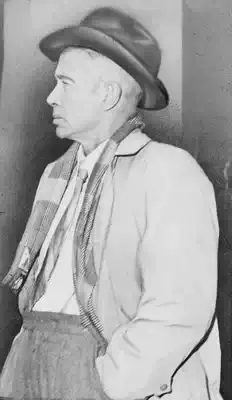
E. E. Cummings
when serpents bargain
when serpents bargain for the right to squirm
and the sun strikes to gain a living wage when
thorns regard their roses with alarm
and rainbows are insured against old age
when every thrush may sing no new moon in
if all screech-owls have not okayed his voice
-and any wave signs on the dotted line
or else an ocean is compelled to close
when the oak begs permission of the birch
to make an acorn - valleys accuse their
mountains of having altitude - and march
denounces april as a saboteur
then we'll believe in that incredible
unanimal mankind (and not until)
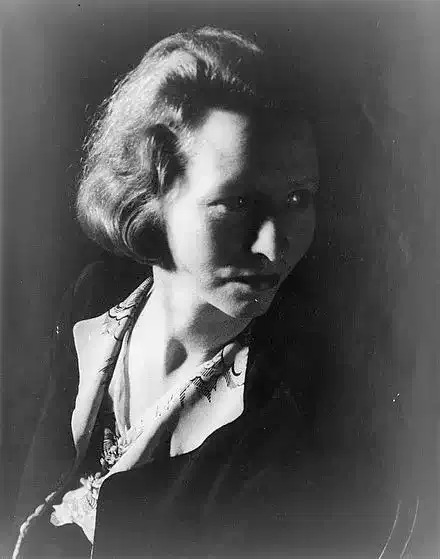
Edna St. Vincent Millay
A Visit To The Asylum
Once from a big, big building,
When I was small, small,
The queer folk in the windows
Would smile at me and call.
And in the hard wee gardens
Such pleasant men would hoe:
"Sir, may we touch the little girl's hair!"—
It was so red, you know.
They cut me coloured asters
With shears so sharp and neat,
They brought me grapes and plums and pears
And pretty cakes to eat.
And out of all the windows,
No matter where we went,
The merriest eyes would follow me
And make me compliment.
There were a thousand windows,
All latticed up and down.
And up to all the windows,
When we went back to town,
The queer folk put their faces,
As gentle as could be;
"Come again, little girl!" they called, and I
Called back, "You come see me!"
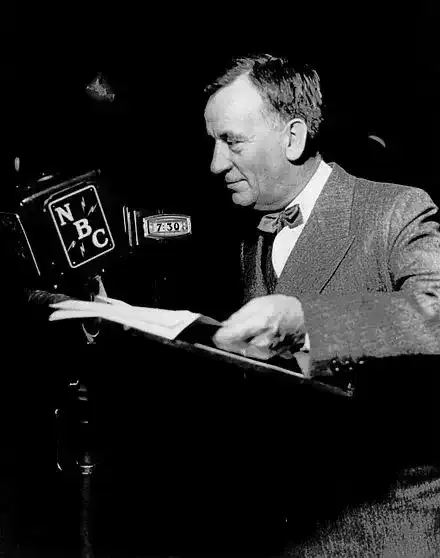
Edgar Albert Guest
He Who Serves
He has not served who gathers gold,
Nor has he served, whose life is told
In selfish battles he has won,
Or deeds of skill that he has done;
But he has served who now and then
Has helped along his fellow men.
The world needs many men today;
Red-blooded men along life's way,
With cheerful smiles and helping hands,
And with the faith that understands
The beauty of the simple deed
Which serves another's hour of need.
Strong men to stand beside the weak,
Kind men to hear what others speak;
True men to keep our country's laws
And guard its honor and its cause;
Men who will bravely play life's game
Nor ask rewards of gold and fame.
Teach me to do the best I can
To help and cheer our fellow man;
Teach me to lose my selfish need
And glory in the larger deed
Which smoothes the road, and lights the day
For all who chance to come my way.

Claude Mckay
In Bondage
I would be wandering in distant fields
Where man, and bird, and beast, lives leisurely,
And the old earth is kind, and ever yields
Her goodly gifts to all her children free;
Where life is fairer, lighter, less demanding,
And boys and girls have time and space for play
Before they come to years of understanding--
Somewhere I would be singing, far away.
For life is greater than the thousand wars
Men wage for it in their insatiate lust,
And will remain like the eternal stars,
When all that shines to-day is drift and dust
But I am bound with you in your mean graves,
O black men, simple slaves of ruthless slaves.
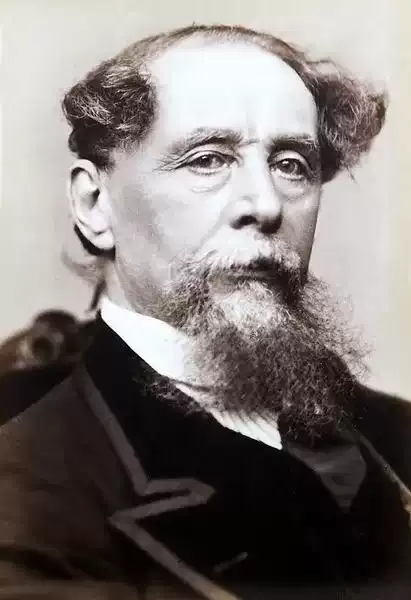
Charles Dickens
The Song Of The Wreck
The wind blew high, the waters raved,
A ship drove on the land,
A hundred human creatures saved
Kneel'd down upon the sand.
Threescore were drown'd, threescore were thrown
Upon the black rocks wild,
And thus among them, left alone,
They found one helpless child.
A seaman rough, to shipwreck bred,
Stood out from all the rest,
And gently laid the lonely head
Upon his honest breast.
And travelling o'er the desert wide
It was a solemn joy,
To see them, ever side by side,
The sailor and the boy.
In famine, sickness, hunger, thirst,
The two were still but one,
Until the strong man droop'd the first
And felt his labors done.
Then to a trusty friend he spake,
'Across the desert wide,
Oh, take this poor boy for my sake!'
And kiss'd the child and died.
Toiling along in weary plight
Through heavy jungle, mire,
These two came later every night
To warm them at the fire.
Until the captain said one day
'O seaman, good and kind,
To save thyself now come away,
And leave the boy behind!'
The child was slumbering near the blaze:
'O captain, let him rest
Until it sinks, when God's own ways
Shall teach us what is best!'
They watch'd the whiten'd, ashy heap,
They touch'd the child in vain;
They did not leave him there asleep,
He never woke again.
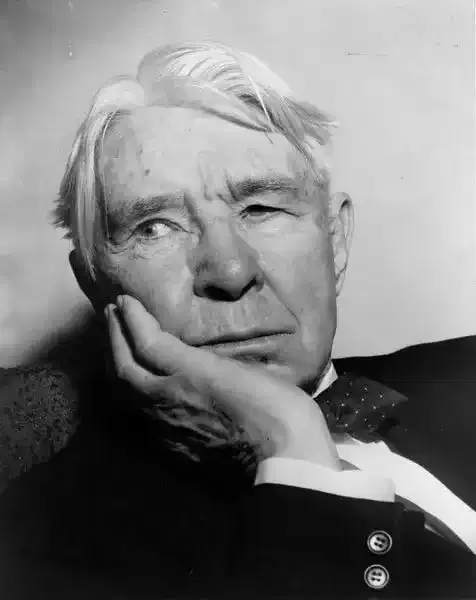
Carl Sandburg
Work Gangs
Box cars run by a mile long.
And I wonder what they say to each other
When they stop a mile long on a sidetrack.
Maybe their chatter goes:
I came from Fargo with a load of wheat up to the danger line.
I came from Omaha with a load of shorthorns and they splintered my boards.
I came from Detroit heavy with a load of fivers.
I carried apples from the Hood river last year and this year bunches of bananas from
Florida; they look for me with watermelons from Mississippi next year.
Hammers and shovels of work gangs sleep in shop corners
when the dark stars come on the sky and the night watchmen walk and look.
Then the hammer heads talk to the handles,
then the scoops of the shovels talk,
how the day’s work nicked and trimmed them,
how they swung and lifted all day,
how the hands of the work gangs smelled of hope.
In the night of the dark stars
when the curve of the sky is a work gang handle,
in the night on the mile long sidetracks,
in the night where the hammers and shovels sleep in corners,
the night watchmen stuff their pipes with dreams—
and sometimes they doze and don’t care for nothin’,
and sometimes they search their heads for meanings, stories, stars.
The stuff of it runs like this:
A long way we come; a long way to go; long rests and long deep sniffs for our lungs on
the way.
Sleep is a belonging of all; even if all songs are old songs and the singing heart is
snuffed out like a switchman’s lantern with the oil gone, even if we forget our names
and houses in the finish, the secret of sleep is left us, sleep belongs to all, sleep is the
first and last and best of all.
People singing; people with song mouths connecting with song hearts; people who
must sing or die; people whose song hearts break if there is no song mouth; these are
my people.
Carl Sandburg
To Certain Journeymen
Undertakers, hearse drivers, grave diggers,
I speak to you as one not afraid of your business.
You handle dust going to a long country,
You know the secret behind your job is the same whether
you lower the coffin with modern, automatic machinery,
well-oiled and noiseless, or whether the
body is laid in by naked hands and then covered
by the shovels.
Your day's work is done with laughter many days of the year,
And you earn a living by those who say good-by today
in thin whispers.
Carl Sandburg
Threes
I was a boy when I heard three red words
a thousand Frenchmen died in the streets
for: Liberty, Equality, Fraternity--I asked
why men die for words.
I was older; men with mustaches, sideburns,
lilacs, told me the high golden words are:
Mother, Home, and Heaven--other older men with
face decorations said: God, Duty, Immortality
--they sang these threes slow from deep lungs.
Years ticked off their say-so on the great clocks
of doom and damnation, soup, and nuts: meteors flashed
their say-so: and out of great Russia came three
dusky syllables workmen took guns and went out to die
for: Bread, Peace, Land.
And I met a marine of the U.S.A., a leatherneck with a girl on his knee
for a memory in ports circling the earth and he said: Tell me how to say
three things and I always get by--gimme a plate of ham and eggs--how
much--and--do you love me, kid?
Carl Sandburg
The Right To Grief
To Certain Poets About to Die
Take your fill of intimate remorse, perfumed sorrow,
Over the dead child of a millionaire,
And the pity of Death refusing any check on the bank
Which the millionaire might order his secretary to
scratch off
And get cashed.
Very well,
You for your grief and I for mine.
Let me have a sorrow my own if I want to.
I shall cry over the dead child of a stockyards hunky.
His job is sweeping blood off the floor.
He gets a dollar seventy cents a day when he works
And it's many tubs of blood he shoves out with a broom
day by day.
Now his three year old daughter
Is in a white coffin that cost him a week's wages.
Every Saturday night he will pay the undertaker fifty
cents till the debt is wiped out.
The hunky and his wife and the kids
Cry over the pinched face almost at peace in the white box.
They remember it was scrawny and ran up high doctor bills.
They are glad it is gone for the rest of the family now
will have more to eat and wear.
Yet before the majesty of Death they cry around the coffin
And wipe their eyes with red bandanas and sob when
the priest says, "God have mercy on us all."
I have a right to feel my throat choke about this.
You take your grief and I mine--see?
To-morrow there is no funeral and the hunky goes back
to his job sweeping blood off the floor at a dollar
seventy cents a day.
All he does all day long is keep on shoving hog blood
ahead of him with a broom.
Carl Sandburg
Skyscraper
By day the skyscraper looms in the smoke and sun and
has a soul.
Prairie and valley, streets of the city, pour people into
it and they mingle among its twenty floors and are
poured out again back to the streets, prairies and
valleys.
It is the men and women, boys and girls so poured in and
out all day that give the building a soul of dreams
and thoughts and memories.
(Dumped in the sea or fixed in a desert, who would care
for the building or speak its name or ask a policeman
the way to it?)
Elevators slide on their cables and tubes catch letters and
parcels and iron pipes carry gas and water in and
sewage out.
Wires climb with secrets, carry light and carry words,
and tell terrors and profits and loves--curses of men
grappling plans of business and questions of women
in plots of love.
Hour by hour the caissons reach down to the rock of the
earth and hold the building to a turning planet.
Hour by hour the girders play as ribs and reach out and
hold together the stone walls and floors.
Hour by hour the hand of the mason and the stuff of the
mortar clinch the pieces and parts to the shape an
architect voted.
Hour by hour the sun and the rain, the air and the rust,
and the press of time running into centuries, play
on the building inside and out and use it.
Men who sunk the pilings and mixed the mortar are laid
in graves where the wind whistles a wild song
without words
And so are men who strung the wires and fixed the pipes
and tubes and those who saw it rise floor by floor.
Souls of them all are here, even the hod carrier begging
at back doors hundreds of miles away and the bricklayer
who went to state's prison for shooting another
man while drunk.
(One man fell from a girder and broke his neck at the
end of a straight plunge--he is here--his soul has
gone into the stones of the building.)
On the office doors from tier to tier--hundreds of names
and each name standing for a face written across
with a dead child, a passionate lover, a driving
ambition for a million dollar business or a lobster's
ease of life.
Behind the signs on the doors they work and the walls
tell nothing from room to room.
Ten-dollar-a-week stenographers take letters from
corporation officers, lawyers, efficiency engineers,
and tons of letters go bundled from the building to all
ends of the earth.
Smiles and tears of each office girl go into the soul of
the building just the same as the master-men who
rule the building.
Hands of clocks turn to noon hours and each floor
empties its men and women who go away and eat
and come back to work.
Toward the end of the afternoon all work slackens and
all jobs go slower as the people feel day closing on
them.
One by one the floors are emptied. . . The uniformed
elevator men are gone. Pails clang. . . Scrubbers
work, talking in foreign tongues. Broom and water
and mop clean from the floors human dust and spit,
and machine grime of the day.
Spelled in electric fire on the roof are words telling
miles of houses and people where to buy a thing for
money. The sign speaks till midnight.
Darkness on the hallways. Voices echo. Silence
holds. . . Watchmen walk slow from floor to floor
and try the doors. Revolvers bulge from their hip
pockets. . . Steel safes stand in corners. Money
is stacked in them.
A young watchman leans at a window and sees the lights
of barges butting their way across a harbor, nets of
red and white lanterns in a railroad yard, and a span
of glooms splashed with lines of white and blurs of
crosses and clusters over the sleeping city.
By night the skyscraper looms in the smoke and the stars
and has a soul.
Carl Sandburg
I Am The People, The Mob
I Am the people--the mob--the crowd--the mass.
Do you know that all the great work of the world is
done through me?
I am the workingman, the inventor, the maker of the
world's food and clothes.
I am the audience that witnesses history. The Napoleons
come from me and the Lincolns. They die. And
then I send forth more Napoleons and Lincolns.
I am the seed ground. I am a prairie that will stand
for much plowing. Terrible storms pass over me.
I forget. The best of me is sucked out and wasted.
I forget. Everything but Death comes to me and
makes me work and give up what I have. And I
forget.
Sometimes I growl, shake myself and spatter a few red
drops for history to remember. Then--I forget.
When I, the People, learn to remember, when I, the
People, use the lessons of yesterday and no longer
forget who robbed me last year, who played me for
a fool--then there will be no speaker in all the world
say the name: 'The People,' with any fleck of a
sneer in his voice or any far-off smile of derision.
The mob--the crowd--the mass--will arrive then.
Carl Sandburg
Always The Mob
Jesus emptied the devils of one man into forty hogs and the hogs took the edge of a
high rock and dropped off and down into the sea: a mob.
The sheep on the hills of Australia, blundering fourfooted in the sunset mist to the
dark, they go one way, they hunt one sleep, they find one pocket of grass for all.
Karnak? Pyramids? Sphinx paws tall as a coolie? Tombs kept for kings and sacred
cows? A mob.
Young roast pigs and naked dancing girls of Belshazzar, the room where a thousand sat
guzzling when a hand wrote: Mene, mene, tekel, upharsin? A mob.
The honeycomb of green that won the sun as the Hanging Gardens of Nineveh, flew to
its shape at the hands of a mob that followed the fingers of Nebuchadnezzar: a mob of
one hand and one plan.
Stones of a circle of hills at Athens, staircases of a mountain in Peru, scattered clans of
marble dragons in China: each a mob on the rim of a sunrise: hammers and wagons
have them now.
Locks and gates of Panama? The Union Pacific crossing deserts and tunneling
mountains? The Woolworth on land and the Titanic at sea? Lighthouses blinking a coast
line from Labrador to Key West? Pig iron bars piled on a barge whistling in a fog off
Sheboygan? A mob: hammers and wagons have them to-morrow.
The mob? A typhoon tearing loose an island from thousand-year moorings and
bastions, shooting a volcanic ash with a fire tongue that licks up cities and peoples.
Layers of worms eating rocks and forming loam and valley floors for potatoes, wheat,
watermelons.
The mob? A jag of lightning, a geyser, a gravel mass loosening…
The mob … kills or builds … the mob is Attila or Ghengis Khan, the mob is Napoleon,
Lincoln.
I am born in the mob—I die in the mob—the same goes for you—I don’t care who you
are.
I cross the sheets of fire in No Man’s land for you, my brother—I slip a steel tooth into
your throat, you my brother—I die for you and I kill you—It is a twisted and gnarled
thing, a crimson wool:
One more arch of stars,
In the night of our mist,
In the night of our tears.
Carl Sandburg
A Tall Man
The mouth of this man is a gaunt strong mouth.
The head of this man is a gaunt strong head.
The jaws of this man are bone of the Rocky Mountains, the Appalachians.
The eyes of this man are chlorine of two sobbing oceans,
Foam, salt, green, wind, the changing unknown.
The neck of this man is pith of buffalo prairie, old longing and new beckoning of corn
belt or cotton belt,
Either a proud Sequoia trunk of the wilderness
Or huddling lumber of a sawmill waiting to be a roof.
Brother mystery to man and mob mystery,
Brother cryptic to lifted cryptic hands,
He is night and abyss, he is white sky of sun, he is the head of the people.
The heart of him the red drops of the people,
The wish of him the steady gray-eagle crag-hunting flights of the people.
Humble dust of a wheel-worn road,
Slashed sod under the iron-shining plow,
These of service in him, these and many cities, many borders, many wrangles between
Alaska and the Isthmus, between the Isthmus and the Horn, and east and west of
Omaha, and east and west of Paris, Berlin, Petrograd.
The blood in his right wrist and the blood in his left wrist run with the right wrist
wisdom of the many and the left wrist wisdom of the many.
It is the many he knows, the gaunt strong hunger of the many.
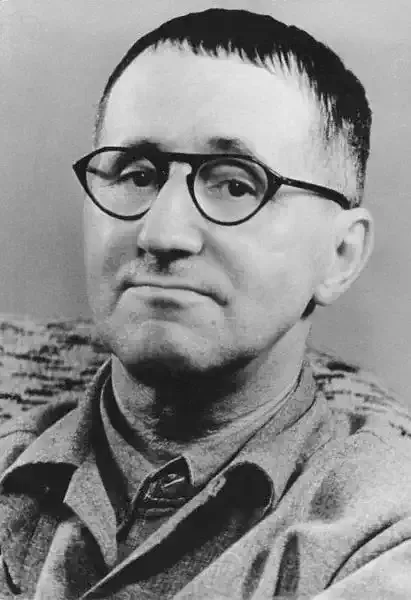
Bertolt Brecht
United Front Song
And because a man is human
He'll want to eat, and thanks a lot
But talk can't take the place of meat
or fill an empty pot.
So left, two, three!
So left, two, three!
Comrade, there's a place for you.
Take your stand in the workers united front
For you are a worker too.
And because a man is human
he won't care for a kick in the face.
He doesn't want slaves under him
Or above him a ruling class.
So left, two, three!
So left, two, three!
Comrade, there's a place for you.
Take your stand in the workers united front
For you are a worker too.
And because a worker's a worker
No one else will bring him liberty.
It's nobody's work but the worker' own
To set the worker free.
So left, two, three!
So left, two, three!
Comrade, there's a place for you.
Take your stand in the workers united front
For you are a worker too.
Bertolt Brecht
Solidarity Song
Peoples of the world, together
Join to serve the common cause!
So it feeds us all for ever
See to it that it's now yours.
Forward, without forgetting
Where our strength can be seen now to be!
When starving or when eating
Forward, not forgetting
Our solidarity!
Black or white or brown or yellow
Leave your old disputes behind.
Once start talking with your fellow
Men, you'll soon be of one mind.
Forward, without forgetting
Where our strength can be seen now to be!
When starving or when eating
Forward, not forgetting
Our solidarity!
If we want to make this certain
We'll need you and your support.
It's yourselves you'll be deserting
if you rat your own sort.
Forward, without forgetting
Where our strength can be seen now to be!
When starving or when eating
Forward, not forgetting
Our solidarity!
All the gang of those who rule us
Hope our quarrels never stop
Helping them to split and fool us
So they can remain on top.
Forward, without forgetting
Where our strength can be seen now to be!
When starving or when eating
Forward, not forgetting
Our solidarity!
Workers of the world, uniting
Thats the way to lose your chains.
Mighty regiments now are fighting
That no tyrrany remains!
Forward, without forgetting
Till the concrete question is hurled
When starving or when eating:
Whose tomorrow is tomorrow?
And whose world is the world?
Bertolt Brecht
A Worker Reads History
Who built the seven gates of Thebes?
The books are filled with names of kings.
Was it the kings who hauled the craggy blocks of stone?
And Babylon, so many times destroyed.
Who built the city up each time? In which of Lima's houses,
That city glittering with gold, lived those who built it?
In the evening when the Chinese wall was finished
Where did the masons go? Imperial Rome
Is full of arcs of triumph. Who reared them up? Over whom
Did the Caesars triumph? Byzantium lives in song.
Were all her dwellings palaces? And even in Atlantis of the legend
The night the seas rushed in,
The drowning men still bellowed for their slaves.
Young Alexander conquered India.
He alone?
Caesar beat the Gauls.
Was there not even a cook in his army?
Phillip of Spain wept as his fleet
was sunk and destroyed. Were there no other tears?
Frederick the Greek triumphed in the Seven Years War.
Who triumphed with him?
Each page a victory
At whose expense the victory ball?
Every ten years a great man,
Who paid the piper?
So many particulars.
So many questions.

Anne Brontë
A Word To The 'Elect'
You may rejoice to think yourselves secure;
You may be grateful for the gift divine That
grace unsought, which made your black hearts pure,
And fits your earthborn
souls in Heaven to shine.
But, is it sweet to look around, and view
Thousands excluded from that happiness,
Which they deserved, at least, as much as you, Their
faults not greater, nor their virtues less?
And, wherefore should you love your God the more,
Because to you alone his smiles are given;
Because he chose to pass the many o'er,
And only bring the favoured few to Heaven?
And, wherefore should your hearts more grateful prove,
Because for ALL the Saviour did not die?
Is yours the God of justice and of love
And are your bosoms warm with charity?
Say, does your heart expand to all mankind?
And, would you ever to your neighbour do The
weak, the strong, the enlightened, and the blind As
you would have your neighbour do to you?
And, when you, looking on your fellowmen,
Behold them doomed to endless misery,
How can you talk of joy and rapture then? May
God withhold such cruel joy from me!
That none deserve eternal bliss I know;
Unmerited the grace in mercy given:
But, none shall sink to everlasting woe,
That have not well deserved the wrath of Heaven.
And, Oh! there lives within my heart
A hope, long nursed by me;
(And, should its cheering ray depart,
How dark my soul would be!)
That as in Adam all have died,
In Christ shall all men live;
And ever round his throne abide,
Eternal praise to give.
That even the wicked shall at last
Be fitted for the skies;
And, when their dreadful doom is past,
To life and light arise.
I ask not, how remote the day,
Nor what the sinner's woe,
Before their dross is purged away;
Enough for me, to know
That when the cup of wrath is drained,
The metal purified,
They'll cling to what they once disdained,
And live by Him that died.
Acton

Muhammad Iqbal
The Morning Sun
Far from the ignoble strife of Man's tavern you are
The wine-cup adorning the sky's assemblage you are
The jewel which should be the pearl of the morning's bride's ear you are
The ornament which would be the pride of horizon's forehead you are
The blot of night's ink from time's page has been removed!
The star from sky like a spurious picture has been removed!
When from the roof of the sky your beauty appears
Effect of sleep's wine suddenly from eyes disappears
Perception's expanse gets filled with light
Though opens only the material eye your light
The spectacle which the eyes seek is desired
The effulgence which would open the insight is desired
The desires for freedom were not fulfilled in this life
We remained imprisoned in chains of dependence all life
The high and the low are alike for your eye
I too have longing for such a discerning eye
May my eye shedding tears in sympathy for others' woes be!
May my heart free from the prejudice of nation and customs be!
May my tongue be not bound with discrimination of color
May mankind be my nation, the whole world my country be
May secret of Nature's organization clear to my insight be
May smoke of my imagination's candle rising to the sky be
May search for secrets of opposites not make me restless!
May the Love-creating Beauty in everything appear to me!
If the rose petals get damaged by the breeze
May its pain dropping from my eye as a tear be
May the heart contain that little spark of Love's fire
The light of which may contain the secret of the Truth
May my heart not mine but the Beloved's mirror be!
May no thought in my mind except human sympathy be!
If you cannot endure the hardships of the tumultuous world
O the Great Luminary that is not the mark of greatness!
As you are not aware of your world-decorating beauty
You cannot be equal to a speck of dust at the Man's door!
The light of Man eager for the Spectacle ever remained
And you obligated to the tomorrow's morning ever remained
Longing for the Light of the Truth is only in our hearts
Abode of Lailah of desire for search is only in this litter
Opening of the difficult knot, Oh what a pleasure it is!
The pleasure of universal gain in our endless effort is!
Your bosom is unacquainted with the pain of investigation
You are not familiar with searching of the secrets of Nature
Muhammad Iqbal
Sympathy
Perched on the branch of a tree
Was a nightingale sad and lonely
'The night has drawn near', He was thinking
'I passed the day in flying around and feeding
How can I reach up to the nest
Darkness has enveloped everything'?
Hearing the nightingale wailing thus
A glow-worm lurking nearby spoke thus
'With my heart and soul ready to help I am
Though only an insignificant insect I am
Never mind if the night is dark
I shall shed light if the way is dark
God has bestowed a torch on me
He has given a shining lamp to me
The good in the world only those are
Ready to be useful to others who are
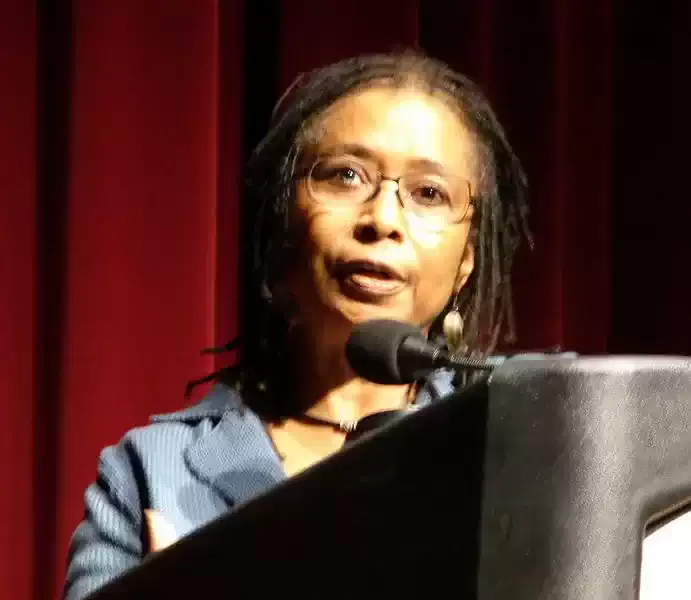
Alice Walker
To Change The World Enough
To change the world enough
you must cease to be afraid
of the poor.
We experience your fear as the least pardonable of
humiliations; in the past
it has sent us scurrying off
daunted and ashamed
into the shadows.
Now,
the world ending
the only one all of us have known
we seek the same
fresh light
you do:
the same high place
and ample table.
The poor always believe
there is room enough
for all of us;
the very rich never seem to have heard
of this.
In us there is wisdom of how to share
loaves and fishes
however few;
we do this everyday.
Learn from us,
we ask you.
We enter now
the dreaded location
of Earth's reckoning;
no longer far
off
or hidden in books
that claim to disclose
revelations;
it is here.
We must walk together without fear.
There is no path without us