

Poems in this topic
Justice and Equality

Kazi Nazrul Islam
Don't be afraid, O human soul!
Don't be afraid, O human soul!
The power thrones of today represent devil's affair,
the power-hungry monsters are busy playing there.
Don't be afraid, O human soul! Don't break down in tear!
The drunkard of the underworld won't prevail much longer here.
With injustice and wrongs black-stained is his throne,
his sword is rusted with curse of those under oppression.
Painting the sky dark yellow approaches the monsoon storm in full power,
the greedy ones are beguiled thinking, this is beautiful twilight hour.
The fire they have spread around the world, now in its flame in turn,
like blazing fire, everywhere, these wretcheds will burn.
The traveler of the path of truth! Don't be afraid, don't fear!
Those who seek peace, defeat is not for them, my dear!
Sometimes the enemies of peace win in their disguise,
at the end only in humiliation and shame comes their inevitable demise.
Dusts of the road rise off the ground as wind blows strong,
if you think, they are on the rise, won't that be wrong?
Those who want to ascend above, these trash stand in their way;
they can make the road slippery, but the mud doesn't win the day.
In tranquility, win or defeat, we will treat the same,
if we win, we will dedicate it to His glory and name.
If we lose, we will be greeted by Him in the hereafter,
if we are battle-wounded, we will be His beloved, forever.
Sometimes they will win, but never shall we retreat!
Our Lord tests us - we will take it as His treat.
Does hatred ever bring back those who are lost?
To win their heart, with love first our heart must defrost.
Those who knowingly practice oppression and take away others' right,
it is against them, the sword of God is always ready and upright.
Don't be hard on those who, in ignorance, go astray!
They might return to the truth, if you show love, and pray!
In His one name, invite people of all nation;
Hold sword in hand, while offer your heart with love and affection.
The whole world would be in your favor, if at you His grace flashes;
all the enemies of the truth, you will see, will burn into ashes.
Those whose hearts among us are stained with temptation,
they also deserve discipline, before facing God's condemnation.
March forward, O the new warriors, indomitable!
Prevent our journey and progress? No one would be able!
Let faith and patience be the lasting friends - yours and mine.
On our path, the light of such and of moon will always shine.
Don't be afraid! Have no fear!
Falsehood will definitely disappear!
Truth will triumph, O my dear!
Those who treat the meek with bloody eyes, finished is their share!
This world belongs to people, not to any throne; declare!
Those who disgrace the blessed power from their power-bed,
at the command of the King of kings, they lose their head.
The rule of the ship-owners is ending; it won't be very long,
to the real king of the universe, all the countries will belong.
O blood-eyed vultures, monsters! Beware, beware!
To beguile others and make forget God's command, how do you dare?
We fear one God only; no one else do we fear!
Our guide is the Omnipotent, our Lord so dear!
Sky, earth, moon, planets, and stars are witnesses, I say,
as to who are the followers of truth, and who go astray.
Don't be afraid; have no fear!
Falsehood will surely disappear!
Truth will be triumphant, my dear!
[Original: Bhoy Koriyo Na, He Manobata; Translation: Mohammad Omar Farooq]
The power thrones of today represent devil's affair,
the power-hungry monsters are busy playing there.
Don't be afraid, O human soul! Don't break down in tear!
The drunkard of the underworld won't prevail much longer here.
With injustice and wrongs black-stained is his throne,
his sword is rusted with curse of those under oppression.
Painting the sky dark yellow approaches the monsoon storm in full power,
the greedy ones are beguiled thinking, this is beautiful twilight hour.
The fire they have spread around the world, now in its flame in turn,
like blazing fire, everywhere, these wretcheds will burn.
The traveler of the path of truth! Don't be afraid, don't fear!
Those who seek peace, defeat is not for them, my dear!
Sometimes the enemies of peace win in their disguise,
at the end only in humiliation and shame comes their inevitable demise.
Dusts of the road rise off the ground as wind blows strong,
if you think, they are on the rise, won't that be wrong?
Those who want to ascend above, these trash stand in their way;
they can make the road slippery, but the mud doesn't win the day.
In tranquility, win or defeat, we will treat the same,
if we win, we will dedicate it to His glory and name.
If we lose, we will be greeted by Him in the hereafter,
if we are battle-wounded, we will be His beloved, forever.
Sometimes they will win, but never shall we retreat!
Our Lord tests us - we will take it as His treat.
Does hatred ever bring back those who are lost?
To win their heart, with love first our heart must defrost.
Those who knowingly practice oppression and take away others' right,
it is against them, the sword of God is always ready and upright.
Don't be hard on those who, in ignorance, go astray!
They might return to the truth, if you show love, and pray!
In His one name, invite people of all nation;
Hold sword in hand, while offer your heart with love and affection.
The whole world would be in your favor, if at you His grace flashes;
all the enemies of the truth, you will see, will burn into ashes.
Those whose hearts among us are stained with temptation,
they also deserve discipline, before facing God's condemnation.
March forward, O the new warriors, indomitable!
Prevent our journey and progress? No one would be able!
Let faith and patience be the lasting friends - yours and mine.
On our path, the light of such and of moon will always shine.
Don't be afraid! Have no fear!
Falsehood will definitely disappear!
Truth will triumph, O my dear!
Those who treat the meek with bloody eyes, finished is their share!
This world belongs to people, not to any throne; declare!
Those who disgrace the blessed power from their power-bed,
at the command of the King of kings, they lose their head.
The rule of the ship-owners is ending; it won't be very long,
to the real king of the universe, all the countries will belong.
O blood-eyed vultures, monsters! Beware, beware!
To beguile others and make forget God's command, how do you dare?
We fear one God only; no one else do we fear!
Our guide is the Omnipotent, our Lord so dear!
Sky, earth, moon, planets, and stars are witnesses, I say,
as to who are the followers of truth, and who go astray.
Don't be afraid; have no fear!
Falsehood will surely disappear!
Truth will be triumphant, my dear!
[Original: Bhoy Koriyo Na, He Manobata; Translation: Mohammad Omar Farooq]
1,739
1
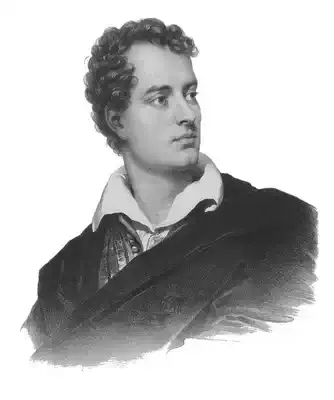
Lord Byron
On Jordan's Banks
On Jordan's Banks
On Jordan's banks the Arab's camels stray,
On Sion's hill the False One's votaries pray,
The Baaladorer
bows on Sinai's steep Yet
there even
there Oh
God! thy thunders sleep:
There where
thy finger scorch'd the tablet stone!
There where
thy shadow to thy people shone!
Thy glory shrouded in its garb of fire:
Thyself none
living see and not expire!
Oh! in the lightning let thy glance appear;
Sweep from his shiver'd hand the oppressor's spear!
How long by tyrants shall thy land be trod?
How long thy temple worshipless, Oh God?
On Jordan's banks the Arab's camels stray,
On Sion's hill the False One's votaries pray,
The Baaladorer
bows on Sinai's steep Yet
there even
there Oh
God! thy thunders sleep:
There where
thy finger scorch'd the tablet stone!
There where
thy shadow to thy people shone!
Thy glory shrouded in its garb of fire:
Thyself none
living see and not expire!
Oh! in the lightning let thy glance appear;
Sweep from his shiver'd hand the oppressor's spear!
How long by tyrants shall thy land be trod?
How long thy temple worshipless, Oh God?
1,293
1
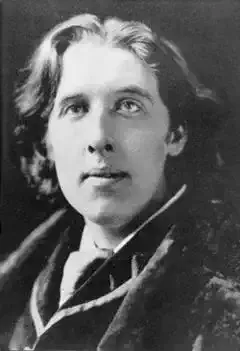
Oscar Wilde
Libertatis Sacra Fames
Albeit nurtured in democracy,
And liking best that state republican
Where every man is Kinglike and no man
Is crowned above his fellows, yet I see,
Spite of this modern fret for Liberty,
Better the rule of One, whom all obey,
Than to let clamorous demagogues betray
Our freedom with the kiss of anarchy.
Wherefore I love them not whose hands profane
Plant the red flag upon the piled-up street
For no right cause, beneath whose ignorant reign
Arts, Culture, Reverence, Honour, all things fade,
Save Treason and the dagger of her trade,
Or Murder with his silent bloody feet.
And liking best that state republican
Where every man is Kinglike and no man
Is crowned above his fellows, yet I see,
Spite of this modern fret for Liberty,
Better the rule of One, whom all obey,
Than to let clamorous demagogues betray
Our freedom with the kiss of anarchy.
Wherefore I love them not whose hands profane
Plant the red flag upon the piled-up street
For no right cause, beneath whose ignorant reign
Arts, Culture, Reverence, Honour, all things fade,
Save Treason and the dagger of her trade,
Or Murder with his silent bloody feet.
755
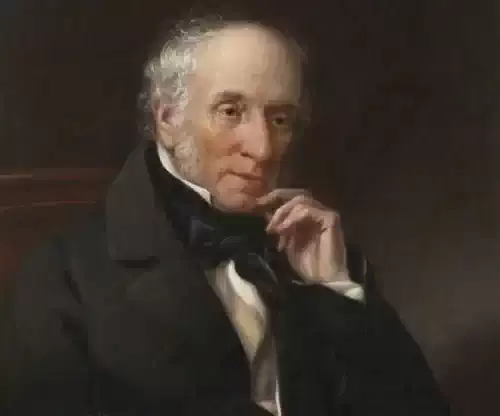
William Wordsworth
Andrew Jones
Andrew Jones
I hate that Andrew Jones; he'll breed
His children up to waste and pillage.
I wish the press-gang or the drum
With its tantara sound would come,
And sweep him from the village!
I said not this, because he loves
Through the long day to swear and tipple;
But for the poor dear sake of one
To whom a foul deed he had done,
A friendless man, a travelling cripple!
For this poor crawling helpless wretch,
Some horseman who was passing by,
A penny on the ground had thrown;
But the poor cripple was alone
And could not stoop--no help was nigh.
Inch-thick the dust lay on the ground
For it had long been droughty weather;
So with his staff the cripple wrought
Among the dust till he had brought
The half-pennies together.
It chanced that Andrew passed that way
Just at the time; and there he found
The cripple in the mid-day heat
Standing alone, and at his feet
He saw the penny on the ground.
He stopped and took the penny up:
And when the cripple nearer drew,
Quoth Andrew, "Under half-a-crown,
What a man finds is all his own,
And so, my Friend, good-day to you."
And 'hence' I said, that Andrew's boys
Will all be trained to waste and pillage;
And wished the press-gang, or the drum
With its tantara sound, would come
And sweep him from the village.
I hate that Andrew Jones; he'll breed
His children up to waste and pillage.
I wish the press-gang or the drum
With its tantara sound would come,
And sweep him from the village!
I said not this, because he loves
Through the long day to swear and tipple;
But for the poor dear sake of one
To whom a foul deed he had done,
A friendless man, a travelling cripple!
For this poor crawling helpless wretch,
Some horseman who was passing by,
A penny on the ground had thrown;
But the poor cripple was alone
And could not stoop--no help was nigh.
Inch-thick the dust lay on the ground
For it had long been droughty weather;
So with his staff the cripple wrought
Among the dust till he had brought
The half-pennies together.
It chanced that Andrew passed that way
Just at the time; and there he found
The cripple in the mid-day heat
Standing alone, and at his feet
He saw the penny on the ground.
He stopped and took the penny up:
And when the cripple nearer drew,
Quoth Andrew, "Under half-a-crown,
What a man finds is all his own,
And so, my Friend, good-day to you."
And 'hence' I said, that Andrew's boys
Will all be trained to waste and pillage;
And wished the press-gang, or the drum
With its tantara sound, would come
And sweep him from the village.
226
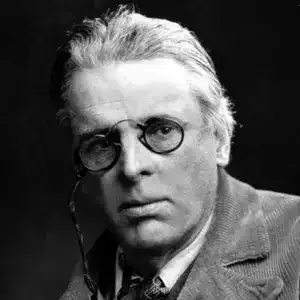
William Butler Yeats
To A Wealthy Man Who Promised A Second Subscription To The Dublin
To A Wealthy Man Who Promised A Second Subscription To The Dublin
Municipal Gallery If It Were
You gave, but will not give again
Until enough of paudeen's pence
By Biddy's halfpennies have lain
To be 'some sort of evidence',
Before you'll put your guineas down,
That things it were a pride to give
Are what the blind and ignorant town
Imagines best to make it thrive.
What cared Duke Ercole, that bid
His mummers to the market-place,
What th' onion-sellers thought or did
So that his plautus set the pace
For the Italian comedies?
And Guidobaldo, when he made
That grammar school of courtesies
Where wit and beauty learned their trade
Upon Urbino's windy hill,
Had sent no runners to and fro
That he might learn the shepherds' will
And when they drove out Cosimo,
Indifferent how the rancour ran,
He gave the hours they had set free
To Michelozzo's latest plan
For the San Marco Library,
Whence turbulent Italy should draw
Delight in Art whoSe end is peace,
In logic and in natural law
By sucking at the dugs of Greece.
Your open hand but shows our loss,
For he knew better how to live.
Let paudeens play at pitch and toss,
Look up in the sun's eye and give
What the exultant heart calls good
That some new day may breed the best
Because you gave, not what they would,
But the right twigs for an eagle's nest!
Municipal Gallery If It Were
You gave, but will not give again
Until enough of paudeen's pence
By Biddy's halfpennies have lain
To be 'some sort of evidence',
Before you'll put your guineas down,
That things it were a pride to give
Are what the blind and ignorant town
Imagines best to make it thrive.
What cared Duke Ercole, that bid
His mummers to the market-place,
What th' onion-sellers thought or did
So that his plautus set the pace
For the Italian comedies?
And Guidobaldo, when he made
That grammar school of courtesies
Where wit and beauty learned their trade
Upon Urbino's windy hill,
Had sent no runners to and fro
That he might learn the shepherds' will
And when they drove out Cosimo,
Indifferent how the rancour ran,
He gave the hours they had set free
To Michelozzo's latest plan
For the San Marco Library,
Whence turbulent Italy should draw
Delight in Art whoSe end is peace,
In logic and in natural law
By sucking at the dugs of Greece.
Your open hand but shows our loss,
For he knew better how to live.
Let paudeens play at pitch and toss,
Look up in the sun's eye and give
What the exultant heart calls good
That some new day may breed the best
Because you gave, not what they would,
But the right twigs for an eagle's nest!
387
William Butler Yeats
The Great Day
The Great Day
HURRAH for revolution and more cannon-shot!
A beggar upon horseback lashes a beggar on foot.
Hurrah for revolution and cannon come again!
The beggars have changed places, but the lash goes on.
HURRAH for revolution and more cannon-shot!
A beggar upon horseback lashes a beggar on foot.
Hurrah for revolution and cannon come again!
The beggars have changed places, but the lash goes on.
303
William Butler Yeats
Colonel Martin
Colonel Martin
THE Colonel went out sailing,
He spoke with Turk and Jew,
With Christian and with Infidel,
For all tongues he knew.
'O what's a wifeless man?' said he,
And he came sailing home.
He rose the latch and went upstairS
And found an empty room.
The Colonel went out sailing.
'I kept her much in the country
And she was much alone,
And though she may be there,' he said,
'She may be in the town.
She may be all alone there,
For who can say?' he said.
'I think that I shall find her
In a young man's bed.'
The Colonel went out sailing.
III
The Colonel met a pedlar,
Agreed their clothes to swop,
And bought the grandest jewelry
In a Galway shop,
Instead of thread and needle
put jewelry in the pack,
Bound a thong about his hand,
Hitched it on his back.
The Colonel wcnt out sailing.
The Colonel knocked on the rich man's door,
'I am sorry,' said the maid,
'My mistress cannot see these things,
But she is still abed,
And never have I looked upon
Jewelry so grand.'
'Take all to your mistress,'
And he laid them on her hand.
The Colonel went out sailing.
And he went in and she went on
And both climbed up the stair,
And O he was a clever man,
For he his slippers wore.
And when they came to the top stair
He ran on ahead,
His wife he found and the rich man
In the comfort of a bed.
The Colonel went out sailing.
The Judge at the Assize Court,
When he heard that story told,
Awarded him for damages
Three kegs of gold.
The Colonel said to Tom his man,
'Harness an ass and cart,
Carry the gold about the town,
Throw it in every patt.'
The Colonel went out sailing.
VII
And there at all street-corners
A man with a pistol stood,
And the rich man had paid them well
To shoot the Colonel dead;
But they threw down their pistols
And all men heard them swear
That they could never shoot a man
Did all that for the poor.
The Colonel went out sailing.
VIII
'And did you keep no gold, Tom?
You had three kegs,' said he.
'I never thought of that, Sir.'
'Then want before you die.'
And want he did; for my own grand-dad
Saw the story's end,
And Tom make out a living
From the seaweed on the strand.
The Colonel went out sailing.
THE Colonel went out sailing,
He spoke with Turk and Jew,
With Christian and with Infidel,
For all tongues he knew.
'O what's a wifeless man?' said he,
And he came sailing home.
He rose the latch and went upstairS
And found an empty room.
The Colonel went out sailing.
'I kept her much in the country
And she was much alone,
And though she may be there,' he said,
'She may be in the town.
She may be all alone there,
For who can say?' he said.
'I think that I shall find her
In a young man's bed.'
The Colonel went out sailing.
III
The Colonel met a pedlar,
Agreed their clothes to swop,
And bought the grandest jewelry
In a Galway shop,
Instead of thread and needle
put jewelry in the pack,
Bound a thong about his hand,
Hitched it on his back.
The Colonel wcnt out sailing.
The Colonel knocked on the rich man's door,
'I am sorry,' said the maid,
'My mistress cannot see these things,
But she is still abed,
And never have I looked upon
Jewelry so grand.'
'Take all to your mistress,'
And he laid them on her hand.
The Colonel went out sailing.
And he went in and she went on
And both climbed up the stair,
And O he was a clever man,
For he his slippers wore.
And when they came to the top stair
He ran on ahead,
His wife he found and the rich man
In the comfort of a bed.
The Colonel went out sailing.
The Judge at the Assize Court,
When he heard that story told,
Awarded him for damages
Three kegs of gold.
The Colonel said to Tom his man,
'Harness an ass and cart,
Carry the gold about the town,
Throw it in every patt.'
The Colonel went out sailing.
VII
And there at all street-corners
A man with a pistol stood,
And the rich man had paid them well
To shoot the Colonel dead;
But they threw down their pistols
And all men heard them swear
That they could never shoot a man
Did all that for the poor.
The Colonel went out sailing.
VIII
'And did you keep no gold, Tom?
You had three kegs,' said he.
'I never thought of that, Sir.'
'Then want before you die.'
And want he did; for my own grand-dad
Saw the story's end,
And Tom make out a living
From the seaweed on the strand.
The Colonel went out sailing.
399
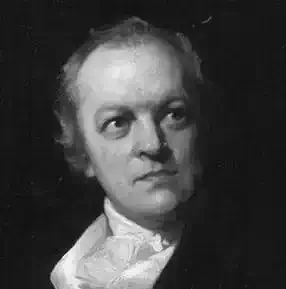
William Blake
The Grey Monk
The Grey Monk
'I die, I die!' the Mother said,
'My children die for lack of bread.
What more has the merciless Tyrant said?'
The Monk sat down on the stony bed.
The blood red ran from the Grey Monk's side,
His hands and feet were wounded wide,
His body bent, his arms and knees
Like to the roots of ancient trees.
His eye was dry; no tear could flow:
A hollow groan first spoke his woe.
He trembled and shudder'd upon the bed;
At length with a feeble cry he said:
'When God commanded this hand to write
In the studious hours of deep midnight,
He told me the writing I wrote should prove
The bane of all that on Earth I lov'd.
My Brother starv'd between two walls,
His Children's cry my soul appalls;
I mock'd at the rack and griding chain,
My bent body mocks their torturing pain.
Thy father drew his sword in the North,
With his thousands strong he marched forth;
Thy Brother has arm'd himself in steel
To avenge the wrongs thy Children feel.
But vain the Sword and vain the Bow,
They never can work War's overthrow.
The Hermit's prayer and the Widow's tear
Alone can free the World from fear.
For a Tear is an intellectual thing,
And a Sigh is the sword of an Angel King,
And the bitter groan of the Martyr's woe
Is an arrow from the Almighty's bow.
The hand of Vengeance found the bed
To which the Purple Tyrant fled;
The iron hand crush'd the Tyrant's head
And became a Tyrant in his stead.'
'I die, I die!' the Mother said,
'My children die for lack of bread.
What more has the merciless Tyrant said?'
The Monk sat down on the stony bed.
The blood red ran from the Grey Monk's side,
His hands and feet were wounded wide,
His body bent, his arms and knees
Like to the roots of ancient trees.
His eye was dry; no tear could flow:
A hollow groan first spoke his woe.
He trembled and shudder'd upon the bed;
At length with a feeble cry he said:
'When God commanded this hand to write
In the studious hours of deep midnight,
He told me the writing I wrote should prove
The bane of all that on Earth I lov'd.
My Brother starv'd between two walls,
His Children's cry my soul appalls;
I mock'd at the rack and griding chain,
My bent body mocks their torturing pain.
Thy father drew his sword in the North,
With his thousands strong he marched forth;
Thy Brother has arm'd himself in steel
To avenge the wrongs thy Children feel.
But vain the Sword and vain the Bow,
They never can work War's overthrow.
The Hermit's prayer and the Widow's tear
Alone can free the World from fear.
For a Tear is an intellectual thing,
And a Sigh is the sword of an Angel King,
And the bitter groan of the Martyr's woe
Is an arrow from the Almighty's bow.
The hand of Vengeance found the bed
To which the Purple Tyrant fled;
The iron hand crush'd the Tyrant's head
And became a Tyrant in his stead.'
493
William Blake
Jerusalem
Jerusalem
And did those feet in ancient time
Walk upon England's mountains green?
And was the holy Lamb of God
On England's pleasant pastures seen?
And did the Countenance Divine
Shine forth upon our clouded hills?
And was Jerusalem builded here
Among these dark Satanic mills?
Bring me my bow of burning gold:
Bring me my arrows of desire:
Bring me my spear: O clouds unfold!
Bring me my chariot of fire.
I will not cease from mental fight,
Nor shall my sword sleep in my hand
Till we have built Jerusalem
In England's green and pleasant land.
And did those feet in ancient time
Walk upon England's mountains green?
And was the holy Lamb of God
On England's pleasant pastures seen?
And did the Countenance Divine
Shine forth upon our clouded hills?
And was Jerusalem builded here
Among these dark Satanic mills?
Bring me my bow of burning gold:
Bring me my arrows of desire:
Bring me my spear: O clouds unfold!
Bring me my chariot of fire.
I will not cease from mental fight,
Nor shall my sword sleep in my hand
Till we have built Jerusalem
In England's green and pleasant land.
500
William Blake
From Milton: And did those feet
From Milton: And did those feet
And did those feet in ancient time
Walk upon England's mountains green?
And was the holy Lamb of God
On England's pleasant pastures seen?
And did the Countenance Divine
Shine forth upon our clouded hills?
And was Jerusalem builded here,
Among these dark Satanic Mills?
Bring me my Bow of burning gold:
Bring me my Arrows of desire:
Bring me my Spear:O clouds unfold!
Bring me my Chariot of fire!
I will not cease from Mental Fight,
Nor shall my Sword sleep in my hand,
Till we have built Jerusalem
In England's green & pleasant Land.
And did those feet in ancient time
Walk upon England's mountains green?
And was the holy Lamb of God
On England's pleasant pastures seen?
And did the Countenance Divine
Shine forth upon our clouded hills?
And was Jerusalem builded here,
Among these dark Satanic Mills?
Bring me my Bow of burning gold:
Bring me my Arrows of desire:
Bring me my Spear:O clouds unfold!
Bring me my Chariot of fire!
I will not cease from Mental Fight,
Nor shall my Sword sleep in my hand,
Till we have built Jerusalem
In England's green & pleasant Land.
414
William Blake
A Little Boy Lost
A Little Boy Lost
v'Nought loves another as itself,
Nor venerates another so,
Nor is it possible to thought
A greater than itself to know.
'And, father, how can I love you
Or any of my brothers more?
I love you like the little bird
That picks up crumbs around the door.'
The Priest sat by and heard the child;
In trembling zeal he seized his hair,
He led him by his little coat,
And all admired the priestly care.
And standing on the altar high,
'Lo, what a fiend is here! said he:
'One who sets reason up for judge
Of our most holy mystery.'
The weeping child could not be heard,
The weeping parents wept in vain:
They stripped him to his little shirt,
And bound him in an iron chain,
And burned him in a holy place
Where many had been burned before;
The weeping parents wept in vain.
Are such thing done on Albion's shore?
v'Nought loves another as itself,
Nor venerates another so,
Nor is it possible to thought
A greater than itself to know.
'And, father, how can I love you
Or any of my brothers more?
I love you like the little bird
That picks up crumbs around the door.'
The Priest sat by and heard the child;
In trembling zeal he seized his hair,
He led him by his little coat,
And all admired the priestly care.
And standing on the altar high,
'Lo, what a fiend is here! said he:
'One who sets reason up for judge
Of our most holy mystery.'
The weeping child could not be heard,
The weeping parents wept in vain:
They stripped him to his little shirt,
And bound him in an iron chain,
And burned him in a holy place
Where many had been burned before;
The weeping parents wept in vain.
Are such thing done on Albion's shore?
567
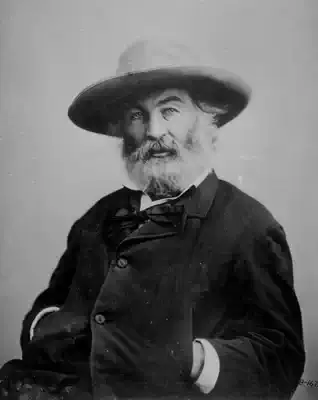
Walt Whitman
I Sit And Look Out
I Sit And Look Out
I SIT and look out upon all the sorrows of the world, and upon all
oppression and shame;
I hear secret convulsive sobs from young men, at anguish with
themselves, remorseful after deeds done;
I see, in low life, the mother misused by her children, dying,
neglected, gaunt, desperate;
I see the wife misused by her husband--I see the treacherous seducer
of young women;
I mark the ranklings of jealousy and unrequited love, attempted to be
hid--I see these sights on the earth;
I see the workings of battle, pestilence, tyranny--I see martyrs and
prisoners;
I observe a famine at sea--I observe the sailors casting lots who
shall be kill'd, to preserve the lives of the rest;
I observe the slights and degradations cast by arrogant persons upon
laborers, the poor, and upon negroes, and the like;
All these--All the meanness and agony without end, I sitting, look
out upon,
See, hear, and am silent. 10
I SIT and look out upon all the sorrows of the world, and upon all
oppression and shame;
I hear secret convulsive sobs from young men, at anguish with
themselves, remorseful after deeds done;
I see, in low life, the mother misused by her children, dying,
neglected, gaunt, desperate;
I see the wife misused by her husband--I see the treacherous seducer
of young women;
I mark the ranklings of jealousy and unrequited love, attempted to be
hid--I see these sights on the earth;
I see the workings of battle, pestilence, tyranny--I see martyrs and
prisoners;
I observe a famine at sea--I observe the sailors casting lots who
shall be kill'd, to preserve the lives of the rest;
I observe the slights and degradations cast by arrogant persons upon
laborers, the poor, and upon negroes, and the like;
All these--All the meanness and agony without end, I sitting, look
out upon,
See, hear, and am silent. 10
629

D.H. Lawrence
The Ocean's Song
The Ocean's Song
We walked amongst the ruins famed in story
Of Rozel-Tower,
And saw the boundless waters stretch in glory
And heave in power.
O Ocean vast! We heard thy song with wonder,
Whilst waves marked time.
"Appear, O Truth!" thou sang'st with tone of thunder,
"And shine sublime!
"The world's enslaved and hunted down by beagles,
To despots sold.
Souls of deep thinkers, soar like mighty eagles!
The Right uphold.
"Be born! arise! o'er the earth and wild waves bounding,
Peoples and suns!
Let darkness vanish; tocsins be resounding,
And flash, ye guns!
"And you who love no pomps of fog or glamour,
Who fear no shocks,
Brave foam and lightning, hurricane and clamour,--
Exiles: the rocks!"
We walked amongst the ruins famed in story
Of Rozel-Tower,
And saw the boundless waters stretch in glory
And heave in power.
O Ocean vast! We heard thy song with wonder,
Whilst waves marked time.
"Appear, O Truth!" thou sang'st with tone of thunder,
"And shine sublime!
"The world's enslaved and hunted down by beagles,
To despots sold.
Souls of deep thinkers, soar like mighty eagles!
The Right uphold.
"Be born! arise! o'er the earth and wild waves bounding,
Peoples and suns!
Let darkness vanish; tocsins be resounding,
And flash, ye guns!
"And you who love no pomps of fog or glamour,
Who fear no shocks,
Brave foam and lightning, hurricane and clamour,--
Exiles: the rocks!"
270
D.H. Lawrence
Boaz Asleep
Boaz Asleep
Boaz, overcome with weariness, by torchlight
made his pallet on the threshing floor
where all day he had worked, and now he slept
among the bushels of threshed wheat.
The old man owned wheatfields and barley,
and though he was rich, he was still fair-minded.
No filth soured the sweetness of his well.
No hot iron of torture whitened in his forge.
His beard was silver as a brook in April.
He bound sheaves without the strain of hate
or envy. He saw gleaners pass, and said,
Let handfuls of the fat ears fall to them.
The man's mind, clear of untoward feeling,
clothed itself in candor. He wore clean robes.
His heaped granaries spilled over always
toward the poor, no less than public fountains.
Boaz did well by his workers and by kinsmen.
He was generous, and moderate. Women held him
worthier than younger men, for youth is handsome,
but to him in his old age came greatness.
An old man, nearing his first source, may find
the timelessness beyond times of trouble.
And though fire burned in young men's eyes,
to Ruth the eyes of Boaz shone clear light.
Boaz, overcome with weariness, by torchlight
made his pallet on the threshing floor
where all day he had worked, and now he slept
among the bushels of threshed wheat.
The old man owned wheatfields and barley,
and though he was rich, he was still fair-minded.
No filth soured the sweetness of his well.
No hot iron of torture whitened in his forge.
His beard was silver as a brook in April.
He bound sheaves without the strain of hate
or envy. He saw gleaners pass, and said,
Let handfuls of the fat ears fall to them.
The man's mind, clear of untoward feeling,
clothed itself in candor. He wore clean robes.
His heaped granaries spilled over always
toward the poor, no less than public fountains.
Boaz did well by his workers and by kinsmen.
He was generous, and moderate. Women held him
worthier than younger men, for youth is handsome,
but to him in his old age came greatness.
An old man, nearing his first source, may find
the timelessness beyond times of trouble.
And though fire burned in young men's eyes,
to Ruth the eyes of Boaz shone clear light.
261
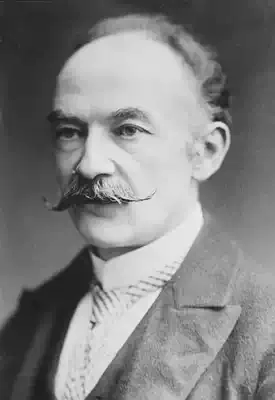
Thomas Hardy
The Stranger's Song
The Stranger's Song
(As sung by Mr. Charles Charrington in the play of "The Three Wayfarers")
O MY trade it is the rarest one,
Simple shepherds all--
My trade is a sight to see;
For my customers I tie, and take 'em up on high,
And waft 'em to a far countree!
My tools are but common ones,
Simple shepherds all--
My tools are no sight to see:
A little hempen string, and a post whereon to swing,
Are implements enough for me!
To-morrow is my working day,
Simple shepherds all--
To-morrow is a working day for me:
For the farmer's sheep is slain, and the lad who did it ta'en,
And on his soul may God ha' mer-cy!
(As sung by Mr. Charles Charrington in the play of "The Three Wayfarers")
O MY trade it is the rarest one,
Simple shepherds all--
My trade is a sight to see;
For my customers I tie, and take 'em up on high,
And waft 'em to a far countree!
My tools are but common ones,
Simple shepherds all--
My tools are no sight to see:
A little hempen string, and a post whereon to swing,
Are implements enough for me!
To-morrow is my working day,
Simple shepherds all--
To-morrow is a working day for me:
For the farmer's sheep is slain, and the lad who did it ta'en,
And on his soul may God ha' mer-cy!
245
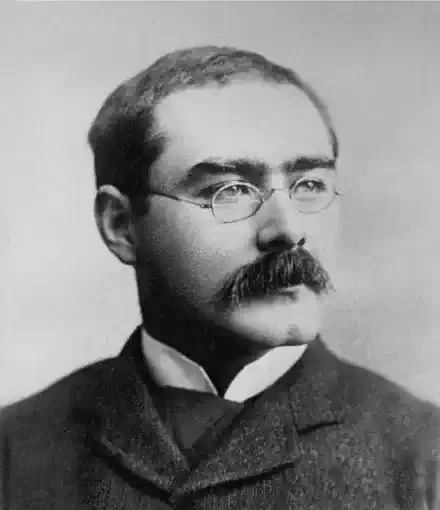
Rudyard Kipling
Tomlinson
Tomlinson
Now Tomlinson gave up the ghost in his house in Berkeley Square,
And a Spirit came to his bedside and gripped him by the hair --
A Spirit gripped him by the hair and carried him far away,
Till he heard as the roar of a rain-fed ford the roar of the Milky Way:
Till he heard the roar of the Milky Way die down and drone and cease,
And they came to the Gate within the Wall where Peter holds the keys.
"Stand up, stand up now, Tomlinson, and answer loud and high
The good that ye did for the sake of men or ever ye came to die --
The good that ye did for the sake of men in little earth so lone!"
And the naked soul of Tomlinson grew white as a rain-washed bone.
"O I have a friend on earth," he said, "that was my priest and guide,
And well would he answer all for me if he were by my side."
-- "For that ye strove in neighbour-love it shall be written fair,
But now ye wait at Heaven's Gate and not in Berkeley Square:
Though we called your friend from his bed this night,
he could not speak for you,
For the race is run by one and one and never by two and two."
Then Tomlinson looked up and down, and little gain was there,
For the naked stars grinned overhead, and he saw that his soul was bare:
The Wind that blows between the worlds, it cut him like a knife,
And Tomlinson took up his tale and spoke of his good in life.
"This I have read in a book," he said, "and that was told to me,
And this I have thought that another man thought of a Prince in Muscovy."
The good souls flocked like homing doves and bade him clear the path,
And Peter twirled the jangling keys in weariness and wrath.
"Ye have read, ye have heard, ye have thought," he said,
"and the tale is yet to run:
By the worth of the body that once ye had, give answer -- what ha' ye done?"
Then Tomlinson looked back and forth, and little good it bore,
For the Darkness stayed at his shoulder-blade and Heaven's Gate before: --
"O this I have felt, and this I have guessed, and this I have heard men say,
And this they wrote that another man wrote of a carl in Norroway."
-- "Ye have read, ye have felt, ye have guessed, good lack!
Ye have hampered Heaven's Gate;
There's little room between the stars in idleness to prate!
O none may reach by hired speech of neighbour, priest, and kin
Through borrowed deed to God's good meed that lies so fair within;
Get hence, get hence to the Lord of Wrong, for doom has yet to run,
And. . .the faith that ye share with Berkeley Square uphold you, Tomlinson!"
. . . . .
The Spirit gripped him by the hair, and sun by sun they fell
Till they came to the belt of Naughty Stars that rim the mouth of Hell:
The first are red with pride and wrath, the next are white with pain,
But the third are black with clinkered sin that cannot burn again:
They may hold their path, they may leave their path,
with never a soul to mark,
They may burn or freeze, but they must not cease
in the Scorn of the Outer Dark.
The Wind that blows between the worlds, it nipped him to the bone,
And he yearned to the flare of Hell-Gate
there as the light of his own hearth-stone.
The Devil he sat behind the bars, where the desperate legions drew,
But he caught the hasting Tomlinson and would not let him through.
"Wot ye the price of good pit-coal that I must pay?" said he,
"That ye rank yoursel' so fit for Hell and ask no leave of me?
I am all o'er-sib to Adam's breed that ye should give me scorn,
For I strove with God for your First Father the day that he was born.
Sit down, sit down upon the slag, and answer loud and high
The harm that ye did to the Sons of Men or ever you came to die."
And Tomlinson looked up and up, and saw against the night
The belly of a tortured star blood-red in Hell-Mouth light;
And Tomlinson looked down and down, and saw beneath his feet
The frontlet of a tortured star milk-white in Hell-Mouth heat.
"O I had a love on earth," said he, "that kissed me to my fall,
And if ye would call my love to me I know she would answer all."
-- "All that ye did in love forbid it shall be written fair,
But now ye wait at Hell-Mouth Gate and not in Berkeley Square:
Though we whistled your love from her bed to-night, I trow she would not run,
For the sin ye do by two and two ye must pay for one by one!"
The Wind that blows between the worlds, it cut him like a knife,
And Tomlinson took up the tale and spoke of his sin in life: --
"Once I ha' laughed at the power of Love and twice at the grip of the Grave,
And thrice I ha' patted my God on the head that men might call me brave."
The Devil he blew on a brandered soul and set it aside to cool: --
"Do ye think I would waste my good pit-coal on the hide of a brain-sick fool?
I see no worth in the hobnailed mirth or the jolthead jest ye did
That I should waken my gentlemen that are sleeping three on a grid."
Then Tomlinson looked back and forth, and there was little grace,
For Hell-Gate filled the houseless Soul with the Fear of Naked Space.
"Nay, this I ha' heard," quo' Tomlinson, "and this was noised abroad,
And this I ha' got from a Belgian book on the word of a dead French lord."
-- "Ye ha' heard, ye ha' read, ye ha' got, good lack!
and the tale begins afresh --
Have ye sinned one sin for the pride o' the eye
or the sinful lust of the flesh?"
Then Tomlinson he gripped the bars and yammered, "Let me in --
For I mind that I borrowed my neighbour's wife to sin the deadly sin."
The Devil he grinned behind the bars, and banked the fires high:
"Did ye read of that sin in a book?" said he; and Tomlinson said, "Ay!"
The Devil he blew upon his nails, and the little devils ran,
And he said: "Go husk this whimpering thief that comes in the guise of a man:
Winnow him out 'twixt star and star, and sieve his proper worth:
There's sore decline in Adam's line if this be spawn of earth."
Empusa's crew, so naked-new they may not face the fire,
But weep that they bin too small to sin to the height of their desire,
Over the coal they chased the Soul, and racked it all abroad,
As children rifle a caddis-case or the raven's foolish hoard.
And back they came with the tattered Thing, as children after play,
And they said: "The soul that he got from God he has bartered clean away.
We have threshed a stook of print and book, and winnowed a chattering wind
And many a soul wherefrom he stole, but his we cannot find:
We have handled him, we have dandled him, we have seared him to the bone,
And sure if tooth and nail show truth he has no soul of his own."
The Devil he bowed his head on his breast and rumbled deep and low: --
"I'm all o'er-sib to Adam's breed that I should bid him go.
Yet close we lie, and deep we lie, and if I gave him place,
My gentlemen that are so proud would flout me to my face;
They'd call my house a common stews and me a careless host,
And -- I would not anger my gentlemen for the sake of a shiftless ghost."
The Devil he looked at the mangled Soul that prayed to feel the flame,
And he thought of Holy Charity, but he thought of his own good name: --
"Now ye could haste my coal to waste, and sit ye down to fry:
Did ye think of that theft for yourself?" said he; and Tomlinson said, "Ay!"
The Devil he blew an outward breath, for his heart was free from care: --
"Ye have scarce the soul of a louse," he said,
"but the roots of sin are there,
And for that sin should ye come in were I the lord alone.
But sinful pride has rule inside -- and mightier than my own.
Honour and Wit, fore-damned they sit, to each his priest and whore:
Nay, scarce I dare myself go there, and you they'd torture sore.
Ye are neither spirit nor spirk," he said; "ye are neither book nor brute --
Go, get ye back to the flesh again for the sake of Man's repute.
I'm all o'er-sib to Adam's breed that I should mock your pain,
But look that ye win to worthier sin ere ye come back again.
Get hence, the hearse is at your door -- the grim black stallions wait --
They bear your clay to place to-day. Speed, lest ye come too late!
Go back to Earth with a lip unsealed -- go back with an open eye,
And carry my word to the Sons of Men or ever ye come to die:
That the sin they do by two and two they must pay for one by one --
And. . .the God that you took from a printed book be with you, Tomlinson!"
Now Tomlinson gave up the ghost in his house in Berkeley Square,
And a Spirit came to his bedside and gripped him by the hair --
A Spirit gripped him by the hair and carried him far away,
Till he heard as the roar of a rain-fed ford the roar of the Milky Way:
Till he heard the roar of the Milky Way die down and drone and cease,
And they came to the Gate within the Wall where Peter holds the keys.
"Stand up, stand up now, Tomlinson, and answer loud and high
The good that ye did for the sake of men or ever ye came to die --
The good that ye did for the sake of men in little earth so lone!"
And the naked soul of Tomlinson grew white as a rain-washed bone.
"O I have a friend on earth," he said, "that was my priest and guide,
And well would he answer all for me if he were by my side."
-- "For that ye strove in neighbour-love it shall be written fair,
But now ye wait at Heaven's Gate and not in Berkeley Square:
Though we called your friend from his bed this night,
he could not speak for you,
For the race is run by one and one and never by two and two."
Then Tomlinson looked up and down, and little gain was there,
For the naked stars grinned overhead, and he saw that his soul was bare:
The Wind that blows between the worlds, it cut him like a knife,
And Tomlinson took up his tale and spoke of his good in life.
"This I have read in a book," he said, "and that was told to me,
And this I have thought that another man thought of a Prince in Muscovy."
The good souls flocked like homing doves and bade him clear the path,
And Peter twirled the jangling keys in weariness and wrath.
"Ye have read, ye have heard, ye have thought," he said,
"and the tale is yet to run:
By the worth of the body that once ye had, give answer -- what ha' ye done?"
Then Tomlinson looked back and forth, and little good it bore,
For the Darkness stayed at his shoulder-blade and Heaven's Gate before: --
"O this I have felt, and this I have guessed, and this I have heard men say,
And this they wrote that another man wrote of a carl in Norroway."
-- "Ye have read, ye have felt, ye have guessed, good lack!
Ye have hampered Heaven's Gate;
There's little room between the stars in idleness to prate!
O none may reach by hired speech of neighbour, priest, and kin
Through borrowed deed to God's good meed that lies so fair within;
Get hence, get hence to the Lord of Wrong, for doom has yet to run,
And. . .the faith that ye share with Berkeley Square uphold you, Tomlinson!"
. . . . .
The Spirit gripped him by the hair, and sun by sun they fell
Till they came to the belt of Naughty Stars that rim the mouth of Hell:
The first are red with pride and wrath, the next are white with pain,
But the third are black with clinkered sin that cannot burn again:
They may hold their path, they may leave their path,
with never a soul to mark,
They may burn or freeze, but they must not cease
in the Scorn of the Outer Dark.
The Wind that blows between the worlds, it nipped him to the bone,
And he yearned to the flare of Hell-Gate
there as the light of his own hearth-stone.
The Devil he sat behind the bars, where the desperate legions drew,
But he caught the hasting Tomlinson and would not let him through.
"Wot ye the price of good pit-coal that I must pay?" said he,
"That ye rank yoursel' so fit for Hell and ask no leave of me?
I am all o'er-sib to Adam's breed that ye should give me scorn,
For I strove with God for your First Father the day that he was born.
Sit down, sit down upon the slag, and answer loud and high
The harm that ye did to the Sons of Men or ever you came to die."
And Tomlinson looked up and up, and saw against the night
The belly of a tortured star blood-red in Hell-Mouth light;
And Tomlinson looked down and down, and saw beneath his feet
The frontlet of a tortured star milk-white in Hell-Mouth heat.
"O I had a love on earth," said he, "that kissed me to my fall,
And if ye would call my love to me I know she would answer all."
-- "All that ye did in love forbid it shall be written fair,
But now ye wait at Hell-Mouth Gate and not in Berkeley Square:
Though we whistled your love from her bed to-night, I trow she would not run,
For the sin ye do by two and two ye must pay for one by one!"
The Wind that blows between the worlds, it cut him like a knife,
And Tomlinson took up the tale and spoke of his sin in life: --
"Once I ha' laughed at the power of Love and twice at the grip of the Grave,
And thrice I ha' patted my God on the head that men might call me brave."
The Devil he blew on a brandered soul and set it aside to cool: --
"Do ye think I would waste my good pit-coal on the hide of a brain-sick fool?
I see no worth in the hobnailed mirth or the jolthead jest ye did
That I should waken my gentlemen that are sleeping three on a grid."
Then Tomlinson looked back and forth, and there was little grace,
For Hell-Gate filled the houseless Soul with the Fear of Naked Space.
"Nay, this I ha' heard," quo' Tomlinson, "and this was noised abroad,
And this I ha' got from a Belgian book on the word of a dead French lord."
-- "Ye ha' heard, ye ha' read, ye ha' got, good lack!
and the tale begins afresh --
Have ye sinned one sin for the pride o' the eye
or the sinful lust of the flesh?"
Then Tomlinson he gripped the bars and yammered, "Let me in --
For I mind that I borrowed my neighbour's wife to sin the deadly sin."
The Devil he grinned behind the bars, and banked the fires high:
"Did ye read of that sin in a book?" said he; and Tomlinson said, "Ay!"
The Devil he blew upon his nails, and the little devils ran,
And he said: "Go husk this whimpering thief that comes in the guise of a man:
Winnow him out 'twixt star and star, and sieve his proper worth:
There's sore decline in Adam's line if this be spawn of earth."
Empusa's crew, so naked-new they may not face the fire,
But weep that they bin too small to sin to the height of their desire,
Over the coal they chased the Soul, and racked it all abroad,
As children rifle a caddis-case or the raven's foolish hoard.
And back they came with the tattered Thing, as children after play,
And they said: "The soul that he got from God he has bartered clean away.
We have threshed a stook of print and book, and winnowed a chattering wind
And many a soul wherefrom he stole, but his we cannot find:
We have handled him, we have dandled him, we have seared him to the bone,
And sure if tooth and nail show truth he has no soul of his own."
The Devil he bowed his head on his breast and rumbled deep and low: --
"I'm all o'er-sib to Adam's breed that I should bid him go.
Yet close we lie, and deep we lie, and if I gave him place,
My gentlemen that are so proud would flout me to my face;
They'd call my house a common stews and me a careless host,
And -- I would not anger my gentlemen for the sake of a shiftless ghost."
The Devil he looked at the mangled Soul that prayed to feel the flame,
And he thought of Holy Charity, but he thought of his own good name: --
"Now ye could haste my coal to waste, and sit ye down to fry:
Did ye think of that theft for yourself?" said he; and Tomlinson said, "Ay!"
The Devil he blew an outward breath, for his heart was free from care: --
"Ye have scarce the soul of a louse," he said,
"but the roots of sin are there,
And for that sin should ye come in were I the lord alone.
But sinful pride has rule inside -- and mightier than my own.
Honour and Wit, fore-damned they sit, to each his priest and whore:
Nay, scarce I dare myself go there, and you they'd torture sore.
Ye are neither spirit nor spirk," he said; "ye are neither book nor brute --
Go, get ye back to the flesh again for the sake of Man's repute.
I'm all o'er-sib to Adam's breed that I should mock your pain,
But look that ye win to worthier sin ere ye come back again.
Get hence, the hearse is at your door -- the grim black stallions wait --
They bear your clay to place to-day. Speed, lest ye come too late!
Go back to Earth with a lip unsealed -- go back with an open eye,
And carry my word to the Sons of Men or ever ye come to die:
That the sin they do by two and two they must pay for one by one --
And. . .the God that you took from a printed book be with you, Tomlinson!"
576
Rudyard Kipling
The Reeds of Runnymede
The Reeds of Runnymede
Magna Charta, June ,
At Runnymede, At Runnymede,
What say the reeds at Runnymede?
The lissom reeds that give and take,
That bend so far, but never break,
They keep the sleepy Thames awake
With tales of John at Runnymede.
At Runnymede, at Runnymede,
Oh, hear the reeds at Runnymede:--
"You mustn't sell, delay, deny,
A freeman's right or liberty.
It makes the stubborn Englishry,
We saw 'em roused at Runnymede!
"When through our ranks the Barons came,
With little thought of praise or blame,
But resolute to pay a game,
They lumbered up to Runnymede;
And there they launched in solid time
The first attack on Right Divine--
The curt, uncompromising 'Sign!'
That settled John at Runnymede.
"At Runnymede, at Runnymede,
Your rights were won at Runnymede!
No freeman shall be fined or bound,
Or dispossessed or freehold ground,
Except by lawful judgment found
And passed upon him by his peers.
Forget not, after all these years,
The Charter Signed at Runnymede."
And still when Mob or Monarch lays
Too rude hand on English ways,
The whisper wakes, the shudder plays,
Across the reeds at Runnymede.
And Tames, that knows the moods of kings,
And crowds and priests and suchlike things,
Rolls deep and dreadful as he brings
Their warning down from Runnymede!
Magna Charta, June ,
At Runnymede, At Runnymede,
What say the reeds at Runnymede?
The lissom reeds that give and take,
That bend so far, but never break,
They keep the sleepy Thames awake
With tales of John at Runnymede.
At Runnymede, at Runnymede,
Oh, hear the reeds at Runnymede:--
"You mustn't sell, delay, deny,
A freeman's right or liberty.
It makes the stubborn Englishry,
We saw 'em roused at Runnymede!
"When through our ranks the Barons came,
With little thought of praise or blame,
But resolute to pay a game,
They lumbered up to Runnymede;
And there they launched in solid time
The first attack on Right Divine--
The curt, uncompromising 'Sign!'
That settled John at Runnymede.
"At Runnymede, at Runnymede,
Your rights were won at Runnymede!
No freeman shall be fined or bound,
Or dispossessed or freehold ground,
Except by lawful judgment found
And passed upon him by his peers.
Forget not, after all these years,
The Charter Signed at Runnymede."
And still when Mob or Monarch lays
Too rude hand on English ways,
The whisper wakes, the shudder plays,
Across the reeds at Runnymede.
And Tames, that knows the moods of kings,
And crowds and priests and suchlike things,
Rolls deep and dreadful as he brings
Their warning down from Runnymede!
521
Rudyard Kipling
The Legends Of Evil
The Legends Of Evil
This is the sorrowful story
Told when the twilight fails
And the monkeys walk together
Holding their neighbours' tails: --
"Our fathers lived in the forest,
Foolish people were they,
They went down to the cornland
To teach the farmers to play.
"Our fathers frisked in the millet,
Our fathers skipped in the wheat,
Our fathers hung from the branches,
Our fathers danced in the street.
"Then came the terrible farmers,
Nothing of play they knew,
Only. . .they caught our fathers
And set them to labour too!
"Set them to work in the cornland
With ploughs and sickles and flails,
Put them in mud-walled prisons
And -- cut off their beautiful tails!
"Now, we can watch our fathers,
Sullen and bowed and old,
Stooping over the millet,
Sharing the silly mould,
"Driving a foolish furrow,
Mending a muddy yoke,
Sleeping in mud-walled prisons,
Steeping their food in smoke.
"We may not speak to our fathers,
For if the farmers knew
They would come up to the forest
And set us to labour too."
This is the horrible story
Told as the twilight fails
And the monkeys walk together
Holding their kinsmen's tails.
II
'Twas when the rain fell steady an' the Ark was pitched an' ready,
That Noah got his orders for to take the bastes below;
He dragged them all together by the horn an' hide an' feather,
An' all excipt the Donkey was agreeable to go.
Thin Noah spoke him fairly, thin talked to him sevarely,
An' thin he cursed him squarely to the glory av the Lord: --
"Divil take the ass that bred you, and the greater ass that fed you --
Divil go wid you, ye spalpeen!" an' the Donkey went aboard.
But the wind was always failin', an' 'twas most onaisy sailin',
An' the ladies in the cabin couldn't stand the stable air;
An' the bastes betwuxt the hatches, they tuk an' died in batches,
Till Noah said: -- "There's wan av us that hasn't paid his fare!"
For he heard a flusteration 'mid the bastes av all creation --
The trumpetin' av elephints an' bellowin' av whales;
An' he saw forninst the windy whin he wint to stop the shindy
The Divil wid a stable-fork bedivillin' their tails.
The Divil cursed outrageous, but Noah said umbrageous: --
"To what am I indebted for this tenant-right invasion?"
An' the Divil gave for answer: -- "Evict me if you can, sir,
For I came in wid the Donkey -- on Your Honour's invitation."
This is the sorrowful story
Told when the twilight fails
And the monkeys walk together
Holding their neighbours' tails: --
"Our fathers lived in the forest,
Foolish people were they,
They went down to the cornland
To teach the farmers to play.
"Our fathers frisked in the millet,
Our fathers skipped in the wheat,
Our fathers hung from the branches,
Our fathers danced in the street.
"Then came the terrible farmers,
Nothing of play they knew,
Only. . .they caught our fathers
And set them to labour too!
"Set them to work in the cornland
With ploughs and sickles and flails,
Put them in mud-walled prisons
And -- cut off their beautiful tails!
"Now, we can watch our fathers,
Sullen and bowed and old,
Stooping over the millet,
Sharing the silly mould,
"Driving a foolish furrow,
Mending a muddy yoke,
Sleeping in mud-walled prisons,
Steeping their food in smoke.
"We may not speak to our fathers,
For if the farmers knew
They would come up to the forest
And set us to labour too."
This is the horrible story
Told as the twilight fails
And the monkeys walk together
Holding their kinsmen's tails.
II
'Twas when the rain fell steady an' the Ark was pitched an' ready,
That Noah got his orders for to take the bastes below;
He dragged them all together by the horn an' hide an' feather,
An' all excipt the Donkey was agreeable to go.
Thin Noah spoke him fairly, thin talked to him sevarely,
An' thin he cursed him squarely to the glory av the Lord: --
"Divil take the ass that bred you, and the greater ass that fed you --
Divil go wid you, ye spalpeen!" an' the Donkey went aboard.
But the wind was always failin', an' 'twas most onaisy sailin',
An' the ladies in the cabin couldn't stand the stable air;
An' the bastes betwuxt the hatches, they tuk an' died in batches,
Till Noah said: -- "There's wan av us that hasn't paid his fare!"
For he heard a flusteration 'mid the bastes av all creation --
The trumpetin' av elephints an' bellowin' av whales;
An' he saw forninst the windy whin he wint to stop the shindy
The Divil wid a stable-fork bedivillin' their tails.
The Divil cursed outrageous, but Noah said umbrageous: --
"To what am I indebted for this tenant-right invasion?"
An' the Divil gave for answer: -- "Evict me if you can, sir,
For I came in wid the Donkey -- on Your Honour's invitation."
494
Rudyard Kipling
The Idiot Boy
The Idiot Boy
Wordsworth
He wandered down the moutain grade
Beyond the speed assigned--
A youth whom Justice often stayed
And generally fined.
He went alone, that none might know
If he could drive or steer.
Now he is in the ditch, and Oh!
The differential gear!
Wordsworth
He wandered down the moutain grade
Beyond the speed assigned--
A youth whom Justice often stayed
And generally fined.
He went alone, that none might know
If he could drive or steer.
Now he is in the ditch, and Oh!
The differential gear!
375
Rudyard Kipling
The Broken Men
The Broken Men
For things we never mention,
For Art misunderstood --
For excellent intention
That did not turn to good;
From ancient tales' renewing,
From clouds we would not clear --
Beyond the Law's pursuing
We fled, and settled here.
We took no tearful leaving,
We bade no long good-byes;
Men talked of crime and thieving,
Men wrote of fraud and lies.
To save our injured feelings
'T was time and time to go --
Behind was dock and Dartmoor,
Ahead lay Callao!
The widow and the orphan
That pray for ten per cent,
They clapped their trailers on us
To spy the road we went.
They watched the foreign sailings
(They scan the shipping still),
And that's your Christian people
Returning good for ill!
God bless the thoughtfull islands
Where never warrants come;
God bless the just Republics
That give a man a home,
That ask no foolish questions,
But set him on his feet;
And save his wife and daughters
From the workhouse and the street!
On church and square and market
The noonday silence falls;
You'll hear the drowsy mutter
Of the fountain in our halls.
Asleep amid the yuccas
The city takes her ease --
Till twilight brings the land-wind
To the clicking jalousies.
Day long the diamond weather,
The high, unaltered blue --
The smell of goats and incense
And the mule-bells tinkling through.
Day long the warder ocean
That keeps us from our kin,
And once a month our levee
When the English mail comes in.
You'll find us up and waiting
To treat you at the bar;
You'll find us less exclusive
Than the average English are.
We'll meet you with a carriage,
Too glad to show you round,
But -- we do not lunch on steamers,
For they are English ground.
We sail o' nights to England
And join our smiling Boards --
Our wives go in with Viscounts
And our daughters dance with Lords,
But behind our princely doings,
And behind each coup we make,
We feel there's Something Waiting,
And -- we meet It when we wake.
Ah God! One sniff of England --
To greet our flesh and blood --
To hear the traffic slurring
Once more through London mud!
Our towns of wasted honour --
Our streets of lost delight!
How stands the old Lord Warden?
Are Dover's cliffs still white?
For things we never mention,
For Art misunderstood --
For excellent intention
That did not turn to good;
From ancient tales' renewing,
From clouds we would not clear --
Beyond the Law's pursuing
We fled, and settled here.
We took no tearful leaving,
We bade no long good-byes;
Men talked of crime and thieving,
Men wrote of fraud and lies.
To save our injured feelings
'T was time and time to go --
Behind was dock and Dartmoor,
Ahead lay Callao!
The widow and the orphan
That pray for ten per cent,
They clapped their trailers on us
To spy the road we went.
They watched the foreign sailings
(They scan the shipping still),
And that's your Christian people
Returning good for ill!
God bless the thoughtfull islands
Where never warrants come;
God bless the just Republics
That give a man a home,
That ask no foolish questions,
But set him on his feet;
And save his wife and daughters
From the workhouse and the street!
On church and square and market
The noonday silence falls;
You'll hear the drowsy mutter
Of the fountain in our halls.
Asleep amid the yuccas
The city takes her ease --
Till twilight brings the land-wind
To the clicking jalousies.
Day long the diamond weather,
The high, unaltered blue --
The smell of goats and incense
And the mule-bells tinkling through.
Day long the warder ocean
That keeps us from our kin,
And once a month our levee
When the English mail comes in.
You'll find us up and waiting
To treat you at the bar;
You'll find us less exclusive
Than the average English are.
We'll meet you with a carriage,
Too glad to show you round,
But -- we do not lunch on steamers,
For they are English ground.
We sail o' nights to England
And join our smiling Boards --
Our wives go in with Viscounts
And our daughters dance with Lords,
But behind our princely doings,
And behind each coup we make,
We feel there's Something Waiting,
And -- we meet It when we wake.
Ah God! One sniff of England --
To greet our flesh and blood --
To hear the traffic slurring
Once more through London mud!
Our towns of wasted honour --
Our streets of lost delight!
How stands the old Lord Warden?
Are Dover's cliffs still white?
616
Rudyard Kipling
The Ballad Of The King's Mercy
The Ballad Of The King's Mercy
Abdhur Rahman, the Durani Chief, of him is the story told.
His mercy fills the Khyber hills -- his grace is manifold;
He has taken toll of the North and the South --
his glory reacheth far,
And they tell the tale of his charity from Balkh to Kandahar.
Before the old Peshawur Gate, where Kurd and Kaffir meet,
The Governor of Kabul dealt the Justice of the Street,
And that was strait as running noose and swift as plunging knife,
Tho' he who held the longer purse might hold the longer life.
There was a hound of Hindustan had struck a Euzufzai,
Wherefore they spat upon his face and led him out to die.
It chanced the King went forth that hour when throat was bared to knife;
The Kaffir grovelled under-hoof and clamoured for his life.
Then said the King: "Have hope, O friend! Yea, Death disgraced is hard;
Much honour shall be thine"; and called the Captain of the Guard,
Yar Khan, a bastard of the Blood, so city-babble saith,
And he was honoured of the King -- the which is salt to Death;
And he was son of Daoud Shah, the Reiver of the Plains,
And blood of old Durani Lords ran fire in his veins;
And 'twas to tame an Afghan pride nor Hell nor Heaven could bind,
The King would make him butcher to a yelping cur of Hind.
"Strike!" said the King. "King's blood art thou --
his death shall be his pride!"
Then louder, that the crowd might catch: "Fear not -- his arms are tied!"
Yar Khan drew clear the Khyber knife, and struck, and sheathed again.
"O man, thy will is done," quoth he; "a King this dog hath slain."
Abdhur Rahman, the Durani Chief, to the North and the South is sold.
The North and the South shall open their mouth
to a Ghilzai flag unrolled,
When the big guns speak to the Khyber peak, and his dog-Heratis fly:
Ye have heard the song -- How long? How long?
Wolves of the Abazai!
That night before the watch was set, when all the streets were clear,
The Governor of Kabul spoke: "My King, hast thou no fear?
Thou knowest -- thou hast heard," -- his speech died at his master's face.
And grimly said the Afghan King: "I rule the Afghan race.
My path is mine -- see thou to thine -- to-night upon thy bed
Think who there be in Kabul now that clamour for thy head."
That night when all the gates were shut to City and to throne,
Within a little garden-house the King lay down alone.
Before the sinking of the moon, which is the Night of Night,
Yar Khan came softly to the King to make his honour white.
The children of the town had mocked beneath his horse's hoofs,
The harlots of the town had hailed him "butcher!" from their roofs.
But as he groped against the wall, two hands upon him fell,
The King behind his shoulder spake: "Dead man, thou dost not well!
'Tis ill to jest with Kings by day and seek a boon by night;
And that thou bearest in thy hand is all too sharp to write.
But three days hence, if God be good, and if thy strength remain,
Thou shalt demand one boon of me and bless me in thy pain.
For I am merciful to all, and most of all to thee.
My butcher of the shambles, rest -- no knife hast thou for me!"
Abdhur Rahman, the Durani Chief,
holds hard by the South and the North;
But the Ghilzai knows, ere the melting snows,
when the swollen banks break forth,
When the red-coats crawl to the sungar wall,
and his Usbeg lances fail:
Ye have heard the song -- How long? How long?
Wolves of the Zuka Kheyl!
They stoned him in the rubbish-field when dawn was in the sky,
According to the written word, "See that he do not die."
They stoned him till the stones were piled above him on the plain,
And those the labouring limbs displaced they tumbled back again.
One watched beside the dreary mound that veiled the battered thing,
And him the King with laughter called the Herald of the King.
It was upon the second night, the night of Ramazan,
The watcher leaning earthward heard the message of Yar Khan.
From shattered breast through shrivelled lips broke forth the rattling breath,
"Creature of God, deliver me from agony of Death."
They sought the King among his girls, and risked their lives thereby:
"Protector of the Pitiful, give orders that he die!"
"Bid him endure until the day," a lagging answer came;
"The night is short, and he can pray and learn to bless my name."
Before the dawn three times he spoke, and on the day once more:
"Creature of God, deliver me, and bless the King therefor!"
They shot him at the morning prayer, to ease him of his pain,
And when he heard the matchlocks clink, he blessed the King again.
Which thing the singers made a song for all the world to sing,
So that the Outer Seas may know the mercy of the King.
Abdhur Rahman, the Durani Chief, of him is the story told,
He has opened his mouth to the North and the South,
they have stuffed his mouth with gold.
Ye know the truth of his tender ruth -- and sweet his favours are:
Ye have heard the song -- How long? How long?
from Balkh to Kandahar.
Abdhur Rahman, the Durani Chief, of him is the story told.
His mercy fills the Khyber hills -- his grace is manifold;
He has taken toll of the North and the South --
his glory reacheth far,
And they tell the tale of his charity from Balkh to Kandahar.
Before the old Peshawur Gate, where Kurd and Kaffir meet,
The Governor of Kabul dealt the Justice of the Street,
And that was strait as running noose and swift as plunging knife,
Tho' he who held the longer purse might hold the longer life.
There was a hound of Hindustan had struck a Euzufzai,
Wherefore they spat upon his face and led him out to die.
It chanced the King went forth that hour when throat was bared to knife;
The Kaffir grovelled under-hoof and clamoured for his life.
Then said the King: "Have hope, O friend! Yea, Death disgraced is hard;
Much honour shall be thine"; and called the Captain of the Guard,
Yar Khan, a bastard of the Blood, so city-babble saith,
And he was honoured of the King -- the which is salt to Death;
And he was son of Daoud Shah, the Reiver of the Plains,
And blood of old Durani Lords ran fire in his veins;
And 'twas to tame an Afghan pride nor Hell nor Heaven could bind,
The King would make him butcher to a yelping cur of Hind.
"Strike!" said the King. "King's blood art thou --
his death shall be his pride!"
Then louder, that the crowd might catch: "Fear not -- his arms are tied!"
Yar Khan drew clear the Khyber knife, and struck, and sheathed again.
"O man, thy will is done," quoth he; "a King this dog hath slain."
Abdhur Rahman, the Durani Chief, to the North and the South is sold.
The North and the South shall open their mouth
to a Ghilzai flag unrolled,
When the big guns speak to the Khyber peak, and his dog-Heratis fly:
Ye have heard the song -- How long? How long?
Wolves of the Abazai!
That night before the watch was set, when all the streets were clear,
The Governor of Kabul spoke: "My King, hast thou no fear?
Thou knowest -- thou hast heard," -- his speech died at his master's face.
And grimly said the Afghan King: "I rule the Afghan race.
My path is mine -- see thou to thine -- to-night upon thy bed
Think who there be in Kabul now that clamour for thy head."
That night when all the gates were shut to City and to throne,
Within a little garden-house the King lay down alone.
Before the sinking of the moon, which is the Night of Night,
Yar Khan came softly to the King to make his honour white.
The children of the town had mocked beneath his horse's hoofs,
The harlots of the town had hailed him "butcher!" from their roofs.
But as he groped against the wall, two hands upon him fell,
The King behind his shoulder spake: "Dead man, thou dost not well!
'Tis ill to jest with Kings by day and seek a boon by night;
And that thou bearest in thy hand is all too sharp to write.
But three days hence, if God be good, and if thy strength remain,
Thou shalt demand one boon of me and bless me in thy pain.
For I am merciful to all, and most of all to thee.
My butcher of the shambles, rest -- no knife hast thou for me!"
Abdhur Rahman, the Durani Chief,
holds hard by the South and the North;
But the Ghilzai knows, ere the melting snows,
when the swollen banks break forth,
When the red-coats crawl to the sungar wall,
and his Usbeg lances fail:
Ye have heard the song -- How long? How long?
Wolves of the Zuka Kheyl!
They stoned him in the rubbish-field when dawn was in the sky,
According to the written word, "See that he do not die."
They stoned him till the stones were piled above him on the plain,
And those the labouring limbs displaced they tumbled back again.
One watched beside the dreary mound that veiled the battered thing,
And him the King with laughter called the Herald of the King.
It was upon the second night, the night of Ramazan,
The watcher leaning earthward heard the message of Yar Khan.
From shattered breast through shrivelled lips broke forth the rattling breath,
"Creature of God, deliver me from agony of Death."
They sought the King among his girls, and risked their lives thereby:
"Protector of the Pitiful, give orders that he die!"
"Bid him endure until the day," a lagging answer came;
"The night is short, and he can pray and learn to bless my name."
Before the dawn three times he spoke, and on the day once more:
"Creature of God, deliver me, and bless the King therefor!"
They shot him at the morning prayer, to ease him of his pain,
And when he heard the matchlocks clink, he blessed the King again.
Which thing the singers made a song for all the world to sing,
So that the Outer Seas may know the mercy of the King.
Abdhur Rahman, the Durani Chief, of him is the story told,
He has opened his mouth to the North and the South,
they have stuffed his mouth with gold.
Ye know the truth of his tender ruth -- and sweet his favours are:
Ye have heard the song -- How long? How long?
from Balkh to Kandahar.
451
Rudyard Kipling
Gehazi
Gehazi
Whence comest thou, Gehazi,
So reverend to behold,
In scarlet and in ermines
And chain of England's gold?"
"From following after Naaman
To tell him all is well,
Whereby my zeal hath made me
A Judge in Israel."
Well done; well done, Gehazi!
Stretch forth thy ready hand,
Thou barely 'scaped from judgment,
Take oath to judge the land
Unswayed by gift of money
Or privy bribe, more base,
Of knowledge which is profit
In any market-place.
Search out and probe, Gehazi,
As thou of all carist try,
The truthful, well-weighed answer
That tells the blacker lie --
The loud, uneasy virtue
The anger feigned at will,
To overbear a witness
And make the Court keep still.
Take order now, Gehazi,
That no man talk aside
In secret with his judges
The while his case is tried.
Lest he should show them -- reason
To keep a matter hid,
And subtly lead the questions
Away from what he did.
Thou mirror of uprightness,
What ails thee at thy vows?
What means the risen whiteness
Of the skin between thy brows?
The boils that shine and burrow,
The sores that slough and bleed --
The leprosy of Naaman
On thee and all thy seed?
Stand up, stand up, Gehazi,
Draw close thy robe and go,
Gehazi, Judge in Israel,
A leper white as snow!
Whence comest thou, Gehazi,
So reverend to behold,
In scarlet and in ermines
And chain of England's gold?"
"From following after Naaman
To tell him all is well,
Whereby my zeal hath made me
A Judge in Israel."
Well done; well done, Gehazi!
Stretch forth thy ready hand,
Thou barely 'scaped from judgment,
Take oath to judge the land
Unswayed by gift of money
Or privy bribe, more base,
Of knowledge which is profit
In any market-place.
Search out and probe, Gehazi,
As thou of all carist try,
The truthful, well-weighed answer
That tells the blacker lie --
The loud, uneasy virtue
The anger feigned at will,
To overbear a witness
And make the Court keep still.
Take order now, Gehazi,
That no man talk aside
In secret with his judges
The while his case is tried.
Lest he should show them -- reason
To keep a matter hid,
And subtly lead the questions
Away from what he did.
Thou mirror of uprightness,
What ails thee at thy vows?
What means the risen whiteness
Of the skin between thy brows?
The boils that shine and burrow,
The sores that slough and bleed --
The leprosy of Naaman
On thee and all thy seed?
Stand up, stand up, Gehazi,
Draw close thy robe and go,
Gehazi, Judge in Israel,
A leper white as snow!
467
Rudyard Kipling
Cleared
Cleared
(In Memory of a Commission)
Help for a patriot distressed, a spotless spirit hurt,
Help for an honourable clan sore trampled in the dirt!
From Queenstown Bay to Donegal, O listen to my song,
The honourable gentlemen have suffered grievous wrong.
Their noble names were mentioned -- O the burning black disgrace! --
By a brutal Saxon paper in an Irish shooting-case;
They sat upon it for a year, then steeled their heart to brave it,
And "coruscating innocence" the learned Judges gave it.
Bear witness, Heaven, of that grim crime beneath the surgeon's knife,
The honourable gentlemen deplored the loss of life!
Bear witness of those chanting choirs that burk and shirk and snigger,
No man laid hand upon the knife or finger to the trigger!
Cleared in the face of all mankind beneath the winking skies,
Like ph]oenixes from Ph]oenix Park (and what lay there) they rise!
Go shout it to the emerald seas -- give word to Erin now,
Her honourable gentlemen are cleared -- and this is how: --
They only paid the Moonlighter his cattle-hocking price,
They only helped the murderer with counsel's best advice,
But -- sure it keeps their honour white -- the learned Court believes
They never gave a piece of plate to murderers and thieves.
They never told the ramping crowd to card a woman's hide,
They never marked a man for death -- what fault of theirs he died? --
They only said "intimidate", and talked and went away --
By God, the boys that did the work were braver men than they!
Their sin it was that fed the fire -- small blame to them that heard --
The "bhoys" get drunk on rhetoric, and madden at a word --
They knew whom they were talking at, if they were Irish too,
The gentlemen that lied in Court, they knew, and well they knew.
They only took the Judas-gold from Fenians out of jail,
They only fawned for dollars on the blood-dyed Clanna-Gael.
If black is black or white is white, in black and white it's down,
They're only traitors to the Queen and rebels to the Crown.
"Cleared", honourable gentlemen! Be thankful it's no more: --
The widow's curse is on your house, the dead are at your door.
On you the shame of open shame, on you from North to South
The hand of every honest man flat-heeled across your mouth.
"Less black than we were painted"? -- Faith, no word of black was said;
The lightest touch was human blood, and that, you know, runs red.
It's sticking to your fist to-day for all your sneer and scoff,
And by the Judge's well-weighed word you cannot wipe it off.
Hold up those hands of innocence -- go, scare your sheep together,
The blundering, tripping tups that bleat behind the old bell-wether;
And if they snuff the taint and break to find another pen,
Tell them it's tar that glistens so, and daub them yours again!
"The charge is old"? -- As old as Cain -- as fresh as yesterday;
Old as the Ten Commandments -- have ye talked those laws away?
If words are words, or death is death, or powder sends the ball,
You spoke the words that sped the shot -- the curse be on you all.
"Our friends believe"? -- Of course they do -- as sheltered women may;
But have they seen the shrieking soul ripped from the quivering clay?
They! -- If their own front door is shut,
they'll swear the whole world's warm;
What do they know of dread of death or hanging fear of harm?
The secret half a county keeps, the whisper in the lane,
The shriek that tells the shot went home behind the broken pane,
The dry blood crisping in the sun that scares the honest bees,
And shows the "bhoys" have heard your talk -- what do they know of these?
But you -- you know -- ay, ten times more; the secrets of the dead,
Black terror on the country-side by word and whisper bred,
The mangled stallion's scream at night, the tail-cropped heifer's low.
Who set the whisper going first? You know, and well you know!
My soul! I'd sooner lie in jail for murder plain and straight,
Pure crime I'd done with my own hand for money, lust, or hate,
Than take a seat in Parliament by fellow-felons cheered,
While one of those "not provens" proved me cleared as you are cleared.
Cleared -- you that "lost" the League accounts -- go, guard our honour still,
Go, help to make our country's laws that broke God's law at will --
One hand stuck out behind the back, to signal "strike again";
The other on your dress-shirt-front to show your heart is clane.
If black is black or white is white, in black and white it's down,
You're only traitors to the Queen and rebels to the Crown.
If print is print or words are words, the learned Court perpends: --
We are not ruled by murderers, but only -- by their friends.
(In Memory of a Commission)
Help for a patriot distressed, a spotless spirit hurt,
Help for an honourable clan sore trampled in the dirt!
From Queenstown Bay to Donegal, O listen to my song,
The honourable gentlemen have suffered grievous wrong.
Their noble names were mentioned -- O the burning black disgrace! --
By a brutal Saxon paper in an Irish shooting-case;
They sat upon it for a year, then steeled their heart to brave it,
And "coruscating innocence" the learned Judges gave it.
Bear witness, Heaven, of that grim crime beneath the surgeon's knife,
The honourable gentlemen deplored the loss of life!
Bear witness of those chanting choirs that burk and shirk and snigger,
No man laid hand upon the knife or finger to the trigger!
Cleared in the face of all mankind beneath the winking skies,
Like ph]oenixes from Ph]oenix Park (and what lay there) they rise!
Go shout it to the emerald seas -- give word to Erin now,
Her honourable gentlemen are cleared -- and this is how: --
They only paid the Moonlighter his cattle-hocking price,
They only helped the murderer with counsel's best advice,
But -- sure it keeps their honour white -- the learned Court believes
They never gave a piece of plate to murderers and thieves.
They never told the ramping crowd to card a woman's hide,
They never marked a man for death -- what fault of theirs he died? --
They only said "intimidate", and talked and went away --
By God, the boys that did the work were braver men than they!
Their sin it was that fed the fire -- small blame to them that heard --
The "bhoys" get drunk on rhetoric, and madden at a word --
They knew whom they were talking at, if they were Irish too,
The gentlemen that lied in Court, they knew, and well they knew.
They only took the Judas-gold from Fenians out of jail,
They only fawned for dollars on the blood-dyed Clanna-Gael.
If black is black or white is white, in black and white it's down,
They're only traitors to the Queen and rebels to the Crown.
"Cleared", honourable gentlemen! Be thankful it's no more: --
The widow's curse is on your house, the dead are at your door.
On you the shame of open shame, on you from North to South
The hand of every honest man flat-heeled across your mouth.
"Less black than we were painted"? -- Faith, no word of black was said;
The lightest touch was human blood, and that, you know, runs red.
It's sticking to your fist to-day for all your sneer and scoff,
And by the Judge's well-weighed word you cannot wipe it off.
Hold up those hands of innocence -- go, scare your sheep together,
The blundering, tripping tups that bleat behind the old bell-wether;
And if they snuff the taint and break to find another pen,
Tell them it's tar that glistens so, and daub them yours again!
"The charge is old"? -- As old as Cain -- as fresh as yesterday;
Old as the Ten Commandments -- have ye talked those laws away?
If words are words, or death is death, or powder sends the ball,
You spoke the words that sped the shot -- the curse be on you all.
"Our friends believe"? -- Of course they do -- as sheltered women may;
But have they seen the shrieking soul ripped from the quivering clay?
They! -- If their own front door is shut,
they'll swear the whole world's warm;
What do they know of dread of death or hanging fear of harm?
The secret half a county keeps, the whisper in the lane,
The shriek that tells the shot went home behind the broken pane,
The dry blood crisping in the sun that scares the honest bees,
And shows the "bhoys" have heard your talk -- what do they know of these?
But you -- you know -- ay, ten times more; the secrets of the dead,
Black terror on the country-side by word and whisper bred,
The mangled stallion's scream at night, the tail-cropped heifer's low.
Who set the whisper going first? You know, and well you know!
My soul! I'd sooner lie in jail for murder plain and straight,
Pure crime I'd done with my own hand for money, lust, or hate,
Than take a seat in Parliament by fellow-felons cheered,
While one of those "not provens" proved me cleared as you are cleared.
Cleared -- you that "lost" the League accounts -- go, guard our honour still,
Go, help to make our country's laws that broke God's law at will --
One hand stuck out behind the back, to signal "strike again";
The other on your dress-shirt-front to show your heart is clane.
If black is black or white is white, in black and white it's down,
You're only traitors to the Queen and rebels to the Crown.
If print is print or words are words, the learned Court perpends: --
We are not ruled by murderers, but only -- by their friends.
481
Rudyard Kipling
Cleared
"Cleared"
(In Memory of a Commission)
Help for a patriot distressed, a spotless spirit hurt,
Help for an honourable clan sore trampled in the dirt!
From Queenstown Bay to Donegal, O listen to my song,
The honourable gentlemen have suffered grievous wrong.
Their noble names were mentioned -- O the burning black disgrace! --
By a brutal Saxon paper in an Irish shooting-case;
They sat upon it for a year, then steeled their heart to brave it,
And "coruscating innocence" the learned Judges gave it.
Bear witness, Heaven, of that grim crime beneath the surgeon's knife,
The honourable gentlemen deplored the loss of life!
Bear witness of those chanting choirs that burk and shirk and snigger,
No man laid hand upon the knife or finger to the trigger!
Cleared in the face of all mankind beneath the winking skies,
Like ph]oenixes from Ph]oenix Park (and what lay there) they rise!
Go shout it to the emerald seas -- give word to Erin now,
Her honourable gentlemen are cleared -- and this is how: --
They only paid the Moonlighter his cattle-hocking price,
They only helped the murderer with counsel's best advice,
But -- sure it keeps their honour white -- the learned Court believes
They never gave a piece of plate to murderers and thieves.
They never told the ramping crowd to card a woman's hide,
They never marked a man for death -- what fault of theirs he died? --
They only said "intimidate", and talked and went away --
By God, the boys that did the work were braver men than they!
Their sin it was that fed the fire -- small blame to them that heard --
The "bhoys" get drunk on rhetoric, and madden at a word --
They knew whom they were talking at, if they were Irish too,
The gentlemen that lied in Court, they knew, and well they knew.
They only took the Judas-gold from Fenians out of jail,
They only fawned for dollars on the blood-dyed Clanna-Gael.
If black is black or white is white, in black and white it's down,
They're only traitors to the Queen and rebels to the Crown.
"Cleared", honourable gentlemen! Be thankful it's no more: --
The widow's curse is on your house, the dead are at your door.
On you the shame of open shame, on you from North to South
The hand of every honest man flat-heeled across your mouth.
"Less black than we were painted"? -- Faith, no word of black was said;
The lightest touch was human blood, and that, you know, runs red.
It's sticking to your fist to-day for all your sneer and scoff,
And by the Judge's well-weighed word you cannot wipe it off.
Hold up those hands of innocence -- go, scare your sheep together,
The blundering, tripping tups that bleat behind the old bell-wether;
And if they snuff the taint and break to find another pen,
Tell them it's tar that glistens so, and daub them yours again!
"The charge is old"? -- As old as Cain -- as fresh as yesterday;
Old as the Ten Commandments -- have ye talked those laws away?
If words are words, or death is death, or powder sends the ball,
You spoke the words that sped the shot -- the curse be on you all.
"Our friends believe"? -- Of course they do -- as sheltered women may;
But have they seen the shrieking soul ripped from the quivering clay?
They! -- If their own front door is shut,
they'll swear the whole world's warm;
What do they know of dread of death or hanging fear of harm?
The secret half a county keeps, the whisper in the lane,
The shriek that tells the shot went home behind the broken pane,
The dry blood crisping in the sun that scares the honest bees,
And shows the "bhoys" have heard your talk -- what do they know of these?
But you -- you know -- ay, ten times more; the secrets of the dead,
Black terror on the country-side by word and whisper bred,
The mangled stallion's scream at night, the tail-cropped heifer's low.
Who set the whisper going first? You know, and well you know!
My soul! I'd sooner lie in jail for murder plain and straight,
Pure crime I'd done with my own hand for money, lust, or hate,
Than take a seat in Parliament by fellow-felons cheered,
While one of those "not provens" proved me cleared as you are cleared.
Cleared -- you that "lost" the League accounts -- go, guard our honour still,
Go, help to make our country's laws that broke God's law at will --
One hand stuck out behind the back, to signal "strike again";
The other on your dress-shirt-front to show your heart is clane.
If black is black or white is white, in black and white it's down,
You're only traitors to the Queen and rebels to the Crown.
If print is print or words are words, the learned Court perpends: --
We are not ruled by murderers, but only -- by their friends.
(In Memory of a Commission)
Help for a patriot distressed, a spotless spirit hurt,
Help for an honourable clan sore trampled in the dirt!
From Queenstown Bay to Donegal, O listen to my song,
The honourable gentlemen have suffered grievous wrong.
Their noble names were mentioned -- O the burning black disgrace! --
By a brutal Saxon paper in an Irish shooting-case;
They sat upon it for a year, then steeled their heart to brave it,
And "coruscating innocence" the learned Judges gave it.
Bear witness, Heaven, of that grim crime beneath the surgeon's knife,
The honourable gentlemen deplored the loss of life!
Bear witness of those chanting choirs that burk and shirk and snigger,
No man laid hand upon the knife or finger to the trigger!
Cleared in the face of all mankind beneath the winking skies,
Like ph]oenixes from Ph]oenix Park (and what lay there) they rise!
Go shout it to the emerald seas -- give word to Erin now,
Her honourable gentlemen are cleared -- and this is how: --
They only paid the Moonlighter his cattle-hocking price,
They only helped the murderer with counsel's best advice,
But -- sure it keeps their honour white -- the learned Court believes
They never gave a piece of plate to murderers and thieves.
They never told the ramping crowd to card a woman's hide,
They never marked a man for death -- what fault of theirs he died? --
They only said "intimidate", and talked and went away --
By God, the boys that did the work were braver men than they!
Their sin it was that fed the fire -- small blame to them that heard --
The "bhoys" get drunk on rhetoric, and madden at a word --
They knew whom they were talking at, if they were Irish too,
The gentlemen that lied in Court, they knew, and well they knew.
They only took the Judas-gold from Fenians out of jail,
They only fawned for dollars on the blood-dyed Clanna-Gael.
If black is black or white is white, in black and white it's down,
They're only traitors to the Queen and rebels to the Crown.
"Cleared", honourable gentlemen! Be thankful it's no more: --
The widow's curse is on your house, the dead are at your door.
On you the shame of open shame, on you from North to South
The hand of every honest man flat-heeled across your mouth.
"Less black than we were painted"? -- Faith, no word of black was said;
The lightest touch was human blood, and that, you know, runs red.
It's sticking to your fist to-day for all your sneer and scoff,
And by the Judge's well-weighed word you cannot wipe it off.
Hold up those hands of innocence -- go, scare your sheep together,
The blundering, tripping tups that bleat behind the old bell-wether;
And if they snuff the taint and break to find another pen,
Tell them it's tar that glistens so, and daub them yours again!
"The charge is old"? -- As old as Cain -- as fresh as yesterday;
Old as the Ten Commandments -- have ye talked those laws away?
If words are words, or death is death, or powder sends the ball,
You spoke the words that sped the shot -- the curse be on you all.
"Our friends believe"? -- Of course they do -- as sheltered women may;
But have they seen the shrieking soul ripped from the quivering clay?
They! -- If their own front door is shut,
they'll swear the whole world's warm;
What do they know of dread of death or hanging fear of harm?
The secret half a county keeps, the whisper in the lane,
The shriek that tells the shot went home behind the broken pane,
The dry blood crisping in the sun that scares the honest bees,
And shows the "bhoys" have heard your talk -- what do they know of these?
But you -- you know -- ay, ten times more; the secrets of the dead,
Black terror on the country-side by word and whisper bred,
The mangled stallion's scream at night, the tail-cropped heifer's low.
Who set the whisper going first? You know, and well you know!
My soul! I'd sooner lie in jail for murder plain and straight,
Pure crime I'd done with my own hand for money, lust, or hate,
Than take a seat in Parliament by fellow-felons cheered,
While one of those "not provens" proved me cleared as you are cleared.
Cleared -- you that "lost" the League accounts -- go, guard our honour still,
Go, help to make our country's laws that broke God's law at will --
One hand stuck out behind the back, to signal "strike again";
The other on your dress-shirt-front to show your heart is clane.
If black is black or white is white, in black and white it's down,
You're only traitors to the Queen and rebels to the Crown.
If print is print or words are words, the learned Court perpends: --
We are not ruled by murderers, but only -- by their friends.
483
Page 1
Next