

Poems in this topic
Justice and Equality

Robert W. Service
Violet De Vere
Violet De Vere
You've heard of Violet de Vere, strip-teaser of renown,
Whose sitting-base out-faired the face of any girl in town;
Well, she was haled before the Bench for breachin' of the Peace,
Which signifies araisin' Cain, an' beatin' up the police.
So there she stood before the Court of ruddy Judge McGraw
Whom folks called Old Necessity, because he knew no law.
Aye, crackin' in a silken gown, an' sheddin' of a tear,
Ashine wi' gold an' precious stones sat Violet de Vere.
Old Judge McGraw looked dourly down an' stroked his silver beard.
Says he: "Although the Sheriff's bruised, the lady should be heared.
What can you say in your defence? We'll give you a square deal."
"I jest forget," said Violet. "Maybe it was my heel.
I always want to kick the gong when I am feelin' gay;
It's most unfortunate, I guess, his face was in the way."
Then scratchin' of his snowy pow the Judge looked down severe,
Where bright wi' paint like plaster saint sat Violet de Vere.
Says he: "I'm going to impose a twenty dollar fine."
Says Violet: "Your Honour, to your judgement I resign.
I realize I should not my agility reveal:
Next time I'll kick the Sheriff with my toe and not my heel.
I'm grateful to the Court because I'm not put in the clink;
There's twenty plunks to pay my fine,--but now I come to think:
Judge, darlin', you've been owin' me five bucks for near a year:
Take fifteen,--there! We'll call it square," said Violet de Vere.
You've heard of Violet de Vere, strip-teaser of renown,
Whose sitting-base out-faired the face of any girl in town;
Well, she was haled before the Bench for breachin' of the Peace,
Which signifies araisin' Cain, an' beatin' up the police.
So there she stood before the Court of ruddy Judge McGraw
Whom folks called Old Necessity, because he knew no law.
Aye, crackin' in a silken gown, an' sheddin' of a tear,
Ashine wi' gold an' precious stones sat Violet de Vere.
Old Judge McGraw looked dourly down an' stroked his silver beard.
Says he: "Although the Sheriff's bruised, the lady should be heared.
What can you say in your defence? We'll give you a square deal."
"I jest forget," said Violet. "Maybe it was my heel.
I always want to kick the gong when I am feelin' gay;
It's most unfortunate, I guess, his face was in the way."
Then scratchin' of his snowy pow the Judge looked down severe,
Where bright wi' paint like plaster saint sat Violet de Vere.
Says he: "I'm going to impose a twenty dollar fine."
Says Violet: "Your Honour, to your judgement I resign.
I realize I should not my agility reveal:
Next time I'll kick the Sheriff with my toe and not my heel.
I'm grateful to the Court because I'm not put in the clink;
There's twenty plunks to pay my fine,--but now I come to think:
Judge, darlin', you've been owin' me five bucks for near a year:
Take fifteen,--there! We'll call it square," said Violet de Vere.
232
Robert W. Service
Two Words
Two Words
'God' is composed of letters three,
But if you put an 'l'
Before the last it seems to me
A synonym for Hell.
For all of envy, greed and hate
The human heart can hold
Respond unto the devil's bait
Of Gold.
When God created Gold to be
For our adorning fit,
I little think he dreamed that we
Would come to worship it.
But when you ruefully have scanned
The chronicles of Time,
You'll find that lucre lends a hand
To Crime.
So if you are a millionaire,
To be of Heaven sure,
Give every penny you can spare
Unto the sick and poor.
From Gold strike out the evil 'ell,'
And so with letters odd
You can with peace of spirit spell
Just GOD.
'God' is composed of letters three,
But if you put an 'l'
Before the last it seems to me
A synonym for Hell.
For all of envy, greed and hate
The human heart can hold
Respond unto the devil's bait
Of Gold.
When God created Gold to be
For our adorning fit,
I little think he dreamed that we
Would come to worship it.
But when you ruefully have scanned
The chronicles of Time,
You'll find that lucre lends a hand
To Crime.
So if you are a millionaire,
To be of Heaven sure,
Give every penny you can spare
Unto the sick and poor.
From Gold strike out the evil 'ell,'
And so with letters odd
You can with peace of spirit spell
Just GOD.
216
Robert W. Service
The Silent Ones
The Silent Ones
I'm just an ordinary chap
Who comes home to his tea,
And mostly I don't care a rap
What people think of me;
I do my job and take my pay,
And love of peace expound;
But as I go my patient way,
--Don't push me round.
Though I respect authority
And order never flout,
When Law and Justice disagree
You can include me out.
The Welfare State I tolerate
If it is kept in bound,
But if you wish to rouse my hate
--Just push me round.
And that's the way with lots of us:
We want to feel we're free;
So labour governments we cuss
And mock at monarchy.
Yea, we are men of secret mirth,
And fury seldom sound;
But if you value peace on earth
--Don't push us round.
I'm just an ordinary chap
Who comes home to his tea,
And mostly I don't care a rap
What people think of me;
I do my job and take my pay,
And love of peace expound;
But as I go my patient way,
--Don't push me round.
Though I respect authority
And order never flout,
When Law and Justice disagree
You can include me out.
The Welfare State I tolerate
If it is kept in bound,
But if you wish to rouse my hate
--Just push me round.
And that's the way with lots of us:
We want to feel we're free;
So labour governments we cuss
And mock at monarchy.
Yea, we are men of secret mirth,
And fury seldom sound;
But if you value peace on earth
--Don't push us round.
223
Robert W. Service
The Prisoner
The Prisoner
Upspoke the culprit at the bar,
Conducting his own case:
'Your Lordship, I have gone to far,
But grant me of your grace.
As I was passing by a shop
I saw my arm go out,
And though I begged of it to stop,
It stole beyond a doubt.
'But why should my whole body be
Condemned to dungeon grim,
For what in fact was only the
Transgression of a limb?
So here before the Court I stand,
And beg in Justice' name:
Please penalise my arm and hand,
But not my frame.'
Outspoke the Judge with voice of ice,
Although a smile he hid:
'Quite right! You should not pay the price
For what one member did.
Your reasoning I must admit;
Your arm should gaol expect . . .
Three months! And if you follow it
The Court does not object.'
The culprit smiled with sudden charm,
Then to the Court's dismay,
Quickly removed a wooden arm
And went away.
Upspoke the culprit at the bar,
Conducting his own case:
'Your Lordship, I have gone to far,
But grant me of your grace.
As I was passing by a shop
I saw my arm go out,
And though I begged of it to stop,
It stole beyond a doubt.
'But why should my whole body be
Condemned to dungeon grim,
For what in fact was only the
Transgression of a limb?
So here before the Court I stand,
And beg in Justice' name:
Please penalise my arm and hand,
But not my frame.'
Outspoke the Judge with voice of ice,
Although a smile he hid:
'Quite right! You should not pay the price
For what one member did.
Your reasoning I must admit;
Your arm should gaol expect . . .
Three months! And if you follow it
The Court does not object.'
The culprit smiled with sudden charm,
Then to the Court's dismay,
Quickly removed a wooden arm
And went away.
259
Robert W. Service
The Outlaw
The Outlaw
A wild and woeful race he ran
Of lust and sin by land and sea;
Until, abhorred of God and man,
They swung him from the gallows-tree.
And then he climbed the Starry Stair,
And dumb and naked and alone,
With head unbowed and brazen glare,
He stood before the Judgment Throne.
The Keeper of the Records spoke:
"This man, O Lord, has mocked Thy Name.
The weak have wept beneath his yoke,
The strong have fled before his flame.
The blood of babes is on his sword;
His life is evil to the brim:
Look down, decree his doom, O Lord!
Lo! there is none will speak for him."
The golden trumpets blew a blast
That echoed in the crypts of Hell,
For there was Judgment to be passed,
And lips were hushed and silence fell.
The man was mute; he made no stir,
Erect before the Judgment Seat . . .
When all at once a mongrel cur
Crept out and cowered and licked his feet.
It licked his feet with whining cry.
Come Heav'n, come Hell, what did it care?
It leapt, it tried to catch his eye;
Its master, yea, its God was there.
Then, as a thrill of wonder sped
Through throngs of shining seraphim,
The Judge of All looked down and said:
"Lo! here is ONE who pleads for him.
"And who shall love of these the least,
And who by word or look or deed
Shall pity show to bird or beast,
By Me shall have a friend in need.
Aye, though his sin be black as night,
And though he stand 'mid men alone,
He shall be softened in My sight,
And find a pleader by My Throne.
"So let this man to glory win;
From life to life salvation glean;
By pain and sacrifice and sin,
Until he stand before Me -- clean.
For he who loves the least of these
(And here I say and here repeat)
Shall win himself an angel's pleas
For Mercy at My Judgment Seat."
A wild and woeful race he ran
Of lust and sin by land and sea;
Until, abhorred of God and man,
They swung him from the gallows-tree.
And then he climbed the Starry Stair,
And dumb and naked and alone,
With head unbowed and brazen glare,
He stood before the Judgment Throne.
The Keeper of the Records spoke:
"This man, O Lord, has mocked Thy Name.
The weak have wept beneath his yoke,
The strong have fled before his flame.
The blood of babes is on his sword;
His life is evil to the brim:
Look down, decree his doom, O Lord!
Lo! there is none will speak for him."
The golden trumpets blew a blast
That echoed in the crypts of Hell,
For there was Judgment to be passed,
And lips were hushed and silence fell.
The man was mute; he made no stir,
Erect before the Judgment Seat . . .
When all at once a mongrel cur
Crept out and cowered and licked his feet.
It licked his feet with whining cry.
Come Heav'n, come Hell, what did it care?
It leapt, it tried to catch his eye;
Its master, yea, its God was there.
Then, as a thrill of wonder sped
Through throngs of shining seraphim,
The Judge of All looked down and said:
"Lo! here is ONE who pleads for him.
"And who shall love of these the least,
And who by word or look or deed
Shall pity show to bird or beast,
By Me shall have a friend in need.
Aye, though his sin be black as night,
And though he stand 'mid men alone,
He shall be softened in My sight,
And find a pleader by My Throne.
"So let this man to glory win;
From life to life salvation glean;
By pain and sacrifice and sin,
Until he stand before Me -- clean.
For he who loves the least of these
(And here I say and here repeat)
Shall win himself an angel's pleas
For Mercy at My Judgment Seat."
205
Robert W. Service
The Judgement
The Judgement
The Judge looked down, his face was grim,
He scratched his ear;
The gangster's moll looked up at him
With eyes of fear.
She thought: 'This guy in velvet gown,
With balding pate,
Who now on me is looking down,
Can seal my fate.'
The Judge thought: 'Fifteen years or ten
I might decree.
Just let me say the word and then
Go home to tea.
But then this poor wretch might not be
So long alive . . .'
So with surprise he heard that he
Was saying 'Five'.
The Judge went home. His daughter's child
Was five that day;
And with sweet gifts around her piled
She laughed in play.
Then mused the Judge: 'Life oft bestows
Such evil odds.
May he who human mercy shows
Not count on God's?'
The Judge looked down, his face was grim,
He scratched his ear;
The gangster's moll looked up at him
With eyes of fear.
She thought: 'This guy in velvet gown,
With balding pate,
Who now on me is looking down,
Can seal my fate.'
The Judge thought: 'Fifteen years or ten
I might decree.
Just let me say the word and then
Go home to tea.
But then this poor wretch might not be
So long alive . . .'
So with surprise he heard that he
Was saying 'Five'.
The Judge went home. His daughter's child
Was five that day;
And with sweet gifts around her piled
She laughed in play.
Then mused the Judge: 'Life oft bestows
Such evil odds.
May he who human mercy shows
Not count on God's?'
243
Robert W. Service
The Healer
The Healer
"Tuberculosis should not be,"
The old professor said.
"If folks would hearken unto me
'Twould save a million dead.
Nay, no consumptive needs to die,
--A cure have I.
"From blood of turtle I've distilled
An elixir of worth;
Let every sufferer be thrilled
And sing for joy of earth;
Yet every doctor turns his back
And calls me quack.
"Alas! They do not want to cure,
For sickness is their meat;
So persecution I endure,
And die in dark defeat:
Ye lungers, listen to my call!
--I'll save you all."
The old Professor now is dead,
And turtles of the sea,
Knowing their blood they need not shed,
Are festive in their glee:
While sanitoriums are crammed
With legions dammed.
"Tuberculosis should not be,"
The old professor said.
"If folks would hearken unto me
'Twould save a million dead.
Nay, no consumptive needs to die,
--A cure have I.
"From blood of turtle I've distilled
An elixir of worth;
Let every sufferer be thrilled
And sing for joy of earth;
Yet every doctor turns his back
And calls me quack.
"Alas! They do not want to cure,
For sickness is their meat;
So persecution I endure,
And die in dark defeat:
Ye lungers, listen to my call!
--I'll save you all."
The old Professor now is dead,
And turtles of the sea,
Knowing their blood they need not shed,
Are festive in their glee:
While sanitoriums are crammed
With legions dammed.
265
Robert W. Service
The Duel
The Duel
In Pat Mahoney's booze bazaar the fun was fast and free,
And Ragtime Billy spanked the baby grand;
While caroling a saucy song was Montreal Maree,
With sozzled sourdoughs giving her a hand.
When suddenly erupting in the gay and gilded hall,
A stranger draped himself upon the bar;
As in a voice like bedrock grit he hollered: "Drinks for all,"
And casually lit a long cigar.
He bore a battered stetson on the grizzle of his dome,
And a bunch of inky whiskers on his jaw;
The suddenly I knew the guy - 'twas Black Moran from Nome.
A guinney like greased lightening on the draw.
But no one got his number in that wild and wooly throng,
As they hailed his invitation with eclaw,
And they crowded round the stranger, but I knew something was wrong.
When in there stomped the Sheriff, Red McGraw.
Now Red McGraw from Arkansaw was noted for his spunk;
He had a dozen notches on his gun;
And whether he was sober or whether he was drunk,
He kept the lousy outlaws on the run.
So now he shouts: "Say, boys, there's been a hold-up Hunker Way,
And by this poke I'm throwin' on the bar,
I bet I'll get the bastard braced before another day,
Or send him where a dozen others are."
He banged the bag of gold-dust on the bar for all to see,
When in a lazy drawl the stranger spoke:
"As I'm the man you're lookin' for an feelin' mighty free,
I reckon, Sheriff, I'll jest take yer poke.
It's pleasant meetin' you like this, an' talkin' man to man,
For all the North had heard o' Ref McGraw.
I'm glad to make ye eat yer words, since I am Black Moran,
An' no man livin' beats me on the draw."
And as they boldly bellied, each man's hand was on his rod,
Yet at that dreaded name the Sheriff knew
A single fumbling movement and he'd go to meet his God,
The which he had no great desire to do.
So there they stood like carven wood and hushed was every breath,
We watched them glaring, staring eye to eye;
But neither drew, for either knew a second split meant death -
And so a minute . . . two . . . three three went by.
The sweat pricked on the Sheriff's brow as suddenly he broke
And limp and weak he wilted to the floor;
And then the stranger's hand shot out and grabbed the heavy poke
As jeeringly he backed up to the door.
"Say, folks," he cried, "I'm off downstream; no more of me you'll see,
But let me state the job was pretty raw. . . .
The guy that staged the robbery he thought to pin on me
Was your bastard Sheriff, Red McGraw."
In Pat Mahoney's booze bazaar the fun was fast and free,
And Ragtime Billy spanked the baby grand;
While caroling a saucy song was Montreal Maree,
With sozzled sourdoughs giving her a hand.
When suddenly erupting in the gay and gilded hall,
A stranger draped himself upon the bar;
As in a voice like bedrock grit he hollered: "Drinks for all,"
And casually lit a long cigar.
He bore a battered stetson on the grizzle of his dome,
And a bunch of inky whiskers on his jaw;
The suddenly I knew the guy - 'twas Black Moran from Nome.
A guinney like greased lightening on the draw.
But no one got his number in that wild and wooly throng,
As they hailed his invitation with eclaw,
And they crowded round the stranger, but I knew something was wrong.
When in there stomped the Sheriff, Red McGraw.
Now Red McGraw from Arkansaw was noted for his spunk;
He had a dozen notches on his gun;
And whether he was sober or whether he was drunk,
He kept the lousy outlaws on the run.
So now he shouts: "Say, boys, there's been a hold-up Hunker Way,
And by this poke I'm throwin' on the bar,
I bet I'll get the bastard braced before another day,
Or send him where a dozen others are."
He banged the bag of gold-dust on the bar for all to see,
When in a lazy drawl the stranger spoke:
"As I'm the man you're lookin' for an feelin' mighty free,
I reckon, Sheriff, I'll jest take yer poke.
It's pleasant meetin' you like this, an' talkin' man to man,
For all the North had heard o' Ref McGraw.
I'm glad to make ye eat yer words, since I am Black Moran,
An' no man livin' beats me on the draw."
And as they boldly bellied, each man's hand was on his rod,
Yet at that dreaded name the Sheriff knew
A single fumbling movement and he'd go to meet his God,
The which he had no great desire to do.
So there they stood like carven wood and hushed was every breath,
We watched them glaring, staring eye to eye;
But neither drew, for either knew a second split meant death -
And so a minute . . . two . . . three three went by.
The sweat pricked on the Sheriff's brow as suddenly he broke
And limp and weak he wilted to the floor;
And then the stranger's hand shot out and grabbed the heavy poke
As jeeringly he backed up to the door.
"Say, folks," he cried, "I'm off downstream; no more of me you'll see,
But let me state the job was pretty raw. . . .
The guy that staged the robbery he thought to pin on me
Was your bastard Sheriff, Red McGraw."
237
Robert W. Service
The Bandit
The Bandit
Upon his way to rob a Bank
He paused to watch a fire;
Though crowds were pressing rank on rank
He pushed a passage nigher;
Then sudden heard, piercing and wild,
The screaming of a child.
A Public Enemy was he,
A hater of the law;
He looked around for bravery
But only fear he saw;
Then to the craven crowds amaze
He plunged into the blaze.
How anguished was the waiting spell
Of horror and of pain!
Then--then from out that fiery hell
He staggered forth again:
The babe was safe, in blankets wrapt,
The man flame lapt.
His record was an evil one,
Of violence and sin.
No good on earth he'd ever done,
Yet--may he Heaven win!
A gangster he . . . Is it not odd?
--With guts of God.
Upon his way to rob a Bank
He paused to watch a fire;
Though crowds were pressing rank on rank
He pushed a passage nigher;
Then sudden heard, piercing and wild,
The screaming of a child.
A Public Enemy was he,
A hater of the law;
He looked around for bravery
But only fear he saw;
Then to the craven crowds amaze
He plunged into the blaze.
How anguished was the waiting spell
Of horror and of pain!
Then--then from out that fiery hell
He staggered forth again:
The babe was safe, in blankets wrapt,
The man flame lapt.
His record was an evil one,
Of violence and sin.
No good on earth he'd ever done,
Yet--may he Heaven win!
A gangster he . . . Is it not odd?
--With guts of God.
267
Robert W. Service
Segregation
Segregation
I stood beside the silken rope,
Five dollars in my hand,
And waited in my patient hope
To sit anear the Band,
And hear the famous Louie play
The best hot trumpet of today.
And then a waiter loafing near
Says in a nasty tone:
"Old coon, we don't want darkies here,
Beat it before you're thrown."
So knowin' nothin' I could do
I turned to go and--there was Lou.
I think he slapped that Dago's face;
His voice was big an' loud;
An' then he leads me from my place
Through all that tony crowd.
World-famous Louie by the hand
Took me to meet his famous Band.
"Listen, you folks," I heard him say.
"Here's Grand-papa what's come.
Savin' he teached me how to play,
I mighta been a bum.
Come on, Grand-pop, git up an' show
How you kin trumpet Ol' Black Joe."
Tremblin' I played before his Band:
You should have heard the cheers.
Them swell folks gave me such a hand
My cheeks was wet wi' tears . . .
An' now I'm off to tell the wife
The proudest night o' all ma life.
I stood beside the silken rope,
Five dollars in my hand,
And waited in my patient hope
To sit anear the Band,
And hear the famous Louie play
The best hot trumpet of today.
And then a waiter loafing near
Says in a nasty tone:
"Old coon, we don't want darkies here,
Beat it before you're thrown."
So knowin' nothin' I could do
I turned to go and--there was Lou.
I think he slapped that Dago's face;
His voice was big an' loud;
An' then he leads me from my place
Through all that tony crowd.
World-famous Louie by the hand
Took me to meet his famous Band.
"Listen, you folks," I heard him say.
"Here's Grand-papa what's come.
Savin' he teached me how to play,
I mighta been a bum.
Come on, Grand-pop, git up an' show
How you kin trumpet Ol' Black Joe."
Tremblin' I played before his Band:
You should have heard the cheers.
Them swell folks gave me such a hand
My cheeks was wet wi' tears . . .
An' now I'm off to tell the wife
The proudest night o' all ma life.
257
Robert W. Service
Hot Digitty Dog
Hot Digitty Dog
Hot digitty dog! Now, ain't it queer,
I've been abroad for over a year;
Seen a helluva lot since then,
Killed, I reckon, a dozen men;
Six was doubtful, but six was sure,
Three in Normandy, three in the Ruhr.
Four I got with a hand grenade,
Two I shot in a midnight raid:
Oh, I ain't sorry, except perhaps
To think that my jerries wasn't japs.
Hot digitty dog! Now ain't it tough;
I oughta be handed hero stuff -
Bands and banquets, and flags and flowers,
Speeches, peaches, confetti showers;
"Welcome back to the old home town,
Colour Sargent Josephus Brown.
Fought like a tiger, one of our best,
Medals and ribands on his chest.
cheers for a warrior, fresh from the fight . . ."
Sure I'd 'a got 'em - - had I been white.
Hot digitty dog! It's jist too bad,
Gittin' home an' nobody gald;
Sneakin' into the Owl Drug Store
Nobody knowin' me any more;
Admirin' my uniform fine and fit -
Say, I've certainly changed a bit
From the lanky lad who used to croon
To a battered banjo in Shay's Saloon;
From the no-good nigger who runned away
After stickin' his knife into ol' man Shay.
They's a lynched me, for he was white,
But he raped my sister one Sunday night;
So I did what a proper man should do,
And I sunk his body deep in the slough.
Oh, he taunted me to my dark disgrace,
Called me a nigger, spat in my face;
So I buried my jack-knife in his heart,
Laughin' to see the hot blood start;
Laughin' still, though it's long ago,
And nobody's ever a-gonna know.
Nobody's ever a-gonna tell
How Ol' Man Shay went straight to hell;
nobody's gonna make me confess -
And what is a killin' more or less.
My skin may be black, but by Christ! I fight;
I've slain a dozen, and each was white,
And none of 'em ever did me no harm,
And my conscience is clear - I've no alarm;
So I'll go where I sank Ol' Man Shay in the bog,
And spit in the water . . . Hot digitty dog!
Hot digitty dog! Now, ain't it queer,
I've been abroad for over a year;
Seen a helluva lot since then,
Killed, I reckon, a dozen men;
Six was doubtful, but six was sure,
Three in Normandy, three in the Ruhr.
Four I got with a hand grenade,
Two I shot in a midnight raid:
Oh, I ain't sorry, except perhaps
To think that my jerries wasn't japs.
Hot digitty dog! Now ain't it tough;
I oughta be handed hero stuff -
Bands and banquets, and flags and flowers,
Speeches, peaches, confetti showers;
"Welcome back to the old home town,
Colour Sargent Josephus Brown.
Fought like a tiger, one of our best,
Medals and ribands on his chest.
cheers for a warrior, fresh from the fight . . ."
Sure I'd 'a got 'em - - had I been white.
Hot digitty dog! It's jist too bad,
Gittin' home an' nobody gald;
Sneakin' into the Owl Drug Store
Nobody knowin' me any more;
Admirin' my uniform fine and fit -
Say, I've certainly changed a bit
From the lanky lad who used to croon
To a battered banjo in Shay's Saloon;
From the no-good nigger who runned away
After stickin' his knife into ol' man Shay.
They's a lynched me, for he was white,
But he raped my sister one Sunday night;
So I did what a proper man should do,
And I sunk his body deep in the slough.
Oh, he taunted me to my dark disgrace,
Called me a nigger, spat in my face;
So I buried my jack-knife in his heart,
Laughin' to see the hot blood start;
Laughin' still, though it's long ago,
And nobody's ever a-gonna know.
Nobody's ever a-gonna tell
How Ol' Man Shay went straight to hell;
nobody's gonna make me confess -
And what is a killin' more or less.
My skin may be black, but by Christ! I fight;
I've slain a dozen, and each was white,
And none of 'em ever did me no harm,
And my conscience is clear - I've no alarm;
So I'll go where I sank Ol' Man Shay in the bog,
And spit in the water . . . Hot digitty dog!
257
Robert W. Service
Equality
Equality
The Elders of the Tribe were grouped
And squatted in the Council Cave;
They seemed to be extremely pooped,
And some were grim, but all were grave:
The subject of their big To-do
Was axe-man Chow, the son of Choo.
Then up spoke Tribal Wiseman Waw:
"Brothers, today I talk to grieve:
As an upholder of the Law
You know how deeply we believe
In Liberty, Fraternity,
And likewise Equality.
"A chipper of the flint am I;
I make the weapons that you use,
And though to hunt I never try,
To bow to hunters I refuse:
But stalwart Chow, the son of Choo
Is equal to us any two.
"He is the warrior supreme,
The Super-caveman, one might say;
The pride of youth, the maiden's dream,
And in the chase the first to slay.
Where we are stunted he is tall:
In short, a menace to us all.
"He struts with throwing stone and spear;
And is he not the first to wear
Around his waist with bully leer
The pelt of wolf and baby bear!
Admitting that he made the kill
Why should he so exploit his skill?
"Comrades, grave counsel we must take,
And as he struts with jest and jibe,
Let us act swiftly lest he make
Himself Dictator of our Tribe:
The Gods have built him on their plan:
Let us reduce him to a man."
And so they seized him in the night,
And on the sacrificial stone
The axe-men of the Tribe did smite,
Until one limb he ceased to own.
There! They had equalized the odds,
Foiling unfairness of the Gods.
So Chow has lost his throwing arm,
And goes around like every one;
No longer does he threaten harm,
And tribal justice has been done.
For men are equal, let us seek
To grade the Strong down to the weak.
The Elders of the Tribe were grouped
And squatted in the Council Cave;
They seemed to be extremely pooped,
And some were grim, but all were grave:
The subject of their big To-do
Was axe-man Chow, the son of Choo.
Then up spoke Tribal Wiseman Waw:
"Brothers, today I talk to grieve:
As an upholder of the Law
You know how deeply we believe
In Liberty, Fraternity,
And likewise Equality.
"A chipper of the flint am I;
I make the weapons that you use,
And though to hunt I never try,
To bow to hunters I refuse:
But stalwart Chow, the son of Choo
Is equal to us any two.
"He is the warrior supreme,
The Super-caveman, one might say;
The pride of youth, the maiden's dream,
And in the chase the first to slay.
Where we are stunted he is tall:
In short, a menace to us all.
"He struts with throwing stone and spear;
And is he not the first to wear
Around his waist with bully leer
The pelt of wolf and baby bear!
Admitting that he made the kill
Why should he so exploit his skill?
"Comrades, grave counsel we must take,
And as he struts with jest and jibe,
Let us act swiftly lest he make
Himself Dictator of our Tribe:
The Gods have built him on their plan:
Let us reduce him to a man."
And so they seized him in the night,
And on the sacrificial stone
The axe-men of the Tribe did smite,
Until one limb he ceased to own.
There! They had equalized the odds,
Foiling unfairness of the Gods.
So Chow has lost his throwing arm,
And goes around like every one;
No longer does he threaten harm,
And tribal justice has been done.
For men are equal, let us seek
To grade the Strong down to the weak.
156
Robert W. Service
Dumb Swede
Dumb Swede
With barbwire hooch they filled him full,
Till he was drunker than all hell,
And then they peddled him the bull
About a claim they had to sell.
A thousand bucks they made him pay,
Knowing that he had nothing more,
And when he begged it back next day,
And wept! - they kicked him from the door.
They reckoned they were mighty slick,
Them two tinhorns from Idaho;
That poor dumb Swede could swing a pick,
but that was all he'd ever know.
So sitting in a poker game,
They lost the price for which they sold
To that bonehead a poor dud claim
That didn't have a speck of gold.
My story's true as gospel creed
Of these bright boys from Idaho;
They made a sucker of that Swede
And laughed to see the poor boob go,
And work like nigger on his ground,
Bucked by the courage of despair . . .
Till lo! A rich pay-streak he found,
That made him twice a millionaire.
So two smart Alecs, mighty sick,
Begged jobs at fifteen bucks a day.
Then said the Swede: "Give each a pick
And let them sweat to make their pay."
And though he don't know what it means,
Folks call that Swede "magnanimous"
-But picking nuggets big as beans,
you oughta' hear them fellers cuss!
With barbwire hooch they filled him full,
Till he was drunker than all hell,
And then they peddled him the bull
About a claim they had to sell.
A thousand bucks they made him pay,
Knowing that he had nothing more,
And when he begged it back next day,
And wept! - they kicked him from the door.
They reckoned they were mighty slick,
Them two tinhorns from Idaho;
That poor dumb Swede could swing a pick,
but that was all he'd ever know.
So sitting in a poker game,
They lost the price for which they sold
To that bonehead a poor dud claim
That didn't have a speck of gold.
My story's true as gospel creed
Of these bright boys from Idaho;
They made a sucker of that Swede
And laughed to see the poor boob go,
And work like nigger on his ground,
Bucked by the courage of despair . . .
Till lo! A rich pay-streak he found,
That made him twice a millionaire.
So two smart Alecs, mighty sick,
Begged jobs at fifteen bucks a day.
Then said the Swede: "Give each a pick
And let them sweat to make their pay."
And though he don't know what it means,
Folks call that Swede "magnanimous"
-But picking nuggets big as beans,
you oughta' hear them fellers cuss!
197
Robert W. Service
Divine Detachment
Divine Detachment
One day the Great Designer sought
His Clerk of Birth and Death.
Said he: "Two souls are in my thought,
to whom I gave life-breath.
I deemed my work was fitly done,
But yester-eve I saw
That in the finished brain of one
There was a tiny flaw.
"It worried me, and I would know,
Since I am all to blame,
What happened to them down below,
Of honour or of shame;
For if the later did befall,
My sorrow will be grave . . ."
Then numbers astronomical
unto the Clerk he gave.
The Keeper of the Rolls replied:
"Of them I've little trace;
But one he was a Prince of pride
And one of lowly race.
One was a Holy Saint proclaimed;
For one no hell sufficed . . . .
Let's see - the last was Nero named,
The other . . . Jesus Christ."
One day the Great Designer sought
His Clerk of Birth and Death.
Said he: "Two souls are in my thought,
to whom I gave life-breath.
I deemed my work was fitly done,
But yester-eve I saw
That in the finished brain of one
There was a tiny flaw.
"It worried me, and I would know,
Since I am all to blame,
What happened to them down below,
Of honour or of shame;
For if the later did befall,
My sorrow will be grave . . ."
Then numbers astronomical
unto the Clerk he gave.
The Keeper of the Rolls replied:
"Of them I've little trace;
But one he was a Prince of pride
And one of lowly race.
One was a Holy Saint proclaimed;
For one no hell sufficed . . . .
Let's see - the last was Nero named,
The other . . . Jesus Christ."
222
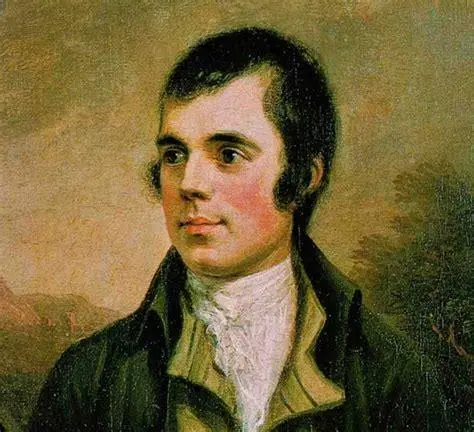
Robert Burns
For a' That and a' That
For a' That and a' That
Is there, for honest poverty,
That hings his head, an' a' that?
The coward slave, we pass him by,
We dare be poor for a' that!
For a' that, an' a' that,
Our toils obscure, an' a' that;
The rank is but the guinea's stamp;
The man's the gowd for a' that,
What tho' on hamely fare we dine,
Wear hoddin-gray, an' a' that;
Gie fools their silks, and knaves their wine,
A man's a man for a' that.
For a' that, an' a' that,
Their tinsel show an' a' that;
The honest man, tho' e'er sae poor,
Is king o' men for a' that.
Ye see yon birkie, ca'd a lord
Wha struts, an' stares, an' a' that;
Tho' hundreds worship at his word,
He's but a coof for a' that:
For a' that, an' a' that,
His riband, star, an' a' that,
The man o' independent mind,
He looks and laughs at a' that.
A prince can mak a belted knight,
A marquis, duke, an' a' that;
But an honest man's aboon his might,
Guid faith he mauna fa' that!
For a' that, an' a' that,
Their dignities, an' a' that,
The pith o' sense, an' pride o' worth,
Are higher rank than a' that.
Then let us pray that come it may,
As come it will for a' that,
That sense and worth, o'er a' the earth,
May bear the gree, an' a' that.
For a' that, an' a' that,
It's coming yet, for a' that,
That man to man, the warld o'er,
Shall brothers be for a' that.
Is there, for honest poverty,
That hings his head, an' a' that?
The coward slave, we pass him by,
We dare be poor for a' that!
For a' that, an' a' that,
Our toils obscure, an' a' that;
The rank is but the guinea's stamp;
The man's the gowd for a' that,
What tho' on hamely fare we dine,
Wear hoddin-gray, an' a' that;
Gie fools their silks, and knaves their wine,
A man's a man for a' that.
For a' that, an' a' that,
Their tinsel show an' a' that;
The honest man, tho' e'er sae poor,
Is king o' men for a' that.
Ye see yon birkie, ca'd a lord
Wha struts, an' stares, an' a' that;
Tho' hundreds worship at his word,
He's but a coof for a' that:
For a' that, an' a' that,
His riband, star, an' a' that,
The man o' independent mind,
He looks and laughs at a' that.
A prince can mak a belted knight,
A marquis, duke, an' a' that;
But an honest man's aboon his might,
Guid faith he mauna fa' that!
For a' that, an' a' that,
Their dignities, an' a' that,
The pith o' sense, an' pride o' worth,
Are higher rank than a' that.
Then let us pray that come it may,
As come it will for a' that,
That sense and worth, o'er a' the earth,
May bear the gree, an' a' that.
For a' that, an' a' that,
It's coming yet, for a' that,
That man to man, the warld o'er,
Shall brothers be for a' that.
231
Robert Burns
Address to the Unco Guid
Address to the Unco Guid
My Son, these maxims make a rule,
An' lump them aye thegither;
The Rigid Righteous is a fool,
The Rigid Wise anither:
The cleanest corn that ere was dight
May hae some pyles o' caff in;
So ne'er a fellow creature slight
For random fits o' daffin.
Solomon.--Eccles. ch. vii. verse
O ye wha are sae guid yoursel',
Sae pious and sae holy,
Ye've nought to do but mark and tell
Your neibours' fauts and folly!
Whase life is like a weel-gaun mill,
Supplied wi' store o' water;
The heapèd happer's ebbing still,
An' still the clap plays clatter.
Hear me, ye venerable core,
As counsel for poor mortals
That frequent pass douce Wisdom's door
For glaikit Folly's portals:
I, for their thoughtless, careless sakes,
Would here propone defences--
Their donsie tricks, their black mistakes,
Their failings and mischances.
Ye see your state wi' theirs compared,
And shudder at the niffer;
But cast a moment's fair regard,
What makes the mighty differ?
Discount what scant occassion gave,
That purity ye pride in;
And (what's aft mair than a' the lave)
Your better art o' hidin.
Think, when your castigated pulse
Gies now and then a wallop,
What ragings must his veins convulse,
That still eternal gallop!
Wi' wind and tide fair i' your tail,
Right on ye scud your sea-way;
But in the teeth o' baith to sail,
It maks a unco lee-way.
See Social Life and Glee sit down,
All joyous and unthinking,
Till, quite transmugrified, they're grown
Debauchery and Drinking:
O would they stay to calculate
Th' external consequences;
Or your more dreaded hell to state
Damnation of expenses!
Ye high, exalted, virtuous dames,
Tied up in godly laces,
Before ye gie poor Frailty names,
Suppose a change o' cases;
A dear-lov'd lad, convenience snug,
A treach'rous inclination--
But let me whisper i' your lug,
Ye're aiblins nae temptation.
Then gently scan your brother man,
Still gentler sister woman;
Tho' they may gang a kennin wrang,
To step aside is human;
One point must still be greatly dark,--
The moving Why they do it;
And just as lamely can ye mark,
How far perhaps they rue it.
Who made the heart, 'tis He alone
Decidedly can try us;
He knows each chord, its various tone,
Each spring, its various bias:
Then at the balance let's be mute,
We never can adjust it;
What's done we partly may compute,
But know not what's resisted.
My Son, these maxims make a rule,
An' lump them aye thegither;
The Rigid Righteous is a fool,
The Rigid Wise anither:
The cleanest corn that ere was dight
May hae some pyles o' caff in;
So ne'er a fellow creature slight
For random fits o' daffin.
Solomon.--Eccles. ch. vii. verse
O ye wha are sae guid yoursel',
Sae pious and sae holy,
Ye've nought to do but mark and tell
Your neibours' fauts and folly!
Whase life is like a weel-gaun mill,
Supplied wi' store o' water;
The heapèd happer's ebbing still,
An' still the clap plays clatter.
Hear me, ye venerable core,
As counsel for poor mortals
That frequent pass douce Wisdom's door
For glaikit Folly's portals:
I, for their thoughtless, careless sakes,
Would here propone defences--
Their donsie tricks, their black mistakes,
Their failings and mischances.
Ye see your state wi' theirs compared,
And shudder at the niffer;
But cast a moment's fair regard,
What makes the mighty differ?
Discount what scant occassion gave,
That purity ye pride in;
And (what's aft mair than a' the lave)
Your better art o' hidin.
Think, when your castigated pulse
Gies now and then a wallop,
What ragings must his veins convulse,
That still eternal gallop!
Wi' wind and tide fair i' your tail,
Right on ye scud your sea-way;
But in the teeth o' baith to sail,
It maks a unco lee-way.
See Social Life and Glee sit down,
All joyous and unthinking,
Till, quite transmugrified, they're grown
Debauchery and Drinking:
O would they stay to calculate
Th' external consequences;
Or your more dreaded hell to state
Damnation of expenses!
Ye high, exalted, virtuous dames,
Tied up in godly laces,
Before ye gie poor Frailty names,
Suppose a change o' cases;
A dear-lov'd lad, convenience snug,
A treach'rous inclination--
But let me whisper i' your lug,
Ye're aiblins nae temptation.
Then gently scan your brother man,
Still gentler sister woman;
Tho' they may gang a kennin wrang,
To step aside is human;
One point must still be greatly dark,--
The moving Why they do it;
And just as lamely can ye mark,
How far perhaps they rue it.
Who made the heart, 'tis He alone
Decidedly can try us;
He knows each chord, its various tone,
Each spring, its various bias:
Then at the balance let's be mute,
We never can adjust it;
What's done we partly may compute,
But know not what's resisted.
320

Robert Browning
Count Gismond--Aix in Provence
Count Gismond--Aix in Provence
Christ God who savest man, save most
Of men Count Gismond who saved me!
Count Gauthier, when he chose his post,
Chose time and place and company
To suit it; when he struck at length
My honour, 't was with all his strength.
And doubtlessly, ere he could draw
All points to one, he must have schemed!
That miserable morning saw
Few half so happy as I seemed,
While being dressed in queen's array
To give our tourney prize away.
I thought they loved me, did me grace
To please themselves; 't was all their deed;
God makes, or fair or foul, our face;
If showing mine so caused to bleed
My cousins' hearts, they should have dropped
A word, and straight the play had stopped.
They, too, so beauteous! Each a queen
By virtue of her brow and breast;
Not needing to be crowned, I mean,
As I do. E'en when I was dressed,
Had either of them spoke, instead
Of glancing sideways with still head!
But no: they let me laugh, and sing
My birthday song quite through, adjust
The last rose in my garland, fling
A last look on the mirror, trust
My arms to each an arm of theirs,
And so descend the castle-stairs-
And come out on the morning troop
Of merry friends who kissed my cheek,
And called me queen, and made me stoop
Under the canopy-(a streak
That pierced it, of the outside sun,
Powdered with gold its gloom's soft dun)-
And they could let me take my state
And foolish throne amid applause
Of all come there to celebrate
My queen's-day-Oh I think the cause
Of much was, they forgot no crowd
Makes up for parents in their shroud!
However that be, all eyes were bent
Upon me, when my cousins cast
Theirs down; 't was time I should present
The victor's crown, but ... there, 't will last
No long time ... the old mist again
Blinds me as then it did. How vain!
See! Gismond's at the gate, in talk
With his two boys: I can proceed.
Well, at that moment, who should stalk
Forth boldly-to my face, indeed-
But Gauthier? and he thundered "Stay!"
And all stayed. "Bring no crowns, I say!
"Bring torches! Wind the penance-sheet
"About her! Let her shun the chaste,
"Or lay herself before their feet!
"Shall she, whose body I embraced
"A night long, queen it in the day?
"For honour's sake no crowns, I say!"
I? What I answered? As I live,
I never fancied such a thing
As answer possible to give.
What says the body when they spring
Some monstrous torture-engine's whole
Strength on it? No more says the soul.
Till out strode Gismond; then I knew
That I was saved. I never met
His face before, but, at first view,
I felt quite sure that God had set
Himself to Satan; would who spend
A minute's mistrust on the end?
He strode to Gauthier, in his throat
Gave him the lie, then struck his mouth
With one back-handed blow that wrote
In blood men's verdict there. North, South,
East, West, I looked. The lie was dead,
And damned, and truth stood up instead.
This glads me most, that I enjoyed
The heart o' the joy, with my content
In watching Gismond unalloyed
By any doubt of the event:
God took that on him-I was bid
Watch Gismond for my part: I did.
Did I not watch him while he let
His armourer just brace his greaves,
Rivet his hauberk, on the fret
The while! His foot ... my memory leaves
No least stamp out nor how anon
He pulled his ringing gauntlets on.
And e'en before the trumpet's sound
Was finished, prone lay the false knight,
Prone as his lie, upon the ground:
Gismond flew at him, used no sleight
O' the sword, but open-breasted drove,
Cleaving till out the truth he clove.
Which done, he dragged him to my feet
And said, "Here die, but end thy breath
"In full confession, lest thou fleet
"From my first, to God's second death!
"Say, hast thou lied? "And, "I have lied
"To God and her,"he said, and died.
Then Gismond, kneeling to me, asked
-What safe my heart holds, though no word
Could I repeat now, if I tasked
My powers for ever, to a third
Dear even as you are. Pass the rest
Until I sank upon his breast.
Over my head his arm he flung
Against the world; and scarce I felt
His sword (that dripped by me and swung)
A little shifted in its belt:
For he began to say the while
How South our home lay many a mile.
So, 'mid the shouting multitude
We two walked forth to never more
Return. My cousins have pursued
Their life, untroubled as before
I vexed them. Gauthier's dwelling-place
God lighten! May his soul find grace!
Our elder boy has got the clear
Great brow, tho' when his brother's black
Full eye shows scorn, it ... Gismond here?
And have you brought my tercel back?
I was just telling Adela
How many birds it struck since May.
Christ God who savest man, save most
Of men Count Gismond who saved me!
Count Gauthier, when he chose his post,
Chose time and place and company
To suit it; when he struck at length
My honour, 't was with all his strength.
And doubtlessly, ere he could draw
All points to one, he must have schemed!
That miserable morning saw
Few half so happy as I seemed,
While being dressed in queen's array
To give our tourney prize away.
I thought they loved me, did me grace
To please themselves; 't was all their deed;
God makes, or fair or foul, our face;
If showing mine so caused to bleed
My cousins' hearts, they should have dropped
A word, and straight the play had stopped.
They, too, so beauteous! Each a queen
By virtue of her brow and breast;
Not needing to be crowned, I mean,
As I do. E'en when I was dressed,
Had either of them spoke, instead
Of glancing sideways with still head!
But no: they let me laugh, and sing
My birthday song quite through, adjust
The last rose in my garland, fling
A last look on the mirror, trust
My arms to each an arm of theirs,
And so descend the castle-stairs-
And come out on the morning troop
Of merry friends who kissed my cheek,
And called me queen, and made me stoop
Under the canopy-(a streak
That pierced it, of the outside sun,
Powdered with gold its gloom's soft dun)-
And they could let me take my state
And foolish throne amid applause
Of all come there to celebrate
My queen's-day-Oh I think the cause
Of much was, they forgot no crowd
Makes up for parents in their shroud!
However that be, all eyes were bent
Upon me, when my cousins cast
Theirs down; 't was time I should present
The victor's crown, but ... there, 't will last
No long time ... the old mist again
Blinds me as then it did. How vain!
See! Gismond's at the gate, in talk
With his two boys: I can proceed.
Well, at that moment, who should stalk
Forth boldly-to my face, indeed-
But Gauthier? and he thundered "Stay!"
And all stayed. "Bring no crowns, I say!
"Bring torches! Wind the penance-sheet
"About her! Let her shun the chaste,
"Or lay herself before their feet!
"Shall she, whose body I embraced
"A night long, queen it in the day?
"For honour's sake no crowns, I say!"
I? What I answered? As I live,
I never fancied such a thing
As answer possible to give.
What says the body when they spring
Some monstrous torture-engine's whole
Strength on it? No more says the soul.
Till out strode Gismond; then I knew
That I was saved. I never met
His face before, but, at first view,
I felt quite sure that God had set
Himself to Satan; would who spend
A minute's mistrust on the end?
He strode to Gauthier, in his throat
Gave him the lie, then struck his mouth
With one back-handed blow that wrote
In blood men's verdict there. North, South,
East, West, I looked. The lie was dead,
And damned, and truth stood up instead.
This glads me most, that I enjoyed
The heart o' the joy, with my content
In watching Gismond unalloyed
By any doubt of the event:
God took that on him-I was bid
Watch Gismond for my part: I did.
Did I not watch him while he let
His armourer just brace his greaves,
Rivet his hauberk, on the fret
The while! His foot ... my memory leaves
No least stamp out nor how anon
He pulled his ringing gauntlets on.
And e'en before the trumpet's sound
Was finished, prone lay the false knight,
Prone as his lie, upon the ground:
Gismond flew at him, used no sleight
O' the sword, but open-breasted drove,
Cleaving till out the truth he clove.
Which done, he dragged him to my feet
And said, "Here die, but end thy breath
"In full confession, lest thou fleet
"From my first, to God's second death!
"Say, hast thou lied? "And, "I have lied
"To God and her,"he said, and died.
Then Gismond, kneeling to me, asked
-What safe my heart holds, though no word
Could I repeat now, if I tasked
My powers for ever, to a third
Dear even as you are. Pass the rest
Until I sank upon his breast.
Over my head his arm he flung
Against the world; and scarce I felt
His sword (that dripped by me and swung)
A little shifted in its belt:
For he began to say the while
How South our home lay many a mile.
So, 'mid the shouting multitude
We two walked forth to never more
Return. My cousins have pursued
Their life, untroubled as before
I vexed them. Gauthier's dwelling-place
God lighten! May his soul find grace!
Our elder boy has got the clear
Great brow, tho' when his brother's black
Full eye shows scorn, it ... Gismond here?
And have you brought my tercel back?
I was just telling Adela
How many birds it struck since May.
364
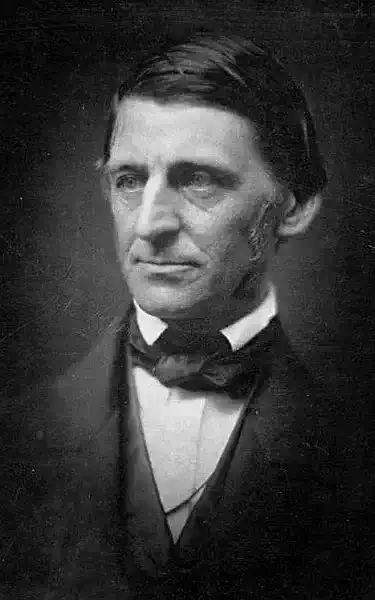
Ralph Waldo Emerson
Ode
Ode
Inscribed to W.H. Channing
Though loath to grieve
The evil time's sole patriot,
I cannot leave
My honeyed thought
For the priest's cant,
Or statesman's rant.
If I refuse
My study for their politic,
Which at the best is trick,
The angry Muse
Puts confusion in my brain.
But who is he that prates
Of the culture of mankind,
Of better arts and life?
Go, blindworm, go,
Behold the famous States
Harrying Mexico
With rifle and with knife!
Or who, with accent bolder
Dare praise the freedom-loving mountaineer?
I found by thee, O rushing Contoocook!
And in thy valleys, Agiochook!
The jackals of the Negro-holder.
The God who made New Hampshire
Taunted the lofty land
With little men;--
Small bat and wren
House in the oak:--
If earth-fire cleave
The upheaved land, and bury the folk,
The southern crocodile would grieve.
Virtue palters; Right is hence;
Freedom praised, but hid;
Funeral eloquence
Rattles the coffin lid.
What boots thy zeal,
O glowing friend,
That would indignant rend
The northland from the south?
Wherefore? to what good end?
Boston Bay and Bunker Hill
Would serve things still;--
Things are of the snake.
The horseman serves the horse
The neatherd serves the neat,
The merchant serves the purse,
The eater serves his meat;
'Tis the day of the chattel,
Web to weave, and corn to grind;
Things are in the saddle,
And ride mankind.
There are two laws discrete,
Not reconciled,--
Law for man, and law for thing;
The last builds town and fleet,
But it runs wild,
And doth the man unking.
'Tis fit the forest fall,
The steep be graded,
The mountain tunneled,
The sand shaded,
The orchard planted,
The glebe tilled,
The prairie granted
The steamer built.
Let man serve law for man;
Live for friendship, live for love,
For truth's and harmony's behoof;
The state may follow how it can,
As Olympus follows Jove.
Yet do not I implore
The wrinkled shopman to my sounding woods,
Nor did the unwilling senator
Ask votes of thrushes in the solitudes.
Everyone to his chosen work--
Foolish hands may mix and mar;
Wise and sure the issues are.
Round they roll till dark is light,
Sex to sex, and even to odd;--
The overgod
Who marries Right to Might,
Who peoples, unpeoples,--
He who exterminates
Races by stronger races,
Black by white faces,--
Knows to bring honey
Out of the lion;
Grafts gentlest scion
On pirate and Turk.
The Cossack eats Poland,
Like stolen fruit;
Her last noble is ruined,
Her last poet mute;
Straight, into double band
The victors divide;
Half for freedom strike and stand;--
The astonished Muse finds thousands at her side.
Inscribed to W.H. Channing
Though loath to grieve
The evil time's sole patriot,
I cannot leave
My honeyed thought
For the priest's cant,
Or statesman's rant.
If I refuse
My study for their politic,
Which at the best is trick,
The angry Muse
Puts confusion in my brain.
But who is he that prates
Of the culture of mankind,
Of better arts and life?
Go, blindworm, go,
Behold the famous States
Harrying Mexico
With rifle and with knife!
Or who, with accent bolder
Dare praise the freedom-loving mountaineer?
I found by thee, O rushing Contoocook!
And in thy valleys, Agiochook!
The jackals of the Negro-holder.
The God who made New Hampshire
Taunted the lofty land
With little men;--
Small bat and wren
House in the oak:--
If earth-fire cleave
The upheaved land, and bury the folk,
The southern crocodile would grieve.
Virtue palters; Right is hence;
Freedom praised, but hid;
Funeral eloquence
Rattles the coffin lid.
What boots thy zeal,
O glowing friend,
That would indignant rend
The northland from the south?
Wherefore? to what good end?
Boston Bay and Bunker Hill
Would serve things still;--
Things are of the snake.
The horseman serves the horse
The neatherd serves the neat,
The merchant serves the purse,
The eater serves his meat;
'Tis the day of the chattel,
Web to weave, and corn to grind;
Things are in the saddle,
And ride mankind.
There are two laws discrete,
Not reconciled,--
Law for man, and law for thing;
The last builds town and fleet,
But it runs wild,
And doth the man unking.
'Tis fit the forest fall,
The steep be graded,
The mountain tunneled,
The sand shaded,
The orchard planted,
The glebe tilled,
The prairie granted
The steamer built.
Let man serve law for man;
Live for friendship, live for love,
For truth's and harmony's behoof;
The state may follow how it can,
As Olympus follows Jove.
Yet do not I implore
The wrinkled shopman to my sounding woods,
Nor did the unwilling senator
Ask votes of thrushes in the solitudes.
Everyone to his chosen work--
Foolish hands may mix and mar;
Wise and sure the issues are.
Round they roll till dark is light,
Sex to sex, and even to odd;--
The overgod
Who marries Right to Might,
Who peoples, unpeoples,--
He who exterminates
Races by stronger races,
Black by white faces,--
Knows to bring honey
Out of the lion;
Grafts gentlest scion
On pirate and Turk.
The Cossack eats Poland,
Like stolen fruit;
Her last noble is ruined,
Her last poet mute;
Straight, into double band
The victors divide;
Half for freedom strike and stand;--
The astonished Muse finds thousands at her side.
392
Ralph Waldo Emerson
Astræ
Astræ
Himself it was who wrote
His rank, and quartered his own coat.
There is no king nor sovereign state
That can fix a hero's rate;
Each to all is venerable,
Cap-a-pie invulnerable,
Until he write, where all eyes rest,
Slave or master on his breast.
I saw men go up and down
In the country and the town,
With this prayer upon their neck,
"Judgment and a judge we seek."
Not to monarchs they repair,
Nor to learned jurist's chair,
But they hurry to their peers,
To their kinsfolk and their dears,
Louder than with speech they pray,
What am I? companion; say.
And the friend not hesitates
To assign just place and mates,
Answers not in word or letter,
Yet is understood the better;—
Is to his friend a looking-glass,
Reflects his figure that doth pass.
Every wayfarer he meets
What himself declared, repeats;
What himself confessed, records;
Sentences him in his words,
The form is his own corporal form,
And his thought the penal worm.
Yet shine for ever virgin minds,
Loved by stars and purest winds,
Which, o'er passion throned sedate,
Have not hazarded their state,
Disconcert the searching spy,
Rendering to a curious eye
The durance of a granite ledge
To those who gaze from the sea's edge.
It is there for benefit,
It is there for purging light,
There for purifying storms,
And its depths reflect all forms;
It cannot parley with the mean,
Pure by impure is not seen.
For there's no sequestered grot,
Lone mountain tam, or isle forgot,
But justice journeying in the sphere
Daily stoops to harbor there.
Himself it was who wrote
His rank, and quartered his own coat.
There is no king nor sovereign state
That can fix a hero's rate;
Each to all is venerable,
Cap-a-pie invulnerable,
Until he write, where all eyes rest,
Slave or master on his breast.
I saw men go up and down
In the country and the town,
With this prayer upon their neck,
"Judgment and a judge we seek."
Not to monarchs they repair,
Nor to learned jurist's chair,
But they hurry to their peers,
To their kinsfolk and their dears,
Louder than with speech they pray,
What am I? companion; say.
And the friend not hesitates
To assign just place and mates,
Answers not in word or letter,
Yet is understood the better;—
Is to his friend a looking-glass,
Reflects his figure that doth pass.
Every wayfarer he meets
What himself declared, repeats;
What himself confessed, records;
Sentences him in his words,
The form is his own corporal form,
And his thought the penal worm.
Yet shine for ever virgin minds,
Loved by stars and purest winds,
Which, o'er passion throned sedate,
Have not hazarded their state,
Disconcert the searching spy,
Rendering to a curious eye
The durance of a granite ledge
To those who gaze from the sea's edge.
It is there for benefit,
It is there for purging light,
There for purifying storms,
And its depths reflect all forms;
It cannot parley with the mean,
Pure by impure is not seen.
For there's no sequestered grot,
Lone mountain tam, or isle forgot,
But justice journeying in the sphere
Daily stoops to harbor there.
352
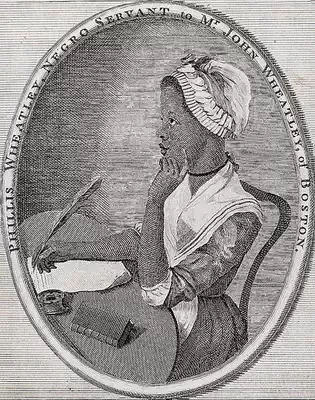
Phillis Wheatley
To the Rt. Hon. William, Earl of Dartmouth
To the Rt. Hon. William, Earl of Dartmouth
Hail, happy day, when, smiling like the morn,
Fair Freedom rose New-England to adorn:
The northern clime beneath her genial ray,
Dartmouth, congratulates thy blissful sway:
Elate with hope her race no longer mourns,
Each soul expands, each grateful bosom burns,
While in thine hand with pleasure we behold
The silken reins, and Freedom's charms unfold.
Long lost to realms beneath the northern skies
She shines supreme, while hated faction dies:
Soon as appear'd the Goddess long desir'd,
Sick at the view, she languish'd and expir'd;
Thus from the splendors of the morning light
The owl in sadness seeks the caves of night.
No more, America, in mournful strain
Of wrongs, and grievance unredress'd complain,
No longer shalt thou dread the iron chain,
Which wanton Tyranny with lawless hand
Had made, and with it meant t' enslave the land.
Should you, my lord, while you peruse my song,
Wonder from whence my love of Freedom sprung,
Whence flow these wishes for the common good,
By feeling hearts alone best understood,
I, young in life, by seeming cruel fate
Was snatch'd from Afric's fancy'd happy seat:
What pangs excruciating must molest,
What sorrows labour in my parent's breast?
Steel'd was that soul and by no misery mov'd
That from a father seiz'd his babe belov'd:
Such, such my case. And can I then but pray
Others may never feel tyrannic sway?
For favours past, great Sir, our thanks are due,
And thee we ask thy favours to renew,
Since in thy pow'r, as in thy will before,
To sooth the griefs, which thou did'st once deplore.
May heav'nly grace the sacred sanction give
To all thy works, and thou for ever live
Not only on the wings of fleeting Fame,
Though praise immortal crowns the patriot's name,
But to conduct to heav'ns refulgent fane,
May fiery coursers sweep th' ethereal plain,
And bear thee upwards to that blest abode,
Where, like the prophet, thou shalt find thy God.
Hail, happy day, when, smiling like the morn,
Fair Freedom rose New-England to adorn:
The northern clime beneath her genial ray,
Dartmouth, congratulates thy blissful sway:
Elate with hope her race no longer mourns,
Each soul expands, each grateful bosom burns,
While in thine hand with pleasure we behold
The silken reins, and Freedom's charms unfold.
Long lost to realms beneath the northern skies
She shines supreme, while hated faction dies:
Soon as appear'd the Goddess long desir'd,
Sick at the view, she languish'd and expir'd;
Thus from the splendors of the morning light
The owl in sadness seeks the caves of night.
No more, America, in mournful strain
Of wrongs, and grievance unredress'd complain,
No longer shalt thou dread the iron chain,
Which wanton Tyranny with lawless hand
Had made, and with it meant t' enslave the land.
Should you, my lord, while you peruse my song,
Wonder from whence my love of Freedom sprung,
Whence flow these wishes for the common good,
By feeling hearts alone best understood,
I, young in life, by seeming cruel fate
Was snatch'd from Afric's fancy'd happy seat:
What pangs excruciating must molest,
What sorrows labour in my parent's breast?
Steel'd was that soul and by no misery mov'd
That from a father seiz'd his babe belov'd:
Such, such my case. And can I then but pray
Others may never feel tyrannic sway?
For favours past, great Sir, our thanks are due,
And thee we ask thy favours to renew,
Since in thy pow'r, as in thy will before,
To sooth the griefs, which thou did'st once deplore.
May heav'nly grace the sacred sanction give
To all thy works, and thou for ever live
Not only on the wings of fleeting Fame,
Though praise immortal crowns the patriot's name,
But to conduct to heav'ns refulgent fane,
May fiery coursers sweep th' ethereal plain,
And bear thee upwards to that blest abode,
Where, like the prophet, thou shalt find thy God.
223
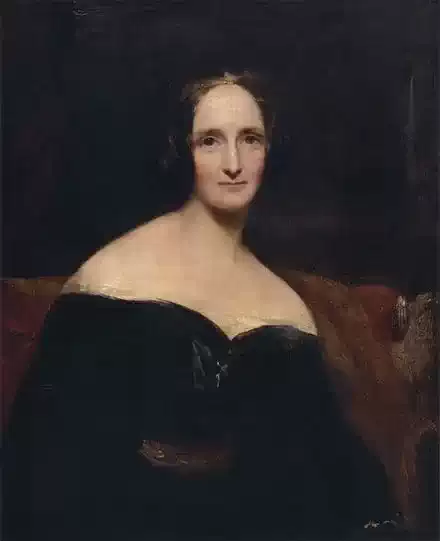
Percy Bysshe Shelley
To The Men Of England
To The Men Of England
Men of England, wherefore plough
For the lords who lay ye low?
Wherefore weave with toil and care
The rich robes your tyrants wear?
Wherefore feed and clothe and save,
From the cradle to the grave,
Those ungrateful drones who would
Drain your sweat -- nay, drink your blood?
Wherefore, Bees of England, forge
Many a weapon, chain, and scourge,
That these stingless drones may spoil
The forced produce of your toil?
Have ye leisure, comfort, calm,
Shelter, food, love's gentle balm?
Or what is it ye buy so dear
With your pain and with your fear?
The seed ye sow another reaps;
The wealth ye find another keeps;
The robes ye weave another wears;
The arms ye forge another bears.
Sow seed, -- but let no tyrant reap;
Find wealth, -- let no imposter heap;
Weave robes, -- let not the idle wear;
Forge arms, in your defence to bear.
Shrink to your cellars, holes, and cells;
In halls ye deck another dwells.
Why shake the chains ye wrought? Ye see
The steel ye tempered glance on ye.
With plough and spade and hoe and loom,
Trace your grave, and build your tomb,
And weave your winding-sheet, till fair
England be your sepulchre!
Men of England, wherefore plough
For the lords who lay ye low?
Wherefore weave with toil and care
The rich robes your tyrants wear?
Wherefore feed and clothe and save,
From the cradle to the grave,
Those ungrateful drones who would
Drain your sweat -- nay, drink your blood?
Wherefore, Bees of England, forge
Many a weapon, chain, and scourge,
That these stingless drones may spoil
The forced produce of your toil?
Have ye leisure, comfort, calm,
Shelter, food, love's gentle balm?
Or what is it ye buy so dear
With your pain and with your fear?
The seed ye sow another reaps;
The wealth ye find another keeps;
The robes ye weave another wears;
The arms ye forge another bears.
Sow seed, -- but let no tyrant reap;
Find wealth, -- let no imposter heap;
Weave robes, -- let not the idle wear;
Forge arms, in your defence to bear.
Shrink to your cellars, holes, and cells;
In halls ye deck another dwells.
Why shake the chains ye wrought? Ye see
The steel ye tempered glance on ye.
With plough and spade and hoe and loom,
Trace your grave, and build your tomb,
And weave your winding-sheet, till fair
England be your sepulchre!
438

Paul Laurence Dunbar
The Haunted Oak
The Haunted Oak
Pray why are you so bare, so bare,
Oh, bough of the old oak-tree;
And why, when I go through the shade you throw,
Runs a shudder over me?
My leaves were green as the best, I trow,
And sap ran free in my veins,
But I say in the moonlight dim and weird
A guiltless victim's pains.
They'd charged him with the old, old crime,
And set him fast in jail:
Oh, why does the dog howl all night long,
And why does the night wind wail?
He prayed his prayer and he swore his oath,
And he raised his hand to the sky;
But the beat of hoofs smote on his ear,
And the steady tread drew nigh.
Who is it rides by night, by night,
Over the moonlit road?
And what is the spur that keeps the pace,
What is the galling goad?
And now they beat at the prison door,
"Ho, keeper, do not stay!
We are friends of him whom you hold within,
And we fain would take him away
"From those who ride fast on our heels
With mind to do him wrong;
They have no care for his innocence,
And the rope they bear is long."
They have fooled the jailer with lying words,
They have fooled the man with lies;
The bolts unbar, the locks are drawn,
And the great door open flies.
Now they have taken him from the jail,
And hard and fast they ride,
And the leader laughs low down in his throat,
As they halt my trunk beside.
Oh, the judge, he wore a mask of black,
And the doctor one of white,
And the minister, with his oldest son,
Was curiously bedight.
Oh, foolish man, why weep you now?
'Tis but a little space,
And the time will come when these shall dread
The mem'ry of your face.
I feel the rope against my bark,
And the weight of him in my grain,
I feel in the throe of his final woe
The touch of my own last pain.
And never more shall leaves come forth
On the bough that bears the ban;
I am burned with dread, I am dried and dead,
From the curse of a guiltless man.
And ever the judge rides by, rides by,
And goes to hunt the deer,
And ever another rides his soul
In the guise of a mortal fear.
And ever the man he rides me hard,
And never a night stays he;
For I feel his curse as a haunted bough,
On the trunk of a haunted tree.
Pray why are you so bare, so bare,
Oh, bough of the old oak-tree;
And why, when I go through the shade you throw,
Runs a shudder over me?
My leaves were green as the best, I trow,
And sap ran free in my veins,
But I say in the moonlight dim and weird
A guiltless victim's pains.
They'd charged him with the old, old crime,
And set him fast in jail:
Oh, why does the dog howl all night long,
And why does the night wind wail?
He prayed his prayer and he swore his oath,
And he raised his hand to the sky;
But the beat of hoofs smote on his ear,
And the steady tread drew nigh.
Who is it rides by night, by night,
Over the moonlit road?
And what is the spur that keeps the pace,
What is the galling goad?
And now they beat at the prison door,
"Ho, keeper, do not stay!
We are friends of him whom you hold within,
And we fain would take him away
"From those who ride fast on our heels
With mind to do him wrong;
They have no care for his innocence,
And the rope they bear is long."
They have fooled the jailer with lying words,
They have fooled the man with lies;
The bolts unbar, the locks are drawn,
And the great door open flies.
Now they have taken him from the jail,
And hard and fast they ride,
And the leader laughs low down in his throat,
As they halt my trunk beside.
Oh, the judge, he wore a mask of black,
And the doctor one of white,
And the minister, with his oldest son,
Was curiously bedight.
Oh, foolish man, why weep you now?
'Tis but a little space,
And the time will come when these shall dread
The mem'ry of your face.
I feel the rope against my bark,
And the weight of him in my grain,
I feel in the throe of his final woe
The touch of my own last pain.
And never more shall leaves come forth
On the bough that bears the ban;
I am burned with dread, I am dried and dead,
From the curse of a guiltless man.
And ever the judge rides by, rides by,
And goes to hunt the deer,
And ever another rides his soul
In the guise of a mortal fear.
And ever the man he rides me hard,
And never a night stays he;
For I feel his curse as a haunted bough,
On the trunk of a haunted tree.
539
Paul Laurence Dunbar
Frederick Douglass
Frederick Douglass
A hush is over all the teeming lists,
And there is pause, a breath-space in the strife;
A spirit brave has passed beyond the mists
And vapors that obscure the sun of life.
And Ethiopia, with bosom torn,
Laments the passing of her noblest born.
She weeps for him a mother's burning tears--
She loved him with a mother's deepest love
He was her champion thro' direful years,
And held her weal all other ends above.
When Bondage held her bleeding in the dust,
He raised her up and whispered, 'Hope and Trust.'
For her his voice, a fearless clarion, rung
That broke in warning on the ears of men;
For her the strong bow of his pow'r he strung
And sent his arrows to the very den
Where grim Oppression held his bloody place
And gloated o'er the mis'ries of a race.
And he was no soft-tongued apologist;
He spoke straight-forward, fearlessly uncowed;
The sunlight of his truth dispelled the mist
And set in bold relief each dark-hued cloud;
To sin and crime he gave their proper hue,
And hurled at evil what was evil's due.
Thro' good and ill report he cleaved his way
Right onward, with his face set toward the heights,
Nor feared to face the foeman's dread array--
The lash of scorn, the sting of petty spites.
He dared the lightning in the lightning's track,
And answered thunder with his thunder back.
When men maligned him and their torrent wrath
In furious imprecations o'er him broke,
He kept his counsel as he kept his path;
'Twas for his race, not for himself, he spoke.
He knew the import of his Master's call
And felt himself too mighty to be small.
No miser in the good he held was he--
His kindness followed his horizon's rim.
His heart, his talents and his hands were free
To all who truly needed aught of him.
Where poverty and ignorance were rife,
He gave his bounty as he gave his life.
The place and cause that first aroused his might
Still proved its pow'r until his latest day.
In Freedom's lists and for the aid of Right
Still in the foremost rank he waged the fray;
Wrong lived; His occupation was not gone.
He died in action with his armor on!
We weep for him, but we have touched his hand,
And felt the magic of his presence nigh,
The current that he sent thro' out the land,
The kindling spirit of his battle-cry
O'er all that holds us we shall triumph yet
And place our banner where his hopes were set!
Oh, Douglass, thou hast passed beyond the shore,
But still thy voice is ringing o'er the gale!
Thou 'st taught thy race how high her hopes may soar
And bade her seek the heights, nor faint, nor fail.
She will not fail, she heeds thy stirring cry,
She knows thy guardian spirit will be nigh,
And rising from beneath the chast'ning rod,
She stretches out her bleeding hands to God!
A hush is over all the teeming lists,
And there is pause, a breath-space in the strife;
A spirit brave has passed beyond the mists
And vapors that obscure the sun of life.
And Ethiopia, with bosom torn,
Laments the passing of her noblest born.
She weeps for him a mother's burning tears--
She loved him with a mother's deepest love
He was her champion thro' direful years,
And held her weal all other ends above.
When Bondage held her bleeding in the dust,
He raised her up and whispered, 'Hope and Trust.'
For her his voice, a fearless clarion, rung
That broke in warning on the ears of men;
For her the strong bow of his pow'r he strung
And sent his arrows to the very den
Where grim Oppression held his bloody place
And gloated o'er the mis'ries of a race.
And he was no soft-tongued apologist;
He spoke straight-forward, fearlessly uncowed;
The sunlight of his truth dispelled the mist
And set in bold relief each dark-hued cloud;
To sin and crime he gave their proper hue,
And hurled at evil what was evil's due.
Thro' good and ill report he cleaved his way
Right onward, with his face set toward the heights,
Nor feared to face the foeman's dread array--
The lash of scorn, the sting of petty spites.
He dared the lightning in the lightning's track,
And answered thunder with his thunder back.
When men maligned him and their torrent wrath
In furious imprecations o'er him broke,
He kept his counsel as he kept his path;
'Twas for his race, not for himself, he spoke.
He knew the import of his Master's call
And felt himself too mighty to be small.
No miser in the good he held was he--
His kindness followed his horizon's rim.
His heart, his talents and his hands were free
To all who truly needed aught of him.
Where poverty and ignorance were rife,
He gave his bounty as he gave his life.
The place and cause that first aroused his might
Still proved its pow'r until his latest day.
In Freedom's lists and for the aid of Right
Still in the foremost rank he waged the fray;
Wrong lived; His occupation was not gone.
He died in action with his armor on!
We weep for him, but we have touched his hand,
And felt the magic of his presence nigh,
The current that he sent thro' out the land,
The kindling spirit of his battle-cry
O'er all that holds us we shall triumph yet
And place our banner where his hopes were set!
Oh, Douglass, thou hast passed beyond the shore,
But still thy voice is ringing o'er the gale!
Thou 'st taught thy race how high her hopes may soar
And bade her seek the heights, nor faint, nor fail.
She will not fail, she heeds thy stirring cry,
She knows thy guardian spirit will be nigh,
And rising from beneath the chast'ning rod,
She stretches out her bleeding hands to God!
1,118
Pablo Neruda
Poor Creatures
Poor Creatures
What it takes on this planet,
to make love to each other in peace.
Everyone pries under your sheets,
everyone interferes with your loving.
They say terrible things about a man and a woman,
who after much milling about,
all sorts of compunctions,
do something unique,
they both lie with each other in one bed.
I ask myself whether frogs are so furtive,
or sneeze as they please.
Whether they whisper to each other in swamps about illegitimate frogs,
or the joys of amphibious living.
I ask myself if birds single out enemy birds,
or bulls gossip with bullocks before they go out in public with cows.
Even the roads have eyes and the parks their police.
Hotels spy on their guests,
windows name names,
canons and squadrons debark on missions to liquidate love.
All those ears and those jaws working incessantly,
till a man and his girl
have to raise their climax,
full tilt,
on a bicycle.
What it takes on this planet,
to make love to each other in peace.
Everyone pries under your sheets,
everyone interferes with your loving.
They say terrible things about a man and a woman,
who after much milling about,
all sorts of compunctions,
do something unique,
they both lie with each other in one bed.
I ask myself whether frogs are so furtive,
or sneeze as they please.
Whether they whisper to each other in swamps about illegitimate frogs,
or the joys of amphibious living.
I ask myself if birds single out enemy birds,
or bulls gossip with bullocks before they go out in public with cows.
Even the roads have eyes and the parks their police.
Hotels spy on their guests,
windows name names,
canons and squadrons debark on missions to liquidate love.
All those ears and those jaws working incessantly,
till a man and his girl
have to raise their climax,
full tilt,
on a bicycle.
601