

Poems in this topic
Romantic Love
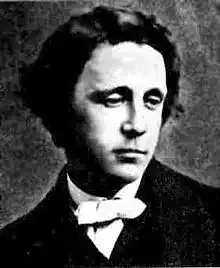
Lewis Carroll
My Fancy
My Fancy
I painted her a gushing thing,
With years about a score;
I little thought to find they were
A least a dozen more;
My fancy gave her eyes of blue,
A curly auburn head:
I came to find the blue a green,
The auburn turned to red.
She boxed my ears this morning,
They tingled very much;
I own that I could wish her
A somewhat lighter touch;
And if you ask me how
Her charms might be improved,
I would not have them added to,
But just a few removed!
She has the bear's ethereal grace,
The bland hyaena's laugh,
The footstep of the elephant,
The neck of a giraffe;
I love her still, believe me,
Though my heart its passion hides;
"She's all my fancy painted her,"
But oh! how much besides!
I painted her a gushing thing,
With years about a score;
I little thought to find they were
A least a dozen more;
My fancy gave her eyes of blue,
A curly auburn head:
I came to find the blue a green,
The auburn turned to red.
She boxed my ears this morning,
They tingled very much;
I own that I could wish her
A somewhat lighter touch;
And if you ask me how
Her charms might be improved,
I would not have them added to,
But just a few removed!
She has the bear's ethereal grace,
The bland hyaena's laugh,
The footstep of the elephant,
The neck of a giraffe;
I love her still, believe me,
Though my heart its passion hides;
"She's all my fancy painted her,"
But oh! how much besides!
216
Lewis Carroll
A Valentine
A Valentine
Sent to a friend who had complained that I was glad enough to see
him when he came, but didn't seem to miss him if he stayed away.
And cannot pleasures, while they last,
Be actual unless, when past,
They leave us shuddering and aghast,
With anguish smarting?
And cannot friends be firm and fast,
And yet bear parting?
And must I then, at Friendship's call,
Calmly resign the little all
(Trifling, I grant, it is and small)
I have of gladness,
And lend my being to the thrall
Of gloom and sadness?
And think you that I should be dumb,
And full DOLORUM OMNIUM,
Excepting when YOU choose to come
And share my dinner?
At other times be sour and glum
And daily thinner?
Must he then only live to weep,
Who'd prove his friendship true and deep
By day a lonely shadow creep,
At nighttime
languish,
Oft raising in his broken sleep
The moan of anguish?
The lover, if for certain days
His fair one be denied his gaze,
Sinks not in grief and wild amaze,
But, wiser wooer,
He spends the time in writing lays,
And posts them to her.
And if the verse flow free and fast,
Till even the poet is aghast,
A touching Valentine at last
The post shall carry,
When thirteen days are gone and past
Of February.
Farewell, dear friend, and when we meet,
In desert waste or crowded street,
Perhaps before this week shall fleet,
Perhaps tomorrow.
I trust to find YOUR heart the seat
Of wasting sorrow.
Sent to a friend who had complained that I was glad enough to see
him when he came, but didn't seem to miss him if he stayed away.
And cannot pleasures, while they last,
Be actual unless, when past,
They leave us shuddering and aghast,
With anguish smarting?
And cannot friends be firm and fast,
And yet bear parting?
And must I then, at Friendship's call,
Calmly resign the little all
(Trifling, I grant, it is and small)
I have of gladness,
And lend my being to the thrall
Of gloom and sadness?
And think you that I should be dumb,
And full DOLORUM OMNIUM,
Excepting when YOU choose to come
And share my dinner?
At other times be sour and glum
And daily thinner?
Must he then only live to weep,
Who'd prove his friendship true and deep
By day a lonely shadow creep,
At nighttime
languish,
Oft raising in his broken sleep
The moan of anguish?
The lover, if for certain days
His fair one be denied his gaze,
Sinks not in grief and wild amaze,
But, wiser wooer,
He spends the time in writing lays,
And posts them to her.
And if the verse flow free and fast,
Till even the poet is aghast,
A touching Valentine at last
The post shall carry,
When thirteen days are gone and past
Of February.
Farewell, dear friend, and when we meet,
In desert waste or crowded street,
Perhaps before this week shall fleet,
Perhaps tomorrow.
I trust to find YOUR heart the seat
Of wasting sorrow.
207
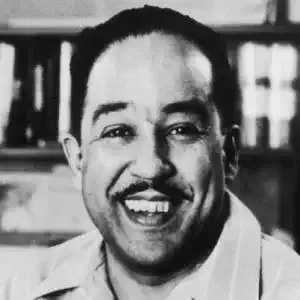
Langston Hughes
When Sue Wears Red
When Sue Wears Red
When Susanna Jones wears red
her face is like an ancient cameo
Turned brown by the ages.
Come with a blast of trumphets, Jesus!
When Susanna Jones wears red
A queen from some time-dead Egyptian night
Walks once again.
Blow trumphets, Jesus!
And the beauty of Susanna Jones in red
Burns in my heart a love-fire sharp like a pain.
Sweet silver trumphets, Jesus!
When Susanna Jones wears red
her face is like an ancient cameo
Turned brown by the ages.
Come with a blast of trumphets, Jesus!
When Susanna Jones wears red
A queen from some time-dead Egyptian night
Walks once again.
Blow trumphets, Jesus!
And the beauty of Susanna Jones in red
Burns in my heart a love-fire sharp like a pain.
Sweet silver trumphets, Jesus!
358
Langston Hughes
To Artina
To Artina
I will take you heart.
I will take your soul out of your body
As though I were God.
I will not be satisfied
With the touch of your hand
Nor the sweet of your lips alone.
I will take your heart for mine.
I will take your soul.
I will be God when it comes to you.
I will take you heart.
I will take your soul out of your body
As though I were God.
I will not be satisfied
With the touch of your hand
Nor the sweet of your lips alone.
I will take your heart for mine.
I will take your soul.
I will be God when it comes to you.
489
Langston Hughes
Love Song for Lucinda
Love Song for Lucinda
Love
Is a ripe plum
Growing on a purple tree.
Taste it once
And the spell of its enchantment
Will never let you be.
Love
Is a bright star
Glowing in far Southern skies.
Look too hard
And its burning flame
Will always hurt your eyes.
Love
Is a high mountain
Stark in a windy sky.
If you
Would never lose your breath
Do not climb too high.
Love
Is a ripe plum
Growing on a purple tree.
Taste it once
And the spell of its enchantment
Will never let you be.
Love
Is a bright star
Glowing in far Southern skies.
Look too hard
And its burning flame
Will always hurt your eyes.
Love
Is a high mountain
Stark in a windy sky.
If you
Would never lose your breath
Do not climb too high.
415
Langston Hughes
Juke Box Love Song
Juke Box Love Song
I could take the Harlem night
and wrap around you,
Take the neon lights and make a crown,
Take the Lenox Avenue busses,
Taxis, subways,
And for your love song tone their rumble down.
Take Harlem's heartbeat,
Make a drumbeat,
Put it on a record, let it whirl,
And while we listen to it play,
Dance with you till day--
Dance with you, my sweet brown Harlem girl.
I could take the Harlem night
and wrap around you,
Take the neon lights and make a crown,
Take the Lenox Avenue busses,
Taxis, subways,
And for your love song tone their rumble down.
Take Harlem's heartbeat,
Make a drumbeat,
Put it on a record, let it whirl,
And while we listen to it play,
Dance with you till day--
Dance with you, my sweet brown Harlem girl.
403
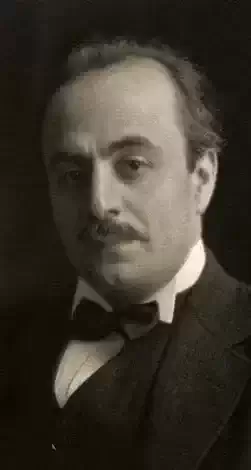
Khalil Gibran
The Life of Love XVI
The Life of Love XVI
Spring
Come, my beloved; let us walk amidst the knolls,
For the snow is water, and Life is alive from its
Slumber and is roaming the hills and valleys.
Let us follow the footprints of Spring into the
Distant fields, and mount the hilltops to draw
Inspiration high above the cool green plains.
Dawn of Spring has unfolded her winter-kept garment
And placed it on the peach and citrus trees; and
They appear as brides in the ceremonial custom of
the Night of Kedre.
The sprigs of grapevine embrace each other like
Sweethearts, and the brooks burst out in dance
Between the rocks, repeating the song of joy;
And the flowers bud suddenly from the heart of
Nature, like foam from the rich heart of the sea.
Come, my beloved; let us drink the last of Winter's
Tears from the cupped lilies, and soothe our spirits
With the shower of notes from the birds, and wander
In exhilaration through the intoxicating breeze.
Let us sit by that rock, where violets hide; let us
Pursue their exchange of the sweetness of kisses.
Summer
Let us go into the fields, my beloved, for the
Time of harvest approaches, and the sun's eyes
Are ripening the grain.
Let us tend the fruit of the earth, as the
Spirit nourishes the grains of Joy from the
Seeds of Love, sowed deep in our hearts.
Let us fill our bins with the products of
Nature, as life fills so abundantly the
Domain of our hearts with her endless bounty.
Let us make the flowers our bed, and the
Sky our blanket, and rest our heads together
Upon pillows of soft hay.
Let us relax after the day's toil, and listen
To the provoking murmur of the brook.
Autumn
Let us go and gather grapes in the vineyard
For the winepress, and keep the wine in old
Vases, as the spirit keeps Knowledge of the
Ages in eternal vessels.
Let us return to our dwelling, for the wind has
Caused the yellow leaves to fall and shroud the
Withering flowers that whisper elegy to Summer.
Come home, my eternal sweetheart, for the birds
Have made pilgrimage to warmth and lest the chilled
Prairies suffering pangs of solitude. The jasmine
And myrtle have no more tears.
Let us retreat, for the tired brook has
Ceased its song; and the bubblesome springs
Are drained of their copious weeping; and
Their cautious old hills have stored away
Their colorful garments.
Come, my beloved; Nature is justly weary
And is bidding her enthusiasm farewell
With quiet and contented melody.
Winter
Come close to me, oh companion of my full life;
Come close to me and let not Winter's touch
Enter between us. Sit by me before the hearth,
For fire is the only fruit of Winter.
Speak to me of the glory of your heart, for
That is greater than the shrieking elements
Beyond our door.
Bind the door and seal the transoms, for the
Angry countenance of the heaven depresses my
Spirit, and the face of our snow-laden fields
Makes my soul cry.
Feed the lamp with oil and let it not dim, and
Place it by you, so I can read with tears what
Your life with me has written upon your face.
Bring Autumn's wine. Let us drink and sing the
Song of remembrance to Spring's carefree sowing,
And Summer's watchful tending, and Autumn's
Reward in harvest.
Come close to me, oh beloved of my soul; the
Fire is cooling and fleeing under the ashes.
Embrace me, for I fear loneliness; the lamp is
Dim, and the wine which we pressed is closing
Our eyes. Let us look upon each other before
They are shut.
Find me with your arms and embrace me; let
Slumber then embrace our souls as one.
Kiss me, my beloved, for Winter has stolen
All but our moving lips.
You are close by me, My Forever.
How deep and wide will be the ocean of Slumber,
And how recent was the dawn!
Spring
Come, my beloved; let us walk amidst the knolls,
For the snow is water, and Life is alive from its
Slumber and is roaming the hills and valleys.
Let us follow the footprints of Spring into the
Distant fields, and mount the hilltops to draw
Inspiration high above the cool green plains.
Dawn of Spring has unfolded her winter-kept garment
And placed it on the peach and citrus trees; and
They appear as brides in the ceremonial custom of
the Night of Kedre.
The sprigs of grapevine embrace each other like
Sweethearts, and the brooks burst out in dance
Between the rocks, repeating the song of joy;
And the flowers bud suddenly from the heart of
Nature, like foam from the rich heart of the sea.
Come, my beloved; let us drink the last of Winter's
Tears from the cupped lilies, and soothe our spirits
With the shower of notes from the birds, and wander
In exhilaration through the intoxicating breeze.
Let us sit by that rock, where violets hide; let us
Pursue their exchange of the sweetness of kisses.
Summer
Let us go into the fields, my beloved, for the
Time of harvest approaches, and the sun's eyes
Are ripening the grain.
Let us tend the fruit of the earth, as the
Spirit nourishes the grains of Joy from the
Seeds of Love, sowed deep in our hearts.
Let us fill our bins with the products of
Nature, as life fills so abundantly the
Domain of our hearts with her endless bounty.
Let us make the flowers our bed, and the
Sky our blanket, and rest our heads together
Upon pillows of soft hay.
Let us relax after the day's toil, and listen
To the provoking murmur of the brook.
Autumn
Let us go and gather grapes in the vineyard
For the winepress, and keep the wine in old
Vases, as the spirit keeps Knowledge of the
Ages in eternal vessels.
Let us return to our dwelling, for the wind has
Caused the yellow leaves to fall and shroud the
Withering flowers that whisper elegy to Summer.
Come home, my eternal sweetheart, for the birds
Have made pilgrimage to warmth and lest the chilled
Prairies suffering pangs of solitude. The jasmine
And myrtle have no more tears.
Let us retreat, for the tired brook has
Ceased its song; and the bubblesome springs
Are drained of their copious weeping; and
Their cautious old hills have stored away
Their colorful garments.
Come, my beloved; Nature is justly weary
And is bidding her enthusiasm farewell
With quiet and contented melody.
Winter
Come close to me, oh companion of my full life;
Come close to me and let not Winter's touch
Enter between us. Sit by me before the hearth,
For fire is the only fruit of Winter.
Speak to me of the glory of your heart, for
That is greater than the shrieking elements
Beyond our door.
Bind the door and seal the transoms, for the
Angry countenance of the heaven depresses my
Spirit, and the face of our snow-laden fields
Makes my soul cry.
Feed the lamp with oil and let it not dim, and
Place it by you, so I can read with tears what
Your life with me has written upon your face.
Bring Autumn's wine. Let us drink and sing the
Song of remembrance to Spring's carefree sowing,
And Summer's watchful tending, and Autumn's
Reward in harvest.
Come close to me, oh beloved of my soul; the
Fire is cooling and fleeing under the ashes.
Embrace me, for I fear loneliness; the lamp is
Dim, and the wine which we pressed is closing
Our eyes. Let us look upon each other before
They are shut.
Find me with your arms and embrace me; let
Slumber then embrace our souls as one.
Kiss me, my beloved, for Winter has stolen
All but our moving lips.
You are close by me, My Forever.
How deep and wide will be the ocean of Slumber,
And how recent was the dawn!
421
Khalil Gibran
Sail your smile into the air; it will reach and enliven me!
Sail your smile into the air; it will reach and enliven me!
Breathe your fragrance into the air; it will sustain me!
Where are you, me beloved?
Oh, how great is Love!
And how little am I!
Breathe your fragrance into the air; it will sustain me!
Where are you, me beloved?
Oh, how great is Love!
And how little am I!
865

Kazi Nazrul Islam
Victoress
Victoress
O my queen
Today at last I accept defeat
My battle-flag lies at your feet
My immortal sword of victory
Is tired now and heavy.
I cosign to you the weight of it now,
I make my surrender a wreath round your brow.
O goddess of my life,
When you look at me with tears in your eyes,
Great world-conquering waves seem to roll and rise.
Today in my rebel's chariot of blood, you are the rider;
Your fluttering sari has become Heaven's border;
All my arrows are yours, your garland their quiver
Only by floating in your tears can I now be a conquerer.
[Translation: William Radice]
O my queen
Today at last I accept defeat
My battle-flag lies at your feet
My immortal sword of victory
Is tired now and heavy.
I cosign to you the weight of it now,
I make my surrender a wreath round your brow.
O goddess of my life,
When you look at me with tears in your eyes,
Great world-conquering waves seem to roll and rise.
Today in my rebel's chariot of blood, you are the rider;
Your fluttering sari has become Heaven's border;
All my arrows are yours, your garland their quiver
Only by floating in your tears can I now be a conquerer.
[Translation: William Radice]
588
Kazi Nazrul Islam
The Bird-Hunter's Song
The Bird-Hunter's Song
Who is that who looks askance at me?
Is it a look of fear, diffidence or tenderness?
She smiles at me holding the aerial roots of the banyan,
Or floating her water vessel in the pond.
As she watches me bird-hunting
Her eyes fill with tears like a pair
of mussel-shells brimmed
with water from a kohl-dark lake.
The water lilies tremble in the clasp of her palm.
She knits her brows and chides me --
Is it fear, diffidence or tenderness?
Reclining her relaxed body, she arranges her tress,
Tucks at the waist the end of her dress;
She cracks her fingers and drags her feet,
oh, how she drags her feet!
At times she dives in the water,
at times she swims about,
For dallying at the ghat, she finds all the excuse.
She wants me to believe that
she is waiting for someone else.
Is it in fear, diffidence or tenderness?
[Translated from the Bangla by Farida Majid]
Who is that who looks askance at me?
Is it a look of fear, diffidence or tenderness?
She smiles at me holding the aerial roots of the banyan,
Or floating her water vessel in the pond.
As she watches me bird-hunting
Her eyes fill with tears like a pair
of mussel-shells brimmed
with water from a kohl-dark lake.
The water lilies tremble in the clasp of her palm.
She knits her brows and chides me --
Is it fear, diffidence or tenderness?
Reclining her relaxed body, she arranges her tress,
Tucks at the waist the end of her dress;
She cracks her fingers and drags her feet,
oh, how she drags her feet!
At times she dives in the water,
at times she swims about,
For dallying at the ghat, she finds all the excuse.
She wants me to believe that
she is waiting for someone else.
Is it in fear, diffidence or tenderness?
[Translated from the Bangla by Farida Majid]
656
Kazi Nazrul Islam
My Songs
My Songs
My songs like wounded birds, faIl
At thy feet, O darling. Pick up all
Those bleeding birds in your breast
Tenderly and let them meet their eternal rest
At thy bosom, a death beautiful and serene.
Borne on the wings of music they were seen
Flying in the sky when the arrow of thine eyes Pierced them:
And with their dying notes there
did arise
A new flood tide of songs, O my hunter
Thou brought for me a taste of nectar
Shrouded in death's melancholy.
[Original in Bangla: Gaan-guli mor; Translation: Kabir Chowdhury]
My songs like wounded birds, faIl
At thy feet, O darling. Pick up all
Those bleeding birds in your breast
Tenderly and let them meet their eternal rest
At thy bosom, a death beautiful and serene.
Borne on the wings of music they were seen
Flying in the sky when the arrow of thine eyes Pierced them:
And with their dying notes there
did arise
A new flood tide of songs, O my hunter
Thou brought for me a taste of nectar
Shrouded in death's melancholy.
[Original in Bangla: Gaan-guli mor; Translation: Kabir Chowdhury]
472
Kazi Nazrul Islam
Hope
Hope
Perhaps we shall meet,
Where the bending sky kisses
The green wilderness.
Yonder, in the village field
On the ridges or the desolate quay
Perhaps you shall come smiling;
And clasp my arms.
Your unveiled glances,
In that impervious blue
Bring the secret message
From the southern breeze.
In the chinks of wilderness;
Oh dear;
Your gentle kisses on my eyes
Remain enshrined.
In the horizon's golden hue.
[Translation: Syed Mujibul Huq]
Perhaps we shall meet,
Where the bending sky kisses
The green wilderness.
Yonder, in the village field
On the ridges or the desolate quay
Perhaps you shall come smiling;
And clasp my arms.
Your unveiled glances,
In that impervious blue
Bring the secret message
From the southern breeze.
In the chinks of wilderness;
Oh dear;
Your gentle kisses on my eyes
Remain enshrined.
In the horizon's golden hue.
[Translation: Syed Mujibul Huq]
490
Kazi Nazrul Islam
Dearest, Don't Say You Have to go!
Dearest, Don't Say You Have to go!
Dearest, do not say you have to go!
Do not play games with me, no, no, no!
Today the flowers in the garden play the tune of untold feelings;
Which I could not utter from shyness and hurt feelings
Who knows from where this shyness engulfs me,
I cannot look into your eyes!
Like the flrst love of a young girl!
The more deeper I feel, the more shy I become;
Do not trample all my hopes under your feet, no, no, no!
[Original: Priyo Jai Jai Bolona; Translation: Kashfia Billah]
Dearest, do not say you have to go!
Do not play games with me, no, no, no!
Today the flowers in the garden play the tune of untold feelings;
Which I could not utter from shyness and hurt feelings
Who knows from where this shyness engulfs me,
I cannot look into your eyes!
Like the flrst love of a young girl!
The more deeper I feel, the more shy I become;
Do not trample all my hopes under your feet, no, no, no!
[Original: Priyo Jai Jai Bolona; Translation: Kashfia Billah]
544
Kazi Nazrul Islam
All Midnight I Suddenly Wake Up
All Midnight I Suddenly Wake Up
At midnight I suddenly wake up hearing someone's voice
is that you, is that you?
I feel the load of some memory in my breast is
that you, is that you?
Some one's hungry love roams about seeking aIms
Some one's piteous eyes like the stars in the night-sky
look at the sought-after face - is that you, is that you?
The wind at night carries someone's lingering sigh
And stirs my heart; Oh my distant beloved
is that you, is that you?
Like the ocean-wave whose crying bruises my heart
The nightingale in the wood ceaselessly chirps on the champah tree
is that you, is that you ?
[Original: Gobhir nishithe ghum bhenge jay; Translation: Abu Rushd]
At midnight I suddenly wake up hearing someone's voice
is that you, is that you?
I feel the load of some memory in my breast is
that you, is that you?
Some one's hungry love roams about seeking aIms
Some one's piteous eyes like the stars in the night-sky
look at the sought-after face - is that you, is that you?
The wind at night carries someone's lingering sigh
And stirs my heart; Oh my distant beloved
is that you, is that you?
Like the ocean-wave whose crying bruises my heart
The nightingale in the wood ceaselessly chirps on the champah tree
is that you, is that you ?
[Original: Gobhir nishithe ghum bhenge jay; Translation: Abu Rushd]
647
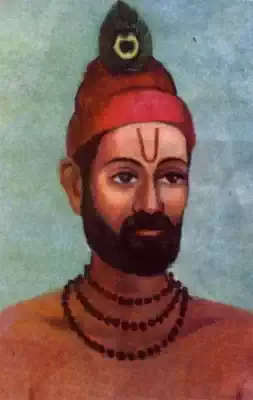
Kabir
The Bride-Soul
The Bride-Soul
When will that day dawn, Mother;
When the One I took birth for
Holds me to His heart with deathless love?
I long for the bliss of divine union.
I long to lose my body, mind, and soul
And become one with my husband.
When will that day dawn, Mother?
Husband, fulfil now the longing I have had
Since before the universe was made.
Enter me completely and release me.
In terrible lonely years without You
I yearn and yearn for You.
I spend sleepless nights hunting for You,
Gazing into darkness after You,
With unblinking hopeless eyes.
When will that day dawn, Mother?
When will my Lord hold me to His heart?
My empty bed, like a hungry tigress,
Devours me whenever I try to sleep.
Listen to your slave's prayer -
Come and put out this blaze of agony
That consumes my soul and body.
When will He hold me to His heart?
When will that day dawn, Mother?
Kabir sings, "If I ever meet You, my Beloved,
I'll cling to you so fiercely You melt into me;
I'll sing from inside You songs of union,
World-dissolving songs of Eternal Bliss."
When will that day dawn, Mother;
When the One I took birth for
Holds me to His heart with deathless love?
I long for the bliss of divine union.
I long to lose my body, mind, and soul
And become one with my husband.
When will that day dawn, Mother?
Husband, fulfil now the longing I have had
Since before the universe was made.
Enter me completely and release me.
In terrible lonely years without You
I yearn and yearn for You.
I spend sleepless nights hunting for You,
Gazing into darkness after You,
With unblinking hopeless eyes.
When will that day dawn, Mother?
When will my Lord hold me to His heart?
My empty bed, like a hungry tigress,
Devours me whenever I try to sleep.
Listen to your slave's prayer -
Come and put out this blaze of agony
That consumes my soul and body.
When will He hold me to His heart?
When will that day dawn, Mother?
Kabir sings, "If I ever meet You, my Beloved,
I'll cling to you so fiercely You melt into me;
I'll sing from inside You songs of union,
World-dissolving songs of Eternal Bliss."
356
Kabir
My body is flooded
My body is flooded
My body is flooded
With the flame of Love.
My soul lives in
A furnace of bliss.
Love's fragrance
Fills my mouth,
And fans through all things
With each outbreath.
My body is flooded
With the flame of Love.
My soul lives in
A furnace of bliss.
Love's fragrance
Fills my mouth,
And fans through all things
With each outbreath.
432
Kabir
Knowing Nothing Shuts The Iron Gates
Knowing Nothing Shuts The Iron Gates
Knowing nothing shuts the iron gates;
the new love opens them.
The sound of the gates opening wakes
the beautiful woman asleep.
Kabir says: Fantastic!
Don't let a chance like this go by!
Knowing nothing shuts the iron gates;
the new love opens them.
The sound of the gates opening wakes
the beautiful woman asleep.
Kabir says: Fantastic!
Don't let a chance like this go by!
431

Joyce Kilmer
The Apartment House
The Apartment House
Severe against the pleasant arc of sky
The great stone box is cruelly displayed.
The street becomes more dreary from its shade,
And vagrant breezes touch its walls and die.
Here sullen convicts in their chains might lie,
Or slaves toil dumbly at some dreary trade.
How worse than folly is their labor made
Who cleft the rocks that this might rise on high!
Yet, as I look, I see a woman's face
Gleam from a window far above the street.
This is a house of homes, a sacred place,
By human passion made divinely sweet.
How all the building thrills with sudden grace
Beneath the magic of Love's golden feet!
Severe against the pleasant arc of sky
The great stone box is cruelly displayed.
The street becomes more dreary from its shade,
And vagrant breezes touch its walls and die.
Here sullen convicts in their chains might lie,
Or slaves toil dumbly at some dreary trade.
How worse than folly is their labor made
Who cleft the rocks that this might rise on high!
Yet, as I look, I see a woman's face
Gleam from a window far above the street.
This is a house of homes, a sacred place,
By human passion made divinely sweet.
How all the building thrills with sudden grace
Beneath the magic of Love's golden feet!
130

Jonathan Swift
Phillis, Or, the Progress of Love
Phillis, Or, the Progress of Love
Desponding Phillis was endu'd
With ev'ry Talent of a Prude,
She trembled when a Man drew near;
Salute her, and she turn'd her Ear:
If o'er against her you were plac't
She durst not look above your Wa[i]st;
She'd rather take you to her Bed
Than let you see her dress her Head;
In Church you heard her thro' the Crowd
Repeat the Absolution loud;
In Church, secure behind her Fan
She durst behold that Monster, Man:
There practic'd how to place her Head,
And bit her Lips to make them red:
Or on the Matt devoutly kneeling
Would lift her Eyes up to the Ceeling,
And heave her Bosom unaware
For neighb'ring Beaux to see it bare.
At length a lucky Lover came,
And found Admittance to the Dame.
Suppose all Partys now agreed,
The Writings drawn, the Lawyer fee'd,
The Vicar and the Ring bespoke:
Guess how could such a Match be broke.
See then what Mortals place their Bliss in!
Next morn betimes the Bride was missing,
The Mother scream'd, the Father chid,
Where can this idle Wench be hid?
No news of Phil. The Bridegroom came,
And thought his Bride had sculk't for shame,
Because her Father us'd to say
The Girl had such a Bashfull way.
Now John the Butler must be sent
To learn the Road that Phillis went;
The Groom was wisht to saddle Crop,
For John must neither light nor stop;
But find her where so'er she fled,
And bring her back, alive or dead.
See here again the Dev'l to do;
For truly John was missing too:
The Horse and Pillion both were gone
Phillis, it seems, was fled with John.
Old Madam who went up to find
What Papers Phil had left behind,
A Letter on the Toylet sees
To my much honor'd Father; These:
('Tis always done, Romances tell us,
When Daughters run away with Fellows)
Fill'd with the choicest common-places,
By others us'd in the like Cases.
That, long ago a Fortune-teller
Exactly said what now befell her,
And in a Glass had made her see
A serving-Man of low Degree:
It was her Fate; must be forgiven;
For Marriages were made in Heaven:
His Pardon begg'd, but to be plain,
She'd do't if 'twere to do again.
Thank God, 'twas neither Shame nor Sin,
For John was come of honest Kin:
Love never thinks of Rich and Poor,
She'd beg with John from Door to Door:
Forgive her, if it be a Crime,
She'll never do't another Time,
She ne'r before in all her Life
Once disobey'd him, Maid nor Wife.
One Argument she summ'd up all in,
The Thing was done and past recalling:
And therefore hop'd she should recover
His Favor, when his Passion's over.
She valued not what others thought her;
And was--His most obedient Daughter.
Fair Maidens all attend the Muse
Who now the wandring Pair pursues:
Away they rose in homely Sort
Their Journy long, their Money Short;
The loving Couple well bemir'd,
The Horse and both the Riders tir'd:
Their Vittells bad, their Lodging worse,
Phil cry'd, and John began to curse;
Phil wish't, that she had strained a Limb
When first she ventur'd out with him.
John wish't, that he had broke a Leg
When first for her he quitted Peg.
But what Adventures more befell 'em
The Muse hath now no time to tell 'em.
How Jonny wheadled, threatned, fawnd,
Till Phillis all her Trinkets pawn'd:
How oft she broke her marriage Vows
In kindness to maintain her Spouse;
Till Swains unwholsome spoyled the Trade,
For now the Surgeon must be paid;
To whom those Perquisites are gone
In Christian Justice due to John.
When Food and Rayment now grew scarce
Fate put a Period to the Farce;
And with exact Poetic Justice:
For John is Landlord, Phillis Hostess;
They keep at Stains the old blue Boar,
Are Cat and Dog, and Rogue and Whore.
Desponding Phillis was endu'd
With ev'ry Talent of a Prude,
She trembled when a Man drew near;
Salute her, and she turn'd her Ear:
If o'er against her you were plac't
She durst not look above your Wa[i]st;
She'd rather take you to her Bed
Than let you see her dress her Head;
In Church you heard her thro' the Crowd
Repeat the Absolution loud;
In Church, secure behind her Fan
She durst behold that Monster, Man:
There practic'd how to place her Head,
And bit her Lips to make them red:
Or on the Matt devoutly kneeling
Would lift her Eyes up to the Ceeling,
And heave her Bosom unaware
For neighb'ring Beaux to see it bare.
At length a lucky Lover came,
And found Admittance to the Dame.
Suppose all Partys now agreed,
The Writings drawn, the Lawyer fee'd,
The Vicar and the Ring bespoke:
Guess how could such a Match be broke.
See then what Mortals place their Bliss in!
Next morn betimes the Bride was missing,
The Mother scream'd, the Father chid,
Where can this idle Wench be hid?
No news of Phil. The Bridegroom came,
And thought his Bride had sculk't for shame,
Because her Father us'd to say
The Girl had such a Bashfull way.
Now John the Butler must be sent
To learn the Road that Phillis went;
The Groom was wisht to saddle Crop,
For John must neither light nor stop;
But find her where so'er she fled,
And bring her back, alive or dead.
See here again the Dev'l to do;
For truly John was missing too:
The Horse and Pillion both were gone
Phillis, it seems, was fled with John.
Old Madam who went up to find
What Papers Phil had left behind,
A Letter on the Toylet sees
To my much honor'd Father; These:
('Tis always done, Romances tell us,
When Daughters run away with Fellows)
Fill'd with the choicest common-places,
By others us'd in the like Cases.
That, long ago a Fortune-teller
Exactly said what now befell her,
And in a Glass had made her see
A serving-Man of low Degree:
It was her Fate; must be forgiven;
For Marriages were made in Heaven:
His Pardon begg'd, but to be plain,
She'd do't if 'twere to do again.
Thank God, 'twas neither Shame nor Sin,
For John was come of honest Kin:
Love never thinks of Rich and Poor,
She'd beg with John from Door to Door:
Forgive her, if it be a Crime,
She'll never do't another Time,
She ne'r before in all her Life
Once disobey'd him, Maid nor Wife.
One Argument she summ'd up all in,
The Thing was done and past recalling:
And therefore hop'd she should recover
His Favor, when his Passion's over.
She valued not what others thought her;
And was--His most obedient Daughter.
Fair Maidens all attend the Muse
Who now the wandring Pair pursues:
Away they rose in homely Sort
Their Journy long, their Money Short;
The loving Couple well bemir'd,
The Horse and both the Riders tir'd:
Their Vittells bad, their Lodging worse,
Phil cry'd, and John began to curse;
Phil wish't, that she had strained a Limb
When first she ventur'd out with him.
John wish't, that he had broke a Leg
When first for her he quitted Peg.
But what Adventures more befell 'em
The Muse hath now no time to tell 'em.
How Jonny wheadled, threatned, fawnd,
Till Phillis all her Trinkets pawn'd:
How oft she broke her marriage Vows
In kindness to maintain her Spouse;
Till Swains unwholsome spoyled the Trade,
For now the Surgeon must be paid;
To whom those Perquisites are gone
In Christian Justice due to John.
When Food and Rayment now grew scarce
Fate put a Period to the Farce;
And with exact Poetic Justice:
For John is Landlord, Phillis Hostess;
They keep at Stains the old blue Boar,
Are Cat and Dog, and Rogue and Whore.
204
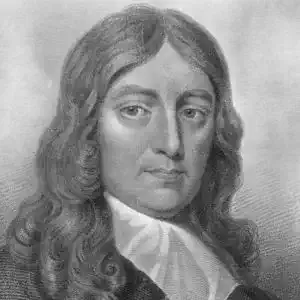
John Milton
Sonnet to the Nightingale
Sonnet to the Nightingale
O nightingale that on yon blooming spray
Warblest at eve, when all the woods are still,
Thou with fresh hopes the Lover’s heart dost fill,
While the jolly Hours lead on propitious May.
Thy liquid notes that close the eye of Day,
First heard before the shallow cuckoo’s bill,
Portend success in love. O if Jove’s will
Have linked that amorous power to thy soft lay,
Now timely sing, ere the rude bird of hate
Foretell my hopeless doom, in some grove nigh;
As thou from year to year hast sung too late
For my relief, yet had’st no reason why.
Whether the Muse or Love call thee his mate,
Both them I serve, and of their train am I.
O nightingale that on yon blooming spray
Warblest at eve, when all the woods are still,
Thou with fresh hopes the Lover’s heart dost fill,
While the jolly Hours lead on propitious May.
Thy liquid notes that close the eye of Day,
First heard before the shallow cuckoo’s bill,
Portend success in love. O if Jove’s will
Have linked that amorous power to thy soft lay,
Now timely sing, ere the rude bird of hate
Foretell my hopeless doom, in some grove nigh;
As thou from year to year hast sung too late
For my relief, yet had’st no reason why.
Whether the Muse or Love call thee his mate,
Both them I serve, and of their train am I.
461
John Milton
Sonnet 06
Sonnet 06
VI
Giovane piano, e semplicetto amante
Poi che fuggir me stesso in dubbio sono,
Madonna a voi del mio cuor l'humil dono
Faro divoto; io certo a prove tante
L'hebbi fedele, intrepido, costante,
De pensieri leggiadro, accorto, e buono;
Quando rugge il gran mondo, e scocca il tuono,
S 'arma di se, e d' intero diamante,
Tanto del forse, e d' invidia sicuro,
Di timori, e speranze al popol use
Quanto d'ingegno, e d' alto valor vago,
E di cetra sonora, e delle muse:
Sol troverete in tal parte men duro
Ove amor mise l 'insanabil ago.
VI
Giovane piano, e semplicetto amante
Poi che fuggir me stesso in dubbio sono,
Madonna a voi del mio cuor l'humil dono
Faro divoto; io certo a prove tante
L'hebbi fedele, intrepido, costante,
De pensieri leggiadro, accorto, e buono;
Quando rugge il gran mondo, e scocca il tuono,
S 'arma di se, e d' intero diamante,
Tanto del forse, e d' invidia sicuro,
Di timori, e speranze al popol use
Quanto d'ingegno, e d' alto valor vago,
E di cetra sonora, e delle muse:
Sol troverete in tal parte men duro
Ove amor mise l 'insanabil ago.
430
John Milton
Sonnet 04
Sonnet 04
IV
Diodati, e te'l diro con maraviglia,
Quel ritroso io ch'amor spreggiar solea
E de suoi lacci spesso mi ridea
Gia caddi, ov'huom dabben talhor s'impiglia.
Ne treccie d'oro, ne guancia vermiglia
M' abbaglian si, ma sotto nova idea
Pellegrina bellezza che'l cuor bea,
Portamenti alti honesti, e nelle ciglia
Quel sereno fulgor d' amabil nero,
Parole adorne di lingua piu d'una,
E'l cantar che di mezzo l'hemispero
Traviar ben puo la faticosa Luna,
E degil occhi suoi auventa si gran fuoco
Che l 'incerar gli oreechi mi fia poco.
IV
Diodati, e te'l diro con maraviglia,
Quel ritroso io ch'amor spreggiar solea
E de suoi lacci spesso mi ridea
Gia caddi, ov'huom dabben talhor s'impiglia.
Ne treccie d'oro, ne guancia vermiglia
M' abbaglian si, ma sotto nova idea
Pellegrina bellezza che'l cuor bea,
Portamenti alti honesti, e nelle ciglia
Quel sereno fulgor d' amabil nero,
Parole adorne di lingua piu d'una,
E'l cantar che di mezzo l'hemispero
Traviar ben puo la faticosa Luna,
E degil occhi suoi auventa si gran fuoco
Che l 'incerar gli oreechi mi fia poco.
450
John Milton
Sonnet 01
Sonnet 01
I
O Nightingale, that on yon bloomy Spray
Warbl'st at eeve, when all the Woods are still,
Thou with fresh hope the Lovers heart dost fill,
While the jolly hours lead on propitious May,
Thy liquid notes that close the eye of Day,
First heard before the shallow Cuccoo's bill
Portend success in love; O if Jove's will
Have linkt that amorous power to thy soft lay,
Now timely sing, ere the rude Bird of Hate
Foretell my hopeles doom in som Grove ny:
As thou from yeer to yeer hast sung too late
For my relief; yet hadst no reason why,
Whether the Muse, or Love call thee his mate,
Both them I serve, and of their train am I.
I
O Nightingale, that on yon bloomy Spray
Warbl'st at eeve, when all the Woods are still,
Thou with fresh hope the Lovers heart dost fill,
While the jolly hours lead on propitious May,
Thy liquid notes that close the eye of Day,
First heard before the shallow Cuccoo's bill
Portend success in love; O if Jove's will
Have linkt that amorous power to thy soft lay,
Now timely sing, ere the rude Bird of Hate
Foretell my hopeles doom in som Grove ny:
As thou from yeer to yeer hast sung too late
For my relief; yet hadst no reason why,
Whether the Muse, or Love call thee his mate,
Both them I serve, and of their train am I.
955
John Milton
Paradise Lost: Book 08
Paradise Lost: Book 08
The Angel ended, and in Adam's ear
So charming left his voice, that he a while
Thought him still speaking, still stood fixed to hear;
Then, as new waked, thus gratefully replied.
What thanks sufficient, or what recompence
Equal, have I to render thee, divine
Historian, who thus largely hast allayed
The thirst I had of knowledge, and vouchsafed
This friendly condescension to relate
Things, else by me unsearchable; now heard
With wonder, but delight, and, as is due,
With glory attributed to the high
Creator! Something yet of doubt remains,
Which only thy solution can resolve.
When I behold this goodly frame, this world,
Of Heaven and Earth consisting; and compute
Their magnitudes; this Earth, a spot, a grain,
An atom, with the firmament compared
And all her numbered stars, that seem to roll
Spaces incomprehensible, (for such
Their distance argues, and their swift return
Diurnal,) merely to officiate light
Round this opacous Earth, this punctual spot,
One day and night; in all her vast survey
Useless besides; reasoning I oft admire,
How Nature wise and frugal could commit
Such disproportions, with superfluous hand
So many nobler bodies to create,
Greater so manifold, to this one use,
For aught appears, and on their orbs impose
Such restless revolution day by day
Repeated; while the sedentary Earth,
That better might with far less compass move,
Served by more noble than herself, attains
Her end without least motion, and receives,
As tribute, such a sumless journey brought
Of incorporeal speed, her warmth and light;
Speed, to describe whose swiftness number fails.
So spake our sire, and by his countenance seemed
Entering on studious thoughts abstruse; which Eve
Perceiving, where she sat retired in sight,
With lowliness majestick from her seat,
And grace that won who saw to wish her stay,
Rose, and went forth among her fruits and flowers,
To visit how they prospered, bud and bloom,
Her nursery; they at her coming sprung,
And, touched by her fair tendance, gladlier grew.
Yet went she not, as not with such discourse
Delighted, or not capable her ear
Of what was high: such pleasure she reserved,
Adam relating, she sole auditress;
Her husband the relater she preferred
Before the Angel, and of him to ask
Chose rather; he, she knew, would intermix
Grateful digressions, and solve high dispute
With conjugal caresses: from his lip
Not words alone pleased her. O! when meet now
Such pairs, in love and mutual honour joined?
With Goddess-like demeanour forth she went,
Not unattended; for on her, as Queen,
A pomp of winning Graces waited still,
And from about her shot darts of desire
Into all eyes, to wish her still in sight.
And Raphael now, to Adam's doubt proposed,
Benevolent and facile thus replied.
To ask or search, I blame thee not; for Heaven
Is as the book of God before thee set,
Wherein to read his wonderous works, and learn
His seasons, hours, or days, or months, or years:
This to attain, whether Heaven move or Earth,
Imports not, if thou reckon right; the rest
From Man or Angel the great Architect
Did wisely to conceal, and not divulge
His secrets to be scanned by them who ought
Rather admire; or, if they list to try
Conjecture, he his fabrick of the Heavens
Hath left to their disputes, perhaps to move
His laughter at their quaint opinions wide
Hereafter; when they come to model Heaven
And calculate the stars, how they will wield
The mighty frame; how build, unbuild, contrive
To save appearances; how gird the sphere
With centrick and eccentrick scribbled o'er,
Cycle and epicycle, orb in orb:
Already by thy reasoning this I guess,
Who art to lead thy offspring, and supposest
That bodies bright and greater should not serve
The less not bright, nor Heaven such journeys run,
Earth sitting still, when she alone receives
The benefit: Consider first, that great
Or bright infers not excellence: the Earth
Though, in comparison of Heaven, so small,
Nor glistering, may of solid good contain
More plenty than the sun that barren shines;
Whose virtue on itself works no effect,
But in the fruitful Earth; there first received,
His beams, unactive else, their vigour find.
Yet not to Earth are those bright luminaries
Officious; but to thee, Earth's habitant.
And for the Heaven's wide circuit, let it speak
The Maker's high magnificence, who built
So spacious, and his line stretched out so far;
That Man may know he dwells not in his own;
An edifice too large for him to fill,
Lodged in a small partition; and the rest
Ordained for uses to his Lord best known.
The swiftness of those circles attribute,
Though numberless, to his Omnipotence,
That to corporeal substances could add
Speed almost spiritual: Me thou thinkest not slow,
Who since the morning-hour set out from Heaven
Where God resides, and ere mid-day arrived
In Eden; distance inexpressible
By numbers that have name. But this I urge,
Admitting motion in the Heavens, to show
Invalid that which thee to doubt it moved;
Not that I so affirm, though so it seem
To thee who hast thy dwelling here on Earth.
God, to remove his ways from human sense,
Placed Heaven from Earth so far, that earthly sight,
If it presume, might err in things too high,
And no advantage gain. What if the sun
Be center to the world; and other stars,
By his attractive virtue and their own
Incited, dance about him various rounds?
Their wandering course now high, now low, then hid,
Progressive, retrograde, or standing still,
In six thou seest; and what if seventh to these
The planet earth, so stedfast though she seem,
Insensibly three different motions move?
Which else to several spheres thou must ascribe,
Moved contrary with thwart obliquities;
Or save the sun his labour, and that swift
Nocturnal and diurnal rhomb supposed,
Invisible else above all stars, the wheel
Of day and night; which needs not thy belief,
If earth, industrious of herself, fetch day
Travelling east, and with her part averse
From the sun's beam meet night, her other part
Still luminous by his ray. What if that light,
Sent from her through the wide transpicuous air,
To the terrestrial moon be as a star,
Enlightening her by day, as she by night
This earth? reciprocal, if land be there,
Fields and inhabitants: Her spots thou seest
As clouds, and clouds may rain, and rain produce
Fruits in her softened soil for some to eat
Allotted there; and other suns perhaps,
With their attendant moons, thou wilt descry,
Communicating male and female light;
Which two great sexes animate the world,
Stored in each orb perhaps with some that live.
For such vast room in Nature unpossessed
By living soul, desart and desolate,
Only to shine, yet scarce to contribute
Each orb a glimpse of light, conveyed so far
Down to this habitable, which returns
Light back to them, is obvious to dispute.
But whether thus these things, or whether not;
But whether the sun, predominant in Heaven,
Rise on the earth; or earth rise on the sun;
He from the east his flaming road begin;
Or she from west her silent course advance,
With inoffensive pace that spinning sleeps
On her soft axle, while she paces even,
And bears thee soft with the smooth hair along;
Sollicit not thy thoughts with matters hid;
Leave them to God above; him serve, and fear!
Of other creatures, as him pleases best,
Wherever placed, let him dispose; joy thou
In what he gives to thee, this Paradise
And thy fair Eve; Heaven is for thee too high
To know what passes there; be lowly wise:
Think only what concerns thee, and thy being;
Dream not of other worlds, what creatures there
Live, in what state, condition, or degree;
Contented that thus far hath been revealed
Not of Earth only, but of highest Heaven.
To whom thus Adam, cleared of doubt, replied.
How fully hast thou satisfied me, pure
Intelligence of Heaven, Angel serene!
And, freed from intricacies, taught to live
The easiest way; nor with perplexing thoughts
To interrupt the sweet of life, from which
God hath bid dwell far off all anxious cares,
And not molest us; unless we ourselves
Seek them with wandering thoughts, and notions vain.
But apt the mind or fancy is to rove
Unchecked, and of her roving is no end;
Till warned, or by experience taught, she learn,
That, not to know at large of things remote
From use, obscure and subtle; but, to know
That which before us lies in daily life,
Is the prime wisdom: What is more, is fume,
Or emptiness, or fond impertinence:
And renders us, in things that most concern,
Unpractised, unprepared, and still to seek.
Therefore from this high pitch let us descend
A lower flight, and speak of things at hand
Useful; whence, haply, mention may arise
Of something not unseasonable to ask,
By sufferance, and thy wonted favour, deigned.
Thee I have heard relating what was done
Ere my remembrance: now, hear me relate
My story, which perhaps thou hast not heard;
And day is not yet spent; till then thou seest
How subtly to detain thee I devise;
Inviting thee to hear while I relate;
Fond! were it not in hope of thy reply:
For, while I sit with thee, I seem in Heaven;
And sweeter thy discourse is to my ear
Than fruits of palm-tree pleasantest to thirst
And hunger both, from labour, at the hour
Of sweet repast; they satiate, and soon fill,
Though pleasant; but thy words, with grace divine
Imbued, bring to their sweetness no satiety.
To whom thus Raphael answered heavenly meek.
Nor are thy lips ungraceful, Sire of men,
Nor tongue ineloquent; for God on thee
Abundantly his gifts hath also poured
Inward and outward both, his image fair:
Speaking, or mute, all comeliness and grace
Attends thee; and each word, each motion, forms;
Nor less think we in Heaven of thee on Earth
Than of our fellow-servant, and inquire
Gladly into the ways of God with Man:
For God, we see, hath honoured thee, and set
On Man his equal love: Say therefore on;
For I that day was absent, as befel,
Bound on a voyage uncouth and obscure,
Far on excursion toward the gates of Hell;
Squared in full legion (such command we had)
To see that none thence issued forth a spy,
Or enemy, while God was in his work;
Lest he, incensed at such eruption bold,
Destruction with creation might have mixed.
Not that they durst without his leave attempt;
But us he sends upon his high behests
For state, as Sovran King; and to inure
Our prompt obedience. Fast we found, fast shut,
The dismal gates, and barricadoed strong;
But long ere our approaching heard within
Noise, other than the sound of dance or song,
Torment, and loud lament, and furious rage.
Glad we returned up to the coasts of light
Ere sabbath-evening: so we had in charge.
But thy relation now; for I attend,
Pleased with thy words no less than thou with mine.
So spake the Godlike Power, and thus our Sire.
For Man to tell how human life began
Is hard; for who himself beginning knew
Desire with thee still longer to converse
Induced me. As new waked from soundest sleep,
Soft on the flowery herb I found me laid,
In balmy sweat; which with his beams the sun
Soon dried, and on the reeking moisture fed.
Straight toward Heaven my wondering eyes I turned,
And gazed a while the ample sky; till, raised
By quick instinctive motion, up I sprung,
As thitherward endeavouring, and upright
Stood on my feet: about me round I saw
Hill, dale, and shady woods, and sunny plains,
And liquid lapse of murmuring streams; by these,
Creatures that lived and moved, and walked, or flew;
Birds on the branches warbling; all things smiled;
With fragrance and with joy my heart o'erflowed.
Myself I then perused, and limb by limb
Surveyed, and sometimes went, and sometimes ran
With supple joints, as lively vigour led:
But who I was, or where, or from what cause,
Knew not; to speak I tried, and forthwith spake;
My tongue obeyed, and readily could name
Whate'er I saw. Thou Sun, said I, fair light,
And thou enlightened Earth, so fresh and gay,
Ye Hills, and Dales, ye Rivers, Woods, and Plains,
And ye that live and move, fair Creatures, tell,
Tell, if ye saw, how I came thus, how here?--
Not of myself;--by some great Maker then,
In goodness and in power pre-eminent:
Tell me, how may I know him, how adore,
From whom I have that thus I move and live,
And feel that I am happier than I know.--
While thus I called, and strayed I knew not whither,
From where I first drew air, and first beheld
This happy light; when, answer none returned,
On a green shady bank, profuse of flowers,
Pensive I sat me down: There gentle sleep
First found me, and with soft oppression seised
My droused sense, untroubled, though I thought
I then was passing to my former state
Insensible, and forthwith to dissolve:
When suddenly stood at my head a dream,
Whose inward apparition gently moved
My fancy to believe I yet had being,
And lived: One came, methought, of shape divine,
And said, 'Thy mansion wants thee, Adam; rise,
'First Man, of men innumerable ordained
'First Father! called by thee, I come thy guide
'To the garden of bliss, thy seat prepared.'
So saying, by the hand he took me raised,
And over fields and waters, as in air
Smooth-sliding without step, last led me up
A woody mountain; whose high top was plain,
A circuit wide, enclosed, with goodliest trees
Planted, with walks, and bowers; that what I saw
Of Earth before scarce pleasant seemed. Each tree,
Loaden with fairest fruit that hung to the eye
Tempting, stirred in me sudden appetite
To pluck and eat; whereat I waked, and found
Before mine eyes all real, as the dream
Had lively shadowed: Here had new begun
My wandering, had not he, who was my guide
Up hither, from among the trees appeared,
Presence Divine. Rejoicing, but with awe,
In adoration at his feet I fell
Submiss: He reared me, and 'Whom thou soughtest I am,'
Said mildly, 'Author of all this thou seest
'Above, or round about thee, or beneath.
'This Paradise I give thee, count it thine
'To till and keep, and of the fruit to eat:
'Of every tree that in the garden grows
'Eat freely with glad heart; fear here no dearth:
'But of the tree whose operation brings
'Knowledge of good and ill, which I have set
'The pledge of thy obedience and thy faith,
'Amid the garden by the tree of life,
'Remember what I warn thee, shun to taste,
'And shun the bitter consequence: for know,
'The day thou eatest thereof, my sole command
'Transgressed, inevitably thou shalt die,
'From that day mortal; and this happy state
'Shalt lose, expelled from hence into a world
'Of woe and sorrow.' Sternly he pronounced
The rigid interdiction, which resounds
Yet dreadful in mine ear, though in my choice
Not to incur; but soon his clear aspect
Returned, and gracious purpose thus renewed.
'Not only these fair bounds, but all the Earth
'To thee and to thy race I give; as lords
'Possess it, and all things that therein live,
'Or live in sea, or air; beast, fish, and fowl.
'In sign whereof, each bird and beast behold
'After their kinds; I bring them to receive
'From thee their names, and pay thee fealty
'With low subjection; understand the same
'Of fish within their watery residence,
'Not hither summoned, since they cannot change
'Their element, to draw the thinner air.'
As thus he spake, each bird and beast behold
Approaching two and two; these cowering low
With blandishment; each bird stooped on his wing.
I named them, as they passed, and understood
Their nature, with such knowledge God endued
My sudden apprehension: But in these
I found not what methought I wanted still;
And to the heavenly Vision thus presumed.
O, by what name, for thou above all these,
Above mankind, or aught than mankind higher,
Surpassest far my naming; how may I
Adore thee, Author of this universe,
And all this good to man? for whose well being
So amply, and with hands so liberal,
Thou hast provided all things: But with me
I see not who partakes. In solitude
What happiness, who can enjoy alone,
Or, all enjoying, what contentment find?
Thus I presumptuous; and the Vision bright,
As with a smile more brightened, thus replied.
What callest thou solitude? Is not the Earth
With various living creatures, and the air
Replenished, and all these at thy command
To come and play before thee? Knowest thou not
Their language and their ways? They also know,
And reason not contemptibly: With these
Find pastime, and bear rule; thy realm is large.
So spake the Universal Lord, and seemed
So ordering: I, with leave of speech implored,
And humble deprecation, thus replied.
Let not my words offend thee, Heavenly Power;
My Maker, be propitious while I speak.
Hast thou not made me here thy substitute,
And these inferiour far beneath me set?
Among unequals what society
Can sort, what harmony, or true delight?
Which must be mutual, in proportion due
Given and received; but, in disparity
The one intense, the other still remiss,
Cannot well suit with either, but soon prove
Tedious alike: Of fellowship I speak
Such as I seek, fit to participate
All rational delight: wherein the brute
Cannot be human consort: They rejoice
Each with their kind, lion with lioness;
So fitly them in pairs thou hast combined:
Much less can bird with beast, or fish with fowl
So well converse, nor with the ox the ape;
Worse then can man with beast, and least of all.
Whereto the Almighty answered, not displeased.
A nice and subtle happiness, I see,
Thou to thyself proposest, in the choice
Of thy associates, Adam! and wilt taste
No pleasure, though in pleasure, solitary.
What thinkest thou then of me, and this my state?
Seem I to thee sufficiently possessed
Of happiness, or not? who am alone
From all eternity; for none I know
Second to me or like, equal much less.
How have I then with whom to hold converse,
Save with the creatures which I made, and those
To me inferiour, infinite descents
Beneath what other creatures are to thee?
He ceased; I lowly answered. To attain
The highth and depth of thy eternal ways
All human thoughts come short, Supreme of things!
Thou in thyself art perfect, and in thee
Is no deficience found: Not so is Man,
But in degree; the cause of his desire
By conversation with his like to help
Or solace his defects. No need that thou
Shouldst propagate, already Infinite;
And through all numbers absolute, though One:
But Man by number is to manifest
His single imperfection, and beget
Like of his like, his image multiplied,
In unity defective; which requires
Collateral love, and dearest amity.
Thou in thy secresy although alone,
Best with thyself accompanied, seekest not
Social communication; yet, so pleased,
Canst raise thy creature to what highth thou wilt
Of union or communion, deified:
I, by conversing, cannot these erect
From prone; nor in their ways complacence find.
Thus I emboldened spake, and freedom used
Permissive, and acceptance found; which gained
This answer from the gracious Voice Divine.
Thus far to try thee, Adam, I was pleased;
And find thee knowing, not of beasts alone,
Which thou hast rightly named, but of thyself;
Expressing well the spirit within thee free,
My image, not imparted to the brute;
Whose fellowship therefore unmeet for thee
Good reason was thou freely shouldst dislike;
And be so minded still: I, ere thou spakest,
Knew it not good for Man to be alone;
And no such company as then thou sawest
Intended thee; for trial only brought,
To see how thou couldest judge of fit and meet:
What next I bring shall please thee, be assured,
Thy likeness, thy fit help, thy other self,
Thy wish exactly to thy heart's desire.
He ended, or I heard no more; for now
My earthly by his heavenly overpowered,
Which it had long stood under, strained to the highth
In that celestial colloquy sublime,
As with an object that excels the sense
Dazzled and spent, sunk down; and sought repair
Of sleep, which instantly fell on me, called
By Nature as in aid, and closed mine eyes.
Mine eyes he closed, but open left the cell
Of fancy, my internal sight; by which,
Abstract as in a trance, methought I saw,
Though sleeping, where I lay, and saw the shape
Still glorious before whom awake I stood:
Who stooping opened my left side, and took
From thence a rib, with cordial spirits warm,
And life-blood streaming fresh; wide was the wound,
But suddenly with flesh filled up and healed:
The rib he formed and fashioned with his hands;
Under his forming hands a creature grew,
Man-like, but different sex; so lovely fair,
That what seemed fair in all the world, seemed now
Mean, or in her summed up, in her contained
And in her looks; which from that time infused
Sweetness into my heart, unfelt before,
And into all things from her air inspired
The spirit of love and amorous delight.
She disappeared, and left me dark; I waked
To find her, or for ever to deplore
Her loss, and other pleasures all abjure:
When out of hope, behold her, not far off,
Such as I saw her in my dream, adorned
With what all Earth or Heaven could bestow
To make her amiable: On she came,
Led by her heavenly Maker, though unseen,
And guided by his voice; nor uninformed
Of nuptial sanctity, and marriage rites:
Grace was in all her steps, Heaven in her eye,
In every gesture dignity and love.
I, overjoyed, could not forbear aloud.
This turn hath made amends; thou hast fulfilled
Thy words, Creator bounteous and benign,
Giver of all things fair! but fairest this
Of all thy gifts! nor enviest. I now see
Bone of my bone, flesh of my flesh, myself
Before me: Woman is her name;of Man
Extracted: for this cause he shall forego
Father and mother, and to his wife adhere;
And they shall be one flesh, one heart, one soul.
She heard me thus; and though divinely brought,
Yet innocence, and virgin modesty,
Her virtue, and the conscience of her worth,
That would be wooed, and not unsought be won,
Not obvious, not obtrusive, but, retired,
The more desirable; or, to say all,
Nature herself, though pure of sinful thought,
Wrought in her so, that, seeing me, she turned:
I followed her; she what was honour knew,
And with obsequious majesty approved
My pleaded reason. To the nuptial bower
I led her blushing like the morn: All Heaven,
And happy constellations, on that hour
Shed their selectest influence; the Earth
Gave sign of gratulation, and each hill;
Joyous the birds; fresh gales and gentle airs
Whispered it to the woods, and from their wings
Flung rose, flung odours from the spicy shrub,
Disporting, till the amorous bird of night
Sung spousal, and bid haste the evening-star
On his hill top, to light the bridal lamp.
Thus have I told thee all my state, and brought
My story to the sum of earthly bliss,
Which I enjoy; and must confess to find
In all things else delight indeed, but such
As, used or not, works in the mind no change,
Nor vehement desire; these delicacies
I mean of taste, sight, smell, herbs, fruits, and flowers,
Walks, and the melody of birds: but here
Far otherwise, transported I behold,
Transported touch; here passion first I felt,
Commotion strange! in all enjoyments else
Superiour and unmoved; here only weak
Against the charm of Beauty's powerful glance.
Or Nature failed in me, and left some part
Not proof enough such object to sustain;
Or, from my side subducting, took perhaps
More than enough; at least on her bestowed
Too much of ornament, in outward show
Elaborate, of inward less exact.
For well I understand in the prime end
Of Nature her the inferiour, in the mind
And inward faculties, which most excel;
In outward also her resembling less
His image who made both, and less expressing
The character of that dominion given
O'er other creatures: Yet when I approach
Her loveliness, so absolute she seems
And in herself complete, so well to know
Her own, that what she wills to do or say,
Seems wisest, virtuousest, discreetest, best:
All higher knowledge in her presence falls
Degraded; Wisdom in discourse with her
Loses discountenanced, and like Folly shows;
Authority and Reason on her wait,
As one intended first, not after made
Occasionally; and, to consummate all,
Greatness of mind and Nobleness their seat
Build in her loveliest, and create an awe
About her, as a guard angelick placed.
To whom the Angel with contracted brow.
Accuse not Nature, she hath done her part;
Do thou but thine; and be not diffident
Of Wisdom; she deserts thee not, if thou
Dismiss not her, when most thou needest her nigh,
By attributing overmuch to things
Less excellent, as thou thyself perceivest.
For, what admirest thou, what transports thee so,
An outside? fair, no doubt, and worthy well
Thy cherishing, thy honouring, and thy love;
Not thy subjection: Weigh with her thyself;
Then value: Oft-times nothing profits more
Than self-esteem, grounded on just and right
Well managed; of that skill the more thou knowest,
The more she will acknowledge thee her head,
And to realities yield all her shows:
Made so adorn for thy delight the more,
So awful, that with honour thou mayest love
Thy mate, who sees when thou art seen least wise.
But if the sense of touch, whereby mankind
Is propagated, seem such dear delight
Beyond all other; think the same vouchsafed
To cattle and each beast; which would not be
To them made common and divulged, if aught
Therein enjoyed were worthy to subdue
The soul of man, or passion in him move.
What higher in her society thou findest
Attractive, human, rational, love still;
In loving thou dost well, in passion not,
Wherein true love consists not: Love refines
The thoughts, and heart enlarges; hath his seat
In reason, and is judicious; is the scale
By which to heavenly love thou mayest ascend,
Not sunk in carnal pleasure; for which cause,
Among the beasts no mate for thee was found.
To whom thus, half abashed, Adam replied.
Neither her outside formed so fair, nor aught
In procreation common to all kinds,
(Though higher of the genial bed by far,
And with mysterious reverence I deem,)
So much delights me, as those graceful acts,
Those thousand decencies, that daily flow
From all her words and actions mixed with love
And sweet compliance, which declare unfeigned
Union of mind, or in us both one soul;
Harmony to behold in wedded pair
More grateful than harmonious sound to the ear.
Yet these subject not; I to thee disclose
What inward thence I feel, not therefore foiled,
Who meet with various objects, from the sense
Variously representing; yet, still free,
Approve the best, and follow what I approve.
To love, thou blamest me not; for Love, thou sayest,
Leads up to Heaven, is both the way and guide;
Bear with me then, if lawful what I ask:
Love not the heavenly Spirits, and how their love
Express they? by looks only? or do they mix
Irradiance, virtual or immediate touch?
To whom the Angel, with a smile that glowed
Celestial rosy red, Love's proper hue,
Answered. Let it suffice thee that thou knowest
Us happy, and without love no happiness.
Whatever pure thou in the body enjoyest,
(And pure thou wert created) we enjoy
In eminence; and obstacle find none
Of membrane, joint, or limb, exclusive bars;
Easier than air with air, if Spirits embrace,
Total they mix, union of pure with pure
Desiring, nor restrained conveyance need,
As flesh to mix with flesh, or soul with soul.
But I can now no more; the parting sun
Beyond the Earth's green Cape and verdant Isles
Hesperian sets, my signal to depart.
Be strong, live happy, and love! But, first of all,
Him, whom to love is to obey, and keep
His great command; take heed lest passion sway
Thy judgement to do aught, which else free will
Would not admit: thine, and of all thy sons,
The weal or woe in thee is placed; beware!
I in thy persevering shall rejoice,
And all the Blest: Stand fast;to stand or fall
Free in thine own arbitrement it lies.
Perfect within, no outward aid require;
And all temptation to transgress repel.
So saying, he arose; whom Adam thus
Followed with benediction. Since to part,
Go, heavenly guest, ethereal Messenger,
Sent from whose sovran goodness I adore!
Gentle to me and affable hath been
Thy condescension, and shall be honoured ever
With grateful memory: Thou to mankind
Be good and friendly still, and oft return!
So parted they; the Angel up to Heaven
From the thick shade, and Adam to his bower.
The Angel ended, and in Adam's ear
So charming left his voice, that he a while
Thought him still speaking, still stood fixed to hear;
Then, as new waked, thus gratefully replied.
What thanks sufficient, or what recompence
Equal, have I to render thee, divine
Historian, who thus largely hast allayed
The thirst I had of knowledge, and vouchsafed
This friendly condescension to relate
Things, else by me unsearchable; now heard
With wonder, but delight, and, as is due,
With glory attributed to the high
Creator! Something yet of doubt remains,
Which only thy solution can resolve.
When I behold this goodly frame, this world,
Of Heaven and Earth consisting; and compute
Their magnitudes; this Earth, a spot, a grain,
An atom, with the firmament compared
And all her numbered stars, that seem to roll
Spaces incomprehensible, (for such
Their distance argues, and their swift return
Diurnal,) merely to officiate light
Round this opacous Earth, this punctual spot,
One day and night; in all her vast survey
Useless besides; reasoning I oft admire,
How Nature wise and frugal could commit
Such disproportions, with superfluous hand
So many nobler bodies to create,
Greater so manifold, to this one use,
For aught appears, and on their orbs impose
Such restless revolution day by day
Repeated; while the sedentary Earth,
That better might with far less compass move,
Served by more noble than herself, attains
Her end without least motion, and receives,
As tribute, such a sumless journey brought
Of incorporeal speed, her warmth and light;
Speed, to describe whose swiftness number fails.
So spake our sire, and by his countenance seemed
Entering on studious thoughts abstruse; which Eve
Perceiving, where she sat retired in sight,
With lowliness majestick from her seat,
And grace that won who saw to wish her stay,
Rose, and went forth among her fruits and flowers,
To visit how they prospered, bud and bloom,
Her nursery; they at her coming sprung,
And, touched by her fair tendance, gladlier grew.
Yet went she not, as not with such discourse
Delighted, or not capable her ear
Of what was high: such pleasure she reserved,
Adam relating, she sole auditress;
Her husband the relater she preferred
Before the Angel, and of him to ask
Chose rather; he, she knew, would intermix
Grateful digressions, and solve high dispute
With conjugal caresses: from his lip
Not words alone pleased her. O! when meet now
Such pairs, in love and mutual honour joined?
With Goddess-like demeanour forth she went,
Not unattended; for on her, as Queen,
A pomp of winning Graces waited still,
And from about her shot darts of desire
Into all eyes, to wish her still in sight.
And Raphael now, to Adam's doubt proposed,
Benevolent and facile thus replied.
To ask or search, I blame thee not; for Heaven
Is as the book of God before thee set,
Wherein to read his wonderous works, and learn
His seasons, hours, or days, or months, or years:
This to attain, whether Heaven move or Earth,
Imports not, if thou reckon right; the rest
From Man or Angel the great Architect
Did wisely to conceal, and not divulge
His secrets to be scanned by them who ought
Rather admire; or, if they list to try
Conjecture, he his fabrick of the Heavens
Hath left to their disputes, perhaps to move
His laughter at their quaint opinions wide
Hereafter; when they come to model Heaven
And calculate the stars, how they will wield
The mighty frame; how build, unbuild, contrive
To save appearances; how gird the sphere
With centrick and eccentrick scribbled o'er,
Cycle and epicycle, orb in orb:
Already by thy reasoning this I guess,
Who art to lead thy offspring, and supposest
That bodies bright and greater should not serve
The less not bright, nor Heaven such journeys run,
Earth sitting still, when she alone receives
The benefit: Consider first, that great
Or bright infers not excellence: the Earth
Though, in comparison of Heaven, so small,
Nor glistering, may of solid good contain
More plenty than the sun that barren shines;
Whose virtue on itself works no effect,
But in the fruitful Earth; there first received,
His beams, unactive else, their vigour find.
Yet not to Earth are those bright luminaries
Officious; but to thee, Earth's habitant.
And for the Heaven's wide circuit, let it speak
The Maker's high magnificence, who built
So spacious, and his line stretched out so far;
That Man may know he dwells not in his own;
An edifice too large for him to fill,
Lodged in a small partition; and the rest
Ordained for uses to his Lord best known.
The swiftness of those circles attribute,
Though numberless, to his Omnipotence,
That to corporeal substances could add
Speed almost spiritual: Me thou thinkest not slow,
Who since the morning-hour set out from Heaven
Where God resides, and ere mid-day arrived
In Eden; distance inexpressible
By numbers that have name. But this I urge,
Admitting motion in the Heavens, to show
Invalid that which thee to doubt it moved;
Not that I so affirm, though so it seem
To thee who hast thy dwelling here on Earth.
God, to remove his ways from human sense,
Placed Heaven from Earth so far, that earthly sight,
If it presume, might err in things too high,
And no advantage gain. What if the sun
Be center to the world; and other stars,
By his attractive virtue and their own
Incited, dance about him various rounds?
Their wandering course now high, now low, then hid,
Progressive, retrograde, or standing still,
In six thou seest; and what if seventh to these
The planet earth, so stedfast though she seem,
Insensibly three different motions move?
Which else to several spheres thou must ascribe,
Moved contrary with thwart obliquities;
Or save the sun his labour, and that swift
Nocturnal and diurnal rhomb supposed,
Invisible else above all stars, the wheel
Of day and night; which needs not thy belief,
If earth, industrious of herself, fetch day
Travelling east, and with her part averse
From the sun's beam meet night, her other part
Still luminous by his ray. What if that light,
Sent from her through the wide transpicuous air,
To the terrestrial moon be as a star,
Enlightening her by day, as she by night
This earth? reciprocal, if land be there,
Fields and inhabitants: Her spots thou seest
As clouds, and clouds may rain, and rain produce
Fruits in her softened soil for some to eat
Allotted there; and other suns perhaps,
With their attendant moons, thou wilt descry,
Communicating male and female light;
Which two great sexes animate the world,
Stored in each orb perhaps with some that live.
For such vast room in Nature unpossessed
By living soul, desart and desolate,
Only to shine, yet scarce to contribute
Each orb a glimpse of light, conveyed so far
Down to this habitable, which returns
Light back to them, is obvious to dispute.
But whether thus these things, or whether not;
But whether the sun, predominant in Heaven,
Rise on the earth; or earth rise on the sun;
He from the east his flaming road begin;
Or she from west her silent course advance,
With inoffensive pace that spinning sleeps
On her soft axle, while she paces even,
And bears thee soft with the smooth hair along;
Sollicit not thy thoughts with matters hid;
Leave them to God above; him serve, and fear!
Of other creatures, as him pleases best,
Wherever placed, let him dispose; joy thou
In what he gives to thee, this Paradise
And thy fair Eve; Heaven is for thee too high
To know what passes there; be lowly wise:
Think only what concerns thee, and thy being;
Dream not of other worlds, what creatures there
Live, in what state, condition, or degree;
Contented that thus far hath been revealed
Not of Earth only, but of highest Heaven.
To whom thus Adam, cleared of doubt, replied.
How fully hast thou satisfied me, pure
Intelligence of Heaven, Angel serene!
And, freed from intricacies, taught to live
The easiest way; nor with perplexing thoughts
To interrupt the sweet of life, from which
God hath bid dwell far off all anxious cares,
And not molest us; unless we ourselves
Seek them with wandering thoughts, and notions vain.
But apt the mind or fancy is to rove
Unchecked, and of her roving is no end;
Till warned, or by experience taught, she learn,
That, not to know at large of things remote
From use, obscure and subtle; but, to know
That which before us lies in daily life,
Is the prime wisdom: What is more, is fume,
Or emptiness, or fond impertinence:
And renders us, in things that most concern,
Unpractised, unprepared, and still to seek.
Therefore from this high pitch let us descend
A lower flight, and speak of things at hand
Useful; whence, haply, mention may arise
Of something not unseasonable to ask,
By sufferance, and thy wonted favour, deigned.
Thee I have heard relating what was done
Ere my remembrance: now, hear me relate
My story, which perhaps thou hast not heard;
And day is not yet spent; till then thou seest
How subtly to detain thee I devise;
Inviting thee to hear while I relate;
Fond! were it not in hope of thy reply:
For, while I sit with thee, I seem in Heaven;
And sweeter thy discourse is to my ear
Than fruits of palm-tree pleasantest to thirst
And hunger both, from labour, at the hour
Of sweet repast; they satiate, and soon fill,
Though pleasant; but thy words, with grace divine
Imbued, bring to their sweetness no satiety.
To whom thus Raphael answered heavenly meek.
Nor are thy lips ungraceful, Sire of men,
Nor tongue ineloquent; for God on thee
Abundantly his gifts hath also poured
Inward and outward both, his image fair:
Speaking, or mute, all comeliness and grace
Attends thee; and each word, each motion, forms;
Nor less think we in Heaven of thee on Earth
Than of our fellow-servant, and inquire
Gladly into the ways of God with Man:
For God, we see, hath honoured thee, and set
On Man his equal love: Say therefore on;
For I that day was absent, as befel,
Bound on a voyage uncouth and obscure,
Far on excursion toward the gates of Hell;
Squared in full legion (such command we had)
To see that none thence issued forth a spy,
Or enemy, while God was in his work;
Lest he, incensed at such eruption bold,
Destruction with creation might have mixed.
Not that they durst without his leave attempt;
But us he sends upon his high behests
For state, as Sovran King; and to inure
Our prompt obedience. Fast we found, fast shut,
The dismal gates, and barricadoed strong;
But long ere our approaching heard within
Noise, other than the sound of dance or song,
Torment, and loud lament, and furious rage.
Glad we returned up to the coasts of light
Ere sabbath-evening: so we had in charge.
But thy relation now; for I attend,
Pleased with thy words no less than thou with mine.
So spake the Godlike Power, and thus our Sire.
For Man to tell how human life began
Is hard; for who himself beginning knew
Desire with thee still longer to converse
Induced me. As new waked from soundest sleep,
Soft on the flowery herb I found me laid,
In balmy sweat; which with his beams the sun
Soon dried, and on the reeking moisture fed.
Straight toward Heaven my wondering eyes I turned,
And gazed a while the ample sky; till, raised
By quick instinctive motion, up I sprung,
As thitherward endeavouring, and upright
Stood on my feet: about me round I saw
Hill, dale, and shady woods, and sunny plains,
And liquid lapse of murmuring streams; by these,
Creatures that lived and moved, and walked, or flew;
Birds on the branches warbling; all things smiled;
With fragrance and with joy my heart o'erflowed.
Myself I then perused, and limb by limb
Surveyed, and sometimes went, and sometimes ran
With supple joints, as lively vigour led:
But who I was, or where, or from what cause,
Knew not; to speak I tried, and forthwith spake;
My tongue obeyed, and readily could name
Whate'er I saw. Thou Sun, said I, fair light,
And thou enlightened Earth, so fresh and gay,
Ye Hills, and Dales, ye Rivers, Woods, and Plains,
And ye that live and move, fair Creatures, tell,
Tell, if ye saw, how I came thus, how here?--
Not of myself;--by some great Maker then,
In goodness and in power pre-eminent:
Tell me, how may I know him, how adore,
From whom I have that thus I move and live,
And feel that I am happier than I know.--
While thus I called, and strayed I knew not whither,
From where I first drew air, and first beheld
This happy light; when, answer none returned,
On a green shady bank, profuse of flowers,
Pensive I sat me down: There gentle sleep
First found me, and with soft oppression seised
My droused sense, untroubled, though I thought
I then was passing to my former state
Insensible, and forthwith to dissolve:
When suddenly stood at my head a dream,
Whose inward apparition gently moved
My fancy to believe I yet had being,
And lived: One came, methought, of shape divine,
And said, 'Thy mansion wants thee, Adam; rise,
'First Man, of men innumerable ordained
'First Father! called by thee, I come thy guide
'To the garden of bliss, thy seat prepared.'
So saying, by the hand he took me raised,
And over fields and waters, as in air
Smooth-sliding without step, last led me up
A woody mountain; whose high top was plain,
A circuit wide, enclosed, with goodliest trees
Planted, with walks, and bowers; that what I saw
Of Earth before scarce pleasant seemed. Each tree,
Loaden with fairest fruit that hung to the eye
Tempting, stirred in me sudden appetite
To pluck and eat; whereat I waked, and found
Before mine eyes all real, as the dream
Had lively shadowed: Here had new begun
My wandering, had not he, who was my guide
Up hither, from among the trees appeared,
Presence Divine. Rejoicing, but with awe,
In adoration at his feet I fell
Submiss: He reared me, and 'Whom thou soughtest I am,'
Said mildly, 'Author of all this thou seest
'Above, or round about thee, or beneath.
'This Paradise I give thee, count it thine
'To till and keep, and of the fruit to eat:
'Of every tree that in the garden grows
'Eat freely with glad heart; fear here no dearth:
'But of the tree whose operation brings
'Knowledge of good and ill, which I have set
'The pledge of thy obedience and thy faith,
'Amid the garden by the tree of life,
'Remember what I warn thee, shun to taste,
'And shun the bitter consequence: for know,
'The day thou eatest thereof, my sole command
'Transgressed, inevitably thou shalt die,
'From that day mortal; and this happy state
'Shalt lose, expelled from hence into a world
'Of woe and sorrow.' Sternly he pronounced
The rigid interdiction, which resounds
Yet dreadful in mine ear, though in my choice
Not to incur; but soon his clear aspect
Returned, and gracious purpose thus renewed.
'Not only these fair bounds, but all the Earth
'To thee and to thy race I give; as lords
'Possess it, and all things that therein live,
'Or live in sea, or air; beast, fish, and fowl.
'In sign whereof, each bird and beast behold
'After their kinds; I bring them to receive
'From thee their names, and pay thee fealty
'With low subjection; understand the same
'Of fish within their watery residence,
'Not hither summoned, since they cannot change
'Their element, to draw the thinner air.'
As thus he spake, each bird and beast behold
Approaching two and two; these cowering low
With blandishment; each bird stooped on his wing.
I named them, as they passed, and understood
Their nature, with such knowledge God endued
My sudden apprehension: But in these
I found not what methought I wanted still;
And to the heavenly Vision thus presumed.
O, by what name, for thou above all these,
Above mankind, or aught than mankind higher,
Surpassest far my naming; how may I
Adore thee, Author of this universe,
And all this good to man? for whose well being
So amply, and with hands so liberal,
Thou hast provided all things: But with me
I see not who partakes. In solitude
What happiness, who can enjoy alone,
Or, all enjoying, what contentment find?
Thus I presumptuous; and the Vision bright,
As with a smile more brightened, thus replied.
What callest thou solitude? Is not the Earth
With various living creatures, and the air
Replenished, and all these at thy command
To come and play before thee? Knowest thou not
Their language and their ways? They also know,
And reason not contemptibly: With these
Find pastime, and bear rule; thy realm is large.
So spake the Universal Lord, and seemed
So ordering: I, with leave of speech implored,
And humble deprecation, thus replied.
Let not my words offend thee, Heavenly Power;
My Maker, be propitious while I speak.
Hast thou not made me here thy substitute,
And these inferiour far beneath me set?
Among unequals what society
Can sort, what harmony, or true delight?
Which must be mutual, in proportion due
Given and received; but, in disparity
The one intense, the other still remiss,
Cannot well suit with either, but soon prove
Tedious alike: Of fellowship I speak
Such as I seek, fit to participate
All rational delight: wherein the brute
Cannot be human consort: They rejoice
Each with their kind, lion with lioness;
So fitly them in pairs thou hast combined:
Much less can bird with beast, or fish with fowl
So well converse, nor with the ox the ape;
Worse then can man with beast, and least of all.
Whereto the Almighty answered, not displeased.
A nice and subtle happiness, I see,
Thou to thyself proposest, in the choice
Of thy associates, Adam! and wilt taste
No pleasure, though in pleasure, solitary.
What thinkest thou then of me, and this my state?
Seem I to thee sufficiently possessed
Of happiness, or not? who am alone
From all eternity; for none I know
Second to me or like, equal much less.
How have I then with whom to hold converse,
Save with the creatures which I made, and those
To me inferiour, infinite descents
Beneath what other creatures are to thee?
He ceased; I lowly answered. To attain
The highth and depth of thy eternal ways
All human thoughts come short, Supreme of things!
Thou in thyself art perfect, and in thee
Is no deficience found: Not so is Man,
But in degree; the cause of his desire
By conversation with his like to help
Or solace his defects. No need that thou
Shouldst propagate, already Infinite;
And through all numbers absolute, though One:
But Man by number is to manifest
His single imperfection, and beget
Like of his like, his image multiplied,
In unity defective; which requires
Collateral love, and dearest amity.
Thou in thy secresy although alone,
Best with thyself accompanied, seekest not
Social communication; yet, so pleased,
Canst raise thy creature to what highth thou wilt
Of union or communion, deified:
I, by conversing, cannot these erect
From prone; nor in their ways complacence find.
Thus I emboldened spake, and freedom used
Permissive, and acceptance found; which gained
This answer from the gracious Voice Divine.
Thus far to try thee, Adam, I was pleased;
And find thee knowing, not of beasts alone,
Which thou hast rightly named, but of thyself;
Expressing well the spirit within thee free,
My image, not imparted to the brute;
Whose fellowship therefore unmeet for thee
Good reason was thou freely shouldst dislike;
And be so minded still: I, ere thou spakest,
Knew it not good for Man to be alone;
And no such company as then thou sawest
Intended thee; for trial only brought,
To see how thou couldest judge of fit and meet:
What next I bring shall please thee, be assured,
Thy likeness, thy fit help, thy other self,
Thy wish exactly to thy heart's desire.
He ended, or I heard no more; for now
My earthly by his heavenly overpowered,
Which it had long stood under, strained to the highth
In that celestial colloquy sublime,
As with an object that excels the sense
Dazzled and spent, sunk down; and sought repair
Of sleep, which instantly fell on me, called
By Nature as in aid, and closed mine eyes.
Mine eyes he closed, but open left the cell
Of fancy, my internal sight; by which,
Abstract as in a trance, methought I saw,
Though sleeping, where I lay, and saw the shape
Still glorious before whom awake I stood:
Who stooping opened my left side, and took
From thence a rib, with cordial spirits warm,
And life-blood streaming fresh; wide was the wound,
But suddenly with flesh filled up and healed:
The rib he formed and fashioned with his hands;
Under his forming hands a creature grew,
Man-like, but different sex; so lovely fair,
That what seemed fair in all the world, seemed now
Mean, or in her summed up, in her contained
And in her looks; which from that time infused
Sweetness into my heart, unfelt before,
And into all things from her air inspired
The spirit of love and amorous delight.
She disappeared, and left me dark; I waked
To find her, or for ever to deplore
Her loss, and other pleasures all abjure:
When out of hope, behold her, not far off,
Such as I saw her in my dream, adorned
With what all Earth or Heaven could bestow
To make her amiable: On she came,
Led by her heavenly Maker, though unseen,
And guided by his voice; nor uninformed
Of nuptial sanctity, and marriage rites:
Grace was in all her steps, Heaven in her eye,
In every gesture dignity and love.
I, overjoyed, could not forbear aloud.
This turn hath made amends; thou hast fulfilled
Thy words, Creator bounteous and benign,
Giver of all things fair! but fairest this
Of all thy gifts! nor enviest. I now see
Bone of my bone, flesh of my flesh, myself
Before me: Woman is her name;of Man
Extracted: for this cause he shall forego
Father and mother, and to his wife adhere;
And they shall be one flesh, one heart, one soul.
She heard me thus; and though divinely brought,
Yet innocence, and virgin modesty,
Her virtue, and the conscience of her worth,
That would be wooed, and not unsought be won,
Not obvious, not obtrusive, but, retired,
The more desirable; or, to say all,
Nature herself, though pure of sinful thought,
Wrought in her so, that, seeing me, she turned:
I followed her; she what was honour knew,
And with obsequious majesty approved
My pleaded reason. To the nuptial bower
I led her blushing like the morn: All Heaven,
And happy constellations, on that hour
Shed their selectest influence; the Earth
Gave sign of gratulation, and each hill;
Joyous the birds; fresh gales and gentle airs
Whispered it to the woods, and from their wings
Flung rose, flung odours from the spicy shrub,
Disporting, till the amorous bird of night
Sung spousal, and bid haste the evening-star
On his hill top, to light the bridal lamp.
Thus have I told thee all my state, and brought
My story to the sum of earthly bliss,
Which I enjoy; and must confess to find
In all things else delight indeed, but such
As, used or not, works in the mind no change,
Nor vehement desire; these delicacies
I mean of taste, sight, smell, herbs, fruits, and flowers,
Walks, and the melody of birds: but here
Far otherwise, transported I behold,
Transported touch; here passion first I felt,
Commotion strange! in all enjoyments else
Superiour and unmoved; here only weak
Against the charm of Beauty's powerful glance.
Or Nature failed in me, and left some part
Not proof enough such object to sustain;
Or, from my side subducting, took perhaps
More than enough; at least on her bestowed
Too much of ornament, in outward show
Elaborate, of inward less exact.
For well I understand in the prime end
Of Nature her the inferiour, in the mind
And inward faculties, which most excel;
In outward also her resembling less
His image who made both, and less expressing
The character of that dominion given
O'er other creatures: Yet when I approach
Her loveliness, so absolute she seems
And in herself complete, so well to know
Her own, that what she wills to do or say,
Seems wisest, virtuousest, discreetest, best:
All higher knowledge in her presence falls
Degraded; Wisdom in discourse with her
Loses discountenanced, and like Folly shows;
Authority and Reason on her wait,
As one intended first, not after made
Occasionally; and, to consummate all,
Greatness of mind and Nobleness their seat
Build in her loveliest, and create an awe
About her, as a guard angelick placed.
To whom the Angel with contracted brow.
Accuse not Nature, she hath done her part;
Do thou but thine; and be not diffident
Of Wisdom; she deserts thee not, if thou
Dismiss not her, when most thou needest her nigh,
By attributing overmuch to things
Less excellent, as thou thyself perceivest.
For, what admirest thou, what transports thee so,
An outside? fair, no doubt, and worthy well
Thy cherishing, thy honouring, and thy love;
Not thy subjection: Weigh with her thyself;
Then value: Oft-times nothing profits more
Than self-esteem, grounded on just and right
Well managed; of that skill the more thou knowest,
The more she will acknowledge thee her head,
And to realities yield all her shows:
Made so adorn for thy delight the more,
So awful, that with honour thou mayest love
Thy mate, who sees when thou art seen least wise.
But if the sense of touch, whereby mankind
Is propagated, seem such dear delight
Beyond all other; think the same vouchsafed
To cattle and each beast; which would not be
To them made common and divulged, if aught
Therein enjoyed were worthy to subdue
The soul of man, or passion in him move.
What higher in her society thou findest
Attractive, human, rational, love still;
In loving thou dost well, in passion not,
Wherein true love consists not: Love refines
The thoughts, and heart enlarges; hath his seat
In reason, and is judicious; is the scale
By which to heavenly love thou mayest ascend,
Not sunk in carnal pleasure; for which cause,
Among the beasts no mate for thee was found.
To whom thus, half abashed, Adam replied.
Neither her outside formed so fair, nor aught
In procreation common to all kinds,
(Though higher of the genial bed by far,
And with mysterious reverence I deem,)
So much delights me, as those graceful acts,
Those thousand decencies, that daily flow
From all her words and actions mixed with love
And sweet compliance, which declare unfeigned
Union of mind, or in us both one soul;
Harmony to behold in wedded pair
More grateful than harmonious sound to the ear.
Yet these subject not; I to thee disclose
What inward thence I feel, not therefore foiled,
Who meet with various objects, from the sense
Variously representing; yet, still free,
Approve the best, and follow what I approve.
To love, thou blamest me not; for Love, thou sayest,
Leads up to Heaven, is both the way and guide;
Bear with me then, if lawful what I ask:
Love not the heavenly Spirits, and how their love
Express they? by looks only? or do they mix
Irradiance, virtual or immediate touch?
To whom the Angel, with a smile that glowed
Celestial rosy red, Love's proper hue,
Answered. Let it suffice thee that thou knowest
Us happy, and without love no happiness.
Whatever pure thou in the body enjoyest,
(And pure thou wert created) we enjoy
In eminence; and obstacle find none
Of membrane, joint, or limb, exclusive bars;
Easier than air with air, if Spirits embrace,
Total they mix, union of pure with pure
Desiring, nor restrained conveyance need,
As flesh to mix with flesh, or soul with soul.
But I can now no more; the parting sun
Beyond the Earth's green Cape and verdant Isles
Hesperian sets, my signal to depart.
Be strong, live happy, and love! But, first of all,
Him, whom to love is to obey, and keep
His great command; take heed lest passion sway
Thy judgement to do aught, which else free will
Would not admit: thine, and of all thy sons,
The weal or woe in thee is placed; beware!
I in thy persevering shall rejoice,
And all the Blest: Stand fast;to stand or fall
Free in thine own arbitrement it lies.
Perfect within, no outward aid require;
And all temptation to transgress repel.
So saying, he arose; whom Adam thus
Followed with benediction. Since to part,
Go, heavenly guest, ethereal Messenger,
Sent from whose sovran goodness I adore!
Gentle to me and affable hath been
Thy condescension, and shall be honoured ever
With grateful memory: Thou to mankind
Be good and friendly still, and oft return!
So parted they; the Angel up to Heaven
From the thick shade, and Adam to his bower.
978