

Poems in this topic
Time and Its Passage
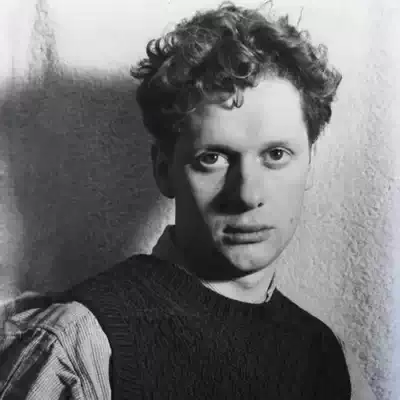
Dylan Thomas
Here In This spring
Here In This spring
Here in this spring, stars float along the void;
Here in this ornamental winter
Down pelts the naked weather;
This summer buries a spring bird.
Symbols are selected from the years'
Slow rounding of four seasons' coasts,
In autumn teach three seasons' fires
And four birds' notes.
I should tell summer from the trees, the worms
Tell, if at all, the winter's storms
Or the funeral of the sun;
I should learn spring by the cuckooing,
And the slug should teach me destruction.
A worm tells summer better than the clock,
The slug's a living calendar of days;
What shall it tell me if a timeless insect
Says the world wears away?
Here in this spring, stars float along the void;
Here in this ornamental winter
Down pelts the naked weather;
This summer buries a spring bird.
Symbols are selected from the years'
Slow rounding of four seasons' coasts,
In autumn teach three seasons' fires
And four birds' notes.
I should tell summer from the trees, the worms
Tell, if at all, the winter's storms
Or the funeral of the sun;
I should learn spring by the cuckooing,
And the slug should teach me destruction.
A worm tells summer better than the clock,
The slug's a living calendar of days;
What shall it tell me if a timeless insect
Says the world wears away?
360
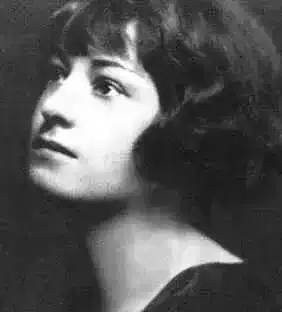
Dorothy Parker
Recurrence
Recurrence
We shall have our little day.
Take my hand and travel still
Round and round the little way,
Up and down the little hill.
It is good to love again;
Scan the renovated skies,
Dip and drive the idling pen,
Sweetly tint the paling lies.
Trace the dripping, pierced heart,
Speak the fair, insistent verse,
Vow to God, and slip apart,
Little better, Little worse.
Would we need not know before
How shall end this prettiness;
One of us must love the more,
One of us shall love the less.
Thus it is, and so it goes;
We shall have our day, my dear.
Where, unwilling, dies the rose
Buds the new, another year.
We shall have our little day.
Take my hand and travel still
Round and round the little way,
Up and down the little hill.
It is good to love again;
Scan the renovated skies,
Dip and drive the idling pen,
Sweetly tint the paling lies.
Trace the dripping, pierced heart,
Speak the fair, insistent verse,
Vow to God, and slip apart,
Little better, Little worse.
Would we need not know before
How shall end this prettiness;
One of us must love the more,
One of us shall love the less.
Thus it is, and so it goes;
We shall have our day, my dear.
Where, unwilling, dies the rose
Buds the new, another year.
414
Dorothy Parker
Faute De Mieux
Faute De Mieux
Travel, trouble, music, art,
A kiss, a frock, a rhyme-
I never said they feed my heart,
But still they pass my time.
Travel, trouble, music, art,
A kiss, a frock, a rhyme-
I never said they feed my heart,
But still they pass my time.
328

Christina Rossetti
The Thread of Life
The Thread of Life
I
The irresponsive silence of the land,
The irresponsive sounding of the sea,
Speak both one message of one sense to me:--
Aloof, aloof, we stand aloof, so stand
Thou too aloof bound with the flawless band
Of inner solitude; we bind not thee;
But who from thy self-chain shall set thee free?
What heart shall touch thy heart? what hand thy hand?--
And I am sometimes proud and sometimes meek,
And sometimes I remember days of old
When fellowship seemed not so far to seek
And all the world and I seemed much less cold,
And at the rainbow's foot lay surely gold,
And hope felt strong and life itself not weak.
II
Thus am I mine own prison. Everything
Around me free and sunny and at ease:
Or if in shadow, in a shade of trees
Which the sun kisses, where the gay birds sing
And where all winds make various murmuring;
Where bees are found, with honey for the bees;
Where sounds are music, and where silences
Are music of an unlike fashioning.
Then gaze I at the merrymaking crew,
And smile a moment and a moment sigh
Thinking: Why can I not rejoice with you?
But soon I put the foolish fancy by:
I am not what I have nor what I do;
But what I was I am, I am even I.
III
Therefore myself is that one only thing
I hold to use or waste, to keep or give;
My sole possession every day I live,
And still mine own despite Time's winnowing.
Ever mine own, while moons and seasons bring
From crudeness ripeness mellow and sanitive;
Ever mine own, till Death shall ply his sieve;
And still mine own, when saints break grave and sing.
And this myself as king unto my King
I give, to Him Who gave Himself for me;
Who gives Himself to me, and bids me sing
A sweet new song of His redeemed set free;
he bids me sing: O death, where is thy sting?
And sing: O grave, where is thy victory?
I
The irresponsive silence of the land,
The irresponsive sounding of the sea,
Speak both one message of one sense to me:--
Aloof, aloof, we stand aloof, so stand
Thou too aloof bound with the flawless band
Of inner solitude; we bind not thee;
But who from thy self-chain shall set thee free?
What heart shall touch thy heart? what hand thy hand?--
And I am sometimes proud and sometimes meek,
And sometimes I remember days of old
When fellowship seemed not so far to seek
And all the world and I seemed much less cold,
And at the rainbow's foot lay surely gold,
And hope felt strong and life itself not weak.
II
Thus am I mine own prison. Everything
Around me free and sunny and at ease:
Or if in shadow, in a shade of trees
Which the sun kisses, where the gay birds sing
And where all winds make various murmuring;
Where bees are found, with honey for the bees;
Where sounds are music, and where silences
Are music of an unlike fashioning.
Then gaze I at the merrymaking crew,
And smile a moment and a moment sigh
Thinking: Why can I not rejoice with you?
But soon I put the foolish fancy by:
I am not what I have nor what I do;
But what I was I am, I am even I.
III
Therefore myself is that one only thing
I hold to use or waste, to keep or give;
My sole possession every day I live,
And still mine own despite Time's winnowing.
Ever mine own, while moons and seasons bring
From crudeness ripeness mellow and sanitive;
Ever mine own, till Death shall ply his sieve;
And still mine own, when saints break grave and sing.
And this myself as king unto my King
I give, to Him Who gave Himself for me;
Who gives Himself to me, and bids me sing
A sweet new song of His redeemed set free;
he bids me sing: O death, where is thy sting?
And sing: O grave, where is thy victory?
263
Christina Rossetti
The Prince's Progress (excerpt)
The Prince's Progress (excerpt)
"Too late for love, too late for joy,
Too late, too late!
You loitered on the road too long,
You trifled at the gate:
The enchanted dove upon her branch
Died without a mate.
The enchanted princess in her tower
Slept, died, behind the grate;
Her heart was starving all this while
You made it wait.
"Ten years ago, five years ago,
One year ago,
Even then you had arrived in time,
Though somewhat slow;
Then you had known her living face
Which now you cannot know:
The frozen fountain would have leaped,
The buds gone on to blow,
The warm south wind would have awaked
To melt the snow.
"Is she fair now as she lies?
Once she was fair;
Meet queen for any kingly king,
With gold-dust on her hair.
Now these are poppies in her locks,
White poppies she must wear;
Must wear a veil to shroud her face
And the want graven there:
Or is the hunger fed at length,
Cast off the care?
"We never saw her with a smile
Or with a frown;
Her bed seemed never soft to her,
Though tossed of down;
She little heeded what she wore,
Kirtle, or wreath, or gown;
We think her white brows often ached
Beneath her crown,
Till silvery hairs showed in her locks
That used to be so brown.
"We never heard her speak in haste;
Her tones were sweet,
And modulated just so much
As it was meet:
Her heart sat silent through the noise
And concourse of the street.
There was no hurry in her hands,
No hurry in her feet;
There was no bliss drew nigh to her,
That she might run to greet.
"You should have wept her yesterday,
Wasting upon her bed:
But wherefore should you weep to-day
That she is dead?
Lo we who love weep not to-day,
But crown her royal head.
Let be these poppies that we strew,
Your roses are too red:
Let be these poppies, not for you
Cut down and spread."
"Too late for love, too late for joy,
Too late, too late!
You loitered on the road too long,
You trifled at the gate:
The enchanted dove upon her branch
Died without a mate.
The enchanted princess in her tower
Slept, died, behind the grate;
Her heart was starving all this while
You made it wait.
"Ten years ago, five years ago,
One year ago,
Even then you had arrived in time,
Though somewhat slow;
Then you had known her living face
Which now you cannot know:
The frozen fountain would have leaped,
The buds gone on to blow,
The warm south wind would have awaked
To melt the snow.
"Is she fair now as she lies?
Once she was fair;
Meet queen for any kingly king,
With gold-dust on her hair.
Now these are poppies in her locks,
White poppies she must wear;
Must wear a veil to shroud her face
And the want graven there:
Or is the hunger fed at length,
Cast off the care?
"We never saw her with a smile
Or with a frown;
Her bed seemed never soft to her,
Though tossed of down;
She little heeded what she wore,
Kirtle, or wreath, or gown;
We think her white brows often ached
Beneath her crown,
Till silvery hairs showed in her locks
That used to be so brown.
"We never heard her speak in haste;
Her tones were sweet,
And modulated just so much
As it was meet:
Her heart sat silent through the noise
And concourse of the street.
There was no hurry in her hands,
No hurry in her feet;
There was no bliss drew nigh to her,
That she might run to greet.
"You should have wept her yesterday,
Wasting upon her bed:
But wherefore should you weep to-day
That she is dead?
Lo we who love weep not to-day,
But crown her royal head.
Let be these poppies that we strew,
Your roses are too red:
Let be these poppies, not for you
Cut down and spread."
164
Christina Rossetti
The One Certainty
The One Certainty
Vanity of vanities, the Preacher saith,
All things are vanity. The eye and ear
Cannot be filled with what they see and hear.
Like early dew, or like the sudden breath
Of wind, or like the grass that withereth,
Is man, tossed to and fro by hope and fear:
So little joy hath he, so little cheer,
Till all things end in the long dust of death.
To-day is still the same as yesterday,
To-morrow also even as one of them;
And there is nothing new under the sun:
Until the ancient race of Time be run,
The old thorns shall grow out of the old stem,
And morning shall be cold and twilight grey.
Vanity of vanities, the Preacher saith,
All things are vanity. The eye and ear
Cannot be filled with what they see and hear.
Like early dew, or like the sudden breath
Of wind, or like the grass that withereth,
Is man, tossed to and fro by hope and fear:
So little joy hath he, so little cheer,
Till all things end in the long dust of death.
To-day is still the same as yesterday,
To-morrow also even as one of them;
And there is nothing new under the sun:
Until the ancient race of Time be run,
The old thorns shall grow out of the old stem,
And morning shall be cold and twilight grey.
289
Christina Rossetti
May
May
I cannot tell you how it was,
But this I know: it came to pass
Upon a bright and sunny day
When May was young; ah, pleasant May!
As yet the poppies were not born
Between the blades of tender corn;
The last egg had not hatched as yet,
Nor any bird foregone its mate.
I cannot tell you what it was,
But this I know: it did but pass.
It passed away with sunny May,
Like all sweet things it passed away,
And left me old, and cold, and gray.
I cannot tell you how it was,
But this I know: it came to pass
Upon a bright and sunny day
When May was young; ah, pleasant May!
As yet the poppies were not born
Between the blades of tender corn;
The last egg had not hatched as yet,
Nor any bird foregone its mate.
I cannot tell you what it was,
But this I know: it did but pass.
It passed away with sunny May,
Like all sweet things it passed away,
And left me old, and cold, and gray.
171
Christina Rossetti
A Toadstool Comes Up In A Night
A Toadstool Comes Up In A Night
A toadstool comes up in a night, -
Learn the lesson, little folk: -
An oak grows on a hundred years,
But then it is an oak.
A toadstool comes up in a night, -
Learn the lesson, little folk: -
An oak grows on a hundred years,
But then it is an oak.
285
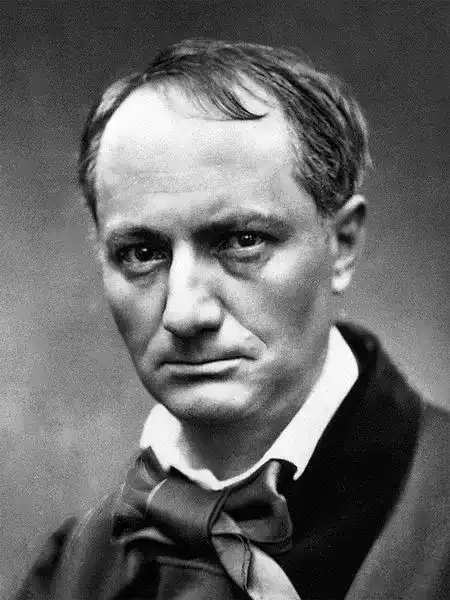
Charles Baudelaire
The Enemy
The Enemy
My youth was nothing but a black storm
Crossed now and then by brilliant suns.
The thunder and the rain so ravage the shores
Nothing's left of the fruit my garden held once.
I should employ the rake and the plow,
Having reached the autumn of ideas,
To restore this inundated ground
Where the deep grooves of water form tombs in the lees.
And who knows if the new flowers you dreamed
Will find in a soil stripped and cleaned
The mystic nourishment that fortifies?
—O Sorrow—O Sorrow—Time consumes Life,
And the obscure enemy that gnaws at my heart
Uses the blood that I lose to play my part.
Translated by William A. Sigler
Submitted by Ryan McGuire
My youth was nothing but a black storm
Crossed now and then by brilliant suns.
The thunder and the rain so ravage the shores
Nothing's left of the fruit my garden held once.
I should employ the rake and the plow,
Having reached the autumn of ideas,
To restore this inundated ground
Where the deep grooves of water form tombs in the lees.
And who knows if the new flowers you dreamed
Will find in a soil stripped and cleaned
The mystic nourishment that fortifies?
—O Sorrow—O Sorrow—Time consumes Life,
And the obscure enemy that gnaws at my heart
Uses the blood that I lose to play my part.
Translated by William A. Sigler
Submitted by Ryan McGuire
1,040
Charles Baudelaire
Get Drunk
Get Drunk
Always be drunk.
That's it!
The great imperative!
In order not to feel
Time's horrid fardel
bruise your shoulders,
grinding you into the earth,
Get drunk and stay that way.
On what?
On wine, poetry, virtue, whatever.
But get drunk.
And if you sometimes happen to wake up
on the porches of a palace,
in the green grass of a ditch,
in the dismal loneliness of your own room,
your drunkenness gone or disappearing,
ask the wind,
the wave,
the star,
the bird,
the clock,
ask everything that flees,
everything that groans
or rolls
or sings,
everything that speaks,
ask what time it is;
and the wind,
the wave,
the star,
the bird,
the clock
will answer you:
"Time to get drunk!
Don't be martyred slaves of Time,
Get drunk!
Stay drunk!
On wine, virtue, poetry, whatever!"
Always be drunk.
That's it!
The great imperative!
In order not to feel
Time's horrid fardel
bruise your shoulders,
grinding you into the earth,
Get drunk and stay that way.
On what?
On wine, poetry, virtue, whatever.
But get drunk.
And if you sometimes happen to wake up
on the porches of a palace,
in the green grass of a ditch,
in the dismal loneliness of your own room,
your drunkenness gone or disappearing,
ask the wind,
the wave,
the star,
the bird,
the clock,
ask everything that flees,
everything that groans
or rolls
or sings,
everything that speaks,
ask what time it is;
and the wind,
the wave,
the star,
the bird,
the clock
will answer you:
"Time to get drunk!
Don't be martyred slaves of Time,
Get drunk!
Stay drunk!
On wine, virtue, poetry, whatever!"
744
Charles Baudelaire
Be Drunk
Be Drunk
You have to be always drunk. That's all there is to it--it's the
only way. So as not to feel the horrible burden of time that breaks
your back and bends you to the earth, you have to be continually
drunk.
But on what?Wine, poetry or virtue, as you wish. But be
drunk.
And if sometimes, on the steps of a palace or the green grass of
a ditch, in the mournful solitude of your room, you wake again,
drunkenness already diminishing or gone, ask the wind, the wave,
the star, the bird, the clock, everything that is flying, everything
that is groaning, everything that is rolling, everything that is
singing, everything that is speaking. . .ask what time it is and
wind, wave, star, bird, clock will answer you:"It is time to be
drunk! So as not to be the martyred slaves of time, be drunk, be
continually drunk! On wine, on poetry or on virtue as you wish."
You have to be always drunk. That's all there is to it--it's the
only way. So as not to feel the horrible burden of time that breaks
your back and bends you to the earth, you have to be continually
drunk.
But on what?Wine, poetry or virtue, as you wish. But be
drunk.
And if sometimes, on the steps of a palace or the green grass of
a ditch, in the mournful solitude of your room, you wake again,
drunkenness already diminishing or gone, ask the wind, the wave,
the star, the bird, the clock, everything that is flying, everything
that is groaning, everything that is rolling, everything that is
singing, everything that is speaking. . .ask what time it is and
wind, wave, star, bird, clock will answer you:"It is time to be
drunk! So as not to be the martyred slaves of time, be drunk, be
continually drunk! On wine, on poetry or on virtue as you wish."
835
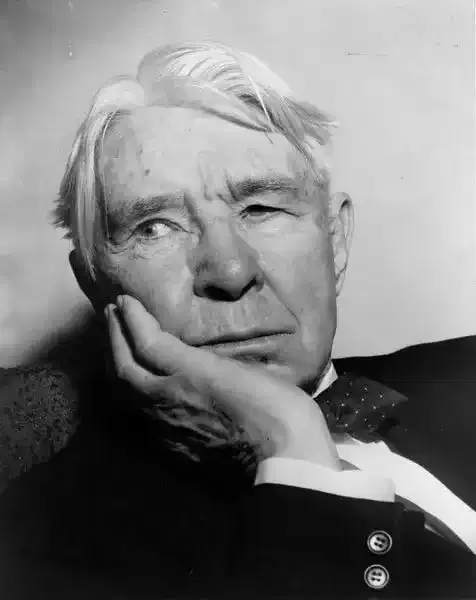
Carl Sandburg
Limited
Limited
I am riding on a limited express, one of the crack trains
of the nation.
Hurtling across the prairie into blue haze and dark air
go fifteen all-steel coaches holding a thousand people.
(All the coaches shall be scrap and rust and all the men
and women laughing in the diners and sleepers shall
pass to ashes.)
I ask a man in the smoker where he is going and he
answers: "Omaha."
I am riding on a limited express, one of the crack trains
of the nation.
Hurtling across the prairie into blue haze and dark air
go fifteen all-steel coaches holding a thousand people.
(All the coaches shall be scrap and rust and all the men
and women laughing in the diners and sleepers shall
pass to ashes.)
I ask a man in the smoker where he is going and he
answers: "Omaha."
412
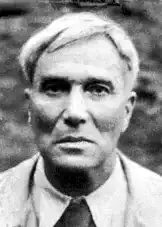
Boris Pasternak
Unique Days
Unique Days
How I remember solstice days
Through many winters long completed!
Each unrepeatable, unique,
And each one countless times repeated.
Of all these days, these only days,
When one rejoiced in the impression
That time had stopped, there grew in years
An unforgettable succession.
Each one of them I can evoke.
The year is to midwinter moving,
The roofs are dripping, roads are soaked,
And on the ice the sun is brooding.
Then lovers hastily are drawn
To one another, vague and dreaming,
And in the heat, upon a tree
The sweating nesting-box is steaming.
And sleepy clock-hands laze away
The clockface wearily ascending.
Eternal, endless is the day,
And the embrace is never-ending.
How I remember solstice days
Through many winters long completed!
Each unrepeatable, unique,
And each one countless times repeated.
Of all these days, these only days,
When one rejoiced in the impression
That time had stopped, there grew in years
An unforgettable succession.
Each one of them I can evoke.
The year is to midwinter moving,
The roofs are dripping, roads are soaked,
And on the ice the sun is brooding.
Then lovers hastily are drawn
To one another, vague and dreaming,
And in the heat, upon a tree
The sweating nesting-box is steaming.
And sleepy clock-hands laze away
The clockface wearily ascending.
Eternal, endless is the day,
And the embrace is never-ending.
548
Boris Pasternak
After the Interval
After the Interval
About three months ago, when first
Upon our open, unprotected
And freezing garden snowstorms burst
In sudden fury, I reflected
That I would shut myself away
And in seclusion write a section
Of winter poems, day by day,
To supplement my spring collection.
But nonsense piled up mountain-high,
Like snow-drifts hindering and stifling
And half the winter had gone by,
Against all hopes, in petty trifling.
I understood, alas, too late
Why winter-while the snow was falling,
Piercing the darkness with its flakes-
From outside at my house was calling;
And while with numb white-frozen lips
It whispered, urging me to hurry,
I sharpened pencils, played with clips,
Made feeble jokes and did not worry.
While at my desk I dawdled on
By lamp-light on an early morning,
The winter had appeared and gone-
A wasted and unheeded warning.
About three months ago, when first
Upon our open, unprotected
And freezing garden snowstorms burst
In sudden fury, I reflected
That I would shut myself away
And in seclusion write a section
Of winter poems, day by day,
To supplement my spring collection.
But nonsense piled up mountain-high,
Like snow-drifts hindering and stifling
And half the winter had gone by,
Against all hopes, in petty trifling.
I understood, alas, too late
Why winter-while the snow was falling,
Piercing the darkness with its flakes-
From outside at my house was calling;
And while with numb white-frozen lips
It whispered, urging me to hurry,
I sharpened pencils, played with clips,
Made feeble jokes and did not worry.
While at my desk I dawdled on
By lamp-light on an early morning,
The winter had appeared and gone-
A wasted and unheeded warning.
603
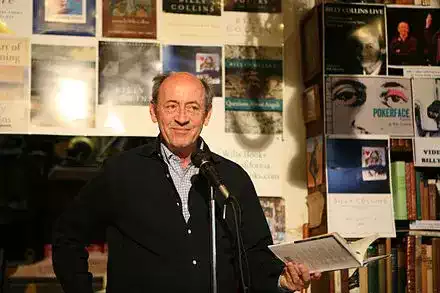
Billy Collins
Picnic, Lightning
Picnic, Lightning
It is possible to be struck by a
meteor or a single-engine plane while
reading in a chair at home. Pedestrians
are flattened by safes falling from
rooftops mostly within the panels of
the comics, but still, we know it is
possible, as well as the flash of
summer lightning, the thermos toppling
over, spilling out on the grass.
And we know the message can be
delivered from within. The heart, no
valentine, decides to quit after
lunch, the power shut off like a
switch, or a tiny dark ship is
unmoored into the flow of the body's
rivers, the brain a monastery,
defenseless on the shore. This is
what I think about when I shovel
compost into a wheelbarrow, and when
I fill the long flower boxes, then
press into rows the limp roots of red
impatiens -- the instant hand of Death
always ready to burst forth from the
sleeve of his voluminous cloak. Then
the soil is full of marvels, bits of
leaf like flakes off a fresco,
red-brown pine needles, a beetle quick
to burrow back under the loam. Then
the wheelbarrow is a wilder blue, the
clouds a brighter white, and all I
hear is the rasp of the steel edge
against a round stone, the small
plants singing with lifted faces, and
the click of the sundial as one hour
sweeps into the next.
It is possible to be struck by a
meteor or a single-engine plane while
reading in a chair at home. Pedestrians
are flattened by safes falling from
rooftops mostly within the panels of
the comics, but still, we know it is
possible, as well as the flash of
summer lightning, the thermos toppling
over, spilling out on the grass.
And we know the message can be
delivered from within. The heart, no
valentine, decides to quit after
lunch, the power shut off like a
switch, or a tiny dark ship is
unmoored into the flow of the body's
rivers, the brain a monastery,
defenseless on the shore. This is
what I think about when I shovel
compost into a wheelbarrow, and when
I fill the long flower boxes, then
press into rows the limp roots of red
impatiens -- the instant hand of Death
always ready to burst forth from the
sleeve of his voluminous cloak. Then
the soil is full of marvels, bits of
leaf like flakes off a fresco,
red-brown pine needles, a beetle quick
to burrow back under the loam. Then
the wheelbarrow is a wilder blue, the
clouds a brighter white, and all I
hear is the rasp of the steel edge
against a round stone, the small
plants singing with lifted faces, and
the click of the sundial as one hour
sweeps into the next.
326
Billy Collins
Nostalgia
Nostalgia
Remember the 1340's? We were doing a dance called the Catapult.
You always wore brown, the color craze of the decade,
and I was draped in one of those capes that were popular,
the ones with unicorns and pomegranates in needlework.
Everyone would pause for beer and onions in the afternoon,
and at night we would play a game called "Find the Cow."
Everything was hand-lettered then, not like today.
Where has the summer of 1572 gone? Brocade and sonnet
marathons were the rage. We used to dress up in the flags
of rival baronies and conquer one another in cold rooms of stone.
Out on the dance floor we were all doing the Struggle
while your sister practiced the Daphne all alone in her room.
We borrowed the jargon of farriers for our slang.
These days language seems transparent a badly broken code.
The 1790's will never come again. Childhood was big.
People would take walks to the very tops of hills
and write down what they saw in their journals without speaking.
Our collars were high and our hats were extremely soft.
We would surprise each other with alphabets made of twigs.
It was a wonderful time to be alive, or even dead.
I am very fond of the period between 1815 and 1821.
Europe trembled while we sat still for our portraits.
And I would love to return to 1901 if only for a moment,
time enough to wind up a music box and do a few dance steps,
or shoot me back to 1922 or 1941, or at least let me
recapture the serenity of last month when we picked
berries and glided through afternoons in a canoe.
Even this morning would be an improvement over the present.
I was in the garden then, surrounded by the hum of bees
and the Latin names of flowers, watching the early light
flash off the slanted windows of the greenhouse
and silver the limbs on the rows of dark hemlocks.
As usual, I was thinking about the moments of the past,
letting my memory rush over them like water
rushing over the stones on the bottom of a stream.
I was even thinking a little about the future, that place
where people are doing a dance we cannot imagine,
a dance whose name we can only guess.
Remember the 1340's? We were doing a dance called the Catapult.
You always wore brown, the color craze of the decade,
and I was draped in one of those capes that were popular,
the ones with unicorns and pomegranates in needlework.
Everyone would pause for beer and onions in the afternoon,
and at night we would play a game called "Find the Cow."
Everything was hand-lettered then, not like today.
Where has the summer of 1572 gone? Brocade and sonnet
marathons were the rage. We used to dress up in the flags
of rival baronies and conquer one another in cold rooms of stone.
Out on the dance floor we were all doing the Struggle
while your sister practiced the Daphne all alone in her room.
We borrowed the jargon of farriers for our slang.
These days language seems transparent a badly broken code.
The 1790's will never come again. Childhood was big.
People would take walks to the very tops of hills
and write down what they saw in their journals without speaking.
Our collars were high and our hats were extremely soft.
We would surprise each other with alphabets made of twigs.
It was a wonderful time to be alive, or even dead.
I am very fond of the period between 1815 and 1821.
Europe trembled while we sat still for our portraits.
And I would love to return to 1901 if only for a moment,
time enough to wind up a music box and do a few dance steps,
or shoot me back to 1922 or 1941, or at least let me
recapture the serenity of last month when we picked
berries and glided through afternoons in a canoe.
Even this morning would be an improvement over the present.
I was in the garden then, surrounded by the hum of bees
and the Latin names of flowers, watching the early light
flash off the slanted windows of the greenhouse
and silver the limbs on the rows of dark hemlocks.
As usual, I was thinking about the moments of the past,
letting my memory rush over them like water
rushing over the stones on the bottom of a stream.
I was even thinking a little about the future, that place
where people are doing a dance we cannot imagine,
a dance whose name we can only guess.
399
Billy Collins
I Go Back To The House For A Book
I Go Back To The House For A Book
I turn around on the gravel and go back to the house for a book, something to read at
the doctor's office, and while I am inside, running the finger of inquisition along a shelf,
another me that did not bother to go back to the house for a book heads out on his
own, rolls down the driveway, and swings left toward town, a ghost in his ghost car,
another knot in the string of time, a good three minutes ahead of me — a spacing
that will now continue for the rest of my life.
I turn around on the gravel and go back to the house for a book, something to read at
the doctor's office, and while I am inside, running the finger of inquisition along a shelf,
another me that did not bother to go back to the house for a book heads out on his
own, rolls down the driveway, and swings left toward town, a ghost in his ghost car,
another knot in the string of time, a good three minutes ahead of me — a spacing
that will now continue for the rest of my life.
189

Anne Brontë
Self Communion
Self Communion
'The mist is resting on the hill;
The smoke is hanging in the air;
The very clouds are standing still:
A breathless calm broods everywhere.
Thou pilgrim through this vale of tears,
Thou, too, a little moment cease
Thy anxious toil and fluttering fears,
And rest thee, for a while, in peace.'
'I would, but Time keeps working still
And moving on for good or ill:
He will not rest or stay.
In pain or ease, in smiles or tears,
He still keeps adding to my years
And stealing life away.
His footsteps in the ceaseless sound
Of yonder clock I seem to hear,
That through this stillness so profound
Distinctly strikes the vacant ear.
For ever striding on and on,
He pauses not by night or day;
And all my life will soon be gone
As these past years have slipped away.
He took my childhood long ago,
And then my early youth; and lo,
He steals away my prime!
I cannot see how fast it goes,
But well my inward spirit knows
The wasting power of time.'
'Time steals thy moments, drinks thy breath,
Changes and wastes thy mortal frame;
But though he gives the clay to death,
He cannot touch the inward flame.
Nay, though he steals thy years away,
Their memory is left thee still,
And every month and every day
Leaves some effect of good or ill.
The wise will find in Memory's store
A help for that which lies before
To guide their course aright;
Then, hush thy plaints and calm thy fears;
Look back on these departed years,
And, say, what meets thy sight?'
'I see, far back, a helpless child,
Feeble and full of causeless fears,
Simple and easily beguiled
To credit all it hears.
More timid than the wild wooddove,
Yet trusting to another's care,
And finding in protecting love
Its only refuge from despair, Its
only balm for every woe,
The only bliss its soul can know;
Still hiding in its breast.
A tender heart too prone to weep,
A love so earnest, strong, and deep
It could not be expressed.
Poor helpless thing! what can it do
Life's stormy cares and toils among; How
tread this weary desert through
That awes the brave and tires the strong?
Where shall it centre so much trust
Where truth maintains so little sway,
Where seeming fruit is bitter dust,
And kisses oft to death betray?
How oft must sin and falsehood grieve
A heart so ready to believe,
And willing to admire!
With strength so feeble, fears so strong,
Amid this selfish bustling throng,
How will it faint and tire!
That tender love so warm and deep,
How can it flourish here below?
What bitter floods of tears must steep
The stony soil where it would grow!
O earth! a rocky breast is thine A
hard soil and a cruel clime,
Where tender plants must droop and pine,
Or alter with transforming time.
That soul, that clings to sympathy,
As ivy clasps the forest tree,
How can it stand alone?
That heart so prone to overflow
E'en at the thought of others' woe,
How will it bear its own?
How, if a sparrow's death can wring
Such bitter tearfloods
from the eye,
Will it behold the suffering
Of struggling, lost humanity?
The torturing pain, the pining grief,
The sindegraded
misery,
The anguish that defies relief?'
'Look back again What
dost thou see?'
'I see one kneeling on the sod,
With infant hands upraised to Heaven,
A young heart feeling after God,
Oft baffled, never backward driven.
Mistaken oft, and oft astray,
It strives to find the narrow way,
But gropes and toils alone:
That inner life of strife and tears,
Of kindling hopes and lowering fears
To none but God is known.
'Tis better thus; for man would scorn
Those childish prayers, those artless cries,
That darkling spirit tossed and torn,
But God will not despise!
We may regret such waste of tears
Such darkly toiling misery,
Such 'wildering doubts and harrowing fears,
Where joy and thankfulness should be;
But wait, and Heaven will send relief.
Let patience have her perfect work:
Lo, strength and wisdom spring from grief,
And joys behind afflictions lurk!
It asked for light, and it is heard;
God grants that struggling soul repose
And, guided by His holy word,
It wiser than its teachers grows.
It gains the upward path at length,
And passes on from strength to strength,
Leaning on Heaven the while:
Night's shades departing one by one,
It sees at last the rising sun,
And feels his cheering smile.
In all its darkness and distress
For light it sought, to God it cried;
And through the pathless wilderness,
He was its comfort and its guide.'
'So was it, and so will it be:
Thy God will guide and strengthen thee;
His goodness cannot fail.
The sun that on thy morning rose
Will light thee to the evening's close,
Whatever storms assail.'
'God alters not; but Time on me
A wide and wondrous change has wrought:
And in these parted years I see
Cause for grave care and saddening thought.
I see that time, and toil, and truth,
An inward hardness can impart, Can
freeze the generous blood of youth,
And steel full fast the tender heart.'
'Bless God for that divine decree! That
hardness comes with misery,
And suffering deadens pain;
That at the frequent sight of woe
E'en Pity's tears forget to flow,
If reason still remain!
Reason, with conscience by her side,
But gathers strength from toil and truth;
And she will prove a surer guide
Than those sweet instincts of our youth.
Thou that hast known such anguish sore
In weeping where thou couldst not bless,
Canst thou that softness so deplore That
suffering, shrinking tenderness?
Thou that hast felt what cankering care
A loving heart is doomed to bear,
Say, how canst thou regret
That fires unfed must fall away,
Long droughts can dry the softest clay,
And cold will cold beget?'
'Nay, but 'tis hard to feel that chill
Come creeping o'er the shuddering heart.
Love may be full of pain, but still,
'Tis sad to see it so depart, To
watch that fire whose genial glow
Was formed to comfort and to cheer,
For want of fuel, fading so,
Sinking to embers dull and drear, To
see the soft soil turned to stone
For lack of kindly showers, To
see those yearnings of the breast,
Pining to bless and to be blessed,
Drop withered, frozen one by one,
Till, centred in itself alone,
It wastes its blighted powers.
Oh, I have known a wondrous joy
In early friendship's pure delight, A
genial bliss that could not cloy My
sun by day, my moon by night.
Absence, indeed, was sore distress,
And thought of death was anguish keen,
And there was cruel bitterness
When jarring discords rose between;
And sometimes it was grief to know
My fondness was but half returned.
But this was nothing to the woe
With which another truth was learned: That
I must check, or nurse apart,
Full many an impulse of the heart
And many a darling thought:
What my soul worshipped, sought, and prized,
Were slighted, questioned, or despised;
This pained me more than aught.
And as my love the warmer glowed
The deeper would that anguish sink,
That this dark stream between us flowed,
Though both stood bending o'er its brink;
Until, as last, I learned to bear
A colder heart within my breast;
To share such thoughts as I could share,
And calmly keep the rest.
I saw that they were sundered now,
The trees that at the root were one:
They yet might mingle leaf and bough,
But still the stems must stand alone.
O love is sweet of every kind!
'Tis sweet the helpless to befriend,
To watch the young unfolding mind,
To guide, to shelter, and defend:
To lavish tender toil and care,
And ask for nothing back again,
But that our smiles a blessing bear
And all our toil be not in vain.
And sweeter far than words can tell
Their love whose ardent bosoms swell
With thoughts they need not hide;
Where fortune frowns not on their joy,
And Prudence seeks not to destroy,
Nor Reason to deride.
Whose love may freely gush and flow,
Unchecked, unchilled by doubt or fear,
For in their inmost hearts they know
It is not vainly nourished there.
They know that in a kindred breast
Their long desires have found a home,
Where heart and soul may kindly rest,
Weary and lorn no more to roam.
Their dreams of bliss were not in vain,
As they love they are loved again,
And they can bless as they are blessed.
O vainly might I seek to show
The joys from happy love that flow!
The warmest words are all too cold
The secret transports to unfold
Of simplest word or softest sigh,
Or from the glancing of an eye
To say what rapture beams;
One look that bids our fears depart,
And well assures the trusting heart.
It beats not in the world alone Such
speechless rapture I have known,
But only in my dreams.
My life has been a morning sky
Where Hope her rainbow glories cast
O'er kindling vapours far and nigh:
And, if the colours faded fast,
Ere one bright hue had died away
Another o'er its ashes gleamed;
And if the lower clouds were grey,
The mists above more brightly beamed.
But not for long; at
length behold,
Those tints less warm, less radiant grew;
Till but one streak of paly gold
Glimmered through clouds of saddening hue.
And I am calmly waiting, now,
To see that also pass away,
And leave, above the dark hill's brow,
A rayless arch of sombre grey.'
'So must it fare with all thy race
Who seek in earthly things their joy:
So fading hopes lost hopes shall chase
Till Disappointment all destroy.
But they that fix their hopes on high
Shall, in the bluerefulgent
sky,
The sun's transcendent light,
Behold a purer, deeper glow
Than these uncertain gleams can show,
However fair or bright.
O weak of heart! why thus deplore
That Truth will Fancy's dreams destroy?
Did I not tell thee, years before,
Life was for labour, not for joy?
Cease, selfish spirit, to repine;
O'er thine own ills no longer grieve;
Lo, there are sufferings worse than thine,
Which thou mayst labour to relieve.
If Time indeed too swiftly flies,
Gird on thine armour, haste, arise,
For thou hast much to do; To
lighten woe, to trample sin,
And foes without and foes within
To combat and subdue.
Earth hath too much of sin and pain:
The bitter cup the
binding chain
Dost thou indeed lament?
Let not thy weary spirit sink;
But strive not
by one drop or link
The evil to augment.
Strive rather thou, by peace and joy,
The bitter poison to destroy,
The cruel chain to break.
O strive! and if thy strength be small,
Strive yet the more, and spend it all
For Love and Wisdom's sake!'
'O I have striven both hard and long
But many are my foes and strong.
My gains are light my
progress slow;
For hard's the way I have to go,
And my worst enemies, I know,
Are these within my breast;
And it is hard to toil for aye, Through
sultry noon and twilight grey
To toil and never rest.'
'There is a rest beyond the grave,
A lasting rest from pain and sin,
Where dwell the faithful and the brave;
But they must strive who seek to win.'
"Show me that rest I
ask no more.
Oh, drive these misty doubts away;
And let me see that sunny shore,
However far away!
However wide this rolling sea,
However wild my passage be,
Howe'er my bark be tempest tossed,
May it but reach that haven fair,
May I but land and wander there,
With those that I have loved and lost:
With such a glorious hope in view,
I'll gladly toil and suffer too.
Rest without toil I would not ask;
I would not shun the hardest task:
Toil is my glory Grief
my gain,
If God's approval they obtain.
Could I but hear my Saviour say, "
I know thy patience and thy love;
How thou hast held the narrow way,
For my sake laboured night and day,
And watched, and striven with them that strove;
And still hast borne, and didst not faint," Oh,
this would be reward indeed!'
'Press forward, then, without complaint;
Labour and love and
such shall be thy meed.'
'The mist is resting on the hill;
The smoke is hanging in the air;
The very clouds are standing still:
A breathless calm broods everywhere.
Thou pilgrim through this vale of tears,
Thou, too, a little moment cease
Thy anxious toil and fluttering fears,
And rest thee, for a while, in peace.'
'I would, but Time keeps working still
And moving on for good or ill:
He will not rest or stay.
In pain or ease, in smiles or tears,
He still keeps adding to my years
And stealing life away.
His footsteps in the ceaseless sound
Of yonder clock I seem to hear,
That through this stillness so profound
Distinctly strikes the vacant ear.
For ever striding on and on,
He pauses not by night or day;
And all my life will soon be gone
As these past years have slipped away.
He took my childhood long ago,
And then my early youth; and lo,
He steals away my prime!
I cannot see how fast it goes,
But well my inward spirit knows
The wasting power of time.'
'Time steals thy moments, drinks thy breath,
Changes and wastes thy mortal frame;
But though he gives the clay to death,
He cannot touch the inward flame.
Nay, though he steals thy years away,
Their memory is left thee still,
And every month and every day
Leaves some effect of good or ill.
The wise will find in Memory's store
A help for that which lies before
To guide their course aright;
Then, hush thy plaints and calm thy fears;
Look back on these departed years,
And, say, what meets thy sight?'
'I see, far back, a helpless child,
Feeble and full of causeless fears,
Simple and easily beguiled
To credit all it hears.
More timid than the wild wooddove,
Yet trusting to another's care,
And finding in protecting love
Its only refuge from despair, Its
only balm for every woe,
The only bliss its soul can know;
Still hiding in its breast.
A tender heart too prone to weep,
A love so earnest, strong, and deep
It could not be expressed.
Poor helpless thing! what can it do
Life's stormy cares and toils among; How
tread this weary desert through
That awes the brave and tires the strong?
Where shall it centre so much trust
Where truth maintains so little sway,
Where seeming fruit is bitter dust,
And kisses oft to death betray?
How oft must sin and falsehood grieve
A heart so ready to believe,
And willing to admire!
With strength so feeble, fears so strong,
Amid this selfish bustling throng,
How will it faint and tire!
That tender love so warm and deep,
How can it flourish here below?
What bitter floods of tears must steep
The stony soil where it would grow!
O earth! a rocky breast is thine A
hard soil and a cruel clime,
Where tender plants must droop and pine,
Or alter with transforming time.
That soul, that clings to sympathy,
As ivy clasps the forest tree,
How can it stand alone?
That heart so prone to overflow
E'en at the thought of others' woe,
How will it bear its own?
How, if a sparrow's death can wring
Such bitter tearfloods
from the eye,
Will it behold the suffering
Of struggling, lost humanity?
The torturing pain, the pining grief,
The sindegraded
misery,
The anguish that defies relief?'
'Look back again What
dost thou see?'
'I see one kneeling on the sod,
With infant hands upraised to Heaven,
A young heart feeling after God,
Oft baffled, never backward driven.
Mistaken oft, and oft astray,
It strives to find the narrow way,
But gropes and toils alone:
That inner life of strife and tears,
Of kindling hopes and lowering fears
To none but God is known.
'Tis better thus; for man would scorn
Those childish prayers, those artless cries,
That darkling spirit tossed and torn,
But God will not despise!
We may regret such waste of tears
Such darkly toiling misery,
Such 'wildering doubts and harrowing fears,
Where joy and thankfulness should be;
But wait, and Heaven will send relief.
Let patience have her perfect work:
Lo, strength and wisdom spring from grief,
And joys behind afflictions lurk!
It asked for light, and it is heard;
God grants that struggling soul repose
And, guided by His holy word,
It wiser than its teachers grows.
It gains the upward path at length,
And passes on from strength to strength,
Leaning on Heaven the while:
Night's shades departing one by one,
It sees at last the rising sun,
And feels his cheering smile.
In all its darkness and distress
For light it sought, to God it cried;
And through the pathless wilderness,
He was its comfort and its guide.'
'So was it, and so will it be:
Thy God will guide and strengthen thee;
His goodness cannot fail.
The sun that on thy morning rose
Will light thee to the evening's close,
Whatever storms assail.'
'God alters not; but Time on me
A wide and wondrous change has wrought:
And in these parted years I see
Cause for grave care and saddening thought.
I see that time, and toil, and truth,
An inward hardness can impart, Can
freeze the generous blood of youth,
And steel full fast the tender heart.'
'Bless God for that divine decree! That
hardness comes with misery,
And suffering deadens pain;
That at the frequent sight of woe
E'en Pity's tears forget to flow,
If reason still remain!
Reason, with conscience by her side,
But gathers strength from toil and truth;
And she will prove a surer guide
Than those sweet instincts of our youth.
Thou that hast known such anguish sore
In weeping where thou couldst not bless,
Canst thou that softness so deplore That
suffering, shrinking tenderness?
Thou that hast felt what cankering care
A loving heart is doomed to bear,
Say, how canst thou regret
That fires unfed must fall away,
Long droughts can dry the softest clay,
And cold will cold beget?'
'Nay, but 'tis hard to feel that chill
Come creeping o'er the shuddering heart.
Love may be full of pain, but still,
'Tis sad to see it so depart, To
watch that fire whose genial glow
Was formed to comfort and to cheer,
For want of fuel, fading so,
Sinking to embers dull and drear, To
see the soft soil turned to stone
For lack of kindly showers, To
see those yearnings of the breast,
Pining to bless and to be blessed,
Drop withered, frozen one by one,
Till, centred in itself alone,
It wastes its blighted powers.
Oh, I have known a wondrous joy
In early friendship's pure delight, A
genial bliss that could not cloy My
sun by day, my moon by night.
Absence, indeed, was sore distress,
And thought of death was anguish keen,
And there was cruel bitterness
When jarring discords rose between;
And sometimes it was grief to know
My fondness was but half returned.
But this was nothing to the woe
With which another truth was learned: That
I must check, or nurse apart,
Full many an impulse of the heart
And many a darling thought:
What my soul worshipped, sought, and prized,
Were slighted, questioned, or despised;
This pained me more than aught.
And as my love the warmer glowed
The deeper would that anguish sink,
That this dark stream between us flowed,
Though both stood bending o'er its brink;
Until, as last, I learned to bear
A colder heart within my breast;
To share such thoughts as I could share,
And calmly keep the rest.
I saw that they were sundered now,
The trees that at the root were one:
They yet might mingle leaf and bough,
But still the stems must stand alone.
O love is sweet of every kind!
'Tis sweet the helpless to befriend,
To watch the young unfolding mind,
To guide, to shelter, and defend:
To lavish tender toil and care,
And ask for nothing back again,
But that our smiles a blessing bear
And all our toil be not in vain.
And sweeter far than words can tell
Their love whose ardent bosoms swell
With thoughts they need not hide;
Where fortune frowns not on their joy,
And Prudence seeks not to destroy,
Nor Reason to deride.
Whose love may freely gush and flow,
Unchecked, unchilled by doubt or fear,
For in their inmost hearts they know
It is not vainly nourished there.
They know that in a kindred breast
Their long desires have found a home,
Where heart and soul may kindly rest,
Weary and lorn no more to roam.
Their dreams of bliss were not in vain,
As they love they are loved again,
And they can bless as they are blessed.
O vainly might I seek to show
The joys from happy love that flow!
The warmest words are all too cold
The secret transports to unfold
Of simplest word or softest sigh,
Or from the glancing of an eye
To say what rapture beams;
One look that bids our fears depart,
And well assures the trusting heart.
It beats not in the world alone Such
speechless rapture I have known,
But only in my dreams.
My life has been a morning sky
Where Hope her rainbow glories cast
O'er kindling vapours far and nigh:
And, if the colours faded fast,
Ere one bright hue had died away
Another o'er its ashes gleamed;
And if the lower clouds were grey,
The mists above more brightly beamed.
But not for long; at
length behold,
Those tints less warm, less radiant grew;
Till but one streak of paly gold
Glimmered through clouds of saddening hue.
And I am calmly waiting, now,
To see that also pass away,
And leave, above the dark hill's brow,
A rayless arch of sombre grey.'
'So must it fare with all thy race
Who seek in earthly things their joy:
So fading hopes lost hopes shall chase
Till Disappointment all destroy.
But they that fix their hopes on high
Shall, in the bluerefulgent
sky,
The sun's transcendent light,
Behold a purer, deeper glow
Than these uncertain gleams can show,
However fair or bright.
O weak of heart! why thus deplore
That Truth will Fancy's dreams destroy?
Did I not tell thee, years before,
Life was for labour, not for joy?
Cease, selfish spirit, to repine;
O'er thine own ills no longer grieve;
Lo, there are sufferings worse than thine,
Which thou mayst labour to relieve.
If Time indeed too swiftly flies,
Gird on thine armour, haste, arise,
For thou hast much to do; To
lighten woe, to trample sin,
And foes without and foes within
To combat and subdue.
Earth hath too much of sin and pain:
The bitter cup the
binding chain
Dost thou indeed lament?
Let not thy weary spirit sink;
But strive not
by one drop or link
The evil to augment.
Strive rather thou, by peace and joy,
The bitter poison to destroy,
The cruel chain to break.
O strive! and if thy strength be small,
Strive yet the more, and spend it all
For Love and Wisdom's sake!'
'O I have striven both hard and long
But many are my foes and strong.
My gains are light my
progress slow;
For hard's the way I have to go,
And my worst enemies, I know,
Are these within my breast;
And it is hard to toil for aye, Through
sultry noon and twilight grey
To toil and never rest.'
'There is a rest beyond the grave,
A lasting rest from pain and sin,
Where dwell the faithful and the brave;
But they must strive who seek to win.'
"Show me that rest I
ask no more.
Oh, drive these misty doubts away;
And let me see that sunny shore,
However far away!
However wide this rolling sea,
However wild my passage be,
Howe'er my bark be tempest tossed,
May it but reach that haven fair,
May I but land and wander there,
With those that I have loved and lost:
With such a glorious hope in view,
I'll gladly toil and suffer too.
Rest without toil I would not ask;
I would not shun the hardest task:
Toil is my glory Grief
my gain,
If God's approval they obtain.
Could I but hear my Saviour say, "
I know thy patience and thy love;
How thou hast held the narrow way,
For my sake laboured night and day,
And watched, and striven with them that strove;
And still hast borne, and didst not faint," Oh,
this would be reward indeed!'
'Press forward, then, without complaint;
Labour and love and
such shall be thy meed.'
91
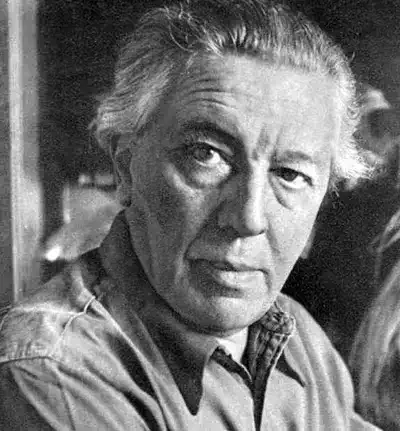
André Breton
Less Time
Less Time
Less time than it takes to say it, less tears than it takes to die; I've taken account of
everything,
there you have it. I've made a census of the stones, they are as numerous as my
fingers and some
others; I've distributed some pamphlets to the plants, but not all were willing to accept
them. I've
kept company with music for a second only and now I no longer know what to think of
suicide, for
if I ever want to part from myself, the exit is on this side and, I add mischievously, the
entrance, the
re-entrance is on the other. You see what you still have to do. Hours, grief, I don't
keep a
reasonable account of them; I'm alone, I look out of the window; there is no passerby,
or rather no
one passes (underline passes). You don't know this man? It's Mr. Same. May I
introduce Madam
Madam? And their children. Then I turn back on my steps, my steps turn back too, but
I don't
know exactly what they turn back on. I consult a schedule; the names of the towns
have been
replaced by the names of people who have been quite close to me. Shall I go to A,
return to B,
change at X? Yes, of course I'll change at X. Provided I don't miss the connection with
boredom!
There we are: boredom, beautiful parallels, ah! how beautiful the parallels are under
God's
perpendicular.
Less time than it takes to say it, less tears than it takes to die; I've taken account of
everything,
there you have it. I've made a census of the stones, they are as numerous as my
fingers and some
others; I've distributed some pamphlets to the plants, but not all were willing to accept
them. I've
kept company with music for a second only and now I no longer know what to think of
suicide, for
if I ever want to part from myself, the exit is on this side and, I add mischievously, the
entrance, the
re-entrance is on the other. You see what you still have to do. Hours, grief, I don't
keep a
reasonable account of them; I'm alone, I look out of the window; there is no passerby,
or rather no
one passes (underline passes). You don't know this man? It's Mr. Same. May I
introduce Madam
Madam? And their children. Then I turn back on my steps, my steps turn back too, but
I don't
know exactly what they turn back on. I consult a schedule; the names of the towns
have been
replaced by the names of people who have been quite close to me. Shall I go to A,
return to B,
change at X? Yes, of course I'll change at X. Provided I don't miss the connection with
boredom!
There we are: boredom, beautiful parallels, ah! how beautiful the parallels are under
God's
perpendicular.
1,003
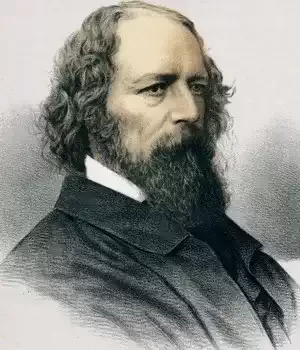
Alfred Lord Tennyson
In Memoriam A. H. H.: 2. Old Yew, which graspest at the sto
In Memoriam A. H. H.: 2. Old Yew, which graspest at the sto
Old Yew, which graspest at the stones
That name the under-lying dead,
Thy fibres net the dreamless head,
Thy roots are wrapt about the bones.
The seasons bring the flower again,
And bring the firstling to the flock;
And in the dusk of thee, the clock
Beats out the little lives of men.
O not for thee the glow, the bloom,
Who changest not in any gale,
Nor branding summer suns avail
To touch thy thousand years of gloom:
And gazing on thee, sullen tree,
Sick for thy stubborn hardihood,
I seem to fail from out my blood
And grow incorporate into thee.
Old Yew, which graspest at the stones
That name the under-lying dead,
Thy fibres net the dreamless head,
Thy roots are wrapt about the bones.
The seasons bring the flower again,
And bring the firstling to the flock;
And in the dusk of thee, the clock
Beats out the little lives of men.
O not for thee the glow, the bloom,
Who changest not in any gale,
Nor branding summer suns avail
To touch thy thousand years of gloom:
And gazing on thee, sullen tree,
Sick for thy stubborn hardihood,
I seem to fail from out my blood
And grow incorporate into thee.
427
Alfred Lord Tennyson
In Memoriam A. H. H.: 118. Contemplate all this work of Tim
In Memoriam A. H. H.: 118. Contemplate all this work of Tim
Contemplate all this work of Time,
The giant labouring in his youth;
Nor dream of human love and truth,
As dying Nature's earth and lime;
But trust that those we call the dead
Are breathers of an ampler day
For ever nobler ends. They say,
The solid earth whereon we tread
In tracts of fluent heat began,
And grew to seeming-random forms,
The seeming prey of cyclic storms,
Till at the last arose the man;
Who throve and branch'd from clime to clime,
The herald of a higher race,
And of himself in higher place,
If so he type this work of time
Within himself, from more to more;
Or, crown'd with attributes of woe
Like glories, move his course, and show
That life is not as idle ore,
But iron dug from central gloom,
And heated hot with burning fears,
And dipt in baths of hissing tears,
And batter'd with the shocks of doom
To shape and use. Arise and fly
The reeling Faun, the sensual feast;
Move upward, working out the beast,
And let the ape and tiger die.
Contemplate all this work of Time,
The giant labouring in his youth;
Nor dream of human love and truth,
As dying Nature's earth and lime;
But trust that those we call the dead
Are breathers of an ampler day
For ever nobler ends. They say,
The solid earth whereon we tread
In tracts of fluent heat began,
And grew to seeming-random forms,
The seeming prey of cyclic storms,
Till at the last arose the man;
Who throve and branch'd from clime to clime,
The herald of a higher race,
And of himself in higher place,
If so he type this work of time
Within himself, from more to more;
Or, crown'd with attributes of woe
Like glories, move his course, and show
That life is not as idle ore,
But iron dug from central gloom,
And heated hot with burning fears,
And dipt in baths of hissing tears,
And batter'd with the shocks of doom
To shape and use. Arise and fly
The reeling Faun, the sensual feast;
Move upward, working out the beast,
And let the ape and tiger die.
417
Alfred Lord Tennyson
All Things will Die
All Things will Die
All Things will Die
Clearly the blue river chimes in its flowing
Under my eye;
Warmly and broadly the south winds are blowing
Over the sky.
One after another the white clouds are fleeting;
Every heart this May morning in joyance is beating
Full merrily;
Yet all things must die.
The stream will cease to flow;
The wind will cease to blow;
The clouds will cease to fleet;
The heart will cease to beat;
For all things must die.
All things must die.
Spring will come never more.
O, vanity!
Death waits at the door.
See! our friends are all forsaking
The wine and the merrymaking.
We are call’d–we must go.
Laid low, very low,
In the dark we must lie.
The merry glees are still;
The voice of the bird
Shall no more be heard,
Nor the wind on the hill.
O, misery!
Hark! death is calling
While I speak to ye,
The jaw is falling,
The red cheek paling,
The strong limbs failing;
Ice with the warm blood mixing;
The eyeballs fixing.
Nine times goes the passing bell:
Ye merry souls, farewell.
The old earth
Had a birth,
As all men know,
Long ago.
And the old earth must die.
So let the warm winds range,
And the blue wave beat the shore;
For even and morn
Ye will never see
Thro’ eternity.
All things were born.
Ye will come never more,
For all things must die.
All Things will Die
Clearly the blue river chimes in its flowing
Under my eye;
Warmly and broadly the south winds are blowing
Over the sky.
One after another the white clouds are fleeting;
Every heart this May morning in joyance is beating
Full merrily;
Yet all things must die.
The stream will cease to flow;
The wind will cease to blow;
The clouds will cease to fleet;
The heart will cease to beat;
For all things must die.
All things must die.
Spring will come never more.
O, vanity!
Death waits at the door.
See! our friends are all forsaking
The wine and the merrymaking.
We are call’d–we must go.
Laid low, very low,
In the dark we must lie.
The merry glees are still;
The voice of the bird
Shall no more be heard,
Nor the wind on the hill.
O, misery!
Hark! death is calling
While I speak to ye,
The jaw is falling,
The red cheek paling,
The strong limbs failing;
Ice with the warm blood mixing;
The eyeballs fixing.
Nine times goes the passing bell:
Ye merry souls, farewell.
The old earth
Had a birth,
As all men know,
Long ago.
And the old earth must die.
So let the warm winds range,
And the blue wave beat the shore;
For even and morn
Ye will never see
Thro’ eternity.
All things were born.
Ye will come never more,
For all things must die.
469
Alfred Lord Tennyson
A Farewell
A Farewell
Flow down, cold rivulet, to the sea,
Thy tribute wave deliver:
No more by thee my steps shall be,
For ever and for ever.
Flow, softly flow, by lawn and lea,
A rivulet then a river:
Nowhere by thee my steps shall be
For ever and for ever.
But here will sigh thine alder tree
And here thine aspen shiver;
And here by thee will hum the bee,
For ever and for ever.
A thousand suns will stream on thee,
A thousand moons will quiver;
But not by thee my steps shall be,
For ever and for ever.
Flow down, cold rivulet, to the sea,
Thy tribute wave deliver:
No more by thee my steps shall be,
For ever and for ever.
Flow, softly flow, by lawn and lea,
A rivulet then a river:
Nowhere by thee my steps shall be
For ever and for ever.
But here will sigh thine alder tree
And here thine aspen shiver;
And here by thee will hum the bee,
For ever and for ever.
A thousand suns will stream on thee,
A thousand moons will quiver;
But not by thee my steps shall be,
For ever and for ever.
440
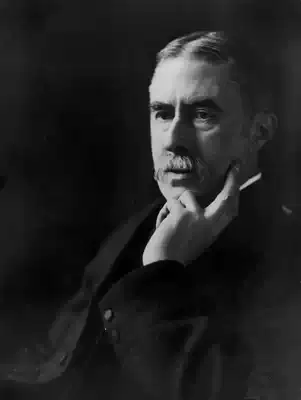
Alfred Edward Housman
You Smile Upon Your Friend To-Day
You Smile Upon Your Friend To-Day
You smile upon your friend to-day,
To-day his ills are over;
You hearken to the lover's say,
And happy is the lover.
'Tis late to hearken, late to smile,
But better late than never;
I shall have lived a little while
Before I die for ever.
You smile upon your friend to-day,
To-day his ills are over;
You hearken to the lover's say,
And happy is the lover.
'Tis late to hearken, late to smile,
But better late than never;
I shall have lived a little while
Before I die for ever.
333