
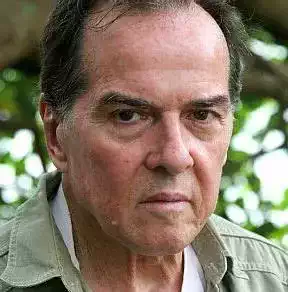
Roberto Piva
 BR
BR
Roberto Piva was a Brazilian poet, a prominent figure in marginal and experimental poetry in Brazil. His work is marked by a visceral, urban, and irreverent language, exploring themes such as the city, the body, desire, and social criticism in a raw and direct way. Piva stood out for his ability to capture the effervescence and conflicts of modern life, using an innovative style that broke with the literary conventions of his time. His poetry, often performative, reflected the challenging and libertarian spirit of the 1970s, consolidating him as one of the most original and impactful names in contemporary Brazilian poetry.
n. 1934-09-25, São Paulo · m. 2010-07-03, São Paulo
Bio
Identification and basic context
Roberto Piva, full name Roberto de Andrade Piva, was a Brazilian poet, translator, and professor. Born in São Paulo, he stood out as one of the main exponents of Marginal Poetry or Libertarian Poetry, a movement that flourished in Brazil in the 1970s and 1980s. His work is intrinsically linked to the urban context and the counterculture of the time, exploring language in an experimental and transgressive way. Brazilian nationality and the Portuguese language are central to his production. The period in which he lived was marked by profound social and political transformations in Brazil, including the military dictatorship, which directly influenced the challenging nature of his poetry.Childhood and education
Born into a middle-class family in São Paulo, Piva had a childhood that, while not widely detailed in terms of significant events, immersed him in the cultural environment of the largest Brazilian metropolis. His university education was in Letters, where he acquired the theoretical and literary foundations that would shape his worldview and his poetic practice. Readings of avant-garde authors, both Brazilian and international, as well as the influence of existentialist thought and philosophical currents that questioned established values, were fundamental to his intellectual and artistic development. The effervescent cultural and artistic scene of São Paulo, with its debates and experiments, also represented a crucible of influences.Literary career
Roberto Piva's literary career gained prominence with the publication of his first books, marked by a strong identity with Marginal Poetry. His poems began to circulate in mimeographs and at literary gatherings, characteristic of a movement that sought the democratization of literary production and circulation, in opposition to the traditional publishing market. Piva maintained consistent production over the decades, always faithful to a provocative and innovative style. He collaborated in various alternative media and anthologies that brought together the new generation of poets. His work as a translator was also relevant, expanding access to foreign works and establishing bridges with other literary traditions.Work, style, and literary characteristics
Roberto Piva's work, as seen in "Pequenas Epifanias" (1960), "O livro de Piva" (1974), and "Identidade (ou o corpo de carne e asfalto)" (1975), is characterized by a raw, urban, and visceral language. Central themes include the city of São Paulo, the experience of the body, sexual desire, criticism of consumer society, and the alienation of the modern individual. Piva masterfully used free verse, exploring rhythms and sounds that evoked the chaos and speed of urban life. His poetic voice is often confessional and ironic, laden with a performative energy that manifested in his public readings. The vocabulary is rich in colloquialisms and neologisms, reflecting orality and linguistic experimentation. Piva engaged with tradition, but above all with modernity and the avant-garde, being associated with the Marginal Poetry movement and an aesthetic that distanced itself from conventional poetic forms, seeking a more direct and authentic expression.Work, style, and literary characteristics
Cultural and historical context Roberto Piva produced his work during a period of great cultural and political effervescence in Brazil, marked by the military dictatorship. Marginal Poetry, the movement with which he associated himself, emerged as a form of resistance and expression amidst censorship and repression, valuing the artist's autonomy and the independent circulation of their works. Piva interacted and dialogued with other poets and artists of his generation, such as Torquato Neto, Ana Cristina Cesar, and Cacaso, forming a circle of intense creative exchange. His poetry reflects the existential and social dilemmas of Brazil at the time, criticizing the existing order and proposing new ways of seeing and living in the world. The search for freedom of expression and artistic experimentation were defining characteristics of his time.Work, style, and literary characteristics
Personal life Roberto Piva's personal life was intimately linked to his poetic production. His experience as a resident of the city of São Paulo, with its intense urban dynamics, was a constant source of inspiration. Affective relationships and desires were frequent themes in his work, often explored in an open and uninhibited manner. Piva also worked as a university professor, demonstrating a facet of his life dedicated to teaching and disseminating literary knowledge. His philosophical beliefs and his worldview, which questioned established social and moral norms, were pillars of his artistic and personal stance, guided by the pursuit of authenticity and freedom.Work, style, and literary characteristics
Recognition and reception Roberto Piva gained significant recognition within the marginal and alternative poetry circuit, being considered one of the most important names in this vein. His work, although not always recognized by major literary awards or the hegemonic publishing market during his lifetime, won a loyal audience and admirers among critics and other artists. Critical reception, especially after the country's redemocratization, has deepened, revealing the relevance and originality of his poetry to contemporary Brazilian literature. His popularity grew with the rediscovery of Marginal Poetry by new generations.Work, style, and literary characteristics
Influences and legacy Roberto Piva was influenced by poets of the Brazilian and international modernist avant-garde, as well as by philosophers and artists who questioned the conventions of their times. His legacy lies in the courage to experiment with language, in the authentic and irreverent way he portrayed urban life and existential dilemmas, and in his contribution to the consolidation of a freer poetry closer to social reality. Piva influenced later generations of poets, especially those who focus on the city, the experience of the body, and social criticism, and who seek to break away from traditional aesthetic patterns. His work is a landmark in 20th-century Brazilian poetry.Work, style, and literary characteristics
Interpretation and critical analysis Roberto Piva's work has been the subject of various critical interpretations, which highlight its existential, social, and political dimensions. The exploration of the body as a territory of desire and resistance, the representation of the city as a space of alienation and at the same time of vitality, and the critique of consumer society are recurring axes in the analyses. Philosophically and existentially, Piva addresses the fragmentation of the modern subject, the search for identity in a chaotic world, and the need for a more intense and authentic experience of life. The way he dealt with sexuality and the body in his poetry also generated debates, celebrated for its freedom and boldness by some, and viewed with reservations by others, depending on the perspective.Work, style, and literary characteristics
Curiosities and lesser-known aspects Roberto Piva was known for his intense and sometimes provocative personality, which was reflected in his poetic performances, often vibrant and charged with contagious energy. The contradiction between the apparent rawness of his poetry and the sensitivity with which he treated universal themes is an intriguing aspect. His writing habits are not widely documented, but the visceral nature of his poems suggests a creative process of immersion in urban reality and his own experiences. The performative energy in his public readings is frequently cited as a striking element, transforming the presentation of his verses into a spectacle in itself.Work, style, and literary characteristics
Death and memory Roberto Piva passed away in São Paulo. His death left a void in Brazilian poetry, but his work remains alive and is being rediscovered by new generations. Posthumous publications and studies of his life and work have contributed to his permanence in literary memory, reaffirming his place as a singular and fundamental poet in contemporary Brazilian literature.Poems
0No poems found
Comments (0)
No comments yet. Be the first to comment.